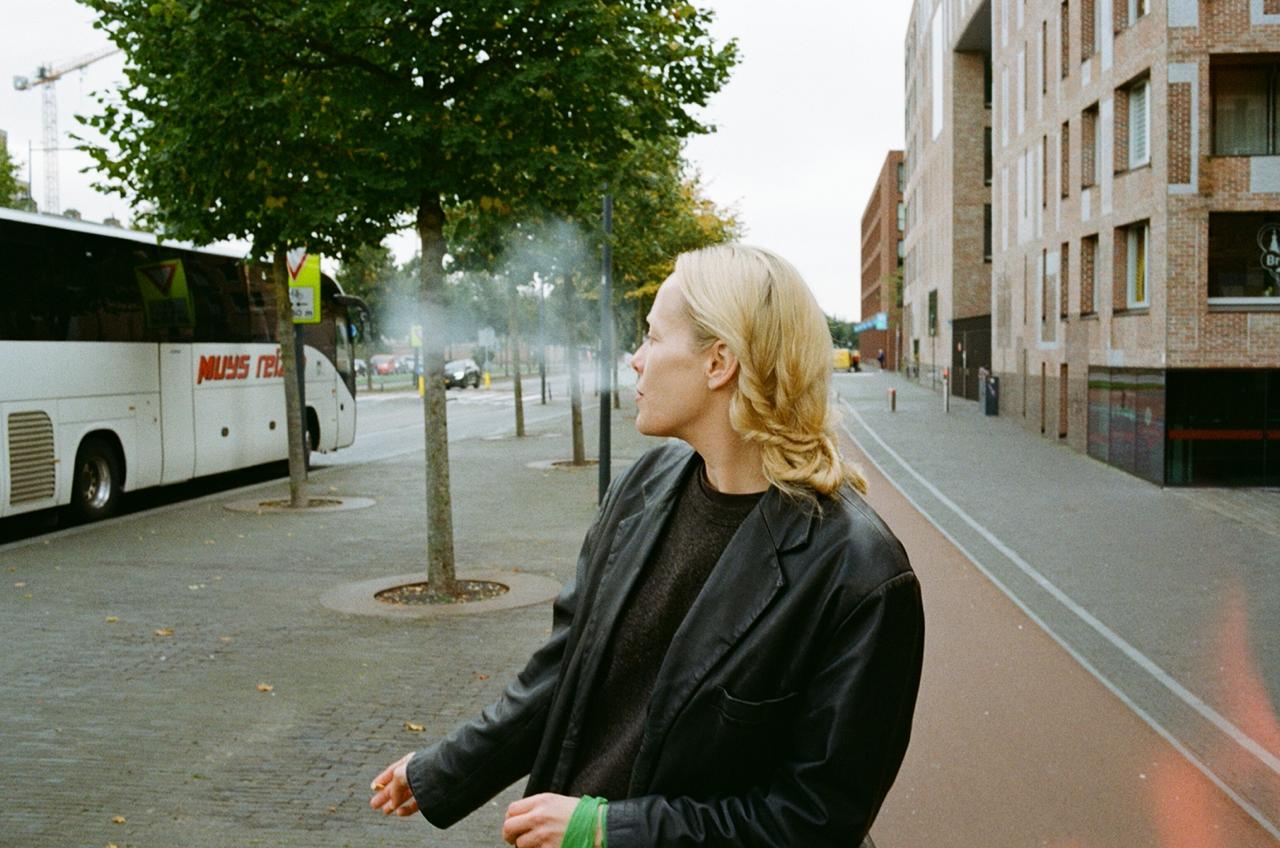
Emma Clarke
What’s your name and where are you based?
Emma Clarke. I was born in the UK, after living away for 9 years I returned and am now based in East London.
Can you describe in a few words what it is that you do?
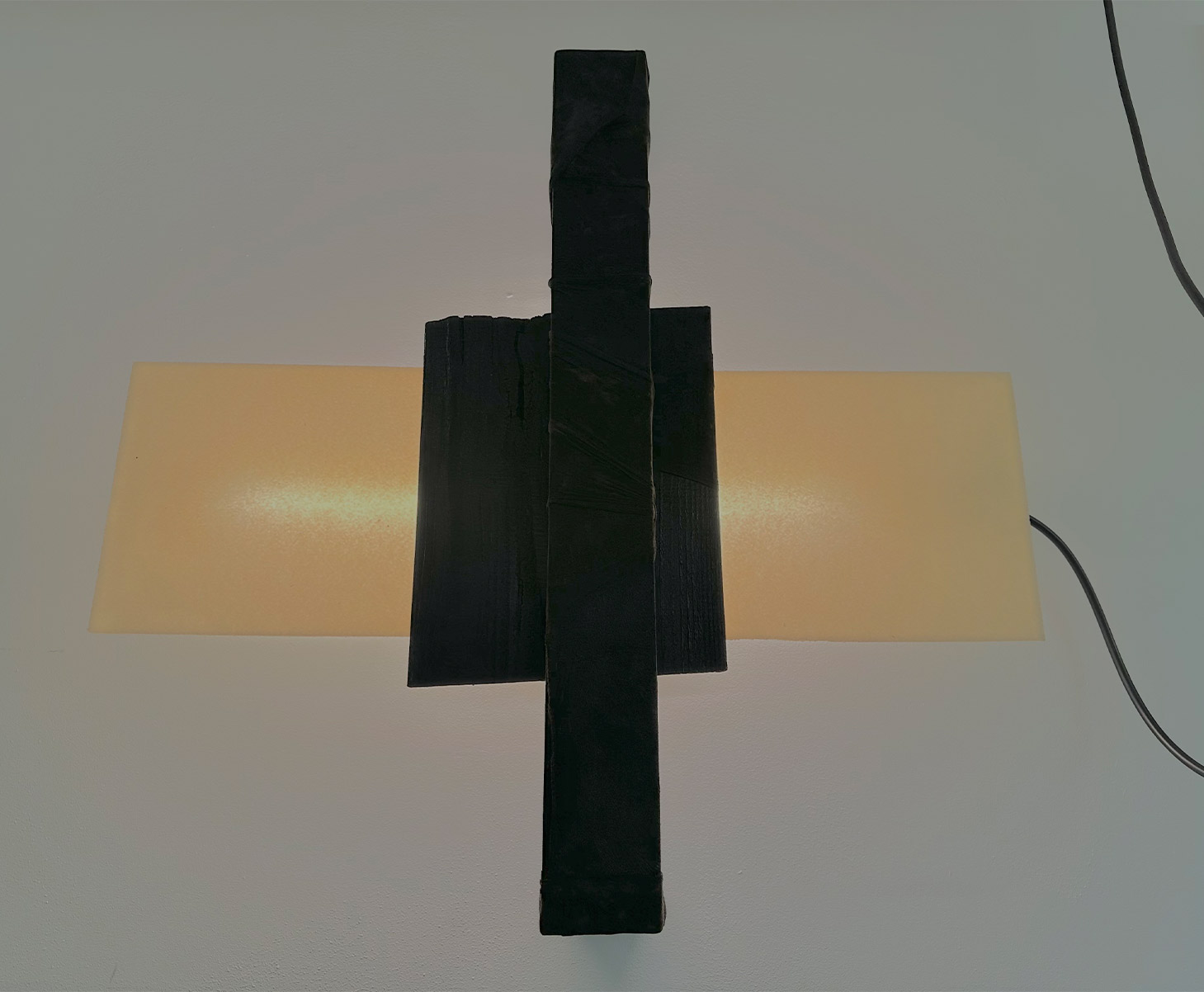
I like to use the term ‘Functional Sculpture’, ‘Performative objects’ circles around also. I think this comes from not wanting to box oneself into a specific term and it embodies the movement I am interested in creating through my work. The material differences progressively integrate and oscillate- and it’s this oscillation where I find I’m able to create the movement and vibration I want out of static objects.
What is your relationship with material, what draws you to a particular choice?
I have a very strong physical and metaphorical relationship with material, just reading this question makes my hands move into the motion of touching materials. I am drawn to each material for the quality it holds, how it speaks in relation to that particular element of the piece and how the materials communicate with one another, highlighting each other’s physicalities, and offering a new language from the resulting combinations. My current project includes felted wool, which is chosen for its insulating, protecting notions and was influenced by my surroundings in the Netherlands where there has been a huge decline in the wool industry due to the mass market and the fast paced fashion industry. I am working currently with materials that would normally be seen as a by-product, utilised in the fabrication process for the production of another material. At this moment specifically plaster and wax which is used for slip or bronze casting, which during the process this’ by’ material would melt away or after be disposed of. I’m interested in the removal of hierarchies between materials, the work will consist of conglomerations of techniques, and aesthetics, each with their own associations in terms of ‘artisanal’ and ‘contemporary’, ‘high’ and ‘low’ material/process values, and how the various materials attributes resonate with each other through their same material component but displacement in so called values.
How does your background in fashion and textiles inform the way you work with surface and form?
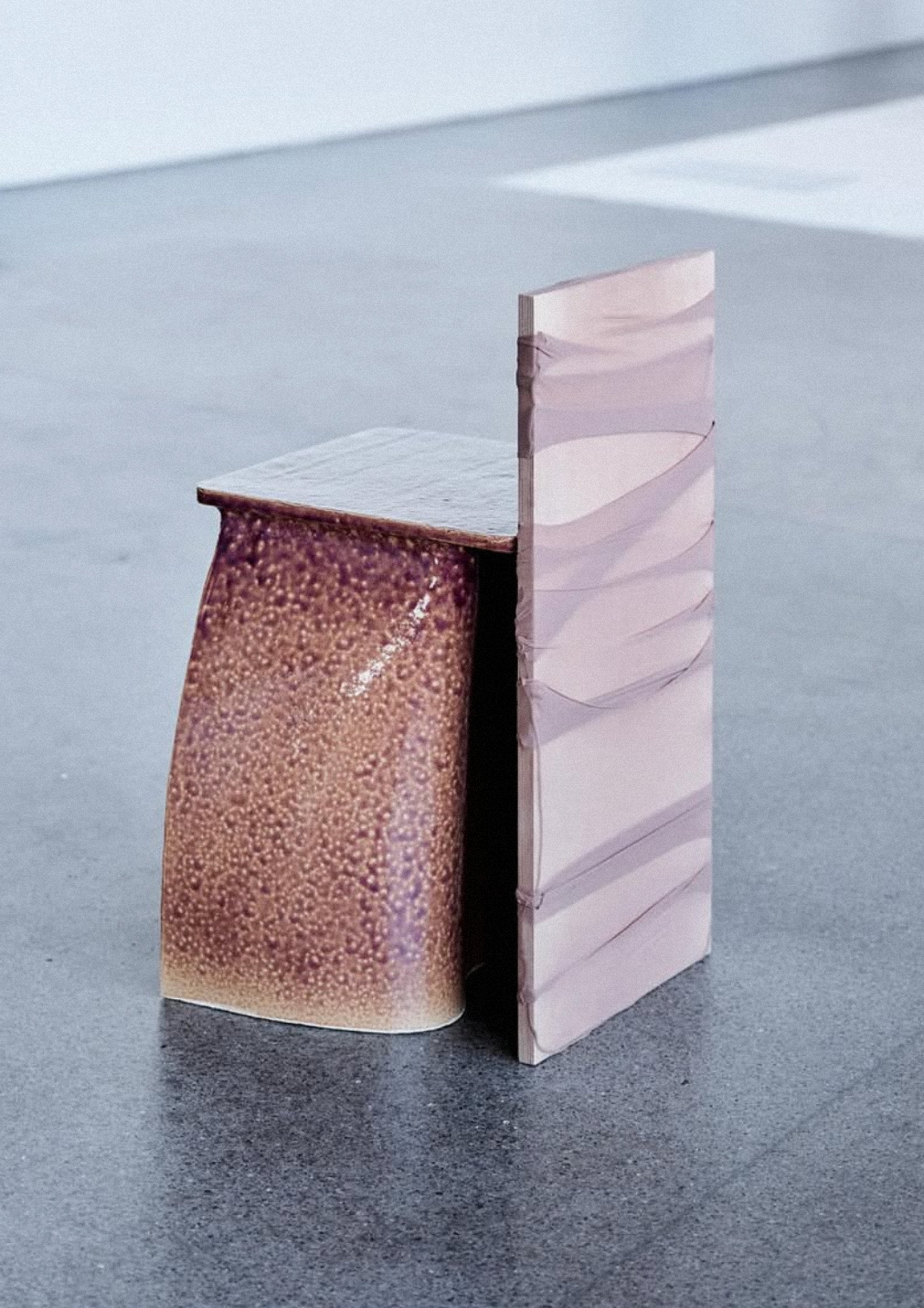
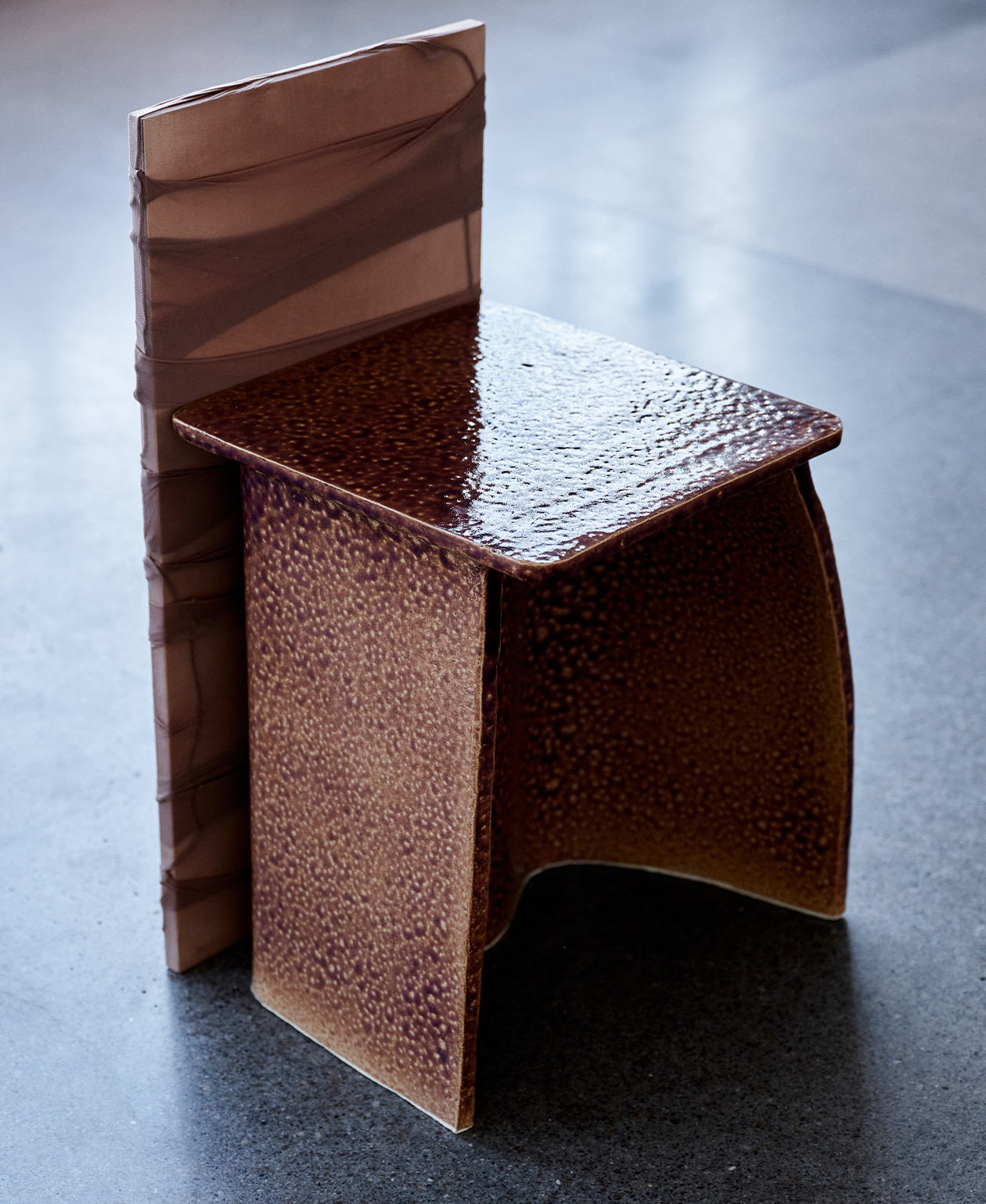
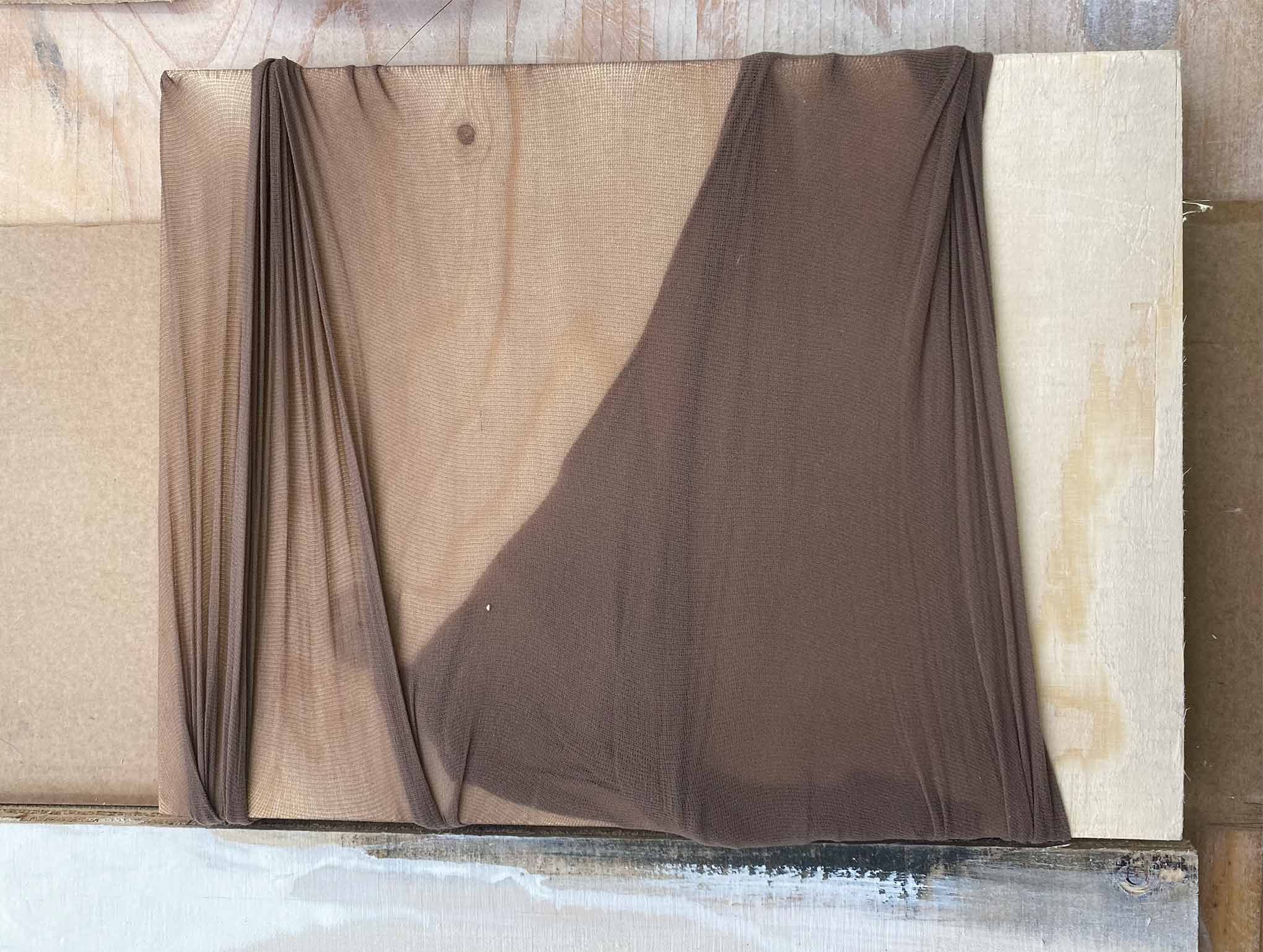
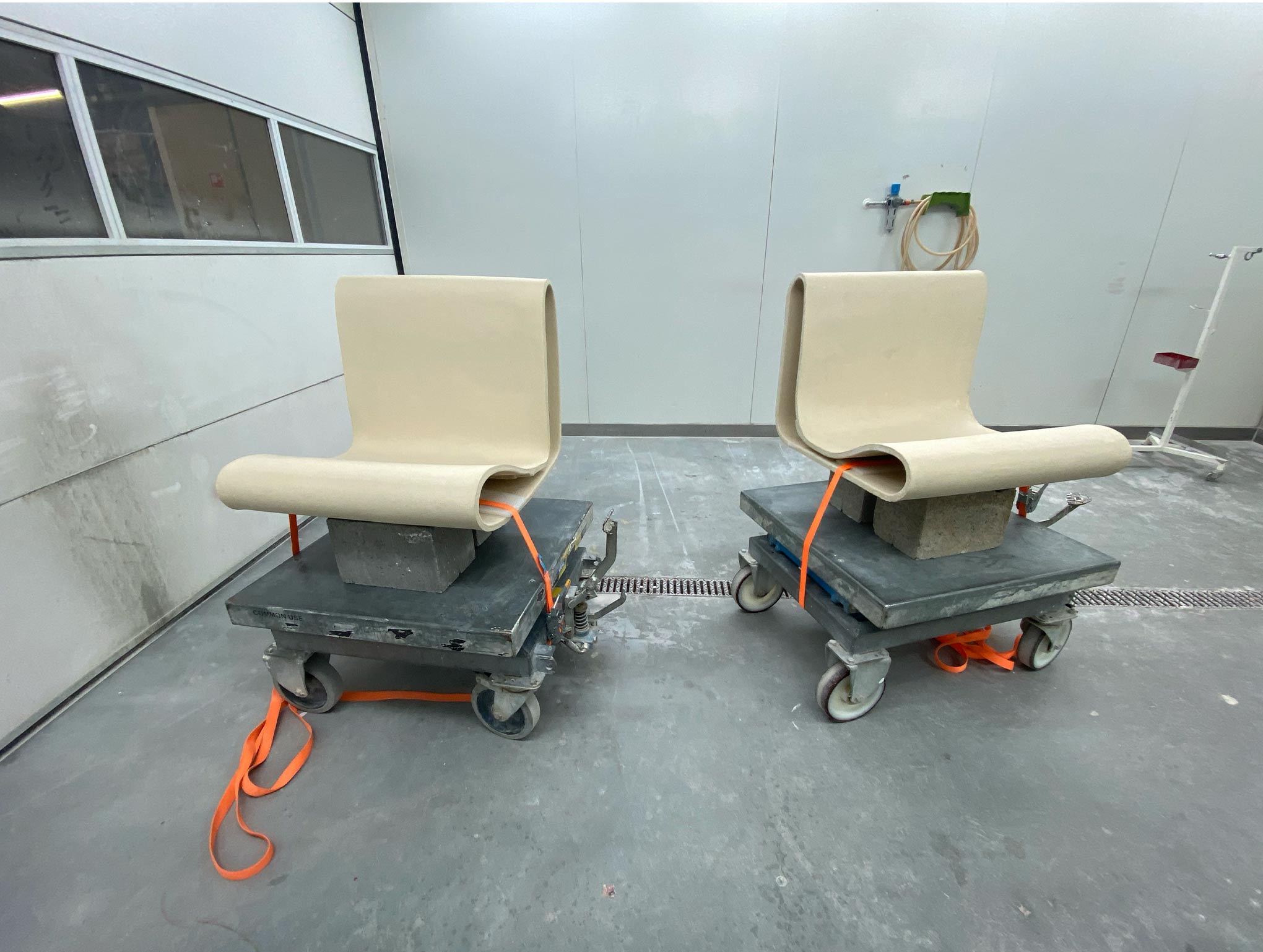
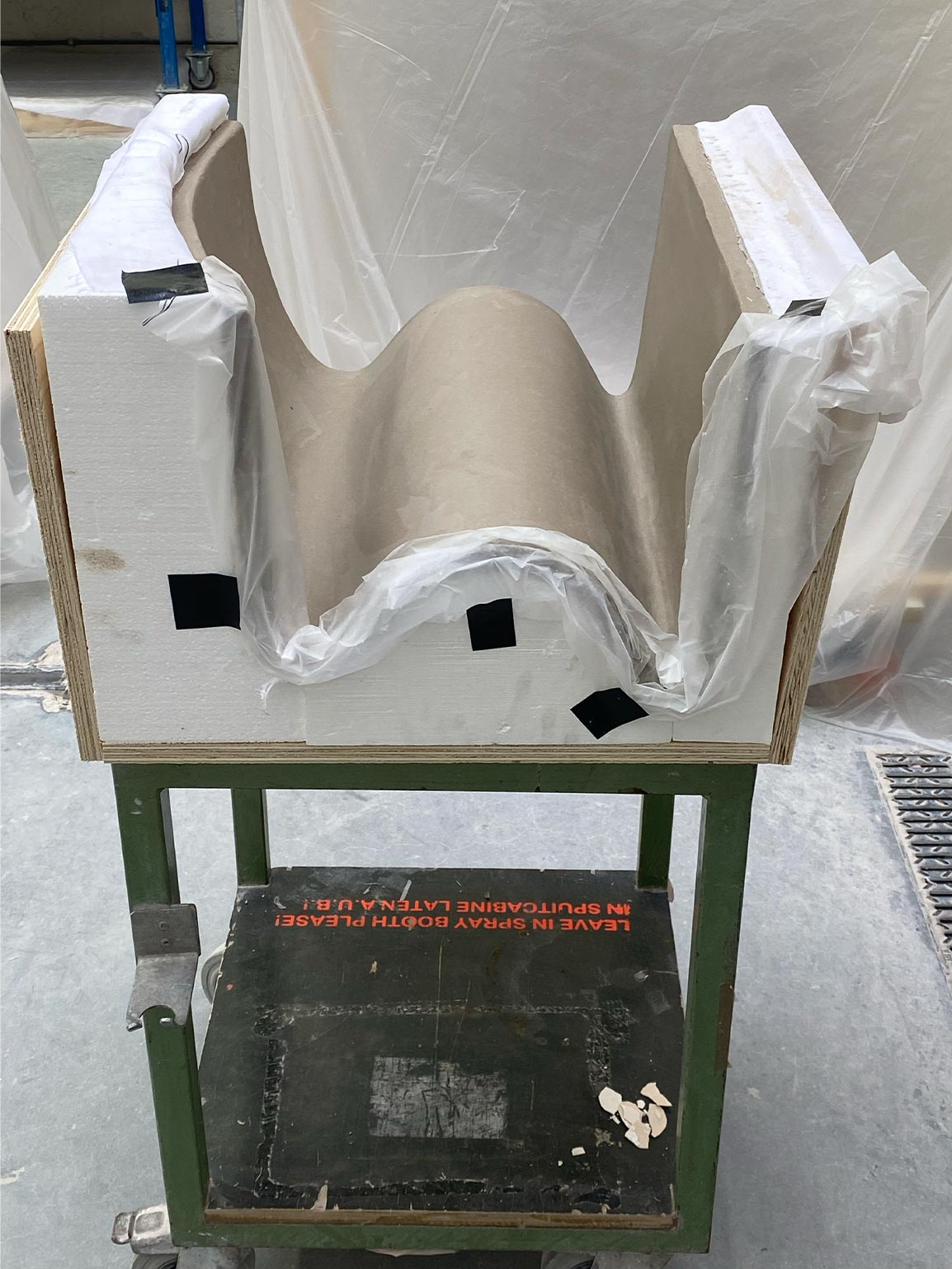
It informs it in many ways, my work in fashion has always been fabrication lead and I think that’s why I started out in knitwear as you start by creating the yarn, then move to the stitch and combining these two attributes informs the volume/form. Also the pattern cutting element became so apparent in my work with clay. I apply the same principles darting out clay to create curves, seam allowances when joining two parts. Most recently I produced a series of chairs that have curving forms made from single slabs of hand pressed clay. The clay took on the notions of fabric which was raised up with a fork lift and draped around temporary forms.
Do you want people to touch, sit with, or physically interact with your work? What kind of bodily response do you hope to achieve?
All of the above, my first pieces worked with an assemblage notion, where elements slotted into each other enabling an interaction with the piece and the person. It also allowed for longevity of the pieces with the possibility that the elements could be changed overtime.
With the more recent pieces they brought about an extended notion of interaction through sitting and supporting the body. Fragility and stability is inherent to the material of ceramic itself and it is really interesting to observe the flux of different emotions in the act of sitting in one of the chairs. Initially there is a cautionary approach, followed by a sense of relief and ending in comfort, once the mind allows the person to understand the chair has all the ability to support the body.
Is there a material you’ve worked with that surprised you emotionally or physically, during the making process?
Yes, most recently at a residency with the EKWC (The International Artist in Residence and Research Centre for Ceramics) in the Netherlands through discussions I came to the awareness that working with clay is a dialogue rather than a monologue. We are aware of this notion in other aspects of our lives but I don’t think we see materials like this predominantly. You have to work with the material and its qualities, naturally you can push these boundaries but if you’re in a monologue the piece won’t work, it will collapse or crack. Finding an equilibrium with a material allows for interesting possibilities. I enjoy the finicalties of clay, you have to nurture it, give it exact conditions throughout the whole working process, and this has spurred me to take up a residency in the Japanese forest outside Kyoto. I want to learn the ways and life of wood, traditional Urishi lacquering and wood bending. It is important to really understand the materials you are working with and I want to match my knowledge of clay with that of wood and many more materials.
Is there a material you’ve never felt but intrigued by in its potential?
I am currently intrigued by Japanese paper and using the process of coating it with flour paste or fiberglass. It intrigues me to take something so delicate and make it strong, almost encapsulating this delicate fibre in a protective layer. And then to use this in my pieces, to sit on paper, for your body to be supported by a fibre unimaginable to hold your body.
What does your process look like from first idea to final form? Do you follow a plan, or let the materials lead?
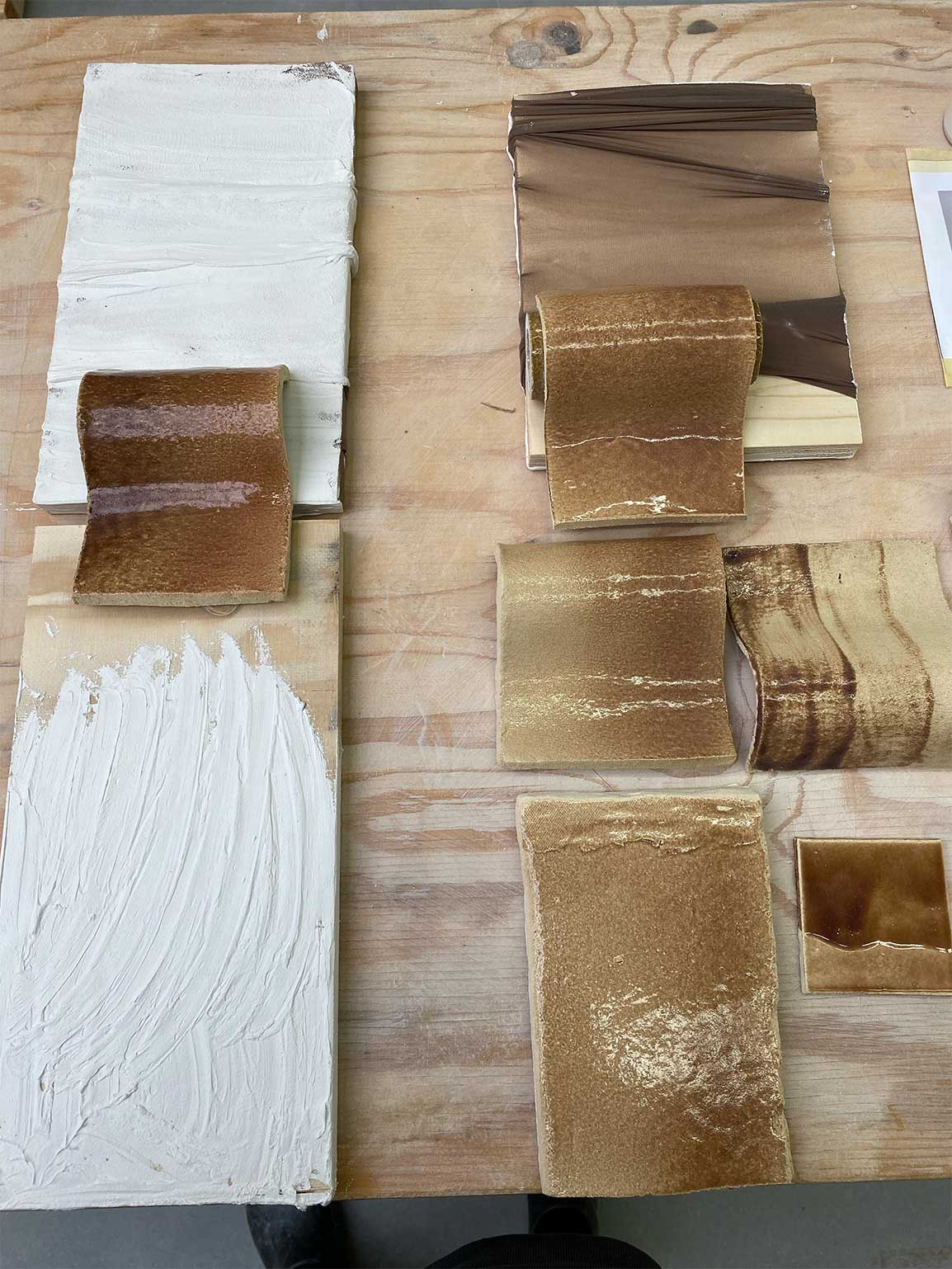
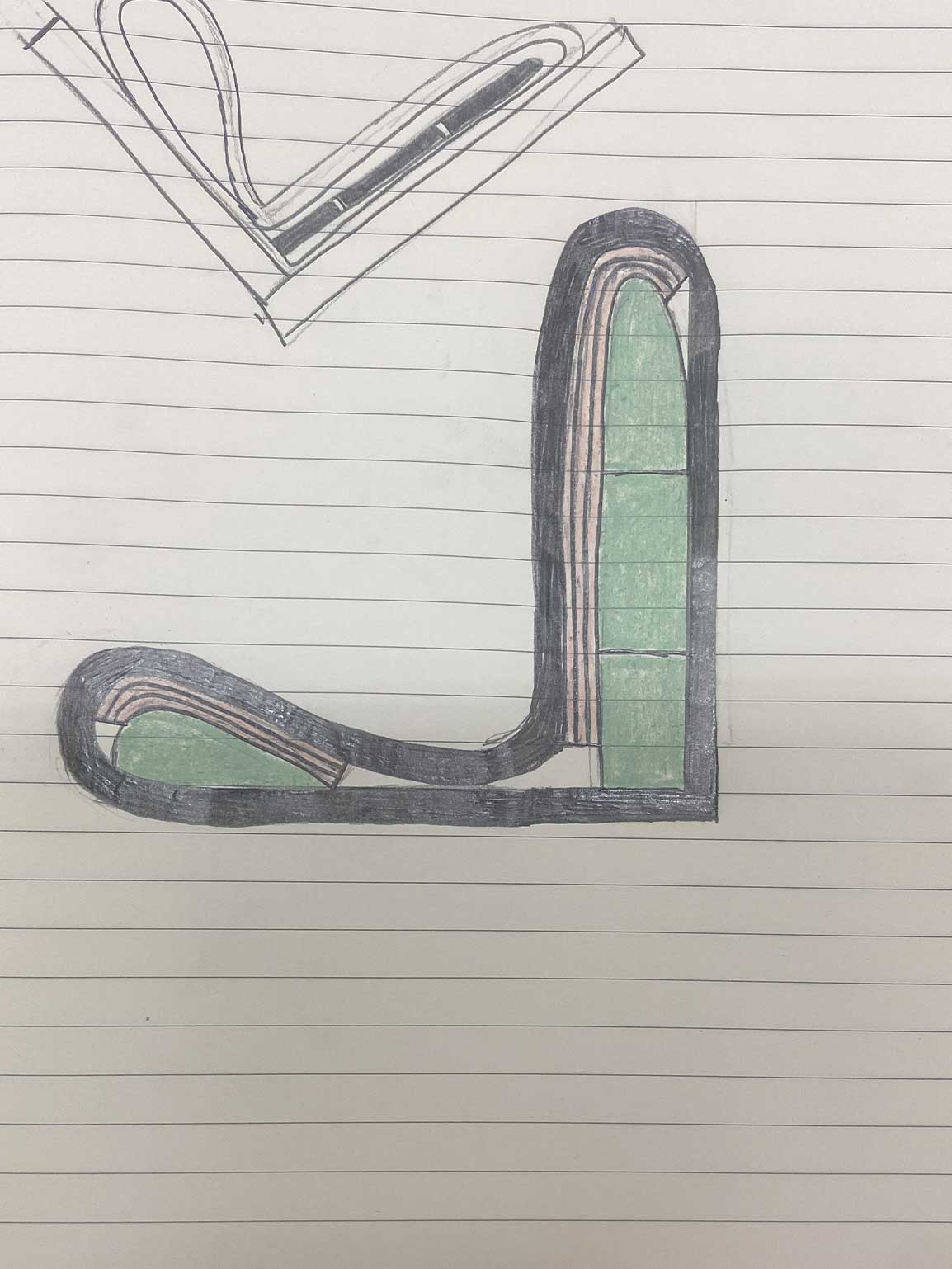
I generally start with a sketch, the clay element is the foundation which I will produce first through lots of different experimentations. Making and testing my own clay bodies, trialing different techniques of how to produce what I desire and mixing my own glazes. Through this process the design will then be a collaboration between me and the clay with what is possible and which elements would evolve in this process. Once I have the clay body the other elements lead through a synthesising process.
Has there been a piece or project that taught you something unexpected about yourself, or your practice?
Each project is a beautiful learning process, about myself, my practice and the materials I work with. There’s a beauty of starting out a new project and having no idea where it will take you, the people you will meet and where you will stand at the end.
Where can people find you?
You can find me at my studio in East London and on instagram @spikezebedi