Diskursiv
Who is behind DISKURSIV, and where are you currently based?
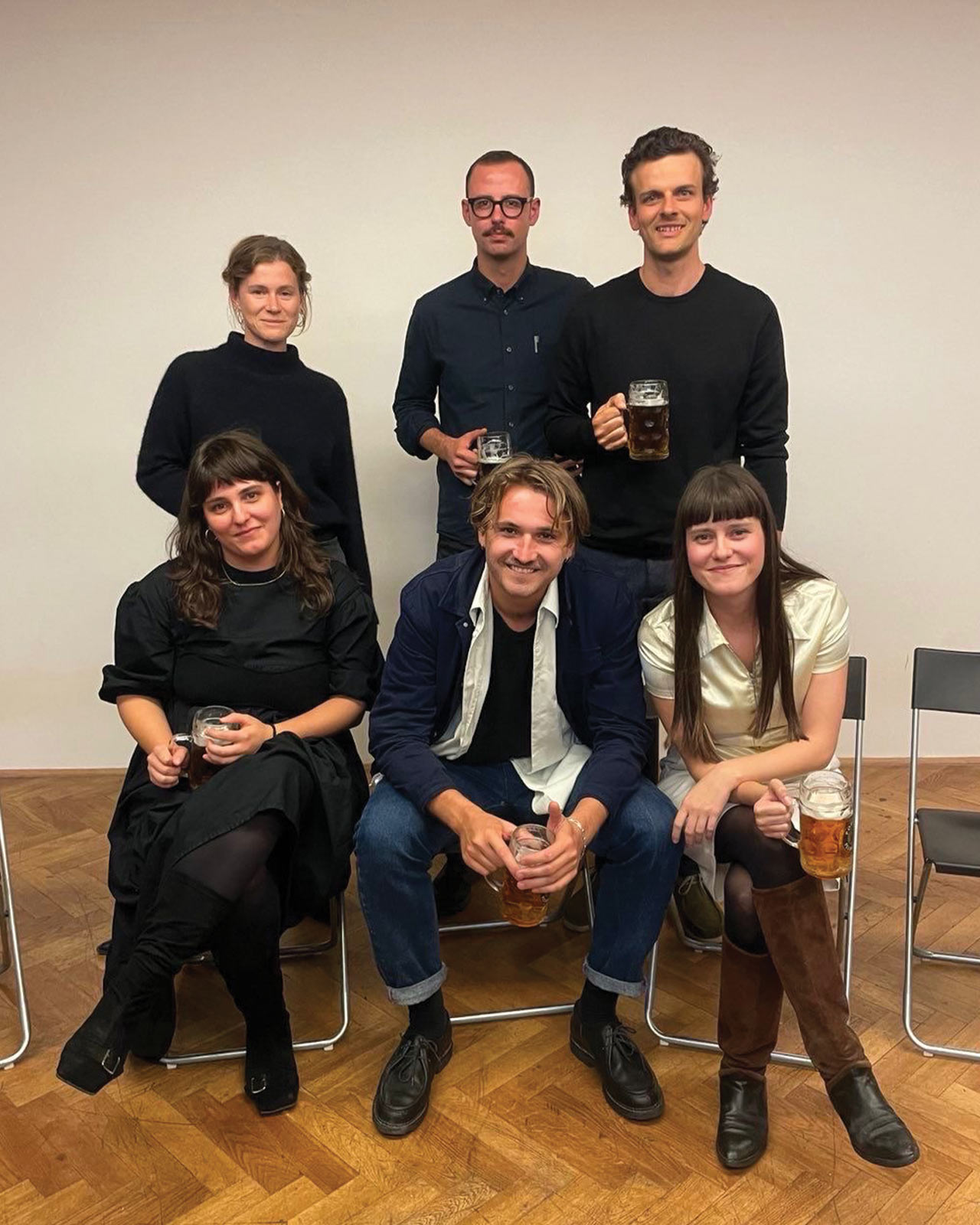
Diskursiv consists of six members: Adna and Ajna Babahmetović (@ajnaadna), Michael Hafner and Katharina Hohenwarter (@Studio Bonfim), Philipp Sternath (@Spargelhof Sternath) and Julian Brües. We are five architects and one cultural economist. As an association, we work between Graz, Vienna and Wolfsberg in Austria, with respective areas of interest in Bosnia, Germany and Portugal.
How would you describe DISKURSIV and what you aim to explore through it?
Diskursiv seeks to examine current and practical areas of tension in architecture. We are an association that focuses on the internal problem areas of architecture, which are to be dealt with in an interdisciplinary framework.
How do you see the relationship between architectural practice, exhibition-making, programming, and publishing?
Since we are young architects, we looked for opportunities to create something that would follow our own conditions. That is why we started making exhibitions. This allowed us to design something temporarily without taking the classic route of an architectural project.
Alongside our work for the association, we take part in competitions, accept private commissions and teach at universities.
In our view, the three points mentioned go hand in hand – our exhibitions and publications enable us to engage with architecture. As a result of this work, we come into contact with international offices and architectural researchers, which broadens our horizons and influences our designs.
A recent example of your work is the publication COLOURS , what does it aim to uncover or question?
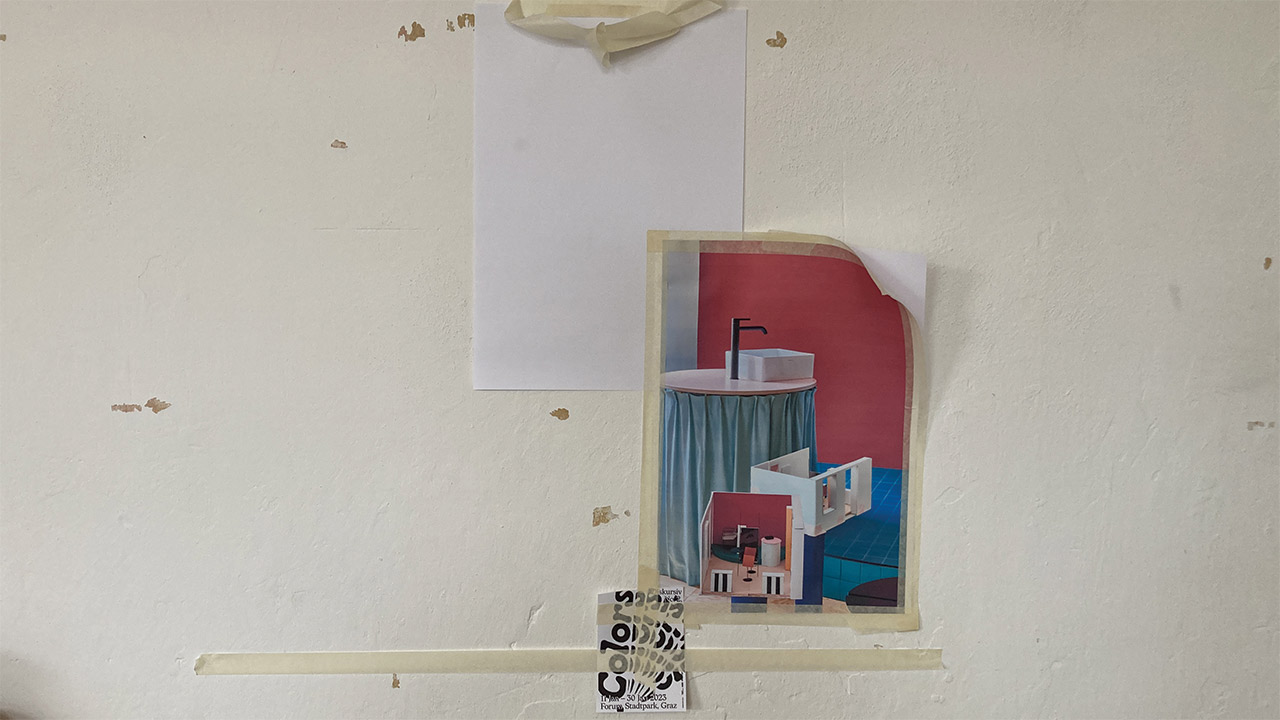
Color has always been a powerful tool in architecture: it can influence perceptions of space and form, convey meaning and intention and guide the viewer’s sensory experience. However, it has lost importance in contemporary architectural practice and teaching. This volume explores the discipline’s shifting attitudes toward color and its use by architects today. Approaching the topic on a theoretical level, the contributors stress color’s potential impact and make an impassioned case for its return to building discourse. Against the dogma of the universal white box, they advocate for color’s rediscovery as a central instrument of architectural practice.
Your projects are often quite conceptual, do they involve objects in the traditional sense, or are you more interested in producing objects in a theoretical or discursive way?
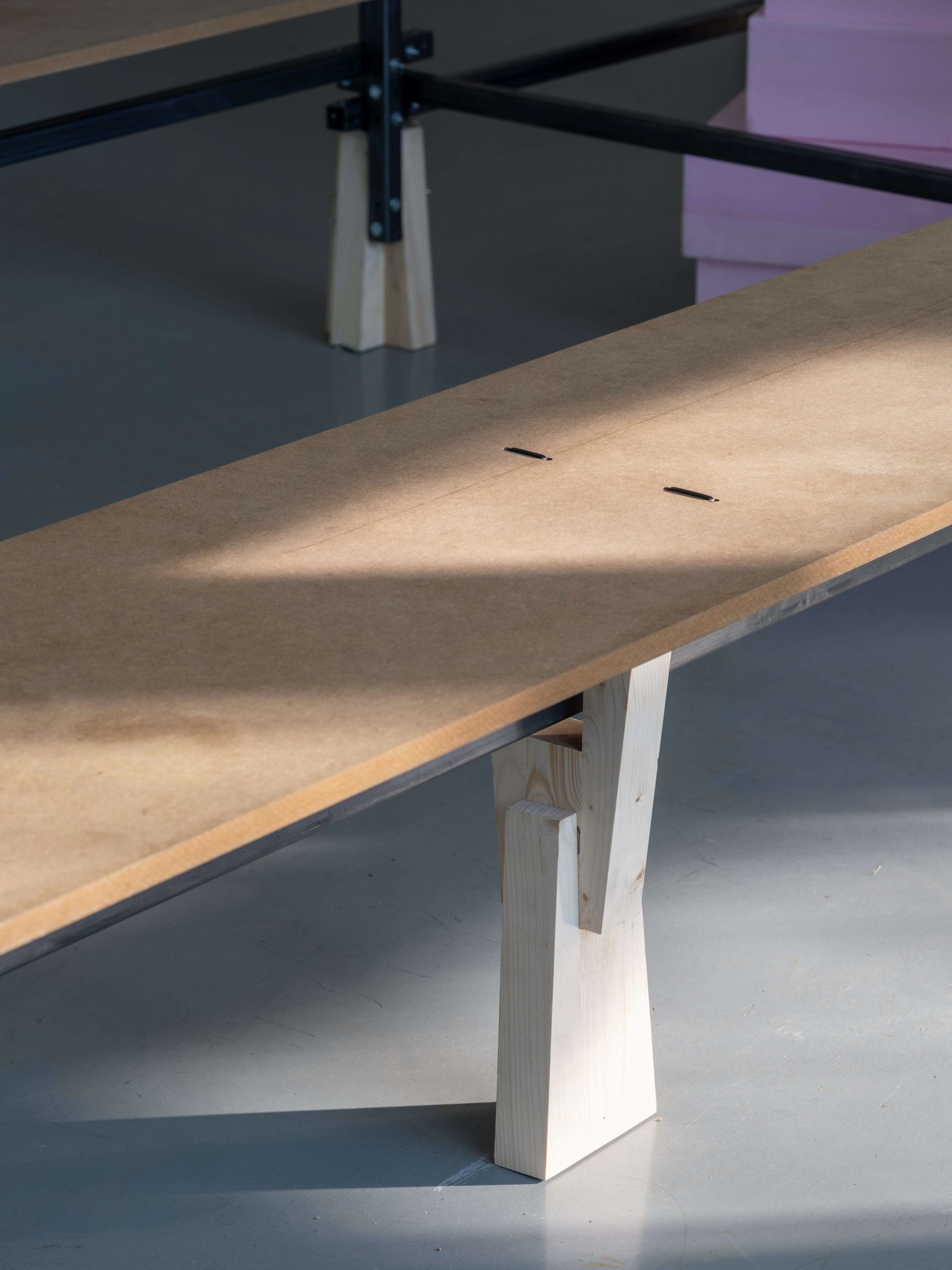
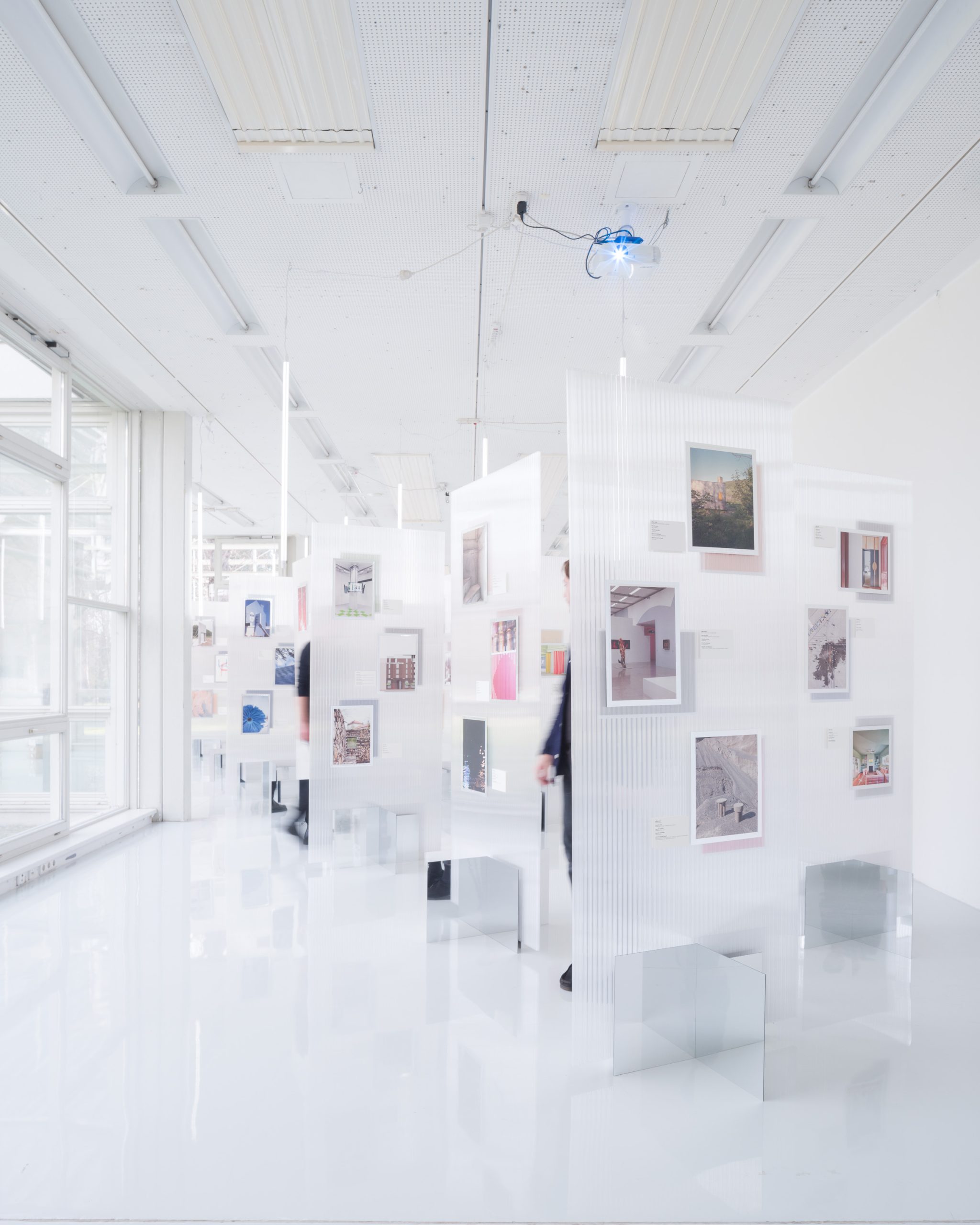
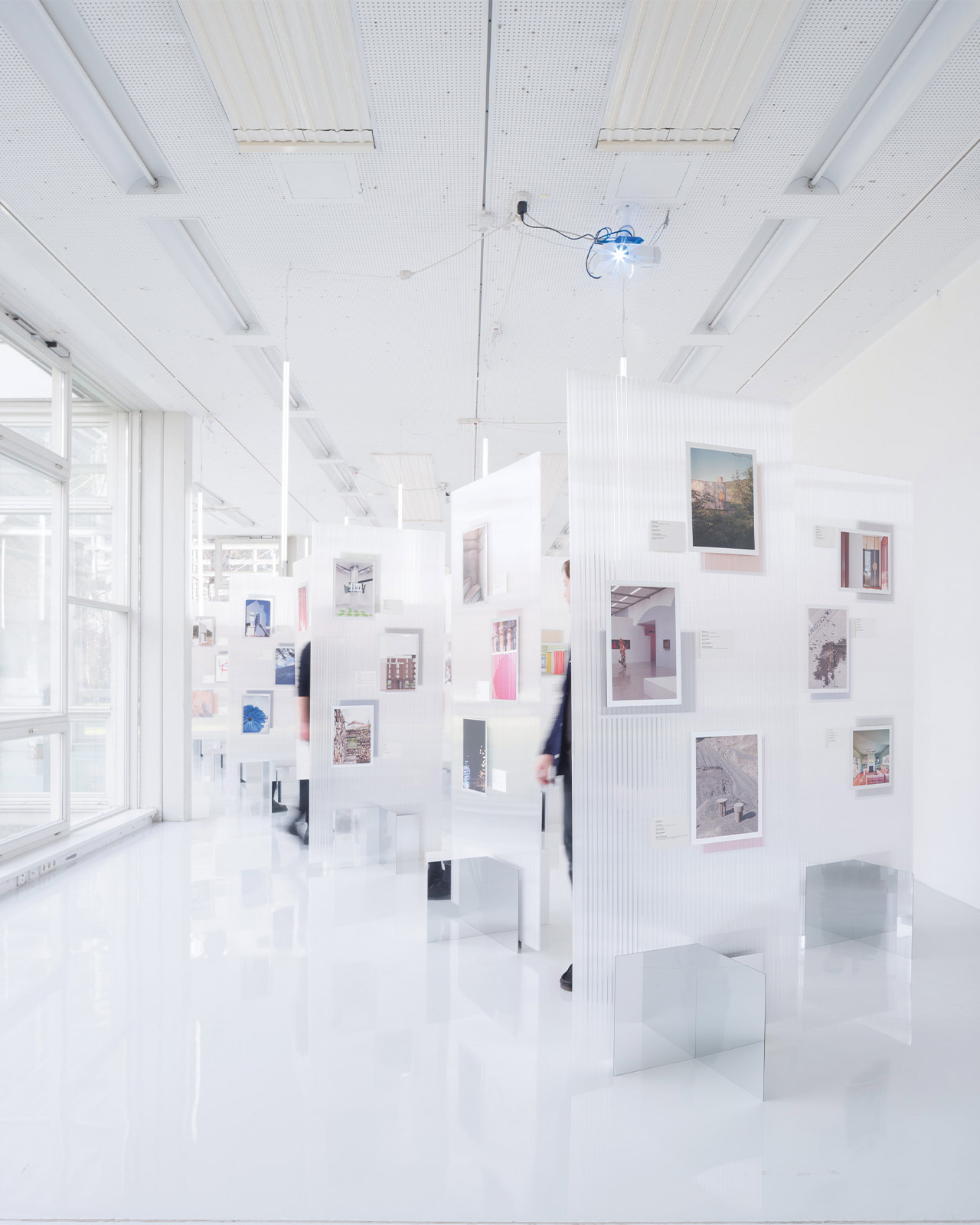
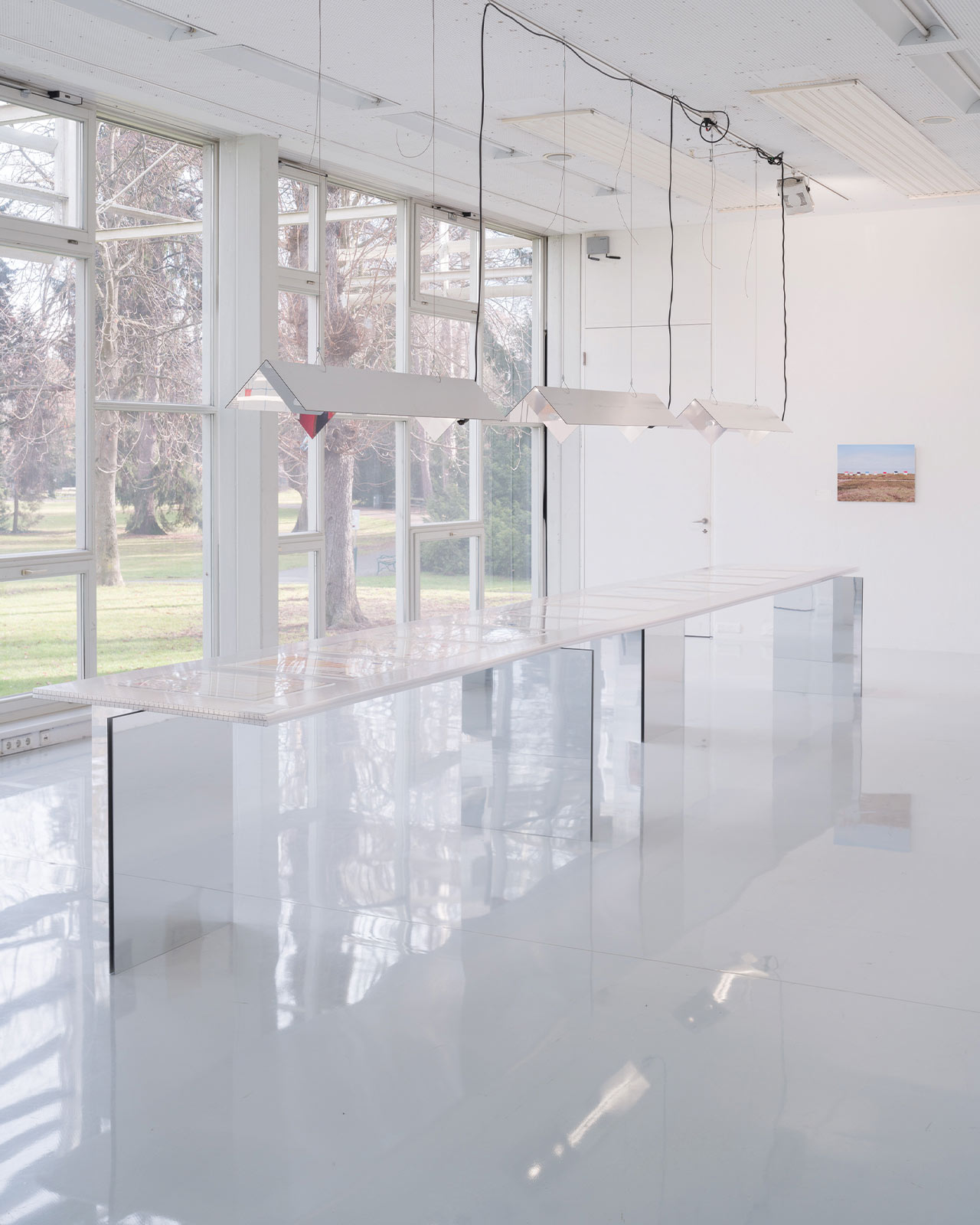
It could certainly be said that the objects in our exhibition are produced in a theoretical or discursive way. For the Colours exhibition, our approach was to design ‘colourless’ displays. Furthermore, our objects are always intended to influence or change the space. For the exhibition in question, we developed an interest in reflection, transparency and the refraction of light by building prototypes and testing materials.
Your practice involves material reuse and re-contextualisation. What does it mean to you to extend the life of a material?
On the one hand, it is essential these days to plan for the further use of materials in temporary designs. And on the other hand, we can honestly say that we are an association that depends on funding and sponsorship. That is why reuse and recontextualisation are essential for us.
Beyond sustainability, do you see reuse as a form of architectural critique or storytelling?
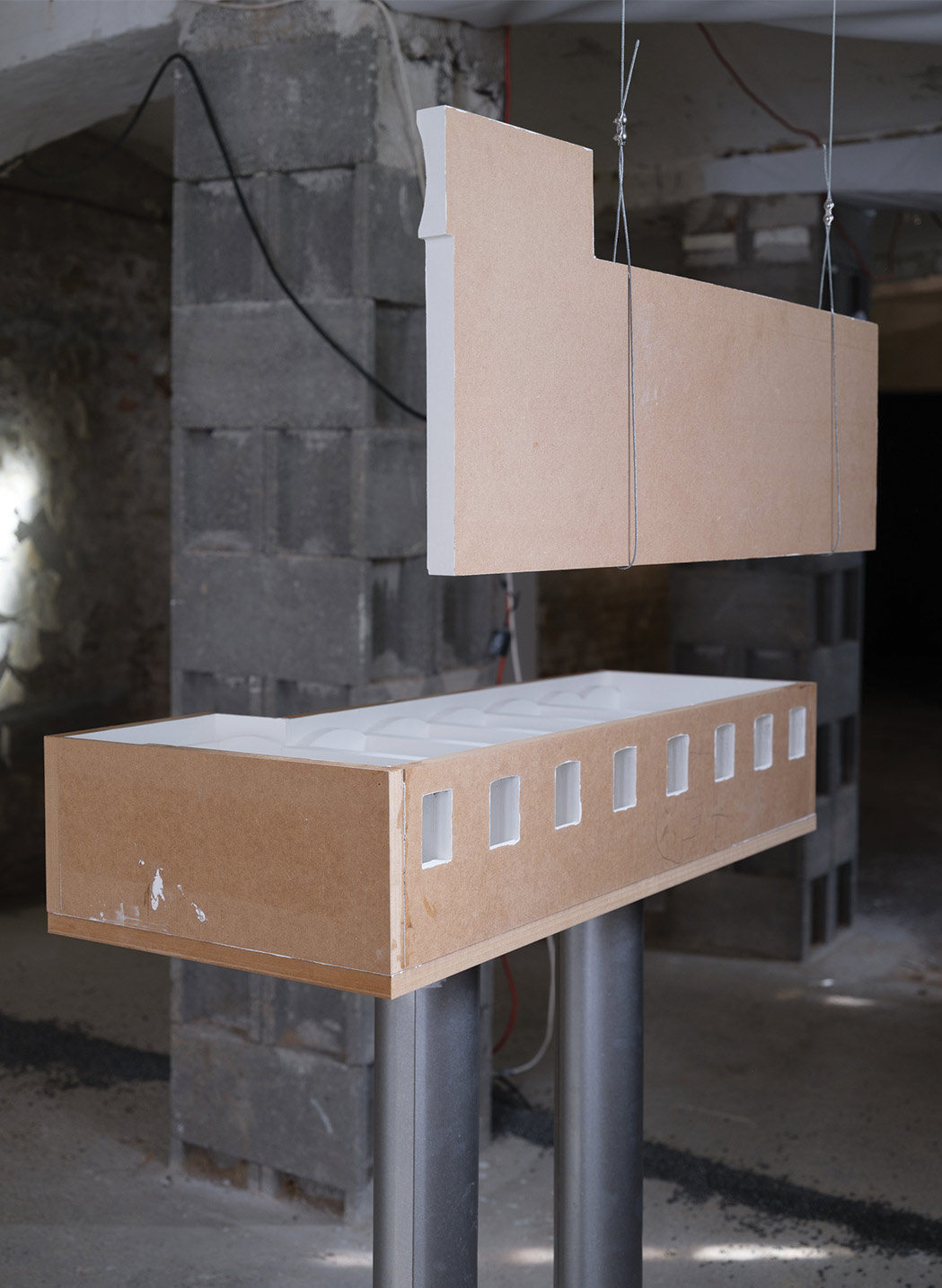
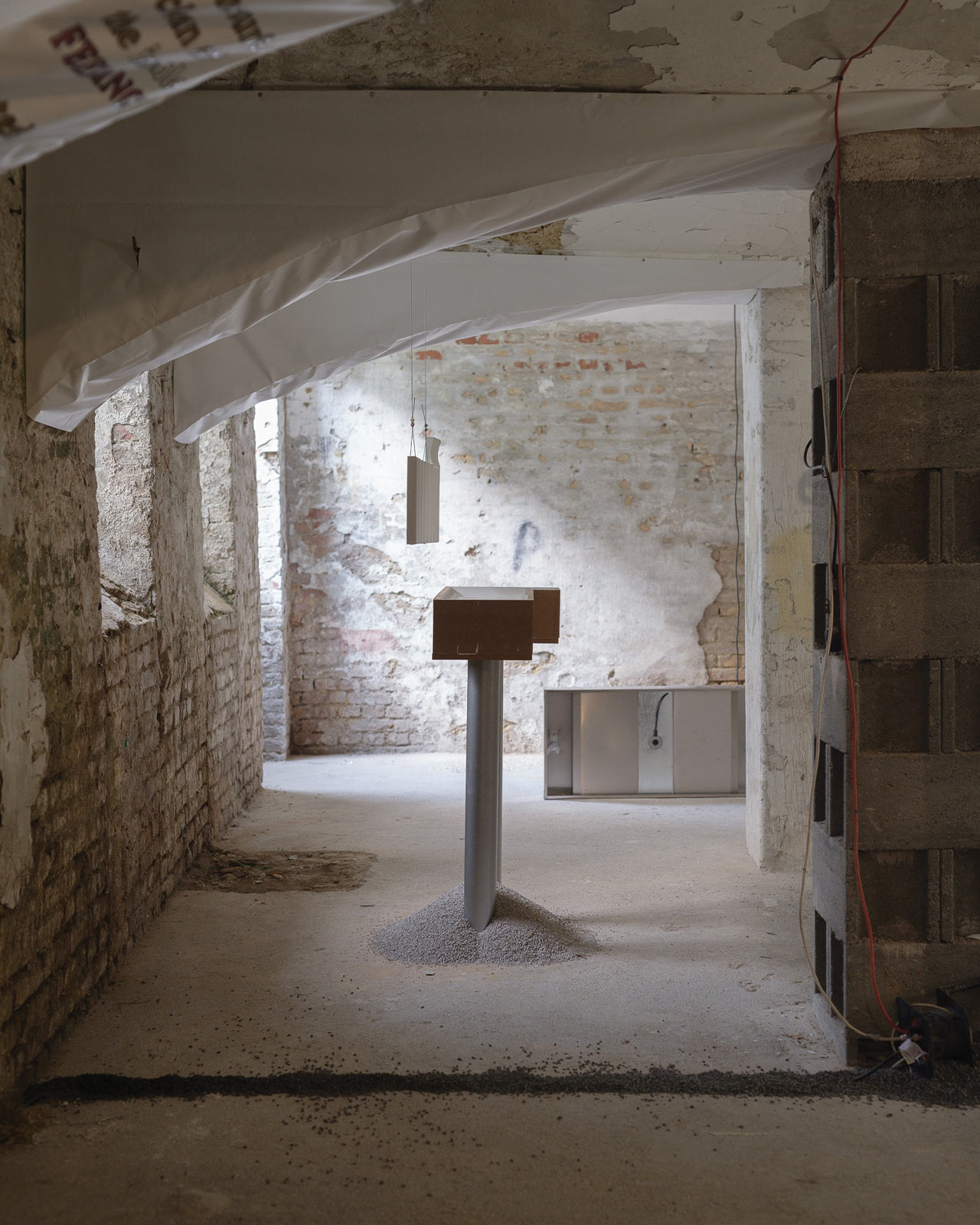
We don’t deal explicitly with storytelling. Rather, we are concerned with dealing honestly with the problem. We still had a lot of MDF left over from our models exhibition. We used this material to make the feet of our Colors displays. Later, we were asked to participate in the Klima Biennale in Vienna with an object for Never-At-Home: Gallery 57 – which was transformed into a restaurant by our friends’ children. All from the same stock of MDF.
The criticism of architecture should arise more from our content.
Do exhibitions allow you to engage with architectural questions that traditional commissions don’t? What kinds of freedoms or limitations come with that format?
Yes, one freedom we have is that we can determine our topics and results ourselves from ‘zero’. We sit, so to speak, in front of a blank sheet of paper and can, may, must and want to do everything ourselves.
We get to build, design, moderate, edit and publish.
One restriction is – as with actual building – financing. We write many funding applications, but not all of them are approved. The frustration threshold is affected in a similar way to traditional commissions.
Do you consider your work a form of archiving? What does it mean to preserve a discussion rather than a finished object?
We call this form of archiving – conserving. In dealing with our topics, we observe and record trends that we identify in current architectural discourse. For us, preserving discussions means encouraging reflection on one’s own position. It is not really possible for us to archive the finished object because we do not have a suitable storage area. In addition, the object is mostly used by us to impart knowledge.
Have you found yourself returning to the same forms, materials, or techniques over time? What do those returns suggest to you?
Actually, only in terms of materials – but only because we produce the exhibitions and our objects ourselves. Everything that can be worked with drills, circular saws and screws in the workshop is used by us again and again. Perhaps we should consider using other tools and approaches.
What kinds of conversations do you hope DISKURSIV opens, within architecture and beyond it?
We hope for surprises in our discussions. In the run-up to our Colours series, we were criticised: ‘That’s too boring…’. But the feedback we received afterwards – and that we are also getting with the publication – is very motivating.
We want to create a low-threshold access for people interested in architecture, bring together researchers in architecture and architectural firms, and deal with things that may not sound particularly exciting at first glance.
How can people reach out to you? Do you have any upcoming exhibitions, publications, or programs we should look out for?
We can be found on our homepage Diskursiv.xyz and, of course, on Instagram. We are currently working on our third instalment/series – we want to explore the topic of desire. At the end of April and beginning of May, we will be putting out a public call for submissions.