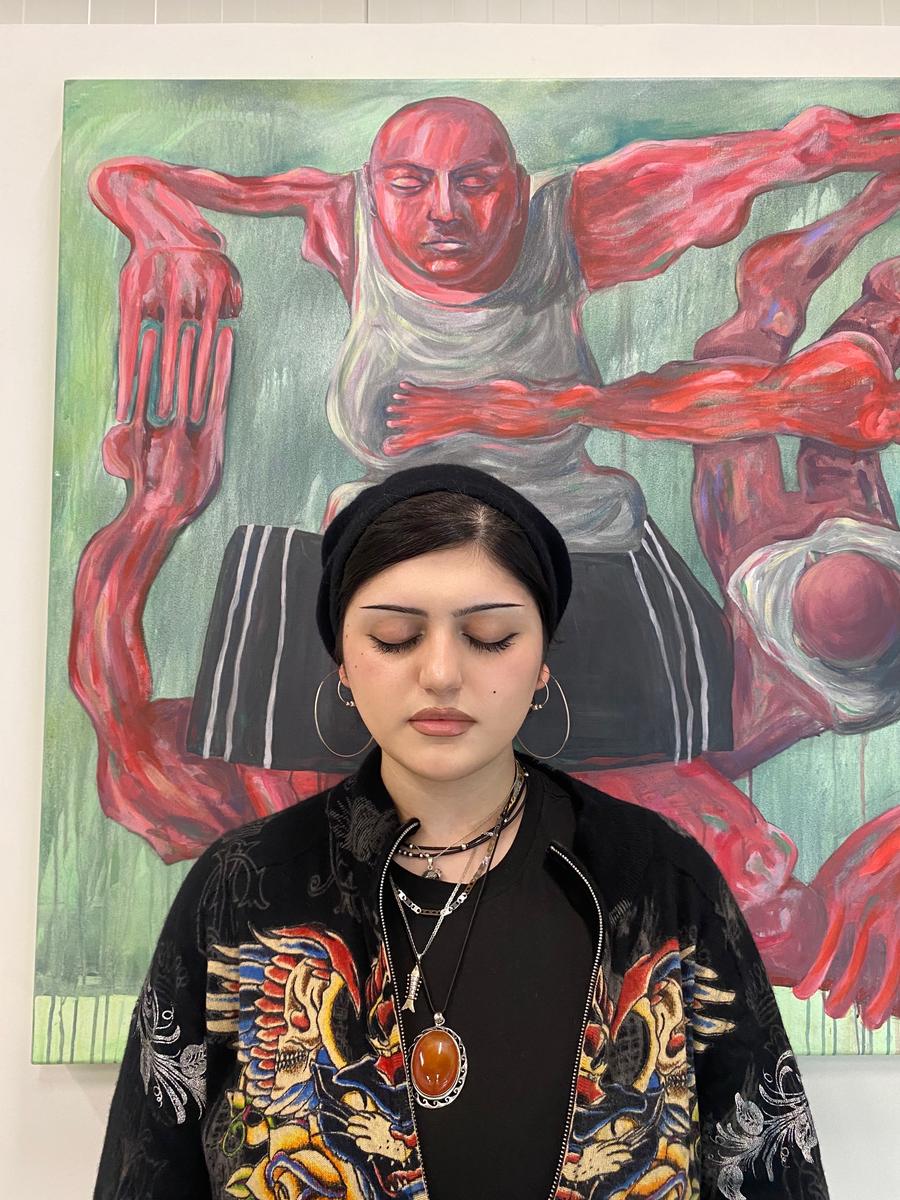
Sara Kamar
What’s your name and where are you from/based?
I am Sara Kamar, a Syrian artist based in the UAE.
Can you describe your practice in a few words?
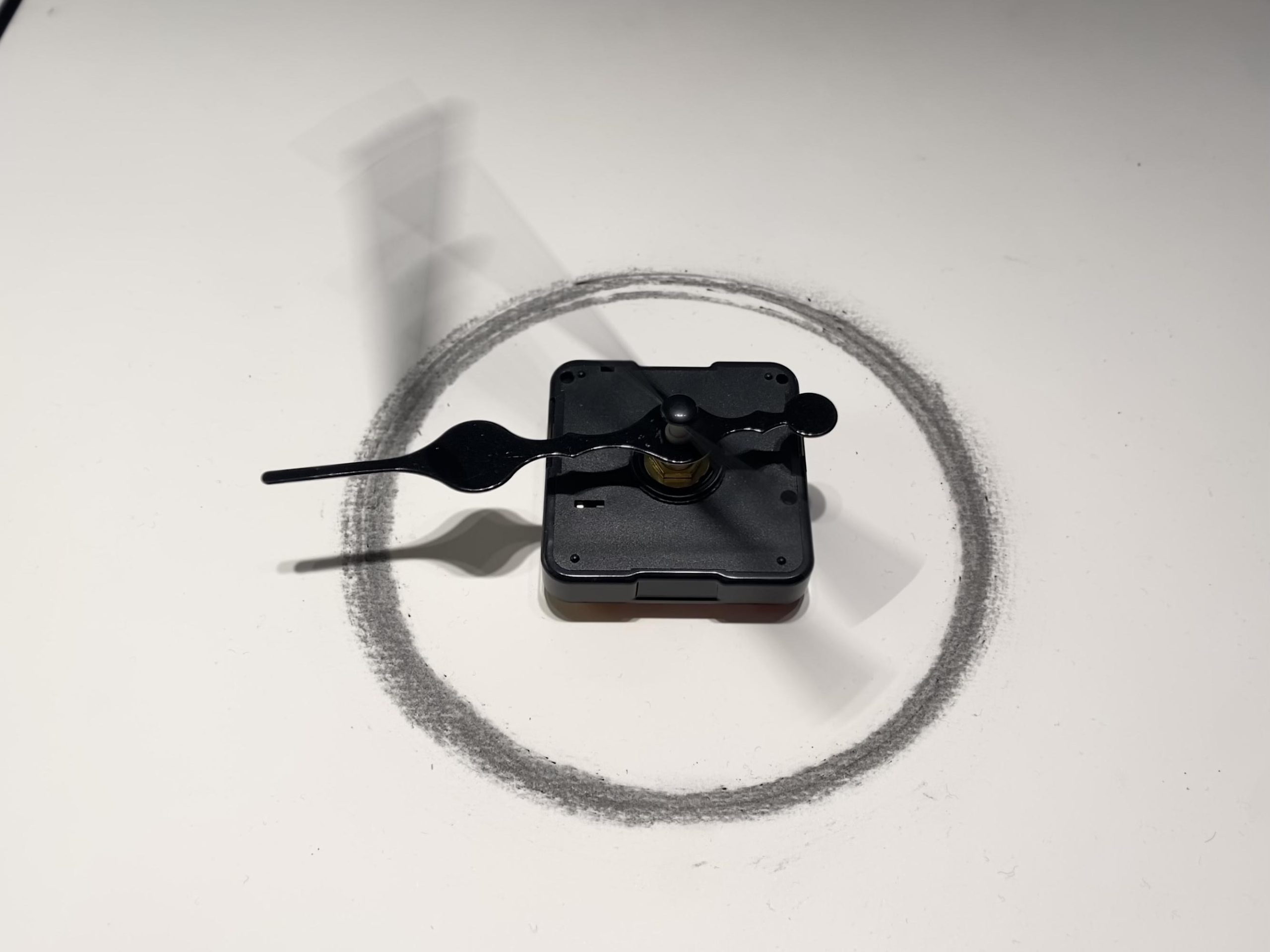
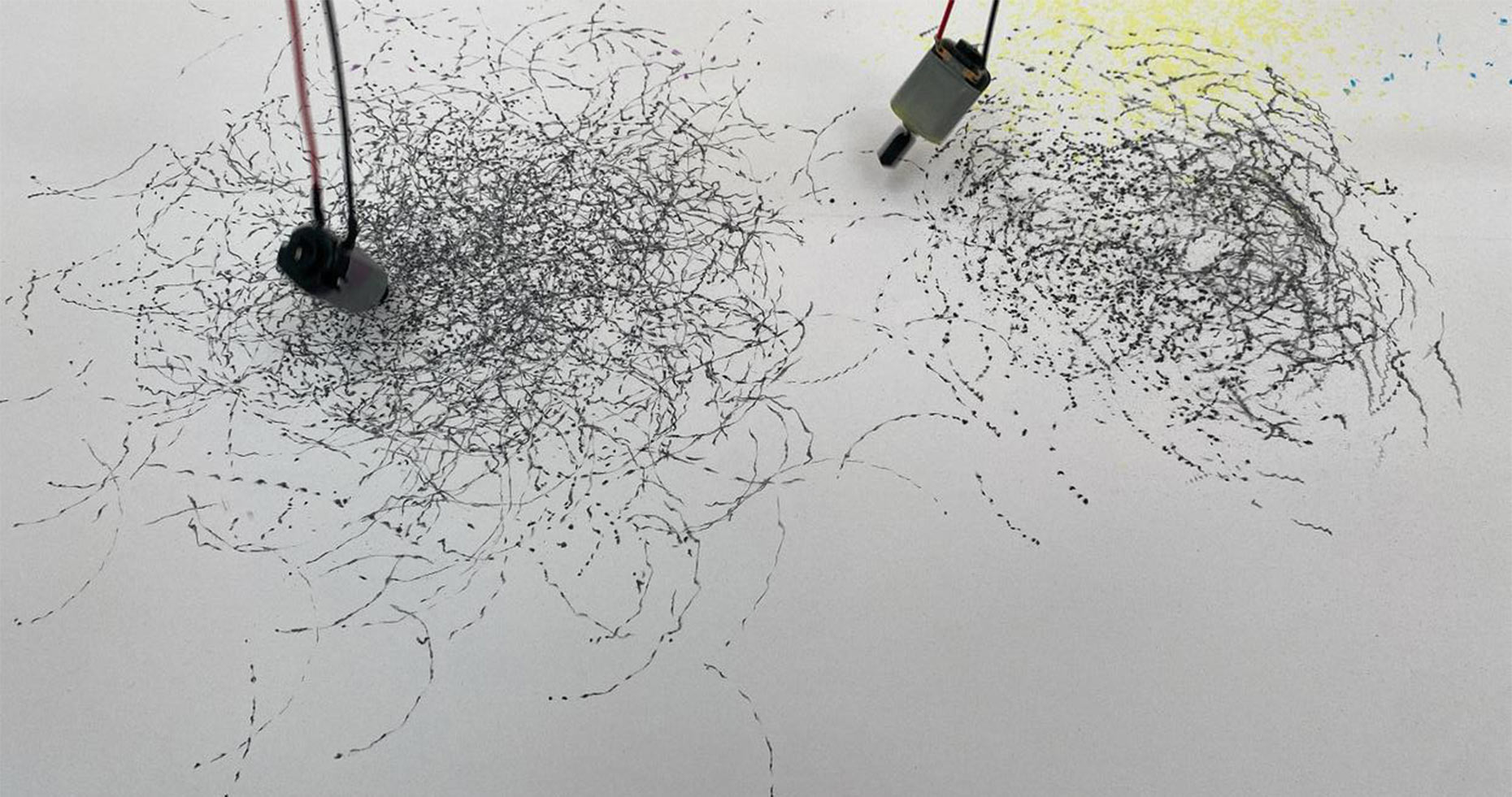
My practice is evolving quickly and it is not confined to one medium or topic. I tend to gravitate towards making art that isn’t “safe” or not in my comfort zone. Currently the topics I am exploring are mainly existential with a focus on non-traditional mediums such as making analog drawing machines.
What first sparked your interest in creating art and how has that evolved over time?
I think I am interested in art because it doesn’t provide answers—it asks questions. I have always wanted to be an artist. I hated school. I’ve even tried to get an architecture degree but that lasted only two years before I realized that’s not where I see myself in the future. I guess I am lucky to have this definite passion from a young age and being brave enough to be super stubborn about it. I’m learning a lot everyday but there is one thing I know for sure; I do NOT want to make boring art.
You move between traditional and contemporary mediums, was that an intentional decision or something that developed naturally?
Honestly, it was something that developed pretty naturally. I’ve always been drawn to the tactile nature of traditional mediums (charcoal, ink, oil paint) and how it forces me to slow down in the process which really grounds me. But at the same time, I cannot ignore the pull of contemporary tools and methods. There’s something really exciting about pushing boundaries and experimenting with newer technologies/conceptual approaches.
I think it started as curiosity more than anything. Like, “What happens if I combine this classical technique with this unexpected material or format?” Over time, that back-and-forth just became part of my process. I don’t really see a hard line between traditional and contemporary anymore, it’s all just language for expression. So I follow the work, and the medium usually reveals itself in the process.
Your work often captures small, unassuming moments, what draws you to the everyday and the unnoticed?
There’s a kind of poetry in those in-between moments in the everyday that I’ve always been drawn to. I think it started with this deep curiosity about how much meaning can live in something seemingly mundane. It’s also that tension between the meaninglessness and the meaningful that I find compelling.
I guess for me, it’s a way of slowing down. In a world that moves so fast, paying attention to the small things feels like a form of resistance. It’s about presence, observation, and honoring the beauty in what’s familiar or fleeting. And when I give attention to those moments it feels like I’m preserving something ephemeral, like saying, this mattered, even if just for a second.
Plus, there’s a universality to it. Everyone knows what it’s like to catch a quiet moment and feel something shift inside.
In ‘Existence’ The work suggests a letting-go of narrative or legibility. Have you found that this openness invites more personal interpretations from your viewers?
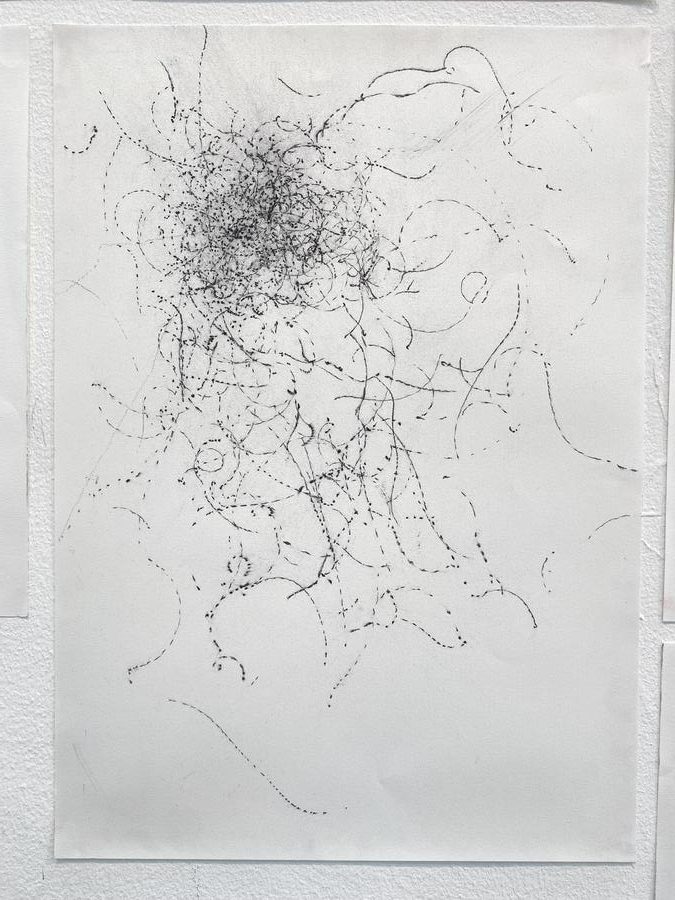
Absolutely. With Existence, stepping away from a clear narrative was very intentional, it was about creating space rather than filling it. It also raises a deeper question about existence itself whether it holds inherent meaning, or if meaning is something we construct in order to endure the weight of being.
What’s been really beautiful is seeing how that openness gives people permission to interpret the work through their own lens. Some see human-like emotion in the drawing machine, through the way machine struggles to make marks with the charcoal. Some see memory, some just feel a kind of atmosphere, and none of it is wrong. That ambiguity becomes a point of connection. It invites a slower kind of looking, where people can linger and let the work unfold for them over time in front of their eyes.
In a way, it’s about trust. Trusting the viewer to meet the work halfway. And I think that makes the experience more intimate, more personal.
Tell us more about ‘Marshmallows on Sticks’ how do the sticks and ‘marshmallows’ shape the structure’s meaning?
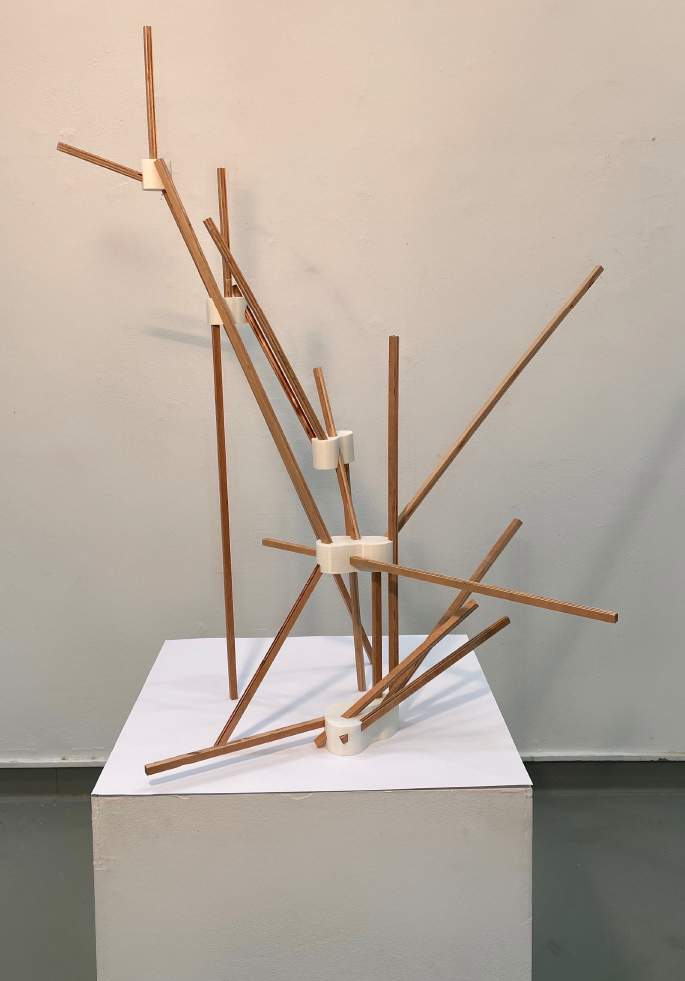
Despite the playful title, Marshmallows on Sticks isn’t really about the yummy treat you can toast. The title references the form of the sculpture. The work is actually rooted in routine, specifically, the passage of time and the quiet repetition of daily tasks. Each stick in the sculpture represents the amount of time it took me to complete a mundane task—things like brushing my teeth, boiling water, waiting for laundry. I’d measure those durations and translate them into physical lengths, essentially turning time into something tangible.
The “marshmallows” are 3D printed forms which act almost like joints for the wooden sticks. Their light, almost absurd quality contrasts with the quiet rigor behind the work’s construction. Together, the elements create a kind of physical diary, a record of time that’s both personal and abstract.
So the meaning isn’t in the title, it’s in the rhythm, the restraint, the everyday rituals made visible.
You’ve mentioned wanting to create space for reflection and connection, what kind of conversations do you hope your work opens?
I hope the work opens space for questions, both internal and between people. Not necessarily big, loud debates, but those slower, more thoughtful exchanges that come from really sitting with something. When someone encounters the work, I want them to feel invited in, not instructed.
I’m less interested in telling people what to think and more interested in what comes up for them when they spend time with the work. If it leads to a conversation that feels honest or unexpected, even quietly so, then I feel like the work has done something meaningful.
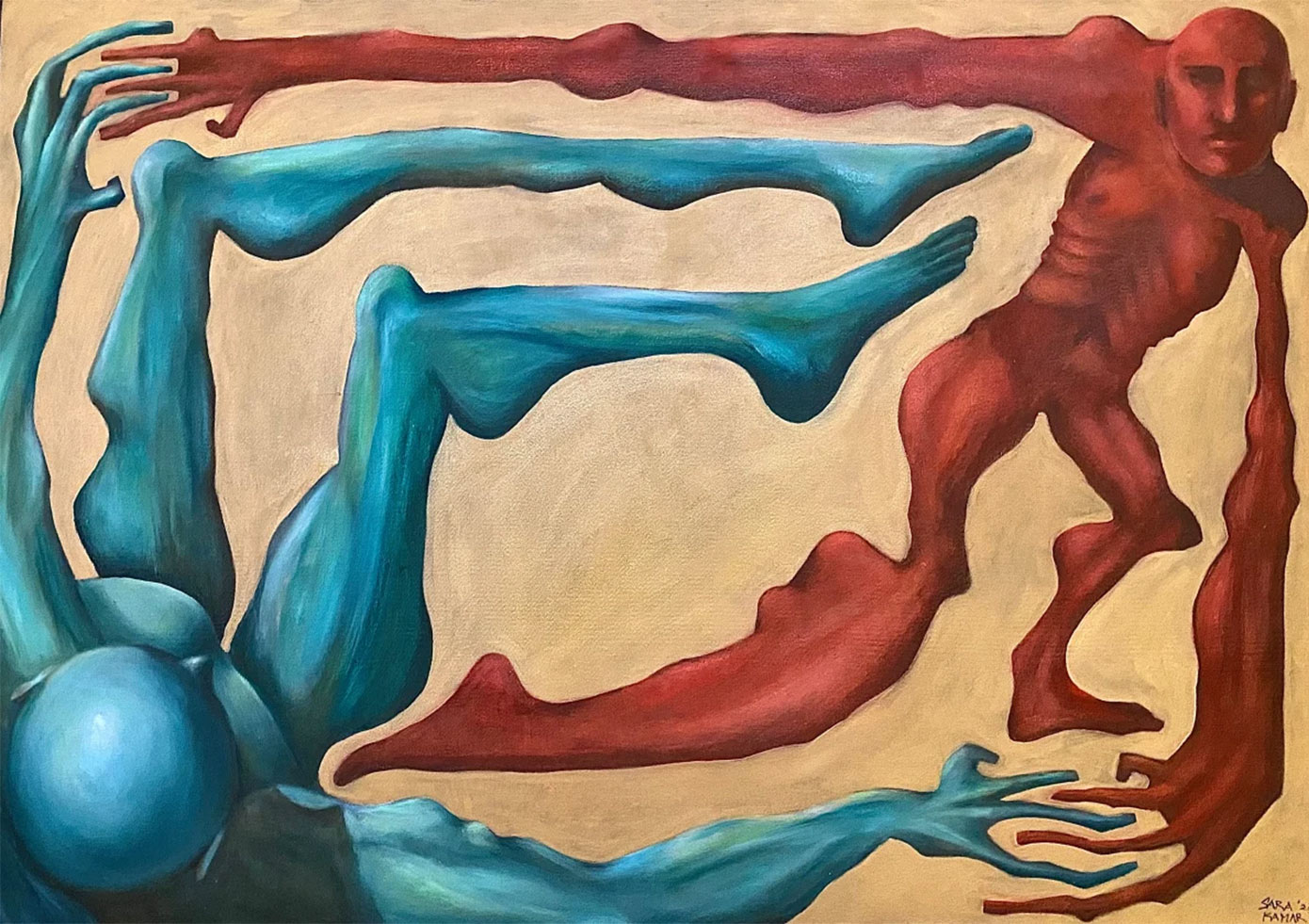
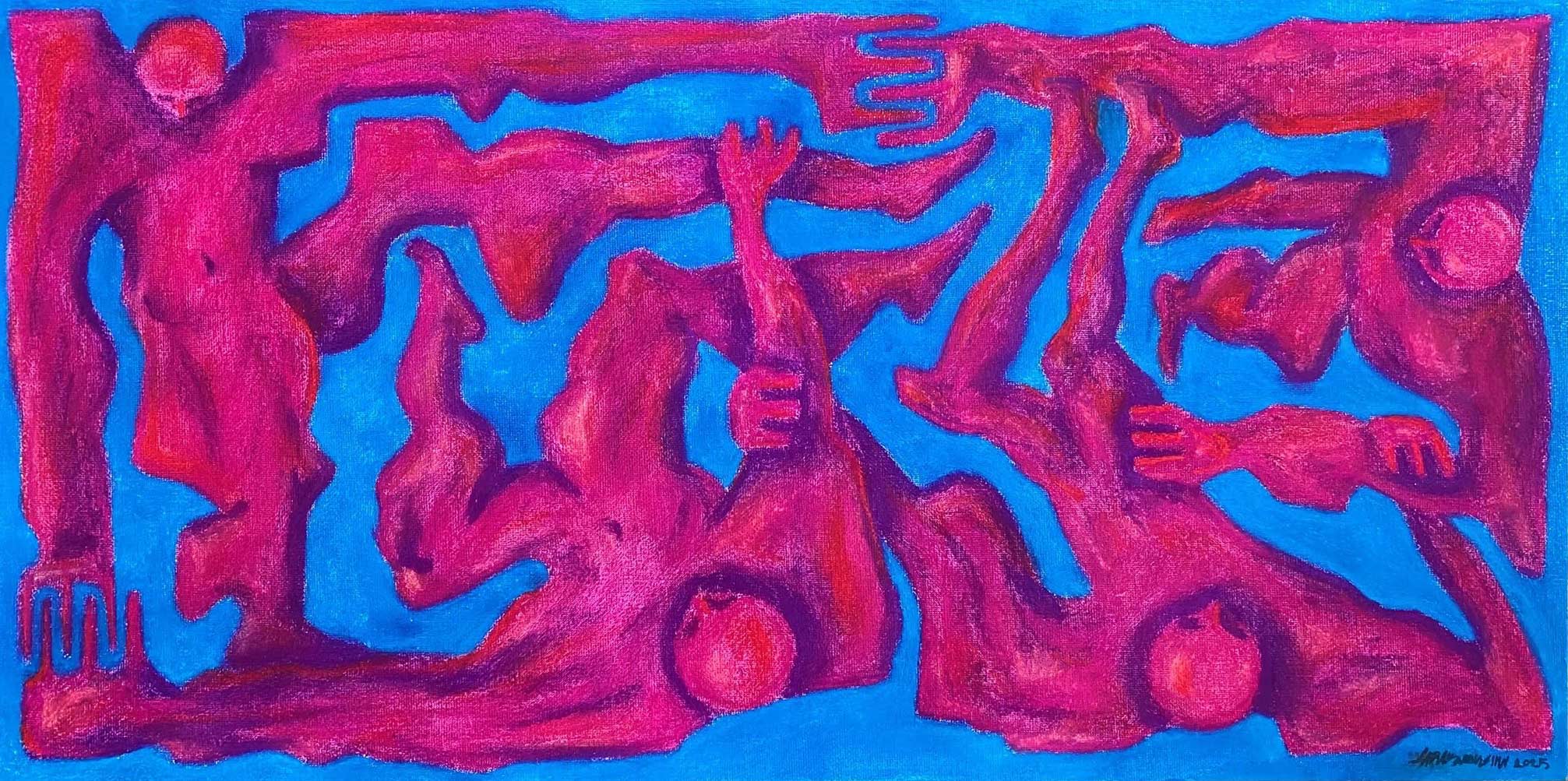
In your figurative paintings, such as Two Figures, One is Desperate. who or what are these figures confronting?
Two Figures, One is Desperate is very much a self-portrait, but it also moves beyond the personal, it becomes a kind of emotional landscape. The figures aren’t confronting each other so much as they’re caught in a shared tension, maybe even trying to reach each other across it. One is clearly more raw, exposed, desperate to hang on, but the other isn’t indifferent. There’s a kind of quiet witnessing happening, which to me, speaks to love.
They’re confronting the space between them: misunderstanding, longing, fear, tenderness, all the messiness that comes with being close to someone. So while it is about the self, it’s also about the emotional push and pull of loving and being loved. That strange duality of connection and distance that can exist even in intimacy. I wanted the viewer to feel that complexity, where vulnerability meets presence, and where love doesn’t always offer resolution.
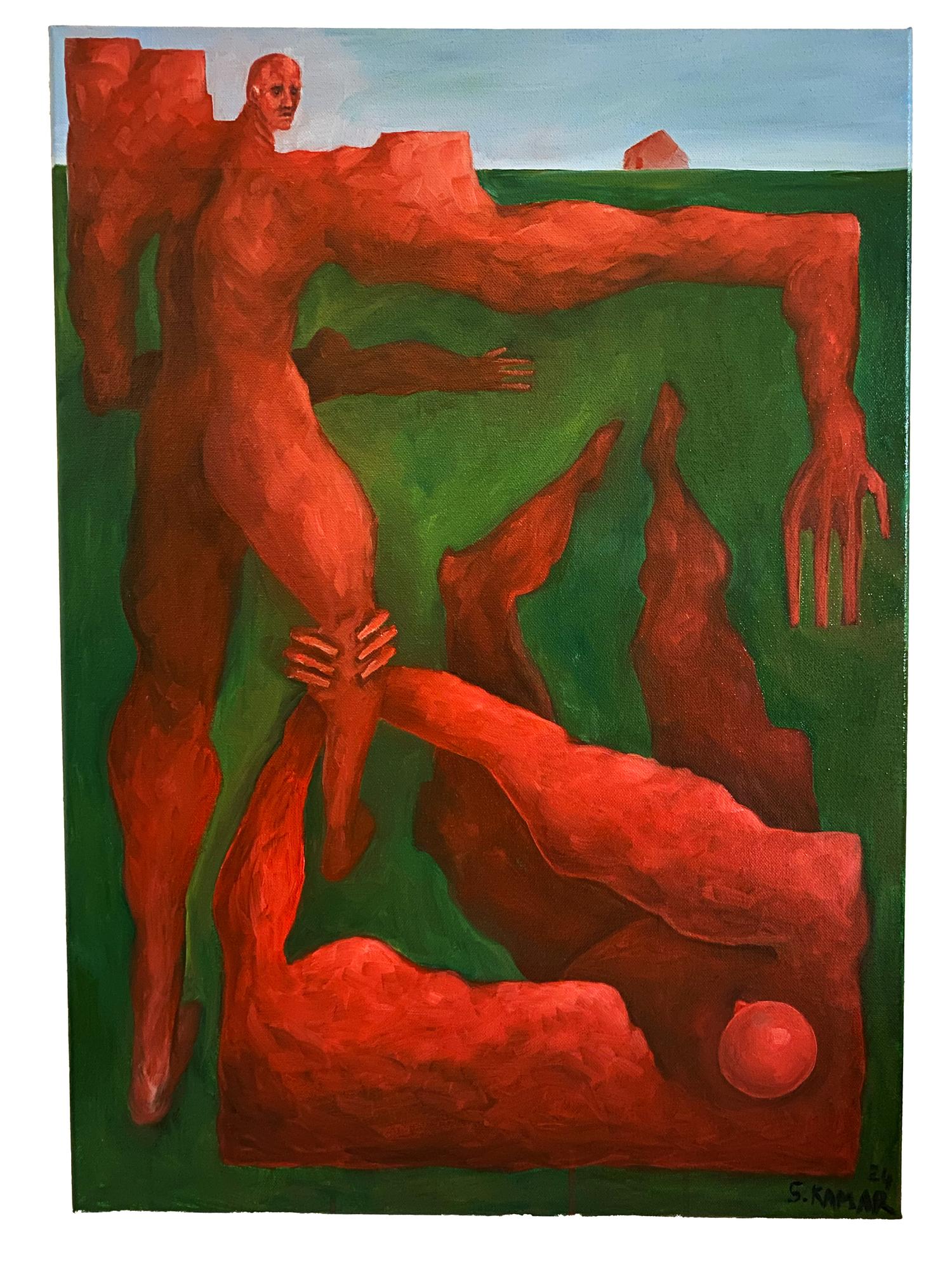
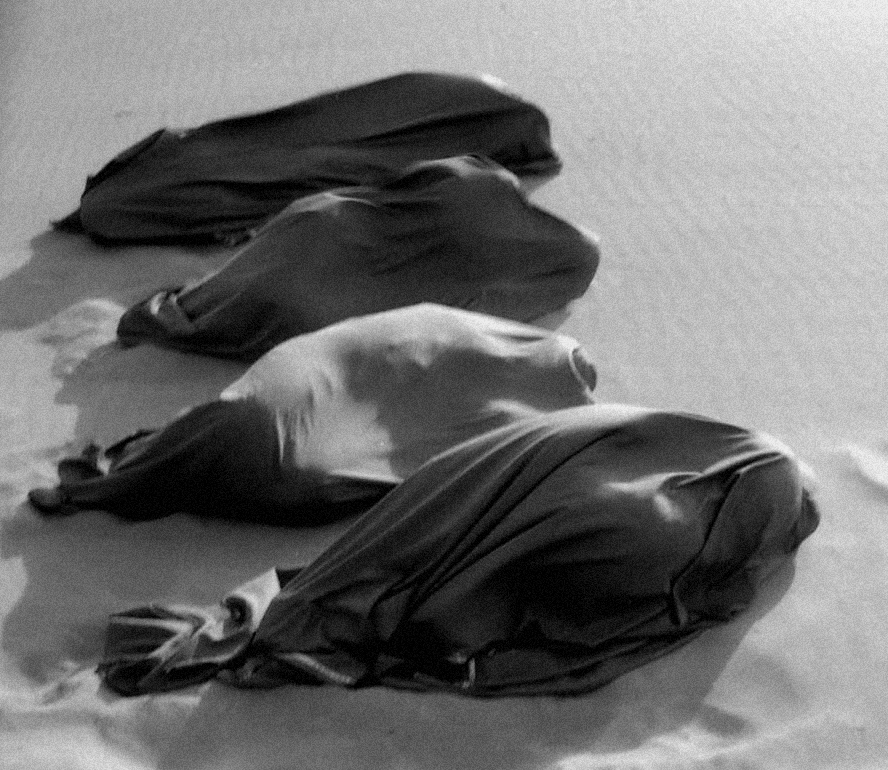
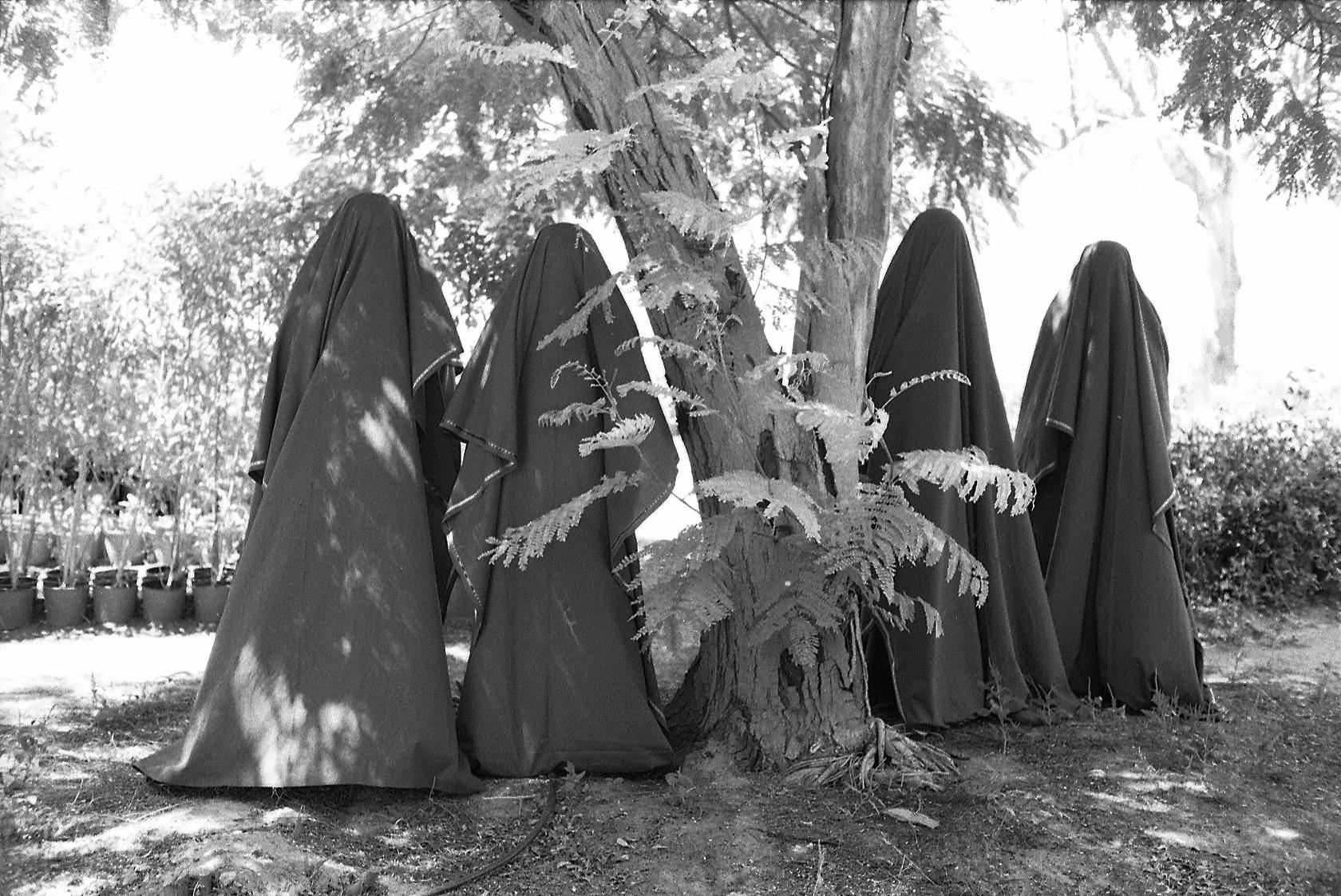
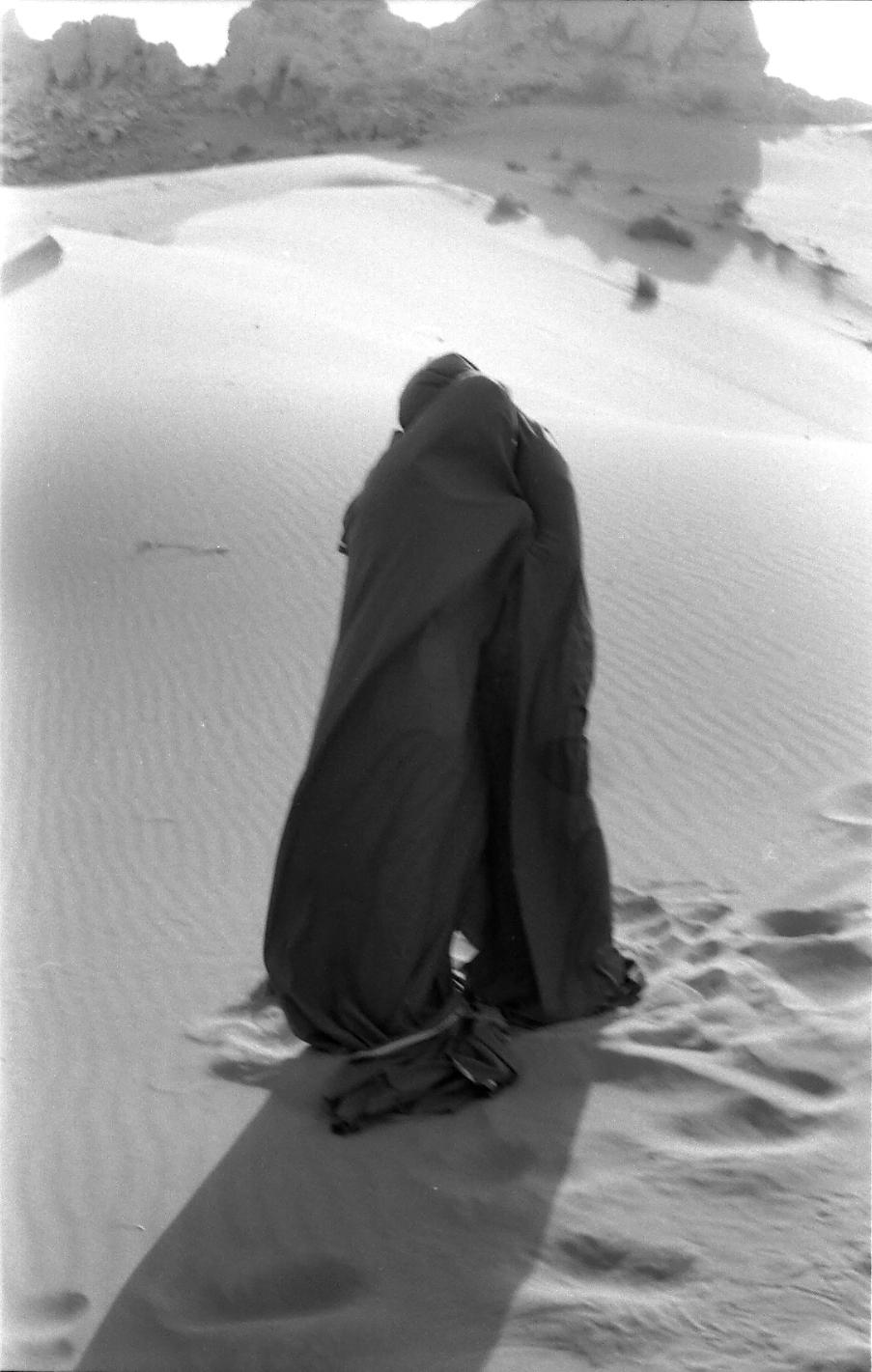
Is your ‘Analog Series’ rooted in a specific memory?
Yes, it comes from a very specific moment, a kind of pivotal event that shifts everything, whether it’s love, death, or something else entirely. It’s about that point where your world quietly rearranges itself, and you’re left navigating the emotional aftermath in a way that feels both overwhelming and strangely isolating.
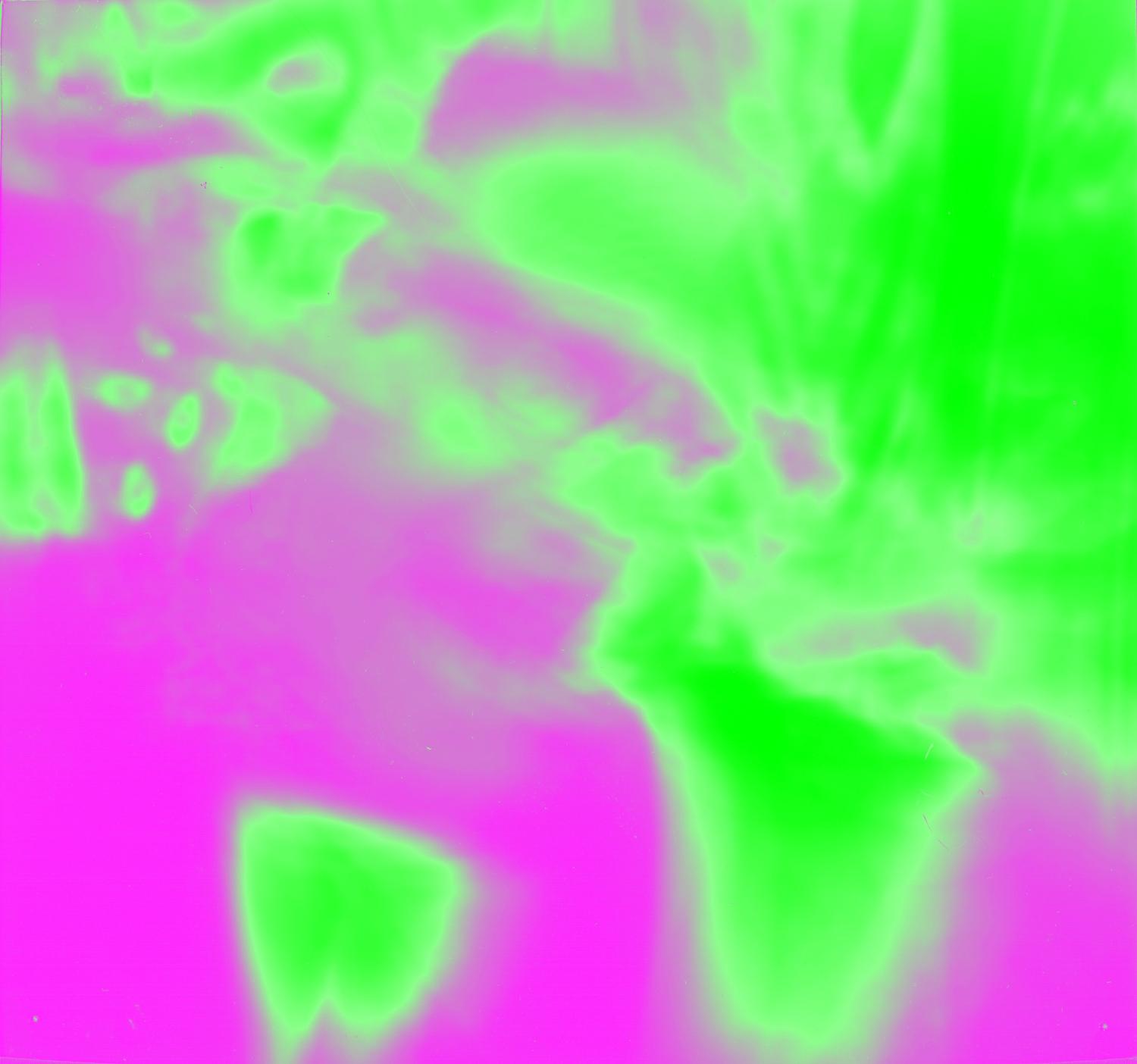
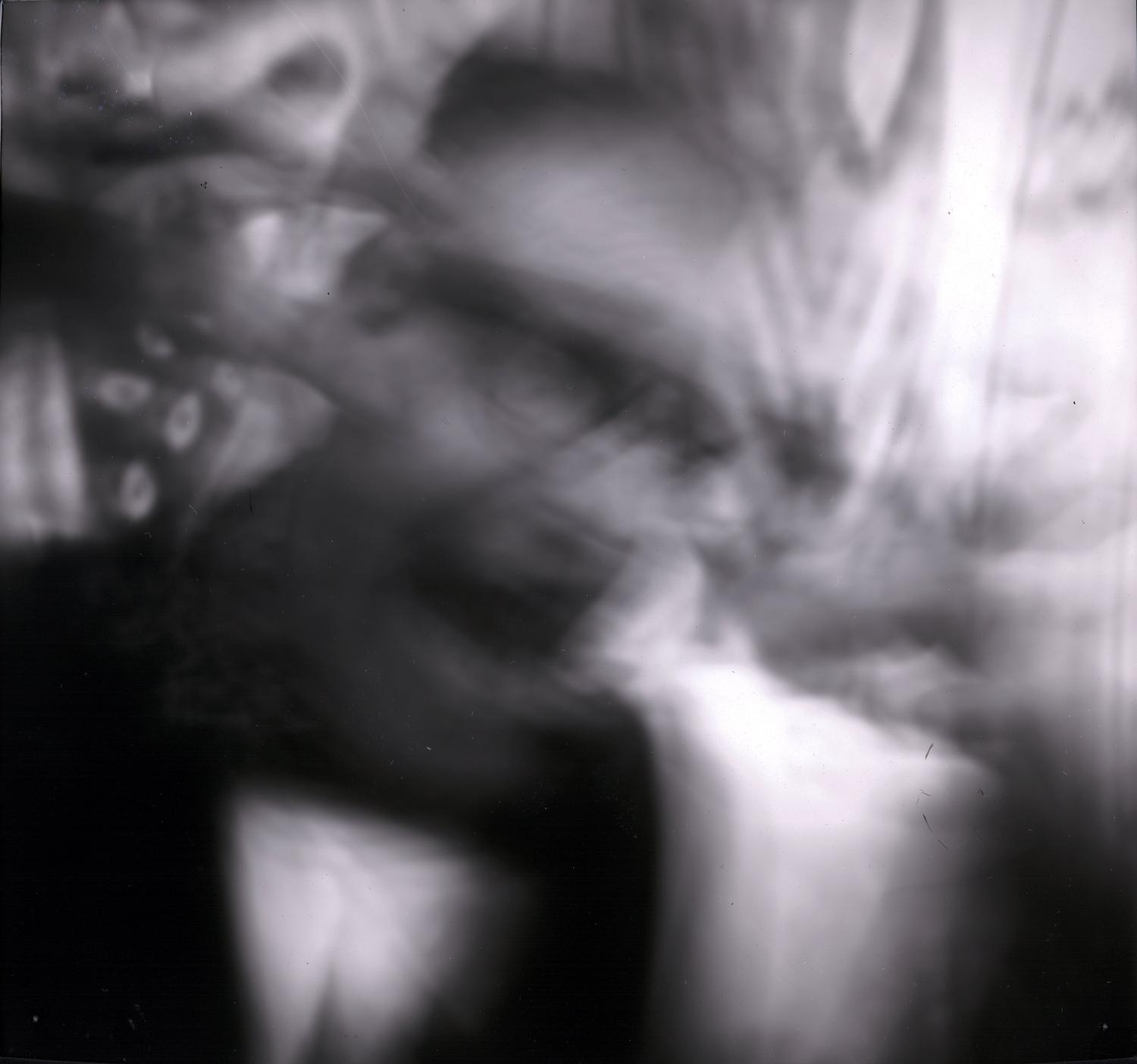
Using traditional black and white analog photography was intended to capture the timelessness of these emotions. The images lack color just like the emotional space you enter after something life-altering happens. There’s this weight of pain or uncertainty, but it’s also very still, very internal. It’s about moving through that unfamiliar emotional terrain on your own, without a clear roadmap.
So while it’s rooted in a personal memory, it’s more about exploring that universal experience of being changed by something and quietly figuring out how to exist in the world again afterward.
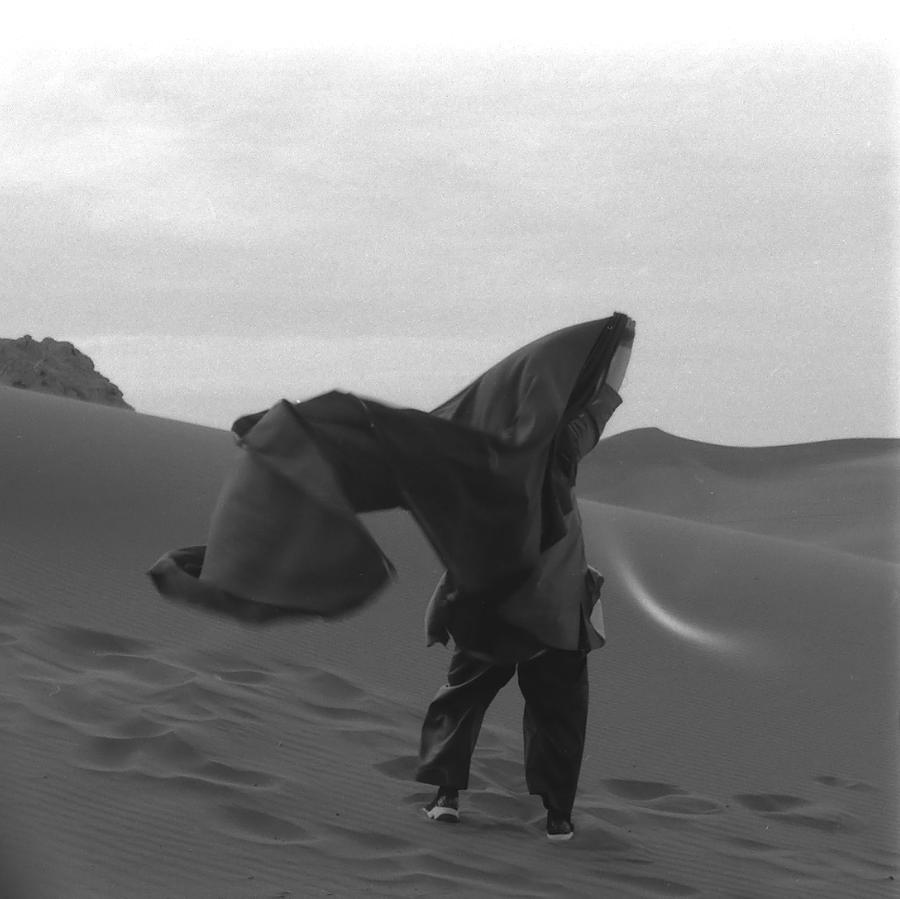
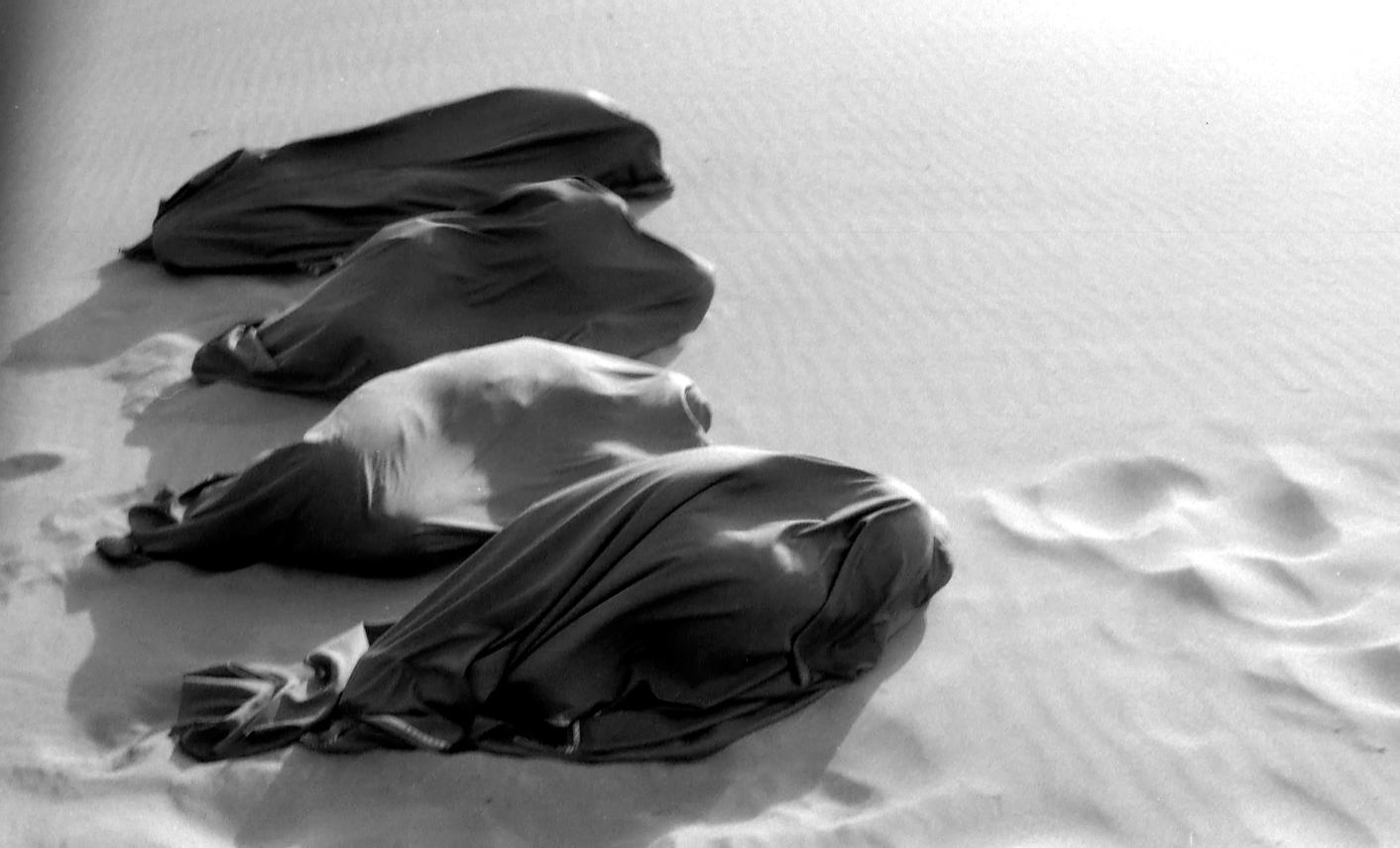
Is there a piece or exhibition that felt like a turning point for you?
Yes, definitely. My Existence, That Absurd Thing felt like a turning point for me. It was a pivotal exhibition that allowed me to explore new depths in my work. The support I received from Moustafa Thaer founder of Thaer Select gave me the confidence to fully dive into that concept with the painting series, which was rooted in personal experience but also spoke to something much larger, how we all navigate emotional and existential shifts.
That show was a shift in my approach to art professionally, it also marked a moment where I felt seen in a way that validated not just my work, but my process.
The connection and momentum that followed—leading to Nausea in Dubai—felt like the natural progression of that energy. I feel so lucky and grateful and it definitely was a turning point in my journey as an artist.
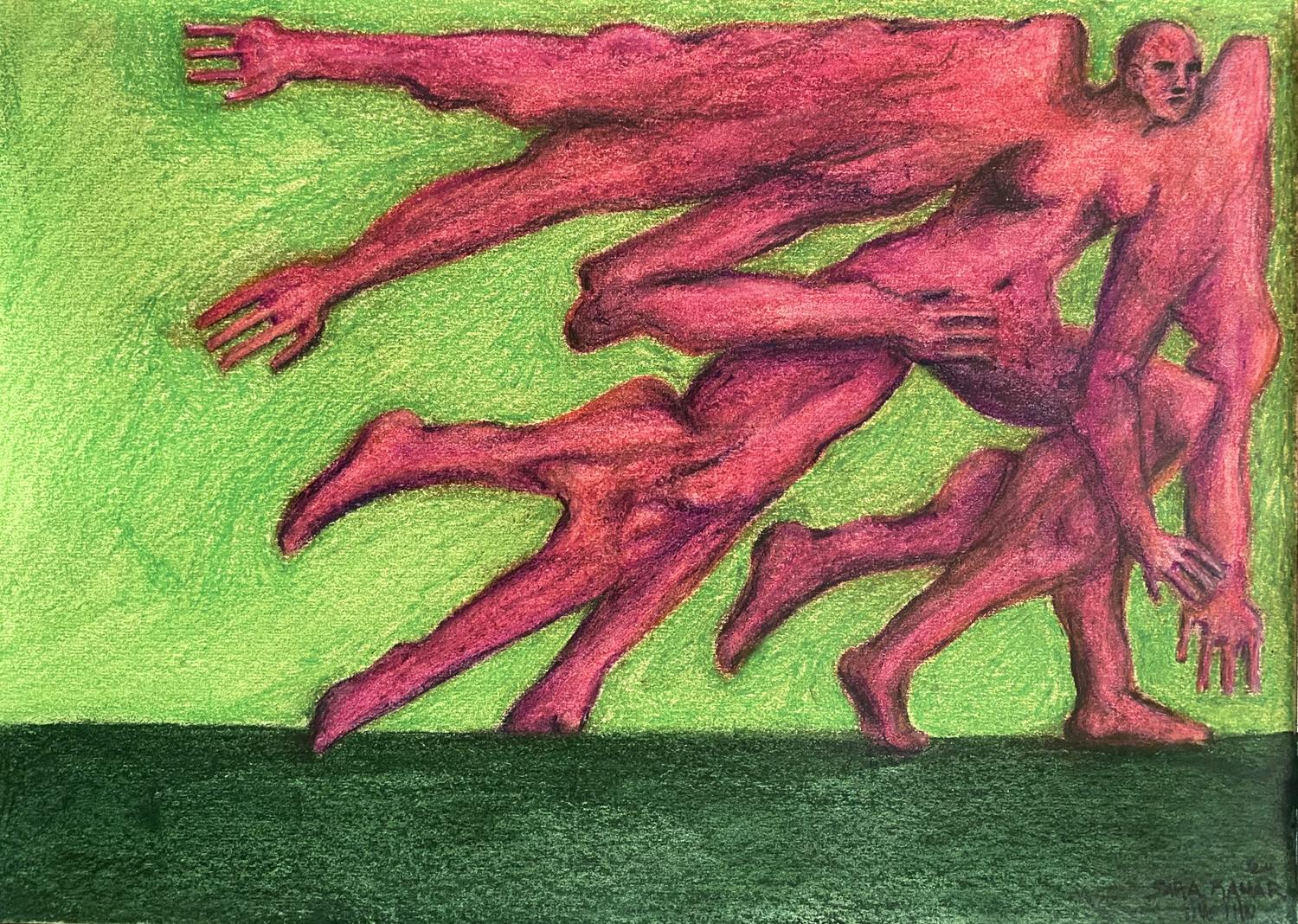
Do you ever work on pieces just for yourself, without the intention of showing them?
Absolutely. Not everything I create is meant for an audience or an exhibition. Sometimes, I make pieces simply because I need to express something for myself (they’re usually bad). These pieces often feel more raw or personal, and there’s a freedom in creating without the pressure of presentation. It’s a kind of release or catharsis, and sometimes it’s just about the act of making, not the final result.
Those works might never see the light of day, and that’s perfectly fine. They help me stay connected to the process itself, rather than the outcome. I think it’s important to have that space to create without expectations. It allows me to experiment more freely, and in the end, it strengthens the work I share with others. Some of my most meaningful pieces have come from that private, unguarded space.
Are there themes or feelings you’re still hesitant to explore in your work?
I’m curious and I try to always give my all. I think that curiosity is what pushes you to explore all kinds of themes and ideas, even the ones that might feel out of reach. The key is that willingness to intentionally find loopholes and subtlety.
Where can people find you?
You can find me petting the cats on the streets of Sharjah, collecting shells on the beaches of Fujairah, or on Instagram @studiosarakamar where I post art and other less serious stuff.