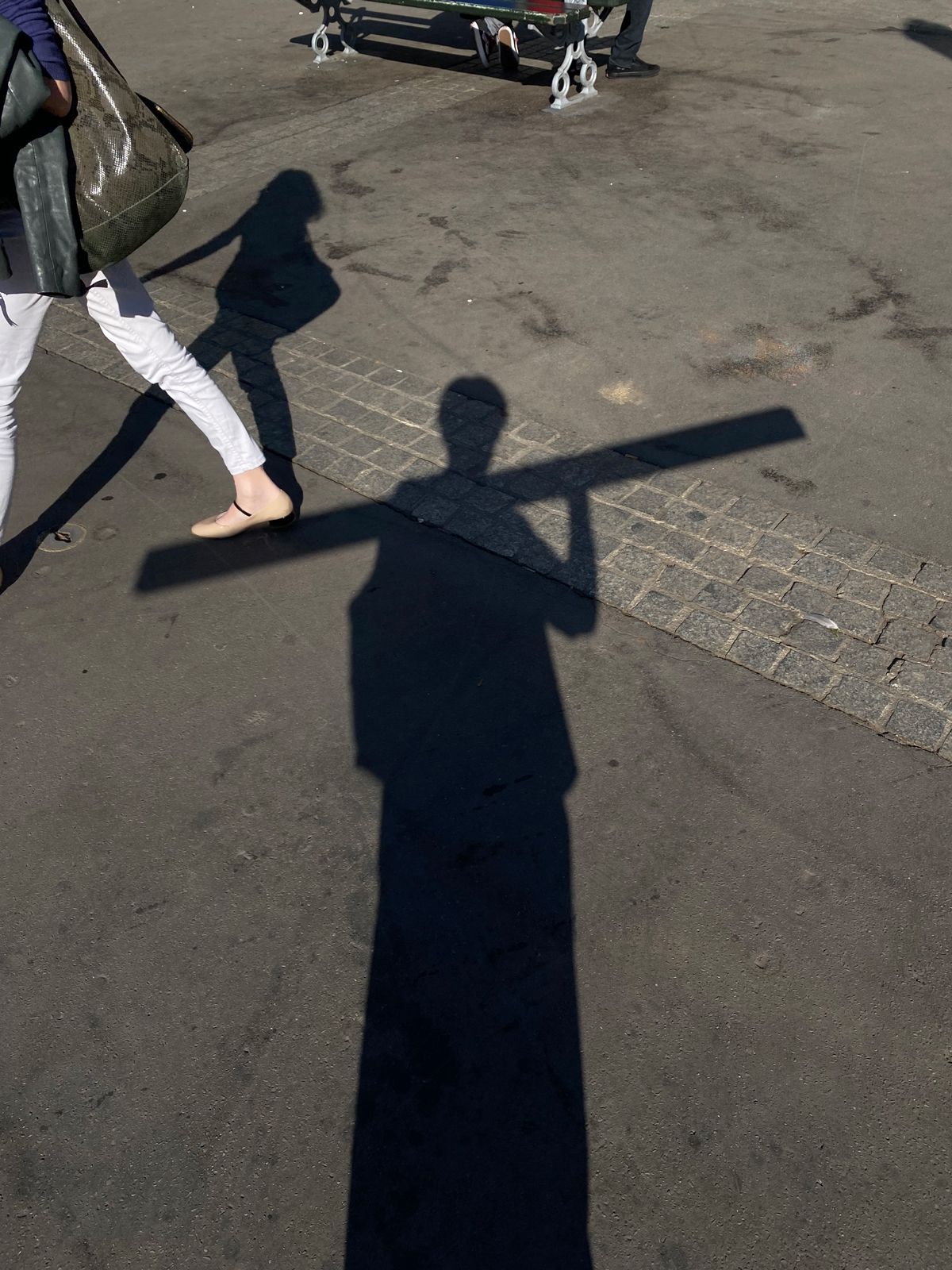
Nicolas Guillamot Vallribera
What’s your name and where are you from/based?
My name is Nicolas Guillamot Vallribera. I’m from Toulouse in the south of France but I’m
currently based in Paris.
Can you describe your practice in a few words?
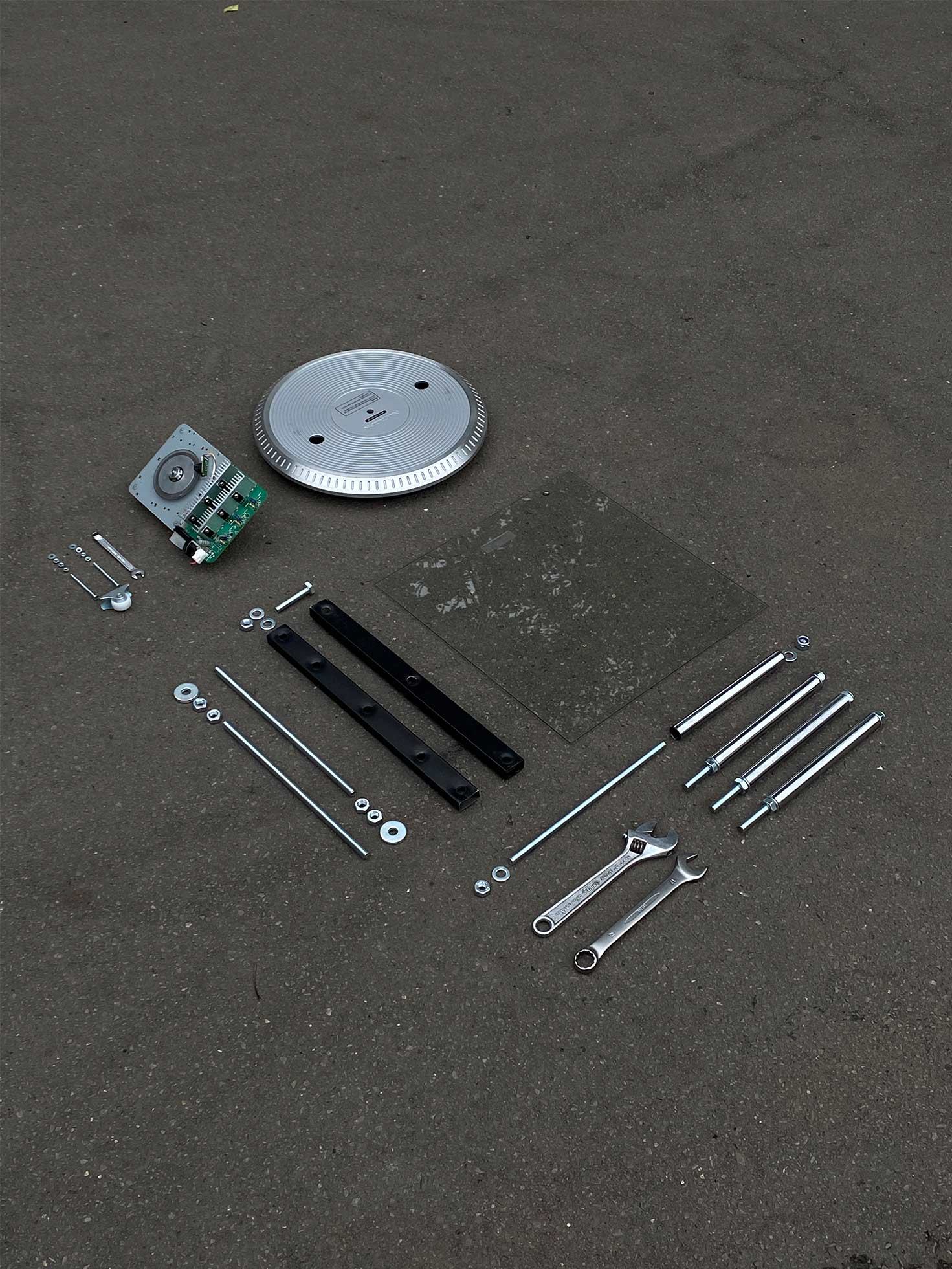
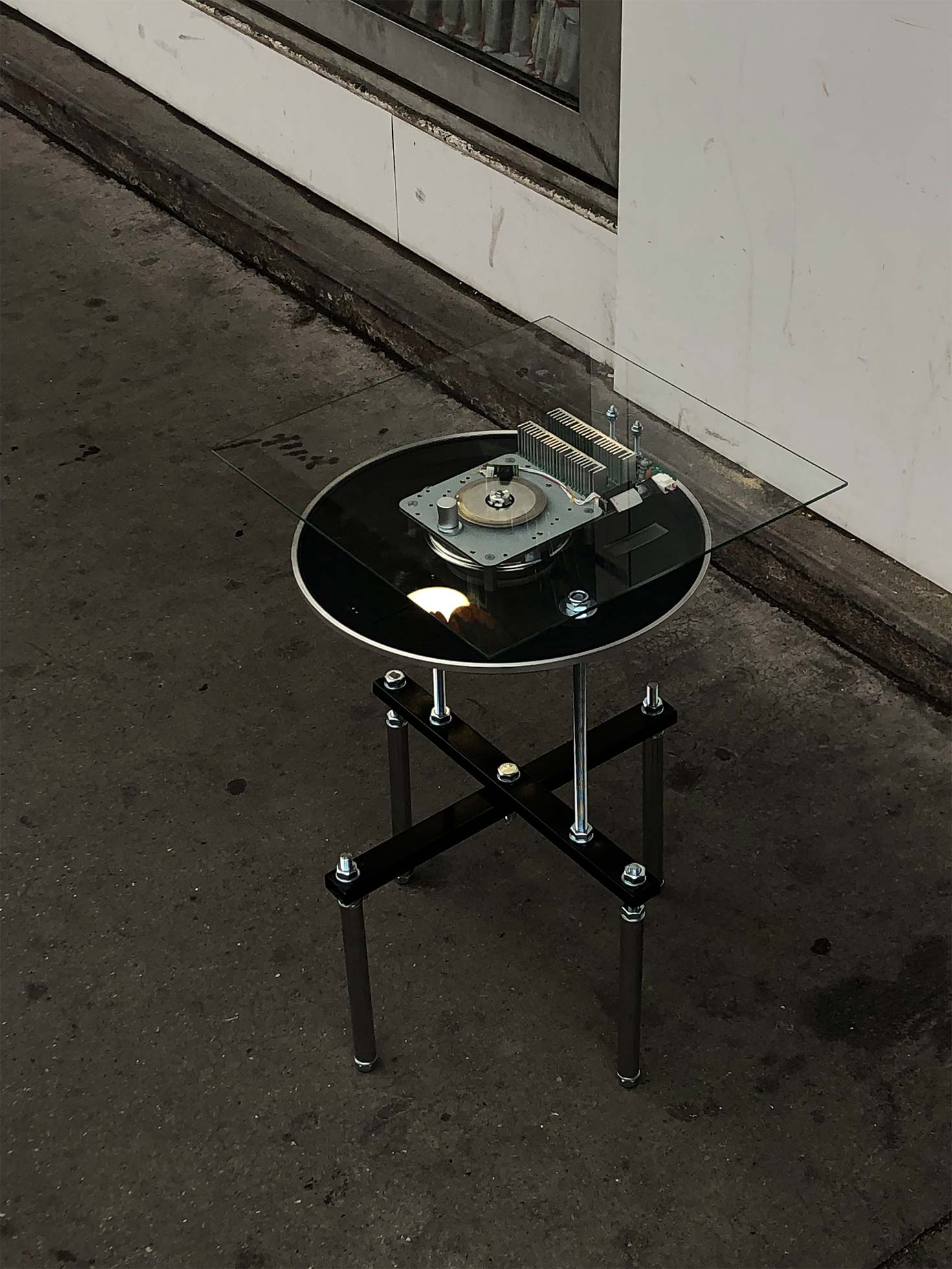
It’s a hybrid creative practice combining research and on-site investigation, with the design and crafting of objects and spaces, or tools and devices. I make things from materials found on the street, with a maximum economy of means. Everything I do is experimental at the moment. It’s a personal practice of design, which is only initiated in reaction to contemporary issues, and each time through a concrete link to a context or problem. My goal is to propose alternatives to our saturated model, whether in the way we create, consume, behave or live… To do so, exploration, reuse, do-it-yourself and collective practices become the stages of my creative process, in which I try to suggest new ways of practicing everyday life and the city, of creating and democratizing know-how, of looking at and interacting with the world.
What drew you to working with public space?
Many things. First and foremost, public space is for me, beyond its “physical characteristics” and composition, both a reflection of the state of society, and the materialization of all the constraints and powers that control society.
Considering my motivations, for me it’s the best place to question people about their daily lives, their relationship with others, and above all their relationship to all the social, ecological and political issues that are becoming progressively more pressing. In today’s big cities, public spaces are more and more like a kind of staging area, distancing us from the most essential things and, above all, from each other. It’s a space where we circulate like crazy, where we consume, and where we sit where we’re told to sit. That’s why I try to make it my playground. The public space is the best place to raise awareness, stimulate citizen participation and the power to act, and put forward, within the “urban machine”, ways of reappropriating our environment, slowing down, looking at and using in a different way what surrounds us on a daily basis.
Otherwise, I love walking and exploring, meeting people and sharing. Working with public space has therefore enabled me to make my work an object of reaction and debate, as well as to develop my practice and appropriation of the city. While it raises many sociological reflections and consumerist excesses, it is also a place that is full of opportunities: whether in terms of the creative material to be found there, or the people you can meet there by coincidence (hard to make it short on this one).
In general, how does your curiosity of ‘the public’ inspire you? Do you consider yourself a curious person?
Yes, I think I am. Discovering places and meeting people makes me ask a lot of questions. How we look at each other in the street, how we interact, how we use the city, how we evolve in it…. I’m always asking myself, why is it like this and not another way? And that’s what inspires me and motivates me to try and stimulate new things in people, especially in a world that in my eyes is moving more and more towards individualism, standardization and other capitalist abuses.
How /why did you transition from a more traditional design education to a performative practice?
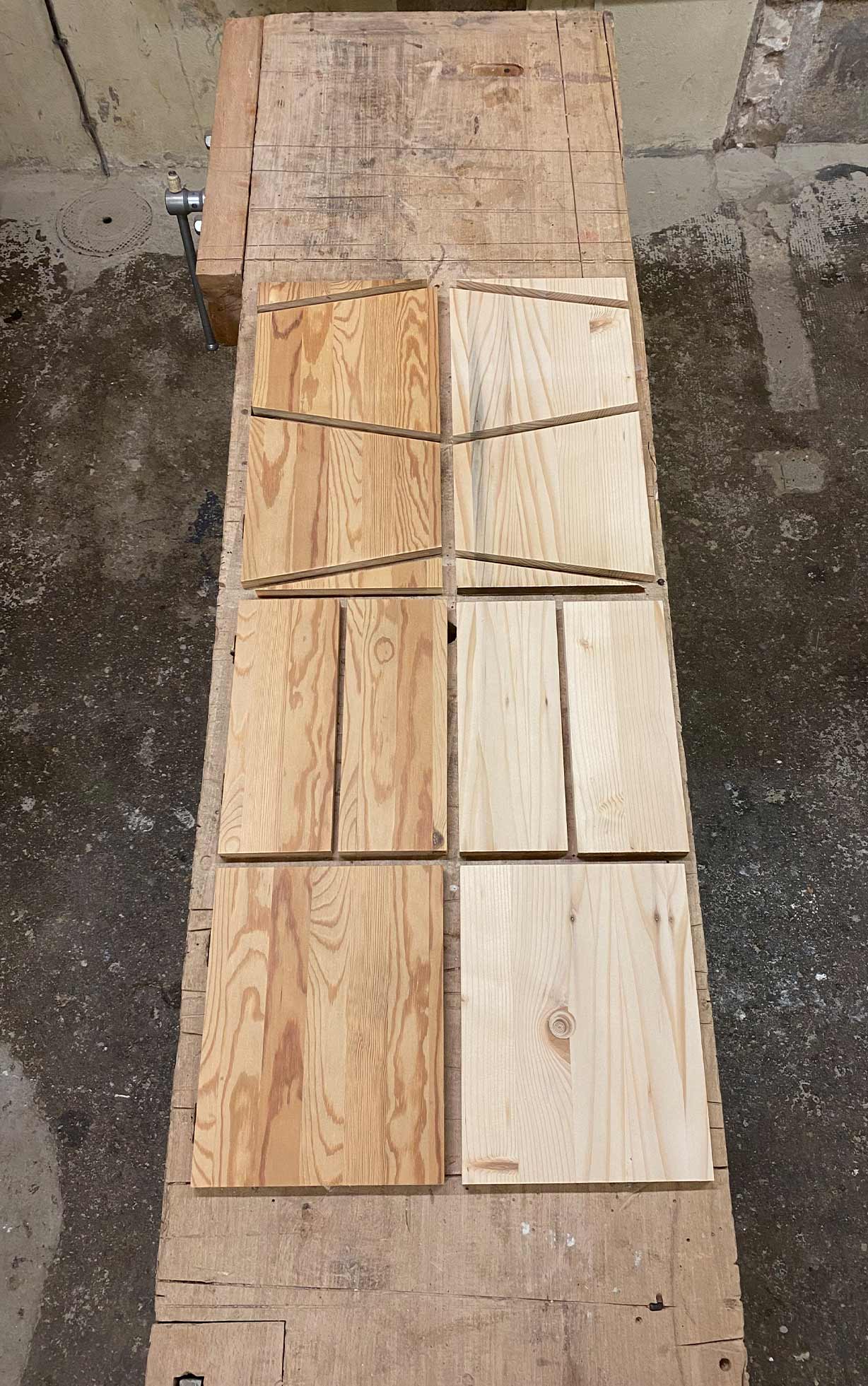
My 5 years of study and my first professional experiences were characterized by a mainly “digital” or conceptual design practice. The “finality” of each project came down to images and various documents. Then I discovered that space-related projects were very time-consuming and complex to carry out in real life (due to financial constraints, coordination of players or standards), and that most of the time they were too out-of-touch, as they were conceived and carried out by people working in offices. From then on, I decided I wanted to do something that would go faster, that could appear anywhere. Something closer to people, more accessible, even if it meant reducing the scale of the project. When I left school, I was dying to get closer to tangible design practice, to finally be able to craft what I design, to test it in real time, and to gather outside feedback on my work, all directly in the field. I needed spontaneity of action. Working in the street gave me the material resources to make things from scratch, an infinite number of spaces to test my work, and people to share it with. So the transition was straightforward, from computer-generated projects to the real world, where as a young freelancer I have very few human and material resources at my disposal. I simply tried to transform my constraints into opportunities, while having as much fun as possible.
Was there a specific moment or discovery that shaped the direction of this project?
Me, arriving in Paris as a young country boy full of ambition and discovering some of the realities of the job:
– Projects shaping the city, which are closer to political and normative decisions than the real needs of the people targeted, and above all which take far too long to come to reality to respond to the objectives targeted at their genesis.
-Design that, in the way it is taught, practiced and presented to the public (galleries, exhibitions, design week…) has become too elitist, much more focused on talk, aesthetics and, of course, profit, than on real world problems. Of course, all this is just a personal feeling and point of view, but it’s at the foundation of my reflection.
– I’m also thinking about my encounter with @2m26 in Japan, whose lifestyle dynamics and vision of design greatly inspired me and gave me the motivation to get started and do what I’m doing today.
What inspired your creation of objects with such stripped-back and simple forms?
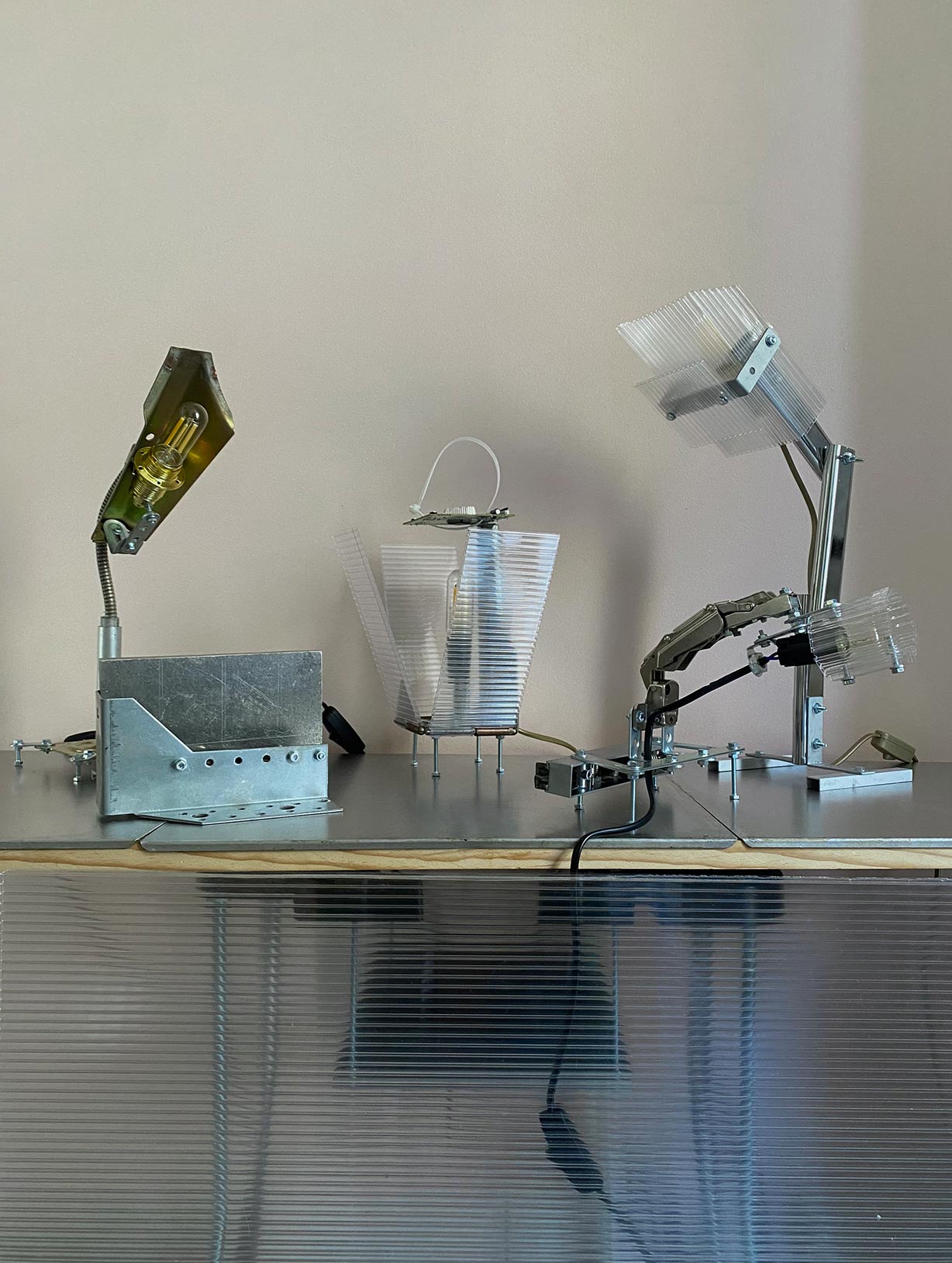
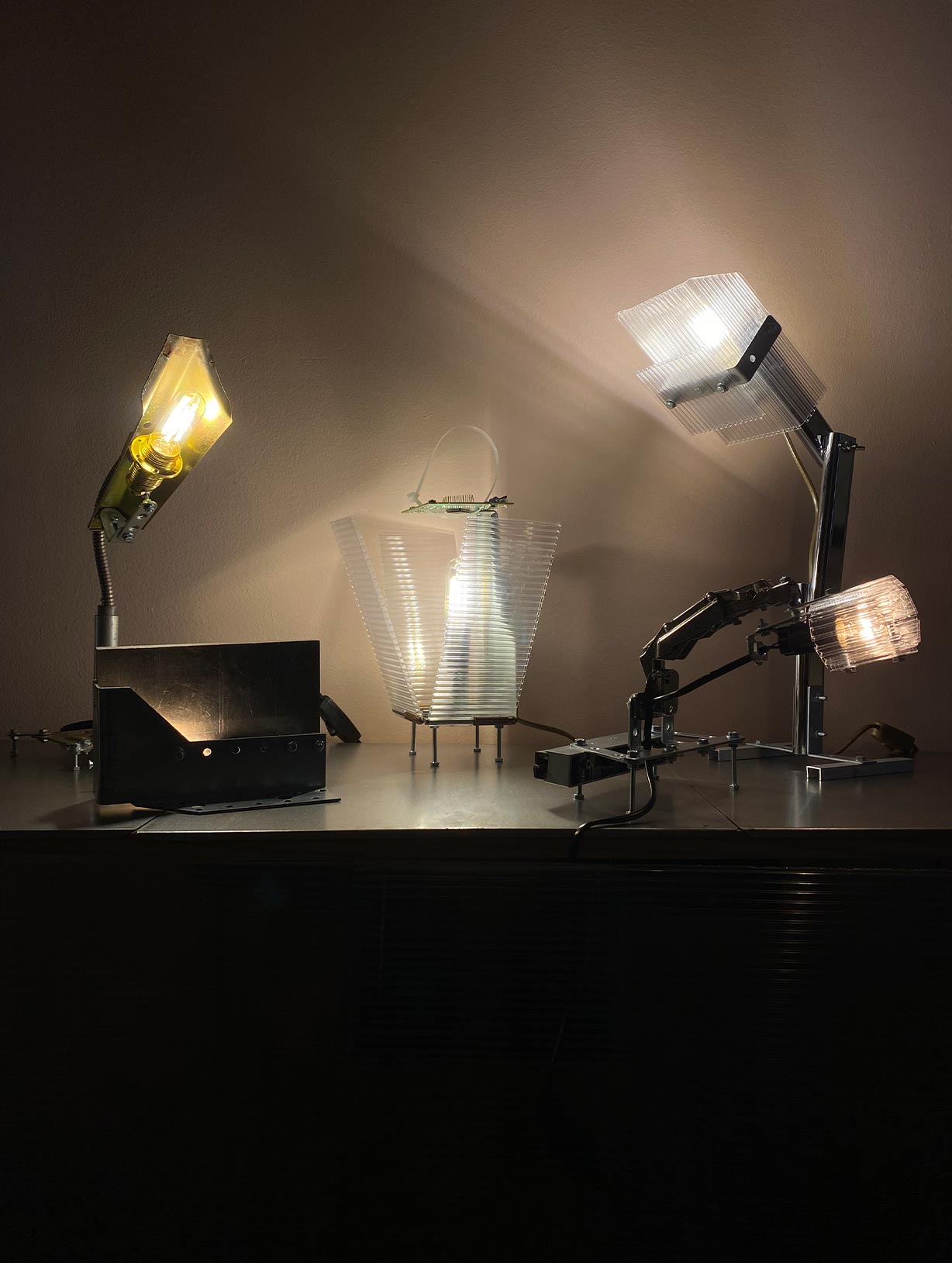
It’s a mix between my passion for Japanese culture and minimalism, the makers’ dynamic and DIY, and the desire to create things that are accessible to everyone thanks to their simplicity, that anyone can potentially reproduce with limited means. In contrast, the aesthetics and unnecessary complexity of commercial design, and globalized standards of shape and size, show me what I don’t want to do. This is what makes me want to show that design is also the fine DIY, as simple as it is chaotic, that anyone can do with a little willingness and elbow grease.
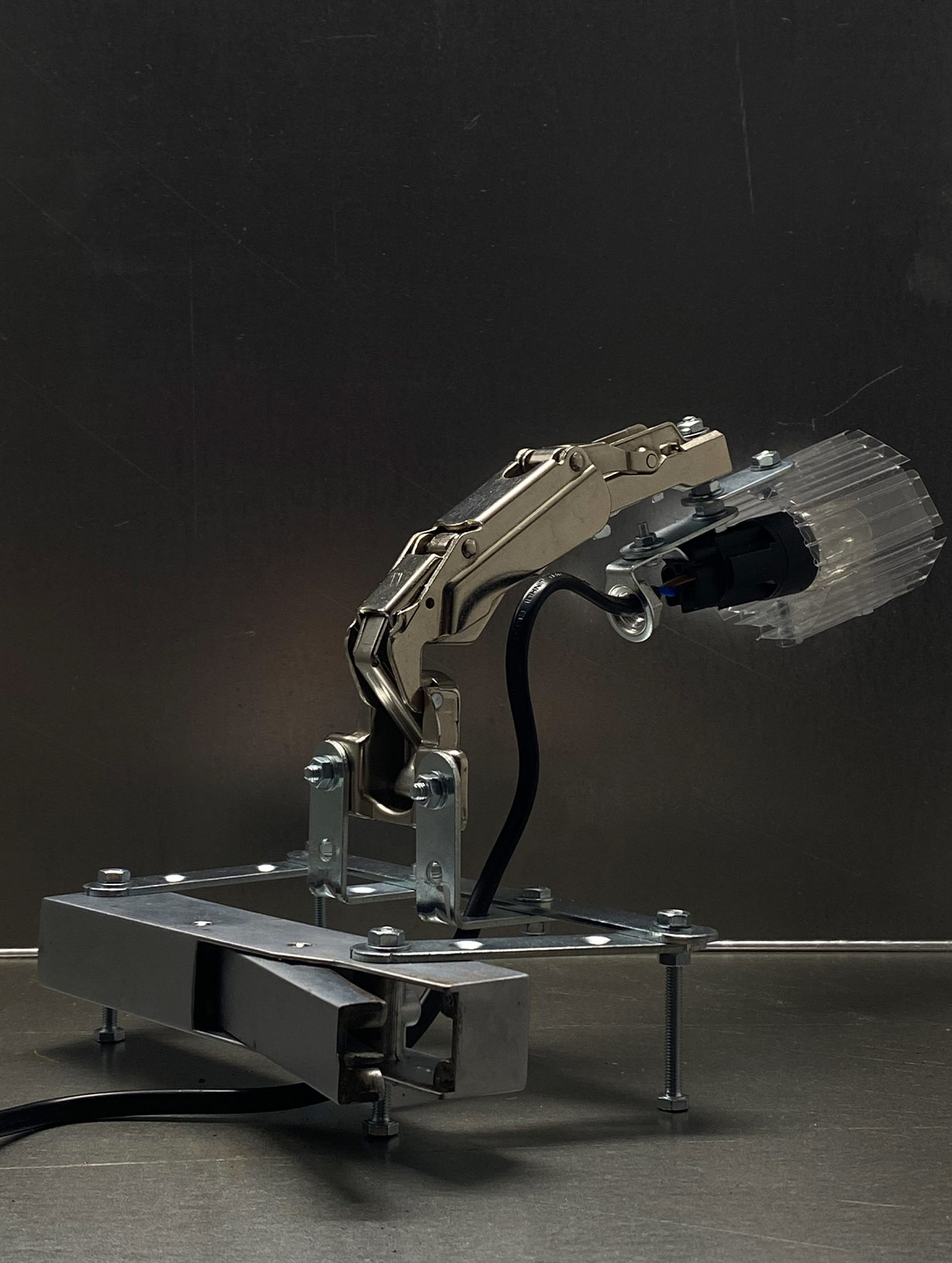
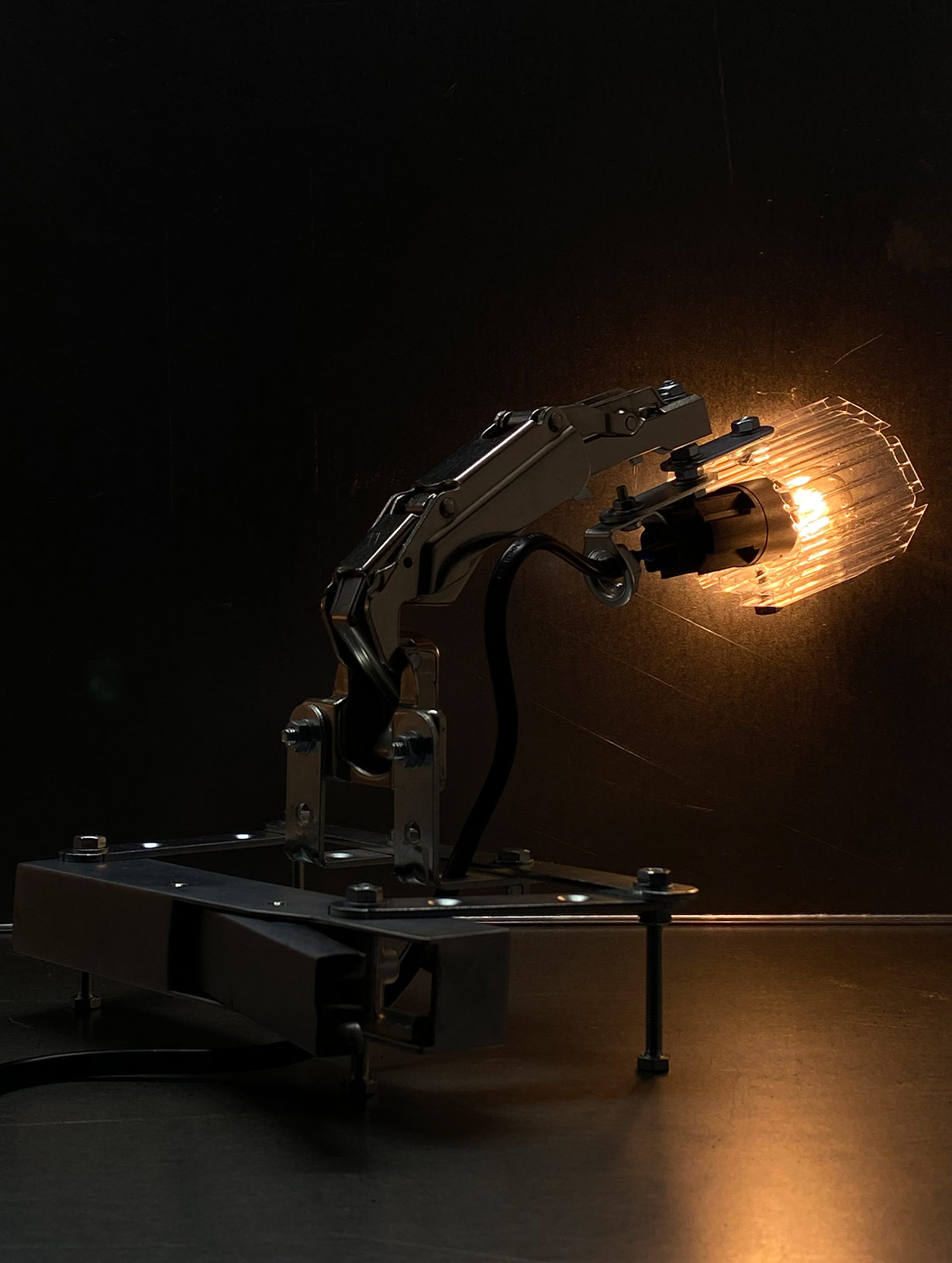
You describe yourself as a “designer-hunter-gatherer.” What does that mean to you?
A return to the essential, and a way of creating a stimulating imagery around my practice.
To be a hunter-gatherer is to do with what you find, as best you can, and, above all, to regain the ability to satisfy your needs and “adapt” to your environment by your own means. It’s a way of saying that, basically, we’re all capable of doing things. (Creating your own furniture, shaping your habitat, exploring and appropriating space, resting…) This is also how I define my position as a designer. It allows me to set a framework for what I consider relevant or not to do, but it’s also a fun way of blending my everyday life with my creative work.
Every unexpected find becomes a creative opportunity, and finding a pile of wood while grocery shopping becomes a sign. As time goes by, you take a different look at the urban machine in which you evolve on a daily basis, and living frugally, without unnecessary things, becomes enjoyable. I don’t define myself as a primitive man either, but I think that getting back to the essential in the way we create, behave and consume is obviously beneficial.
Has the public ever interacted with your furniture in an unexpected way?
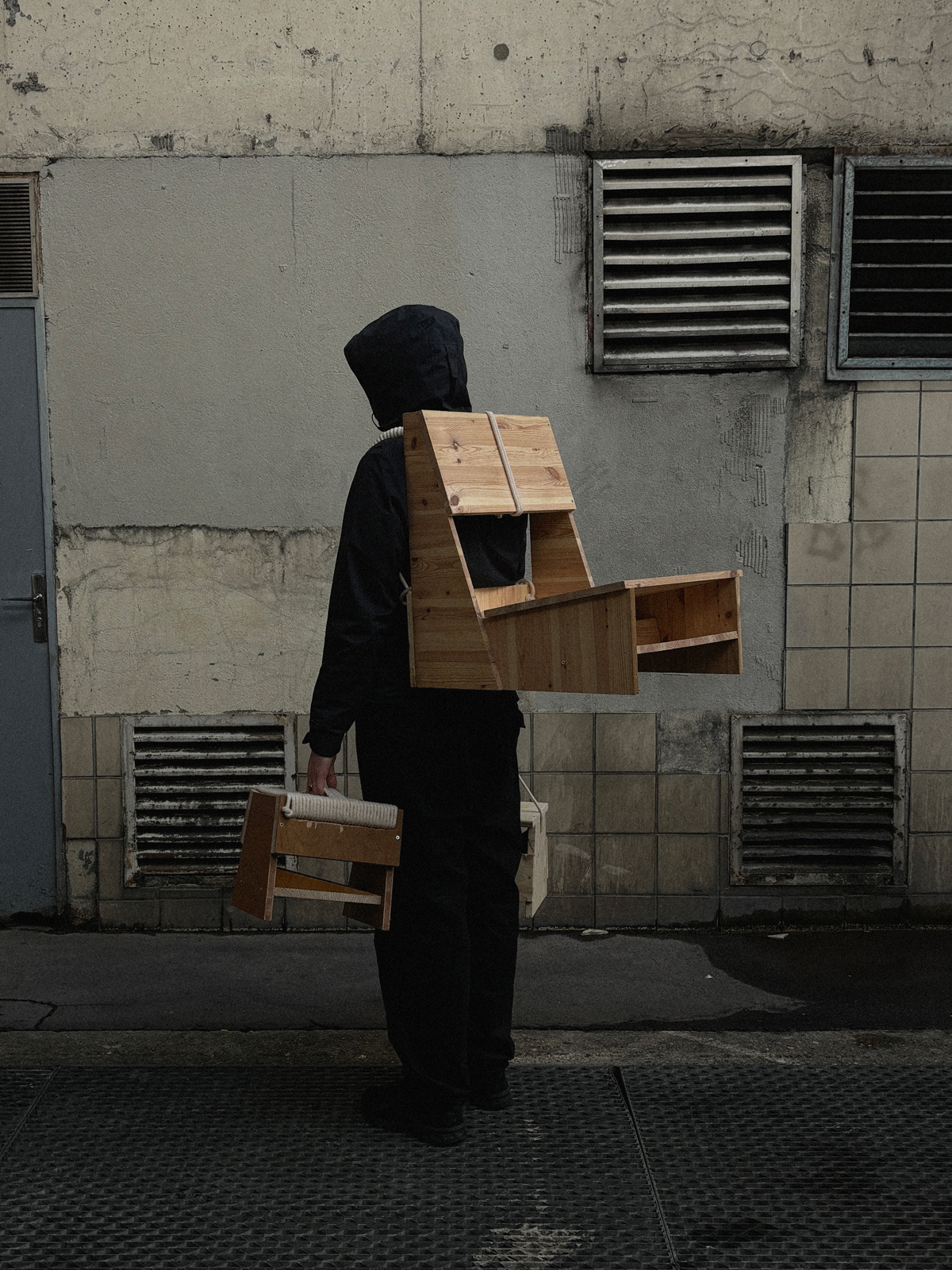
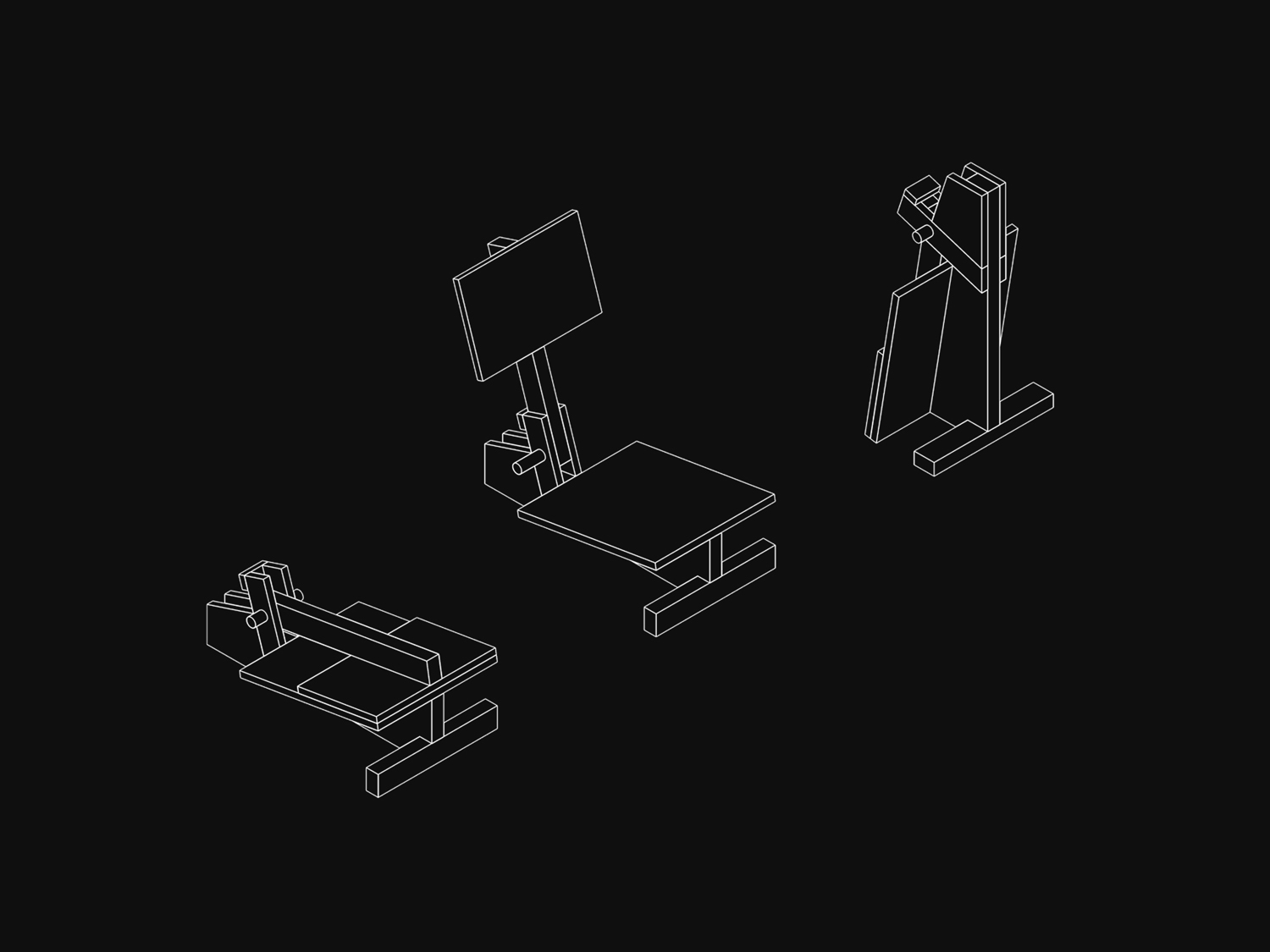
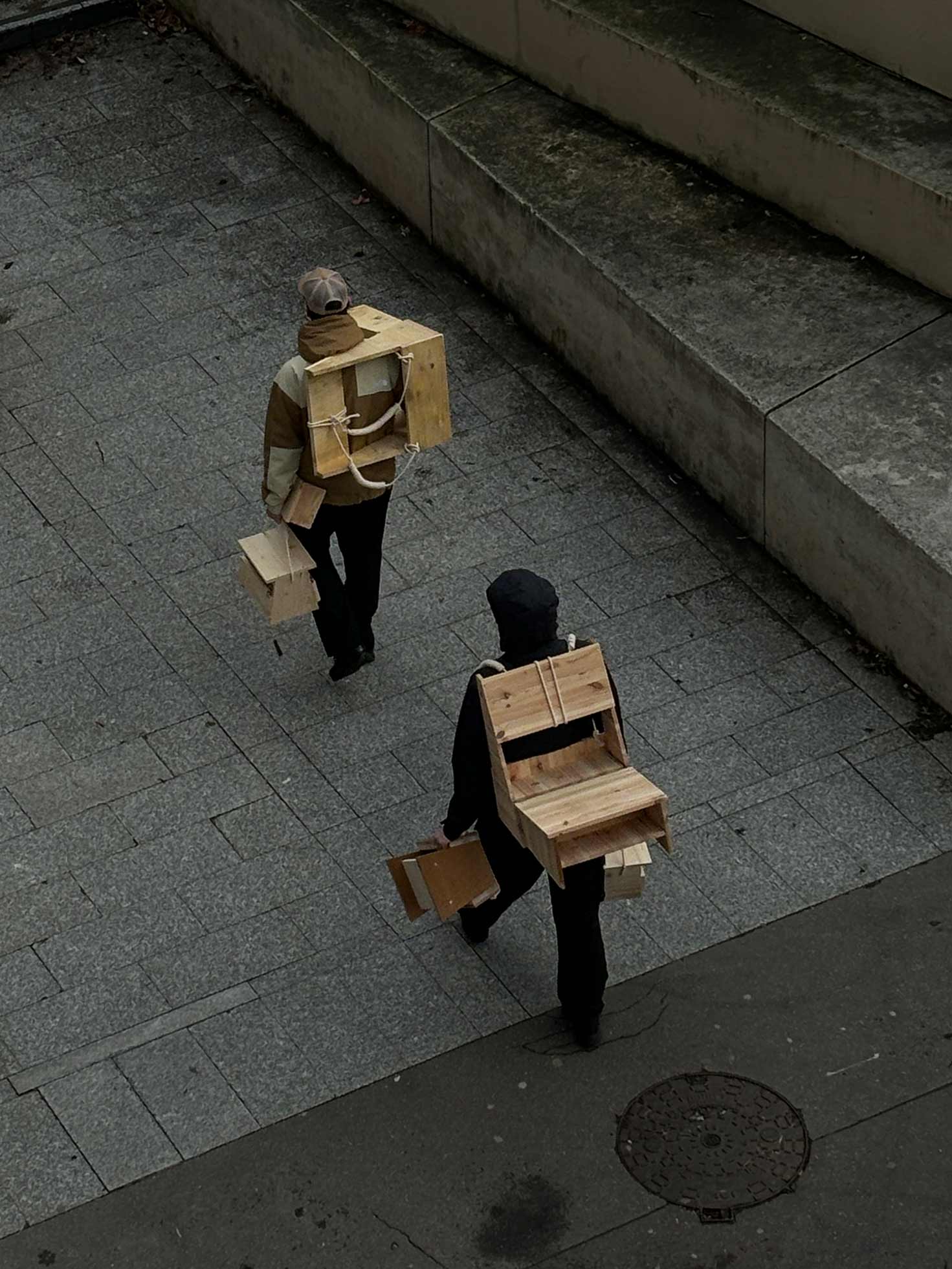
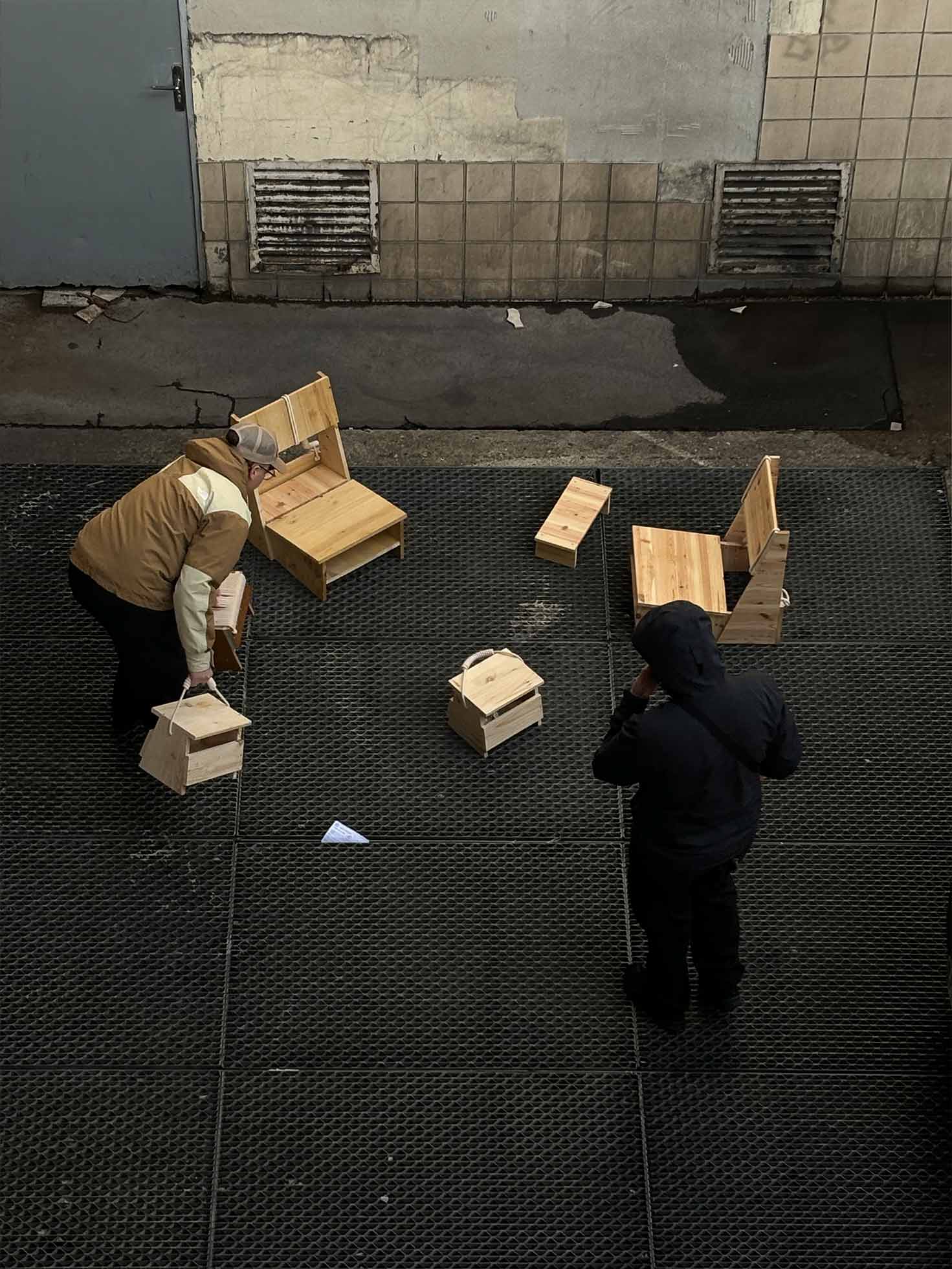
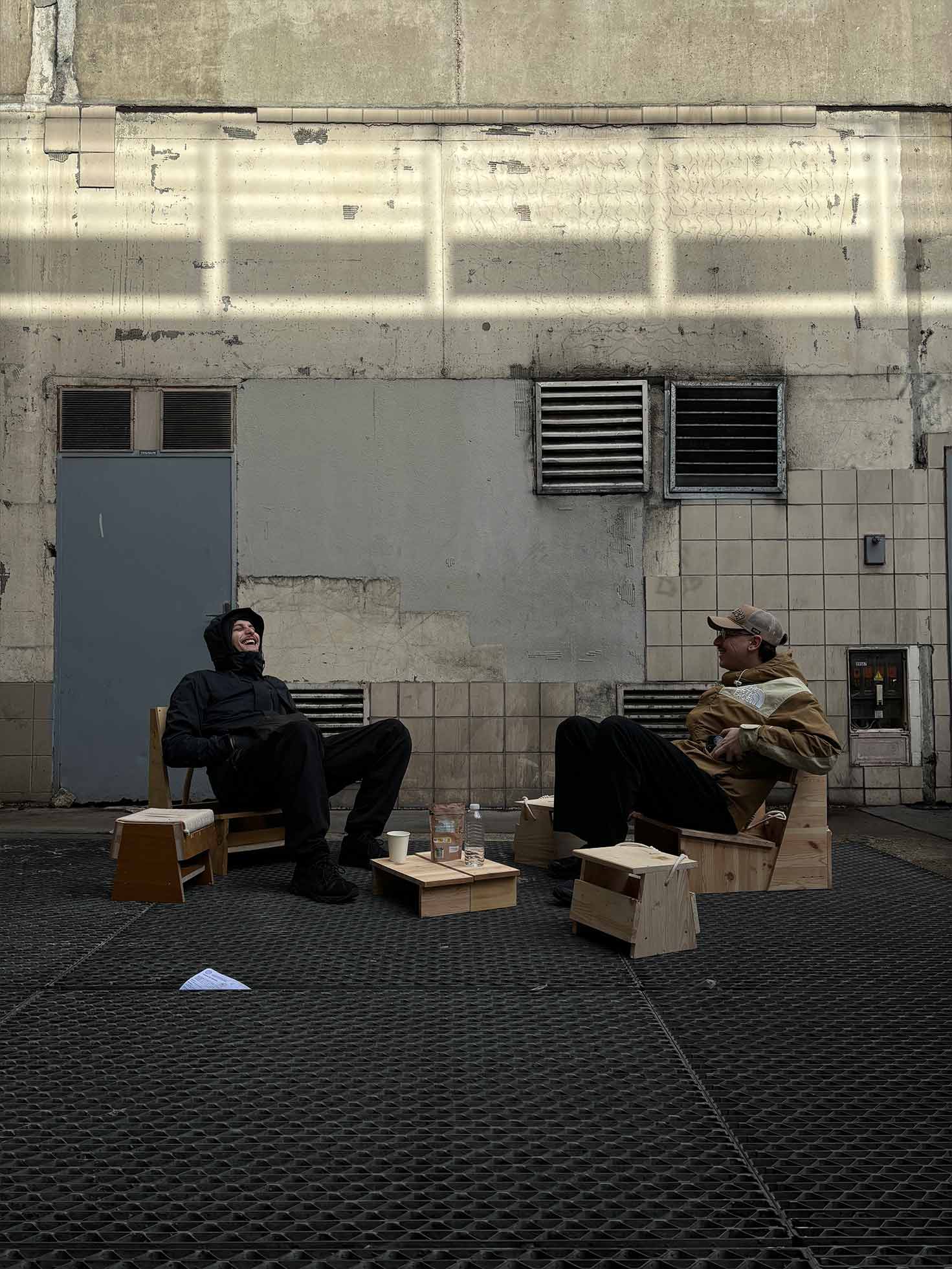
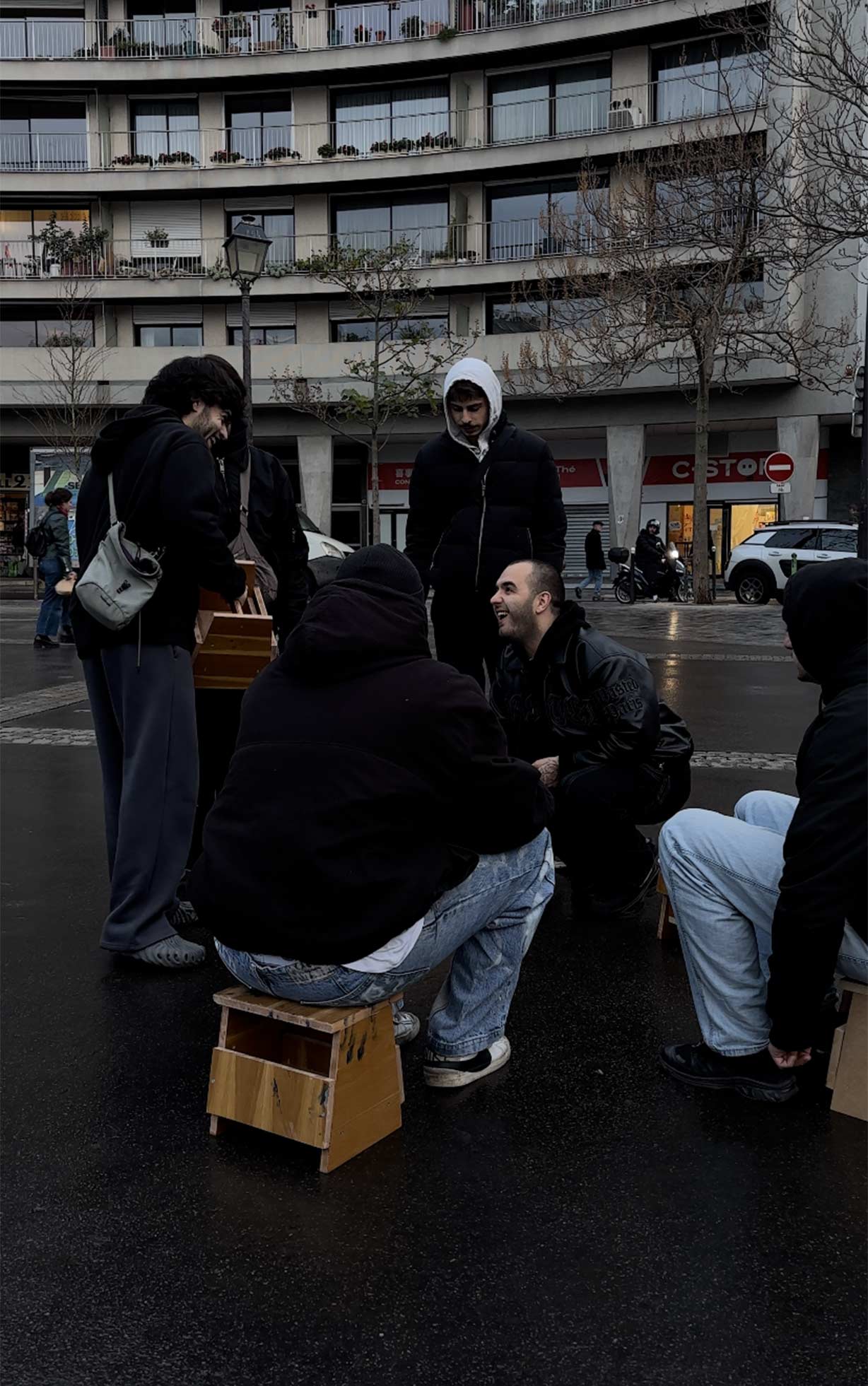
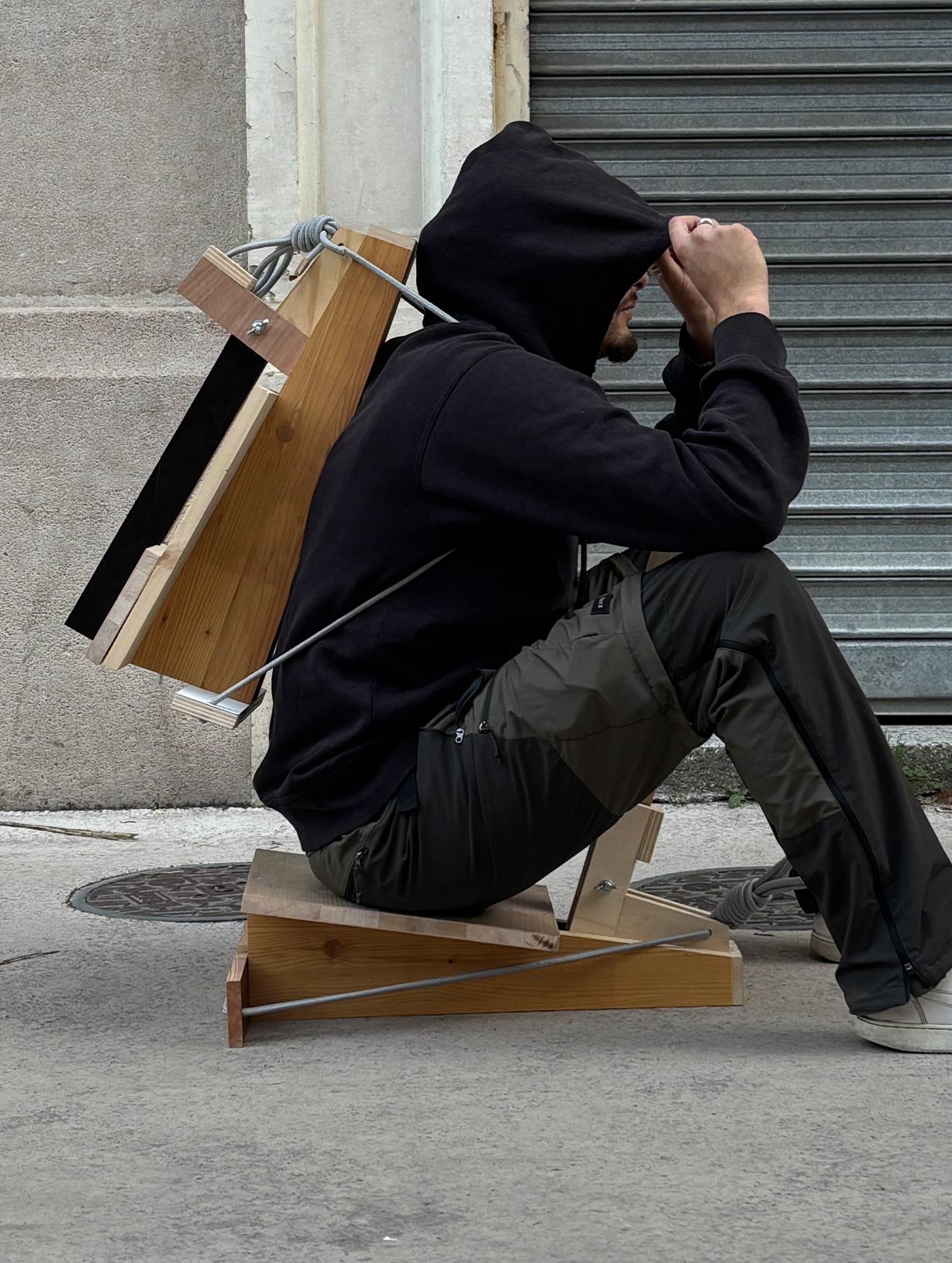
Not for the moment. I often see people intrigued, turning around in the street, but in Paris at least, they rarely feel like approaching and asking questions, and even less like sitting around. The crossbow chair provokes a great curiosity and some rather amusing interpretations. I’ve been asked whether it’s an easel or a catapult.
What’s the significance of making the pieces wearable or portable? Is it practical,
symbolic, or both?
Both.
From a practical point of view, of course, it’s easy to get around and set up without too many
Problems. On a symbolic level, having portable objects transforms each creation into a veritable tool for urban crossing, a sort of body extension that enables you to experience your environment differently. It also stimulates our imaginations. What would our public spaces be like if everybody walked around with a chair like they walk around with a phone, and if we settled in public space like we settle in our garden? It’s just one of many questions, but it’s always interesting to discover what people I meet on the street are wondering about.
In general, when you move through the city (with your furniture or without) how do you choose where to stop and settle?
It depends. Most of the time, it’s a random, instinctive, gut feeling. I’ll move to a specific
neighborhood because I like its energy or architecture, and then see what I find, or who I meet. Basically, I have a taste for areas that are a bit neglected, that aren’t seen as “common” or “appropriable” spaces.
I also sometimes choose strategic locations, places where people pass through, if I deliberately want to provoke encounters, chat with people and get their feedback.
Is there a particular design or non-design memory that has stayed with you?
Yes, there’s a lot, but I would say:
My first two years in Paris, where I saw everything I didn’t want to do or become. All that, plus the support of the people I met here (friends and professionals) helped me build my confidence and, above all, to know what I wanted to do. My trip to Japan last year, where I saw things and met people who showed me that there are infinite ways of creating and practicing your daily life, but also many ways of working and, above all, living your life.
And of course the first time I stepped outside with a chair on my back.
Are there other cities you’d love to activate through this project?
Any city in the world I can get to. I just want to see and find different things to test my creative flexibility and, above all, meet people and different points of view. It doesn’t matter where.
Where can people find you?
Right now, you can find me on the streets of Paris, more specifically in the 11th and 12th
arrondissements. That’s where I currently show my work.
More simply, you can find me on Instagram @nicolas.guillamot.