Anaïs Maar
What’s your name and where are you from/based?
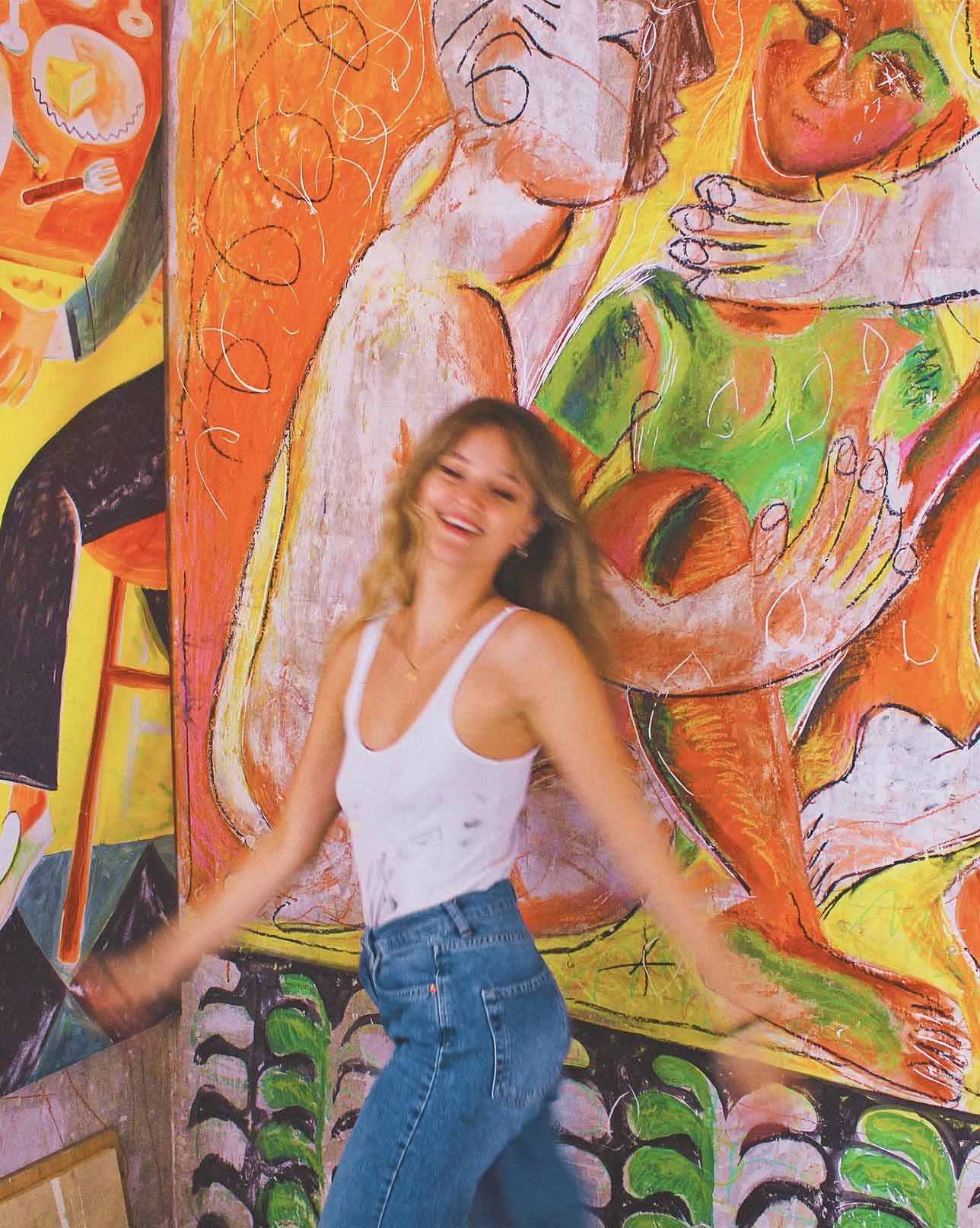
I’m Anaïs Maar, I’m based between Paris, where are my painting studio and friends, and Hyères, where my family lives.
Can you describe your practice in a few words?
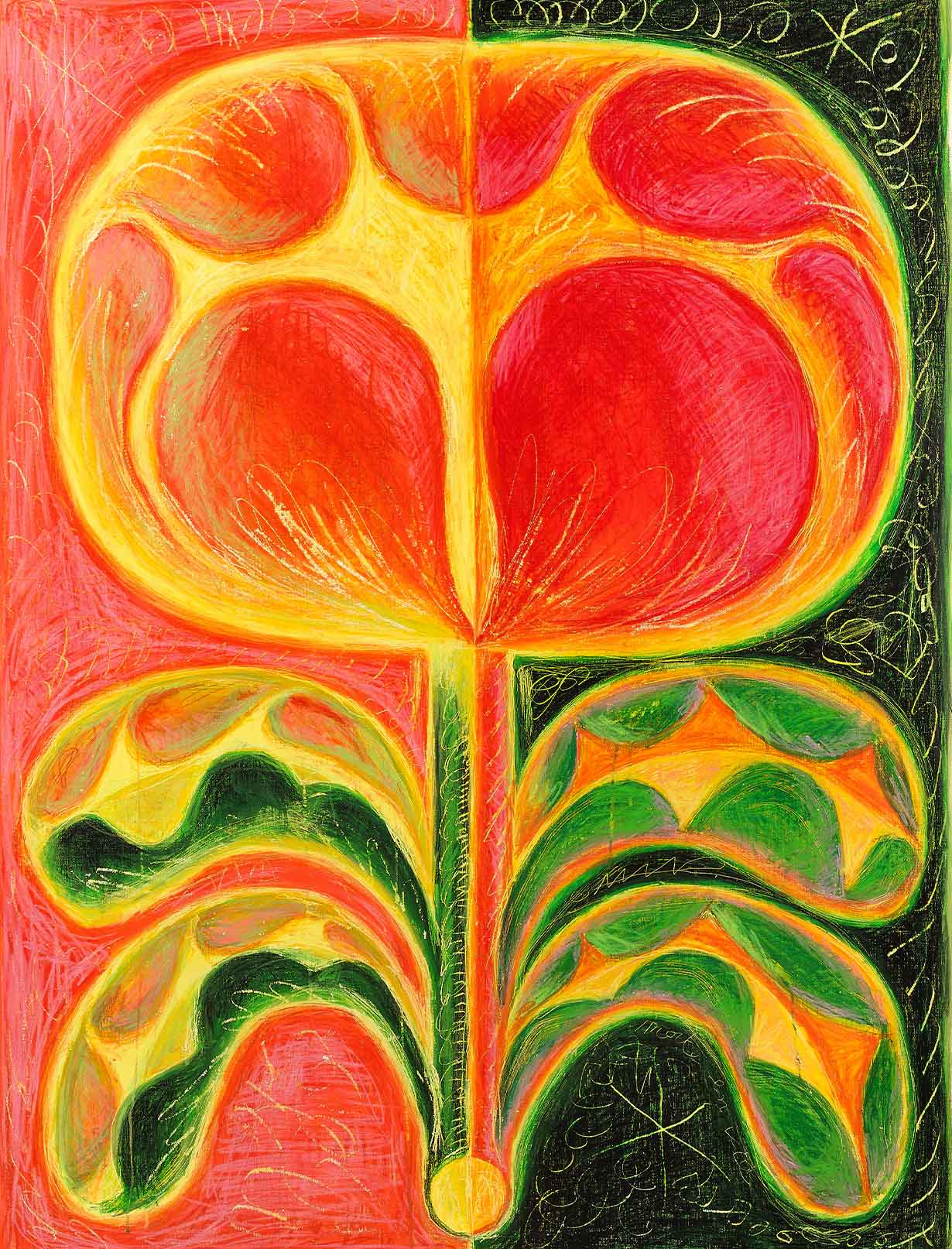
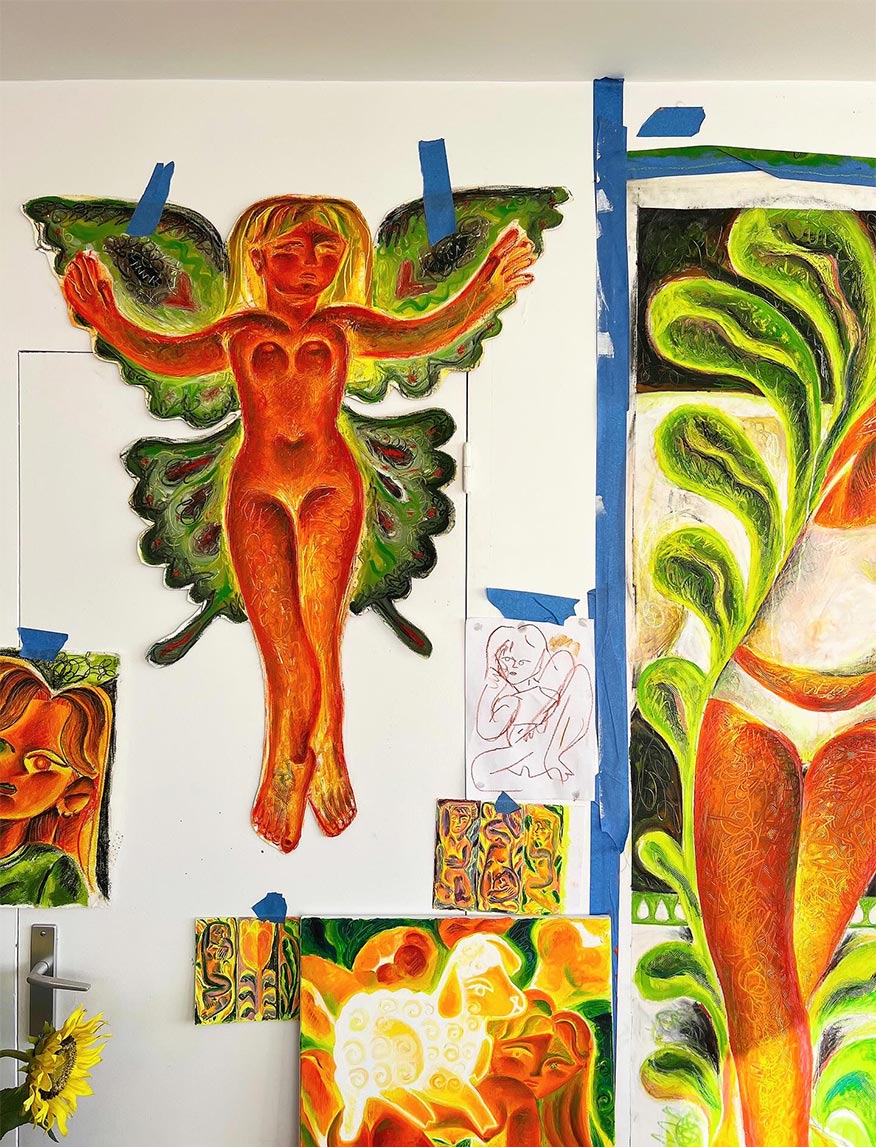
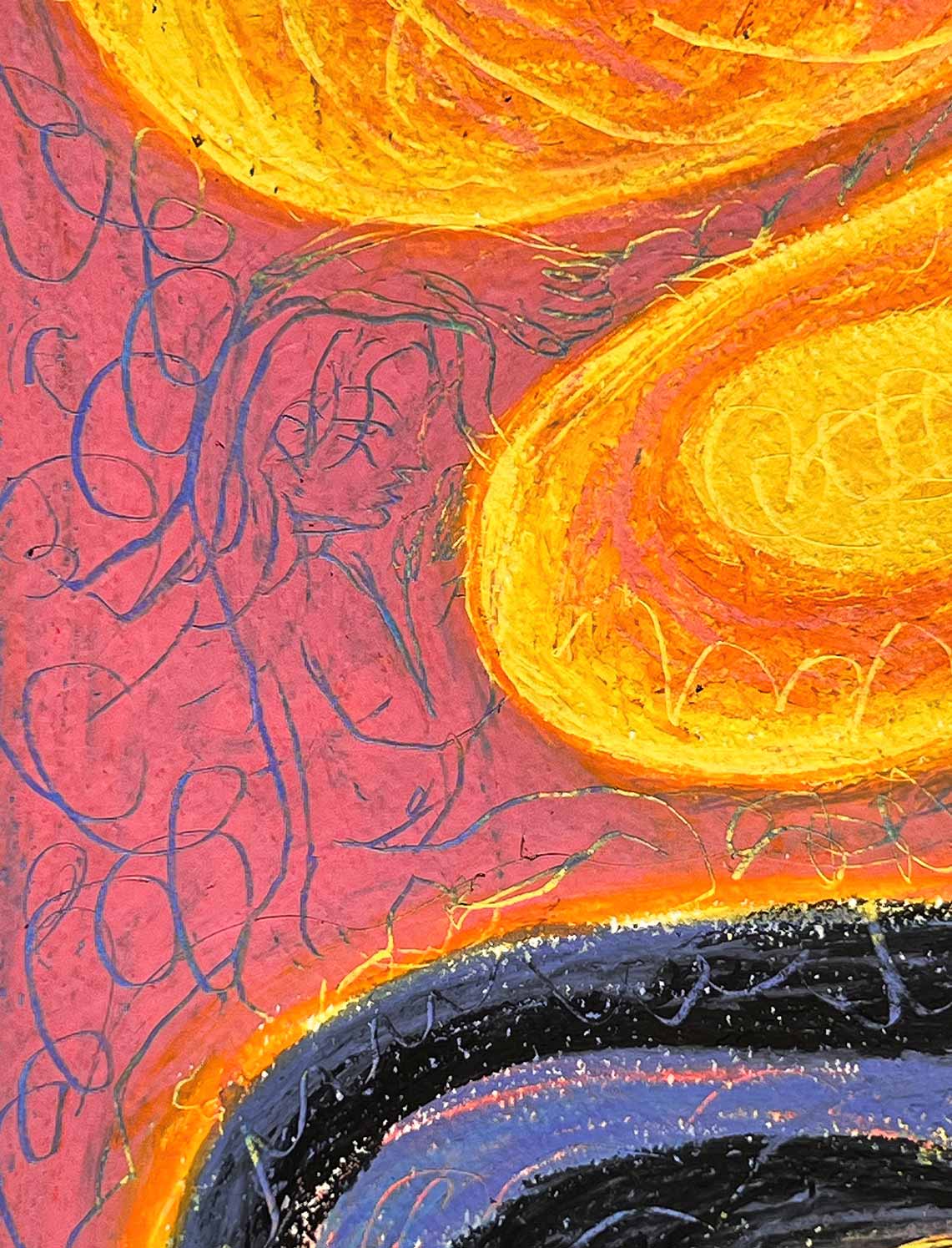
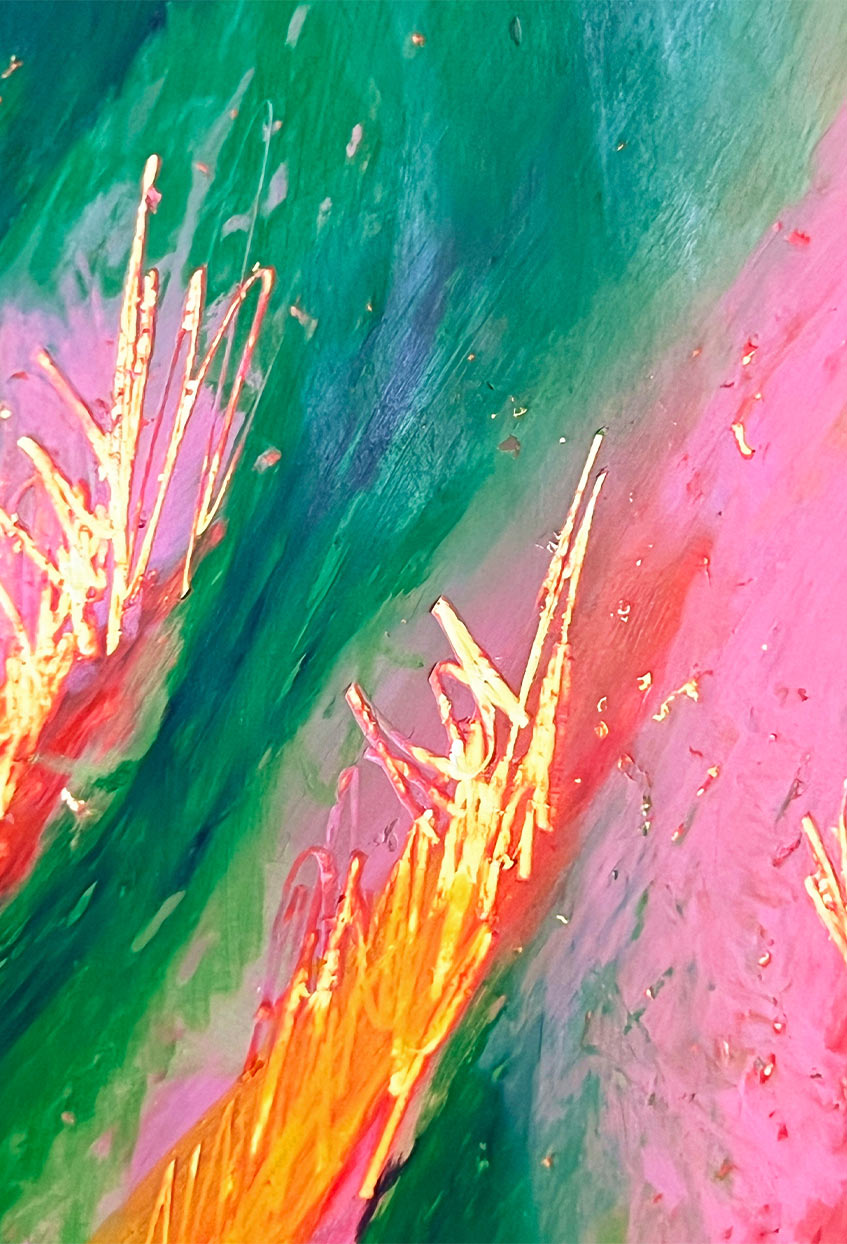
I’m a painter, and I mainly work with oil and pastels. Since texture is essential to me, these mediums offer the widest range of possible combinations. I work in multiple, alternating layers of oil and pastel ; often using both at once. I scrape and rescrape my paintings with a knife once they’ve reached a certain stage, and then I start again, aiming for a precise level of density and vibration through the accumulation of layers and pigments. In that sense, my work is closer to sculpture than to painting, as I spend my time building large masses only to carve back into them. I have also created a few pieces in wood, and that medium felt quite natural to me.
But my work mainly revolves around my obsession with light. I need to feel the painting vibrate through the succession of overlapping layers beneath the surface.
I love skin-like textures and effects, but I also enjoy experimenting with charcoal or any other medium that sparks my curiosity. It’s just that, for now, my obsession with light and texture always draws me back to oil and pastels.
You trained at Émile Cohl in Lyon with a foundation in academic painting, but later moved into illustration, concept art, and animation. How did one inspire the other for you?
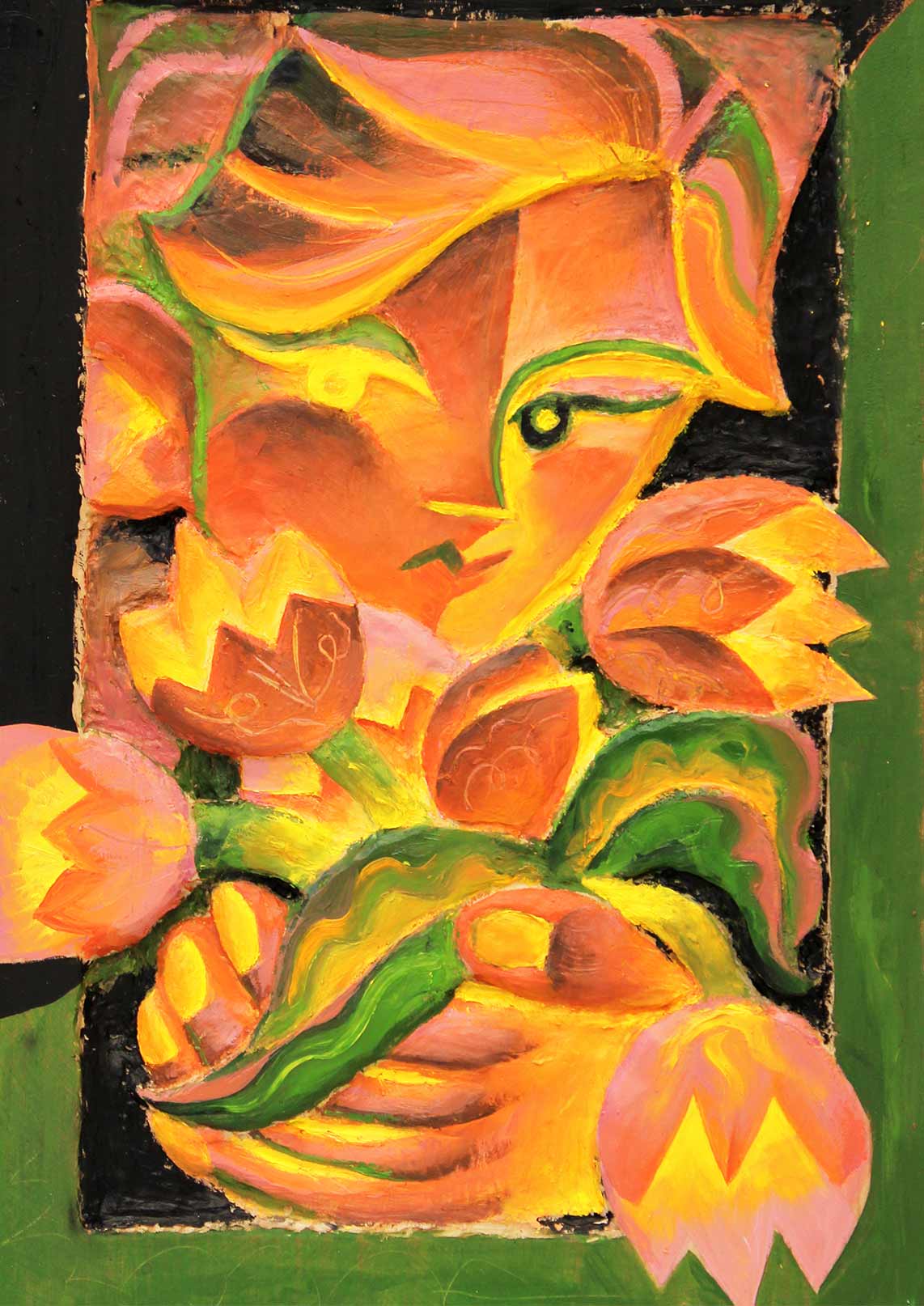
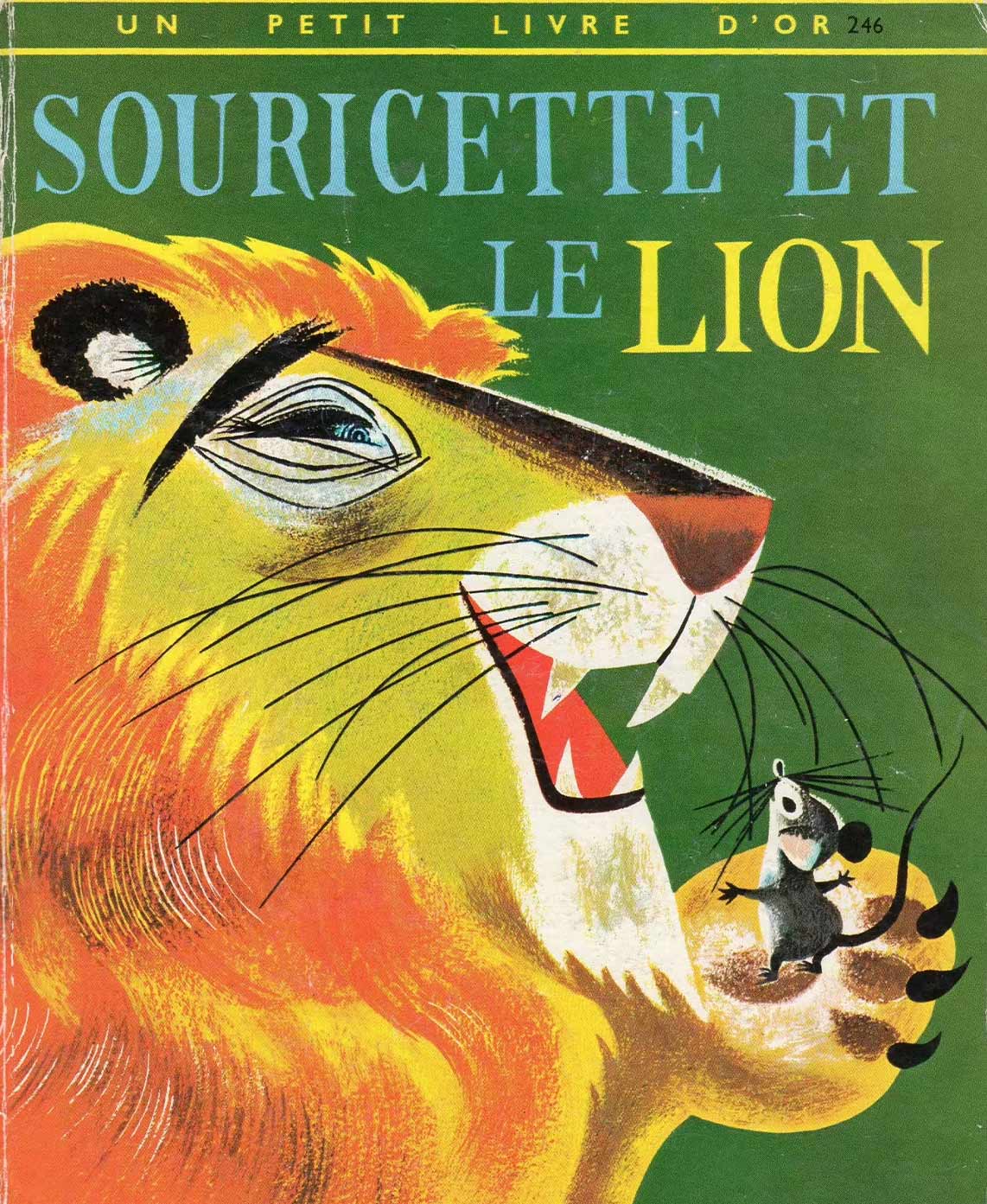
For me, art is nothing more than the digestion of everything that has surrounded us since the beginning. Illustration and animation, which I was obsessed to (as many kids), go straight to the essence of form and color. This originally comes from practical and economic constraints, but it results in a powerful sense of composition and color work. This influence has remained present in my own practice: most of my figures and shapes appear “frozen” in movement, caught in an animated pose. My forms are simplified; I simply add three-dimensional volume to two-dimensional shapes. This is where my exploration of positive and negative space comes from. Shapes that are cut out, rhythmically interacting with one another, all composed around an empty space, much like in a children’s book illustration.
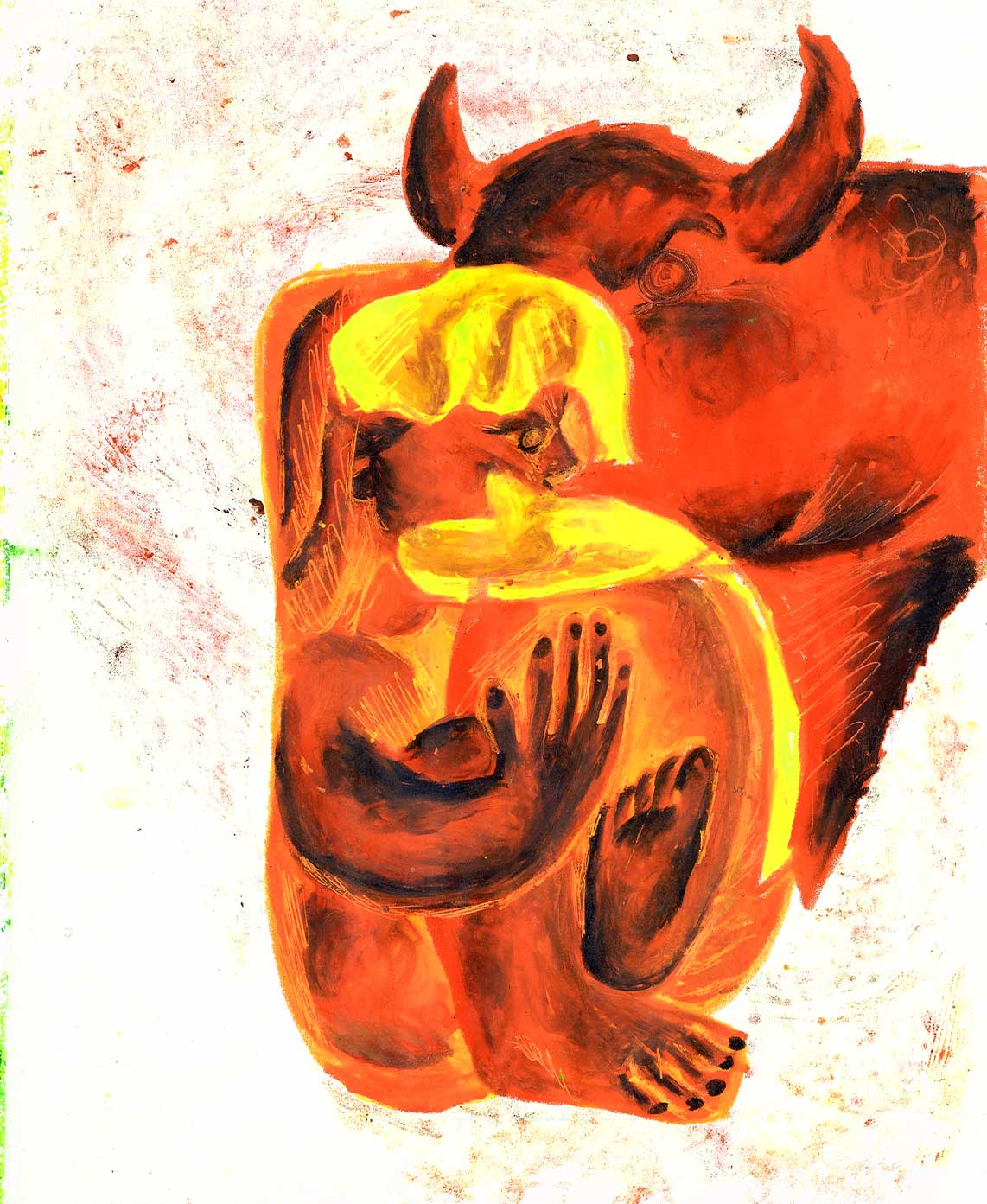
These shapes, which I call “grotesques,” are like a stage curtain to me. They allow me to approach themes that are not always cheerful through naive, exaggerated, and colorful forms. It’s a bit like old tales or certain animated works that convey messages to both children and adults. Painting became the natural conclusion for me ; the medium through which I could express ideas that I was unable to put into words, whether spoken or written.
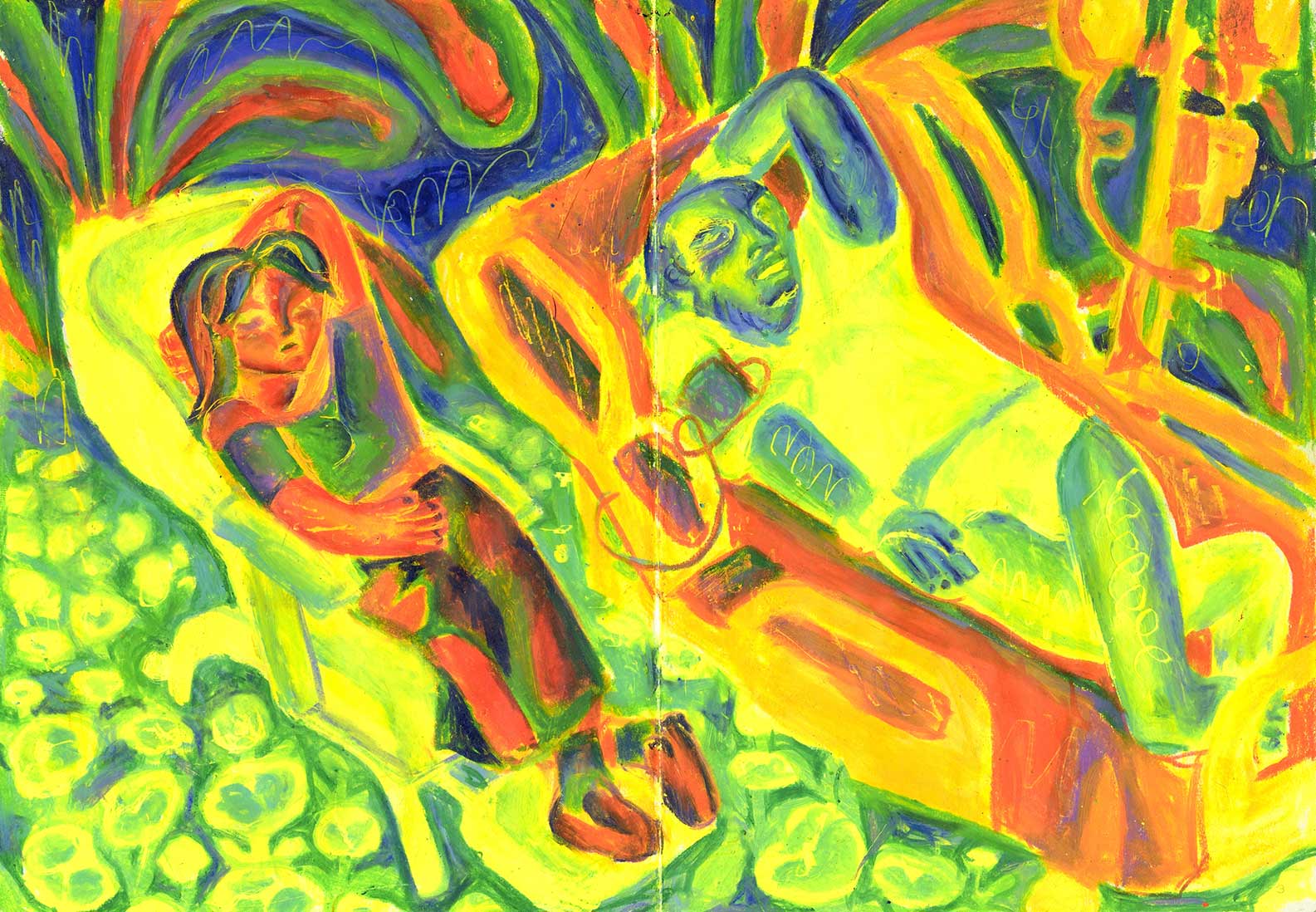
You’ve cited Fauvism, Cubism, Russian avant-garde, Japanese graphic culture, and medieval iconography as influences. Where did these inspirations come from?
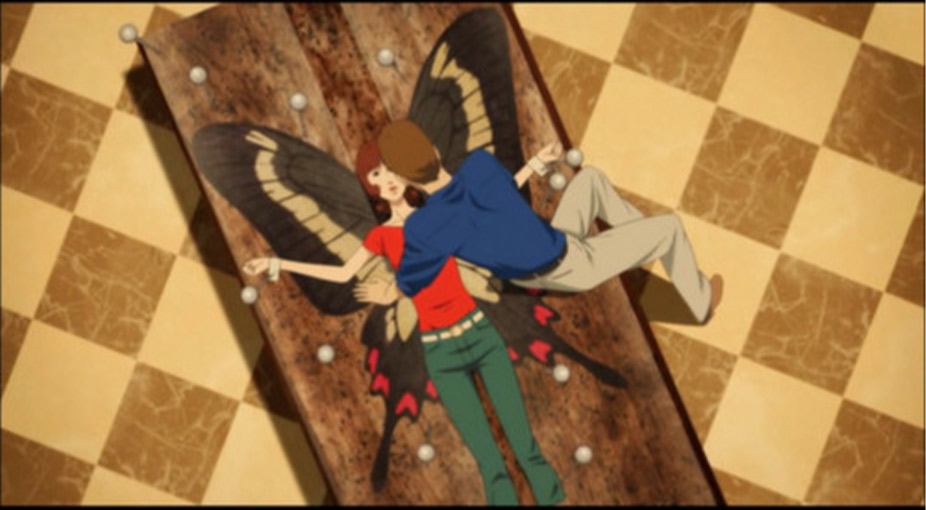
I believe they come, as with animation and illustration, from a series of logical conclusions drawn from my attraction to simple forms and limited color palettes. All these influences share common threads that have naturally woven together ; my childhood immersed in cartoons and manga, the illustrations and symbols from catechism classes back when I was a believer, the Mediterranean skies, and the blend of violence and softness in that uncompromising nature, then later when I arrived in Paris all the modern painters I rediscovered out from the books of art school.
Painting began “in secret” for you, what was it about painting that felt private at that time?
I couldn’t talk about the things that were happening in my life at the time, but I think I needed them to be seen somehow. So the urge to paint became stronger and stronger. At first, I painted in secret, because even in a symbolic way, I was afraid of revealing too much about myself. Now it’s quite the opposite…I can’t stop talking about everything and too much of me, I can’t keep anything to myself anymore, haha!
You’ve called art and painting a “quest for stability”. What role does it play for you emotionally or psychologically?
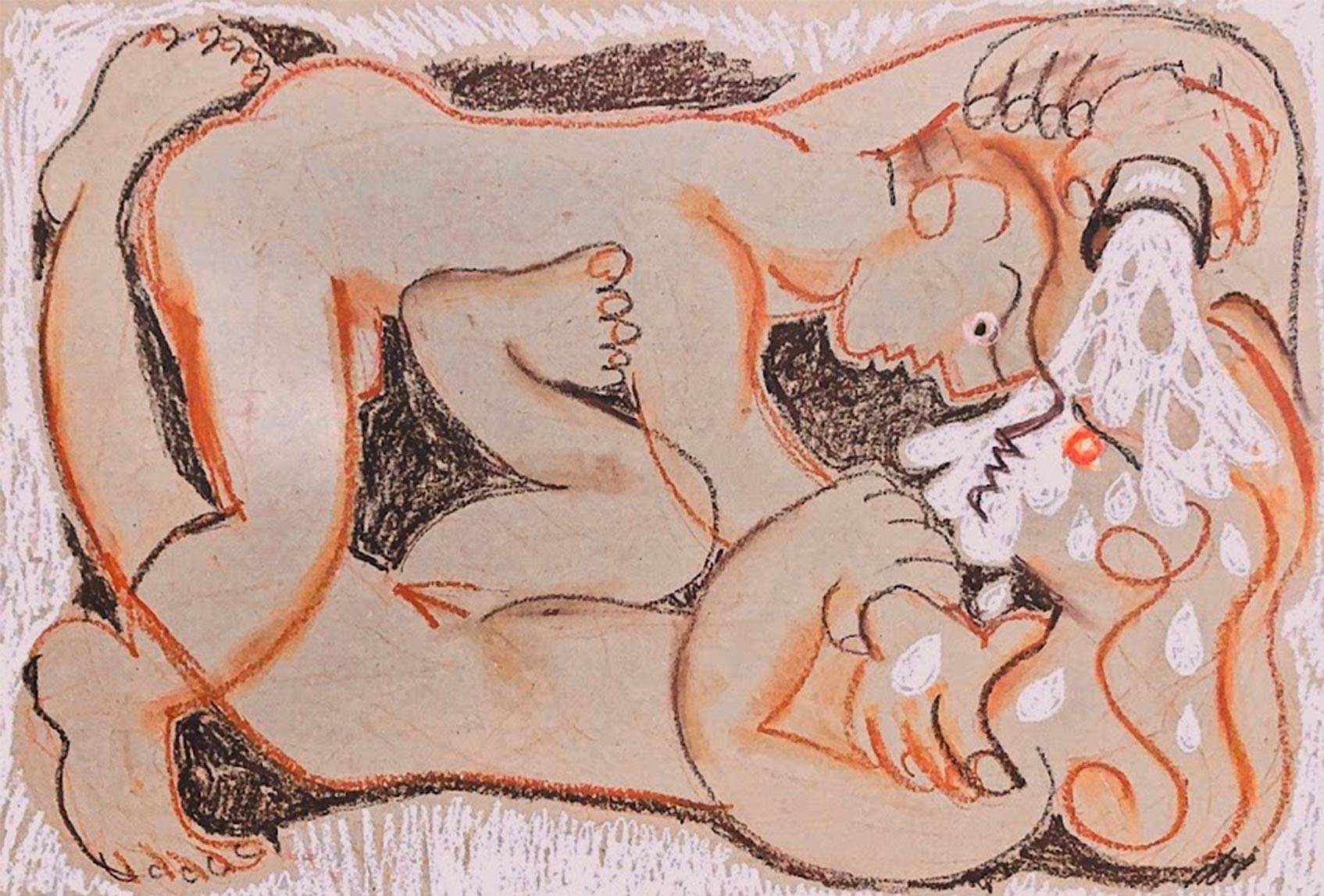
Painting allows me to release an overflow of emotions, images, and sensations, whether they are good or bad. It’s always too much for me to hold inside. For a long time, I moved between periods of intense psychological distress and moments of great passion. The same thing happened to my body, with endometriosis I have had intense periods of huge suffering, with the mind trapped in this body. Through painting, my heart and my mind finally found harmony. The world now feels clearer, quieter. Although I have a little pain every morning, my body also hurt less.
I did not choose to become a painter; I simply felt the need to paint, and from that moment on, I no longer had a choice. It became my reason for living, my way of expressing through images the things I could only speak about once I had processed them through this medium. What I think and what I show or say are no longer in contradiction.
That is all I have ever needed, even as a teenager, but even more so in my twenties. I just did not know where to look. At one point in my life, for deeply personal reasons, the emptiness in my heart was so vast that it swallowed every impulse toward life. Then, through painting, light began to appear. Light literally burst forth in my work, and a month later, my voice finally returned after ten years of silence.
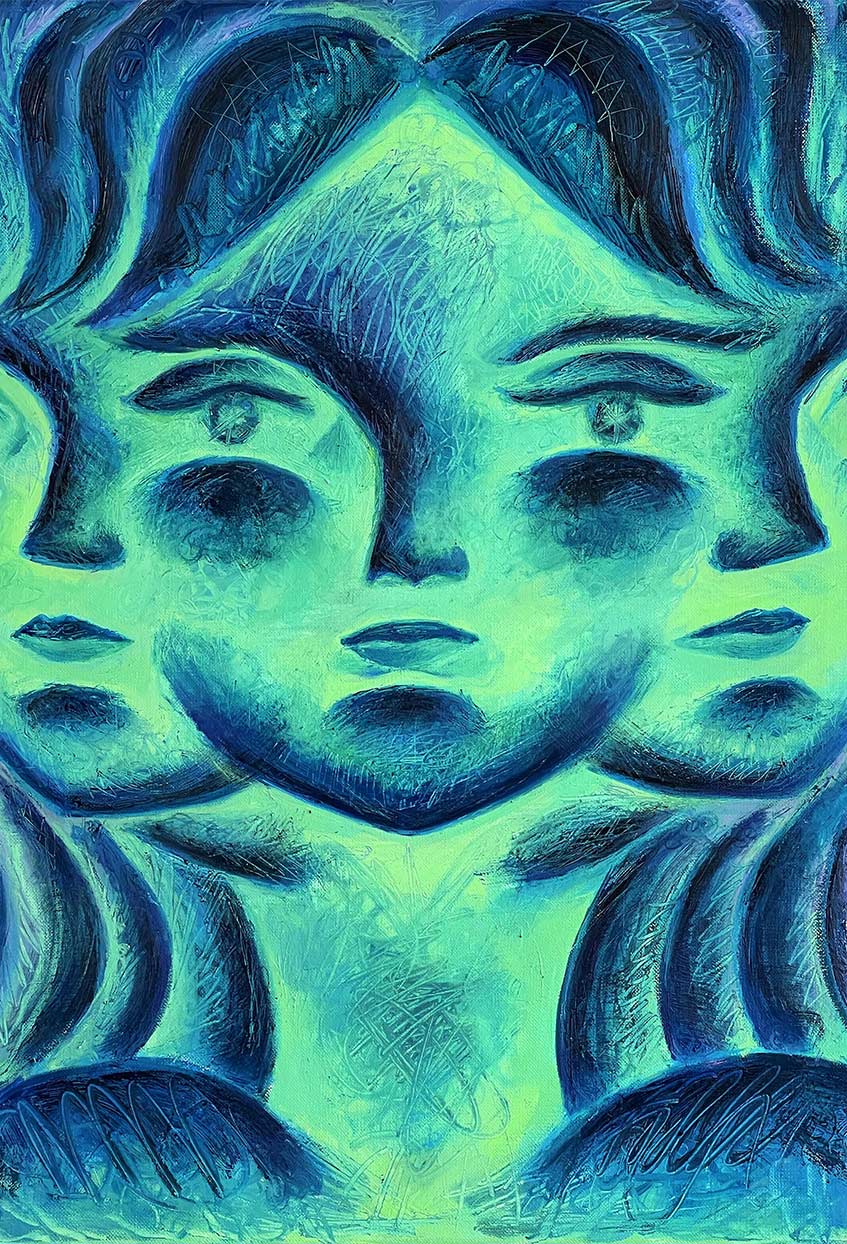
I am speaking of a painting that is very dear to me, Pure. It marked a turning point in a long series that I have not yet finished exploring, perhaps because the healing is still ongoing.
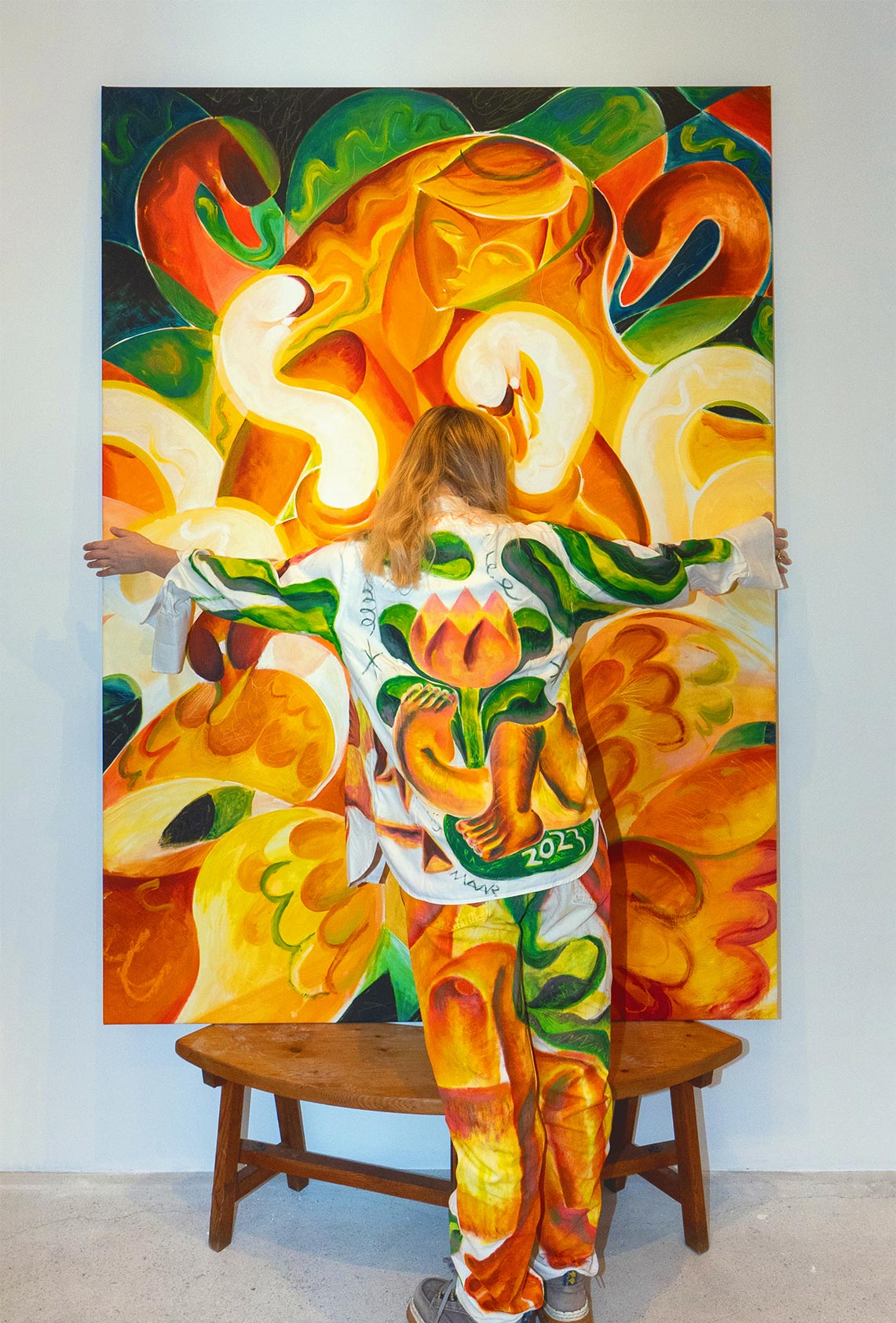
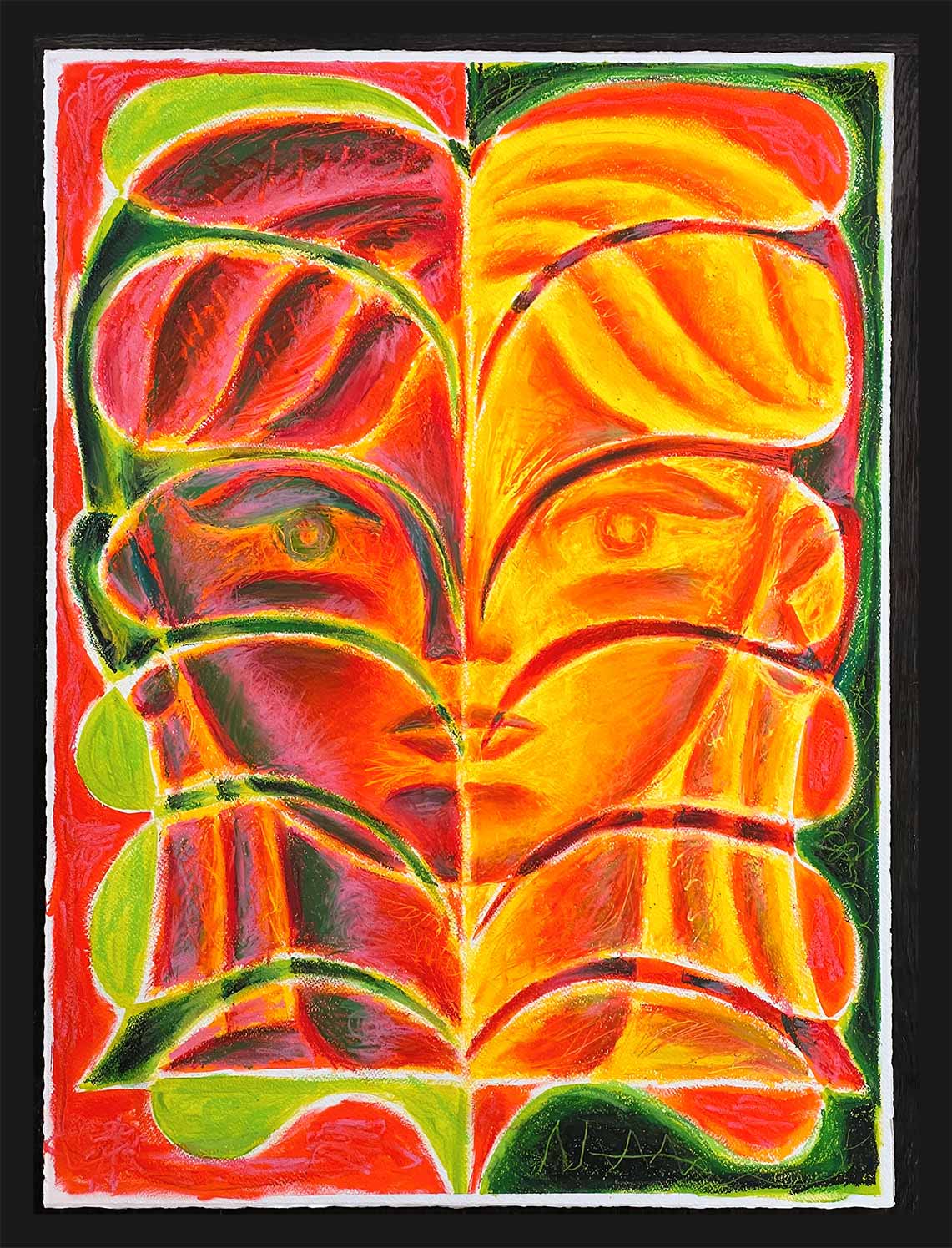
It represents the unification I have always been longing for. I no longer feel divided. Yet duality remains a central theme in my work, both in the visual aspect, such as my use of symmetry, and in my subjects: naive forms alongside darker themes, love and violence, color against emptiness.
There are recurring figures such as swans, serpents, and seashells and more in your work. Do they arrive instinctively, or do you approach them with symbolic intentions?
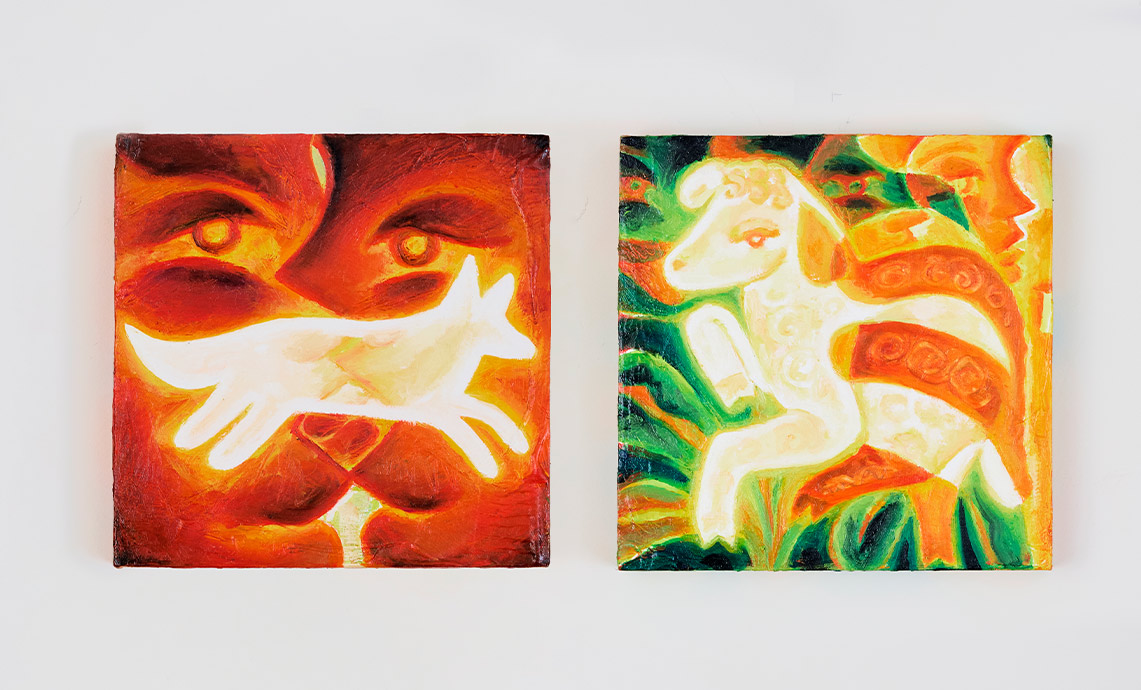
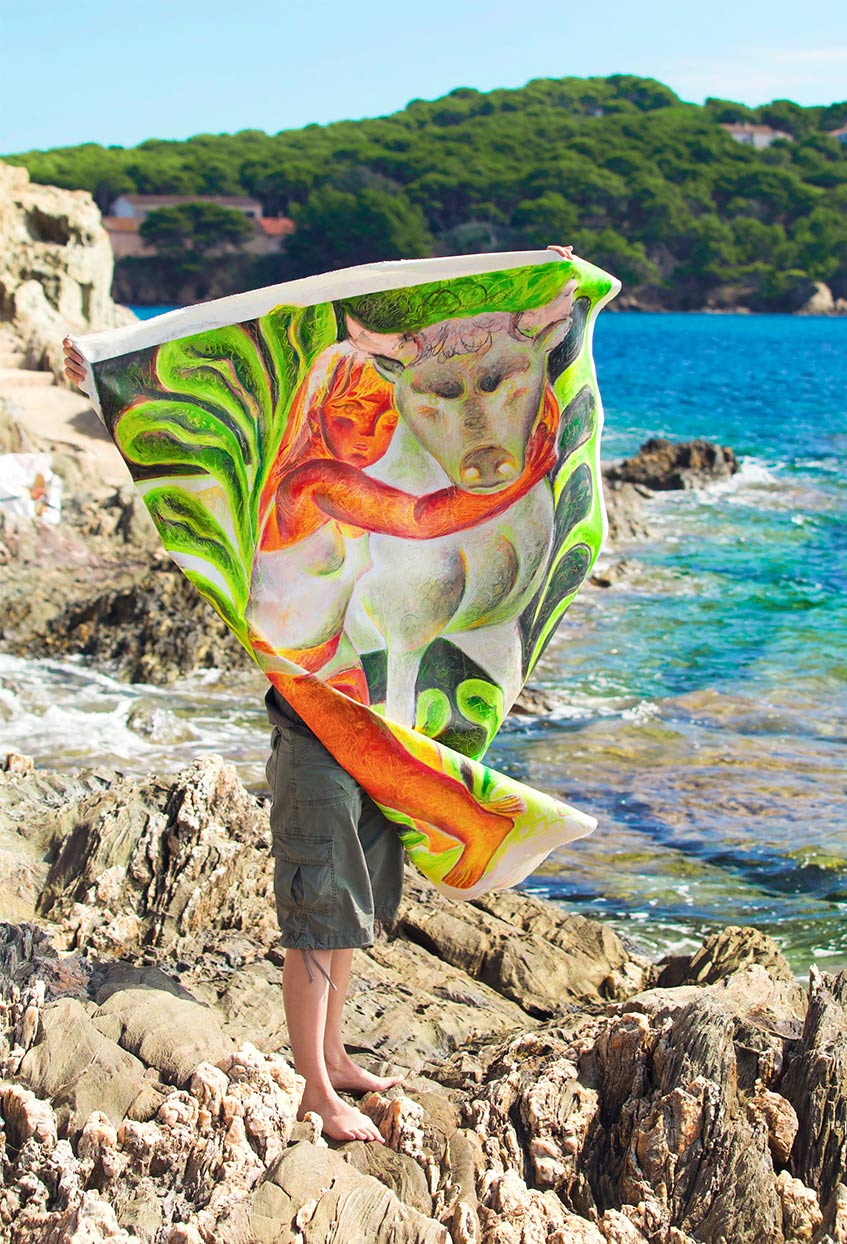
There is definitely a symbolic intention. All of these are codes I have inherited from religion, from the myths and tales of my childhood, and from the Roman and Etruscan symbols that were part of my surroundings. But like all myths, I see these symbols in a contemporary and evolving way, shaped by the world and the time I live in. None of the animals carry a purely positive or negative symbolism. For me, they often represent the synthesis of one of our contradictions, one of our dualities.
You’ve described painting as both “eruption and meditation.” What does that feel like when you’re working?
I feel completely present. It’s a bit like MDMA (which I don’t take anymore), I exist only in sensation. I let the images pass through me and flow out of me. The past no longer exists, the future doesn’t matter, and the emptiness fades away. What remains is a small wound, almost healed, that slowly reopens whenever I stop painting for too long.
Color seems to act like a second subject in your work. How do you think about your palette?
It’s perhaps the most natural part for me, the most logical. Drawing is what requires the most thought, partly because I know that if it feels right, the palette will reveal itself naturally. I rarely think in advance about the symbolic weight of my colors, but their meaning becomes obvious to me afterward, haha!
Where can people find you?
You can find me on Instagram, where I saturate an already overly saturated world of images of all kinds, like a 2014-style visual diary. It is also possible to visit my studio over a coffee in Paris (ask@anaismaar.com), and some of my works can be found through NilGallery Paris, which often gives me great international visibility. You can also follow them to have some news about that!