Balzer Balzer
What’s your name and where are you from/based?
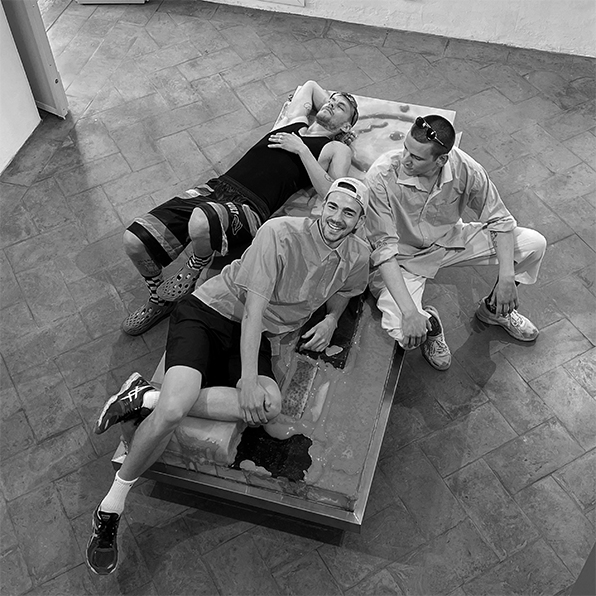
We’re Yanik, Moritz, and Nils Balzer – three brothers working together under the name Balzer Balzer Studio. We were born and raised in Frankfurt am Main, but we live and work in Berlin.
Can you describe what you do in a few words?
We run a multidisciplinary design studio. We create our own objects and functional sculptures, and we also work with corporate clients – developing store concepts, sets, and spatial experiences.
Many of your projects seem to carry traces of nightlife and communal energy. What draws you to these environments as sources of inspiration?
Rave culture has been a fundamental part of our identity. We’ve been actively involved in it for years, both as participants and contributors. Dancing is a form of release – it clears the mind and opens space for reflection on life, ideas, and creative work. That trance-like movement frees up mental space. Nightlife has also been a fertile ground for unexpected inspiration and connections. Many collaborations began during late-night club encounters.
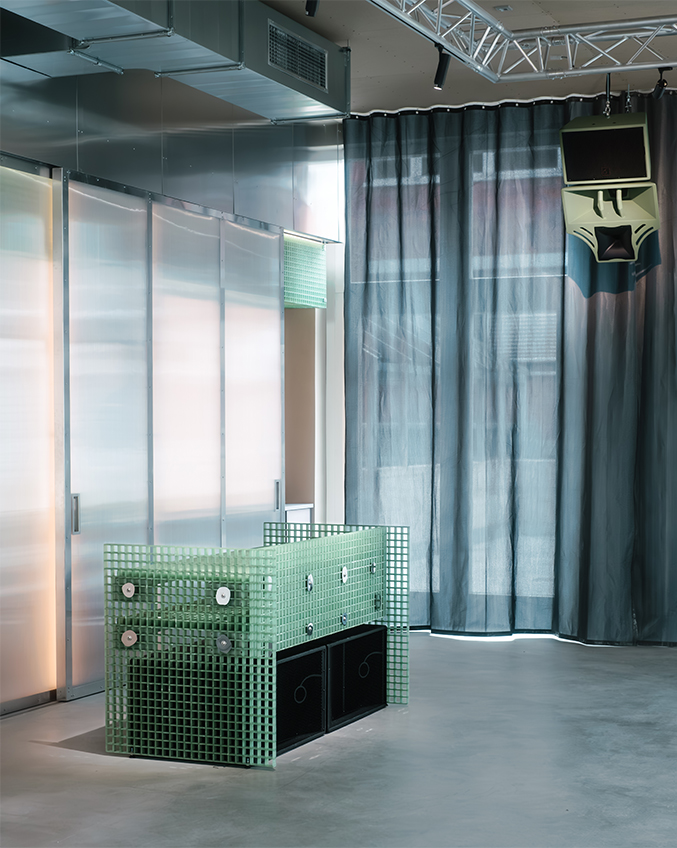
You frequently use industrial materials like stainless steel, polyurethane foam, and resin grids. What attracts you to these types of materials?
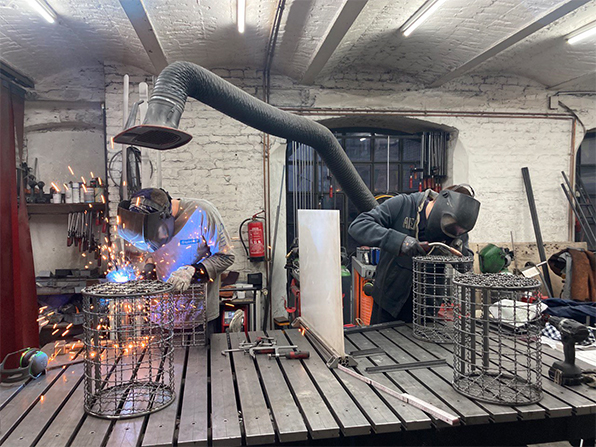
We’re drawn to these materials for their performance, accessibility, and expressive potential. Every material has something to offer, but metalworking is particularly familiar to us because Moritz also works at Ertl & Zull, a studio that specializes in metal fabrication.
Polyurethane foam feels playful to work with – almost like sculpting with clay or Play-Doh – and it offers incredible flexibility, durability, and a fast curing time.
The resin grid material was introduced to us by our friends at RHO-Vision, two talented architects we occasionally collaborate with.
You describe Cadaver as “the remains of past raves.” How important is it for your objects to capture emotional residue or memory?
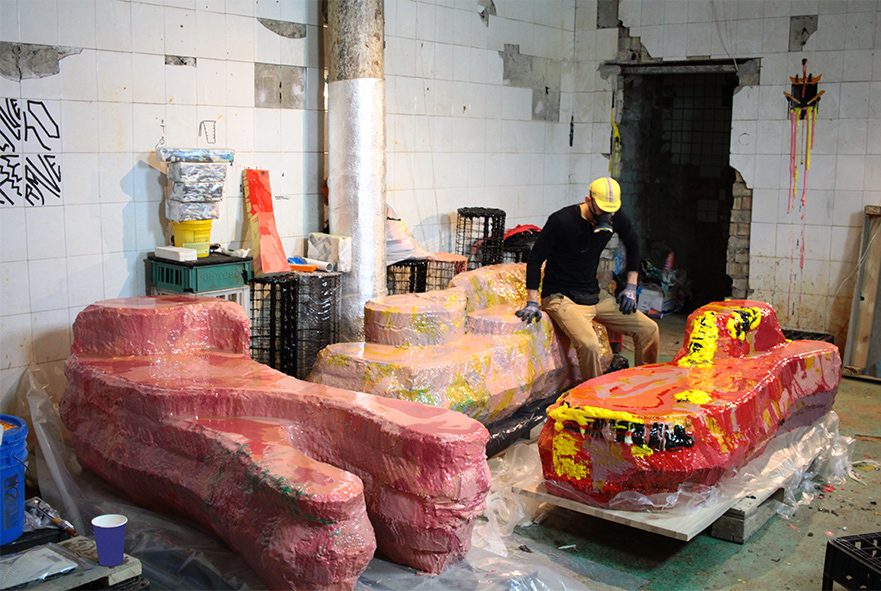
Cadaver is actually a critical reflection on the darker side of nightlife – not just the hedonism and escapism, but the self-destructive behaviors we’ve witnessed over the years. These objects represent the toxins people ingest, the effects of sleep deprivation and malnutrition, and the emotional burnout that can result. In the worst cases, this leads to hospitalization or even death.
The Cadaver pieces take on a flesh-like appearance – they look solid and heavy but are surprisingly soft and bouncy. This contradiction mirrors the hidden vulnerability behind the tough exterior of nightlife culture.
Are there any limitations or constraints that have pushed your creativity further?
Not really – we usually find creative solutions to whatever challenges come our way. We’ve reached a point where we prefer working with solid budgets and proper tools. It allows us to focus more on concept and quality.
Active Structure was designed for a techno club and described as a space for both retreat and stretching during a rave. How did the idea of movement and the body influence its design?
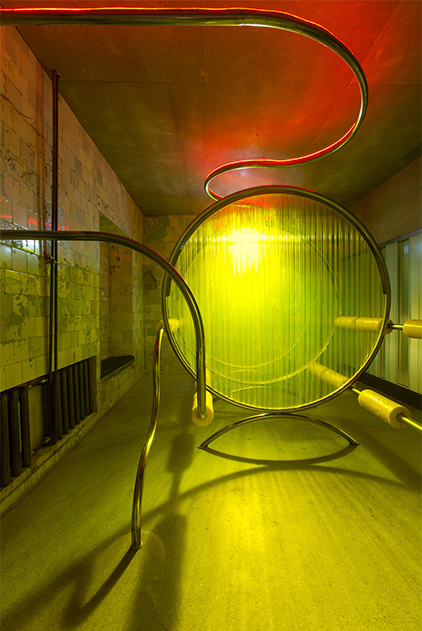
A great club is like a playground for adults. Active Structure is a functional sculpture that grows into a small spatial installation. Polished stainless steel tubes emerge from walls, twist and bend through the room, and disappear again into the architecture – floor, ceiling, or wall.
The idea was that these “growing” forms would appear throughout different parts of the club, establishing a recurring motif – almost like a heartbeat. Our references ranged from playgrounds to particle accelerators.
While the architects (Studio Karhard) envisioned the space as a cruising zone and retreat, we saw an opportunity to make it a place for stretching and reactivating the body – something especially important during long nights of dancing, sometimes clocking in 50,000 steps or more. It’s about listening to your body, staying grounded, and being present in your physical form.
Which project sparked the most unexpected reactions or conversations from others?
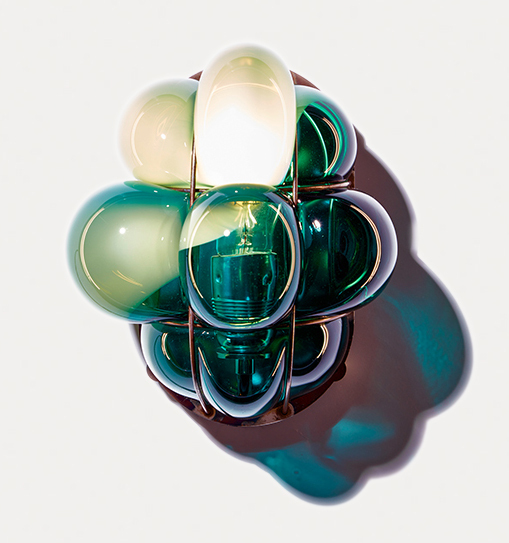
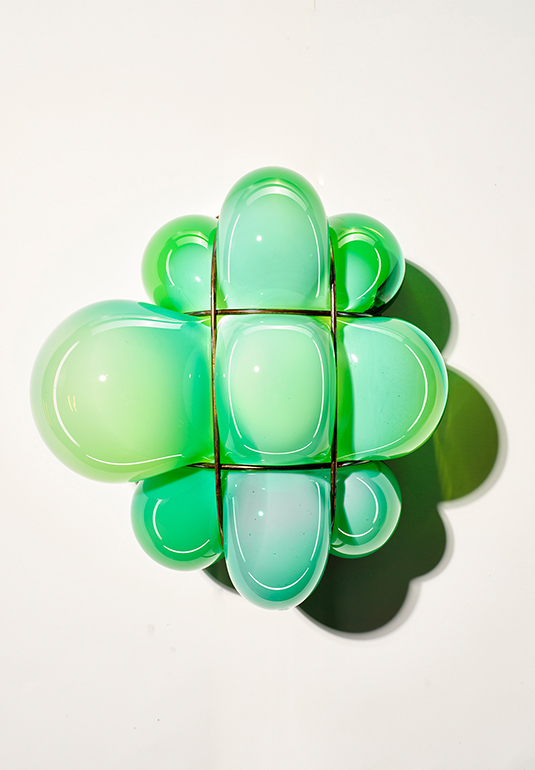
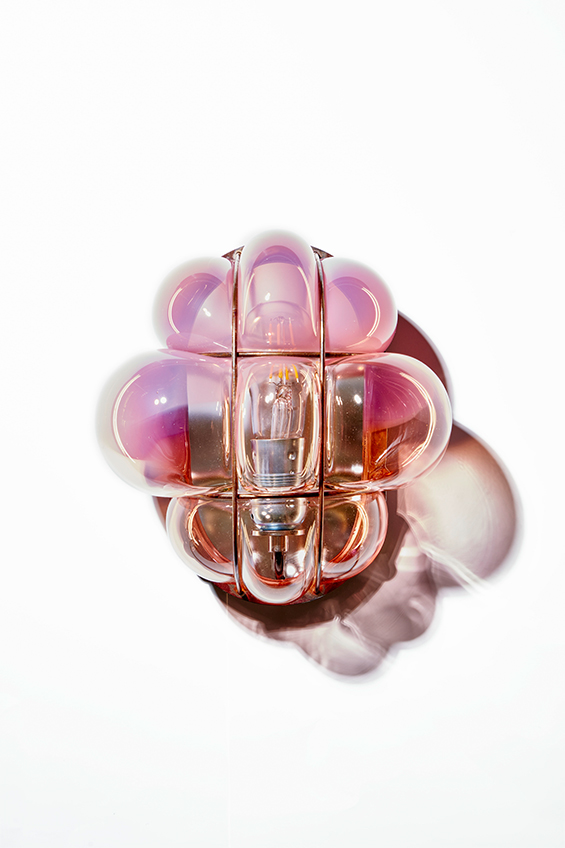
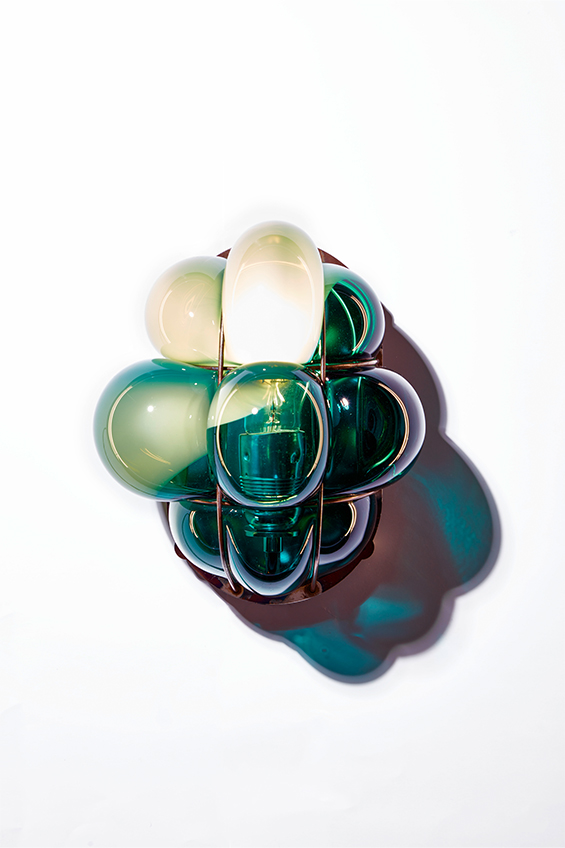
Our Bubble-Lights get the most consistent praise – no surprise, as they’re beautiful and immediately eye-catching.
But the most unexpected reactions come from the Cadaver sculptures. People are shocked when they realize the seemingly stone-like forms are actually soft and bouncy. It triggers a kind of childlike curiosity and tactile engagement, which we love to see.
Is there a project that had the most surprising material outcome or transformation?
Not really. We always begin with material tests and prototyping before moving into production. That process allows us to anticipate and avoid any unwanted surprises. It’s an essential part of how we work – making sure we fully understand a material’s behavior before committing to a final form.
Where can people find you?
Our studio is located in Kreuzberg, Berlin – we welcome visitors by appointment only.
You can visit our website balzerbalzer.com for an overview of our work (though it’s not always up to date). For the latest updates, follow us on Instagram: @balzerbalzer_studio.
We’re currently launching an exciting new collaboration with Vaust Gallery, which will be shipped to Dubai this autumn.
Lastly, I kindly ask you to consider supporting our friends at the K41 Community Fund. This initiative is run by the team behind K41, the club in Kyiv we had the honor and pleasure of working with. They are doing incredible work supporting their community during these challenging times, and every bit of help makes a difference. Thank you so much for your support. https://k41community.fund/en/