DATECRETE
What’s your name and where are you based?
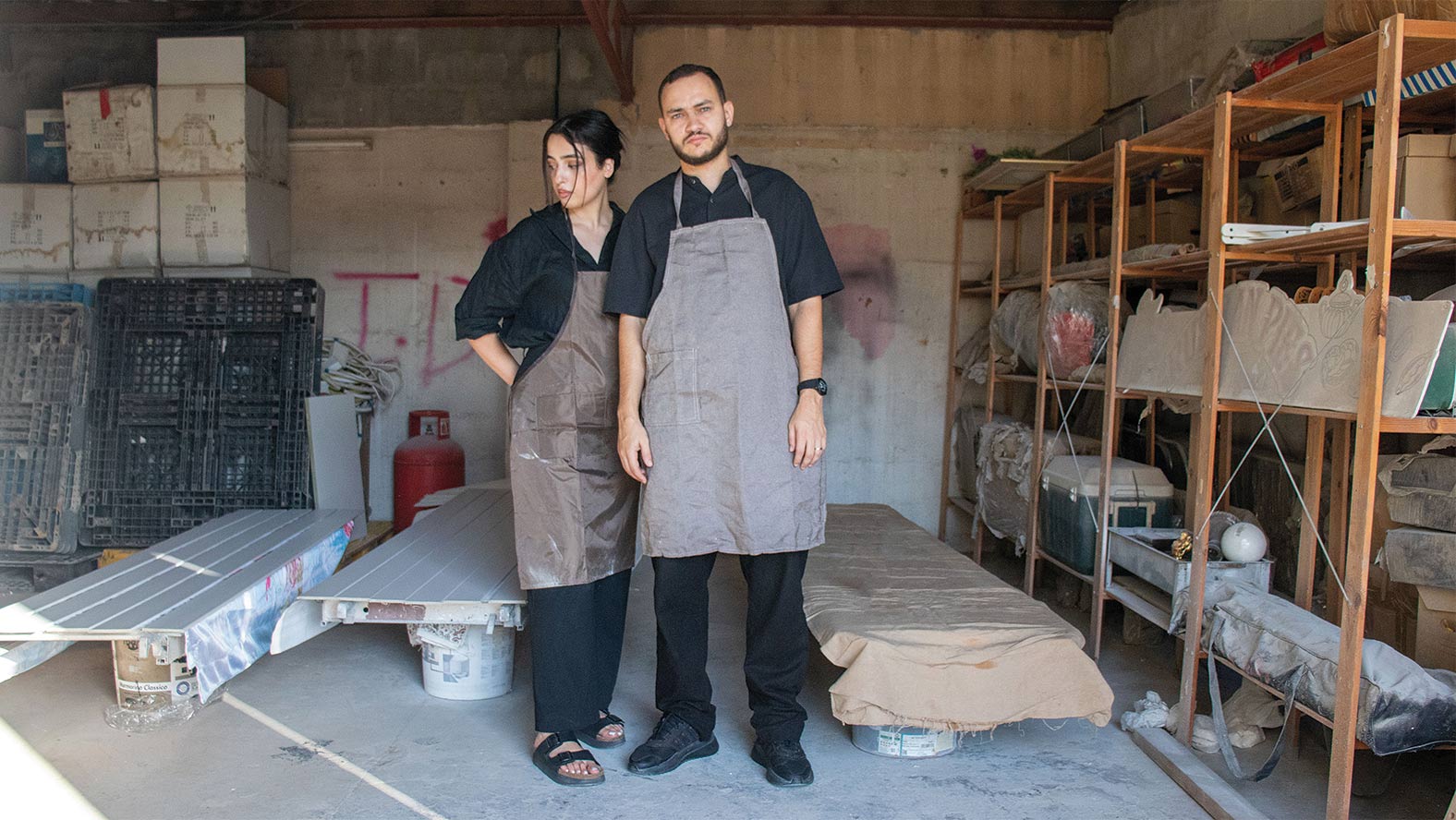
We are Sara Farha and Khaled Shalkha, a Lebanese-Palestinian duo and the co-founders of Datecrete Studio & Lab. We are currently based in Dubai.
Can you describe what you do in a few words?
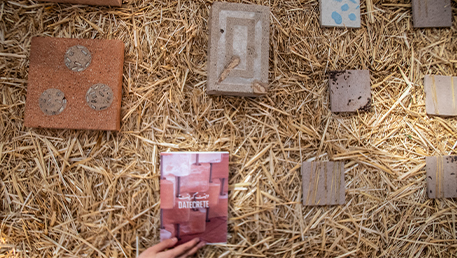
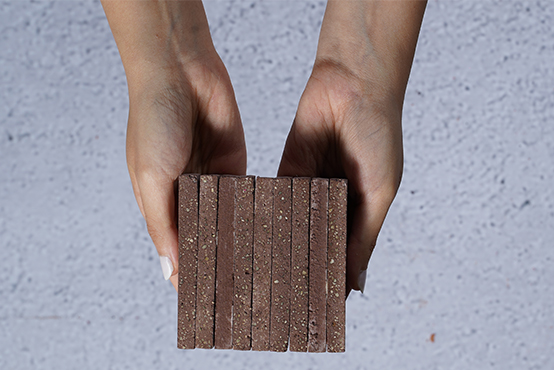
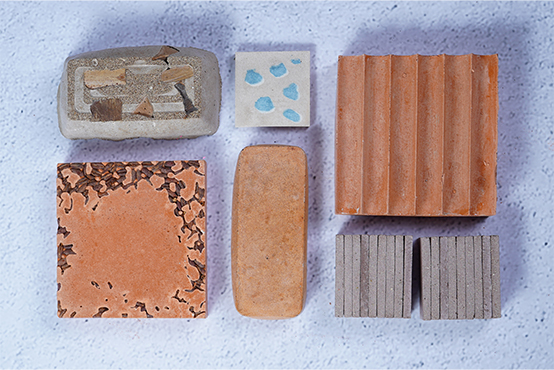
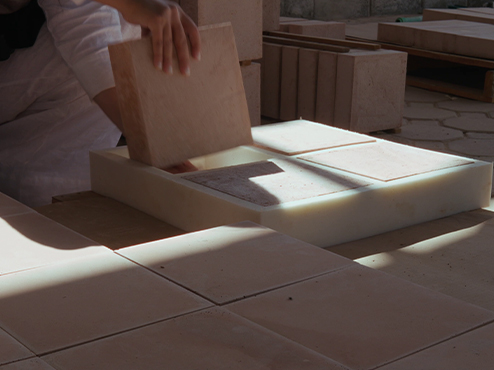
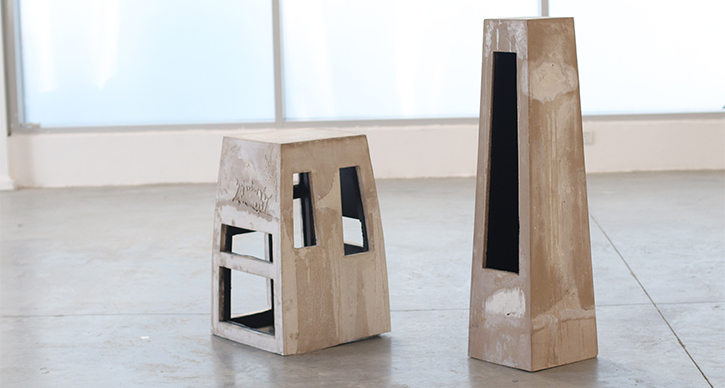
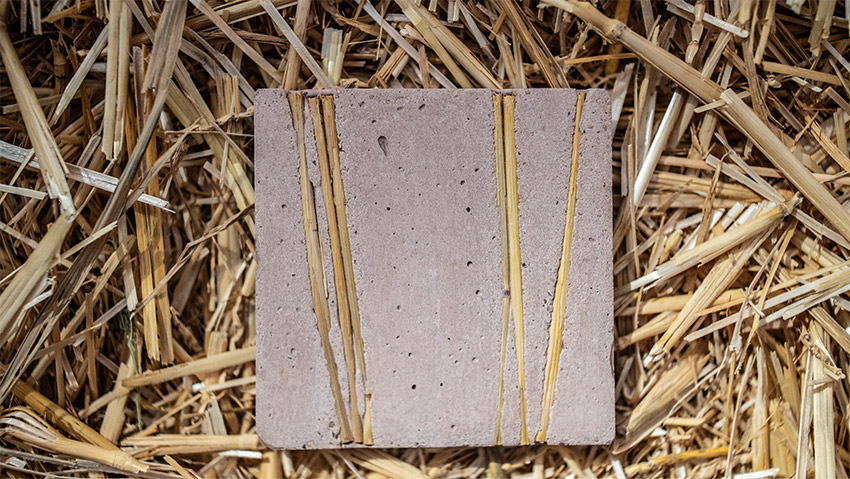
We are a practice that merges material research, architecture, and ecological design. We develop slow, handmade architectural objects using our patent-pending material Datecrete; a date-pit-based, cement- and resin-free traditional concrete alternative.
What was the initial spark that made you see the date pit as more than agricultural waste?
Khaled accidentally stepped on a date pit and remarked how hard it was, like stepping on a Lego. That sensation lingered and turned into a question: if something so small and dense causes this much pain underfoot, could it also bear weight? Could it be reconstituted into structure? That curiosity became a research trajectory.
Were you set on using date pits from the start, or did you explore other materials first?
Yes, we were set on using date pits from the beginning. Beyond their abundance and structural potential, we had also grown aware of their forgotten legacy in cosmetic, medicinal, and ornamental traditions—used in traditional kohl, herbal remedies, and even as carved decorative objects. Their material promise was matched by a layered historical and symbolic presence that we felt deserved reactivation.
Can you take us through the earliest experiments with Datecrete? Were there any surprising failures or breakthroughs?
The very first initial prototypes of Datecrete were developed during our participation in the Tanween 2022 design program. That residency provided us with the time and structure to start testing the material’s feasibility. However, the journey didn’t end there. Since then, we’ve significantly evolved and honed the material beyond its early form, through extensive lab testing, experimentation with different binders, and process refinement.
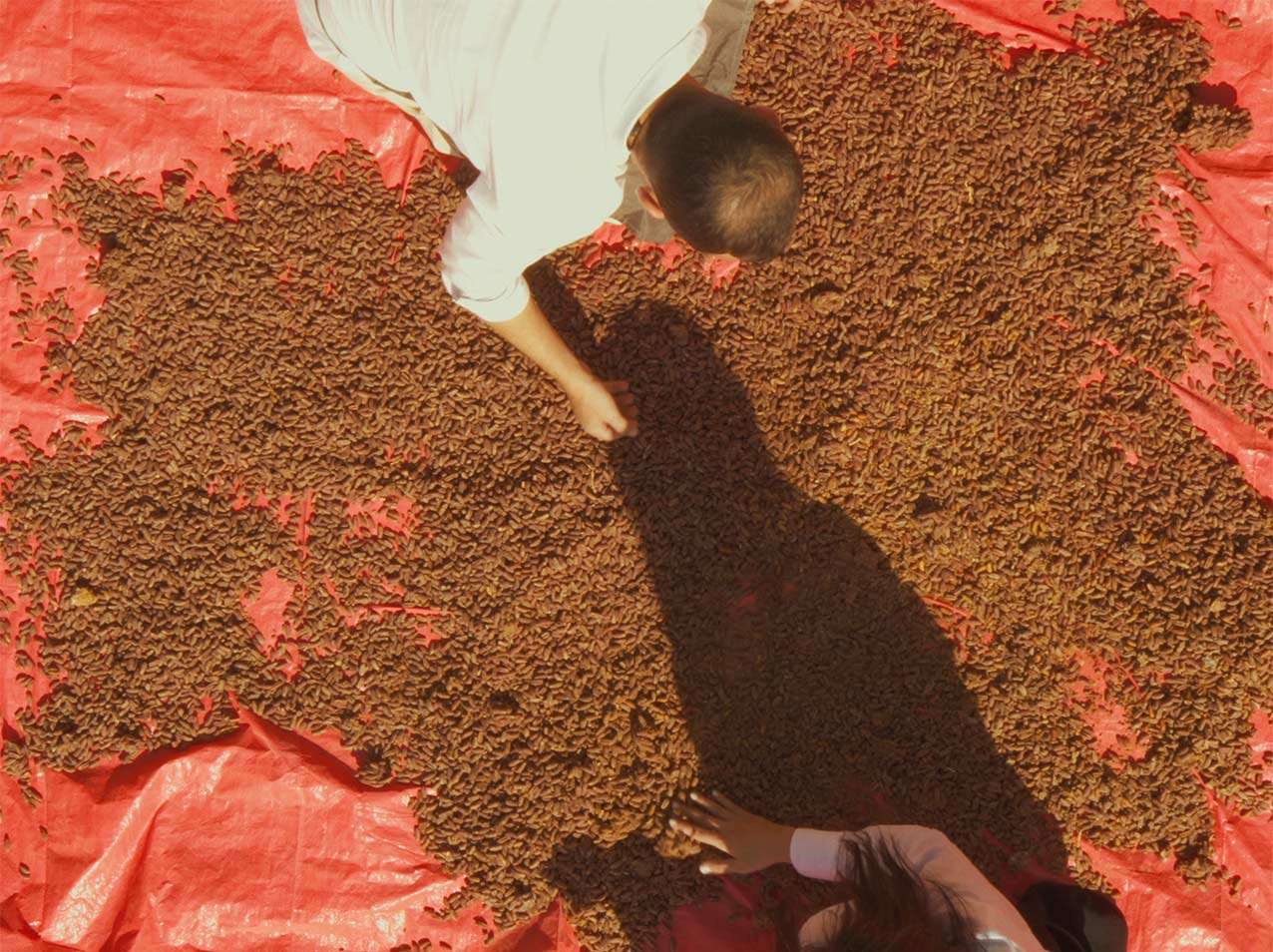
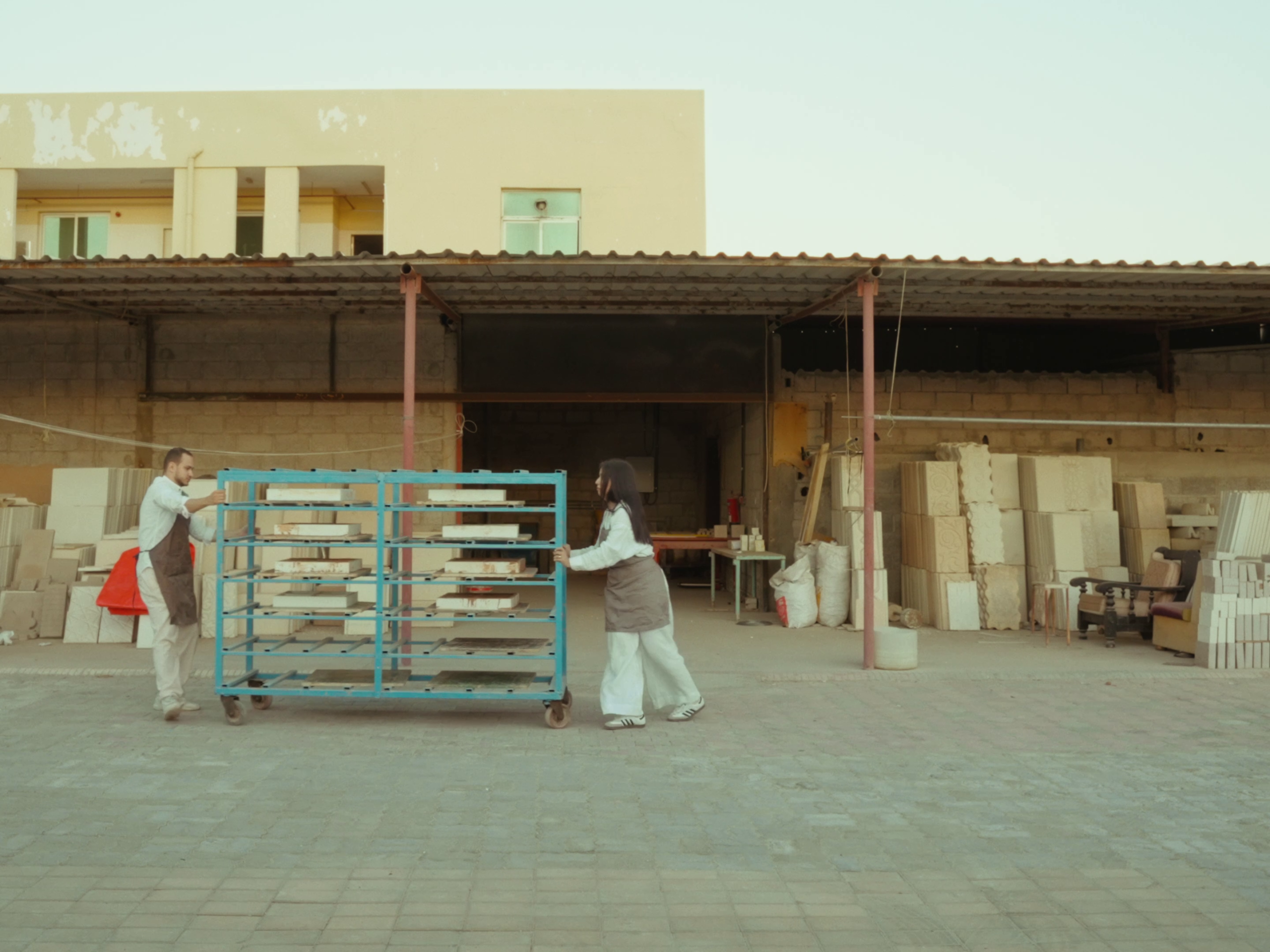
Our earliest independent experiments took place in our kitchen and garage. We tried everything—grinding pits with spice grinders, sun-drying vs. oven-drying, different binder systems. Some samples crumbled on contact. Others took too long to cure. A major breakthrough was identifying the optimal roast and particle size for bond strength. We now source pits from local date processing factories in the UAE, intercepting them before they’re discarded or composted.
How does Datecrete differ structurally and environmentally from conventional concrete or engineered wood?
Structurally, Datecrete has excellent compressive strength for non-load-bearing applications. Unlike engineered wood, it doesn’t rely on formaldehyde-based adhesives or synthetic resins. Environmentally, it uses significantly less water in the mixing and curing process compared to traditional cement-based systems. Additionally, the binder system is composed entirely of natural components, with no synthetic additives. Perhaps most notably, Datecrete has the capacity to sequester CO₂ from the environment during its curing phase, adding a regenerative element to its life cycle.
What’s something you learnt about dates through this process that you wouldn’t have otherwise known?
We discovered that date seeds have been used across history in far more ways than we imagined. In the MENA region, they were roasted and ground to make traditional kohl eyeliner, used in cosmetics, pressed into pastes for medicinal purposes, and even processed into pigments and dyes. The seeds were also burned as incense, carved as ornamental beads, and used in early methods of water filtration. This deep history revealed to us that date pits were never truly waste, they carried knowledge and utility that had simply been forgotten.
How do you see Datecrete contributing to a shift in sustainability thinking?
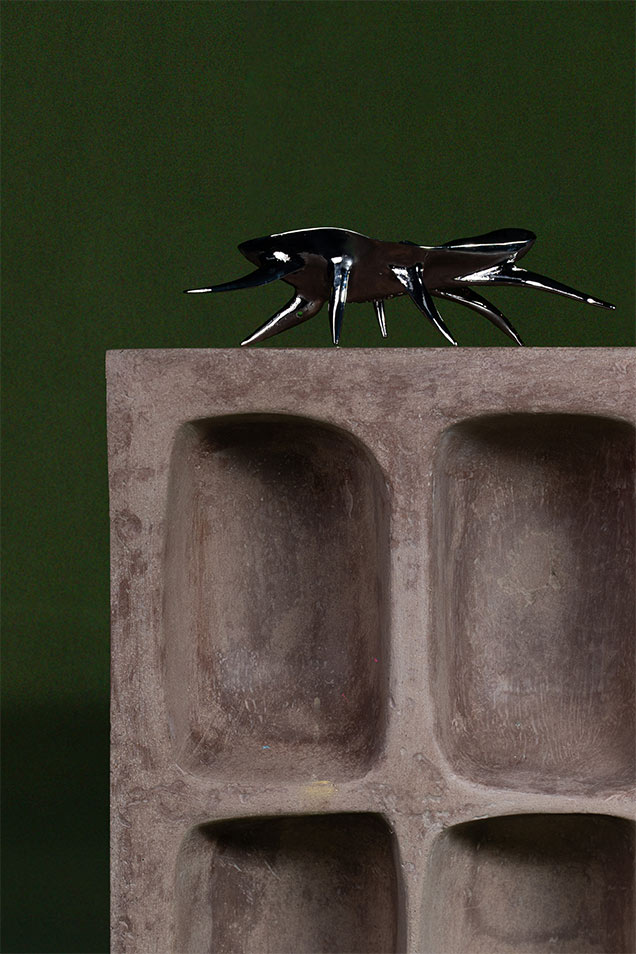
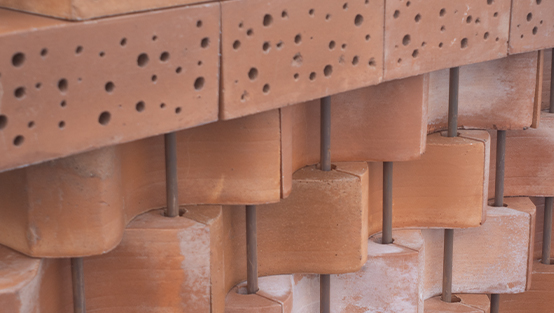
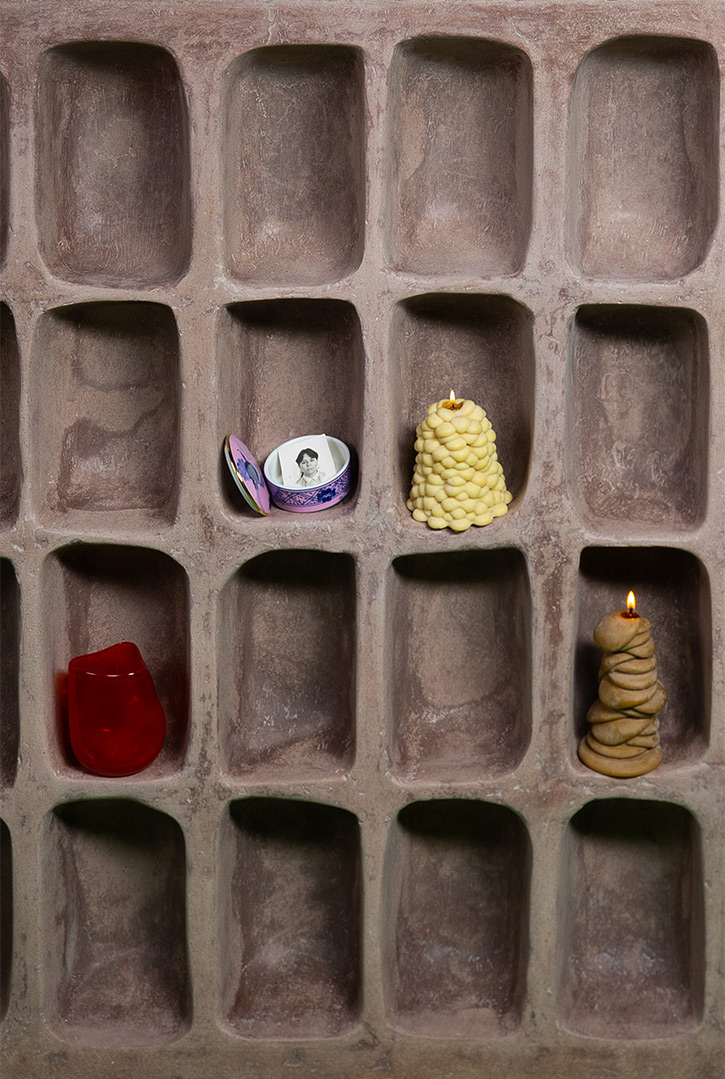
It repositions waste as a structural resource and bridges the gap between food systems and our built environment. By using discarded agricultural byproducts; specifically date seeds, we are looping nutrient cycles into architectural cycles. For example, our Datecrete Bee Hotel is a living sculpture designed to support pollinators, it demonstrates how food system waste can generate new ecological functions within urban and rural spaces. It’s a small-scale intervention with large symbolic implications.
The date palm has a powerful presence in the cultural memory of the MENA region. How does that legacy shape your practice?
It’s at the core of our work. We see the palm not just as a tree, but as a witness, it is omnipresent in the region’s mythologies, economies, and historical survival strategies. By working with the seed, we’re quite literally working with the memory of the land.
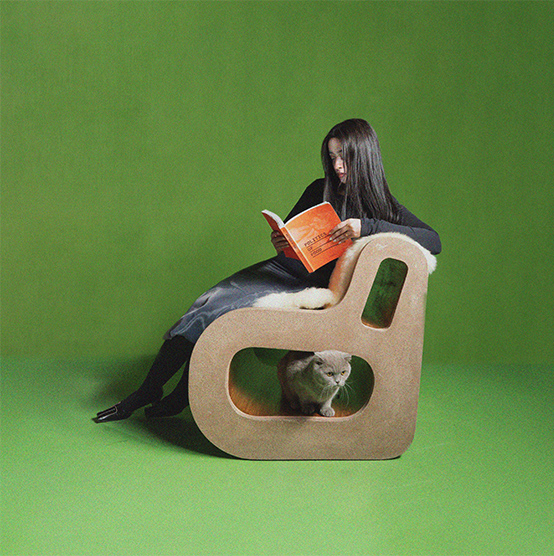
Can you tell us about the Datecrete Accent Chair and why you designed it this way?
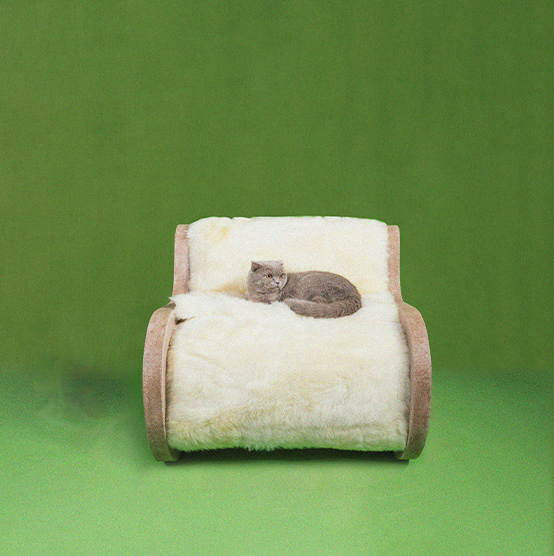
The Datecrete Accent Chair is made from a combination of Datecrete, oakwood veneer, bent plywood, and sheepskin upholstery. The design draws inspiration from the intimate bond between humans and their pets, celebrating shared moments of rest and relaxation. While the storage areas are perfect for essentials, they can also serve as a cozy retreat for your furry companion. The use of sheepskin upholstery adds not only tactile warmth but also carries a natural lanolin scent that is particularly attractive to cats, making it a natural haven for them.
Is there a project or partnership you hope to realize through Datecrete?
Yes! Sara is about to begin a PhD program focused on advancing Datecrete research and honing the material’s formulation and structural applications. An official announcement will be made soon, but this new academic collaboration and access to laboratory facilities will be tremendously important for taking the material forward. We have a long list of ideas we are eager to explore; from enhancing performance properties to experimenting with new natural additives and structural applications.
Has working with a material tied so deeply to regional identity shifted how you think about your own relationship to place and land?
Absolutely. It has made us more attentive and hands-on in our design process, sharpening our awareness of local ecologies and resources. Working with Datecrete has allowed us to bridge multidisciplinary practices: spanning architecture, material science, and cultural history, and to create design that is intimately informed by deep scientific research into the material itself.
Could the concept behind Datecrete be applied to other byproducts from regional agriculture?
Yes. We believe this framework can be translatable for other industrial byproducts that have a wood-like constituency like olive pitsetc. The core idea is about closing loops between agriculture and construction.
Where can people find you?
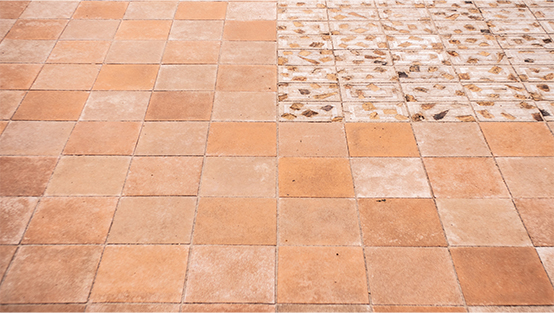
You can find us at @datecrete on Instagram or visit our website at www.datecrete.com. A significant portion of the pavers infront of the UAE Pavilion in Expo Osaka 2025 are made out of Datecrete! As for upcoming exciting projects; we will soon debut a modern take on the historical pigeon tower as outcome of the Art Jameel Research and Practice Platform grant, we are also collaborating with a fashion designer to create wearable-functional art objects.