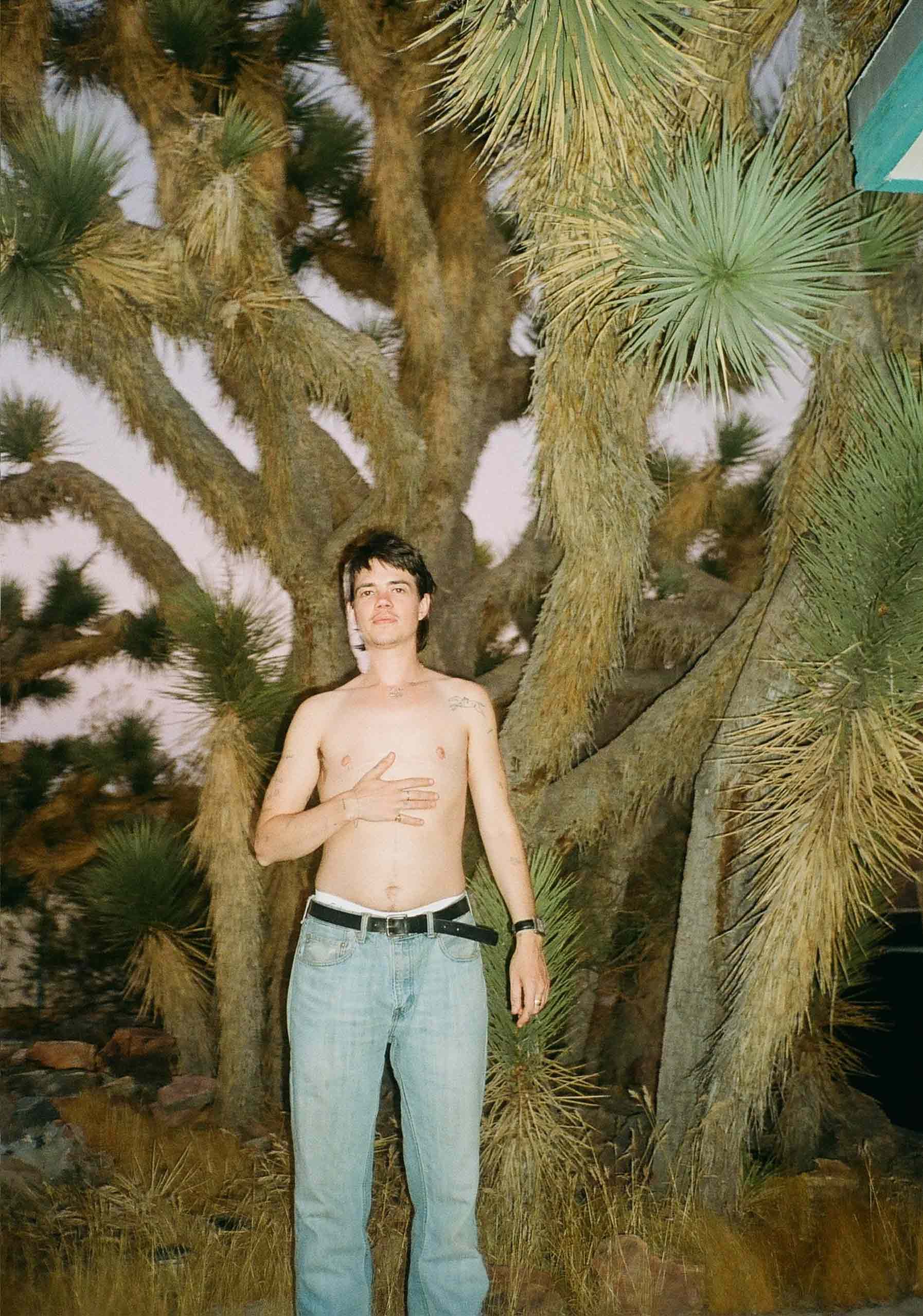
Elio Mercer
What’s your name and where are you currently based?
I’m Elio Mercer, and I am a British artist living and working in Copenhagen, Denmark.
How would you describe your design approach in a few words?
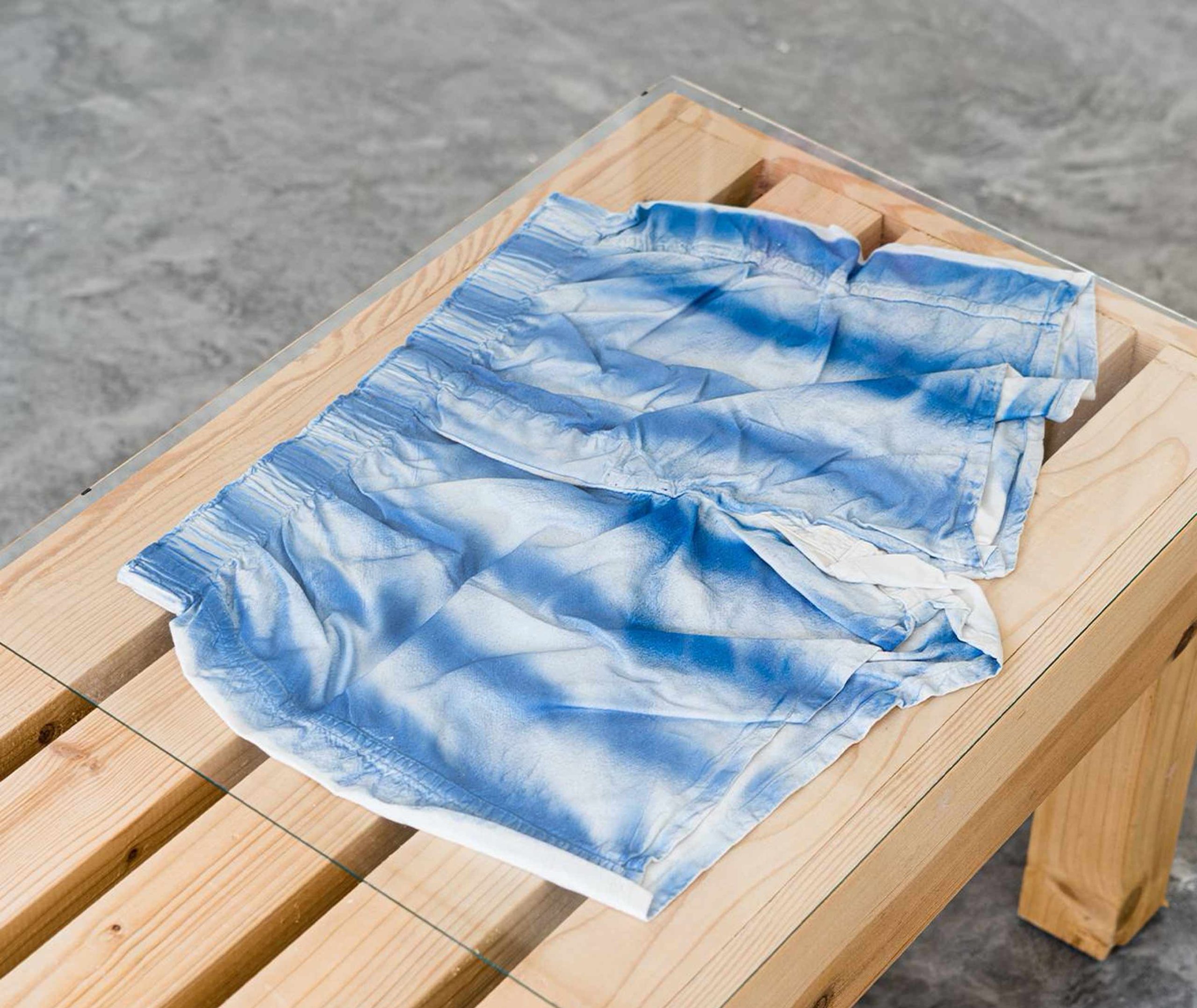
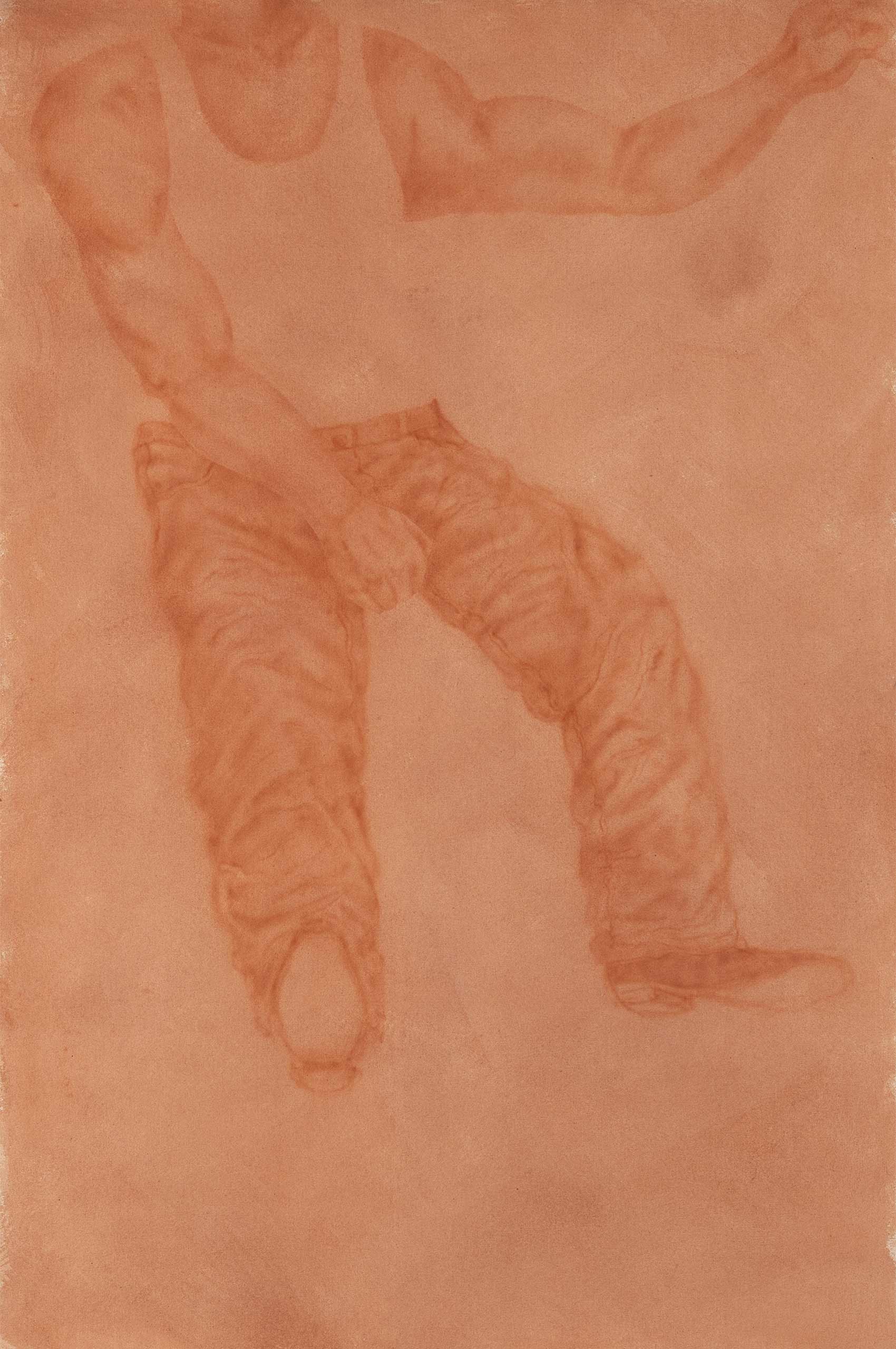
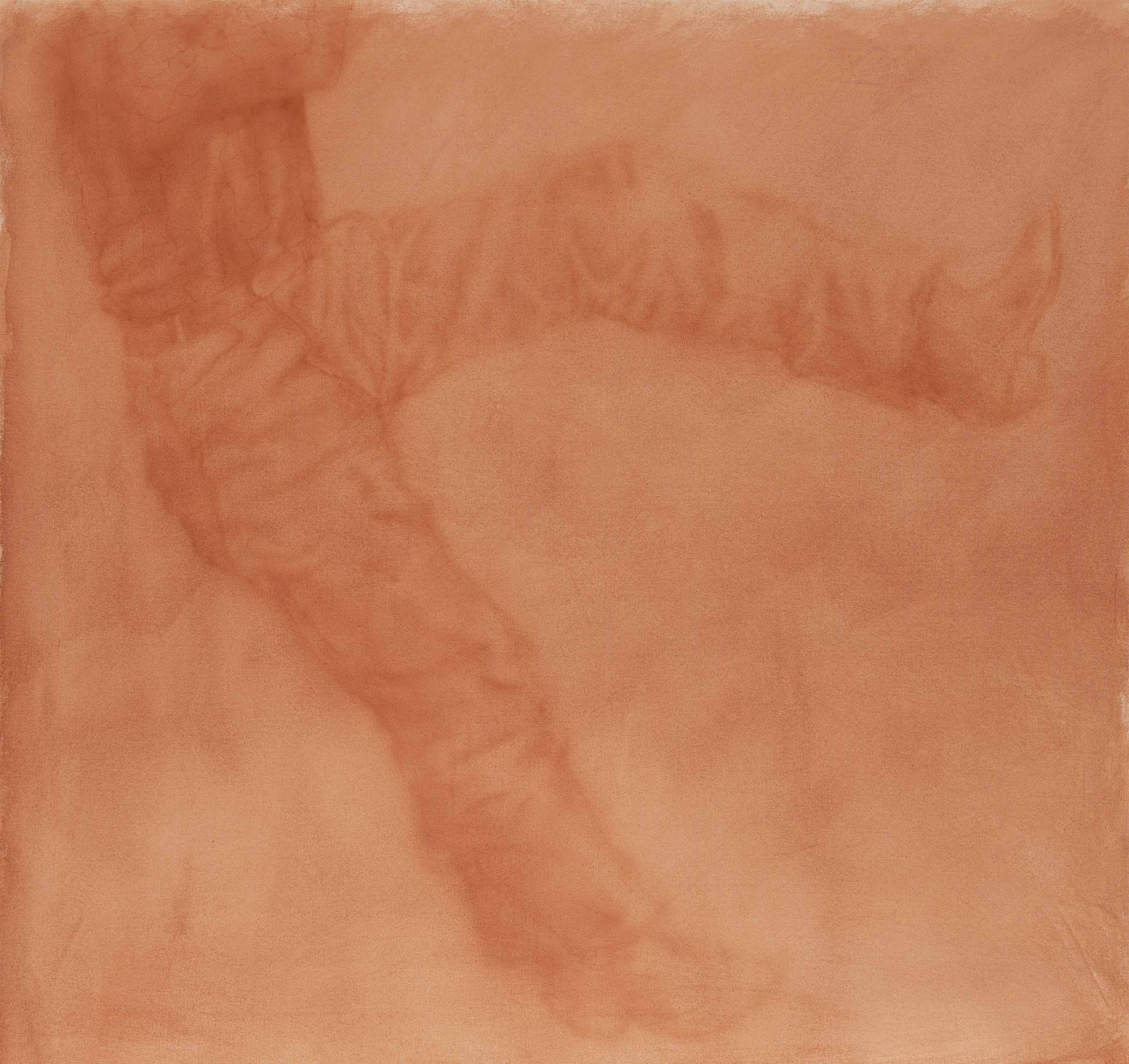
My practice mainly focuses on exploring masculinity, and how that can be visualised through a trans masculine lens. My most often used mediums are airbrush painting, drawing and wooden construction.
What subjects are you looking to explore?
Lost boyhood and masculine embodiment are very often what I am drawn to express. Ideas of perceptions in childhood versus adulthood, and how materials and forms can reconcile these thoughts and ideas.
How much do you plan a piece before starting? Or do you let it unfold intuitively?
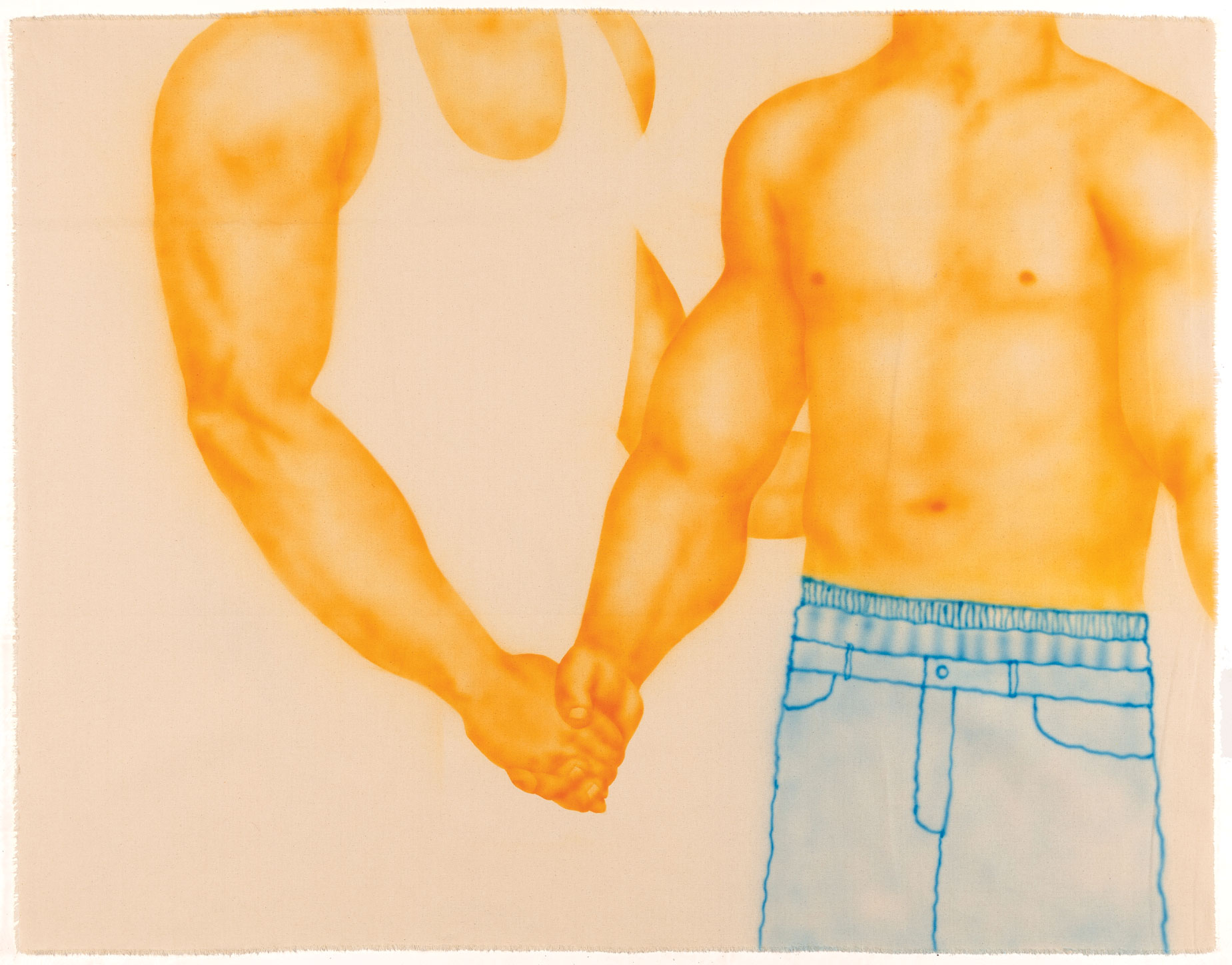
I use drawing often as a tool to explore ideas for compositions and general exporations, so that is often a first step. I also use a lot of photos as references, and will sometimes go straight from a photo to painting. It really depends of the overall composition I am wanting, and other times I am more open to see how something turns out without much planning.
Denim carries a long history tied to masculinity, labor, and rebellion, what does it mean to you personally?
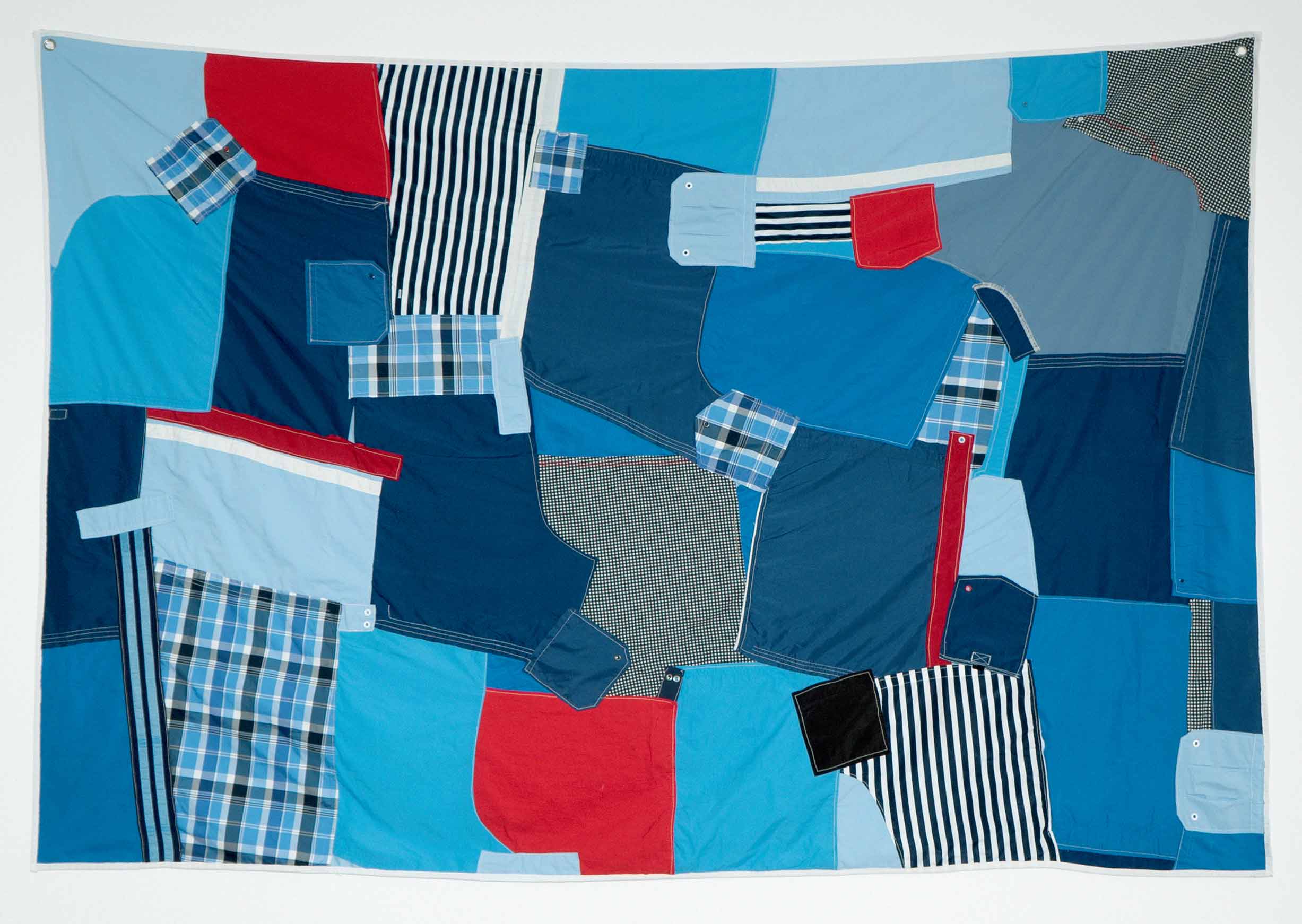
The physicality of masculinity through fabrics and materials is often present in my work. Denim in particular has always been interesting to me as a representation of this, often a useful signifier in my works that have a sense of anonymity around them. It is also very distinctive, even when drawing from archive photography, and carries its texture as well as light and shade very well.
You often work with soft materials or soft aesthetics to explore hard themes. How do you approach that contrast?
I tried out lots of different mediums and techniques before arriving at airbrush. I was seeking a way to have a lot of control over light and shade, while there also being a softness and flow to the work. A lot of my painting start out with a light was of colour on unfinished canvas. This knocks back any super highlights, and adds a soft dimness to the work. I then go in with light layers of airbrush to achieve the different folds and shadows of the piece
In terms of concept marrying with form, I really enjoy the dichotomy of often quite energetic or harsh forms, and how airbrush allows we to render that in this very delicate airy way. It really gets down to something I’m always seeking, is a way for these two things to exist together.
Do you think your idea of masculinity has shifted over time through making this work?
My practice has actually been a journey in line with my transition, and has developed along the way with me. I started off looking very inwardy and in a way more isolated from outside stimuli. That has shifted, and I have become more interested in seeking out other experiences and stories that resonate.
In terms of my ideas of masculinity, it has shifted and meant many things over time. Through lived experience as well as exploration through my work, I find it ever expanding. Taking a step back from the social structures and toxic ideas that we understand and see all the time, there are many layers beneath where expansive ideas around gender and existence can be found. To be in the position to experience and explore these ideas through many iterations of my work but also myself, I find myself winning greater humility and nuances within these ideas. Queerness also plays a large part in the understanding, and trying to stretch out this idea of not just sexuality but queerness in life and experience.
Looking at the historical practice of bronco riding in Rodeo for example. On the surface full of all the machismo and bullishness we associate with a certain type of masculinity. But what I take from these ideas when I think a little deeper is this idea of a shared interest and celebration of these mens love for these animals. A deep respect for horticultural practices and knowledge sharing. On top of this the very pure tendency to pageantry and competition, the sweet act of wanting other men to watch you ride your horse. Whatever that little nugget inside of saying ’no homo’ or ‘uh gay’ has to offer and teach us about outselves and our desires.
How do you define the idea of a “semi-functional object”?
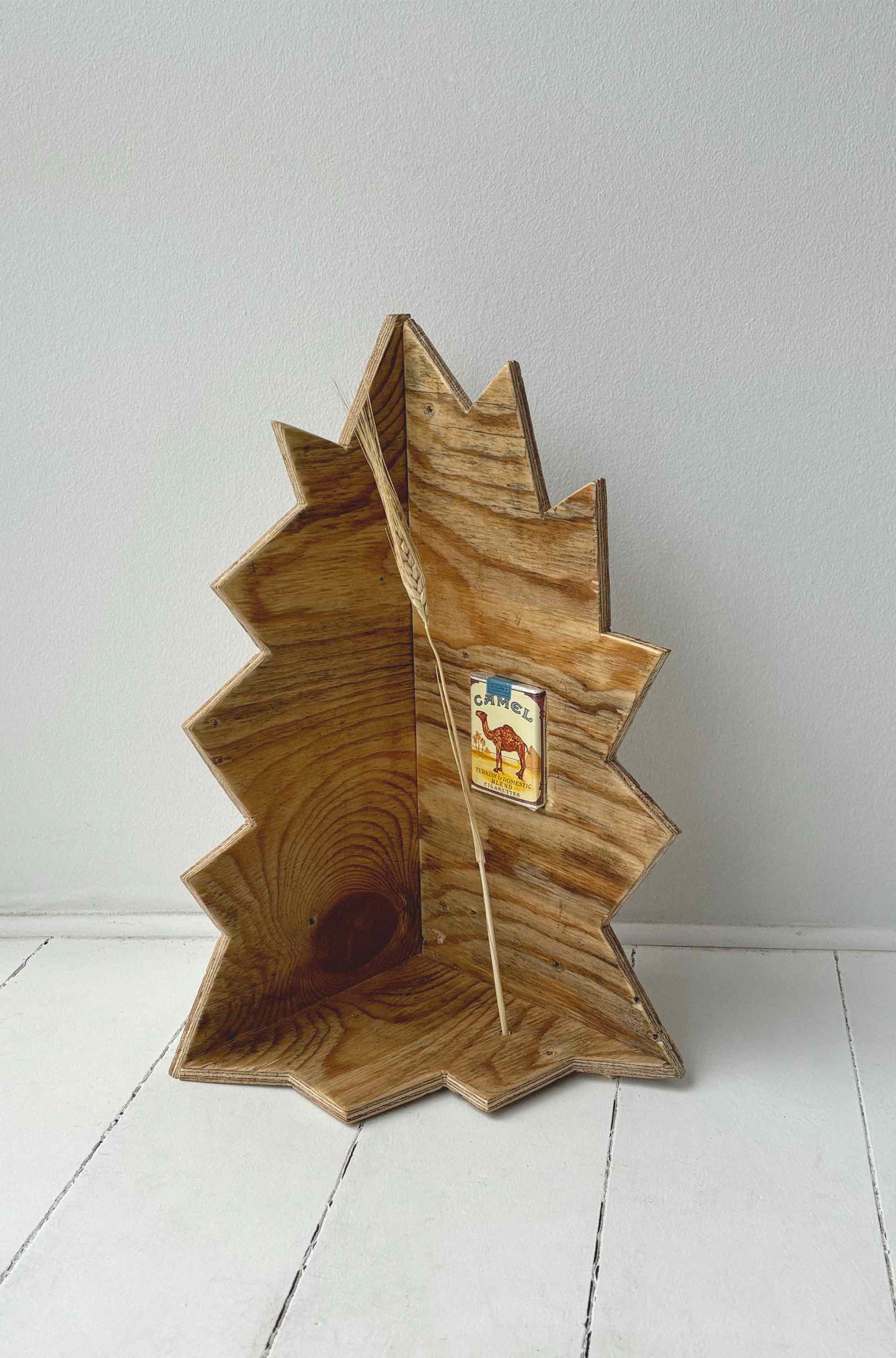
Some of my newer work dives more into ideas of lost boyhood and childhood ideas around gender. I have been working mostly with wood, and a very primal and simple material. I length of wood you may pick up as a child and call a sword.
Some of these have taken the form of what I would call semi-functional objects. Pieces with a decorative form, extrapolated from a functional object. I have been playing with forms inspired by candle holders. Evoking ideas of votive candle lighting, but as abstracted translations of childhood ideas around objects. These objects evoke in me ideas around the need for communion and prayer, less in the religious sense, and more in the mindset of loneliness and the search for belonging and meaning. Often mixed with more adult objects like cigarette packets, or drawings, push together these two strings of thought; the child self, the now self.
You talk about wanting to be “watched” in acts of bravery, do you think your work is asking for witnesses too?
So much of gender and existence is presentation, so I think it only makes sense that we want to be witnesses in order to validate and make our existence ‘real’ and true? I am always very open to any readings of my work, but I think some understanding of the meeting of the different facets of masculine experience are a success. The hard with the soft, and the two things being true at once.
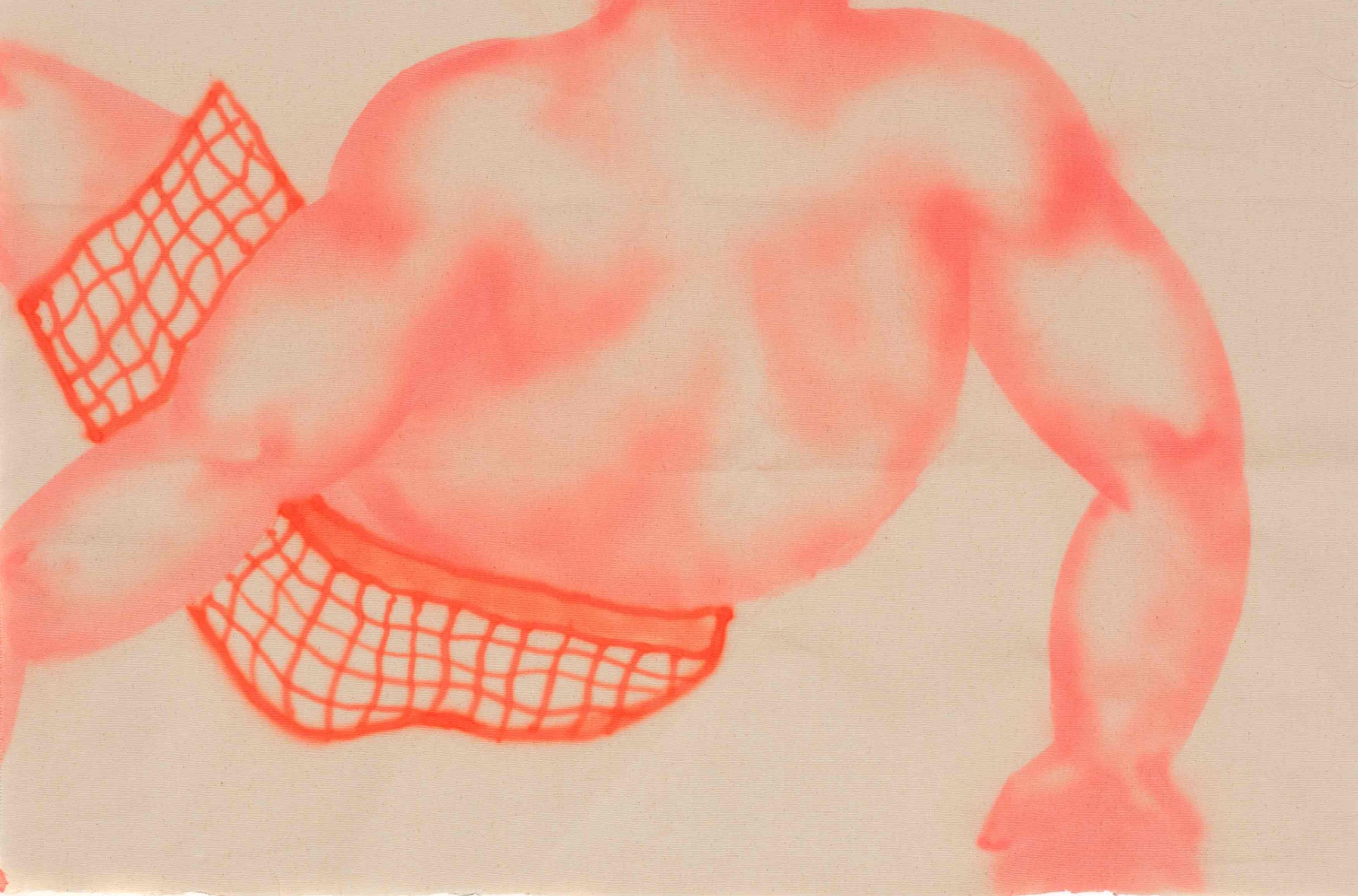
Your painting titles like ‘Make me a partner of the wind and sun’ read like poetry. Where do these phrases come from?
That particular series of works have names taken from a Cowboy Prayer card I was gifted by a friend. The cowboy archetype is something I often revisit, as I think there are complexities there that I really enjoy exploring. The ideas of peak masculine virility and strength, also mixed with ideas of loneliness and longing. This paired with queer understones and readings of masculine friendship and camaraderie all come together in a delicious soup of meaning that is rife for depicting.
Do you keep any rituals before you start painting? Or in your daily life?
My working routine is quite sporadic, and is a lot of thinking and distractions, with short spurts of making. Most painting are finished in a couple of sittings, and come together relatively quickly. I think in terms of ideation I also spend a lot of unconscious time working out ideas for works, so when I come to actually create it sort of just appears.
I do try to always have a book on the go, most times some sort of fiction. I find having some sort of constant input or narrative and language is useful to me in terms of feeling inspired by how to express ideas, and also helps a lot with spending too much time on my phone!
Do you think of your practice as self-portraiture, even when your figure isn’t present?
There is definitely and examination of self in my practice, and trying to make sense of internal thoughts and expressions. I find it useful to do a lot of the invesctioncan through reflections others, often through history.
Some early paintings I made were semi-self portraiture. They were a series of pieces looking at bodies in water. They were created just after I got top surgery, and came as a sort of self actualisation of memories of swimming topless as a child, and that coming full circle into my experience of swimming for the first time post surgery. I think these milestones are interesting to explore, as they mix actual experiences with imagining and dreams from childhood. A mixture of what you imaged versus it coming to being.
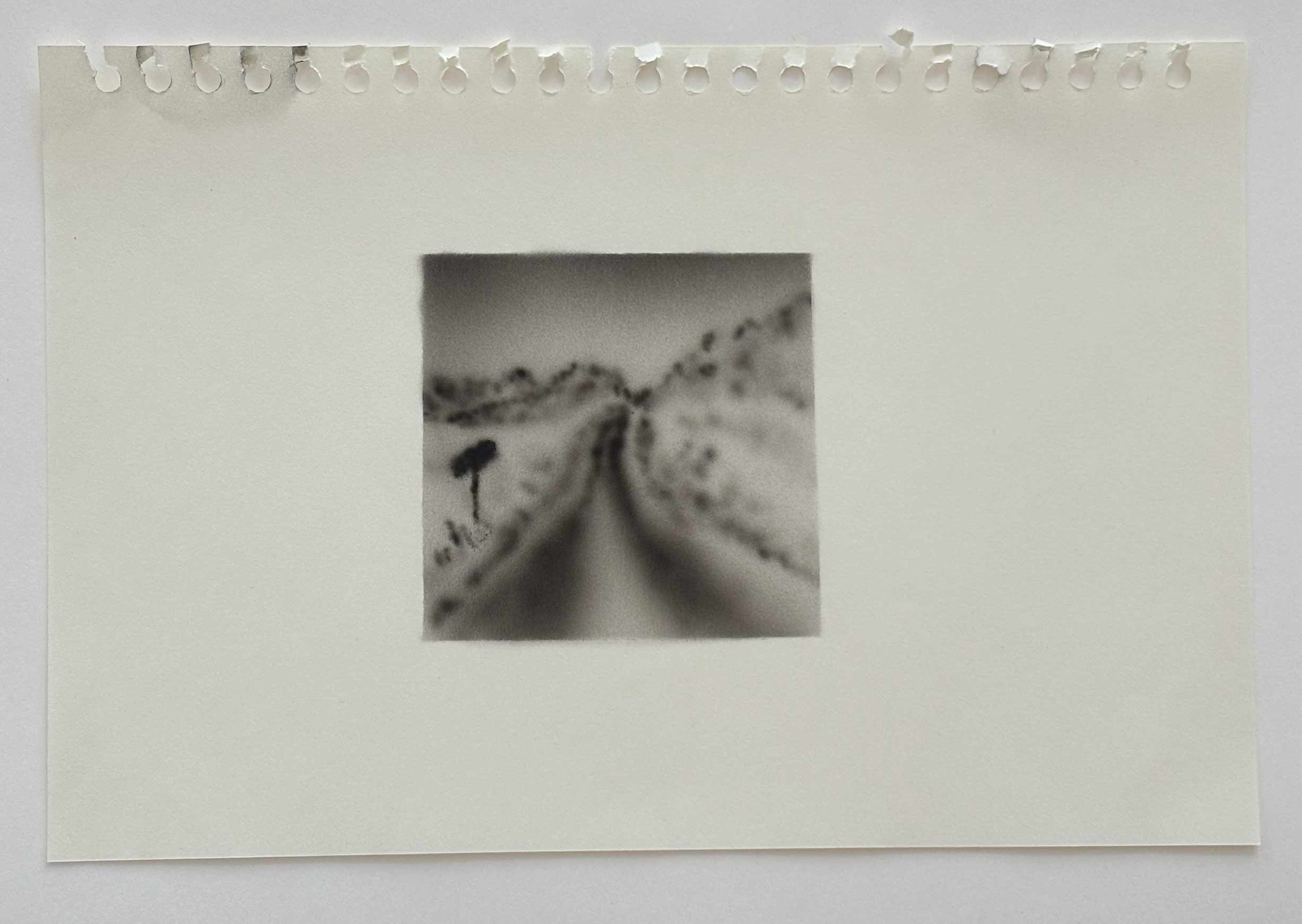
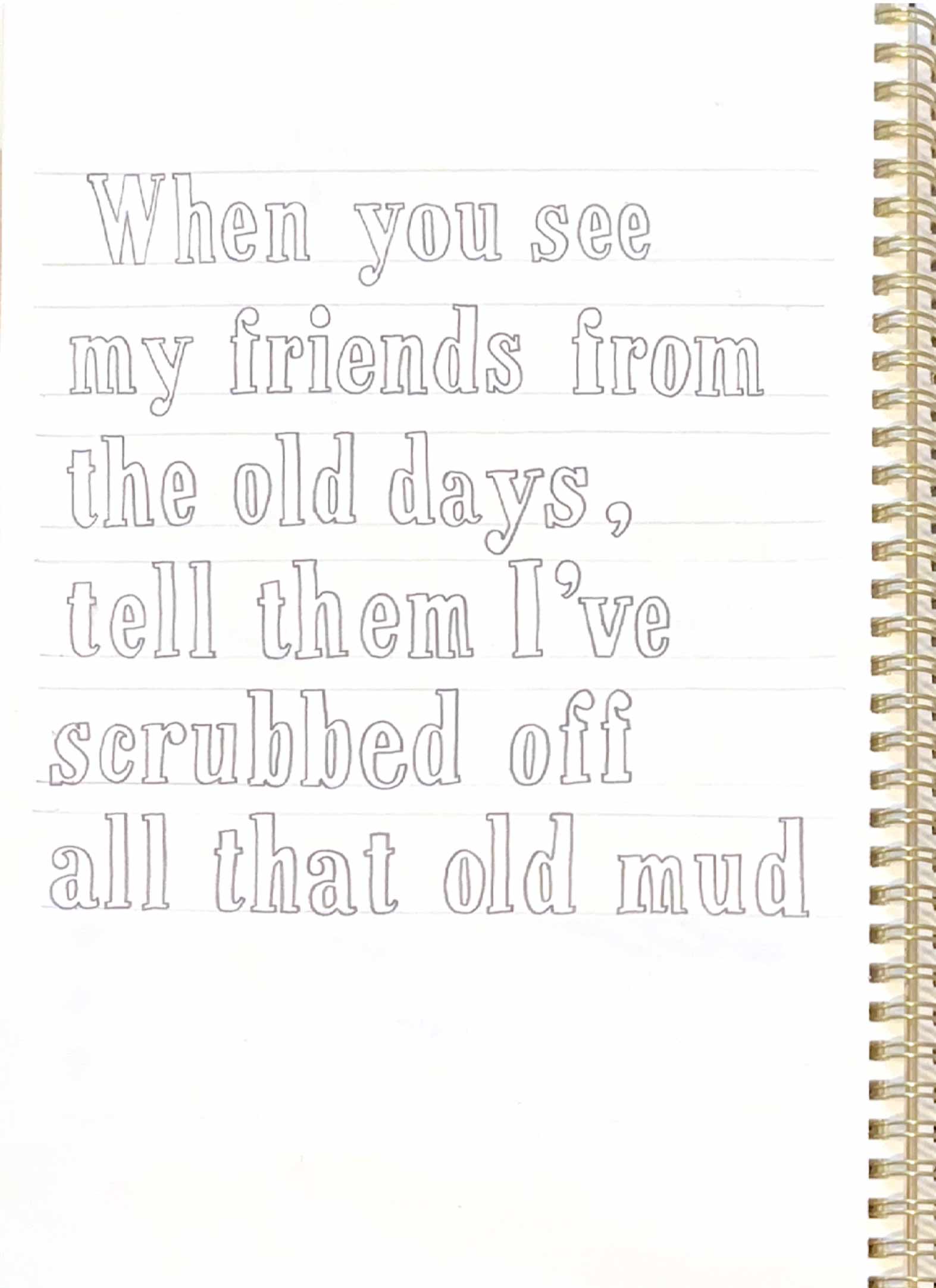
Also a more recent series of small on paper works have been working with ideas of memories of past imagination, and projects of ones loneliness into more cinematic and picturesque forms. They depict scenes you might see as stills from a film set in the Californian desert, or a long winding road somewhere far away. Romanticising loneliness and lostness in the present, to merge the soft with the hard.
At one of your exhibitions, what do you hope people notice first, and what do you hope they notice last?
I think people pick up on the main themes of my work quite quickly, but I think something I really enjoy is the fun and playfulness that people respond to in the work. I am often mining from quite ’serious’ and complex feelings, so for them to be enjoyed with joyfulness is very transformative to what the pieces are able to come to represent.
Where can people find you?
You can follow my practice and general random life things on instagram. @eliomercer
I have my first solo exhibition upcoming this spring in Stevns, Denmark. It will be on May 31st, more to be announced on this soon 🙂