Elizabeth Charnock
What’s your name and where are you from/Based?
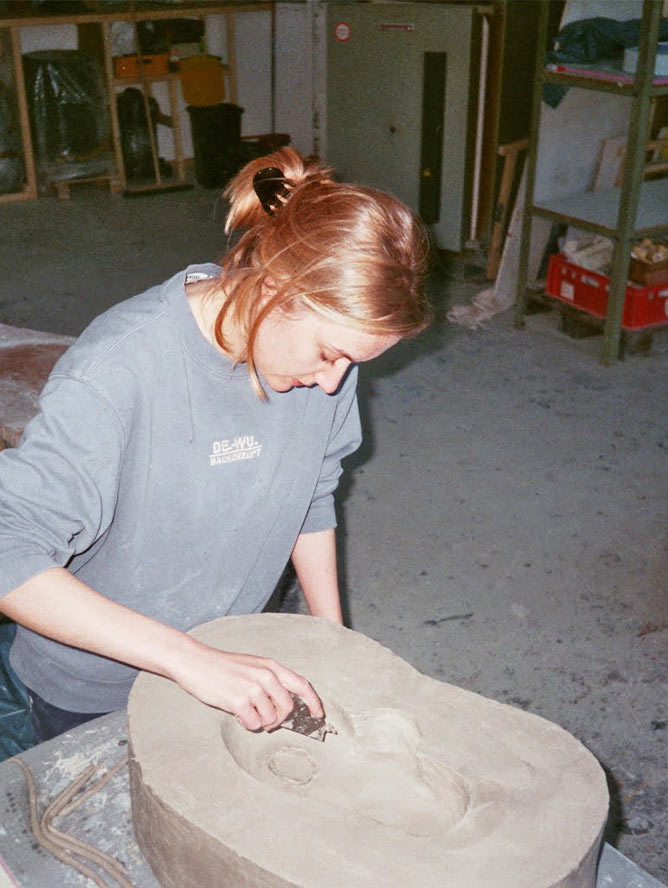
My name is Elizabeth Charnock, I’m originally from Shropshire in the UK but have lived and worked in Berlin for the last ten years.
Can you describe what you do in a few words?
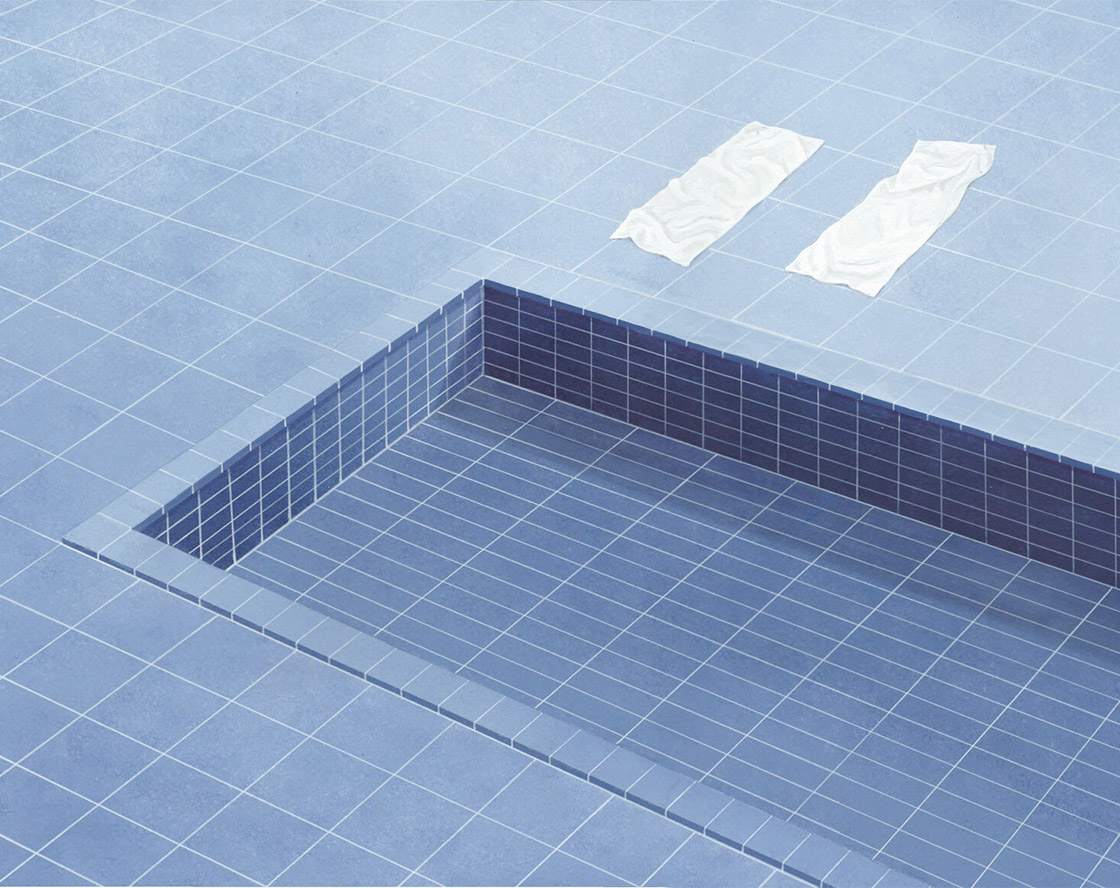
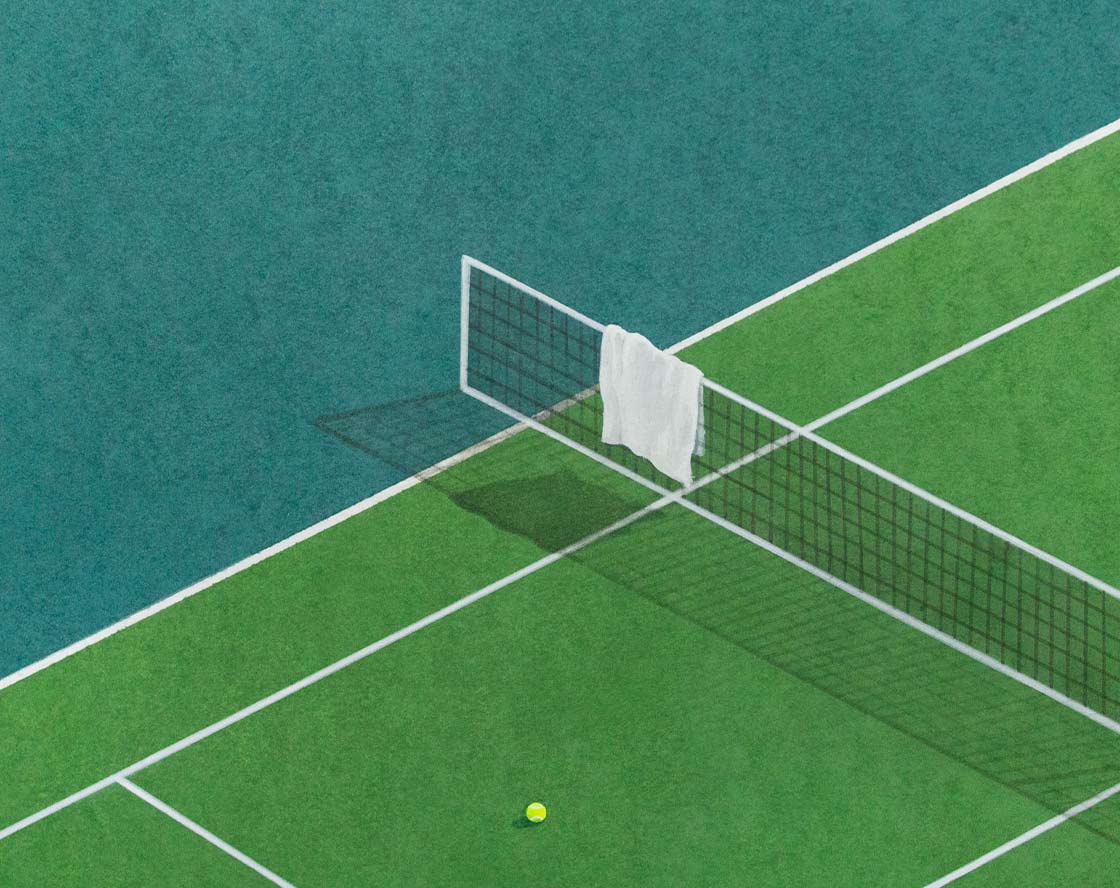
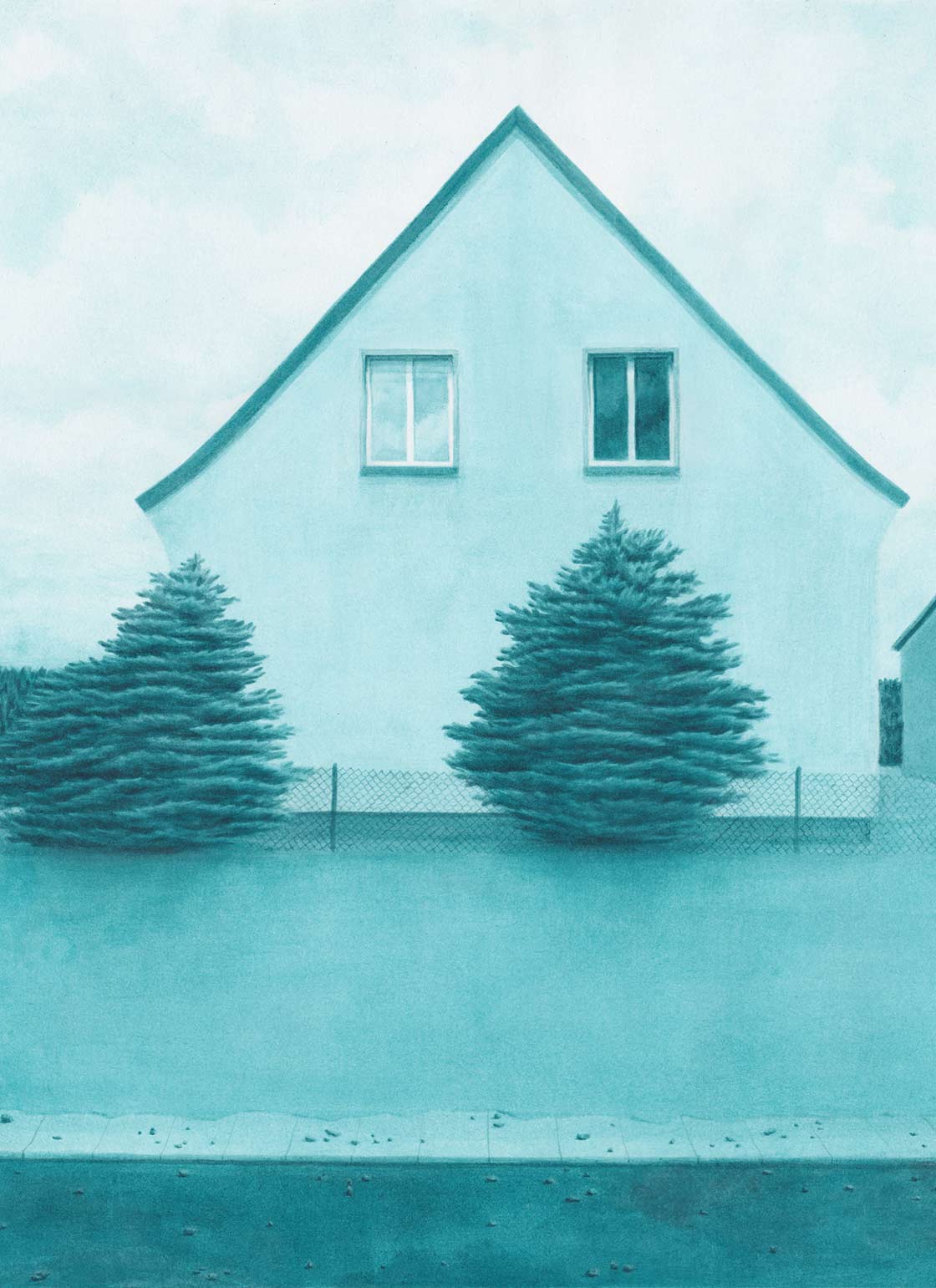
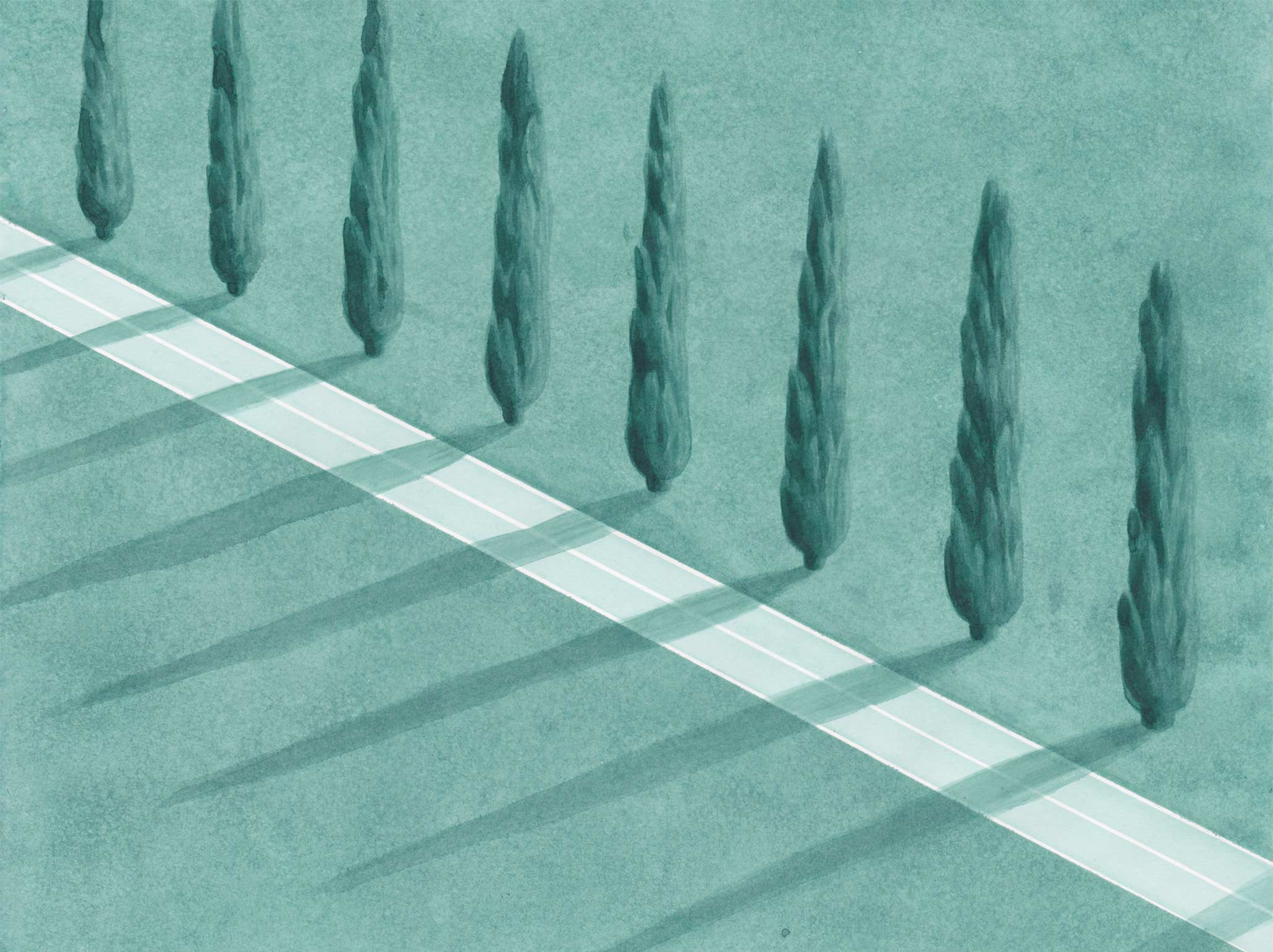
I am a painter, sculptor and video artist. I work primarily with ink on paper and ceramics. I create semi-fictional, scaled-down environments, capturing moments “in-between” – snapshots of tranquility before or after human activity. My work explores ideas of isolation, longing, familiarity and distance.
Your work often captures ‘the built environment and urban planning ideologies,’ what draws you to these spaces?
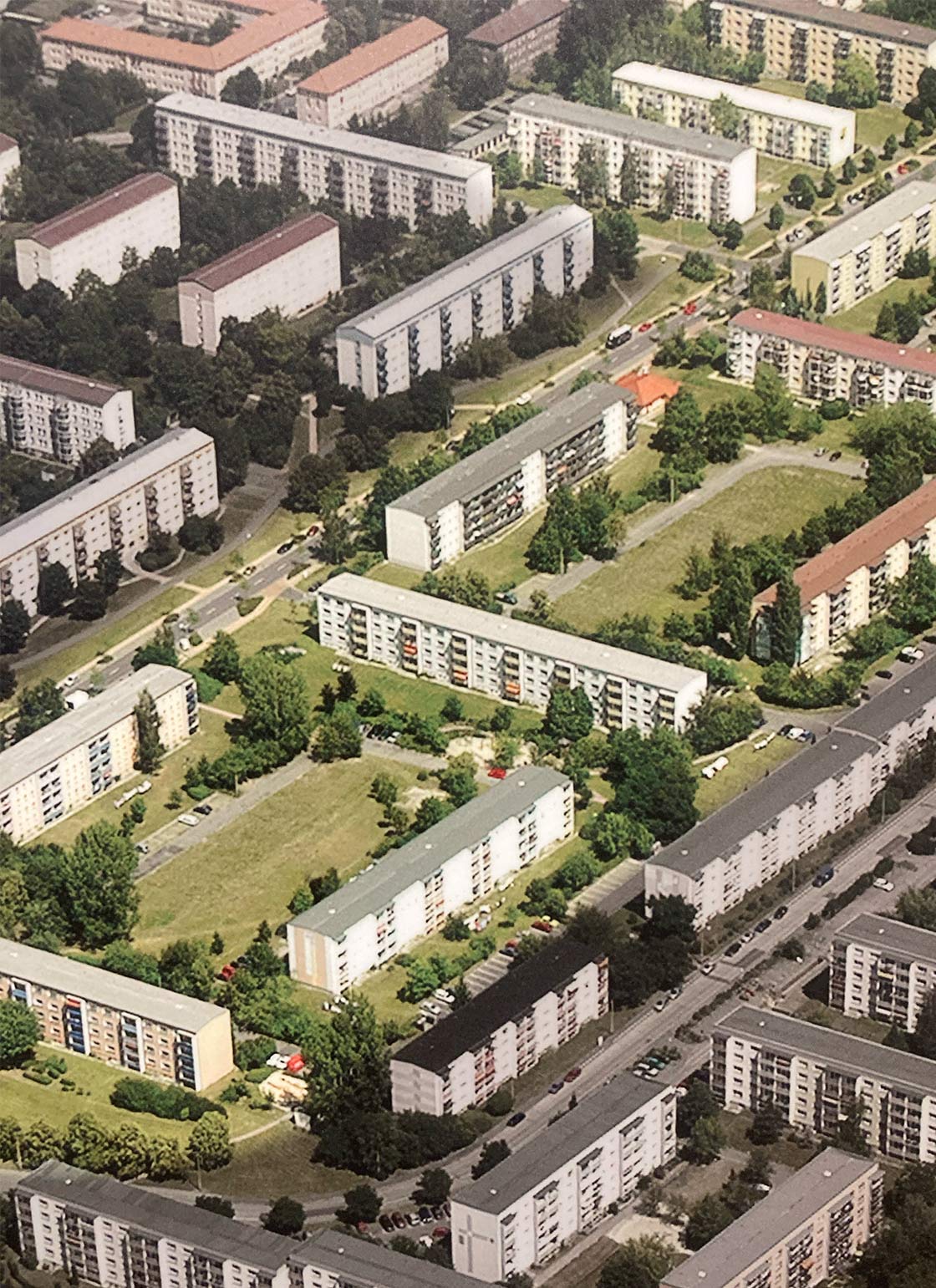
I spend a lot of time observing details of spaces that we inhabit and questioning how they function. When I moved to Dresden in the East of Germany in 2013 for my Master’s, I encountered postwar city planning on a large scale and became interested in how people interact within modernist developments. I was struck by disproportionate or non-functional elements, like vast, unused front gardens outside Plattenbau blocks or evergreen trees planted so close that they block the light from the windows. These details highlight a disconnect between planning and use and I think that’s what draws me to them. Through drawing and sculpture, I try to assess these spaces from a distance, creating imagined realities that aim to explore how environments shape our sense of self, belonging, and lived experience.
You work with various materials, What draws you to a particular medium for a project, and how does the choice of material influence the narrative of the piece?
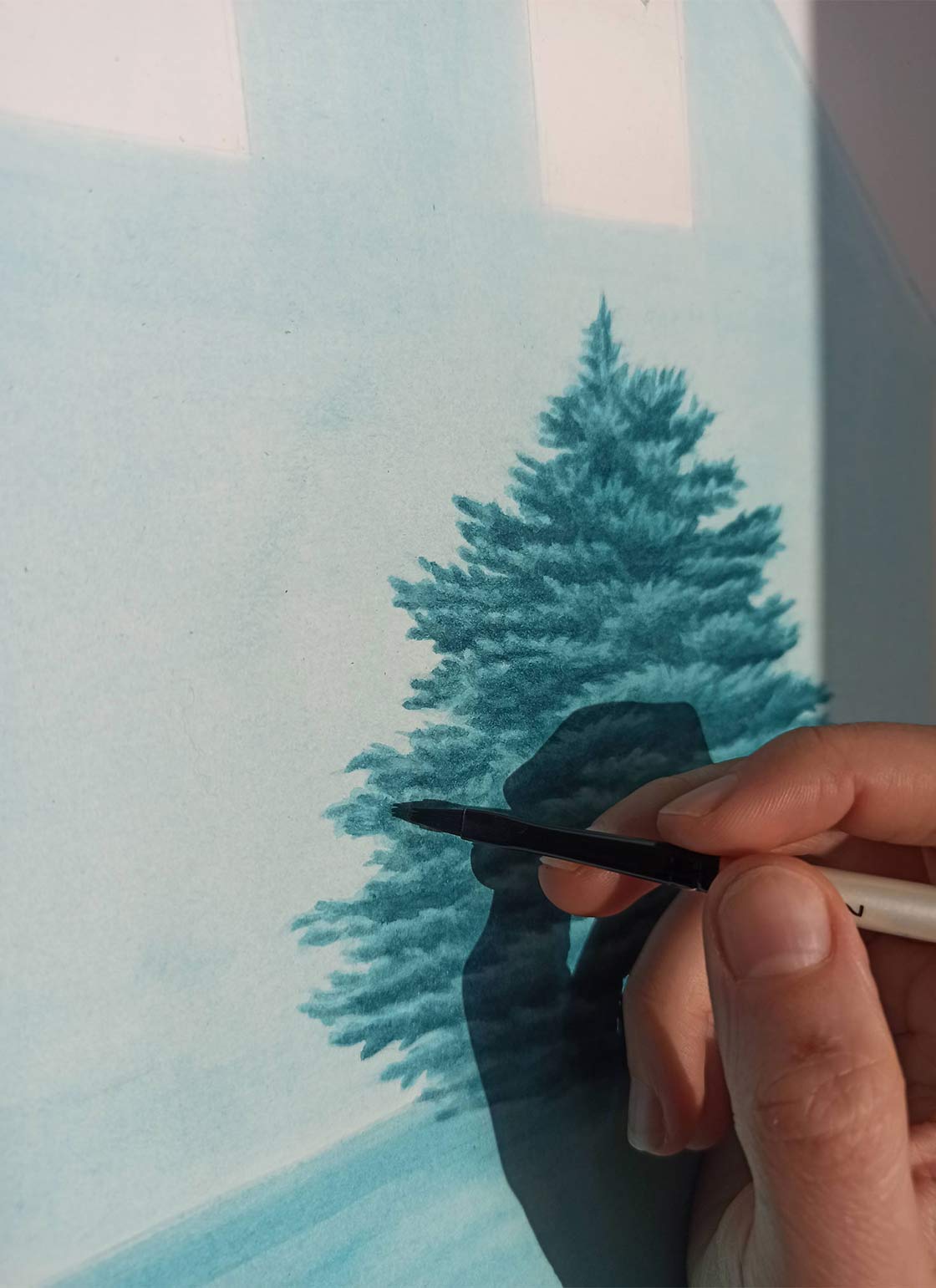
I’m drawn to ink because it allows me to gradually build up depth and detail. It’s a delicate medium, and that delicacy helps create the dream-like quality of some of my pieces. Ink is also unforgiving, it dries quickly and the layers are permanent, so I plan each piece carefully, often doing several drafts before the final version. Working with such precision in a process that requires careful attention is calming, almost like meditation.
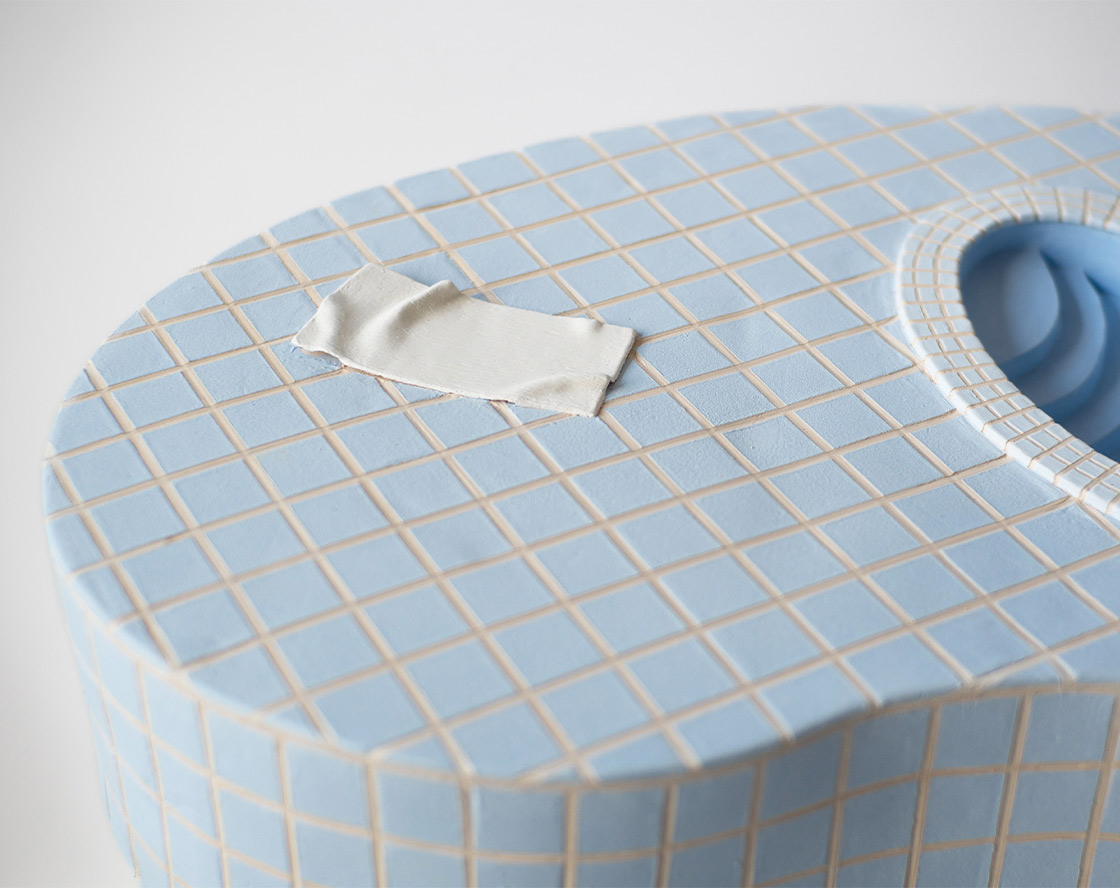
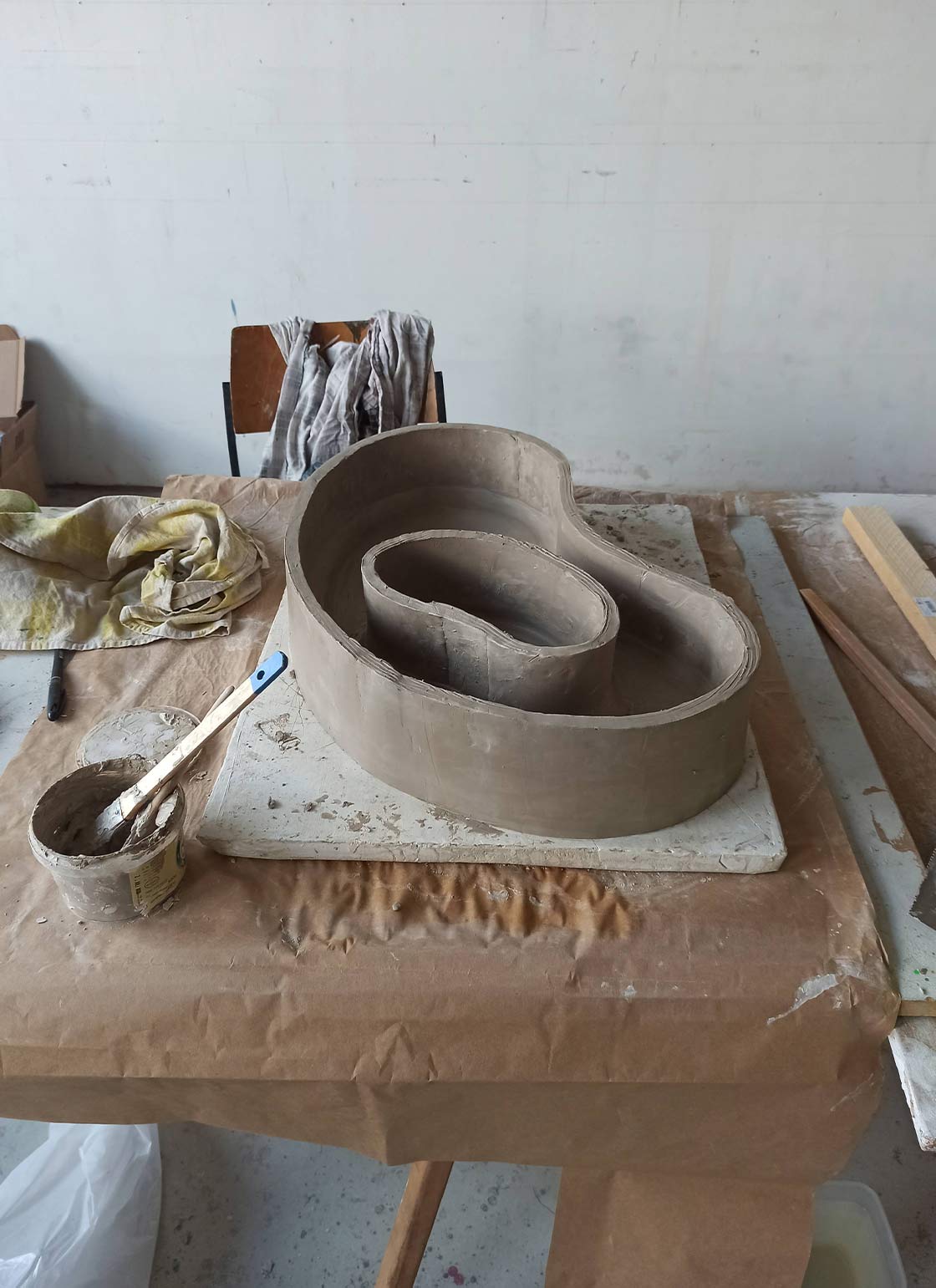
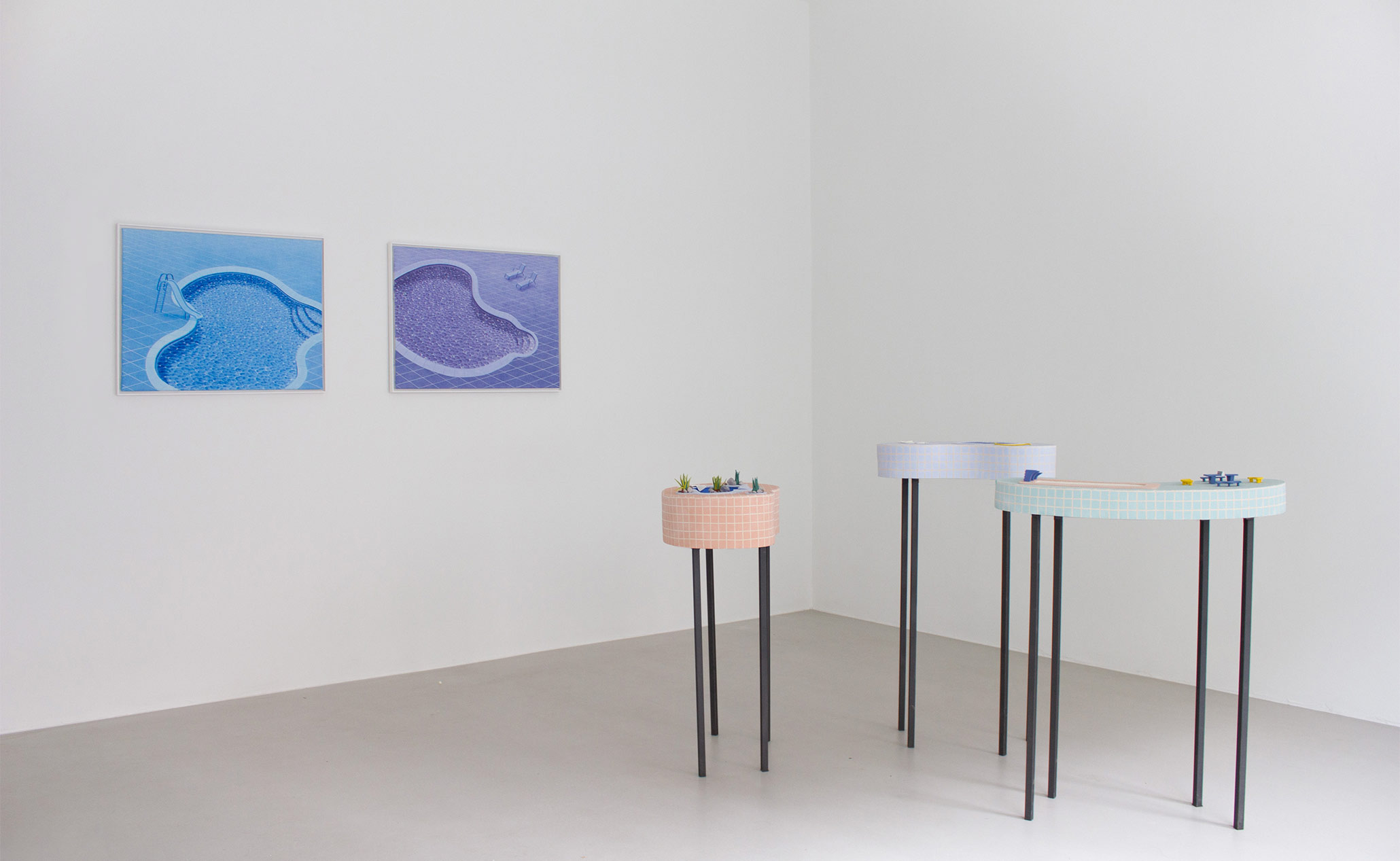
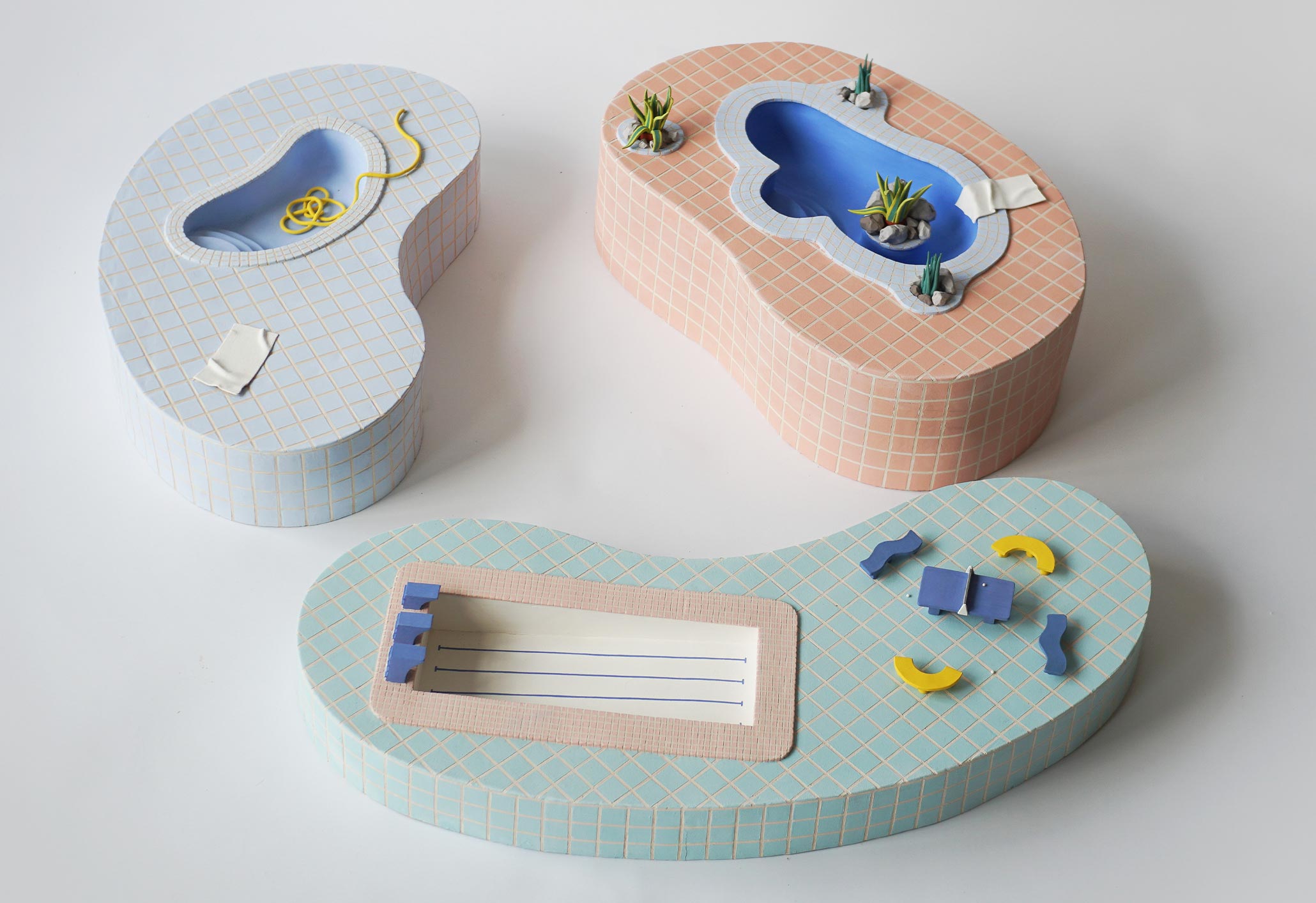
There’s a constant dialogue between my drawings and models. One often leads to the other, and that back-and-forth is a central part of my process. In my ceramic sculptures of empty swimming pools, for example, I set out to translate earlier drawings into three-dimensional form. The texture and flexibility of clay let me shape uniform structures with sharp contrasts: smooth surfaces alongside hard edges. I use underglaze to apply matte, pastel tones that create flat planes of color, aiming to mirror the tonal mood of my drawings.
How do your observations of real-world architecture and cityscapes influence your fictional compositions?
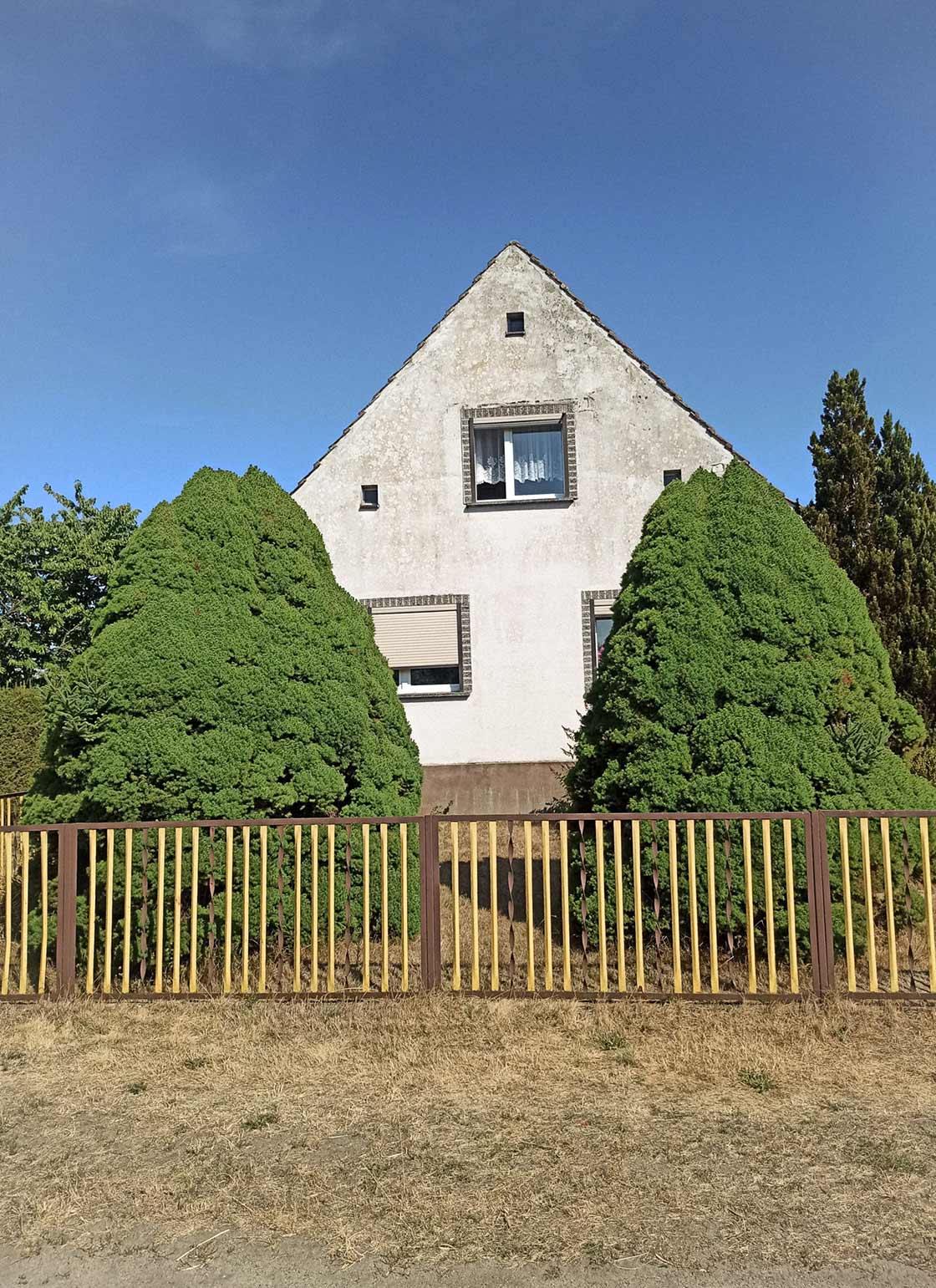
I take photographs and use these as references to draw from, recently focussing on analogue photography. Often I create new, fictional scenes from multiple elements of different photographs, found imagery and videos. I have also been trying out some AI tools lately to help me with composition creation.
There’s a sense of tranquility and isolation in many of your pieces. Are you exploring specific emotions or narratives through these serene yet solitary scenes?
I think loneliness is something many people feel in big cities, maybe more now than ever. My work deals with unrealities and serves as my own escape into a different world. Often, I draw from an aerial perspective – scaling the scene down and making it feel distant and intangible. This distance and the absence of human figures gives the work a calm, quiet feeling, like a paused moment on a film set. I think that’s why my pieces can be seen as warm and inviting, even cute, yet there’s also a sense of alienation that happens through the impossibility of ever reaching the world they depict.
Do you think your imagined spaces are utopian, dystopian, or somewhere in between?
In my earlier pieces, which portrayed entire fictional cities and towns, this question came up a lot. I never set out to make a particular statement and I don’t think it was ever something I really considered one way or the other. Yet the influence of dystopian fiction and film is definitely there, and seeped in whether consciously or not. I suppose because there is no clear narrative about how these fictional spaces are used by people, it’s natural for viewers to draw their own conclusions.
In your ‘Plasti-City’ series, you created detailed models of imagined urban spaces. What inspired this project?
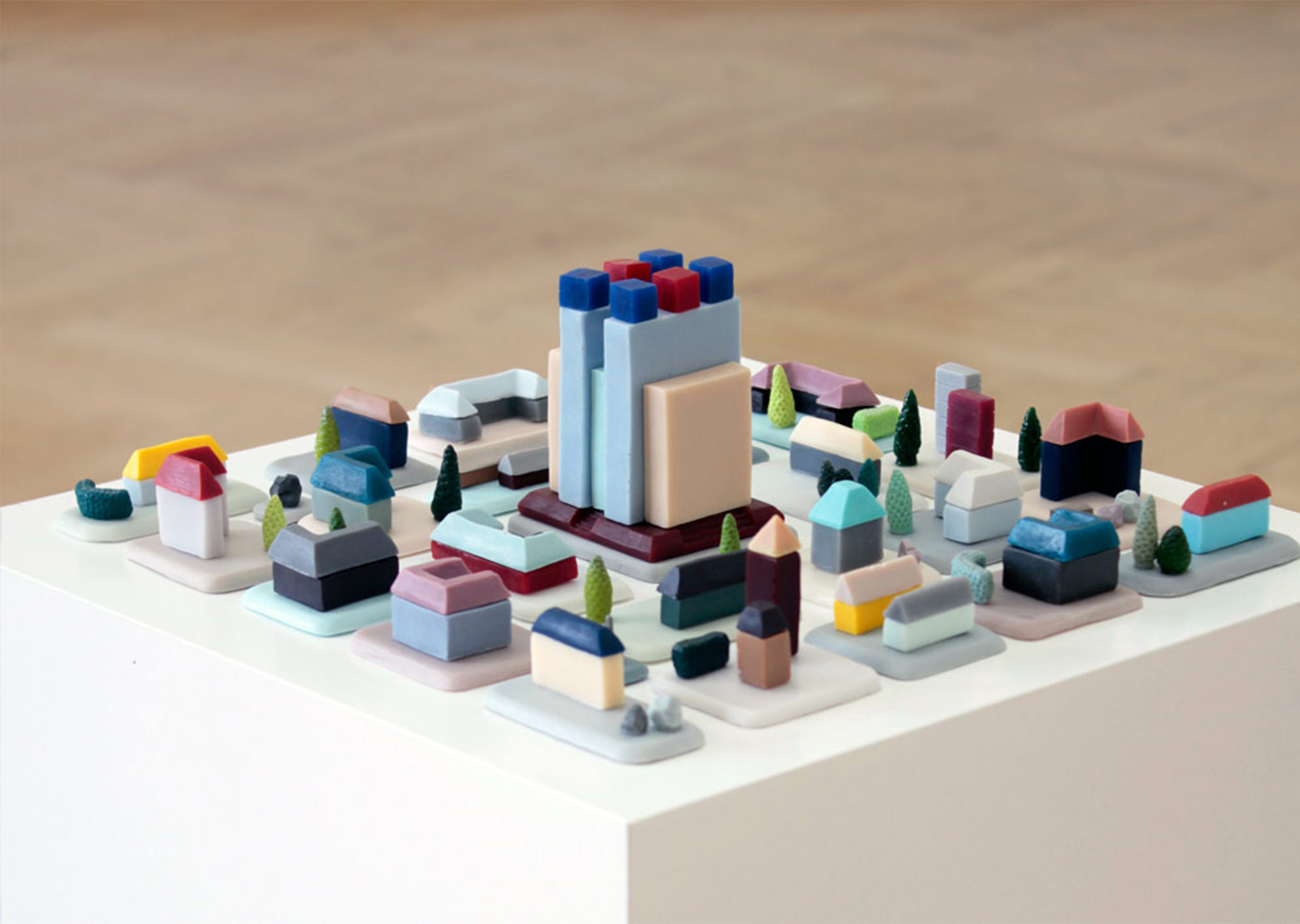
The Plasti-City series was inspired by my own cityscape drawings, which I used as blueprints to create sets of miniature, coloured building blocks hand-cast from resin. At exhibitions, I displayed example models constructed from these sets, which were also available for purchase. Collectors who acquired all the sets could build the entire city or experiment with different versions.
This project played with the ideas of Le Corbusier’s concept of modularity, focusing on a standardized system of measurements and proportions to design buildings and spaces that are functional, harmonious, and capable of being combined into various configurations.
In essence, I created a simplified, non-functional iteration of a classic architectural process. Instead of drawing leading to a full-scale building, the model itself became the final product. I find something compelling in this failure to realize the work at full scale. By remaining miniature, the city exists perpetually in a dream-like state, an architectural possibility rather than a reality.
How do you approach curating your exhibitions to enhance the narrative of your work?
In a recent show, I collaborated closely with a curator to combine sculpture, video, lighting and sound into an immersive installation piece. My goal is always to build an atmosphere that amplifies a sense of isolation, allowing visitors to fully engage with the reality I construct.
If one of your works were to be turned into a film, what genre would it be?
Probably a found footage observational documentary.
Where can people find you?
People can find me at my studio in Berlin, on instagram as @elizabethcharnock and online at www.elizabethcharnock.com