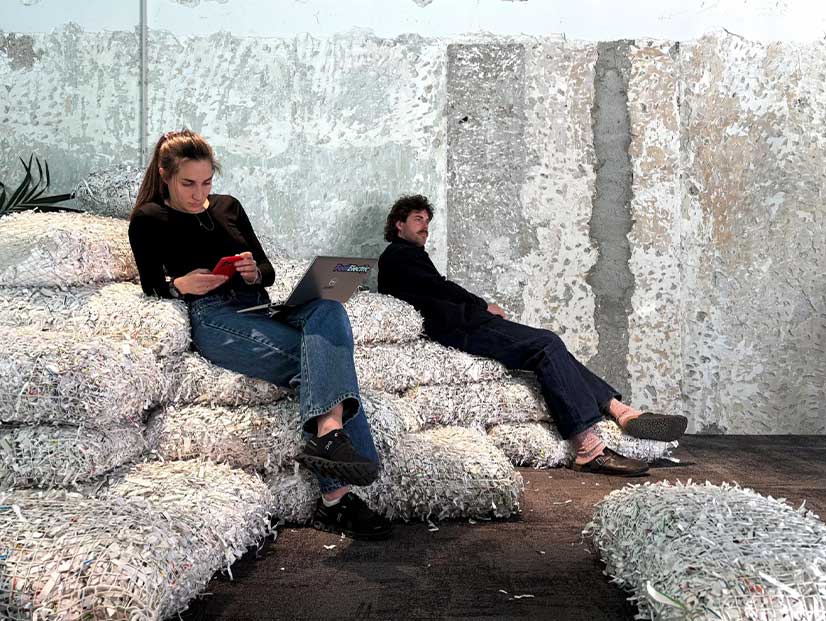
EX FIGURA
What are your names and where are you from/Based?
We are Barbara Stallone and Francisco Silva and we are currently based in Paris and Milan
Can you describe what you do in a few words?
EX FIGURA is a creative collaborative studio. We blend different artforms to create spatial experiences. Each project is seen as an opportunity to use the combined knowledge of different collaborators and diverse references, so that the result is always unique.
How did EX FIGURA come to life, and what sparked the decision to merge so many disciplines into one practice?
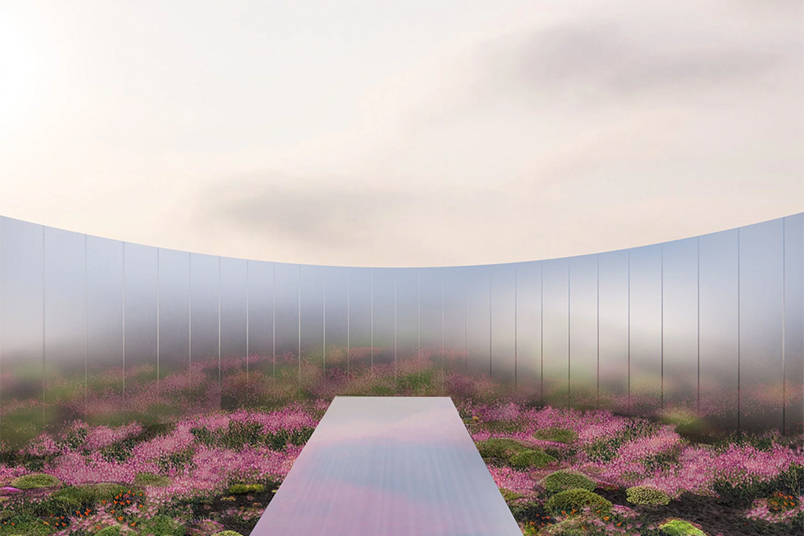
After many years of doing conceptual work in major international offices, we wanted to take things into our own hands and guide the work as we saw fit. And having backgrounds in art, we also felt a constant need to create and / or experiment with things outside of what is usually considered “architecture”. Out of the constraints of the more traditional offices, we were free to explore architecture in many different ways, to incorporate new ideas, new references and finally lead the project to unexpected results.
You describe each project as a way to explore “every artform.” What does that process of exploration look like in your studio?
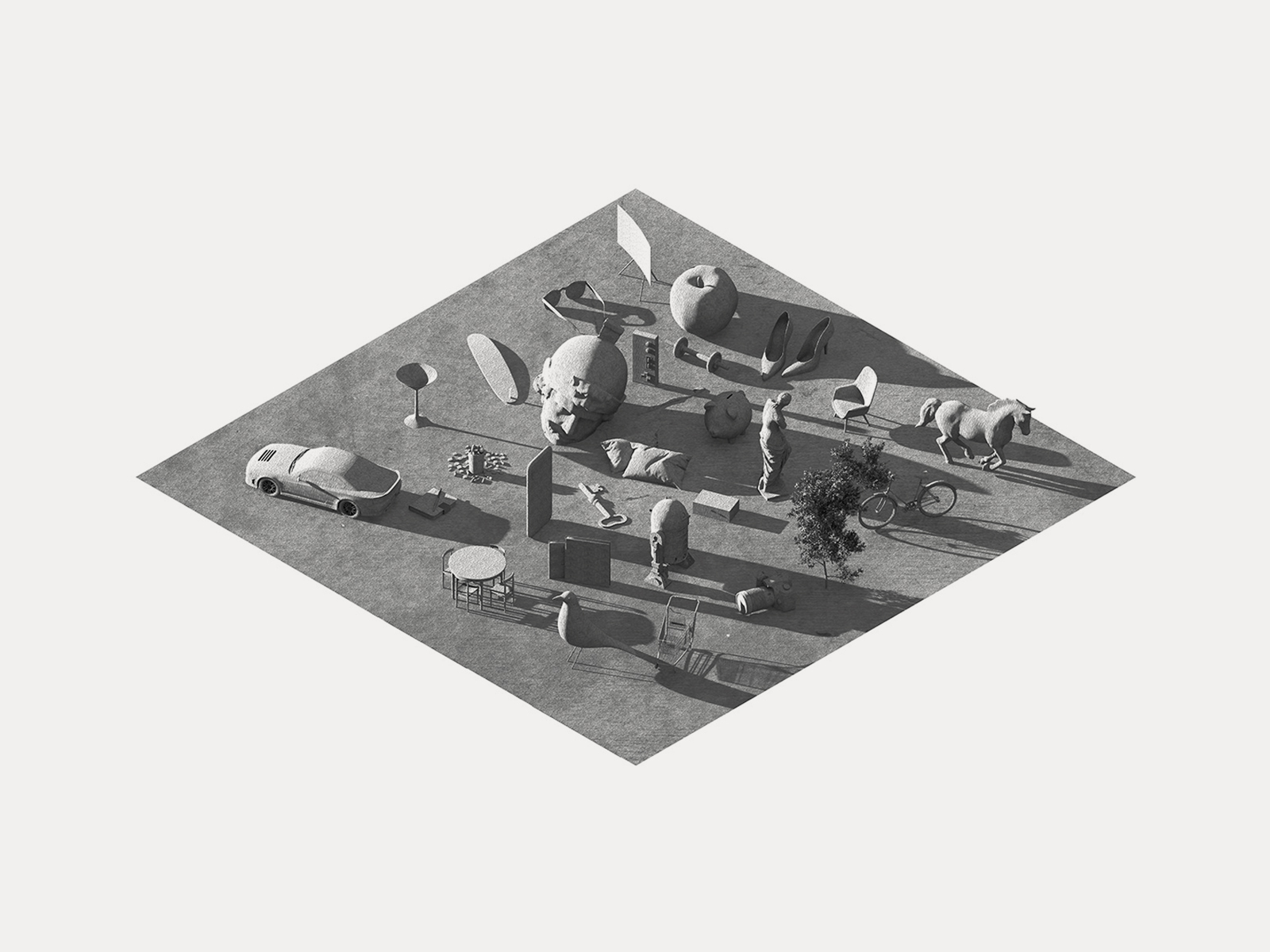
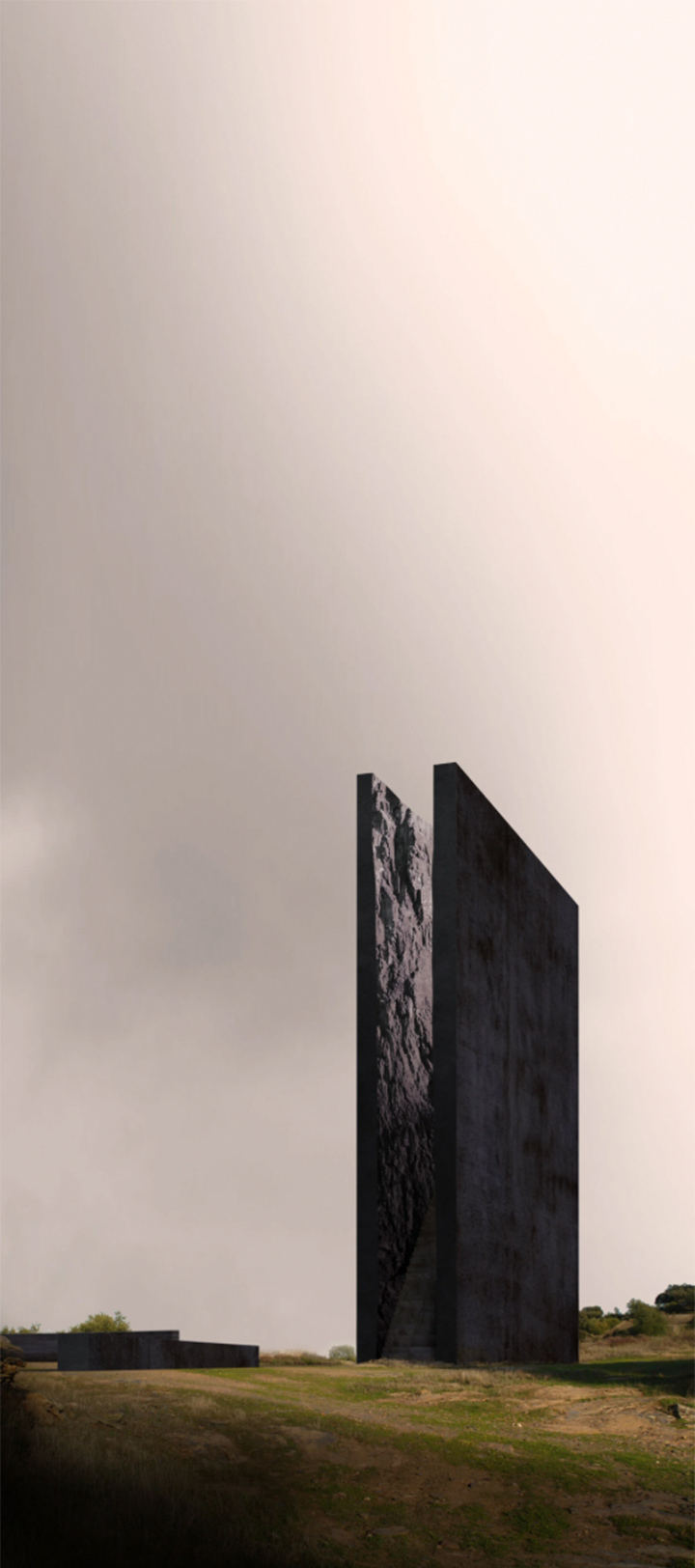
There is a lot of “subconscious research” and intuition leading our process. We follow every new thing being done in the world, which is a way of constantly learning. This makes us inadvertently bring new disciplines into the project, such as music sampling, sports fashion, poster graphic design, etc. And by allowing ourselves to be influenced by all these elements that come into our lives, each project becomes a momentary product of all that information.
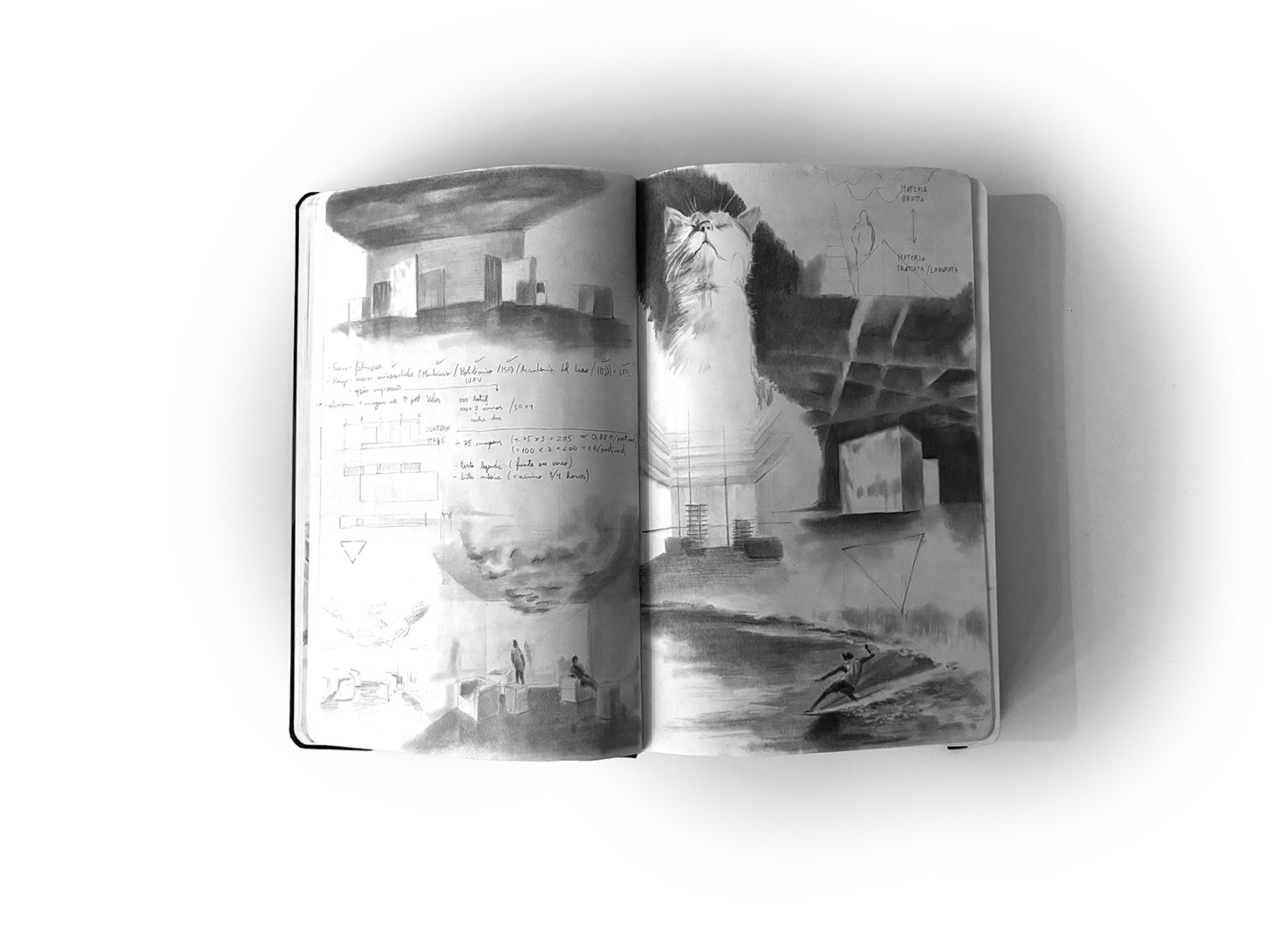
If we opened one of your project folders, what would we find ?
We are always browsing through different media, for the pleasure of seeing new things. We use social media, like instagram, pinterest or tumblr as a way to store and make small collections. We avoid any predetermined systems of classification, to avoid formatting information or closing creative possibilities in the research phase. The way the content is articulated is more subconscious: it’s possible to find certain patterns between unrelated things and only become aware when it comes out on paper. We allow these random fragments of influence to wander around our minds and express themselves through dreams, visions, sketches, 3d models, etc…
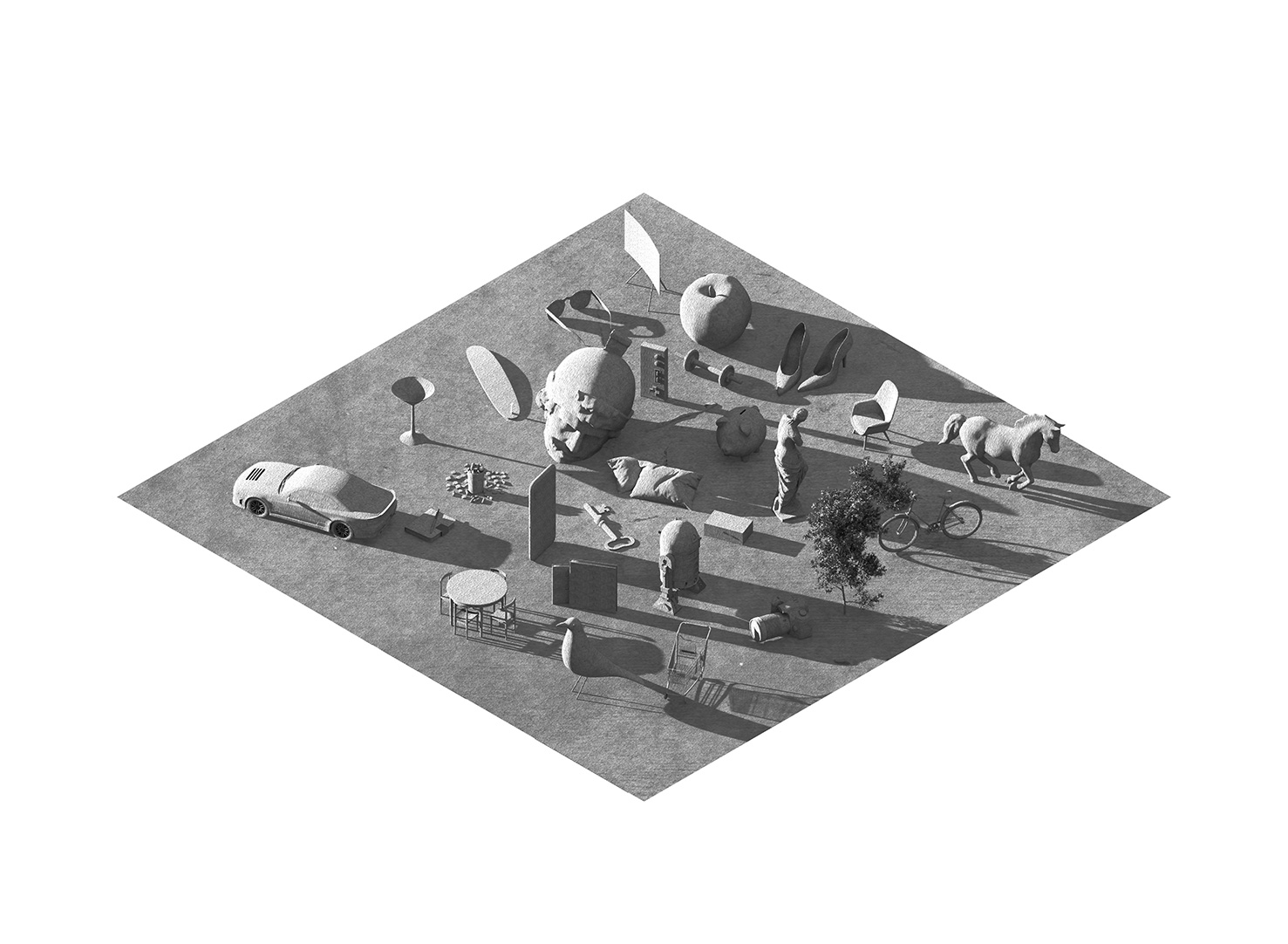
With both founders coming from powerful architectural lineages, Sou Fujimoto, Jean Nouvel, BIG, how have those influences been absorbed, transformed, or resisted in your own work?
There are different types of influences. Those offices taught us a lot about processes and the way the profession works under different circumstances. Even the people we have met there were incredibly important to shape the professionals we are today. When it comes to stylistic influence, we would also have to name all the architects, artists and designers, both living and dead, that still play a huge part in what we create
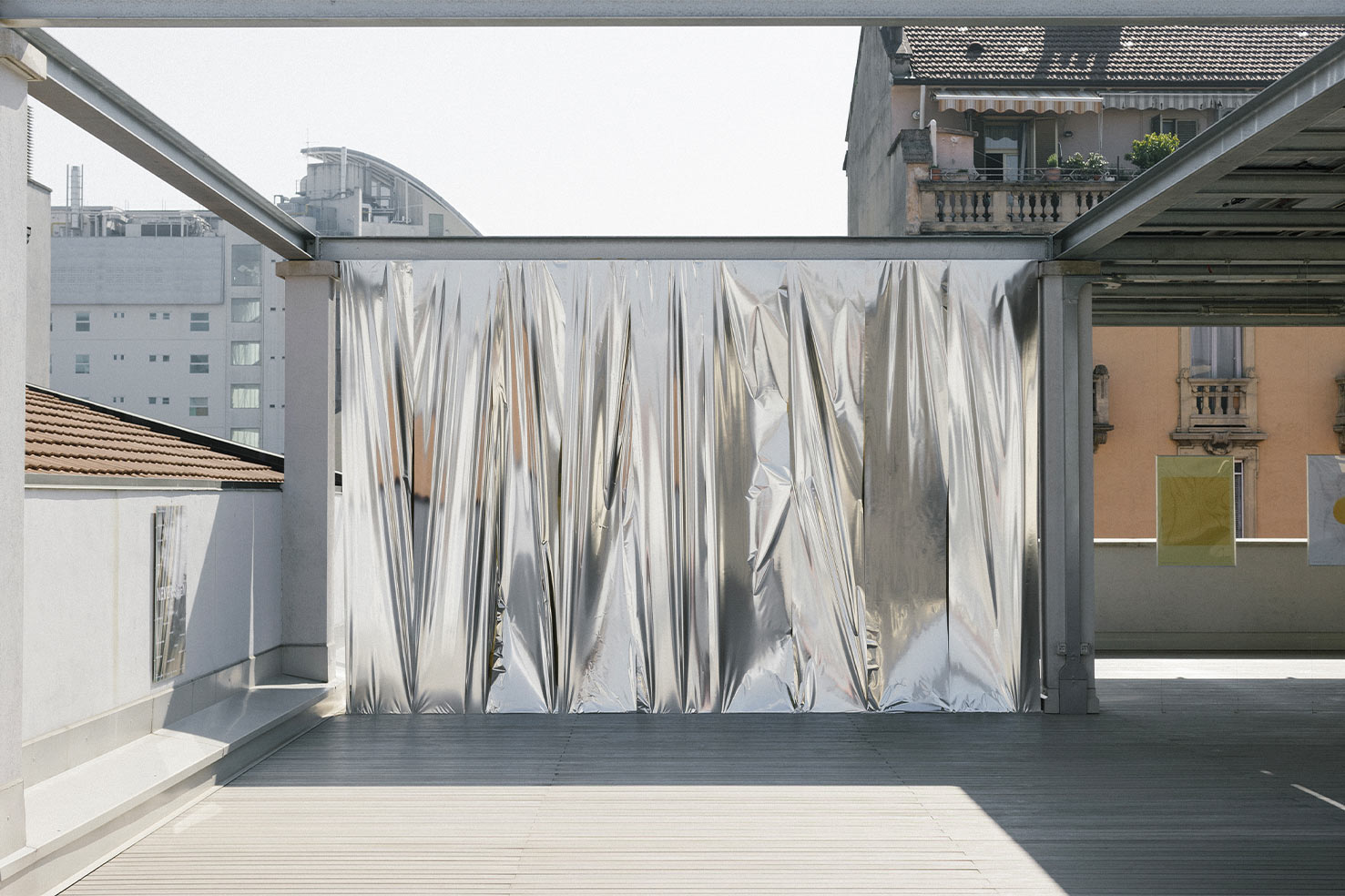
Do you see scenography as architecture in motion?
We see architecture as anything that can act as a context for an action. Beyond a building, a masterplan, an interior, a fashion set, a museum scenography, a night event, etc, even a highly engaging music or a compelling book or movie can transport one’s mind to another place. And when you broaden your understanding of architecture, then it becomes all about how every element engages with the public.
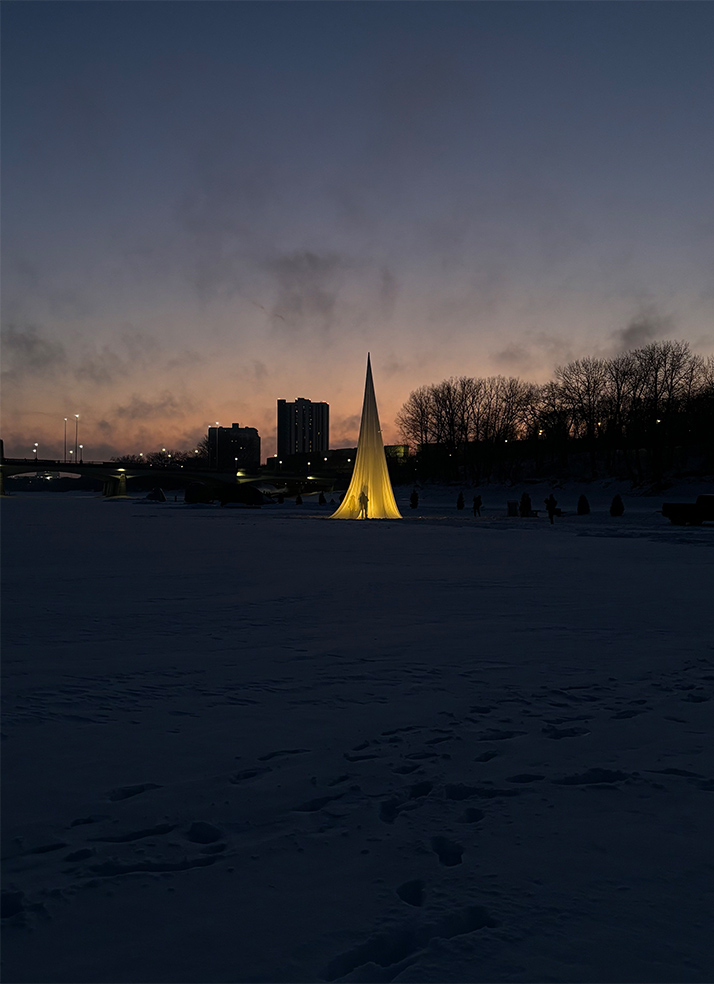
“Everything inspires everything.” Could you speak to a time when a reference shifted your approach to another?
One of the latest projects we did, in Porto, we had to reinvent the facade of an historic building in the city center. We wanted something dynamic that could appear different each moment of the day. We started with the Porto sky because, being on the oceanfront, the weather can quickly change in a matter of hours and, that “instability”, is a part of the city and its people. In parallel we were also looking at the motion of waves and fashion patterns that, through repetition, could induce movement. At a certain moments we were flipping videos of waves advancing in the water, together with fabric patterns that could function in a similar way – to create a piece of temporary architecture that could resonate with the people.
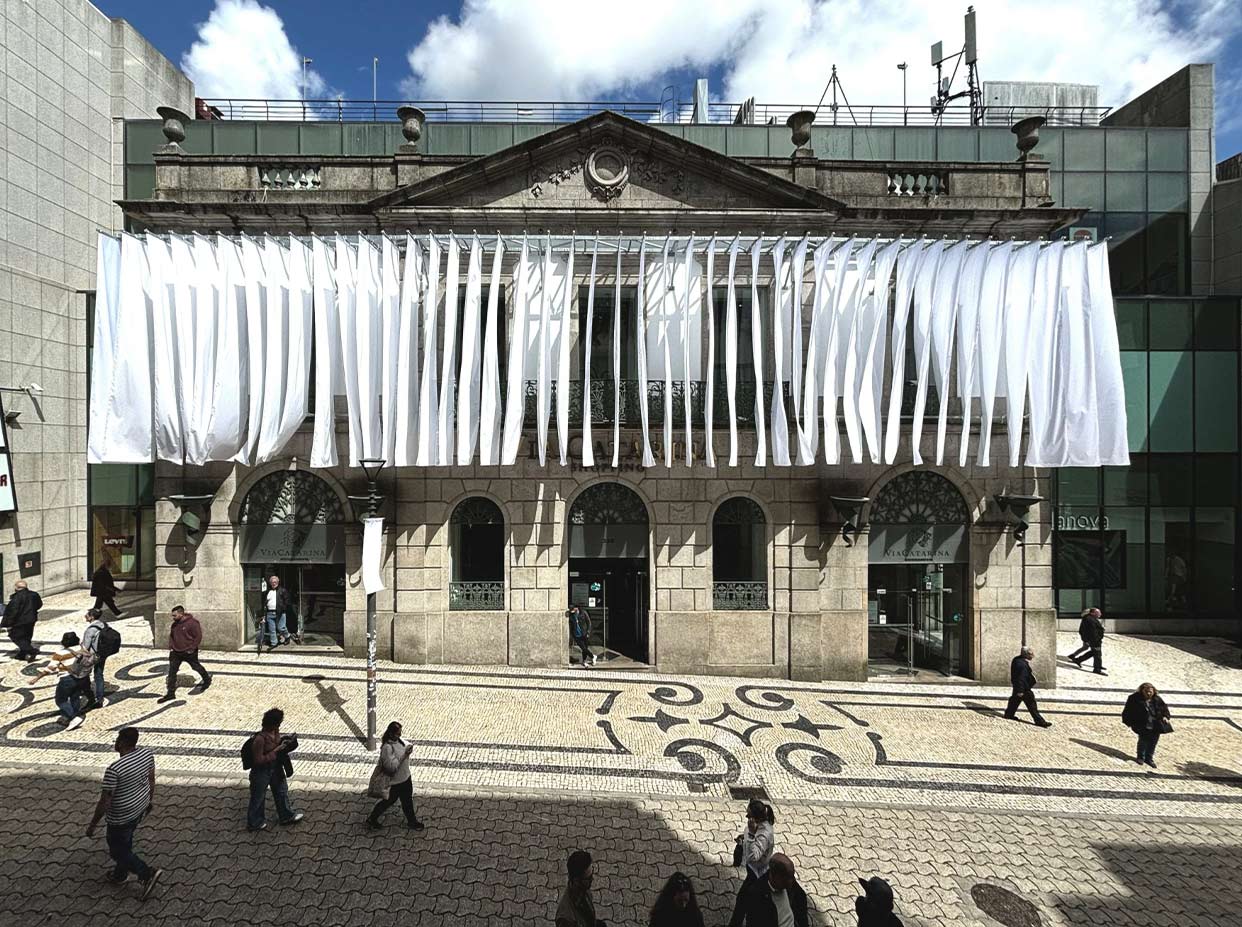
You’ve worked internationally, from Versailles to Seoul to Qatar to Porto. How does geography influence your conceptual process?
The place is fundamental for the materials and processes it has, as it will allow the creation of something tangible and that, potentially, can be either reused or returned. Other than that, we believe that each project should create something beyond its context – it should establish its own context.
What has been your most experimental project to date, and what did you learn from it?
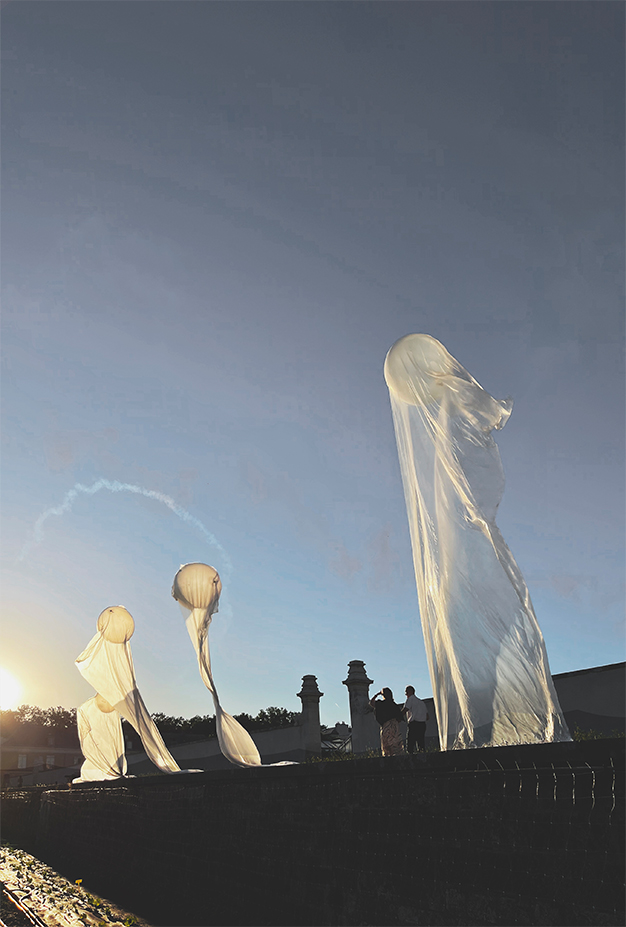
Versailles was one of the most extreme ones. It was a scenography for a short event so we knew we could create a more radical effect, considering it wasn’t going to remain visible for more than a few hours. And taking the fountains of the gardens of Versailles as reference, we sought to create an architectural object with the same volatility as the water jets. Early on, we studied how to create the entire set using only a very light material and air. Everything was meant to fly and move with the wind. The amount of experimentation, both in design and prototyping, was the first example of what it takes to do such projects. And if presenting the final product was as anxiety inducing as a theater spectacle, in the end the public’s reaction was equally as rewarding
Where can people find you?
On instagram (@ex.figura) we present a sort of visual diary – a sequence of squared images that blend our projects with some of the used references, to present a continuous line between apparently random creations. And although we work everywhere in the world, we are mostly concentrated in projects around Milan and Paris