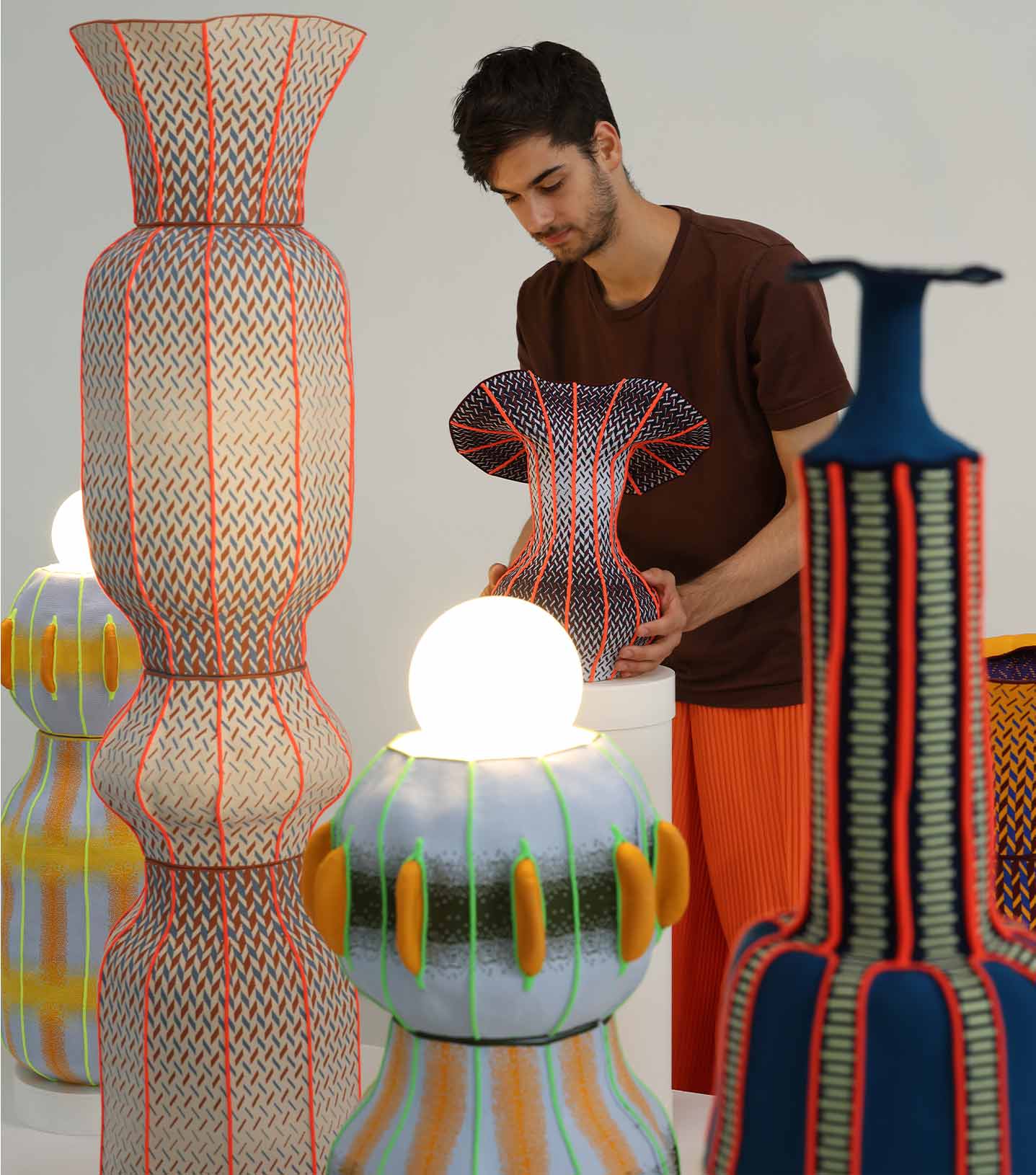
Gaspard Fleury-Dugy
What’s your name and where are you based?
My name is Gaspard Fleury-Dugy, and I’m based in Paris.
Can you describe what you do in a few words?
I’m a textile and object designer, passionate about textile techniques and what I call textile thinking — a way of using the logic of textiles to shape new forms and materials.
What came first in your practice, the 3D objects or the knitting?
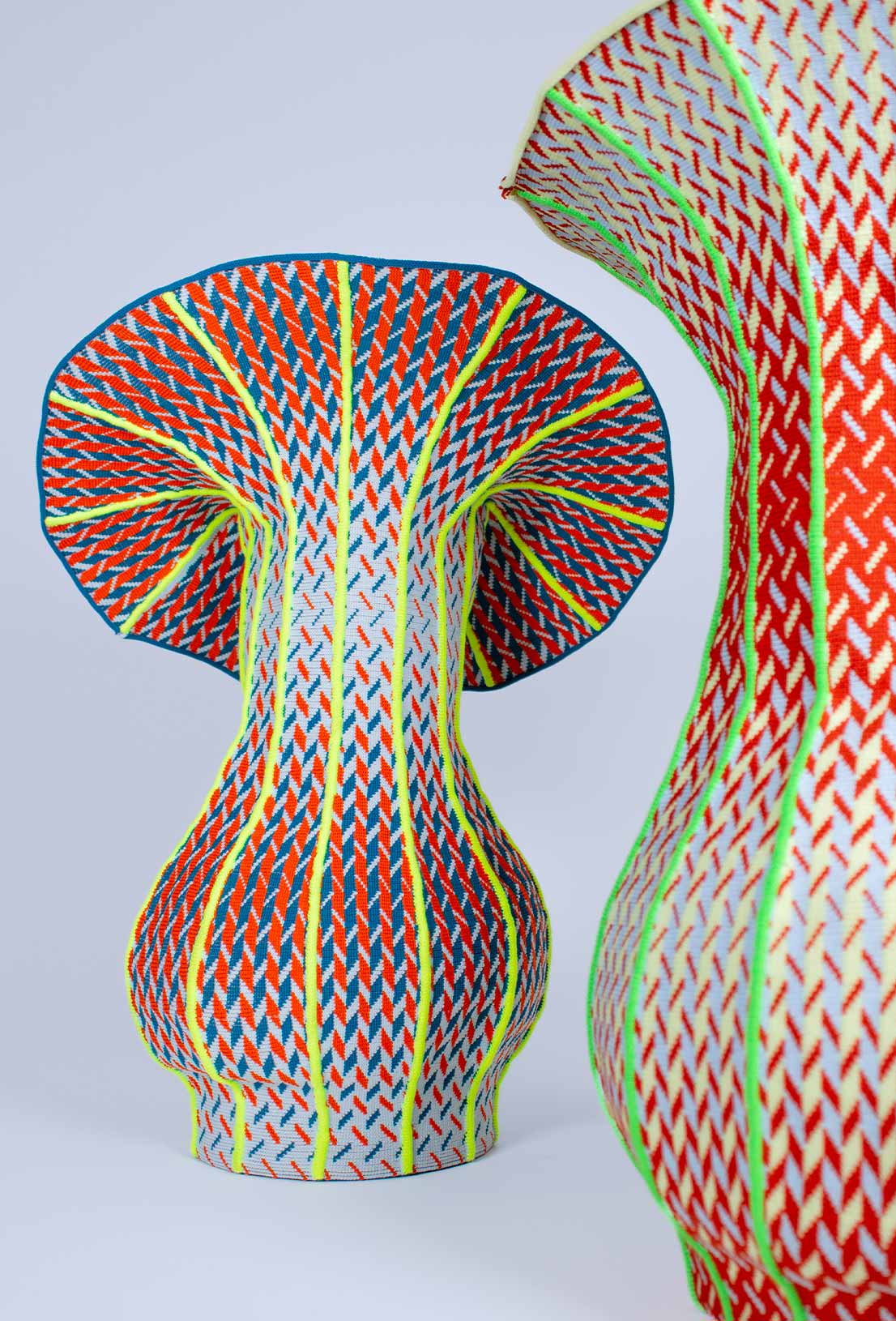
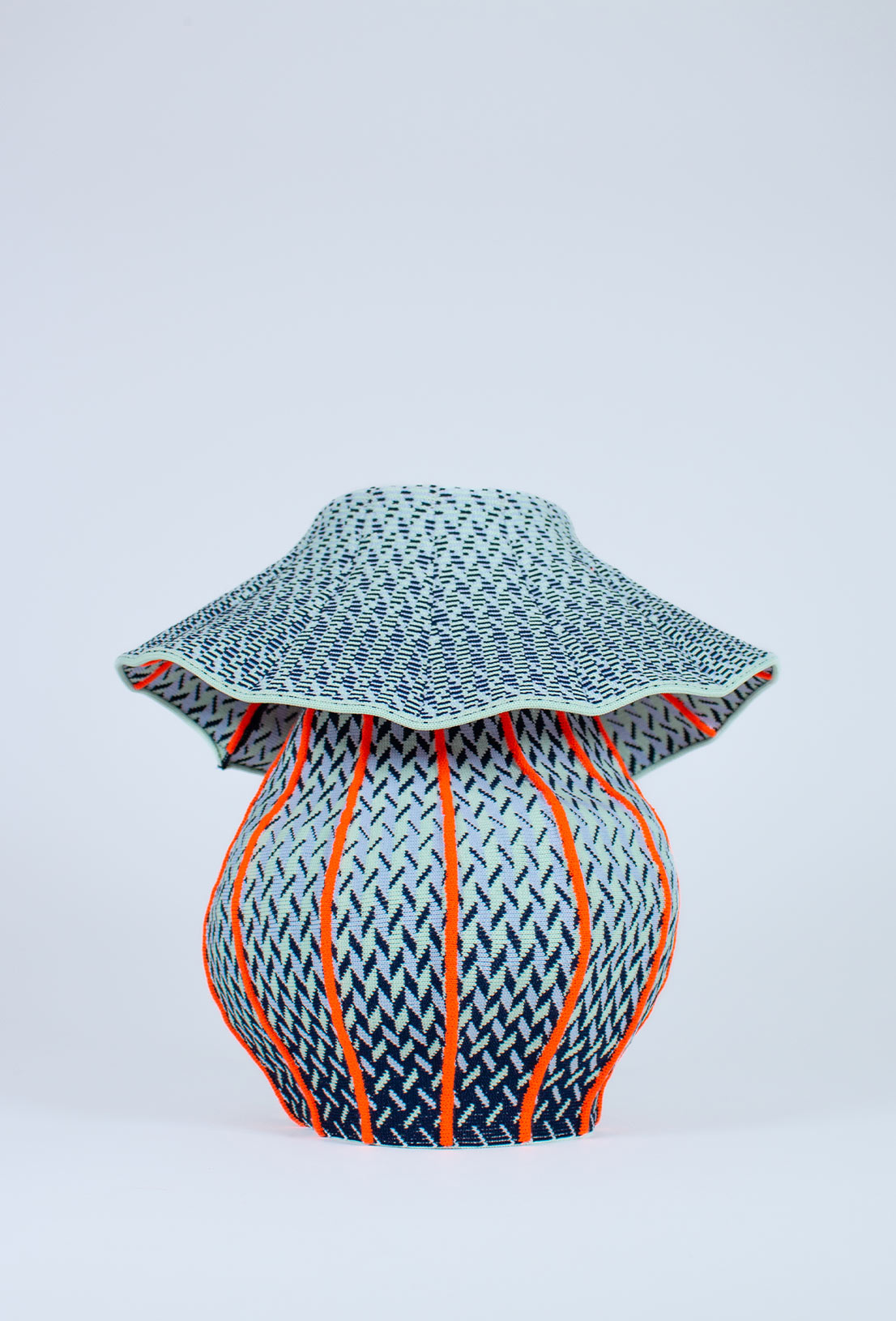
Knitting! I first discovered the incredible potential of knitting for creating volume. Once I mastered the technique, I became curious about how it could move beyond fashion — how knitting could build. By experimenting with this idea of form emerging directly from the knitting machine, I started designing objects to show how we can construct with textiles and give them a new materiality.
What inspired you to explore knitting as a way to build shapes?
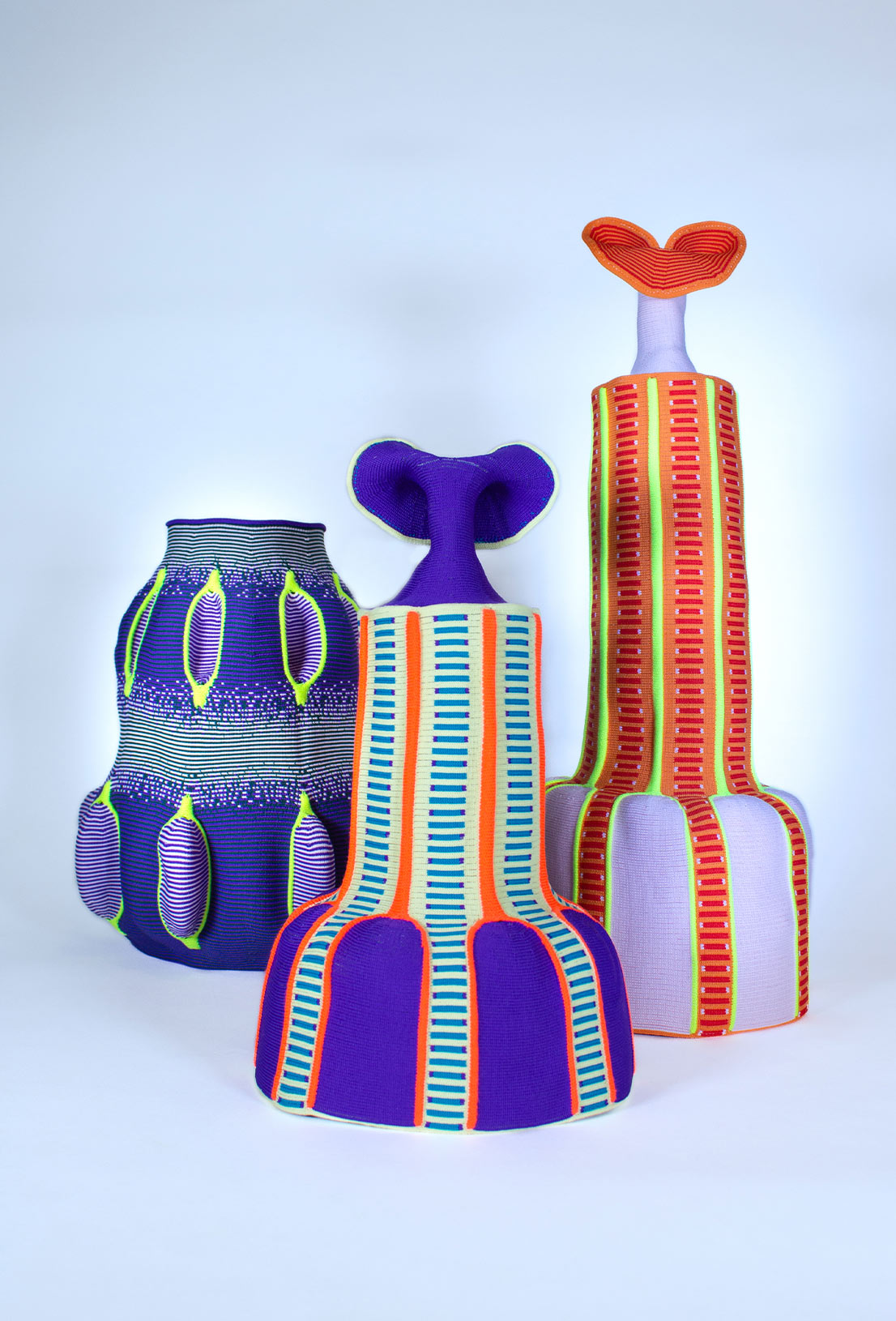
I began by observing techniques used in fashion to give garments shape and volume. Then I pushed them further — I radicalized them — to create large, sculptural forms. The technique was already there; I simply amplified its possibilities.
You say you “work with the machine, not against it.” Can you describe the first time you realized the machine had something to say back to you?
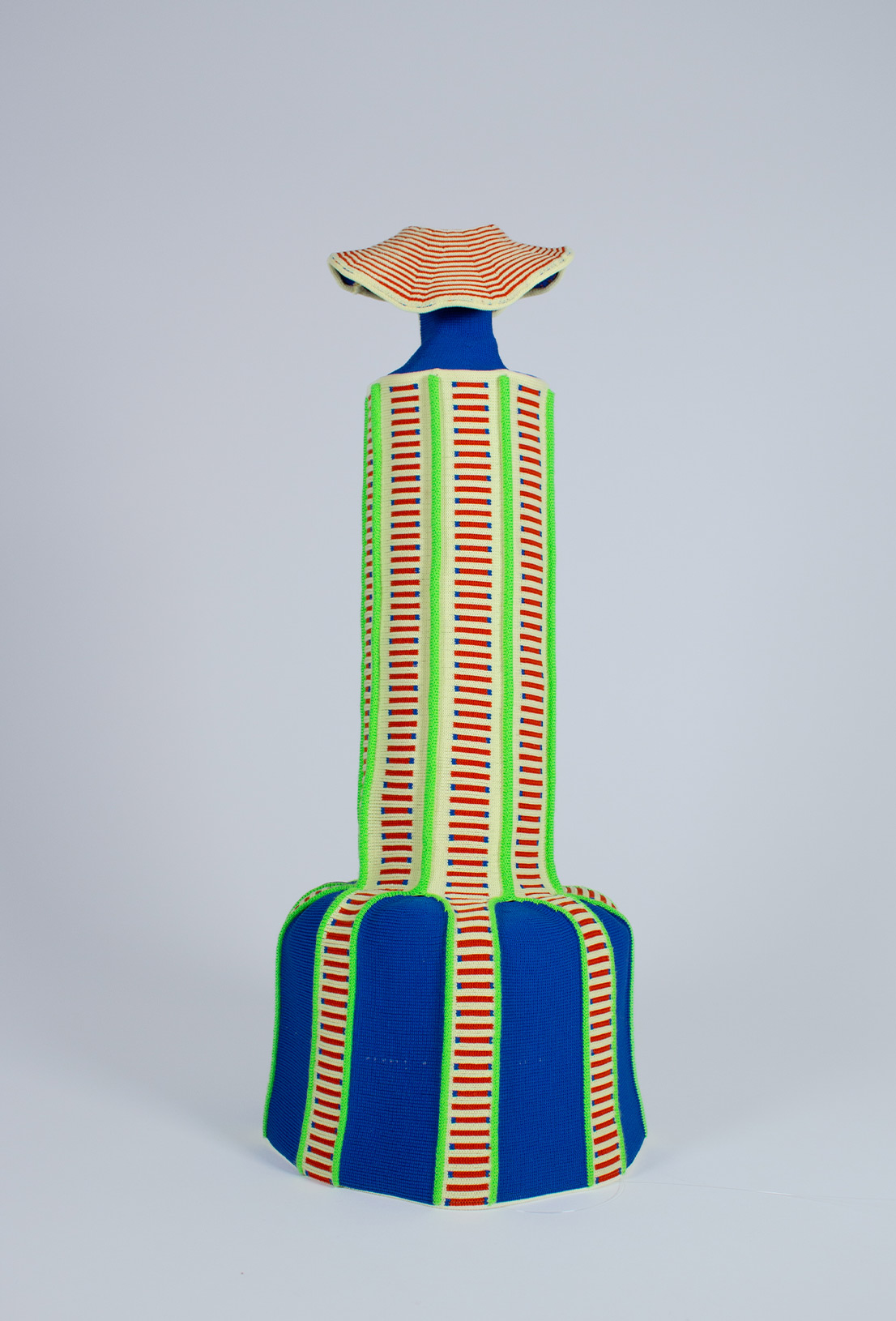
That moment came while I was experimenting to create more volume. I was trying to reproduce a material I’d seen, but no matter what I did, the result was terrible — full of holes, completely off. Instead of giving up, I decided to change the yarn completely, just to see what would happen. I picked up the first spool I found — without realizing it was elastic. The result came out beautifully, even better than I expected. That day I understood that there’s an alchemy between material and technique — and my role is to find the perfect dialogue between the two.
What does “textile thinking” mean when applied to object making? Does it apply to life outside your work too?
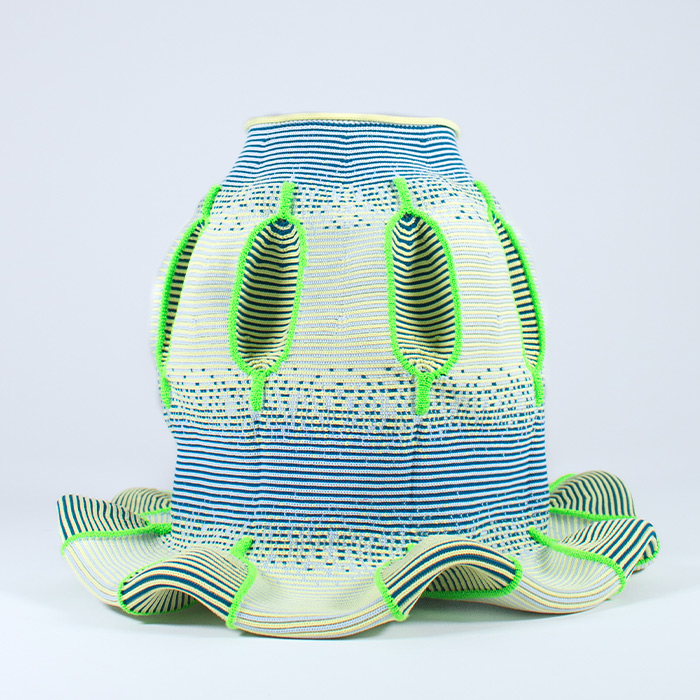
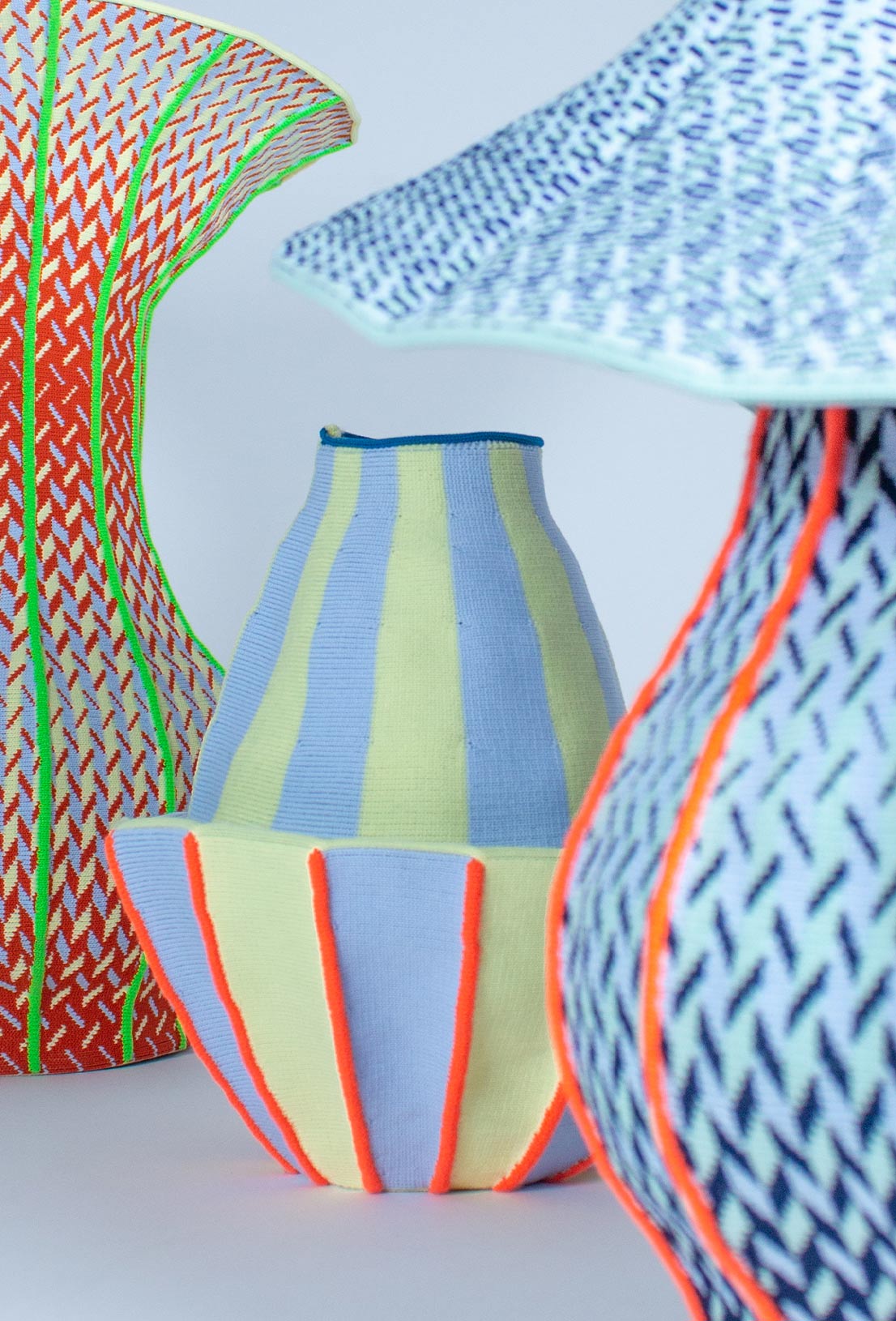
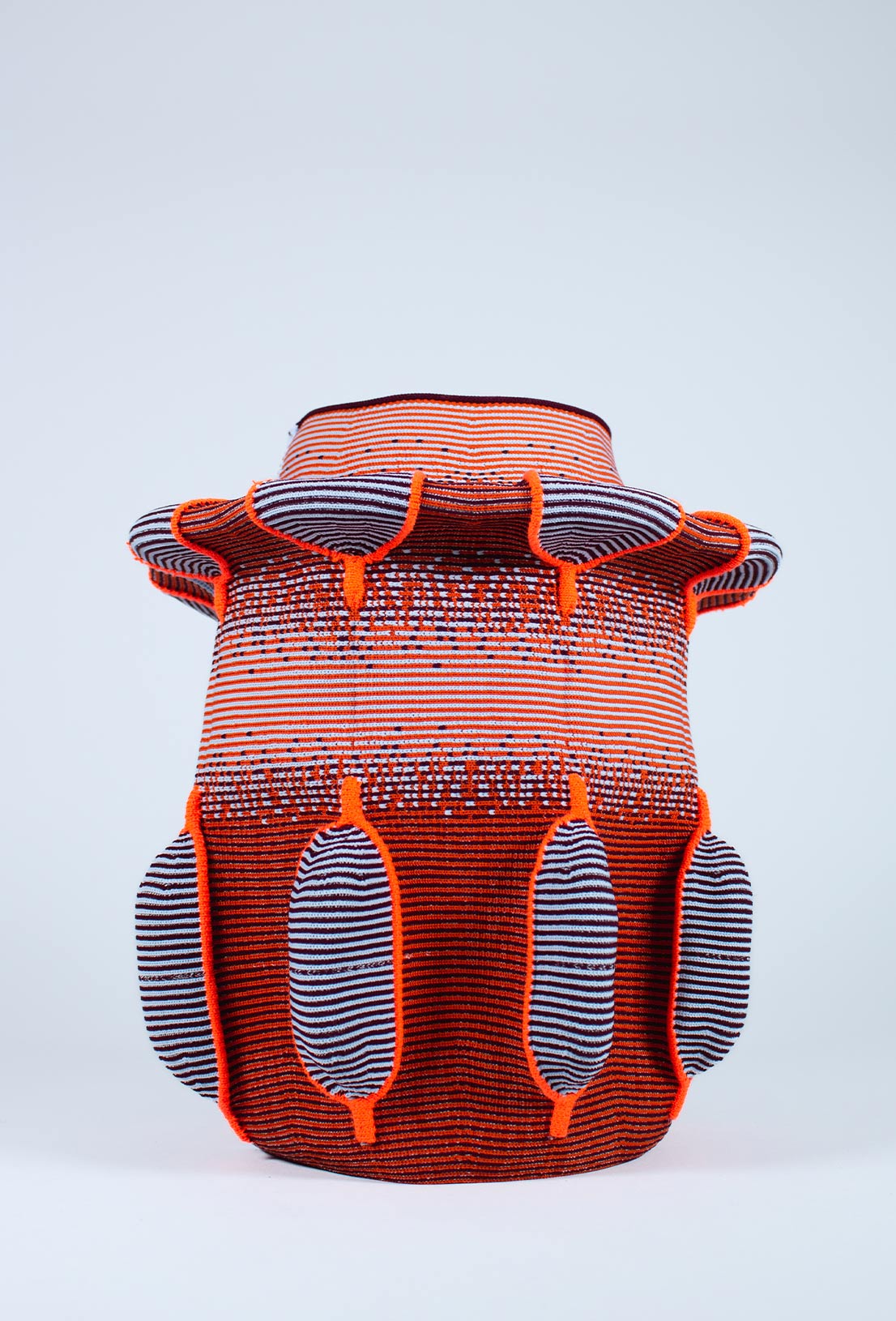
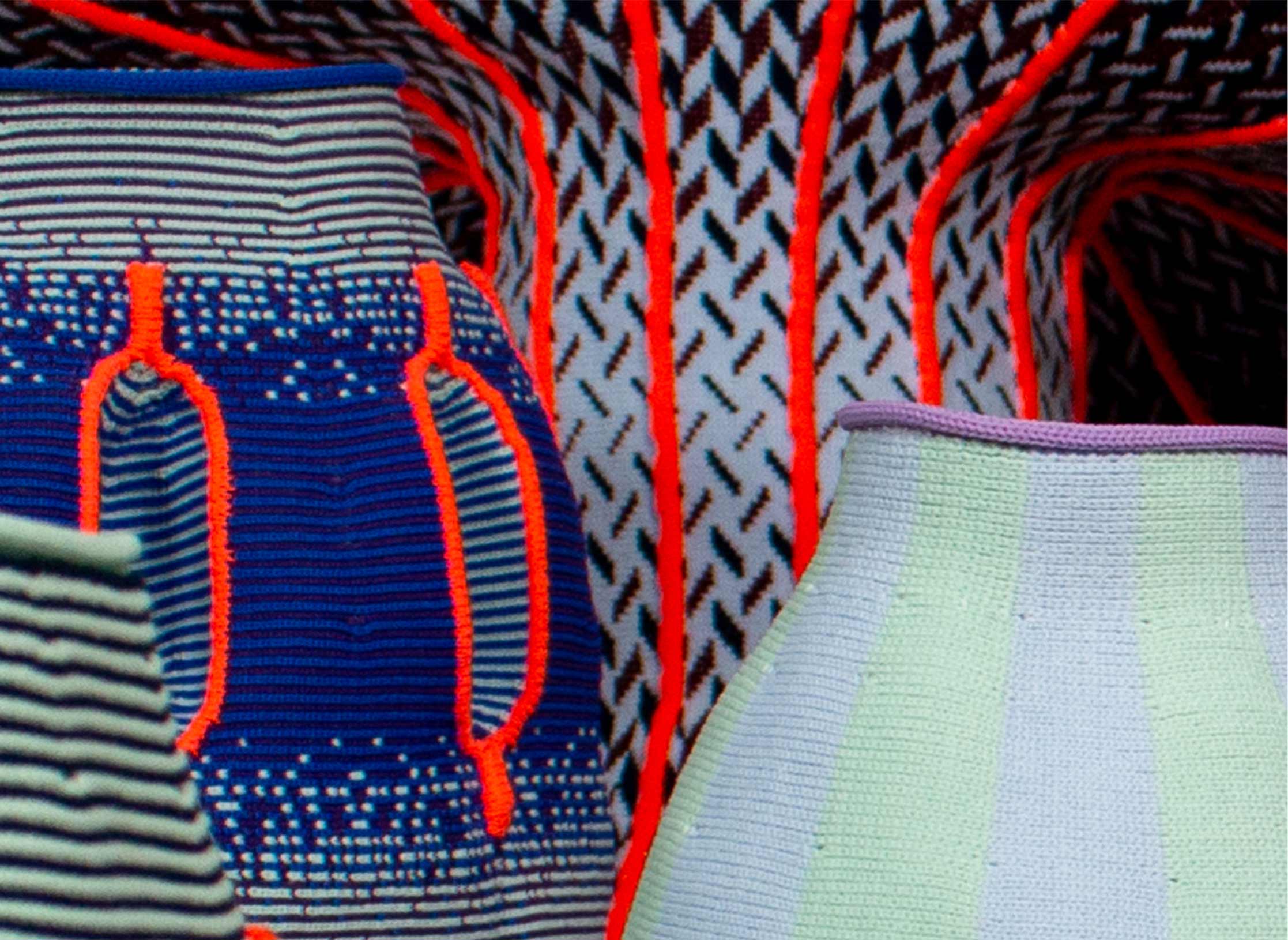
For me, textile thinking means designing with the mindset and knowledge of the textile world — pattern, rhythm, color, and the joy of experimentation. It’s about constantly sampling, daring, and playing. When applied to objects, it allows me to rethink structure and surface. For example, the bumps visible on some of my pieces are inspired by the heel technique used in sock knitting. I like transferring such methods from fashion to object design, transforming a functional textile detail into a structural and decorative element.
You translate forms from VR into code for a knitting machine. How does designing in the digital world change the way you see the physical world?
The main difference is being free from gravity — everything stands up effortlessly in the digital world! Translating those virtual forms into knitted shapes can be tricky for exactly that reason. But I love to defy gravity — maybe because I’m also a trapeze artist. I take inspiration from the acrobat’s mindset: always testing, daring, and leaping into the
unknown. The circus is a big reference for me — even in my bold color choices, echoing the big top.
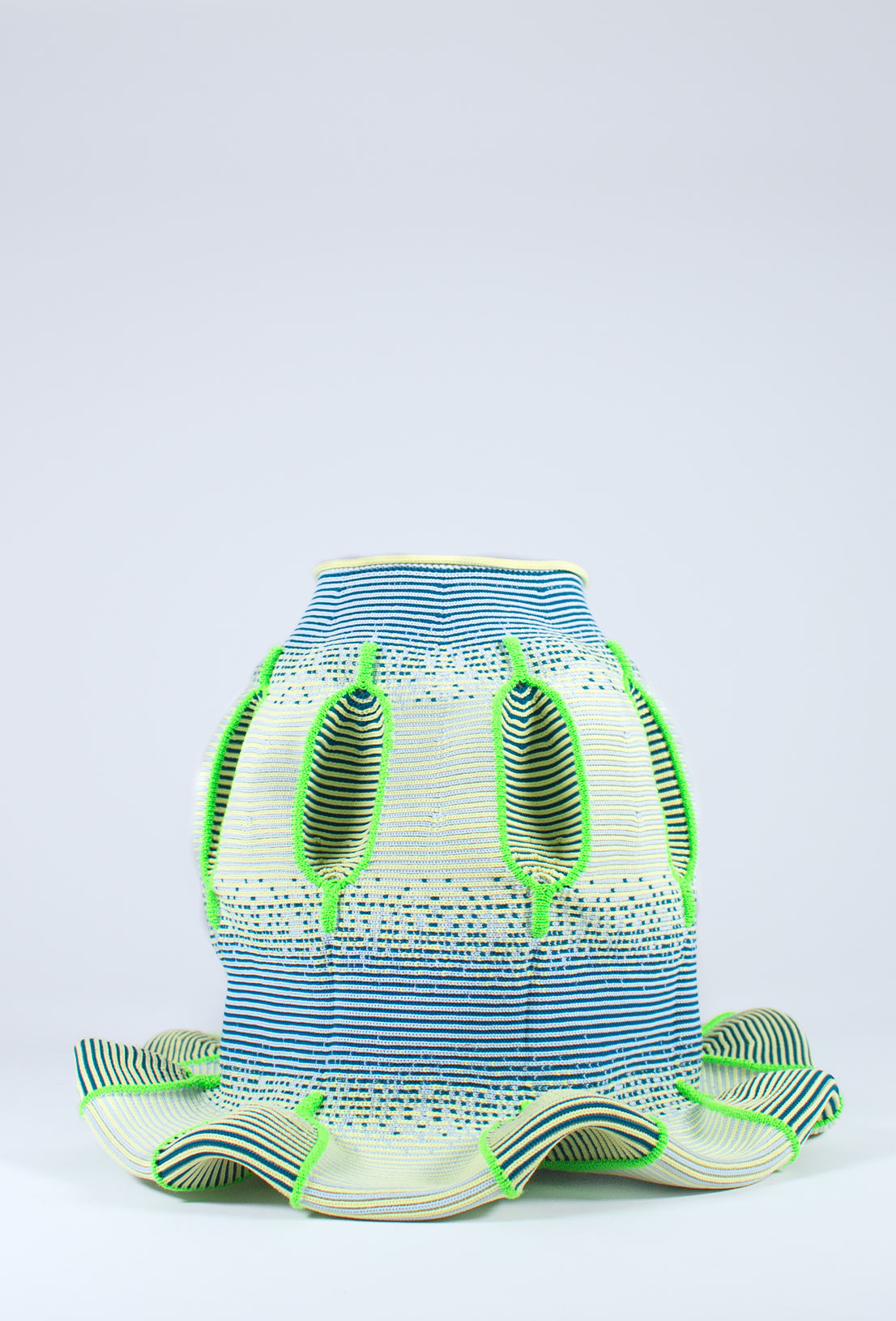
You mention the frustration of being reduced to “a textile designer.” How do you imagine breaking these material-based boundaries?
It’s a challenge, but also an exciting one. Textile is increasingly recognized in contemporary design and exhibitions, yet it still carries limits in people’s minds. Through my work, I want to show that textile thinking can expand into any field — unlocking new potentials in how we build and perceive materials.
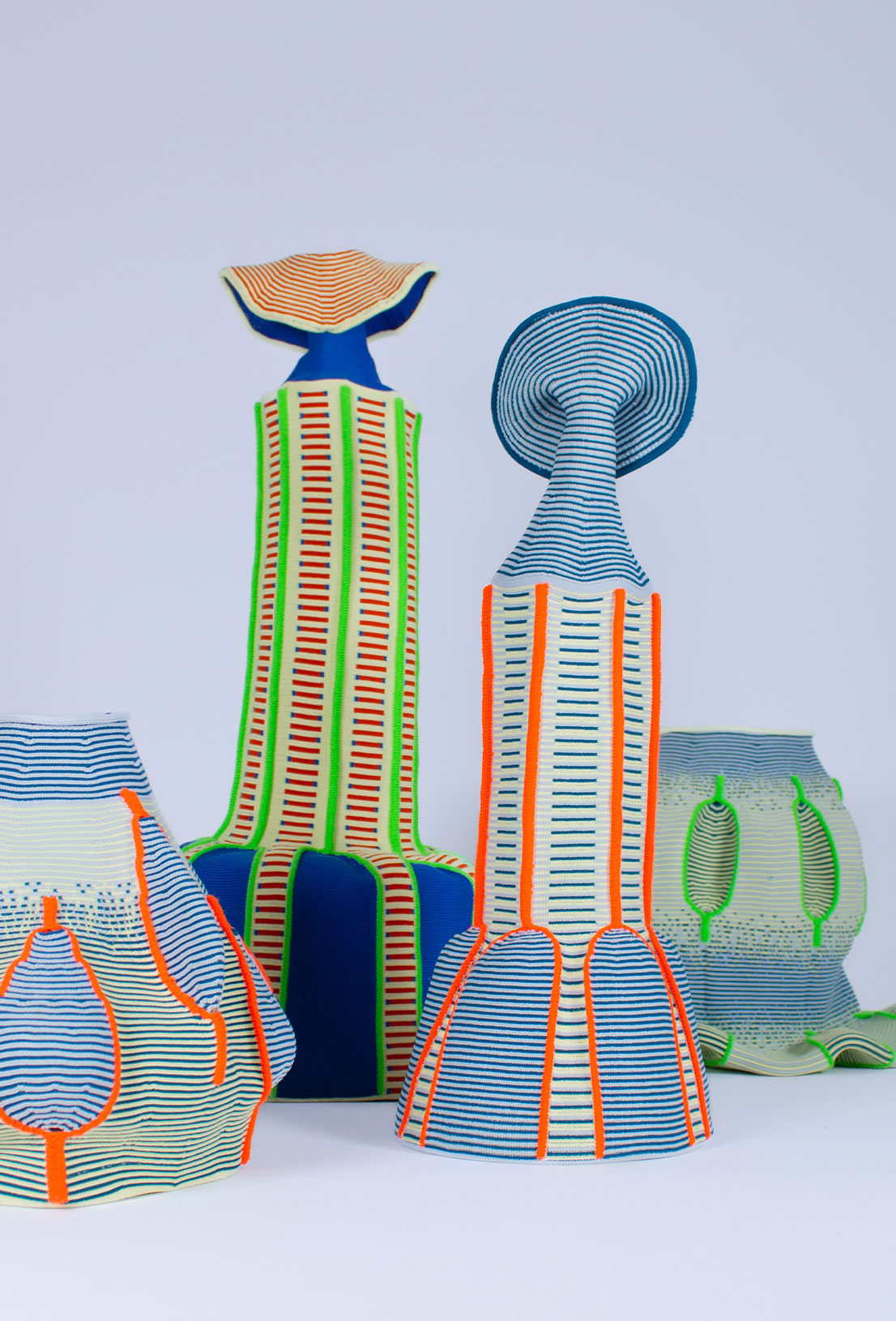
What’s the most unexpected object or form that came from your experiments — something you didn’t plan but loved?
I once worked on knitted tableware — plates and bowls. The shapes were beautiful, but of course, no one wants to eat from a knitted plate! For me, knitting is like drawing — an act of pure exploration. Just because a drawing is made on paper doesn’t mean the final object must be in paper. Similarly, a knitted form can be the starting point for something else — for instance, I later translated that knitted plate shape into clay.
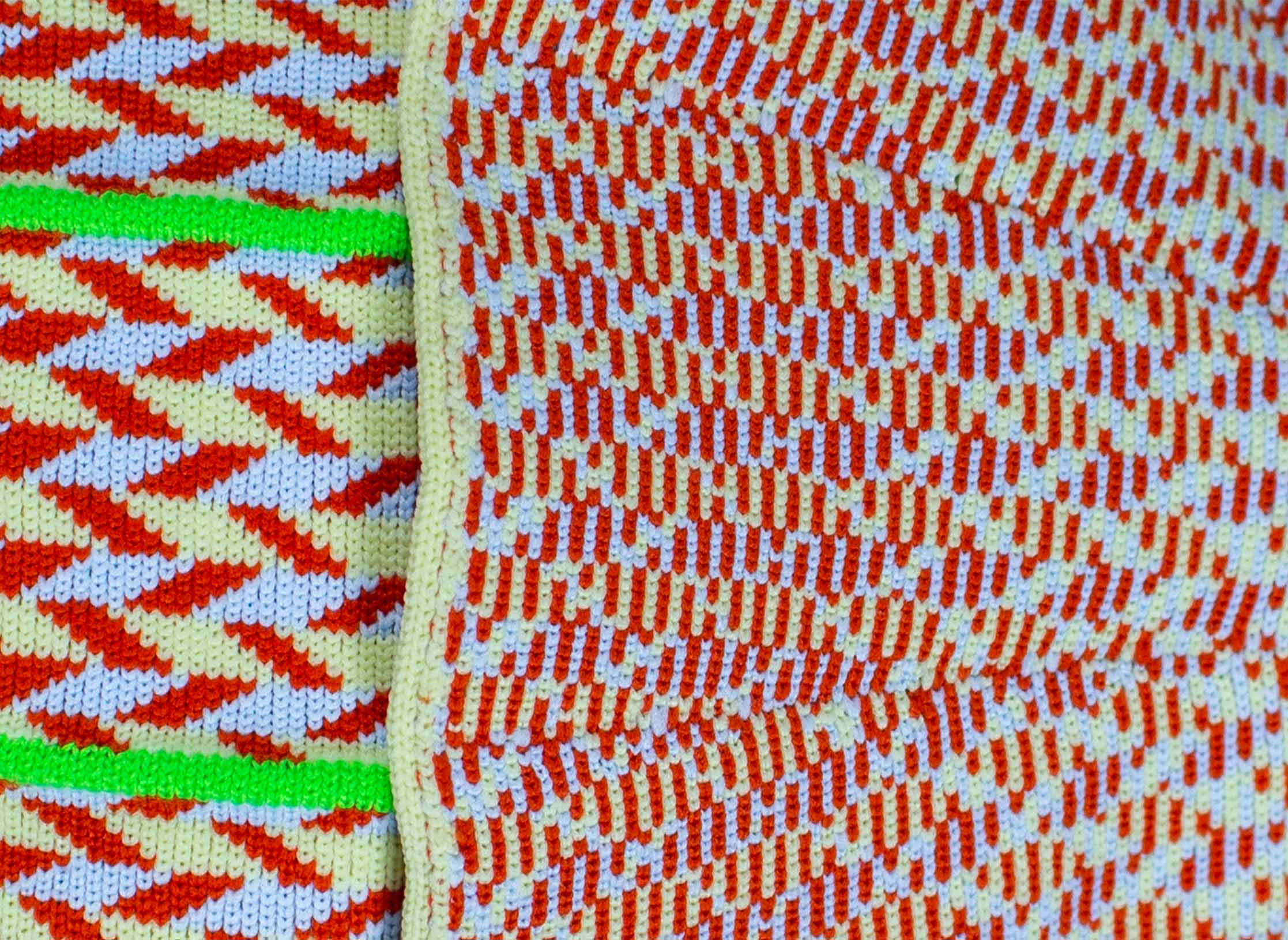
Many of your shapes feel playful, unexpected, even surreal. Where do these forms come from — nature, memory, or imagination?
They often begin with architecture — but I love to combine contrasting references. Some shapes echo seaweed, fish, or, more recently, butterfly wings. These organic inspirations mix with the vivid colors of sportswear or the pixelated glitches of digital screens. That tension between natural and artificial is what excites me most.
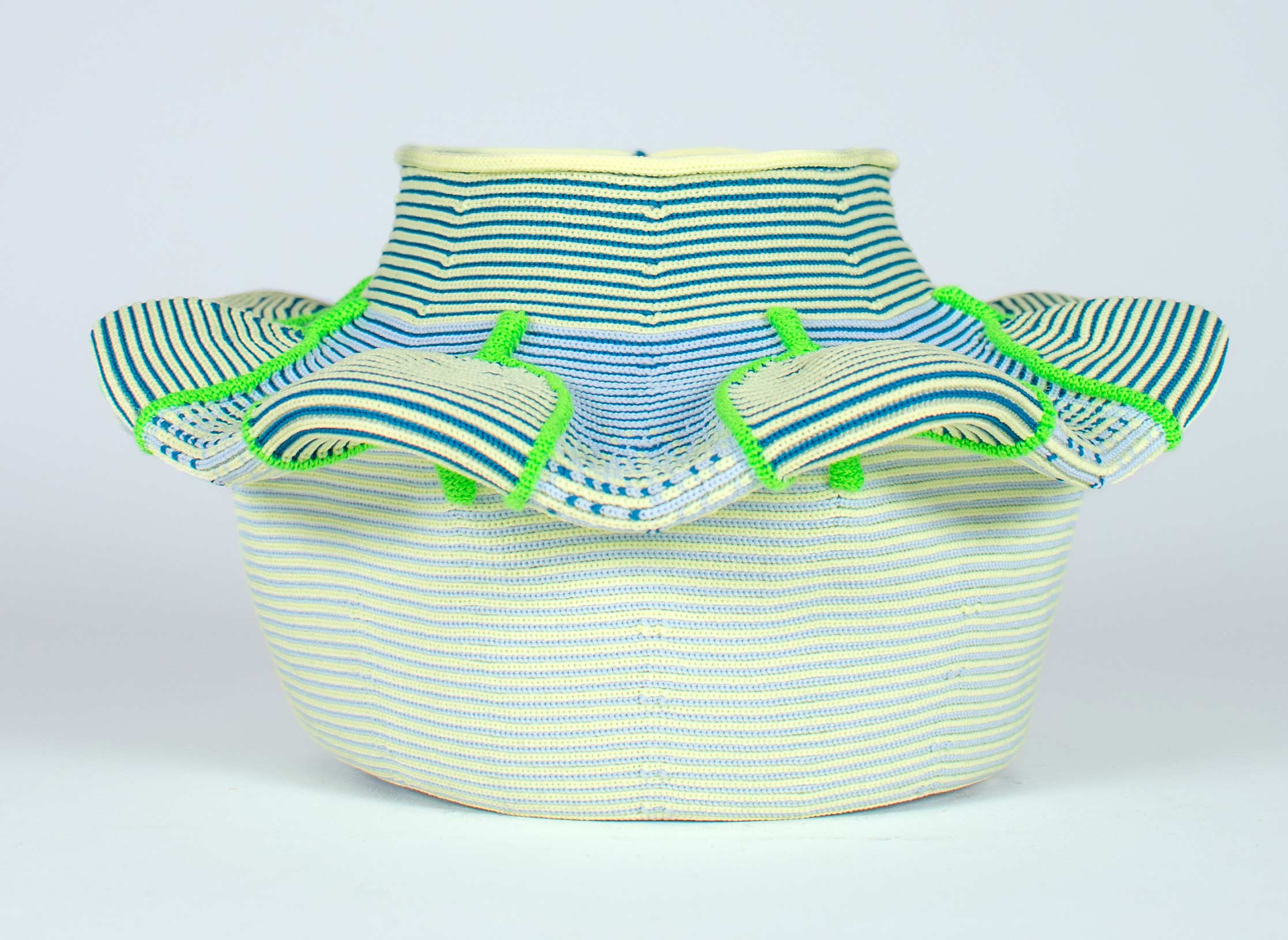
What does your studio sound like while you work — silence, music, or the rhythm of the machine?
It depends on the phase. When I’m reflecting, I often listen to music. When I’m programming, I need silence. And when I’m knitting — it’s all about the rhythm of the machine. Its sounds tell me everything: if it’s going well, or if something’s off.
How does stepping away from your work — walking, traveling, being outside — feed back into your ideas?
Traveling constantly refreshes my sense of shape and color. For example, in Mexico I was struck by the fearless use of color — so bold and confident. It made me rethink my own palette. I’m also deeply inspired by architecture, and I always make time to visit buildings wherever I travel.
Where can people find you?
You can find me on Instagram: @gaspard.fleury.dugy.