Hamzeh Alfarahneh
What’s your name and where are you based/ From?
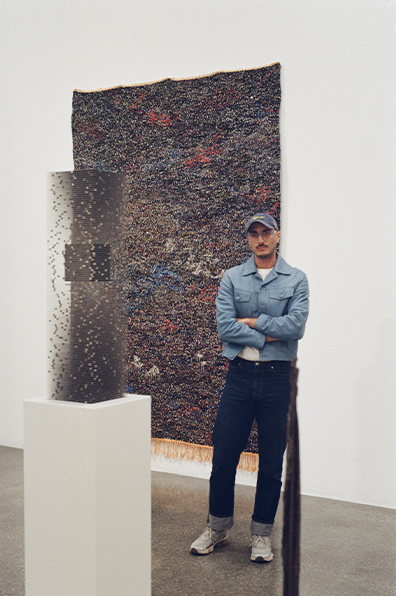
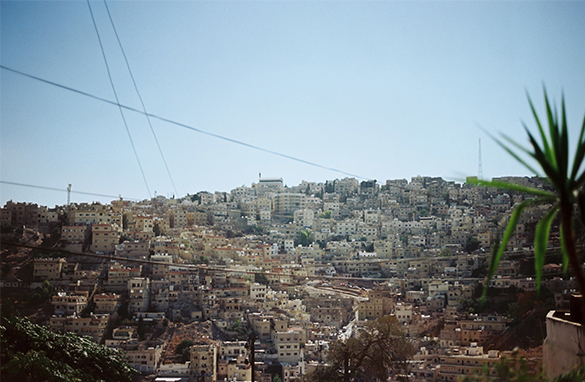
My name is Hamzeh Alfarahneh. I am a third-generation Nakba survivor, Jordanian-born, Saudi-grown, and work as an independent curator and art advisor based between Cape Town and Near Asia.
How would you describe your practice in a few words?
My practice is driven by curiosity and a deep preoccupation with bringing people — their cultures, ideologies, and stories — into conversation with one another.
What were early experiences that led you into the arts?
I grew up in a household where self-expression was actively encouraged. My mother sketched when I was young and has recently returned to painting. My brother taught himself the piano before studying the oud, and my sister sang. I think I absorbed all of this intuitively. In a way it became part of the fabric of how I understood the world.
How did those early encounters influence how you think as a curator?
As a child, I often needed time to understand situations or environments fully, which cultivated a deep curiosity about the world around me. That curiosity now feeds directly into my curatorial practice: I see art as a vessel through which I can learn about the world via art.
I also think a great deal about representation and the ethical responsibility of curators. This includes curatorial decisions, cultural sensitivity toward the artists, and attentiveness to the cultural context of the audience and place. My identity — as an Arab, Jordanian-Palastinian — inevitably informs how I think, frame, and position my work.
When you visit an exhibition, what is the first thing you tend to notice?
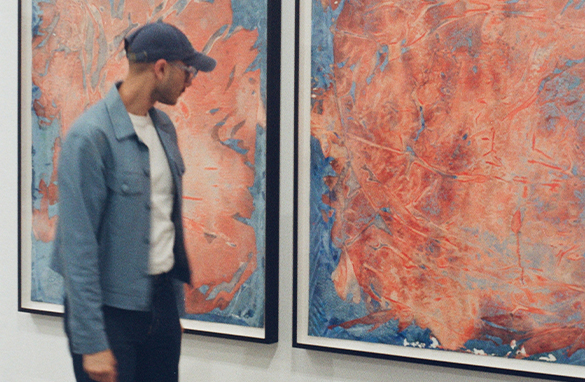
Almost without fail, I notice the floorplan first. Exhibition flow is an underappreciated curatorial skill. Beyond the relational logic between works, the exhibitions that stay with me are those that encourage exploration; where movement through space feels intuitive and considered. I often find myself noting the decisions that shape how viewers encounter both the space and the works within it.
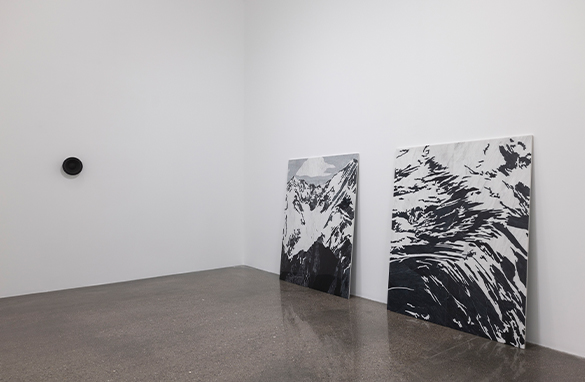
How did working with institutions such as Zeitz MOCAA and the Louvre Abu Dhabi shape your understanding of the role of exhibitions and institutions?
Working with large institutions amplifies the work, it expands its reach and diversifies its audience. My approach to exhibition-making remains consistent, but I am acutely aware that the public’s engagement with the work is broader and more heterogeneous, which carries its own responsibilities.
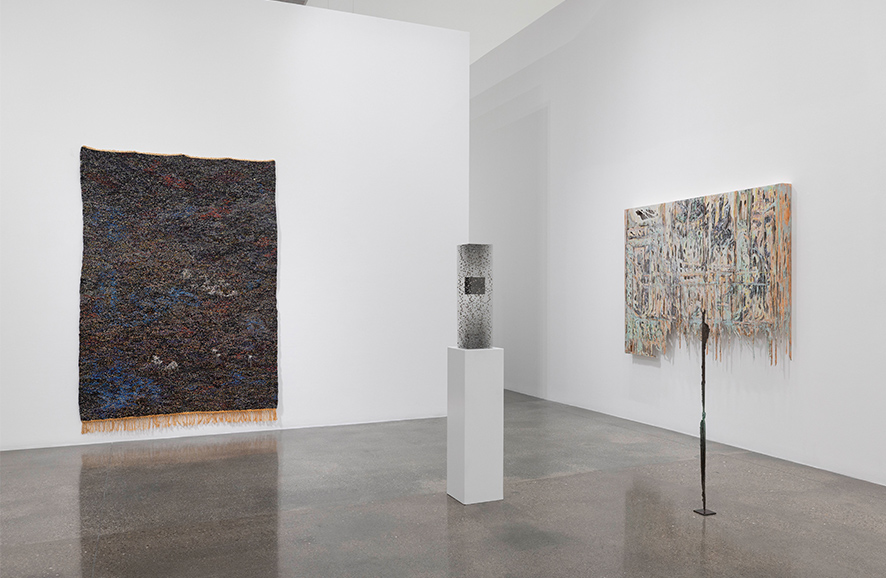
You established Art(Advisory) in 2022 to advocate for the arts of the Global Majority, why did this become so central to your practice?
The short answer is: if we don’t do it, who will? Mustafa Barghouti once said, “We must be actors in our own story, not objects in someone else’s history.” Much of art history has been written through a Western lens, with the canon dictating what is considered capital-A Art. This is deeply rooted in colonial histories whose afterlives we are still negotiating today.
Advocating for the arts of the Global Majority comes from a place of urgency and agency. Too often, these geographies are framed as disconnected or perpetually “developing,” which is an incomplete narrative. They are, in fact, linked through shared histories, trade, religion, struggle, and ambition. I am far more interested in complicating that story than simplifying it.
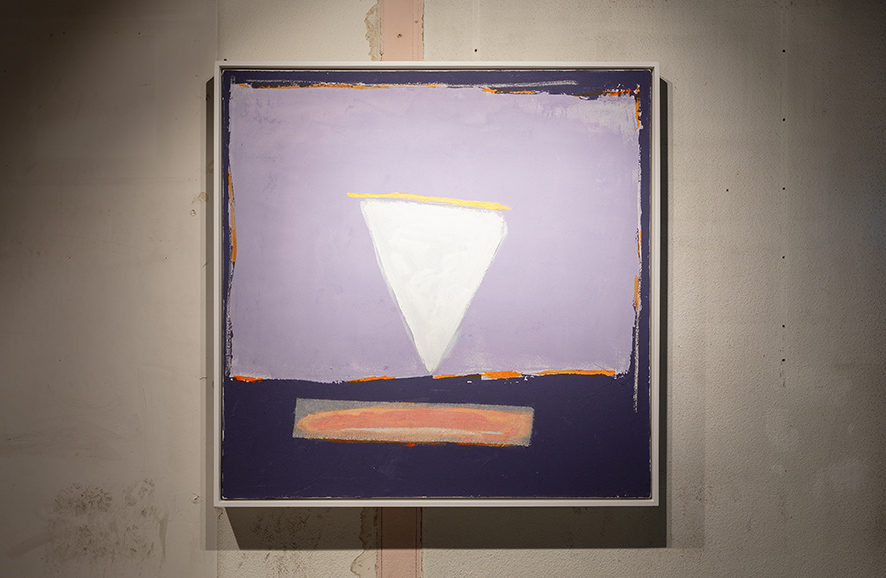
Are there any artists you’re currently keeping your eye on?
Many. To name a few: Lulua Alyahya (Saudi Arabia), Zeinab Saleh (Kenyan–British), Unathi Mkonto (South Africa), Cian-Yu Bai (Taiwan), Ishmael Randall Weeks (Peru), Bayan Kiwan (Palestinian–Jordanian), Mohammad Alfaraj (Saudi Arabia), and Bonolo Kavula (South Africa).
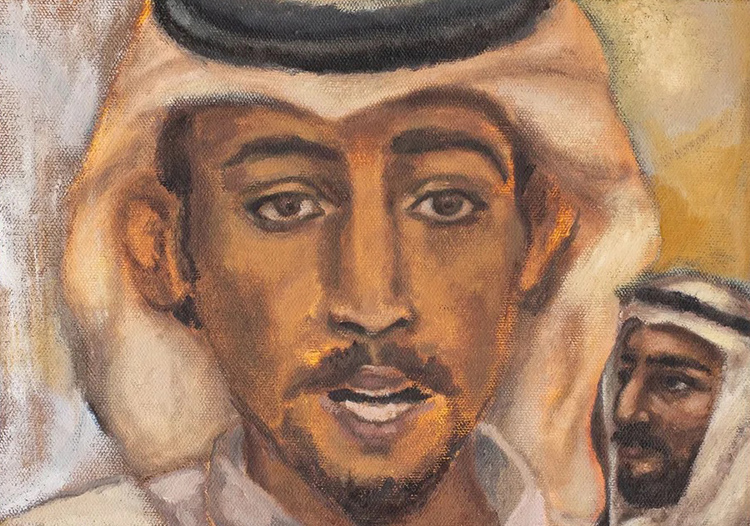
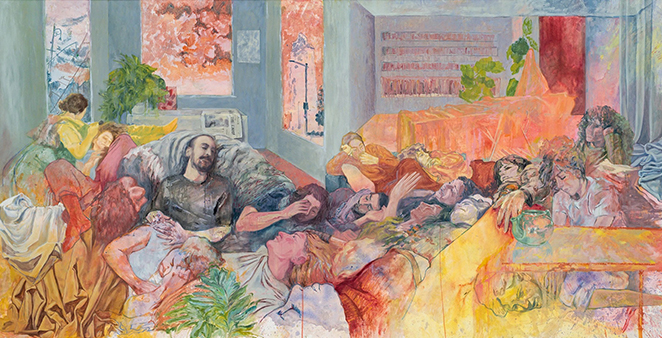
You talk about “building bridges” in your work. How do you know when a bridge has actually been built?
For me, a bridge is built when a presumption is challenged, a story is reframed, or a point of identification emerges. When viewers see themselves reflected in what they encounter, or become more tolerant and open toward what they once perceived as “other”.
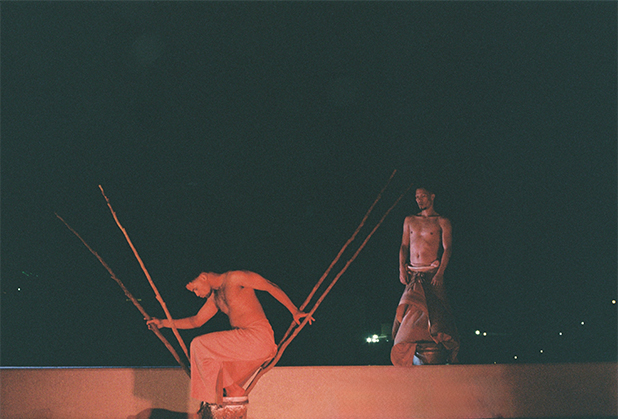
In your role as an advisor, what do you need to understand about a client before you can advise them responsibly?
Trust is foundational. I seek first to understand why a client collects art — what motivates them, what they are drawn to, and what values underpin their decisions. These fundamentals allow me to help shape collections that are conceptually grounded and genuinely reflective of the collector. I am a firm believer that acquiring art should be a slow, considered process.
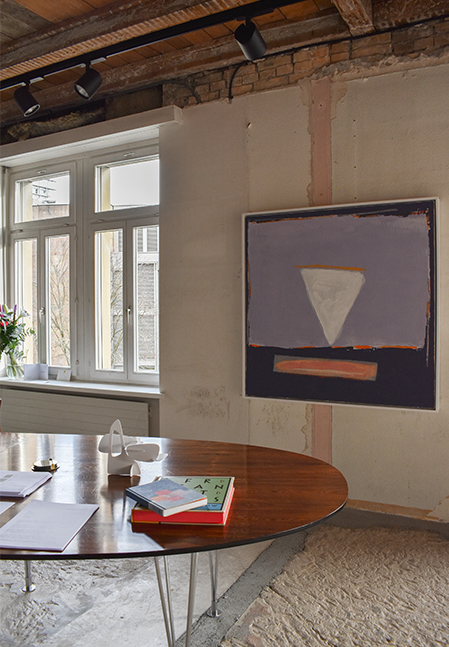
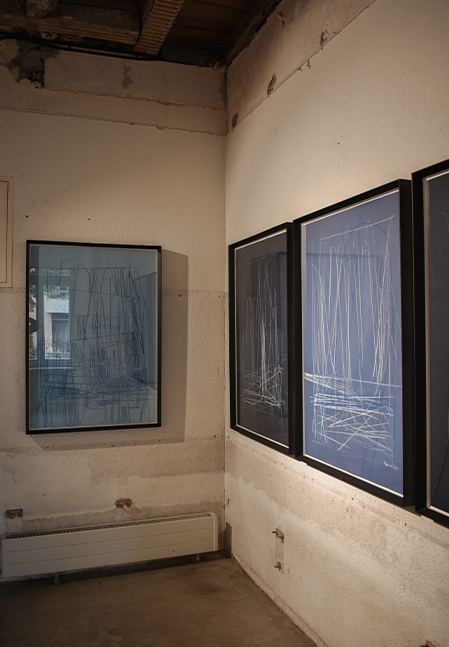
What questions do you hope future curators will ask that aren’t being asked enough right now?
To a large extent, this work began with curators like Okwui Enwezor, who shifted the lens from “them” to “us.” What I would like to see more of now is a continued expansion of the canon. I think it is our duty to rethink art histories, movements, and narratives to more fully include Global Majority perspectives within the broader art ecology.
Where can people find you?
At the end of January, I will be in Riyadh for the opening of the Third Diriyah Contemporary Art Biennale, hosting a group of African art collectors, practitioners, and enthusiasts exploring one of the Gulf’s fastest-evolving cultural landscapes.
In mid-February, I’ll be in Cape Town, curating the Zeitz MOCAA Collateral Programme, titled By the Footsteps of the Beloved — عَلَى خُطَى الحَبِيب.
The phrase is an idiomatic expression drawn from the Arabic-speaking world, deeply rooted in Islamic devotional and literary traditions. In Islamic thought, al-ḥabīb (the Beloved) is a reverential title for the Prophet Muhammad (peace be upon him). In Sufi poetry and Arabic literature, the Beloved can take many forms: a spiritual guide, a mystical presence, or a human beloved.
We approach this framework metaphorically. By the Footsteps of the Beloved acknowledges that a mantle has been passed. It speaks to collective responsibility in institutional building, and to ensuring that a museum’s vision lives on through the shared labour of its staff, curators, artists, trustees, and wider ecosystem.
Lastly on instagram @notjustacreator and the Weekly Digest by Art(Advisory) newsletter on Linkedin