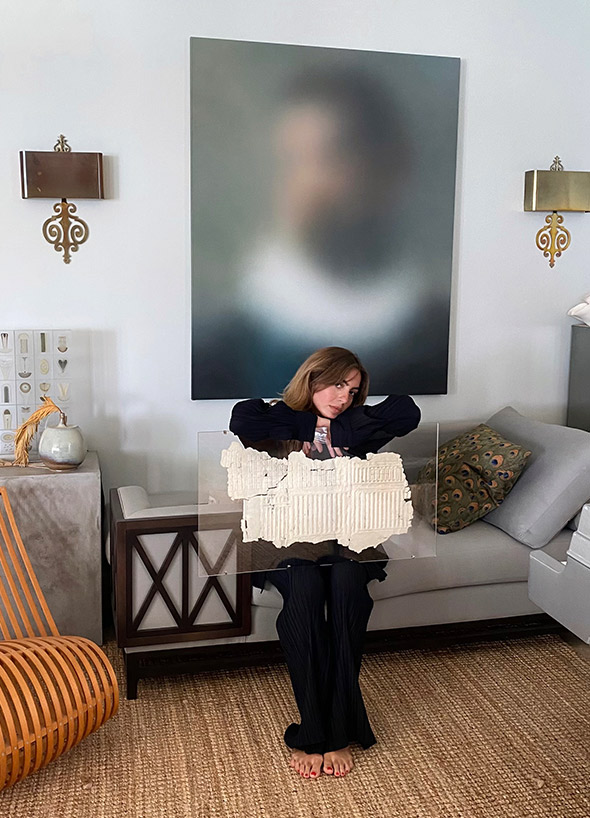
Haya Morowa
What’s your name and where are you from/based?
My name is Haya Morowa, I am Lebanese based in London.
Can you describe your practice in a few words?
Tactile, Spacial, Speculative
You describe your practice as combining traditional craft with digital tools, what
first drew you to this?
Architecture, which I studied and currently practice, relies heavily on digital tools. The
process can no longer be entirely hand-drawn or handmade; software and fabrication technologies have become inseparable from how projects are conceived and realised. As John Pawson would say ‘all we needed to show was a plan’, whereas today a client expects a full set of drawings, renders, and visualisations.. The project comes alive before it’s even Built.
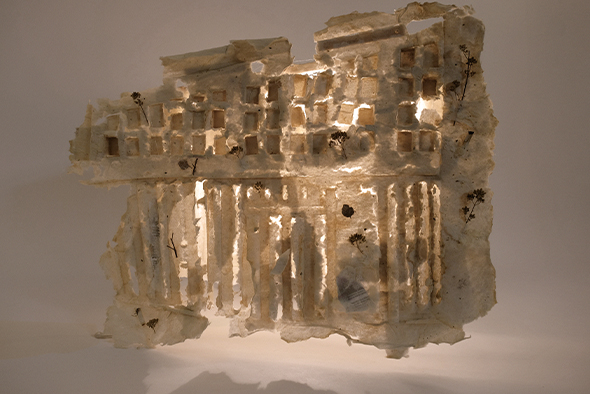
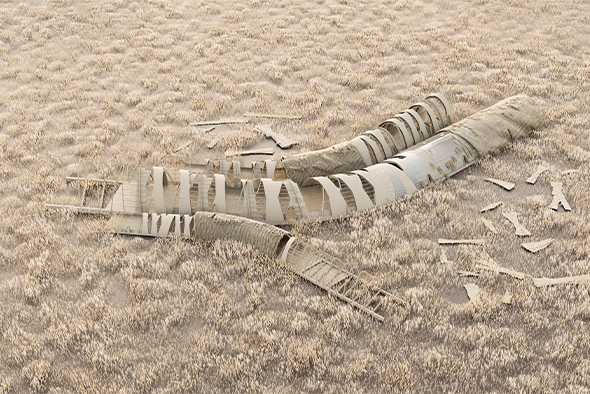
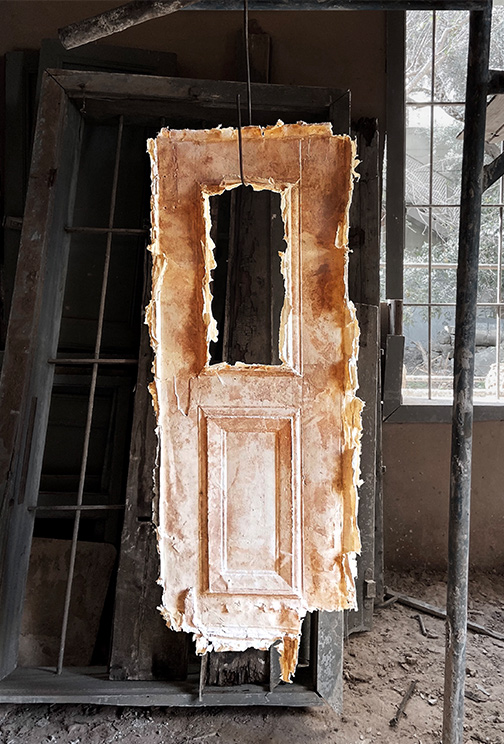
I find this both exciting and challenging. I’m drawn to raw, crafted, physical objects & spaces, forms & qualities that can’t always be conveyed through software, but I also see how digital tools expand what’s possible and keep pace with change. Among my works sitting at that intersection, a conversation between tradition and contemporary tools, are A Demolition by Stealth (2019) and From Bread to Building (2022).
Your projects often begin with material research, how do you get to know a
material before deciding how to work with it?
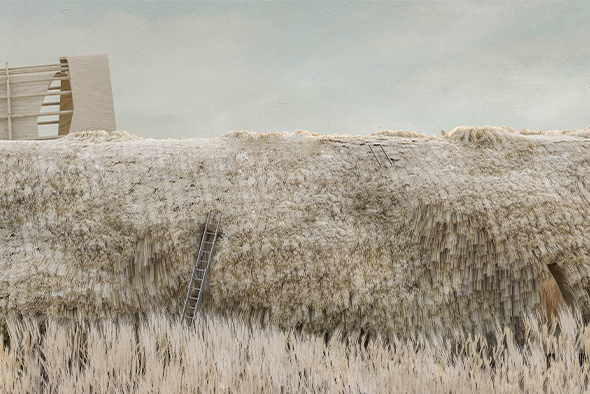
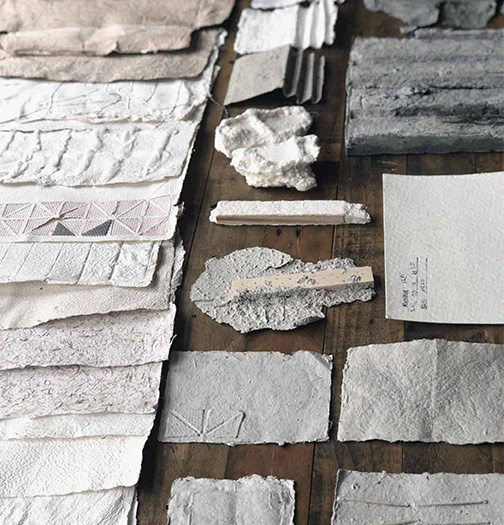
I’ve always been intrigued by the potential of materials and how a single substance can take on so many forms. My explorations have ranged from food to wood, concrete, metals, plaster, wax, ceramics and more. Yet, I return most often to light, delicate materials like paper and straw, which, interestingly, can even be transformed into one another. Their lightness lends itself to gentler ways of making, processes that respect both nature and the maker.
Once I’ve chosen a material I feel intuitively connected to, I experiment with it in workshops, factories, construction sites to learn its limits and strengths. I just play with it really.. The material most often sets the parameters of the project, but I try to keep an open mind and ask myself: how else could I work with it, or see it differently? The work begins there, in that space between what a material is, and what it might yet become.
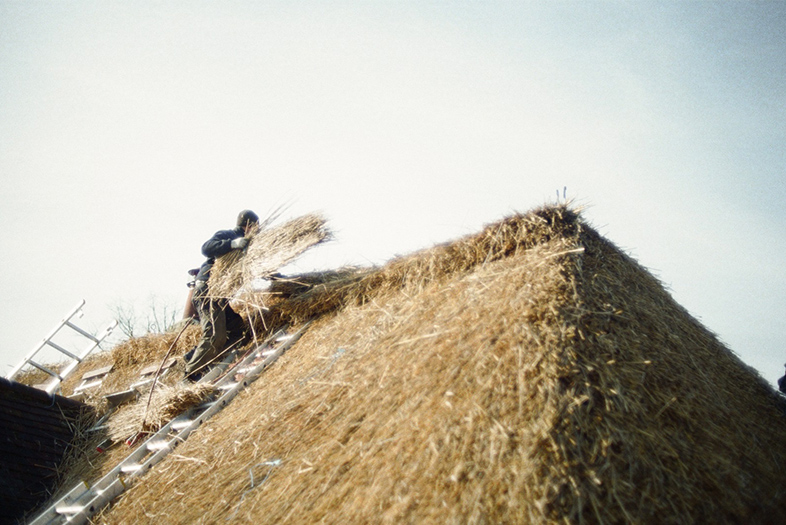
In A Demolition by Stealth, you literally unbuilt architecture to build with paper,
what did that project teach you?
It taught me that a material can hold both its undoing and its rebirth. By transforming the warehouse’s wood into paper, the project uncovered the subtle potential of change. It brought me closer to the idea of impermanence, questioning whether architecture must outlive us, or if heritage and meaning can also be found in unmaking and remaking, rather than in monuments built to last forever. In that process, I came to see transience as intrinsic to a building’s value.
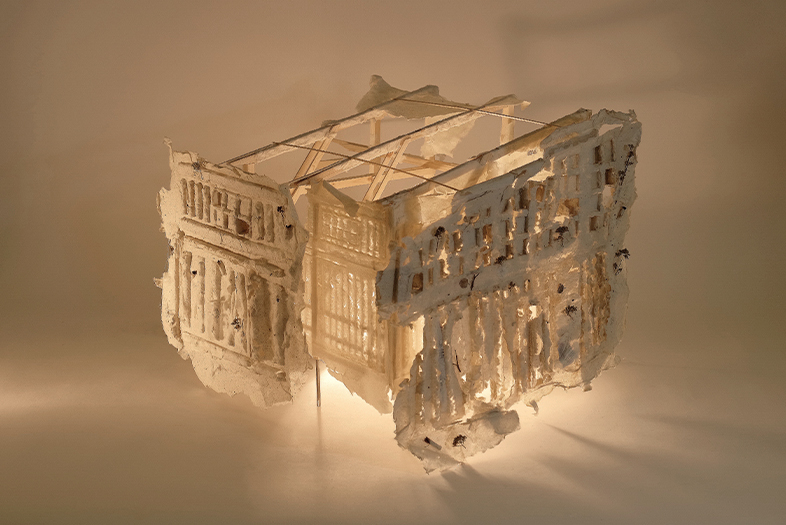
When you bring traditional craft into dialogue with digital fabrication, what kind of new voice are you trying to give the past?
Traditional craft often carried an inherent sustainability: working with local materials,
low-energy methods, and an instinctive understanding of how things could be made to last or be repaired. Much of that sensibility has been overshadowed by today’s fast-paced construction culture, which prizes speed and efficiency over craft and patience. I see digital tools as a way to recover some of that, not by recreating the past, but by translating its know-how into modern contexts. Digital fabrication allows us to reimagine methods of making and scale what was once only possible by hand, but only if done with intention. For me, it’s about carrying the care of craft into today’s practice, giving the past a voice that feels grounded in heritage yet alive in the present.
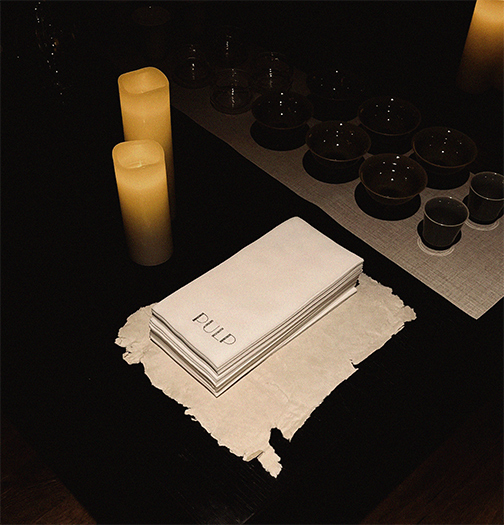
You founded Pulp as a nomadic social club for creatives, what conversations or
collaborations has it sparked?
Before answering this, I’d like to explain a little about what brought Pulp to life. The name itself is a small nod to my obsession with paper, a material that’s shaped much of my practice.
I’ve always seen a home as a patchwork of design decisions that quietly shape how we live.
Someone designed your couch, your table, even the spoon you eat with.. Some company designed your TV.. Someone else farmed the tomato that sits in your fridge.. yet you probably don’t know any of these people. Pulp has emerged from that same observation, creating a space where those makers, designers, and specialists step out of the background and connect with each other, and with us, in a shared experience, rather than showcasing their objects or products as static displays.
From that starting point, it has already sparked collaborations: fashion designers meeting architects to imagine a lamp, brand owners working with food stylists, object designers and culinary specialists exploring how vessels and rituals transform the way we experience food.
It’s about seeing how easily these worlds connect when given the space and direction.
Cross-disciplinary work seems to be the way forward. Boundaries between fields are
dissolving, and collaboration is where new ideas take shape. Pulp simply gives that exchange a home.
If you could collaborate with a craftsperson or artisan anywhere in the world, who
would it be and why?
It would be Eriko Horiki in Japan. She isn’t a traditional artisan, but an artist and designer based in Kyoto who works closely with washi papermakers from regions like Echizen. I’ve always been drawn to paper for its delicacy and overlooked strength, and she transforms it into immersive spaces that bridge tradition with new possibilities in design.
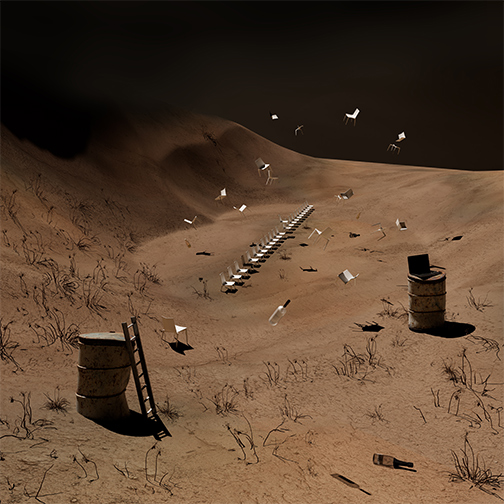
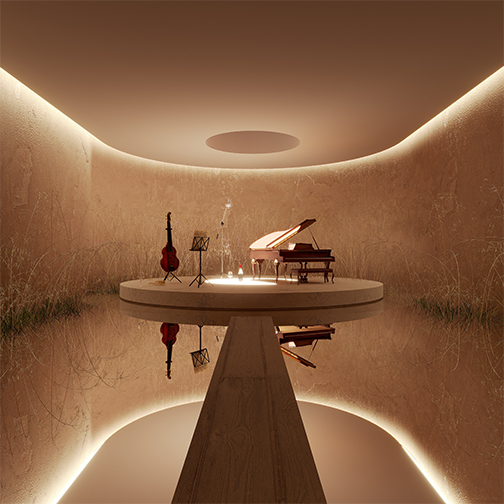
When creating visuals for music projects like Afterz, how do you translate sound
into a visual language?
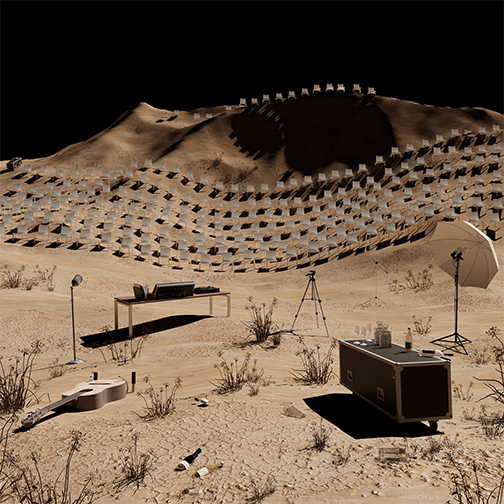
I’ve always had this thing where I naturally translate sound, numbers, letters, and spaces into colours. It’s hard to explain, but sometimes a colour combination unlocks a memory of a
place from my childhood. Or if I try to remember a number, I’ll recall it as a colour — for
example, 4 is always pink, 2 is yellow, and so on. I didn’t know it had a name until a friend
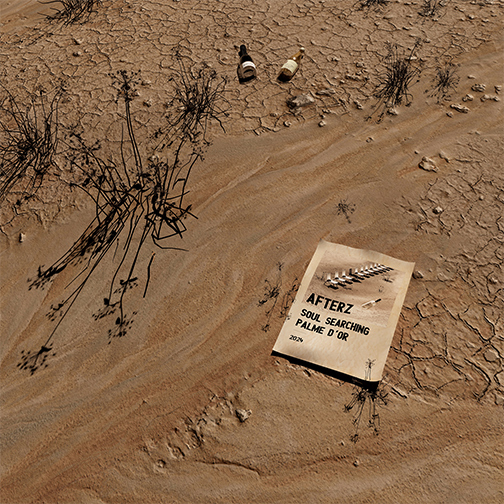
told me it was called Synesthesia. From there, the process feels intuitive: a sound triggers a feeling, a feeling becomes a colour, and a colour suggests a space. The final outcome doesn’t always retain that palette, but synesthetic colour often shapes the earliest stages of my work. I experiment and listen on repeat until the image I design feels aligned with the song that Declan and Troy (of Afterz) have spent hours producing. Working with Afterz has been very collaborative, we have long conversations whenever they commission me for an album cover. They understand my abstract way of thinking, which is usually all over the place until it all comes together.
What’s something in your daily life that has nothing to do with your practice but
feels essential to who you are?
My day begins with dates, I just can’t help it! I split and fill them carefully, almost like a small act of craft. It connects me to where I come from and remains the simplest, most satisfying pleasure. It hits every time.
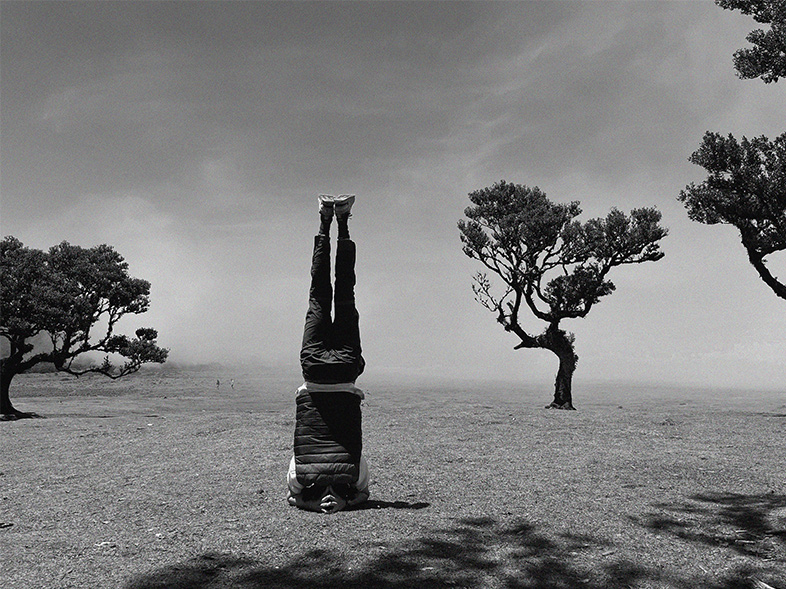
And every Sunday I go to yoga with my partner Aly. Sometimes it’s more than once a week, but that one class always feels essential to me, it resets my pace for the days ahead. It’s intense with flowing, continuous movements, chanting and music. I always leave happy, energised and at peace. It’s my weekly reset and I carry into my daily life through patience,
simple breathing & stretching exercises, especially when I’m overwhelmed.
Where can people find you?
@hayamorowa
@pulpmoves
PULP Edition II | October 25, 2025 — a collaboration with sommeliers, architects
& chefs. Follow @pulpmoves for RSVP details.