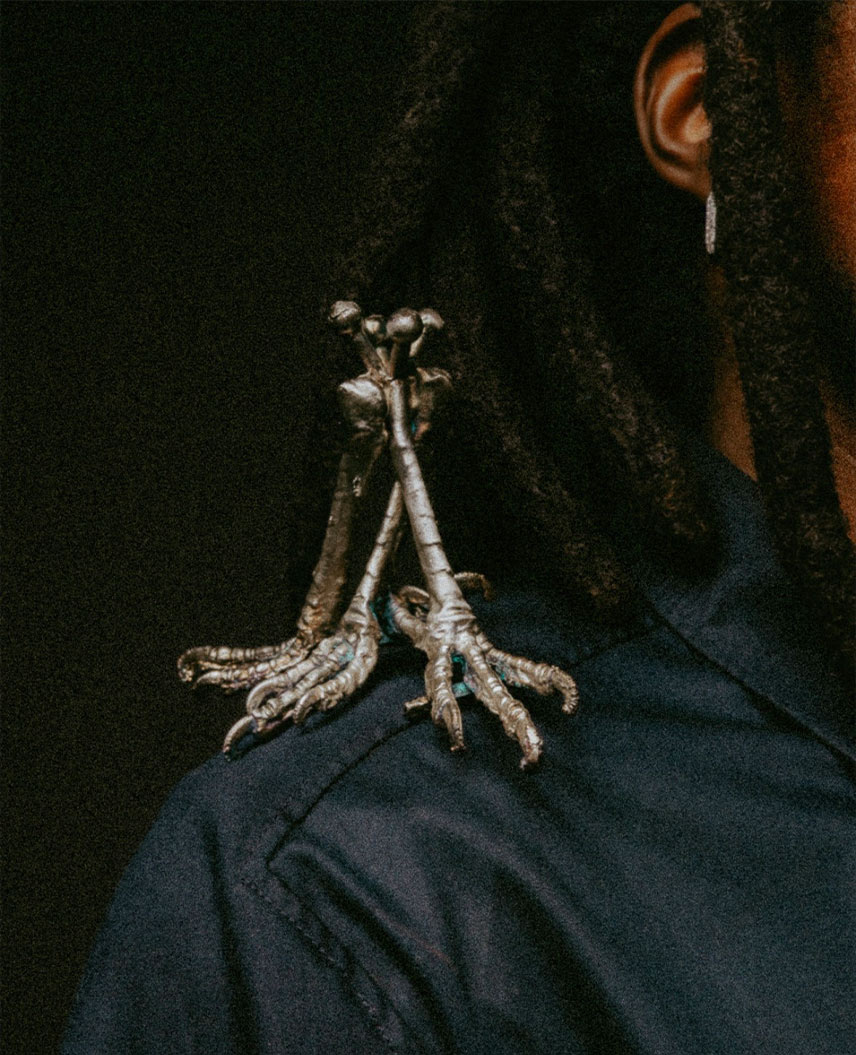
Iyuh Studios
What’s your name and where are you based?
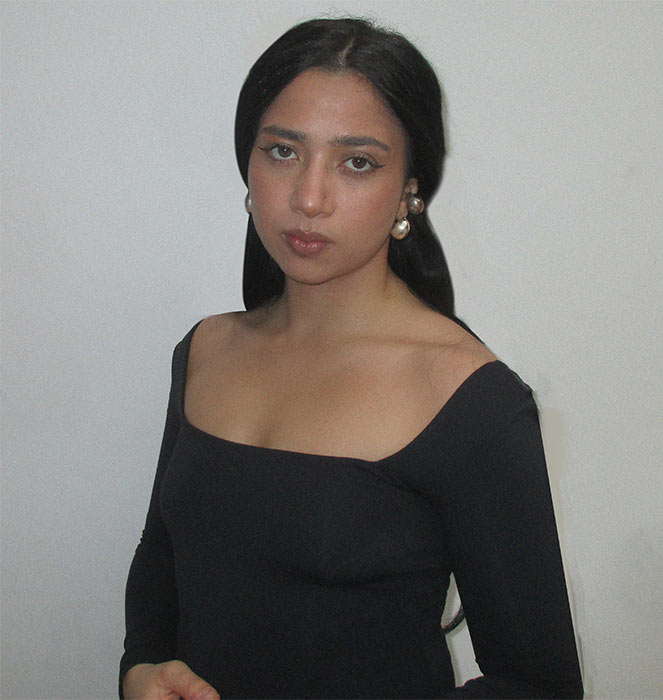
My name is Aya Al-Shalal. I’m an Iraqi-Canadian jewellery designer currently based in London, UK.
Can you describe your practice in a few words?
Research-led Contemporary jewellery exploring endangered Iraqi and Bedouin craft through sculptural design, bridging cultural heritage and alternative subcultures and fashion.
Your work comes out of a family history of collecting and preserving tribal and Bedouin crafts, jewellery, silversmithing, textiles from Iraq and the wider SWANA region. Can you tell us more about that history?
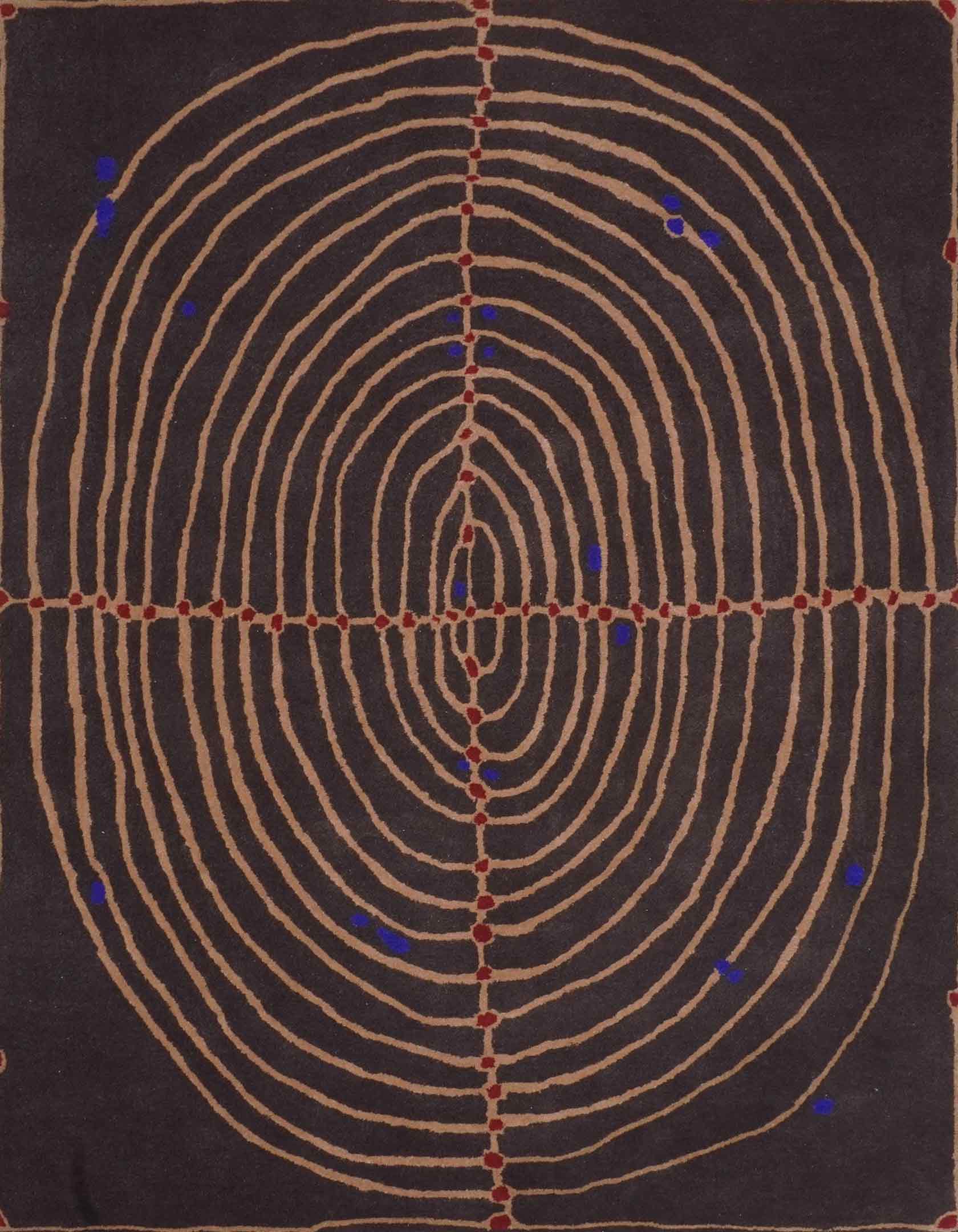
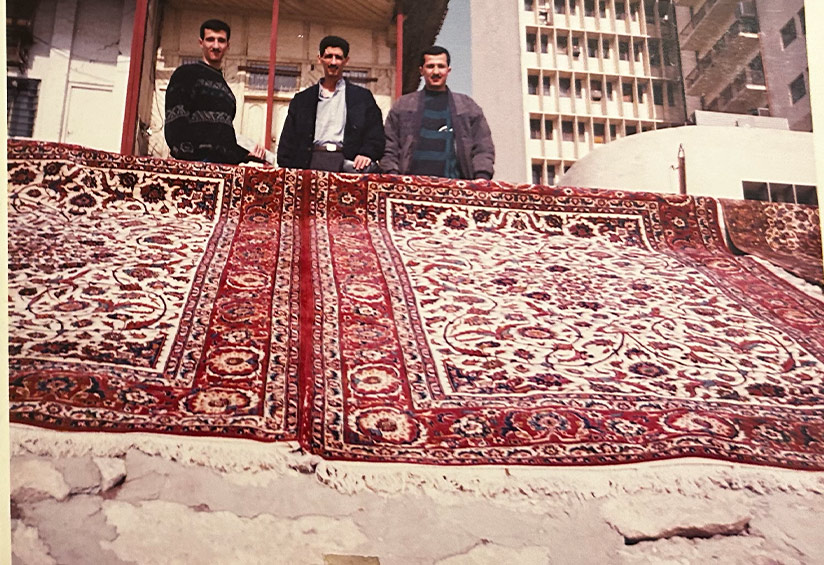
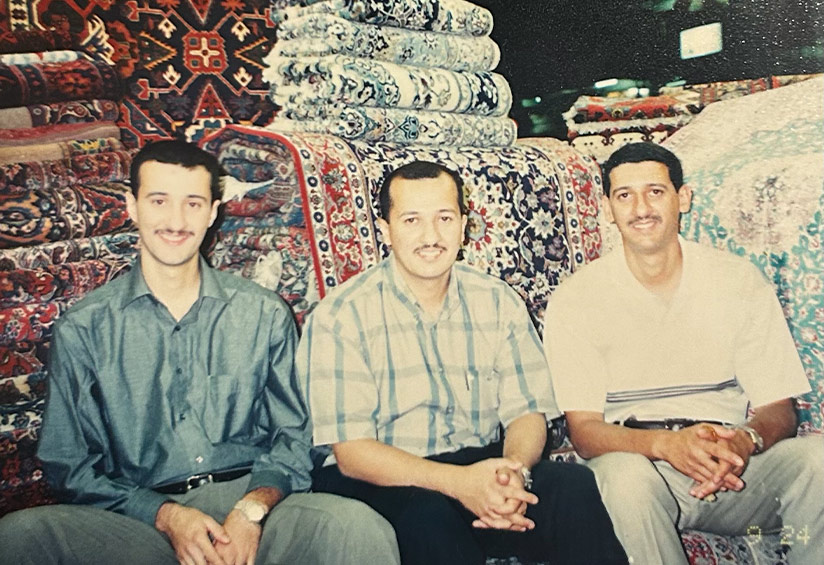
My family actually has a long history in textiles. We were involved in textile production and had a factory that my late grandfather founded. Alongside being an influential entrepreneur, he was an incredibly passionate collector of art, including West Asian rugs, silver, and traditional crafts, and continually invested in them.
Following the events in Iraq in 2003 and the closure of our family business, my father and uncles decided to make the curation and preservation of these crafts their full-time career. Today, they are based in Jordan and curate collections between Amman and Baghdad, dedicating themselves to researching, preserving, and adding value to the narratives of their makers while strengthening and safeguarding our cultural heritage.
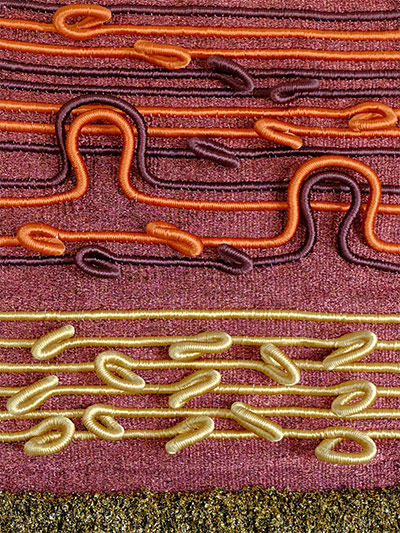
For them, the work has never been just about preserving objects; it has always been about honouring the stories of their makers and the communities they come from. This includes an extensive knowledge of particular tribes and minority groups, their weaving traditions, metal stamping, material knowledge, and techniques that carry generations of lived experience.
Growing up surrounded by this collection and these conversations profoundly shaped the way I think about craft. I see it not as something static or nostalgic, but as a living archive of memory, identity, and resilience.
What made you decide to continue this legacy and work within this?
What made me continue this legacy was seeing the current state of the world and how quickly craft culture can become vulnerable during conflict. Minority communities have always used craft to document themselves, preserve their identities, and ensure they are not forgotten. For me, craft has always been a form of resistance.
Growing up, I watched my father and uncles spend years relying on tacit knowledge to recognize, trace, and hand-pick these objects from collections and markets around the world, bringing them back to preserve and share with our community. Witnessing that made me question how I could contribute to this ongoing dialogue within my own culture.
I wanted to create a body of work that reflects the histories, ideas, and realities of today’s alternative diaspora while remaining deeply influenced by the lived experiences, craft traditions, and material culture of our heritage. For me, that also meant learning from the wisdom, knowledge, and narratives of the Indigenous inhabitants and artisans.
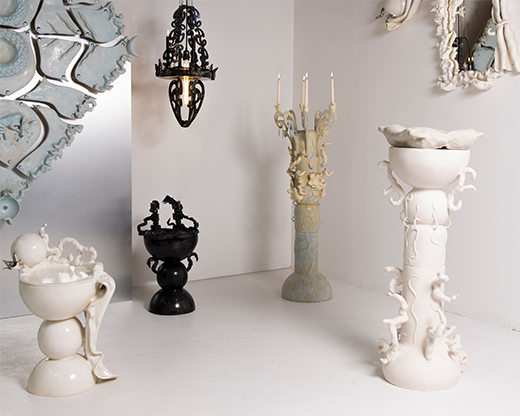
When you look at archived crafts, whether ceramics, jewellery, furniture, textiles, or metalwork, they tell stories and realities of the people who made them. They tell us how people lived, what they valued, and what they wanted future generations to remember.
Jewellery has always held a particularly important role for women. It has been a way of communicating identity, marking different stages of life, carrying stories, and preserving memory across generations. Continuing this legacy, for me, is about making sure these stories remain visible, both past and present. I want to contribute to their evolution, allowing them to continue living through these subcultures rather than becoming something we only encounter in archives.
You combine traditional craft with sculptural and experimental forms using digital, contemporary processes. Can you tell us what this looks like in practice?
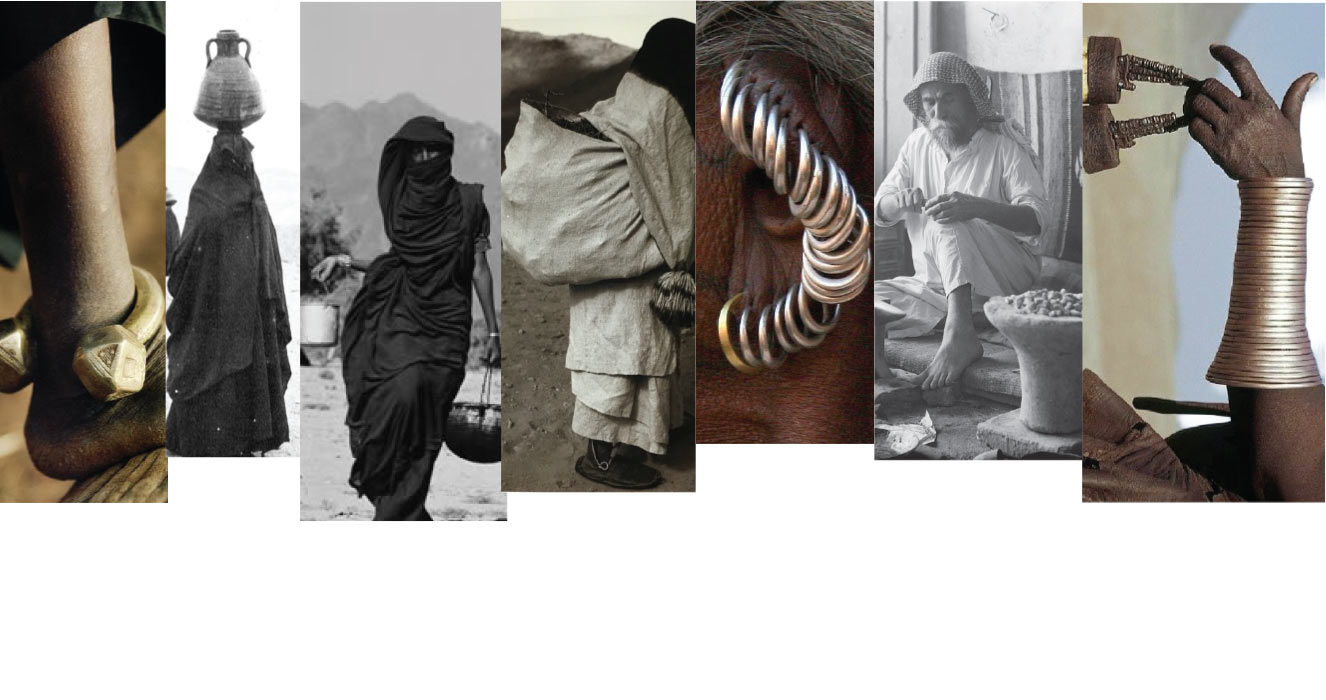
The process begins with research into the objects within my family’s collection of Iraqi and Bedouin jewellery, silverwork, and material culture, and the rich narratives they carry, particularly those of the Marsh Arab and Bedouin communities.
I was particularly inspired by a pair of vernacular anklets found across tribal cultures throughout the SWANA region and was drawn to their bold, grungy form. Decorated with niello rosettes symbolizing fertility for young wearers entering puberty, these hammered, hollow anklets revealed another layer of meaning as I held them. I realized they were designed to create a delicate tinkling sound with movement. That tension between visual weight and lightness, stillness and movement, became a constant source of inspiration throughout the collection.
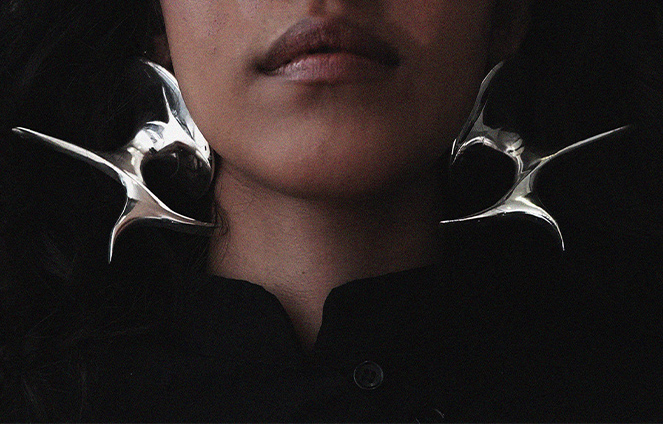
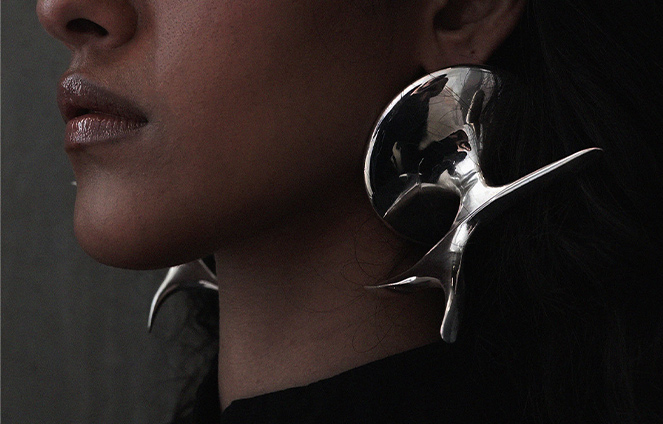
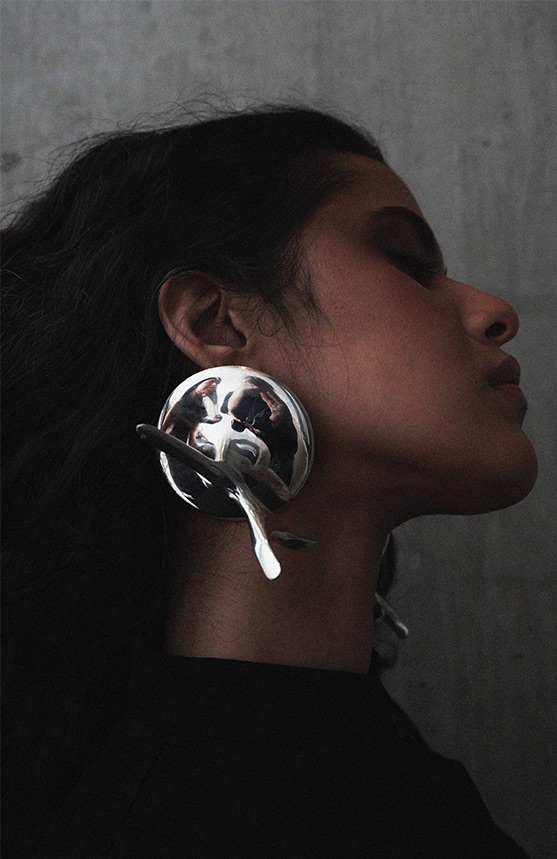
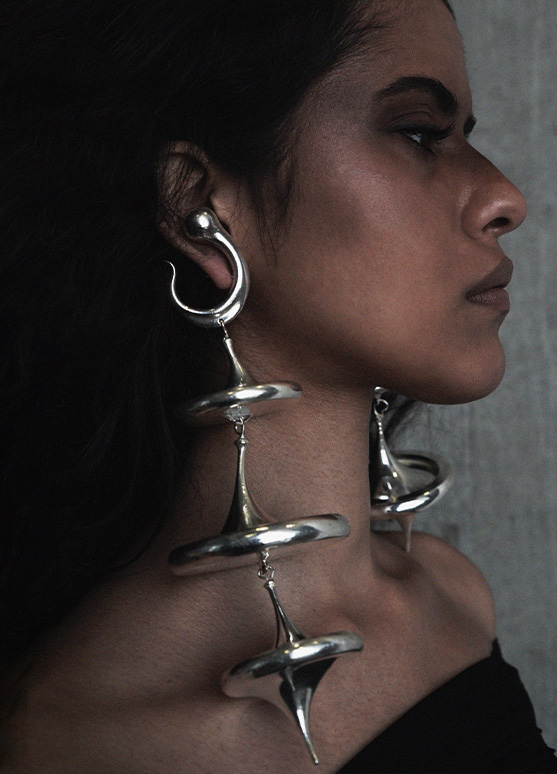
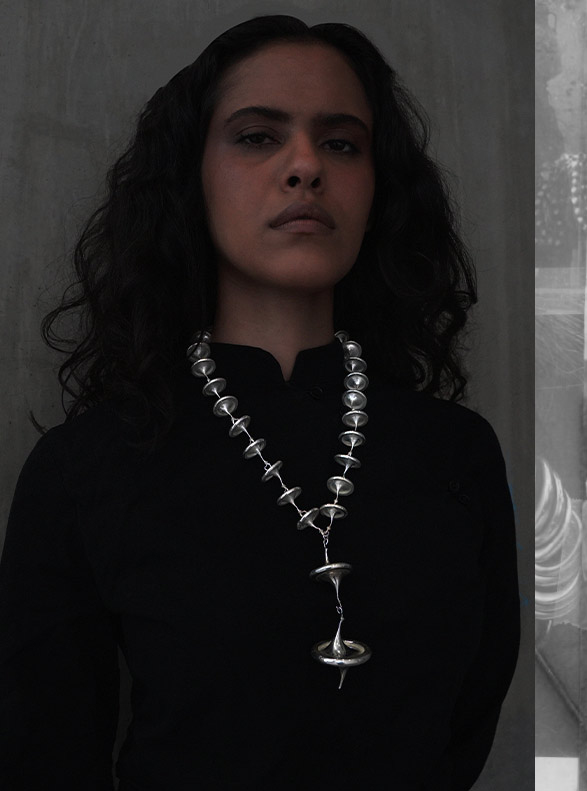
This can be seen in the bold, grungy visual weight of the forms borrowed from traditional Bedouin anklets, which are dissected and expanded within the earrings. The repetitive elements oscillate between geometric precision and fluid, sculptural forms, creating a balance between structure and movement while echoing the rhythm and suspension of the original objects.
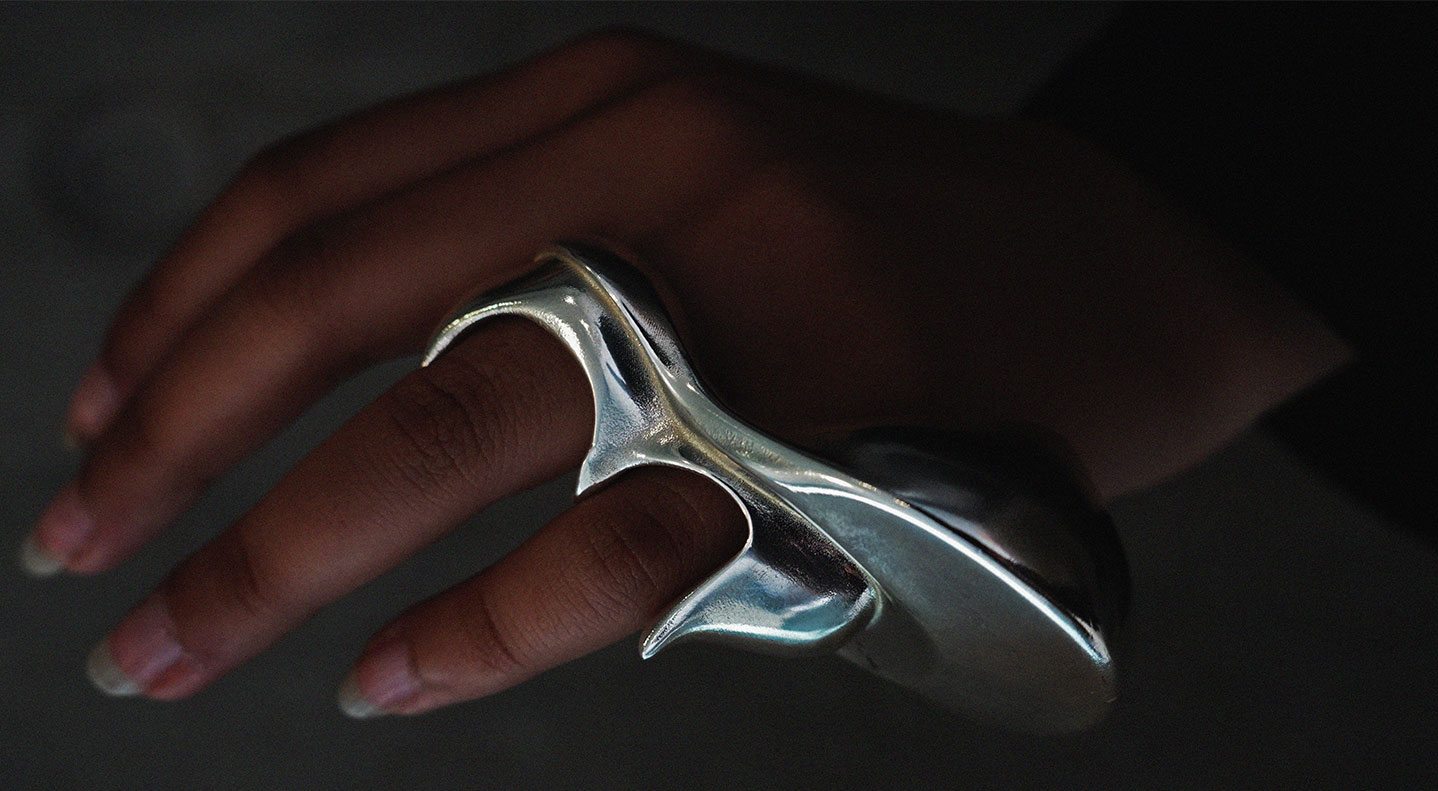
My pieces are developed through an extensive process of ideation and iteration. I reinterpret and exaggerate this visual language by hand-sculpting in wax, creating new sculptural forms that retain their cultural essence while feeling contemporary within alternative subcultures and fashion ecosystems. From there, I move the work into a digital space, using 3D modelling and digital fabrication to further refine and develop the forms.
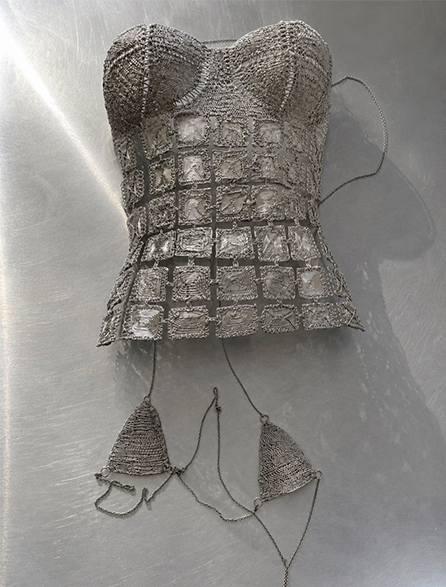
During my time at Central Saint Martins, I explored how technology could work alongside traditional craft rather than replace it, as I believe there is a spiritual connection between makers and the objects they create. I combine hand-making with digital modelling, casting, and alternative metal-forming techniques to create jewellery with the visual weight, presence, and narrative richness of historic silver adornment while remaining lightweight and wearable.
Working with silver was vital to this process. Across many Iraqi and Bedouin communities, silver has long held a spiritual significance, associated with protection, identity, continuity, and sacredness. For me, working with silver became a way of carrying not only the visual language of these traditions, but also their cultural and spiritual resonance into the present.
My approach to silver forming allowed me to preserve the sacred materiality and cultural significance of the metal while expanding the possibilities of how it can be experienced today, without losing the maker’s presence or the embodied knowledge carried throughout the process.
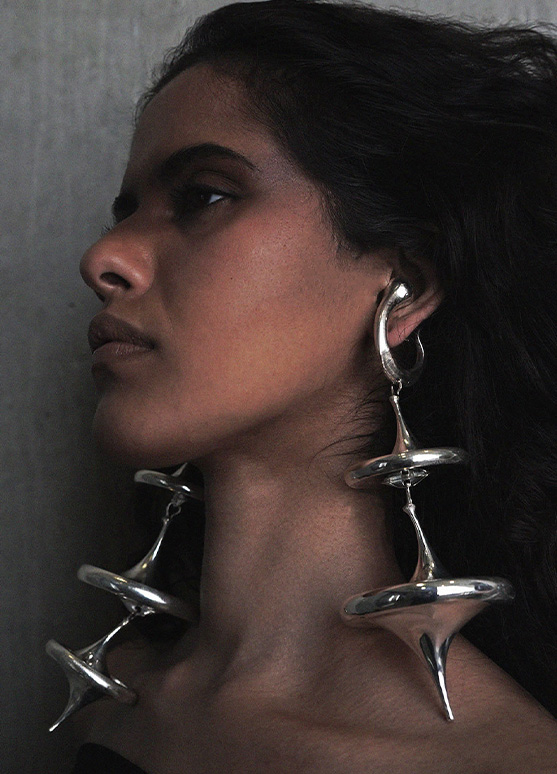
Your collection is titled residual bodies, what does this mean to you?
It means everything. Throughout this project, I kept returning to the idea that craft objects become the last remaining traces of the people who made, wore, and passed them on. They outlive generations, carrying memories, stories, and ways of making long after their makers are gone.
Growing up within an Iraqi family, where heritage has constantly faced displacement, conflict, and erasure, I began to see these objects as more than adornment. They became relics. For me, Residual Bodies speaks to the belief that objects carry the souls, energies, and presence of their makers. Even when people, places, and traditions are threatened or disappear, these objects continue to hold their memory.
The title also reflects the relationship my collection has with the body itself. Jewellery only becomes complete when it is worn, and many of the pieces reinterpret traditional ways of hanging, suspending, and moving across the body that are rooted in Iraqi and Bedouin adornment. The sculptural forms are designed to feel like extensions of the body, while the process of making by hand preserves a physical connection to the gestures and tacit knowledge embedded within traditional craft.
Your pieces within the collection are named Niyya, Citra, Miena. Where do the names come from?
The names come from traditional names and the meanings they carry. I wanted each piece to have its own identity while remaining connected to the wider narratives of the collection and the cultures that inspired it.
Niyya means intention,
Mienna means gift, blessing, or grace
Citra is associated with, brightness, and purity,
You mention creating alternative diasporic communities; what do you think these communities are looking for?
We are looking to be seen and to feel relevant, with our dual-identity experiences acknowledged. We want to exist beyond monolithic stereotypes and make space for more nuanced, authentic, and hybrid cultural identities. I think people are looking for work that reflects the complexity of who they are without asking them to separate one part of their identity from another.
There has been an incredible surge of alternative diasporic subcultures creating non-conformist spaces that challenge the feelings of isolation, displacement, and cultural erasure commonly associated with us. Through social media, people are finding one another and creating digital tribes and communities built around their shared experiences of living within the diaspora.
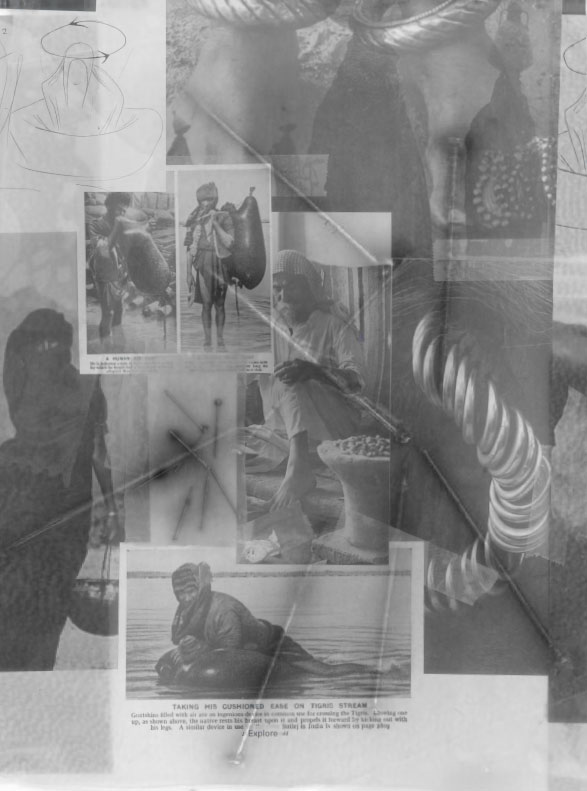
What’s a piece you haven’t been able to make yet?
I actually found the opposite challenge during my masters; I had too many ideas. Every piece I made seemed to lead to another question or another direction I wanted to explore, so it was often difficult to settle on just one. I feel like I have an archive of concepts waiting to blossom.
More than a specific piece, I’m excited to spend more time experimenting with raw materials from the land.
Where can people find you?
You can find my work and purchase pieces through my website, iyuh.ca. For a portfolio of selected works, visitayaalshalal.com. I also share my latest projects, process, and upcoming exhibitions on Instagram at @iyuhstudios and @iyuhready.