Jean-Baptiste Durand
What’s your name and where are you from/based?
My name is Jean-Baptiste Durand, and I currently live in Paris. I grew up in the countryside near Bordeaux, before moving to the Fine Arts school in Saint-Étienne when I was 18.
Can you describe your practice in a few words?
Even if some shapes inevitably repeat themselves — a kind of coherence — I try not to have a predetermined practice. In fact, I try not to be able to answer this question in a general way haha!
Otherwise, it would mean applying some kind of a pattern that keeps repeating and would make me go in circles.
I try to adapt and bring something new depending on the projects, even the ones I initiate.
Do you remember the first object you ever made?
I think the first object I ever created must have been absolutely terrible haha! It took me a while to understand what was at stake in design. But I remember an anecdote that’s rather flattering for me, and a bit funny: In kindergarten, there was a little drawing contest and my twin brother won. And actually, I got eliminated because the teacher thought an adult had made my drawing. I had drawn my mother’s car haha It pushed me quite early toward a “creative” path.
I think that after that, maybe the first object I made was some sort of companion dummy for lonely people. It looked like a shop mannequin that you would sit at a table and it would “talk” to you to make you feel not alone even if you are… 15 years before ChatGPT, I’d like to point out haha.
It was art school — the good old days haha.
What first drew you toward ceramics, and what did this open up for you?
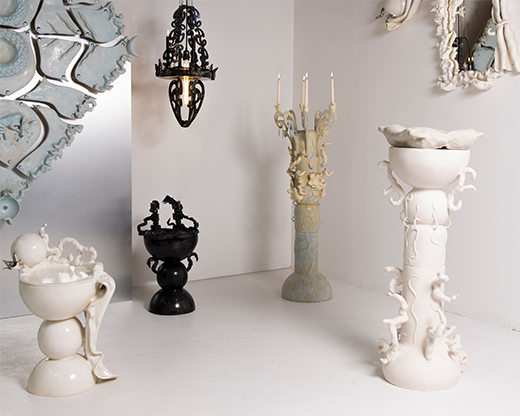
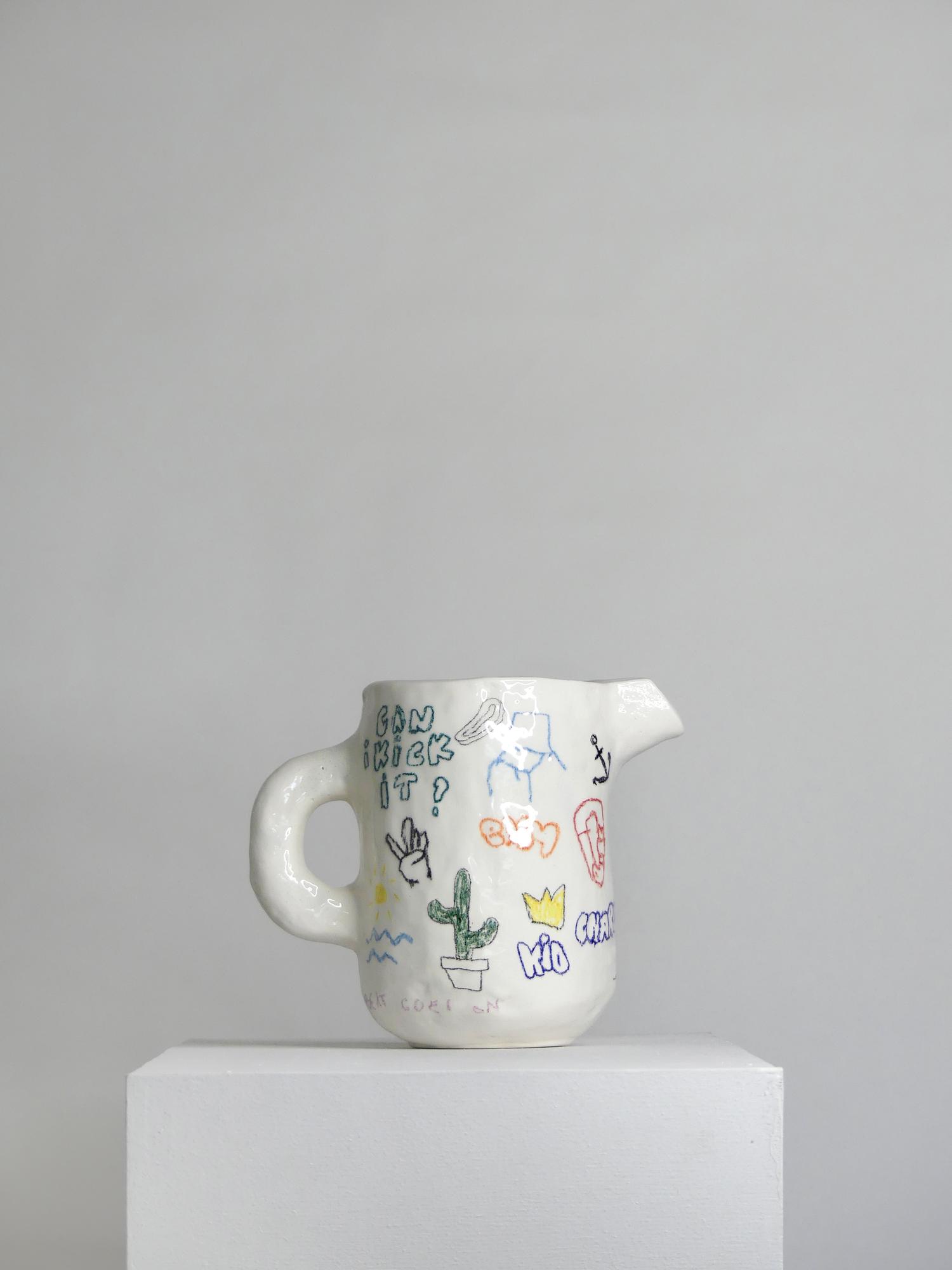
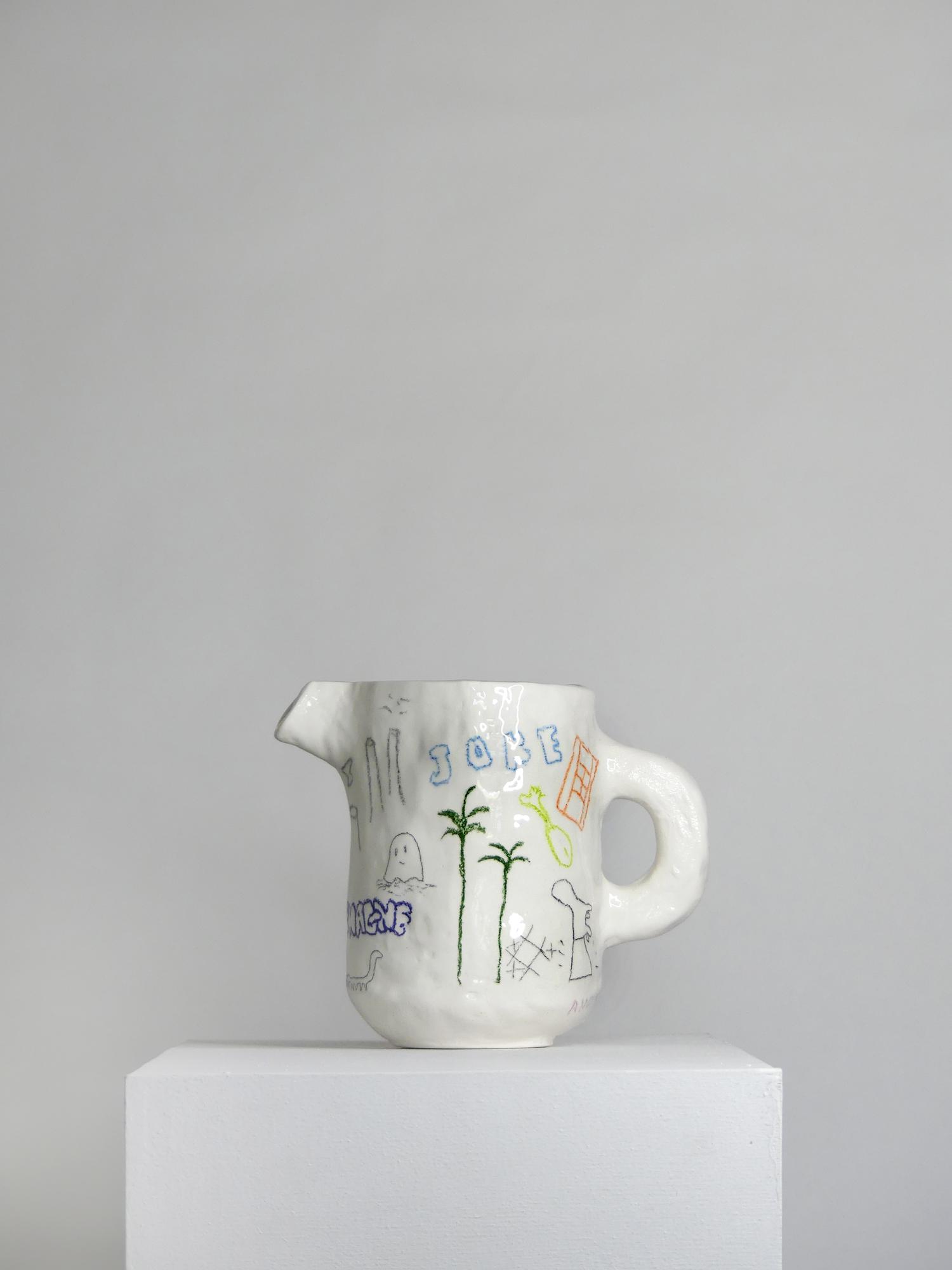
Actually, I didn’t like ceramics in the beginning. We had decided to open a workshop with my girlfriend, where she would give classes and where we would produce pieces. I was just there to help out. And gradually I started discovering certain techniques, material properties, etc. For example, that you could melt earthenware onto stoneware — I found that crazy haha!
What made you begin using industrial and technological materials in your work and what do they represent for you?
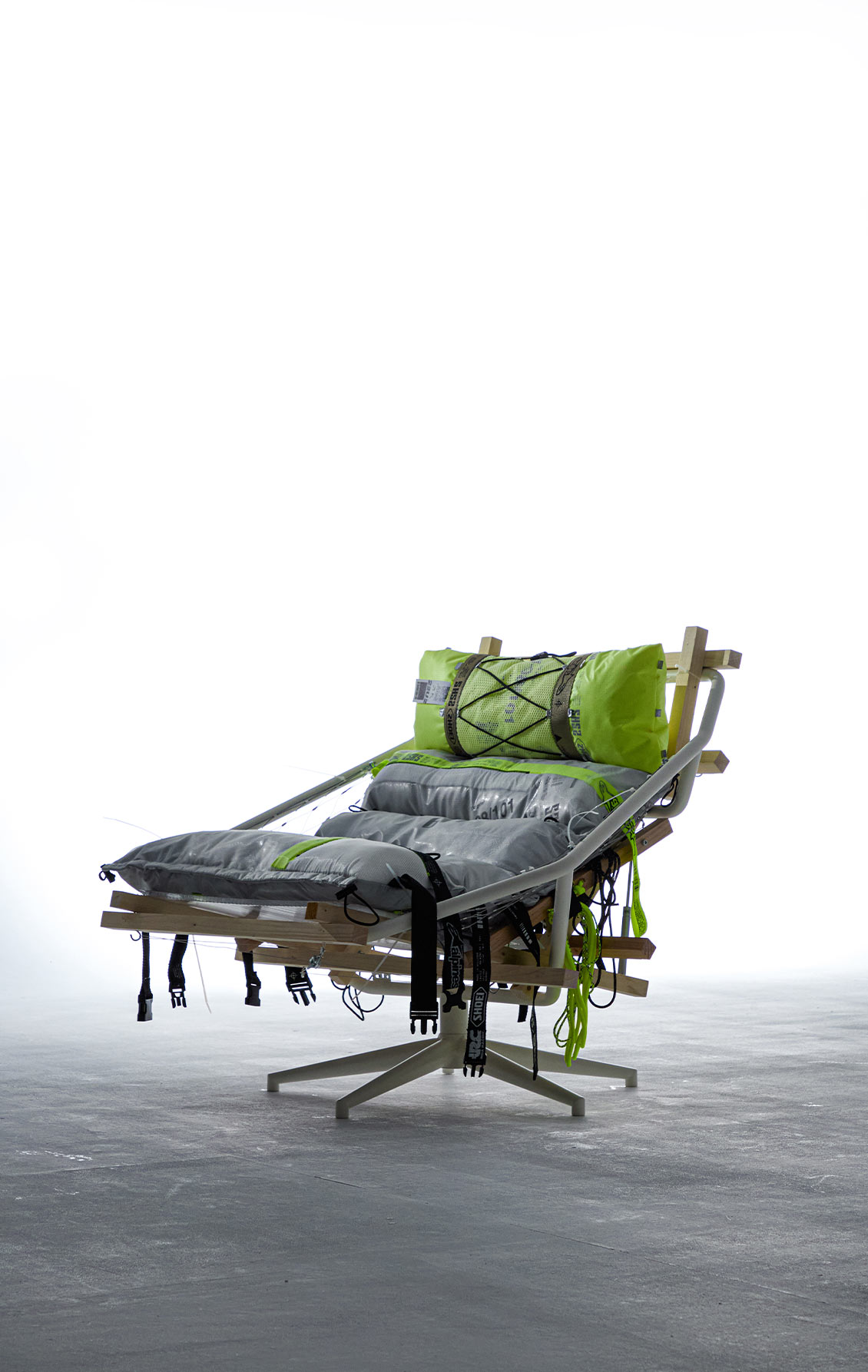
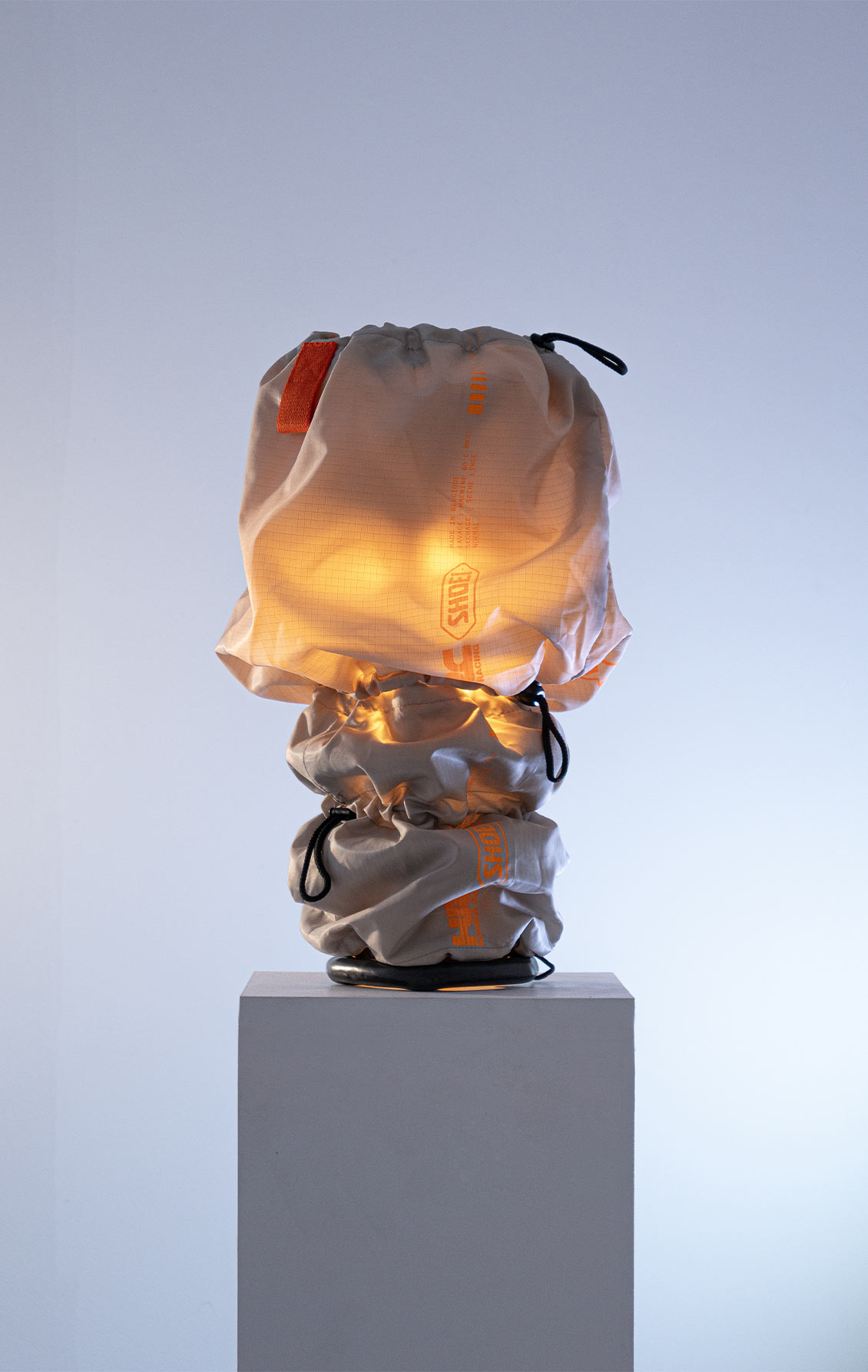
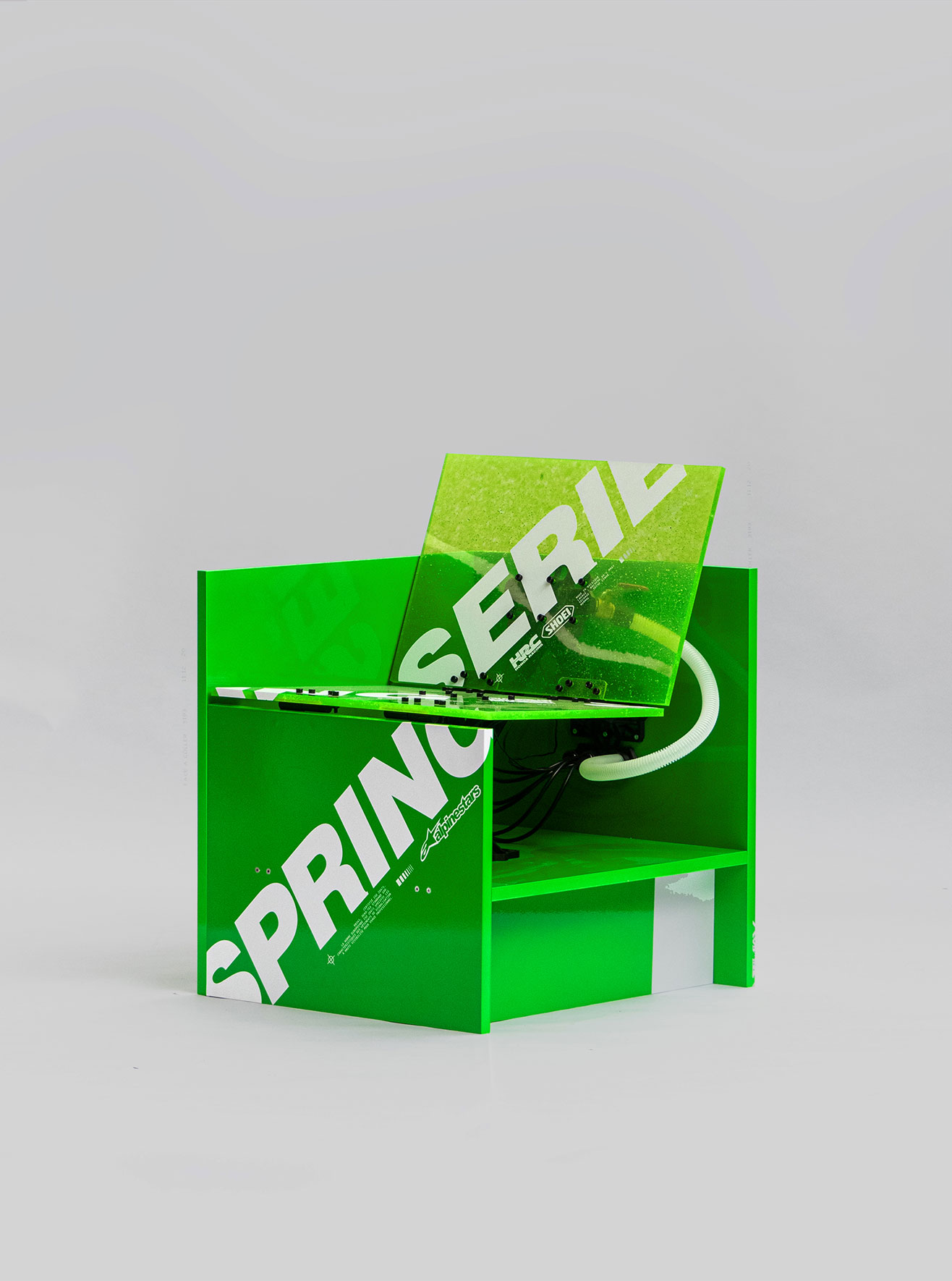
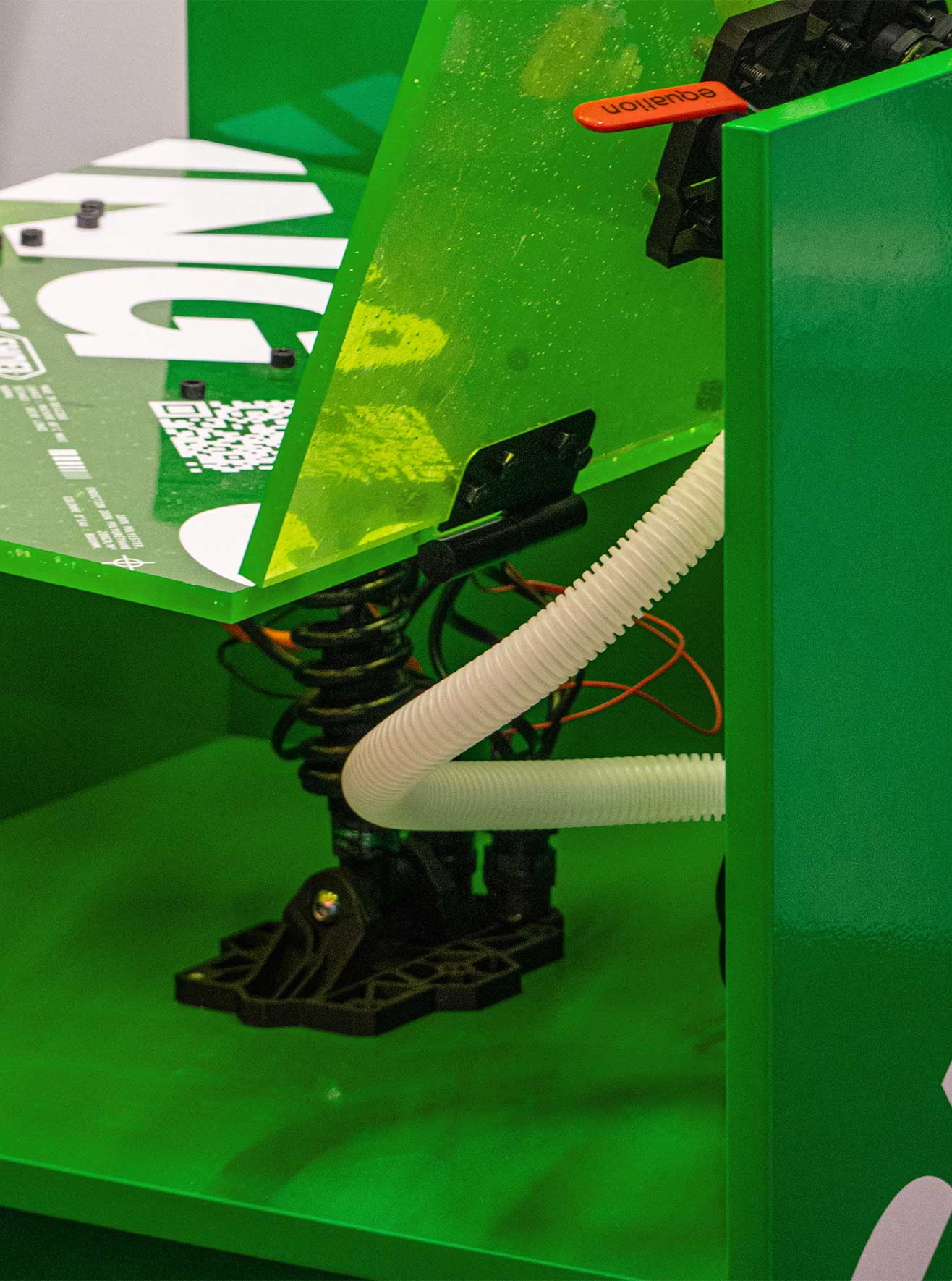
That was another step in my practice… I think it had always been there: a sort of taste for certain aesthetics, industrial objects, super functional, vernacular… But it didn’t really show in what I was making. And then I met Simon Geringer — I loved what he was doing — and it kind of set me free. I told myself, “wait, all these things you secretly love, use them, make something out of them.”
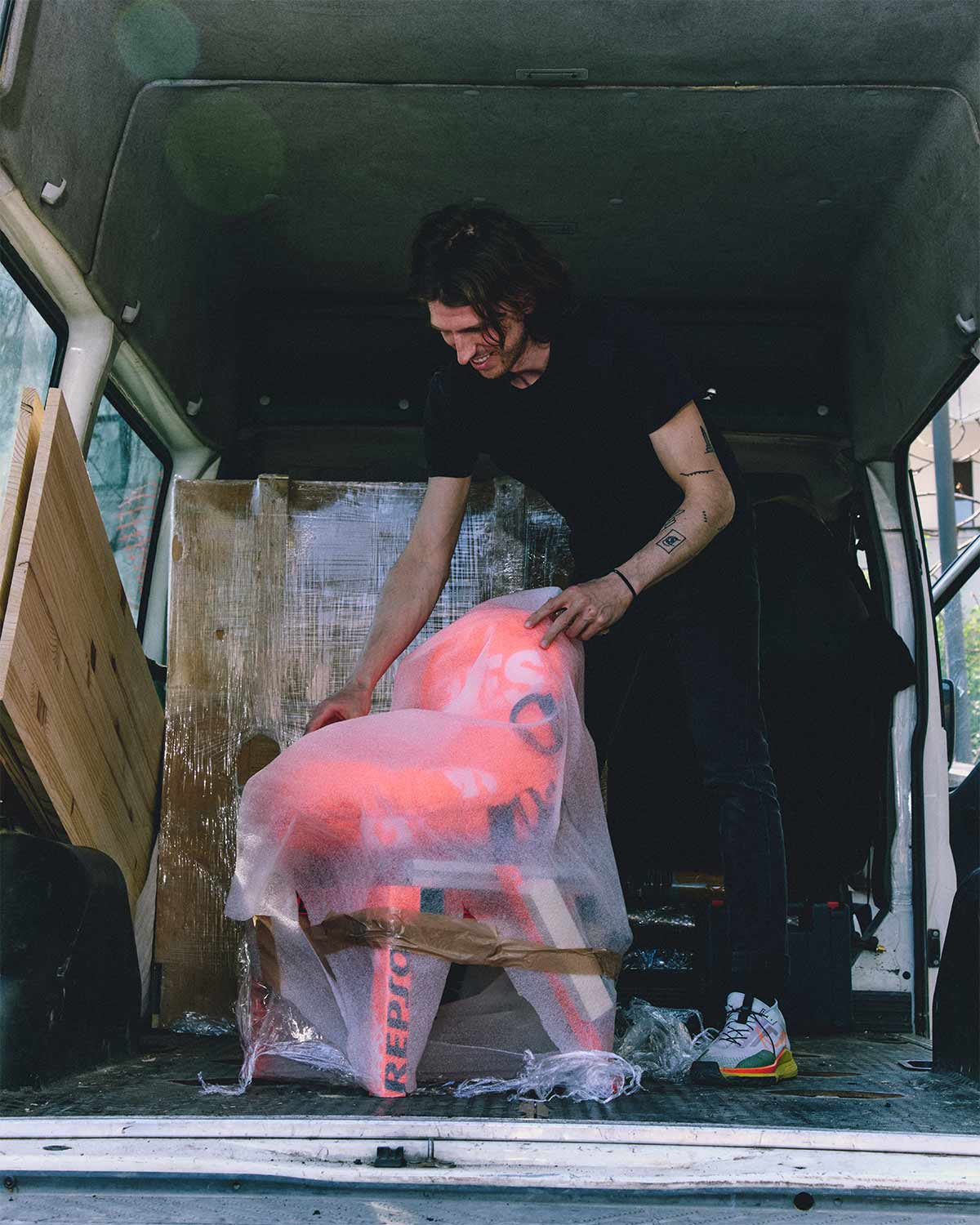
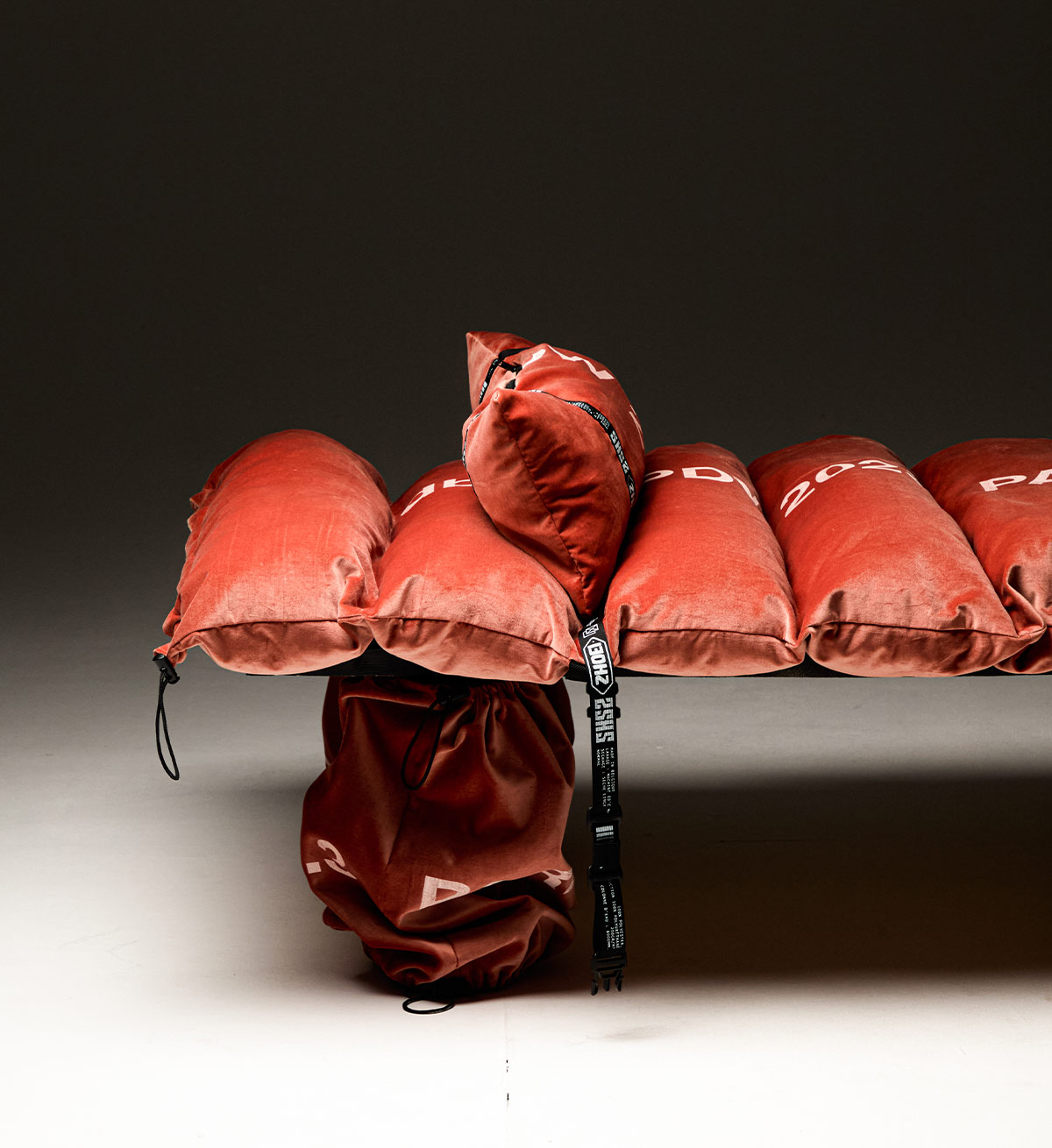
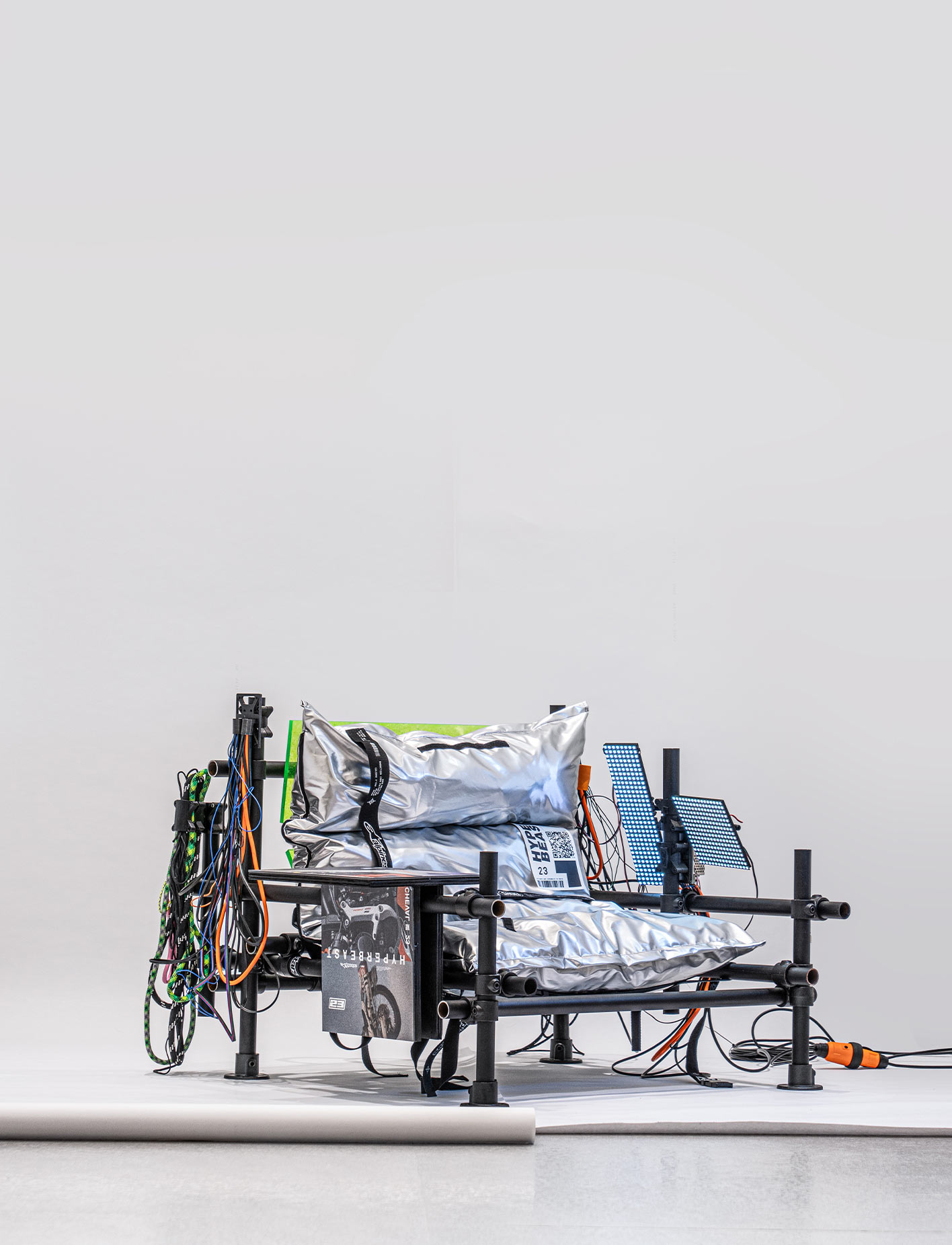
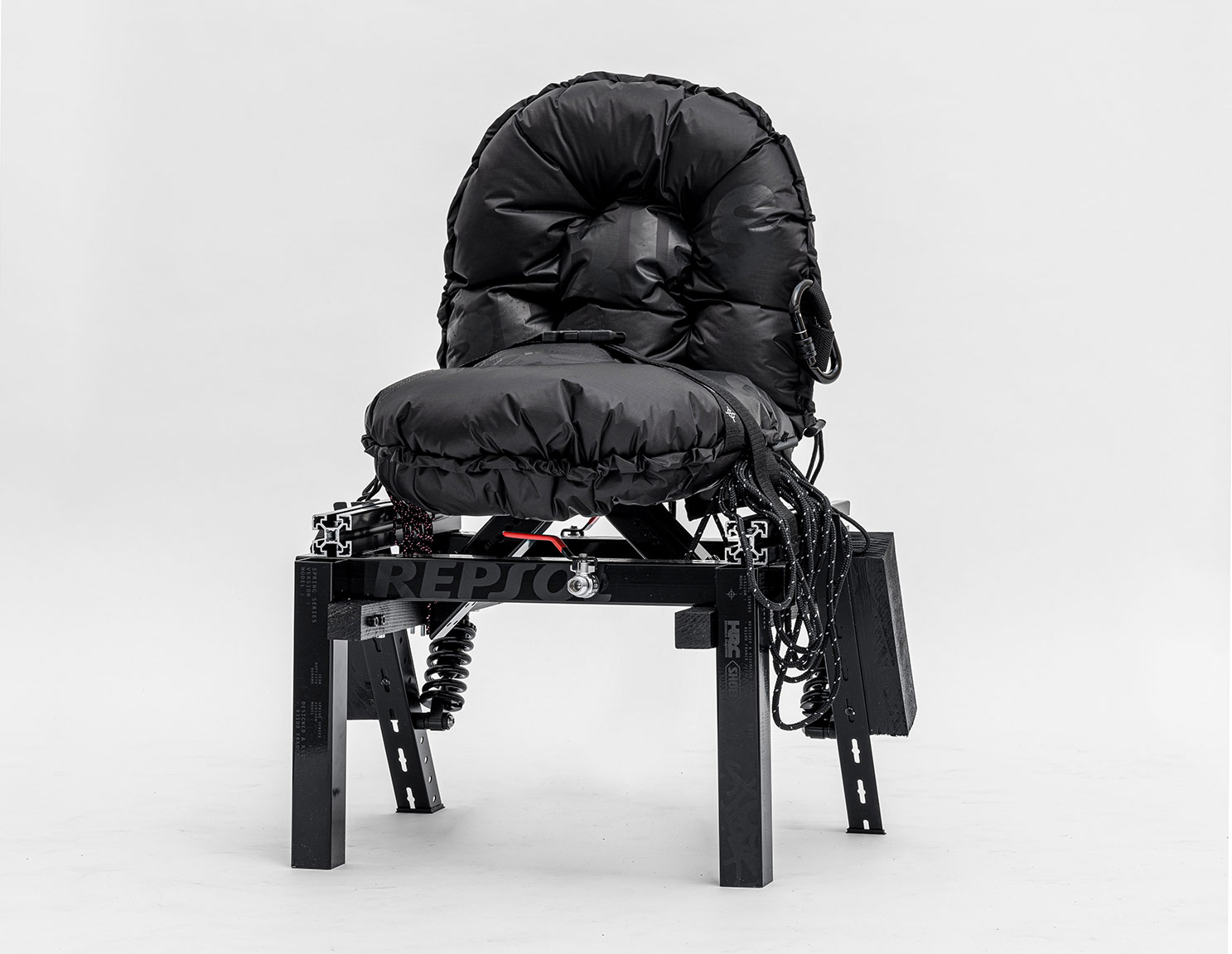
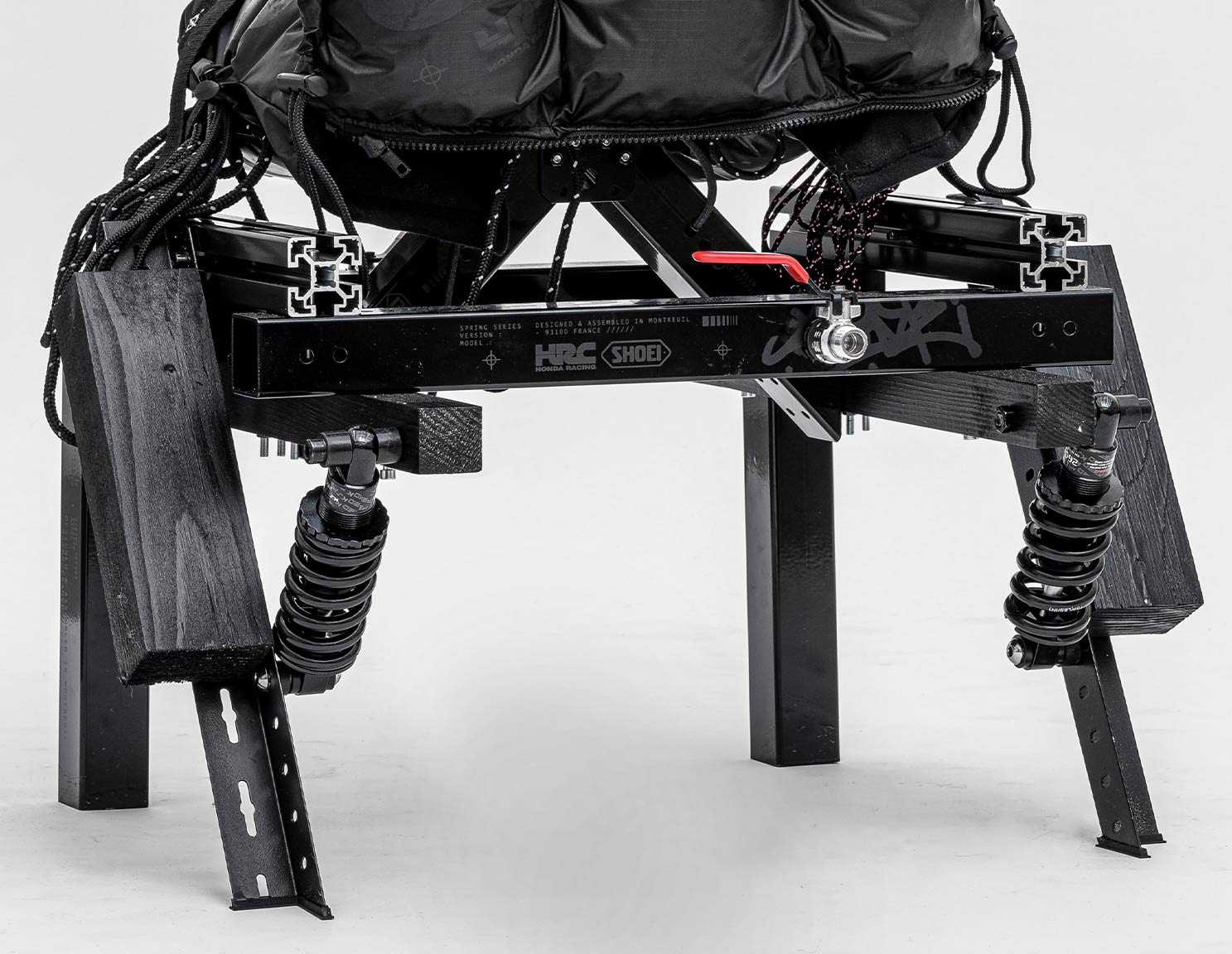
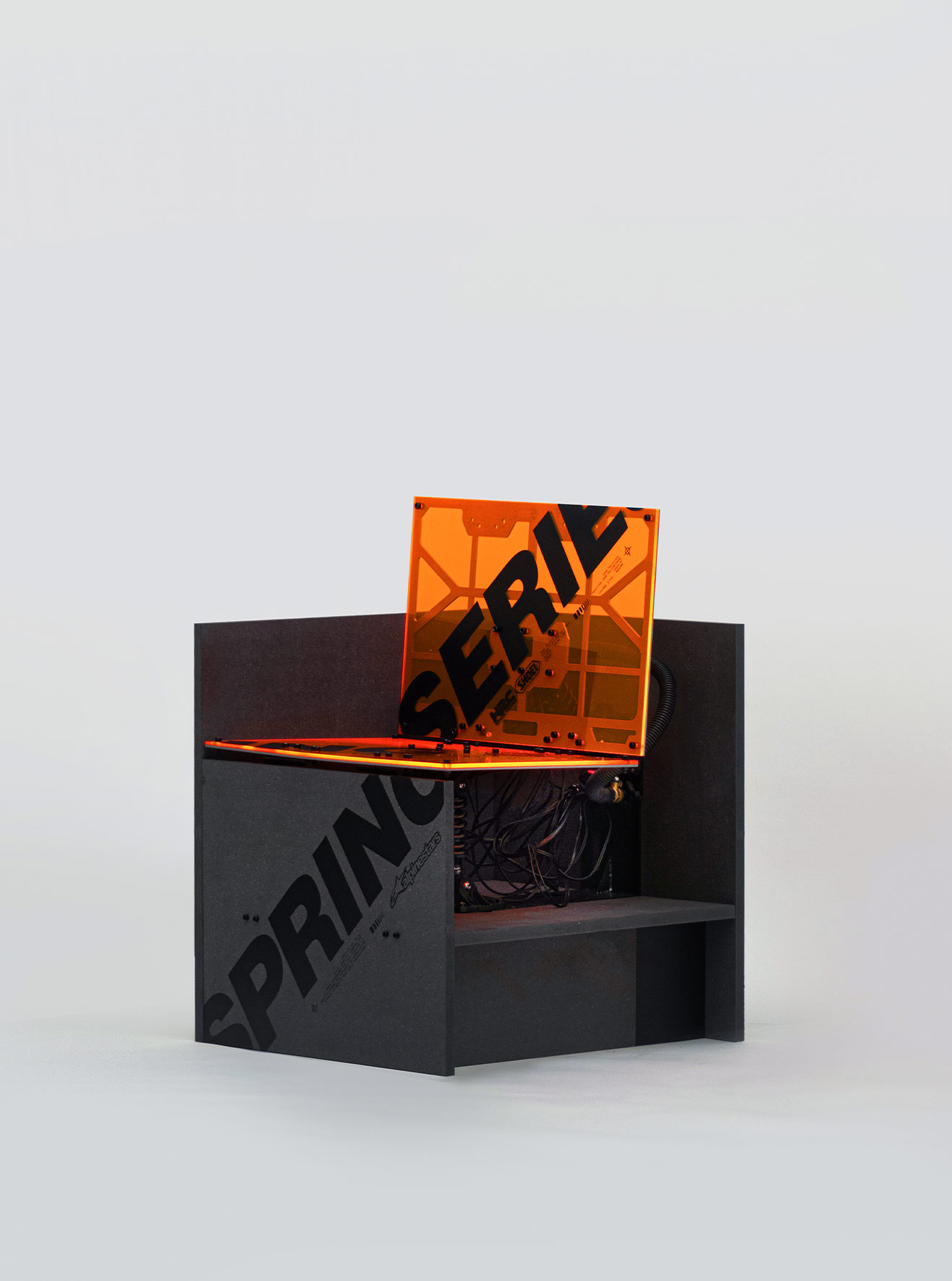
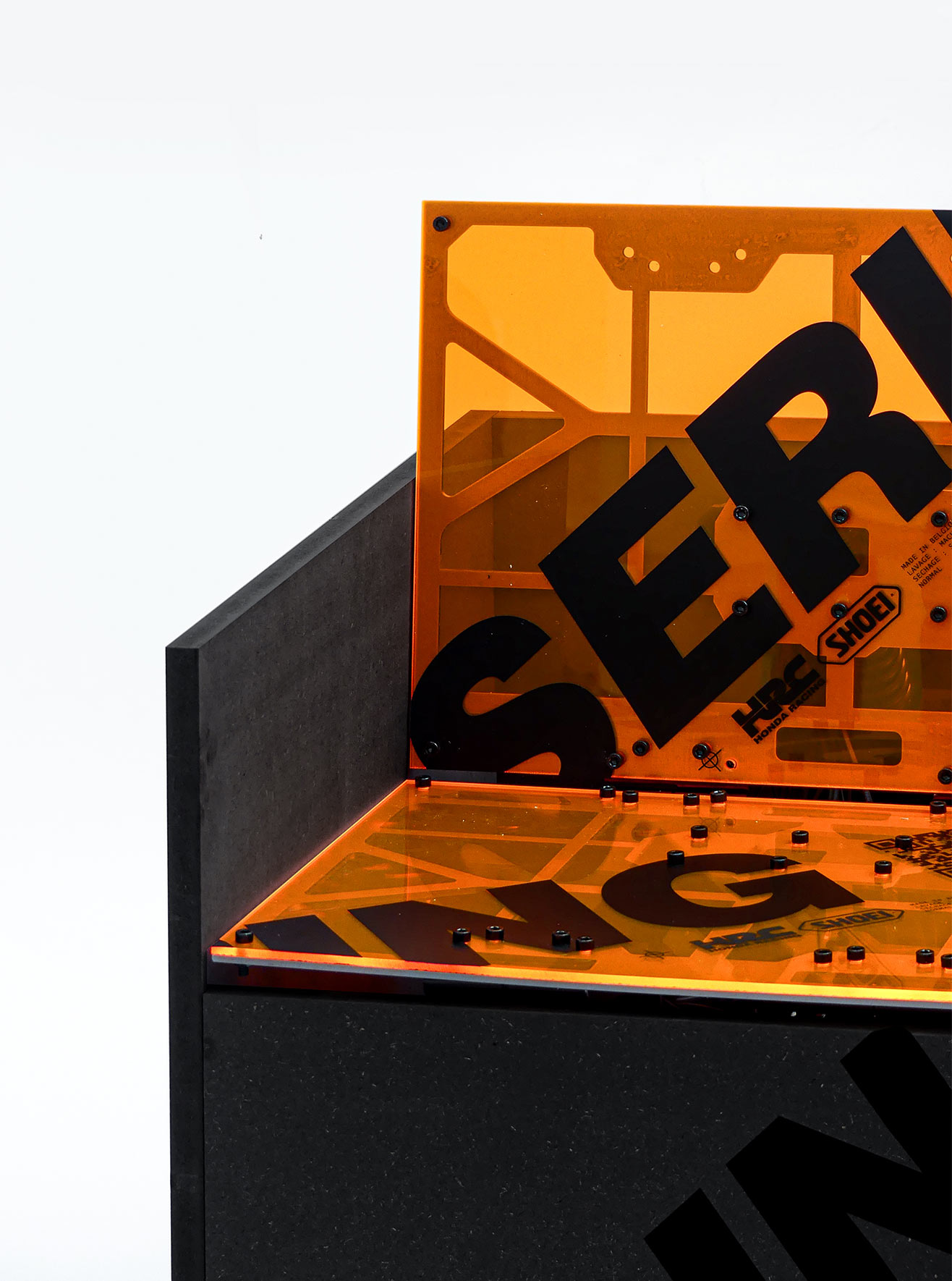
It really materialized for the first time when I went to Collectible fair with those chairs inspired by motorsports. And in a way it closed a loop, because one of the reasons I became a designer in the first place was motorsports. I had a half-brother, an reckless biker, who always had different motorcycles. I watched a lot of competitions on TV, I was always drawing cars… When I realized I wasn’t nearly brave enough to ride a motorbike, I told myself I’d draw them instead!
What usually sparks the idea for a new piece?
I’m carried by the gods… haha
You describe your process as a kind of “sampling,” bringing together ancestral and technological craftsmanship. Is there a specific piece that represents that combination most for you?
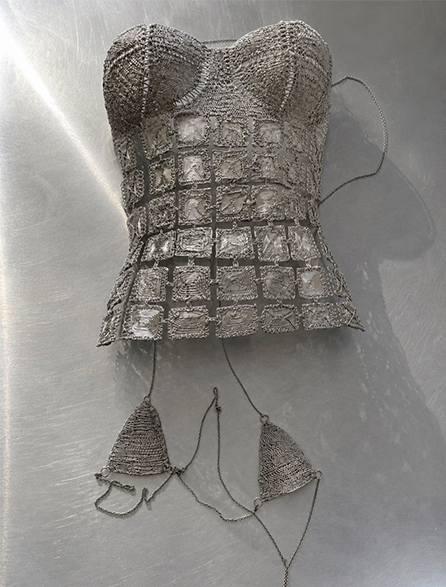
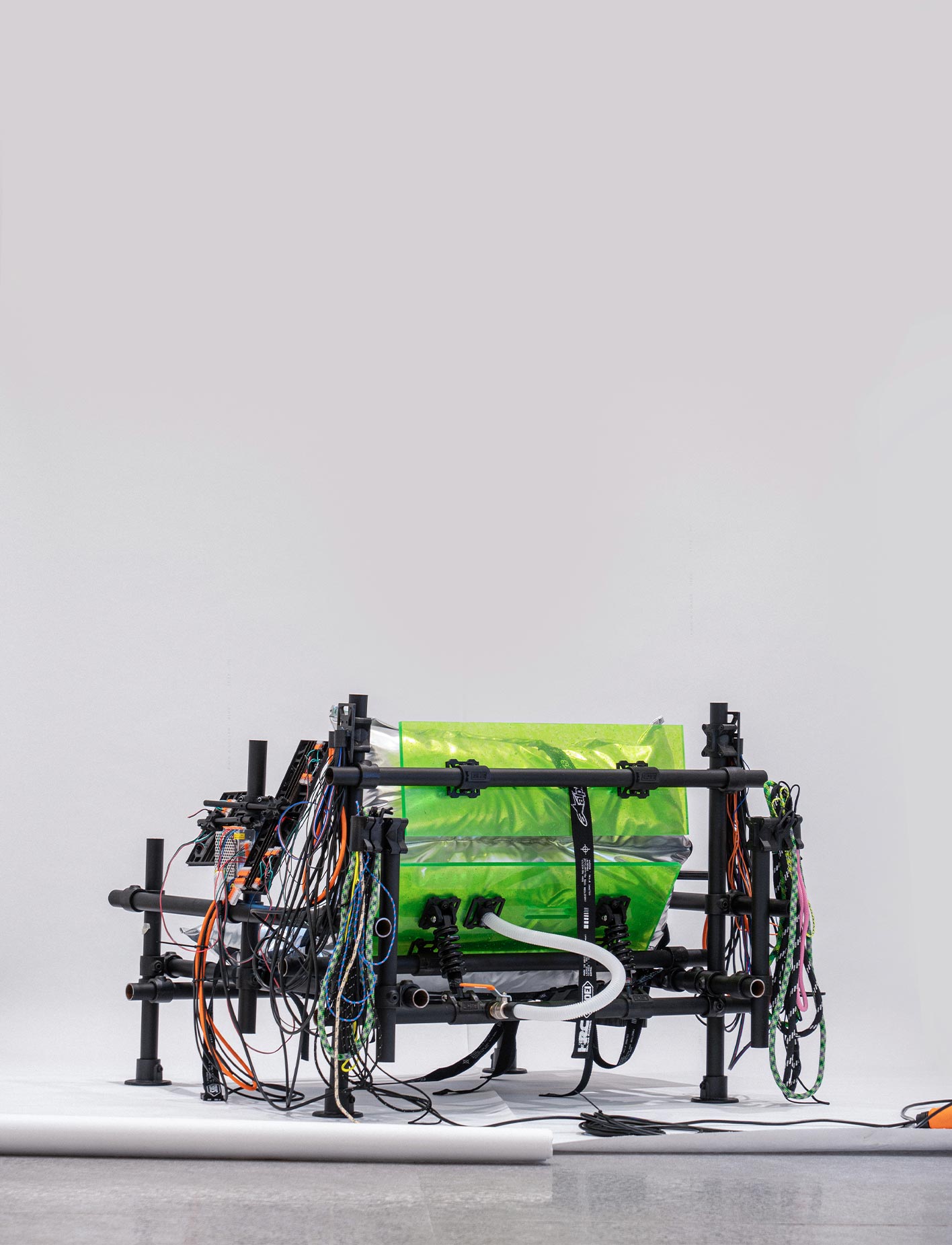
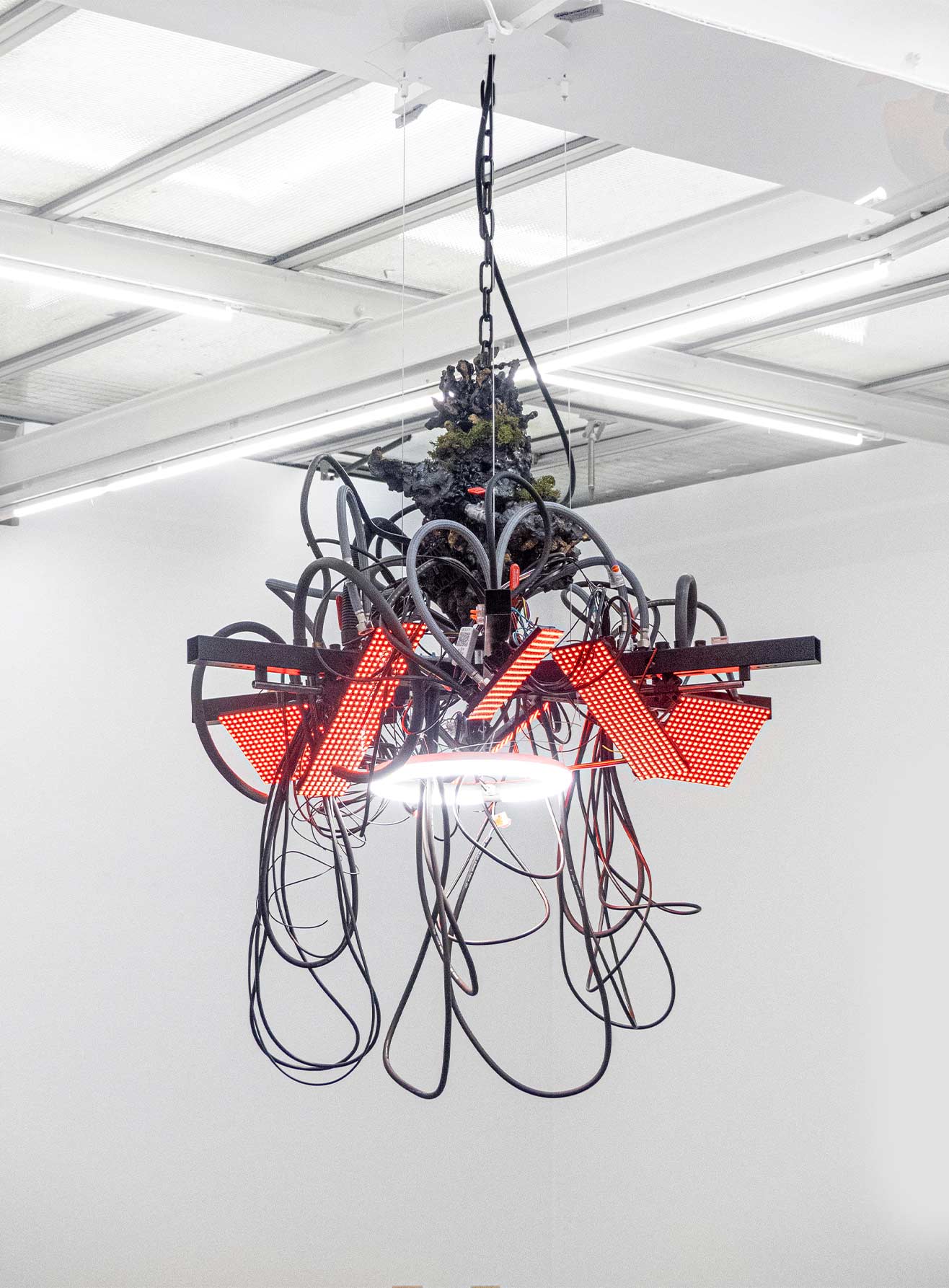
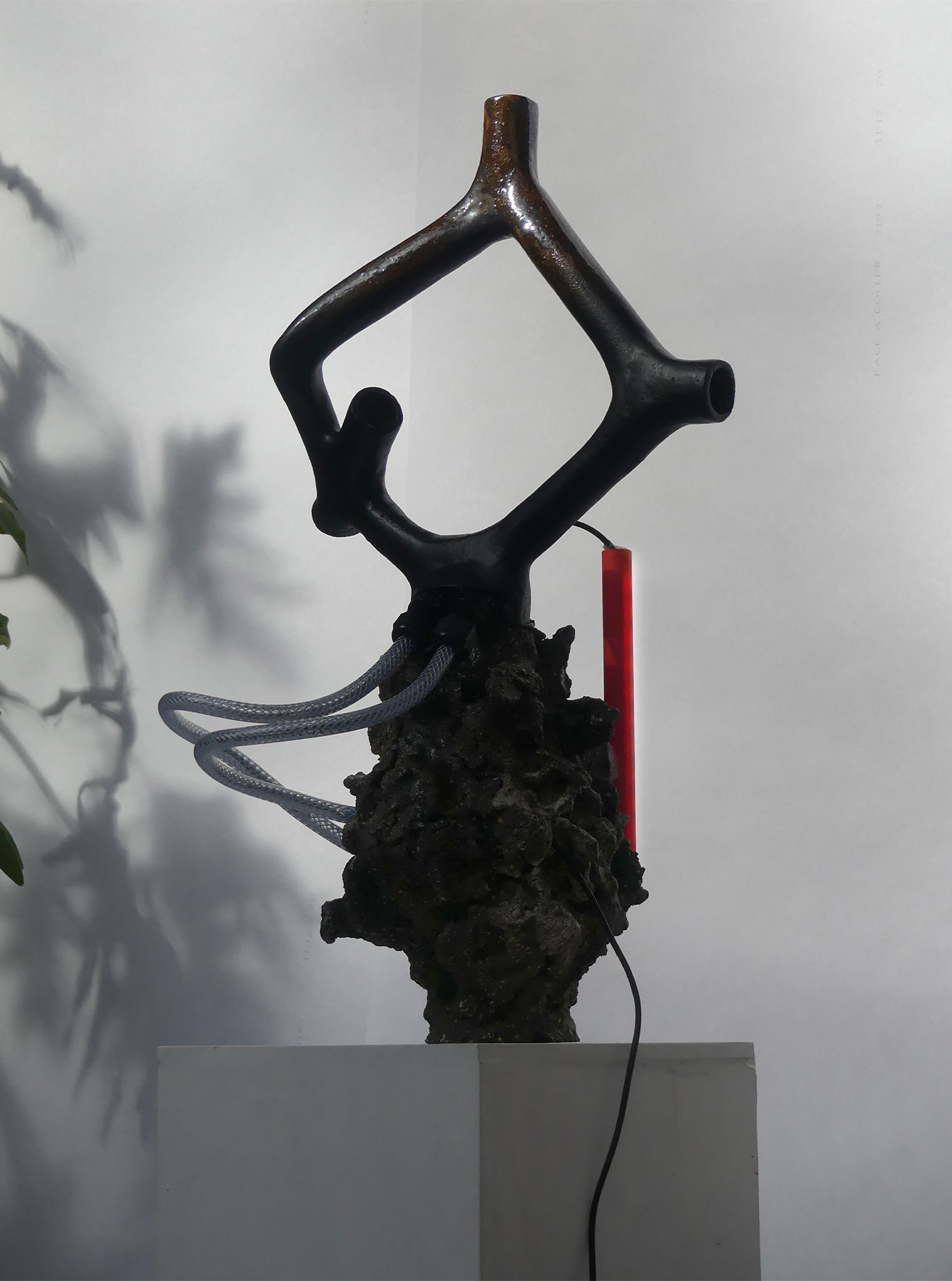
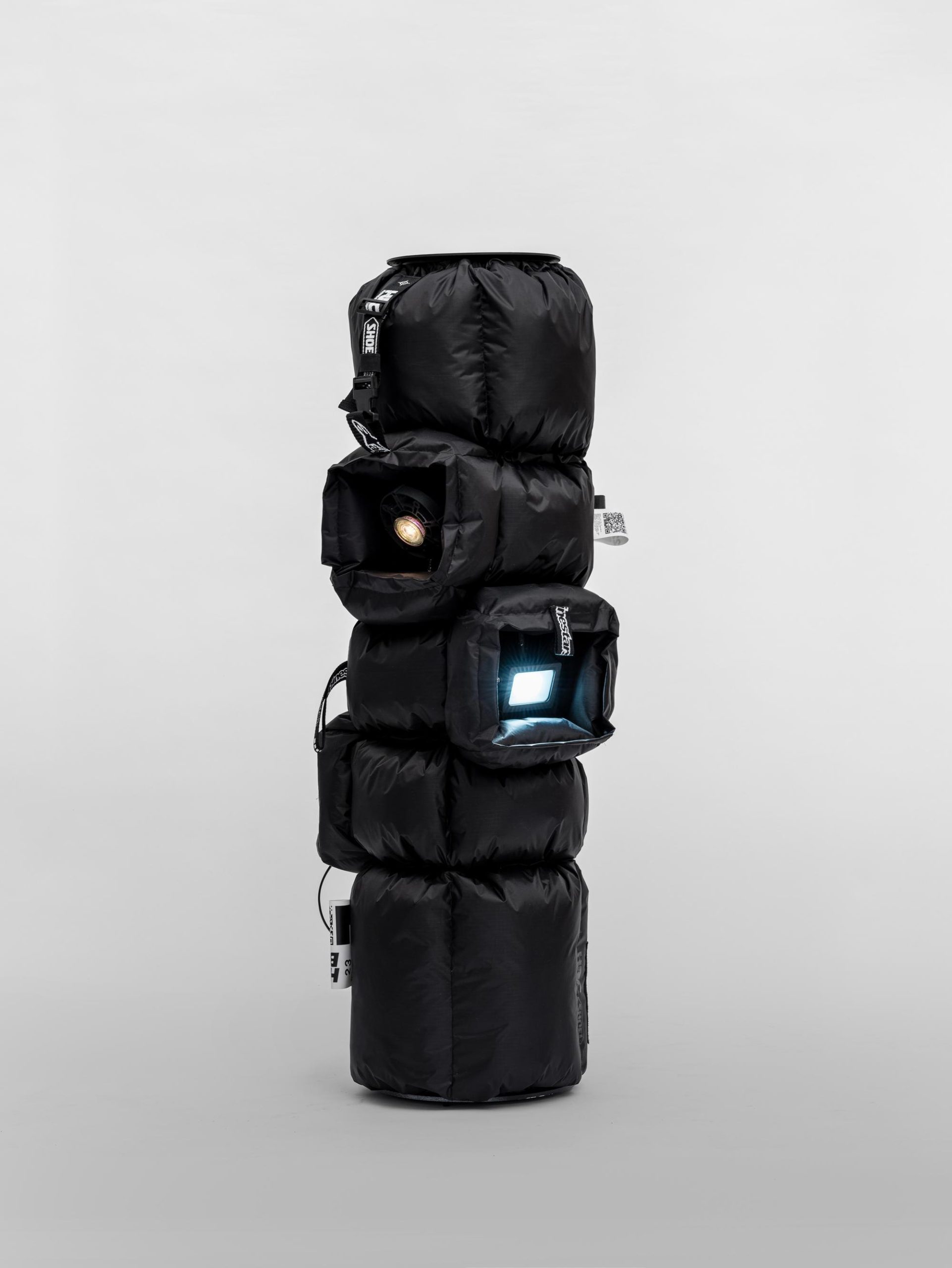
If we’re talking about combining traditional know-how with more technological elements, I’d say there’s this suspension piece, part of the Dystopian Remains series.
That’s really the principle of these pieces that come from a dystopian future in which, having exhausted fossil resources, humans would be composing with leftover technologies and a return to ancestral craft techniques.
In your process material guides you rather than forcing control. In that case, the control lies in choosing the material. What kind of material tends to catch your attention?
Hmm… Hard to say. I try to always stay alert, and I think it varies depending on the moment. Right now I’d say I’m drawn to materials with roughness, some form of imperfection. But it changes all the time. I actually try to let myself be carried along by what I see!
Many of your materials seem to have once served a specific purpose. When you reassemble them, do you think of it as removing their original function or transforming it into something else?
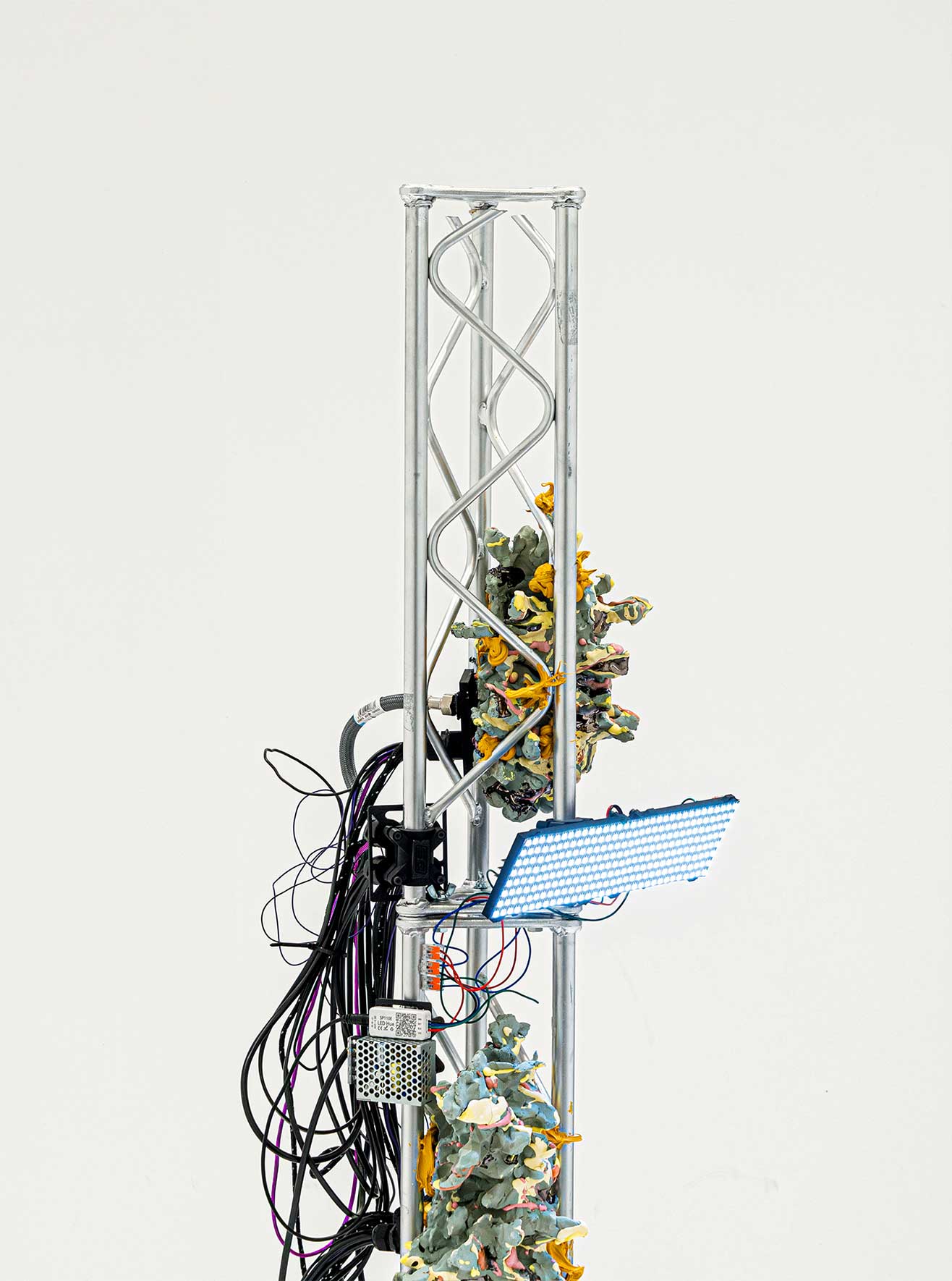
If I understand the question correctly, actually it’s the opposite haha! I don’t use materials that have already been used. I draw and model everything I make. I need that — otherwise it’s too chaotic in my head! It gives me a thread, which I can improvise around if necessary. But there’s always a solid base!
Do you think using recognizable materials allows the viewer to see something familiar in your work?
Maybe that’s the benefit of that slightly pop aspect. But I try not to think about what the viewer is going to think… That’s way too vertiginous! If I think about it, I freeze haha
You moved from ceramics to futuristic, almost tech driven pieces. Do you see a next phase or another direction in your exploration of objects?
Right now, I’m trying to think about installations that speak of comfort and calm. To make something very soothing without necessarily looking like it. It could take several forms… It’s still in the works. My goal is to show things during the next Milan Design Week.
Where can people find you?
I work just outside of Paris, and I try to stay generally available. I do answer messages on social networks of course. Well, I’ll admit I currently have a small pile of emails stacking up — I fell a bit behind. But it feels important to remain open when possible.
When a student wants to talk to me, for example, I try to make time and be as helpful as I can, being honest about the joys and difficulties that come with my situation.
In a way, I hope that one day I won’t have time anymore — that would mean I’ve made it haha — but for now, I still can!