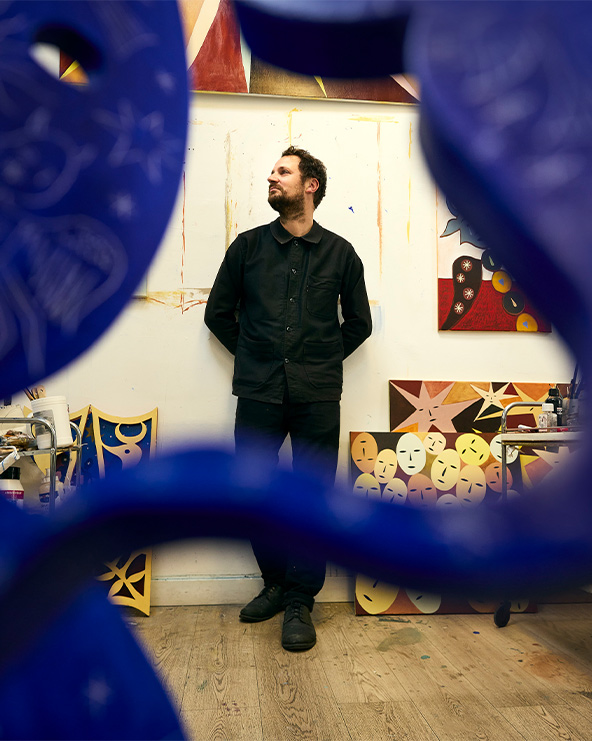
Jim Kylam
What is your name and where are you based?
My artist name is Jim Kylam. I’m originally from the countryside of southwestern France, and I’ve been living in Paris for over fifteen years.
Can you describe your practice in a few words?
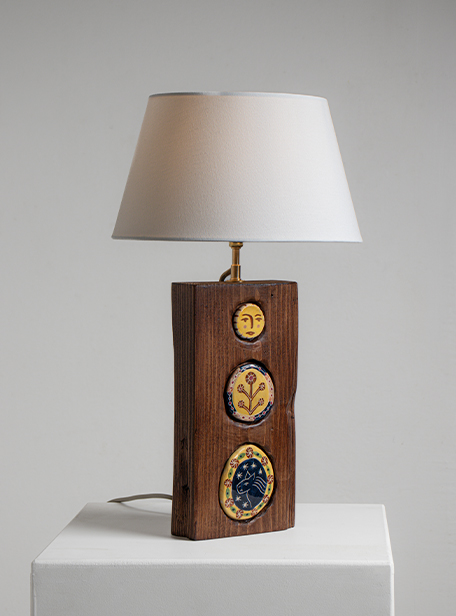
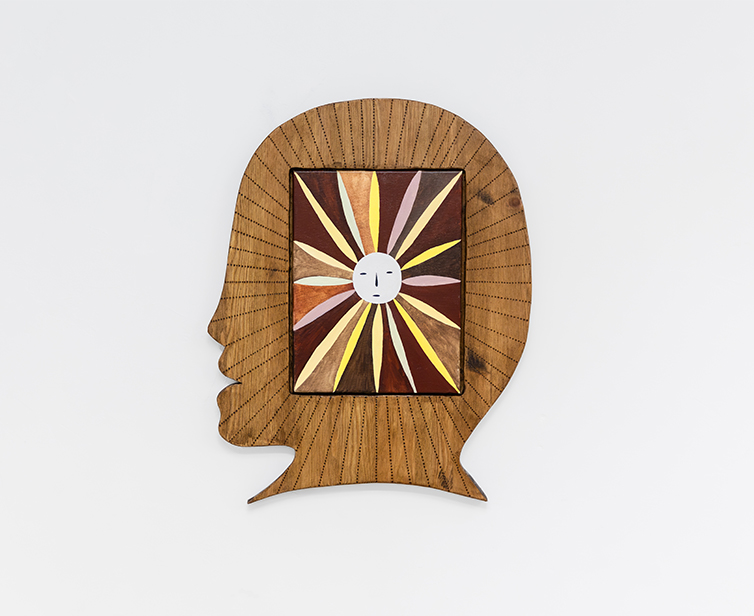
I try to develop a piece or an idea in advance, either in response to the medium or from a feeling I want to express. It’s a bit like a musician searching for the right melody. My process involves many trials, mistakes, and accidents that gradually lead me to the final work. Recently, I’ve been turning towards unique supports, often ones already marked by time.
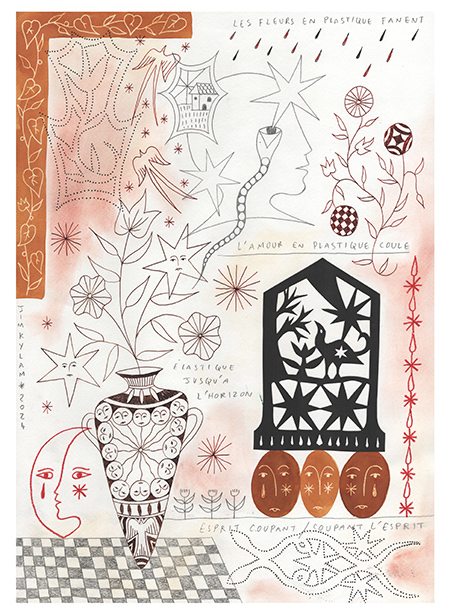
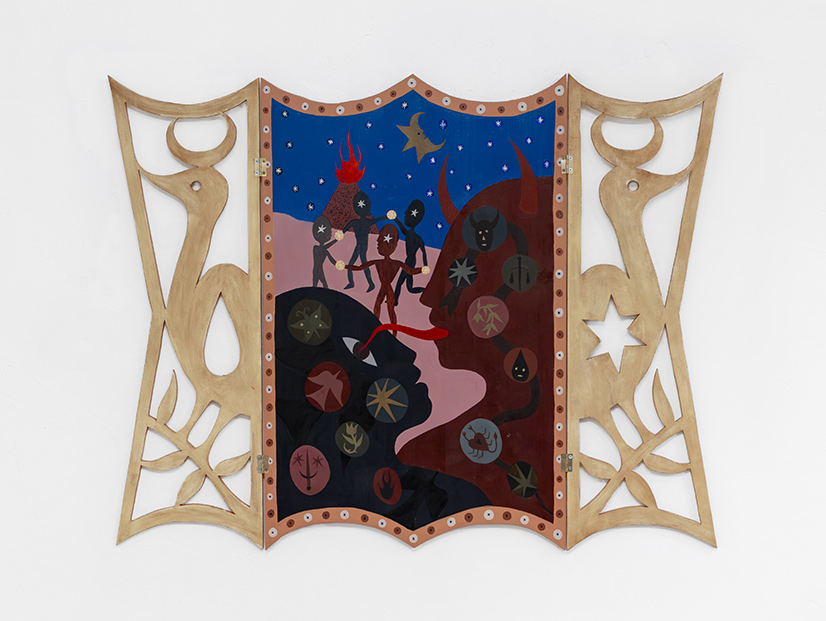
You describe your work as an “archaeology of symbols.” Where does your interest in mythological creatures and symbols come from?
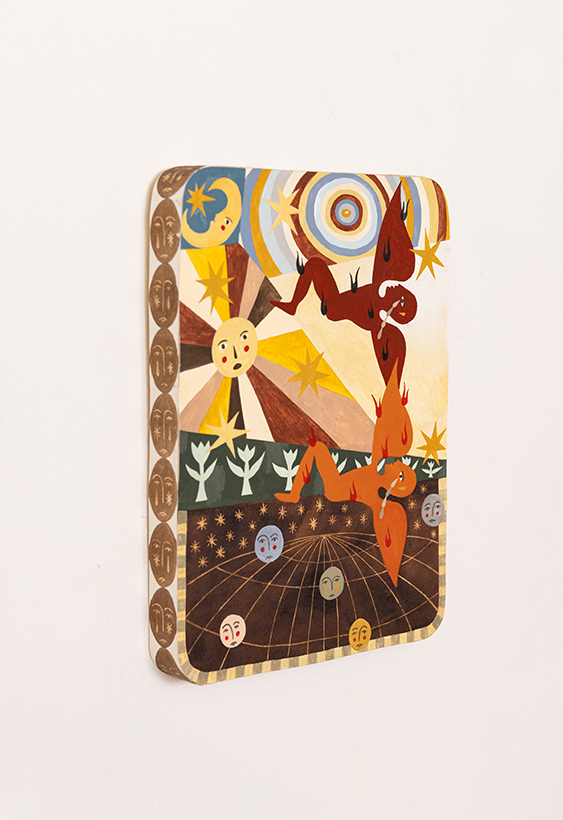
When I return to my childhood bedroom, I find many books on Greek mythology. I enjoy stepping away from reality, immersing myself in allegories for their symbolic power and timeless nature.
You say your process is “a mix of rituals and accidents.” Could you share an example of when an accident changed the direction of a work?
For a long time, I tried to achieve perfect technique and flawless execution, but my natural clumsiness prevented it. Now, I embrace mistakes and imperfections. For example, if an “error” occurs while I’m working, it often becomes an opening to explore something unexpected.
What is the strangest or most unexpected reference that has inspired your work?
Perhaps the musician Francis Bebey and his album Psychedelic Sanza. For me, it’s a raw and melancholic record, filled with total sincerity — exactly the feeling I try to evoke in my own work.
Your work seems to speak more to the unconscious than to logic. What helps you access that space?
It’s funny, because I still see a certain logic in my work. But I try to break that structure more and more by practicing automatic drawing, which lets the unconscious and the unexpected take over. I’m more drawn to a sincere work than to one that’s “perfectly made,” even though perfection can have its own comfort.
What is the smallest detail in your work that holds the most meaning for you?
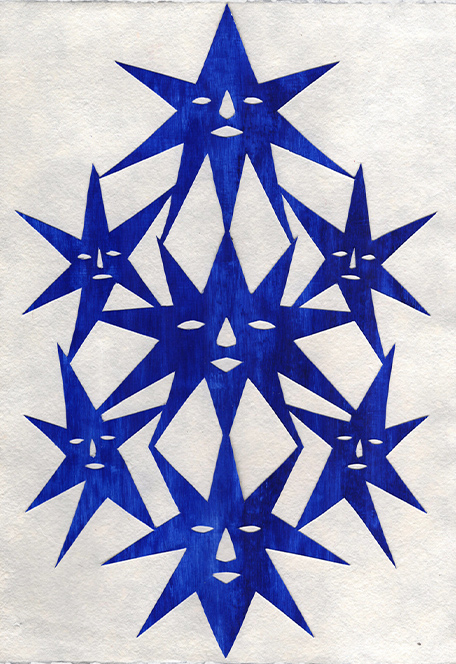
Probably the combination of drops and stars — my yin and yang — a deeply complementary duality.
Do you collect anything outside of your artistic practice?
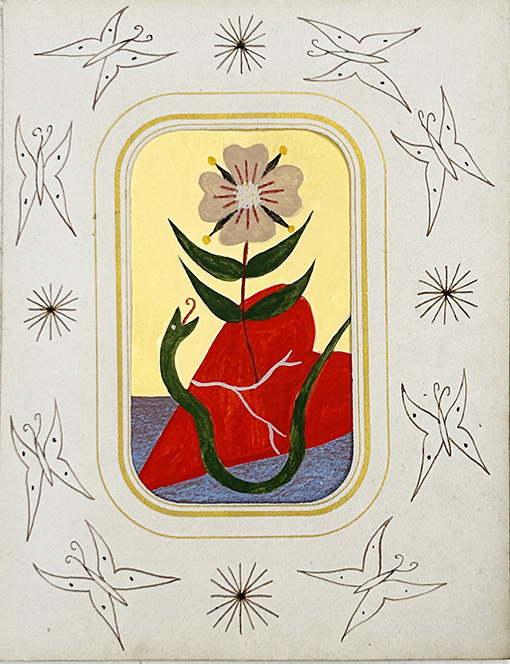
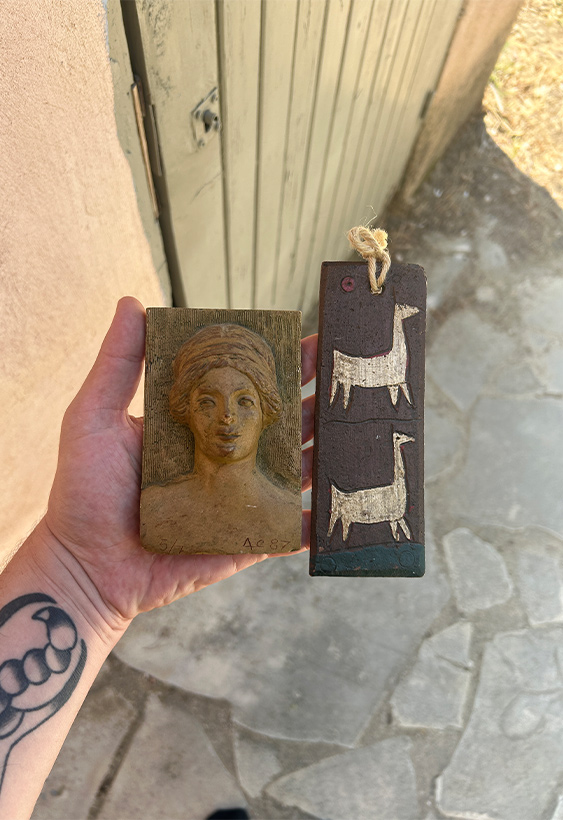
For several years, I’ve been collecting folk art, art brut, and many works by anonymous artists. I also regularly buy books on these subjects.
When someone encounters your work, what do you hope they take away from it?
It’s a difficult question, but I hope they set aside the technical aspect and dive into the symbolism and spirit of the piece — and keep that “second look” in mind.
Where can people see your work?
I’m currently preparing a new exhibition in Paris. I regularly share my work on Instagram, but nothing replaces seeing it in person. Some pieces can also be found on my website.