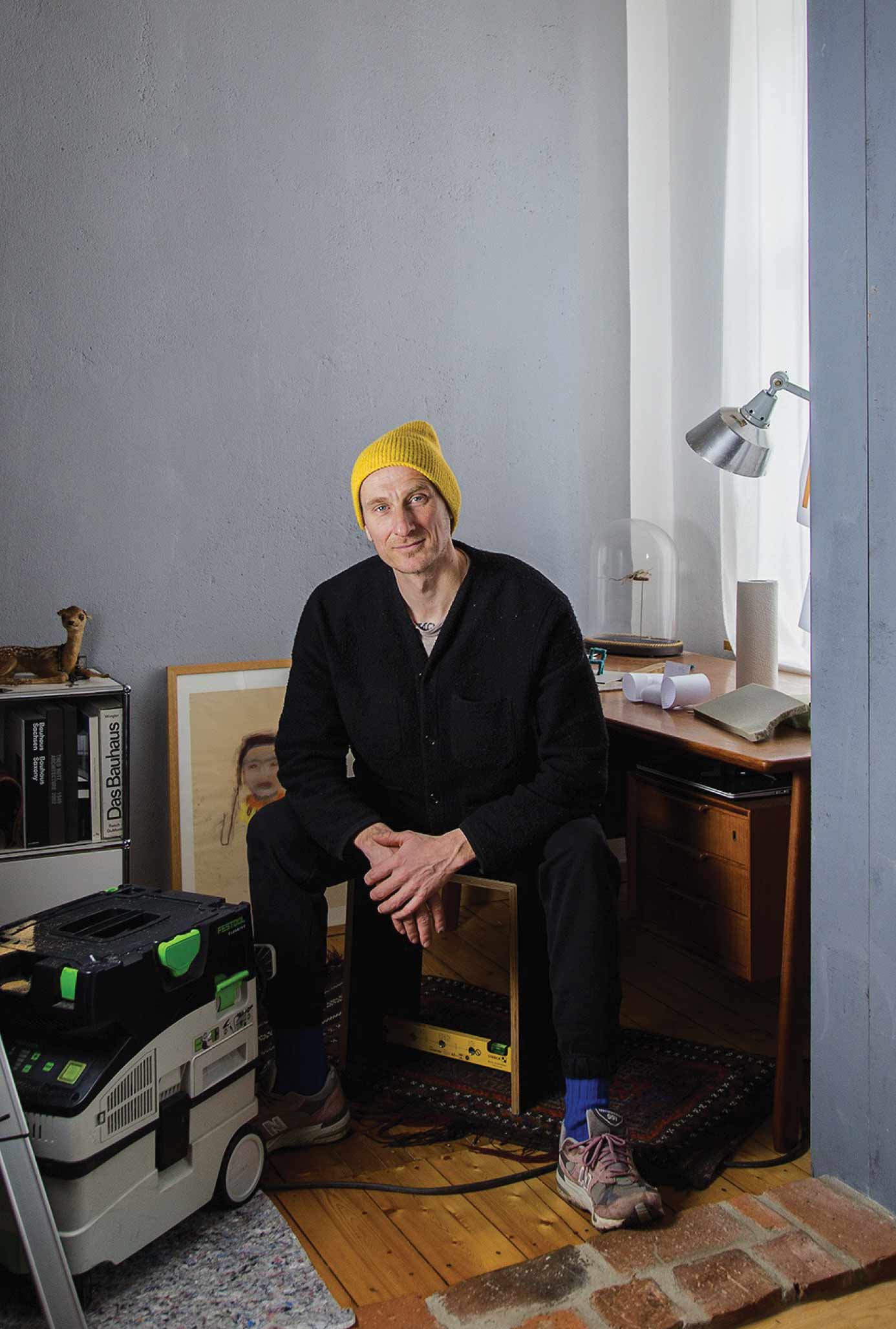
Kevin Krumnikl
What’s your name and where are you from/Based?
Hello, my name is Kevin Krumnikl, I am originally from Heidelberg, Germany and am currently living in Leipzig, Germany
Can you describe what you do in a few words?
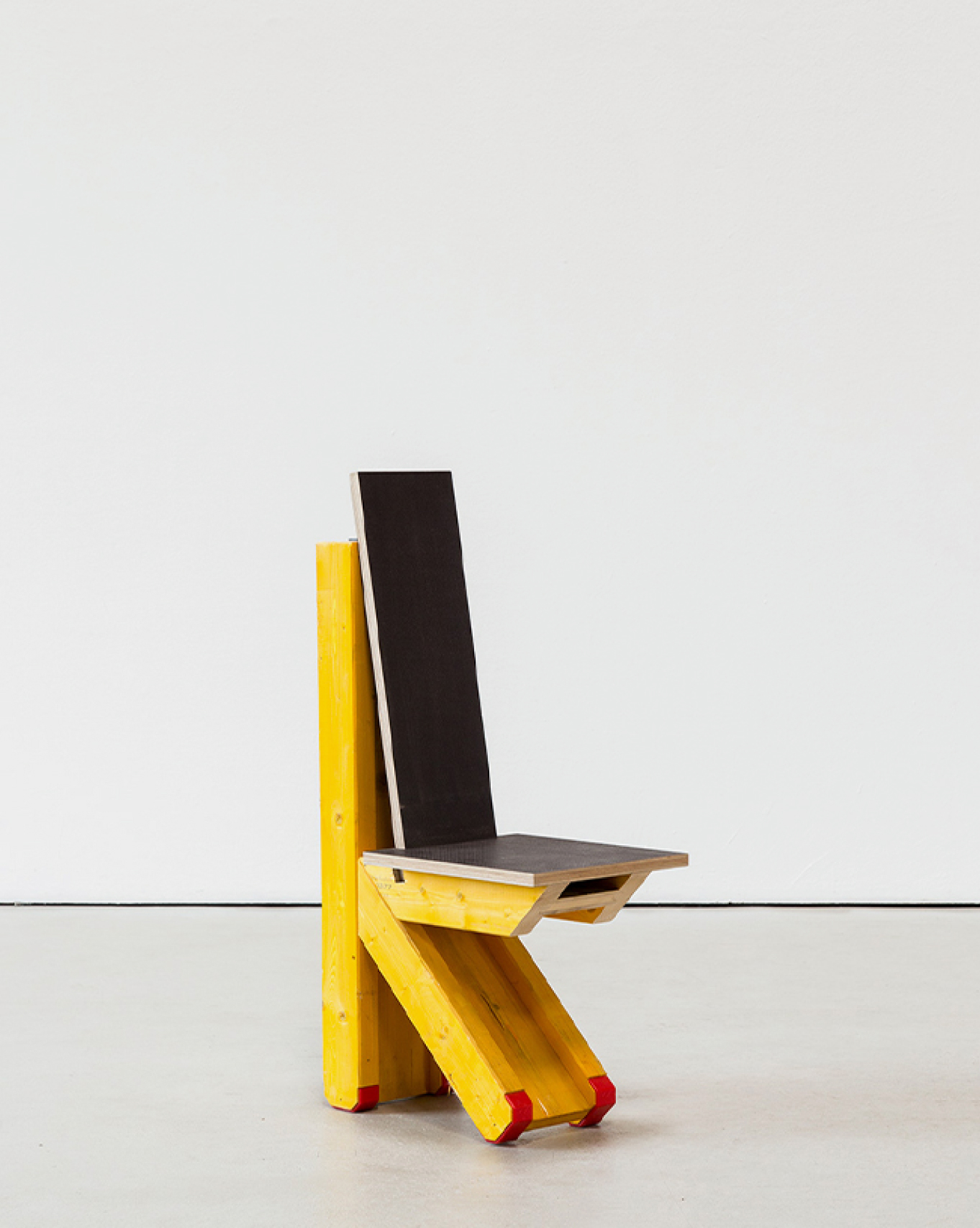
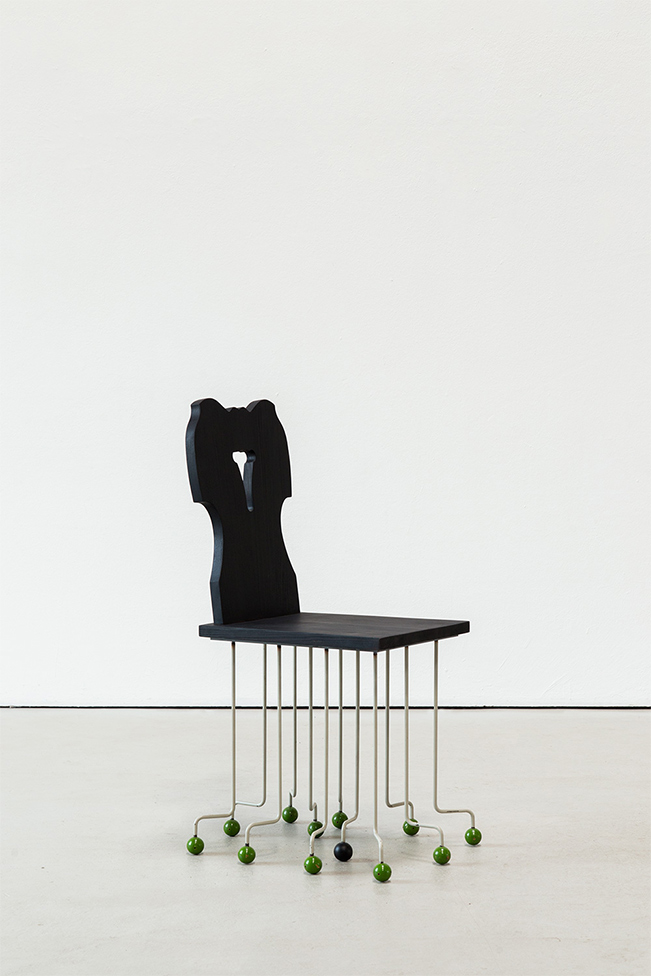
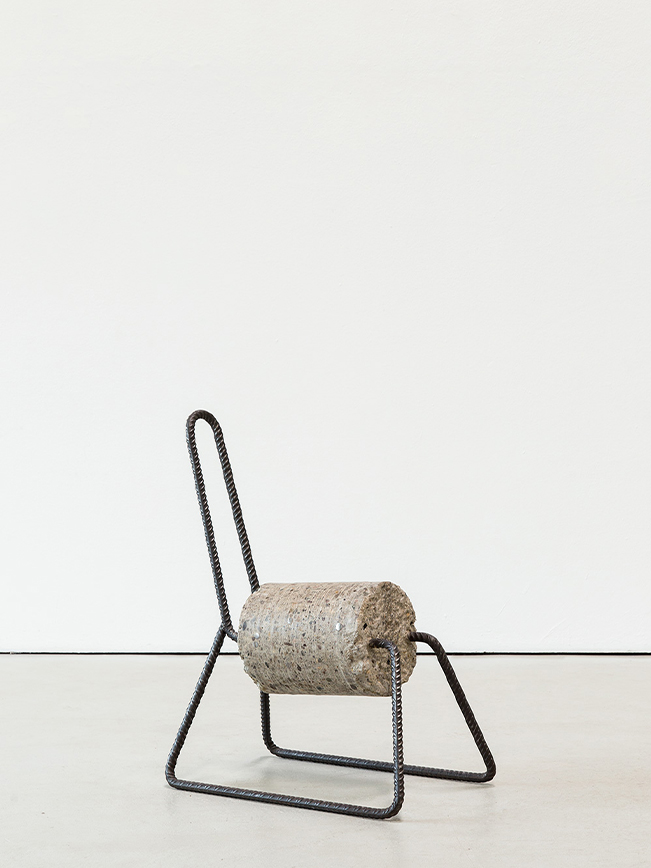
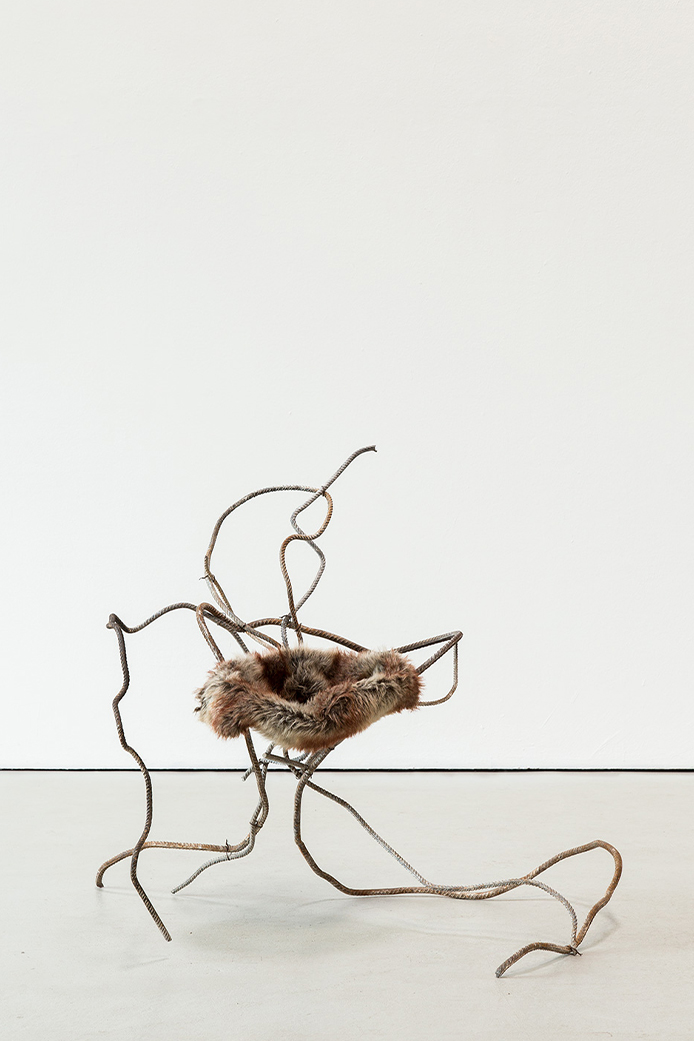
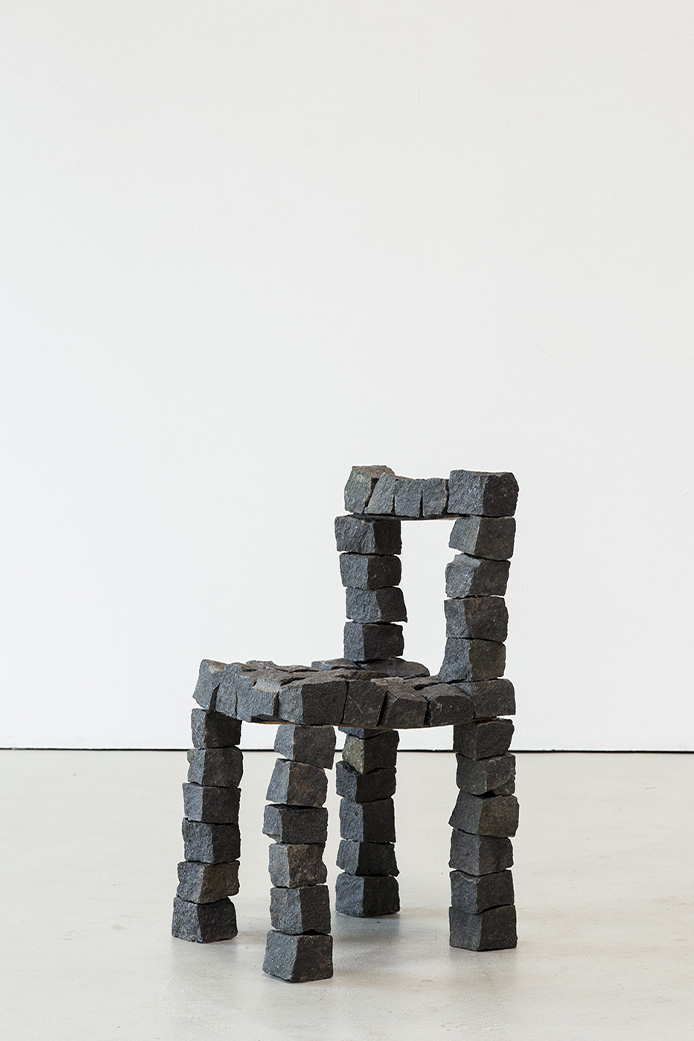
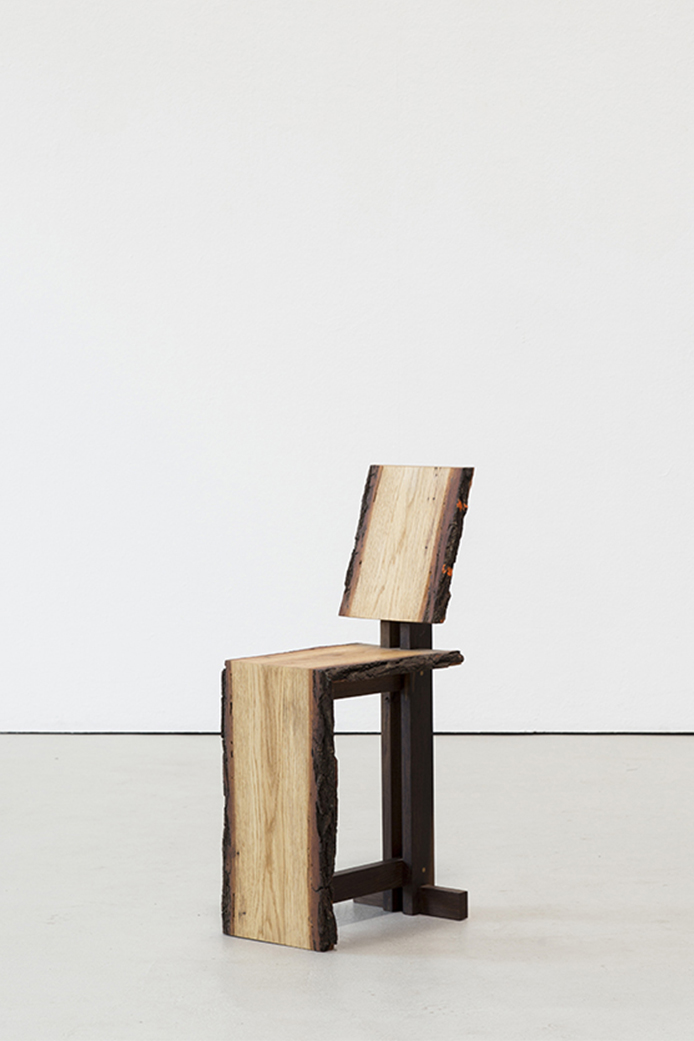
I build objects that usually come along as chairs, mainly consisting of used, donated and found materials referring to everyday life, shapes, materials or events of the day.
You’ve moved from carpentry to design to art—what influenced these shifts?
Frankly, I don’t really know, it’s been kind of a natural and lingering process. I never had any plans in my life and just followed the things that felt right, were interesting or sometimes just convenient. Of course, there’s always been an interest in art, design and making. I remember building my first chairs when I was around 15 or so, already consisting of left over metal that I gathered in my dad’s company and welded it to chairs, with the help of Mr. Stumpf a highly skilled welder. So, probably I knew about my destination very early but had to climb that rocky mountain I’ve been climbing to get here and I think if I am totally honest with myself I’ve always been looking for something giving me the maximum of freedom (of course not moneywise). No one tells me what to do and how to do it. This is something that always bothered me as a carpenter and designer, you must stick to plans, customer ideas and measurements. Now I think I found quiet a good mix of money jobs that still force me to do what other people want and my personal work with a max of freedom where I can focus on the process …
Chairs are such familiar objects. What makes them so rich for experimentation?
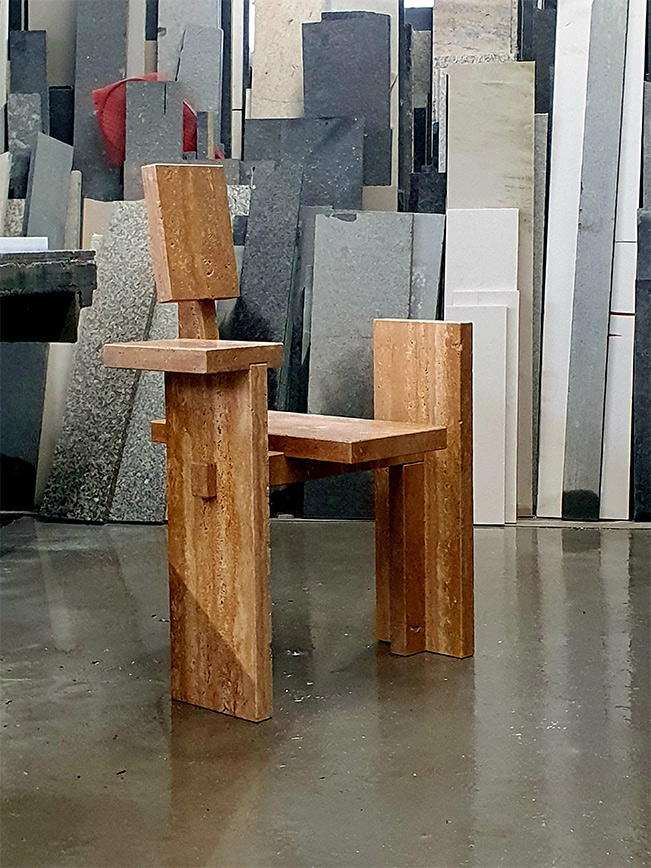
Good question! First, it is an interesting object itself. It is supposed to be one of the oldest pieces of furniture in human history showcasing power, social ranking, and such as profession and culture. A chair showing many attributes created by society allegedly categorising people, even today you could look at it like this. It is also fascinating how each culture found its own way to build chairs, using different materials, skills, typical crafts and designs. Chairs can also be very specialized if you look at the various fields of application. So, there is no limit and maybe that’s what makes them so rich for experimentation. Especially if you just follow your ideas and don’t give a shit about practical purposes. To me it is more of an object or sculpture since there are already so many great and comfy chairs out there which I am not interested in competing with.
What’s the strangest or most unexpected material/s you’ve used to build a chair/s?
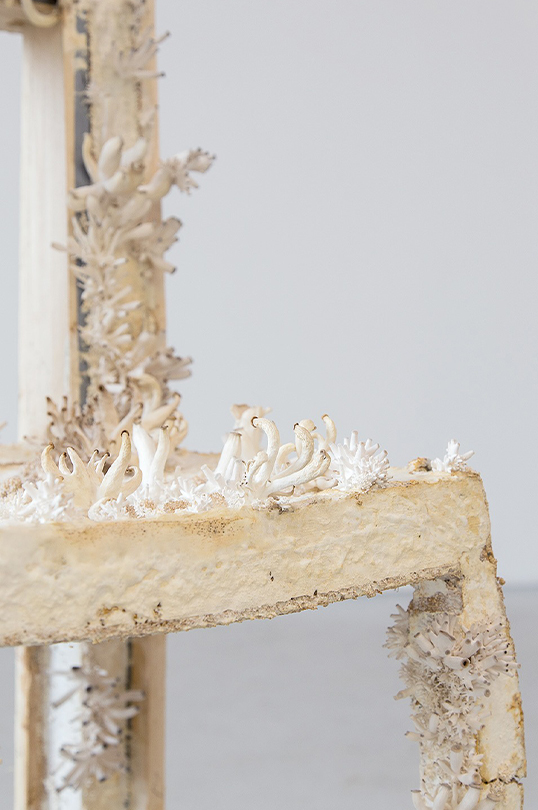
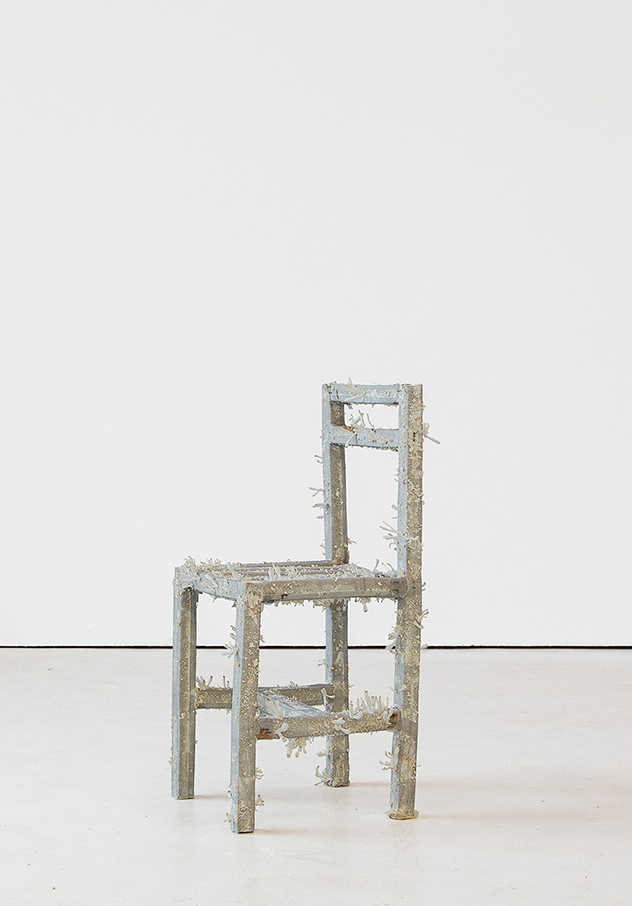
The strangest and most challenging material I’ve been working with so far was mycelium. I did a project with the great team of Bygaard in Copenhagen who let me explore their world of mycelium back in august 2024. I coincidentally stumbled across them when I was cycling back from a money job I had in Sweden. Lasse the owner was immediately open for a project and he and his team supported me unbelievably. Working with nature is a totally different thing, even though you have people sharing all their knowledge on it. It is very fragile, kind of unpredictable and you need a lot of patience. I had 4 different ideas, and all had turned out completely different as expected and it took me quite a while to accept it and see the beauty in it. A wonderful experience on all levels! Thanks to Nature and Bygaard!
What role does imperfection play in your work?
I would like to quote Bob Marley on this one. He was once asked if there was a perfect woman and I think his answer shouldn’t be used on women only but globally.
“Who cares about perfection? Even the moon is not perfect, it is full of craters. The sea is incredibly beautiful but salty and dark in the depths. The sky is always infinite but often cloudy. So, everything that is beautiful isn´t perfect. It’s special. Therefore, every woman can be special to someone. Stop being “perfect” but try to be free and live doing what you love not wanting to impress others.”
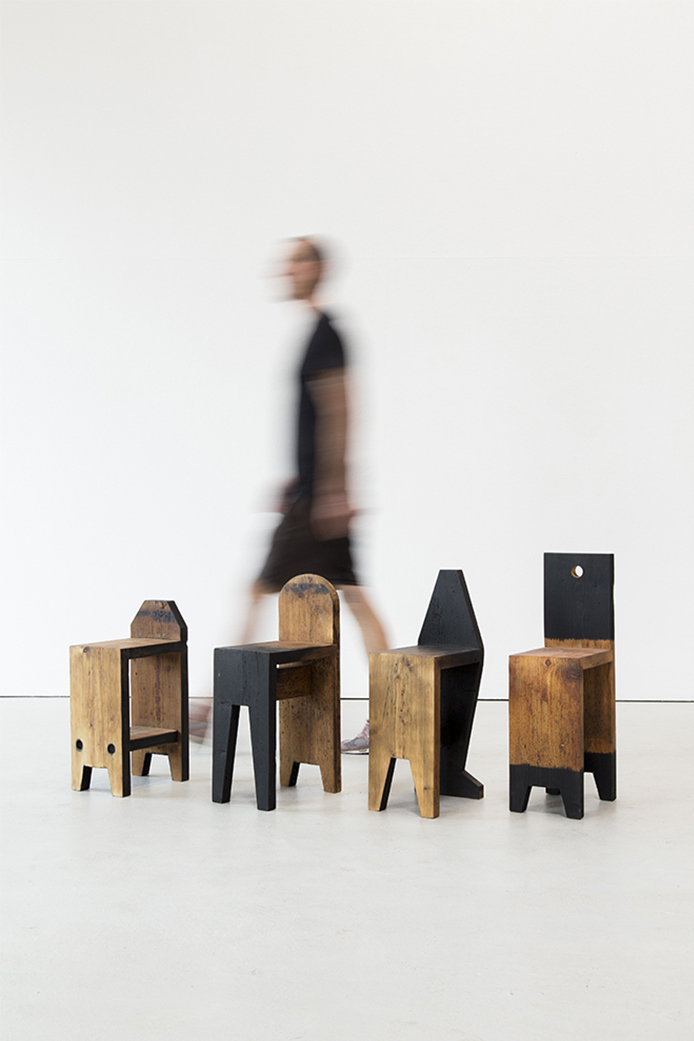
Can you explain the concept behind tenwordSandoneShot in ten words?
Experience, Exchange, Art, Interaction, Curiosity, Diversity, Freedom, Spirit of the age, Communication, Treasure
In what ways do your chairs push back against uniformity?
I am no friend of uniformity at all. Sadly, it seems large parts of society tend to obey this concept. My chairs are all one-of-a-kind chairs with no intention to favour or to go into mass production. All of them deal with not so popular issues, such as uniformity, pollution, war, ostracism, or personal things and ideas that come along my way. Most of my chairs, even though there is always the approach, are not really to sit or let’s say not so comfy. They just don’t fit the idea of a chair as a chair, are not perfect, sometimes dirty, irritating, loud and annoying.
You said diving into the process is a kind of relief—what are you escaping from when you make?
Not to think about the many questions of life whatever those might be after waking up and having read the news…
What part of your past do you feel shows up most often in your work?
For me it is obvious, my time as a carpenter, and construction worker. I do have a fable for wood (of course) but also all materials used on underground work and surface construction sites. Those materials have always been true treasures to me. I kind of must stop at almost any construction site and check the site itself but also all materials there.
What’s a feeling or idea you’d love for someone to walk away with after sitting in—or simply seeing—one of your works?
Any kind of quarrel is appreciated! I hope my chairs just start your own critical „Kopfkino“as we say in Germany…
Where can people find you?
Unfortunately, I currently don’t have a physical space, so it’s probably Instagram (studio-kevin-krumnikl) or email (info@krumnikl.com)