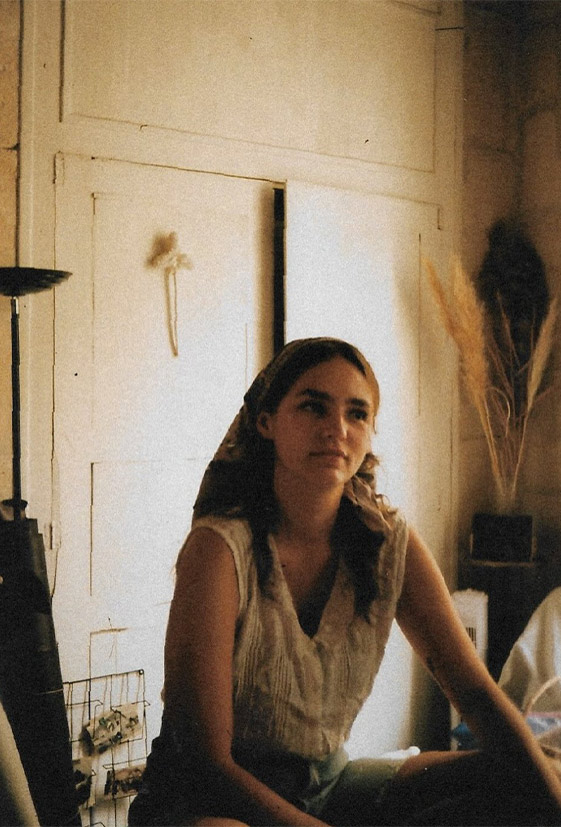
Léna Théodore
What’s your name and where are you from/based?
My name is Léna Théodore. I am an artist and designer based in Arles, in the south of France. I was born and rased in Marseille and members of my family live all across Provence.
Can you describe your practice in a few words?
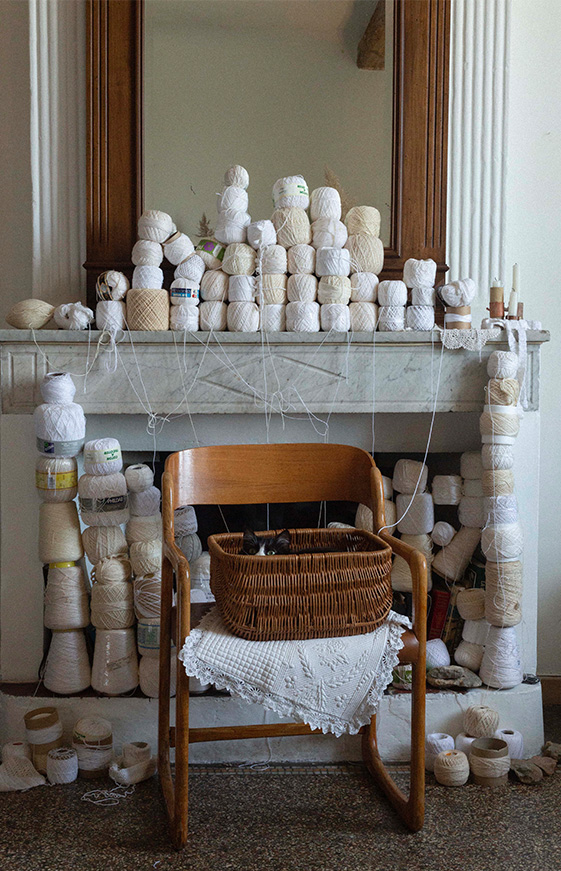
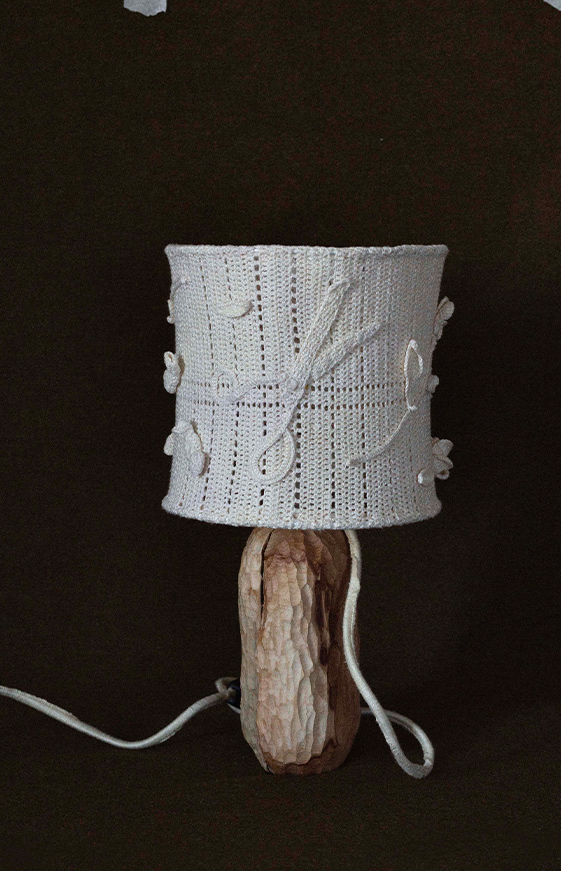
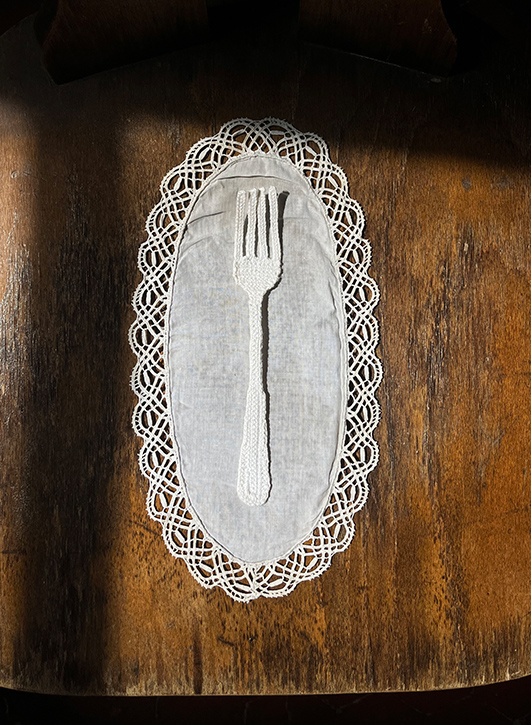
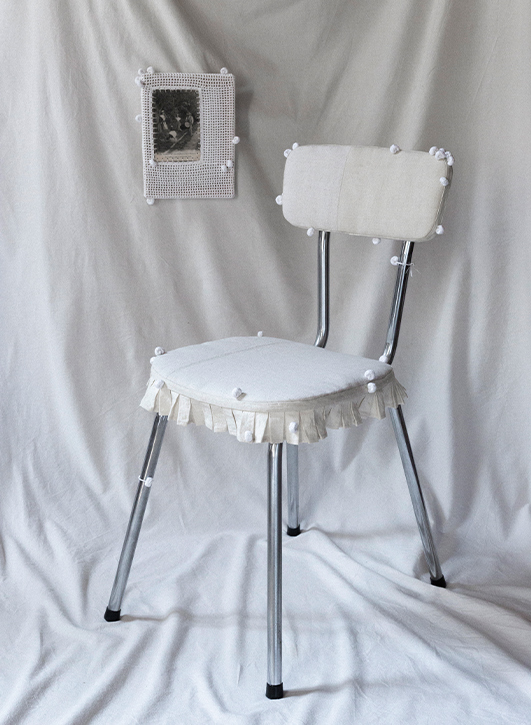
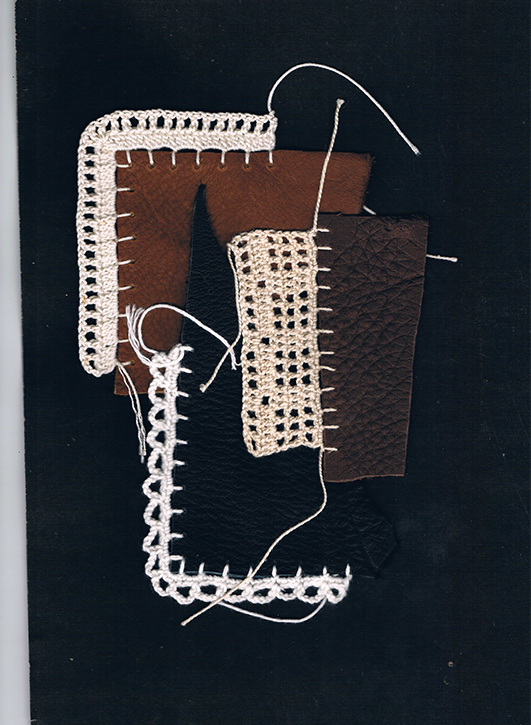
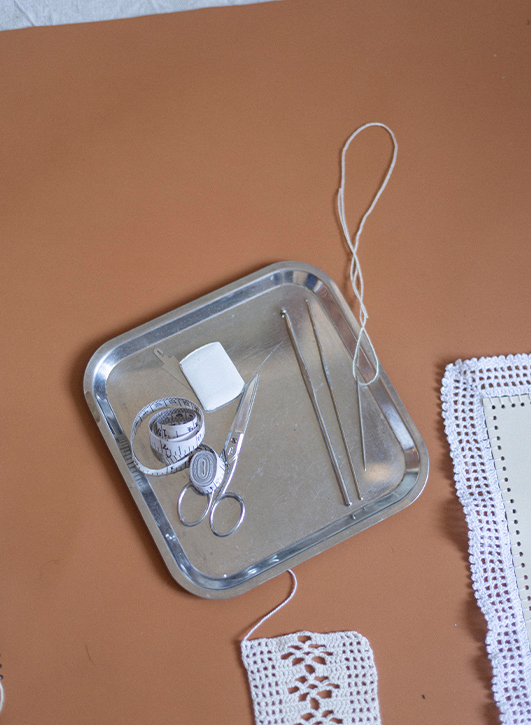
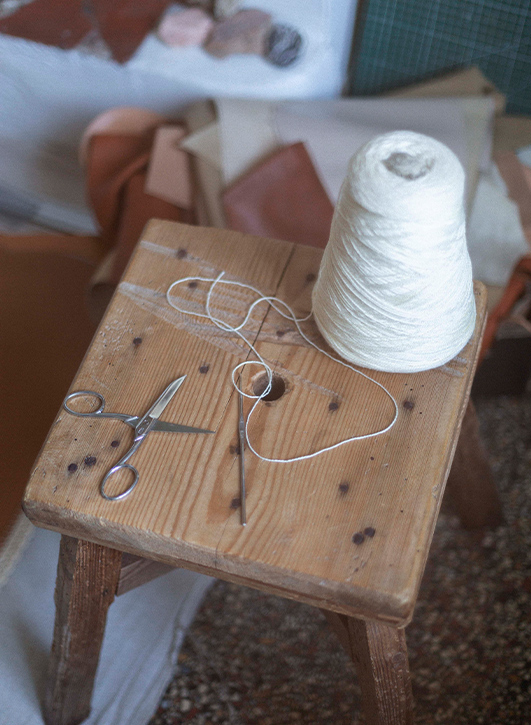
I explore the intersections between art, craft, and design. My work often involves crochet, textiles archives, and vernacular objects, through which I seek to tell stories rooted in memory, tradition, and shared cultural imagination. For me, textile and thread are special vessels for storytelling, ways of sharing narratives that resonate universally and weave connections.
You began in graphic design before moving closer to craft. Is there a moment that drew you toward working with your hands and materials?
I greatly enjoyed studying graphic design, it taught me rigor and method. But above all, it gave me the desire to go beyond the limits imposed by digital work and contemporary methods. Within each project, I tried to incorporate some form of manual work. For my graduation project, I studied the links between graphic design and textiles. The final goal was to demonstrate how deeply textiles are embedded in our history as humanity, but also in our daily lives, in fact, in every aspect of life.
For this project, I experimented with several manual textile techniques, although I was already familiar with most of them thanks to my family heritage. Since then, I’ve never stopped working with textiles.
Crochet is the only textile technique never mechanized. Does resisting mechanization symbolize anything for you?
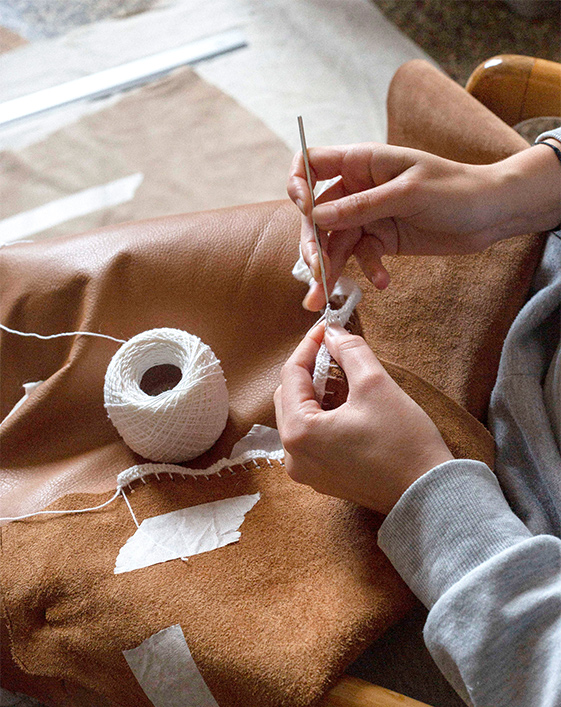
Obviously, in today’s world, practicing a fully manual craft is a form of resistance in every sense. It is a daily struggle to make people understand the importance of preserving these practices and the time required to carry them out. In a world where time is so precious, dedicating oneself to a time-consuming practice like crochet as a main activity seems reckless almost unthinkable, I think that’s what I like about it.
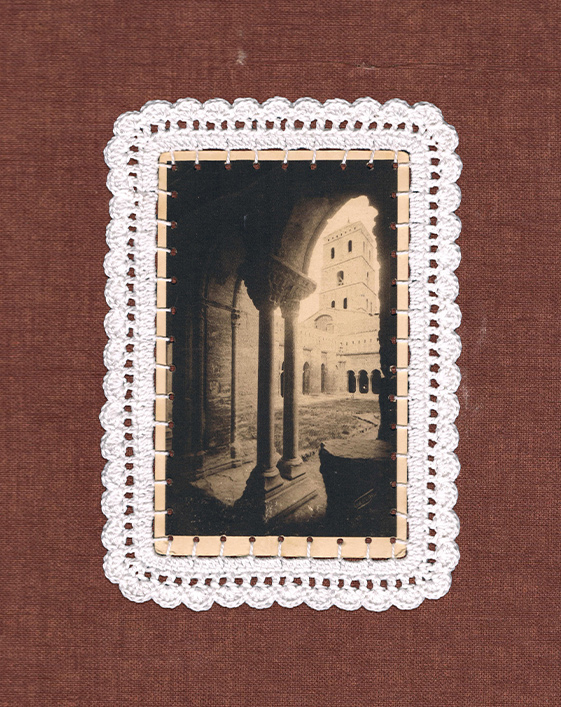
In transforming vintage postcards into framed works, do you see them as part of a collective history?
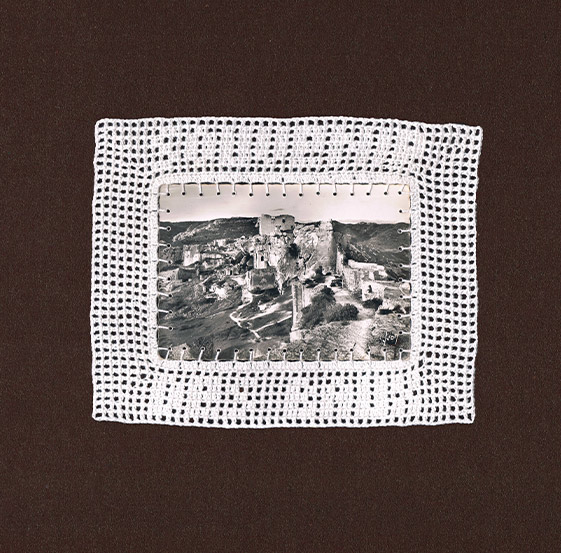
Yes. A postcard is at once a trivial, everyday object and a historical archive. By framing and reworking them, I try to bring out this ambivalence between the personal and the collective, the intimate and the historical.
How does the Camargue region’s folklore and landscape influence you?
Camargue and more largely Provence are places of strong traditions, rituals, and symbols. Its landscapes, animals, and objects feed my imagination. I am particularly interested in how these local narratives can resonate with broader themes of memory, heritage, and identity.
Today, folklore and rural traditions have been hijacked as the banner of a certain retrograde political ideology rooted in hatred of others… I want to show that our traditions belong to everyone, and that no one should claim hegemony over them.
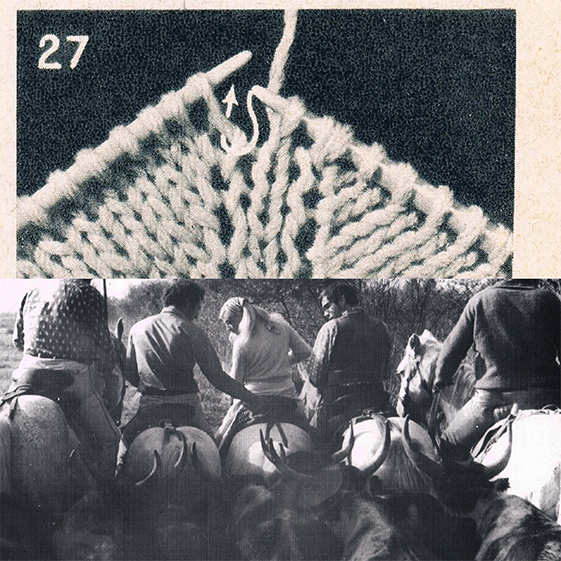
How do you hope audiences unfamiliar with craft traditions perceive your work?
I hope they see beyond technique and discover the stories, emotions, and cultural references embedded in the pieces. Even without knowing the codes of craft, I want the works to remain accessible and evocative. This is why I frequently focus on everyday objects and universally shared habits in my work.
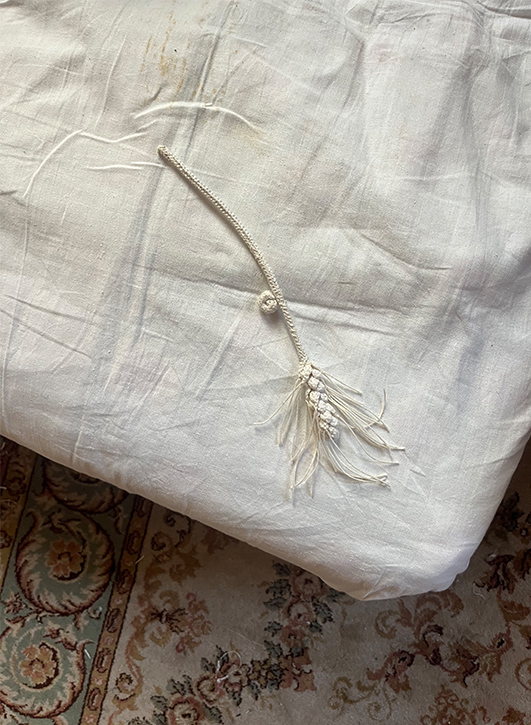
How do you translate regional stories into works that speak to a wider audience?
I believe that every story, no matter its cultural origin, will inevitably resonate with someone else’s story on the other side of the world. I think this is what makes us human, and it is the sum of these small, intimate narratives that ultimately brings us all together. I see the specificity of regional cultures as an invitation to dialogue between people, not as a means of separating them, as we are often led to believe.
With your practice so tied to tradition, is there a person from a time in history you would love to collaborate with?
It is linked to tradition, but also to gesture and labor. In 1889, William Morris stated that applied arts have a dual purpose: to add beauty to the outcome of human work, but also to add pleasure to the work itself. He saw the application of the “beautiful” to useful objects as an absolute necessity. He also said that “returning to ideas that seem to belong only to the past” is not a step backward, but a new beginning from a point we had abandoned. It is through this perspective that I view the current revival of traditional techniques and a more grounded way of life. I would be extremely curious to hear his thoughts on today’s world of art and design!
Where can people find you?
In Arles ! Wandering the streets, crocheting, or browsing the flea market… But mainly in my studio ! Come and say hi !I mostly post on instagram since I keep postponing the moment to create a website… @lenasmouch