Lois Wall
What’s your name and where are you based/ From?
My name is Lois Wall. I am Dutch and currently based in between Rotterdam and Antwerp.
How would you describe your practice in a few words?
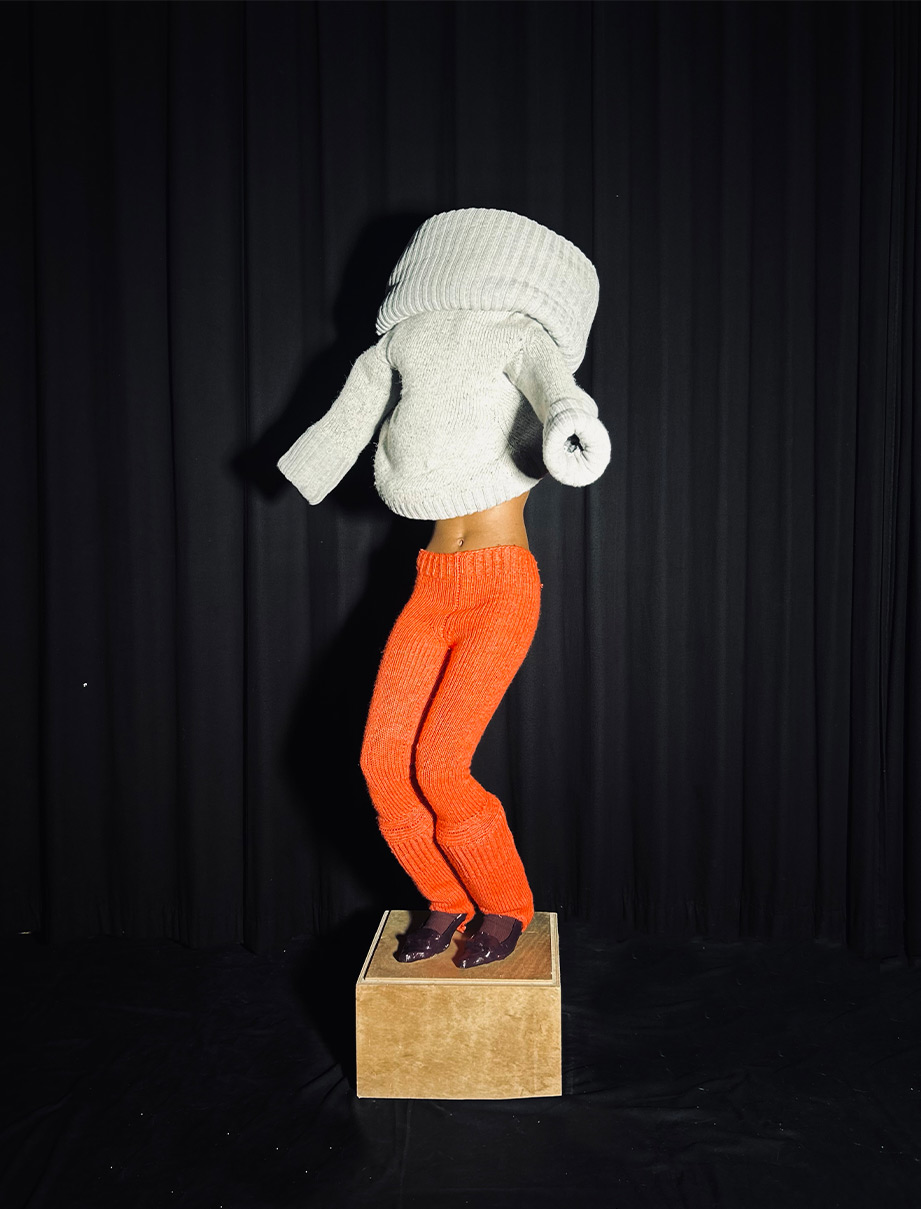
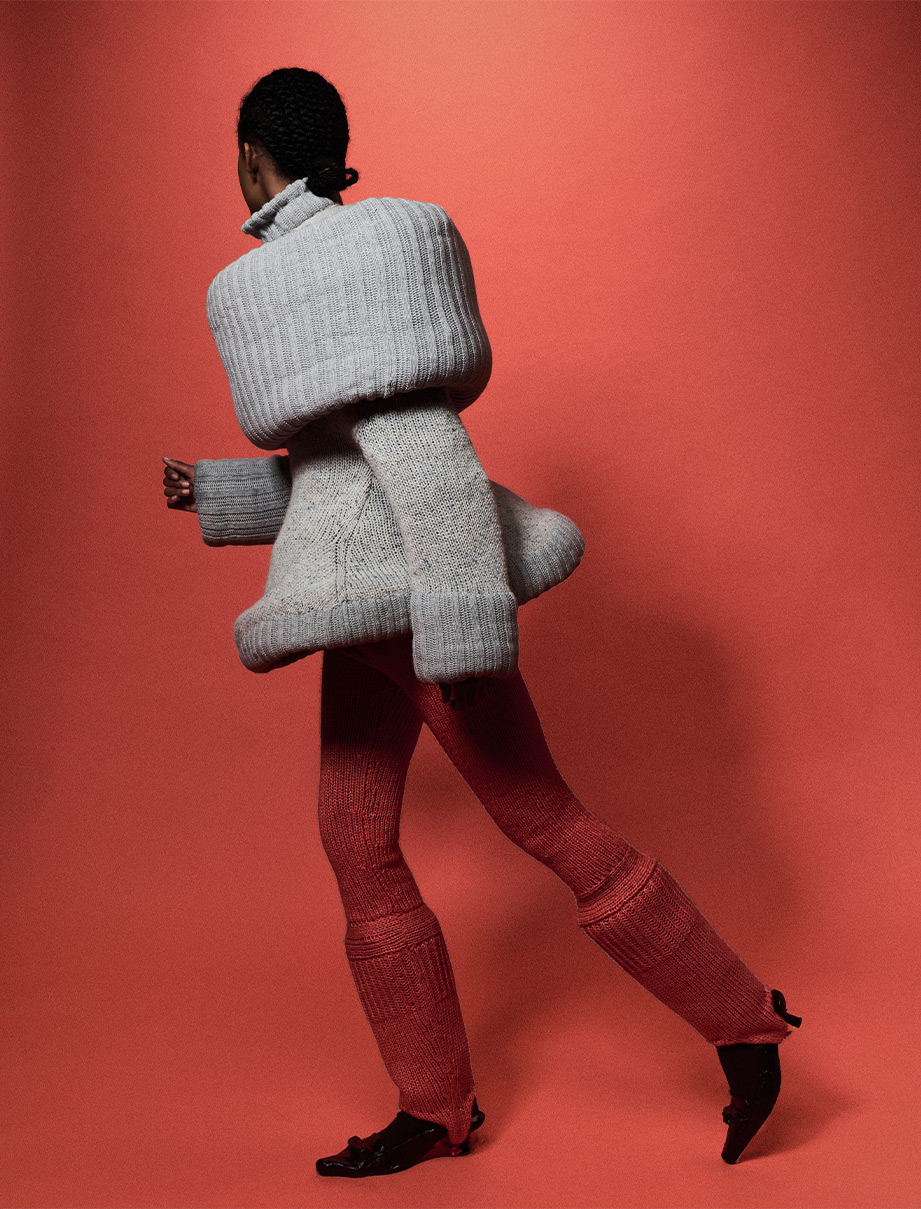
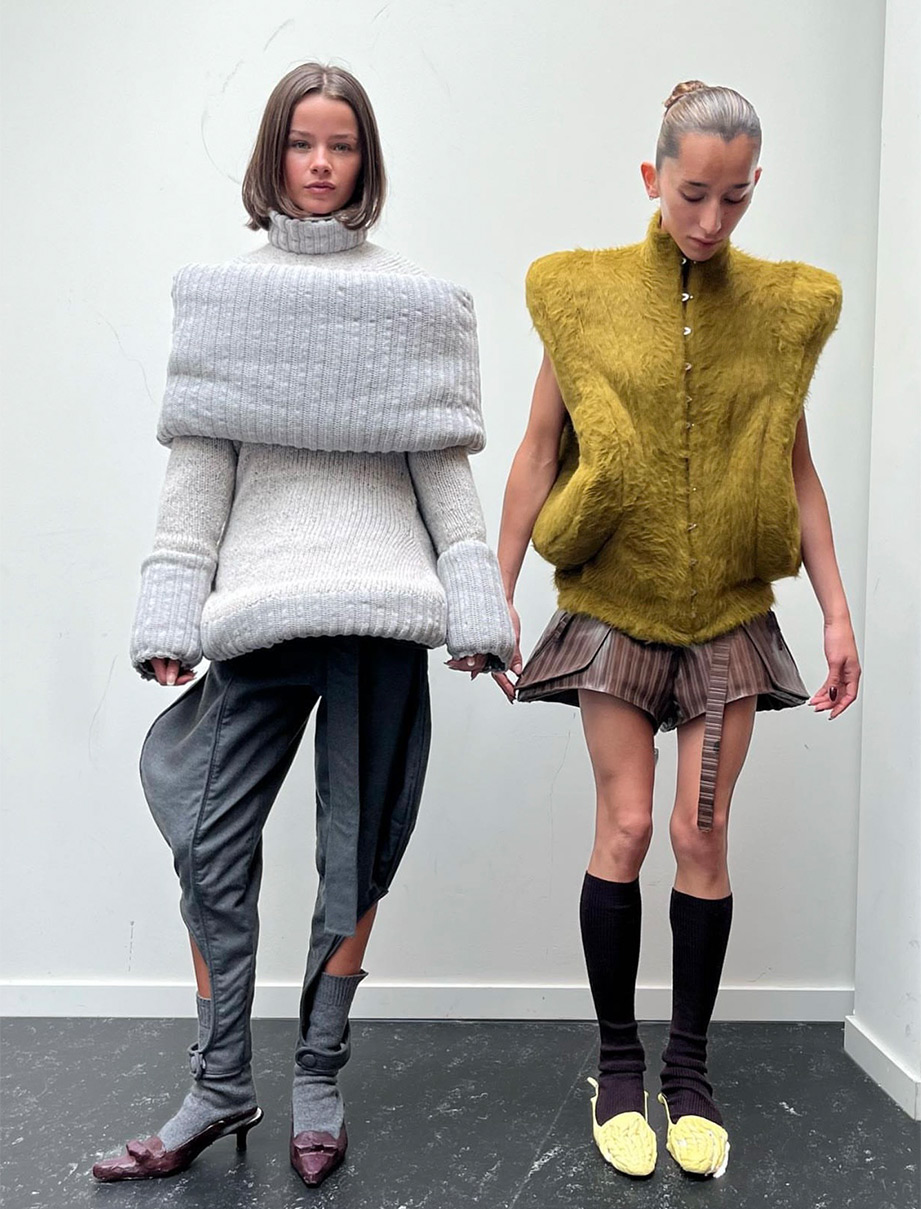
I create and design garments that emerge out of experimentation with fabric manipulation and shape research. The work is a lot about observing, using what is already there, but also making use of uncertainties and risks that grow meaningful over time.
What initially led you towards fashion?
I think the great thing about fashion is that it’s about identity and it always relates to everything that is happening around it, because it is ultimately about people. I’ve always had a very active imagination, fantasizing about how I could dress myself, or the world around me. So I sat a lot, drawing these observations and experimenting with my own style. I liked looking in vintage stores, seeing clothes that already had a life, how they reflected their time and were crafted with so much love and care, almost as if a truly eccentric person with good taste wore those clothes. I attached myself to this fascination and it became part of a lot of decisions I made later on that all leaded to it.
Your work largely exists out of experimentation, did this approach emerge through fashion, or has experimentation always been part of who you are?
I think the experimentation has always
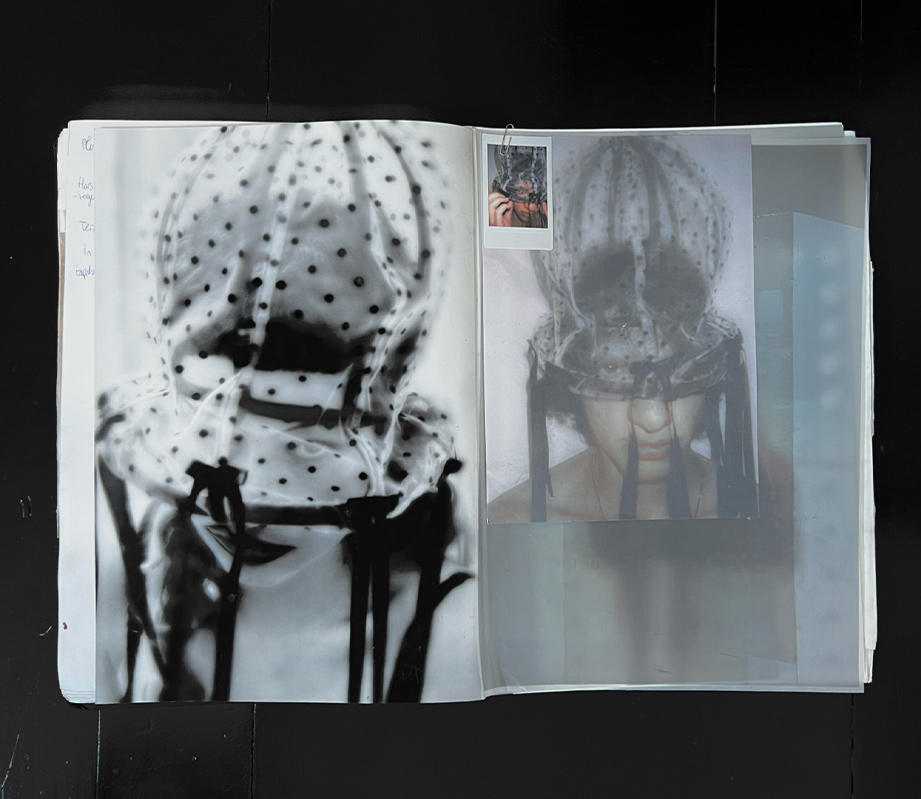
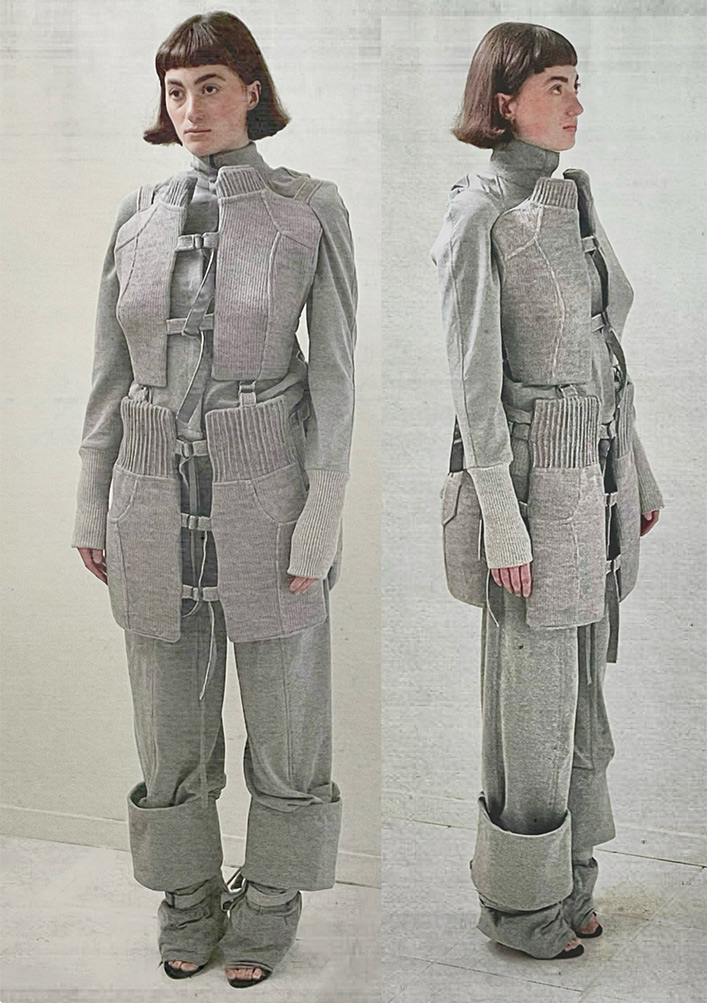
complemented my way of working where I like to start my process with a surreal idea and a bit of uncertainty of whether it can be realized or not. But when it comes to working with a body, there’s always a duality between practicality and beauty. Clothes are meant to be worn, not be hung in a museum. The experimentation often comes from that non-sancity in fashion. How far can I go within shape or material, while still being wearable.
Your forms distort and challenge conventional fashion. What do you think traditional fashion silhouettes assume about the body, and what are you trying to question through distortion?
I think the distortion comes from a bittersweet relationship I have with fashion. On one side the appreciation for the theatricality, the intense amounts of beauty and craft that the system embodies. But it also clashes with ideals, as a very dictating system, that tells you what is right and what is wrong. Disproportioning shapes is a way for me to reflect on this and to push myself to keep playing with how garments relate to the body, creating something that is aesthetically pleasing and attractive, while also introducing an awkward or critical element.
Is there a particular experiment that fundamentally changed the way you think about fashion or construction?
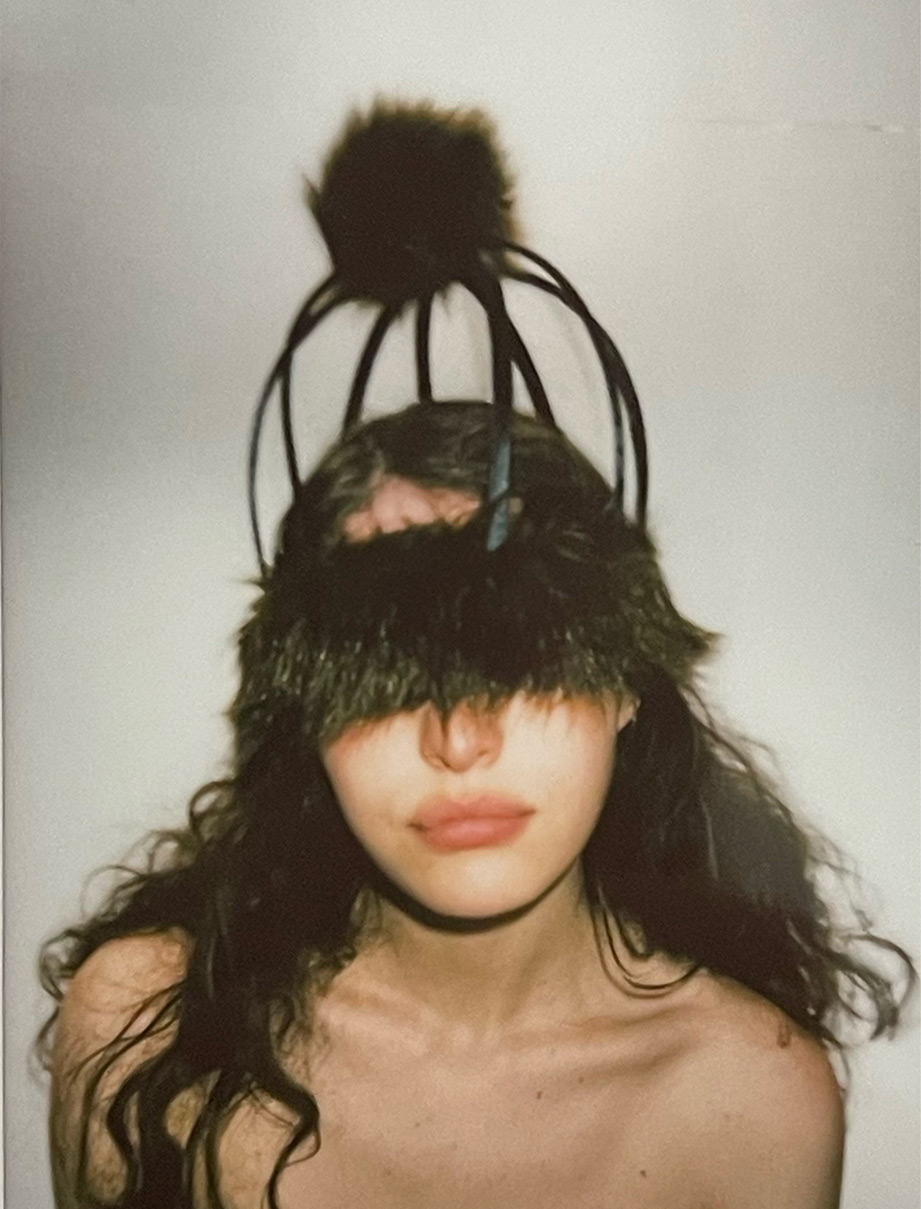
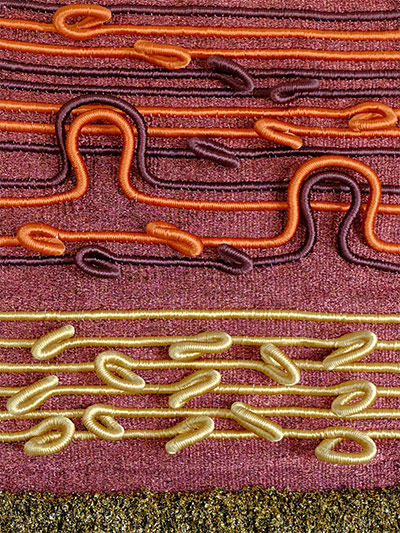
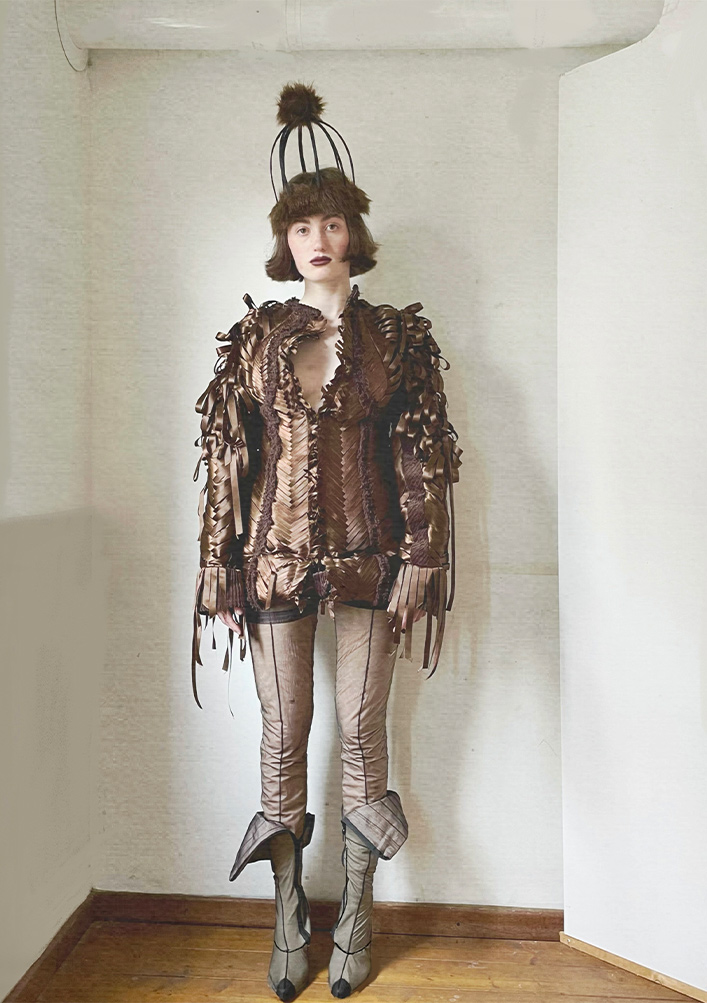
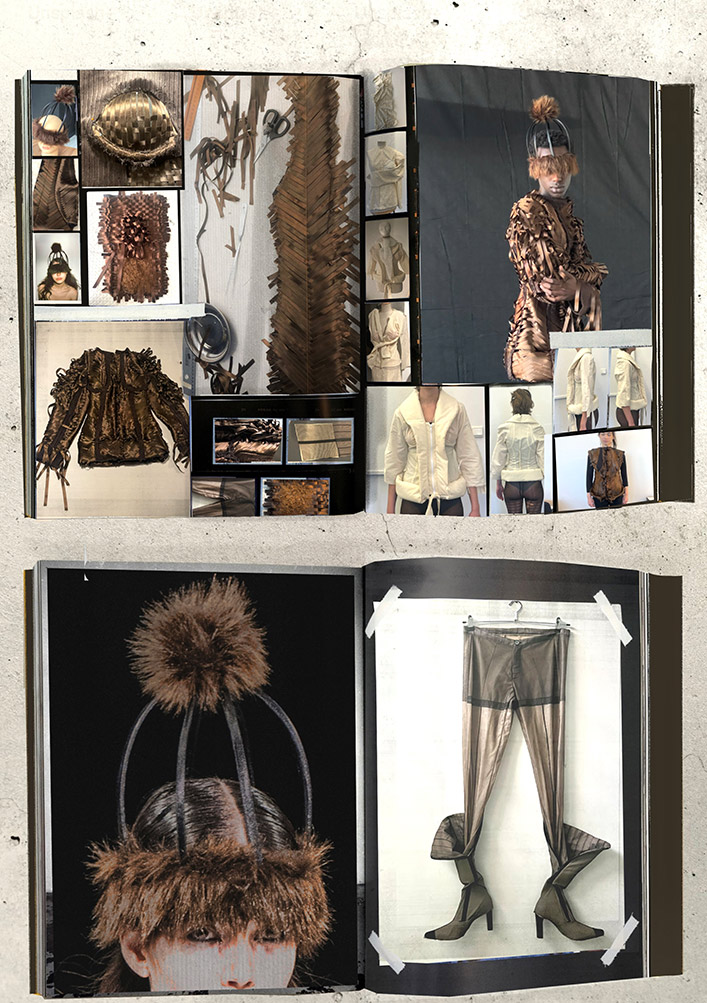
The experiment with material has expanded the way I approach fashion. When working with a certain textile, for example fur, I like to deconstruct its characteristics and explore ways to replicate its essence without using the material itself. I apply the same method for prints: reinterpreting stripes so they remain a continuous pattern without relying on pre-printed striped fabrics. These are examples used for details, but are also interesting to apply in construction, especially when considering new digital approaches 3D printing and other technologies that challenge traditional methods of making.
This experiment with ‘faking’ existing has opened new doors for me in how I look at fashion, because like this you can always use what is already there but have a completely new take on it.
When starting a collection, how important are references?
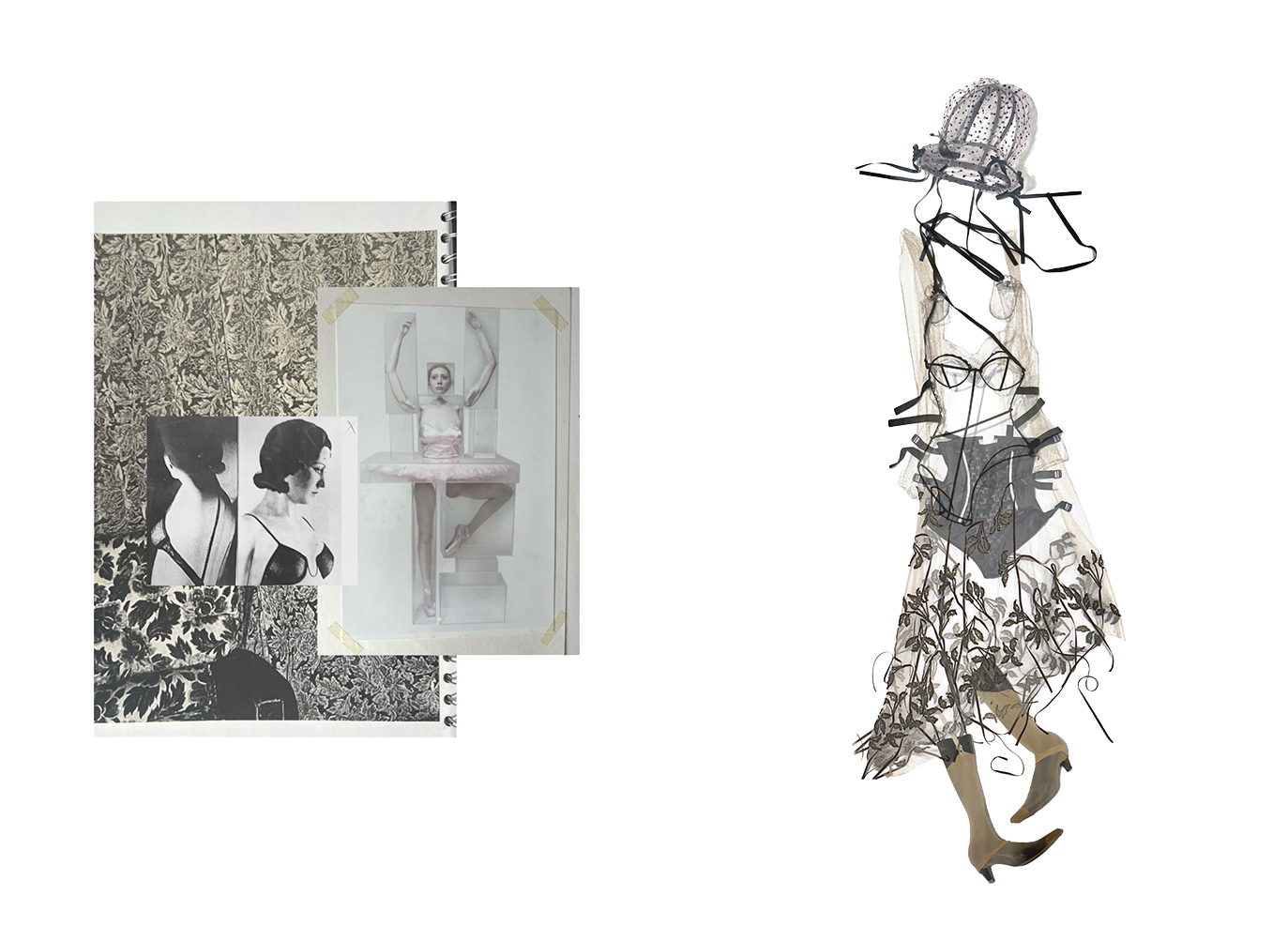
A collection is a result of choices in colour, shape, and material that somehow fit together as one. Every element has to be considered layer by layer. References can be essential in guiding these choices, and they are especially helpful because they create a framework that limits endless possibilities. You could go in hundreds of different directions, but selecting a specific visual or conceptual reference helps focus the process and shape the final result. At the same time, it is important to follow your own urges. References should not always tell you what is right and what is wrong, but they serve as a way to support and enrich the collection
One of your collections of seven looks explores internet culture and the way subcultures have shifted into surface level “core” aesthetics. Can you tell us how this project began for you and what you seek to reveal about this shift?
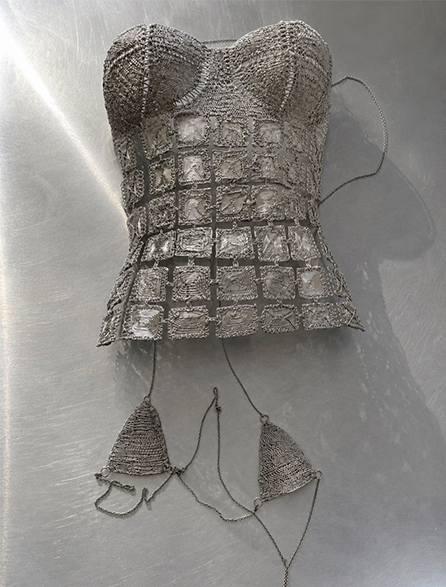
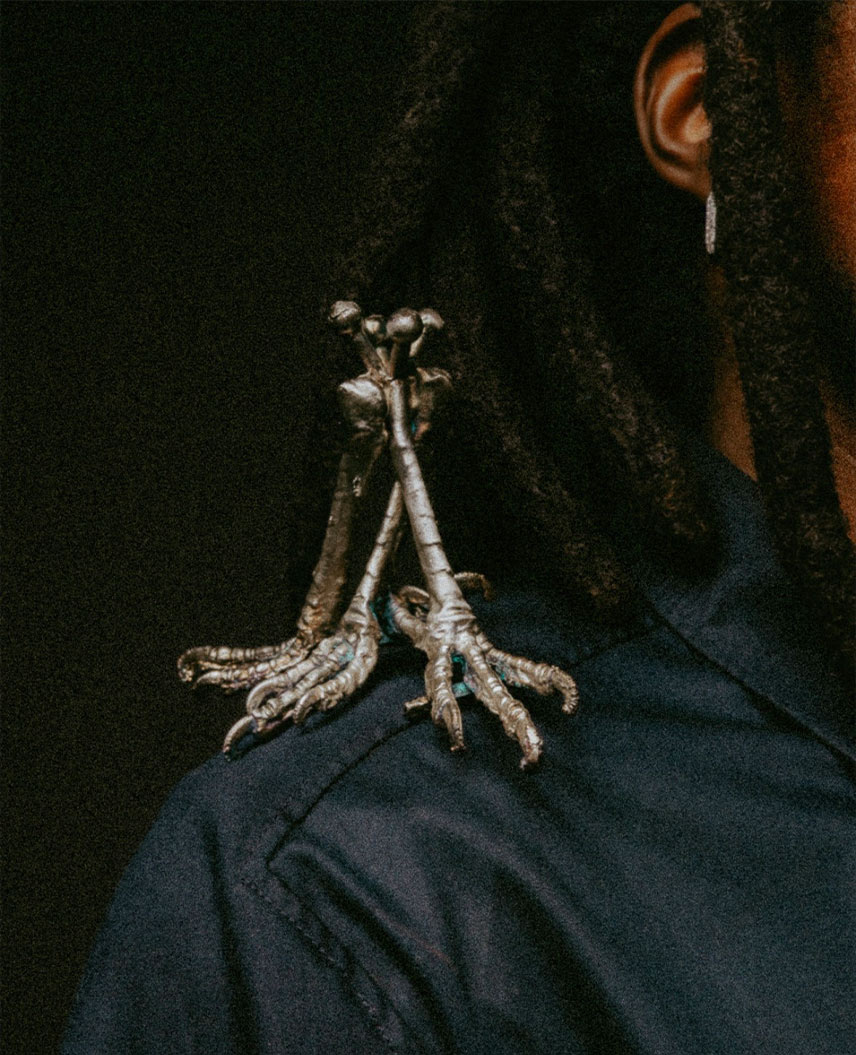
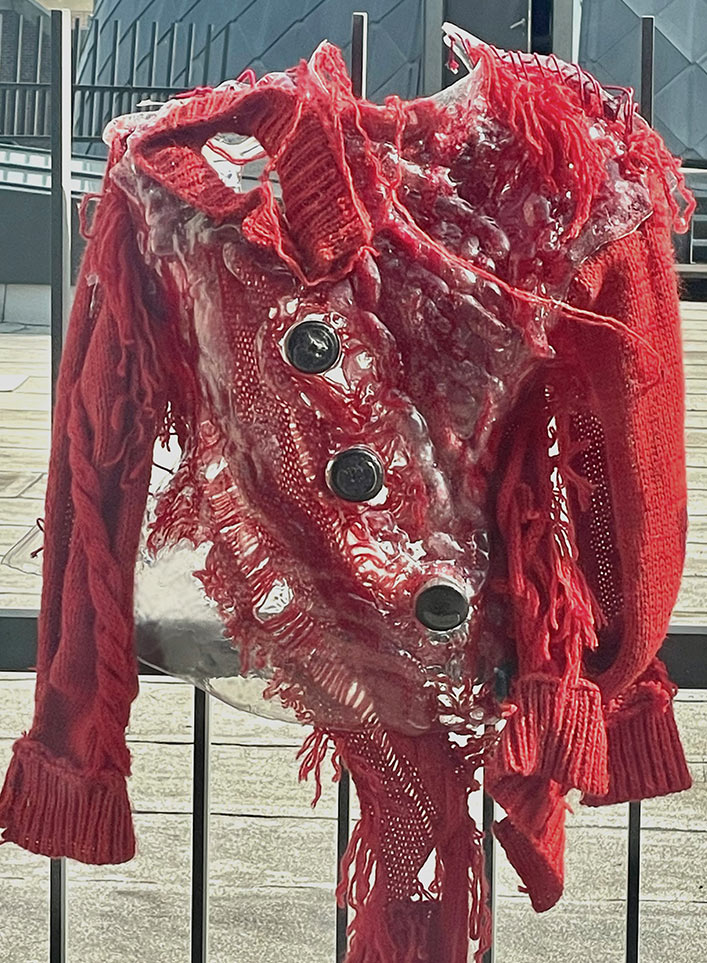
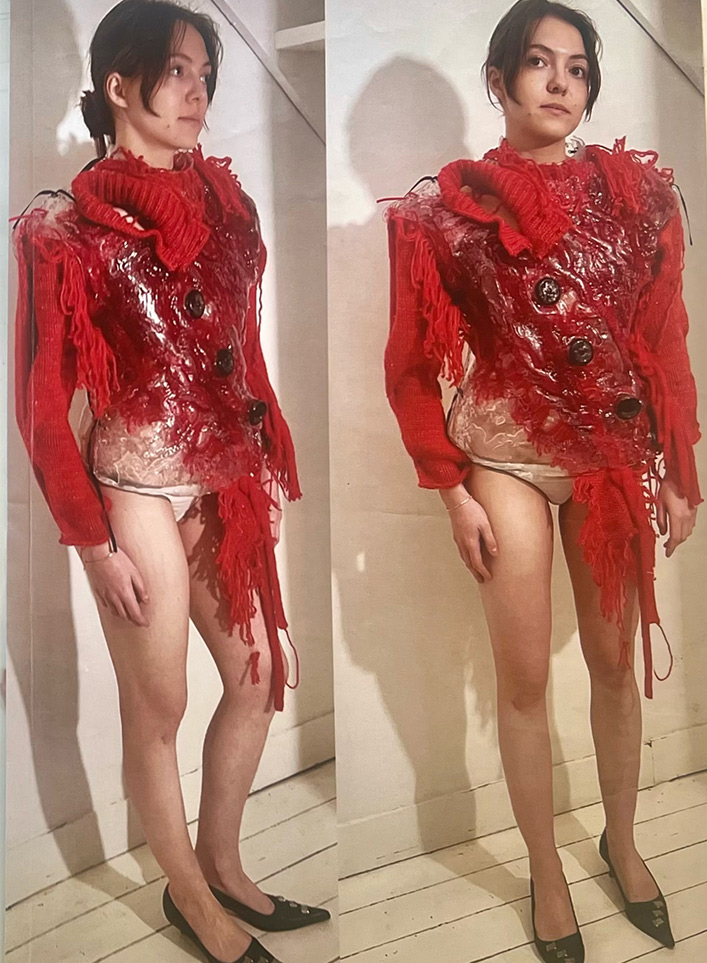
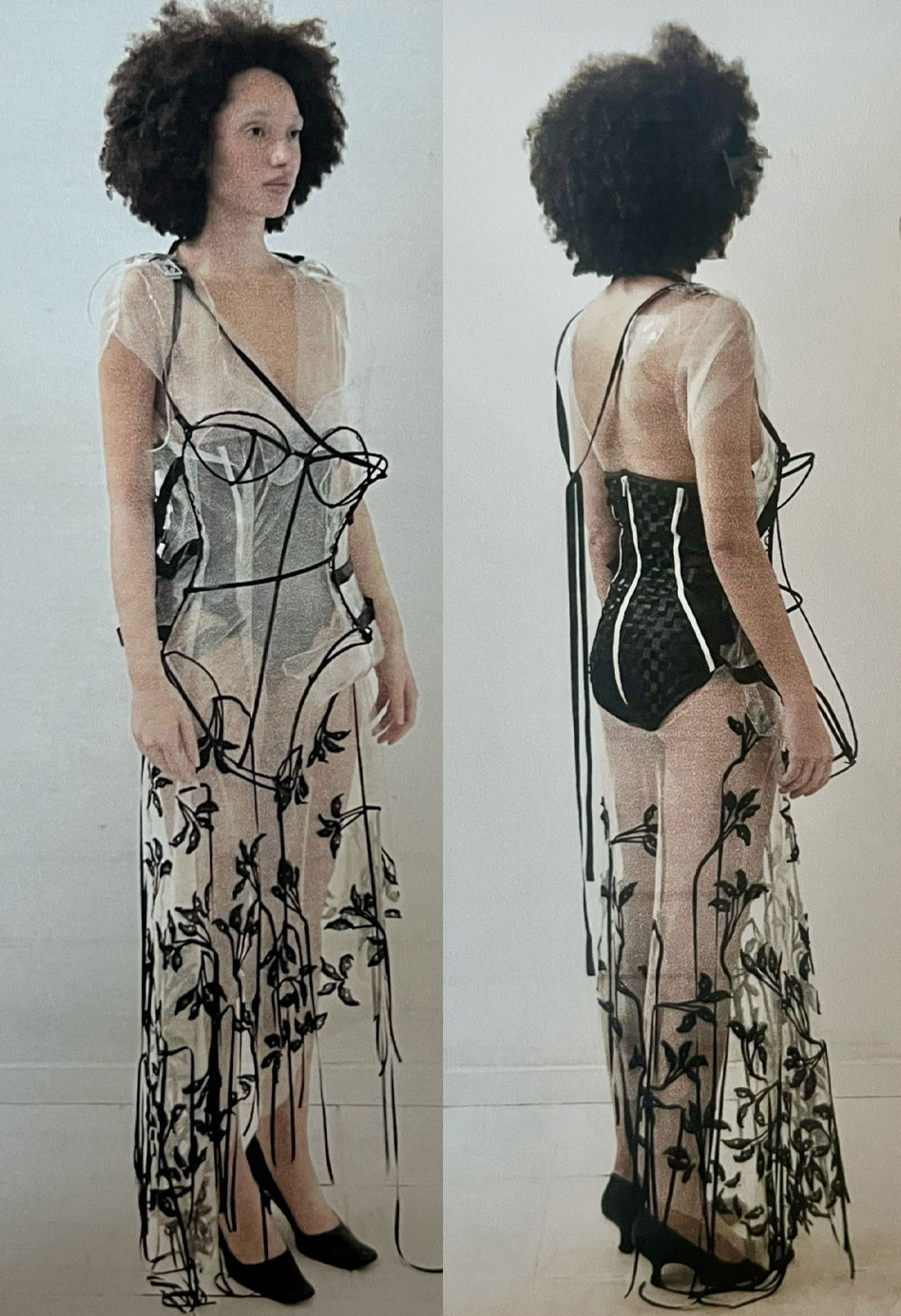
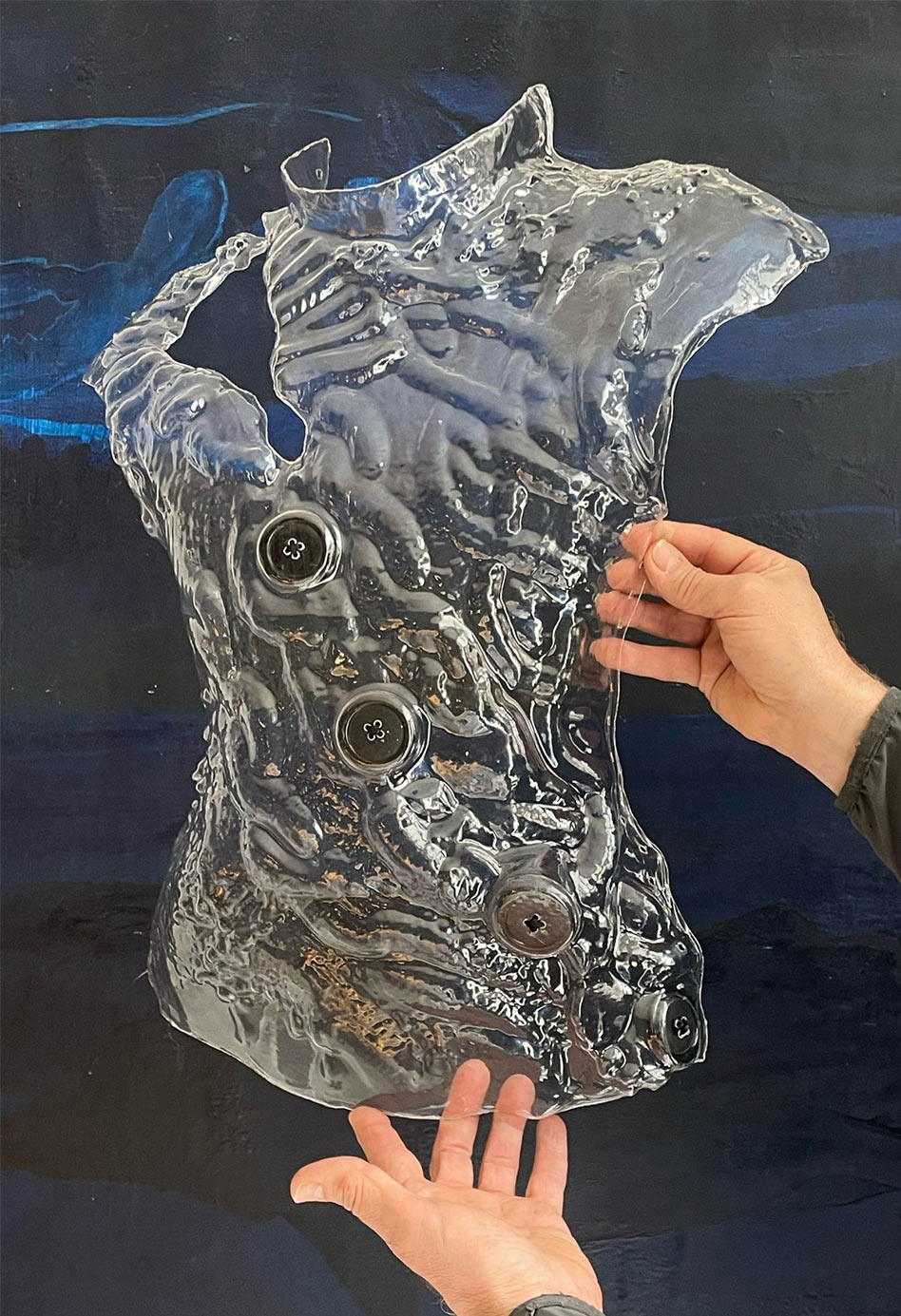
This collection was a lot about noticing. Looking at what is given and translating it in to a new reality. Looking closely at my own generation and the way we interact with internet culture, we all seem to get a bit lost in the endless aesthetics of how we want to put ourselves in the world. Individualism is growing, but Instead looking deeper inside of ourselves, people seem to have more and more distance from the things they buy and wear. In the collection, I wanted to make garments that visually looked disconnected from their wearer. I was working with transparent casts and 3D-prints that symbolized the distance or emptiness. I placed the fabric or garments inside these shapes, so that it looks like it’s being worn by a person, but actually its inside of this empty transparent shell. All silhouettes visualize
a recognizable aesthetic, but they don’t fully connect and feel separated from the person wearing them.
Your Aunt Mo collection pays tribute to your Aunt Mo, a soapstone sculptor who continued to create despite her blindness. What part of her did you translate into your collection?
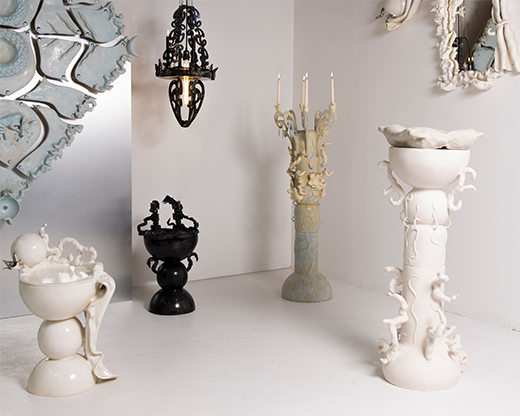
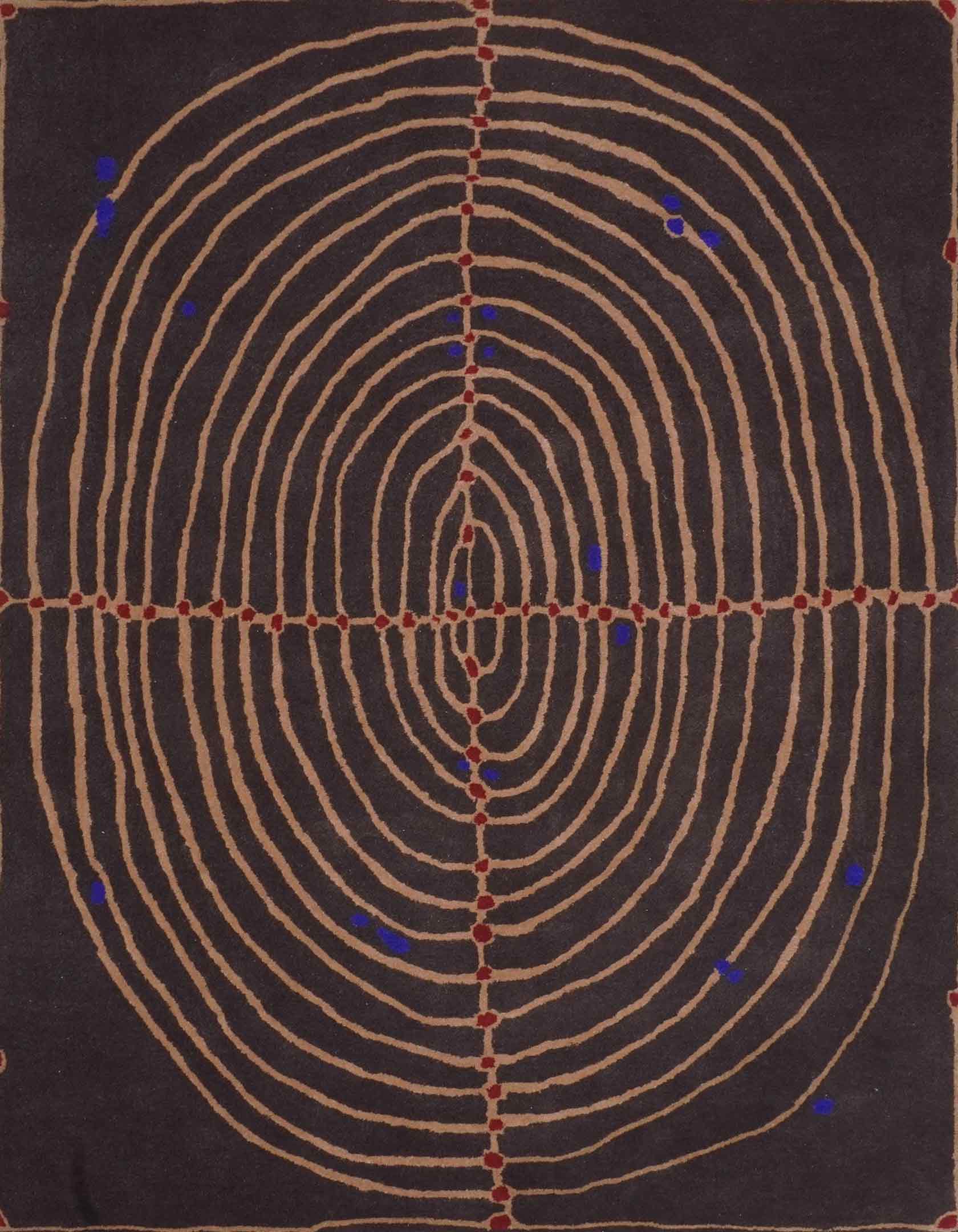
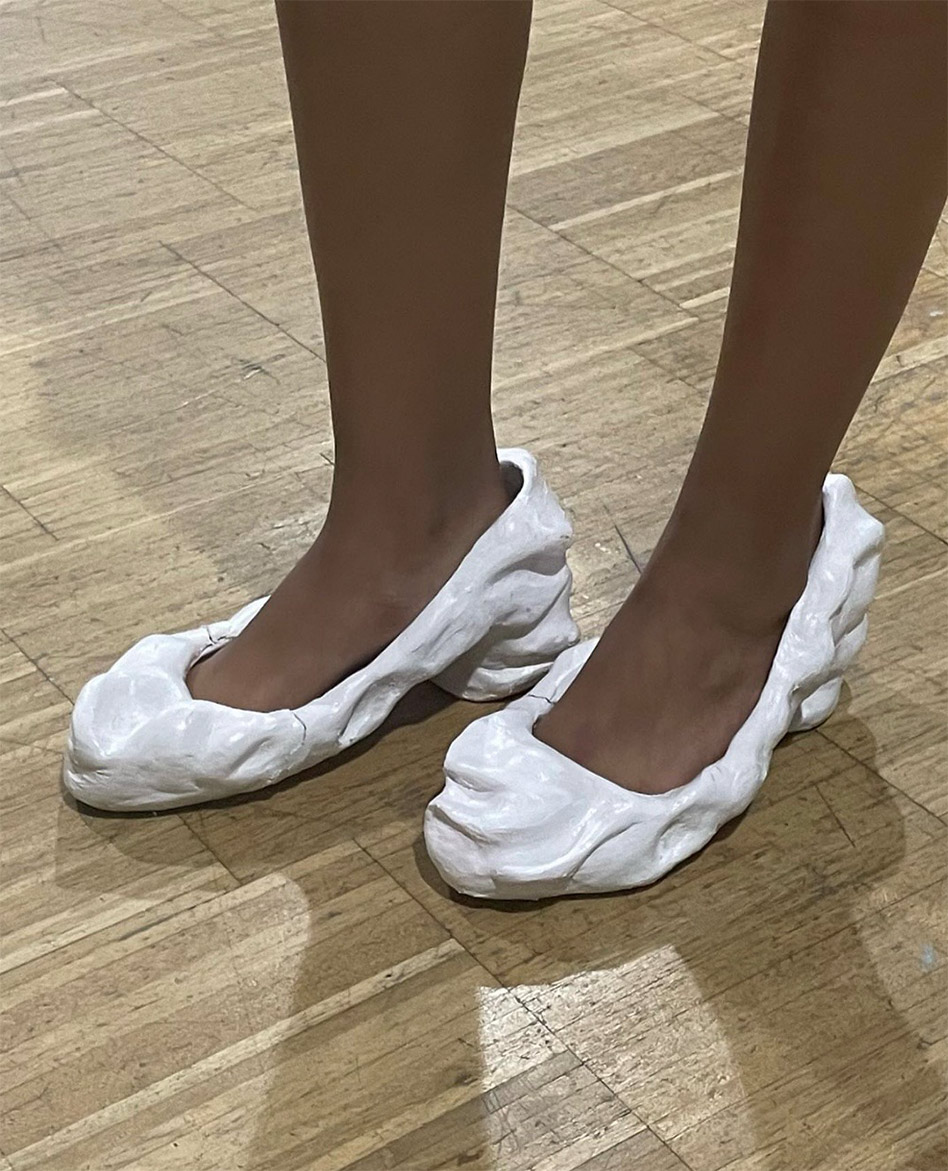
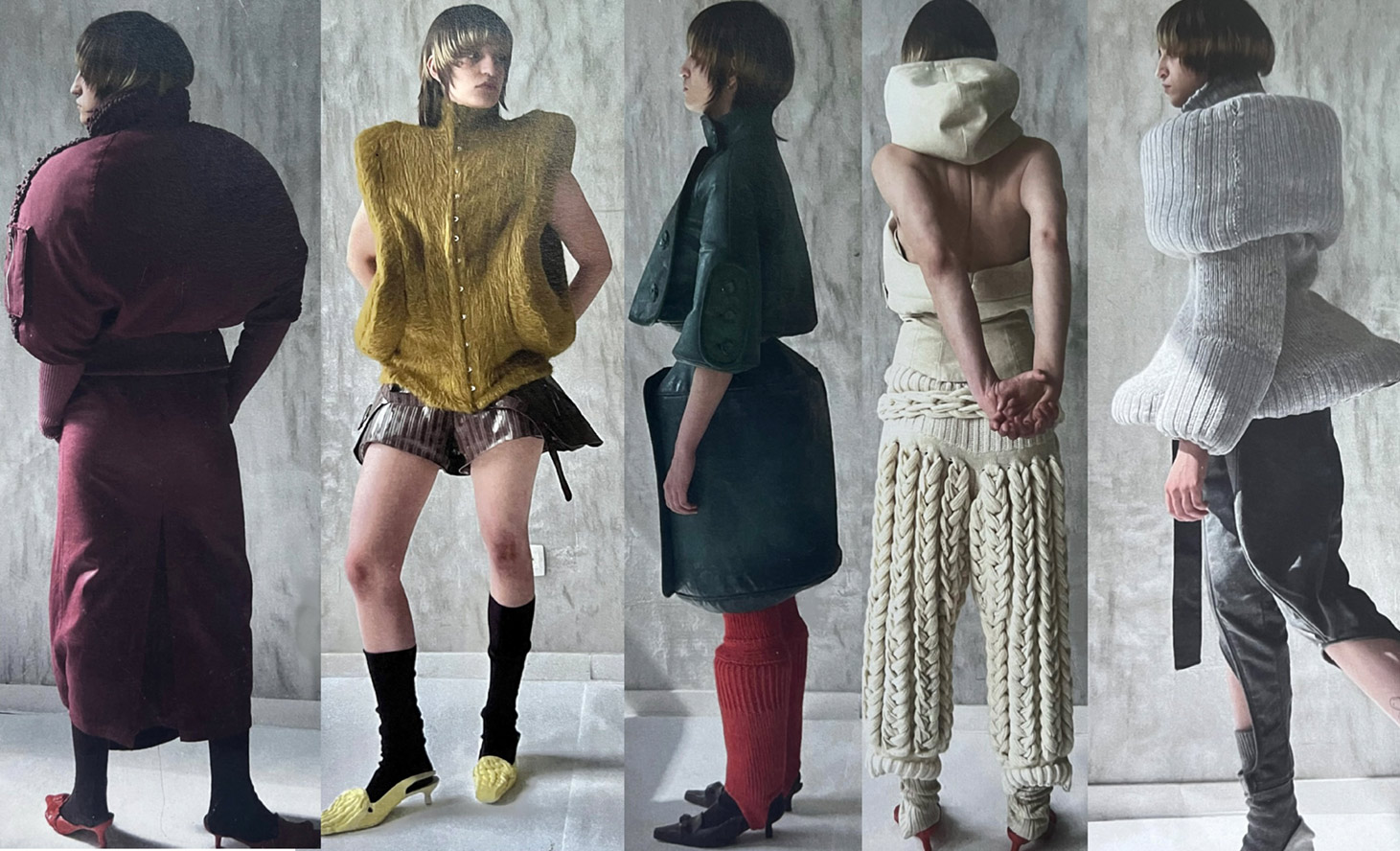
The part of her that I tried translating in my collection, is how she dealed with limitations. In the first place, very directly by taking her techniques as a soapstone sculptor. When making a soapstone sculptures, you are limited to the shape of the stone you are using, resulting often in a not fully continuous figure. I wanted to use these shapes for my collection. Every look symbolizes a different shape of her sculptures. Next to this, the limitations of her blindness made tactility important. I tried working with shapes and materials with a lot of structure and clear lines. Like this, even without vision, the garments can be vividly imagined through the hands.
Looking back at your work so far, what do you think your inspirations reveal about how you see the world?
The way I can absorb this world and have access to it, being able to guide observations in to an idea and a result that is my own, is a very precious and free privilege to have.
What do you think keeps you inspired?
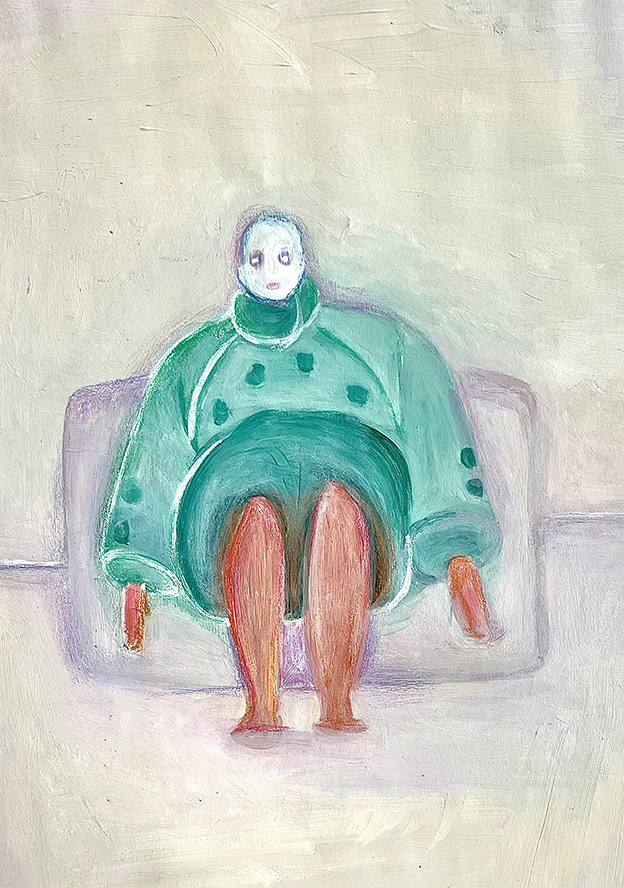
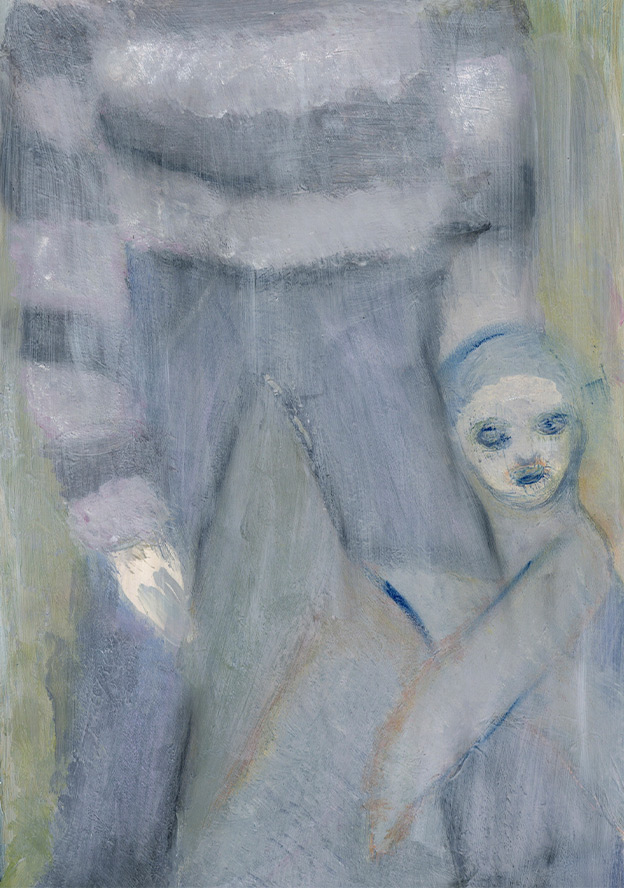
I like to use painting as a way to stay inspired, because it often feels as a conversation I have with myself while I am doing it. Unlike making garments, which often feels more like making it for someone else, painting and drawing creates a space to let my imagination wander and put down ideas that usually hit me at the most unexpected moments.
Where can people find you?
For now, on Instagram: @loiswall