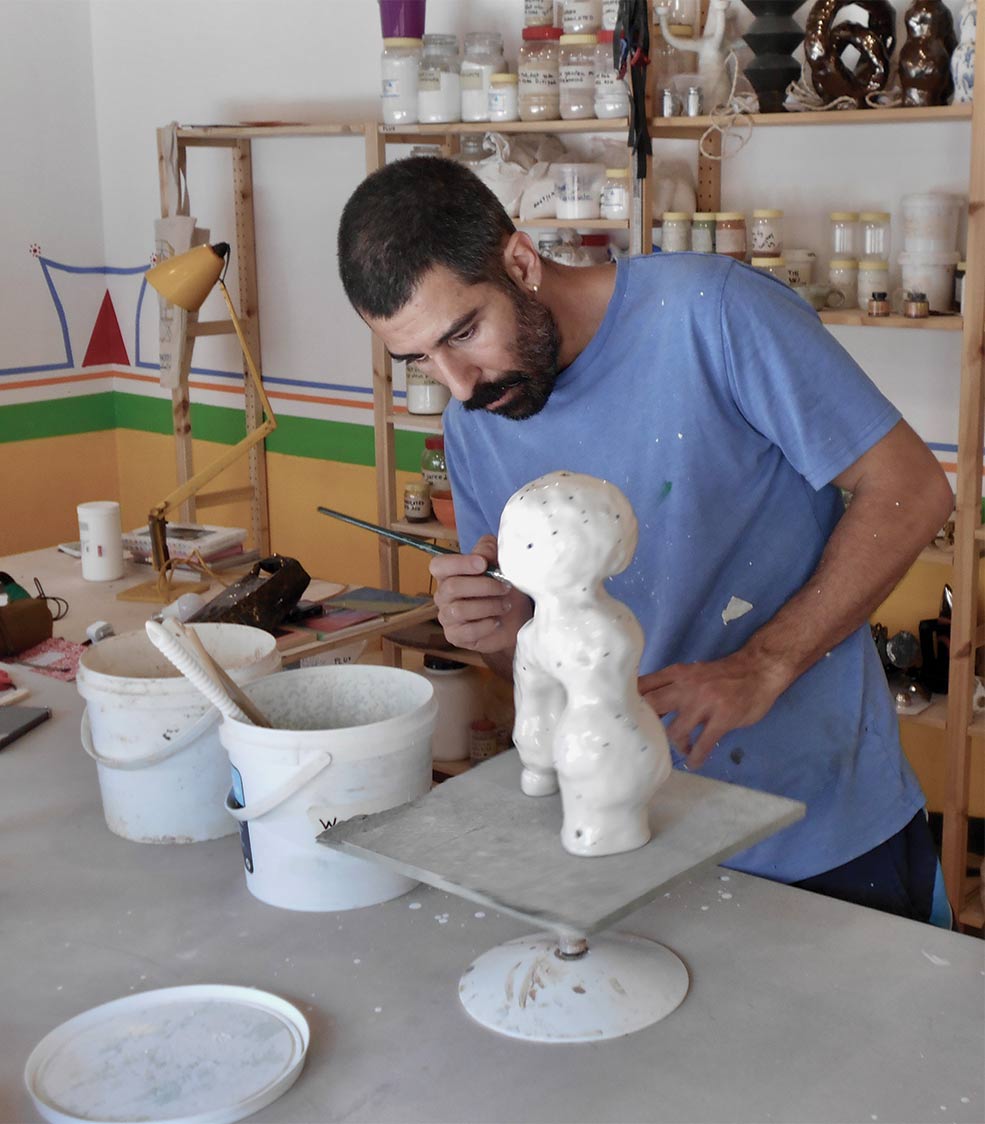
Lucas Barceló Ibarra
What’s your name and where are you from/based?
My name is Lucas Barceló Ibarra and I am from Mallorca, Spain. I was based in
Melbourne, Australia for about 7 years before moving to Riyadh, Saudi Arabia,
in 2023.
Can you describe what you do in a few words?
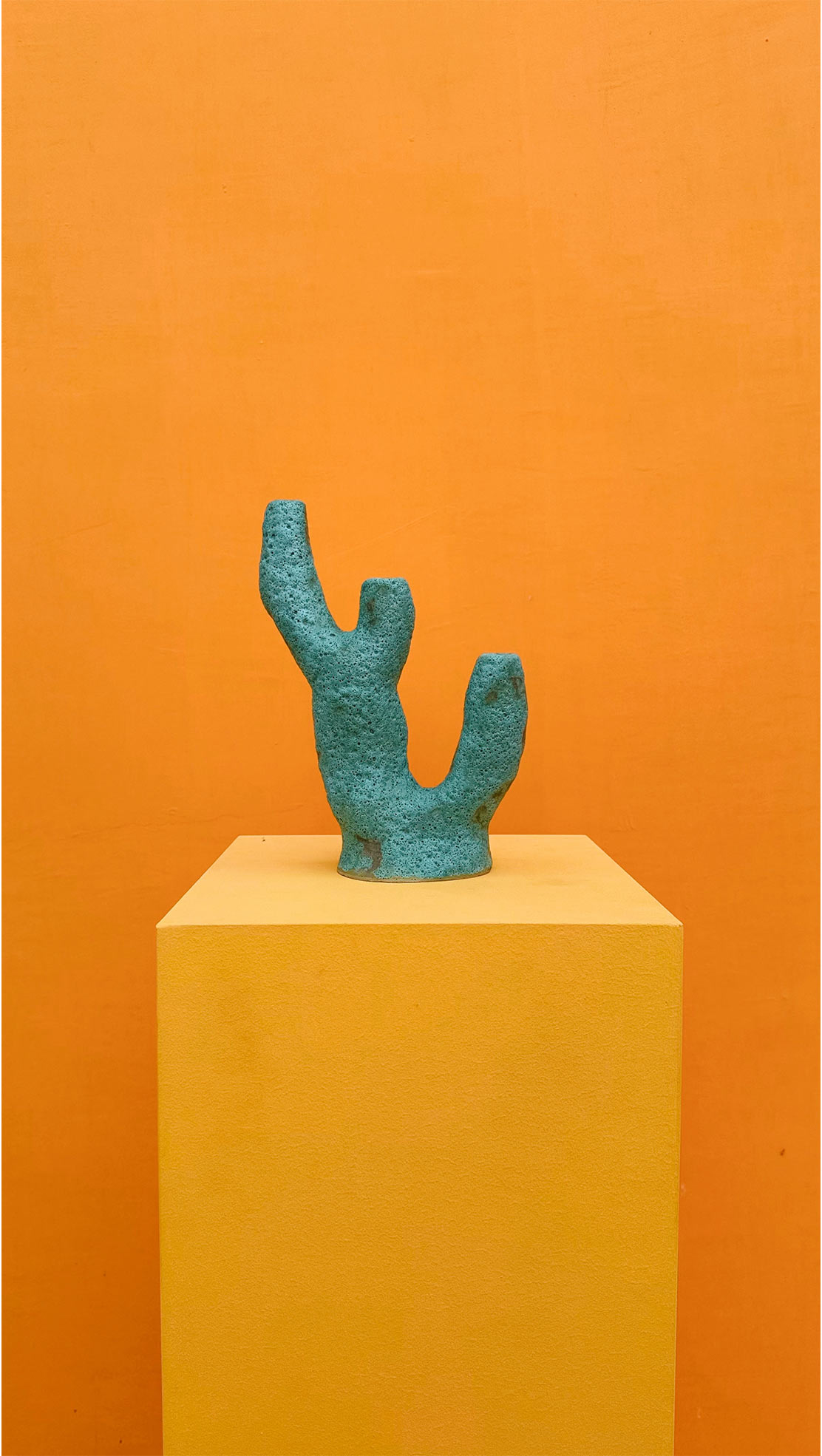
I was trained as a furniture designer and cabinet maker but have liked ceramics since childhood. I returned to hand building ceramics a few years ago while working for a furniture company and decided to do it full-time. I now run a studio making sculptural ceramic pieces.
How has your early experience in ceramics as a child in Mallorca stayed with you? And what drew you back after working in cabinetmaking and furniture design?
As a child you learn things in a way that become quite innate. Muscle memory. Returning to ceramics, I felt like I already knew how to hand build and to work with clay but I was returning to a practice with a better understanding of design and function. Working in timber furniture is very machine intensive. Hand building ceramics is more natural, it’s just you and the material.
How have the different places you’ve lived and the people you’ve come across shaped your work?
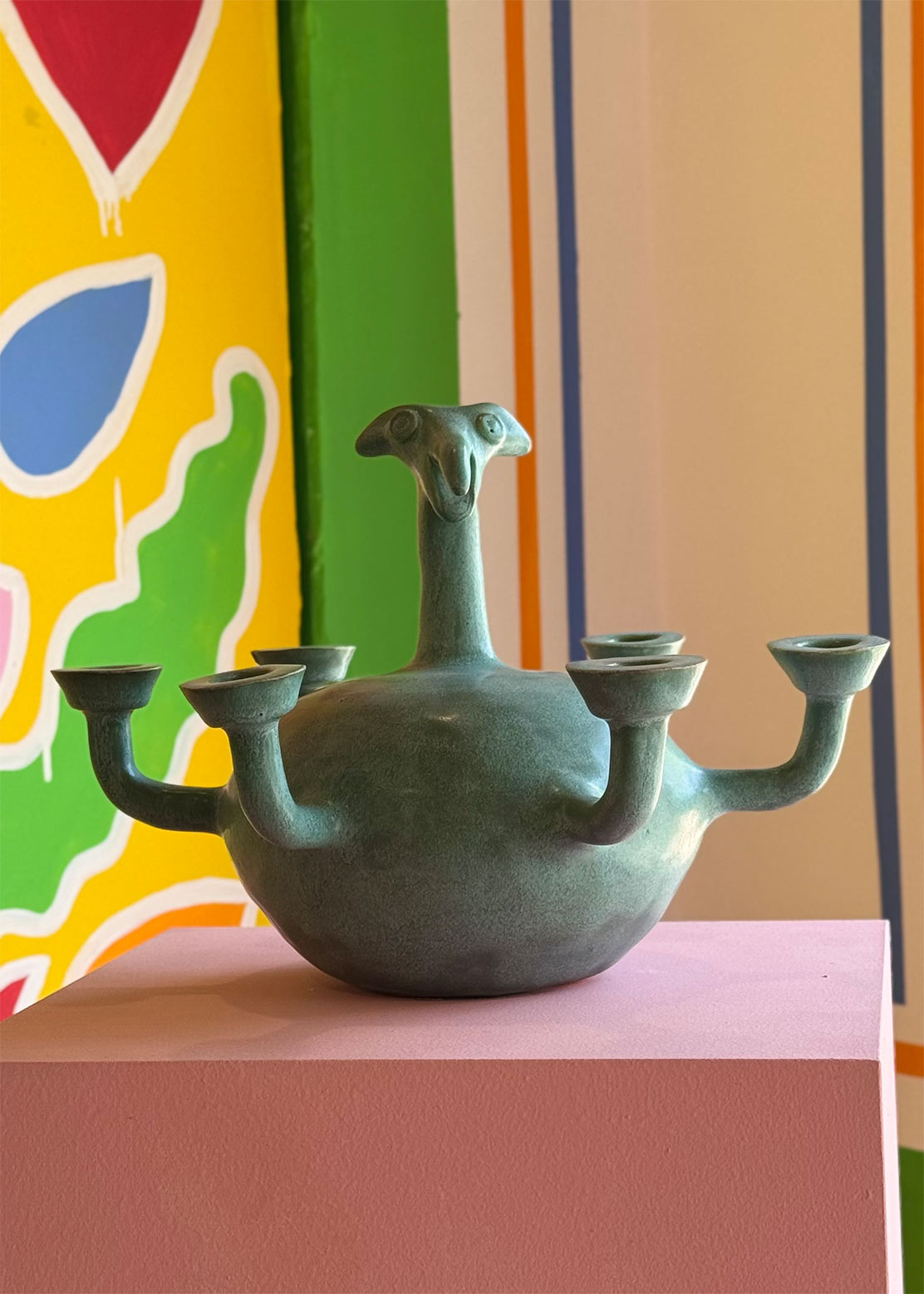
My childhood in Mallorca up until now has been my main influence. I think Australia influenced me in a more subconscious way. Maybe through the native plants. While living in Saudi Arabia, I am more influenced by my access to materials and overcoming that.
How did building your studio in Riyadh challenge or influence your practice?
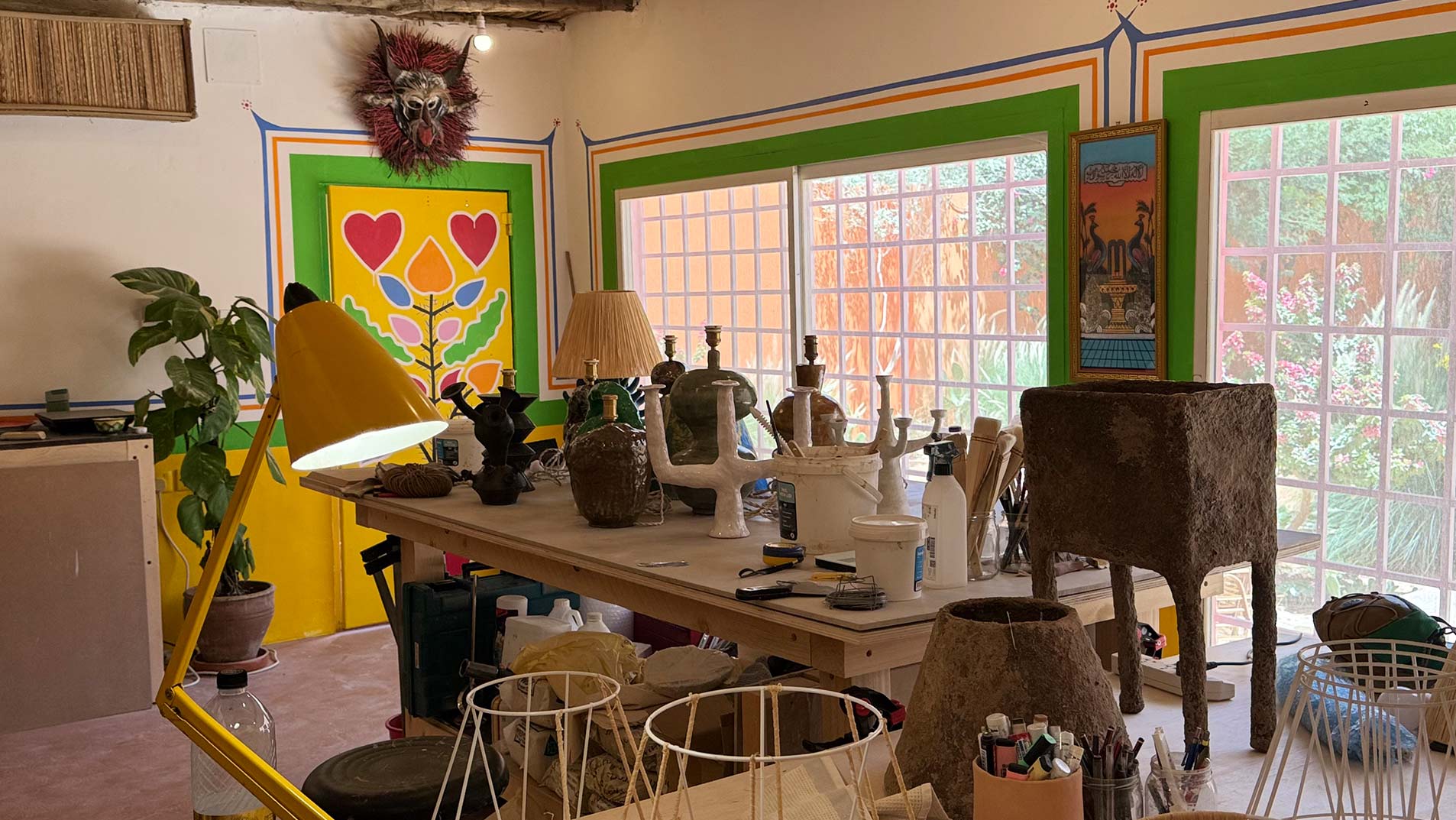
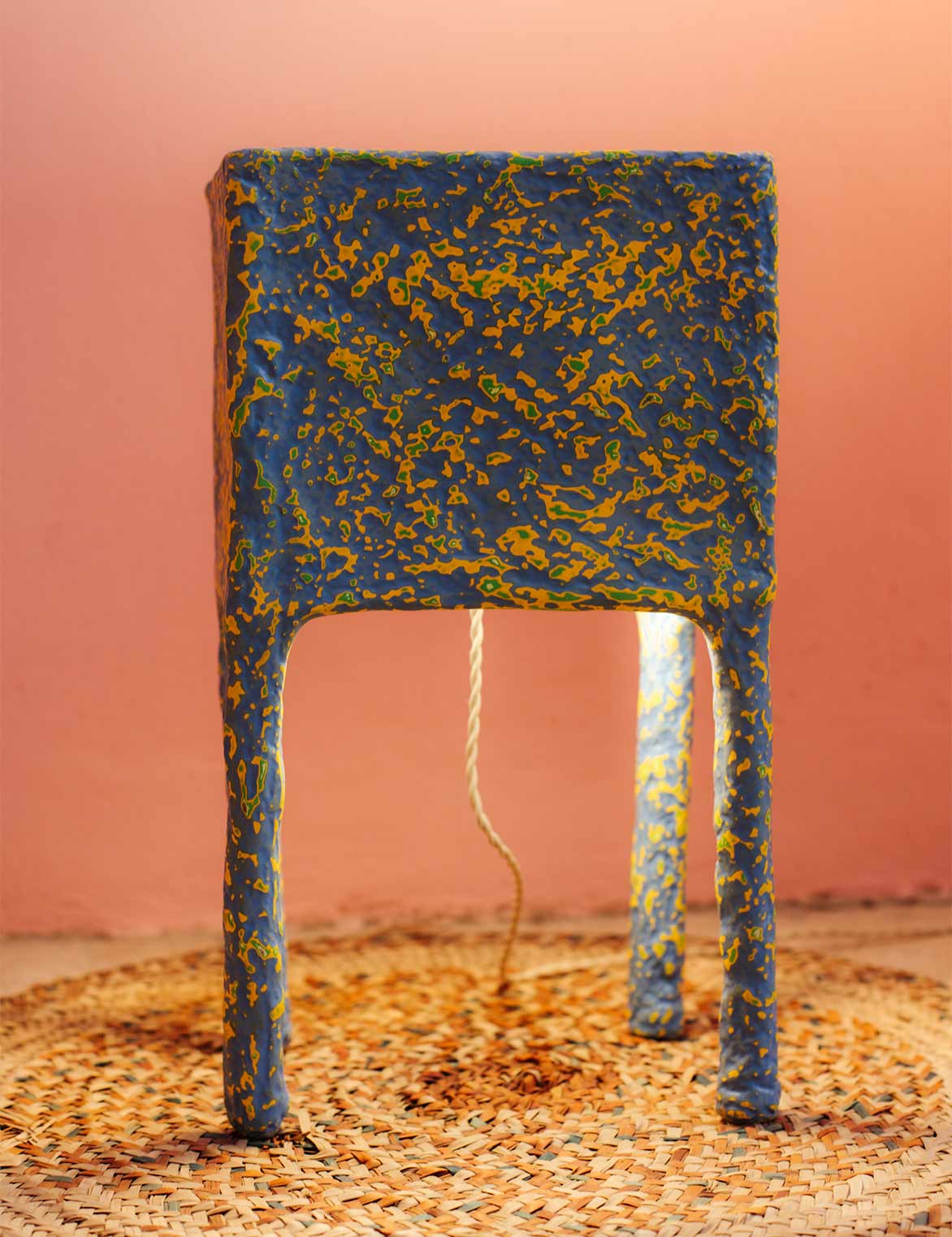
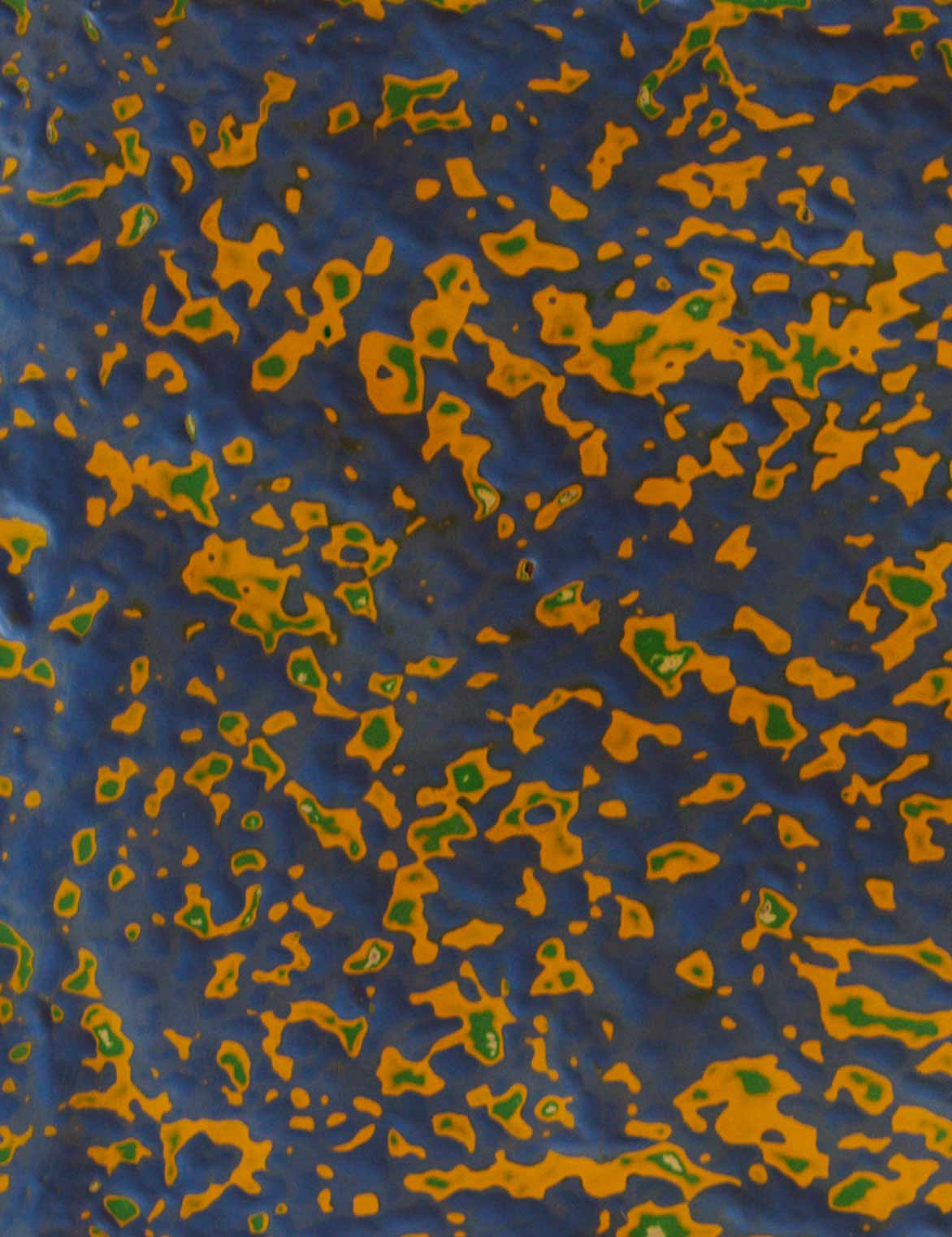
Riyadh is a difficult place to start something when you don’t have the language, and you don’t know the culture. There were a lot of challenges in sourcing materials. There wasn’t the same access to supplies as in Melbourne, which forced me to become more creative. It was also very frustrating. I had many issues installing my kiln and getting the right ingredients for glazes. It probably took me 12 months to really start using the studio, but I used that time to work on my garden and to think about my practice as an artist. What if I started recycling paper and cardboard as a sculpting material? What if I started using glass? I think the frustrations forced me to open myself up to new possibilities in my artistic identity.
You describe your studio as part of your creative expression. What does that space mean to you?
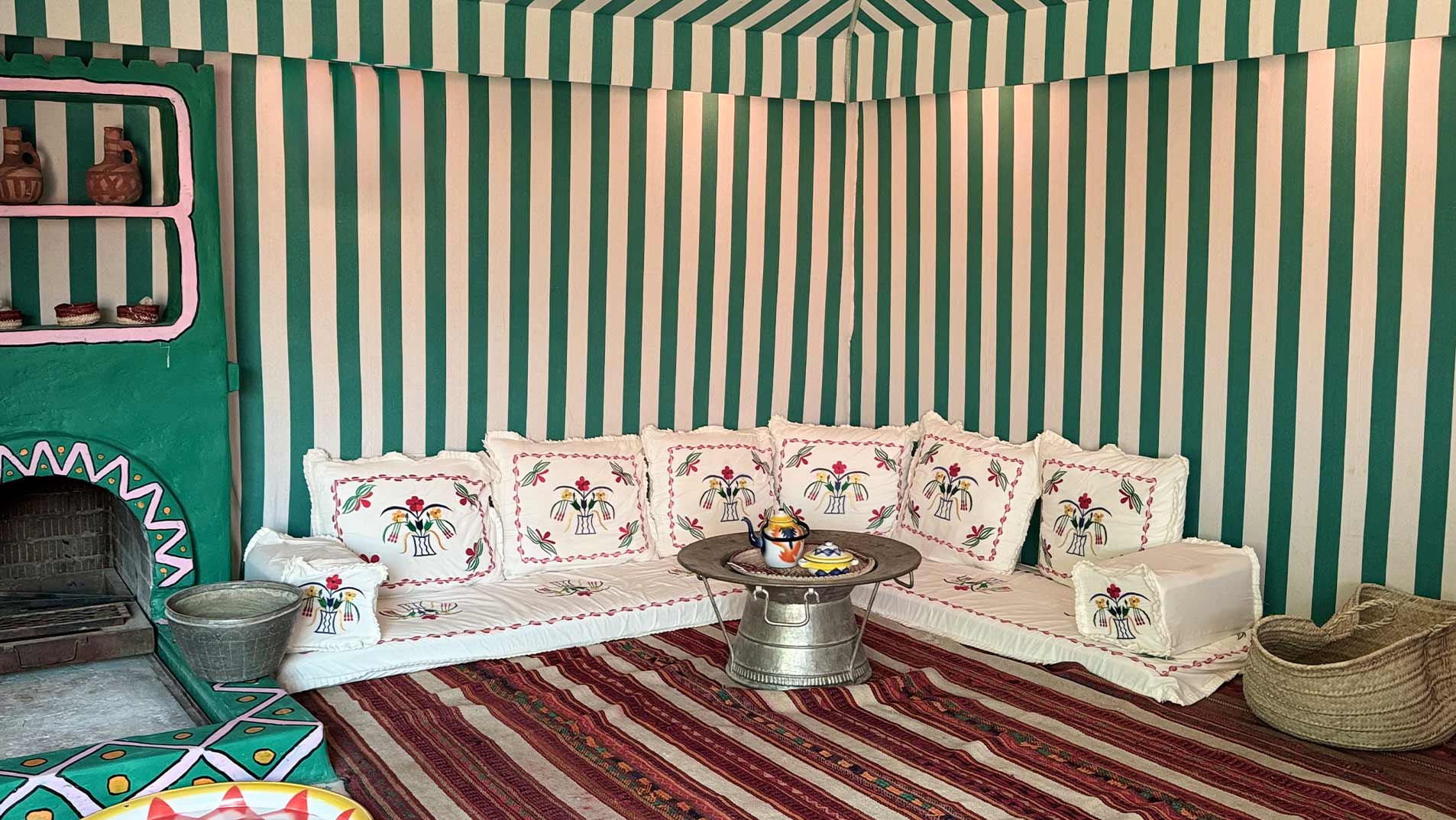
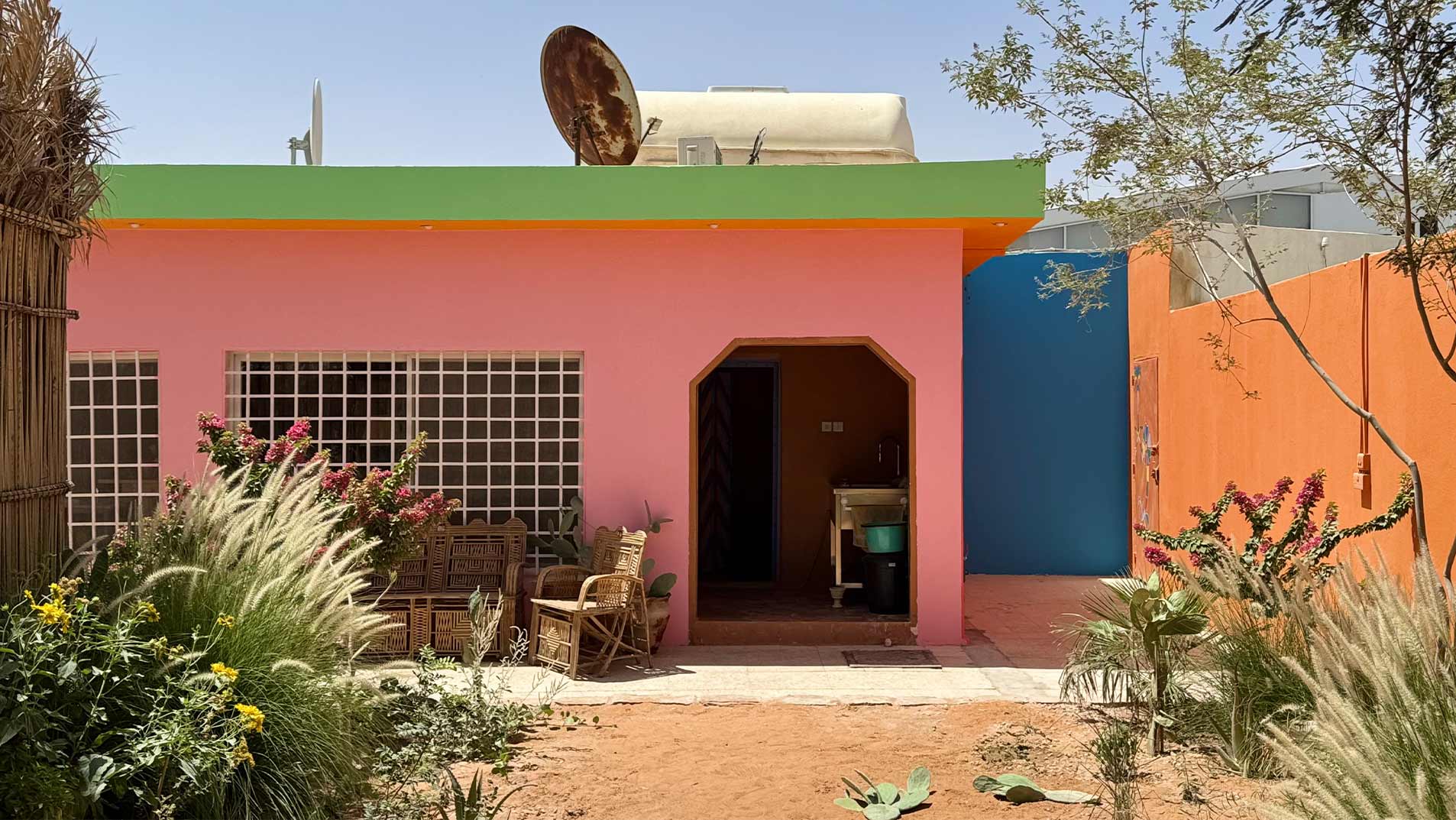
The studio is a special place for me. It’s always a work in progress, but it is also a place that I can relax. There is my studio but there is also a tent and a garden. The place I have rented is called a rest house or istiraha in Khaleeji Arabic. These spaces normally are rented among friends as a place to hang- out away from work and family. The studio is close to my home, so I come here even on the weekends. I have a couple of stray cats who live here now, and I am always adding to my garden. The place is a bit of refuge from the city. Its Peaceful.
Can you share a moment when trusting your intuition with materials paid off?
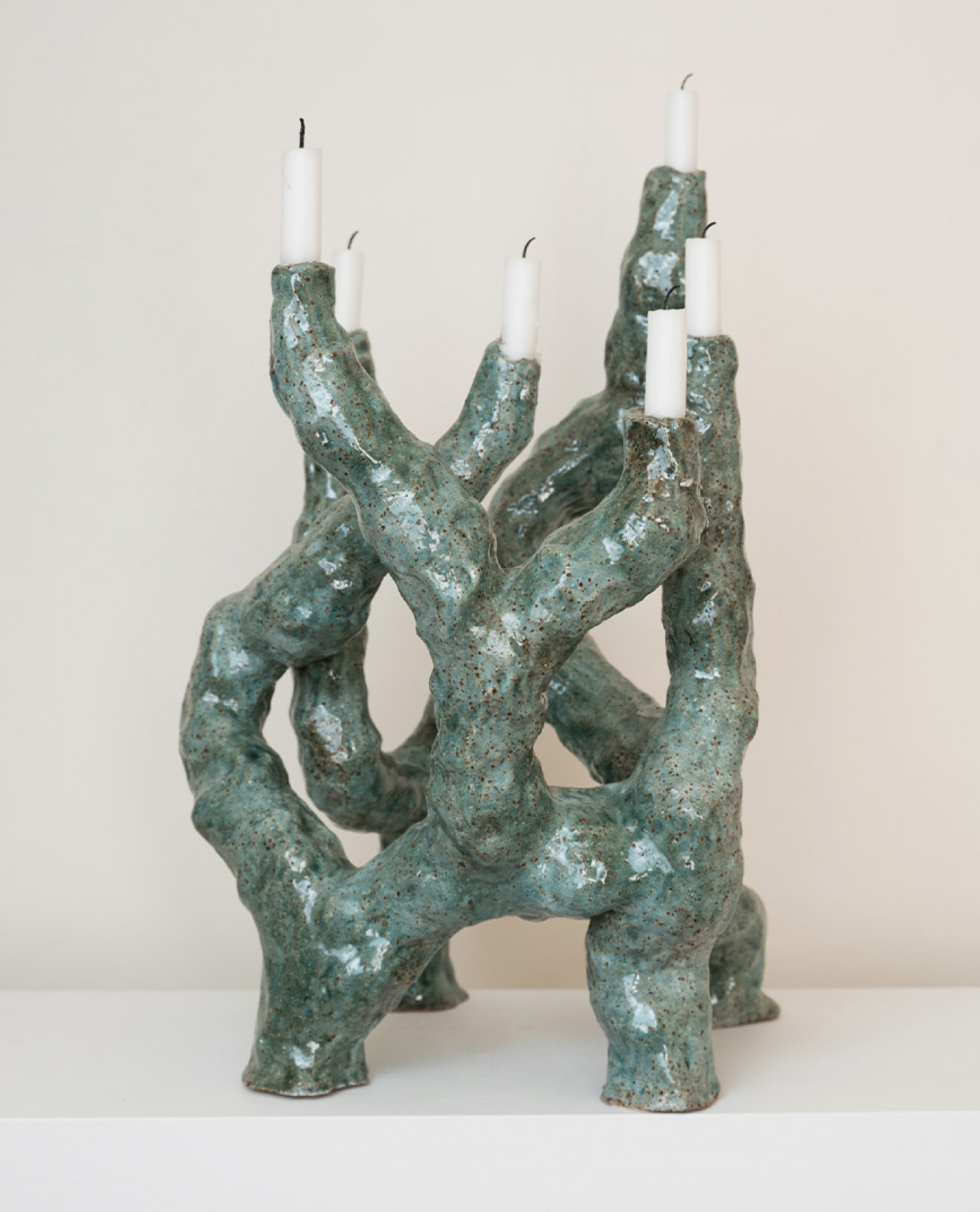
Trying to buy the ingredients for glazes was proving impossible and so I started doing my own research into the chemical compounds of things that I had access to. Egg shells, coffee grinds, palm tree branches – I was always
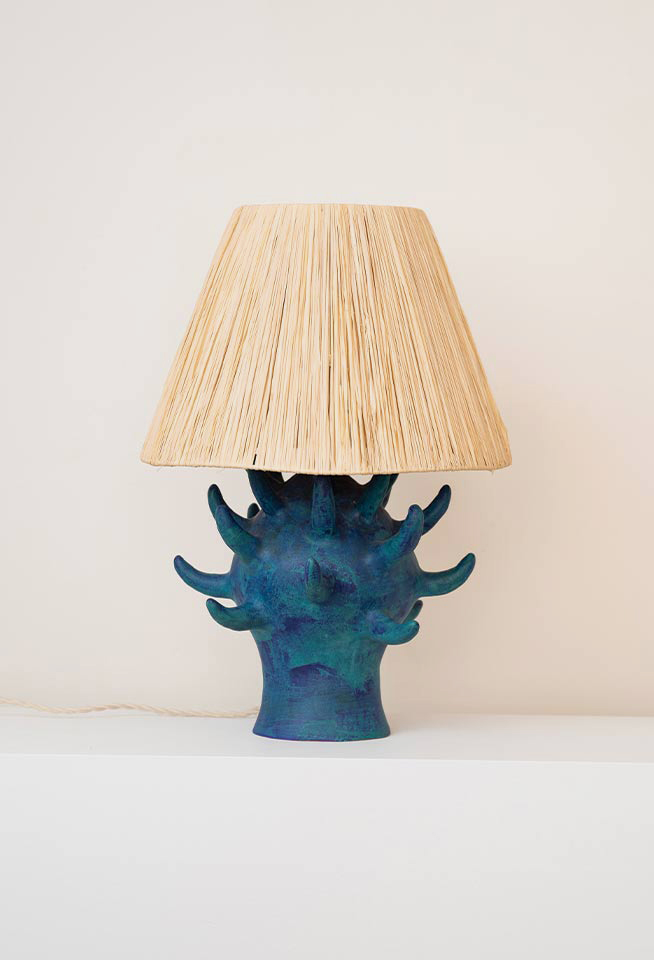
throwing these things away and begun to experiment with these materials as alternatives to the store-bought materials for glazes. The most successful has been this dried clay that I found in a wadi (dry river valley) near Riyadh. I fired it and instead of hardening, it melted into a beautiful green glaze. I have a few projects to finish at the moment, but once I have more time I am looking forward to experimenting more with these materials.
Is there a ritual or habit you return to when starting a new piece?
I do a lot of visual research so when I start a new piece it comes from a sort of blend of images that I have in the back of my mind. I think the volume of imagery I see through Instagram, travelling, and printed books is what helps give me inspiration and the idea. It usually sits with me for a few days before I start trying it out. Then there is the material of the clay itself. Whether you take control of the clay, or if you allow the clay to respond. There is always the risk of the piece collapsing, and part of this influences the character of the work.
How has being part of the emerging art and design scene in Riyadh influenced you?
It’s been positive. It’s a small scene and so it is easy to connect with people and be part of the community. This means I have closer relationships to museums and galleries. I think the Khaleej in general has a really incredible arts scene that is very welcoming.
What part of your work is always evolving, and what do you think will always stay the same?
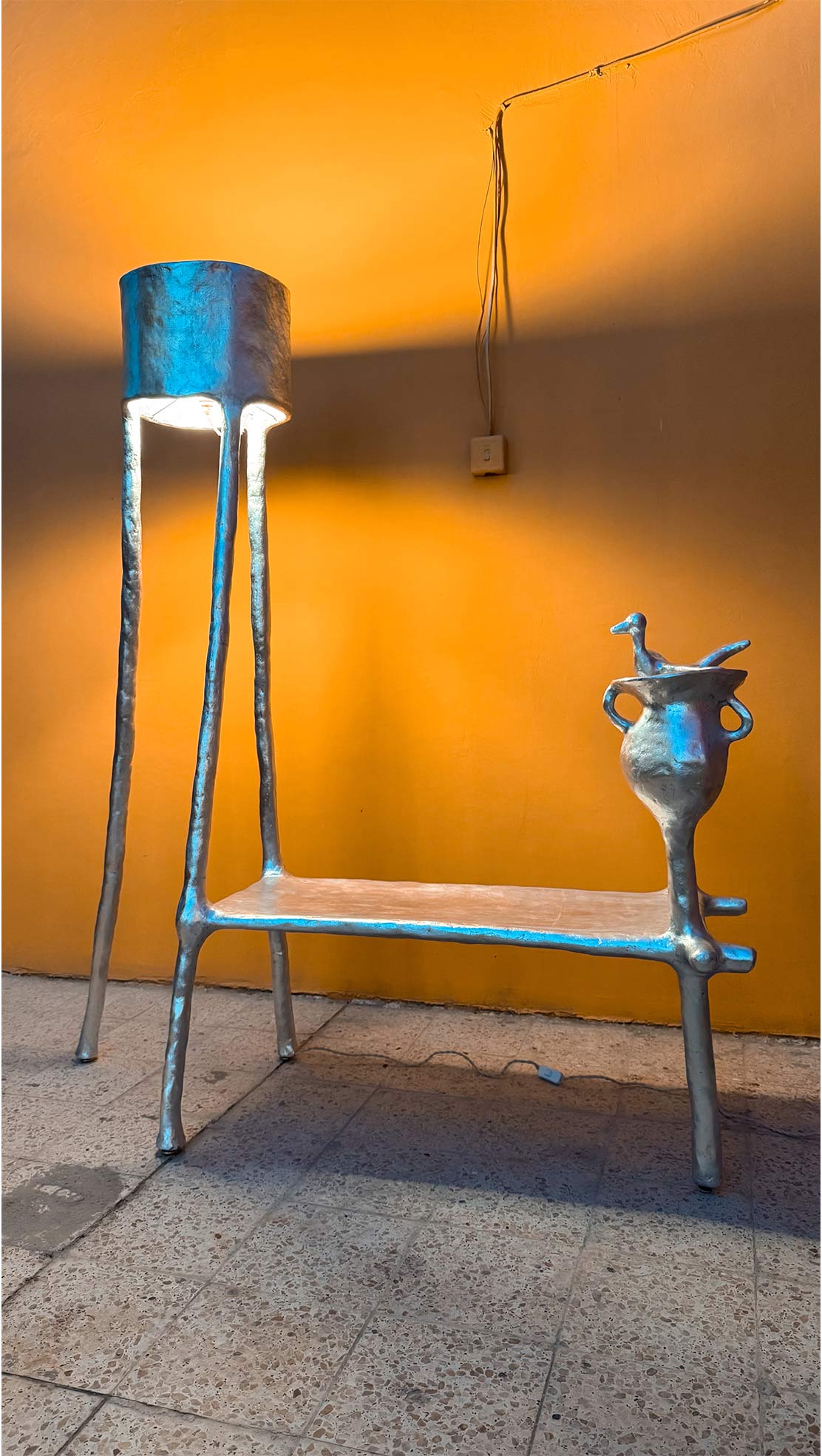
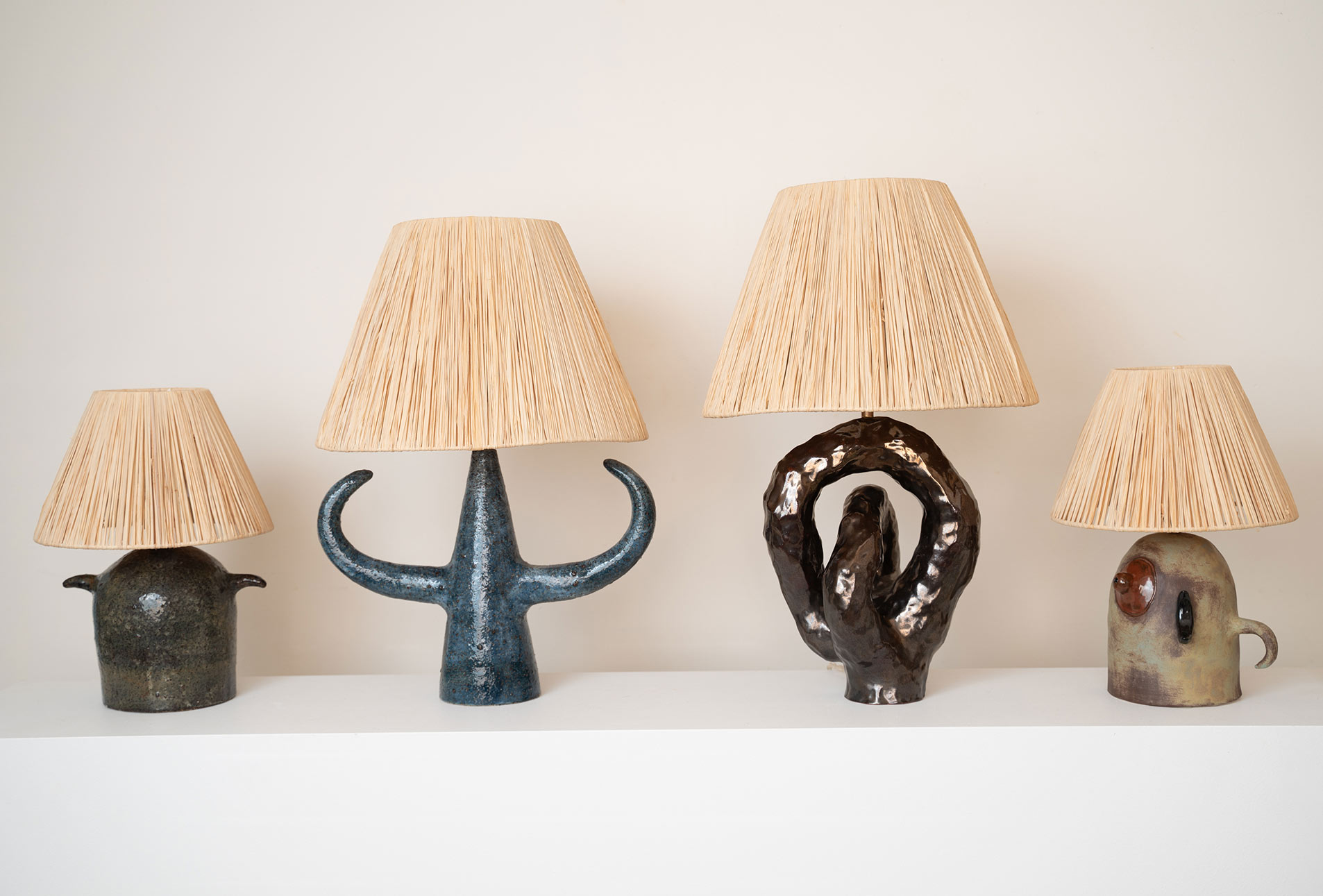
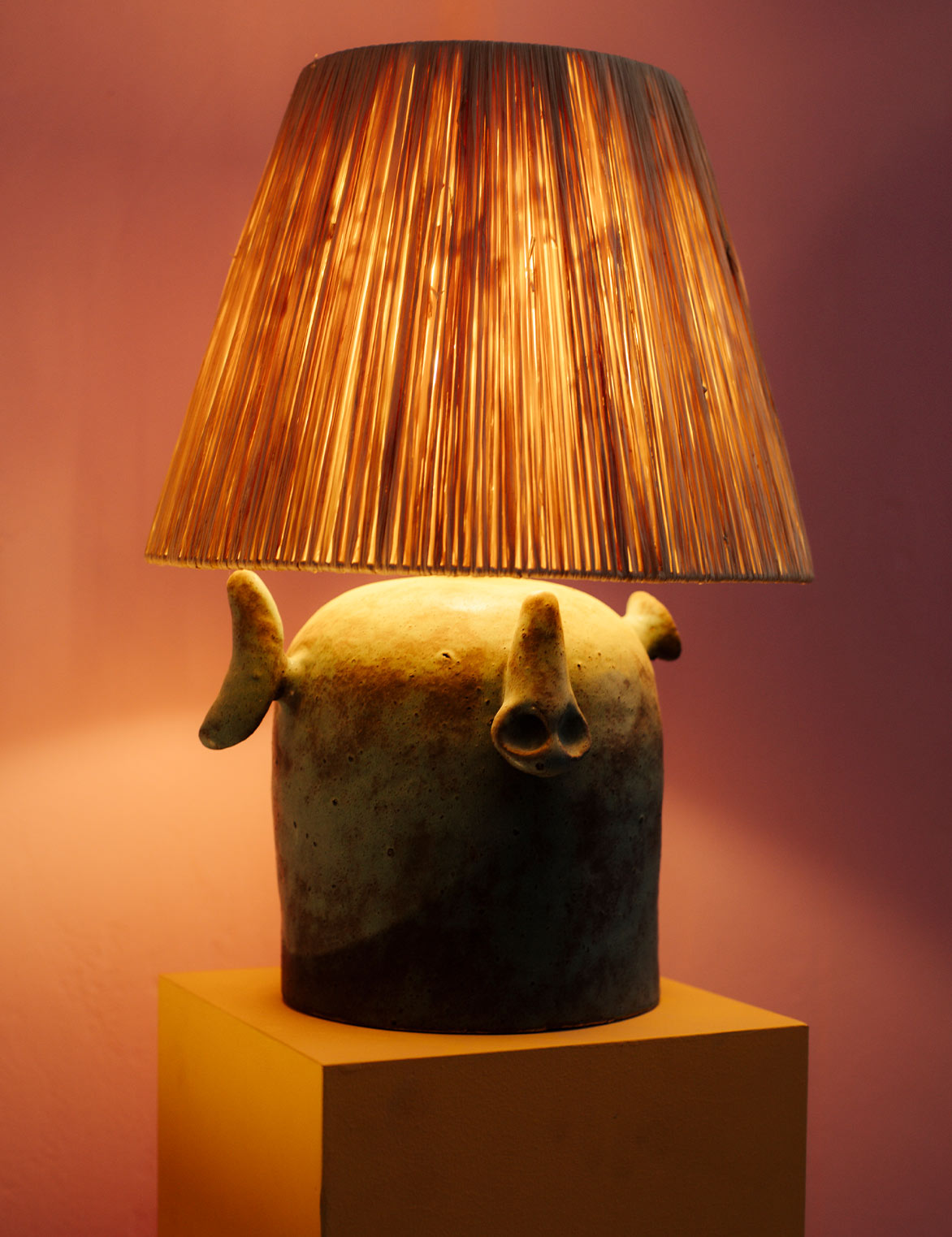
My use of materiality is always evolving. I would like to keep the authenticity of what I do. If I see something that has become too mainstream, I try to move away from it. Like raffia lampshades. I am trying to find alternative solutions for covering my lampshades now as this material has adopted new aesthetic qualities since I first started doing it. I think that I always return to my childhood in Mallorca as one of my main points of inspiration. Annual school trips to the studio of Joan Miró (whose studio is in Palma), and the local folklore of the island will always stay with me.
What are you exploring with your new series of masks?
This is really channelling that Mallorcan folkore – the demons, the supernatural creatures, and the surrealistic rituals. Every year, at the end of carnival, we have the funeral for the sardine, where we burn a fish on Ash Wednesday to mark the beginning of the cuaresma. That’s when a woman with
seven legs arrives for the seven weeks of lent – a griddle and a sardine in each hand. It’s the absurdity behind these characters from my childhood that keep coming back and so the masks are part of a broader exploration of this Culture.
If you had no limitations, what would be your dream project?
I have a lot. Build my own house would be one, but as it relates to my practice, I think I would like to make something with a variety of different materials. Ceramic, glass, papier mache, wood, textile – some kind of expression through all these mediums together. I think it would be a sculptural thing. I have been thinking about the meticulous ways in which people dispose of rubbish in
Riyadh. Sometimes over months or years, a little crack in a wall is filled with people’s rubbish. This group exercise of dealing with detritus. A small expression, like a ritual, that was done without being intentionally aesthetic has become a composition that is very beautiful. It has given me the idea of doing a sculptural work that explores this.
Where can people find you?
You can find me at lucasbarcelo.com, on Instagram at lucasbarceloobjects, at
my studio off-JAX District in Riyadh, at WAMDA pop-up in the Saudi Arabian
Museum of Contemporary Art, or in Downtown Design Riyadh from May 20-23.