Mahsa Merci
What’s your name and where are you from/based?
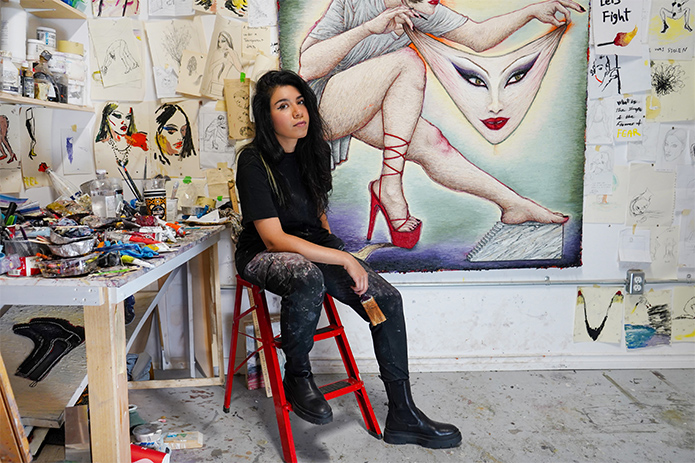
My name is Mahsa Merci, I was born in Tehran, capital city of Iran. I am living and working in Toronto , Canada.
Can you describe your practice in a few words?
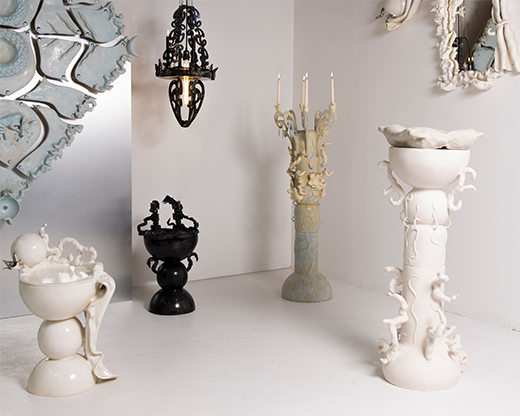
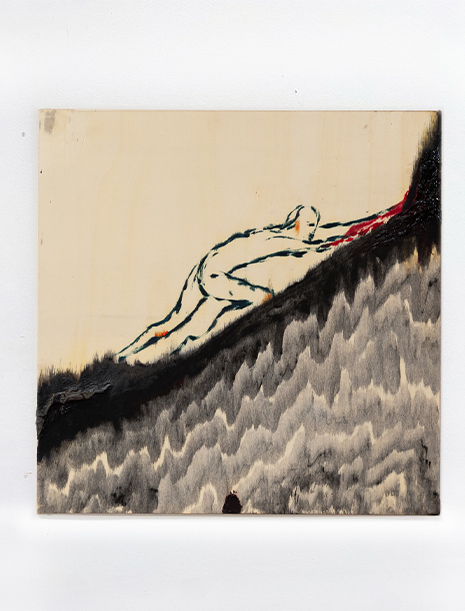
My practice revolves around an ongoing attempt to define and re-define the self, as a layered, unstable, and continuously shifting structure. I am interested in how the self emerges from the unconscious, how it is shaped through lived experience, and how structures of power become internalized and inscribed onto the body over time. Rather than seeking resolution or clarity, my work is driven by the act of questioning itself, allowing uncertainty to function as a generative force. Through painting, drawing, sculpture, and installation, I explore the psychological and emotional layers that construct identity, with particular attention to queerness as a lived condition. Desire, concealment, and exposure recur as central forces within this inquiry, revealing how identity is formed, fractured, suppressed, and continuously reconfigured. My practice does not aim to define the self conclusively, but to trace its instability, acknowledging the self as something that is constantly dissolving, reforming, and negotiating its presence within broader social and political structures.
When did painting become a way of making sense of yourself?
Painting has always been the most difficult and painful medium for me. Every time I begin a work, I enter a space of uncertainty where I’m never fully sure what will emerge or where the painting will eventually lead me. At the same time, this difficulty is exactly what keeps me attached to it. Painting feels less like executing an idea and more like entering a conversation with something unstable and partially unknown. Over time, I realized that I cannot approach painting in a completely controlling or dictatorial way. The material itself, paint, gestures, stains, textures, accidents, begins to push back and generate its own direction. Very often, the work arrives somewhere I could never have anticipated beforehand, and that unpredictability is what makes the process feel alive to me. Through layering, repetition, erasure, and fragmentation, painting became a space where I can remain close to what is unresolved, unconscious, or difficult to articulate directly. The process can feel exhausting, even brutal at times. I often think about Francis Bacon describing painting as trying to escape a swamp, and I deeply understand that feeling, the sense of struggling inside the work while simultaneously trying to save it from collapsing. Yet within that tension, painting also becomes one of the few places where I can genuinely discover something beyond my own intentions. It operates somewhere between control and surrender, instinct and reflection, becoming a continuous process of negotiating both the work and myself through it.
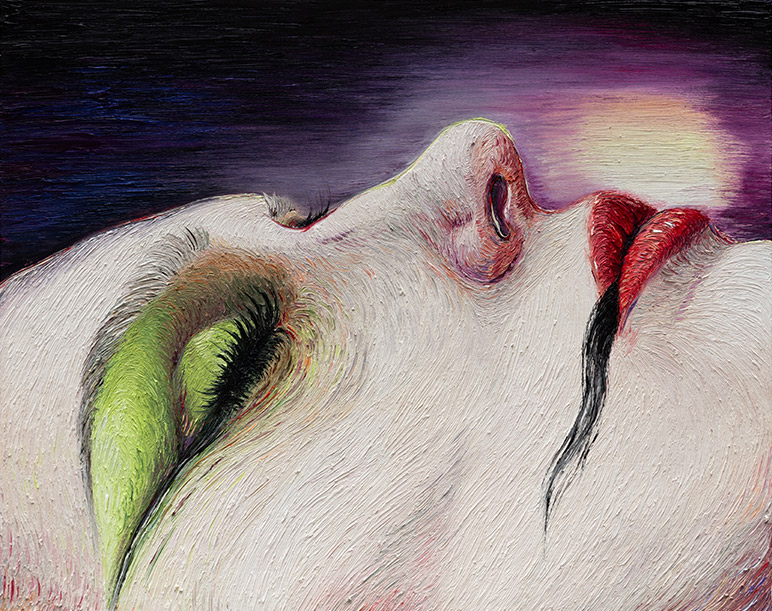
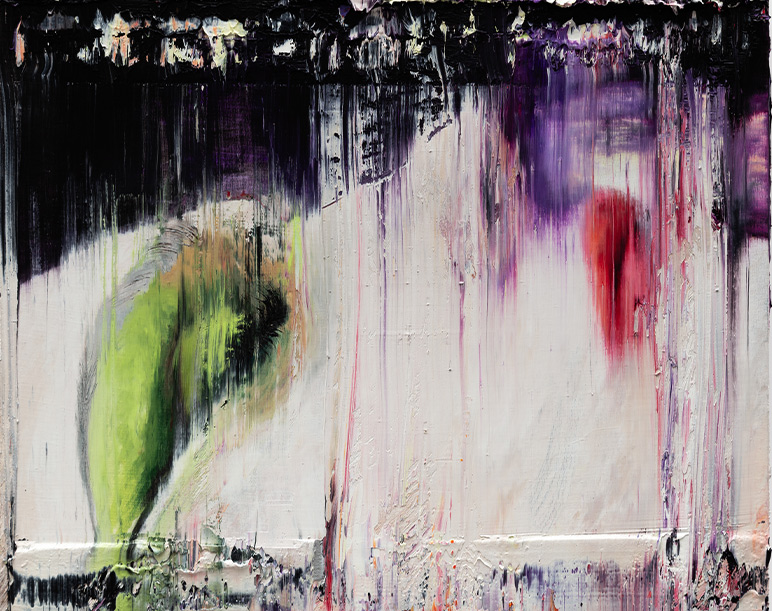
There’s a sense of exposure and concealment in your work. What does being visible mean for you?
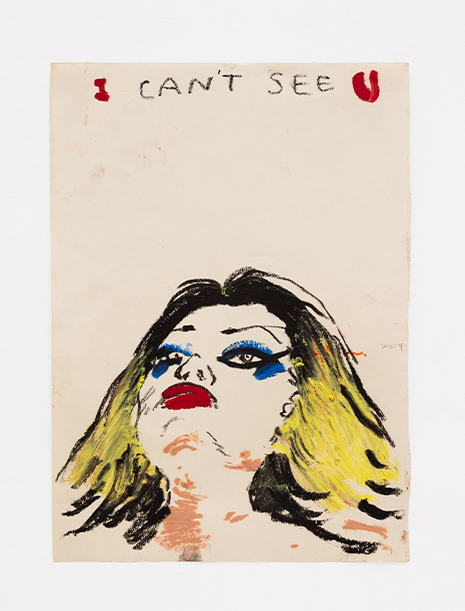
For me, concealment is just as intentional and meaningful as revelation. This space between being seen and remaining hidden, this in-between state, is where the core tension of my work takes shape. I am consistently drawn to dualities: between being and non-being, presence and absence, visibility and invisibility, conscious and unconscious. This state of in-betweenness is not transitional for me, but central to both my thinking and practice. Visibility, for me, does not mean complete transparency or direct exposure. It functions more as an ongoing negotiation, how much can be shown without erasing what needs to remain protected. In my work, absence can articulate presence, just as presence can carry traces of absence. Both sides of this duality are equally important, as it is through their tension that the complexity of meaning emerges. In this sense, visibility becomes an unstable and continuously shifting act, a form of presence that allows recognition without full surrender, and exposure without total disclosure.
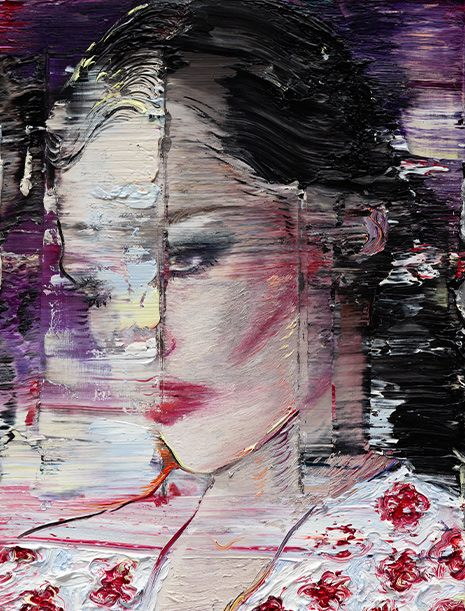
Many of your figures are duplicated, or fragmented. Is fragmentation something you resonate with?
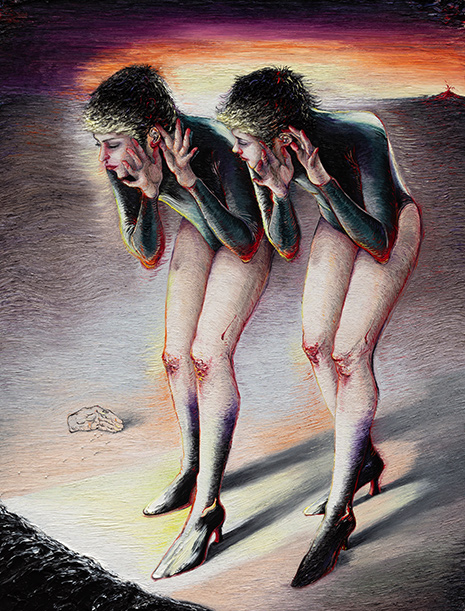
Yes, very much. For me, fragmentation is not simply a visual strategy or aesthetic decision; it feels deeply connected to how I experience identity itself. I don’t really see the self as something stable, unified, or fully coherent. It constantly shifts between different emotional, psychological, and social states, sometimes even contradictory ones. Fragmentation, in that sense, becomes less about breaking something apart and more about acknowledging that multiplicity already exists within us. Duplication also plays an important role in my work for a similar reason. Repeated figures are never meant to function as exact copies of one another. Instead, they create a kind of dialogue or tension between different states of being — almost like a negotiation between the conscious and unconscious, control and vulnerability, concealment and exposure. Sometimes a figure feels like it is confronting another version of itself, or existing beside a parallel emotional state that cannot fully merge into one singular identity.
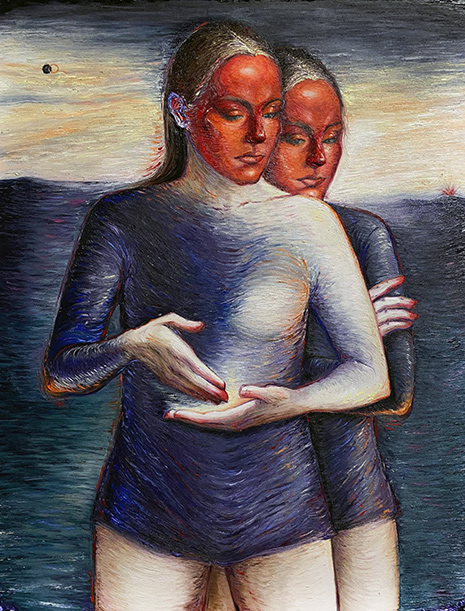
Your paintings have layered and tactile surfaces, what does texture allow you to say?
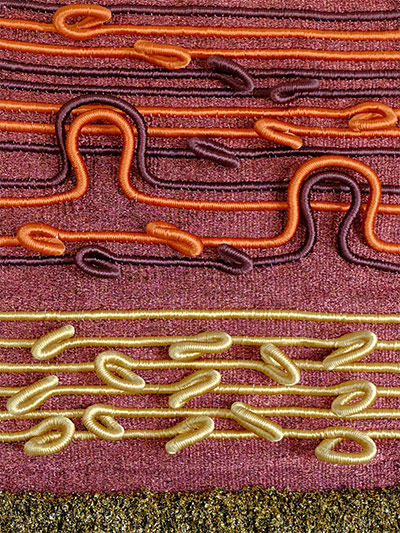
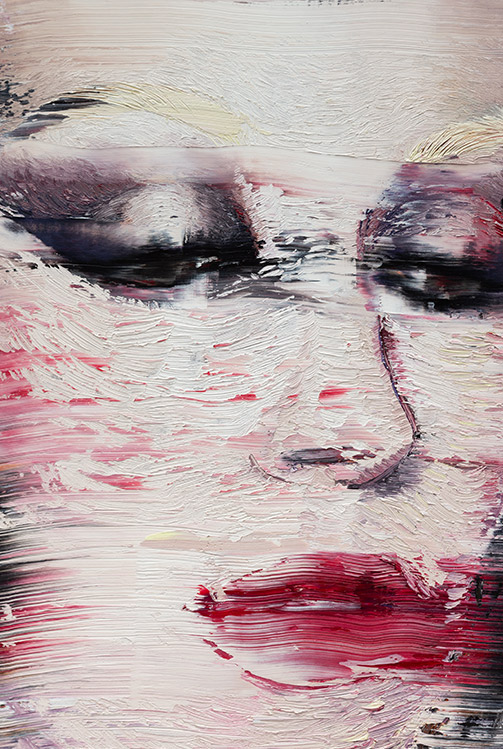
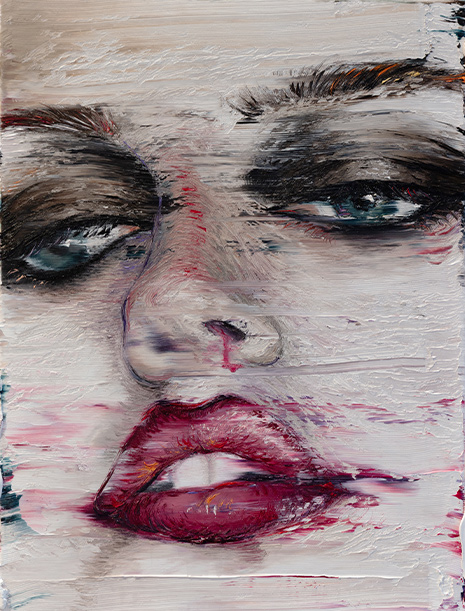
For me, texture is a way of saying something that the image alone cannot fully communicate. I think a surface can hold traces of time, pressure, hesitation, repetition, or even resistance. Every layer carries evidence of a process, moments of building, destroying, covering, or returning. In that sense, texture becomes less decorative and more psychological or bodily for me. I often think of the painted surface almost like skin, something that records pressure, vulnerability, exposure, and time. I’m interested in surfaces that feel unstable or unresolved rather than polished or complete. Through density, layering, scratches, stains, and accumulation, the painting begins to hold a kind of physical memory. It moves beyond being only an image and becomes something closer to an embodied experience. I think texture allows contradictions, doubt, and vulnerability to remain visible within the work instead of being smoothed over or hidden.
What’s behind the detailed symbols in your work?
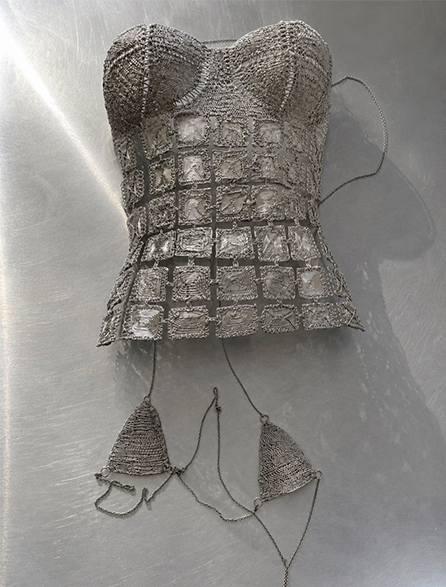
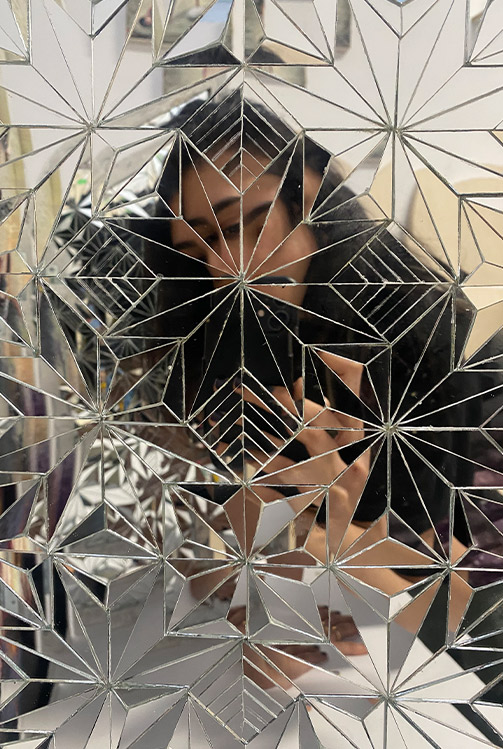
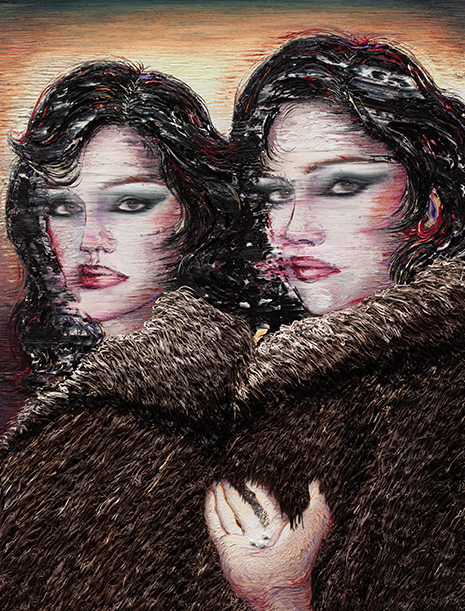
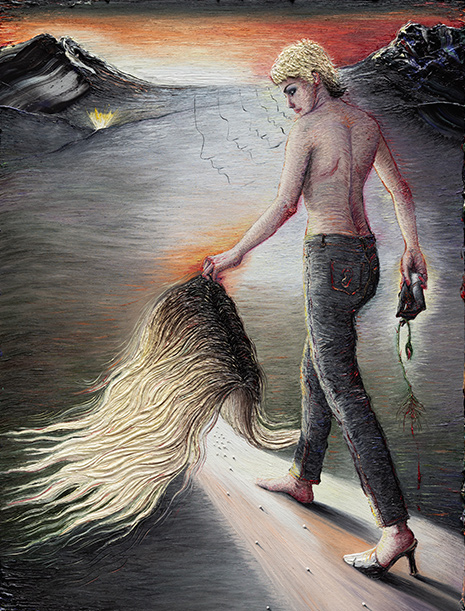
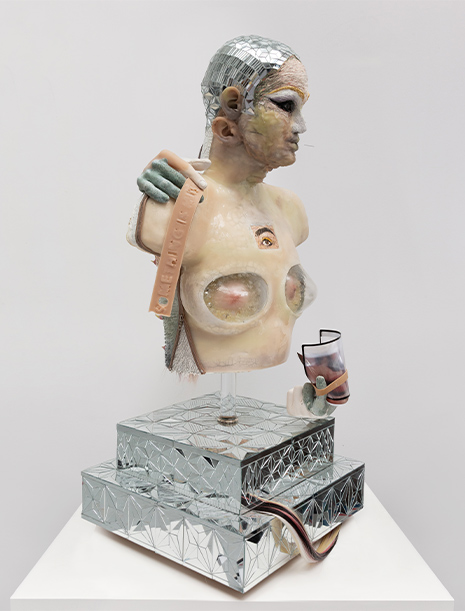
In my work, these elements function less as fixed symbols and more as ways of thinking through lived experience, identity, and the body. I’m interested in how certain materials or images can carry emotional, political, and psychological tension simultaneously. For me, hair has always been deeply political. Growing up in Iran, hair was never simply aesthetic; it was tied to control, visibility, restriction, and resistance. That relationship has stayed with me and continues to appear throughout my work. Skin also interests me as a kind of threshold — a surface where vulnerability, desire, memory, and the gaze of others become registered. I often think about the body as something that absorbs pressure and experience over time. Mirrors are important to me both personally and culturally. My use of mirror work comes partly from Iranian artistic traditions, which I practice myself, but also from an ongoing fascination with reflection and fragmentation. Rather than producing a complete image, mirrors break the body into unstable and shifting pieces, and that feels much closer to how I understand identity itself. Makeup operates similarly for me — somewhere between construction, performance, concealment, and protection. It allows the face to become a space of transformation rather than something fixed or singular. Taken together, these elements form a visual language for approaching things that are difficult to articulate directly. I’m less interested in giving definitive meanings and more interested in creating spaces where identity can remain unstable, layered, and unresolved.
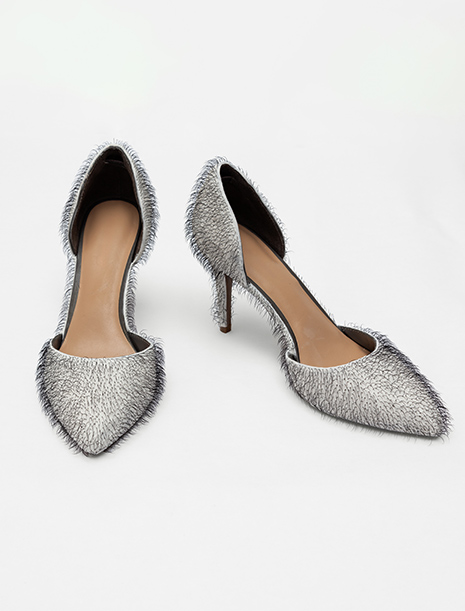
Regarding the mirrors, is reflection something you trust?
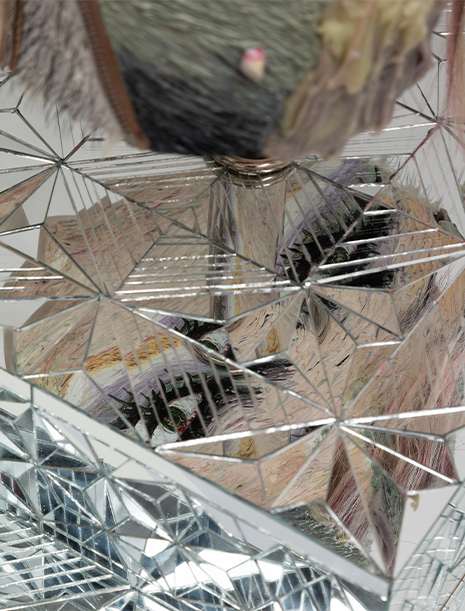
Honestly, I don’t think I fully trust reflection in its usual form, the kind of mirror that gives back a clean, singular, stable image of yourself. That image has always felt too simplified to me, almost artificial. I feel much more connected to the mirrors I create myself through mirror work. Even though they appear structured and visually
beautiful from a distance, they never allow you to see a complete or fully stable version of yourself. When you stand in front of them and try to recognize your face, everything begins to fragment, the eyes, the mouth, the skin — repeated and broken into multiple pieces. Strangely, that fragmented image feels more honest and more trustworthy to me than a unified reflection. It reminds me that identity is layered, unstable, and constantly shifting. In a way, those broken reflections allow me to come closer to parts of myself that a normal mirror could never reveal.
If your process is a form of self-understanding, are there things you recognize in your earlier works that now feel somewhat distant or unfamiliar to you?
My practice has never been structured around isolated projects; it has unfolded as a continuous process throughout my life. For this reason, it is difficult for me to view my earlier works as something entirely unfamiliar or disconnected from who I am now. Each work formed part of a necessary path that led me to my current position. Over time, a sense of distance does emerge, but it is a distance shaped by growth, experience, and shifting awareness. My earlier works feel like steps within a house: each one essential in allowing me to move upward, even if I now look back at them from a different level. In this sense, my past works are neither something I have separated from nor something I remain identical to. They continue to exist as integral layers of my practice, without them, my present work would not be possible.
Where can people find you?
I’m working at my studio in Toronto. I’m usually in the studio most days. Also, you can find my work on Instagram at @mahsa.merci