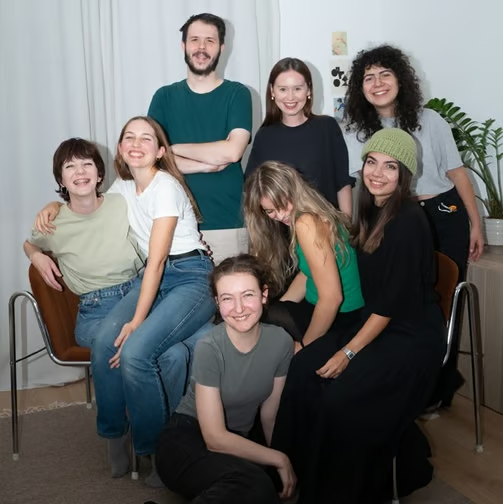
MAIII Collective
What are your names and where are you based?
Members of the collective:
Rebeka Csiby-Gindele
Viktória Dawson V.
Eszter Hanko
Balázs Kisgyörgy
Flóra Lukovics
Blanka Timári
Roberta Wende
Zsófia Zala
We are all currently living and working in Budapest.
Can you tell us about what you do?
Viki: I’d definitely say it goes further than simply creating—at least for us it does. But we’d also like to expand this circle and help strengthen the design scene and culture in Hungary, and share its potential and values internationally. Behind the act of making, in the physical sense, there are countless hours of professional, cultural, and often philosophical discussions, debates, and research. Even our casual conversations as friends play a big role in shaping both us and our objects.
Our work aims to highlight values that are often hidden or fading. I think even just the strength of the collective itself—the sense of unity and commitment—is one such value.
How did MAIII Collective begin? Is there a specific moment you knew you wanted to work together?
Viki: There was this bittersweet feeling during our last university semester, working shoulder to shoulder in the workshop—we didn’t want it to end. The idea came up here and there afterward, but it wasn’t until a year later that a specific moment arrived: Eszti asked if we’d be up for it. By that time, we had all realized that if we wanted to do this kind of work in Hungary, we’d have to create the opportunities ourselves—so yes, we were definitely up for it.
Balázs: We met at the university at the master’s programme, we were classmates and became good friends.
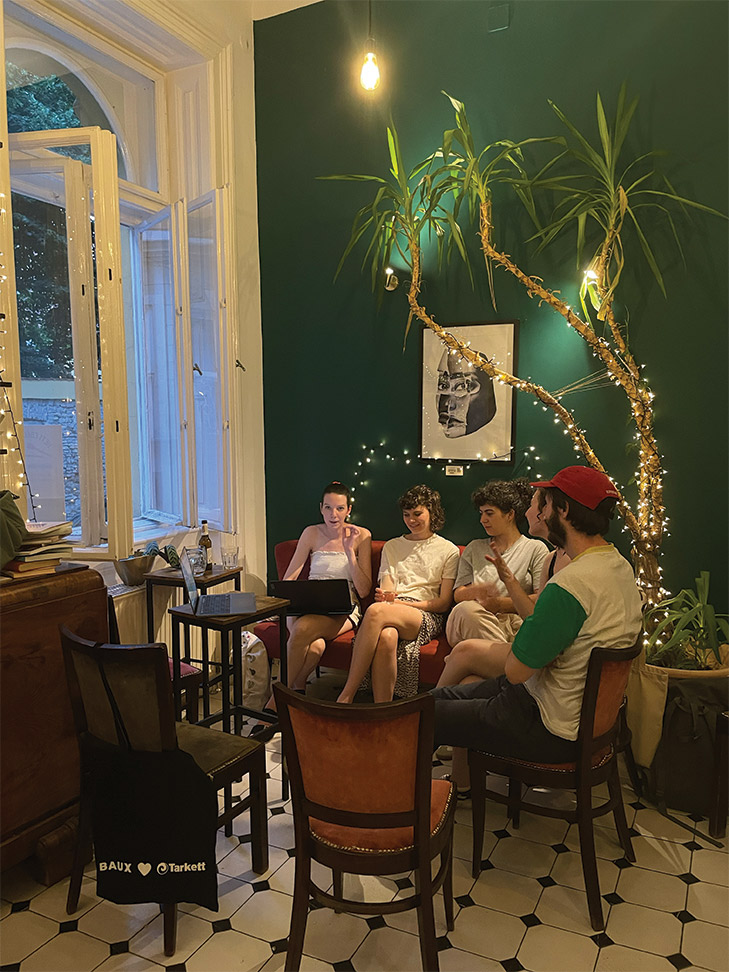
There’s 8 of you, how do you balance roles? Is this predetermined or changes depending on the project you work on?
Viki: We divide tasks based on individual strengths and availability, which vary a lot—since all of us have other jobs that finance our day-to-day lives and our shared passion. When organizing and running the Stockholm exhibition, we formed smaller working groups that held their own meetings. This helped a lot, because it meant not everyone had to be involved in everything at all times. That kind of mental load-sharing is a huge benefit of being a larger team.
What’s something unexpected you learned about yourself, or one another, during this project?
Viki: I think none of us originally joined the collective with this goal in mind, but it gave all of us a sense of confidence and helped us identify as designers. That feeling—that we are legitimate members of a professional community that we also bear responsibility for.
I think we also came to understand each other’s design identities and attitudes in ways that often don’t show up in finished pieces or solo works, but are very present during the research and design process—who’s more critical, who’s more permissive, who’s chaotic, who’s structured.
Through developing the concept of Fragments, we also shared much deeper layers of ourselves—how we grew up, what our grandparents’ houses were like, the memories tied to them, what we got for Christmas as kids, what we wished for, what each family could or couldn’t afford.
Can you tell us about your collection FRAGMENTS?
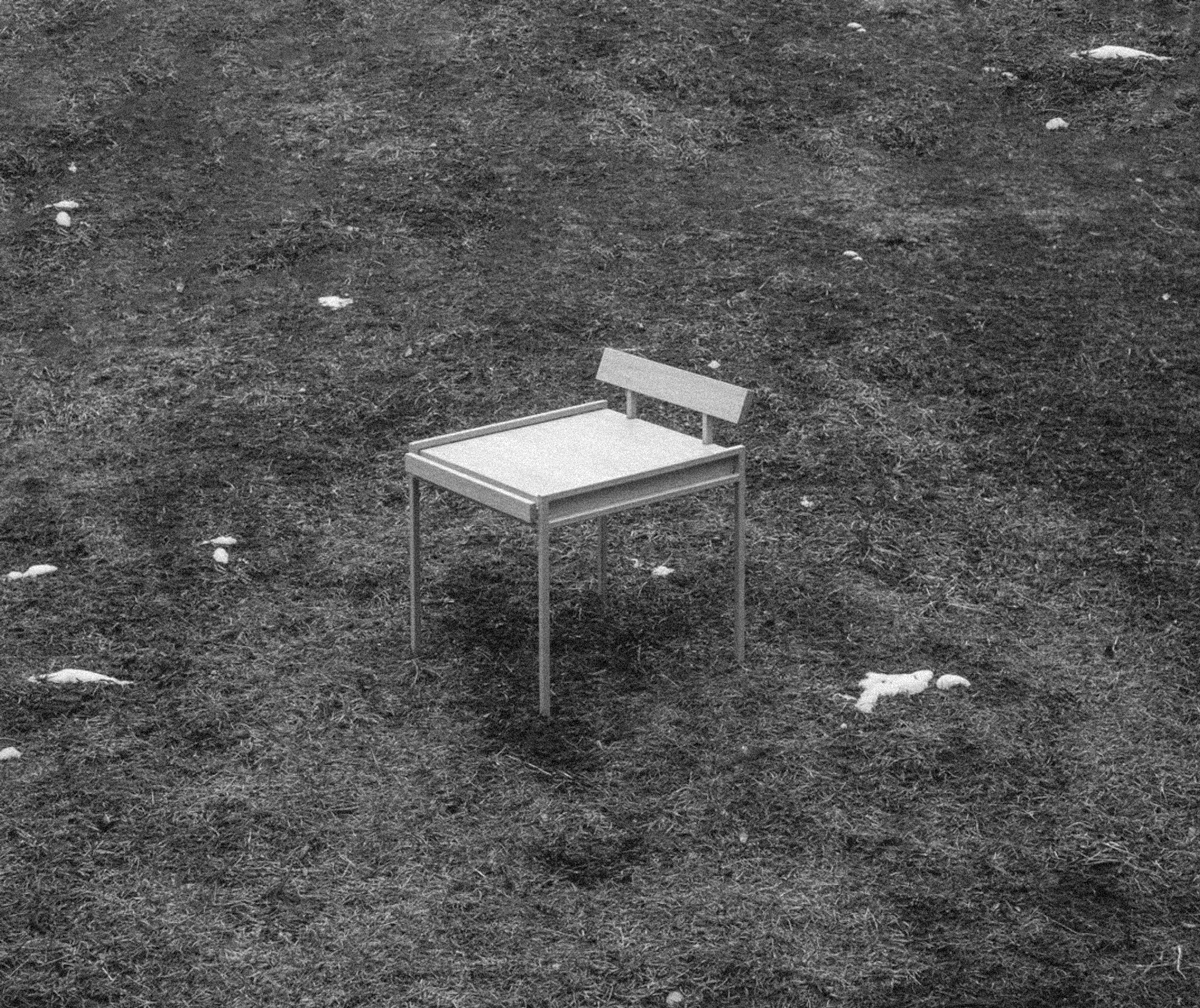
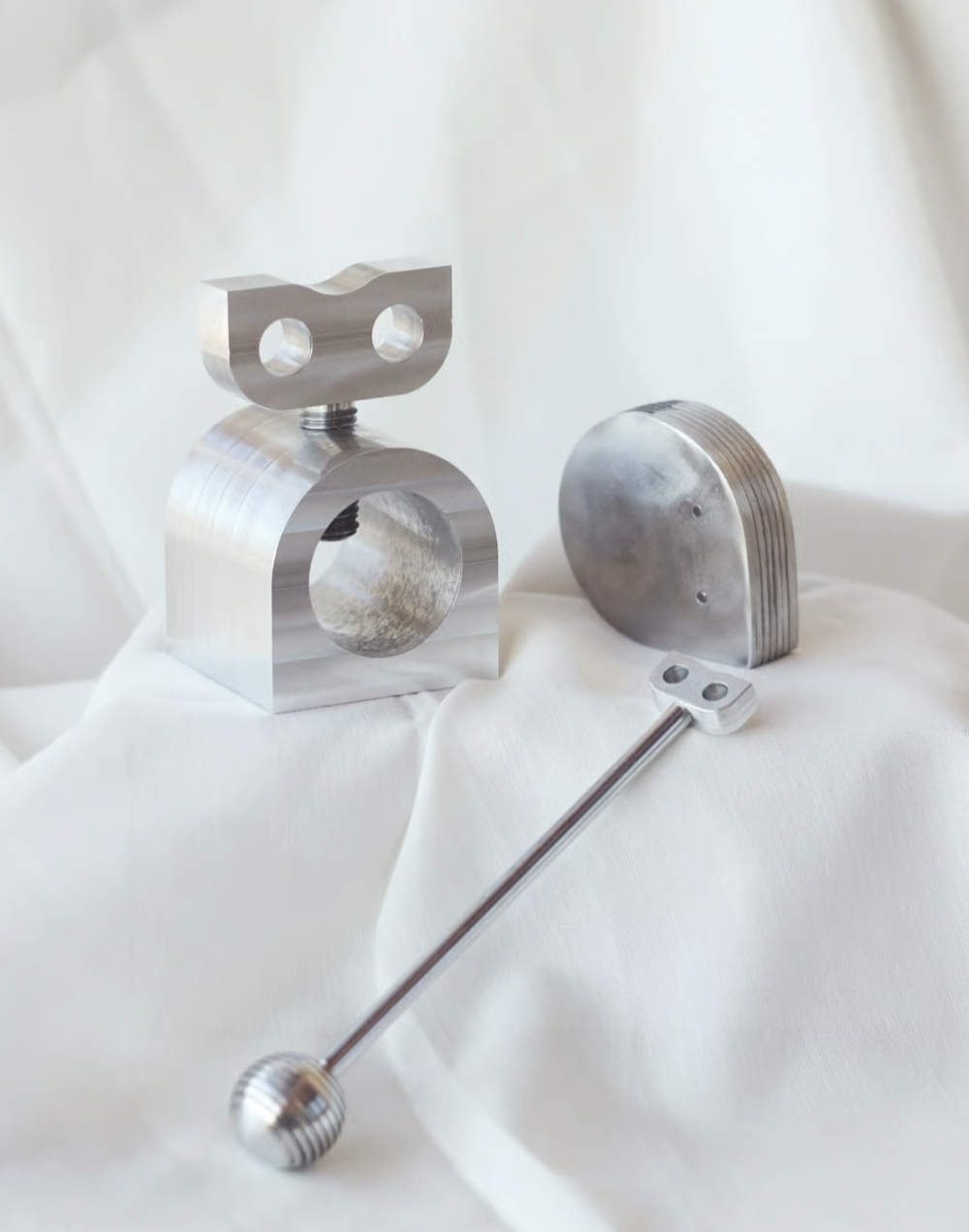
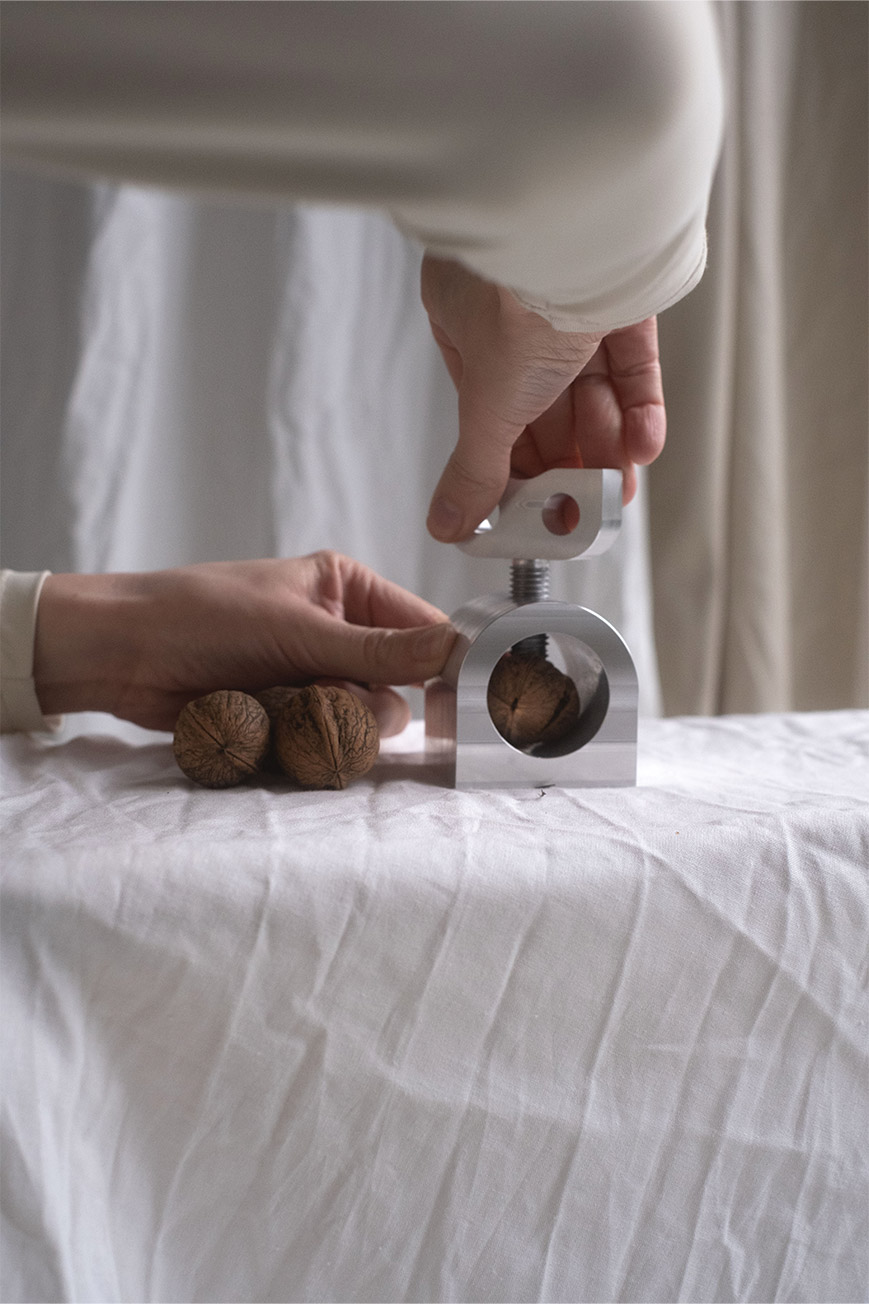
Balázs: Fragments is the first collection of narrative objects we created together. Each piece in the collection is a reflection of inherited identity and traditions that define our generation. Through furniture and objects, we share our cultural roots, values, personal and family memories that shaped us and that we want to pass on to the next generations. Context is crucial, when you share the story behind an object, it adds another layer of meaning. The project invites the audience to connect with these stories, whether through shared experiences or as a curious outsider exploring a new perspective.
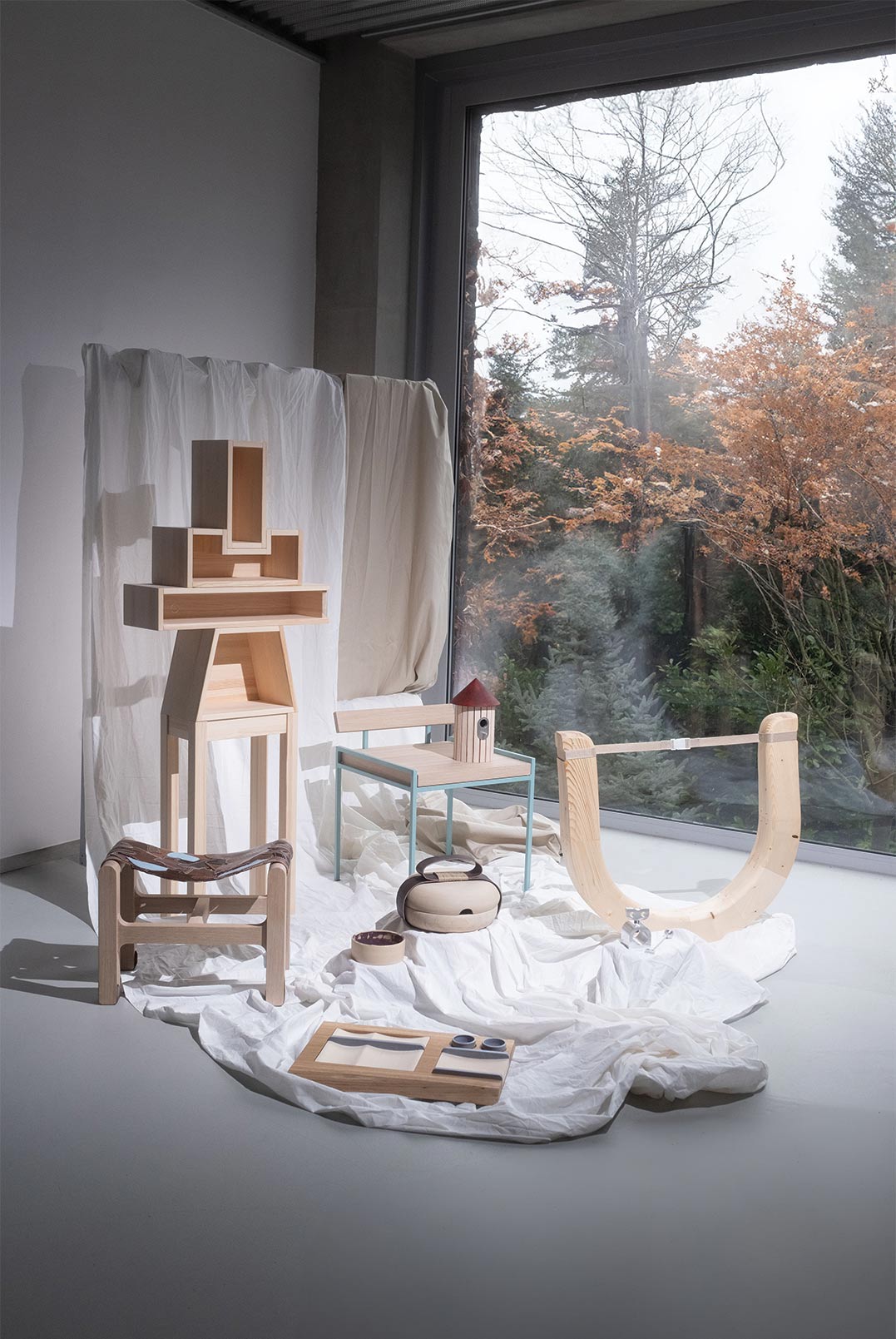
Each piece in FRAGMENTS holds personal history. How did you approach individual stories while building a cohesive whole?
Viki: When thinking about cultural identity, we often discussed how an outsider tends to associate Hungary with certain stereotypes that feel very distant to us as young adults living here. Our sense of belonging also has harder-to-define qualities: geographically we’re in Central Europe, but in daily life we often feel more connected to the Balkans, while linguistically we’re completely isolated—there’s not even a slight similarity to anything else.
Each of our objects expresses a personal story, but they also reflect broader characteristics we feel are common to many of us: striving for practicality, the art of creating something out of nothing, a touch of superstition, a fear of being deprived, caring through food…
These shared values tie the collection together conceptually. To unify it visually as well, it was essential that we met weekly to give each other feedback and align on materials and colors.
What does belonging mean to you as a generation of designers influenced by both tradition and globalized design discourse?
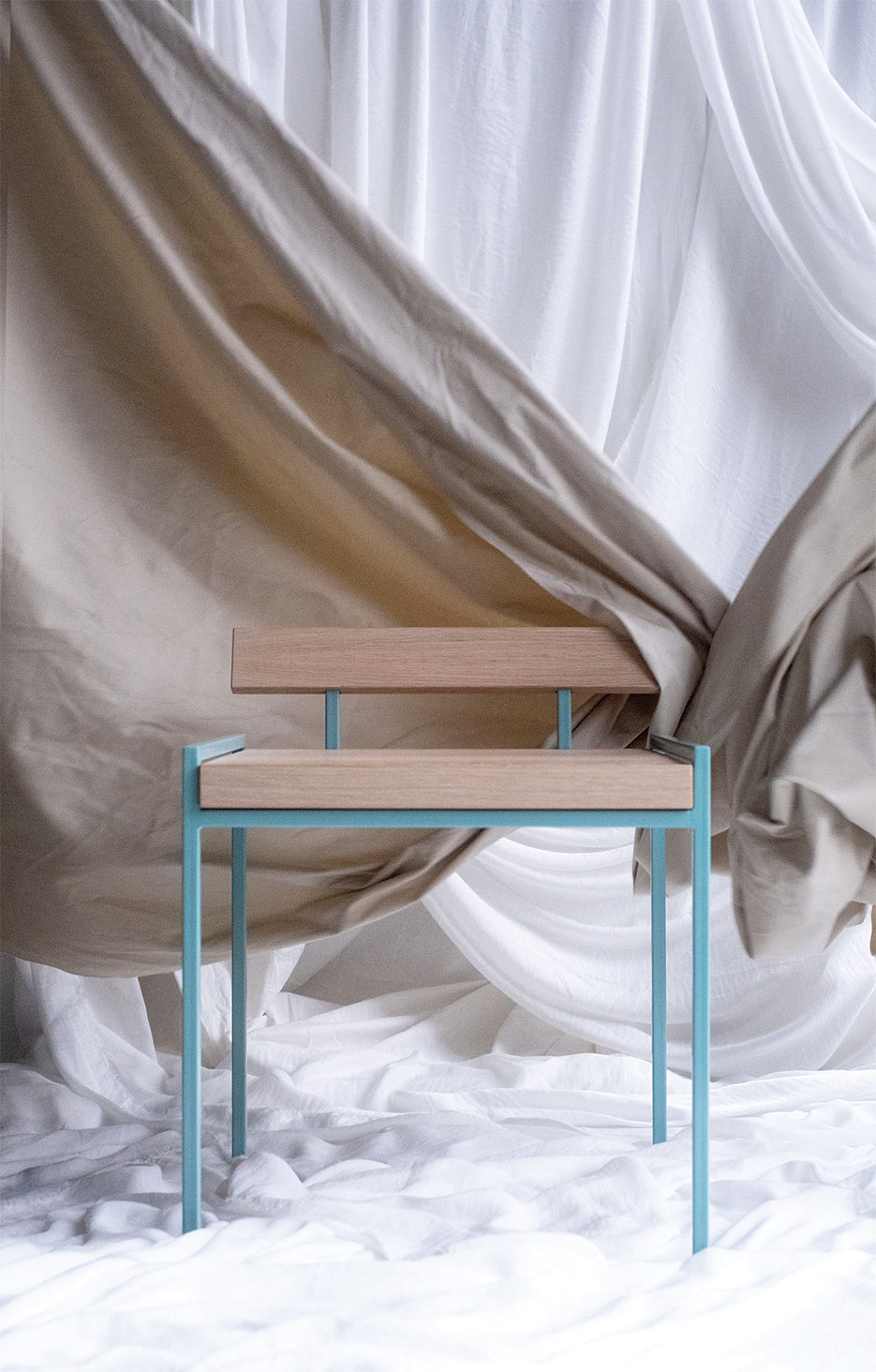
Viki: When we were designing our booth for Stockholm, we reached a point where we could articulate that even though some Western countries are inspiring in terms of design culture, we can’t and don’t want to imitate that. We wanted to be authentic—to stand beside our work and show what’s realistically achievable today as an emerging designer from Hungary.
It’s important to be aware of global contexts, but challenges, opportunities, markets, industries, and cultures are always site-specific. To represent our traditions—and through them, ourselves—on an international level, we first have to know and understand them deeply.
Did the materials you chose already carry cultural or symbolic weight, or did meaning develop as you worked with them?
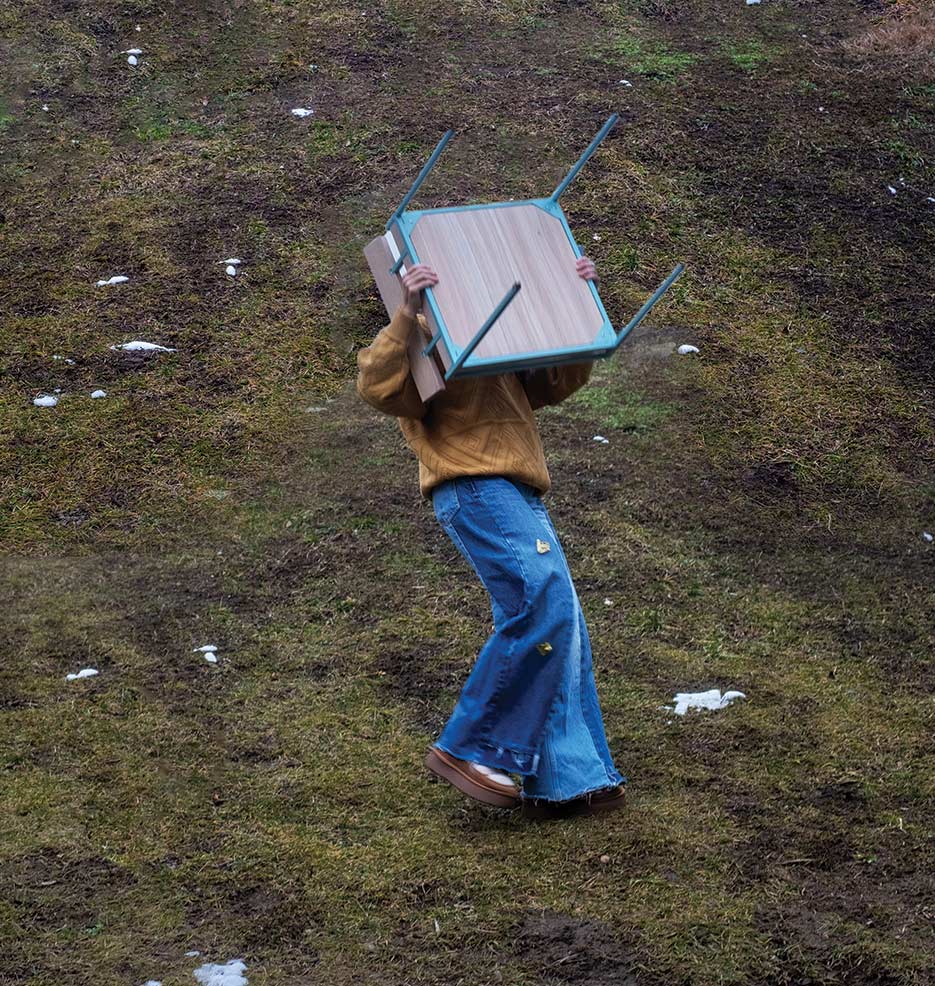
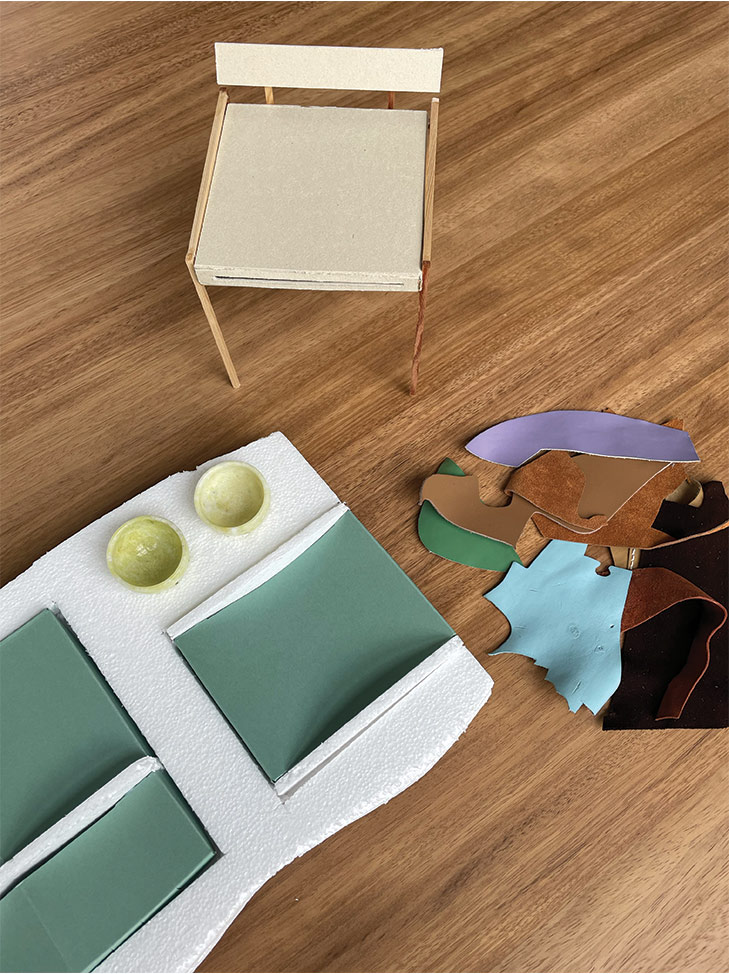
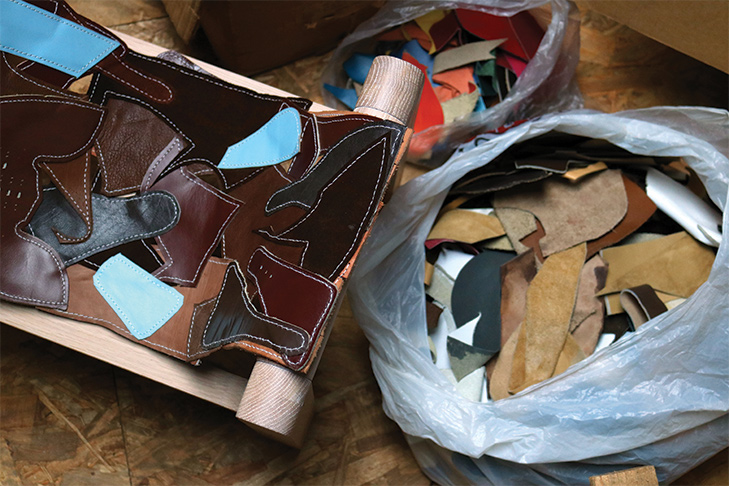
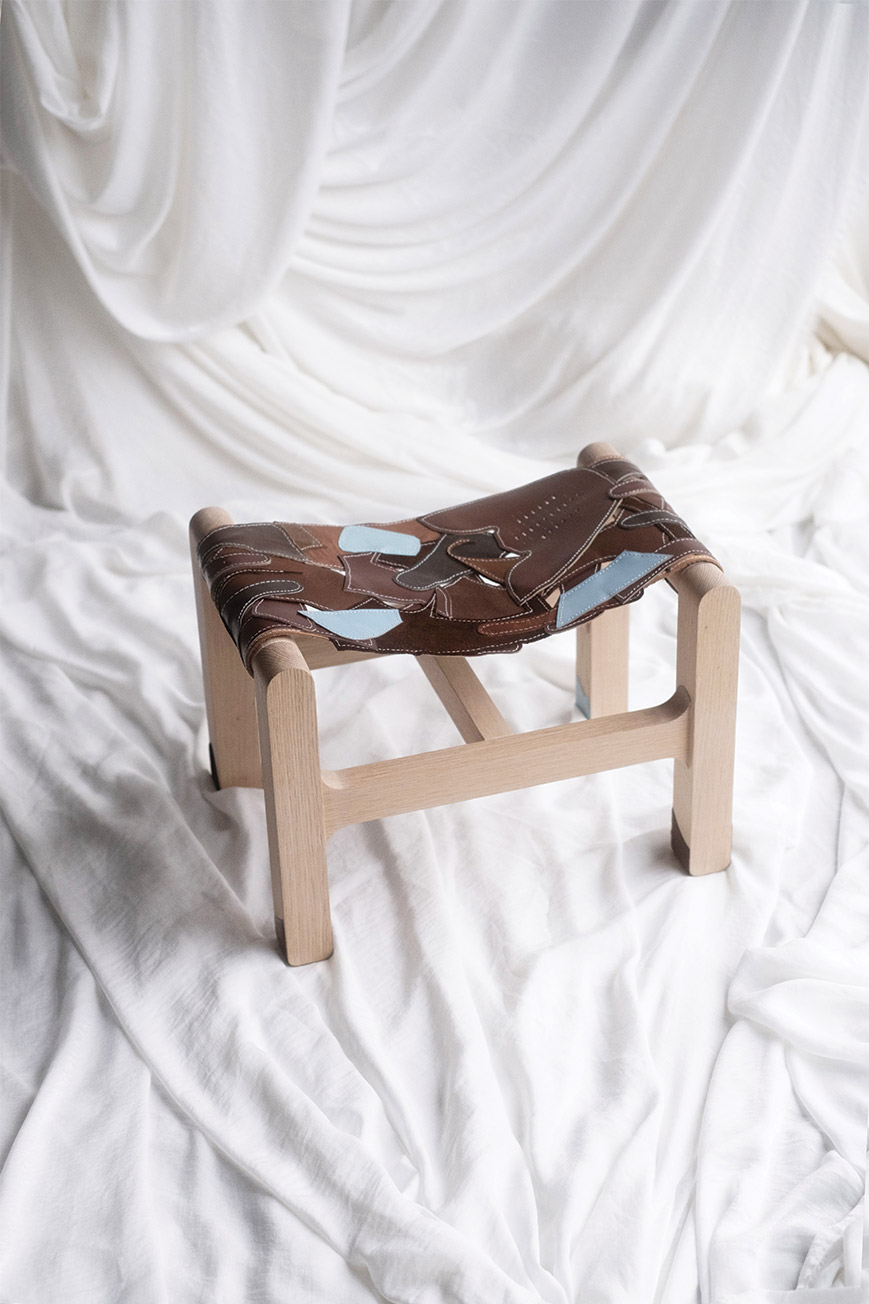
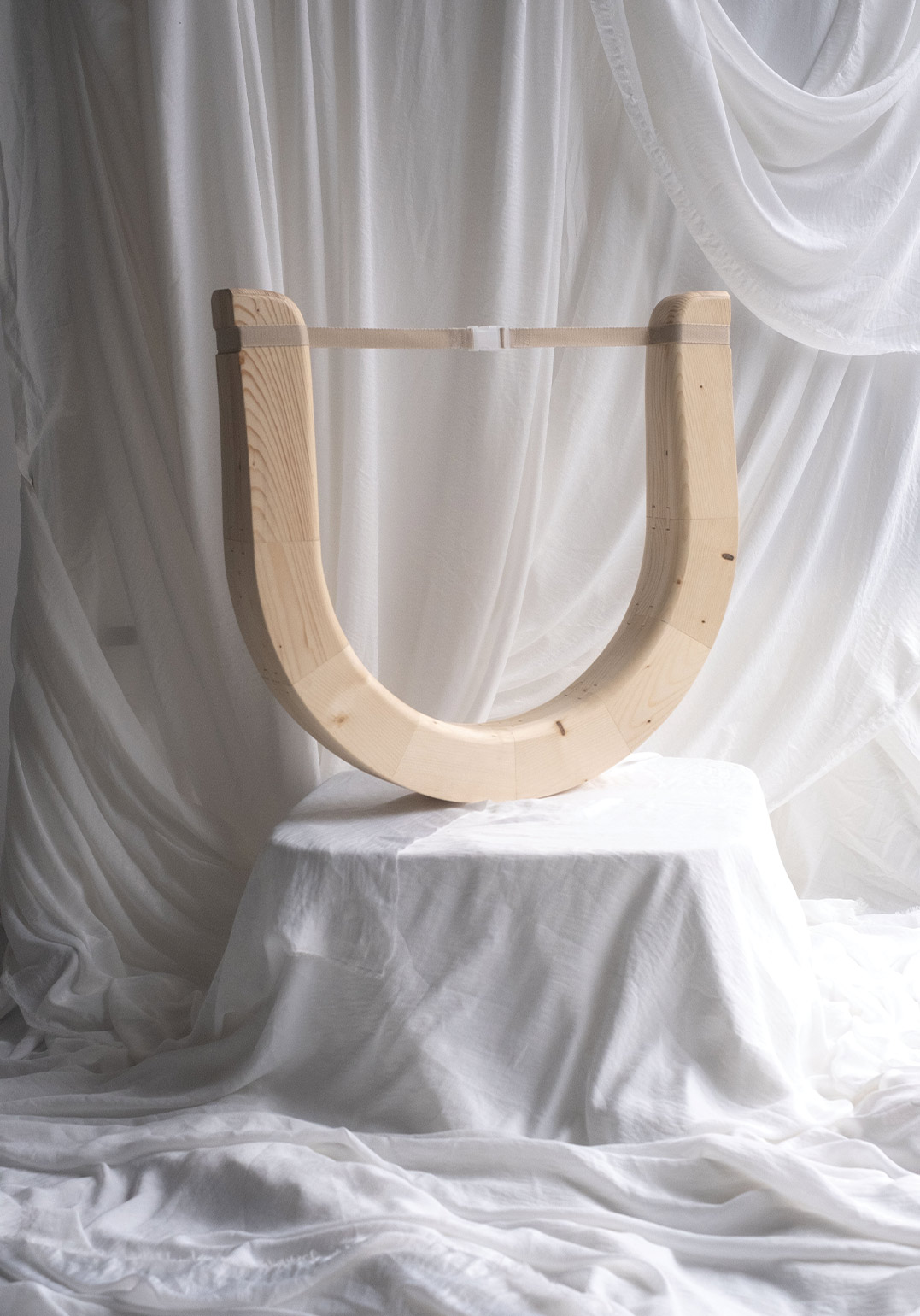
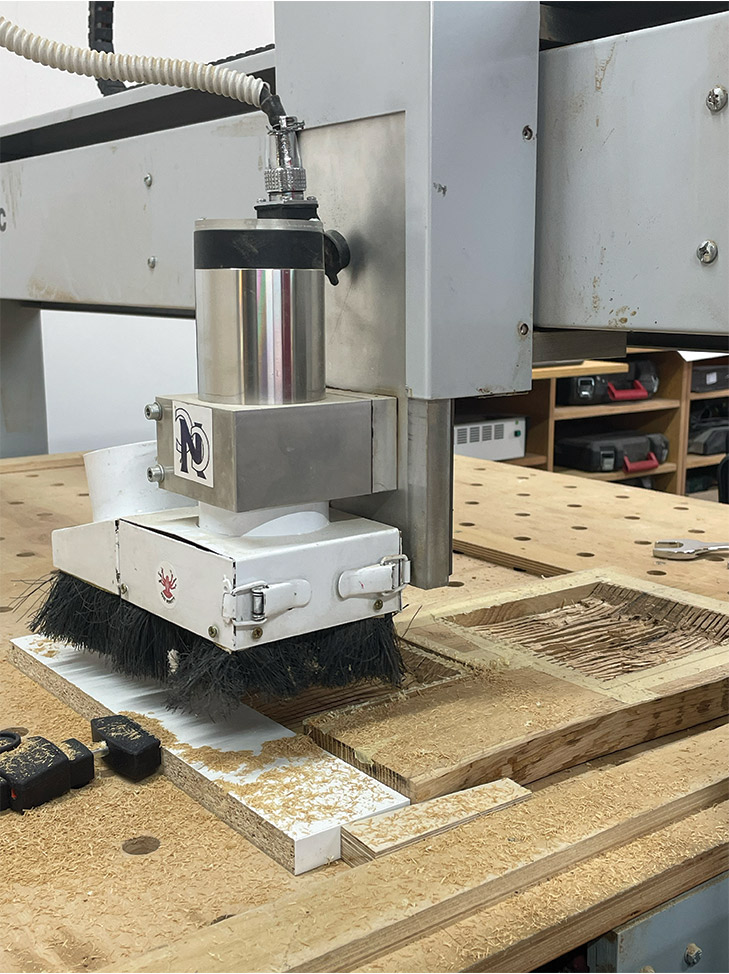
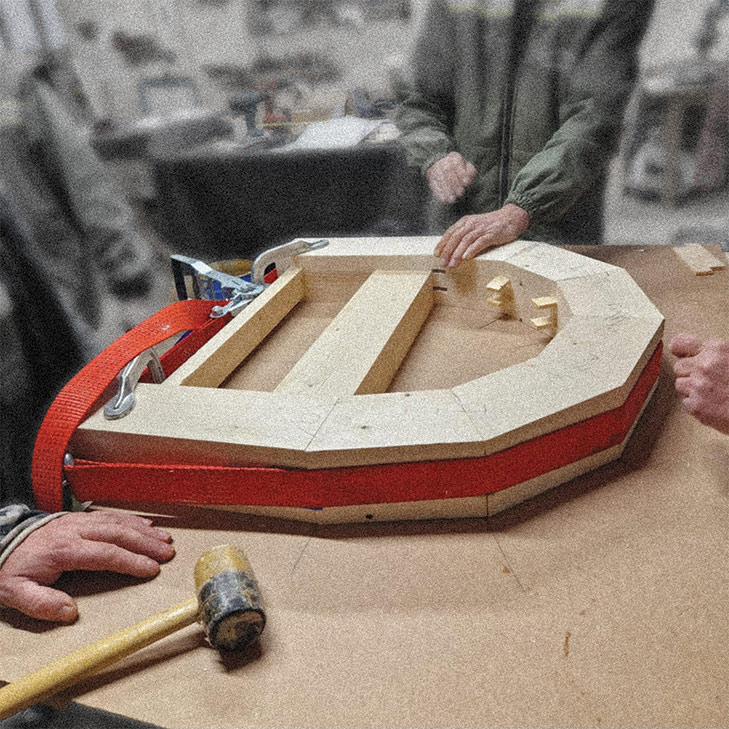
Balázs: Each of us approached our object from a unique perspective, so the materials held different levels of cultural or symbolic meaning. For example, Blanka’s cobbler’s stool incorporated decades-old leather scraps for the seat, which strongly influenced the design and concept. For some projects, like the “Úszka” wooden swimming ring by Rebi, it was especially important to use locally available materials, as there is existing knowledge in the local material culture regarding their crafting, which can serve as a good starting point in the design process.
What’s a question you feel drawn to explore next through design?
Viki: We’d like to lay the groundwork for new projects through deeper research, focusing on Hungary’s industrial potential. This time, we want to center the manufacturer—their story, their technology, their materials.
There’s a favorite quote of ours:
“…as if in Hungary, the modern design industry only ever had a forgotten past, but never a present.”
It’s from a book published nearly fifty years ago (József Vadas: From Design Industry to Industrial Design), but it still hits hard today—it feels painfully relevant as a designer. The urge to keep this conversation alive and work toward change is a powerful motivation for us.
Who’s most likely to suggest a last-minute design change—and actually pull it off?
Each of us had our moment—while working on our first collection, last-minute ideas often made their way into the final design. That spontaneity might be one of the reasons why our collaboration feels so natural and smooth.
Who’s the glue in the group—the one who keeps everyone grounded?
We’d say Eszti and Flóra—they’re the ones who hold the group together, especially during busy or challenging times. Their presence always lifts our spirits, and most of our meetings took place in Flóra’s lovely living room.
Who’s most likely to bring in a material or reference nobody’s ever heard of?
Rebi always brings in references no one else has thought of—her stories, especially from Transylvania and the traditions of older generations, are full of insight and inspiration.
Who has the most chaotic workspace?
It must be Balázs and Blanka’s small workshop, but they always manage to find what they need.
If MAIII had a group playlist, who’s in charge of the music?
Viki has an exquisite taste in music—we often got to enjoy it when she drove us home after meetings or events.
Who’s most likely to document everything?
No doubt, it’s Eszti. She’s the expert when it comes to filming and editing our Instagram reels.
Who’s most likely to get emotionally attached to a prototype and refuse to change it?
It must be Roberta—she might start designing a bit later than the rest of us, but her work is spot-on from the very beginning!
Where can people find you?
We’re online too! Follow us on Instagram @maiiicollective and check out our website: maiiicollective.com
Stay tuned to see where we’ll show up next!