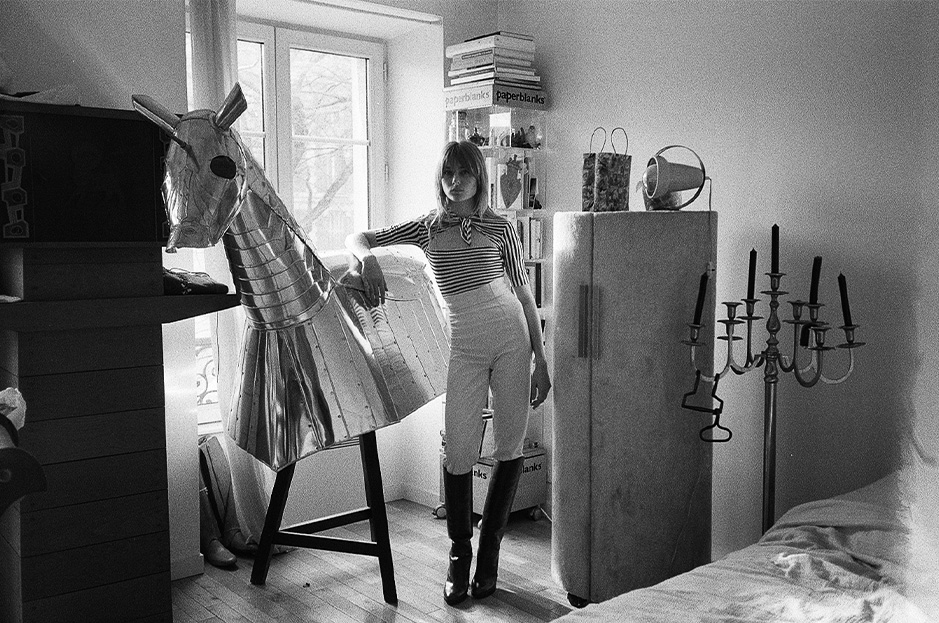
Mia Gosset
What’s your name and where are you from/based?
Hello! My name is Mia Gosset. I was born in France but lived almost my entire life in Brussels. Today, I’m based in Paris.
Can you describe your practice in a few words?
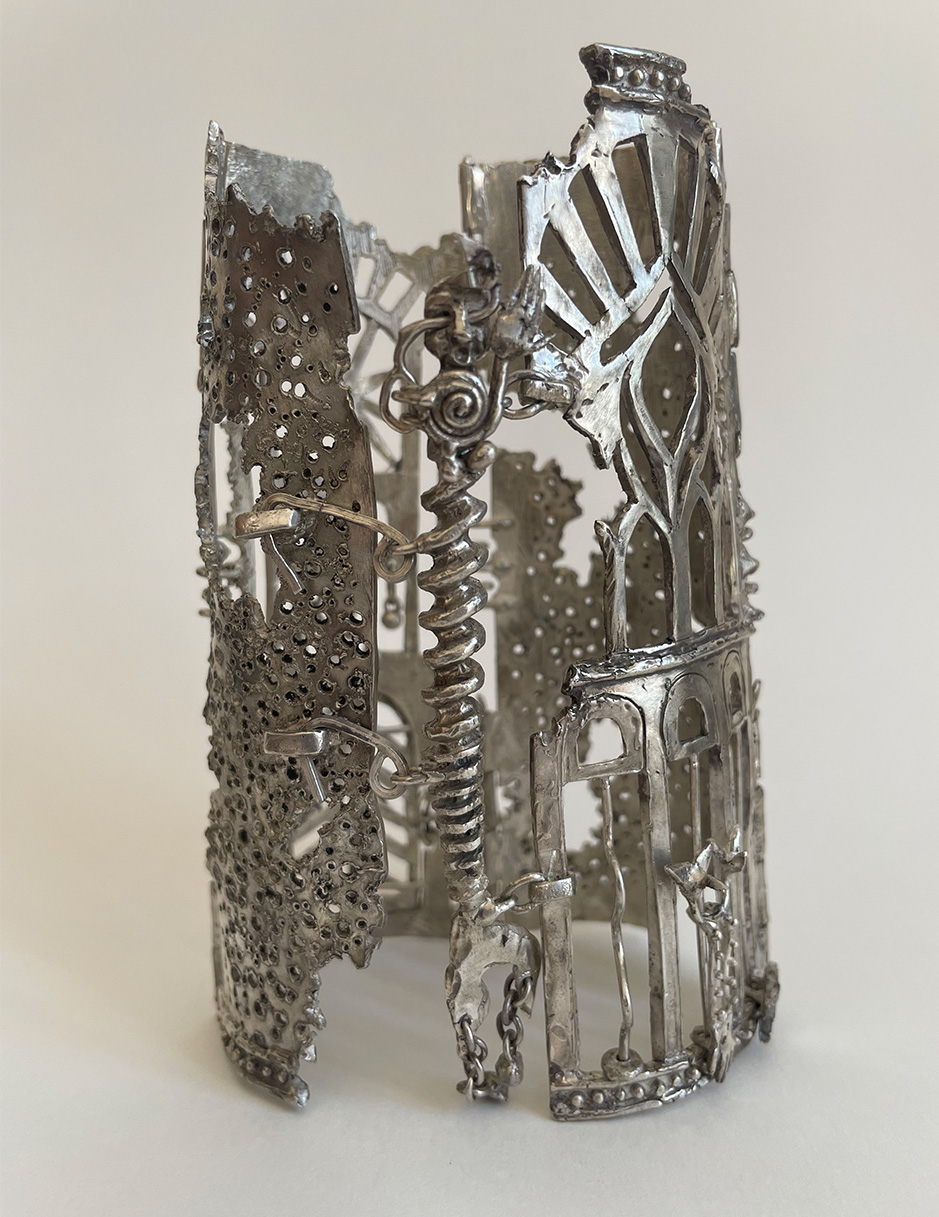
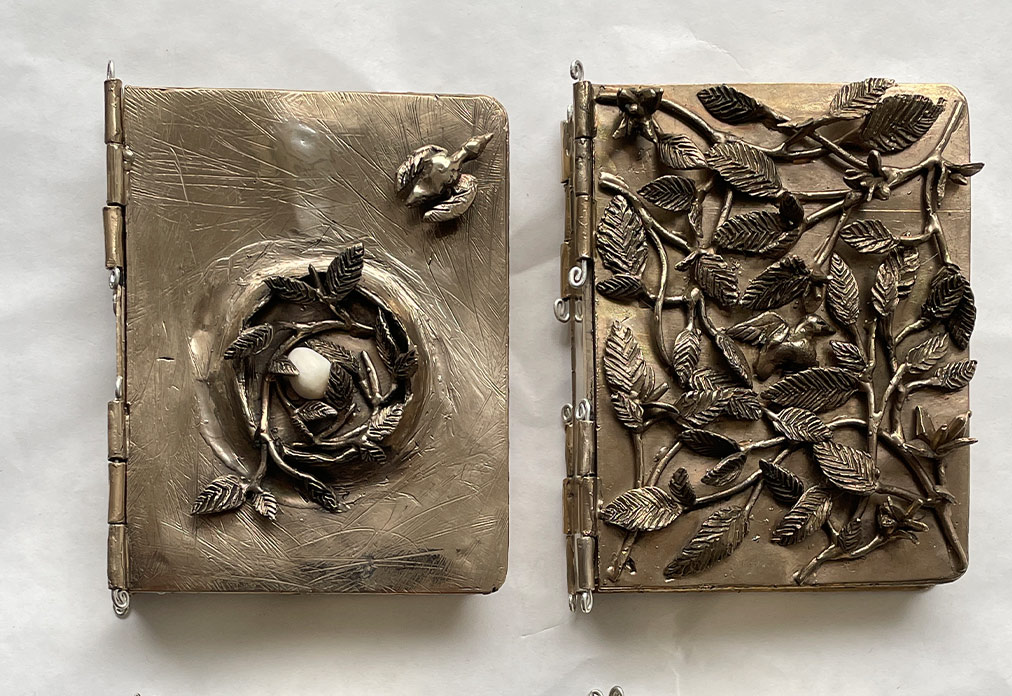
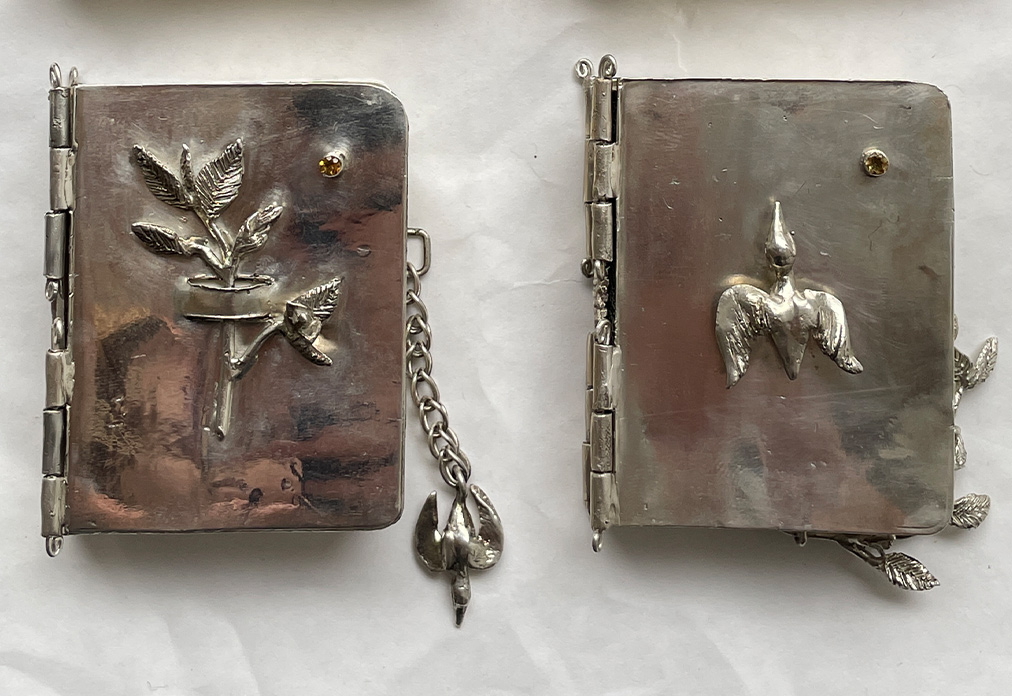
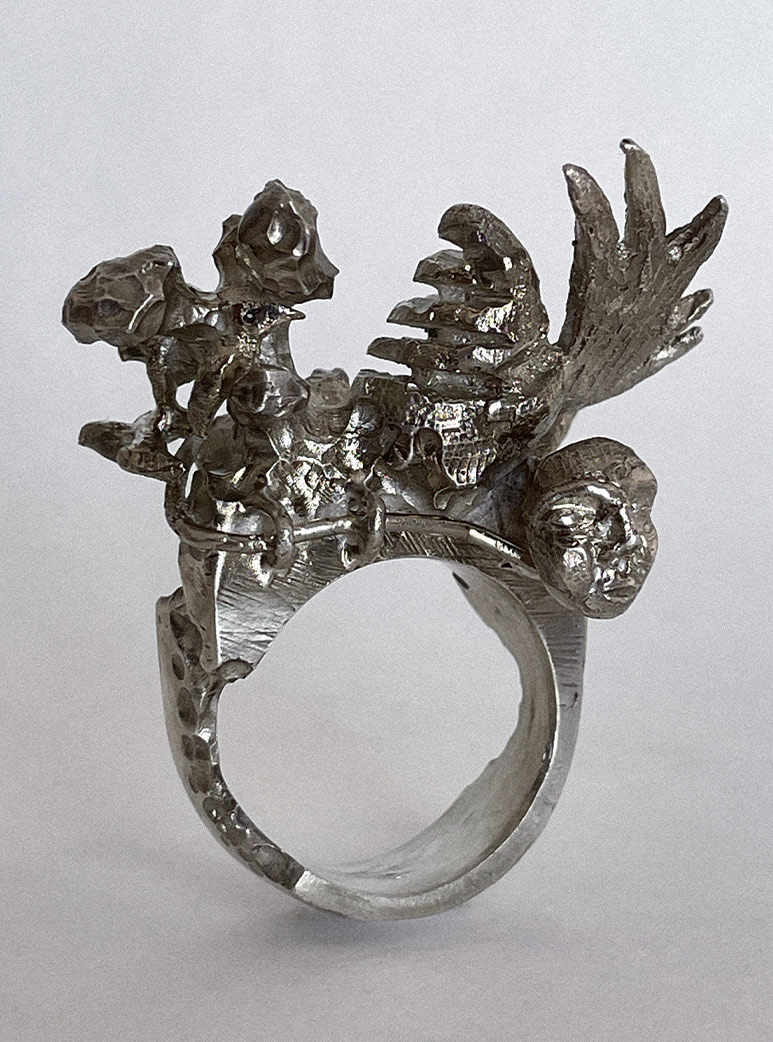
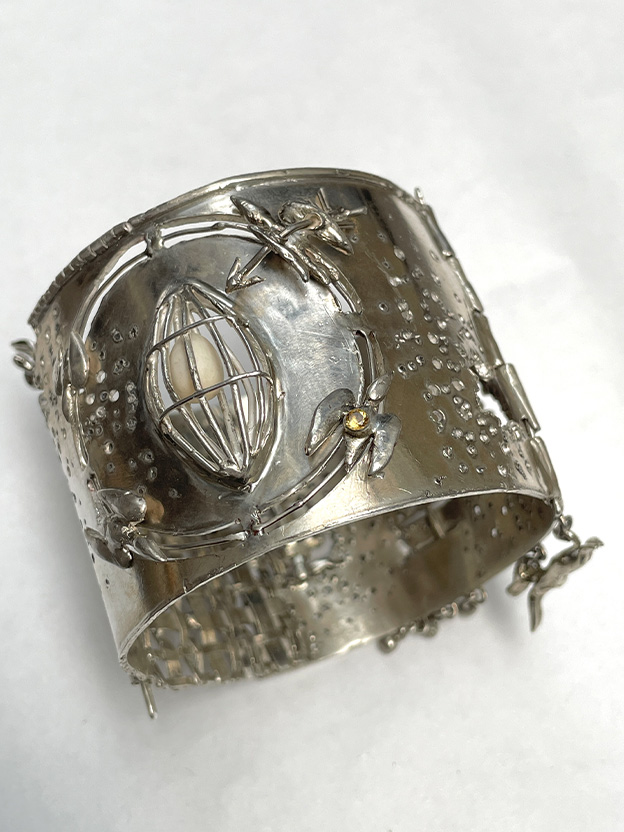
I create objects, jewelry, and furniture. My main medium is metal, silver, bronze, and brass. I only produce unique pieces that weave together personal and popular mythologies, like relics to be collected in order to tell one’s story, and a little bit of others’ as well.
You studied fashion design at École Duperré but moved into metalwork. What inspired this shift?
When I was in school, I met someone, who became my boyfriend at the time. He had started making jewelry and one day suggested that I try it too. We began by casting metal in the kitchen, and I made my first rings. That was a real moment of self-discovery. I had always dreamed of making objects, I was a collector by nature, but it felt impossible. I was used to objects from another time, made with incredible craftsmanship, and I couldn’t imagine ever possessing such know-how.
Also, I had been sewing obsessively since the age of 12. My grandmother « Mado » was a provincial seamstress, and I always saw her sewing. I think I chose the path of clothing design out of ease, simply because it was the only world I really knew.
What was it like teaching yourself metalwork outside of formal training
When you teach yourself, you sort of work backwards. My process has always been to start with an idea and then figure out how to make it. I’m still learning with every new variation of a piece. I think this independence gave me the greatest creative freedom, and also a reflex to always seek out complexity, because in the beginning I wasn’t even aware of how technically difficult some imagined pieces were.
You said that working with metal feels “as much physical as it is mental.” Can you describe what happens while in the process?
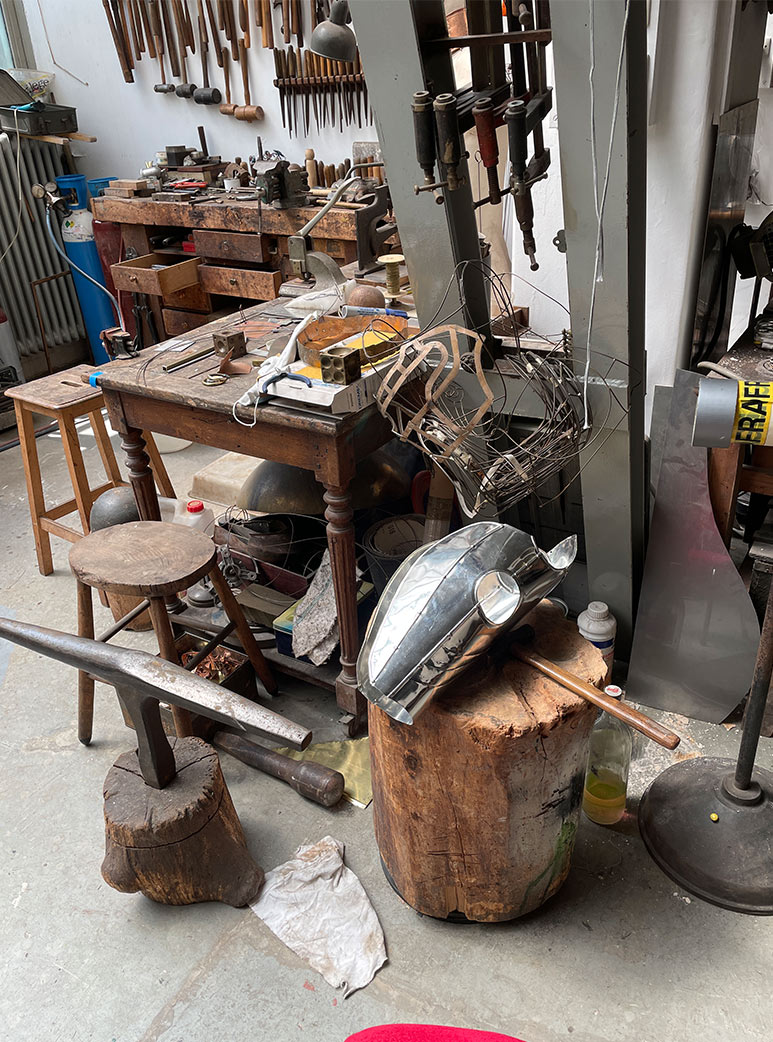
Like many crafts, it demands a lot physically. You work in a dusty environment, sometimes with heavy tools or machines depending on the object. A kind of mental bubble forms. In those moments, it’s a total commitment, body and mind fully engaged.
Growing up near one of Europe’s largest flea markets shaped your way of seeing objects, and you described collecting with your father as a “language of love.” What did you collect together, and how has this shaped your relationship with creating objects?
My father would wake me up at 6:30 on weekends so we could go to the flea market in Waterloo. We would walk the aisles methodically, but separately, so no one would see us together. At the end of the aisle we’d meet again, share what we’d spotted, and he would send me to negotiate. He always gave me less money than needed, so I had no choice but to bring the price down. It cured my shyness.
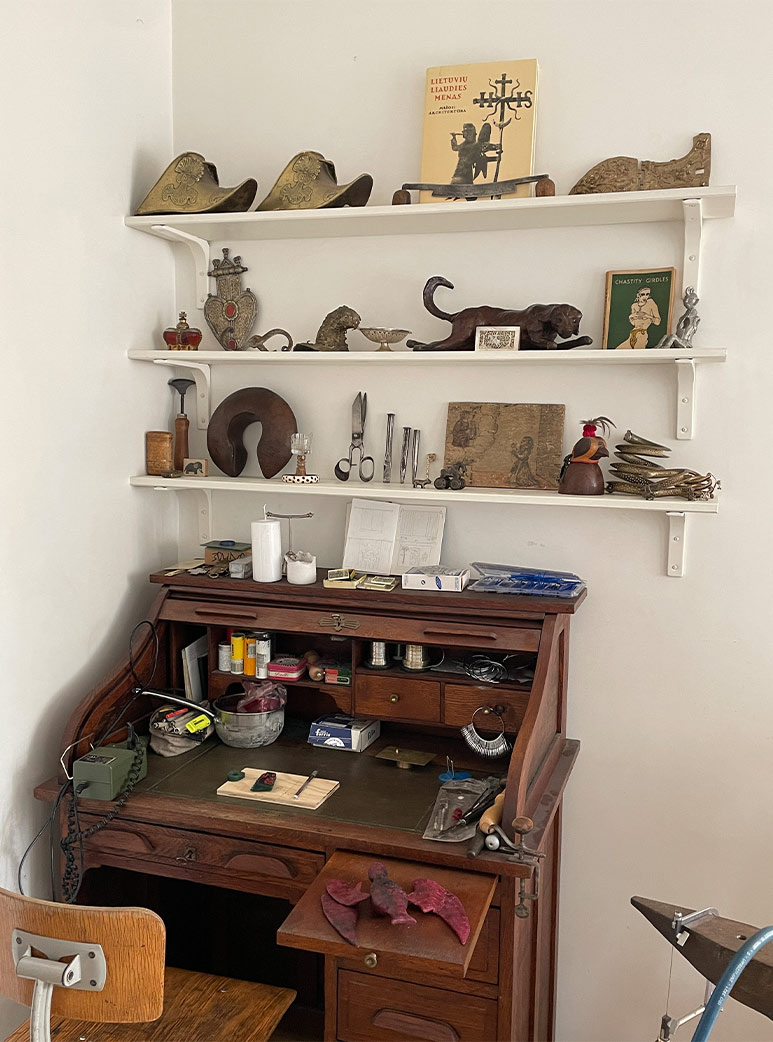
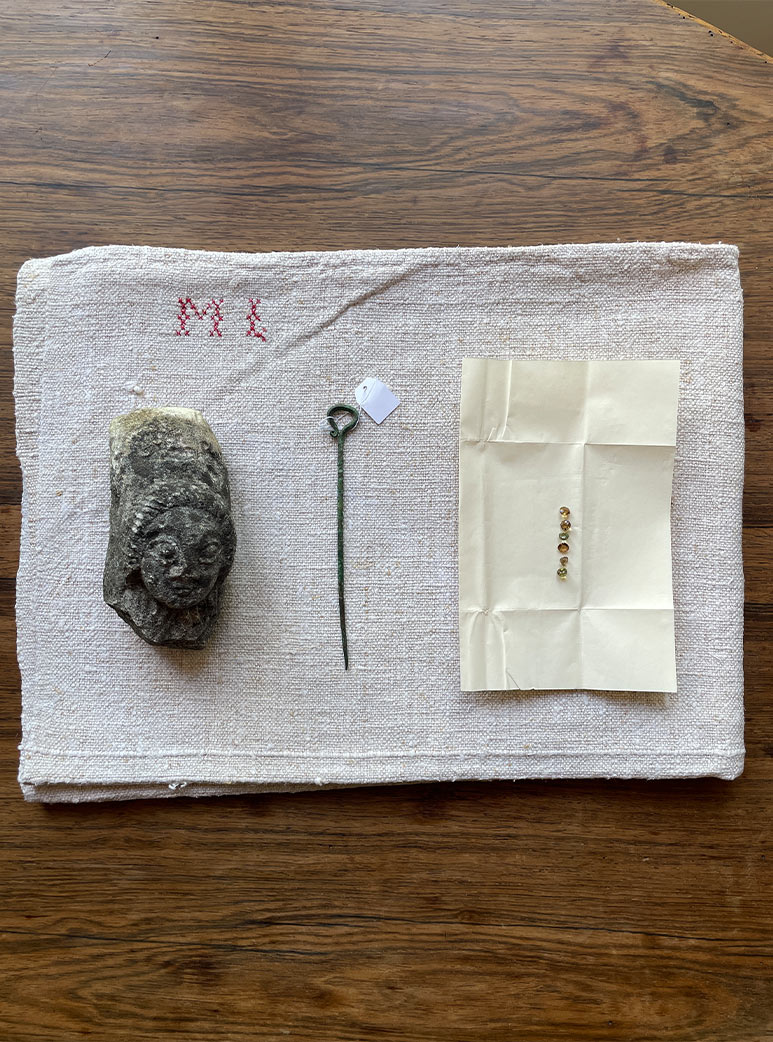
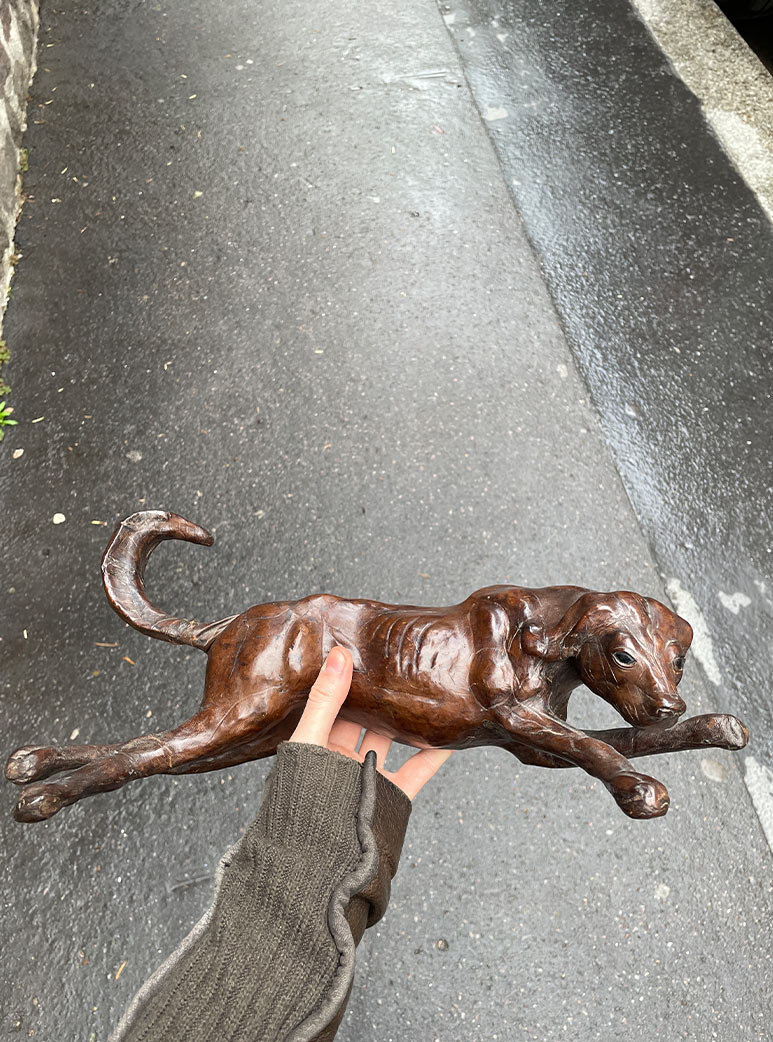
I started when I was 12. The dealers couldn’t understand my interest in certain objects, and honestly, neither could I. At the time we collected padlocks, cameras and old film equipment, sculptural fragments detached from their bases, measuring instruments and tools, carved bone miniatures, religious objects. We loved materials like metal, wood, bone, leather. There were no rules in our hunting. I think this pushed me toward details, and sometimes toward a kind of maximalism in my compositions. It also helped me understand what I want to infuse into my pieces, that clients might feel, in their own way, what I once felt when discovering those objects.
Do you think of each piece as creating a world of its own, and if so, what kinds of worlds inspire you?
I wouldn’t say I create a whole new world. Rather, I compose from our existing mythologies, personal, historical, and popular. Illuminations, fairy tales, religions, Ancient Rome, and the medieval era are all materials that feed my imagination. But in the end, it’s always intimate, weaving fragments of collective stories in order to reveal something personal.
Are there recurring details in your work that feel especially personal or symbolic to you?
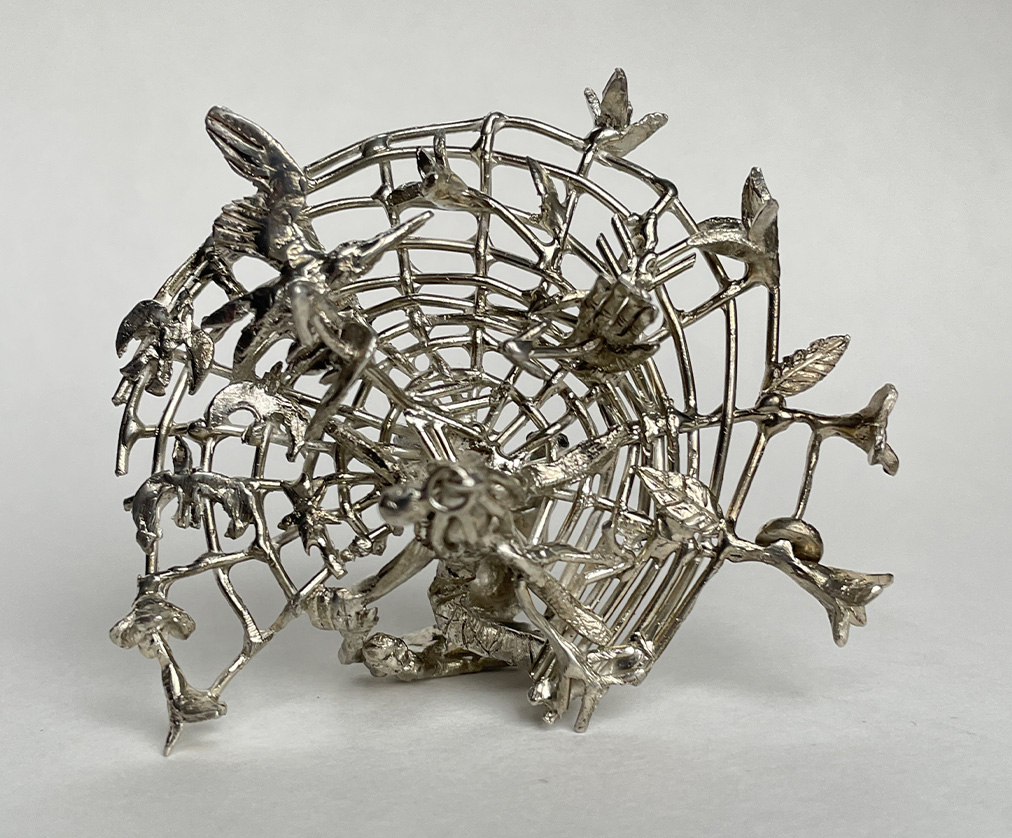
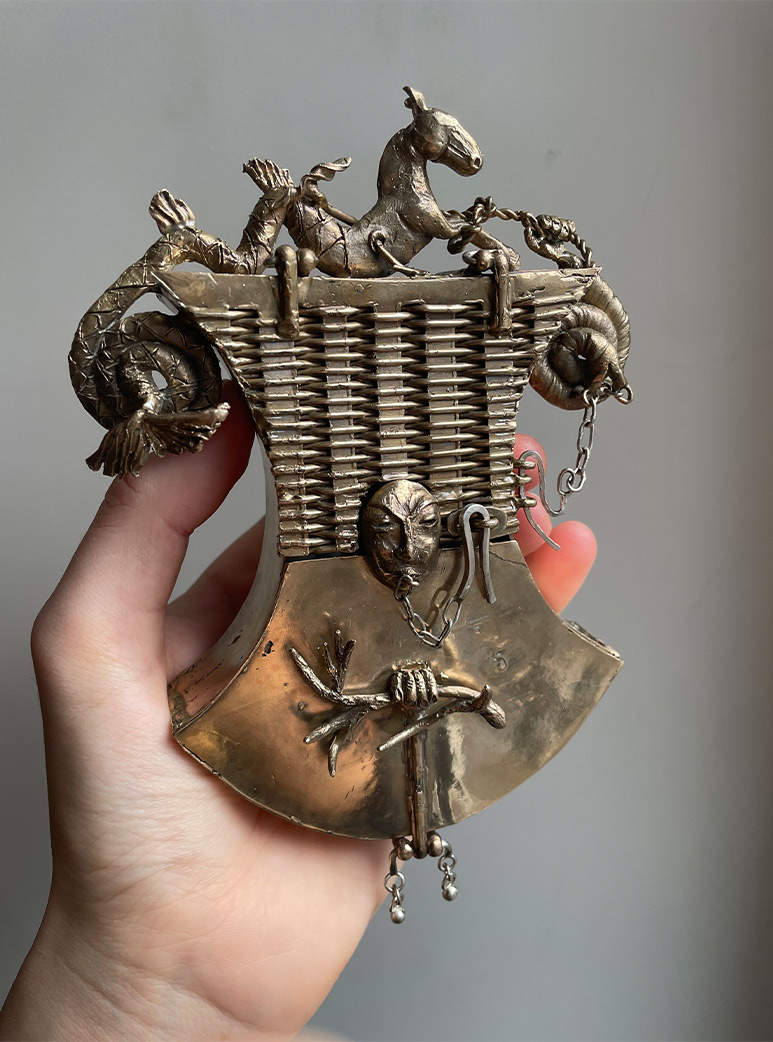
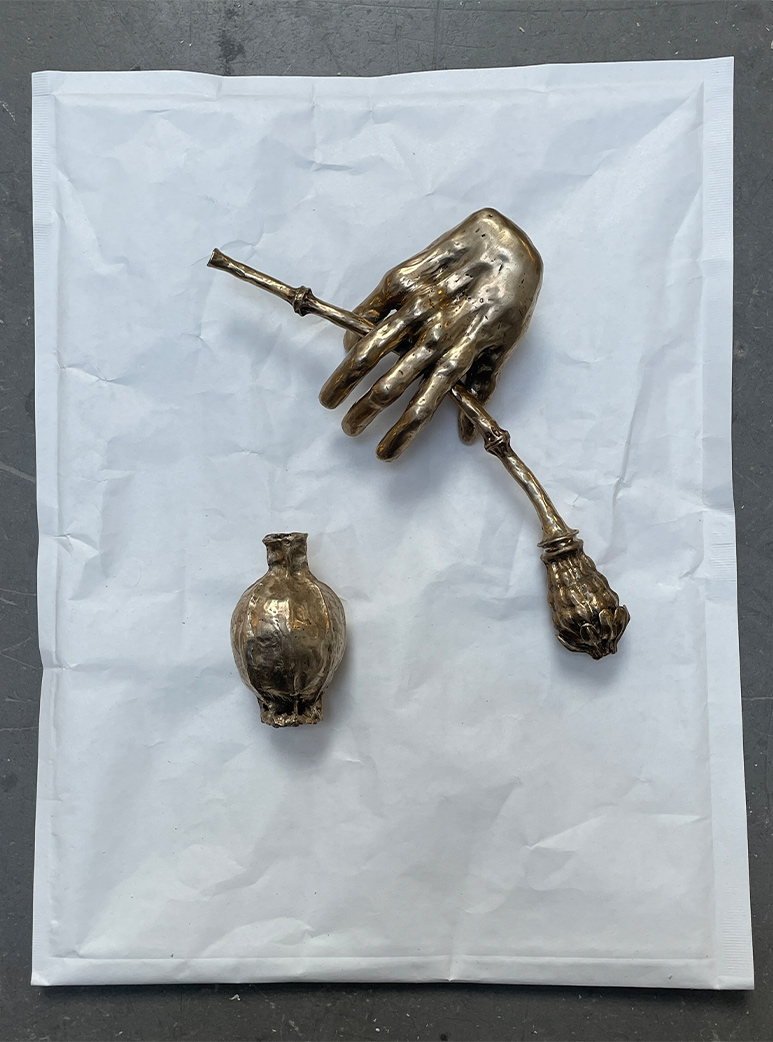
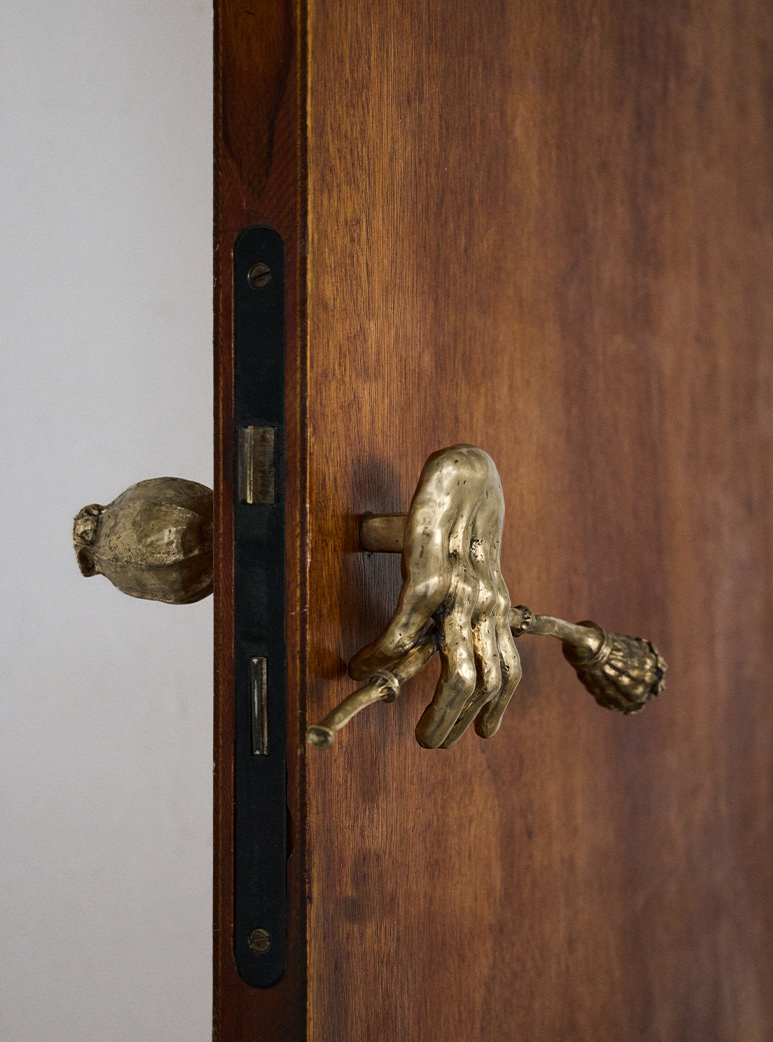
Yes, there are recurring elements in my figurative vocabulary like animals, plants, hands, symbols that help me tell stories. Then there are the moving parts: pieces that dangle, slide on rails, or rotate on an axis. These allow me to give kinetic energy to the work. Sometimes they extend the narrative, other times they’re simply a way to make the objects interactive.
These aspects are important to me, they allow the works to transcend their stoic status as mere objects. Whether through entwined figures or moving parts, you lean in, you touch, you interact and you make the piece your own.
Do you approach collaborations differently from personal work, or do you see them as opportunities to merge?
Collaborations complement my personal practice. I know I can’t master everything, and
collaboration is essential for going further. I love working with others, the process is slower, more reflective, more deliberate. It results in more measured objects. For me, collaboration is a space where I strive to create something timeless, less impulsive. There’s beauty in aligning on choices, making stylistic concessions, adapting creative reflexes. I learn to think differently and enrich myself with new technical challenges and know-how.
You’ve said you’d like to keep exploring different scopes, from jewelry to furniture. Where do you see yourself expanding next?
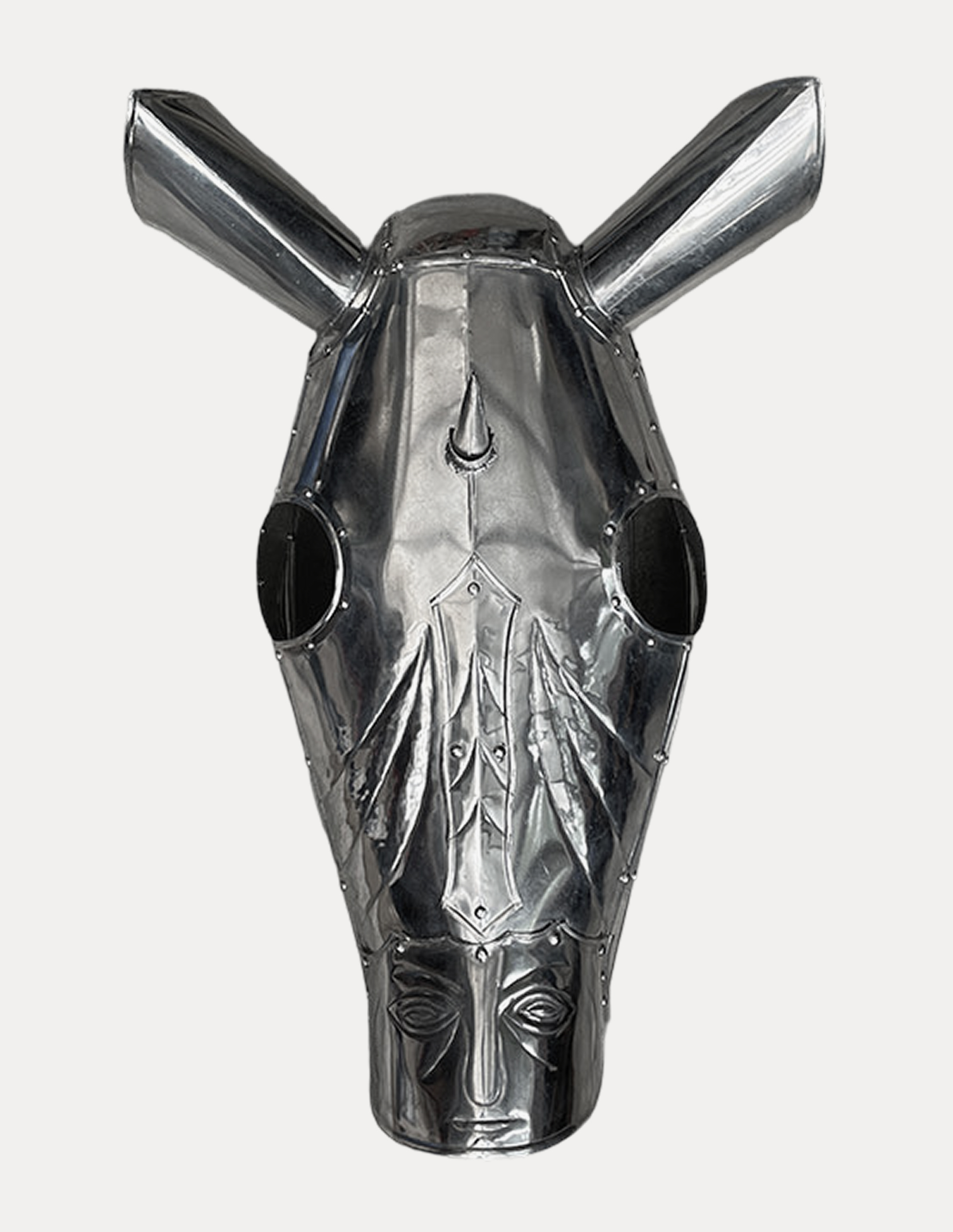
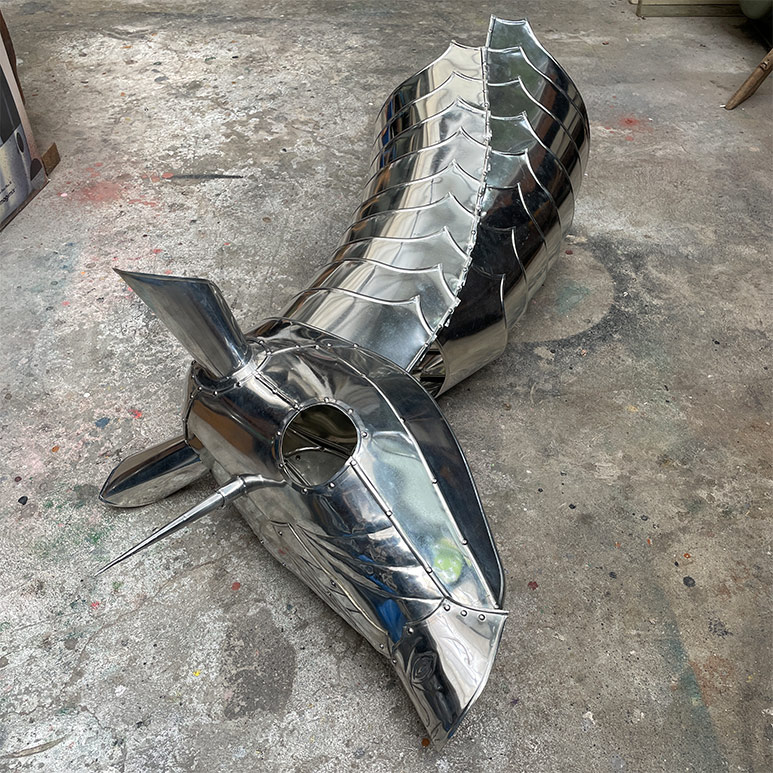
Time is what I lack most. There’s still much to do in jewelry, but collaborations are already allowing me to venture into furniture. One of my early projects, a horse sculpture whose flank opens as a chest, was a way to approach furniture alone. In the long run, I’d love to be able to produce a complete environment.
Where can people find you?
People can find me on Instagram @miagosset, and some pieces are available at Galerie Paradis in Paris.