Mohamed Saïd chair
What’s your name and where are you from/based?
My name is Mohamed Saïd chair , im Moroccan and I’m based in Tangier.
Can you describe your practice in a few words?
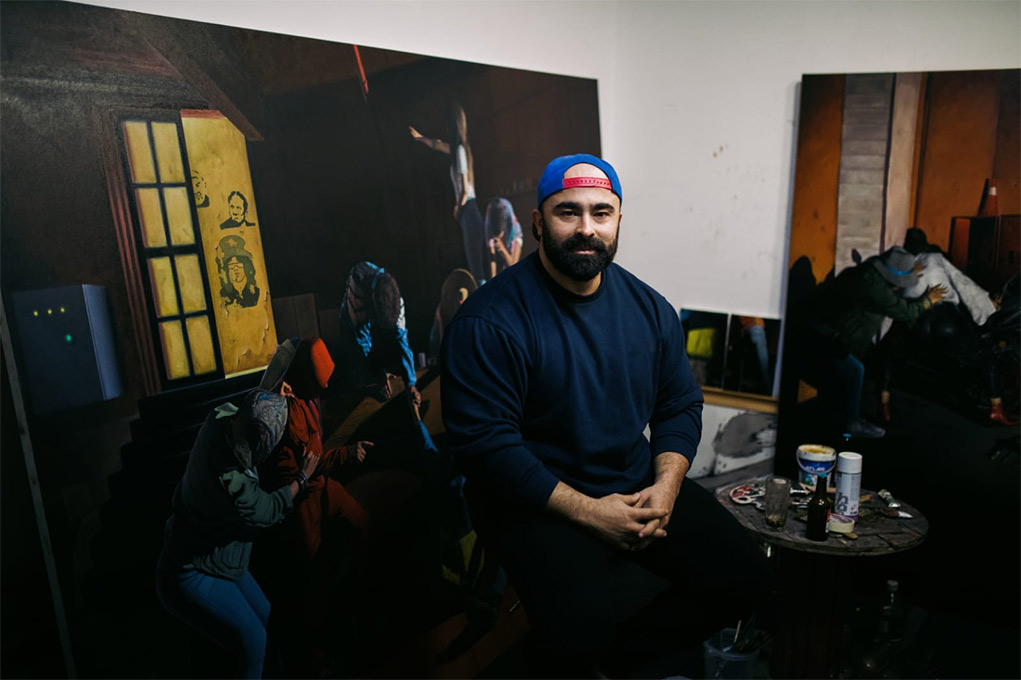
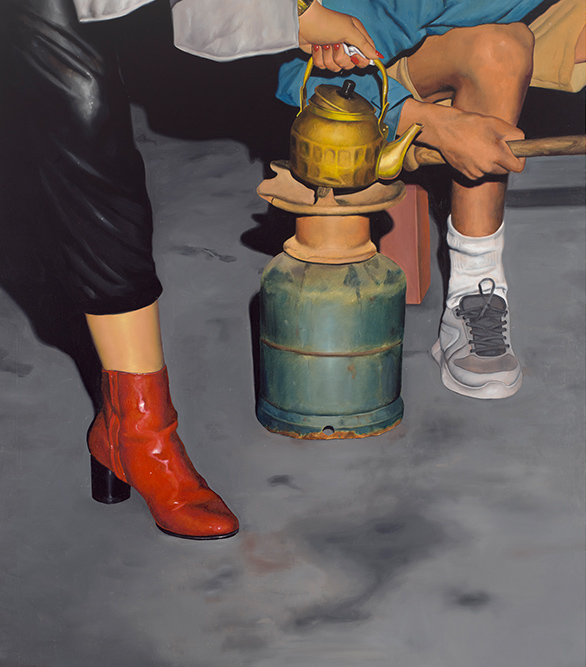
I am a painter working within a contemporary figurative practice, primarily through portraiture. My work is informed by Renaissance painting techniques and methods, which I use to depict contemporary scenes, often in Morocco. Rather than focusing on facial likeness, my paintings frequently centre on body language, posture, and partial gestures. I think of these works as portraits nonetheless, where identity is carried through presence and physical relation rather than through direct representation.
You studied Finance and worked as a banker before painting full time, what inspired this shift?
I’ve been a banker for almost four years and I have always painted since I was young. The passion and the ambition of being a full time artist have grown, and this was triggers me to quite my job to get deeply involved in art.
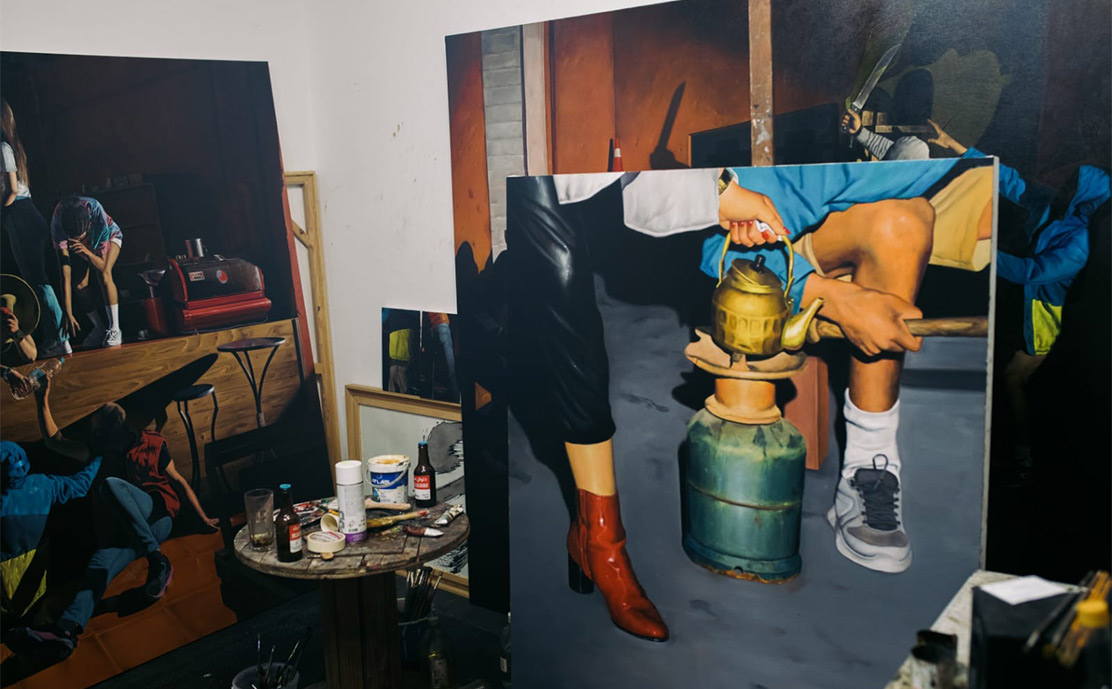
Your technique and references are self-taught, how has this shaped what you’re able to explore within your process?
I believe this reflects the path of many self-taught artists: first comes experimentation—through painting, photography, or drawing—and only afterwards comes the articulation of meaning.
Working outside of an academic framework and the traditional art world allowed me to develop a more personal approach, shaped by my environment and lived experience. This is something that clearly appears in my paintings. For instance, my background in finance has been an unexpected source of inspiration, which can be seen in some of my works.
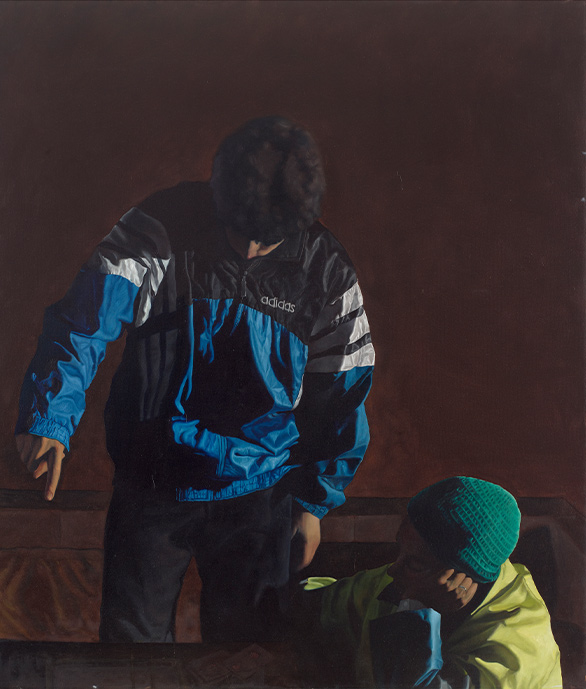
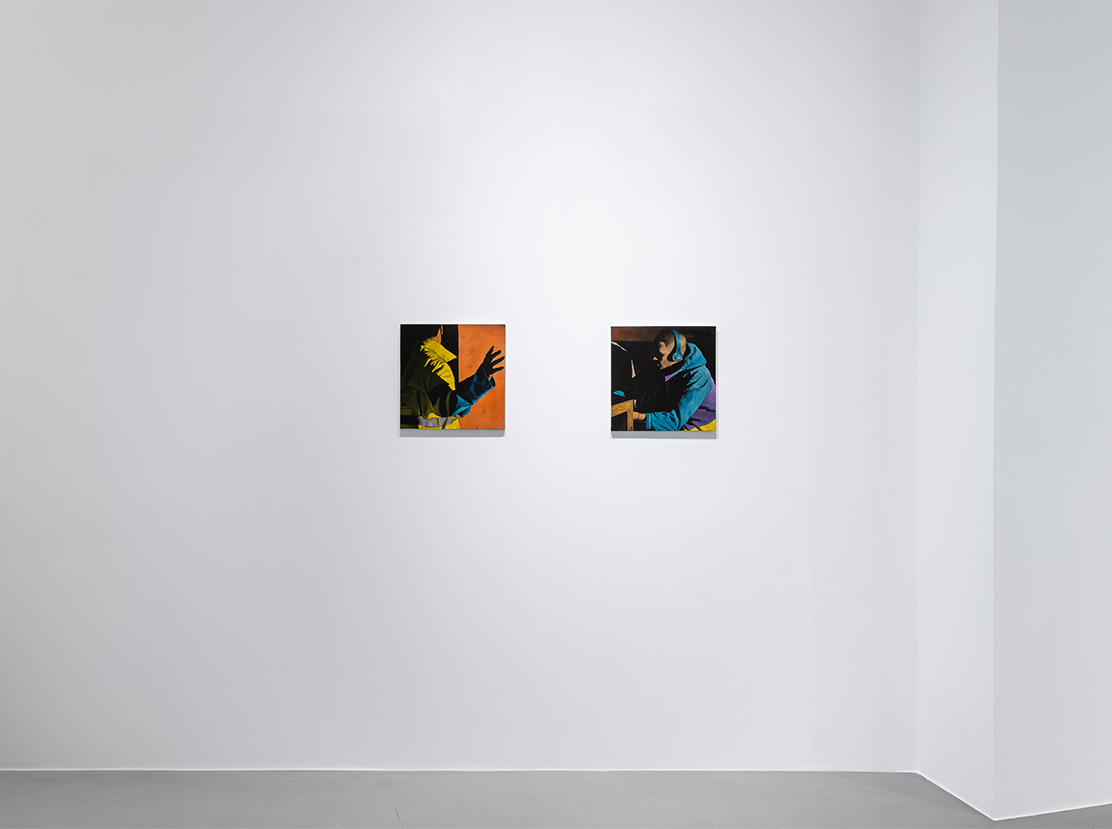
This latest series presented at AFIKARIS in Paris is titled, Out of the Shadows, what does the shadow represent for you in relation to the people you portray?
In this series, I wanted to highlight ordinary people—figures from everyday life who are rarely represented in media or on social networks: carpenters, plumbers, craftsmen…
To me, they are the true pillars of society. They often live in the shadows, and my intention was precisely to bring them into the light—hence the title Out of the Shadows.
Shadow also plays an important visual role in my work. It allows me to dramatize scenes, reinforce their theatrical quality, and create an atmosphere that invites the viewer into a narrative.
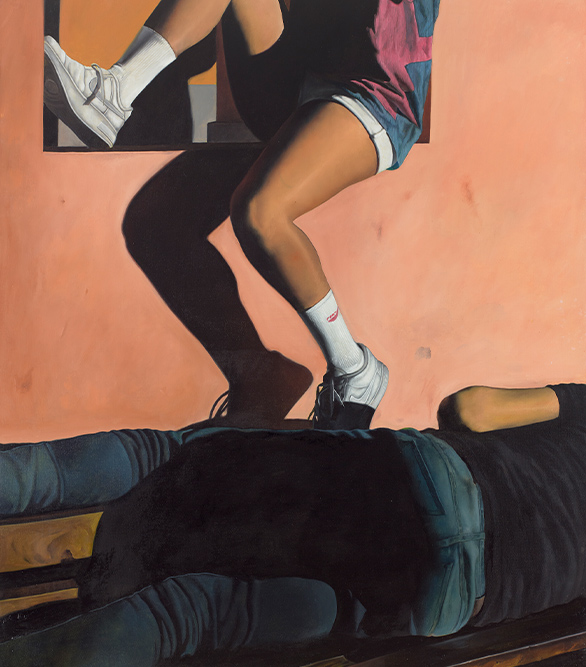
You describe the work as reflecting the diversity of people in Tangier while remaining relatable internationally, what do you feel this portrayal of an Arab society, in all its complexity, is expressing?
As someone deeply influenced by classical European painting, I have always been struck by Orientalist painters such as Delacroix, Gérôme, and Ingres. However, their depictions of Arab societies were often romanticized, even folklorized, and not always aligned with reality.
Yet Arab society—like any other—is complex, rich, and full of contradictions.
My intention is therefore to reverse this perspective: to portray this society through the eyes of an Arab painter. This shift creates an interesting paradox and offers a more intimate, authentic, and grounded representation.
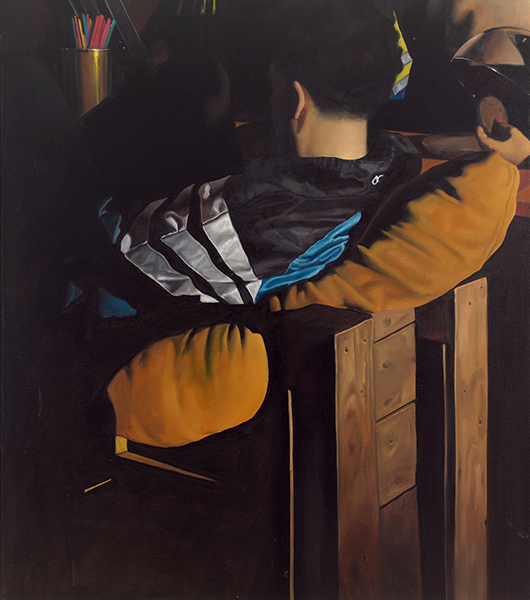
Your work is the result of a carefully orchestrated mise en scène, photography, and painting. Can you walk us through the stages that lead to the final pieces?
I begin with location scouting, searching for interiors with interesting architectural qualities and strong narrative potential.
Then I meet with my models and, together with a stage director and a photographer, we construct the scene. We usually work with a single light source to create a chiaroscuro atmosphere.
We take a large number of photographs, from which I select the most compelling images. These then serve as the foundation for the painting process.
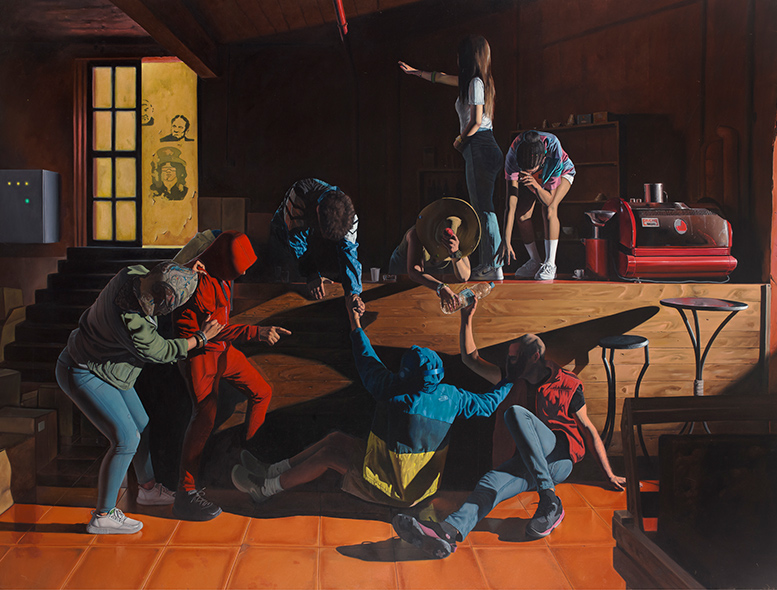
You deliberately conceal faces—what do you feel the body reveals more of?
The face has always held a central place in portraiture. During the Renaissance, it was often the focal point, especially in religious or royal commissions, where it served to glorify figures. Later, artists like Rembrandt used the face to convey emotion and psychological depth.
Today, in the age of social media, faces tend to become standardized and lose their singularity. Moreover, the face can deceive or conceal.
The body, on the other hand, is more honest. It conveys tension, attitude, and presence. By concealing faces, I aim to restore the expressive power of the body, making it the primary vehicle for meaning and narrative.
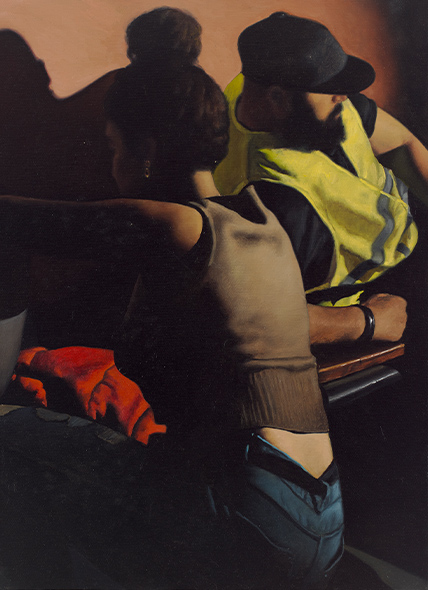
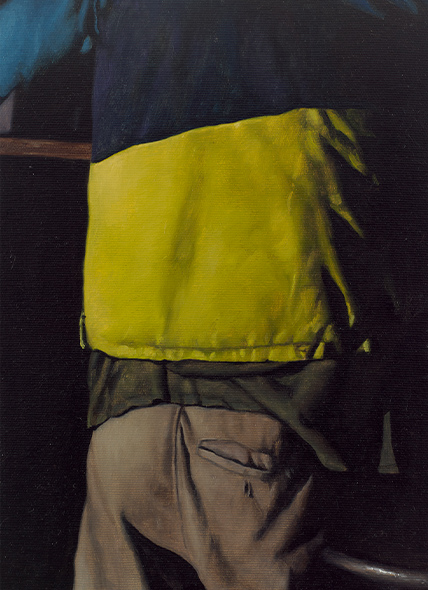
You refer to the Mannerism movement that followed the High Renaissance, where artists embraced stylization, exaggeration, and a more staged approach to composition. What does this allow you to convey in your work?
In the same way that Caravaggio broke away from Mannerism by returning to a more grounded realism, I try, in my own way, to break away from contemporary illusions—particularly those shaped by social media.
These platforms often impose aesthetic standards that are disconnected from reality. My work seeks to redirect the viewer’s gaze toward the real—toward life as it truly is, in all its complexity.
Are there other references that inform your work?
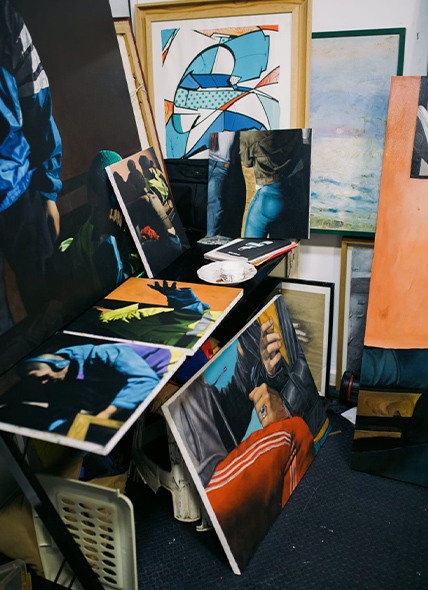
My work is shaped by a dialogue between different periods and influences. I remain deeply influenced by classical European painting—from the Renaissance to the Baroque—particularly in my use of light, composition, and staging.
At the same time, my everyday environment in Tangier plays a crucial role: the spaces, architecture, bodies, and attitudes I observe directly feed into my work. There is also a contemporary influence linked to photography and the way visual narratives are constructed today.
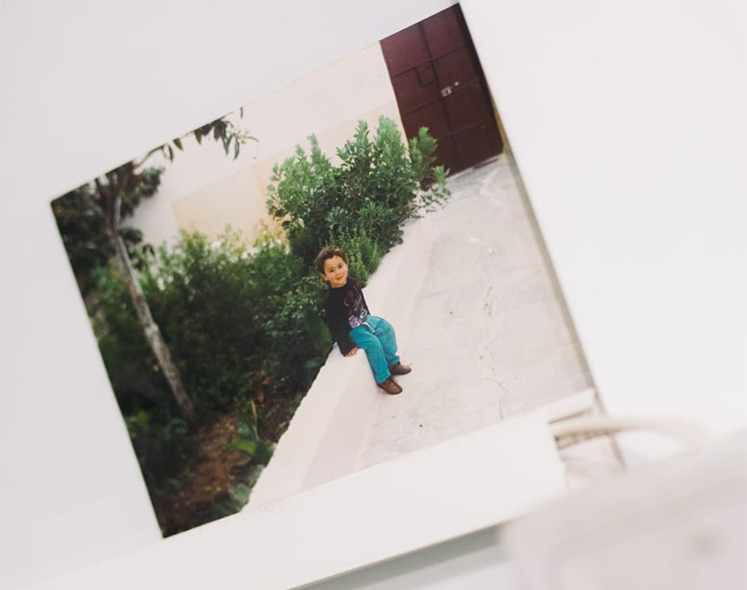
Outside of the studio, what fuels your creativity?
Music plays an important role in my daily life. I listen to classical and Baroque music, as well as rap and Arabic songs—this mix accompanies different phases of my work and reflection.
Sport is also essential to me, especially boxing and weight training. I practice regularly, but I also enjoy watching boxing. Beyond the physical aspect, it carries a sense of discipline, tension, and bodily presence that directly resonates with my artistic practice.
Where can people find you?
I am based in Tangier, where I primarily work. My work is also presented internationally through exhibitions, including recently in Paris (Afikaris Gallery).
People can follow my work and stay updated on my projects through my social media, where I share ongoing work and upcoming exhibitions.