MOSS
What are your names and where are you from/Based?
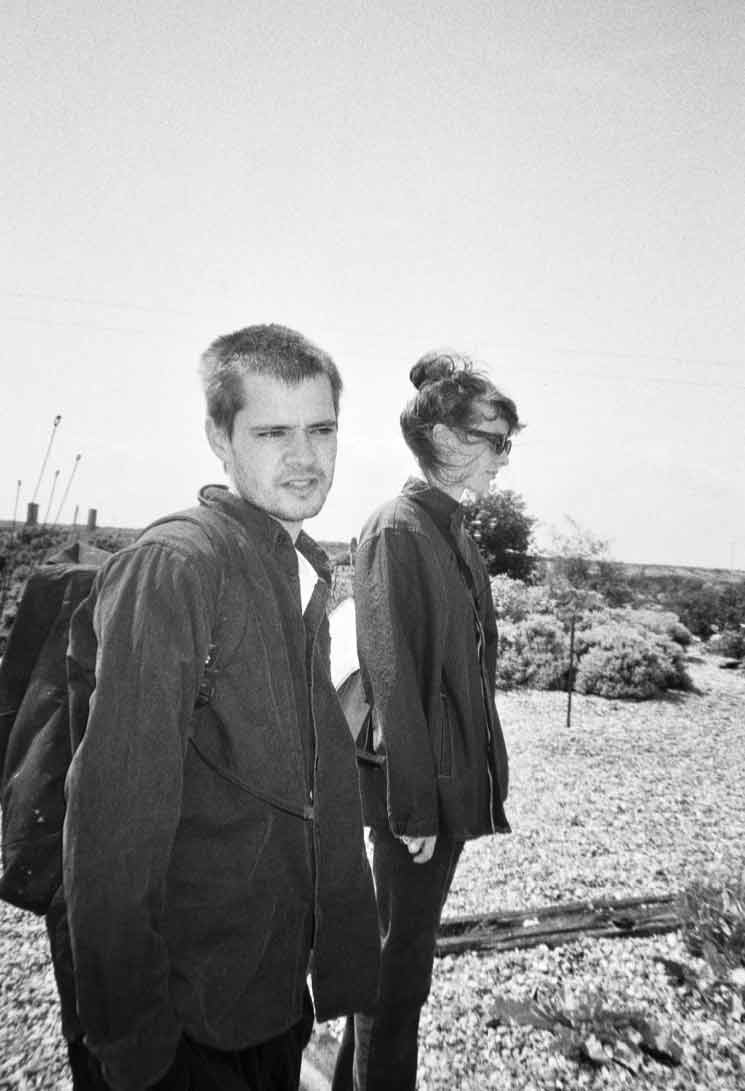
We are Madeleine Duflot, from Strasbourg in France, and Lewis Baxter from Canterbury, England. We met in London in 2021 and quickly started creating things together. We recently moved to Berlin.
Can you describe what you do in a few words?
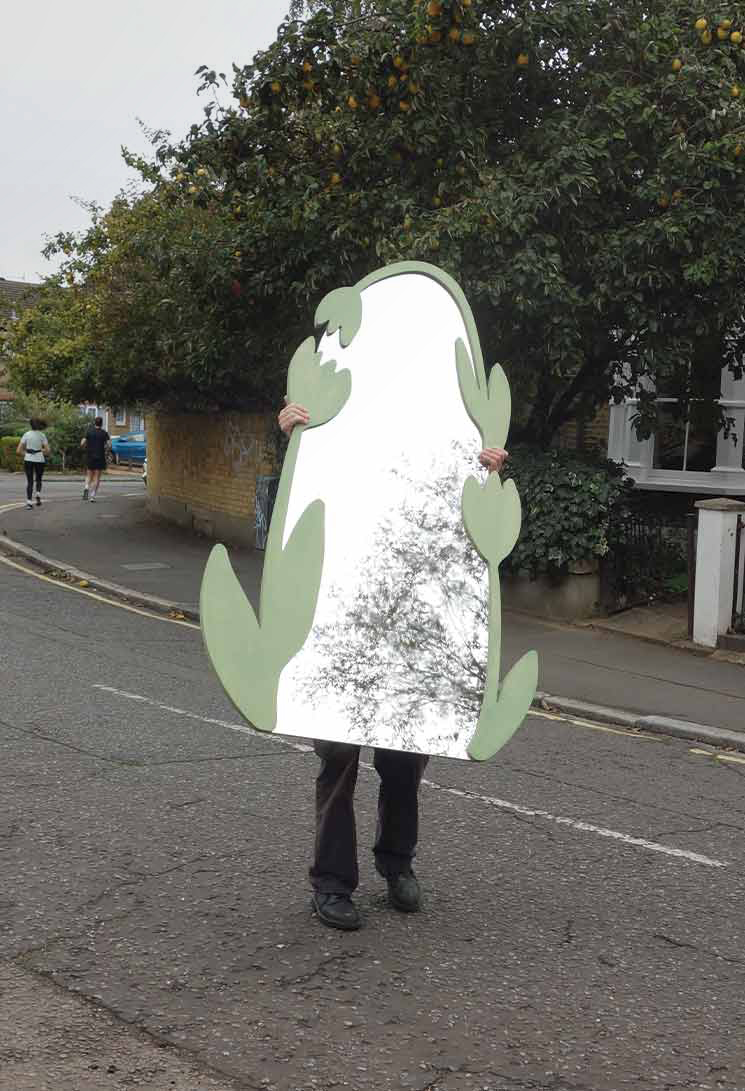
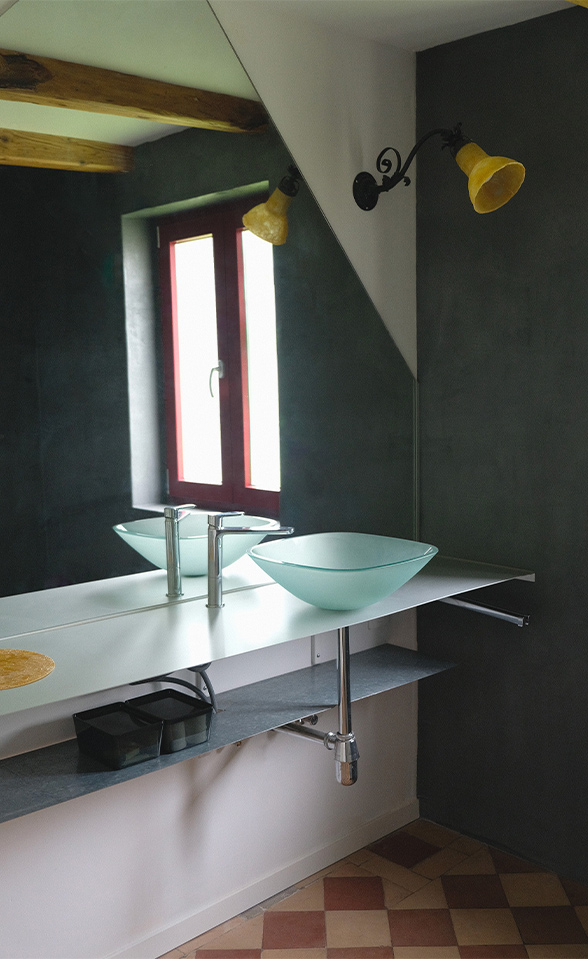
We make objects and furniture, and recently started to do interiors, which comes quite naturally as we like to imagine our pieces in space. It’s great to be able to complement the picture, or even to create it entirely. Our work is often colourful, simple and playful. We also enjoy making things ourselves, hands-on, beyond the prototype stage.
Where did the name Moss come from and how did it come to be?
Madeleine: We were actually struggling to find a name and kept trying different words for a while. Lewis then came across ‘moss’ and it sounded right to both of us. To me ‘moss’ is reminiscent of my childhood in the countryside. There were always lots of rocks covered in moss, and at Easter my sisters and I would scrape off some to decorate tiny houses we were building for the easter bunny. I also like its materiality – it’s soft, spongy, and can grow anywhere. It makes nature comfy.
Can you talk a bit about your project Alsatian Gite?
Madeleine: Before moving from London to Berlin, we spent around 9 months in Alsace, where I’m from. We had the opportunity to renovate an old ‘gîte’ – a guest house – that my grandma used to run, as part of a farm. It was amazing to have this freedom to reimagine the whole space, and to do everything ourselves; to have the time to learn a lot of new skills.
Lewis: It was like taking it from the past and waking it up, loads of time spent sanding and exposing the original wooden structure that had been covered up in various ways. We were lucky that it could be salvaged and made to look very fresh, in the end it’s kind of a modern space but still feels close to its history.
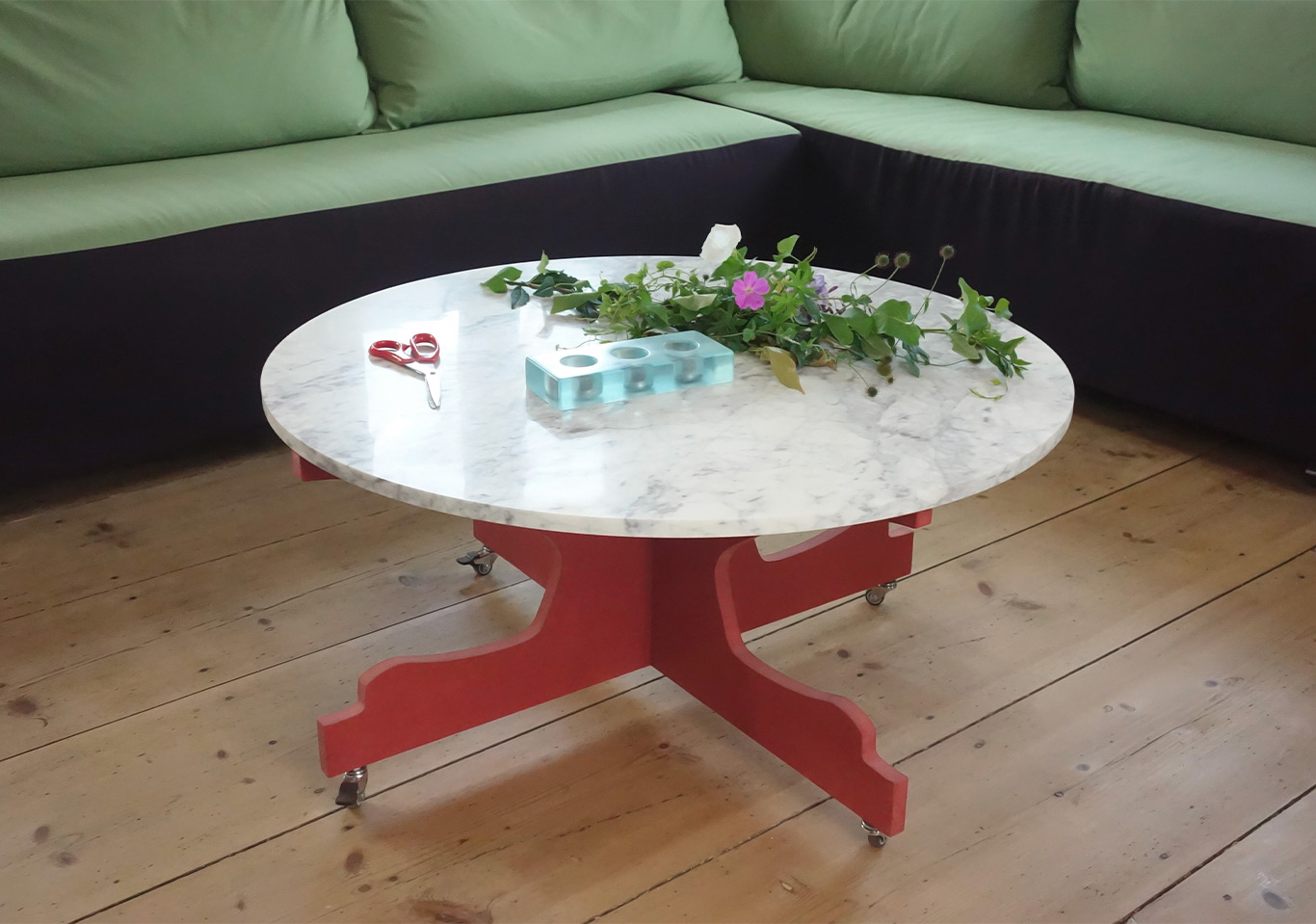
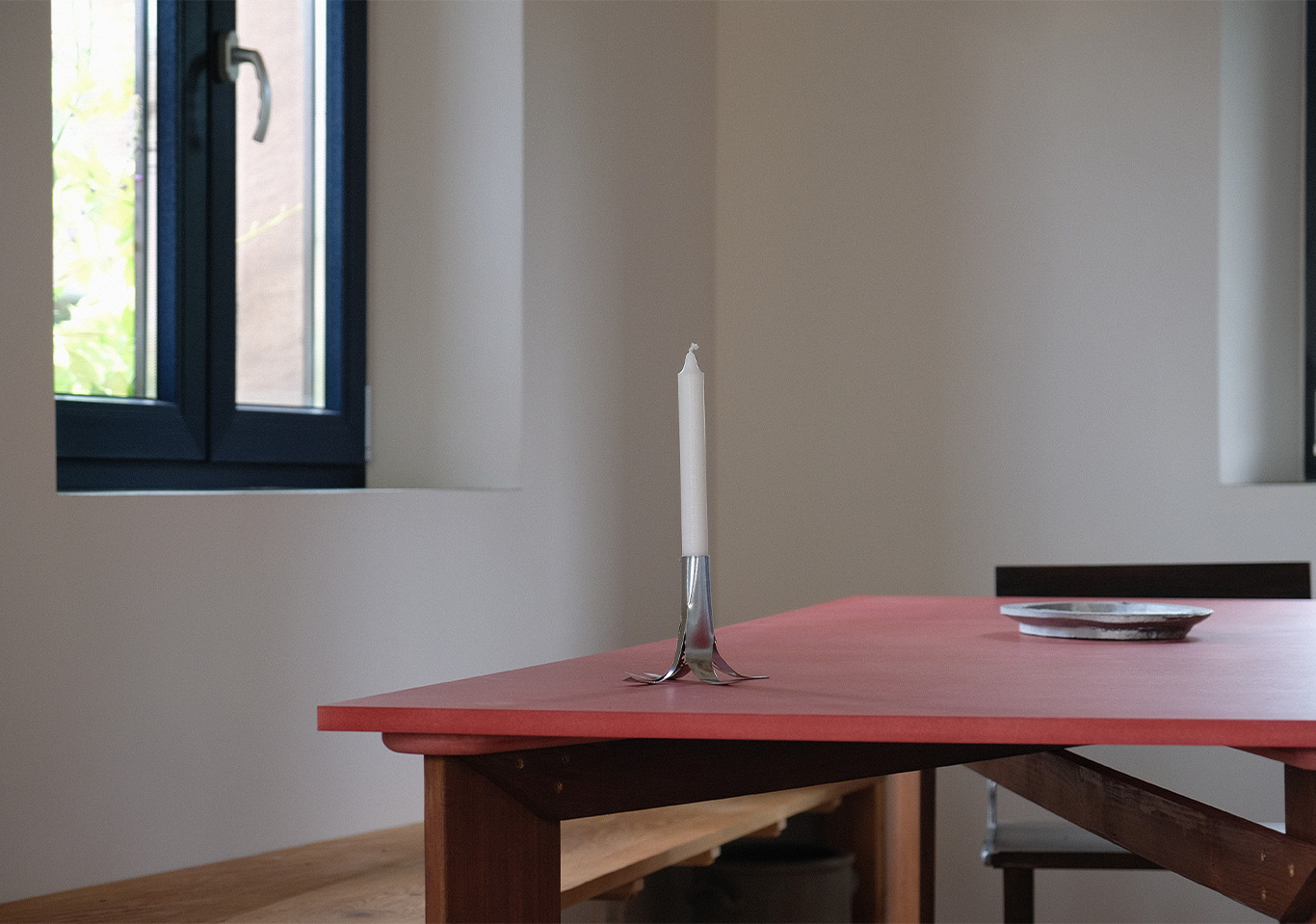
Your furniture has a touch of fun and unique detailing, how do you decide when to add your unique touches?
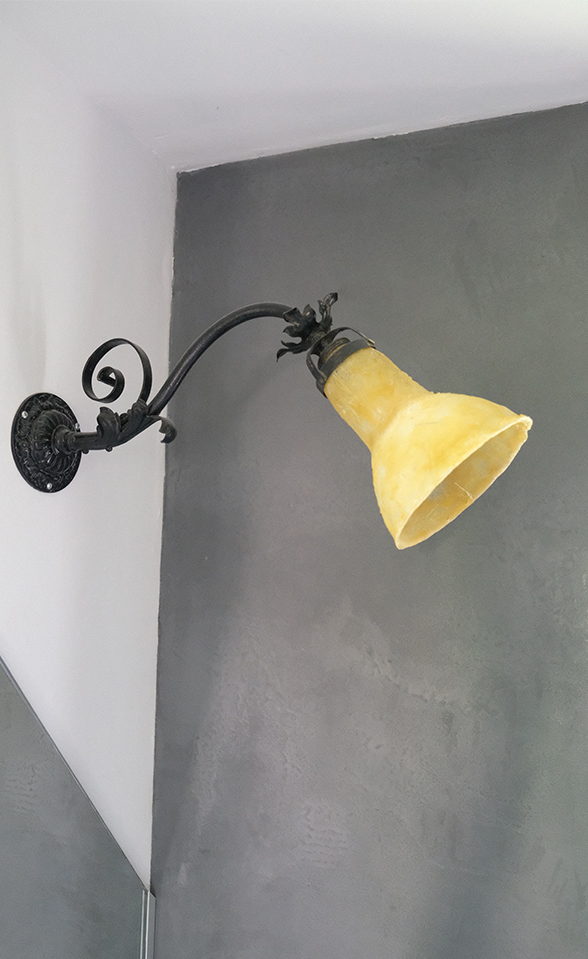
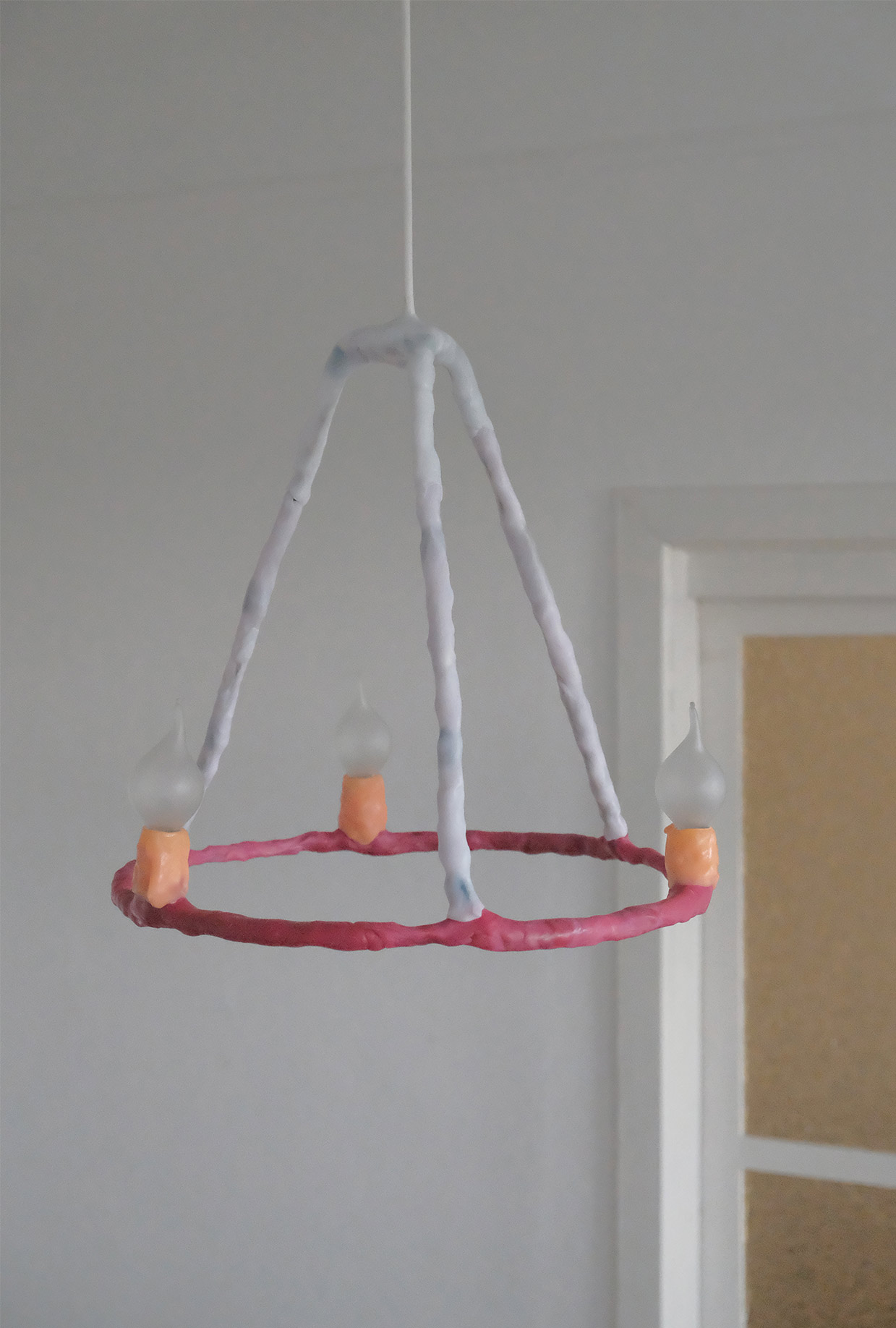
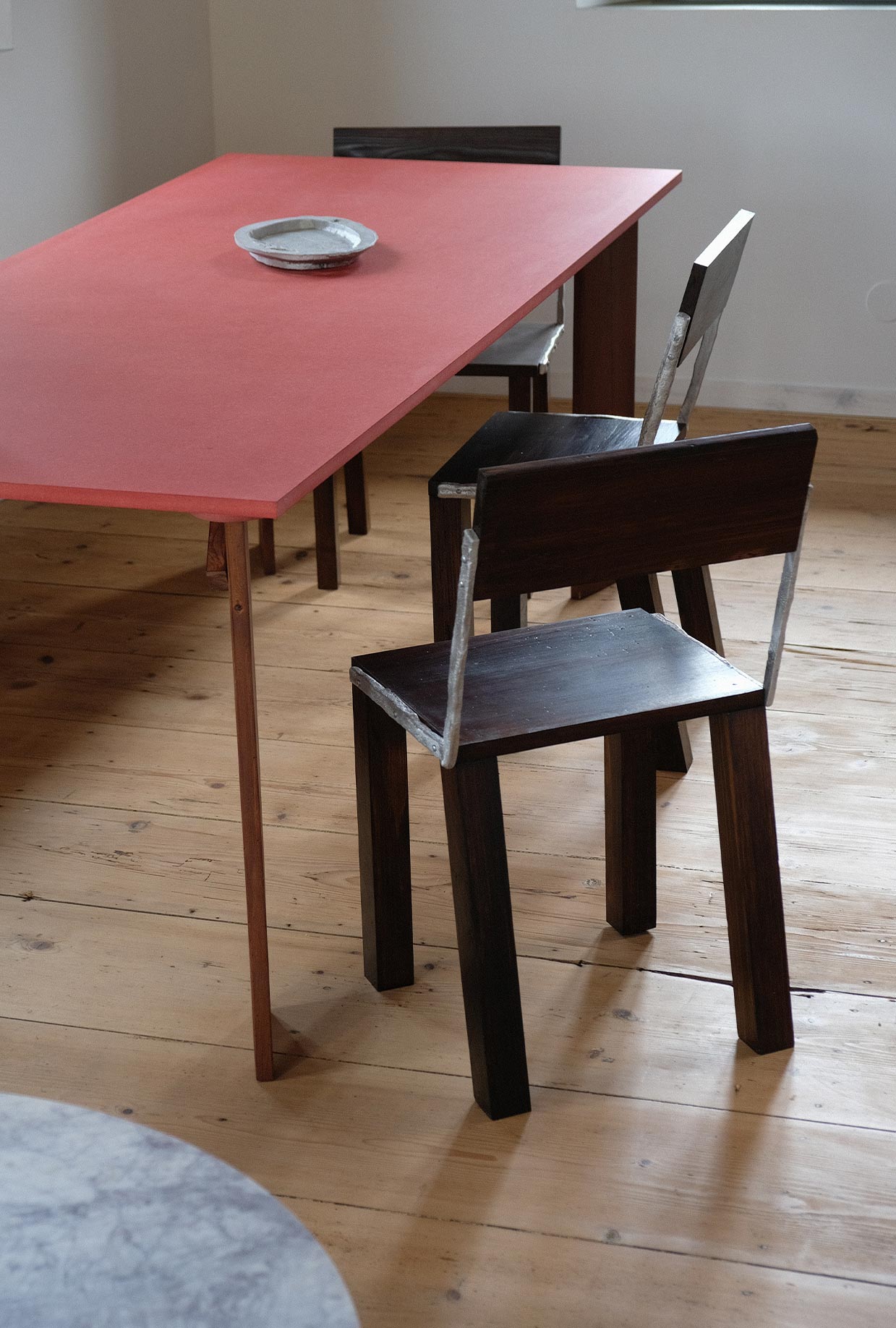
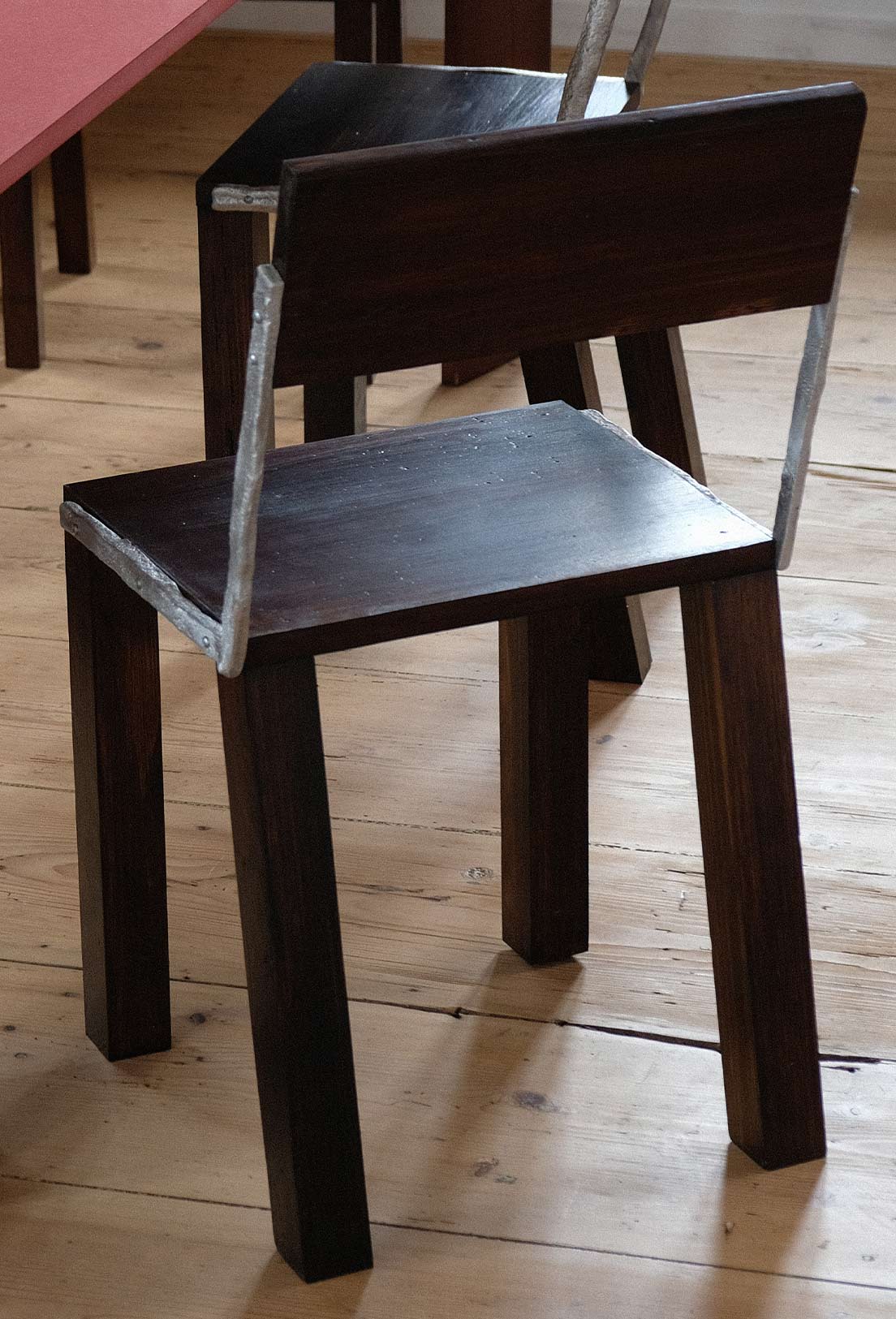
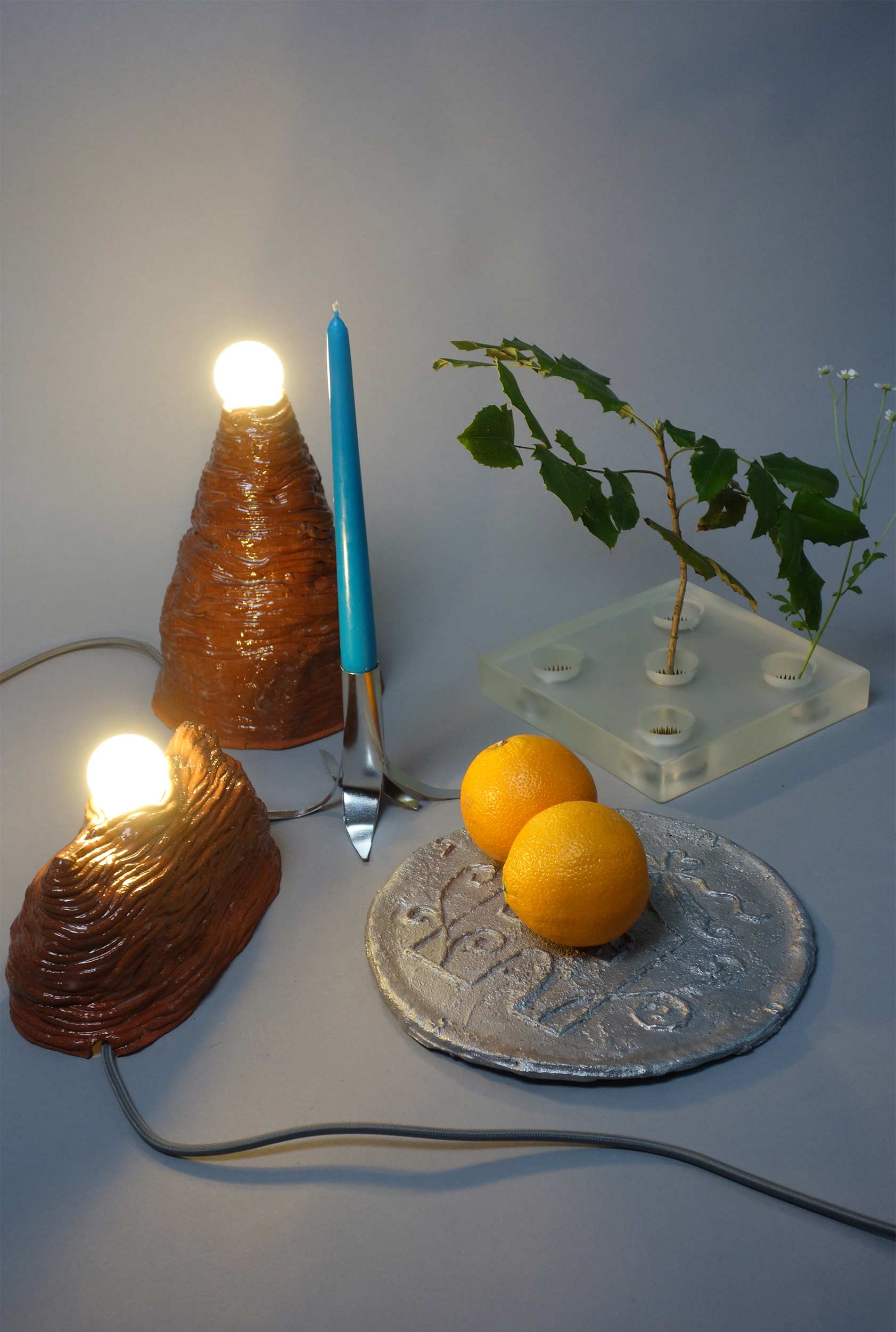
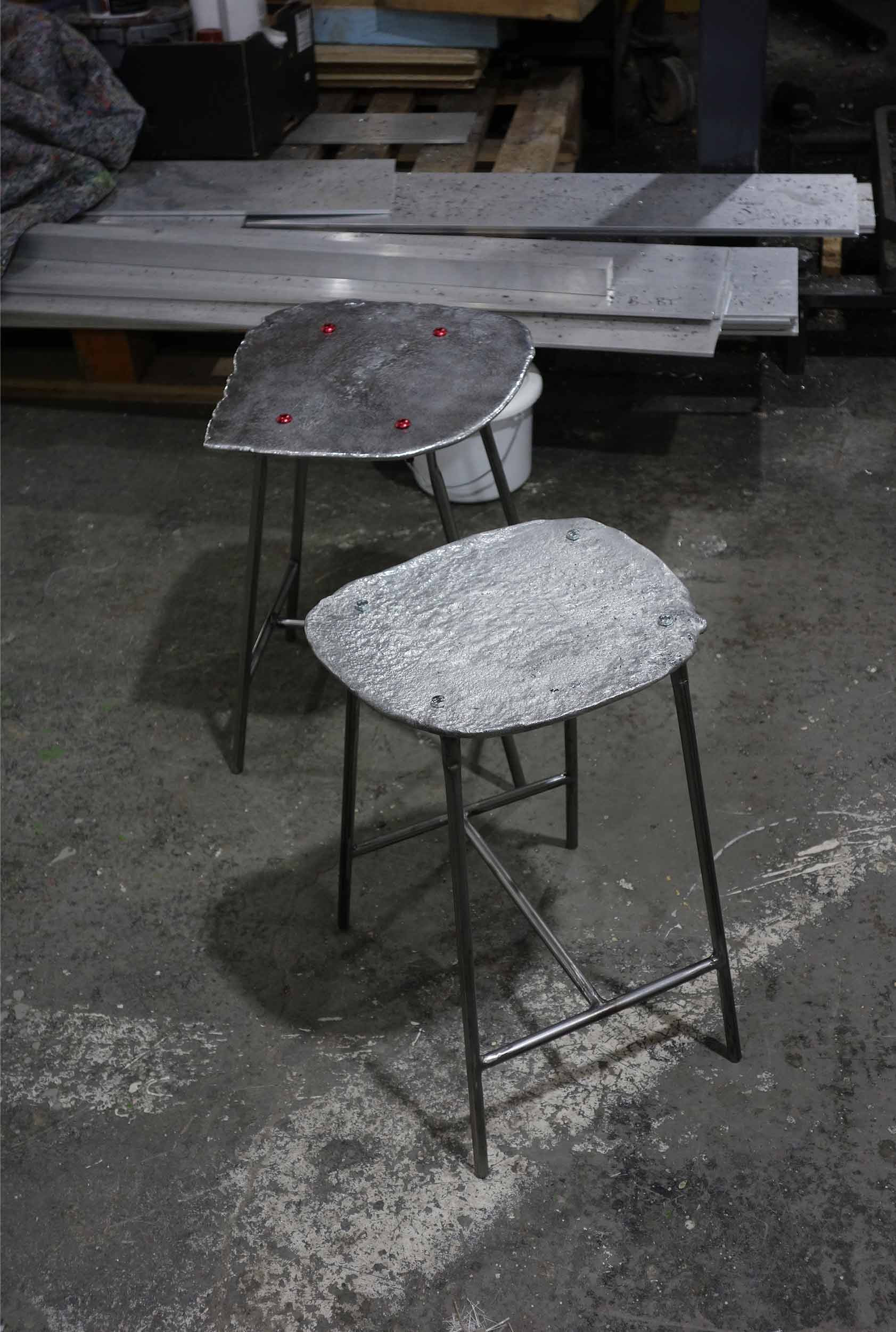
Lewis: I feel like we often build around the unique touches, for example the Gite chair we had the idea to do these cast aluminium brackets between the seat and the backrest. We casted them from a model and were trying to make them as interesting as possible through the finishing process, then the difficult part was making a chair around it. Also for the Patti lamps we were just very motivated to put text on to clay. Then Madeleine explored some shapes with the coil technique that she had learned about some time ago.
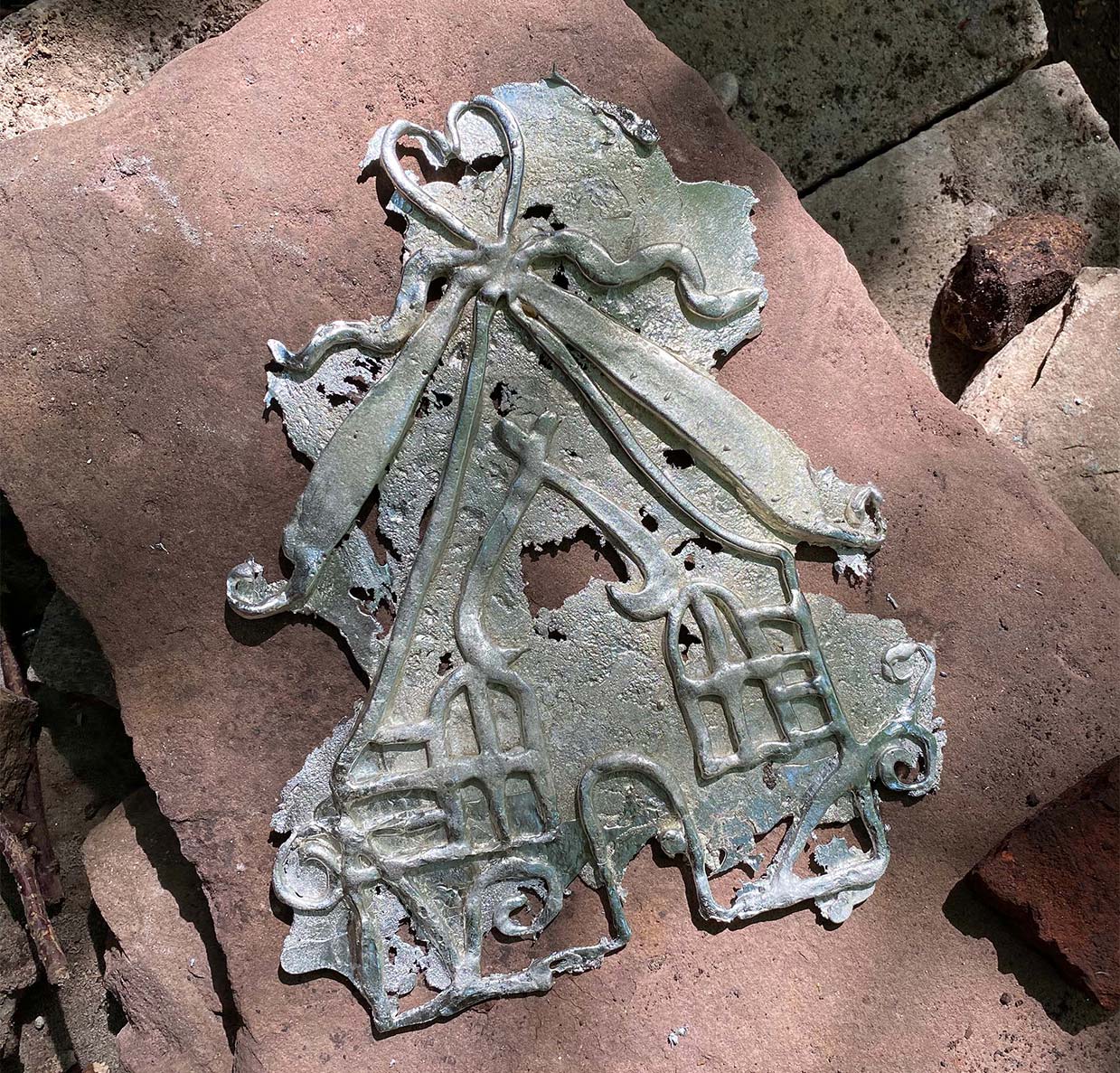
The pewter Love Home Dish is re-melted and re-shaped multiple times. How does that cycle of destruction and creation reflect in your wider practice?
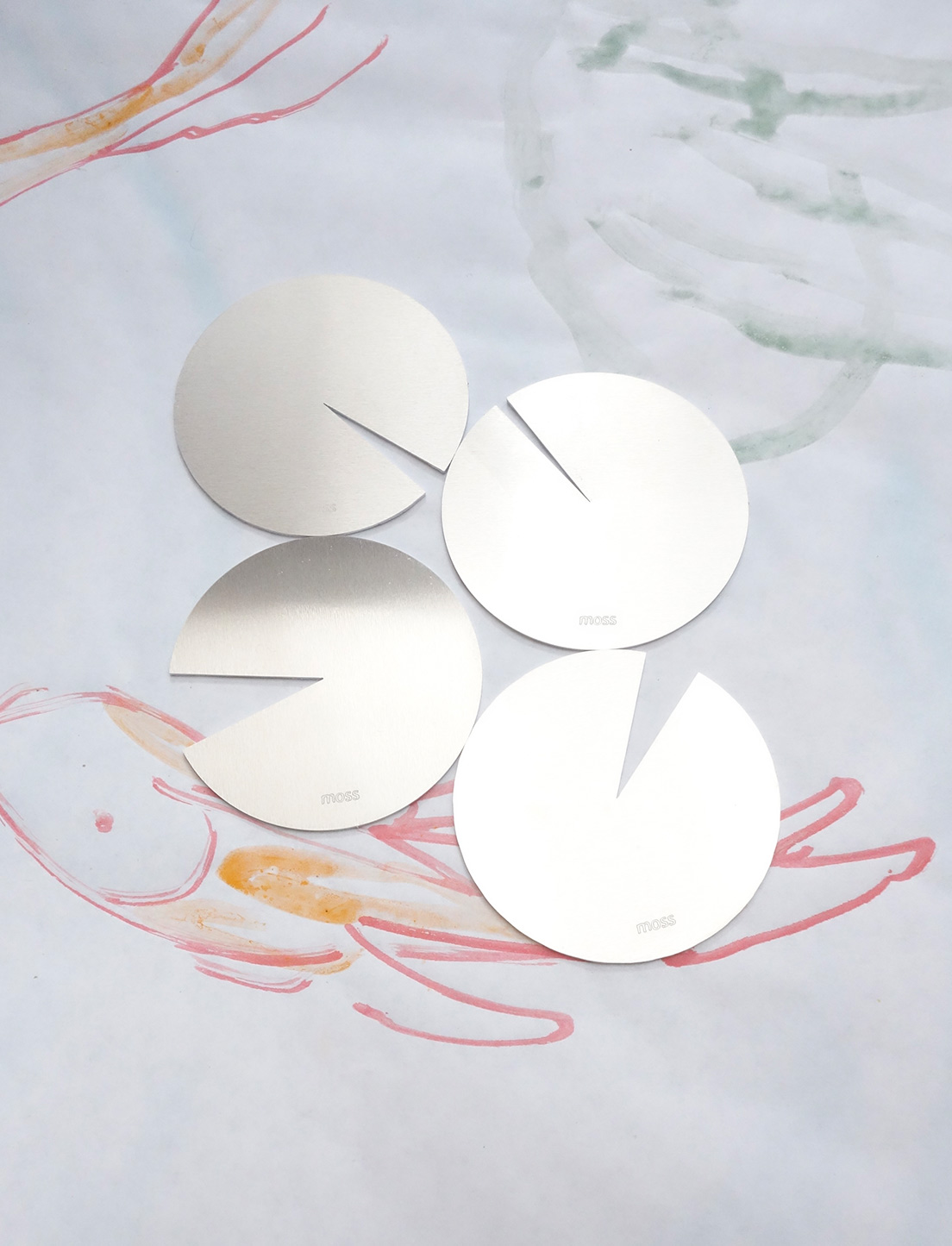
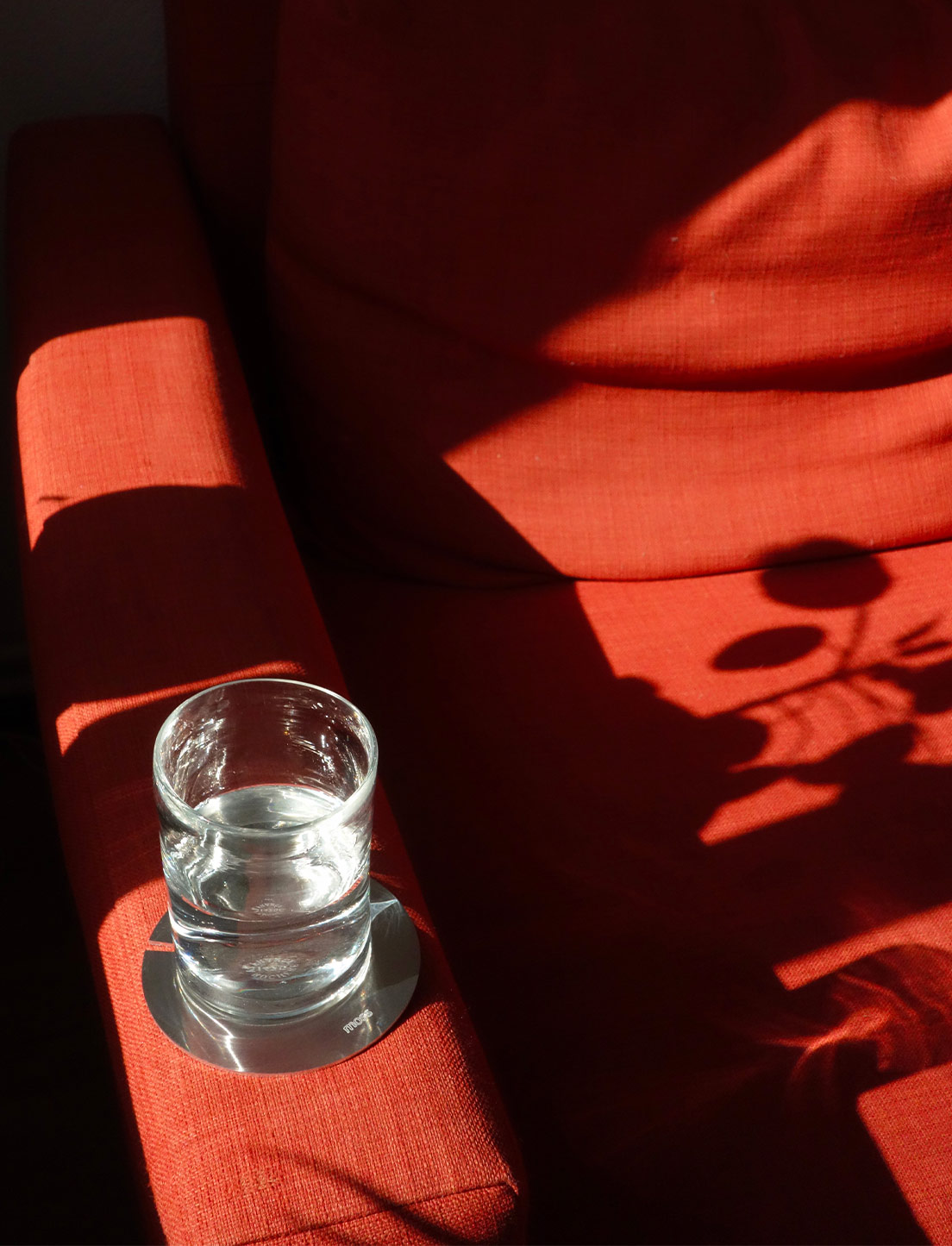
Madeleine: We often don’t overthink pre-production. We have an idea, and we are excited to immediately see some kind of physical thing, and it often results in lots of trials. In fact, there are also many materials that are very malleable, that can be reshaped many times, so it gives us a lot of space to explore ideas by making. And we like to embrace parts of the outcomes that were unexpected, or learn about new possibilities that way.
How did you balance honoring Alsace’s regional identity with your contemporary aesthetic?
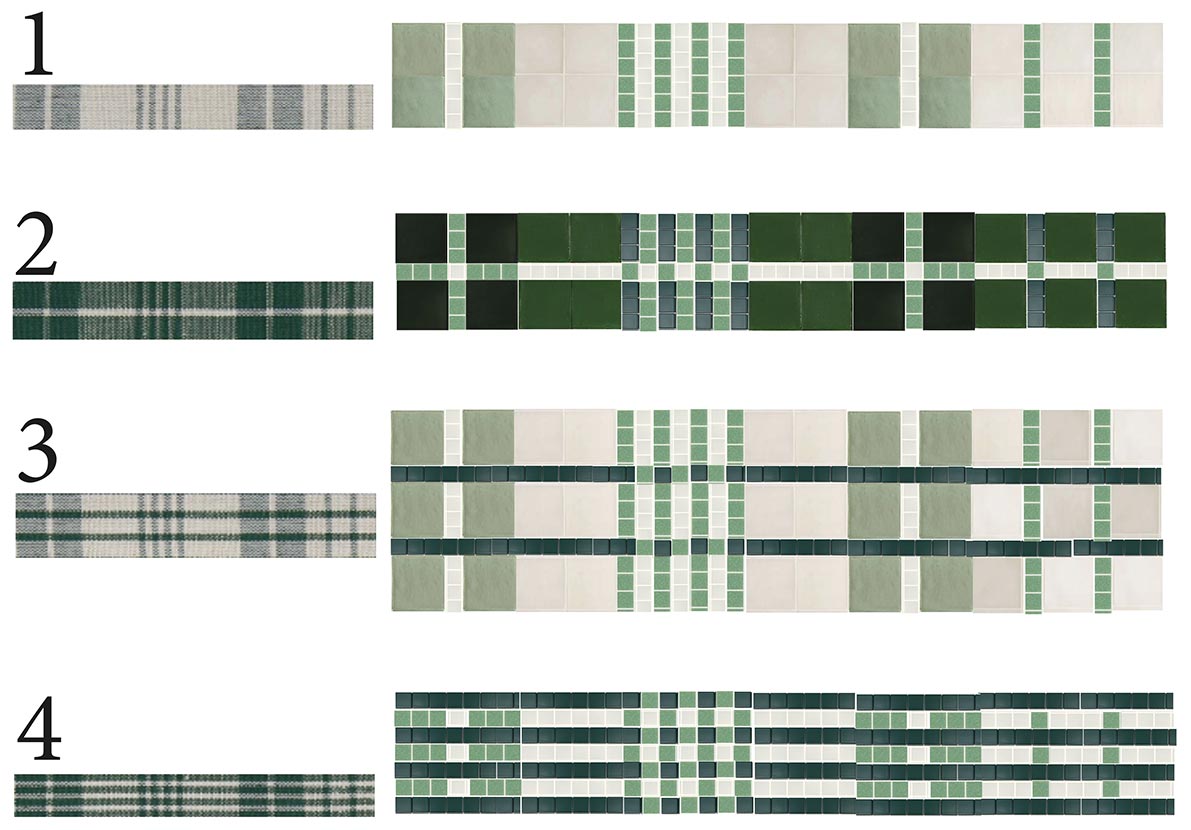
Madeleine: To keep the place true to itself, we upcycled lots of the original, quality material that was on-site. For example, we needed to insulate the place, and there was wainscoting all around the main room, which was solid wood we removed and kept to make a long built-in bench and some chairs. Also, when looking for inspiration, we would always look first into the traditions of the region – sandstone, kelsch patterns, linen cloth, half-timbered houses… We also visited the Alsatian museum where you can see rooms of old houses exactly how they used to be layed out, with the original furniture. Then it was all about incorporating these details we gathered into our designs, and not necessarily where you would expect them.
What is each of your favorite pieces?
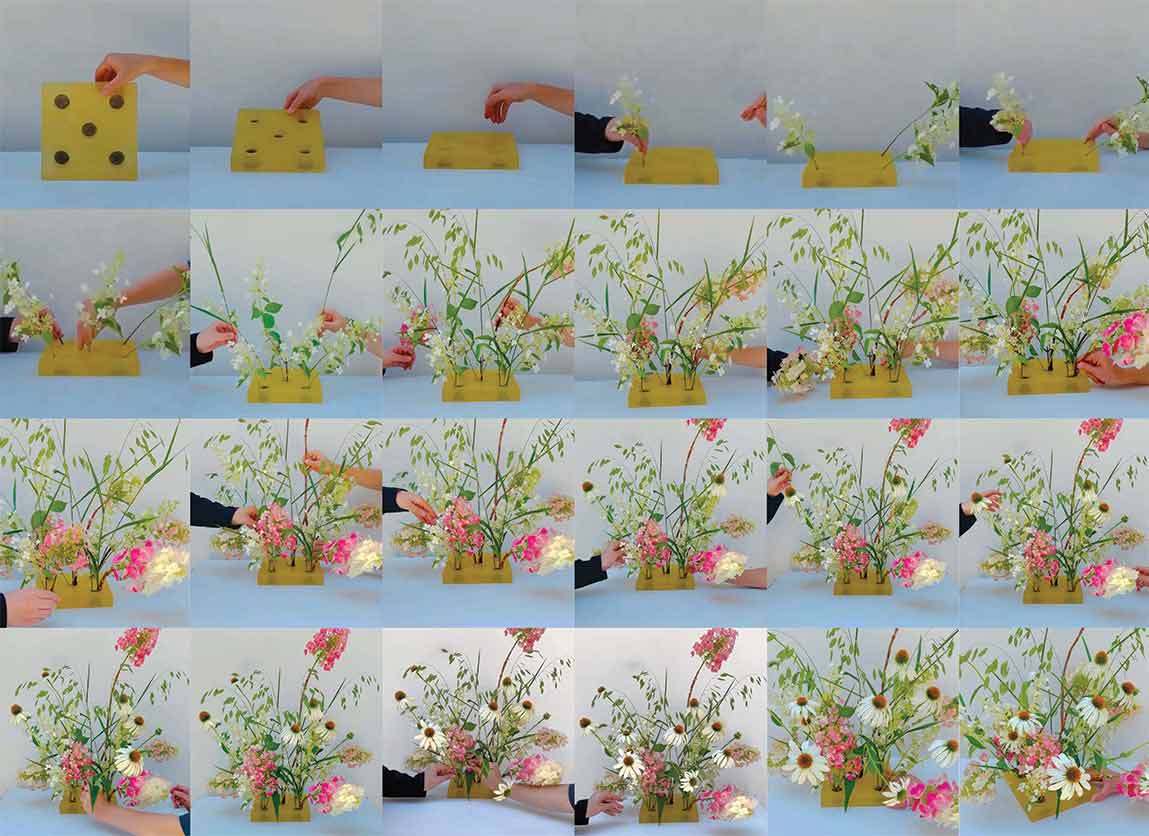
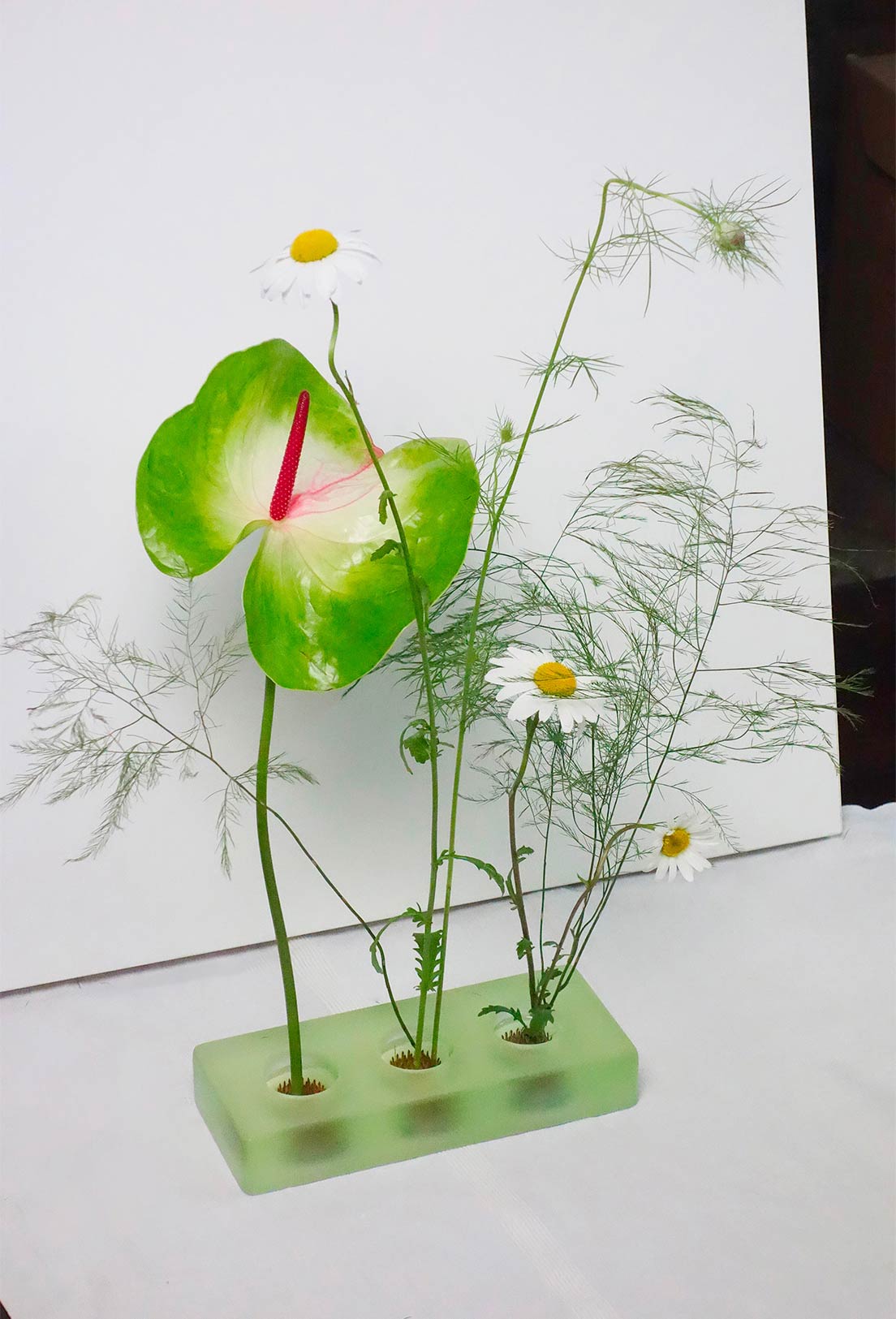
Madeleine: I think I really like the F2s, which are resin bases with built-in kenzans for flower arrangements. They are our first pieces, and actually also the most difficult to make! It was a long journey to achieve the perfect mould and cast. But I appreciate that it’s an unusual yet simple object, and that it invites people to be creative with it in their homes.
Lewis: The chairs! Because they are so basic but I think kind of fancy. Also we made the choice to finish the wood in this heavy dark varnish which I think is not so in keeping with current design, so in the end they’re difficult to place chronologically. The wood structure itself is very to the point, and the aluminium is so particular that in the end they are quite uncanny.
What’s an important lesson you’ve learnt from each other in your practice?
Lewis: Sometimes in your head something is going in one direction and all of a sudden it can become something that you alone couldn’t have thought of, then its nice to have contributed to something that feels more universal than your personal approach.
Madeleine: Yeah, working together means not being too hung up on one idea even when it felt obvious in your mind, and trusting the other person’s vision too. We have slightly different styles but they actually combine very well. Although sometimes it’s okay that one of us takes the lead on a project.
Which piece from the gîte pushed your technical and creative skills the most?
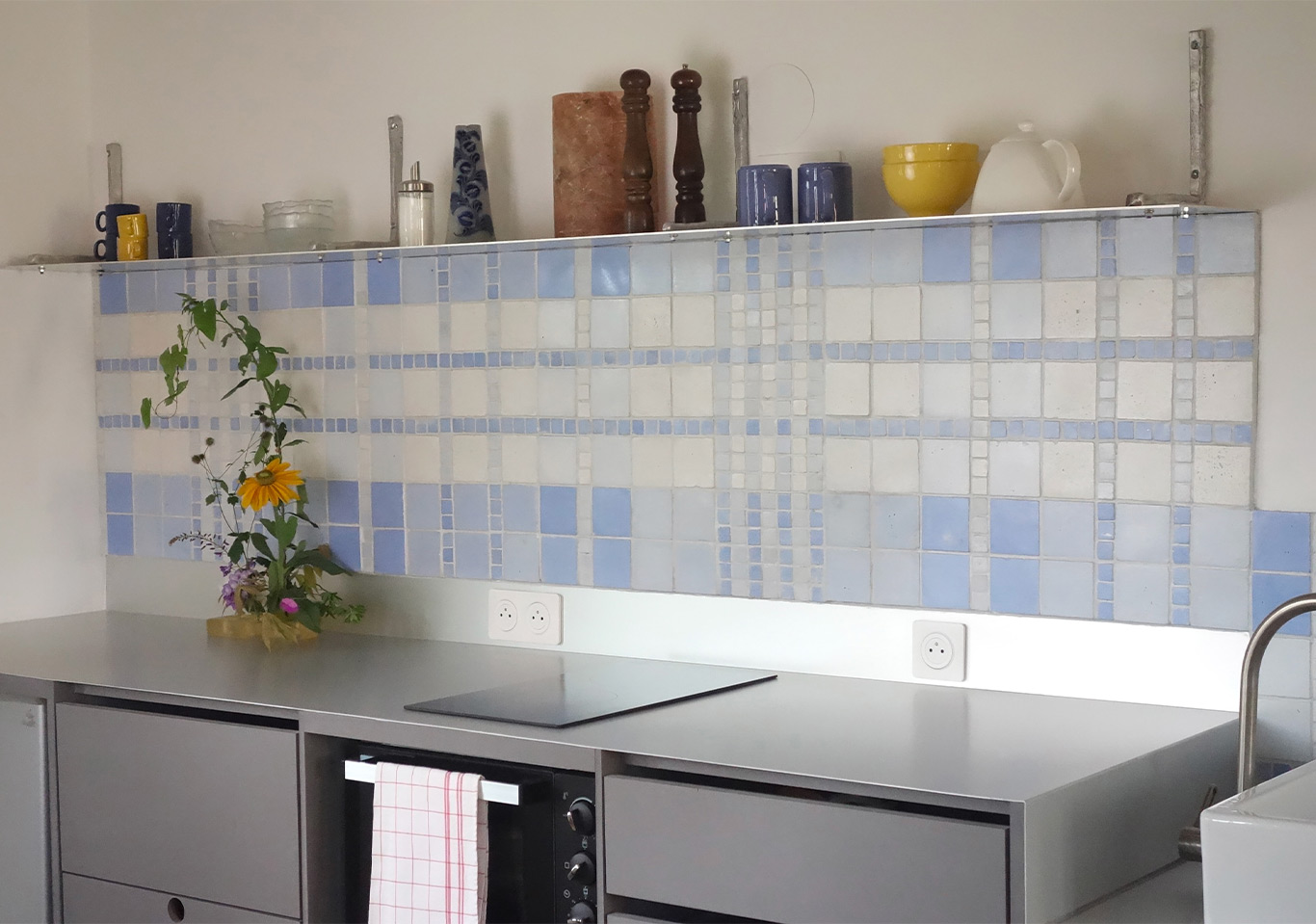
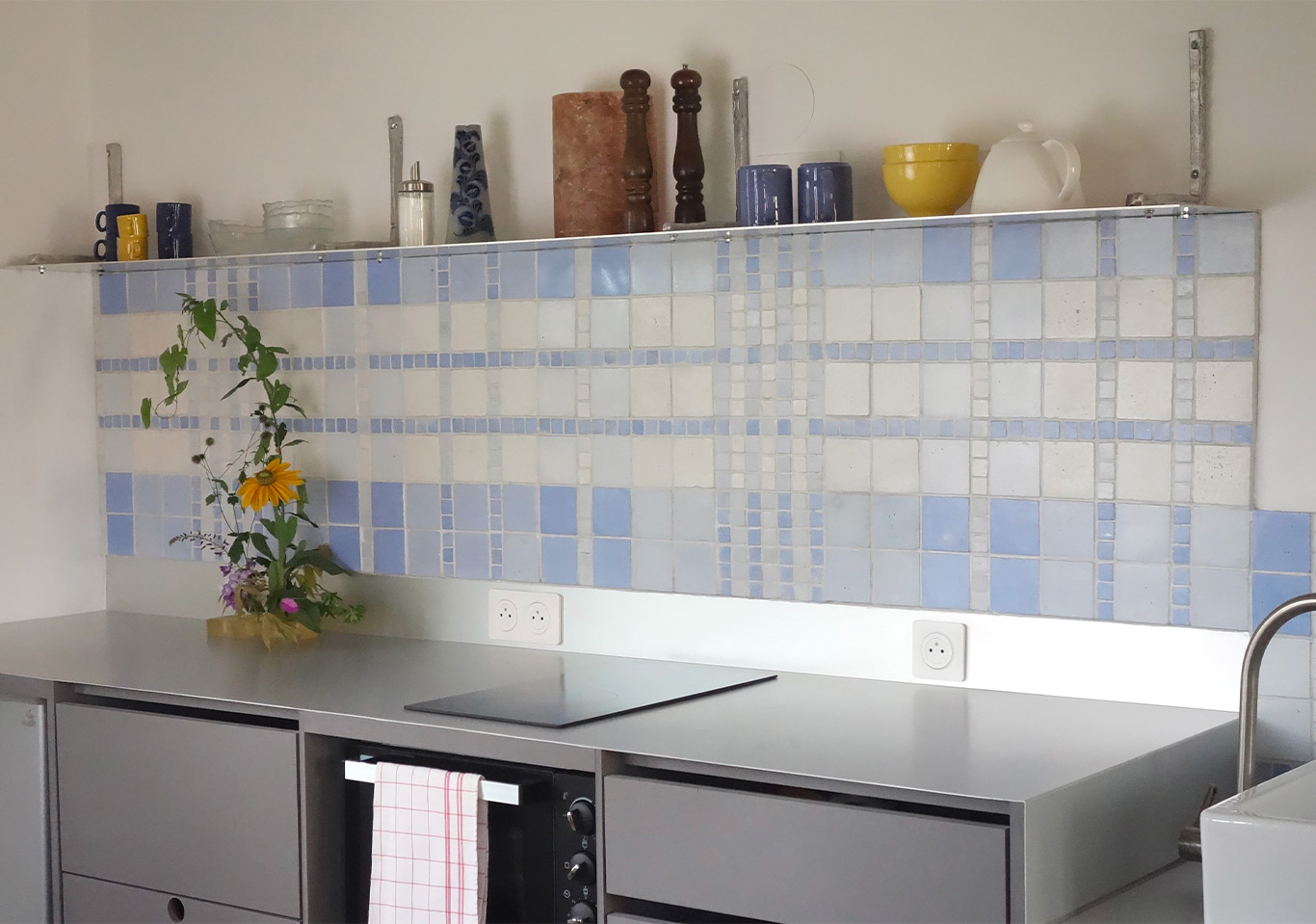
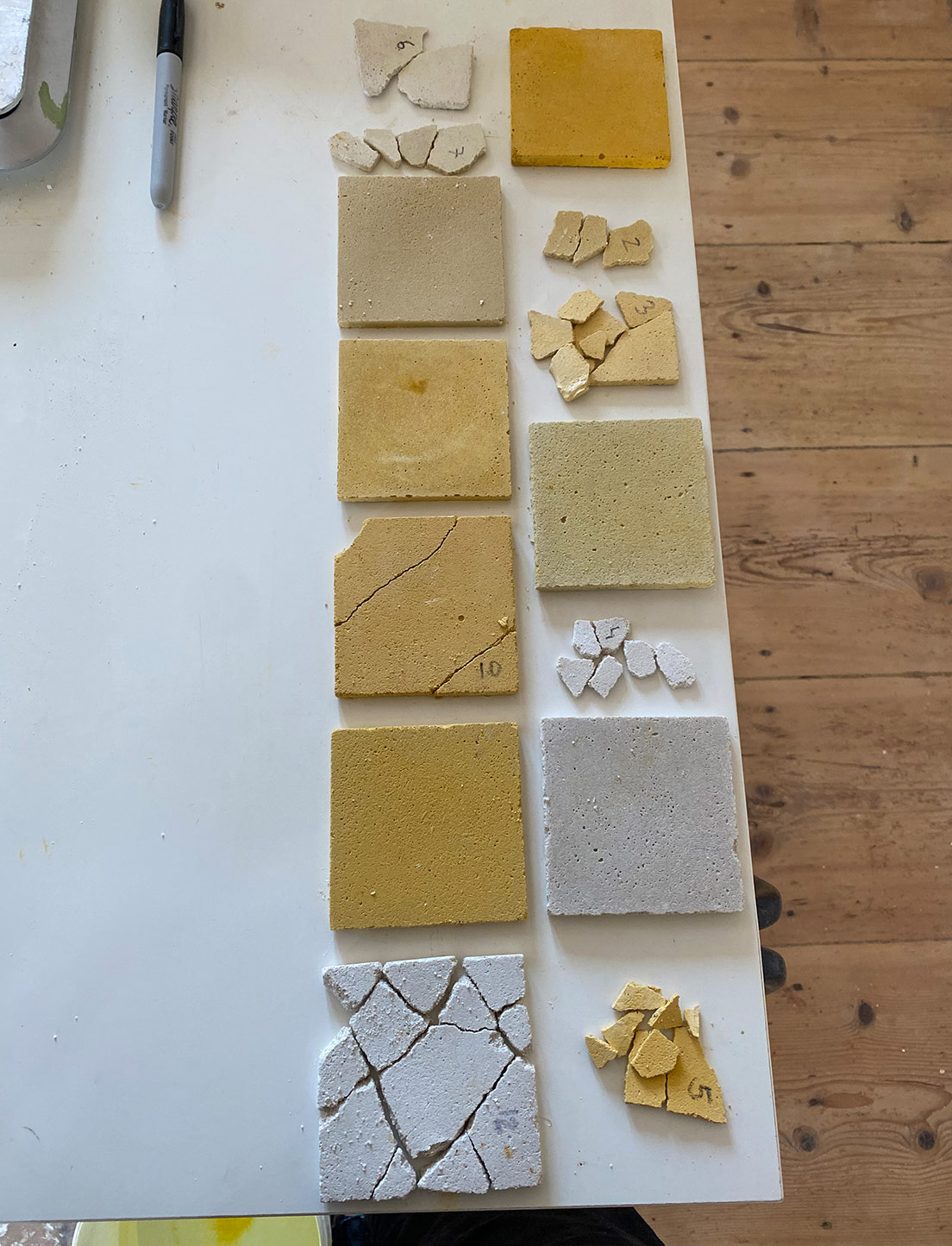
Madeleine: It’s good to see that when you start breaking down each process into smaller bits, nothing is so daunting anymore. Maybe the most rewarding technically for me was to build the sofa from scratch – first the structure, then the upholstery. I also enjoyed making the tiles for the kitchen backsplash. It was the first task every morning for a few months – make two sheets of tiles and let them dry throughout the day, until there was finally enough to put up on the wall and create the blue kelsch pattern.
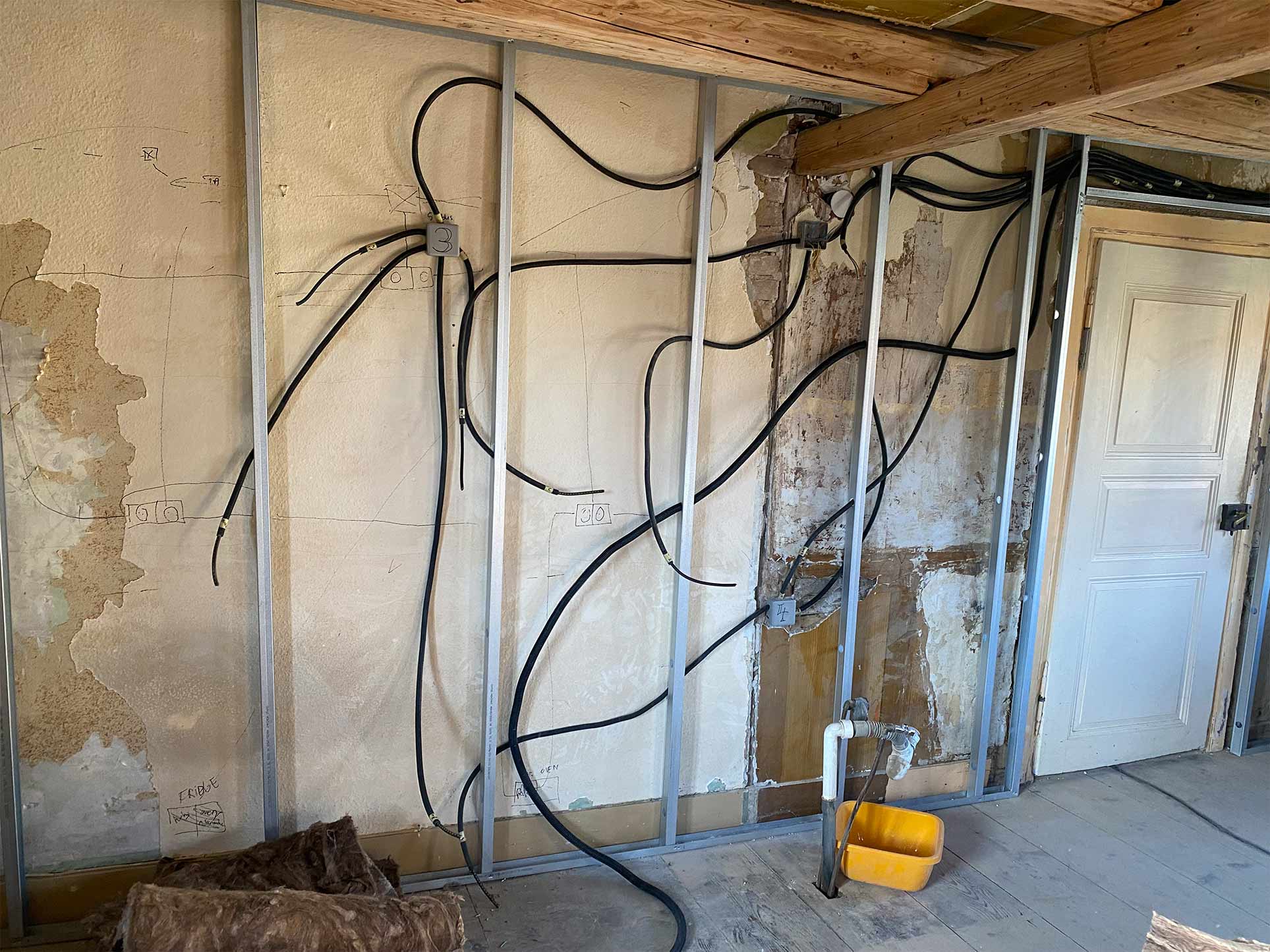
Lewis: Redoing all of the electricity although it wasn’t so creative. Luckily a neighbour in the village was a retired electrician and helped with some of the complicated stuff. We gifted him a box of Ferrero Rocher.
What’s next for Moss?
We’re starting to see a nice collection of objects and furniture coming together, so it would be great to go and present it all at some design events next year, especially in Milan for Salone del Mobile. Until then, we will keep exploring – we recently discovered a new material that is really fun to use, thermoplastic. We are also quite drawn to make ceramic and glass tableware.
Where can people find you?
We will be in Berlin for a while, making a few bespoke kitchens, and we have an interior project coming up in September in Kavarna, Bulgaria, that we are very excited about. You can always see what we are up to on our page @moss.duo and
we also have an online shop here where some of our pieces are available.