Natalie Dubrovska
What’s your name and where are you from/ based?
Natalie Dubrovska. from Kyiv, Ukraine, based between London and Barcelona.
Can you describe what you do in a few words?
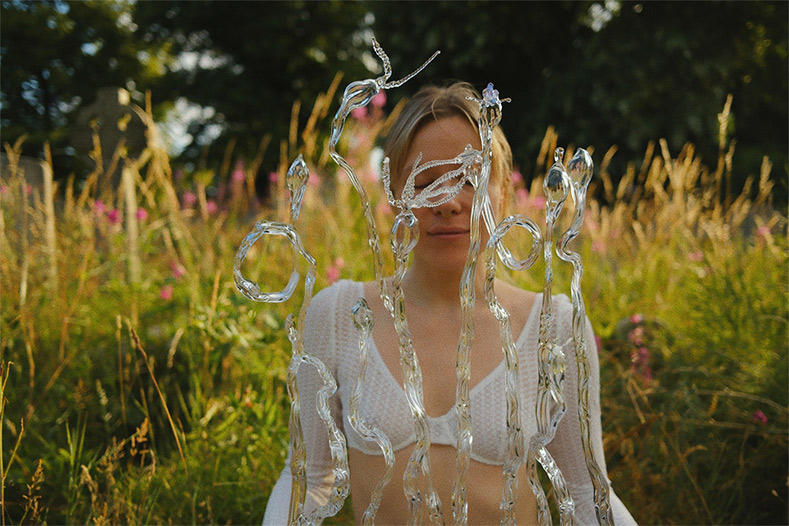
I work between spatial design and material-led sculpture – across my interior studio, with projects published internationally, and Study of Glass, where I create experimental objects and jewellery.
My practice spans large-scale installations, sculptural furniture, and smaller wearable pieces, primarily working with glass and found materials. I move between formats, but everything is rooted in hands-on making and material research.
You work with raw, found, or industrial materials. What draws you to these specific forms?
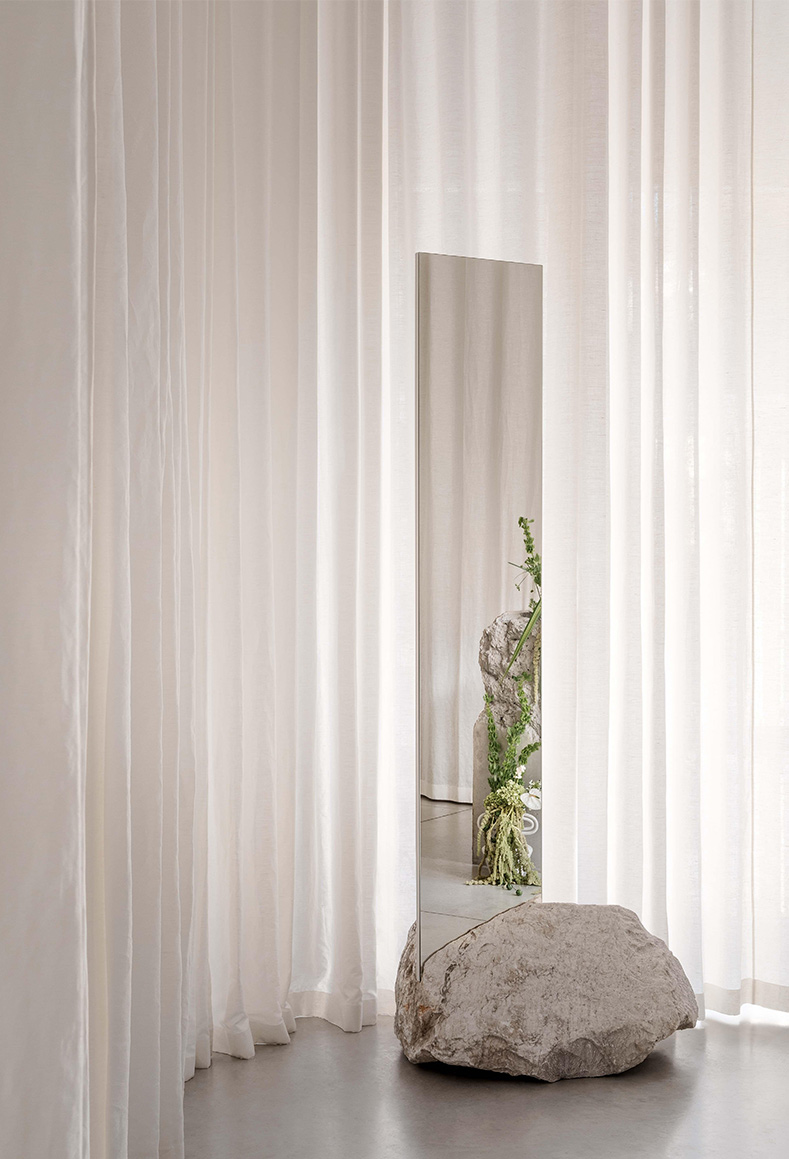
Coming from the high-end interiors world, I’ve always seen beauty in the balance between raw and polished. There’s something in that intersection that intrigues me – it adds layers to the work.Also, it’s not a radical idea – so many materials already exist, why wouldn’t we use them? And then there’s glass. That’s just a one-way street for me. The tension between control and surprise is addictive. You’re shaping something in a pretty dangerous technique, and somehow it becomes so fragile and permanent at the same time.
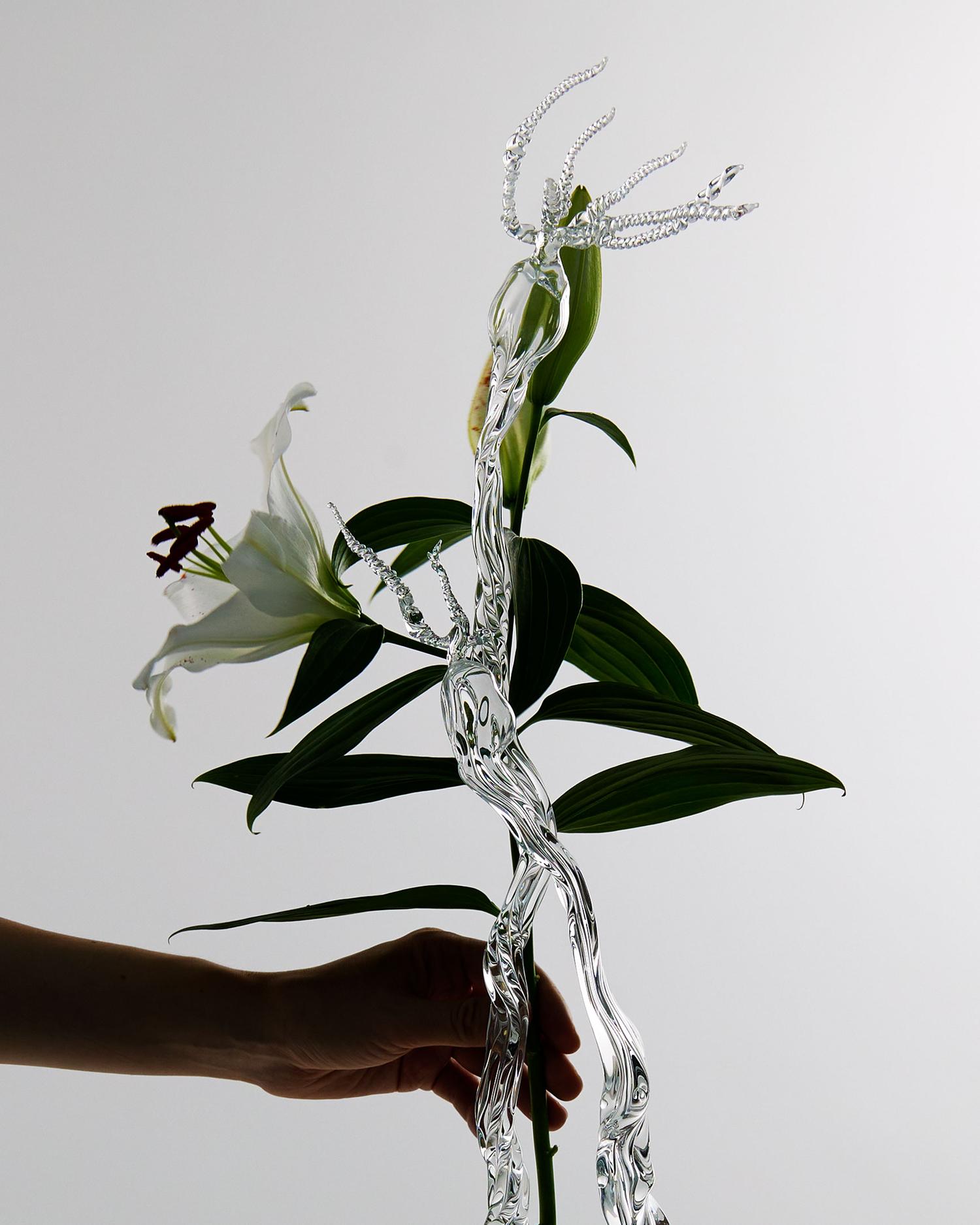
Your work plays with space, boundaries, and voids, what role does negative space or play in how you build?
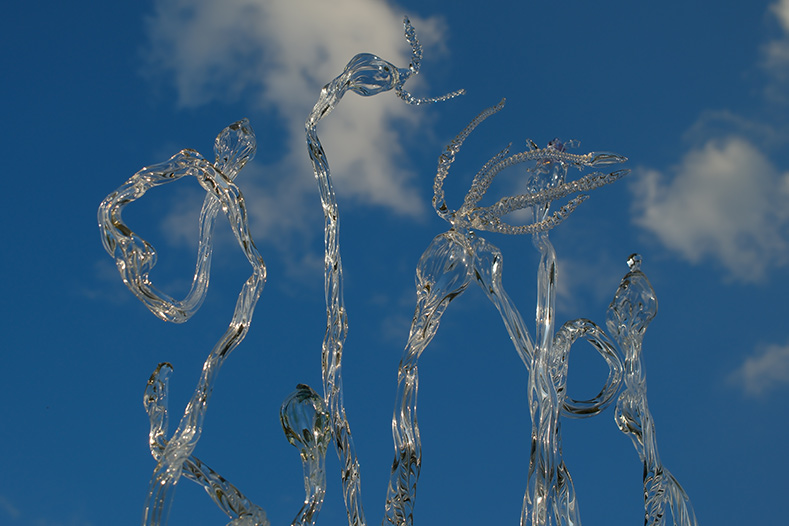
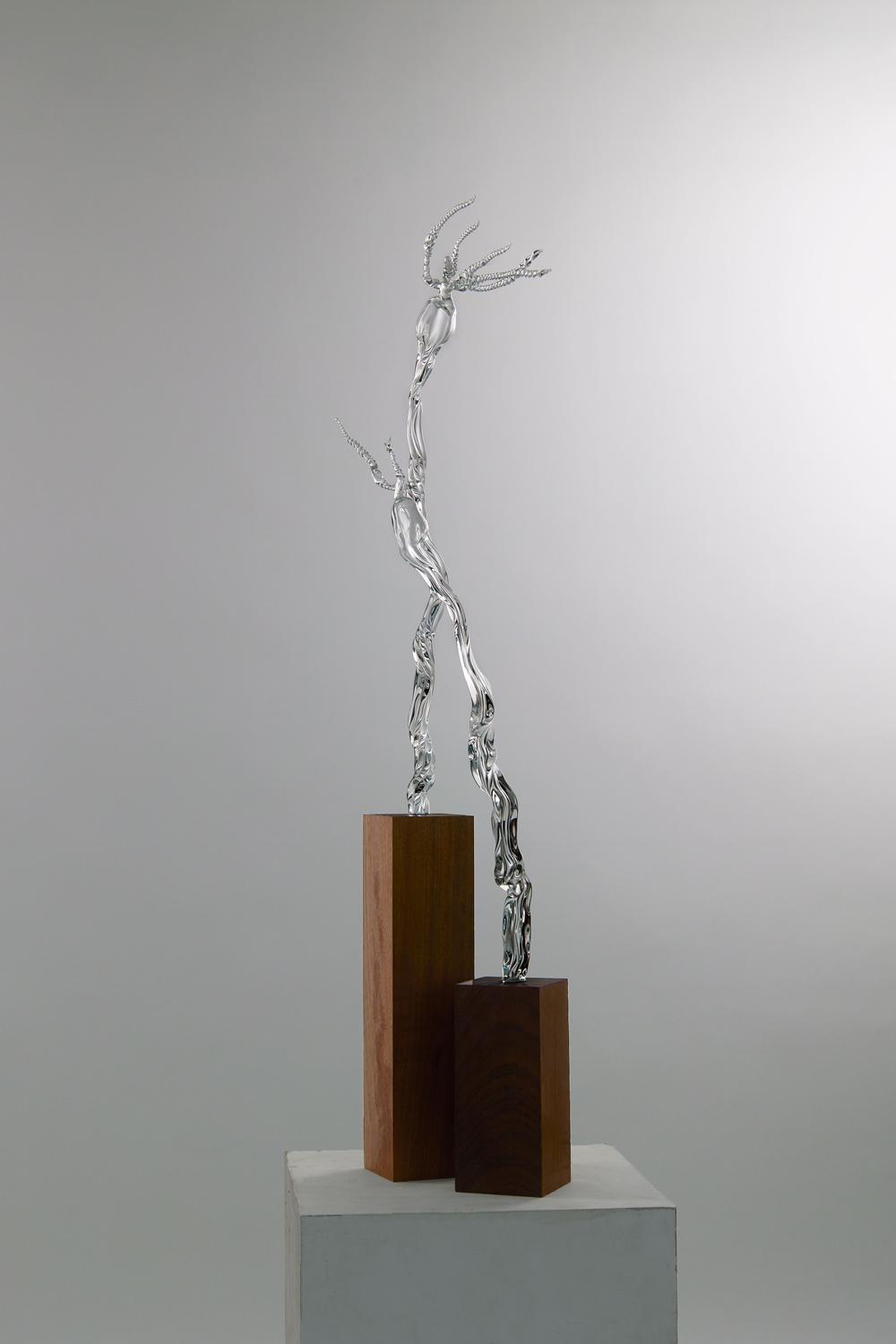
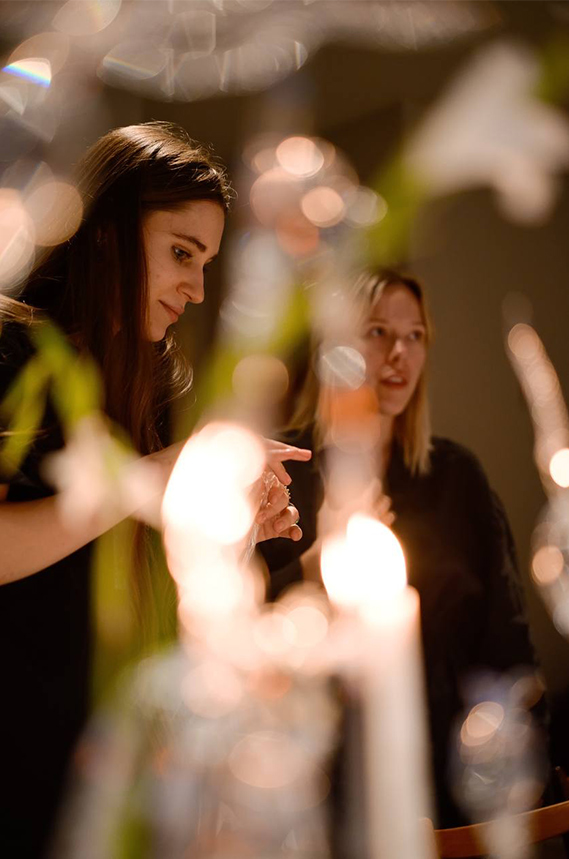
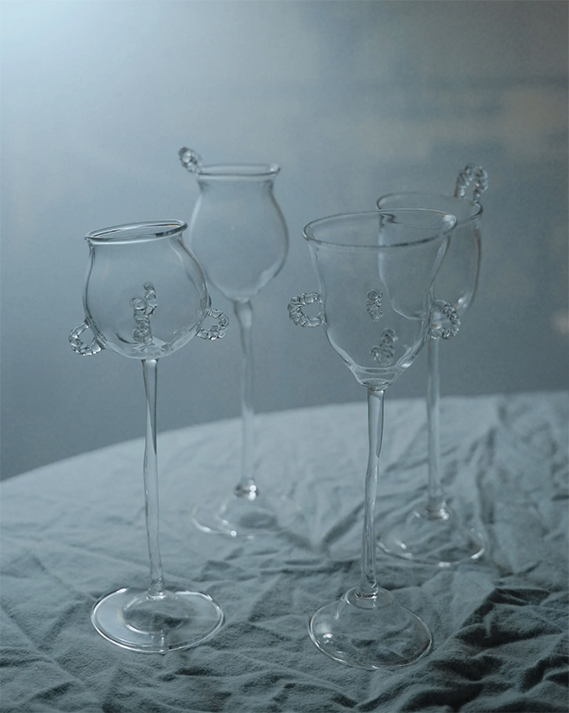
I think negative space is actually where a lot of the work happens. In my recent table installation, the glass flowers sit in the middle specifically as an interruption. They create a soft boundary between people – you don’t see the person across from you clearly, only through distortion, reflection, or gaps. That space between is what shifts the whole experience, or maybe even creates it.
I like when there’s room to move, to feel slightly off-balance. In my projects, there’s always an open-ended scenario. Even when I build something spatial, I never fully know what the atmosphere will be in the end. It’s the people – how they fill the empty spaces – that complete the work.
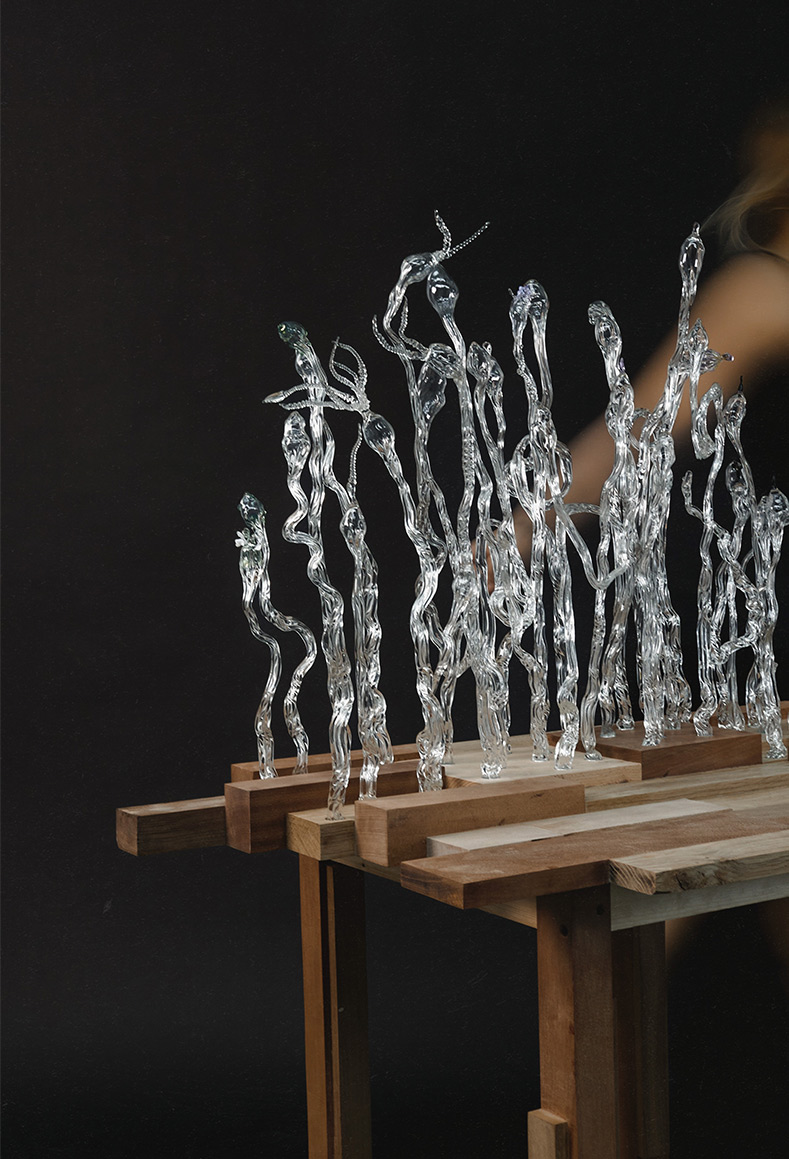
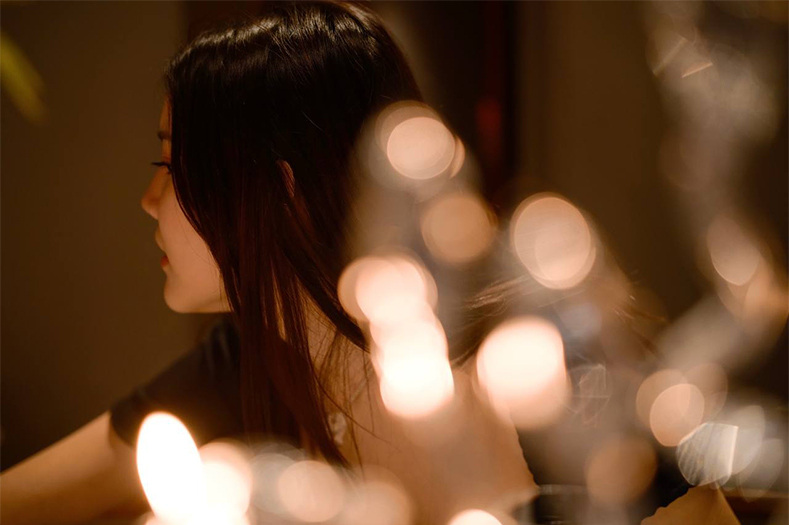
Your installations often feel architectural but also very emotional, do you see them more as structures or as emotional containers?
We naturally lean on structures – it makes us feel safe. In the architectural world, there’s no real space for improvisation. That’s what I love about making: you set your own rules and play.
With glass, it definitely leads you. If you listen, it gives a lot back. It brings you to the point when you accept failures as a norm, and they’re not failures anymore. I feel like emotions sit somewhere in that space – when you’re being bold, a bit crazy, accepting being ugly sometimes. When you stop overthinking and just make the most honest thing you can.
Same with my furniture. Wood doesn’t usually let you improvise. But when you’ve got a bunch of offcuts – there’s no other way. And you start playing around. And that makes it emotional. You just accept whatever comes, always ready to start from scratch if necessary. I like that.
Looking back at your body of work, is there a recurring gesture, shape, or material you keep returning to?
I just finished my year at the Royal College of Art, and you go into places like that after 10 years of practice thinking you’ll reinvent yourself or make something completely new.
What’s interesting is that when I came in with my interior and glass work, people kept saying it all felt really coherent. Reflective, prismatic, pure? That’s not my wording! haha
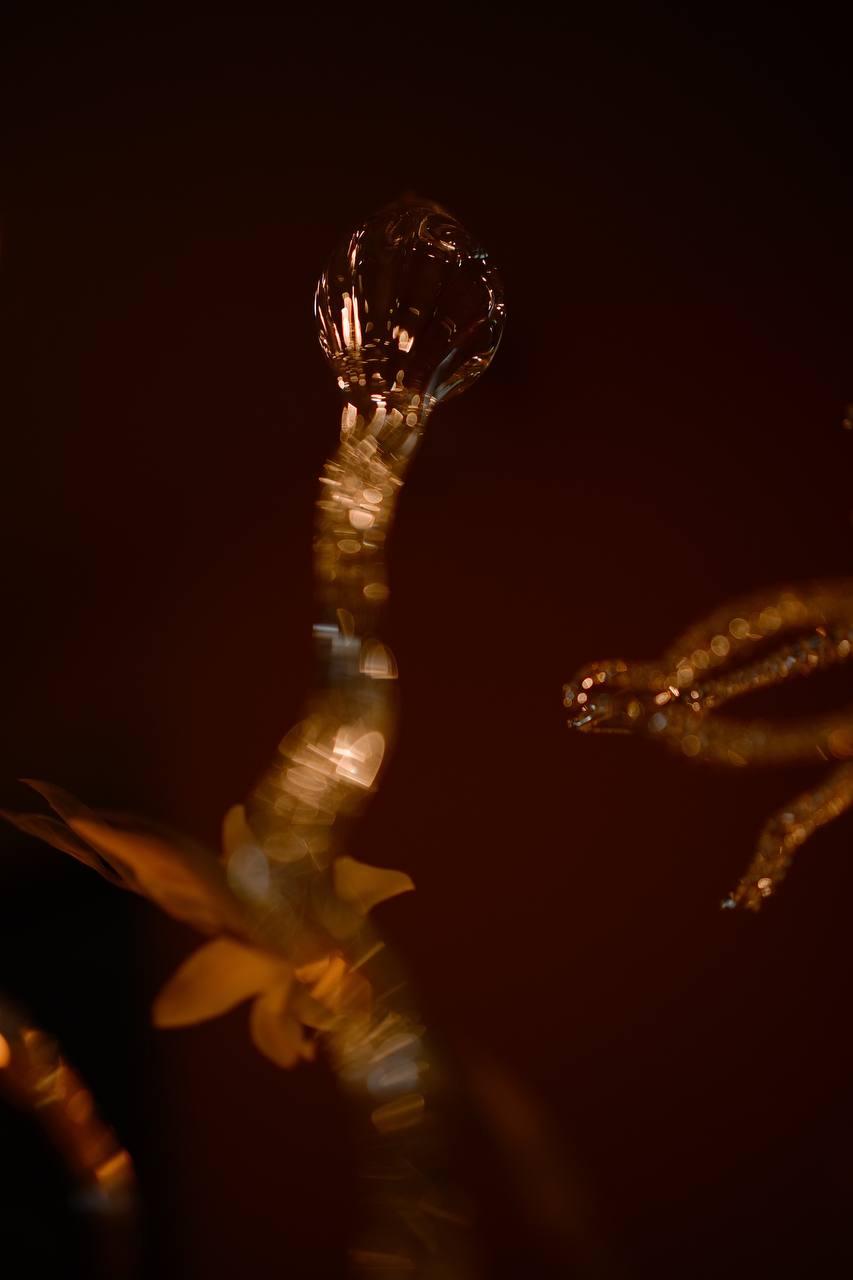
But I do think reflections, mirrors, light distortions – that’s definitely something I keep coming back to. Not always in a literal way, but it’s there – in how light hits glass, how things look through another surface, how perception shifts depending on where you stand. That theme keeps showing up no matter what I make.
Is there a particular project that pushed you out of your comfort zone conceptually or physically?
Working in architecture really toughens you – after that, nothing feels too far outside your comfort zone hehe. But the series of dinners I hosted on the theme of displacement – along with the table piece I built to respond to the same theme – was a different kind of challenge.. When you deal with something as complex as war, there’s always the risk of overworking it or not doing it justice. It felt strange at times to talk about Ukraine while being in such a privileged space. But the more I shared, the more I realised – if not me as a Ukrainian, then who?
It was definitely the most emotionally challenging thing I’ve done – but also the most meaningful so far.
You often work with decay, breakage, and fragility. How do you think about transformation as both a process and a metaphor in your work?
I see breakage and fragility as part of the process. With glass, you have to accept constant cracking. It’s the best teacher.
It taught me that something precious can be ruined in a second. That feels deeply metaphorical, especially coming from Ukraine.
Transformation in my work is about becoming something else. That’s what happens to displaced life landscapes and people. They carry their culture across oceans and create new realities.
There’s something both deeply tragic and fascinating about it. Like the Kakhovka Dam in Kherson Oblast, Ukraine – it was destroyed, but according to local ecologists, that land will turn into a forest. Life always finds its way. And I’m drawn to that.
Is there a specific material you haven’t yet worked with that you’re curious to explore?
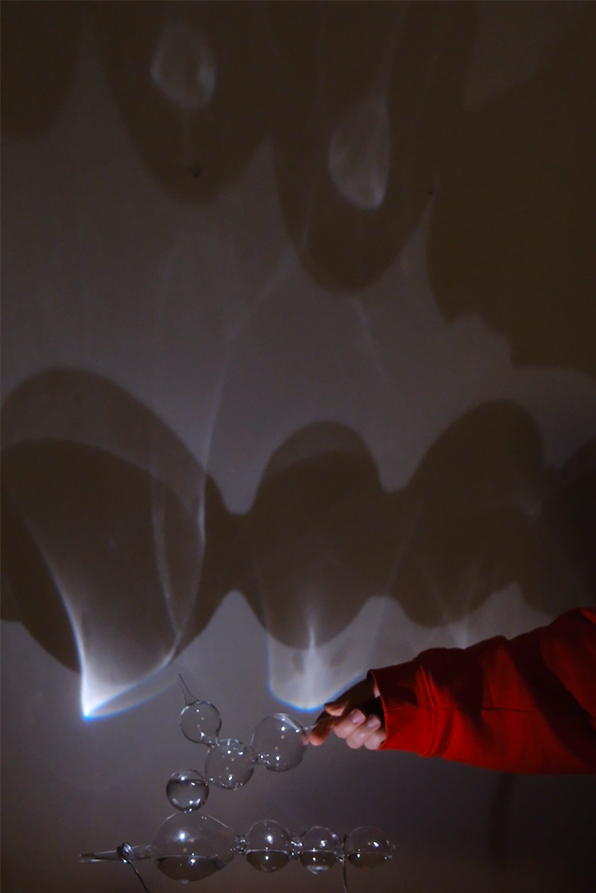
I’m really drawn to the play of light, shadow, and prismatic effects – but I don’t want to force it or make it behave in an unnatural way. I tried in small experiments and am constantly noticing natural light behaviors.
I’d love to explore it on a larger scale at some point, but I haven’t had the right opportunity yet. It’s something I keep thinking about – how light can become part of the material, or even the material itself.
Where can people find you?
@natalie.dubrovska — for process, behind-the-scenes, upcoming shows, and to chat
studyofglass.com / @studyofglass — for recent practice updates and my jewellery/objects