Quentin Vuong
What’s your name, and where are you from/based?
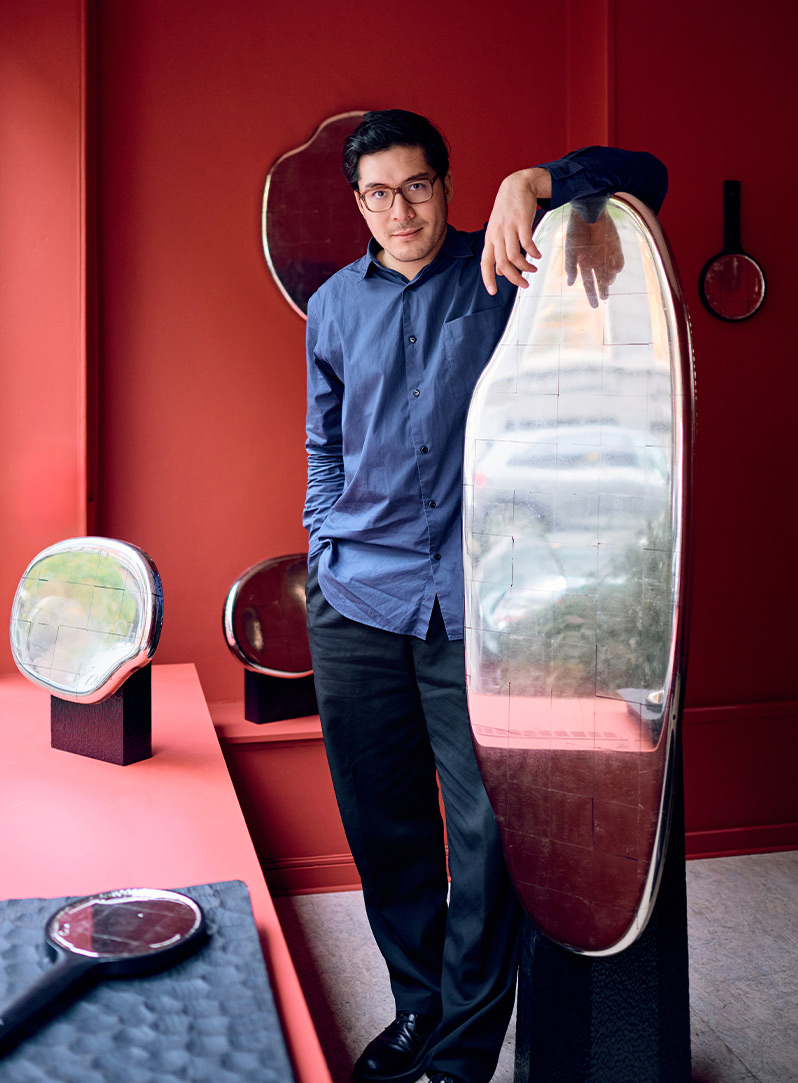
My name is Quentin Vuong, and I am based in Paris. I work at Villa Belleville, where I create furniture and objects presented at Spazio Nobile in Brussels and Galerie Gastou in Paris. I am also developing several projects in Vietnam, spanning furniture and interior architecture, which I hope will allow me to spend more time there.
Can you describe your practice in a few words?
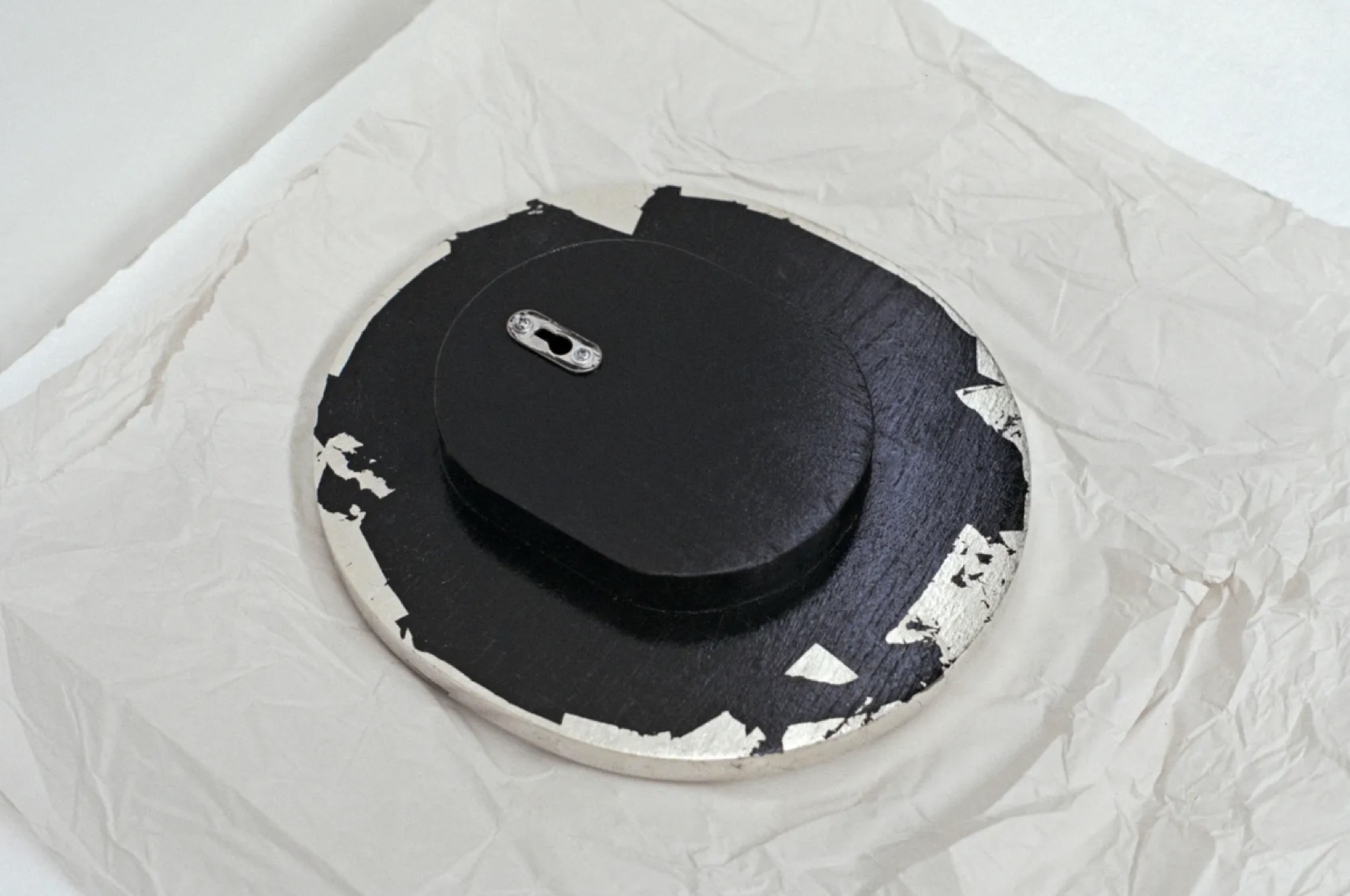
Attentive observation is central to my practice. I collect the world as I move through it: the grain of stone, the sheen of metal, textures shaped by weather and time. I photograph these moments, translate them into sketches, experiment in the studio, and let them grow into a series of objects. Guided by light and texture, I work with self-taught techniques such as woodwork, gilding, and mother-of-pearl inlay. Each piece is shaped by hand until it carries its own presence and a quiet, refined sense of luxury.
How did you first begin working with material?
I have always been drawn to working with my hands, but it was at École Nationale des Arts Décoratifs de Paris that I truly engaged with materials and workshop tools. My French great-grandmother had studied at the same school, and through a few of her objects, along with family heirlooms from Vietnam, I developed an early sensitivity to materiality and form. It might have been eggshell lacquerware, ceramics, or heavy carved wood chairs. After several professional experiences, I realised how much I missed that tactile dimension. So I went all in. Today, being in the studio feels exactly right.
Your work rejects immediacy and favors a slower pace. What inspired you to think about creating this way?
In the past, I was designing fashion shows for a production company, and the rhythm of that work never felt right. Everything was urgent, everything rushed. In my studio, the pace is slow by necessity and by choice. The materials and finishes I favor come from the world of craftsmanship, and they require time, space to learn, experiment, and even make mistakes. My approach is also a reaction to our daily life, where we are constantly pulled in multiple directions, surrounded by curated images and endless information. Through the objects, I want to create a pause, a chance to look, touch, and appreciate what surrounds us.
You describe your pieces as “visual traps” What qualities do you believe makes the gaze linger rather than move away?
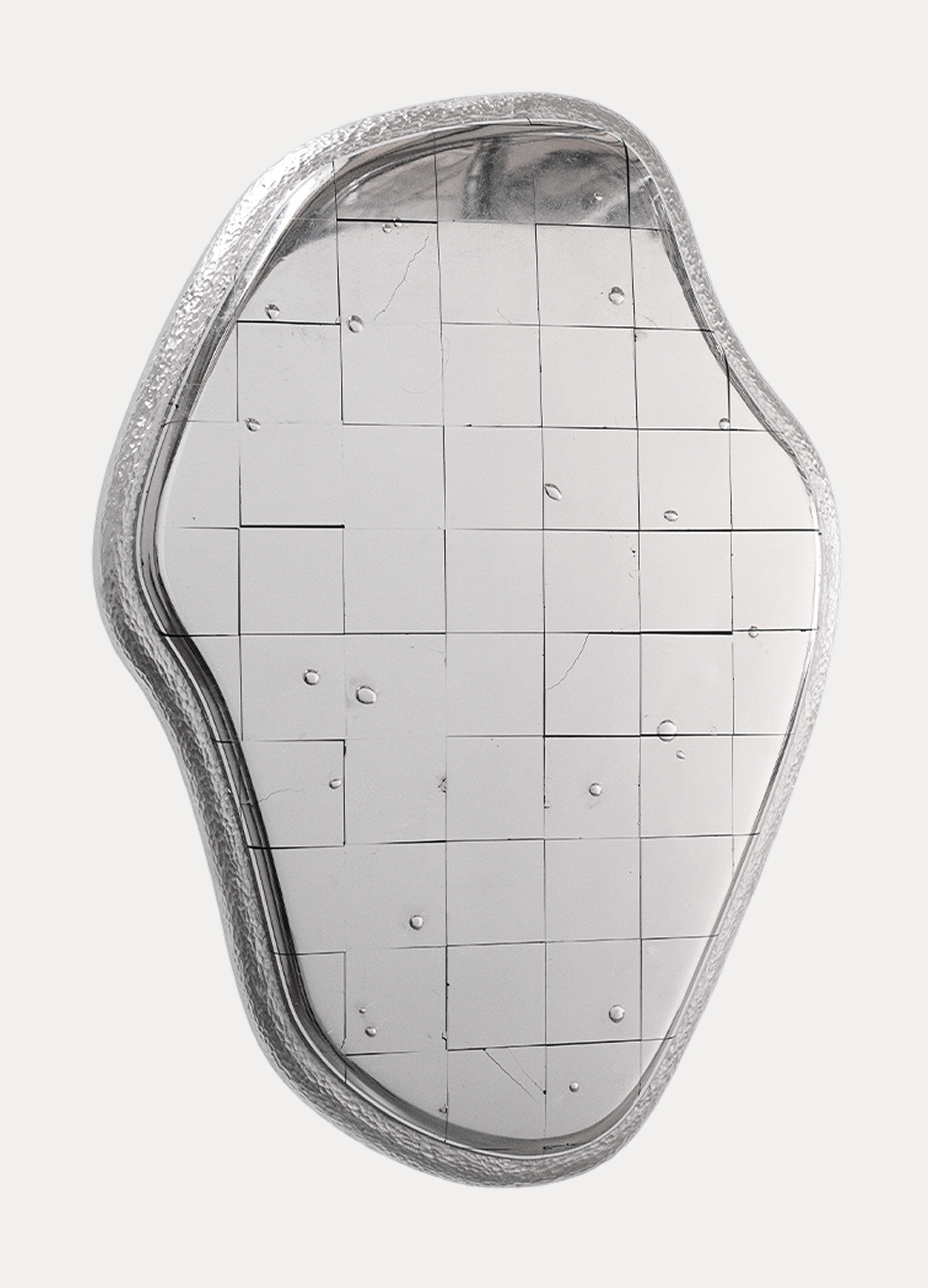
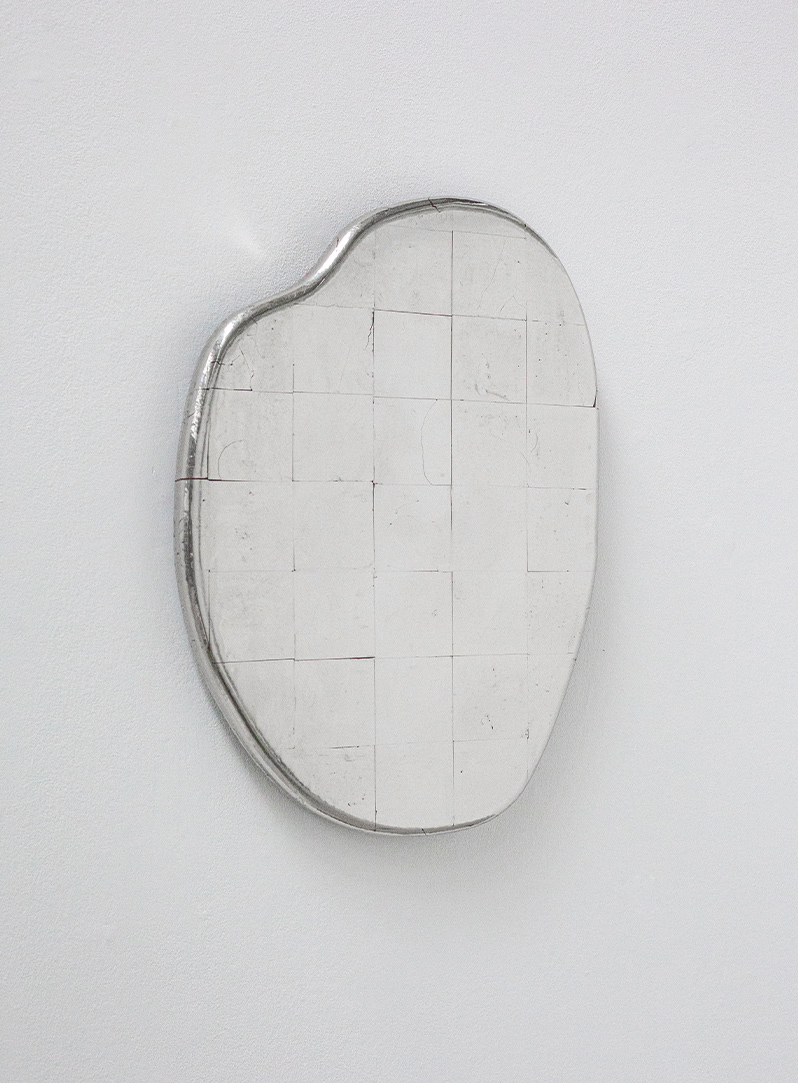
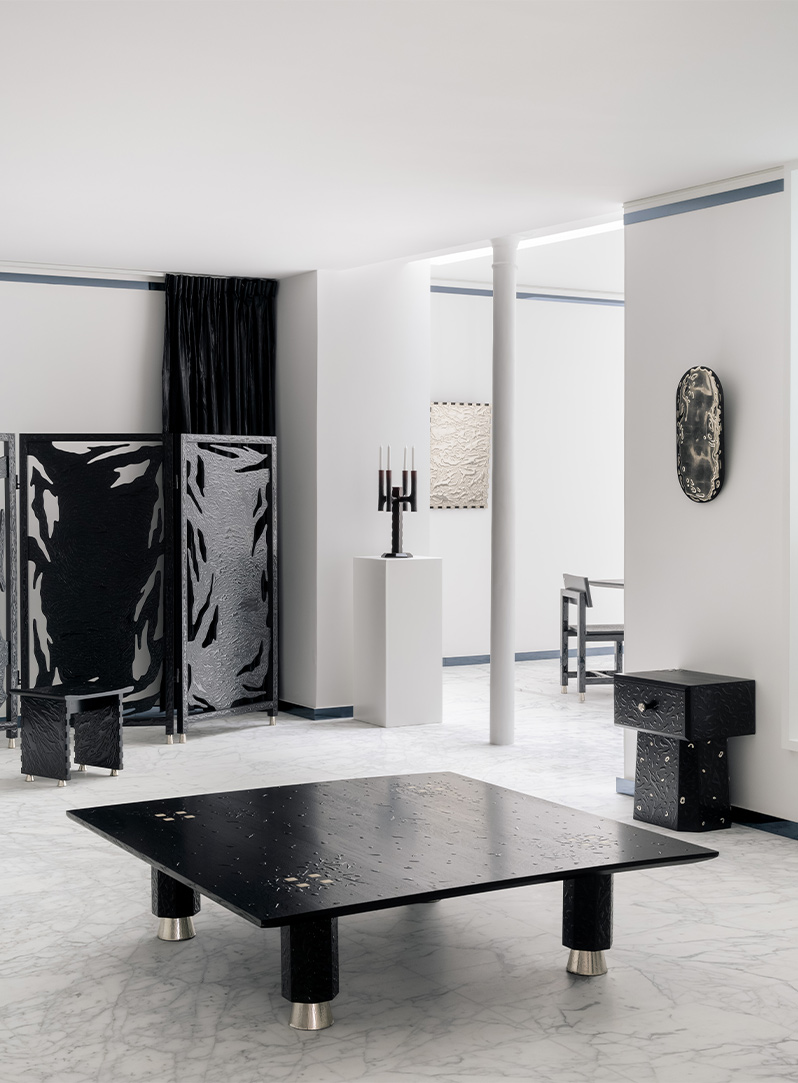
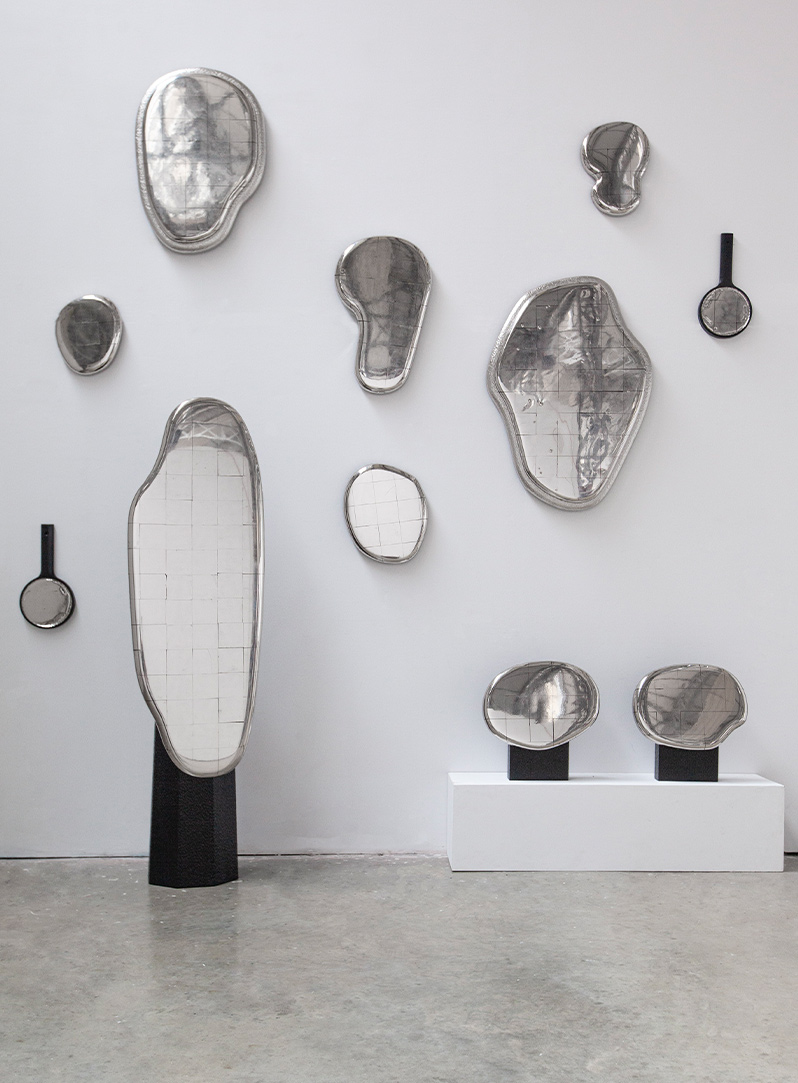
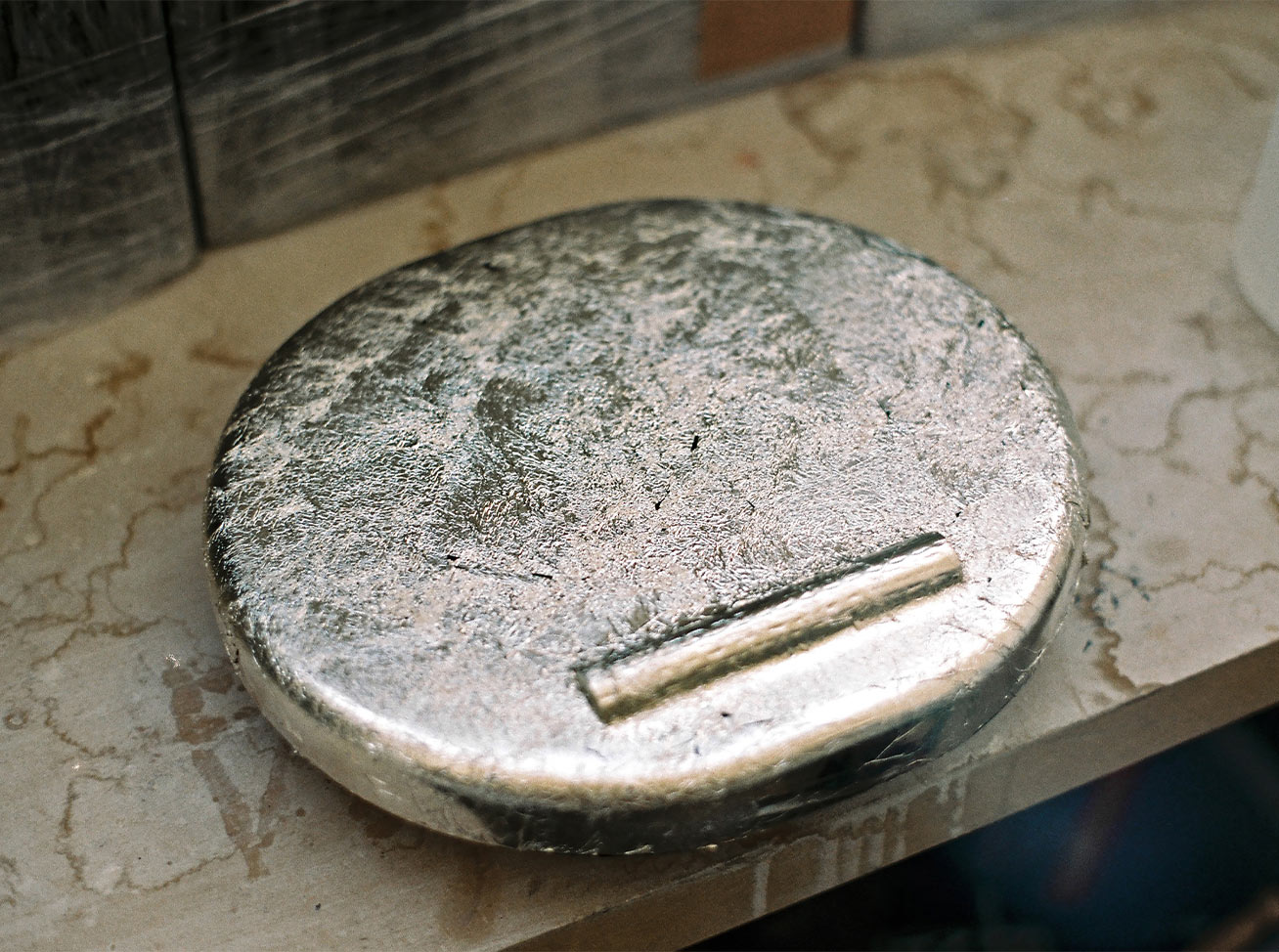
For a piece to become a visual trap, it needs to surprise, question, and invite touch. I play with materials, techniques, and textures applied to simple shapes. A piece should look elegant from afar, and as the viewer approaches, reveal more refined details. Often, a work appears to be solid metal but is actually made of a thin layer of precious alloy, as in the Mercure collection. This subtle deception reveals the gestures of the hand and the small imperfections that give the piece its soul. I also believe an object must interact with its environment. Sunlight, the tones of a room, and nearby objects all shape perception, and each piece transforms depending on where it is placed.
Your work seeks to reveal beauty in ordinary phenomena. Are there details in your everyday life that consistently captures your attention?
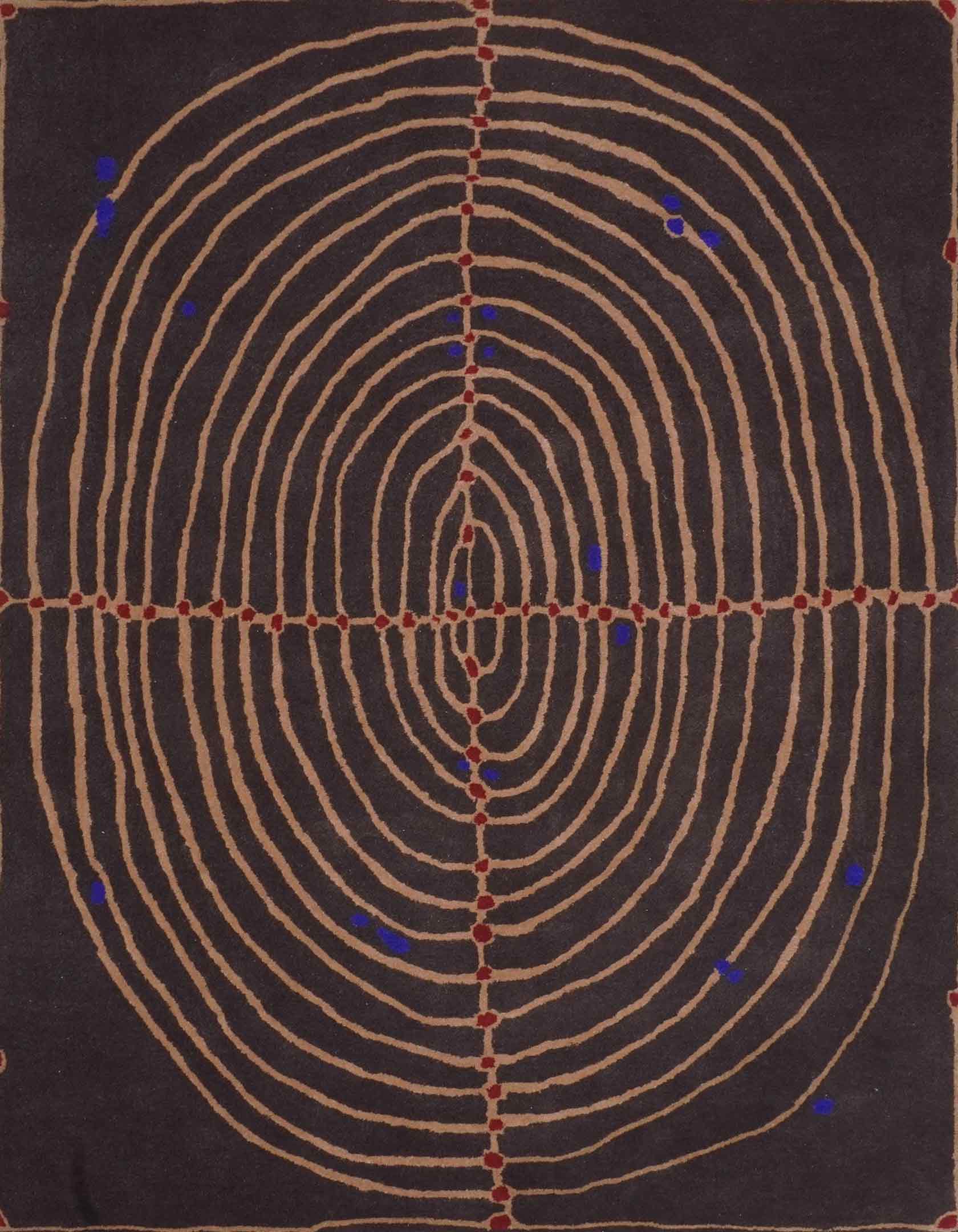
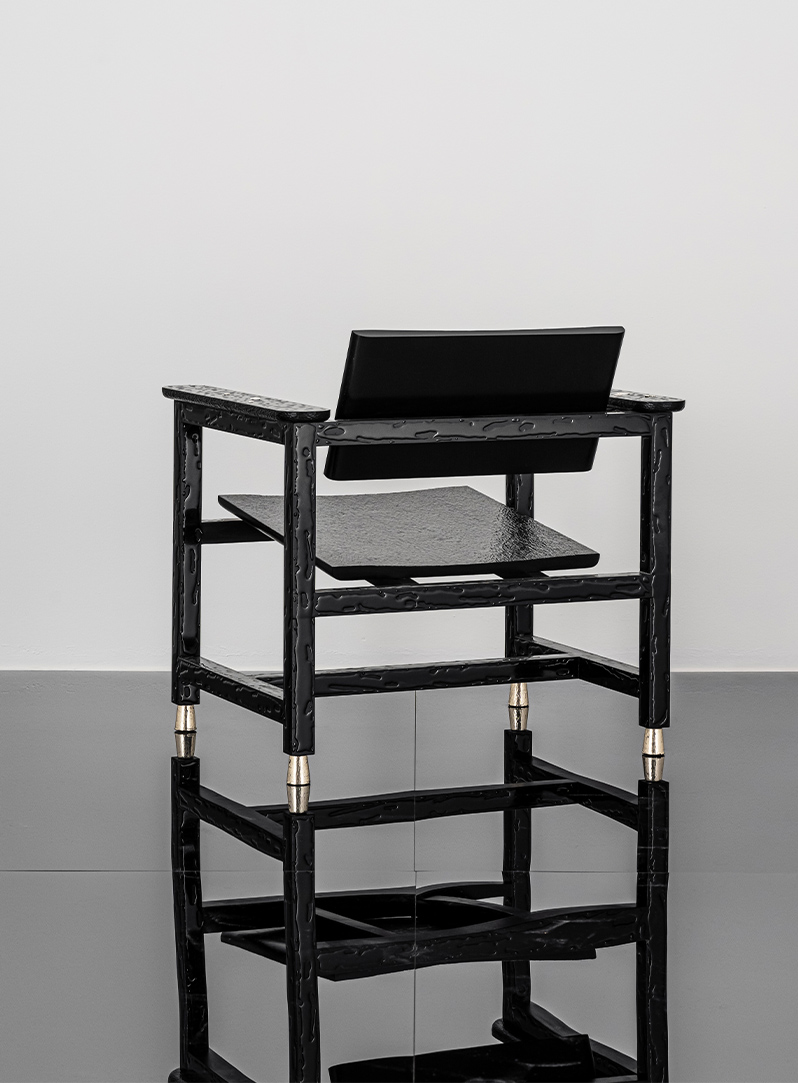
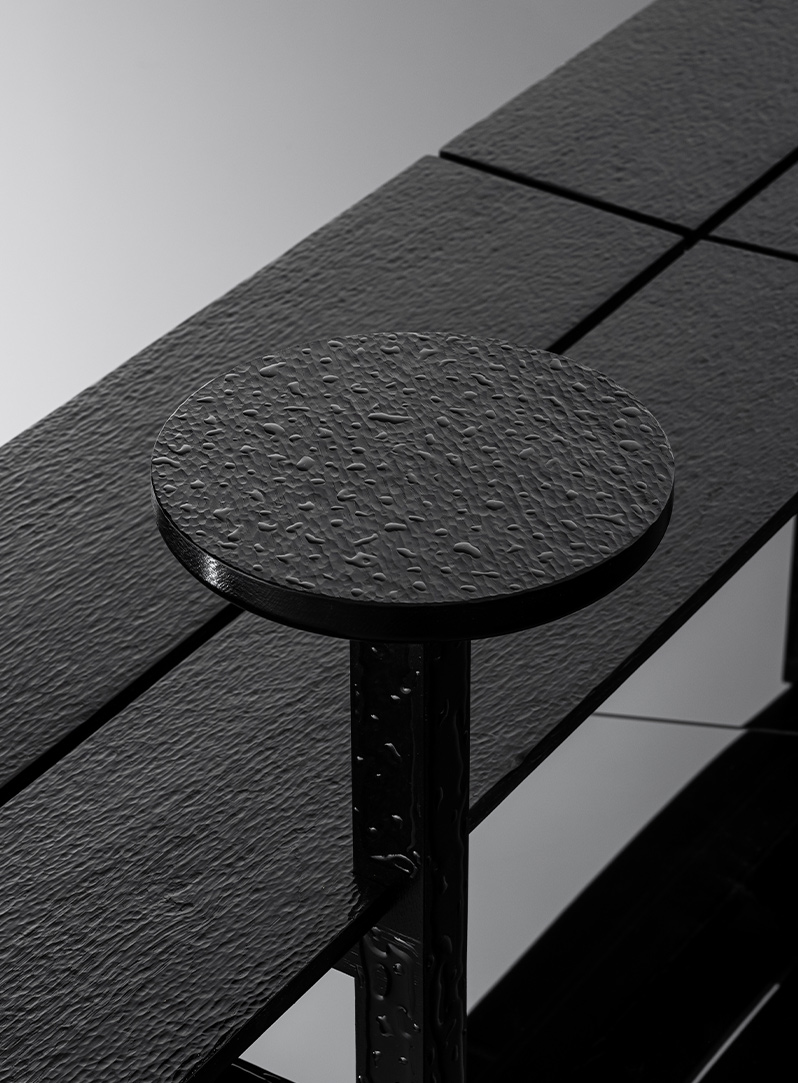
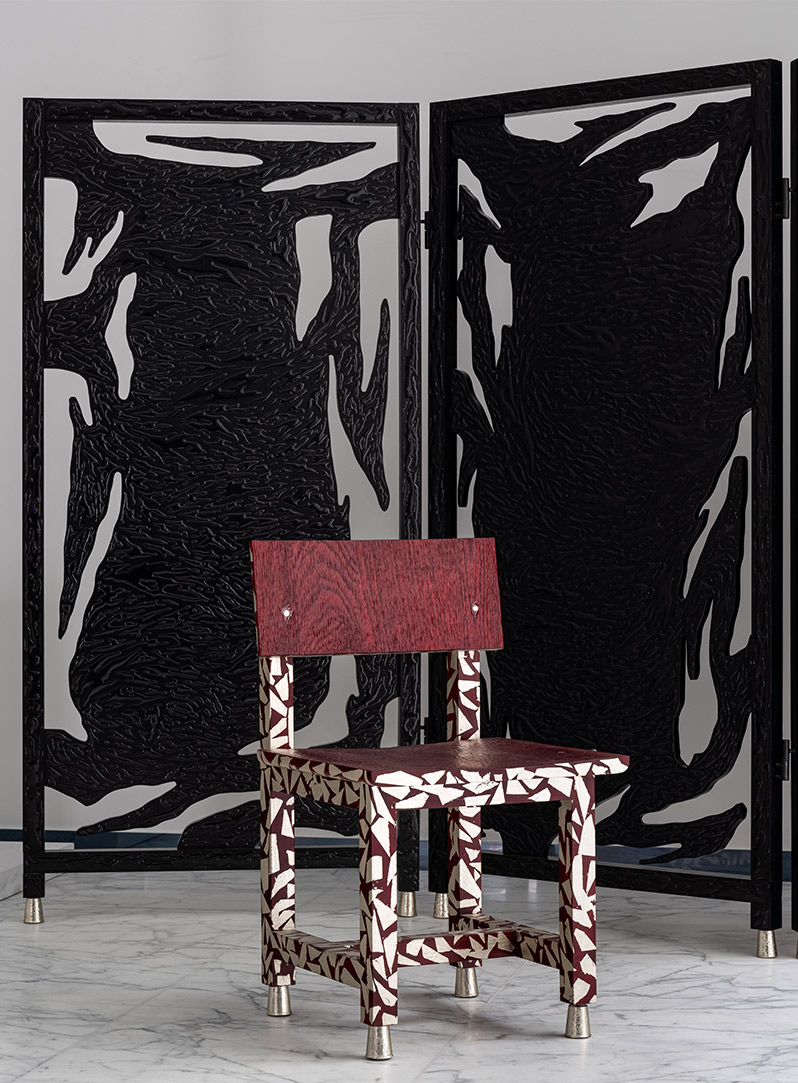
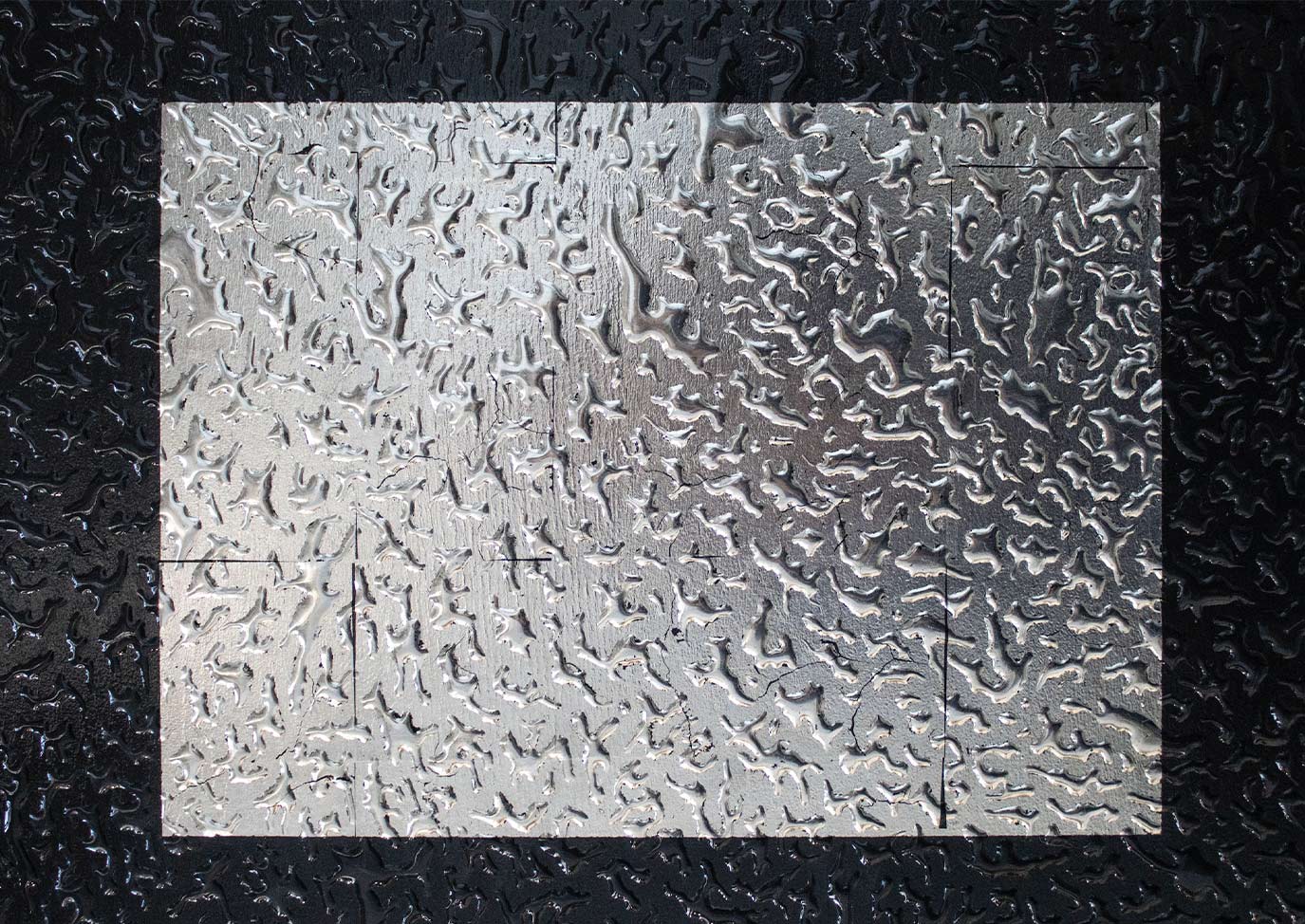
I am constantly fascinated by the shapes water takes after a storm, depending on the surface it rests on. Fresh oily asphalt, cold metal tables in a garden, or benches in Parc des Buttes-Chaumont each create their own patterns. I have been drawn to these forms since childhood, doodling, connecting dots, and exploring their rhythms. This curiosity became the starting point for my After the Rain furniture collection, presented at Galerie Gastou in Paris last January. These natural phenomena are universal. We all understand them, yet sometimes we need to be reminded to pause and be amazed. I like the idea of bringing these moments, frozen in time, into our interiors. Tree bark is another constant source of inspiration. Lately, I have been paying attention to worn-out paint on different surfaces, which helps me consider how I want to introduce color. Until now, my work has been largely black and silver, which I love, but future projects will bring more color into the pieces.
You apply traditional craftsmanship to contemporary materials, has there ever been a moment when this didn’t work as planned, but unexpectedly reshaped your process for the better?
I experiment a lot in my workshop, which means I also fail a lot. But that’s simply part of developing my own “recipes,” my personal interpretation of traditional craftsmanship. Sometimes I need to invent specific tools to achieve the right gesture or effect. I enjoy this alchemist side of my work, even if it comes with
plenty of frustration. Over time, I feel I’m constantly refining my processes. I look for clues and answers everywhere: car-polishing tutorial videos sit next to old gilding manuals, and long conversations in the back of my supplier’s shop often teach me as much as any book.
In many of your projects, reflective, mirror like surfaces alter the viewer’s image, what interests you about making the viewer part of the object?
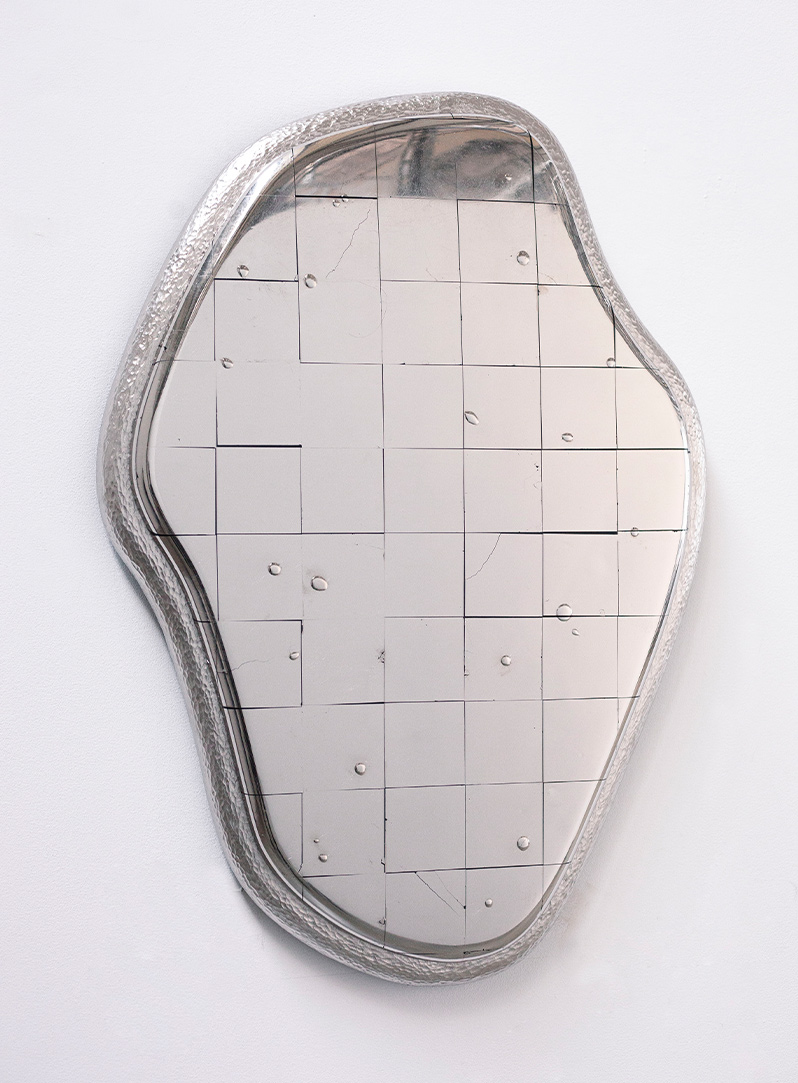
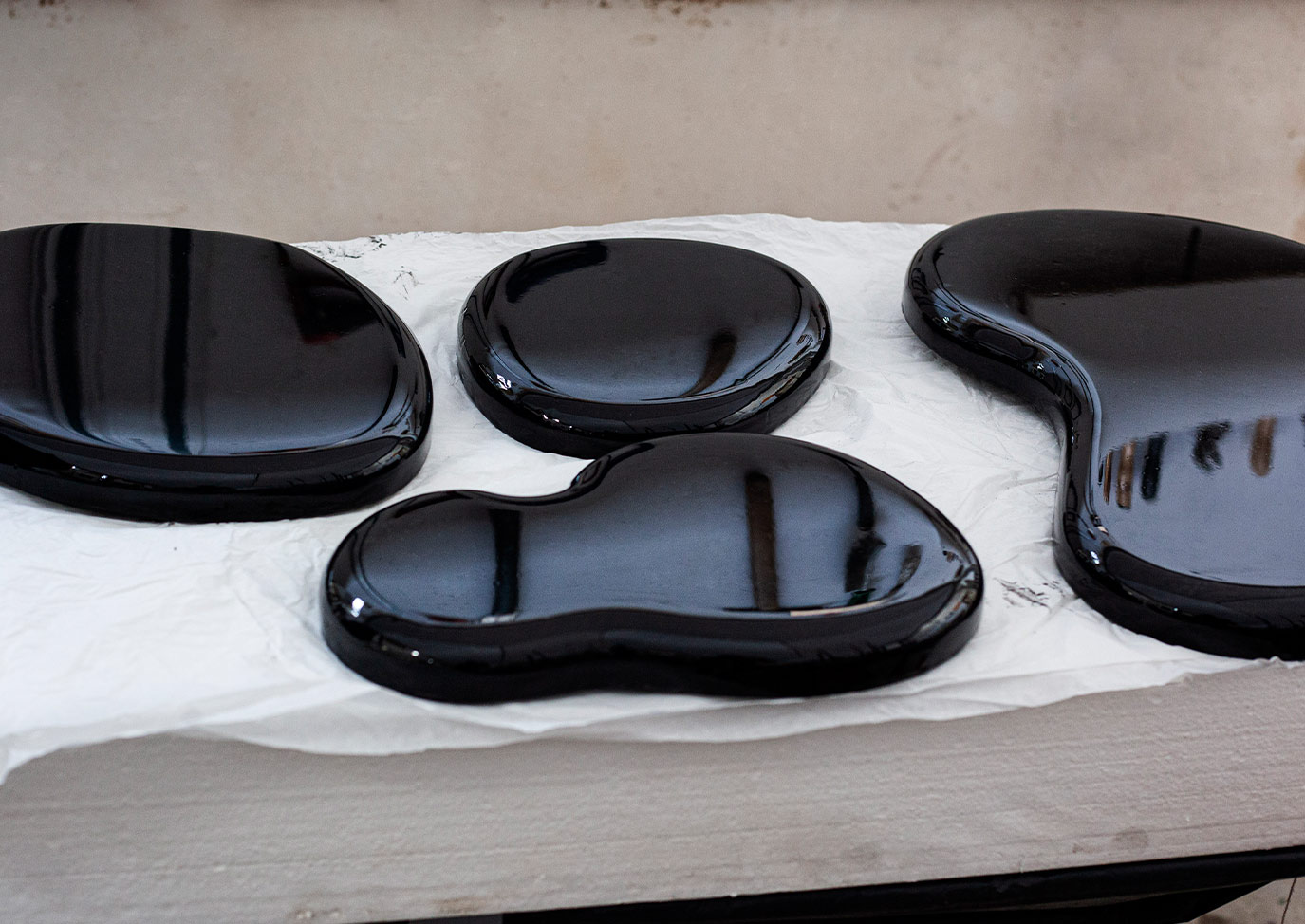
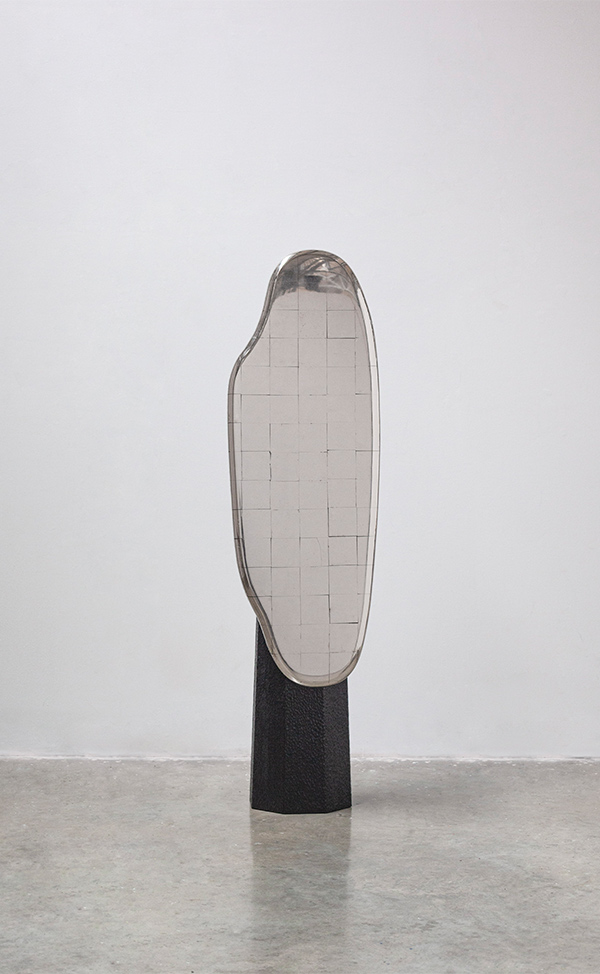
In architecture, a window frames the passage of time; mirrors can do something similar. Take the Mercure collection, presented at Spazio Nobile. It draws inspiration from the earliest mirror objects, when reflections appeared in polished metal surfaces. The image was never perfect, only fleeting and poetic. Before that, reflections were seen in water or polished stones like obsidian. Later, Murano craftsmen, inspired by ancient Chinese mercury and silver mirrors, developed their own mirrored glass. By the 16th century, mercury gilding led to true glass mirrors, culminating in the Hall of Mirrors at Versailles, a symbol of absolute luxury. It was not until the 19th century that mirrors became common, creating a daily encounter with our own image.
My mirrors return to a time when reflection was subtle, not absolute. Their softened, curved surfaces loosen the strictness of industrial glass. Up close, we see our image on the surface, but from a distance, the mirrors bend space and reflect the surrounding light and tones. In this way, they act like windows, creating a moving painting of time passing.
What does it mean, today, to make objects that are meant to endure and be passed on?
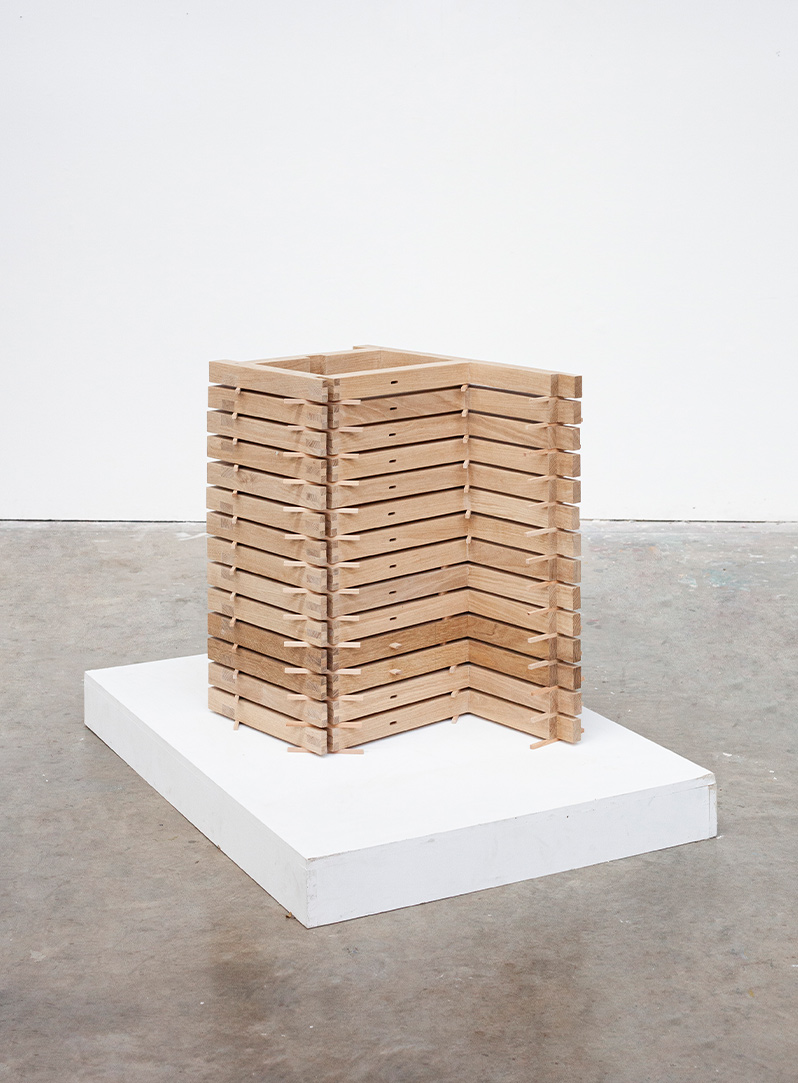
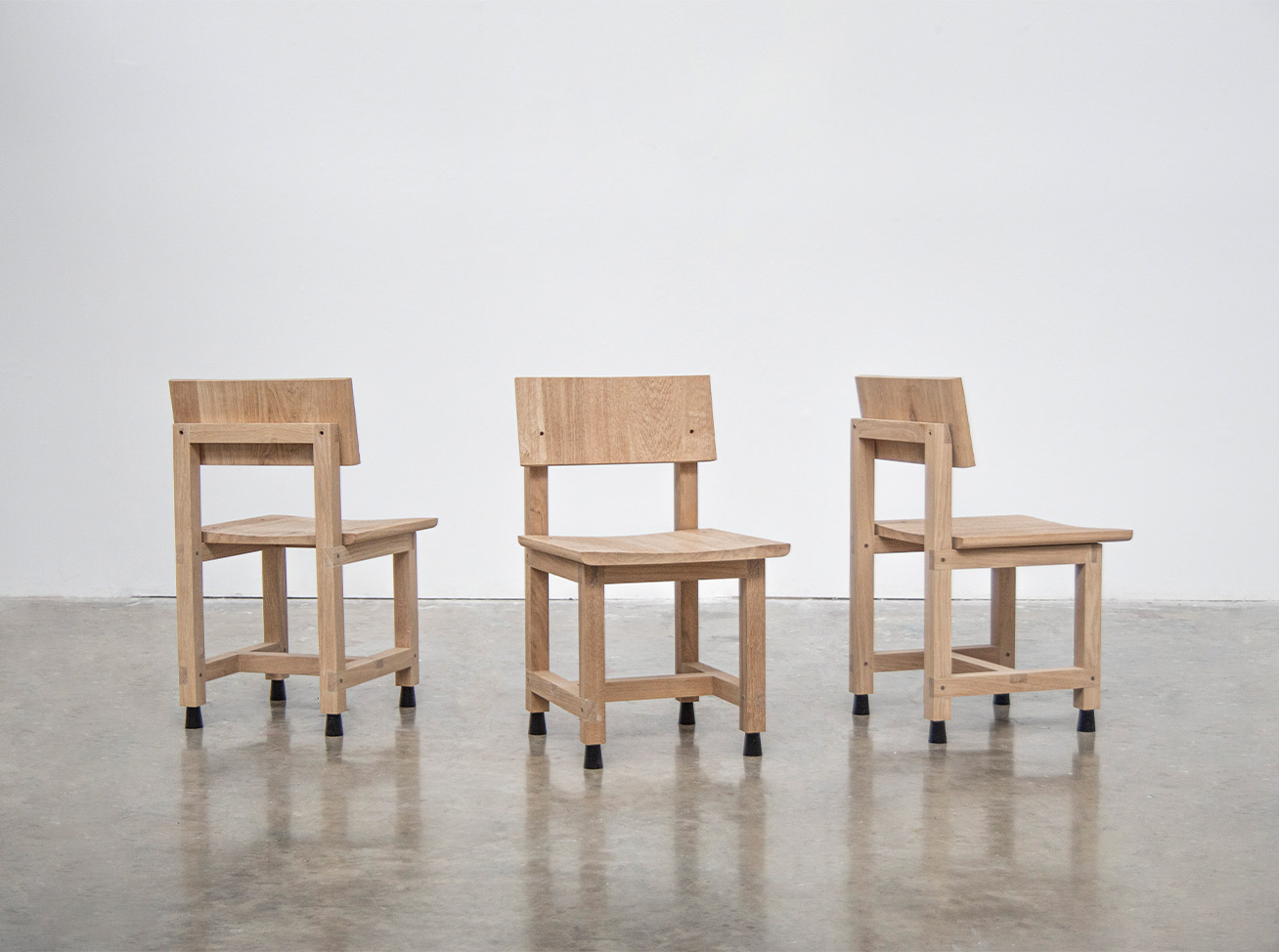
That is a difficult question, and I don’t have a recipe. Only time will prove whether an object endures. For me, it means finding a balance between simple shapes, high-quality materials, and craftsmanship. I pay close attention to details such as choosing the right wood joinery and using glued connections rather than screws. I also try to keep my work outside of trends, though perhaps I lack the distance to judge that fully. I am convinced that the more they develop patina, the more they gain character and preciousness, carrying the story of time within them. I hope
my pieces will be able to live alongside the objects of tomorrow, from different styles and eras, in future spaces designed by architects.
If your work could teach us one way of relating differently to the objects we surround ourselves with, what would that be?
As my great-grandmother used to say, less objects but of better quality and diversity. We all have our own relationships with the things that surround us, seeing different stories and messages in them. I hope my work can encourage a deeper appreciation of craftsmanship, and nurture our attention to objects made by hand, imbued with emotion and care.
Where can people find you?
You can visit me physically in my workshop at Villa Belleville, in the 20th arrondissement of Paris. My solo show Mercure: Alchemy of Wood and Light is on view at Spazio Nobile in Brussels until January 18, 2026. The After the Rain collection will be presented at Design Miami 2025 with Galerie Gastou, with whom I collaborate in Paris. In Vietnam, my work can be seen at Galerie Medium in Hô Chi Minh City.
For a full overview, you can explore my new website, www.quentinvuong.com, designed by Lara Zettl and Elena Rudolph, or follow me on Instagram @quentinvuong.