Salma Mohamed Baset
What’s your name and where are you based?
Hi! My name is Salma, I’m currently based in Cairo, Egypt and I’m also connected to Mexico City.
Can you describe what you do?
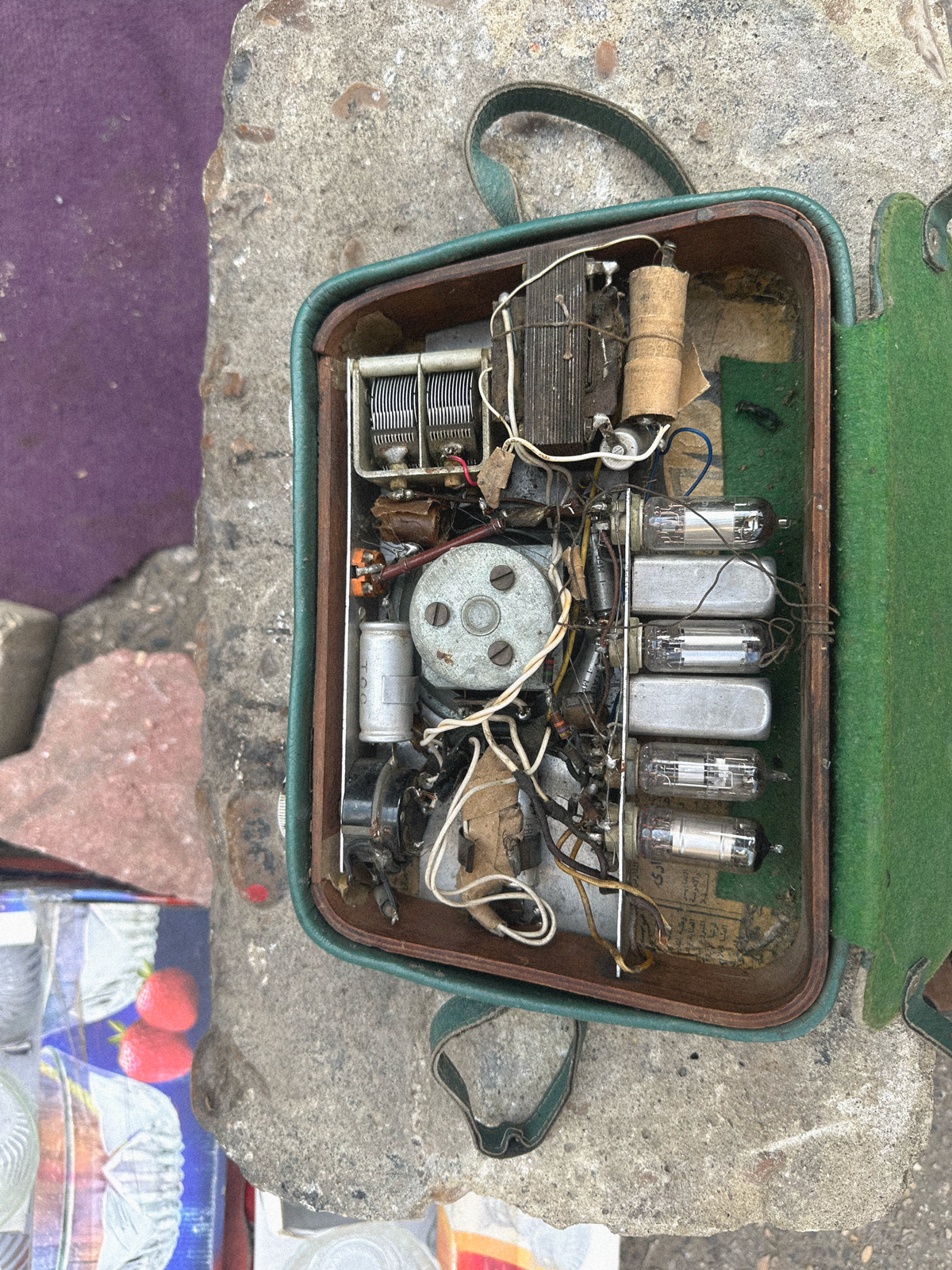
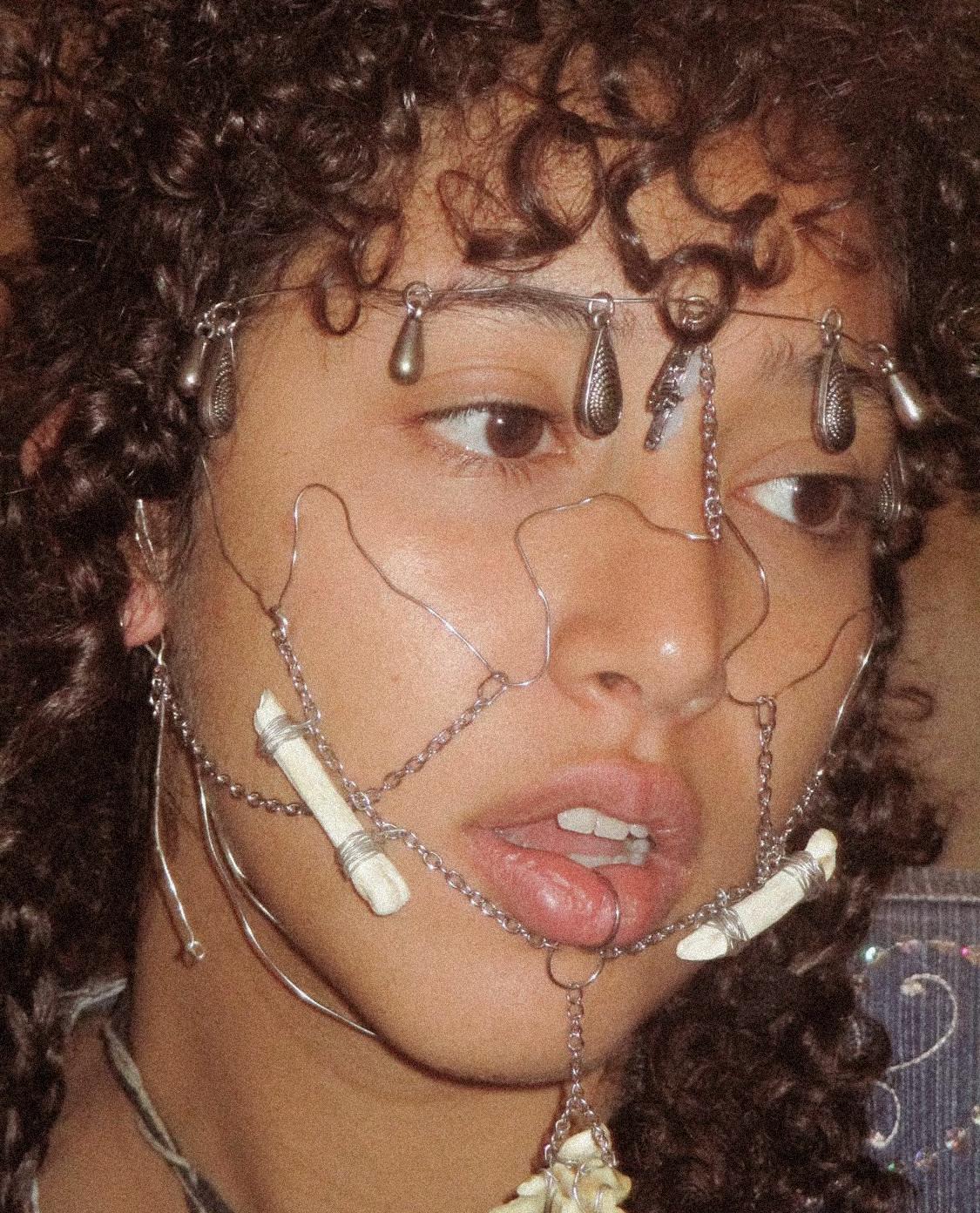
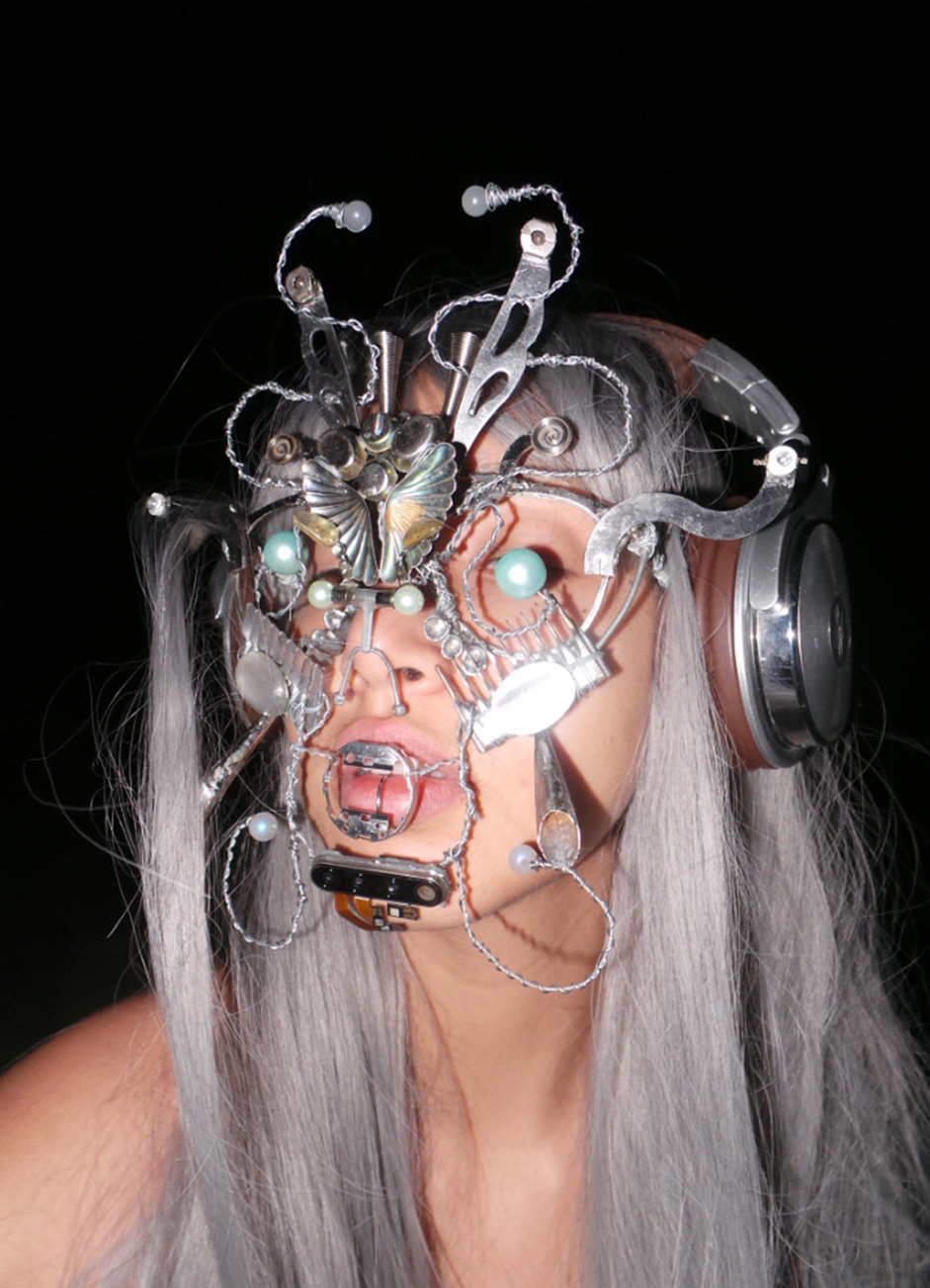
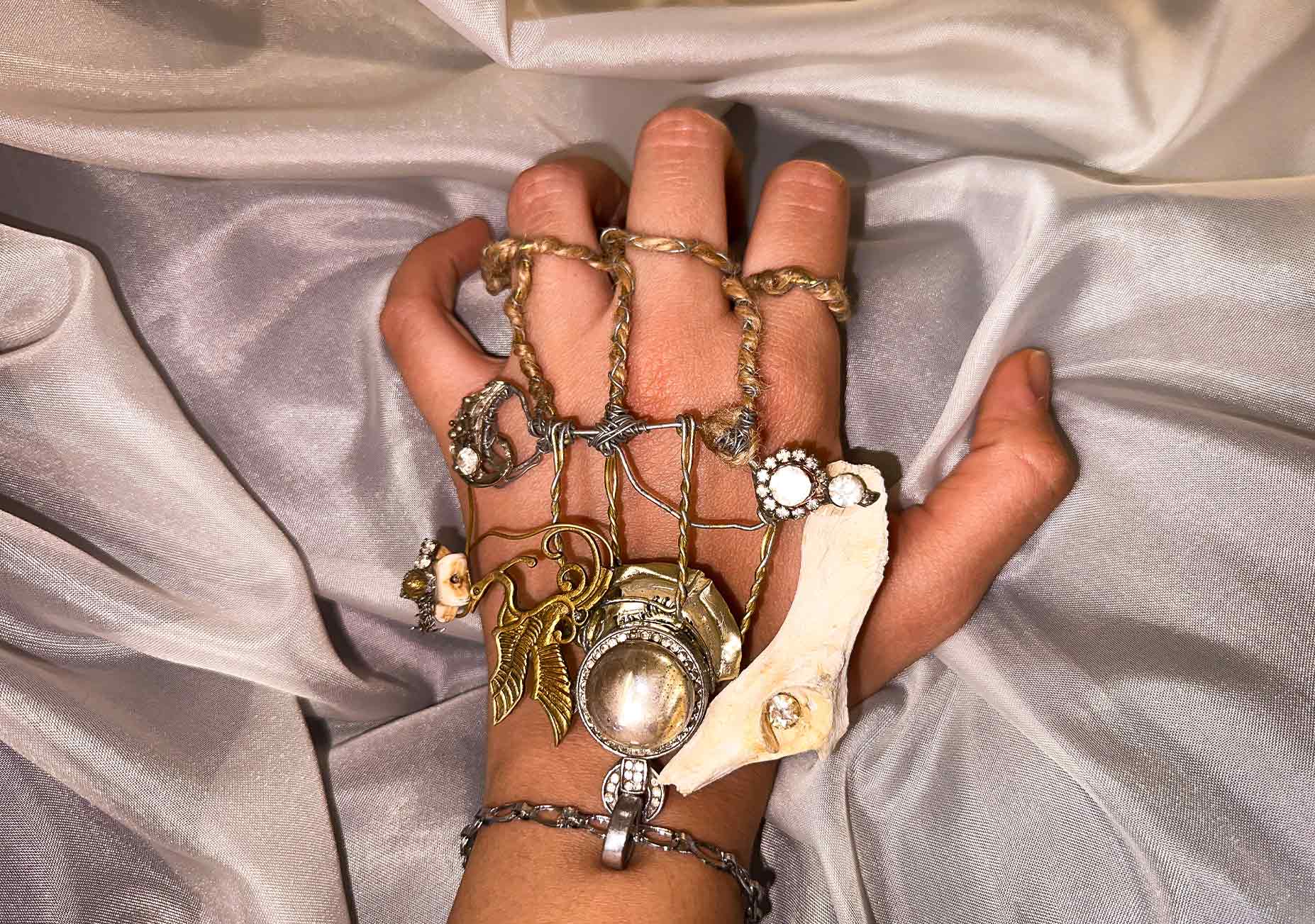
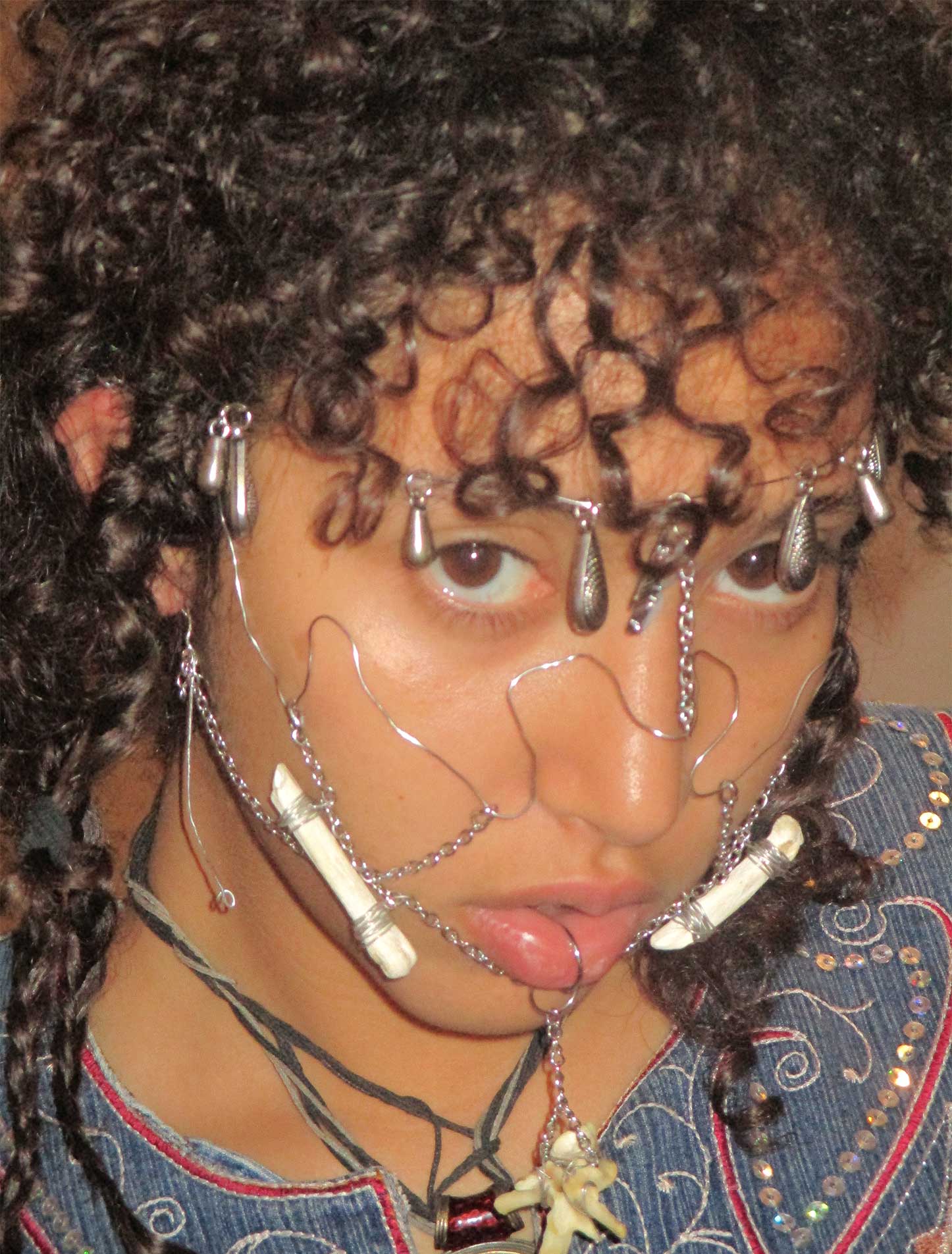
I make up-cycled sculptures, mostly wearable facial and body sculptures, out of found objects which I deconstruct and rebuild into new forms and creatures.
How did your interest in wearable objects begin?
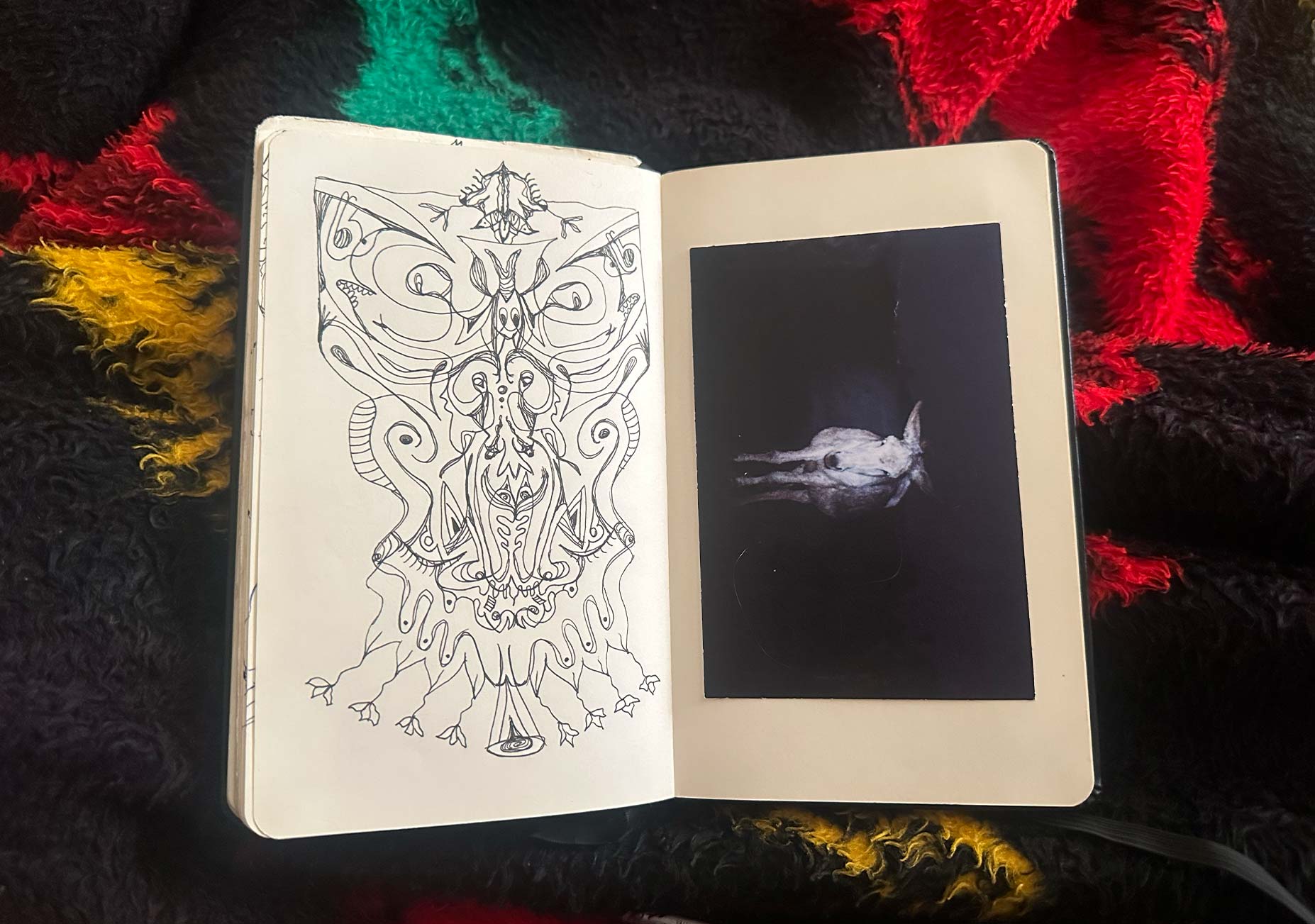
It started with drawing. I have a notebook full of drawings of creatures which I wanted to translate into a more material form, using the body as a medium. At first, I just wanted to get these creatures closer to reality, so I adorned my face and made masks that leaned more towards being dramatic pieces of jewelry rather than wearable objects. I slowly improved my designs into more sturdy pieces that could also stand alone as sculptures. I’m still in the process of learning how to make these sculptures more wearable, I’m trying to craft lighter and more comfortable pieces.
What kind of objects are you most drawn to collecting?
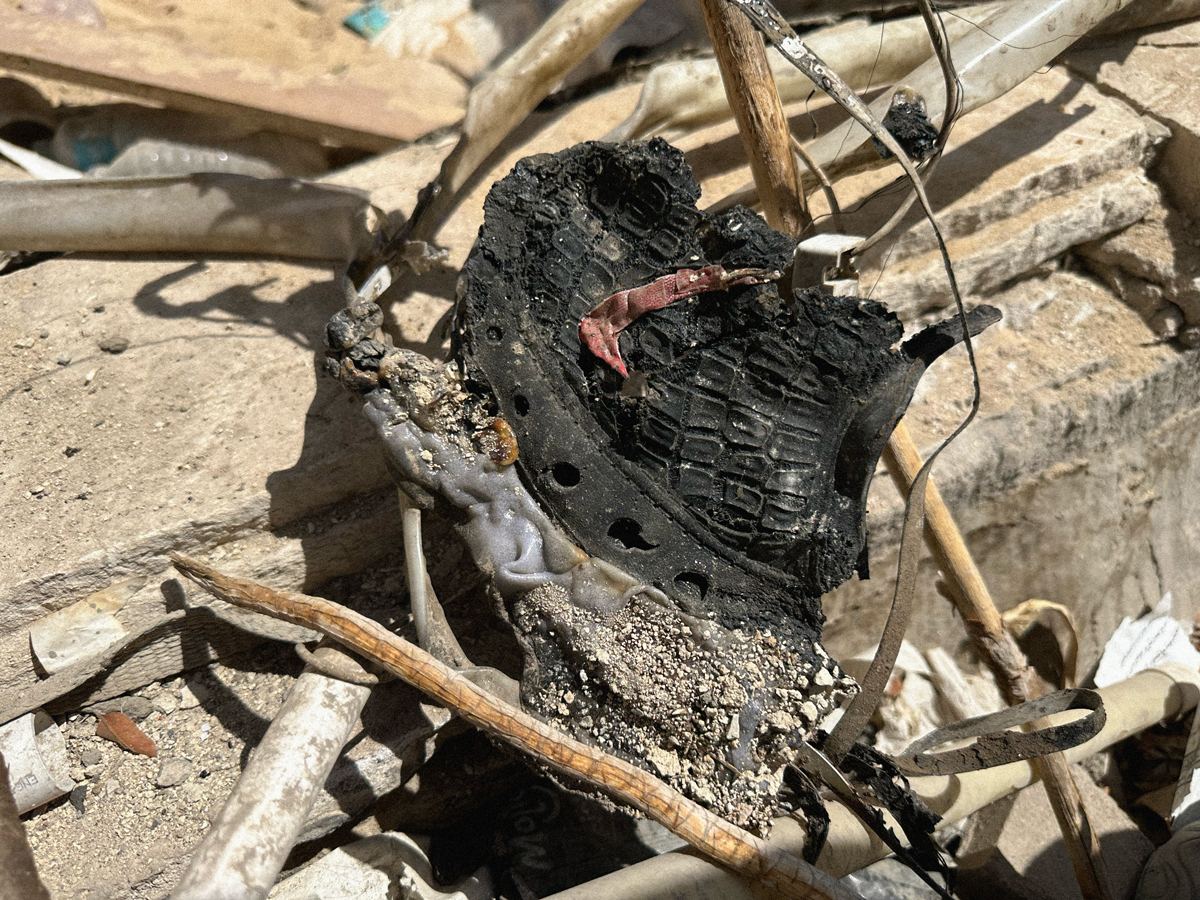
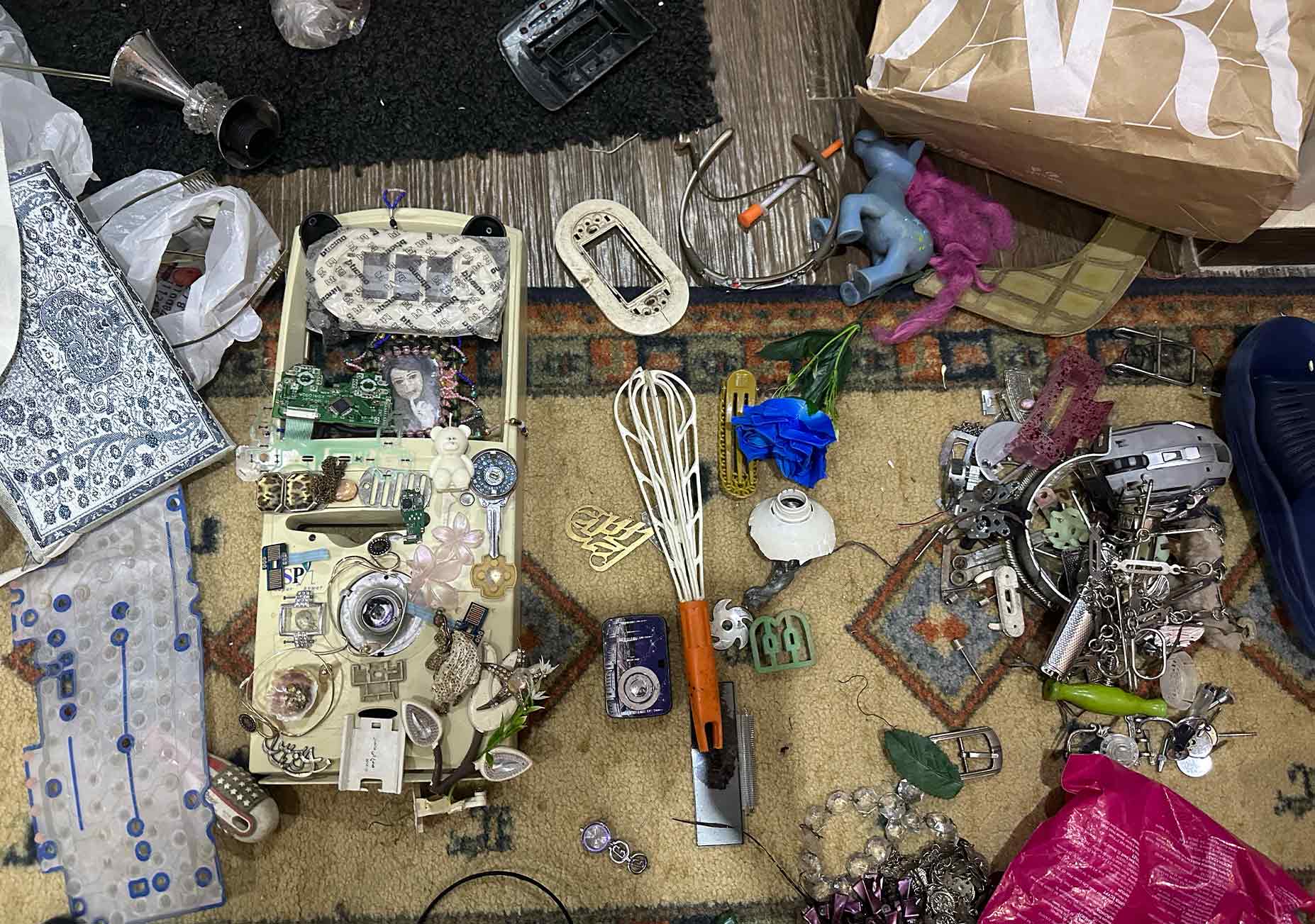
I’m most drawn to objects that have a lot of depth to them. Whether it’s aesthetic, in terms of having details and moving parts that I can play around with in the deconstruction process. Or emotional, when I feel an object has an interesting past or curious story behind it that I can connect to. I don’t think there is a pattern to the things I collect unless I have a specific vision of a project to guide me in the collection process. Otherwise, I will usually go to landfills or flea markets and take whatever is calling to me.
Are there cultural references or personal memories embedded in your pieces?
Definitely, I do this unintentionally. Because I collect things very intuitively, I’m naturally attracted to objects that spark up specific memories or resemblances in my mind, which end up appearing in my work.
How do you connect your interest in renewable energy to your artistic work?
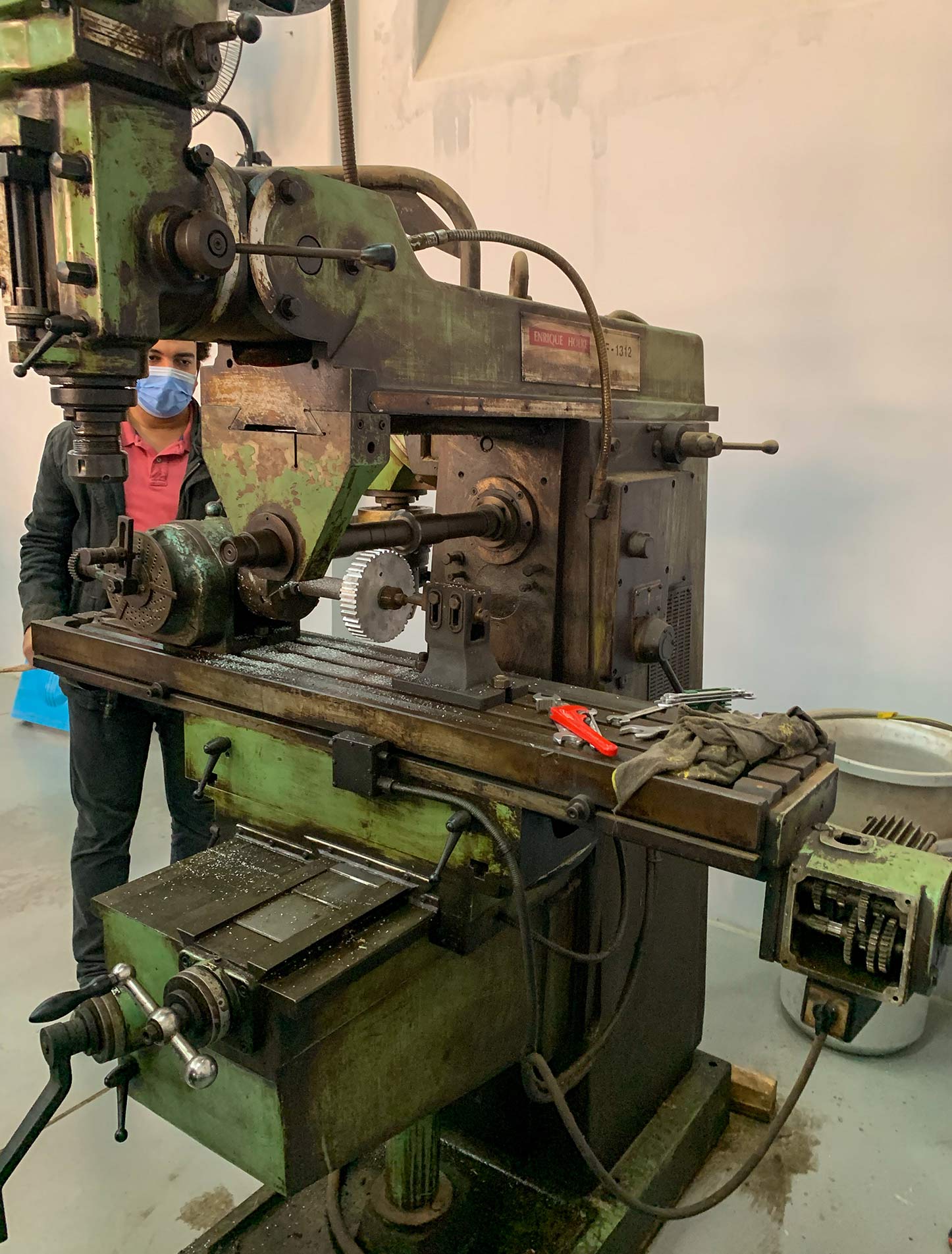
The main thing they have in common on the surface is the sustainability aspect, but I don’t think I have made a strong connection between them yet, as I’m still finishing my degree, and I never really enjoyed studying engineering up until recently, when I felt like I could merge the two practices together. I do draw a lot of inspiration from it though, being around machines and studying them is fascinating and it has influenced my creative process and my discipline a lot.
Does the idea of fiction play a role in your pieces? If so, how?
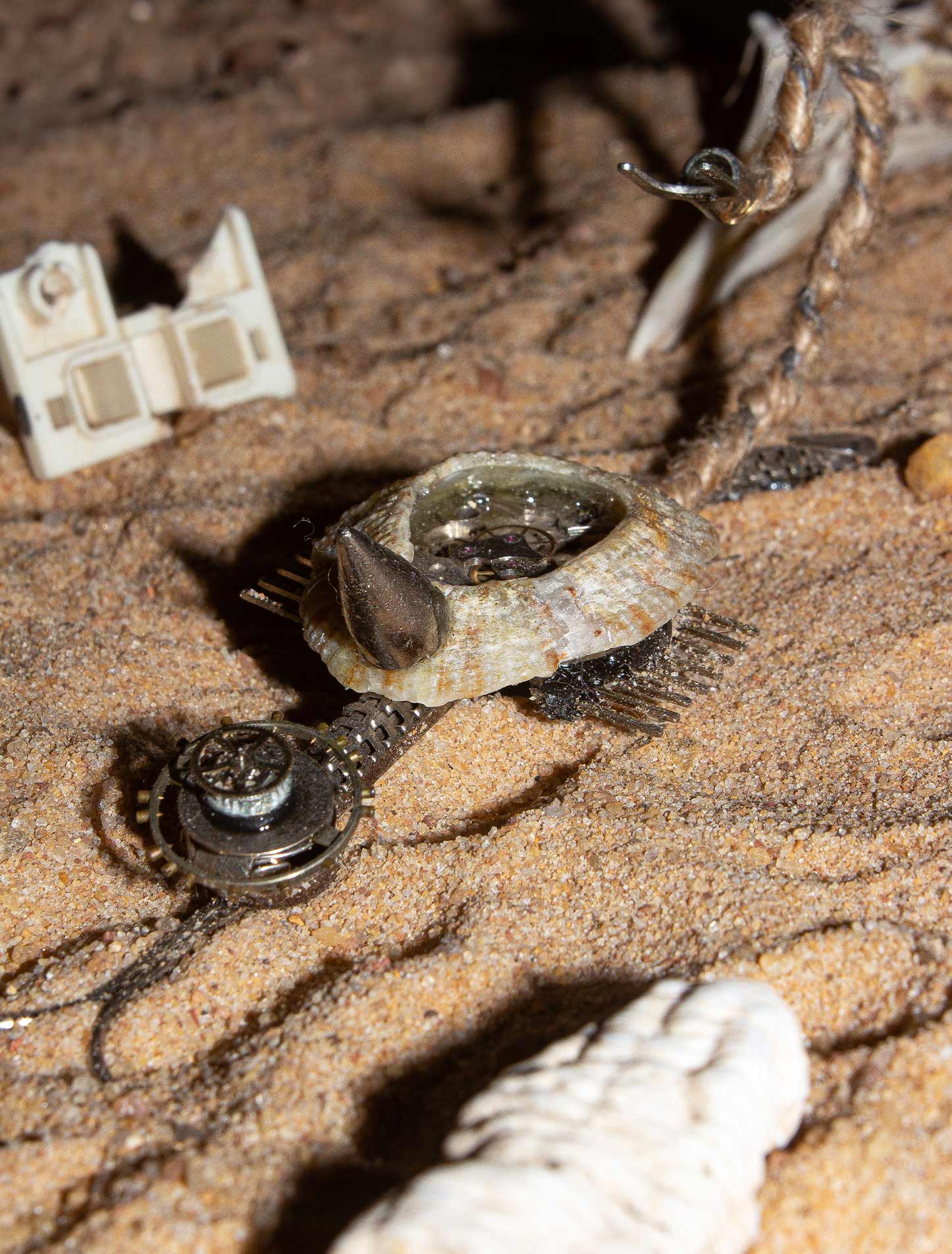
Of course! There is always a story behind every piece I’ve created. Sometimes it’s an idea or an analogy expressed through it. Other times it’s driven more by fantasy and surrealism. I like to think each piece exists in its own alternate ecosystem, both as a creature and an artifact, and I bring it into this reality using my hands. I’m also really inspired by mythology, and I like to think of these pieces as part of a ritual, maybe the ritual is my own, such as the act of making itself, repeating the same thing over and over, then watching it evolve on its own. Other times, it feels like the ritual belongs to the fictional world the piece came from, an artifact of a digital age, born from excess and overconsumption.
Some of your work feels like futuristic armor, do you think of it that way?
I don’t usually think of it that way, but it’s a really interesting perspective. It definitely aligns with the idea of hybridizing the old and the new, the ancient and the futuristic, the mechanical and the biological, those kinds of themes are recurring in my practice.
Your pieces blend the mechanical with the organic, how do you balance those elements?
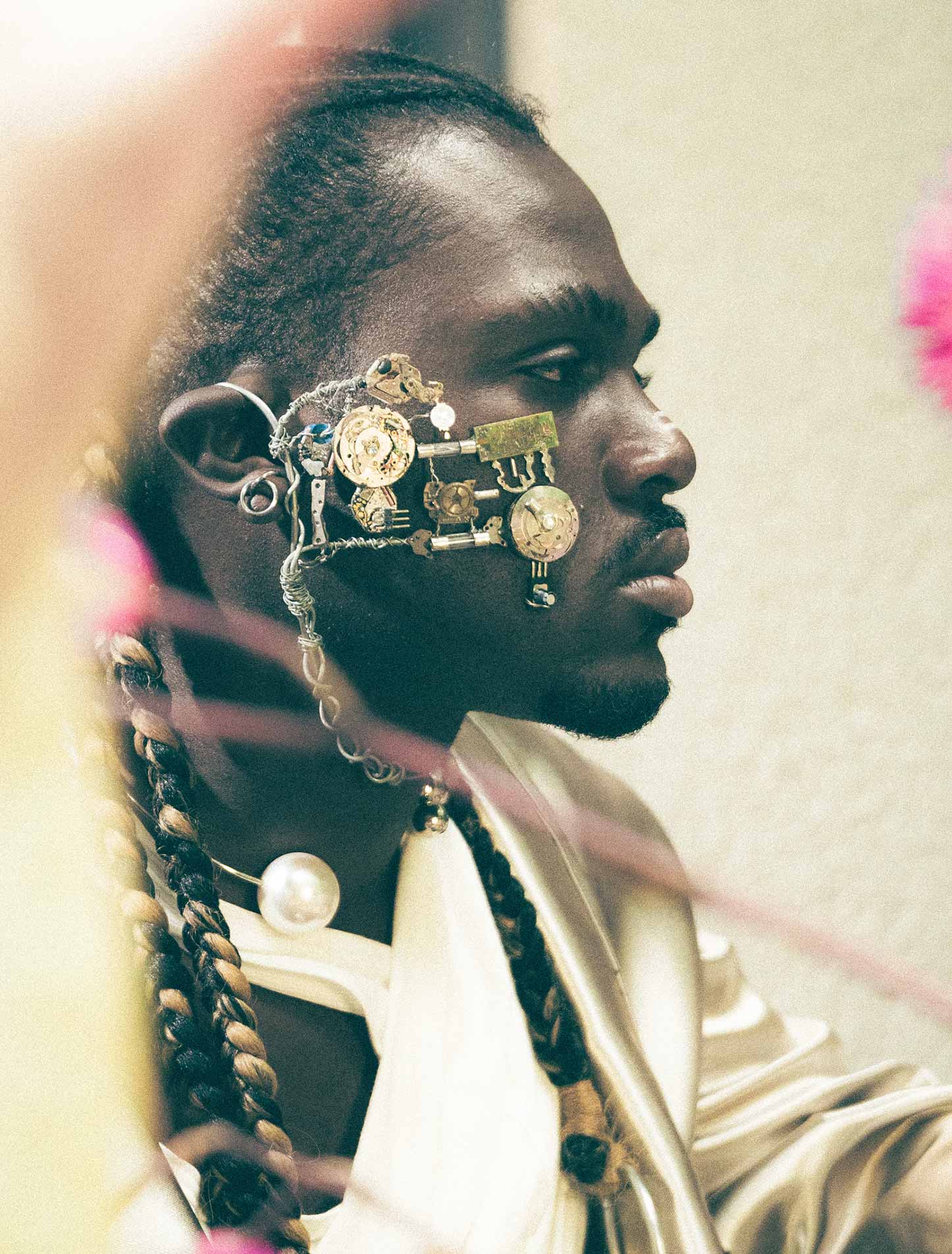
I do this through mixing direct and subtle contrasts between nature and mechanics. I like creating parallels that feel obvious to me and to other people blend with hidden details and delicate additions that not everyone notices. It’s hard to balance between the two but somehow, they meet halfway, and it ends up working out.
You mention cybernetics, how does that influence show up in your pieces
Theories from cybernetic philosophy have really influenced my work. I like to look at machines from a more sensitive, childlike perspective. In the past, I believed that technological advancements were becoming counterproductive and harmful to humans, but I’ve since realized that it’s not the technology itself, but the systems controlling it that are problematic. Now, I see technology as more of a victim and a companion. This shift in perspective is reflected in the playfulness that my pieces carry. I enjoy studying the relationships between humans, machines, and the natural world, especially as we reach a point where these boundaries are blurring, and different environments are merging and mutating.
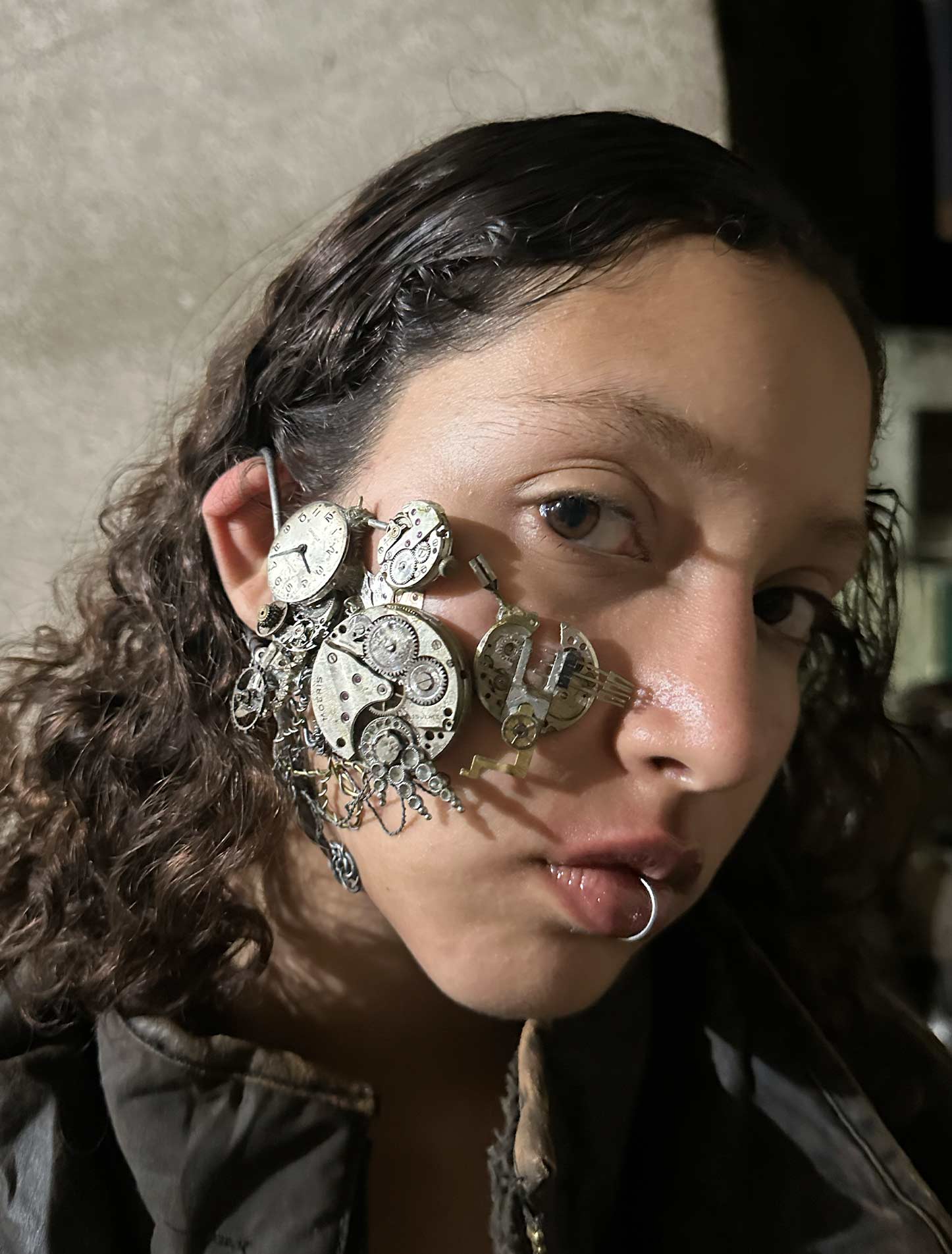
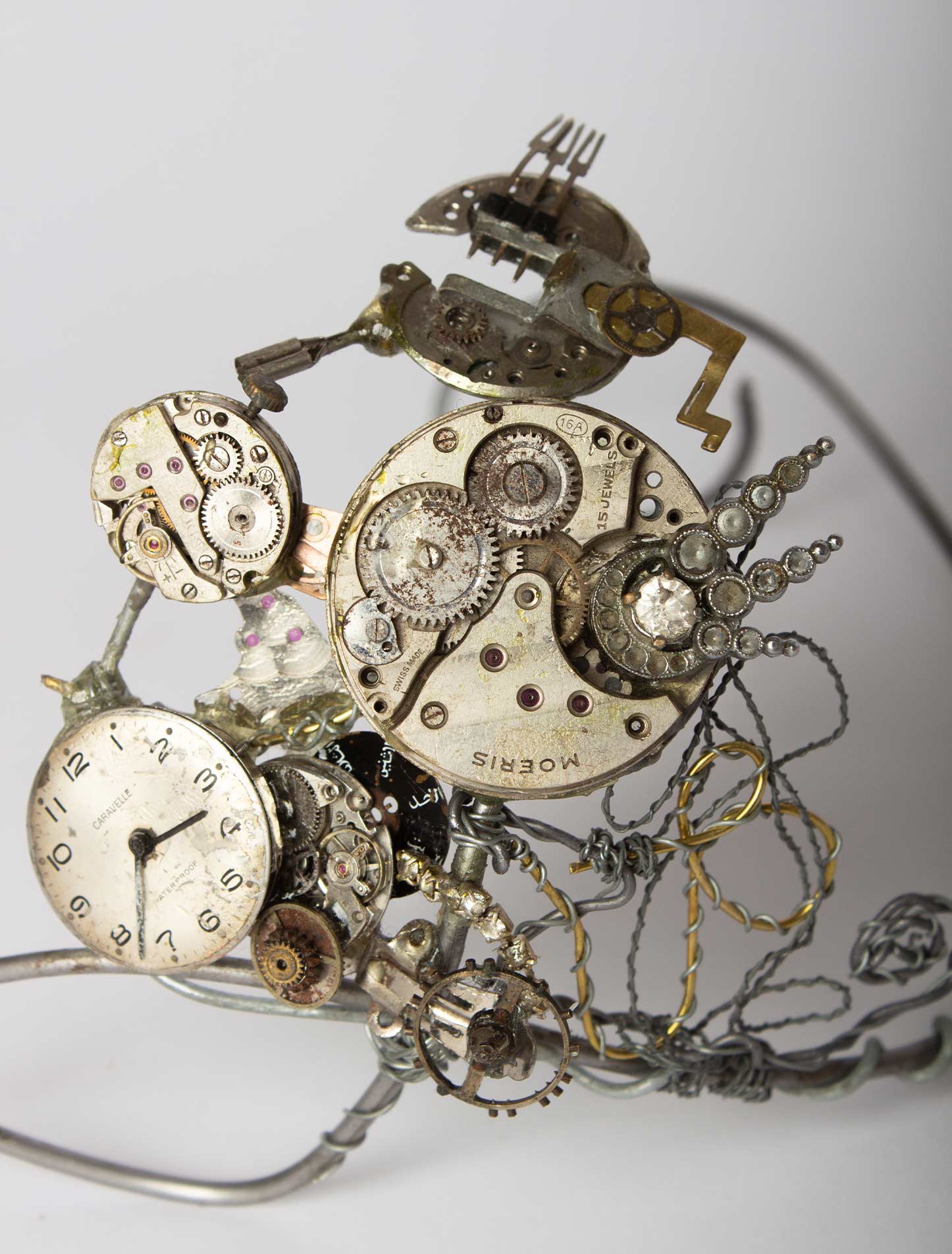
How do you attach such small, intricate components? What’s the most frustrating part of the process?
That’s my favorite part of making! To keep adding more details through these small components is very satisfying to me. I use resin and superglue if something is too small to make a mechanical connection. Since I don’t have access to a proper workspace/training yet, I make everything in my room using simple materials and techniques. I constantly lose these tiny pieces and spend hours looking for them, this can be quite frustrating.
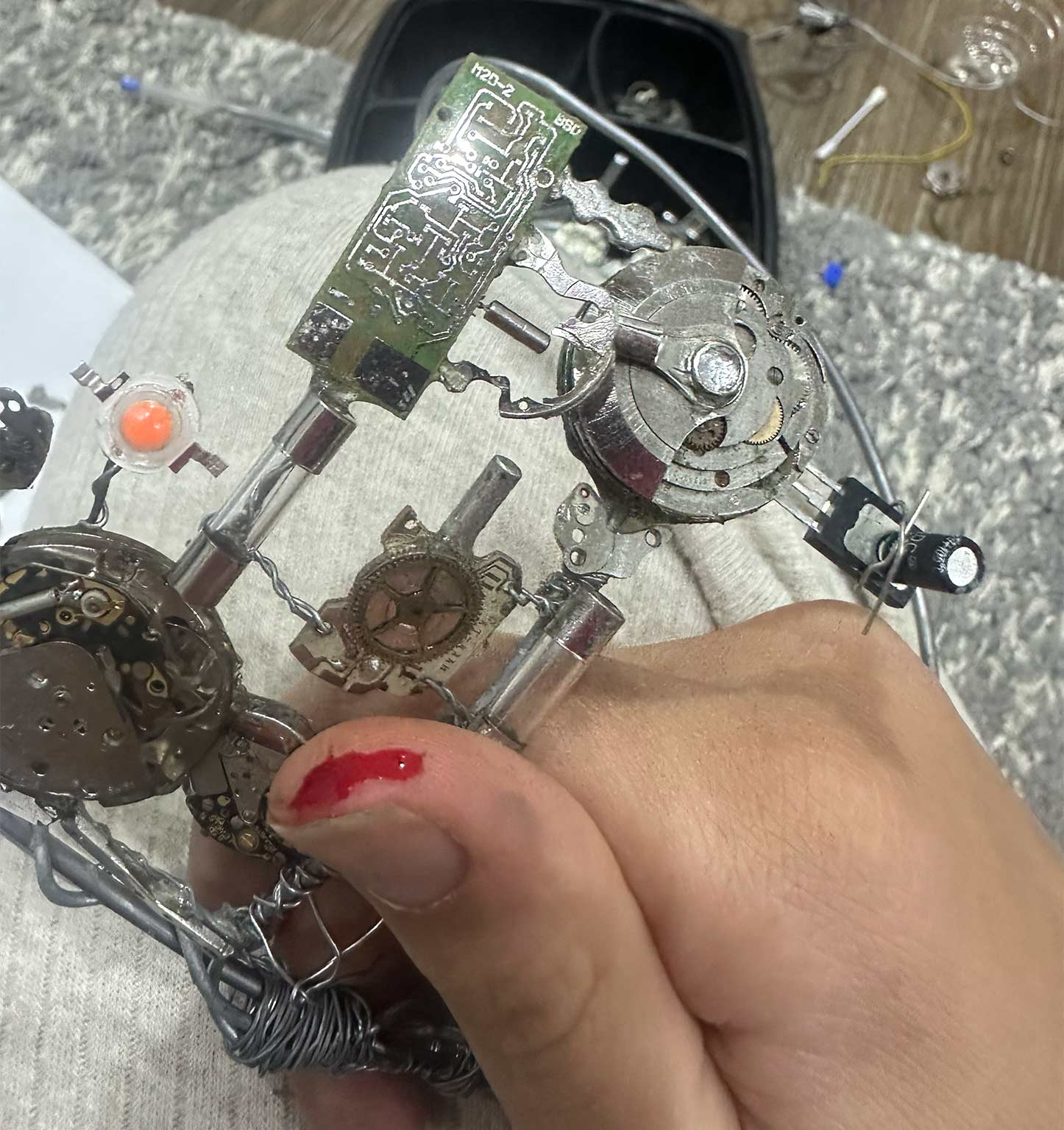
Have you ever worn one of your pieces in public? If so, what were the reactions?
Yes, I have! Mostly hand objects and belts, the masks aren’t comfortable enough to wear for extended periods of time just yet. The reactions are mixed depending on the setting, but usually
people will look at them with curiosity and wanting to ask questions/take a closer look, that makes me really happy.
In what ways do you see yourself in the pieces you create?
I see a lot of myself in these pieces, not just my taste and the ideas in my mind, but also parts of my soul and identity. For example, I’m a person that likes to joke a lot, and I’m really inspired by what people think of as trashy and cringe. Recently, I’ve been experimenting with adding more humorous elements to the pieces I make, sort of like inside jokes I have with myself, which I later find resonate with people in different ways when I wear the pieces in public. I feel so embraced when that happens, and I want to keep adding more of these elements to my objects.
Where can people find you?
For now, you can find me on Instagram
@salmamohamedbaset
and my new account
@khorda_____ in which I will be sharing only my works and processes.