Samia Hilal
What’s your name and where are you from/based?
My name is Samia Hilal. I’m originally from Paris in France and I’m still based there 🙂
Can you describe your practice in a few words?
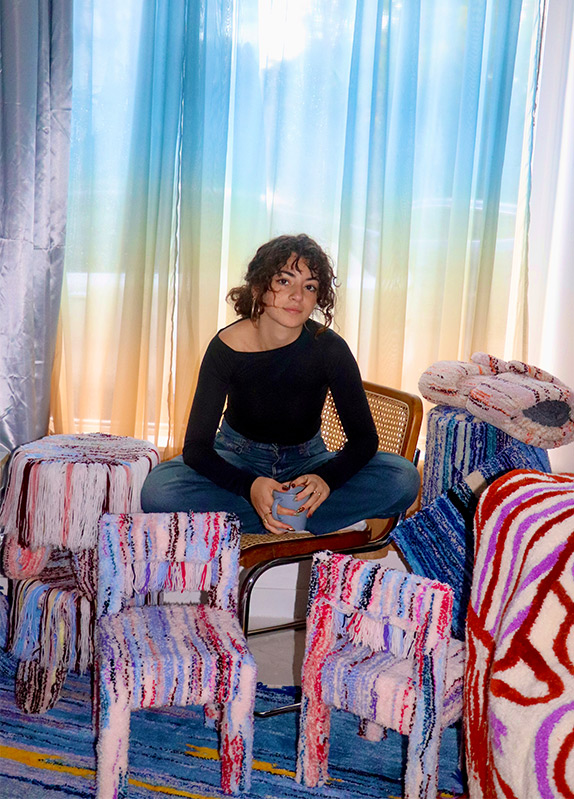
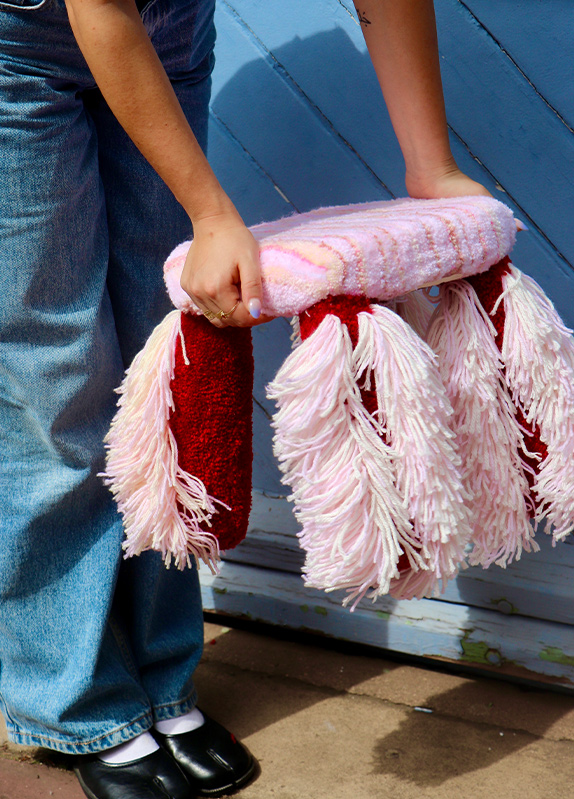
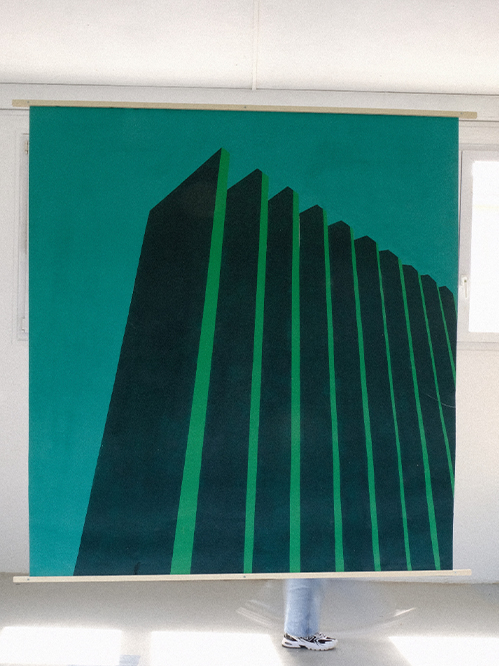
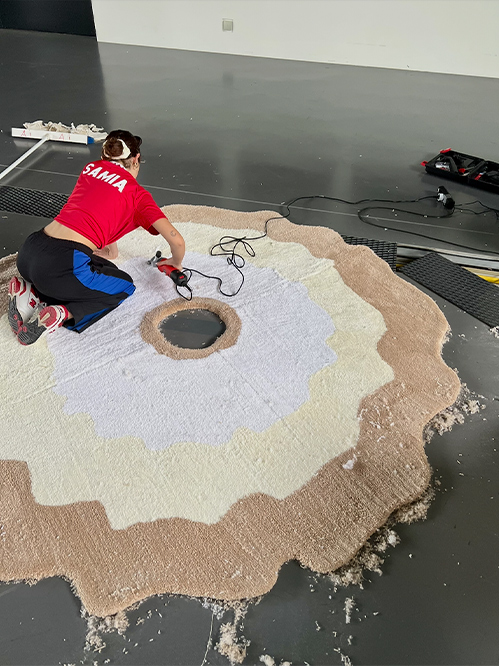
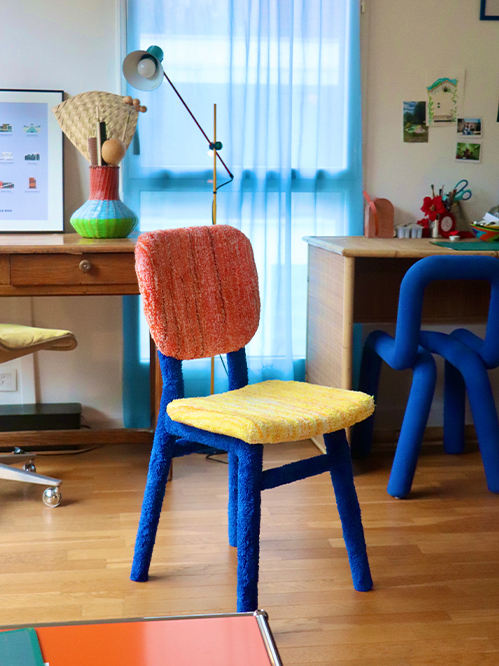
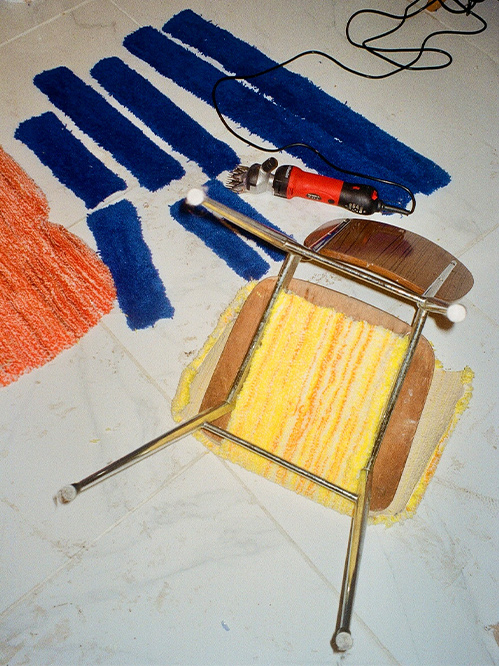
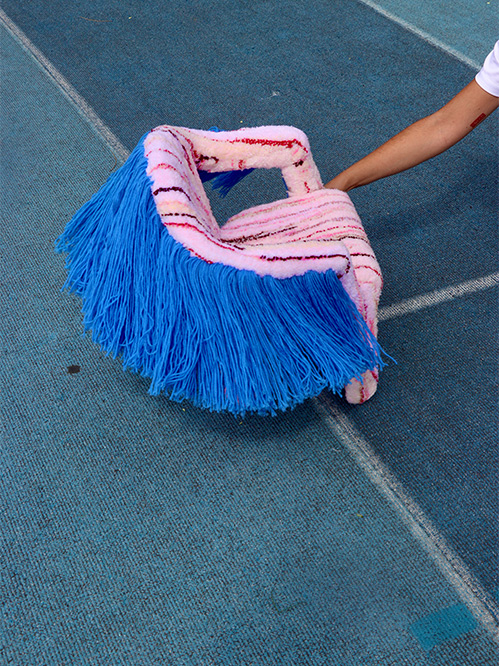
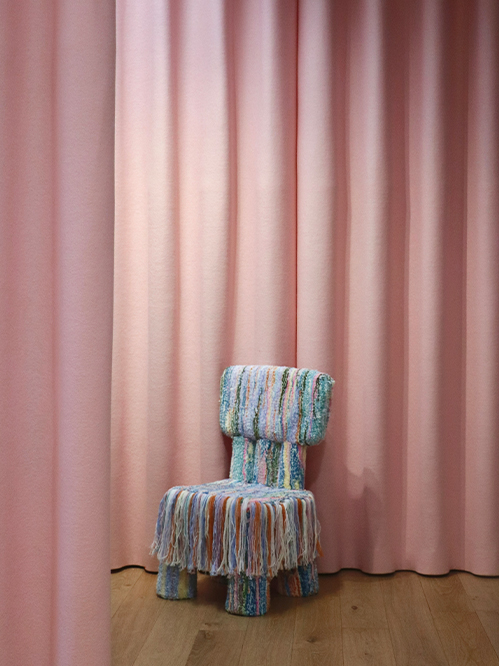
My practice focuses on tufting as a design technique, exploring how color, texture, and scale can transform yarn into functional objects such as rugs, seats, and wall pieces. I approach each work as a construction of surfaces, where composition and materiality are as important as form.
You studied both product design and interior architecture. How do they come together in your practice?
For me, they’re inseparable: product design trained me to focus on the details of an object, its materiality and scale, while interior architecture taught me to think spatially, in atmospheres and narratives. When I design, I’m constantly moving between the intimate scale of an object and the expansive scale of a space.
What first drew you to tufting?
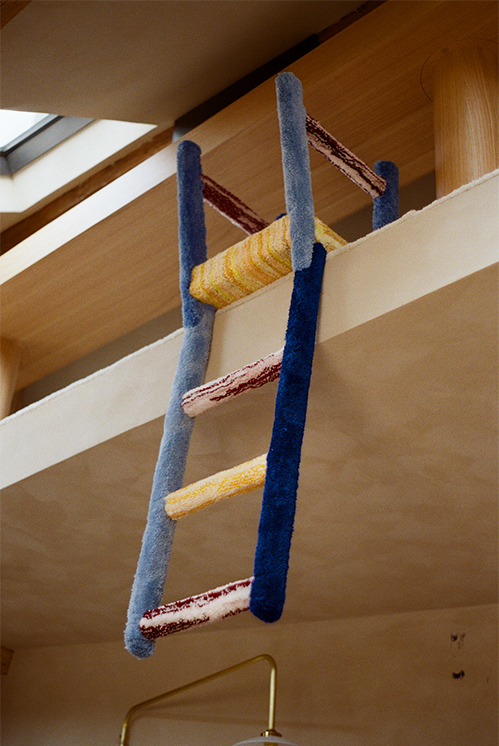
At the beginning, I used to make large-scale paintings with a roller. I loved playing with flat blocks of color. The more I painted, the bigger the works became, to the point where I had to stretch the paper on the floor of my apartment, since I didn’t have enough wall space. The paintings began to feel like carpets that I had to step over while waiting for them to dry. That’s when I realized they could actually become rugs, existing in a more three-dimensional way, less like drawings and more like tactile objects.
How important is the use of vibrant colors beyond just aesthetics?
Vibrant colors are a way for me to translate memories, moods, and past experiences into objects. They act as markers of places I’ve been and references to childhood, giving my work a personal layer beyond pure aesthetics.
You mention poetry as a source of inspiration, in what ways does poetry influence your way of thinking about objects?
For me, it’s not about poetry in the form of poems, but rather about the idea of transmitting a poetic quality through objects. I’m interested in how stories, thoughts, and atmospheres can be embedded into design, so that an object carries more than function; it suggests a feeling or a way of seeing.
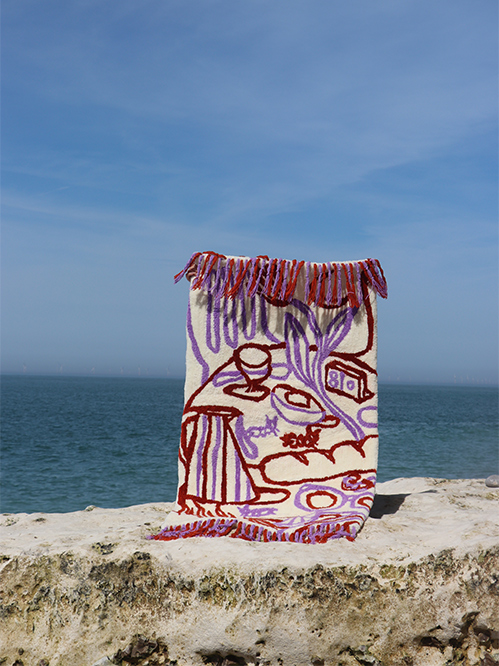
How do your objects carry the sense of wonder and daydream that comes from childhood memories?
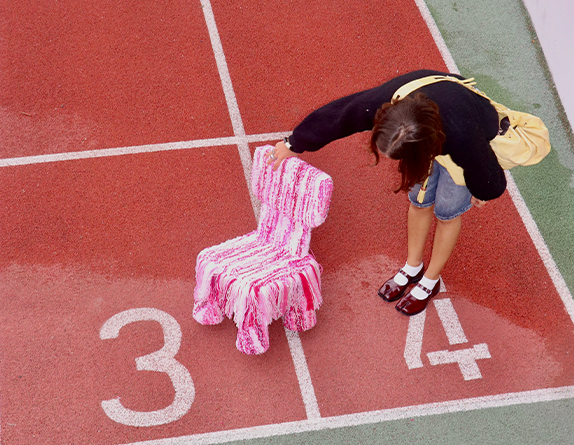
Through softness, playful shapes, and a certain naivety of gesture. Childhood is full of sensorial intensity: textures, colors, dreamlike scales; and I try to design objects that reawaken that sense of wonder and openness. By moving away from raw and rigid materials like wood or metal that dominate our everyday surroundings, and instead working with yarn and color, I aim to create objects that invite a sense of daydream and imagination.
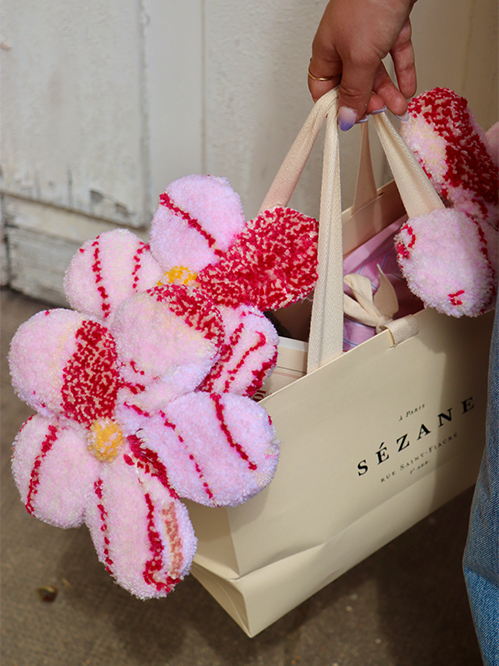
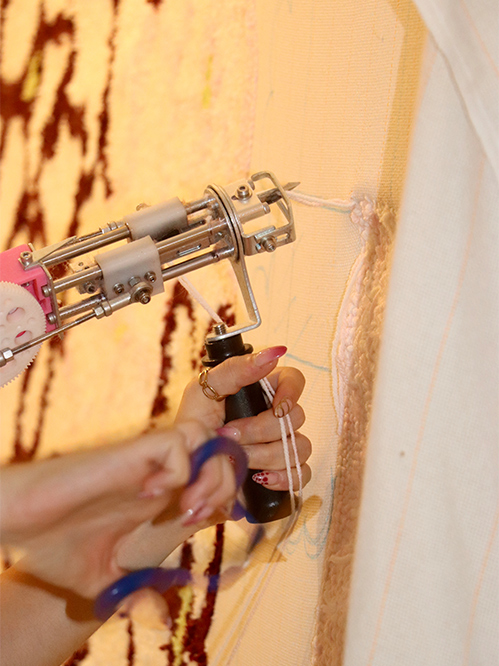
Have there been any unexpected conversations that emerged from viewers of your work that have stayed with you?
Yes, several people have told me that my tufted pieces reminded them of childhood, sometimes even of cartoon characters they grew up with. Once, a woman even said she felt like hugging them to feel comforted. These reactions stayed with me because I really aim to create objects that awaken memories, offer a small moment of escape, and spark a smile, creating a playful and emotional connection beyond their visual or functional presence.
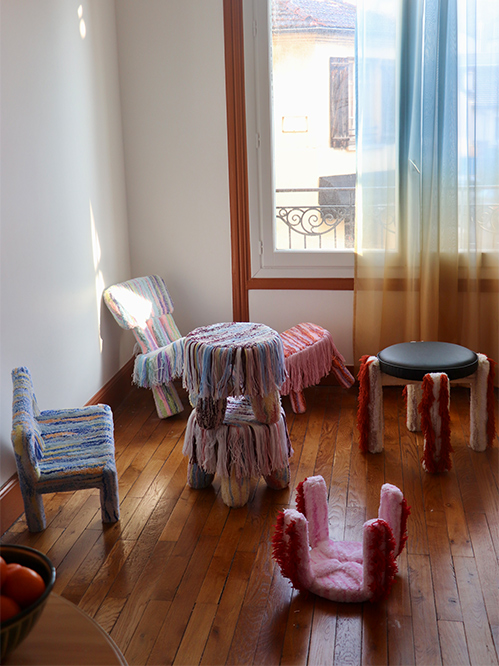
With your experience in set design, could you see yourself tufting complete immersive environments, or continuing to focus on individual objects?
I see it as both. I love the intimacy of individual objects, but I’m very interested in translating tufting into entire environments; walls, floors, and scenographic worlds where people can step inside and feel surrounded by softness and color. I would also love to work on shop windows and displays, using tufting to create immersive, eye-catching installations that tell a story and engage viewers.
Where can people find you?
You can discover my work on Instagram @samia.hilal, and I also have a website where my available pieces are for sale: samiahilal.com
I continue to share updates on upcoming collaborations and projects through both platforms.