Schnitt Magazine
What’s your name and where are you from/based?
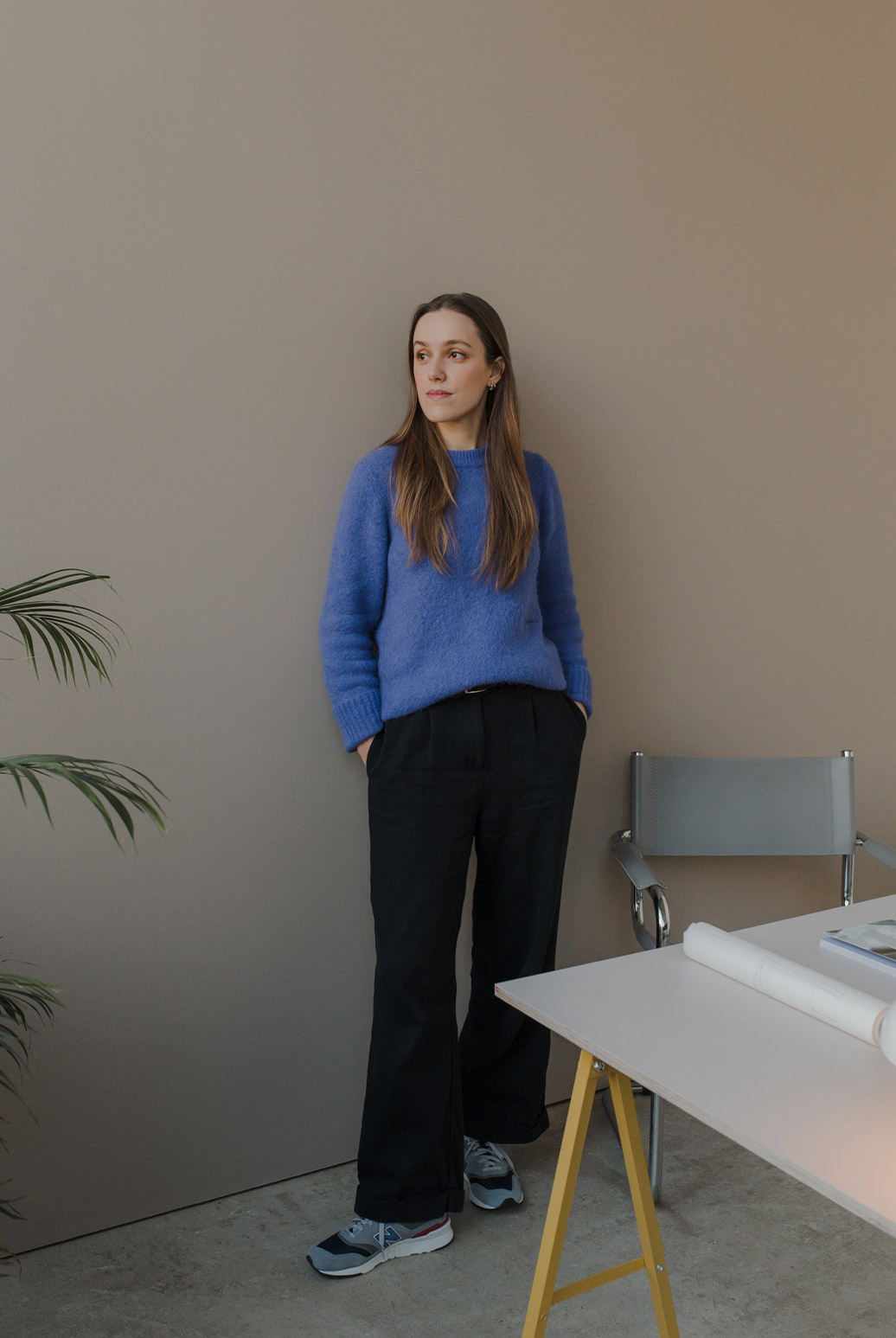
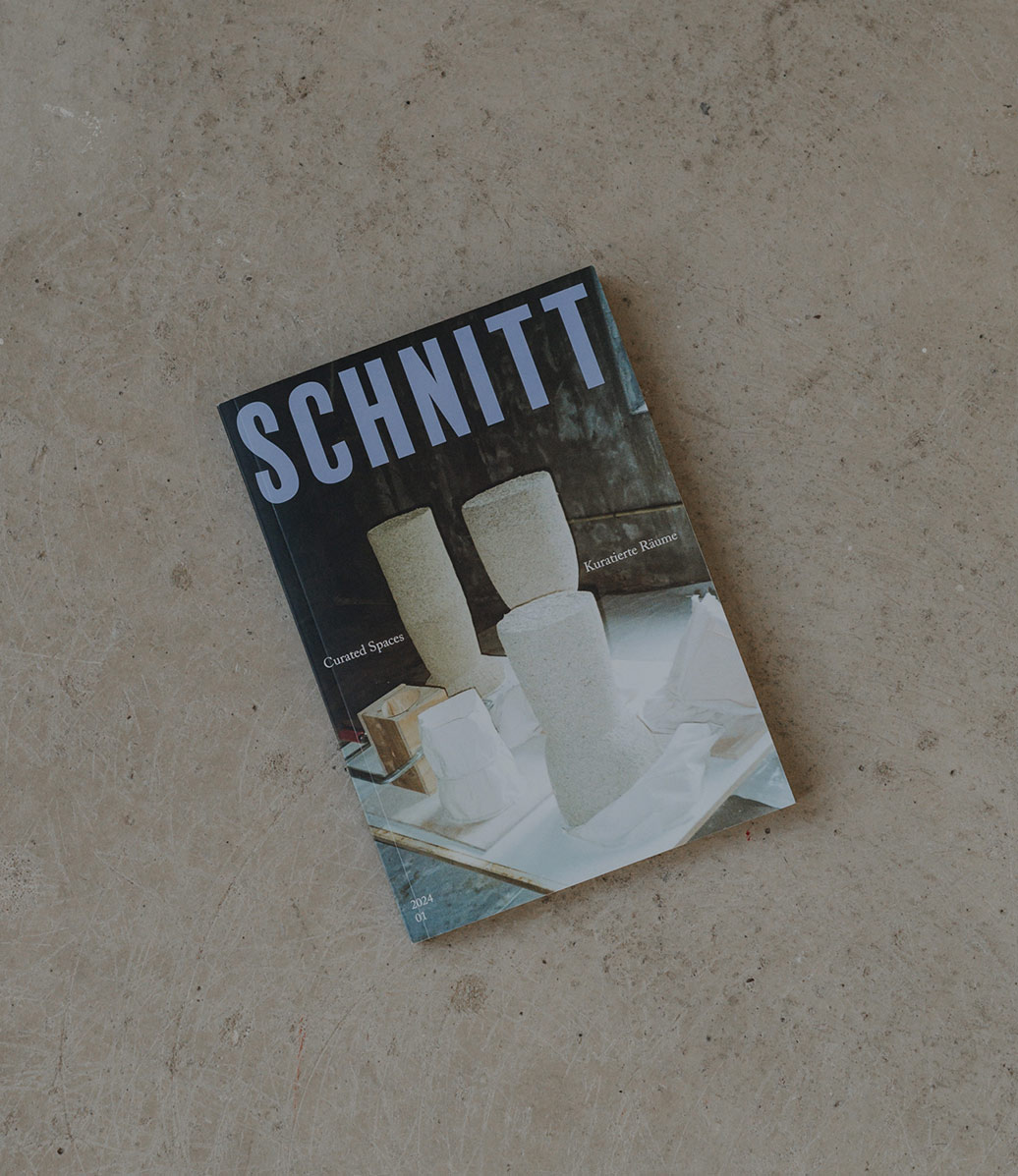
Hi, my name is Caroline Steffen. I am a trained architect from Bonn, Germany, working at the intersection of architecture, writing, communication, and culture. My work is driven by a deep passion for storytelling and a strong visual sensibility. I am also the founder of Schnitt, a print and online magazine dedicated to the intersections of architecture with other disciplines.
Can you describe your practice in a few words?
At Schnitt, I edit, write, and curate with curiosity at the heart of everything I do—constantly seeking out inspiring people, projects, and practices, and highlighting fresh, relevant voices. Beyond Schnitt, I also contribute as a writer to other magazines, broadening the conversation across diverse platforms.

Your background blends architecture, interior design, and communication. What first interested you in these domains?
I’ve been drawn to cities for as long as I can remember. Even as a child, I was fascinated by how our built environment shapes the way we live – long before I could explain why. Over time, I realised it’s the mix of architecture and culture that inspires me most. I’ve always imagined the lives unfolding behind façades – their routines, their spaces, their atmosphere – a habit that stayed with me even when I was sketching floor plans in an architecture office. That curiosity about how people live, and what influences those lives, has shaped my path ever since.
What started the move from designing spaces to starting Schnitt magazine?
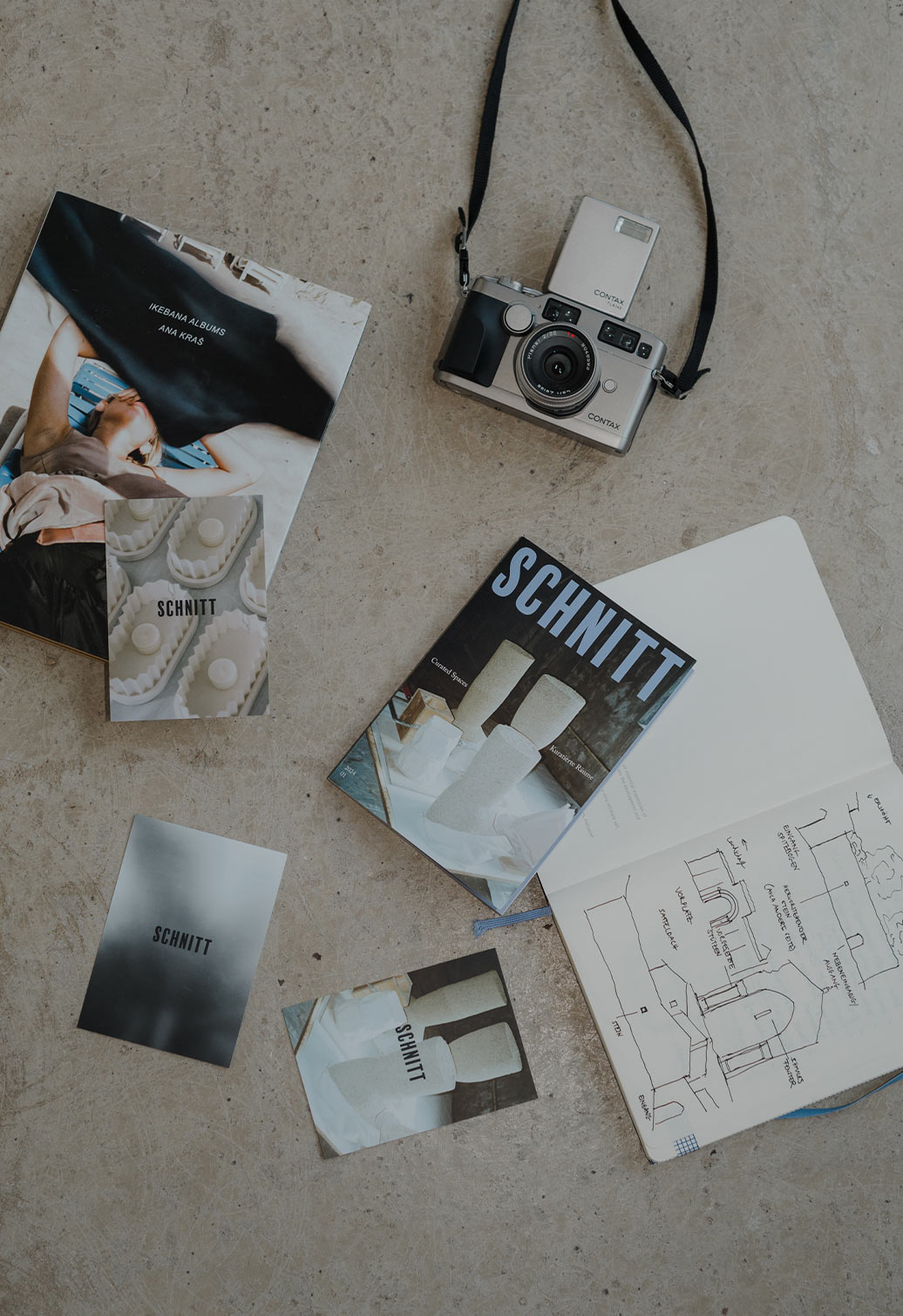
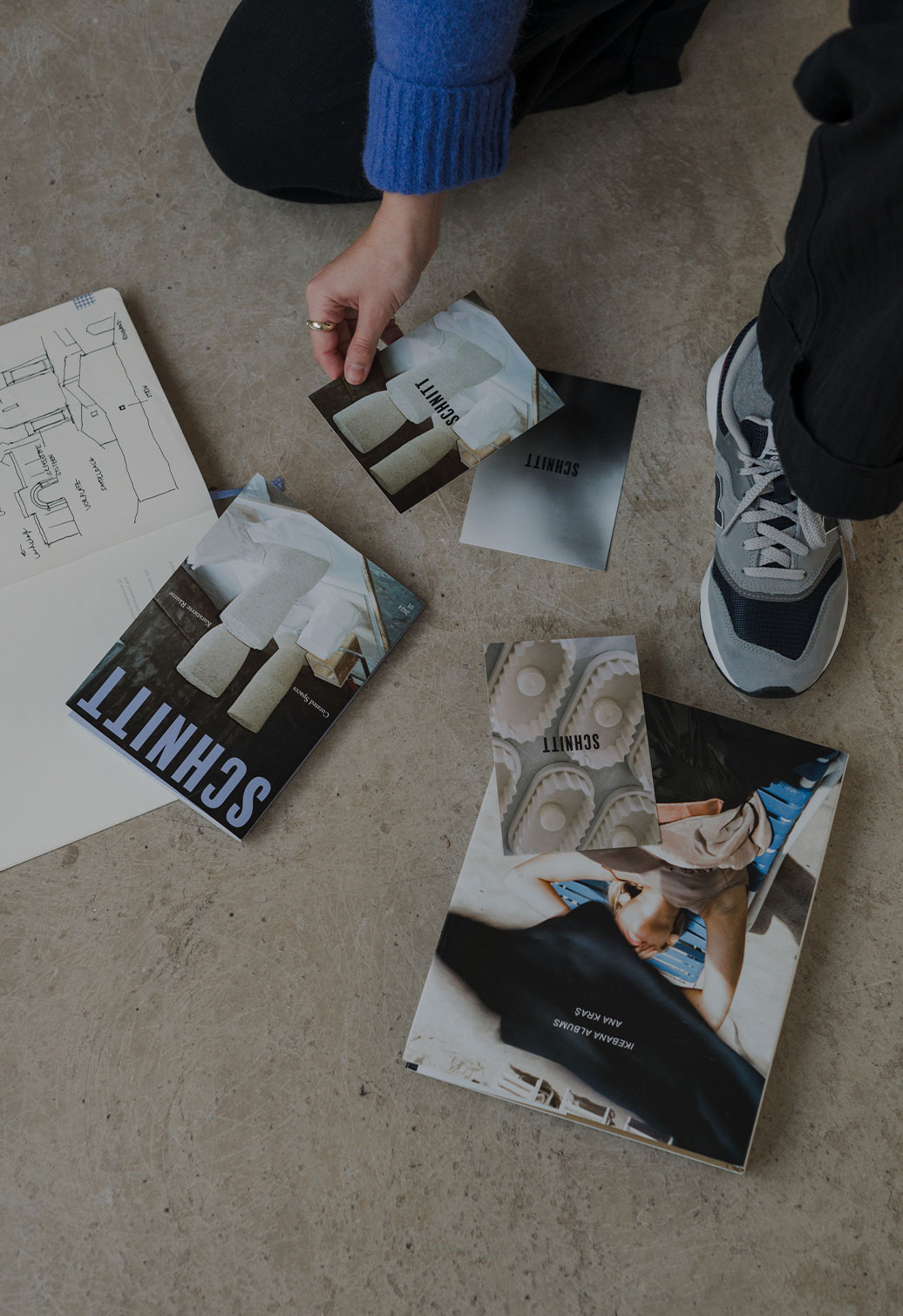
I’ve always been curious about what others in the field are working on and how they got there. Early in my studies, I discovered my love for graphic design and began creating small publications—an experience that sparked my interest in storytelling and the power of presenting projects in a tangible, visual form.
With Schnitt, I focus on those at the start of their careers – people driven by ideas rather than accolades, whose work feels authentic, relevant, and exciting.
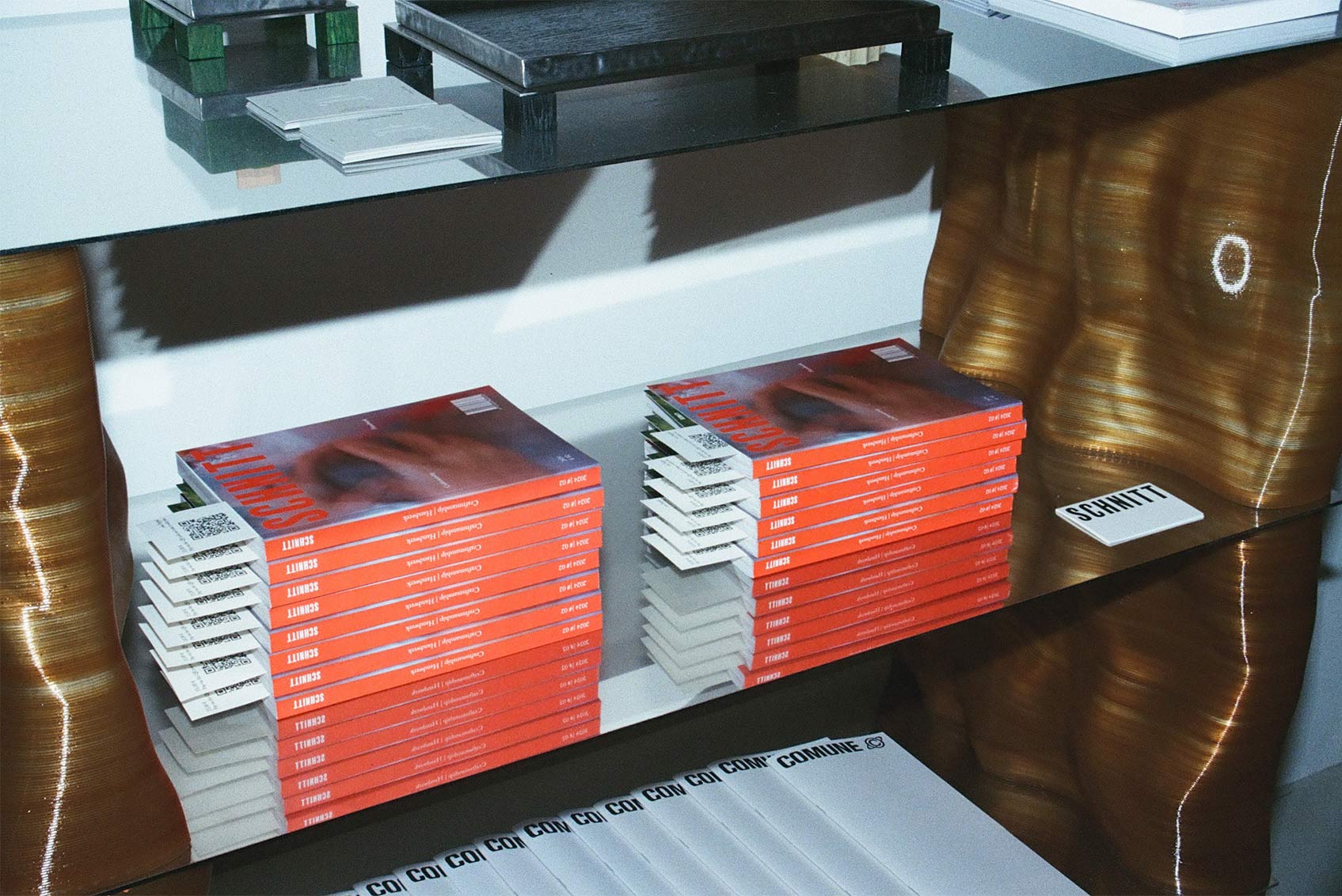
Schnitt started as a digital platform before becoming a print magazine, what changed once it became a physical object?
Schnitt started as a digital platform after I got in touch with Lukasz Ryszard Palczynski – an architect who, among other projects, designed the “Room for Listening” with Hania Rani, whose music I love. We exchanged messages, and Luka trusted me despite not knowing each other, which allowed me to quickly launch the website and share his story.
After 1.5 years online, I wanted to bring more focus and turn Schnitt into a physical object. Moving to print changed the project by allowing us to explore specific themes in depth and curating a group of people around each topic. The magazine became a kind of small archive, offering a richer, more concentrated experience than the website’s broader approach.
For our upcoming third issue on “Senses,” we’re going a step further with an exhibition called „Sensing Space“ where readers can engage with objects and positions from the magazine in real life at the Berlin design gallery MAJ VAN DER LINDEN.
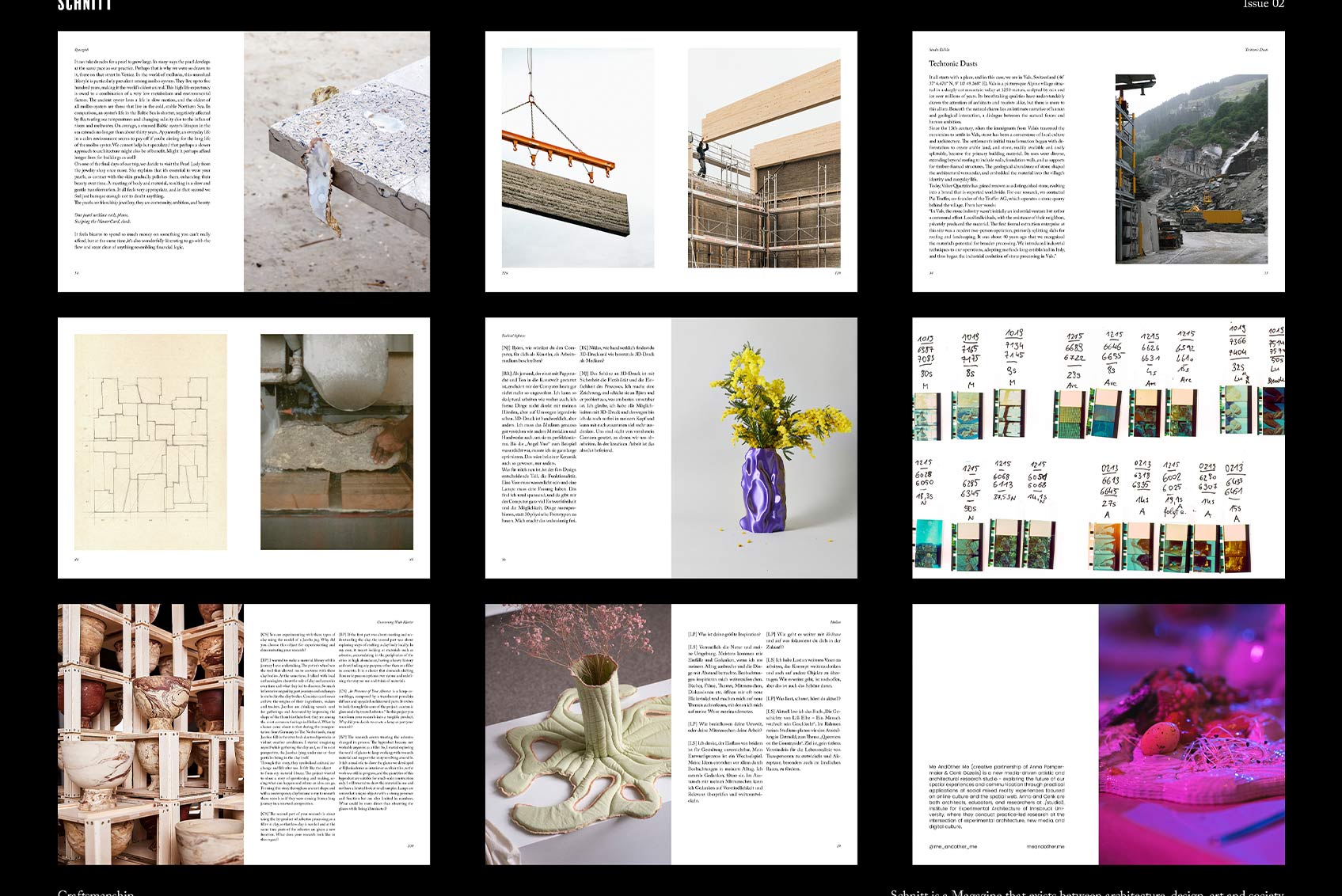
You feature projects that move beyond conventional architectural paths, what does “beyond” mean to you?
For me, “beyond” means projects that dare to look past conventional boundaries — that are bold enough to experiment with new materials, approaches, and concepts which may not be the safest choice, but have the potential to spark real change and to truly move people, engaging them on an emotional level. It’s about work that inspires others to think and act in ways that are more sustainable, inclusive, and courageous.
In your opinion, what’s the most urgent conversation we should be having about our built environment now?
For me, the most urgent conversation is about working much more with what we already have. That means reusing materials, avoiding demolition whenever possible, and designing projects in a way that allows them to be reintegrated into the cycle of use — a principle that, for me, applies to architecture at every scale, including design objects.
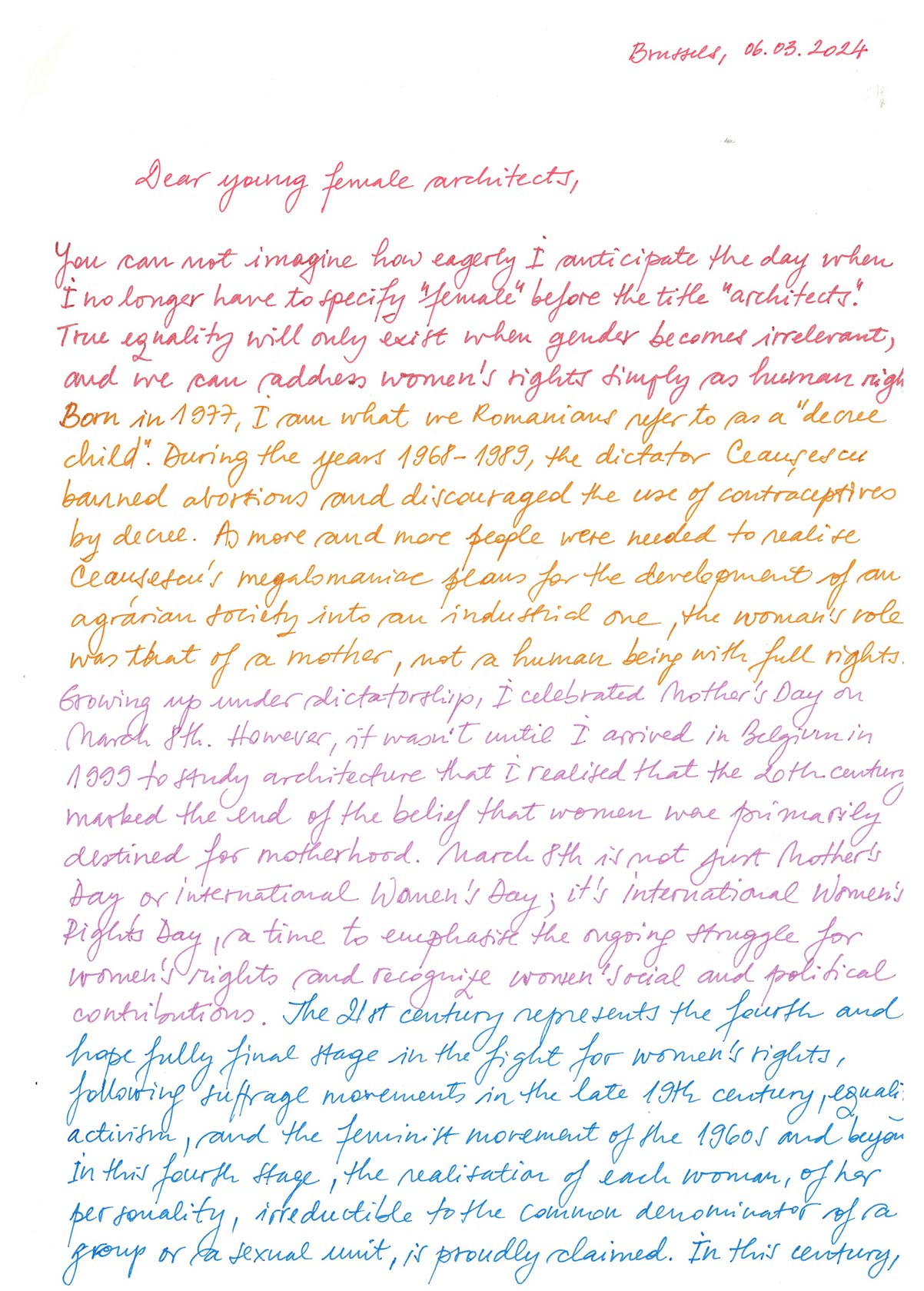
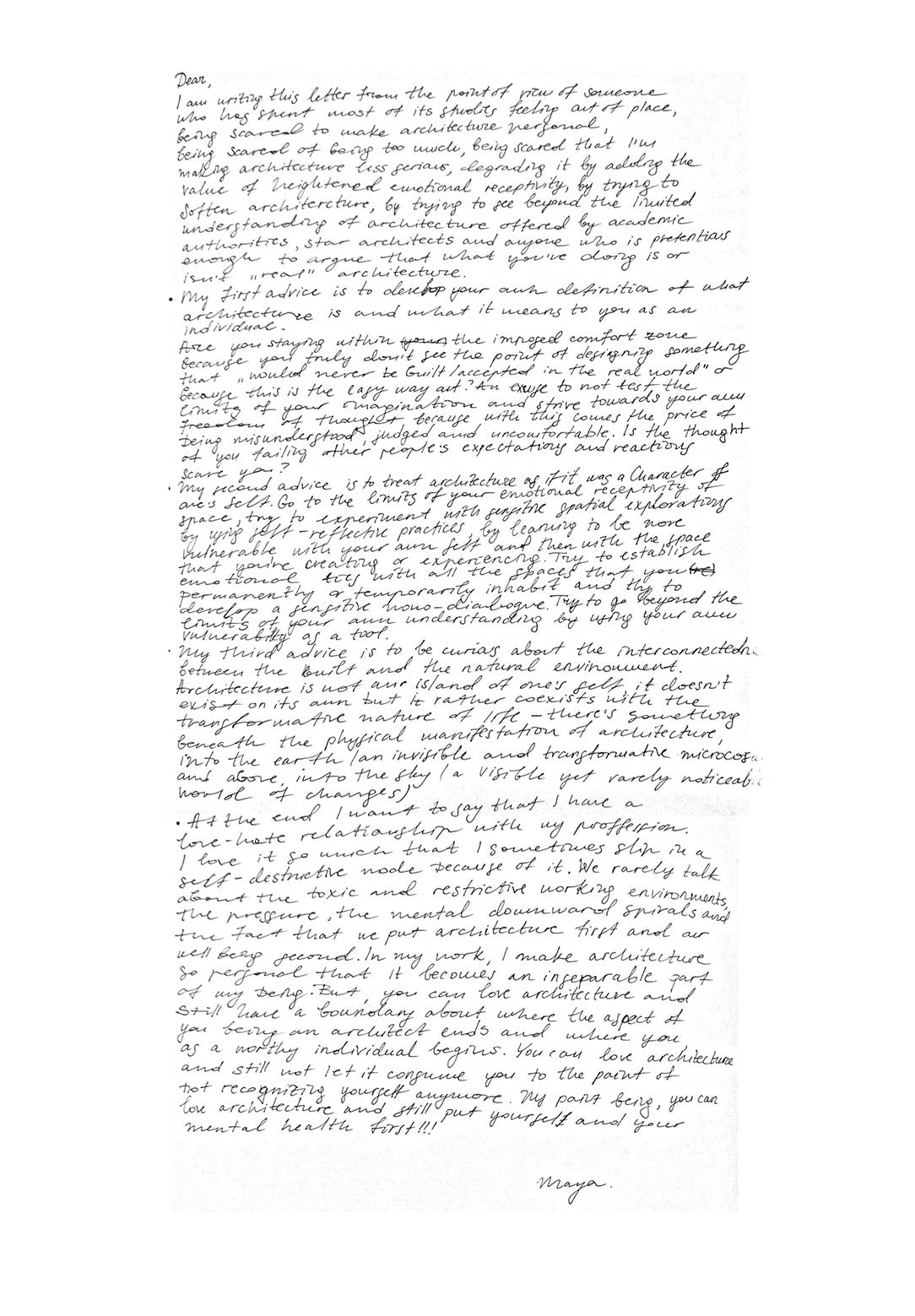
What inspired you to start Letters to a Young Architect, was there a particular moment that led to it?
It’s a project that is very close to my heart. I started Letters to a Young Architect because I have always felt the architecture industry to be highly competitive — something that never aligned with my personal values. Both studying and practicing architecture can be extremely challenging, and I believe it’s important to create space for honest exchange.
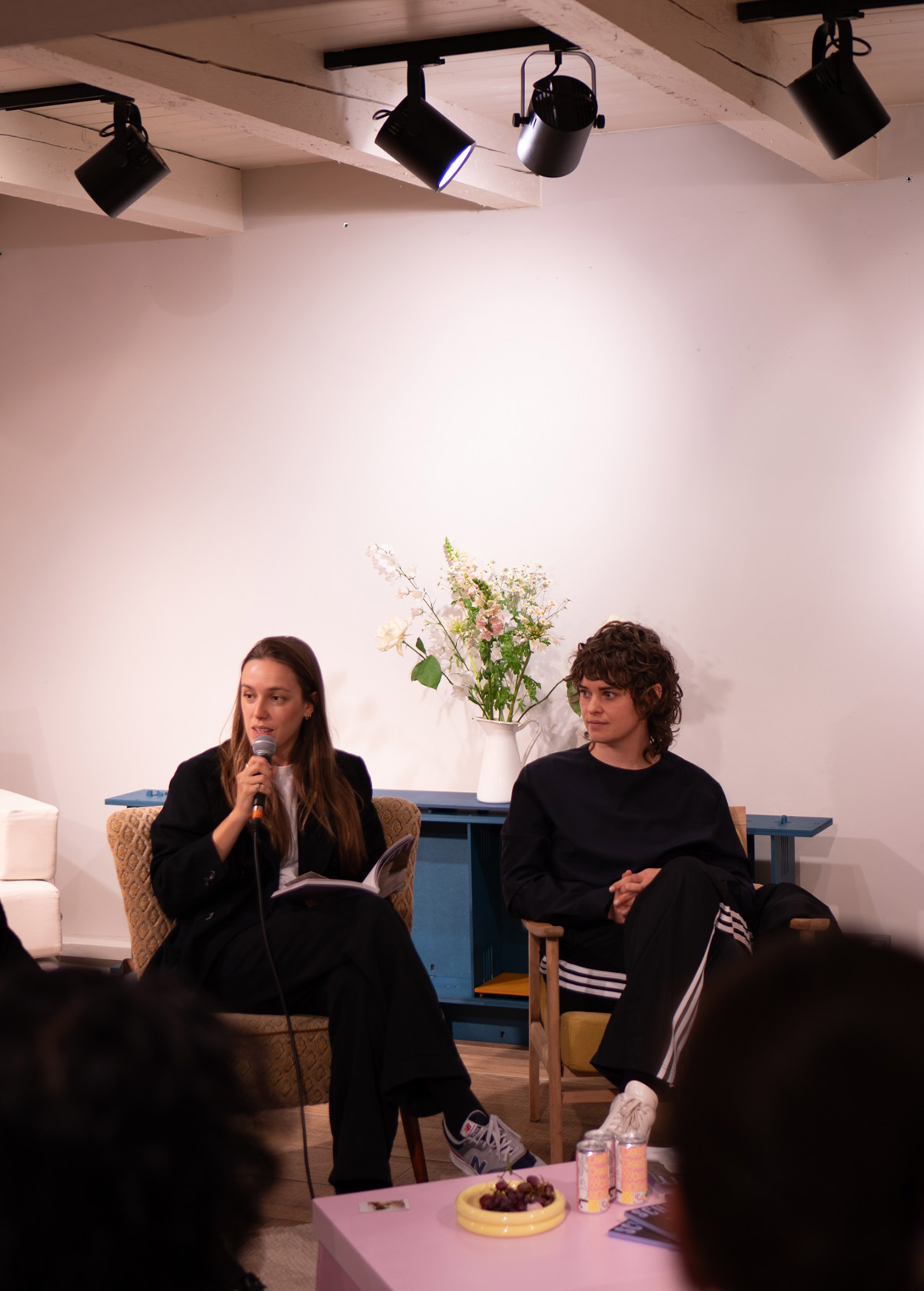
The idea was to invite people already working in the field to address the younger generation — to motivate them, shed light on challenges and systemic issues, and strengthen the sense of solidarity. The letters that came out of this were incredibly moving and powerful. We later brought the project into a second round together with the PAF community, hosting an online event where inspiring women from Germany, Belgium, and the Netherlands read their letters to the younger generation and discussed them together.
Have any of these letters or any of your articles sparked surprising responses with readers?
Yes, definitely. The authors of the letters told me that the process felt liberating for them, almost like a form of therapy, as it gave them space to reflect on their career and their early steps in the profession. Readers also responded very warmly — many reached out to ask if they could contribute themselves because they, too, had something they wanted to share. I wasn’t expecting that.
Young people, in particular, wrote to say how much the letters had helped them and how uplifting they found them. It wasn’t a single letter that stood out, but rather the variety of perspectives that resonated with so many people.
What’s one emerging discipline or technology you think will have a big impact on architecture in the coming years?
I think we should definitely not underestimate or ignore the topic of AI. In both our last print edition and the upcoming one, Senses, we’ve spoken to people who are actively working with it. In Senses, for example, we talk to designer Tina Bobbe, who uses AI to create concepts that she then tries to bring to life.
I believe it’s important to approach this technology with cautious openness — to reflect carefully on its implications while exploring how we can collaborate with it. AI can open up exciting new possibilities that have the potential to truly enrich our work, but it should always be accompanied by conscious, critical reflection.
On your website, you have a section dedicated to guides for different places around the world, are there cities you haven’t featured yet but would love to add?
Oh, there are quite a few. So far, the cities we’ve featured are very Europe-focused. I would love to explore some Asian cities like Kyoto or Seoul, or places in South America such as Mexico City. Since we can’t possibly travel everywhere ourselves, we’re also thinking about putting out a call to our community in the future to contribute their own guides.
Where can people find you?
You can find me and my work on schnitt-magazine.com and on Instagram at @schnitt_magazine. My other projects are featured on carolinesteffen.de, and you can also get a little glimpse into my life on Instagram at @carolinesschulz. We’ll be launching the third issue of Schnitt, themed Senses, on October 9th at the Berlin design gallery MAJ VAN DER LINDEN, where we’ll also host a month-long exhibition on the theme of senses. I’ll be there in person for the launch and am really looking forward to meeting