Shivangi Vasudeva
What’s your name and where are you from/based?
My name is Shivangi Vasudeva. I’m a furniture designer working between India and London. My hometown is Indore, in central India, where much of the woodworking for my pieces takes place.
Can you describe your practice in a few words?
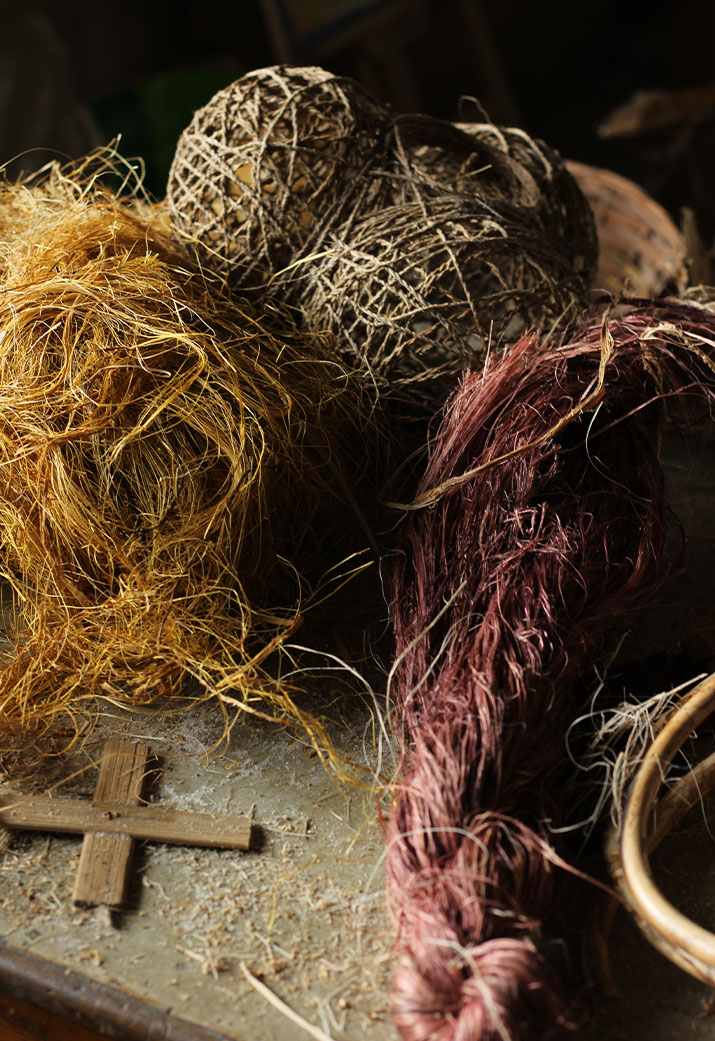
My practice has grown from travelling across India and learning alongside communities whose knowledge is at risk of being lost. Much of my work begins with vernacular materials – wood, bamboo, woven fibres, and with field research into objects whose roles have shifted over time or now sit behind museum glass. I’m interested in what happens to form when function changes: how a tool, a seat, or a ritual object evolves as its context does. In my furniture, I work with solid, grounded volumes that are refined through hand-making and collaboration. At its core, my practice is about material intelligence, the pace of craft, and finding ways for memory and contemporary life to coexist in the same piece.
You said that design for you is a form of recollection. What is the earliest memory of an object or textile that influenced your work?
Some of my earliest memories are of wandering around our home, opening cupboards and finding old vessels, brass tools, and curious objects my grandfather collected from different parts of India. I didn’t always know their purpose, but I understood their shapes – the full belly of a pot, the clean line of a handle. They were utilitarian, yet sculptural. That’s where my fascination with volume and silhouette began, and how I learned to look at form.
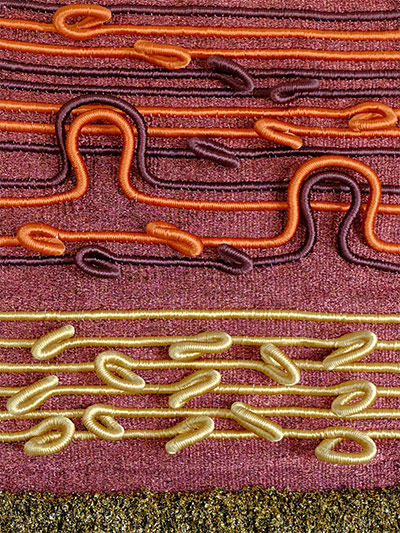
The sound of machines from my family’s denim factory was always present in my childhood. But I understood textiles more through my mother’s workshop – watching fabrics shaped by skilled hands of our artisans and recognising the knowledge they held in every stitch. Between those two environments, my practice took form. The wood I carve and the weaving in my pieces come from the same belief: that objects serve a purpose, and textiles carry craft that endures quietly through people.
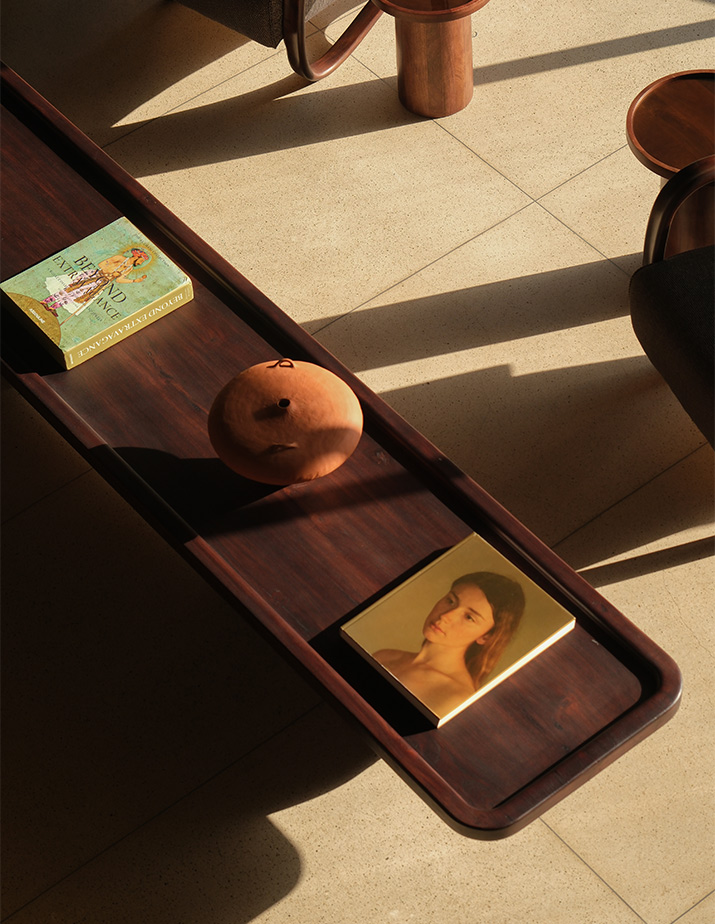
You write, “For too long, Indian and indigenous crafts have been viewed through a lens of exoticism. I’m working to reclaim these narratives as living, resilient practices.” What does reclamation mean to you as a designer?
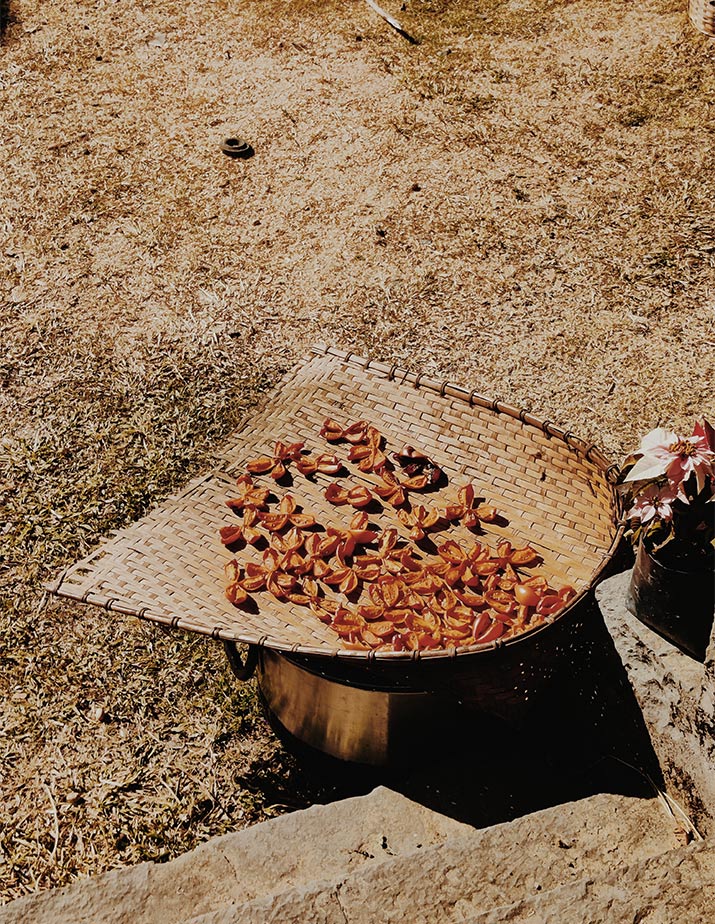
For me, reclamation means shifting the gaze. It is about honouring traditional craft not as a static relic of the past but as a living system of knowledge that continues to support the livelihoods of millions. Craft is one of the country’s largest economies, yet the value attached to it often doesn’t match the skill, time, and intelligence it demands.
As a designer, I see my role as creating conditions where these practices can endure and evolve – where craft is recognised as expertise, not undervalued as inexpensive labour in India or celebrated as something ‘exotic’ only when it leaves the country. Reclamation is also about returning agency to the artisans and communities who hold this knowledge, allowing their voices and skills to shape how these practices live on in contemporary design.
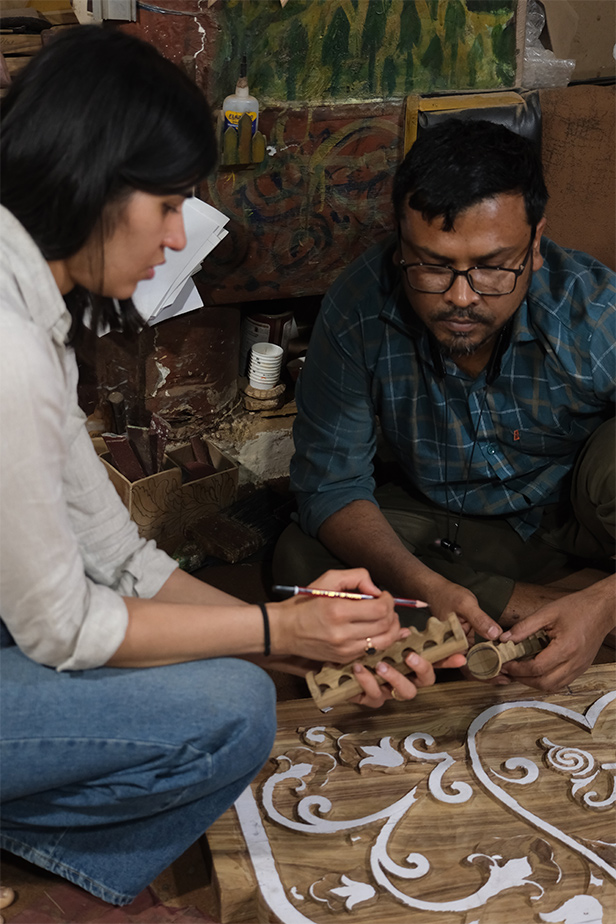
A lot of your work draws from artefacts and archives. Is there a small detail in one or more of your pieces that holds symbolic meaning that someone unfamiliar with it might not pick up on?
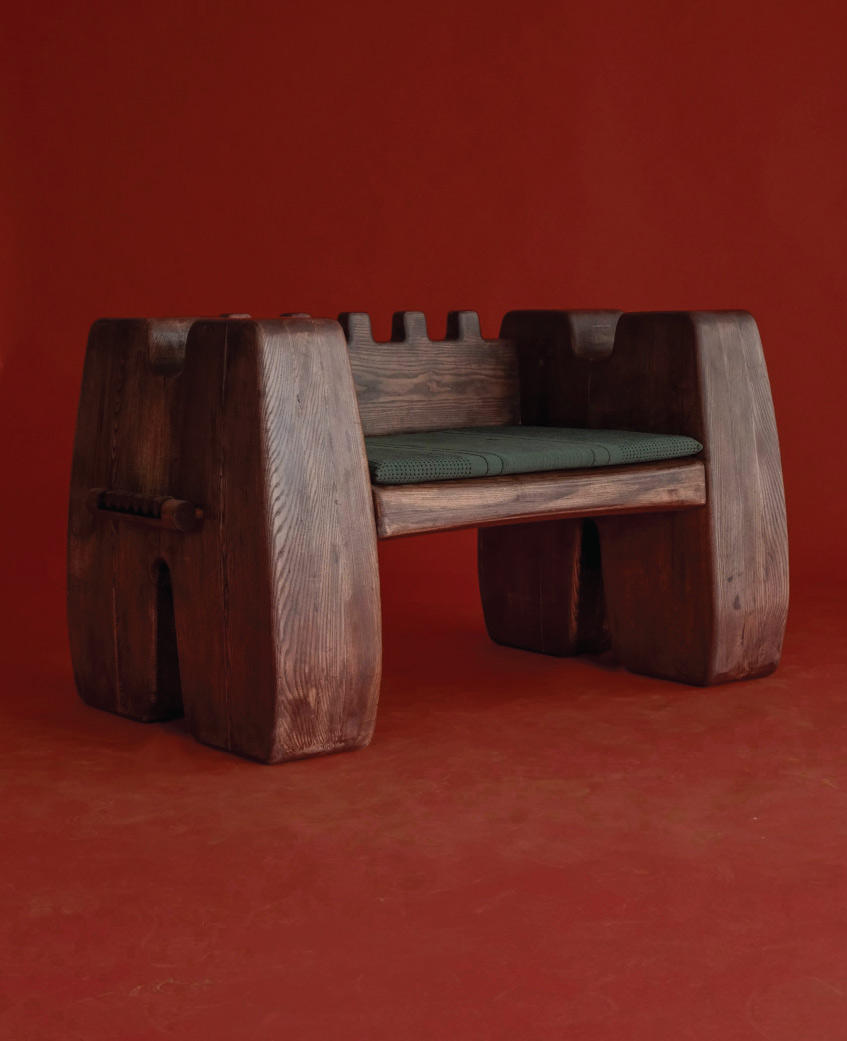
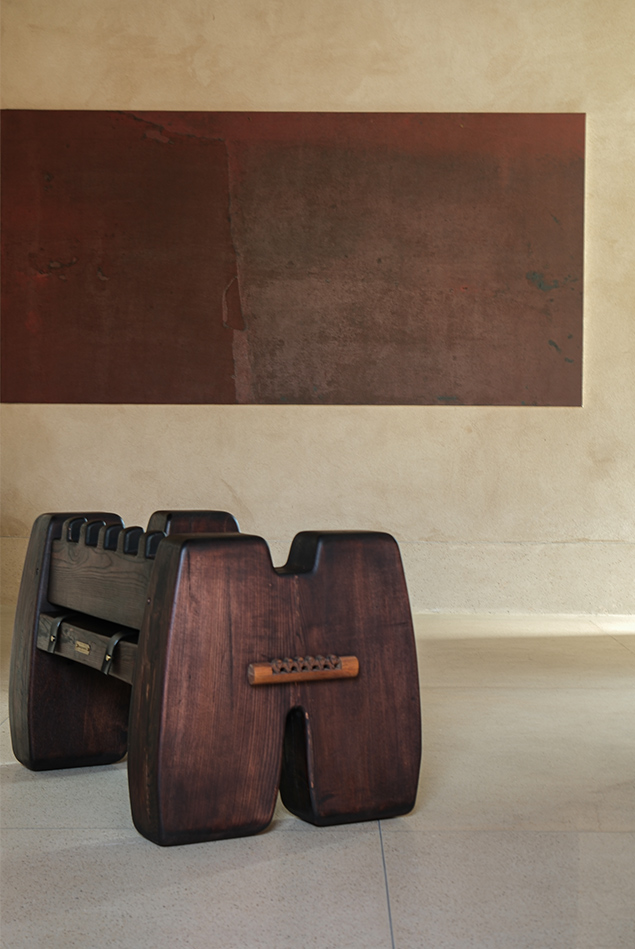
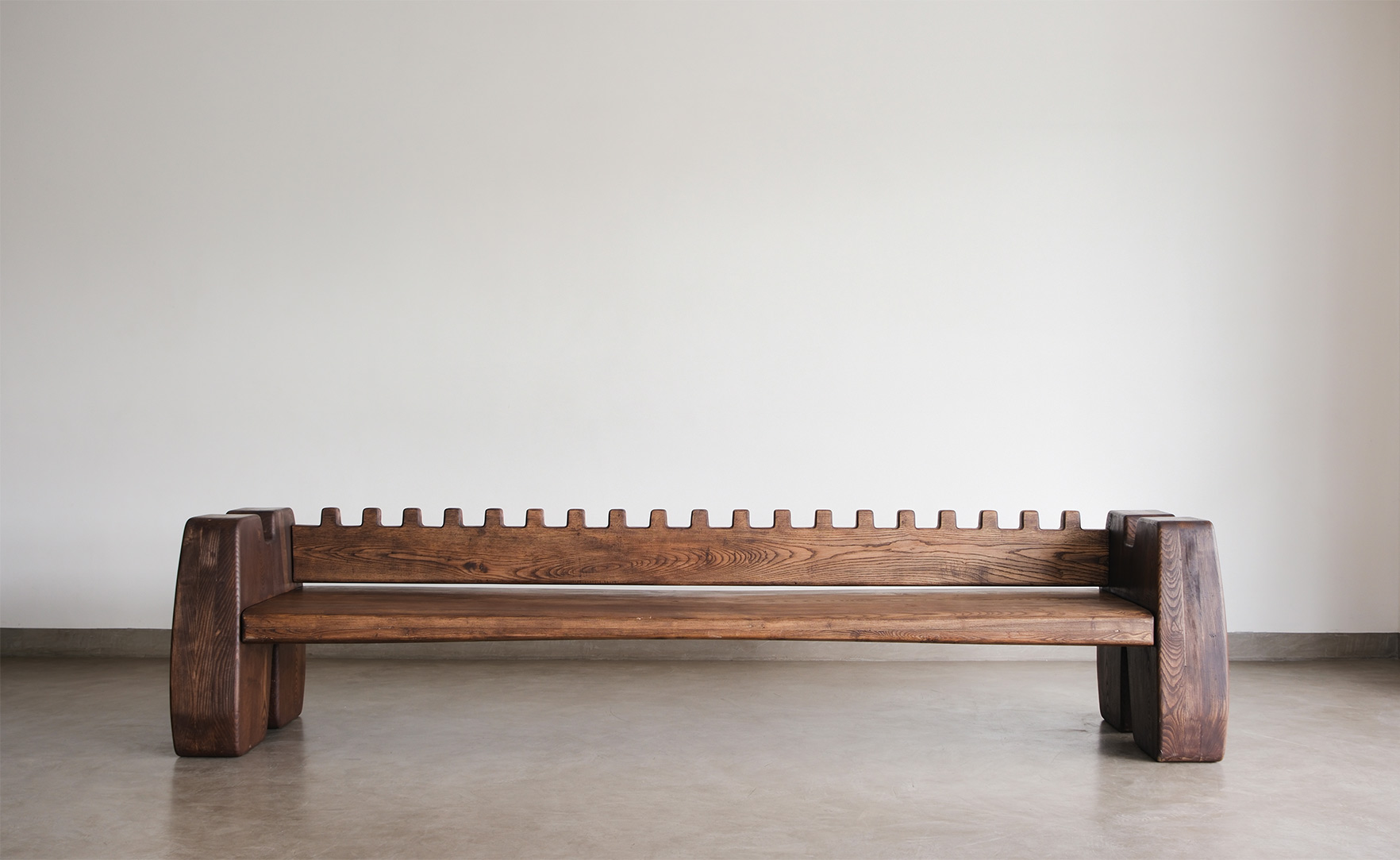
Yes , many small details in my work come from artefacts and visual cues I encountered during my research in Nagaland. On the Takhat, for example, the subtle carvings along the handles are informed by the forms of traditional Naga smoking pipes reinterpreted so the reference is there, but not literal. The notches on the back of the four-seater version draw from two sources: the carved grips of weapon handles and the stitch structures found on Naga shawls. I’ve amplified their scale so the construction technique becomes visible as a sculptural detail.
The low, grounded seating also comes from how people gather in the region – monolithic forms close to the earth that support communal life. Designing with that understanding felt important. These elements may seem quiet to someone unfamiliar with the culture, but each comes from lived practice. I am intentional about avoiding sacred motifs; the references I work with are rooted in everyday craft and contemporary life.

You mention that artisans are too often reduced to “silent executors.” What did working with Naga women weavers teach you?
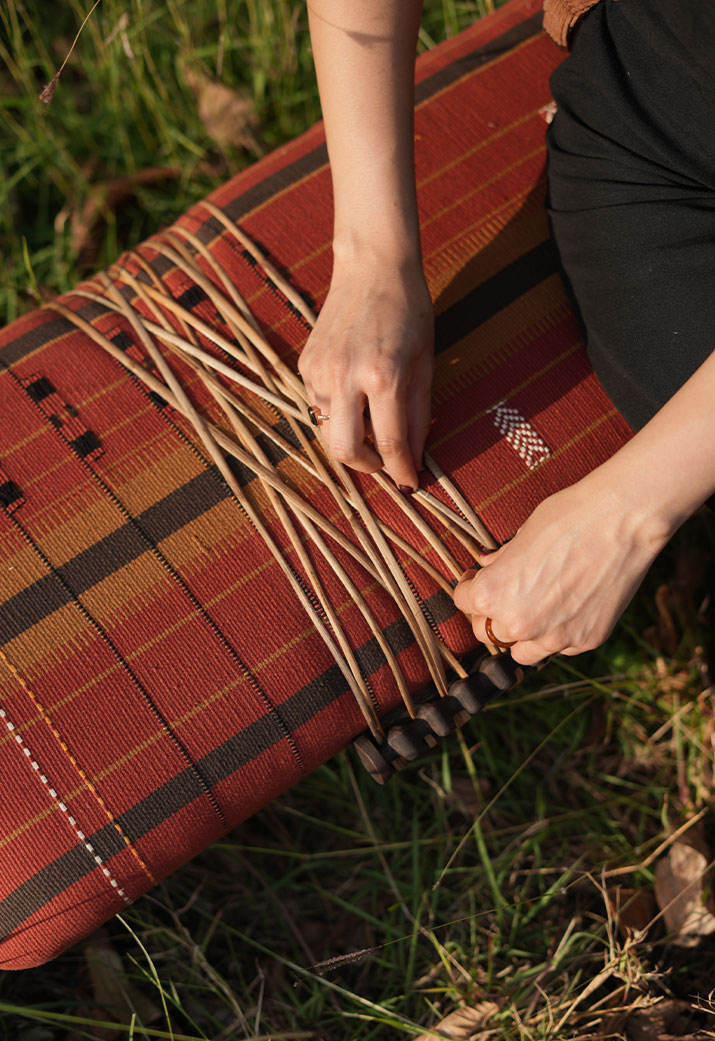
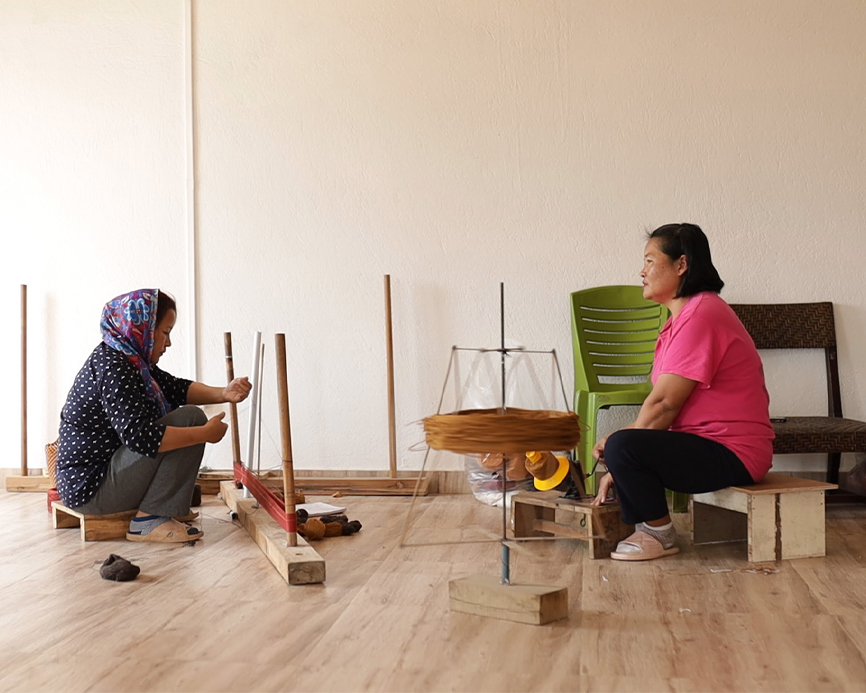
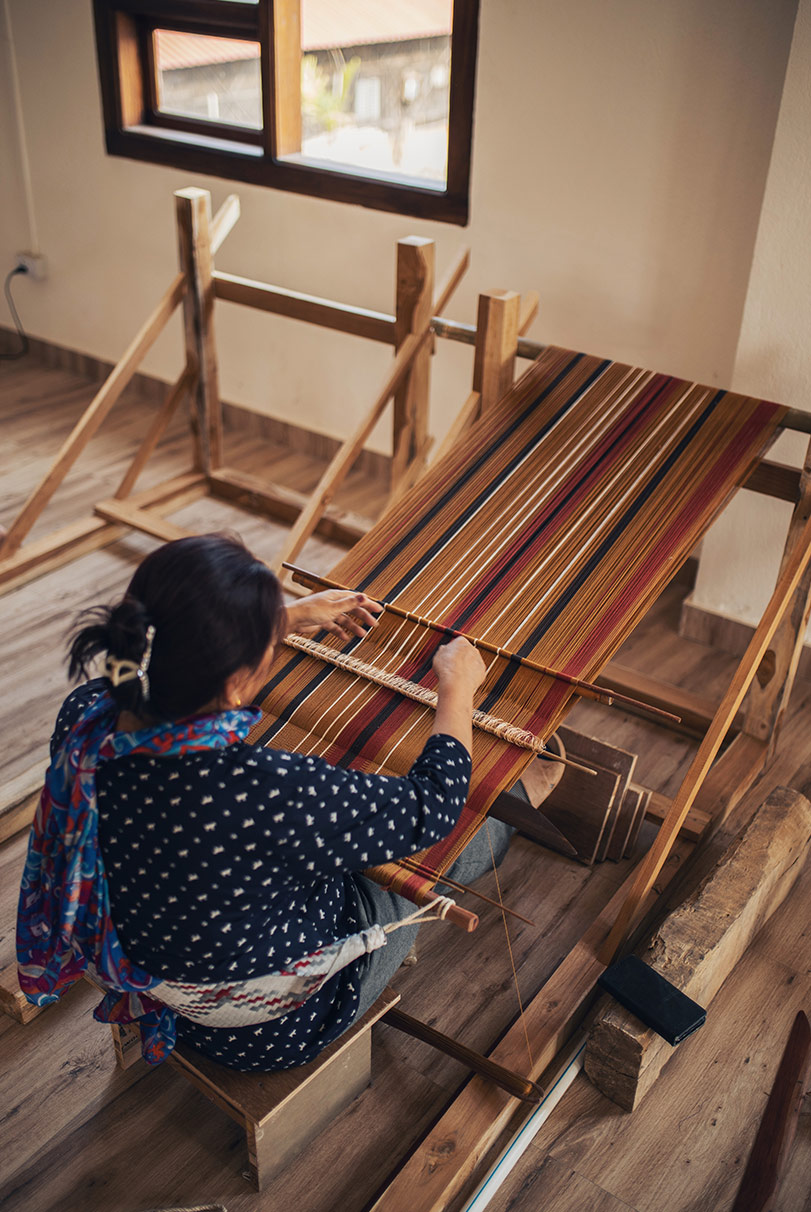
Working with Naga women weavers taught me a lot about resilience. These are women who balance work, childcare, and household responsibilities, and weaving fits into their lives because they can do it from their verandahs – staying close to family while maintaining financial independence.
In Nagaland, weaving has traditionally been a woman’s domain – “no man can touch the loom,” as the saying goes. There is empowerment in that continuity. It was also important for me to see how the tools have adapted over time: looms adjusted to support their backs better, so the craft can continue without physical strain.
It made me consider how designers can create working structures that prioritise flexibility, wellbeing, and dignity alongside craftsmanship. Much of what I learned was made possible through collaborating with Jesmina at Heirloom Naga, whose ongoing work has helped the craft grow with visibility and respect.
What possibilities open up for you when you combine digital and handmade methods?
Combining digital and handmade methods allows me to explore how innovation and tradition can not only coexist, but meaningfully strengthen one another. We often treat eco-technology, material innovation, and craft as separate paths toward sustainability, but I believe they can work together , especially in a country like India, where knowledge is deeply embedded in the hand. A recent example is Ikai, a seating family created as a collaboration with the company EcoLattice for London Design Week at Aram Gallery, where 3D-printed foam made from recycled polymers sits in dialogue with a hand-carved wooden base and handwoven textiles from women weavers in Nagaland. The recycled foam was developed as an alternative to conventional PU foams widely used in upholstery – a material long overlooked within our industry despite being a major source of non-recyclable waste.By combining advanced fabrication with inherited craft practices, Ikai demonstrates that craft and technology can come together to create objects that are functional, enduring, and attentive to the cultural and material stories they carry.
Is there a piece that challenged you technically or conceptually more than others?
The Takhat four-seater bench has definitely been my most challenging piece – technically and conceptually. I was trying to balance two opposing ideas: a solid, sculptural form that also needed to be disassembled for shipping and urban living. Working from a small apartment in London, and building a young practice, meant I had to consider shipping, storage, and the practicalities of how clients live with large furniture. That tension became an important part of the design.
The bench is 260 cm long with dramatically elongated proportions, yet the seat rests only on its legs with no support or joinery through the middle. The back also has to carry part of the structural load. Achieving this stability, while keeping the joinery simple enough for clients to assemble themselves, took extensive testing. It weighs nearly 200 kg, so selecting a wood that could handle both structural stress and weather variations was essential.
Takhat pushed me to think differently about sculpture, logistics, and how a piece can be monumental yet still adaptable to real life.
What direction are you most excited to head into next?
I’m really excited about what comes next. I’m still early in my journey, and a lot of my work is also me figuring out who I am as a designer. No one really talks about how hard it is to find your own language , or even question whether you need one – but those are the things I’m thinking about right now, and I’m looking forward to that exploration.
I’m researching new communities to collaborate with, and there are some upcoming collaborations that look into the more mythical side of India – which feels like a return to the curiosity I had while at Central Saint Martins. After launching my first collection, I’ve learned so much about market realities, function, and responsibility. With this next chapter, I’m trying to bring that understanding together with my own artistic instincts. It feels like the beginning of something bigger, and I can’t wait to see where it leads.
Where can people find you?
People can find my work on my website and social media – www.shivangivasudeva.com or on Instagram, which feels most alive for me – @shivangivasudeva_ . I also exhibit throughout the year, where the pieces can be experienced in person.
I share updates through a quarterly newsletter – just four thoughtful emails a year, reflecting the same slow, intentional pace as the craft itself. If you’d like to stay connected, you’re very welcome to subscribe.