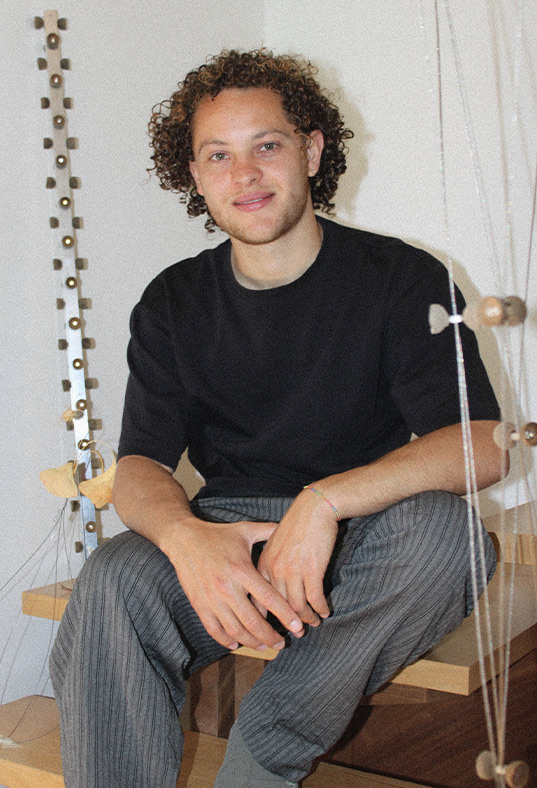
Simon Dupety
What’s your name and where are you from/based?
Hello! My name is Simon. I come from the south of France, in Nîmes, and I’ve now been living in Paris for 10 years. I’m also originally from Senegal, where I lived a few years ago.
Can you describe what you do in a few words?
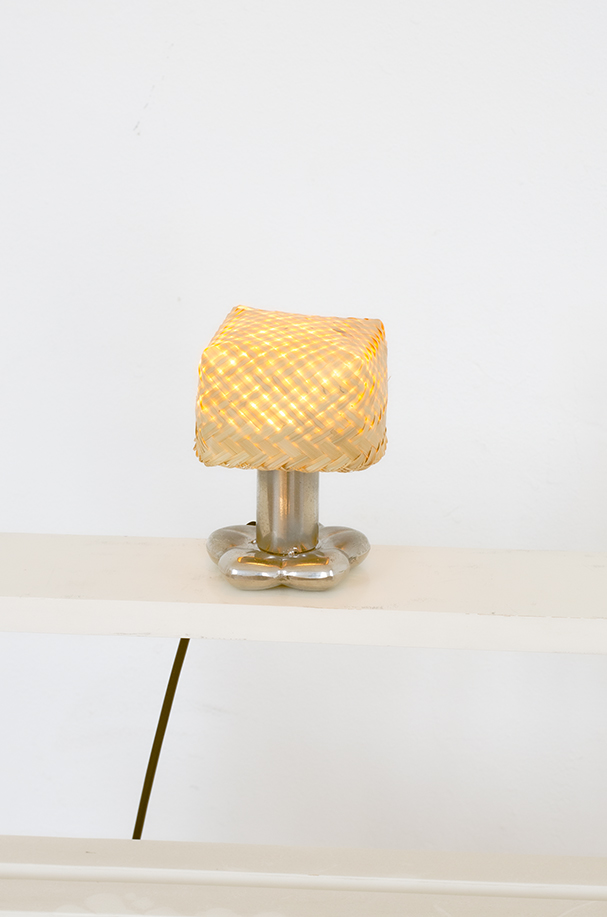
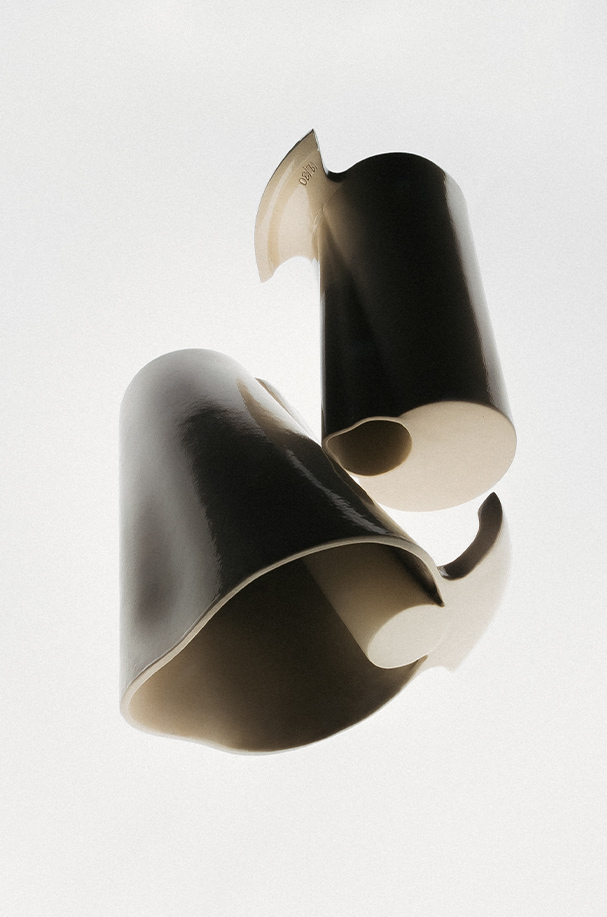
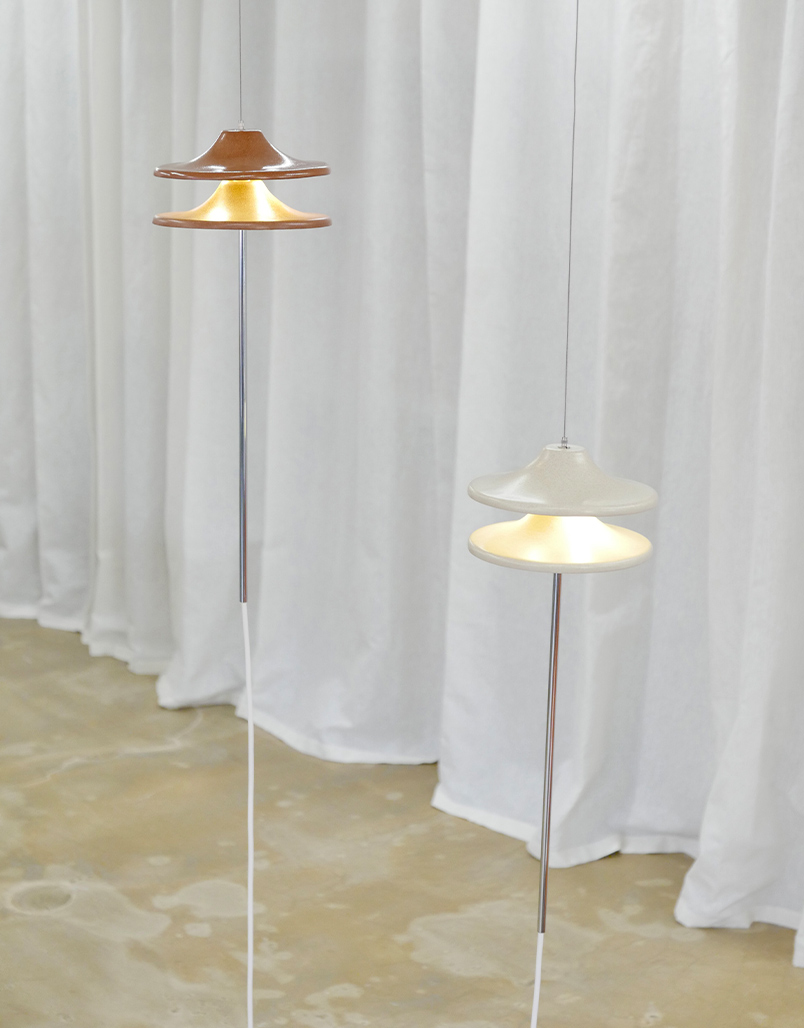
Well, I am an object designer. And my work is a kind of neo-crafting exploration about traditional and future ways of imagining and producing objects. I create mostly lighting, by hand or through artisan and industrial collaboration.
You describe your studio as a “laboratory of imaginaries.” What does this mean to you, and how does it shape your creative process?
I believe imagination has a huge political power in society, because it shapes the future by proposing a new version of the present. And if design is about functionality, I like to think an object needs to spread a new imaginary to be fully functional. We don’t need new daily life products but we definitively need new imaginaries to surround our everyday landscape.
So in this way, my process is shaped by digging, collecting and transforming resources to make hybride and living objects.
Your work encourages curiosity about how objects are made, what’s the last object you saw that sparked your curiosity?
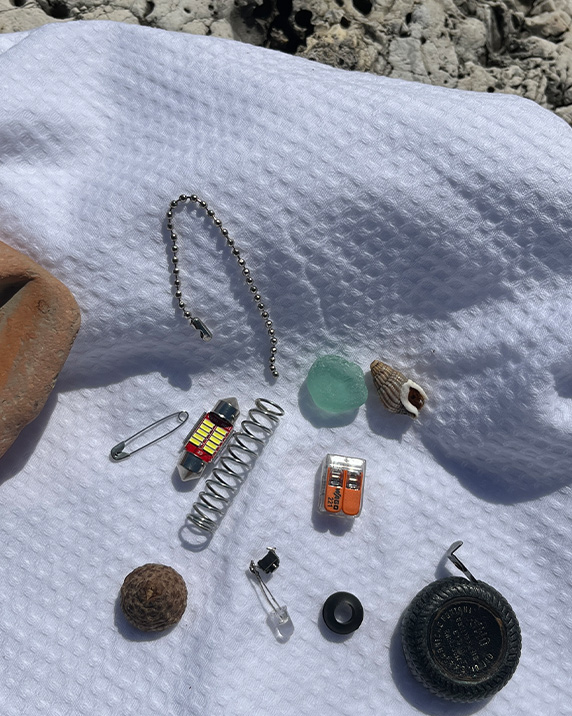
Every day new stuff sparks my curiosity, so my purse is full of tiny things I find.
My actual collection is made of a very small shell, a strange bulb for an automobile, a sink chain, an acorn cap, a nice stone shaped by the sea, some unknown plant seed, and a 3-entry domino. It’s very inspiring for me to have all those tiny things standing side by side. Sometimes it becomes an object, and sometimes it’s just a way to rebound on a new idea.
Many of your pieces blend industrial materials with natural ones, what draws you to this kind of contrast?
Well, I deeply enjoy the idea that nature produces in series functional shapes, such as acorns or shells, and we can use those shapes the same way we use industrial semi-finished products. And then a piece of nature becomes a manufactured resource for object design.
So by working with natural semi-finished products, we create objects depending on nature. Objects we can produce in series, for a large number of people, but we can’t industrialize, we can’t overproduce.
In this way, I give a political sense to objects.
Is there a detail in one of your pieces that holds a special meaning for you, even if others might not notice it?
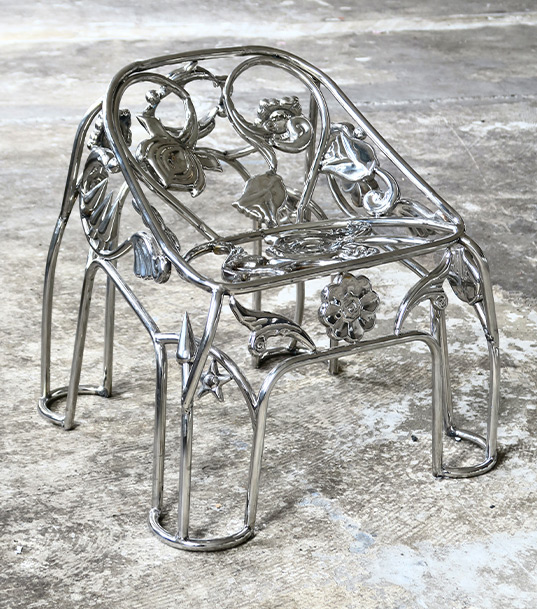
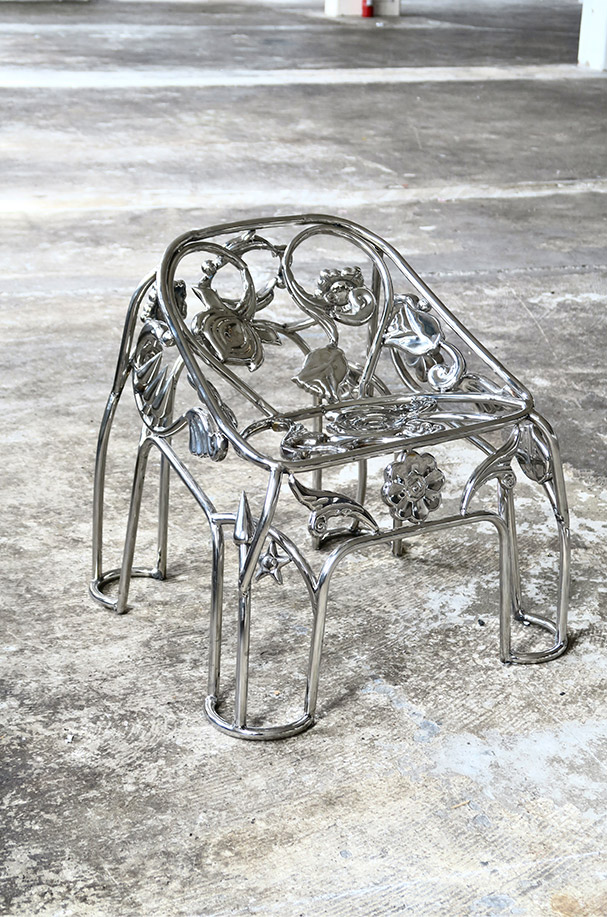
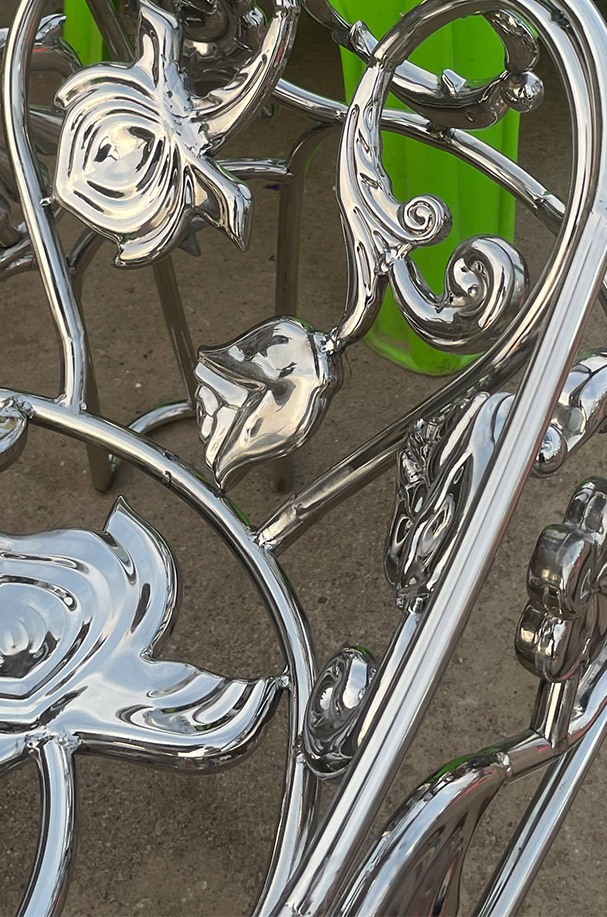
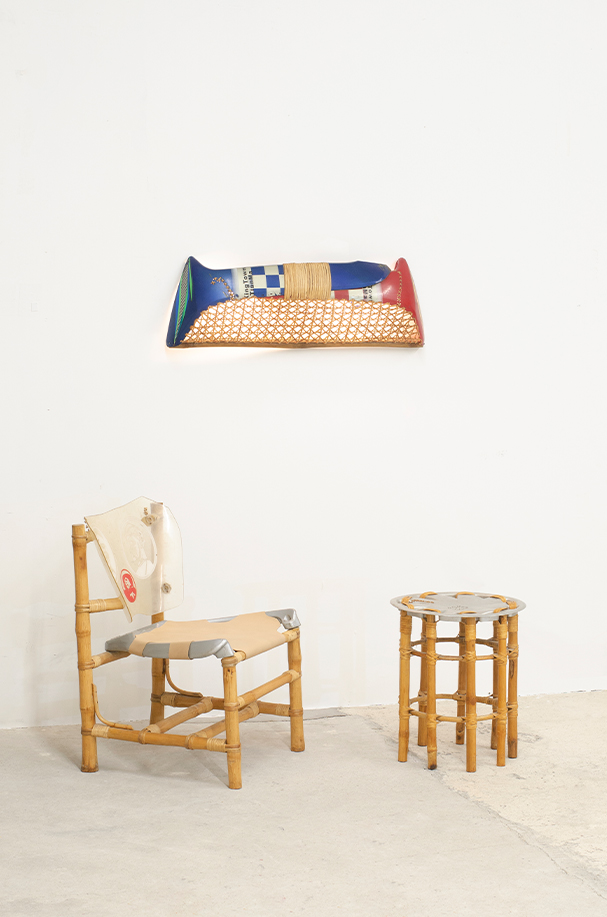
Yes, the story behind the Tiny Flower Chair we made with Maëva Dauriac (@maevadauriac) is very special for me !
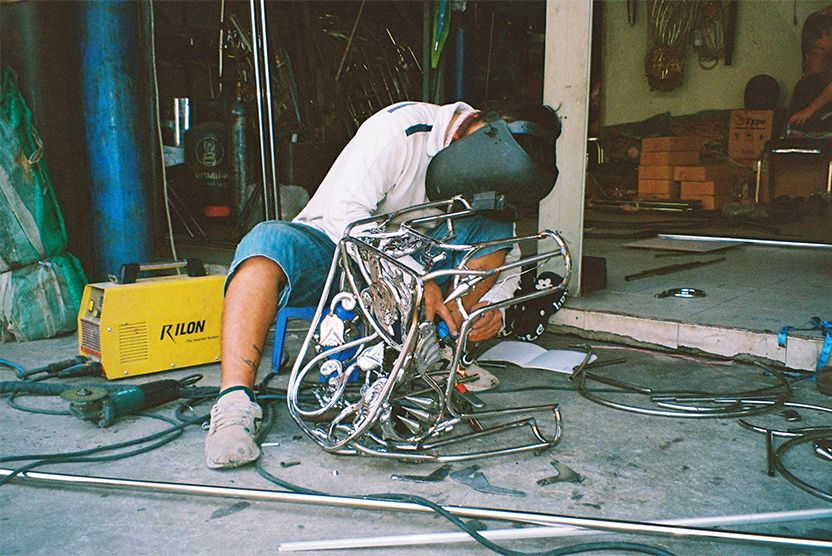
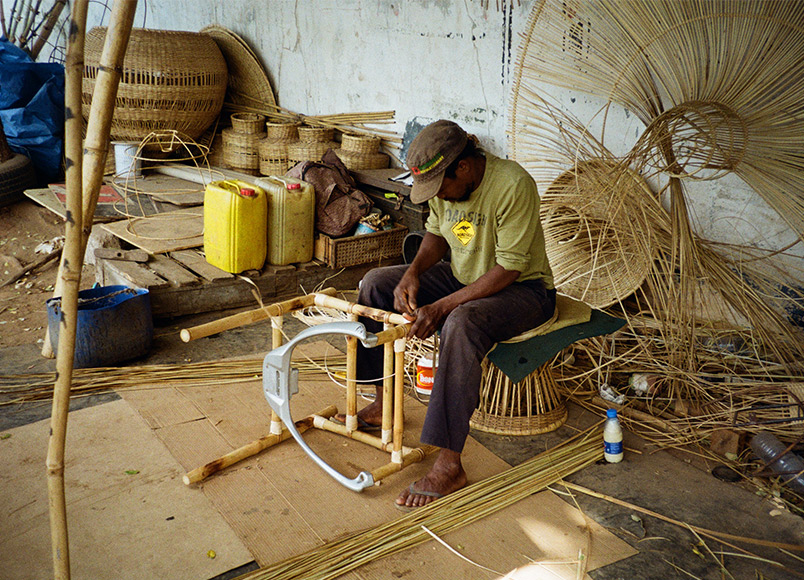
It’s an object we built with Lao artisans without speaking or drawing anything, because communication was so different. And this starting point lead us to imagine a piece of design we could have never conceive in an other way.
We hybridized a very common plastic chair, with balcony stainless steel ornaments. And the encounter of those two popular images gave the design of the object.
This way of working means a lot to me, because it opens creative process.
From encounters, diversities, discoveries, we can find new and unpredictable designs.
You talk about “breaking away from industrial logic,” what does an ‘ideal production model’ look like to you in practice?
This is hard to say, because an ideal production model has to be made of plenty different systems, in my opinion.
It can’t be just one, as we massively have in the capitalism industry.
Ivan Illich says « The monopoly of the industrial mode of production makes people the raw material that the tool works ». And this why breaking away from industrial logic makes sense.
In my work, I’m seeking for a balance between what I call system : ingenious, reproducible, technical; and wild : spontaneous, living, cultural.
So my ideal production model is everything that fits in this wild systems definition.
If you had to create an object for a non-human user, (plants, animals, or even a landscape) what would you make?
I would like very much to create a shell for a mollusk!
I was so impressed by the anime Scavengers Reign and all the imagination behind this alien nature. It’s magnificent; it’s the kind of stuff that instantly gives you the will to create something.
Actually I’m working on a very similar project! I’m looking forward to seeing that!
What’s a material or process you haven’t worked with yet but are eager to explore?
Hmmmmmmm, it’s kind of basic, but I’m, like, fascinated by chemistry glass accessories, so it could be great to imagine something through this process.
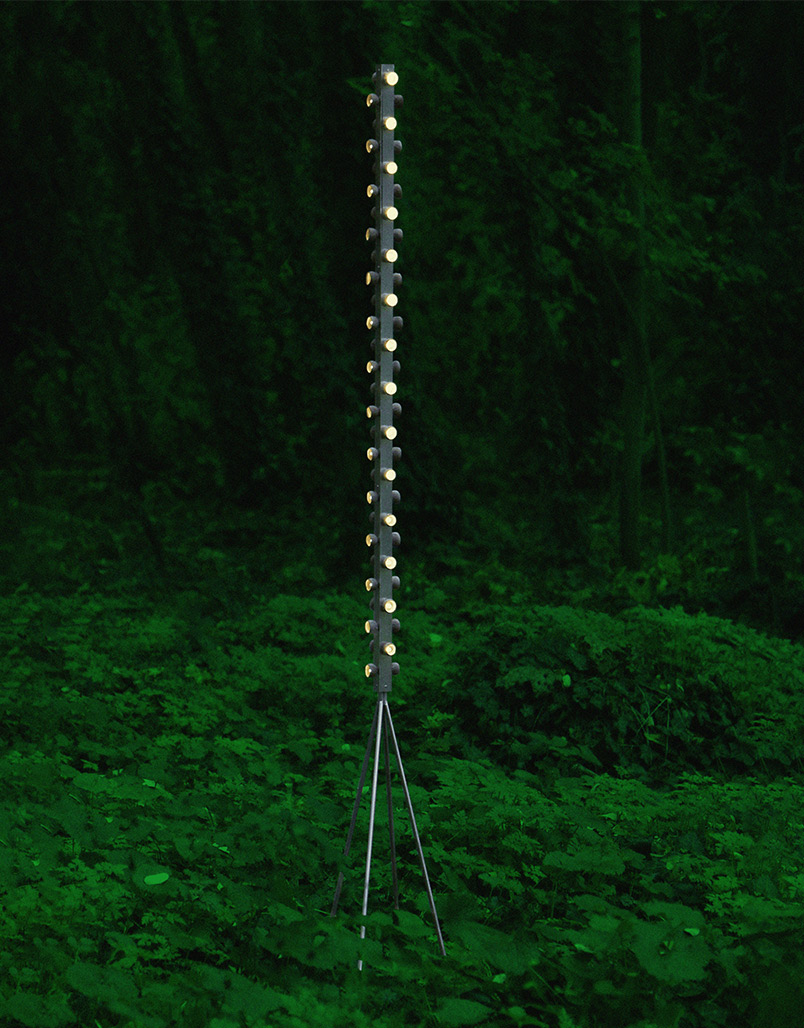
I think my ultimate dream is to design a bulb one day! To go in the very deep creative way of defining what a lighting is, or could be.
Maybe soon during my collaboration with the cirva (@cirva) !
Where can people find you?
Always in the 18th district of Paris!
And soon, at the Paris Design Week in September (@parisdesignweek), the 2026 Matter & Shape edition (@matterandshape) and of course the Villa Noailles (@villanoailles) exhibition next summer !
And also on IG @simon_dupety and on the internet at www.simondupety.com.