Six Dots
What’s your name and where are you from/based?
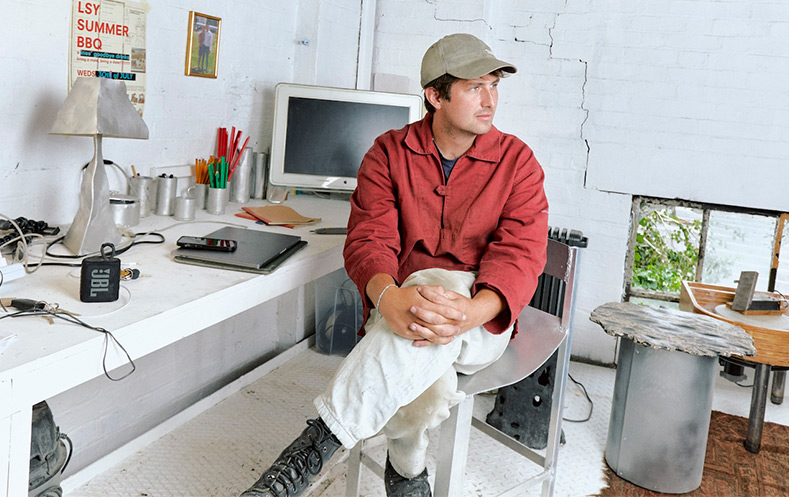
My name is Joe Ellwood, and I’m based in London, originally from just outside the city.
Can you describe your practice in a few words?
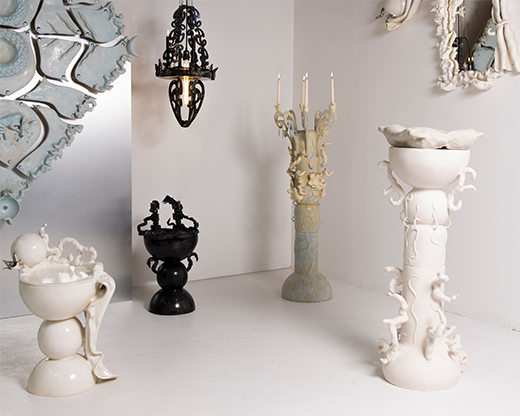
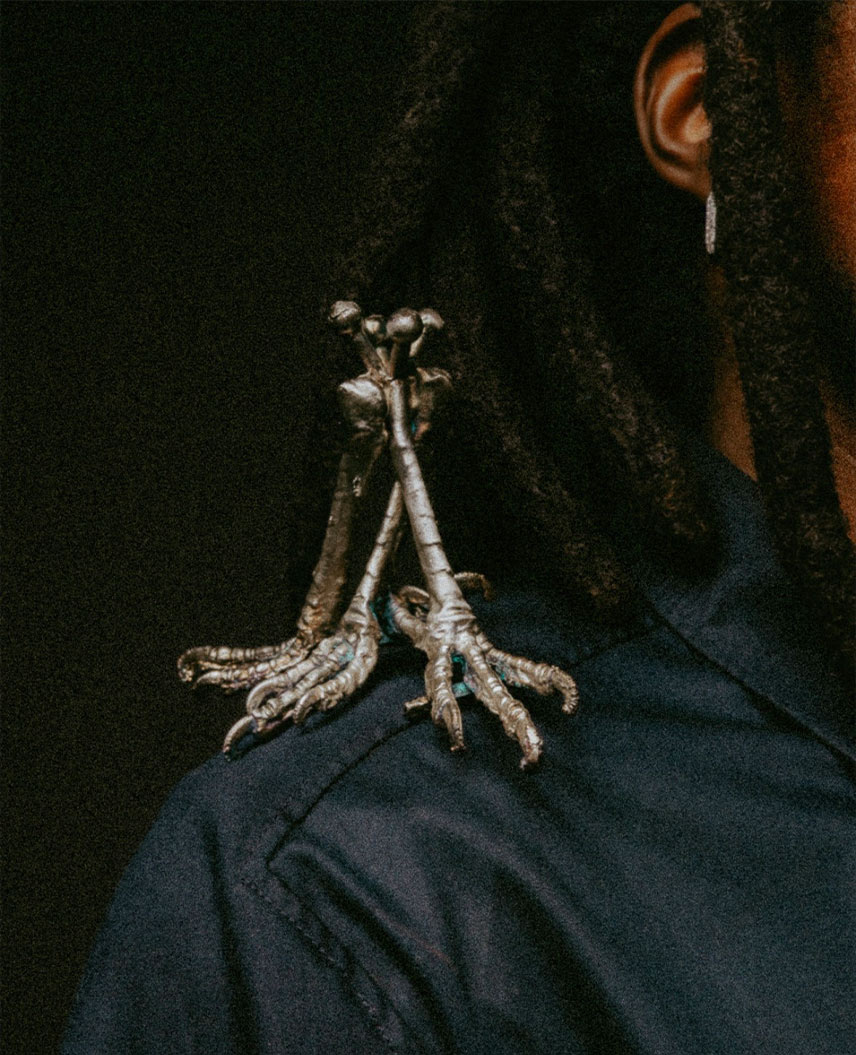
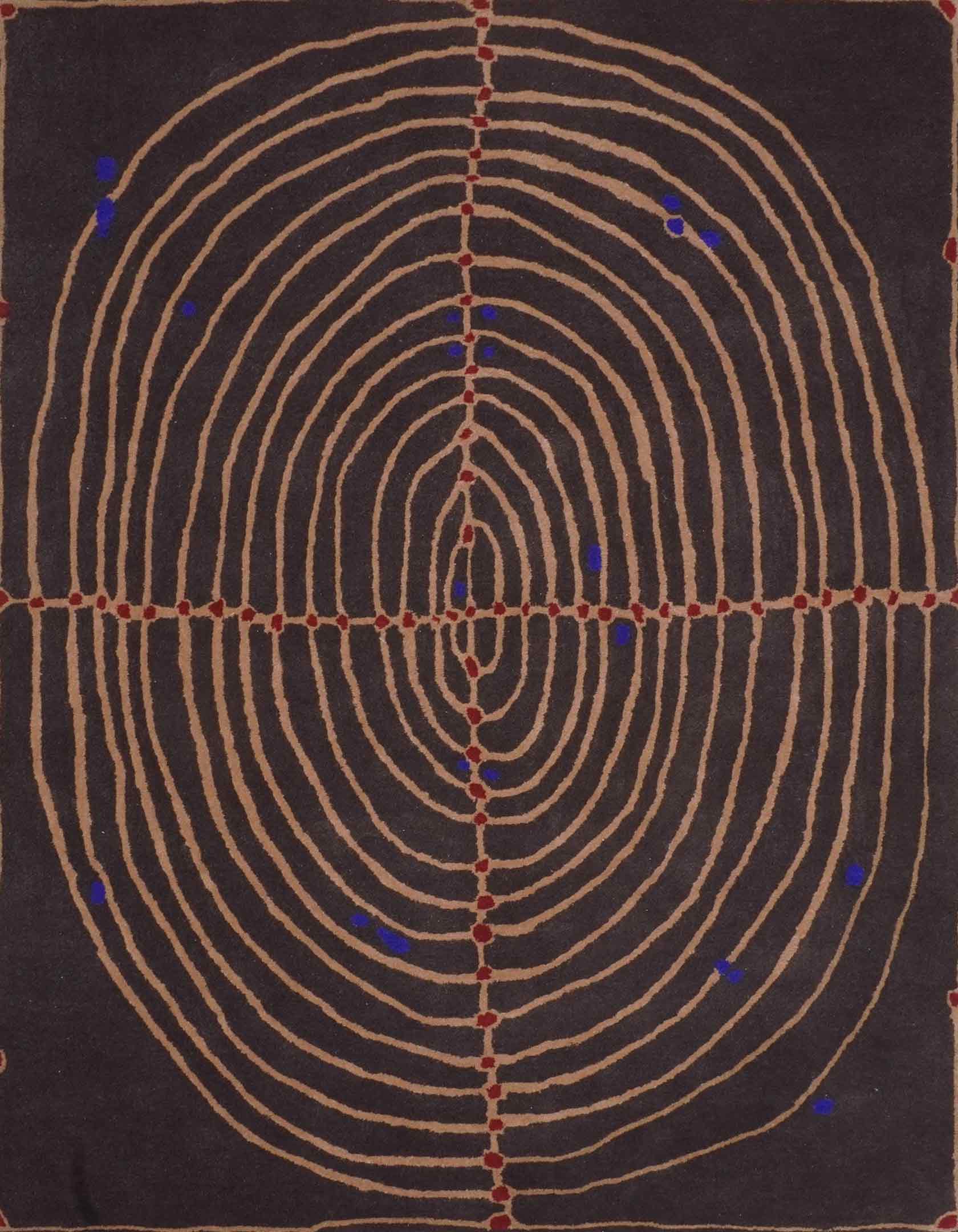
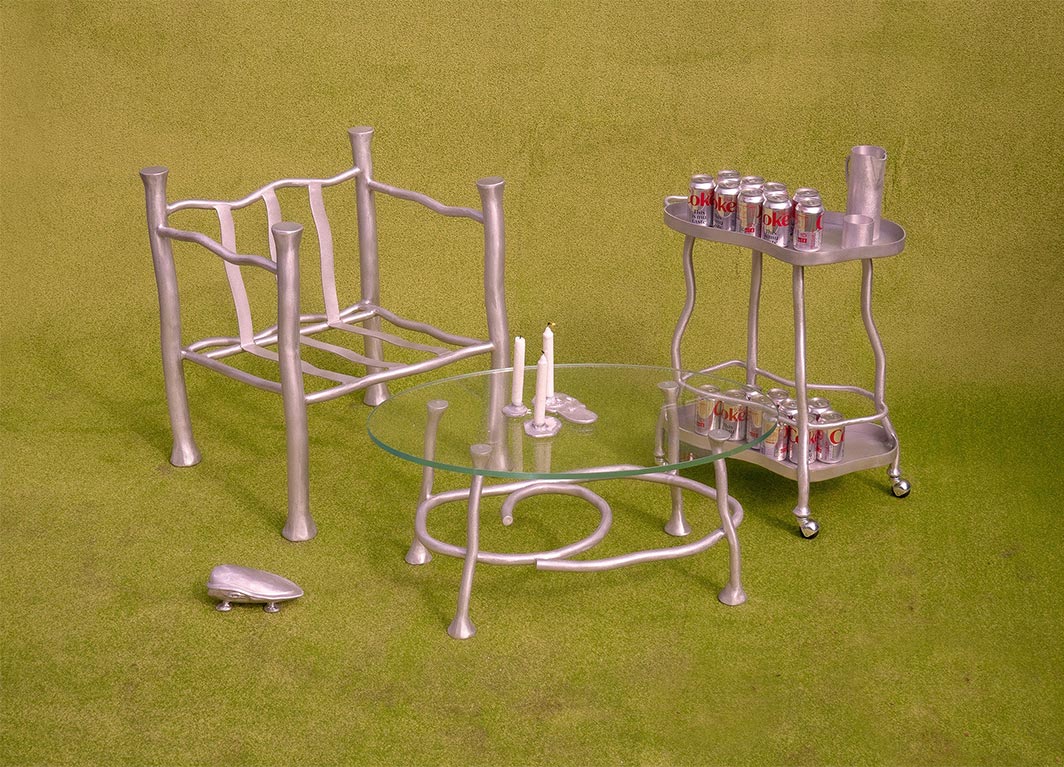
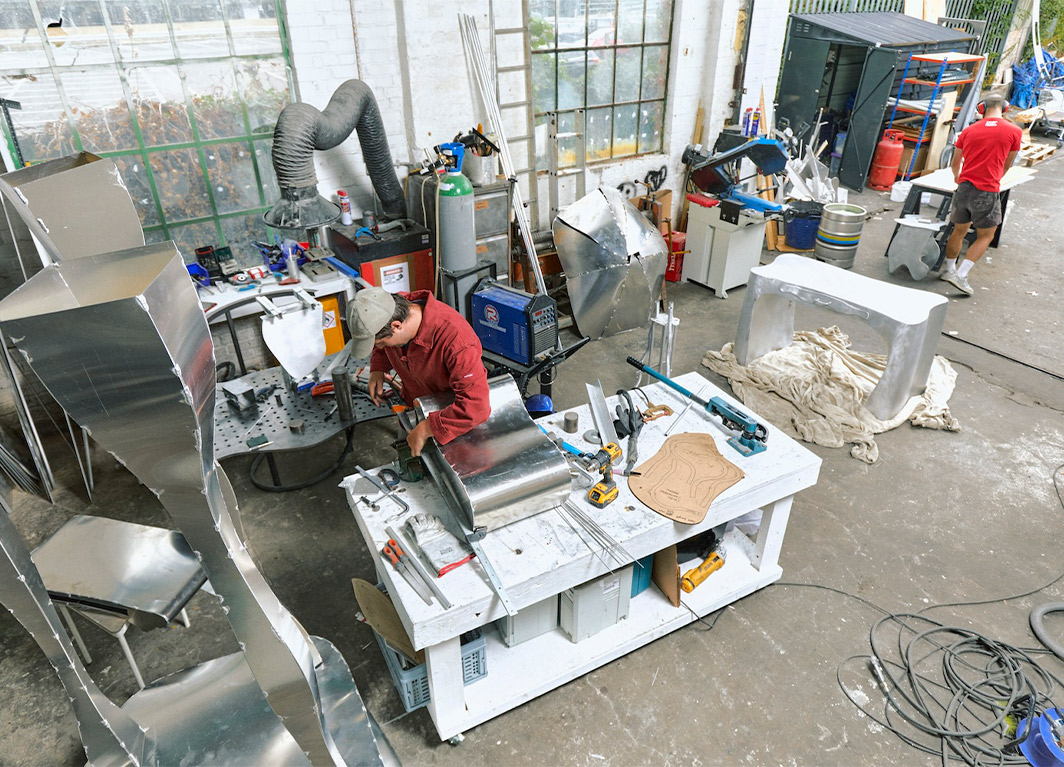
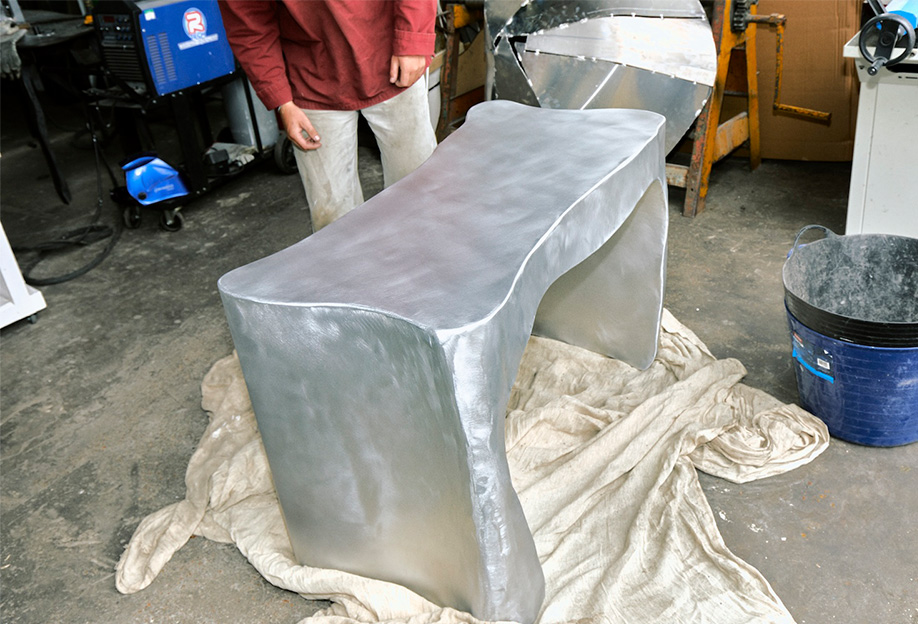
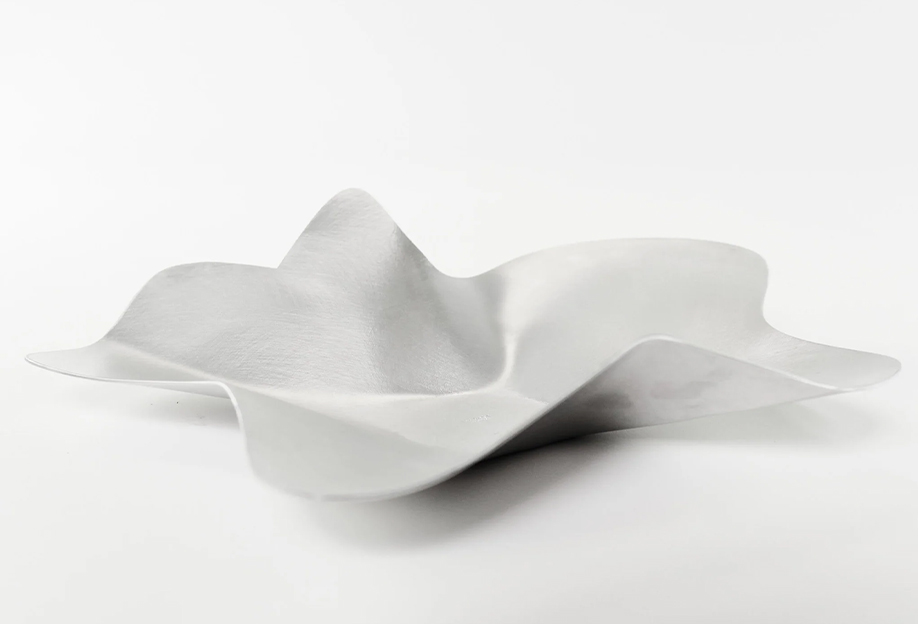
I’m still trying to work that out really, but I make furniture and objects primarily in aluminium. I run Six Dots Design, a studio based in East London. We’ve had people say our work looks like Fred Flintstone, Tim Burton, or Dalí, but I really just try to make what feels right rather than subscribe to a rigid idea of what my practice is or can be.
How did Six Dots come to life?
I’ve been making, drawing, and designing my entire life. I got my first saw when I was four. Art, making, and designing have always been a complete safe space for me; it’s what I do when I’m happy, when I’m sad, when I’m lost, and when I have purpose. It really is such a constant love in my life.
I’ve also always wanted to run my own business and sell what I make. When I was 14, during the London Olympic Games, I sold knock-off Olympic teddy bears near my hometown – only to be briskly stopped by an off-duty trading standards officer – so I suppose I always had some entrepreneurial spirit.
Six Dots felt like the natural extension of a complete love for art and making, combined with an excitement to sell the pieces I was creating and a determination to make it my livelihood. I set up Six Dots as soon as I finished my undergraduate degree, but it took a few years to take the shape it has now.
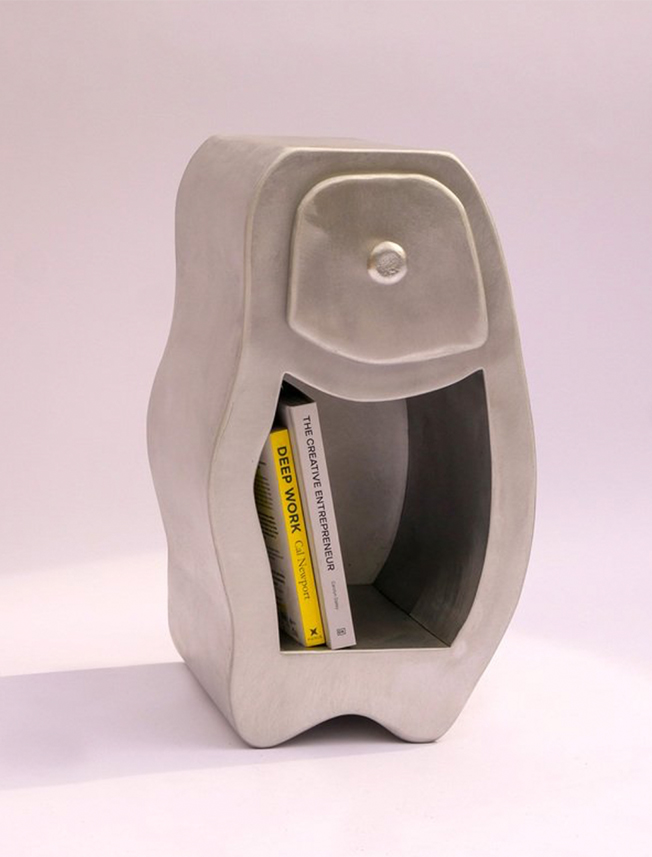
You founded Six Dots during lockdown. Did this context influence your desire to design for the home environment?
In all honesty, I don’t think it did. I’d been making home objects, desks, and other bits and pieces before lockdown, and I was labouring on building sites for most of the pandemic, so I don’t think I felt the same re-attachment to home that a lot of people did. I worked on-site for a cabinet maker and architect for a while, and he taught me a lot about classic furniture design — that was a big inspiration.
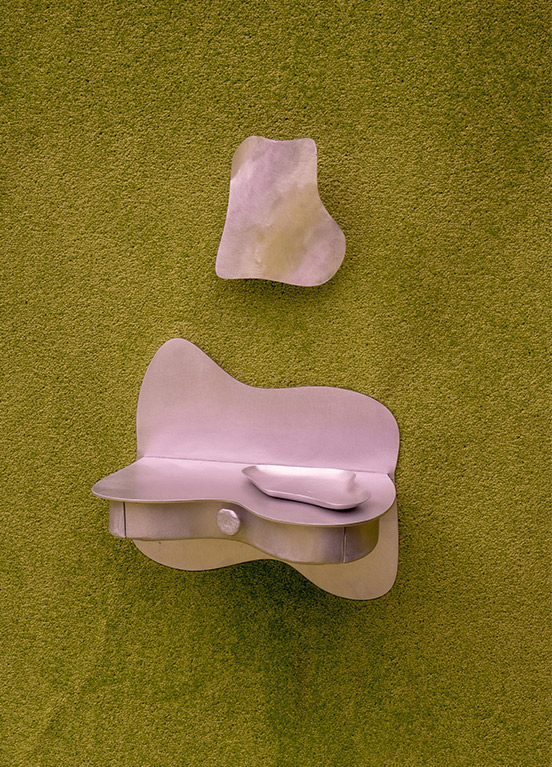
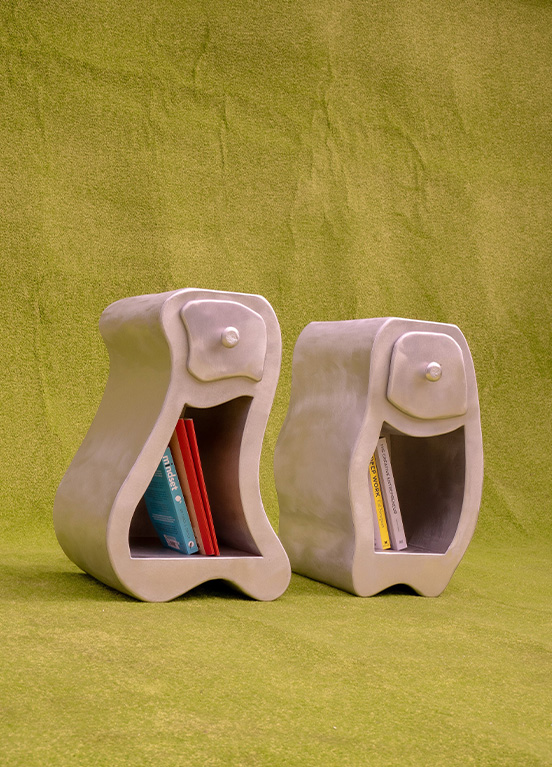
Coming from architectural studies, what ideas or concepts have found their way into your objects?
I think sometimes I find it easier to rebel against things than get behind them. I use a lot of the technical skills I learnt studying architecture every day to prep drawings or CAD files, but in terms of the design education I had, I feel differently.
I was studying at a time when we spent three years learning about Le Corbusier and that was about it – it was very rigid, very modernist, and very boring. My final year of undergraduate study was in 2020, so not only was the pandemic happening, but so was the George Floyd movement, which inspired a group of my classmates to set up a program aimed at decolonising architectural education. That was really inspiring because it opened my eyes to the fact that what we’d been taught was not the be-all and end-all; there were other styles and types of practice out there that were valid. So I think architecture gave me some good foundations, but my work really progressed when I found the energy to rebel against it.
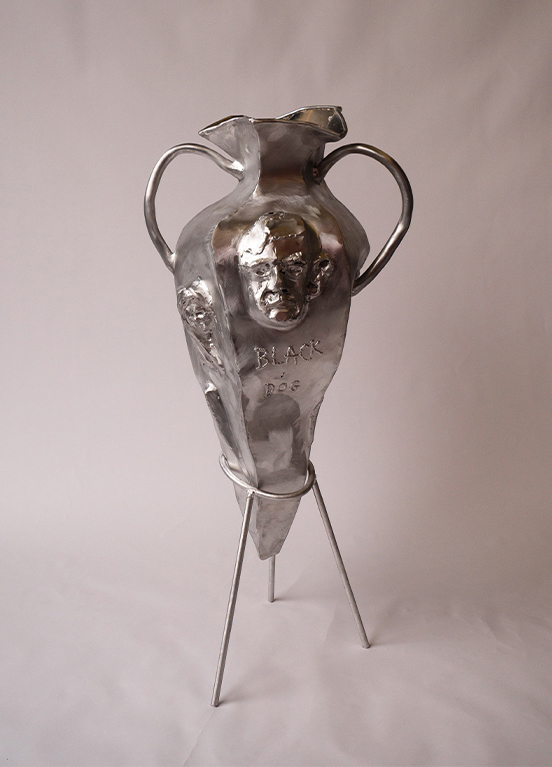
You’ve mentioned being inspired by Villa André Bloc and the joy of creating for the soul rather than for function. How did this change the way you work?
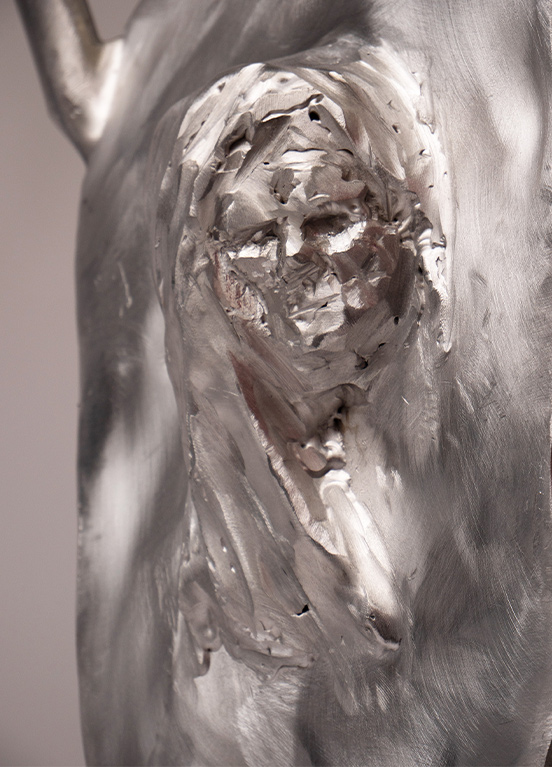
Hugely! The trip to Paris you’re referencing was really transformative for me. I saw a lot of work in person for the first time that I’d only ever seen images of, and it really stuck with me. Villa André Bloc was mesmerising because it was just some guy making random structures in his garden for literally no reason other than that it felt right – it nourished his soul and he wanted to. That’s really how I’ve felt my entire life about my work. I’m not trying to invent anything new, make an overtly political statement, or shock or scare; I’m just trying to make work that nourishes my soul and hopefully nourishes the souls of others too. I think humans are a lot less logical than we like to think, and that’s something to be embraced. I just spent a week making an amphora – no one needs an amphora – it was a project purely for myself.
You’ve said you want people to feel “a little more like themselves” when they live with your pieces. What does that mean to you?
I think in life it’s so easy to become – or try to become – someone else’s vision of success. There’s that guy on the internet who loves trains, and I remember watching a video of him explaining that he stopped following trains in his late teens because he wanted to fit in. What’s sad is that as adults, I think we often still get stuck in patterns that stop us from expressing ourselves truly or freely.
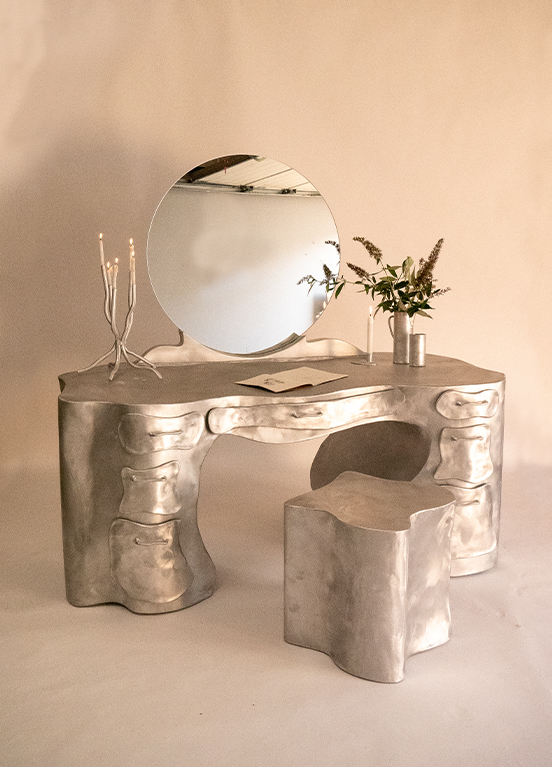
My work is slightly odd – it’s expressive, and to most people, I’m sure it’s not their cup of tea. In owning a piece of our work, I hope the person really loves it and sees it as a way of showing who they truly are. I like the idea that liking and owning a piece that goes against safe interior design is a way of rebelling against the forces that keep you down.
Are there specific details in your own home that feel like an extension of your identity?
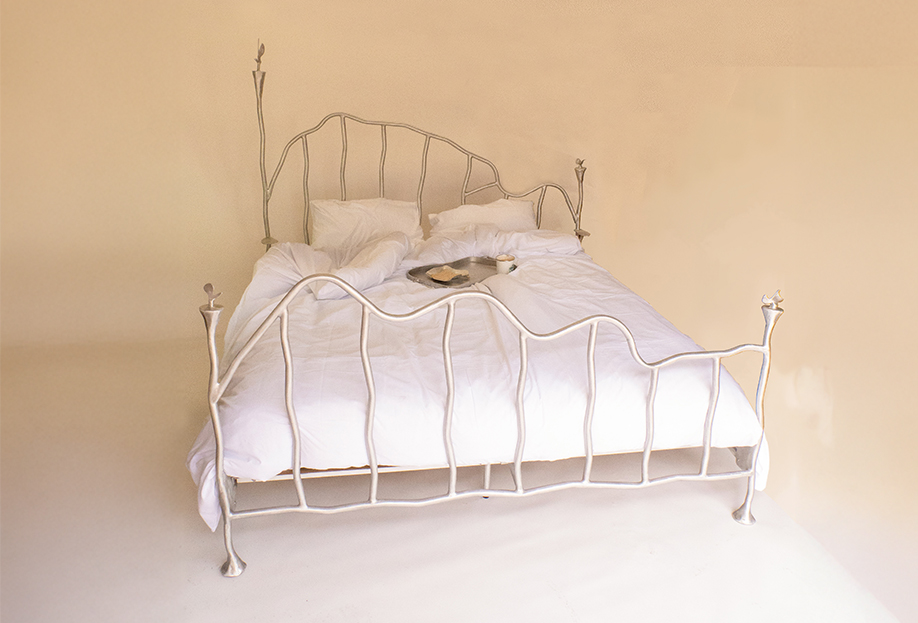
So many! I have a Gaetano Pesce vase that I adore, a spiritual cow that I got in India, and a 1989 Macintosh Classic that doesn’t work but has the best-sounding keyboard ever. Of course, we also have some aluminium in there and a growing collection of art books. We also have a few bits of art that are really special to us.
Your work often embraces irregular edges and raw surfaces. How do you see material honesty and texture as part of your design identity?
Ok! Big question for me! When I was starting out, I loved the early work of Ron Arad, but as his work developed and his team’s skills grew, the pieces became more and more polished. They felt less and less like expressive works of art and more like decoration, in my opinion.
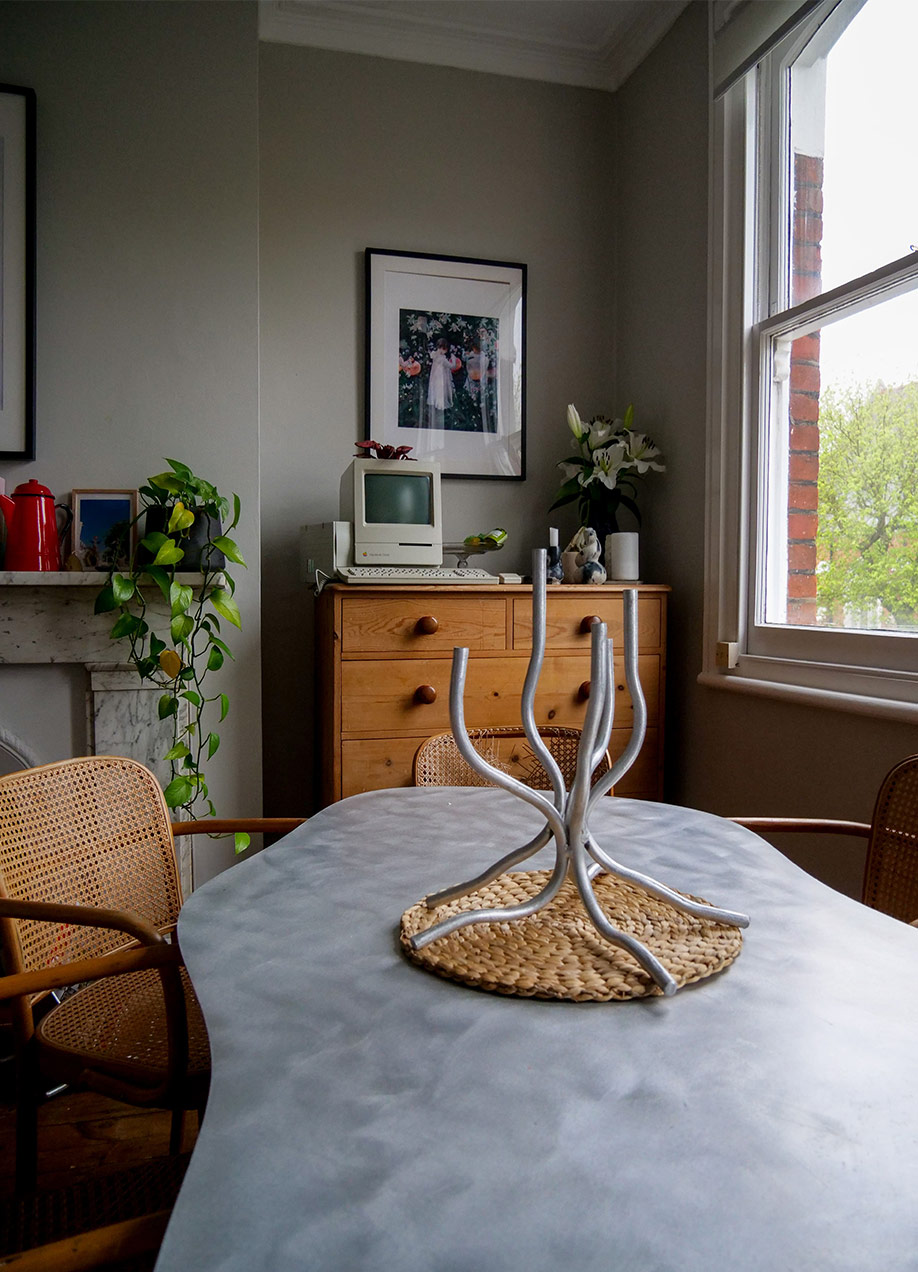
Imperfection is what makes us human. It’s not interesting to me in the slightest to make something perfectly; it’s much more interesting to make something with the scars of its construction, where feeling trumps finish. It’s like listening to Charli XCX’s Brat or the new Taylor Swift album (I love both of them, by the way). Charli’s is scrappy, raw, and honest; Taylor’s is decoration to the ears – it’s polished and catchy. Both have their place, but I’d rather make work like Charli.
Looking ahead, what are you curious to explore next?
Well! I really feel like I’m just starting on my art education journey. I spent all summer looking at Brâncuși, Calder, and Caro; now I’m looking at Dalí and Caravaggio – so let’s see what that inspires!
Where can people find you?
Our Instagram is
@six_dots_design, our website is www.sixdotsdesign.co.uk, and our workshop is in Bow, East London. Everyone is very welcome to visit.