Taelon 7
What’s your name and where are you from/based?
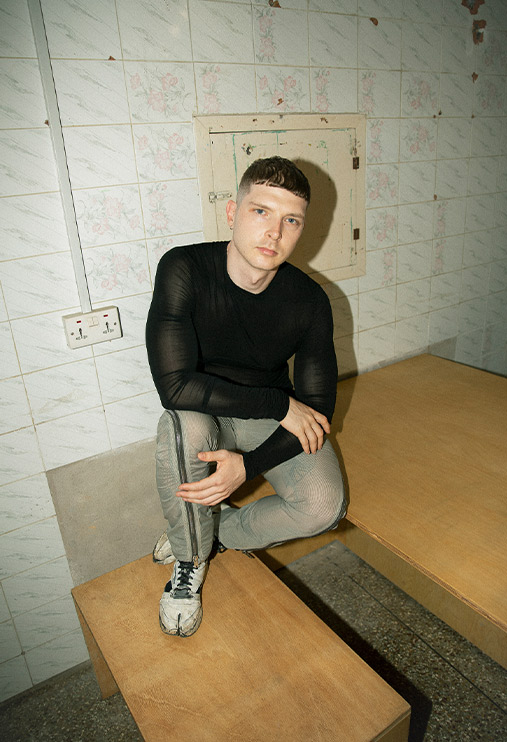
I’m Juergen Benson-Strohmayer and I lead the architecture studio TAELON7. I’ve been based in Ghana for nearly a decade, with previous stays in Côte d’Ivoire, Sudan, and Ethiopia, where I also taught. While I have roots in Austria, much of my early life was spent in Eastern Europe and the Balkans providing me with a translocal, non-Western perspective that continues to shape my architectural work.
Can you describe what you do in a few words?
I’m less interested in fixed forms than in dynamic structures that challenge normative ways of building and being. Our work moves between architecture and landscape, exhibitions and research. I recently renamed my practice TAELON7 as we sharpen our conceptual framework and expand our presence internationally. The name is based on found signage in a barbershop in Accra.
You describe architecture as a tool for liberation. What does liberation mean in your practice, and who is it for?
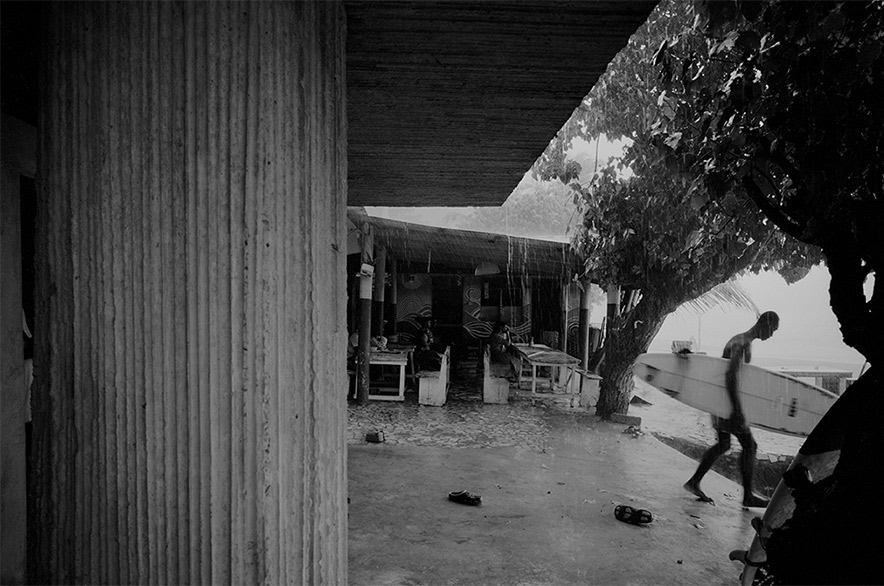
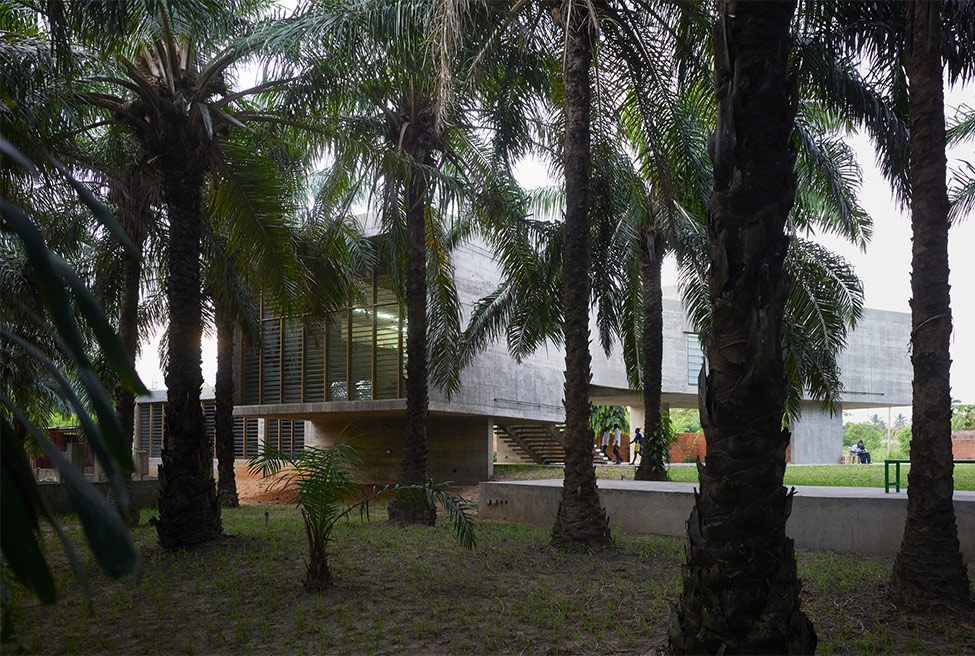
Our work often emerges from a place while simultaneously pushing against it. That tension creates space for those who rarely see themselves reflected in dominant spatial narratives: this might include younger people, perhaps people that are economically disadvantaged, or socially marginalized groups such as women or queer folks. I use architecture to challenge normative assumptions and hierarchical structures but always in dialogue with context. Framing the practice this way brings us into direct conversation with urgent global questions: identity, equity, and ecology. In Nubuke Extended (2019), our first major built work, we redefined what a cultural institution could be. The building reoriented an existing campus, activated its outdoor spaces, and gave new identity to Accra’s art scene. I still get feedback from people that it opened their perceptions to what is possible.
You speak about “making and unmaking” in design. Can you share a moment where unmaking became more powerful than making?
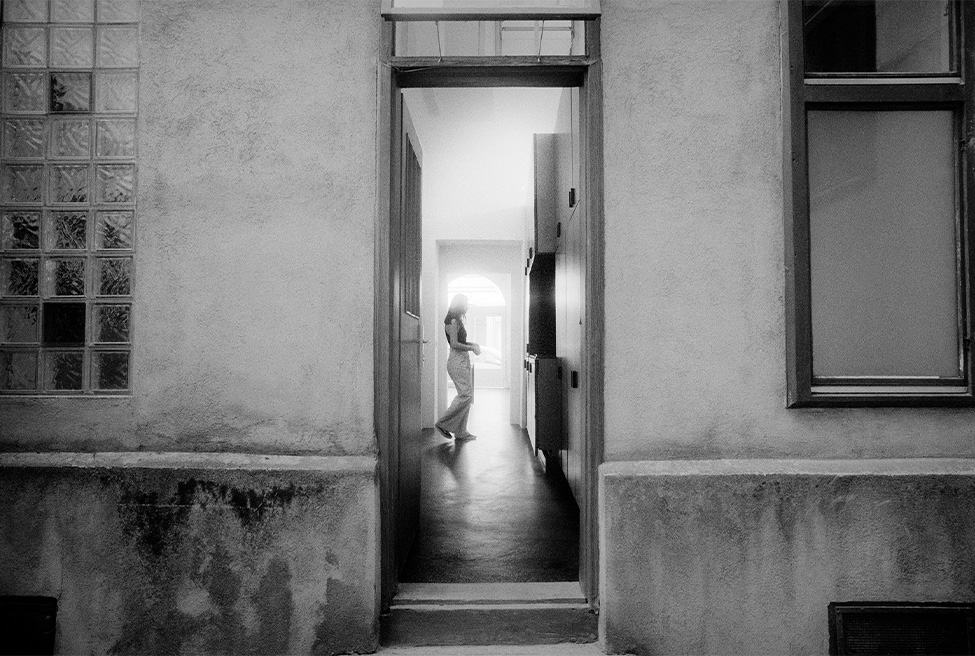
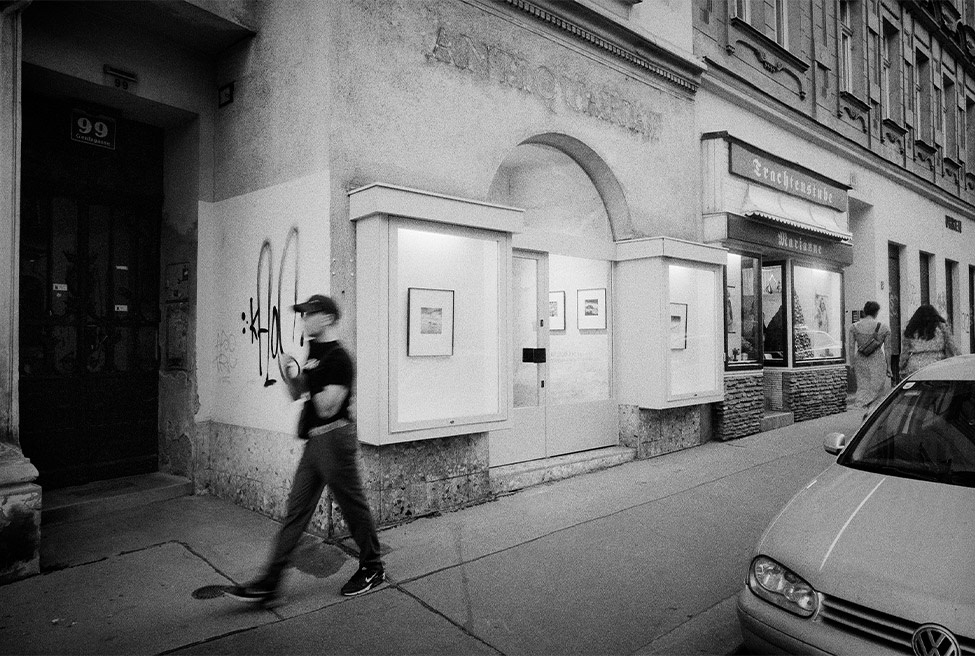
We often encounter places where we see a need to unseal surfaces to create more porous landscapes or repurpose materials. Our work in Ghana has been formative in this attitude, with its maker-culture that preceded the current global trends. We were able to implement this in Vienna, Austria, in the adaptation of a fine art gallery built in a former antiquity store. We reused the chipboards we found in the existing floor buildup to create a family of objects in the turn-of-the-century spaces: from benches, tables, to the library and lighting fixtures. The act of unmaking gave the space a new coherence, which feels like a very contemporary, global attitude towards design.
TAELON7 resists the idea of a signature style. What is a common thread in your work if not form?
Our projects grow out of long-term engagements with place and community. What links them is a desire to reframe how space is understood: to propose more equitable, adaptable, and sustainable futures.
The forms we develop often emerge from challenged typologies, material experimentation, or phased construction. We’re drawn to the unfamiliar, to spaces where architecture intersects with performance and the civic: spaces that hold bodies, tension, memory, and possibility. Much of our thinking was shaped in West Africa but resonates far beyond as the global discipline reckons with climate, identity, and access.
Many of your projects begin “from the ground” with local knowledge, materials, and people. What’s one lesson you’ve learned from listening that changed a design?
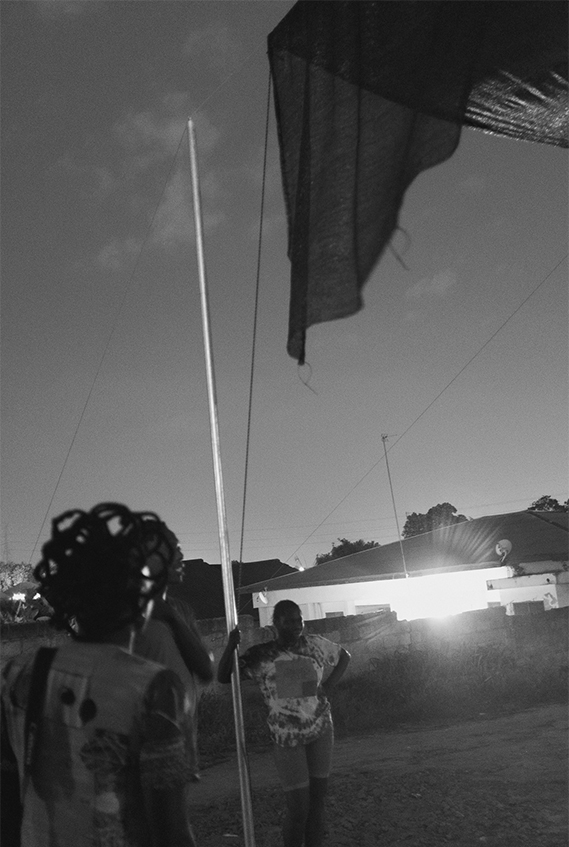
I’ve been working with artist and activist Va-Bene Elikem Fiatsi, whose studio houses both a residency program and a safe space for Ghana’s LGBT+ community in Kumasi. The program and the people living there are under threat of eviction. Rather than beginning with a building, I spent time living with the community. We developed a temporary intervention in April 2025 that acted as both functional activation and civic claim. The building project will incorporate a textile language already used across Kumasi’s urban-rural landscapes, repurposed as porous façade and performative enclosures. These elements will be collectively made and change over time. The architecture will remain open, staged, and incomplete by design.
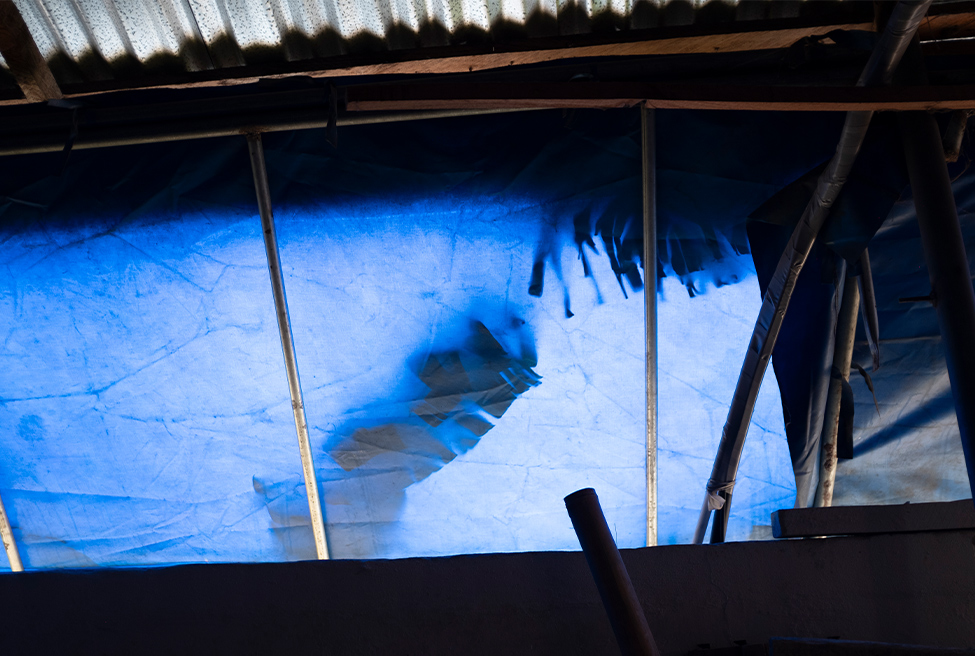
In projects like At the Interstice, architecture seems to take on a symbolic and performative role. What makes a space “speak” to you?
A space speaks when it reveals latent possibility; when it lets something unexpected emerge.
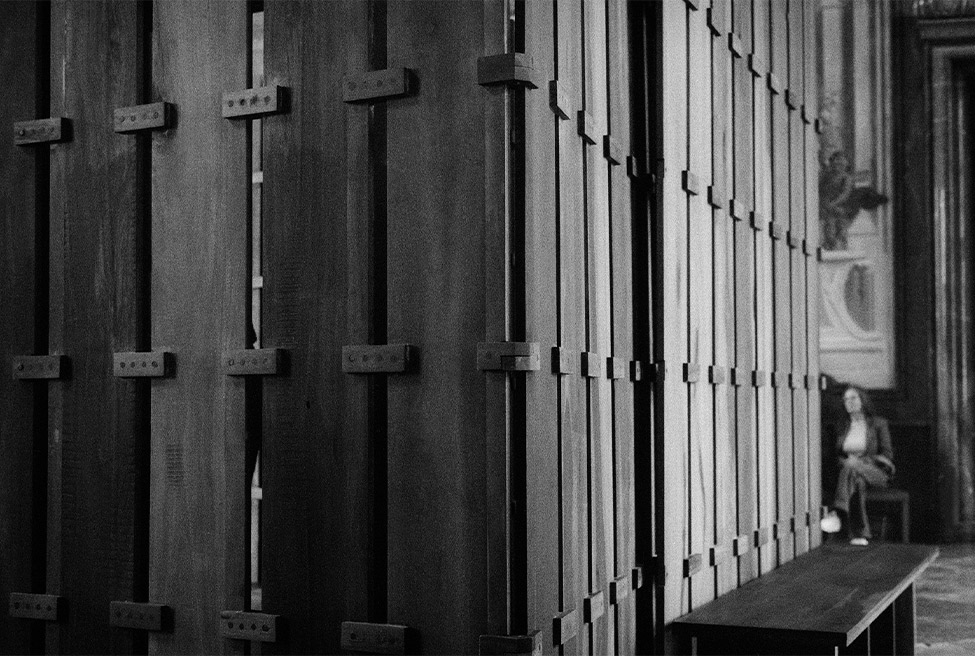
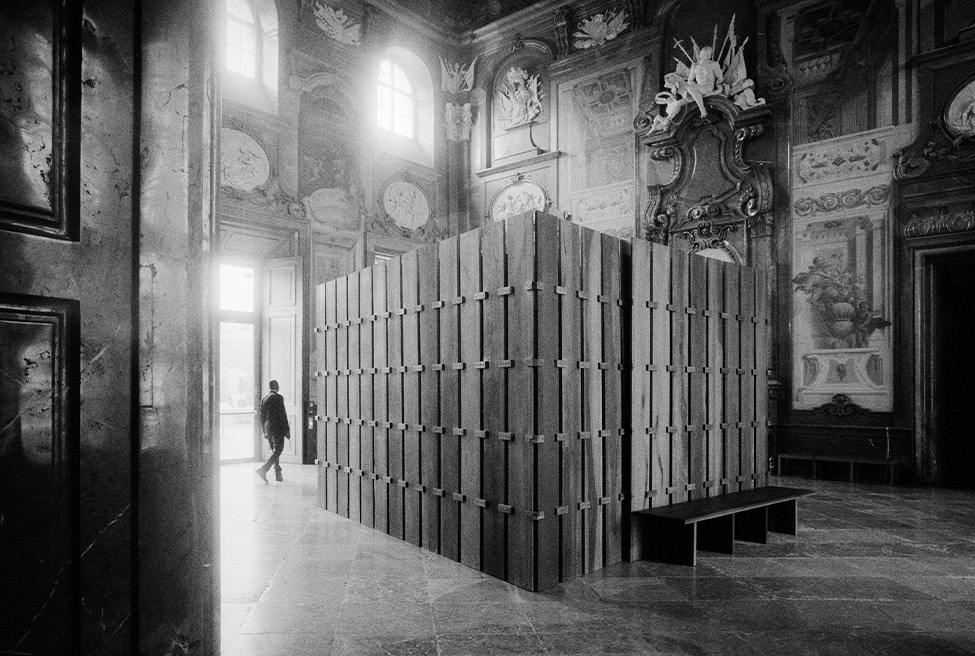
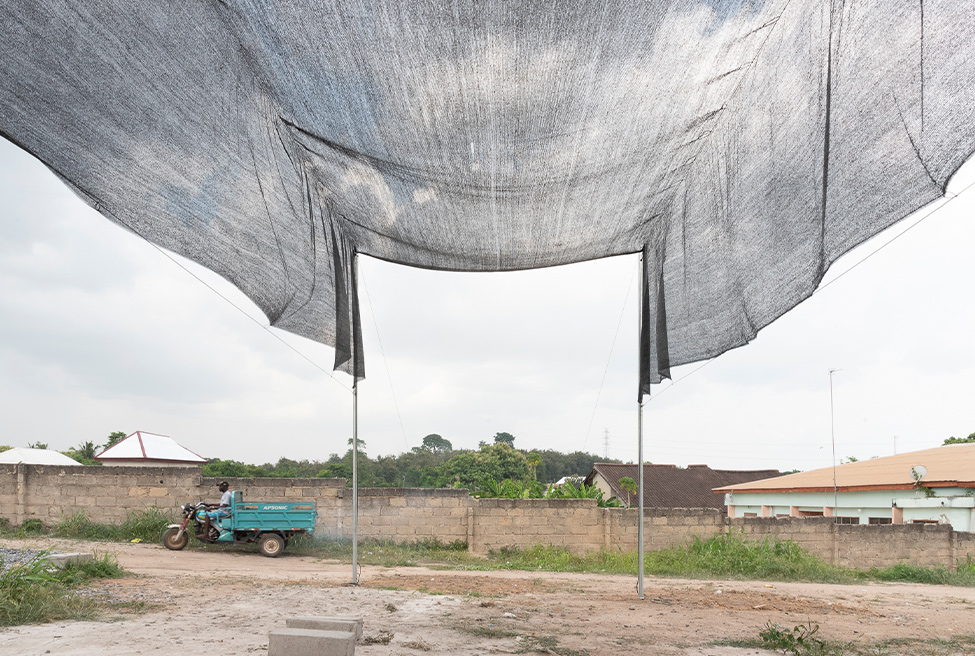
In At the Interstice, a temporary installation we built in Kumasi in 2025, we linked an existing residency with an adjacent plot acquired for expansion. The work became both a connective structure and a civic claim, rehearsing futures for the site while also giving immediate presence to a community under threat. Even though we don’t begin with fixed form, we use gesture and activation to hold and reframe space in ways that shift perception and open imagination.
What did teaching in Ethiopia reveal to you about the architectural education system and how does it influence your own approach to pedagogy or design?
At EiABC in Addis Ababa, I taught in the master’s design program, working with both recent graduates and established professionals. There was an urgency to develop new civic typologies using digital and conceptual tools rooted in Ethiopian realities. Projects included libraries, campuses, and urban parks; not as borrowed typologies but as situated, speculative architectures. It reaffirmed my belief that teaching, like design, must be grounded and context-sensitive, but also open to translocal exchange.
Ghana appears to be a central anchor in your work. How has building in Ghana shifted your understanding of architecture as a tool?
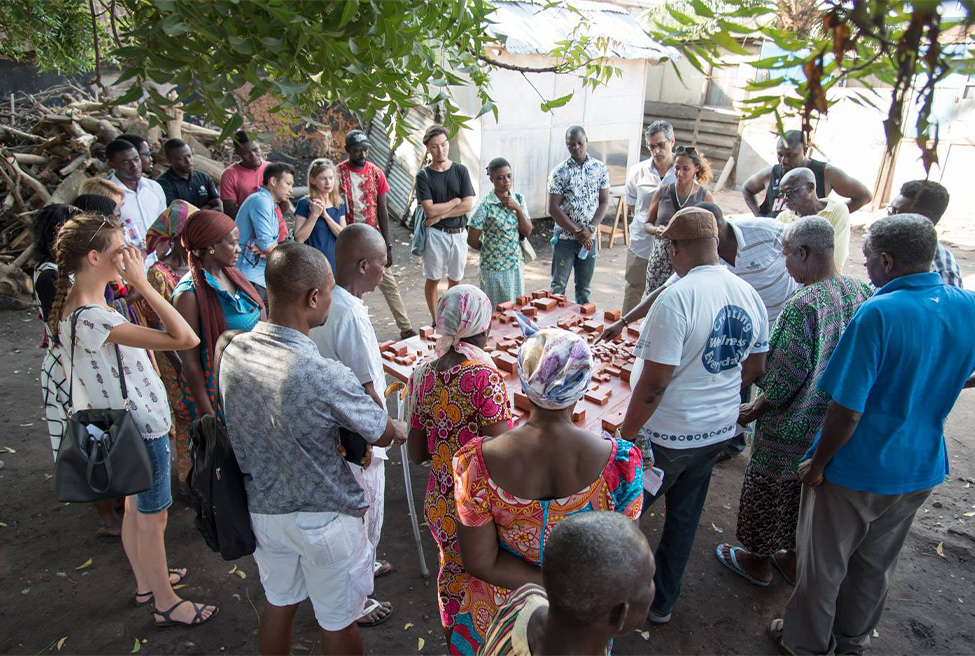
Architecture in Ghana operates within dense networks of care, improvisation, and adaptation. It’s not an autonomous object: it’s entangled in economic, social, and material flows.
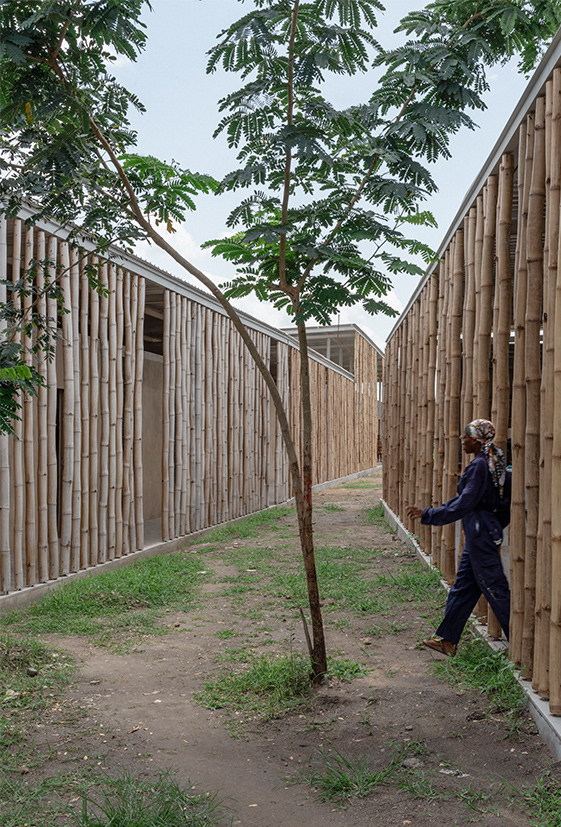
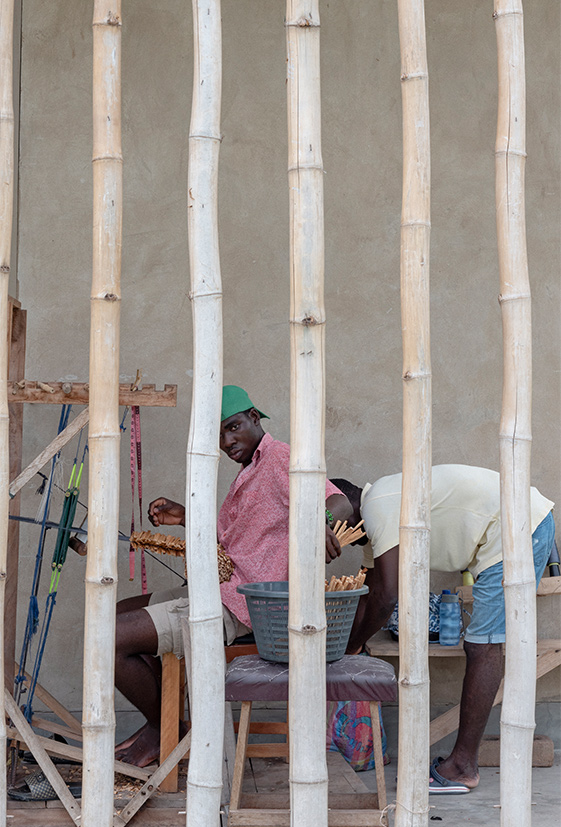
Since 2018 I’ve been working on the Fair Trade Zone, an eco-manufacturing hub for over 200 women artisans. The first phase opened in 2022 and we are still involved in adapting, repairing, and evolving the space together. This expanded sense of the architect’s role — long before and after construction — is something I carry into every project.
Do you see parallels or major differences between working in rural sites in West Africa and overlooked spaces in Europe?
I think there’s a need to look at what already exists in more open, less judgmental ways. We can find potential and dynamism everywhere just as we can see how neglect, violence, and illiberal policies are threatening lives across contexts.
My work in West Africa has allowed me to create spaces that function and appear differently in ways that feel both grounded and generative. I hope to bring the same approach to other geographic contexts, where I believe overlooked spaces and the methods of subaltern groups hold untapped architectural potential.
Where can people find you?
I divide my time between London, Vienna, and Accra, where several civic and residential projects are currently in development. Our studio continues long-term work on cultural and activist spaces in Ghana, including the evolving TTOX project in Kumasi. In parallel, we are developing collaborations with fashion and music practitioners in Europe, exploring how spatial strategies can intersect with performance, identity, and material culture. You can find us online at taelon7.com and on Instagram @taelon7_.