Tianxing Xu
What’s your name and where are you from/based?
My name is Tianxing Xu. I was born in Shanghai , currently based between China and the USA.
Can you describe your practice in a few words?
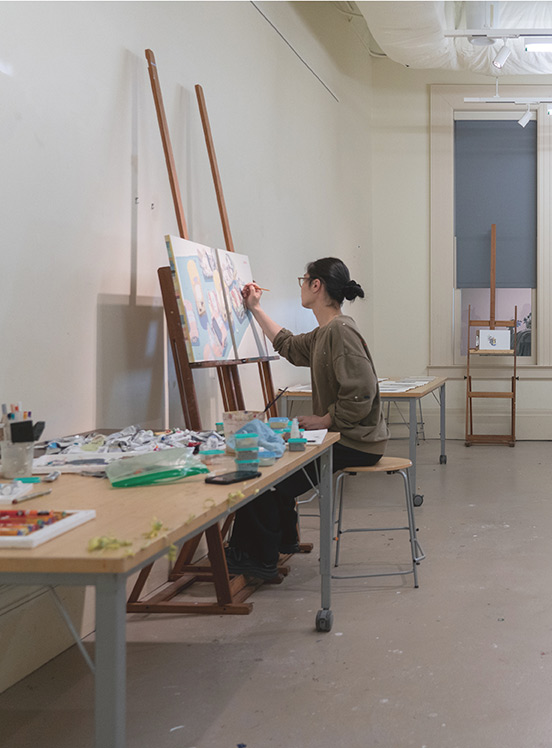
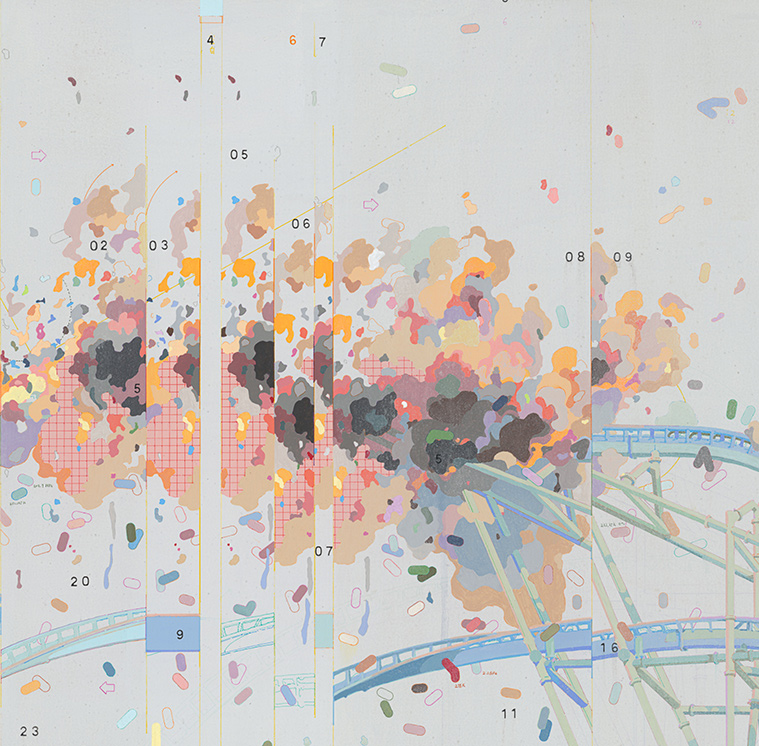
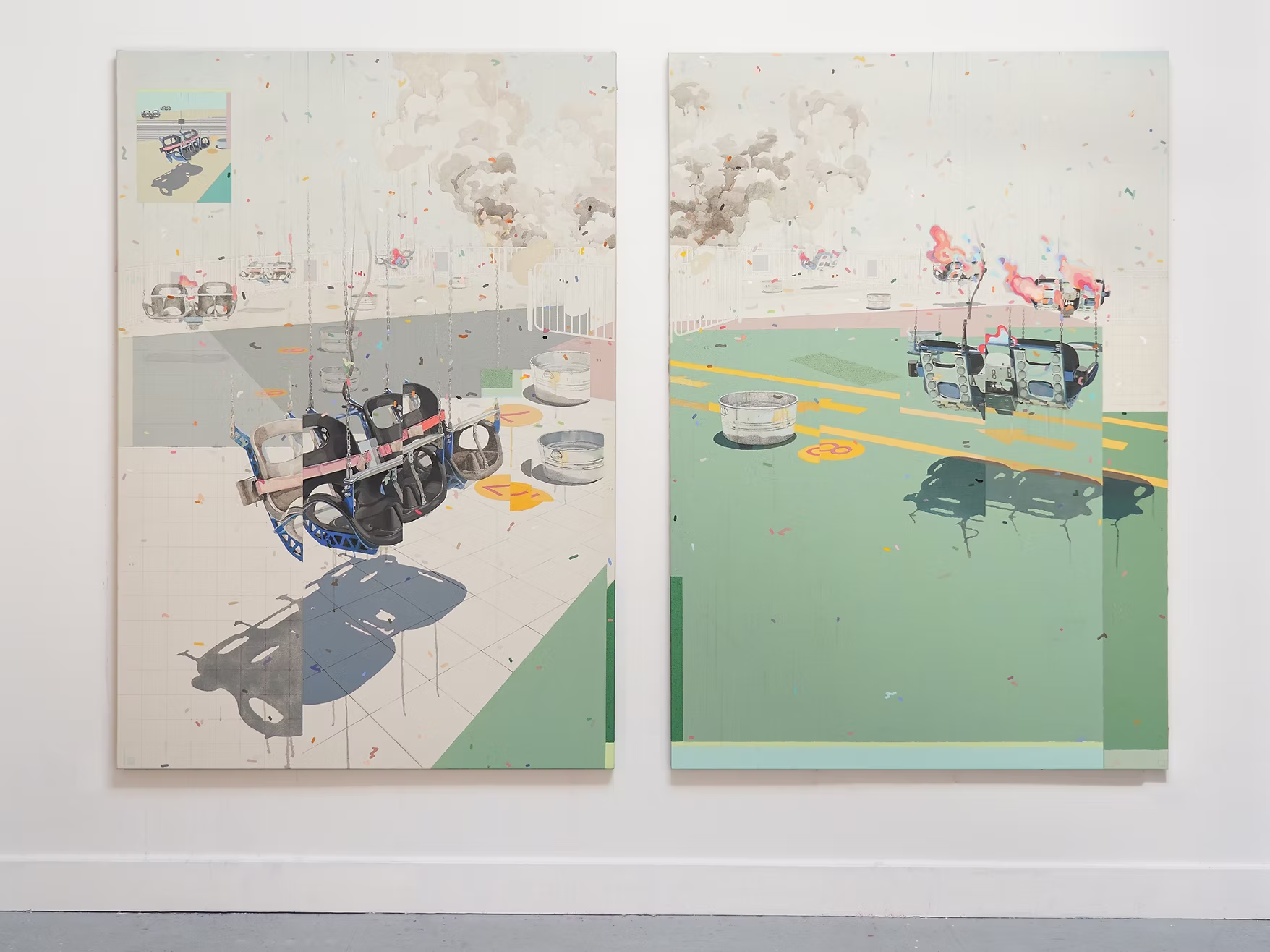
If it is possible, I wish, I wish my paintings could be clean and soft, and construct chaos with absolute order.
What first drew you to painting?
I realized I’m not good at anything else besides this.
You reference Baudrillard and the ideas of a simulation, when did philosophy begin to merge with your art?
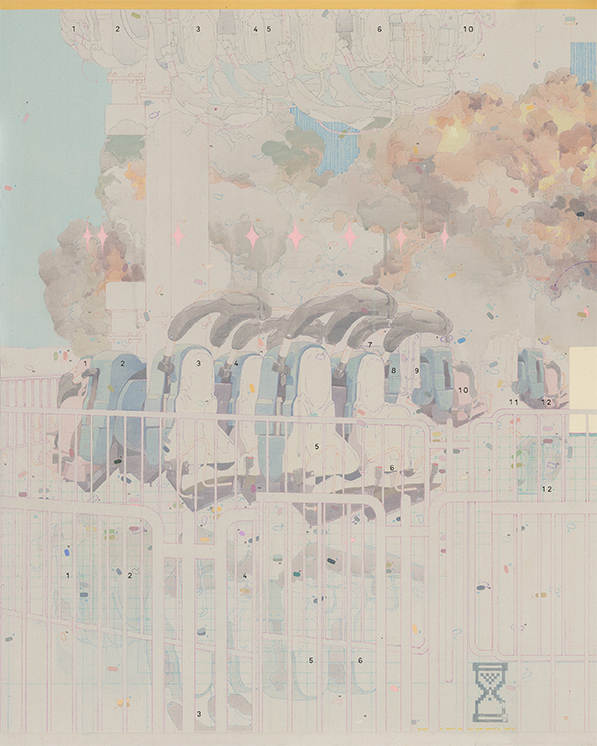
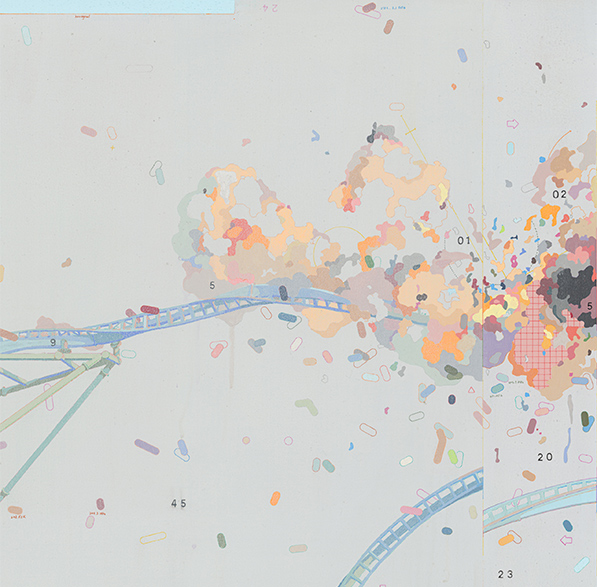
Initially, it focused on a specific amusement park, a specific memory and extended the emotion. To then explore the theme further, however, while digging up these regrets and traumas to present them on canvas, the primitive impulse for creation is also burned out while expressing them. I realized that these things were already behind me and it was necessary to pretend moving in the same direction. Like Baudrillard’s description of the ‘after the orgy’ of modernity, “We live amid the interminable reproduction of ideals, phantasies, images and dreams which are now behind us,” I denied the meaning of the memories’ existence while compensating and pursuing my desires about the previous times. I realized in order to continue this series, I had to abandon the imitation of the entity of specific amusement parks and memories and move towards the simulation of the symbols that amusement parks represent.
What drew you to amusement parks as a recurring symbol?
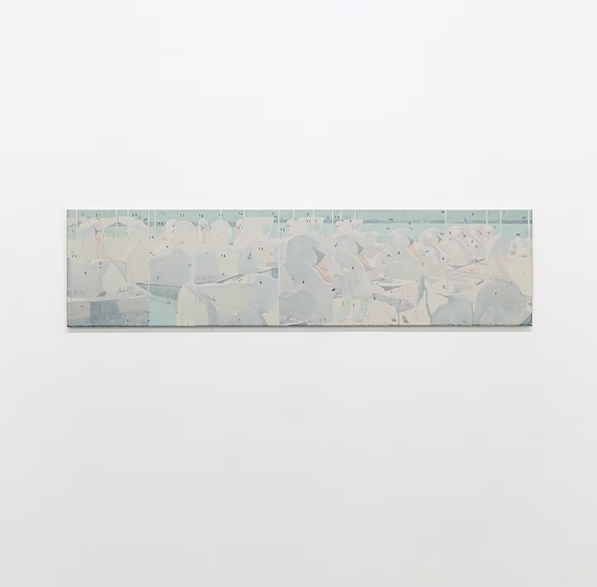
Jacobus Mary said, “The erotic object can never be fully possessed; but neither can the desiring imagination let it go. Desire drives the mobility of endless substitutions.” This describes Cy Twombly who uses mythological story in his paintings to reveal himself torn between desire and memory. The sense of unfinishedness that I have carefully planned in the frame is an exterior reflection of the vague emotion of obsession with the past. I imitated the perfect amusement park in my mind and enjoyed the things I never had.
You mention “constructing chaos with absolute order.” What does this mean to you?
“Constructivist texts are based on language, not as a vehicle for meaning, but as a material performing its own body and expressive resourcefulness.”
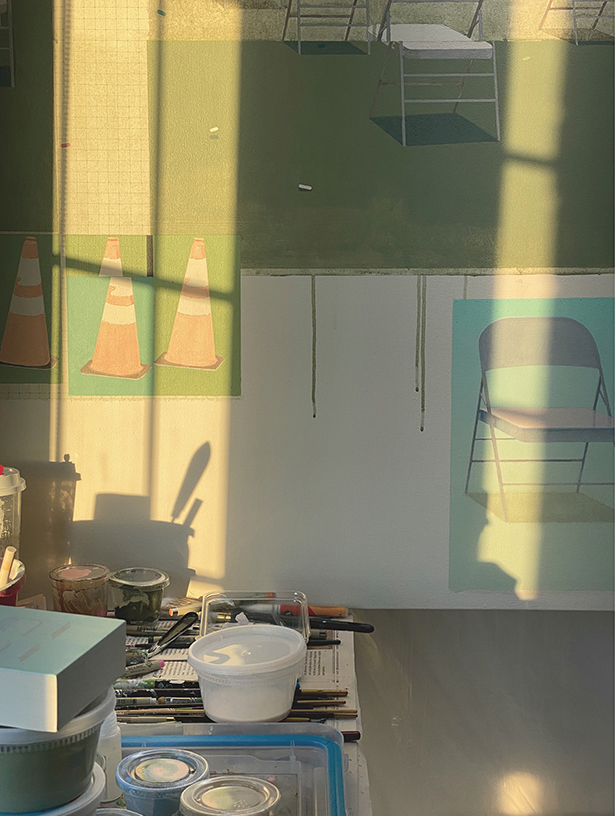
Many of your works reference the aftermath. Are you more interested in what happens during chaos or after it?
The moments that interest me are those fragmented, inflated, discontinuous flashes exposed by the chaos. Using a static medium to capture movement, what the audience expects is not motion but stillness, a stillness that strips away time and denies reality.
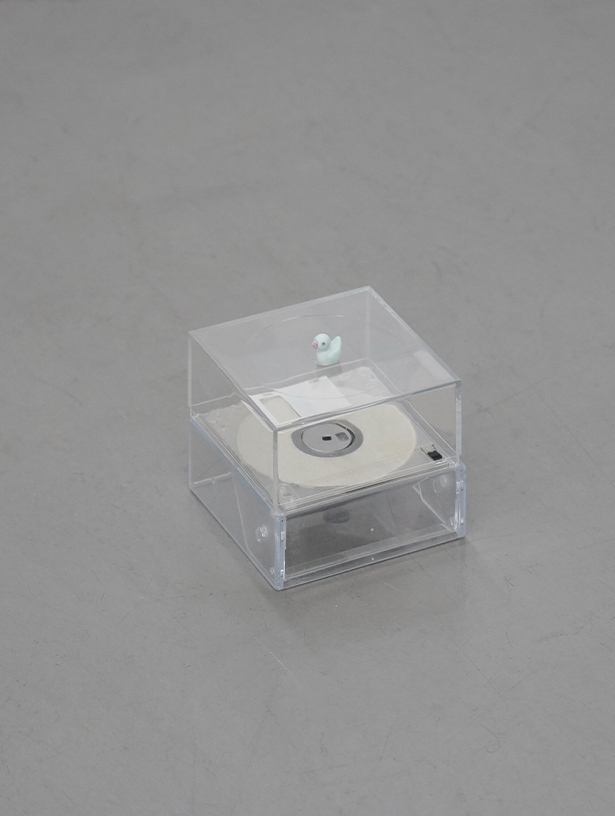
For your solo exhibition “The Duet’s Carnival,” you mention that we must “bring a plus one, even if it is yourself.” What are you inviting us to confront?
This was written by the curator. I believe the answer belongs to him and the audience, not me. The person who built this amusement park neither owns it nor visits it.
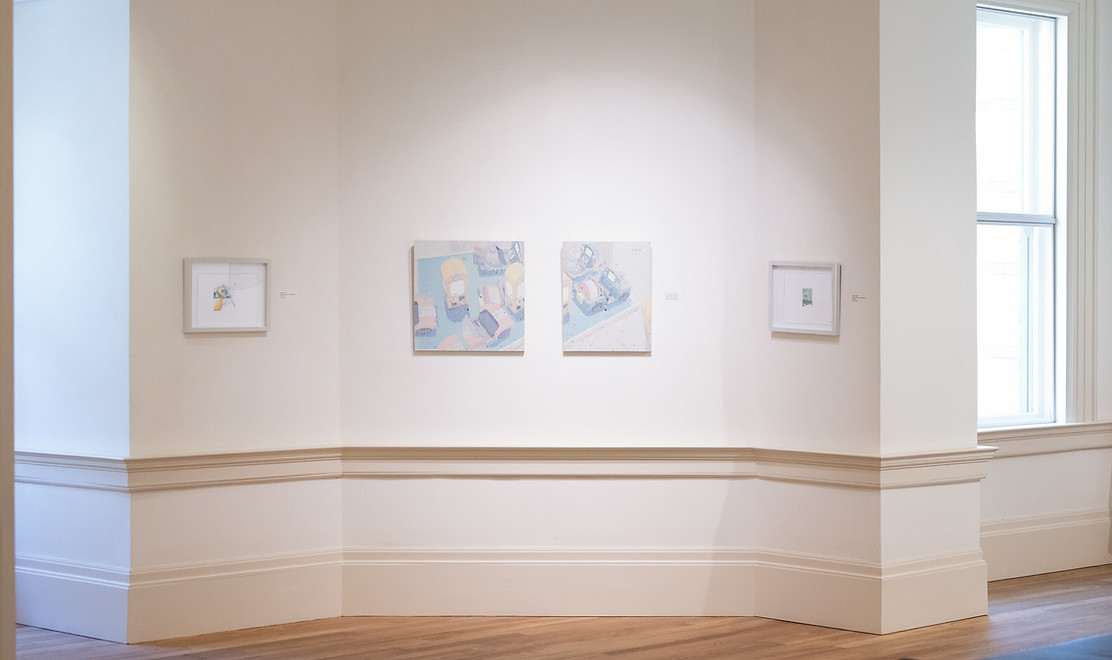
Your process seems self healing and interrogating. How do you know when a painting offered you closure?
When I also forget the motivation behind my creation and can accept any interpretation of that work.
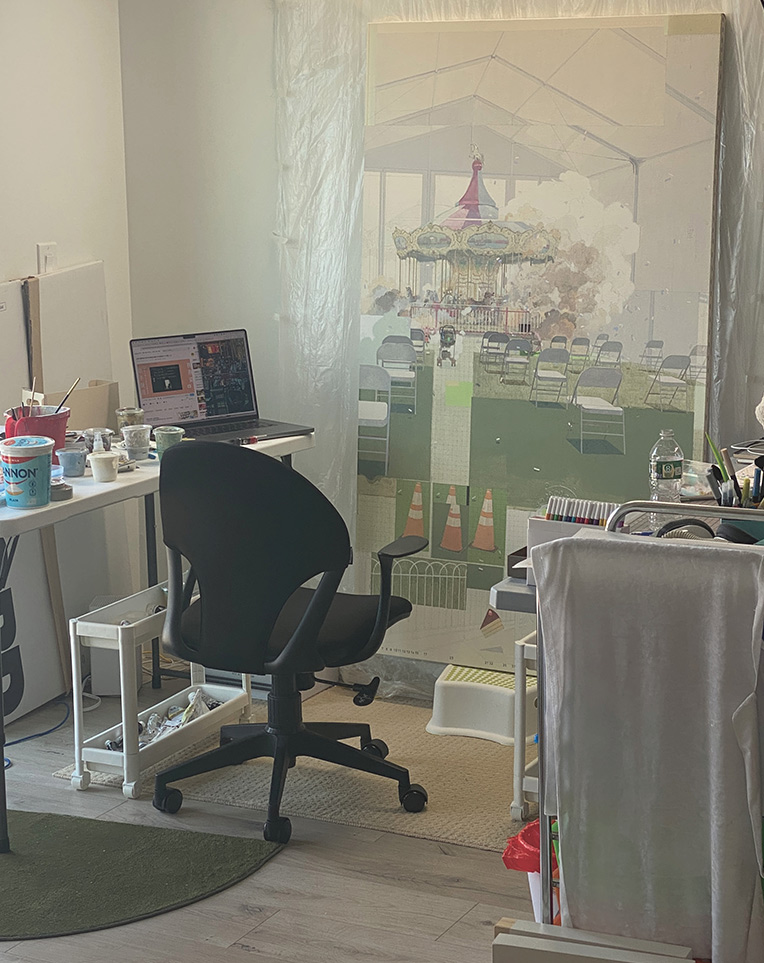
Where can people find you?
I am currently pursuing my PhD in University of Macau. I also attend some group exhibitions in Shanghai, New York, etc. Next year, I will have a solo exhibition in the Gibbes Museum of Art.
Besides social media, my work can be found at Allen Avery Gallery in Atlanta. also some in New York at Eli Klein Gallery.