Tosha Jagad
What’s your name and where are you from/based?
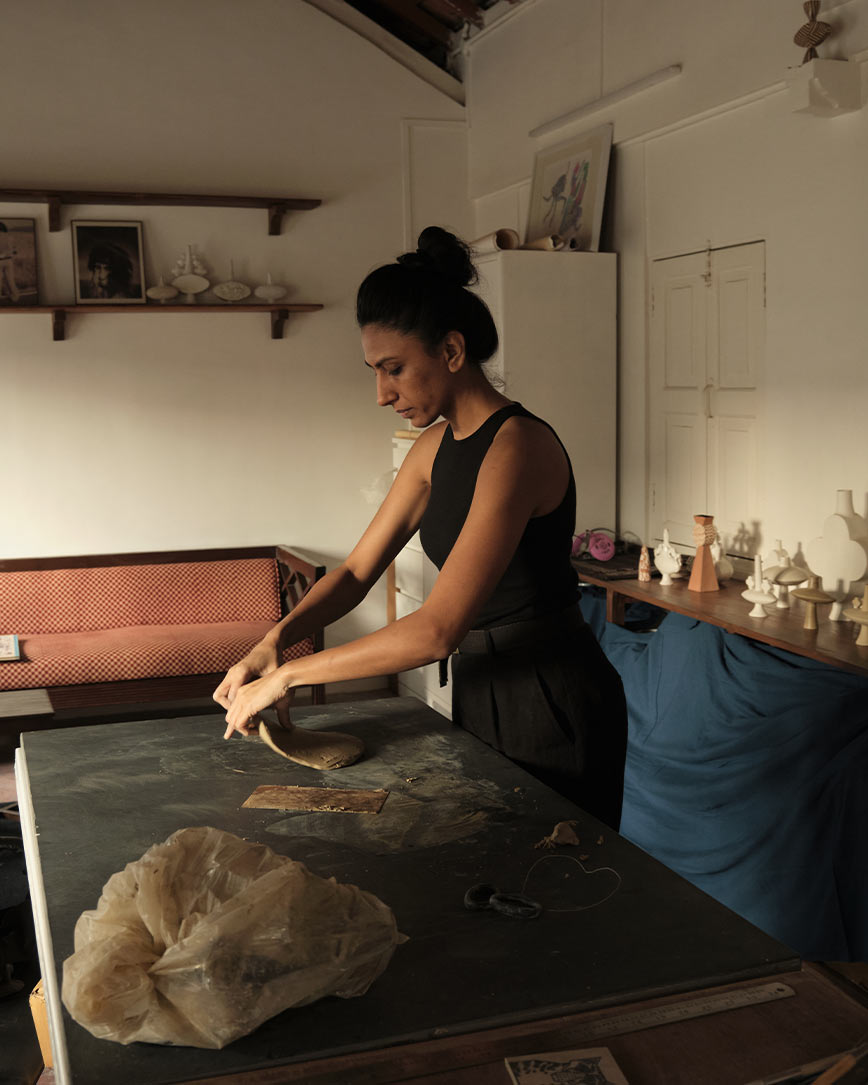
I’m Tosha Jagad and I’m born and brought up in Bombay, India. My practice is based out of Bombay as well.
Can you describe what you do in a few words?
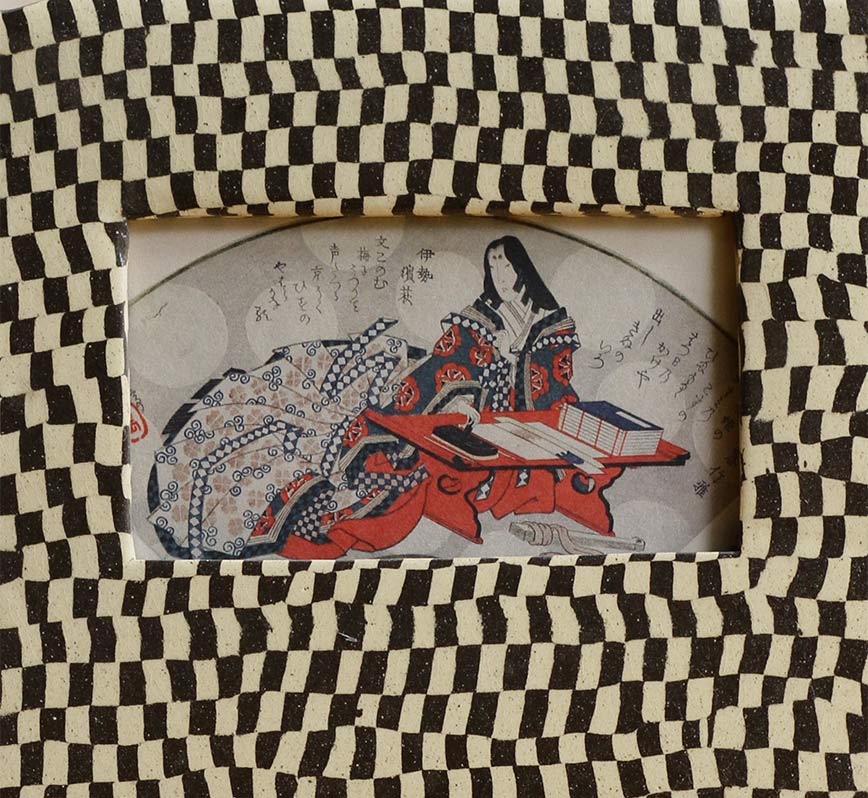
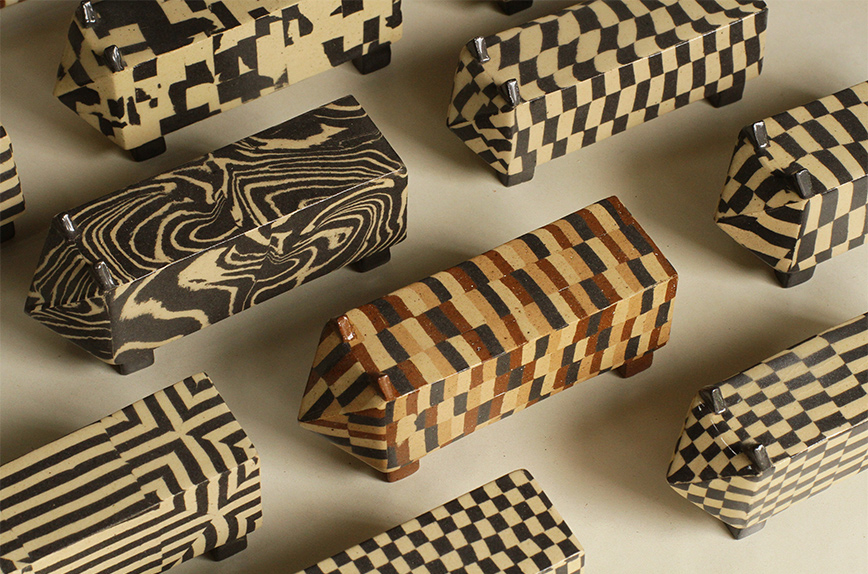
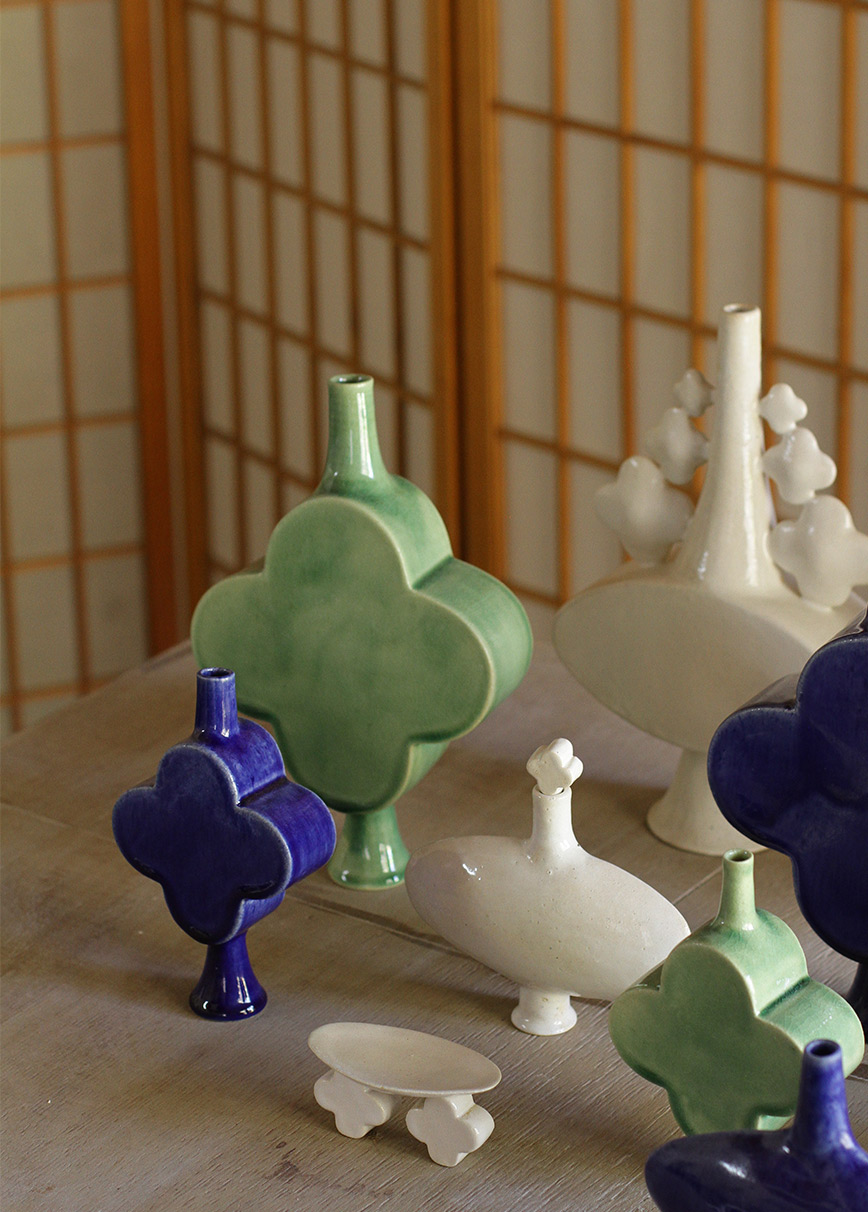
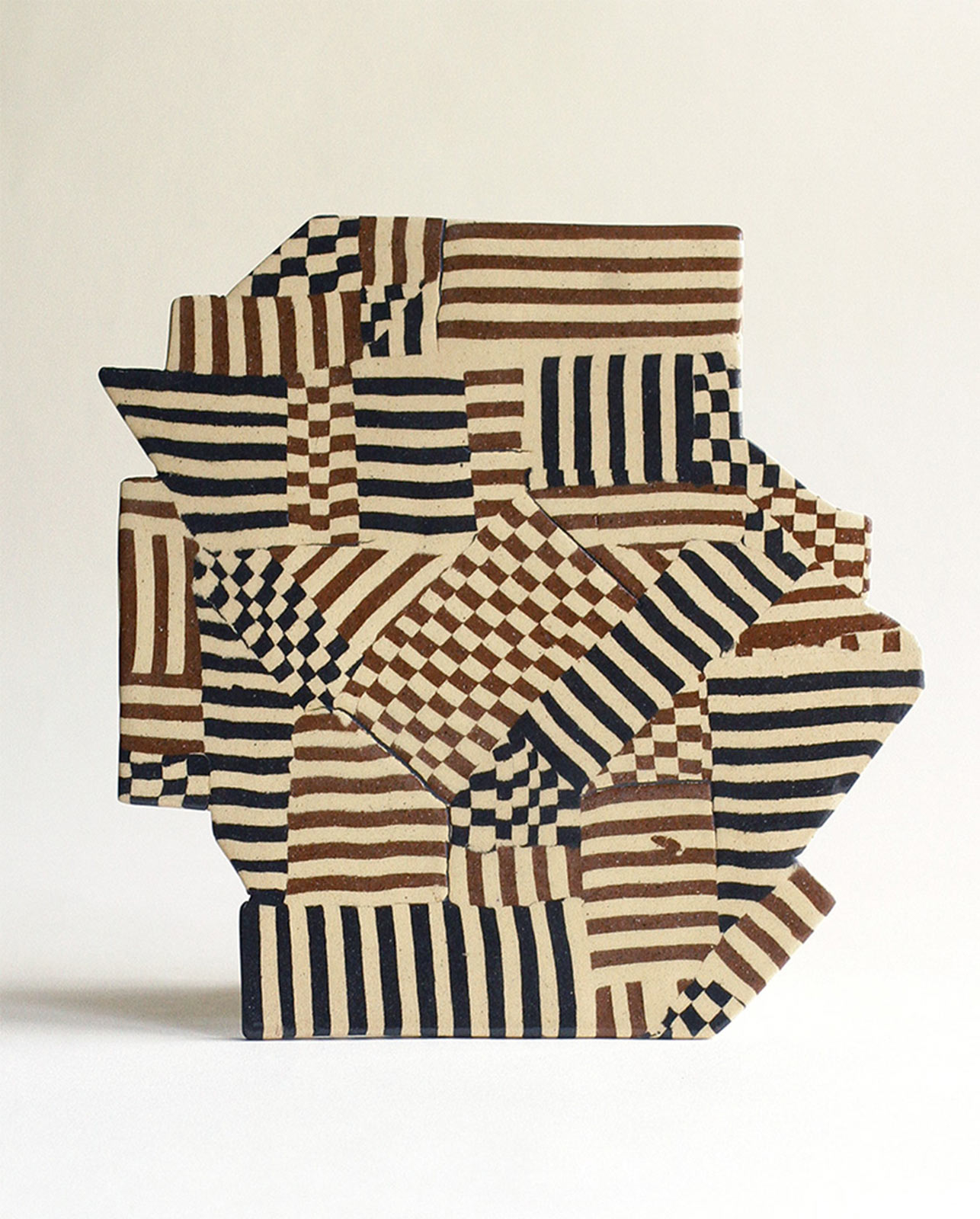
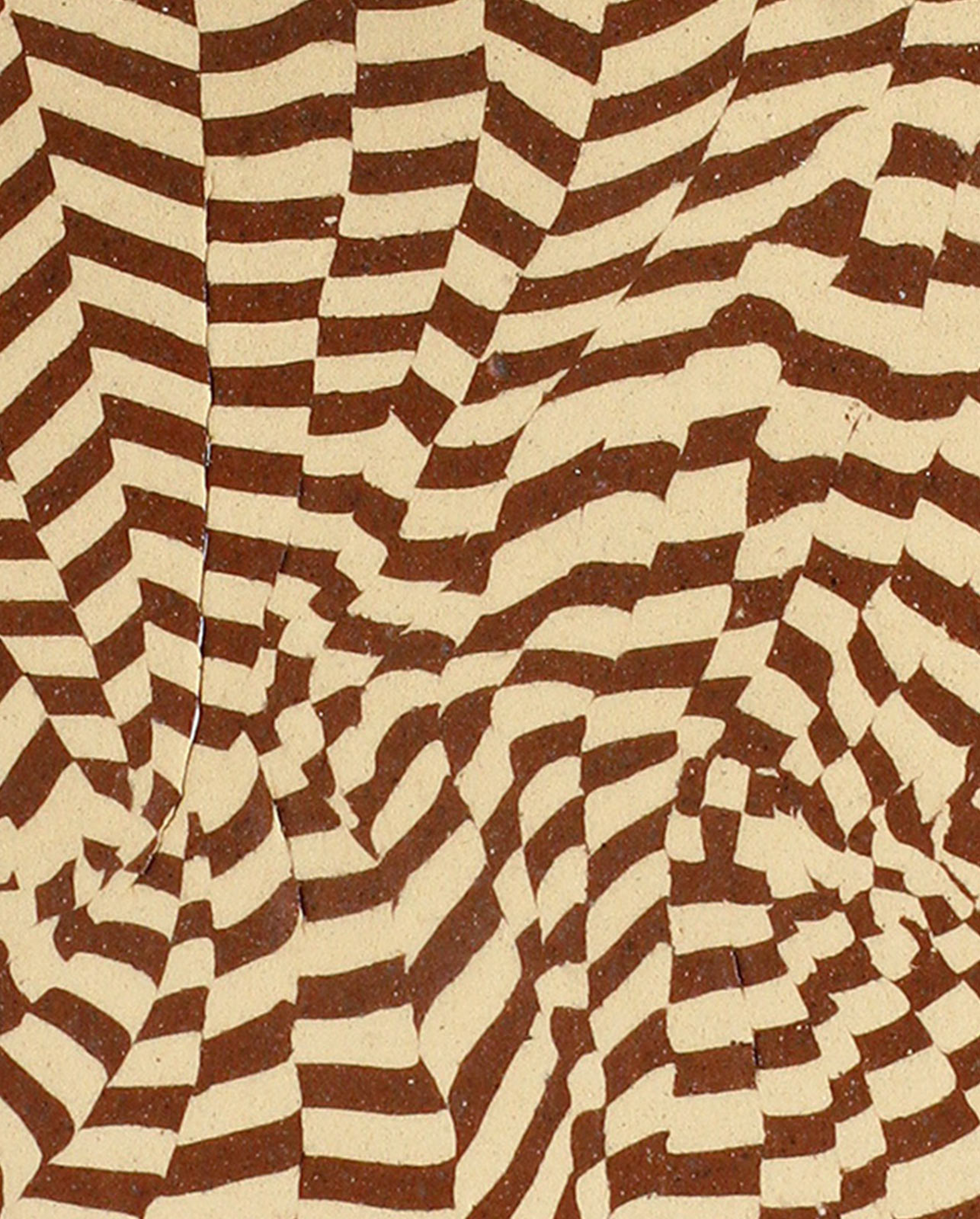
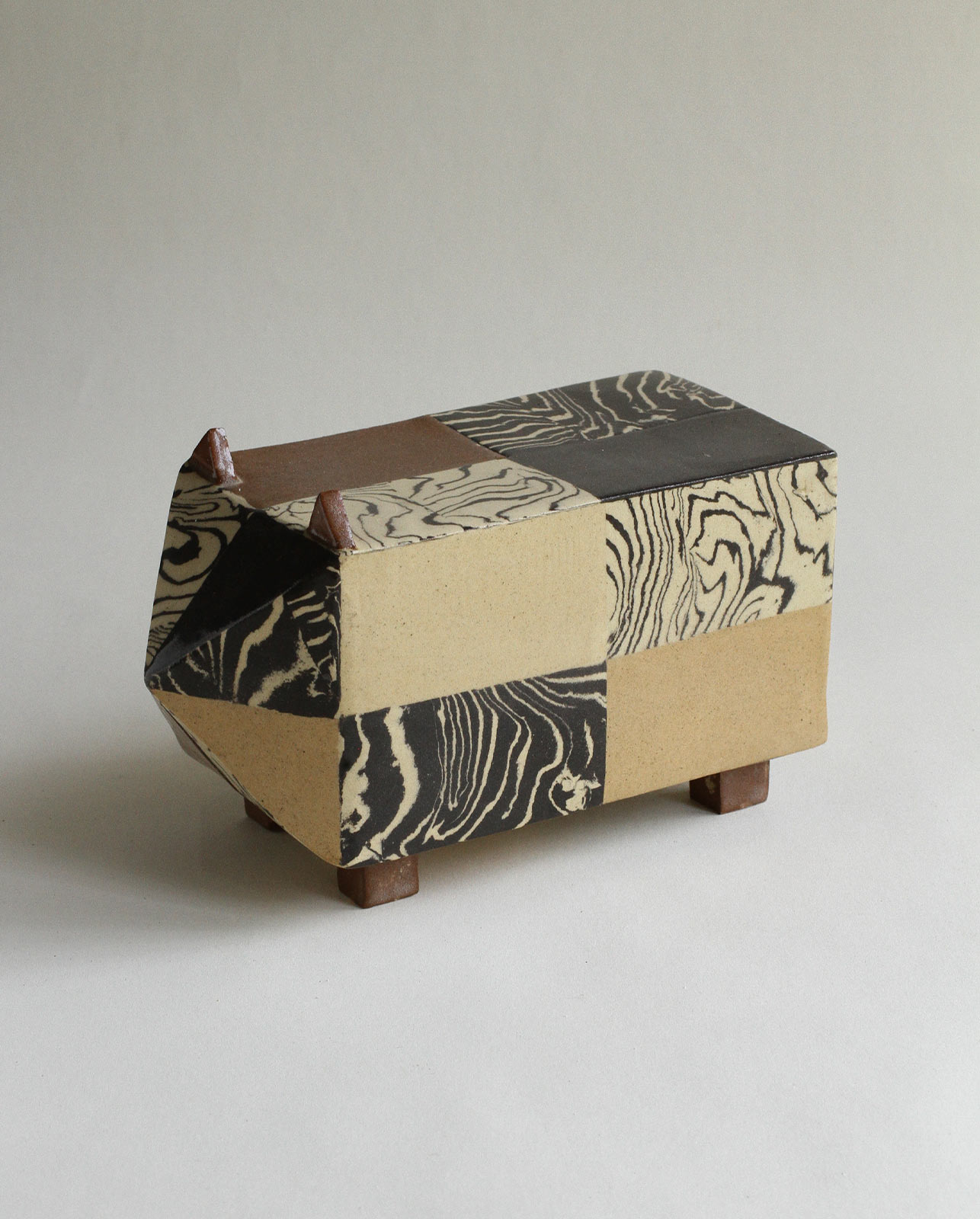
I am a Graphic Designer turned Ceramic Artist. My studio practice involves making small scale sculptural works in clay, predominantly based on handbuilding techniques. I love cats and the feline form serves as an inspiration to a lot of my collections, it’s been a recurring theme in my works. As I explored ceramics, I grew increasingly fascinated with Nerikomi, a technique that I feel bridges my love for graphic design and patterns with ceramics.
You started in graphic design, are there parts of that experience that shaped the way you see and work with clay?
Yes, definitely! Initially I was oblivious to the fact that there is any connection between the two because I didn’t set out to combine the two, though the interfusion is not surprising. As a graphic designer I am used to making iterations of a design, playing with forms and layouts using basic design principles like scale, repetition, pattern, alignment, balance, etc. which is very much visible in my ceramic works I feel. I often use design softwares to construct basic forms for certain pieces. It is not only limited to the creation process but my design experience influences the way I shoot my pieces, document work and how I present it.
Is there an illustration you made that inspired a clay piece, or vice versa?
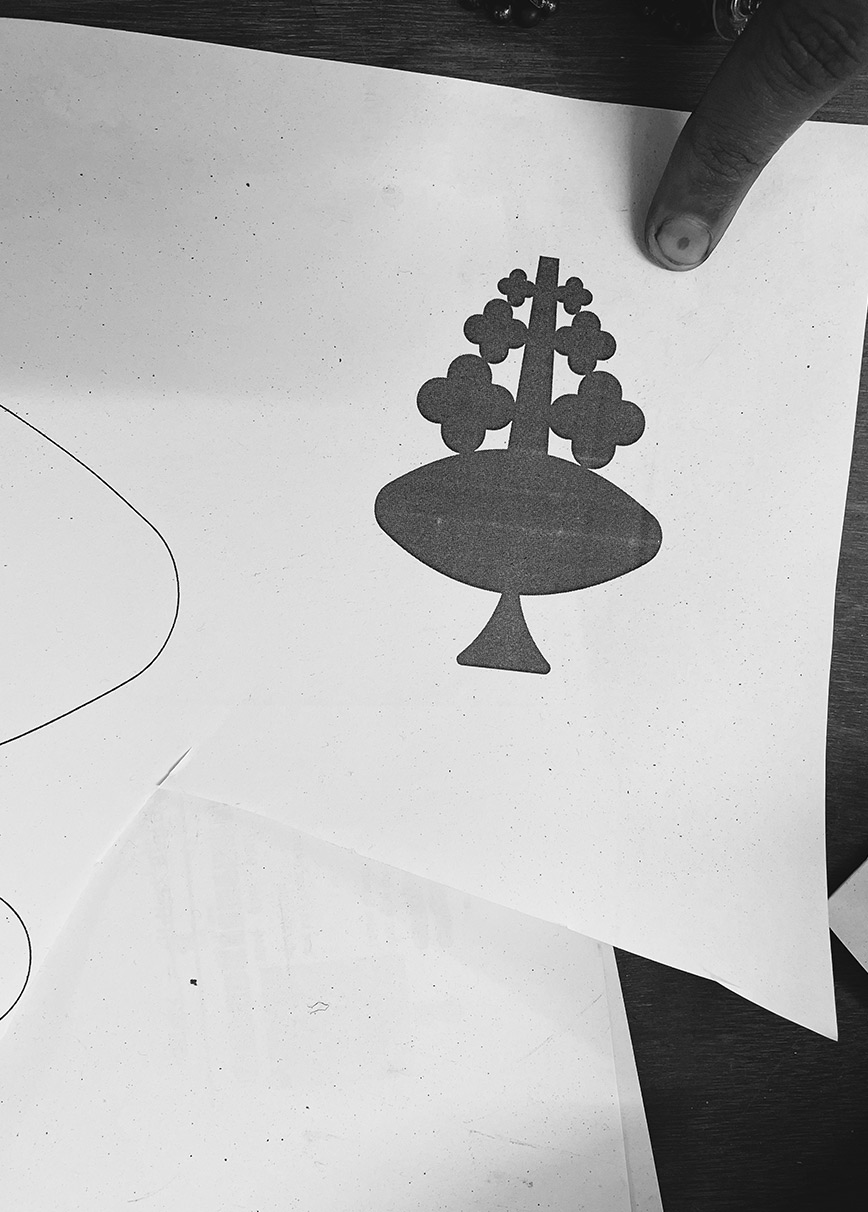
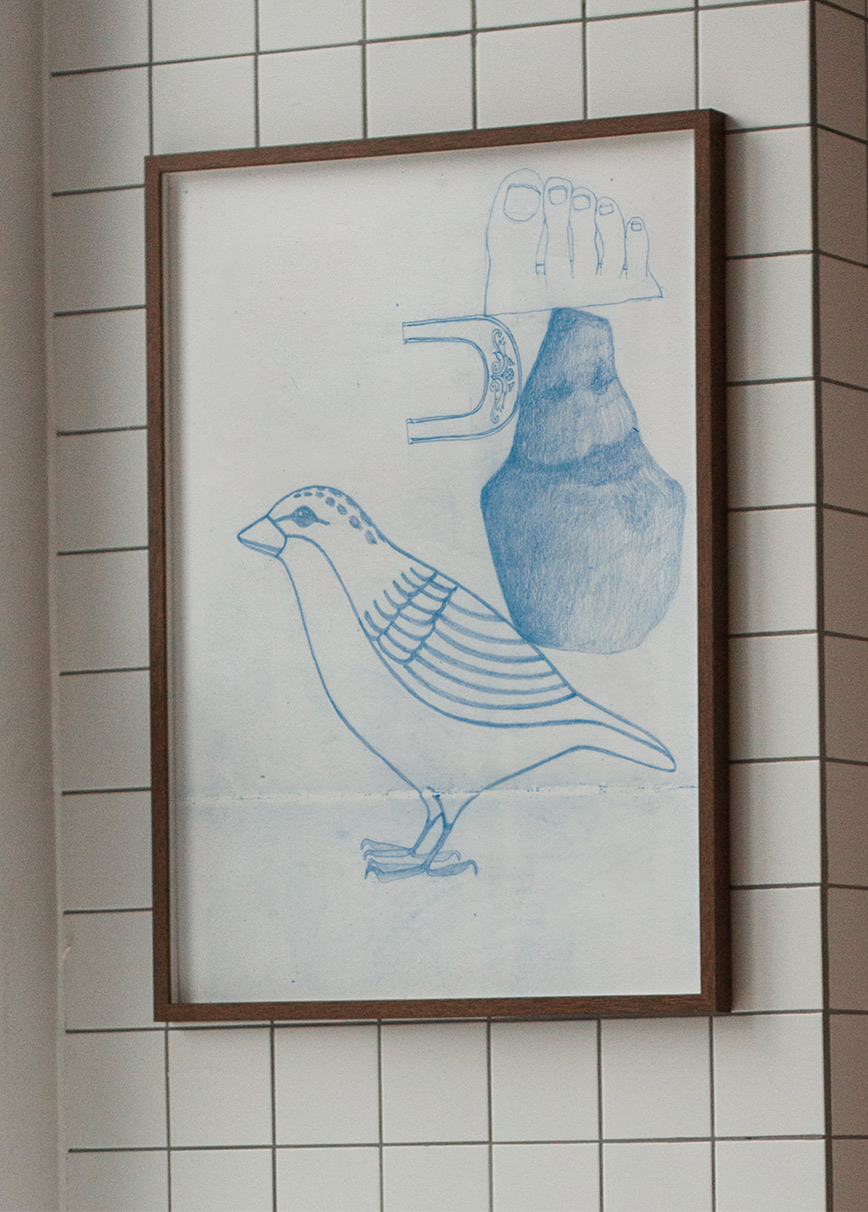
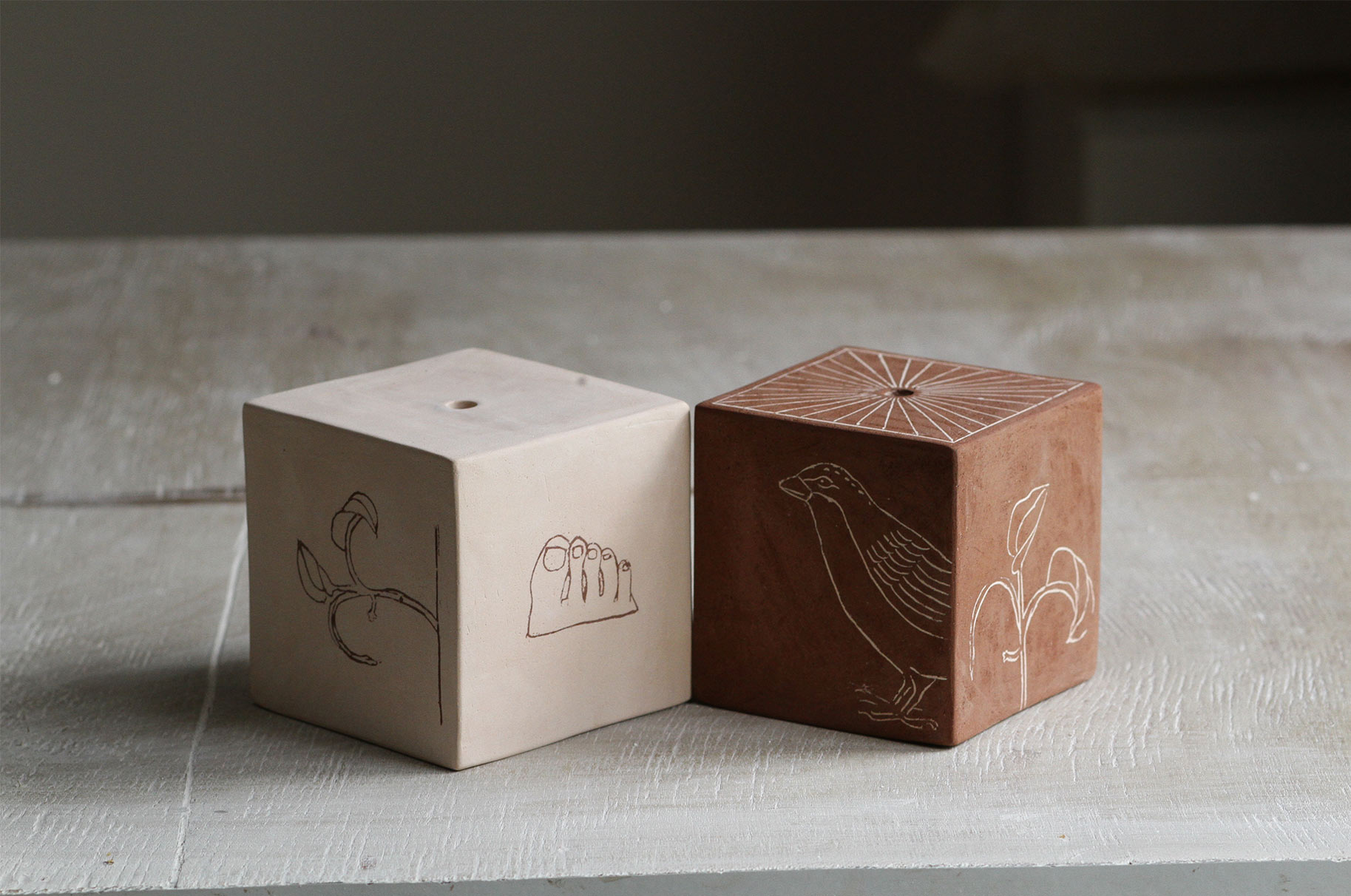
There are quite a few instances where this has happened. One where I wanted to translate a series of drawings onto clay, mimicking a pencil line drawing made using a 0.5mm lead. There are ceramic pencils available that let you draw on a surface but I didn’t want it to be that literal. I ended up using Inlay as a technique and achieved some very delicate lines. Another project involved turning a hand-painted ceramic plate into a screen print. Now, I’m excited to take my sculptures and reinterpret them as etchings. I love the cyclical process of translating 2D drawings into 3D objects, and then reimagining those objects in 2D – it’s a loop
What is it about figurative subjects that inspire you most?
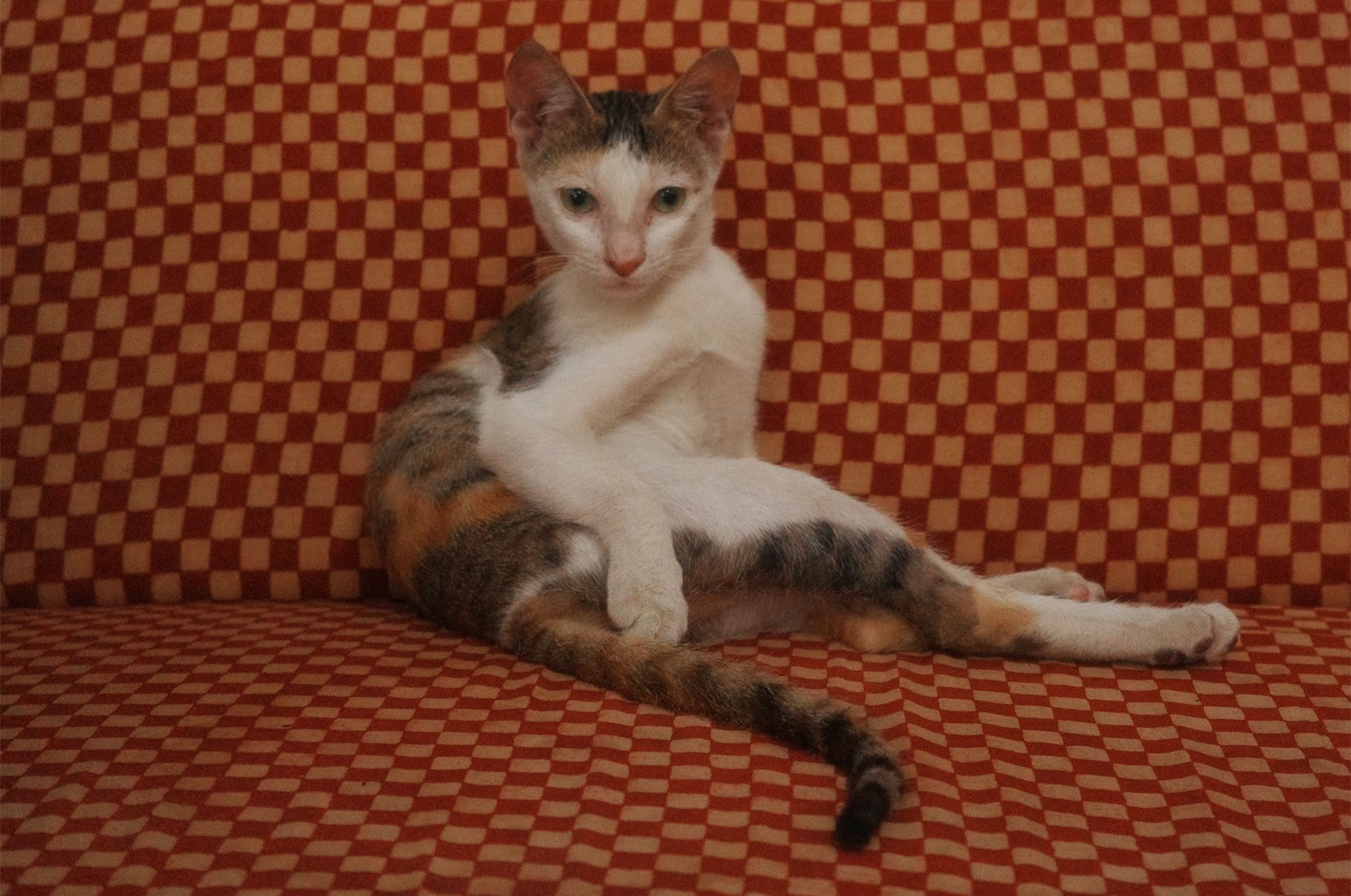
I think I struggle with abstractions. Documenting, observing and drawing inspiration from the mundane and literal physical things I see on a day to day basis is what I love. For example, photographing the same cat around my house everyday, a lot of those images are used as references for drawings on 3D sculptures. Or making stop motion animations of objects being deconstructed. I love taking pictures and most of my sketches come out of those images that I have clicked which usually are drawings of people I know, objects lying around me, cats, quick sketches while travelling.
How did you first get introduced to the ‘Nerikomi’ process? What do you like about it?
I don’t clearly remember how I got introduced to the process. It was either a magazine or maybe the term Agateware which led me to discovering Nerikomi. What’s fascinating about this technique is that it flips the script on traditional ceramic decoration – instead of glazing or painting, you start with the pattern in mind and work backwards to bring it to life. Much like how you see weavers with techniques like Ikat where the design is decided and then the yarns are dyed in a way that when the fabric is woven, it all comes together as a design. The magic of the design reveals itself later.
Do the materials or techniques you use hold any symbolic value for you?
I’m not sure if it holds any symbolic value for me. But the act of physically creating something out of a lump of clay is freeing in some sense. The fact that I can sketch an idea and build a piece and fire it in my studio where I don’t rely on anybody else to get to an end result is extremely gratifying. It’s a feeling of pure autonomy, one that only clay seems to unlock for me.
Which piece or series pushed your skills or challenged you in an unexpected way?
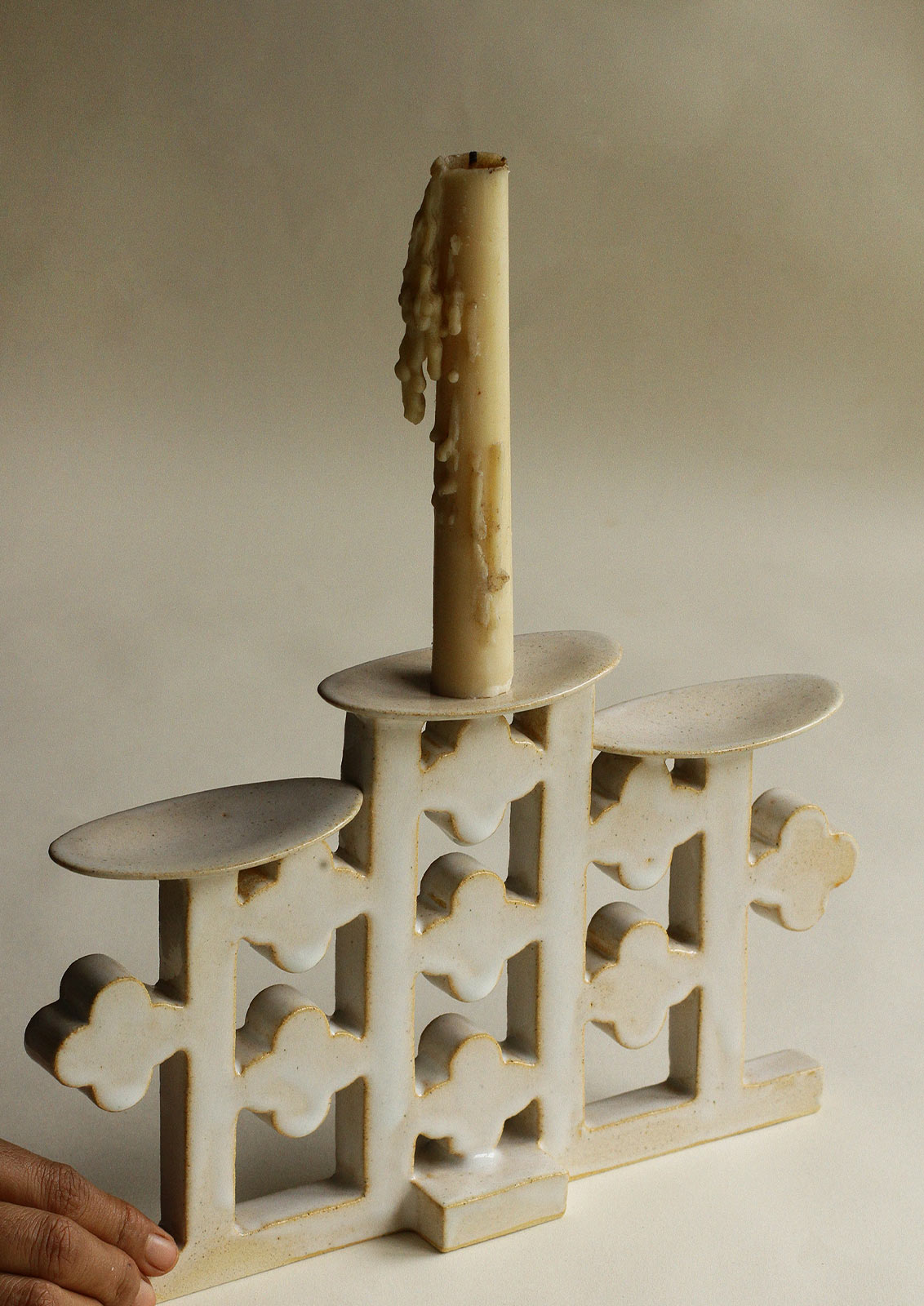
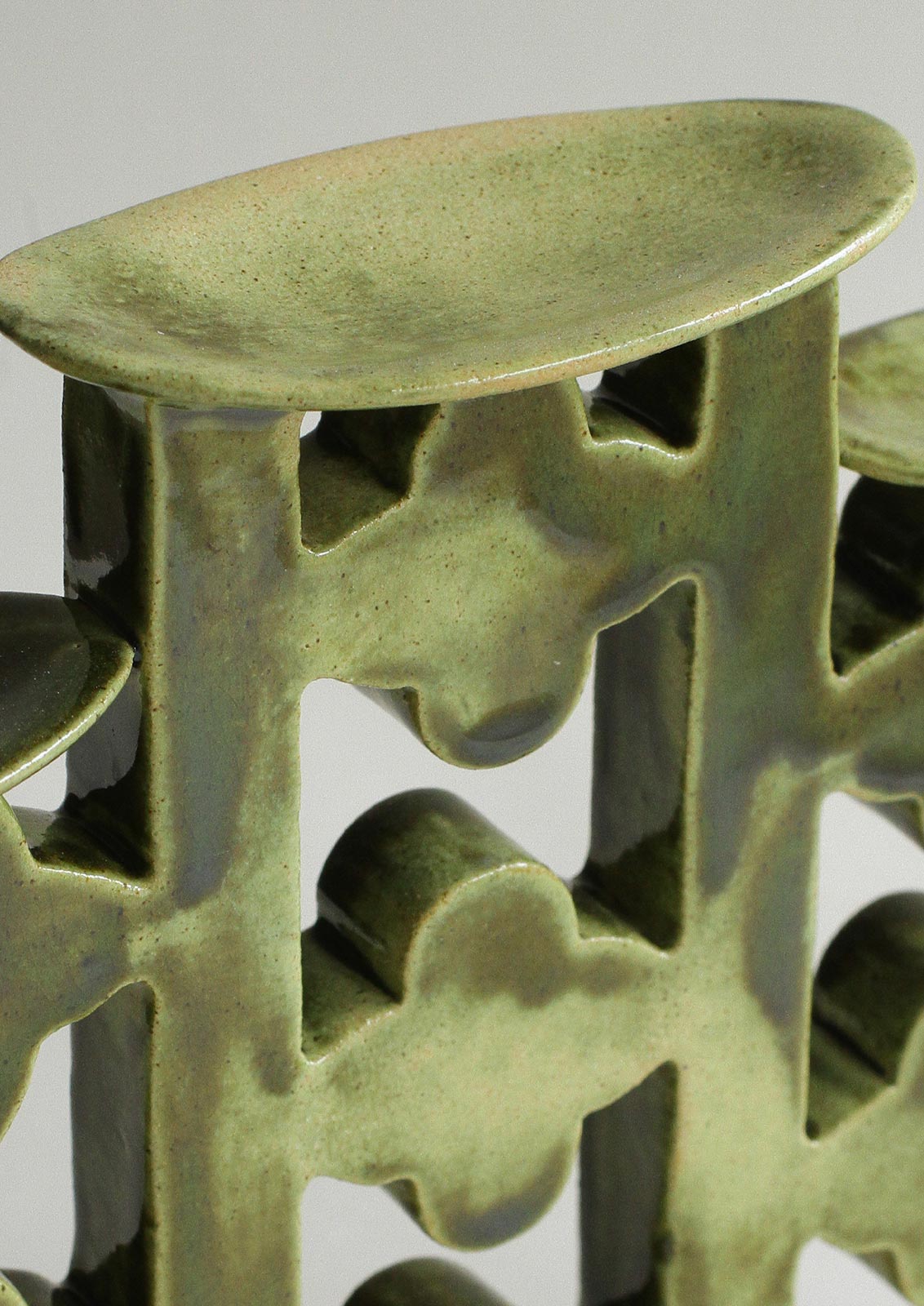
The Kibble candle stands. A design that I very easily laid out on illustrator (design software) in 2D but struggled to build in clay. It involved joining 19 pieces together and cutting identical shapes. Initial attempts were a complete disaster, but that’s also what I love about this medium – troubleshooting. The smallest hurdle can be so difficult; and once you crack it, there is a dopamine rush and you feel like you can conquer the world, until of course something else will most definitely go wrong. Clay in general as a medium is very challenging. Once the piece is fired, there is no Ctrl+Z.
Is there an object/s in your space that you’ve held onto for a long time? Something with a story behind it?
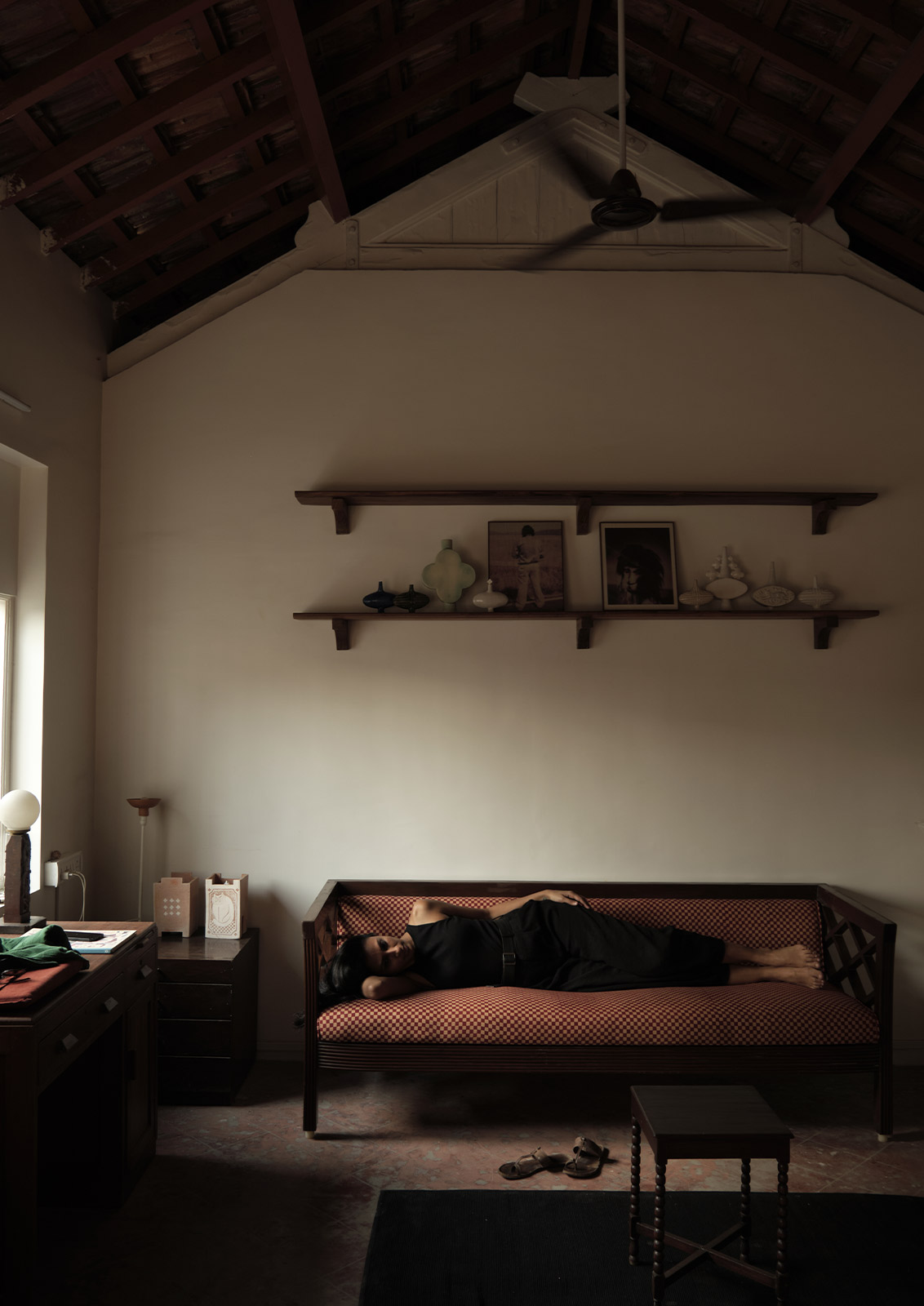
Unrelated to clay, but the couch in my studio is something that has been with me for a long time now. My father is an architect and it was a part of his old office which was also co-incidentally my first studio space, and travelled with me to two other studio spaces. It has been reupholstered since, but that’s the only thing that has changed.
Where can people find you?
Physically, you can find me at my studio in Bombay.
Virtually, on instagram @studiotosh
My works, on www.toshajagad.com