Water With Water
What are your names, and where are you from/based?
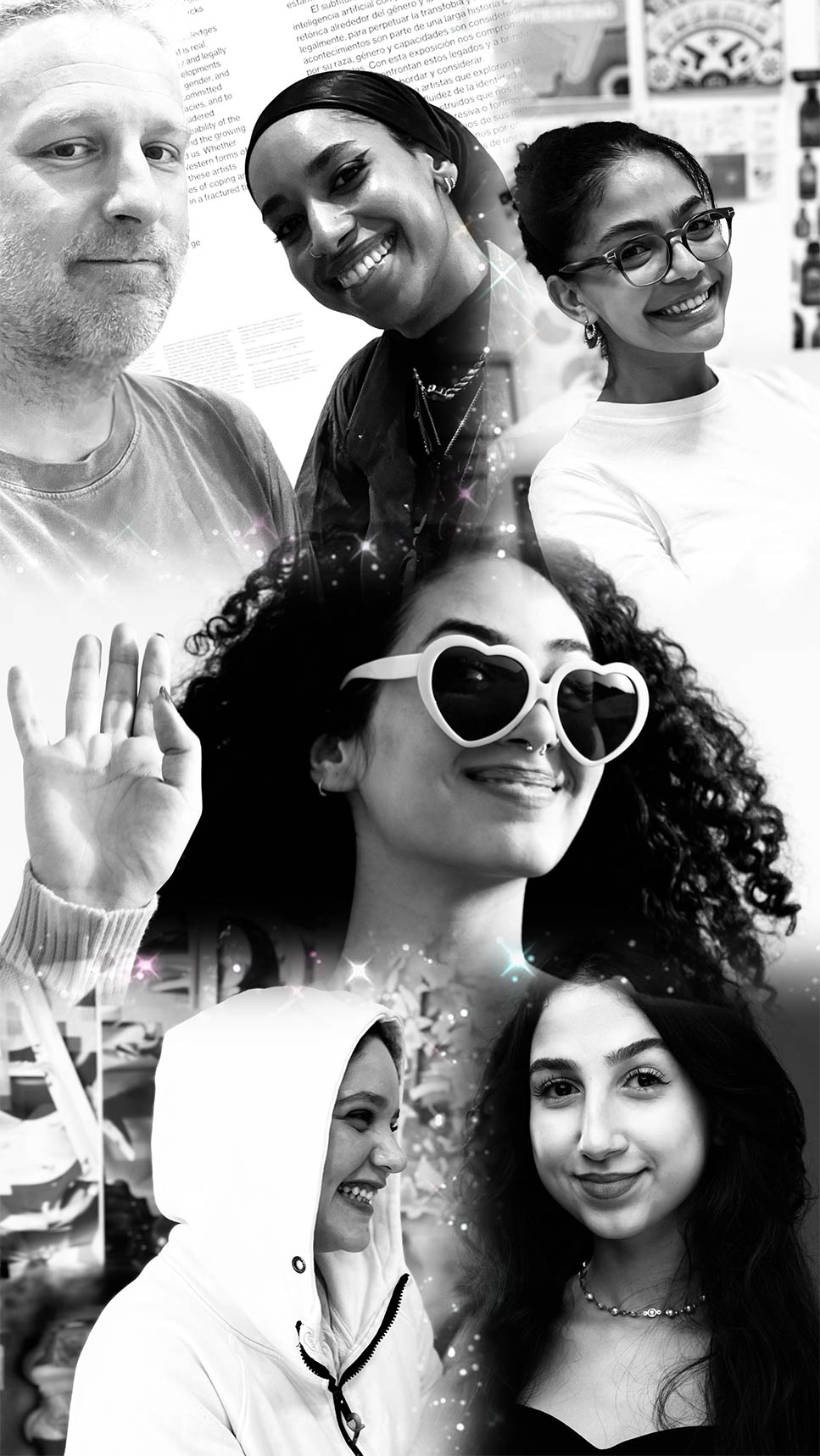
ND: Water With Water began as a collaboration between Sarah Elawad and me, Nathan Ross Davis. I’m from the U.S.A. and moved to Qatar in 2013, taking a job as a professor at Virginia Commonwealth University, School of the Arts in Qatar.
Sarah, originally from Sudan, grew up in the UK and moved to Qatar for university, where we first began working together. She started as my research assistant and gradually became an integral creative partner until our work evolved into a shared practice. Sarah is now based in New York.
Since then, we’ve collaborated with many talented people. Our current team includes Hagar Allam, an Egyptian raised in Doha; Ayatalla Mohamed, an Egyptian raised in the Gulf; and Sherifa Eletrebi, an Egyptian raised in Qatar. Samah Sulyman, a Palestinian raised in Qatar, has been a key part of the team, contributing to nearly every practical aspect of our work. Over the years, we’ve also worked with Sara AlAfifi, Amira Mohamed, Hadeer Omar, Reham Mohamed, Sara Shaaban, Eman Makki, and many others.
We’ve done memorable projects with friends Michael Hersrud and Simone Muscolino at Sonic Jeel, and most of our collaborators come from the Virginia Commonwealth University alumni community. With the VCU campus established in Qatar since 1998, this network of creatives has been one of our most valuable resources.
Can you describe what Water With Water does in a few words?
ND: We follow our creative instincts to make the things we want to see in the world. Most often, this takes the form of printed books, ephemera, merchandise, and apparel, though we also enjoy experimenting with other media and formats.
What does the name Water with Water mean?
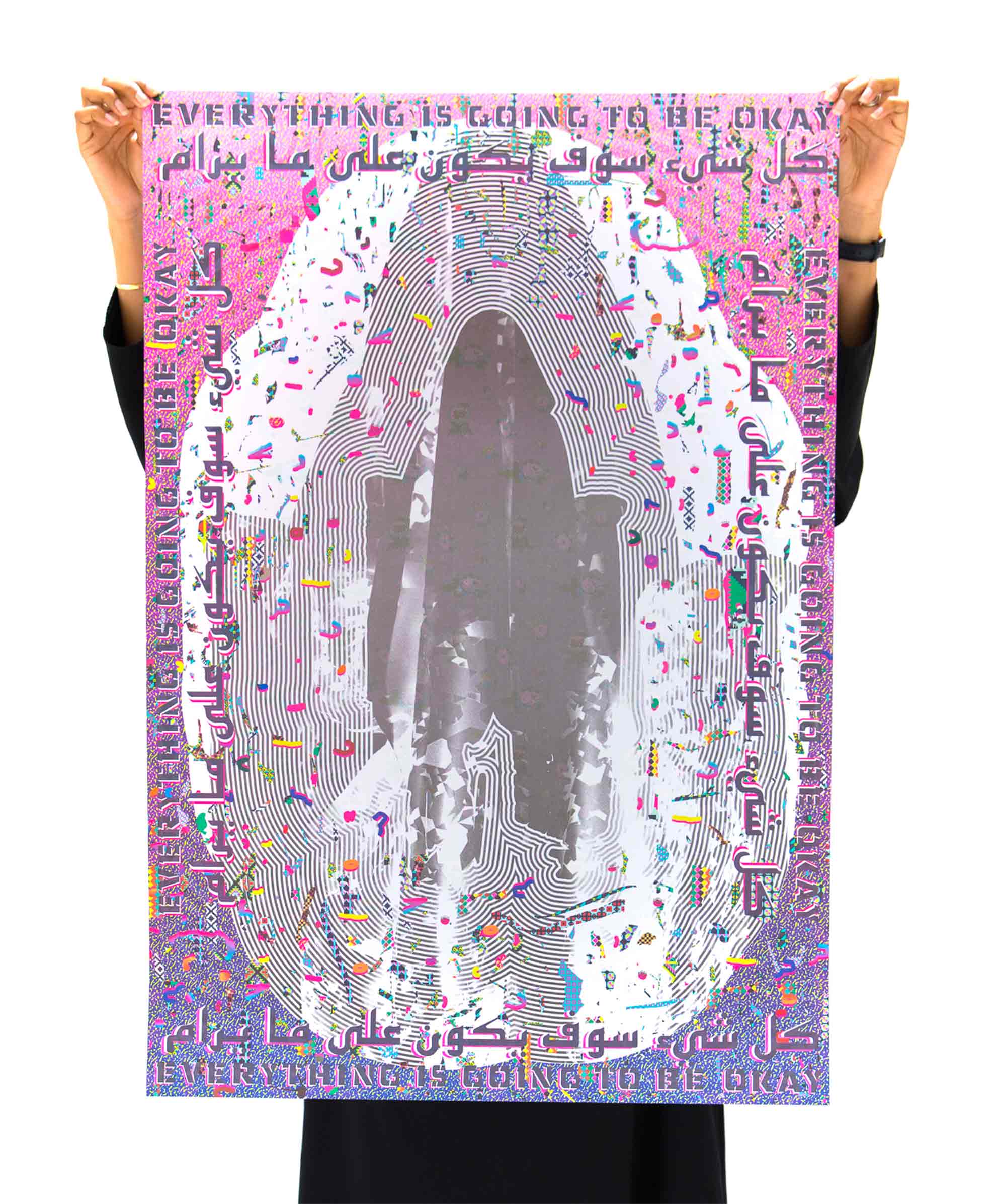
ND: The meaning depends on who you ask. The name comes from the Arabic saying “فسّر الماء بالماء,” which translates to “to explain water with water.” It’s usually used to describe circular reasoning—talking in circles without really saying anything.
For us, it’s about recursion, reflection, and self-reference. The name loops back on itself, much like our work often does. Over the years, this question has led to conversations with people all over the world, each offering a different interpretation. We like that openness—it makes the name feel alive.
How do you see publishing as a form of visual research or cultural storytelling?
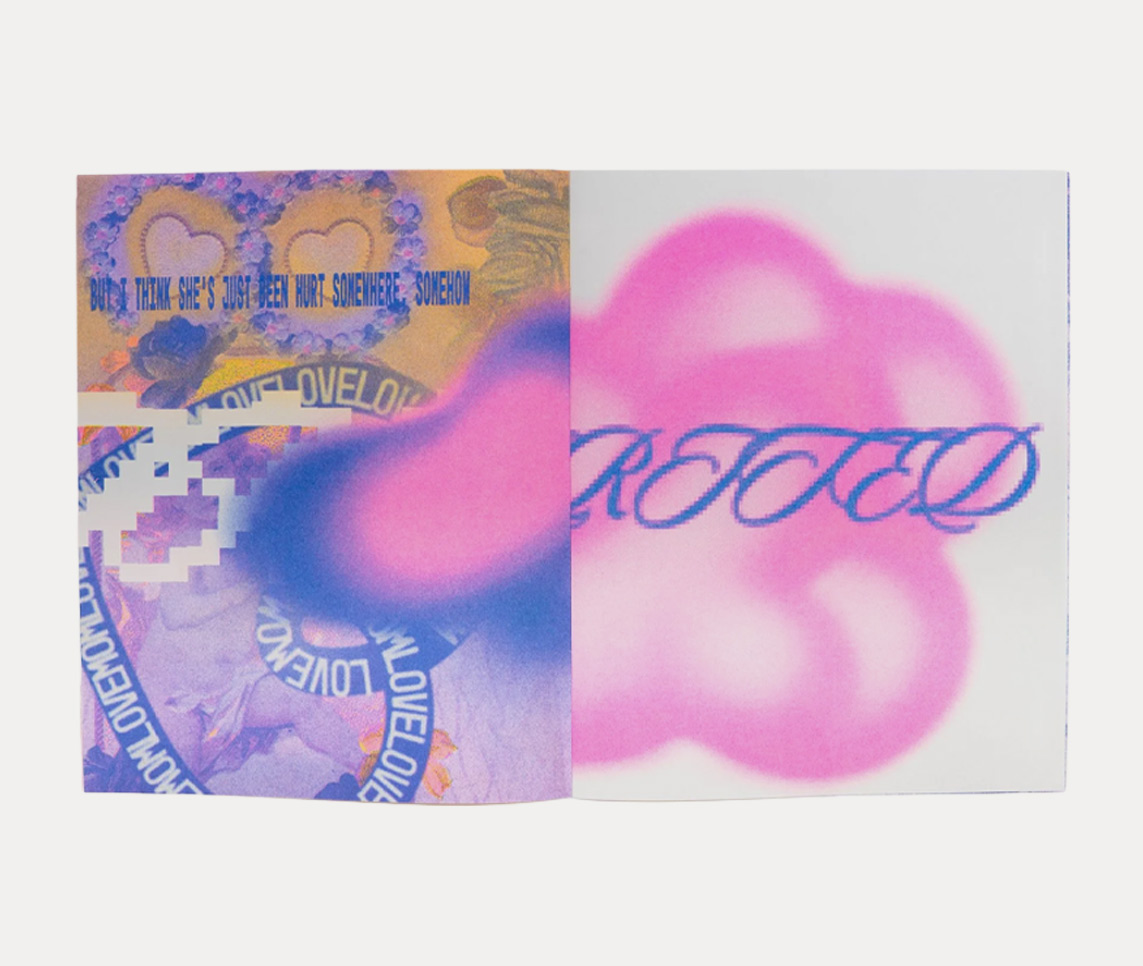
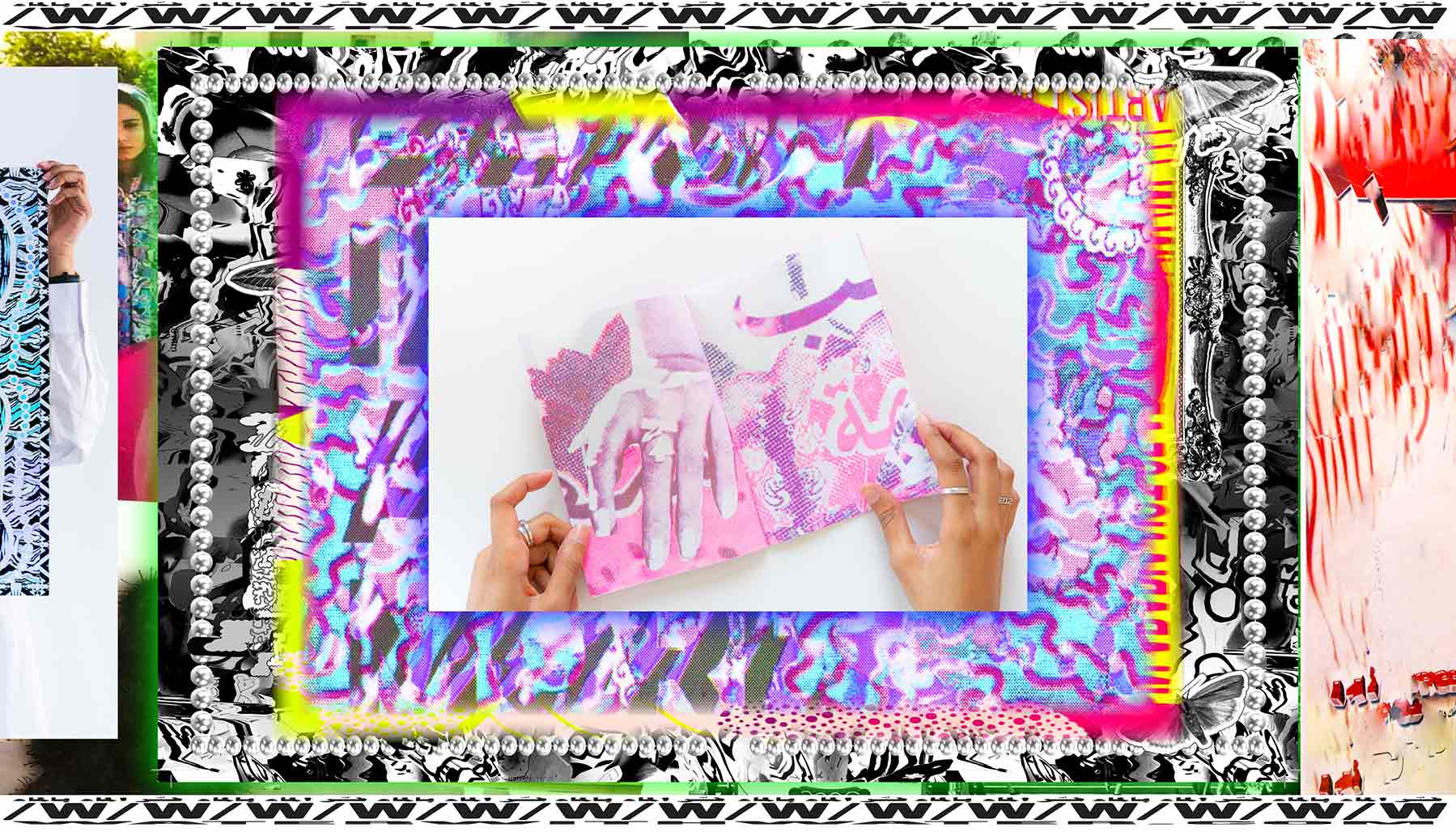
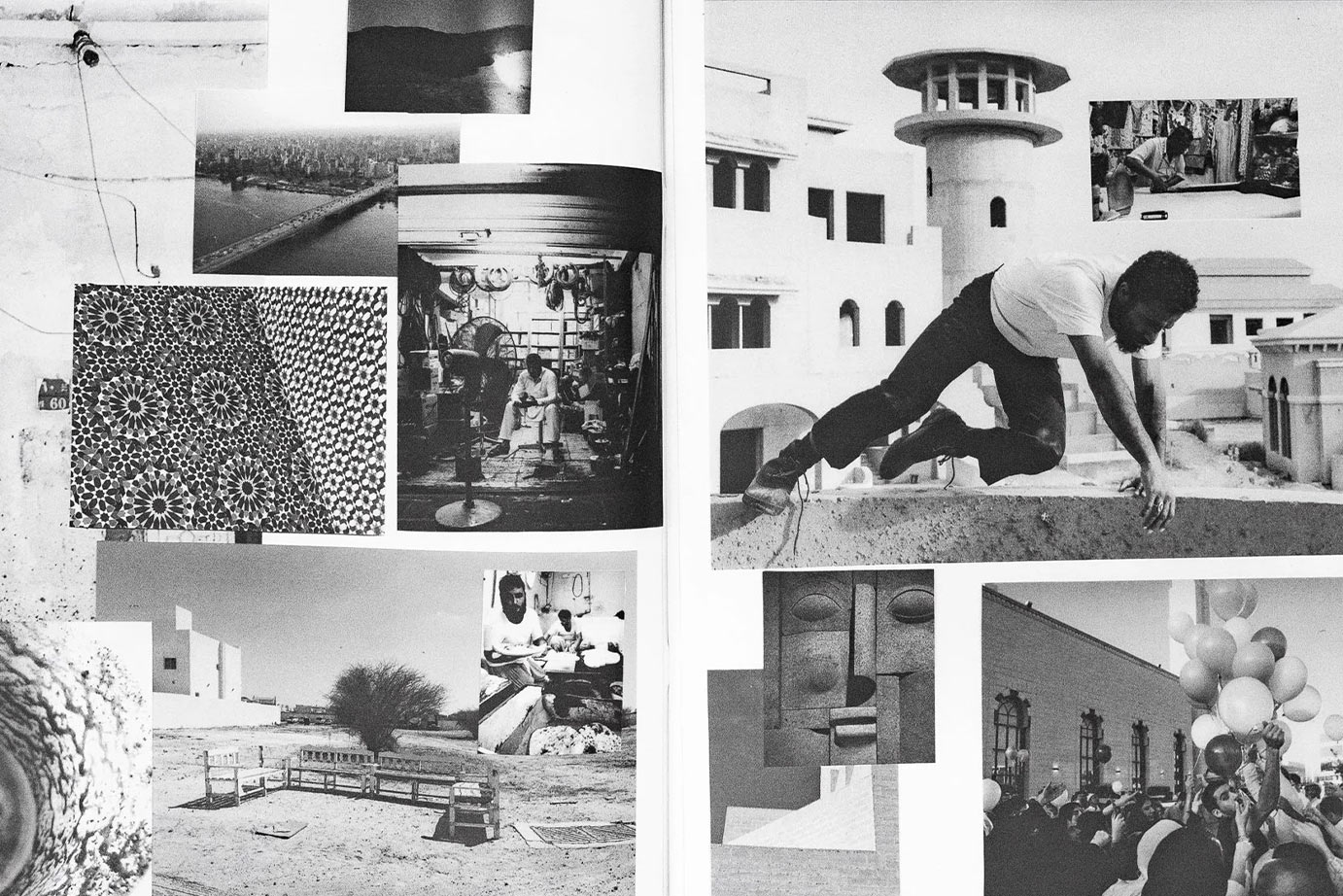
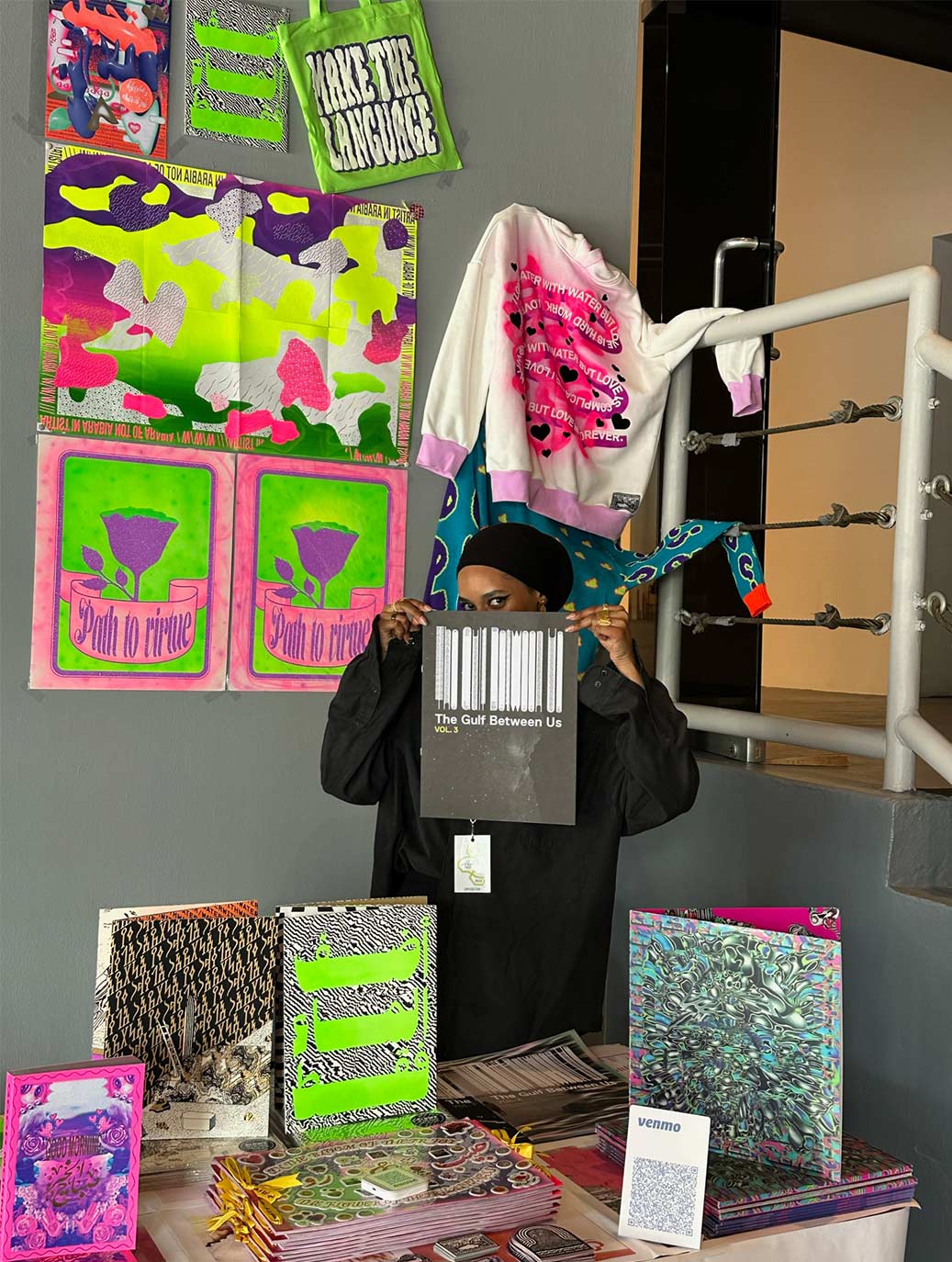
SE: A lot of our publications reference historical, vernacular, personal and contemporary visuals. Take our Strawberries Zine that is inspired by packages of gum often sold in the region, or The Gulf Between Us series that shares photography from different people that references the Gulf in some way, or our newspaper publications that are influenced by imagery and language from old classical children’s tales translated into Arabic.
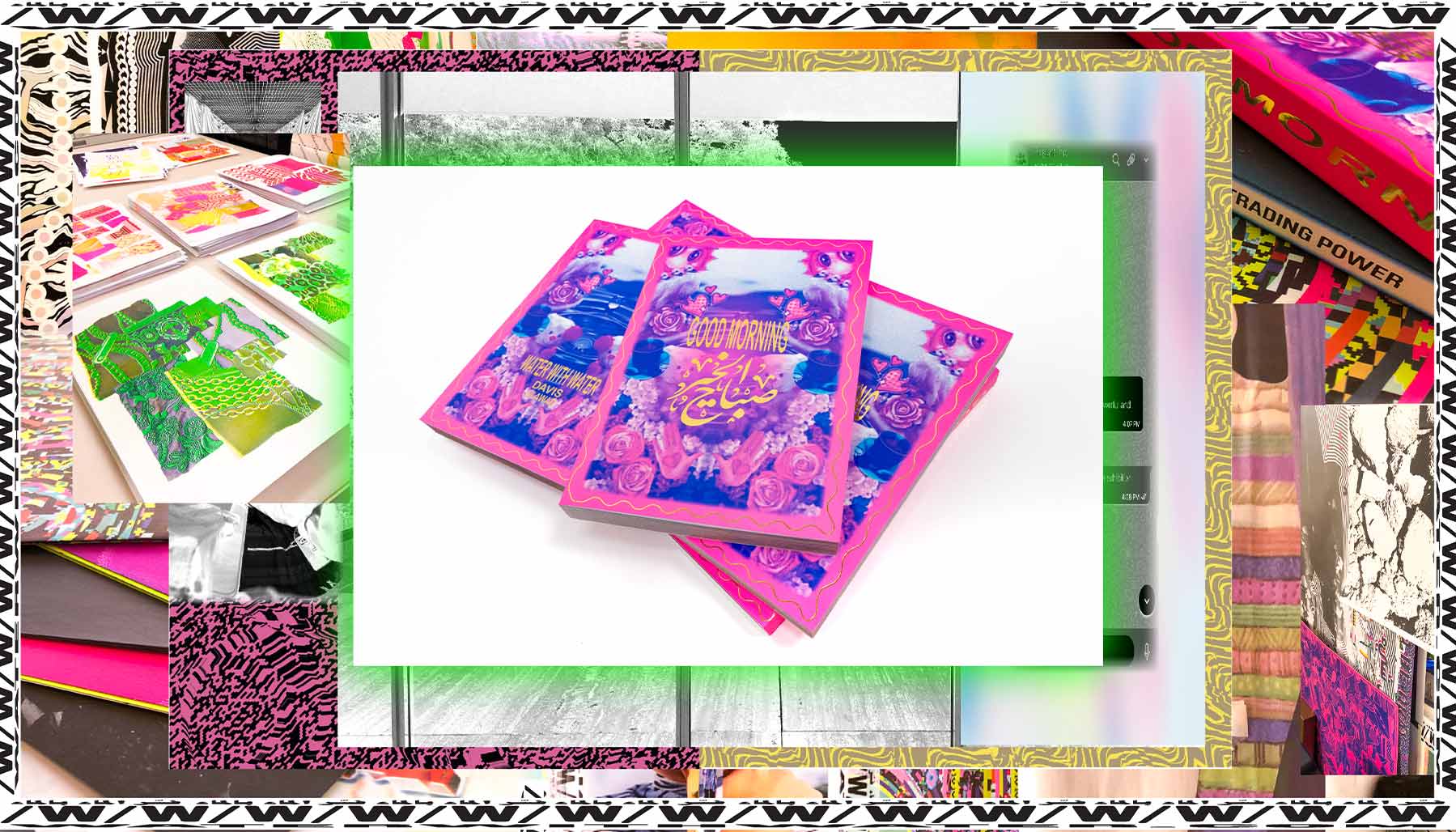
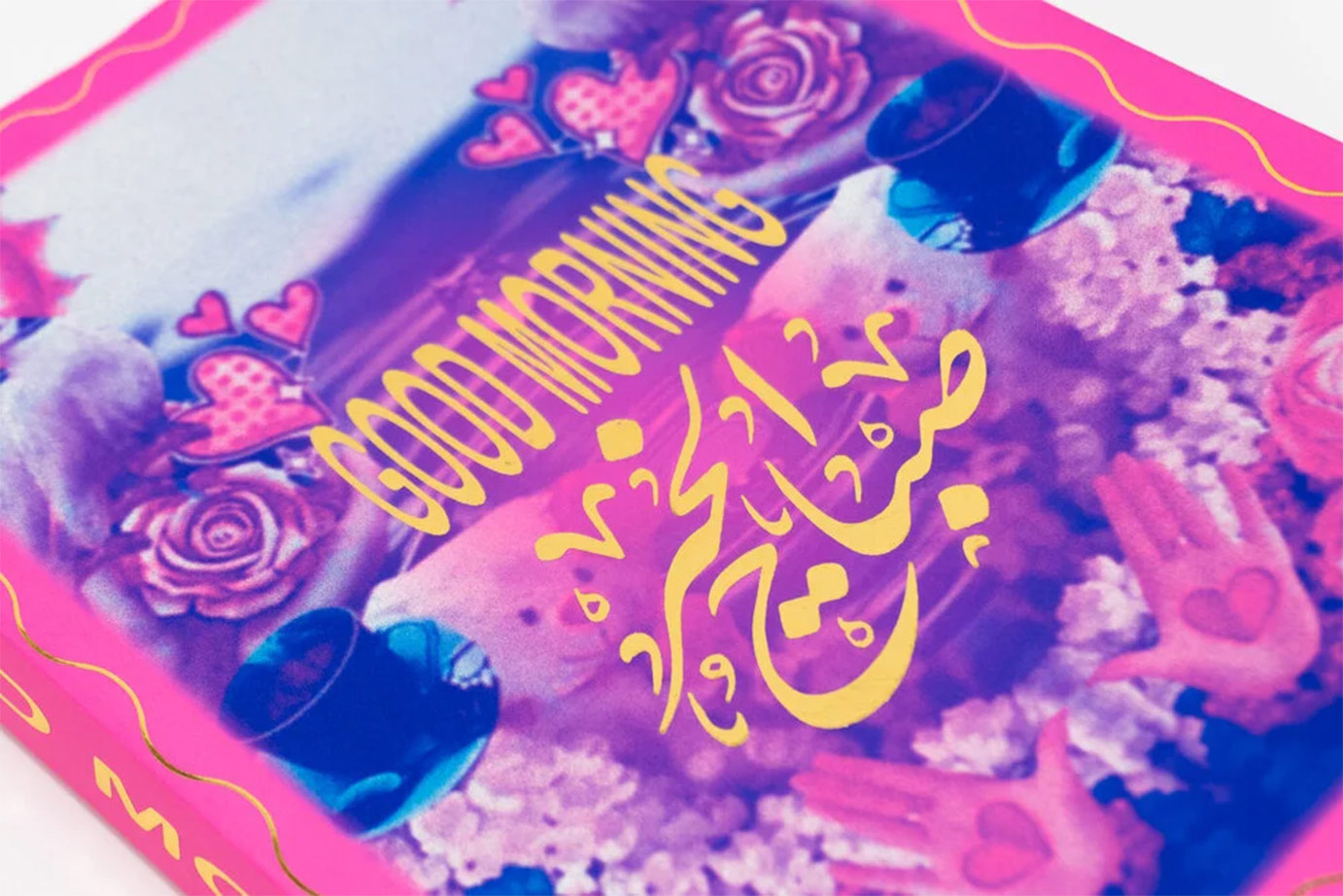
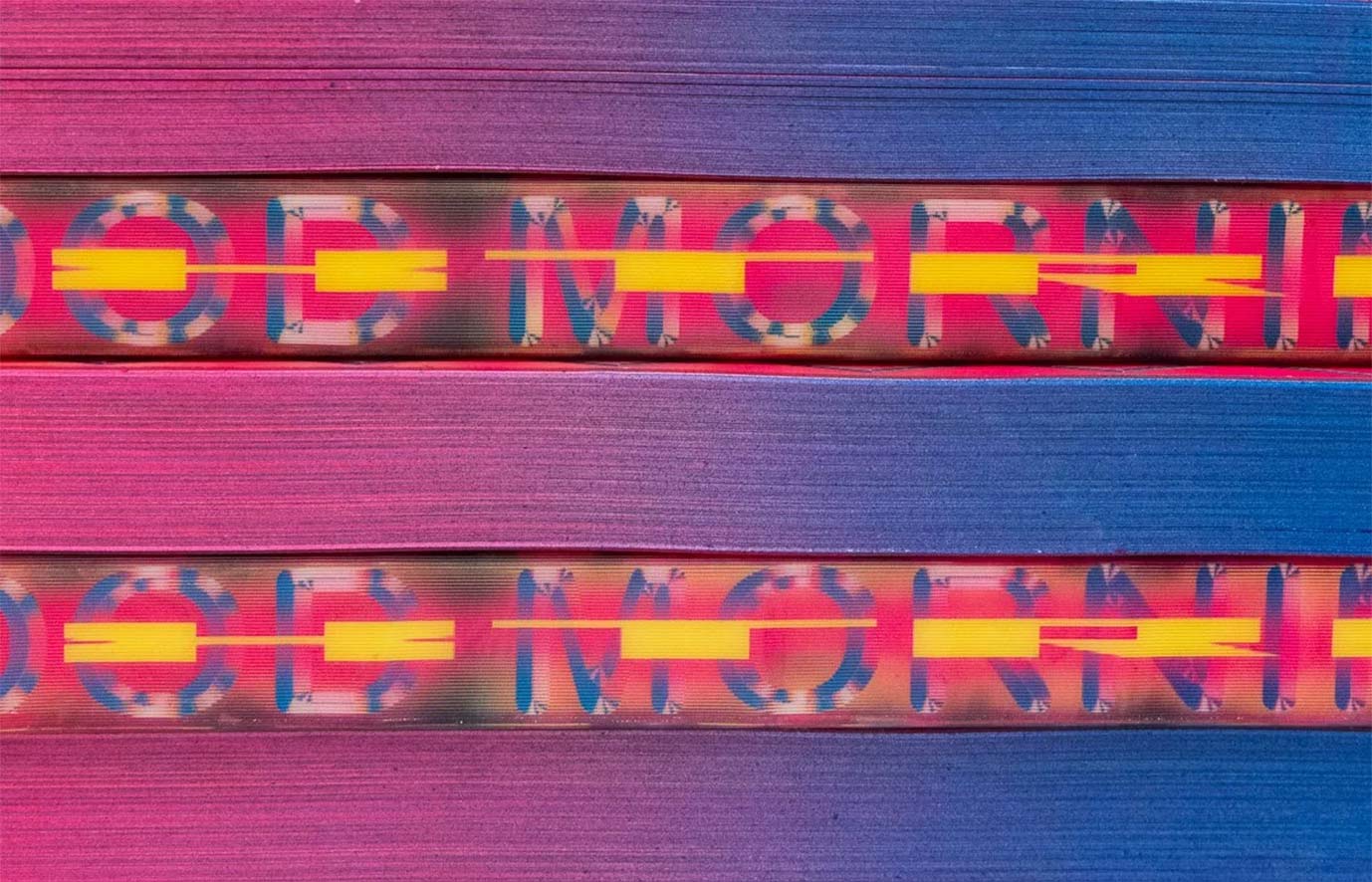
When it comes to cultural storytelling, all of our publications tell a story of some sort and attempt to capture small, meaningful slices of life in the region, such as sentimental family messages or regional language aesthetics. The Good Morning zine, composed of heartfelt greetings from family and friends, becomes a narrative about connection across communities.
We also intentionally create limited-run editions of each publication which allows them to become a story that resists mass reproduction. Scarcity for us isn’t commercial—it’s cultural, sustaining novelty, significance, and attention.
Water With Water is anchored in Doha yet resonates globally, our editions are found in New York, Berlin, Tokyo, Saudi Arabia, and more. This distribution weaves Qatar’s cultural rhythms into the broader international design-narrative landscape.
Can you walk us through the process of making one of your publications, from concept to production?
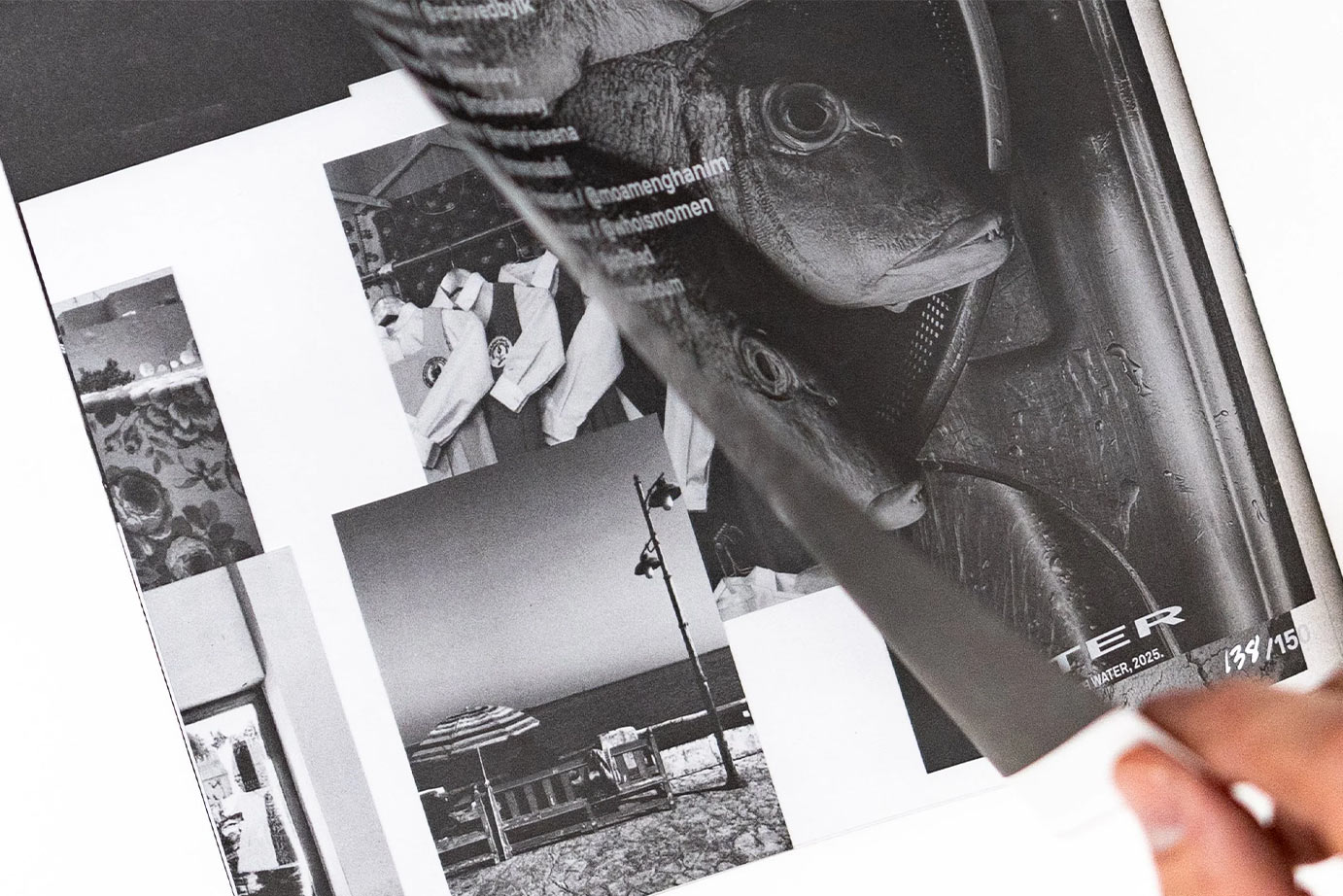
SE: Let’s look at the process for The Gulf Between Us’s first edition. The idea came about after our joint interest in involving a wider audience and inviting new perspectives into our projects. We set up an open call to collect submissions of photographs with the prompt to send us images that were either taken in the Gulf or reminded people of the Gulf. This was one of the first projects we worked on together across continents, and so the technical side of designing the zine was a little more complicated. We worked in a single document, each of us taking turns to refine the layout concepts until we were both equally satisfied.
Your team and collaborators span different cities and disciplines, how do you maintain a shared vision across the distance?
ND: It can be tricky, so we stay flexible. As I’m writing this, I’m flashing back to countless conversations and deadlines. We’re fortunate to travel a lot, so we cross paths often, but it’s not quite the same as working side-by-side every day. Most of the time we work online—regular calls, shared files, ongoing chats—pretty much like most people do in other industries now.
With Sarah, the vision doesn’t really need “maintaining”—it’s already there. Our work has a broad conceptual scope, and nothing feels off-limits. Visually, we have differences, but they collide and overlap in ways that feel natural. In fact, each of our projects on its own is stylistically unique. We don’t have a single, consistent style, but we do have a consistent vision—and somehow, the diversity of our work makes the collection as a whole feel stronger. It’s clear these pieces belong to the same practice, even though that cohesion happened more by accident than by design.
These days, Sarah is busy with her own practice and commissions in New York, so naturally more of the day-to-day weight of W/W/W has shifted to me. It’s not a problem—it feels like a natural evolution—and when we do come together, the creative chemistry is still there.
For other collaborators, we meet regularly and work closely. Almost every project has significant creative contributions from either Sarah or myself, which helps keep a throughline in the work. One of our goals is to give younger creatives the chance to make work they’ve never had the opportunity—or training—to do. We support them in a truly collaborative way, and I think that’s part of why they choose to work with us.
Over time, we’ve seen our teammates grow more independent, which is exciting. It’s still a delicate stage, but with the right support, it could evolve into more of a collective practice rather than just a partnership between Sarah and me. We’d love to see the team develop their own projects and bring them to life. We’re in a good place right now, and we’re grateful for the people we’re working with.
How did your Gulf context shape the way you approach design and print culture?
ND: This is an excellent question because, for both Sarah and me, moving to the Gulf upended our expectations. The region is a place of striking contrasts—extreme wealth alongside poverty, with most people coming from somewhere else in search of a better life. There’s a certain camaraderie in that shared experience, but also plenty of contradictions. Cultures exist side by side here—interacting, influencing each other, but not thoroughly blending. A great metaphor I heard was that it’s less like a smoothie and more like a mixed salad: each ingredient retains its character, and together they create something richer. Put it in a blender and you’d lose what makes it interesting.
Sarah and I connected in part through our outsider perspectives. On paper, we couldn’t be more different—I was a middle-aged white American man with a family, she was a young Black British-Sudanese Muslim woman. Yet once we began working together, many preconceptions about identity and ideology fell away. We found the freedom to define our practice on our own terms. It’s been messy, full of evolutions, and has placed us both inside and outside various Gulf subcultures—sometimes in surprising ways.
The Gulf’s constant shape-shifting, cultural juxtapositions, and diverse encounters create a space where creatives can thrive. There’s physical safety, and for many, some financial stability—but also the reminder that we are guests here, and circumstances can change quickly. It’s dynamic, it resists routine, and it keeps me aware of how much I still have to learn.
When I arrived, I didn’t see much print culture—at least not the kind I loved: artist books, zines, unusual posters. In Qatar, there was little historical precedent for artistic printmaking. One of my first opportunities was a commission to design a publication for a biennial art and design conference at VCUarts Qatar. I used it as a chance to explore creative and cultural questions around print, representation, graphic language, and context—questions that have continued to shape our practice ever since.
You work across risograph, airbrush, screen printing, and more. How important is technique in your publications?
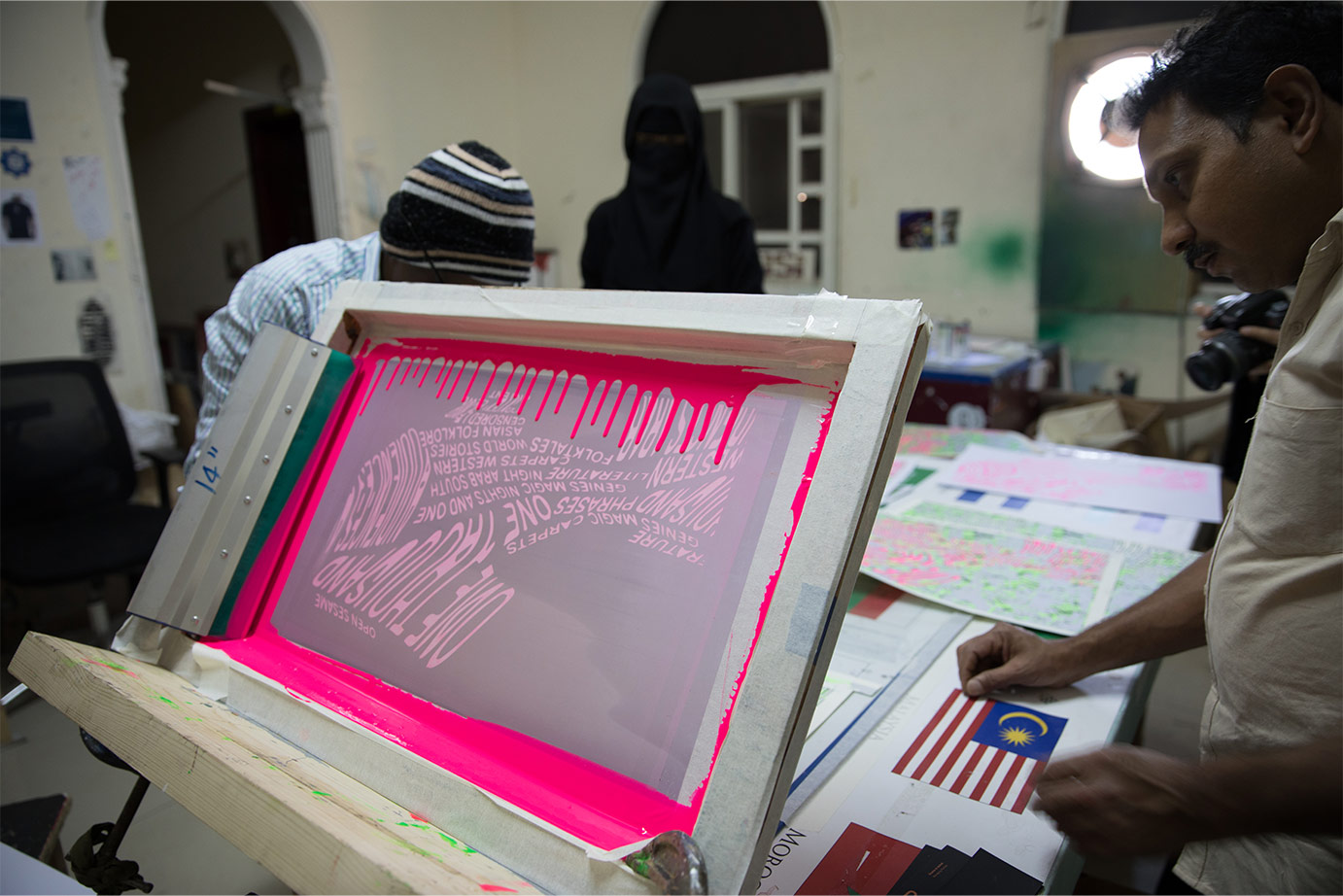
Us: Technique is hugely important to us—not in the sense of perfect mastery, but in how we choose and apply different tools. Many projects begin with a tool or process, and we find our way through making. We start by playing, experimenting, and testing, letting ideas emerge rather than forcing them in a set direction. This means we have plenty of loose ends, false starts, and unfinished projects, but it also keeps the work alive.
We think of our practice as an art practice that uses the tools and media of design. Experimentation and play are forms of research. Art often draws on the subconscious and intuition, so too much preconception can be limiting. Design, by contrast, is about managing complexity toward a defined solution, with clear aims and criteria. In our work, we borrow from both approaches: open-ended exploration combined with a drive to refine and resolve.
We deliberately inject complexity, unknowns, and new techniques to avoid leaning too heavily on our strengths. If we’re not learning something from a project, it’s time to move on. Mixing media, changing pace, and shifting workflows help us stay uncomfortable enough to grow. And yes, it also means making a lot of bad work along the way—because that’s often the only way to get to the work we truly love.
Many of your titles feel like personal references, or inside jokes, what role does intimacy play in the work?
ND: I’m glad you noticed—that’s true. Every project has a bigger story behind it. Sometimes we share that story, and sometimes we keep it to ourselves. We want people to connect with the work right away, but if they look closer or have more context, there’s more to discover.
Our process is rooted in conversation. We talk about all kinds of things, and the zines or other pieces often become a place to put those ideas. Some projects are deeply personal, others less so—but even when they are, the viewer doesn’t need to know the backstory to enjoy or connect with the work.
Are there any projects that felt especially personal to members of the team? What made them meaningful?
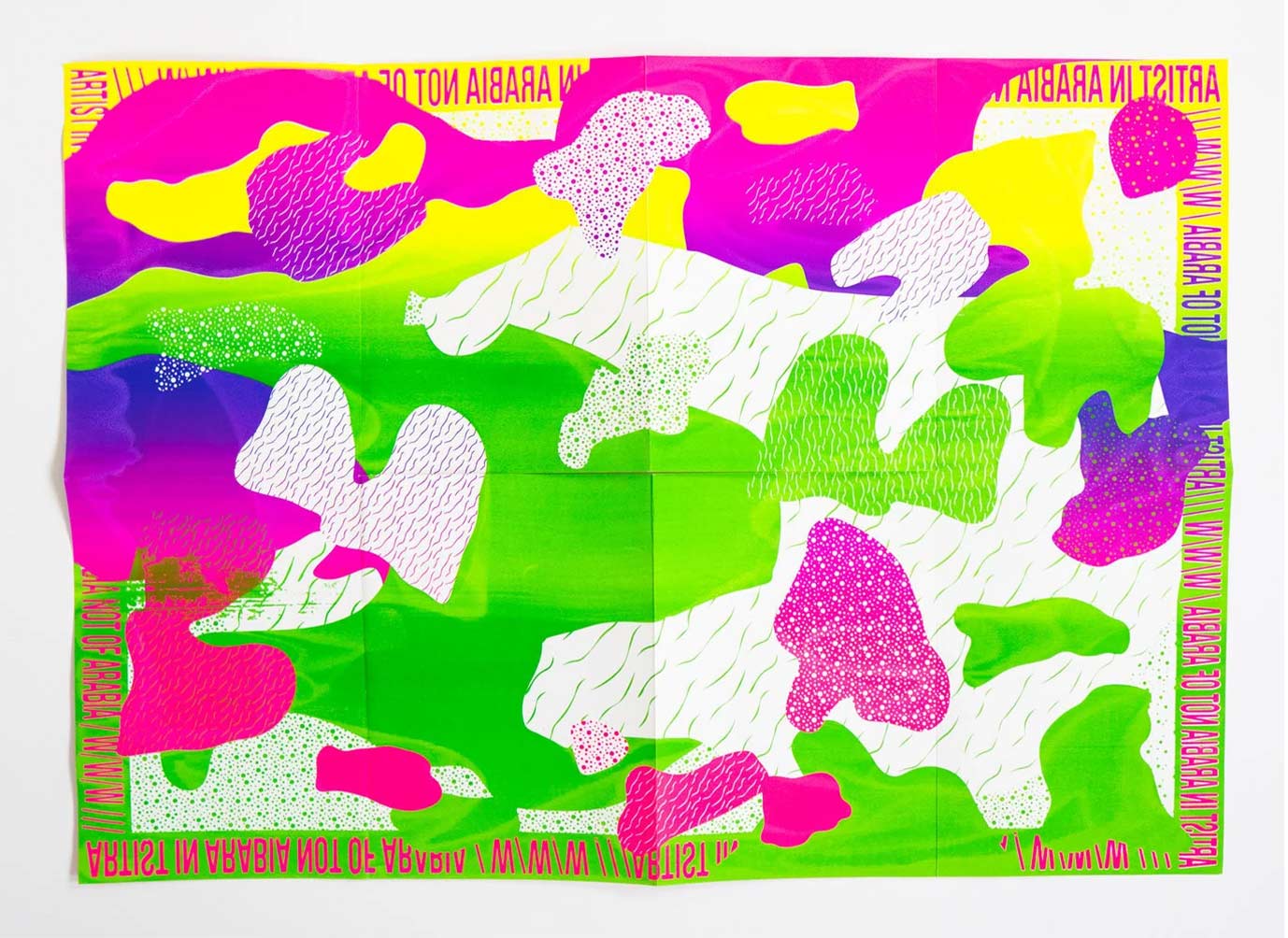
ND: Honestly, many of our projects feel personal—it’s hard to name just one. Works like Orientalism Z to A, Empty Packages, and Save Me From What… all came from moments of conflict, uncertainty, or shared discovery. For me, the most meaningful projects are the ones that require a lot of conversation, honesty, and trust within the team.
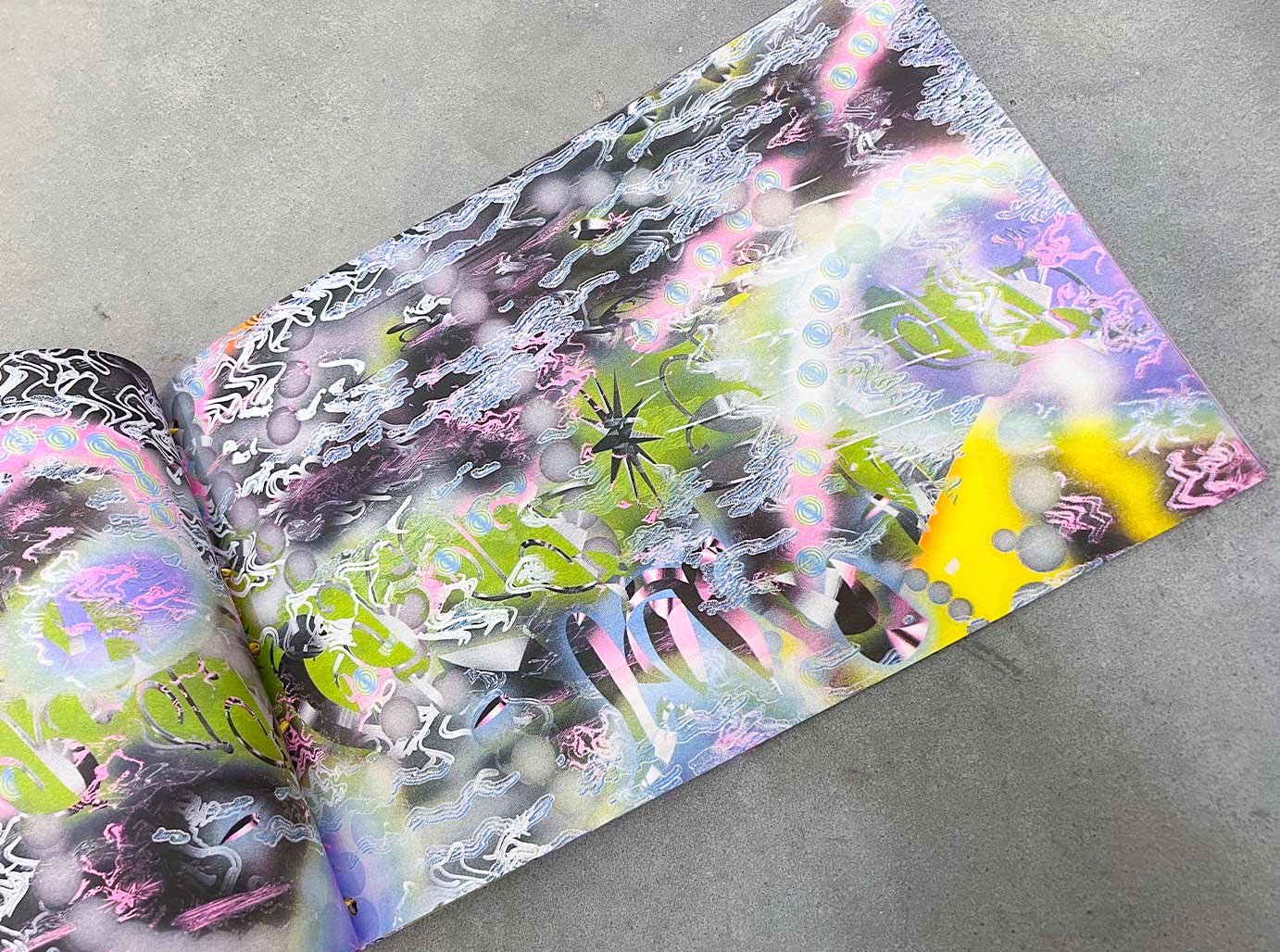
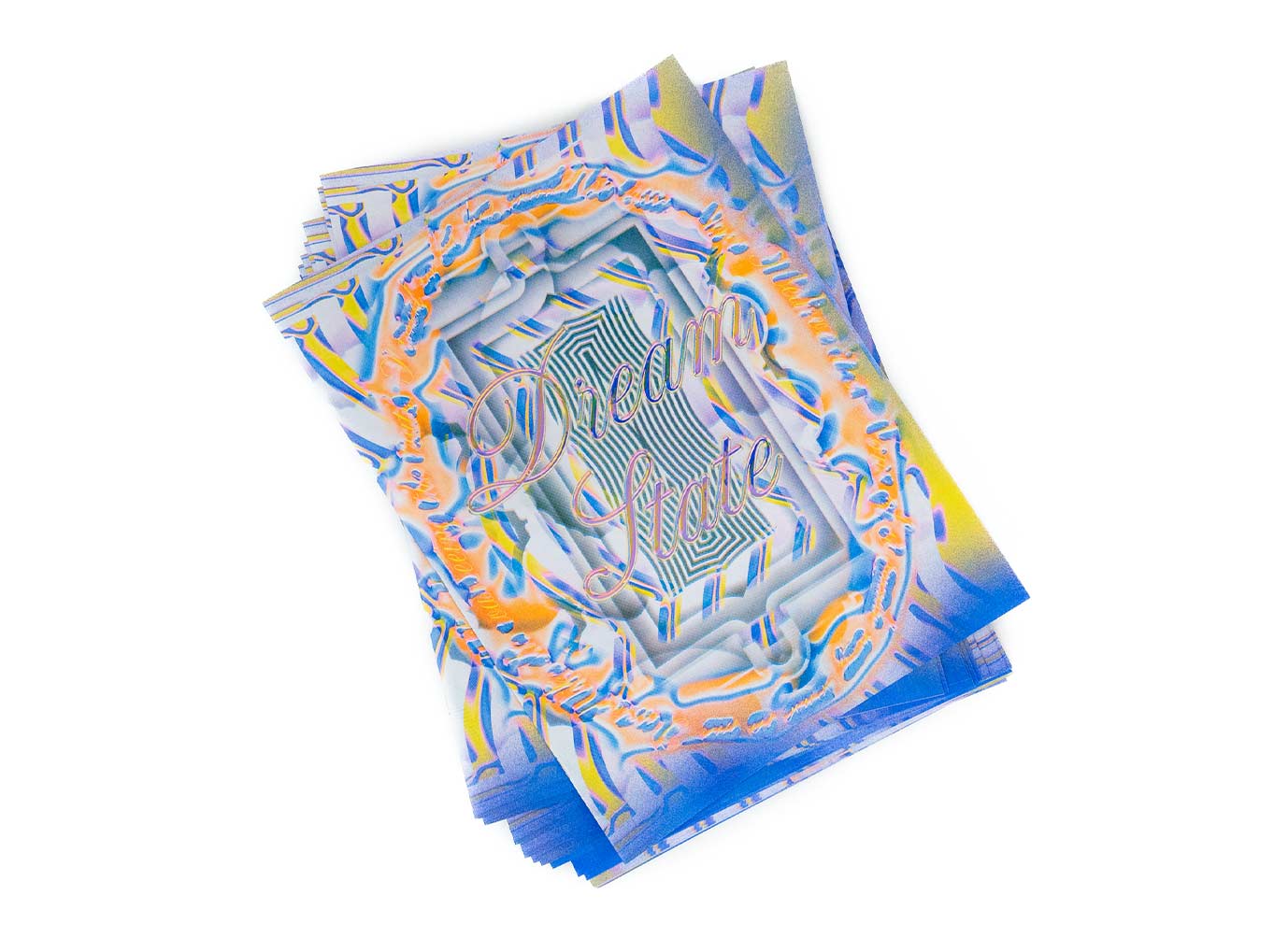
Most recently, I worked on Dream State, an A2 risograph zine that was deeply personal. It grew out of an ongoing conversation with a colleague about her mother’s experience of the afterlife—or a space between life and death. As our parents age, these topics come closer to home, and her story really stayed with me. I created the zine and surprised her with it when it was finished. It’s not a linear narrative but rather a series of fragments—capturing a moment in her family’s history and some of what she was processing at the time.
Beyond the personal and emotional layers, Dream State was also a technical milestone for us. We printed it entirely in-house on Type Araby’s A2 riso printer—four colors, double-sided, 16 pages, in an edition of 150. The first 50 copies had holographic film on the covers, also done in-house. The project brought together so many of the techniques we’ve been refining: airbrushed illustrations (both freehand and stencil), Photoshop compositing, risograph printing, and heat-press vinyl. Pulling all of that together at that scale felt like a real achievement for our team.
What do you hope people experience or take away when they interact with something you’ve made?
Us: We draw on references from many places, techniques, and critiques, aiming for the work to feel both foreign and familiar, exotic and comforting. That paradox mirrors my own experience of living in the Gulf—alien and familiar, home and away at the same time. These ideas are personal to us, but we’re often surprised by how widely they resonate. We’ve seen people from across Asia, Europe, the Americas, and Africa—of different ages, religions, and worldviews—connect to our projects in their own ways. Once a piece leaves our hands, we hope it takes on new meaning for the person who lives with it.
If someone were new to Water With Water, which piece would you hand them first, and why?
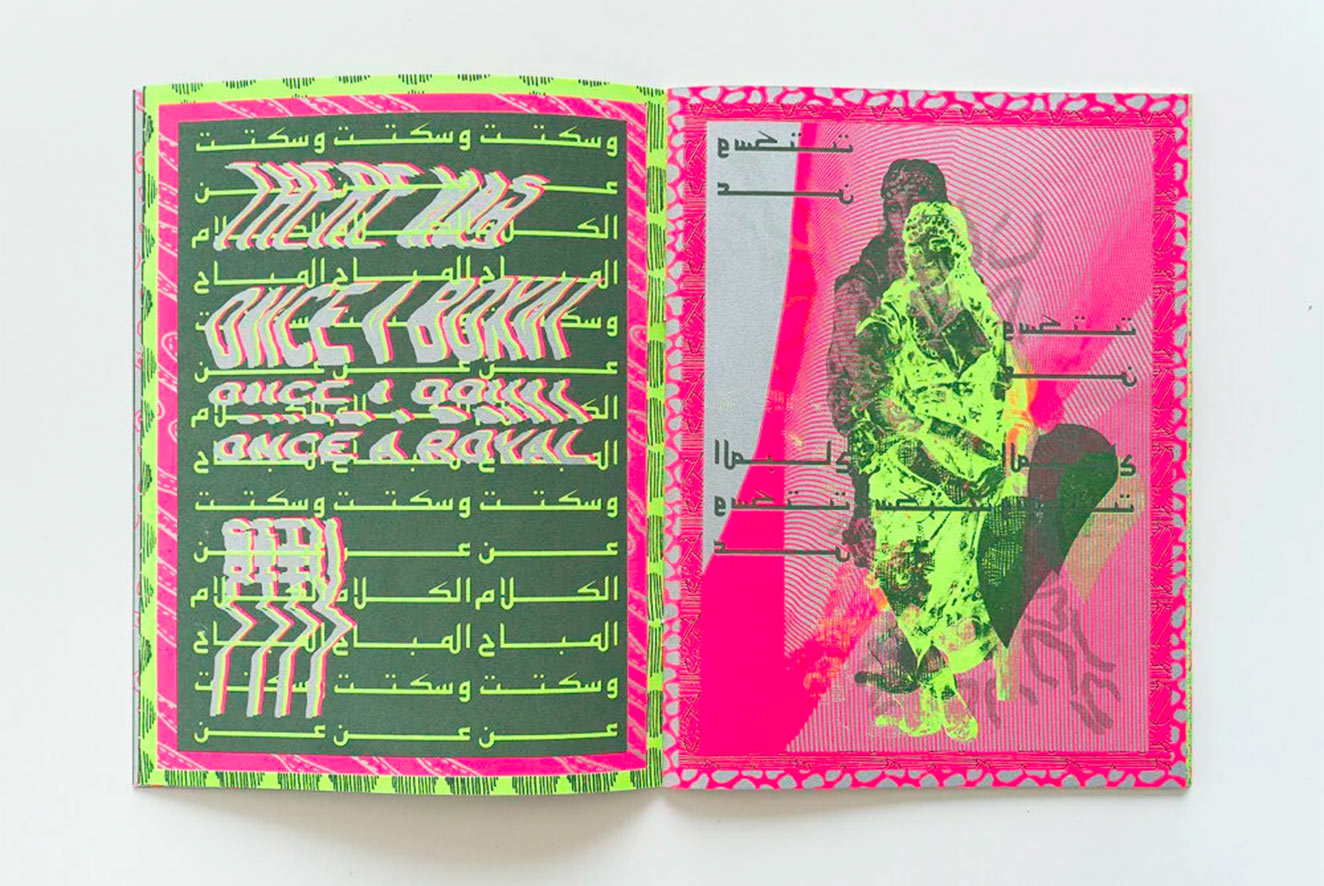
ND: Good Morning is definitely on the “greatest hits” list—it’s accessible, fun, playful, and a strong reflection of who we are. After that, I’d hand someone any of our screen-printed zines—1001 Fantasy Pop Nights, Fate Lay in Wait, or Just Add Water. Each of these shows our commitment to craft, quality materials, and a strong physical and visual presence. Dream State, as I mentioned earlier, is another good choice—it brings together many of our formal and conceptual interests in one project. Sarah’s In the Bloom of Their Joy… is mega, and a good representation of her growth as a designer.
Where can people find you?
Our website is waterwithwater.com and our Instagram is @water.with.water. In person, you can find our work at Printed Matter in New York, the Walker Art Center, and a handful of zine shops in Europe and Asia. For viewing, the most complete U.S. collections are at the New York Public Library and the Watson Library at the Met, with key pieces also at the Harvard Fine Arts Library, Yale School of Art Library, and ArtCenter in Pasadena. In the Gulf, the Jameel Arts Centre in Dubai holds a mostly complete collection, as does the Bayt Al Mamzar artist residency.
For the full experience, come to Doha! We’re always open to studio visits. Our small studio is part of a larger shared space at VCUarts Qatar, within the Institute for Creative Research. It’s not epic, but it’s authentic—and you can also explore the other studios. Just send us a message and we’ll set something up.