Winona Dodds-Smith
What’s your name and where are you based?
My name is Winona Dodds-smith, and I am based in East London.
Can you describe your practice in a few words?
I am an artist, interested in the anthropomorphic nature of objecthood.
How did your curiosity for creating begin?
Lots of my wider family are artists or makers in some way, so I guess I never felt it was expected of me to do anything else. I’ve sort of always flitted in between deep interests in terms of creating, ever since I was a child. I always wanted to ‘do well’, but it was made clear to me that school wasn’t really something I was good at. I think I needed to have something external that I felt was my place, where I could be ‘successful’ even at a very young age. I’ve always been very motivated in that way; I get kind of restless if I’m not making something.
The title of your collection, Curiomantive, is a term you coined yourself. Can you tell us about what this word means for you and what it helps you say?
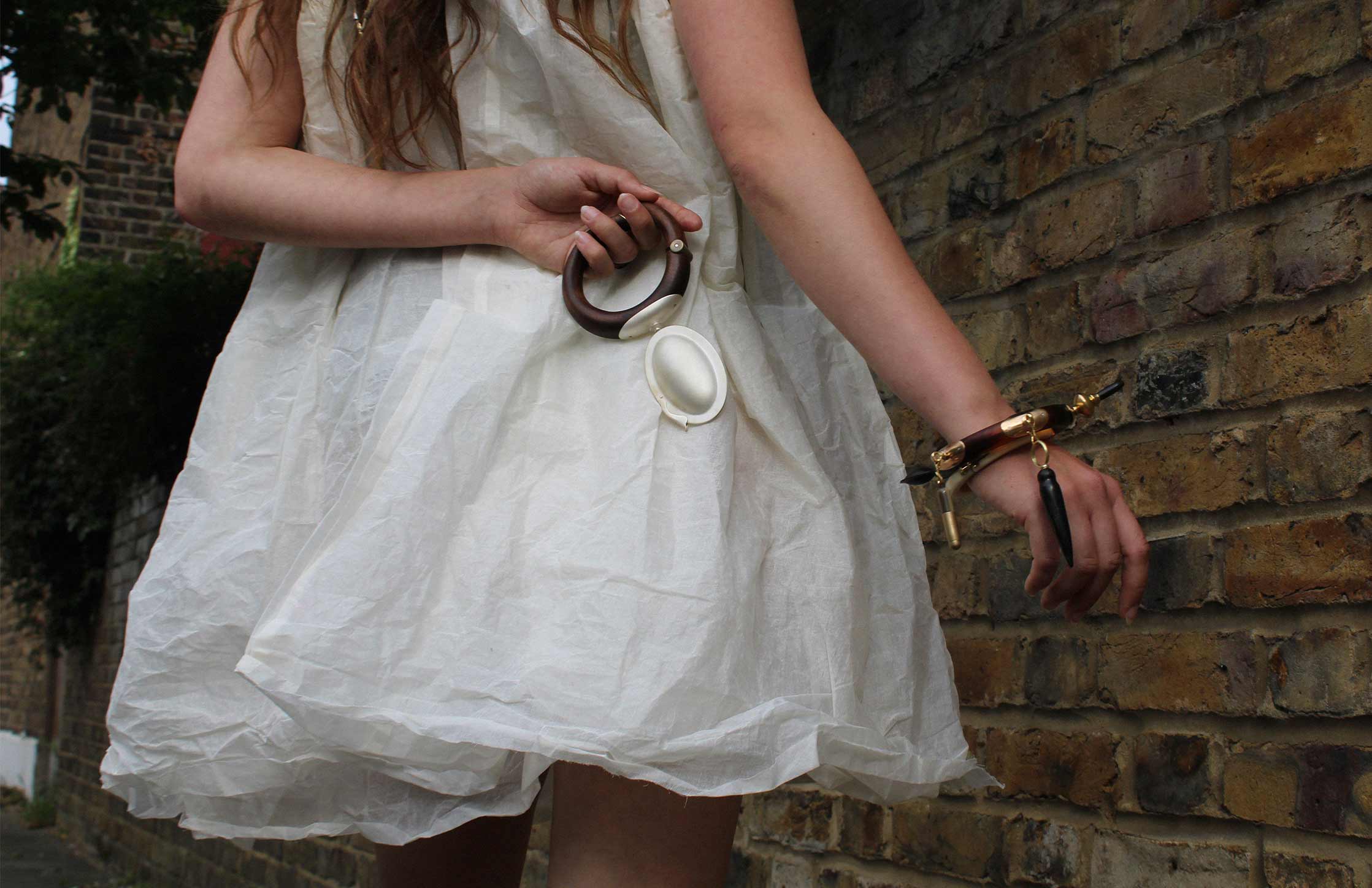
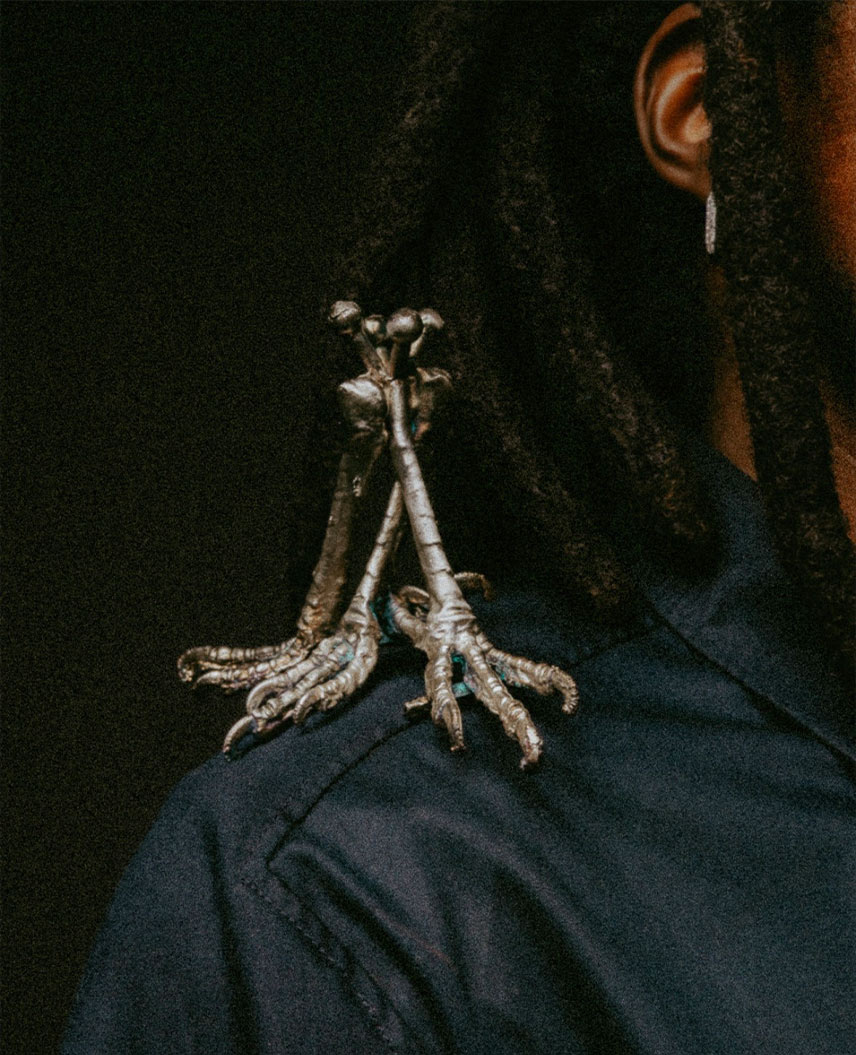
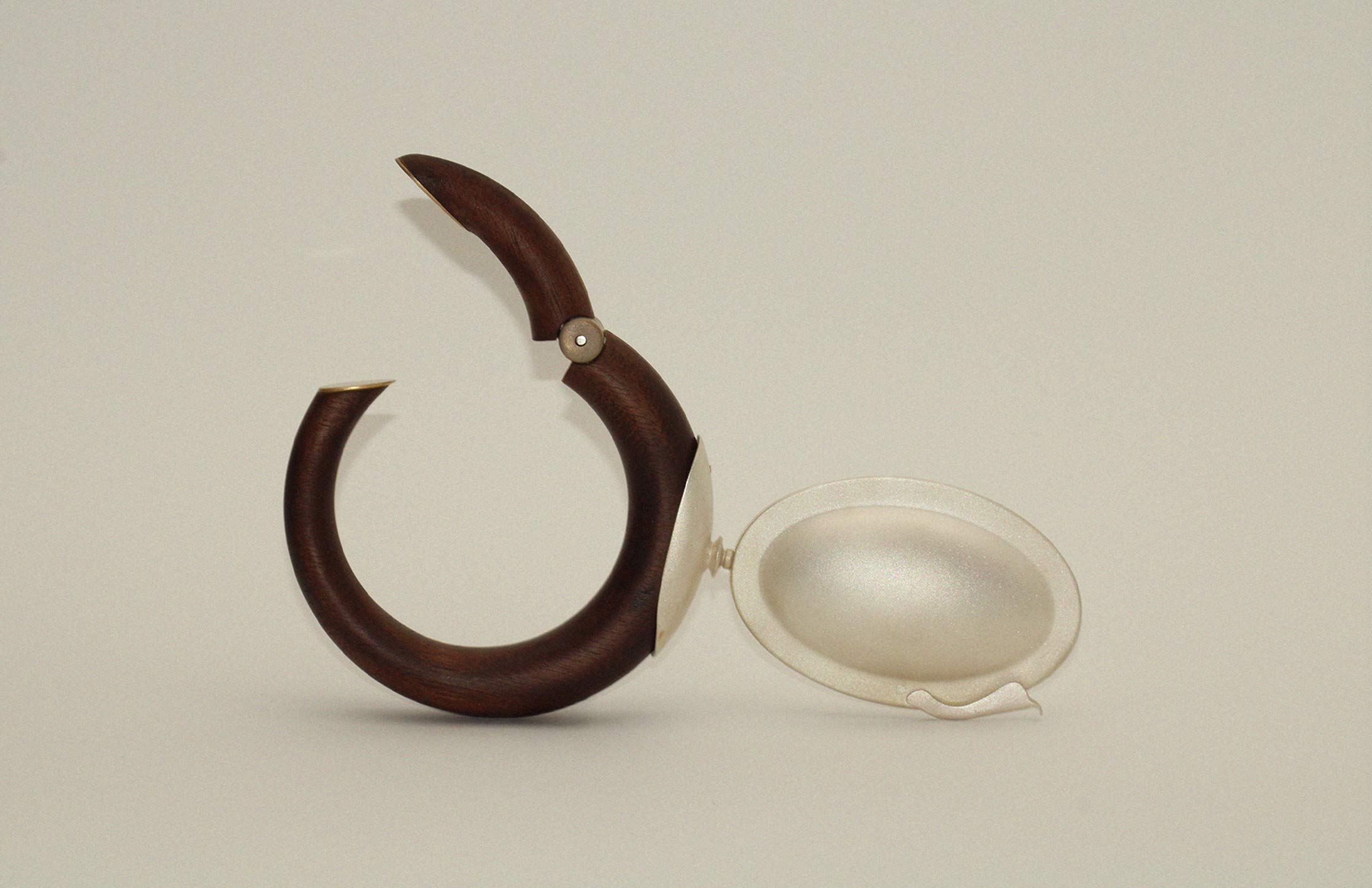
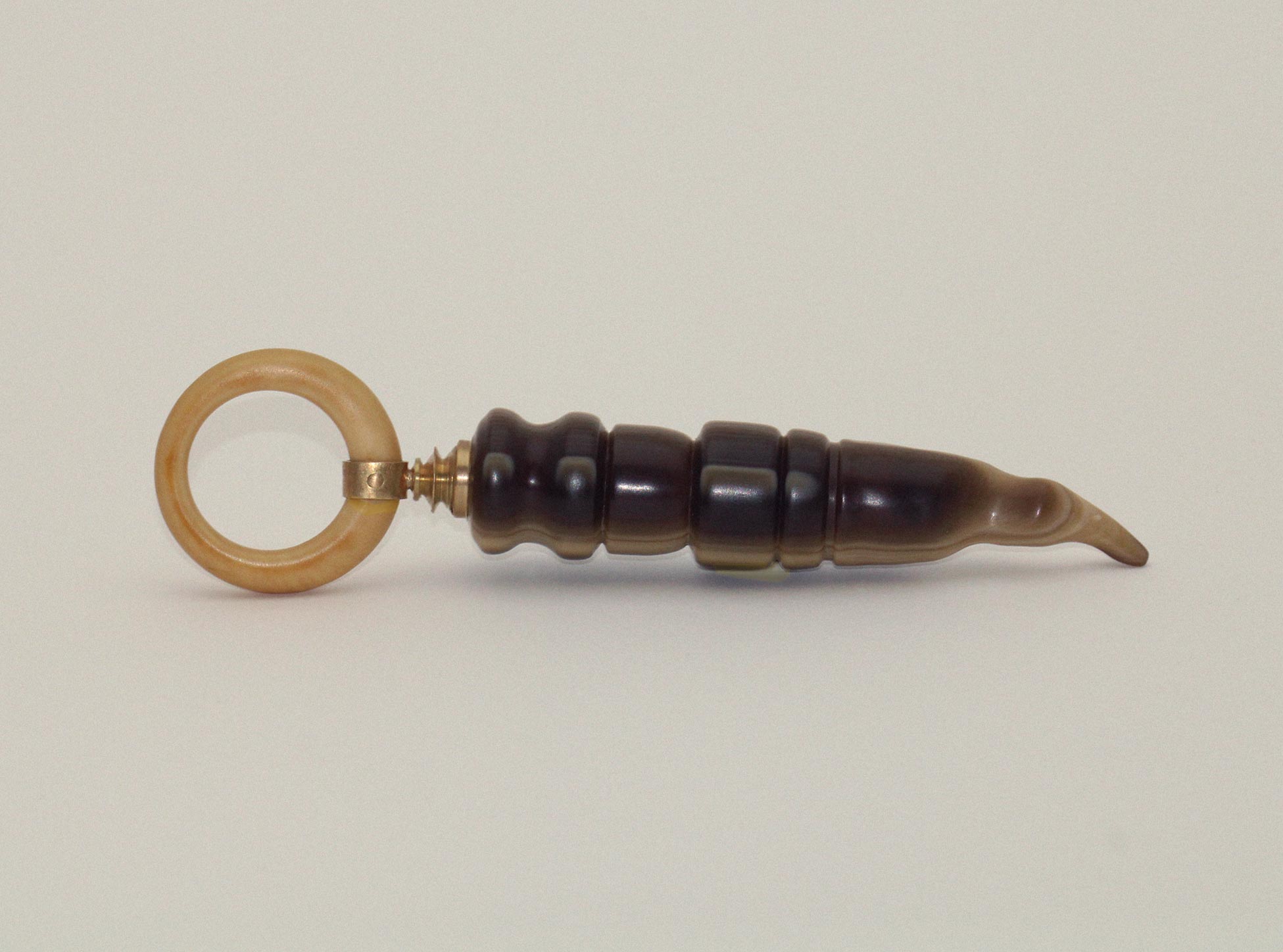
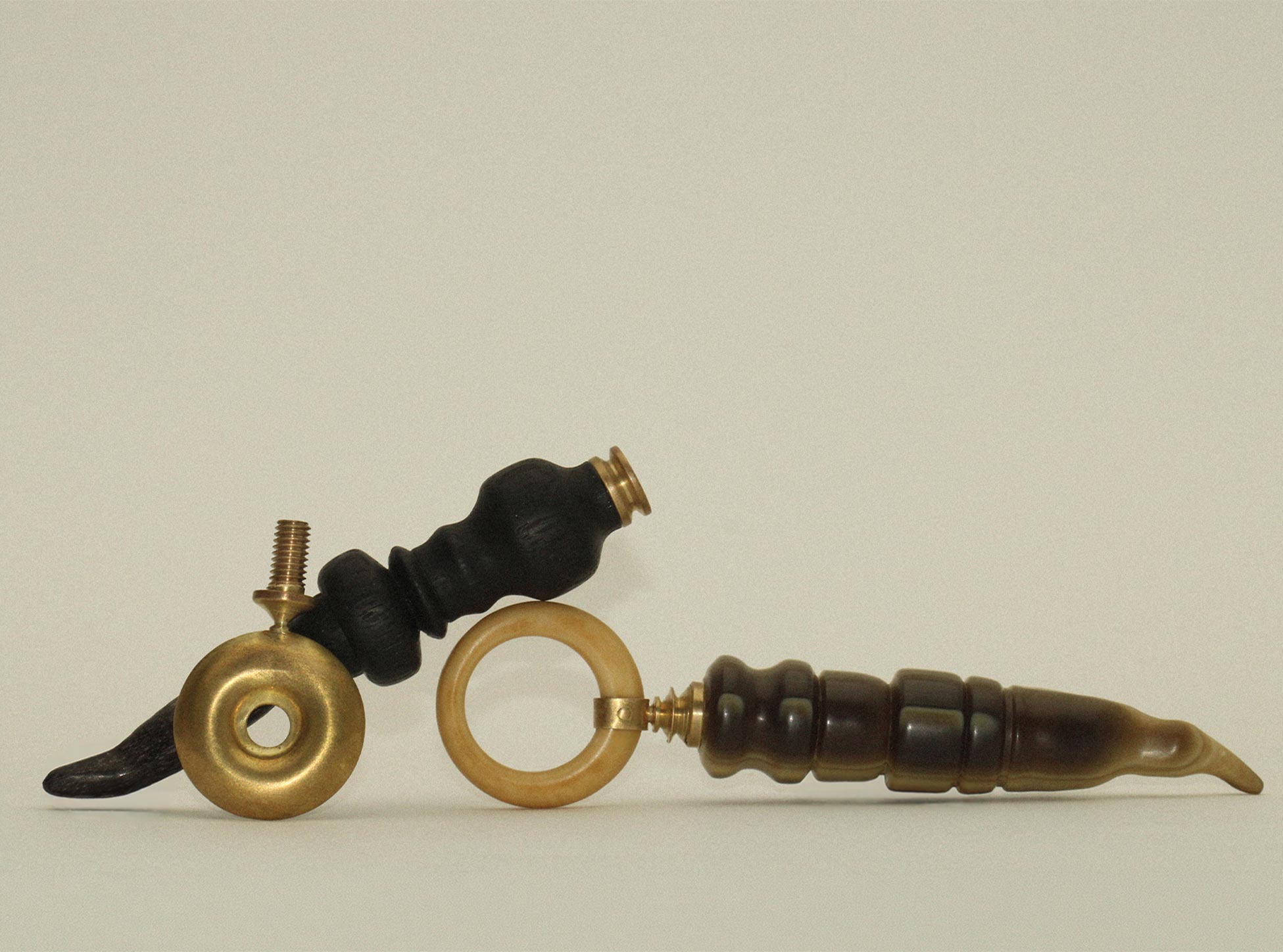
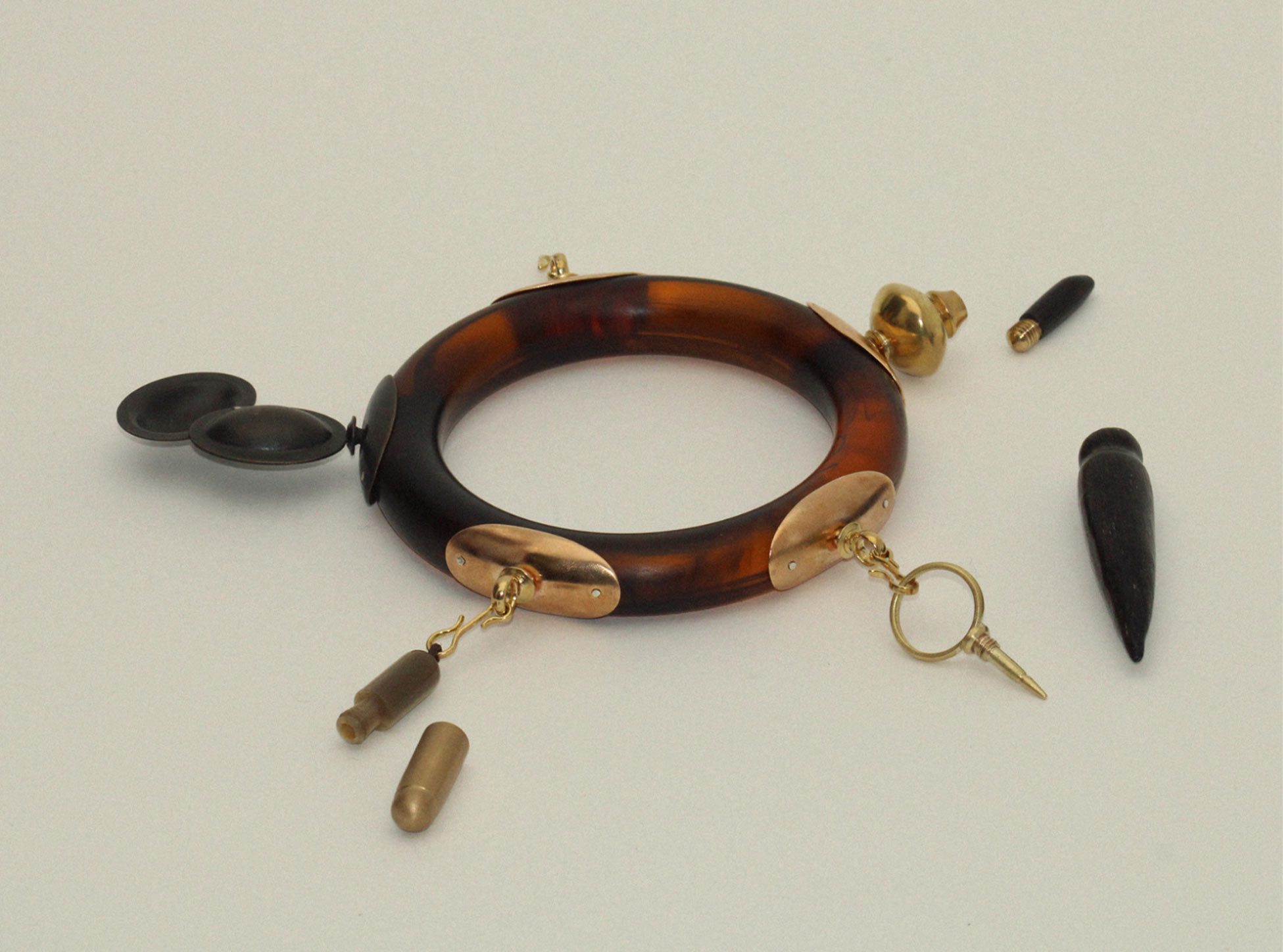
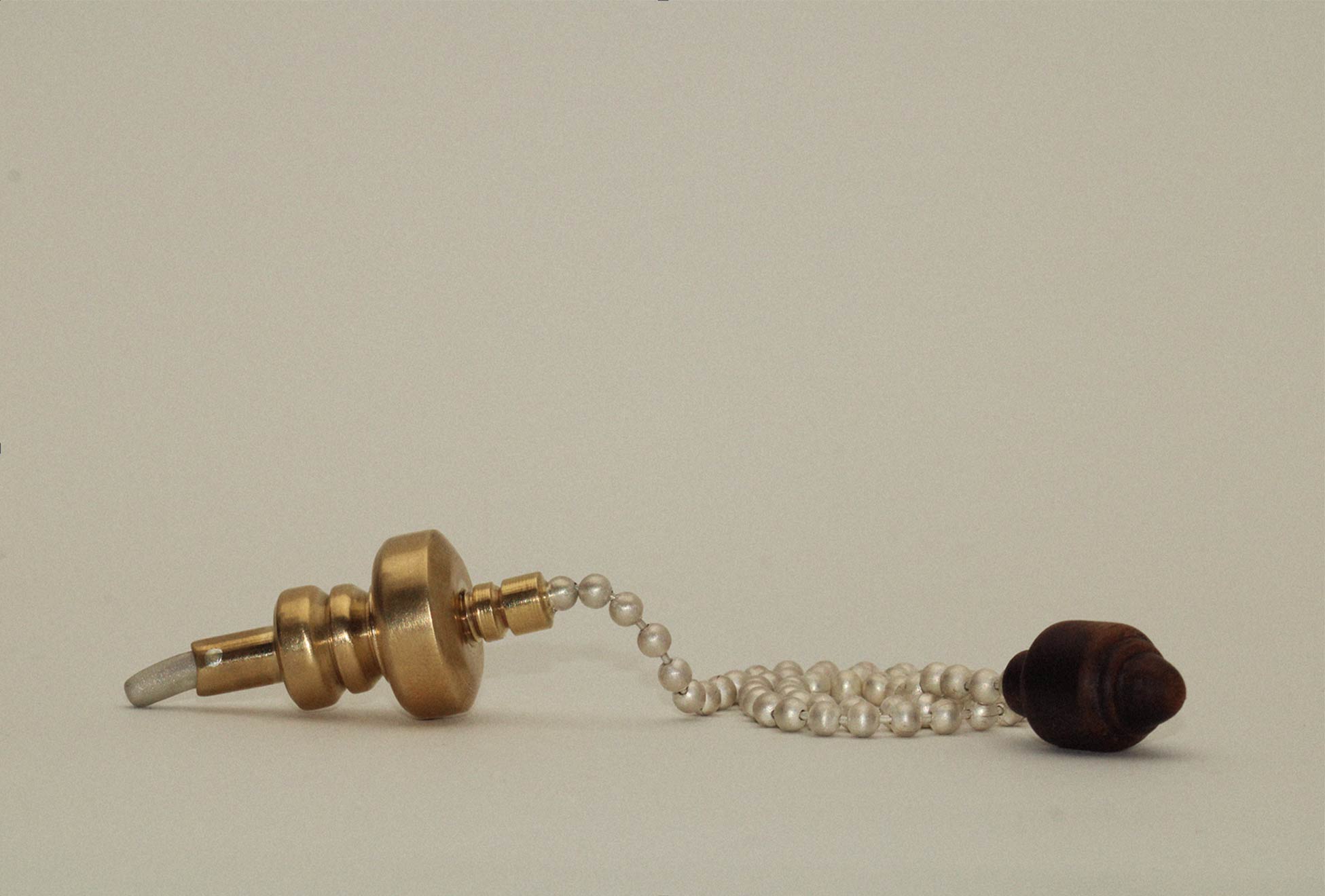
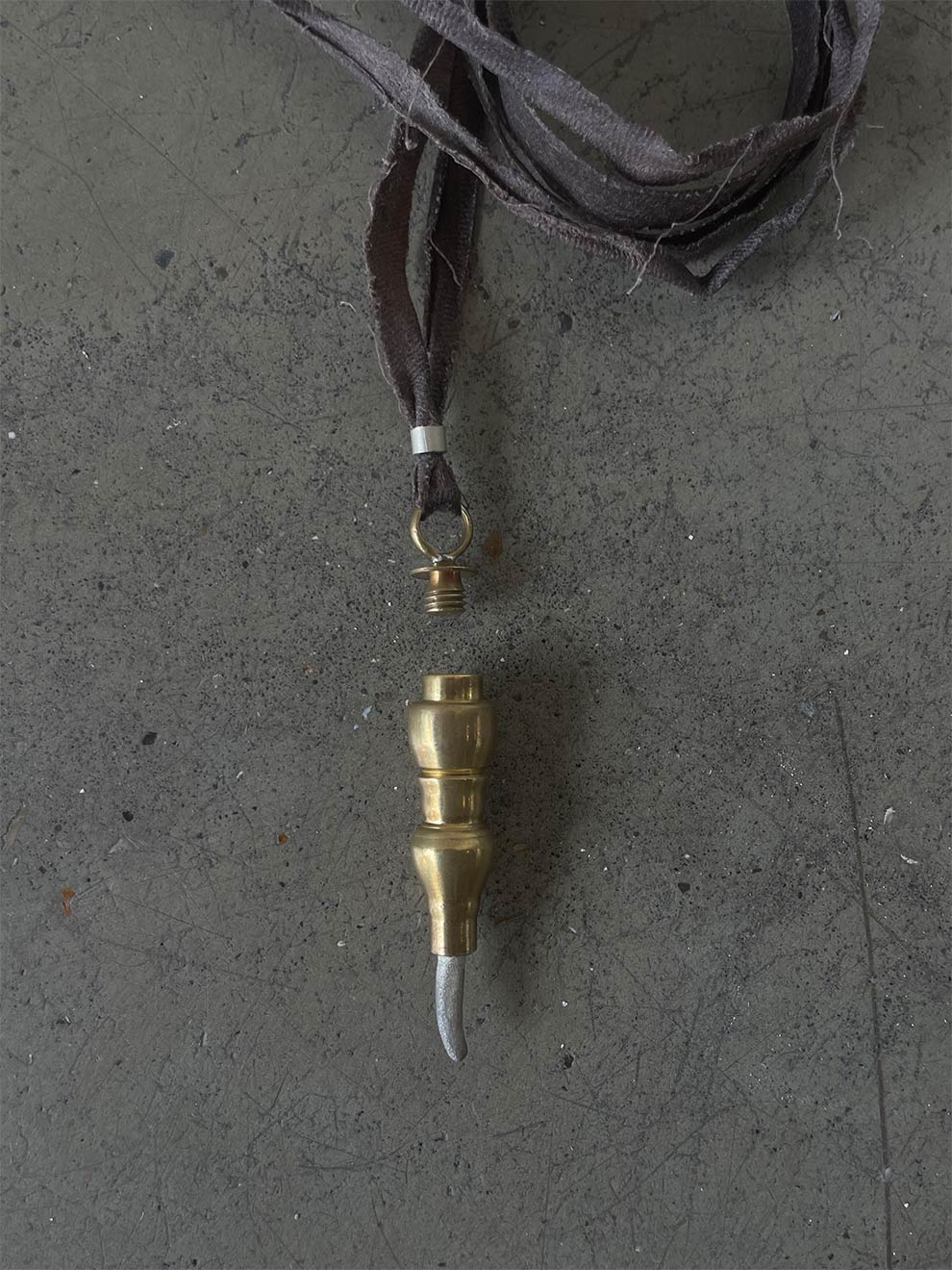
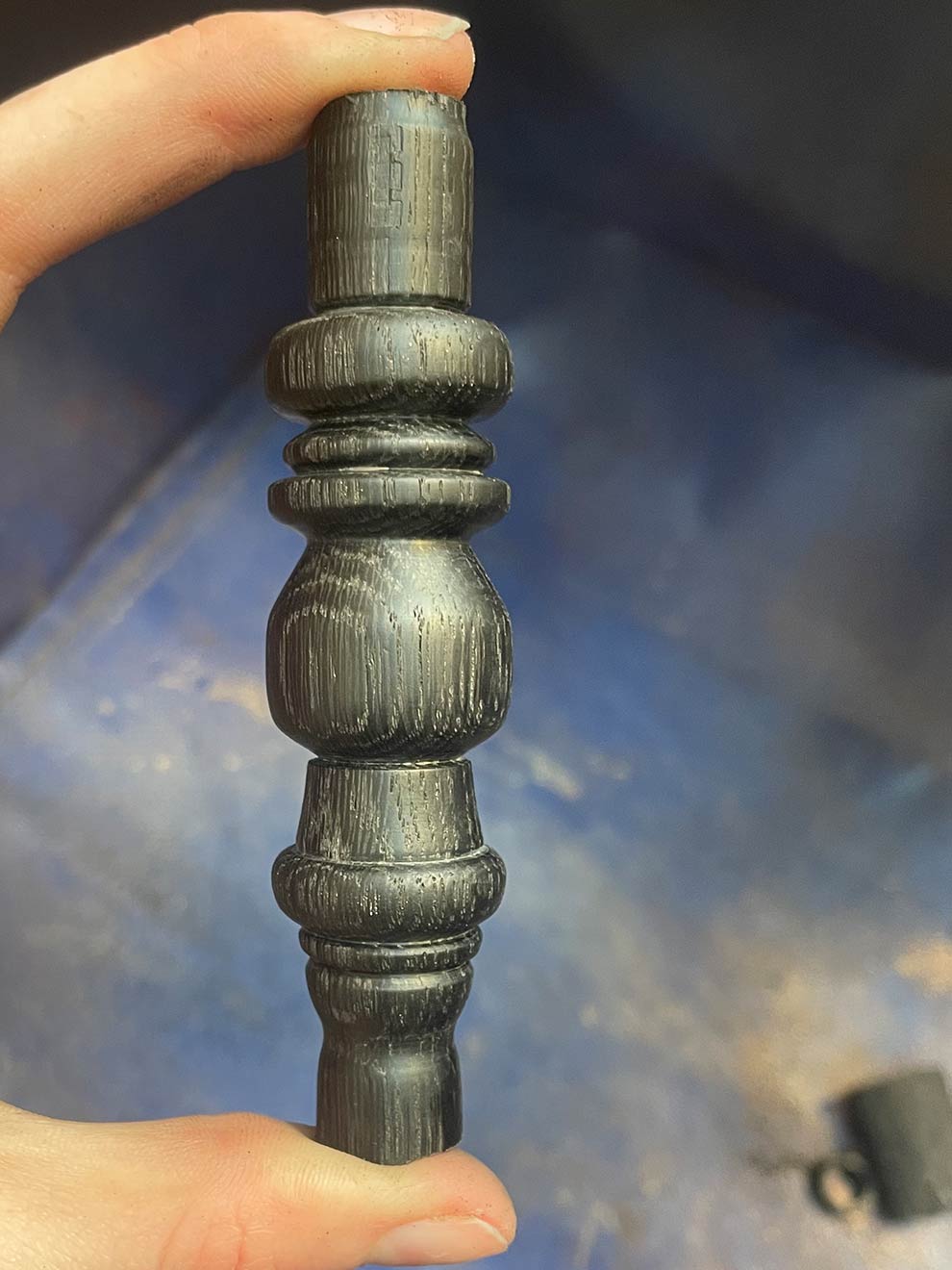
I use ‘Curiomantive’ as a term to describe the kind of objects I wanted to make. It means, ‘A small decorative object, intended to encourage intrigue and promote a more romantic relationship with the everyday’. I was researching the Etymology of other words important to the project and thought that creating my own adjective for the objects would further infuse them with a sense of history. I imagined the ‘Curiomantive’ section of a Museum, or new collections of ‘Curiomantives’ found by local metal detectors, undergoing an archaeological dig.
Throughout the collection, you speak about encouraging “a more romantic relationship with the everyday” What do you think is missing?
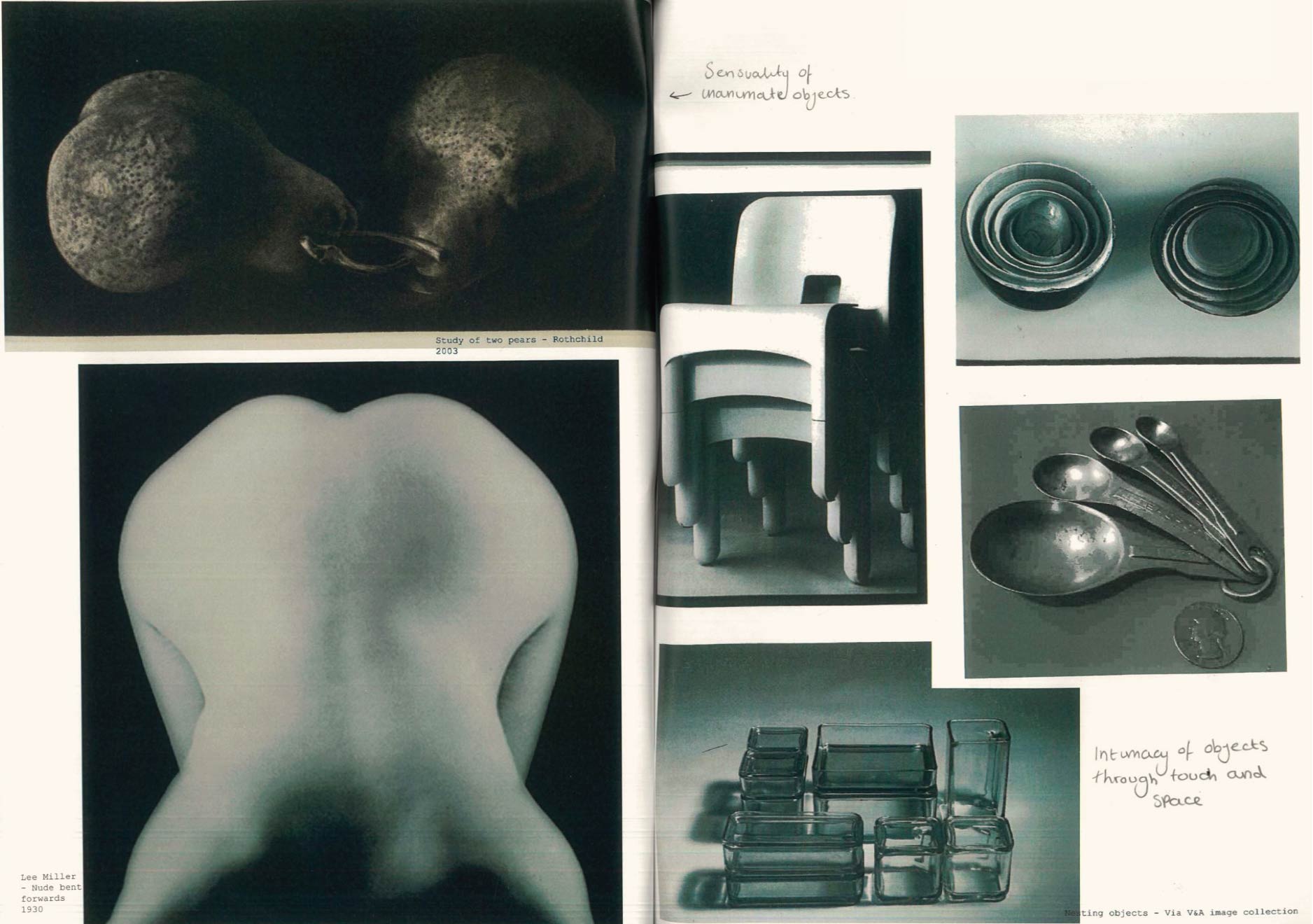
I think that in contemporary life, where productivity and efficiency are considered paramount in all areas of life, that we lose any ability to meditate upon romance or sensuality externally to in a direct correlation with sex. But I do think that these sensibilities are deeply human and that a relationship with romance itself is of value to everyone.
This is something which can really be held within objects, within the making of handcrafts and within design which considers not just function but feeling. We all know the feeling of holding something that fits perfectly in our palm or has a satisfyingly heavy weight.
I spent the first few weeks of my final year, trying to communicate to my tutors that ‘stackable chairs are sexy’, that’s kind of where it all started.
My collection aims to suggest that introducing more romantic objects into our lives, would improve our relationships with the everyday.
You draw from historical objects such as powder flasks, perfume boxes, toilet box lids, baby rattles. What is it about these objects that fascinates you?
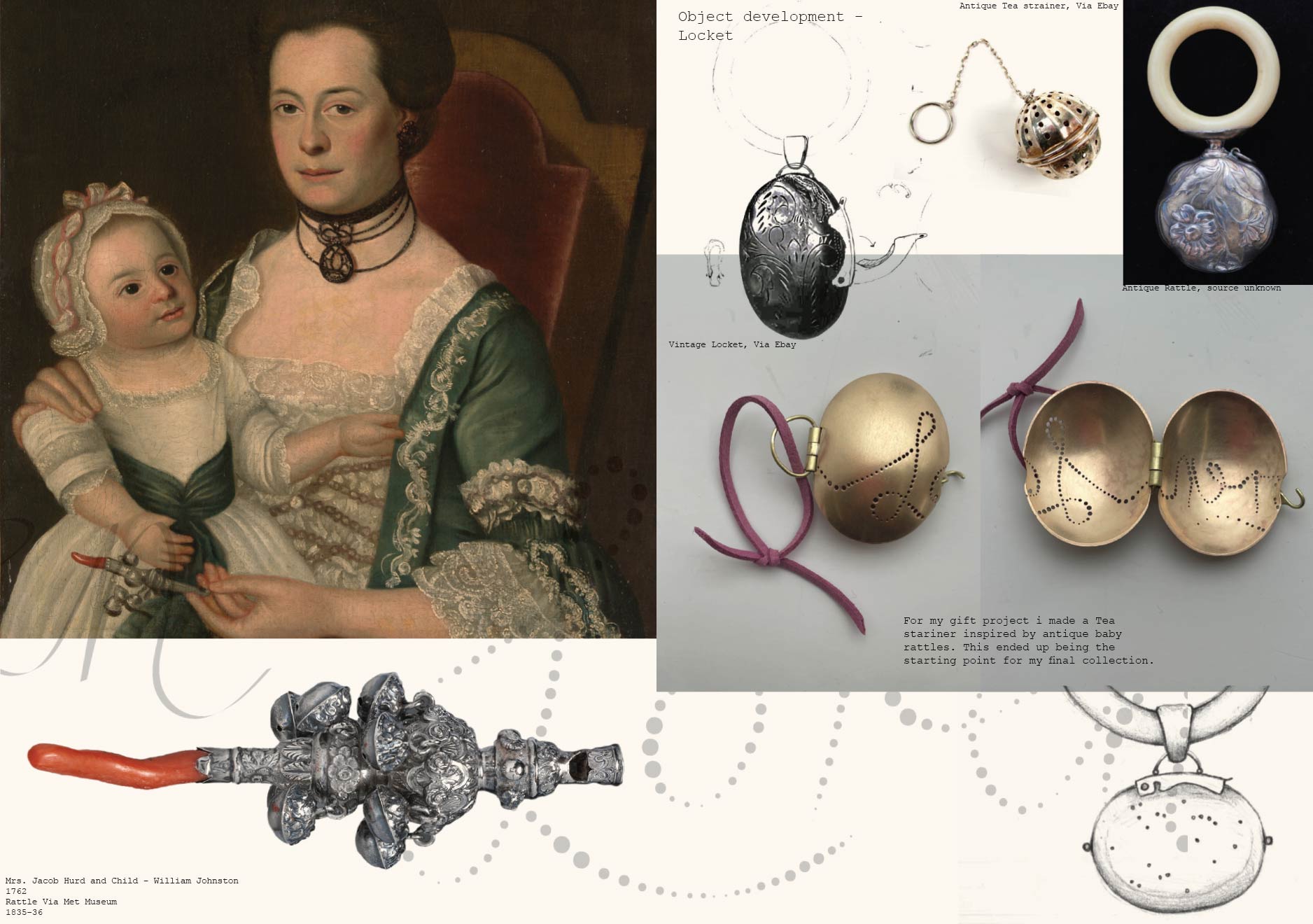
I was interested in researching historical objects of obsolescence, antique functional objects which we no longer have uses for in contemporary life. It was interesting to see elements of familiar mechanisms, hinges, clasps and caps, within a context that was totally unknowable to me. I spent some time researching these objects visually, imagining what I may do with them if they were mine, before finding out what they were actually used for.
The baby rattles ended up being a surprisingly crucial reference for the project. They are really beautifully crafted objects, especially the Victorian coral rattles I was looking at. I really liked the coral as a reflection of a sort-of unknowable material, its super bright red and orange colours can make it look almost synthetic, I think the contrast of this with the antique silver is a really beautiful contrast. It was this that led me to introduce synthetic materials into my own work. I was interested in the materiality conflicting with the visual references, helping to pull the work from the past into a questioning of the present.
You describe your objects as encouraging intrigue and asking viewers to question their purpose. In an age where almost every object is designed to communicate its purpose immediately, do you think curiosity is being lost?
Curiosity is play and I think this is the bit that we are missing in all areas of our culture, not just in design. I wonder how this lack of play must affect our pallets for knowledge. Art often relies so heavily on the exploration of a grey area, that’s the value of storytelling, that’s why we enjoy films and art and books, because they are an exploration of narrative and theme, and of something close to us. Without curiosity, I wonder if our ability to distinguish nuance, and therefor art, will be lost. We want to know without looking, or touching, or listening, but this is the bit that counts so much of the time.
Have you ever seen someone interact with/interpret one of your pieces in a way that surprised you?
Everyone brings such different contexts to the work depending on who they are. And it’s great because I’ve been given many more objects to research and books to read, recommended by viewers of the collection.
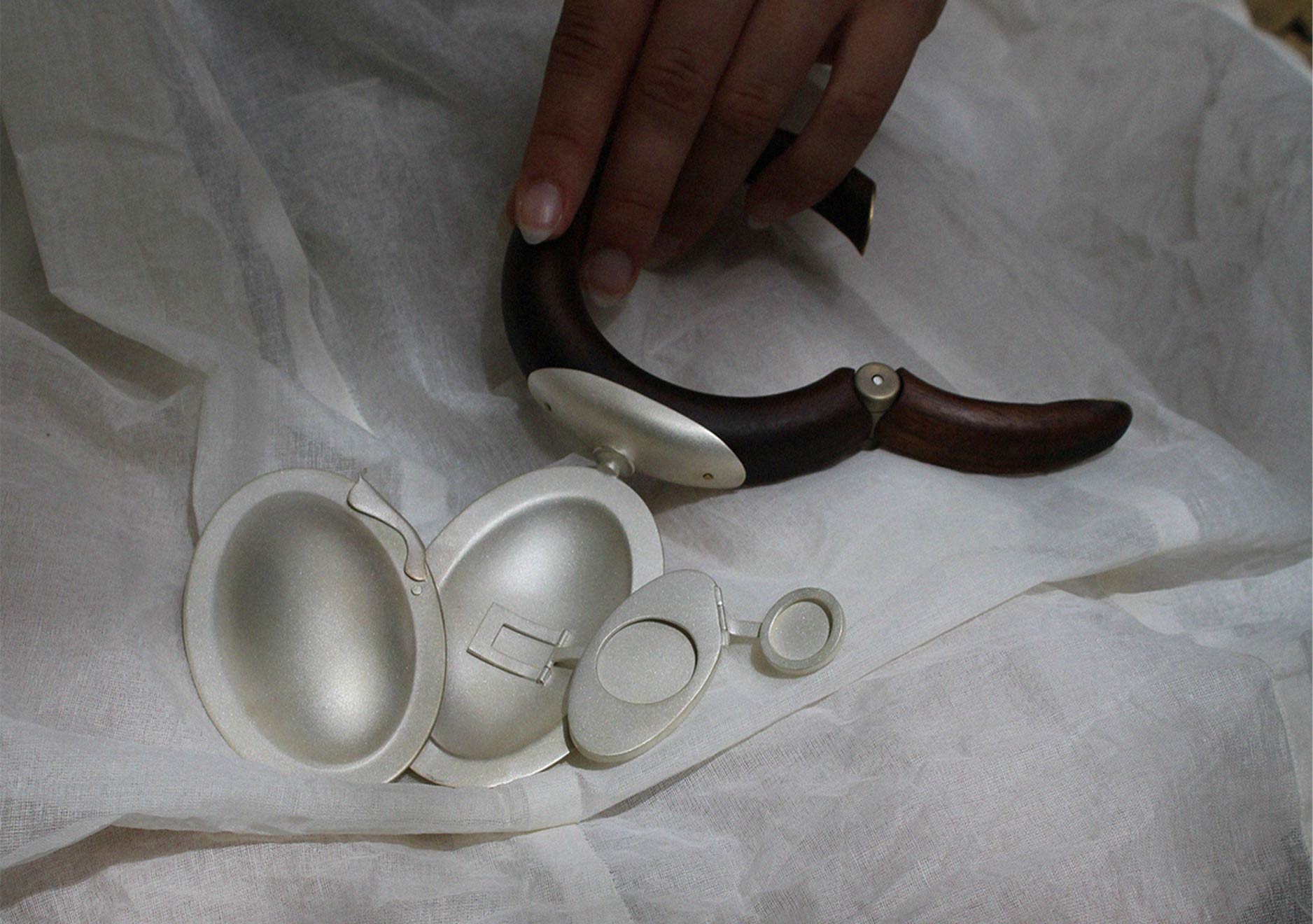
In terms of interaction, I am pleased that everyone first instinct to touch. At our degree show (where touching was not allowed) I had lots of people comment about how hard it was to not pick the objects up and hold them, I am hoping that over the next couple weeks I will be able to allow the items to be used in a less controlled environment and hopefully record some ways they are used and styled by people around me. Ultimately if the objects are purchased, this is when I really view their lives of interaction to truly start.
What’s the last object that has sparked your interest?
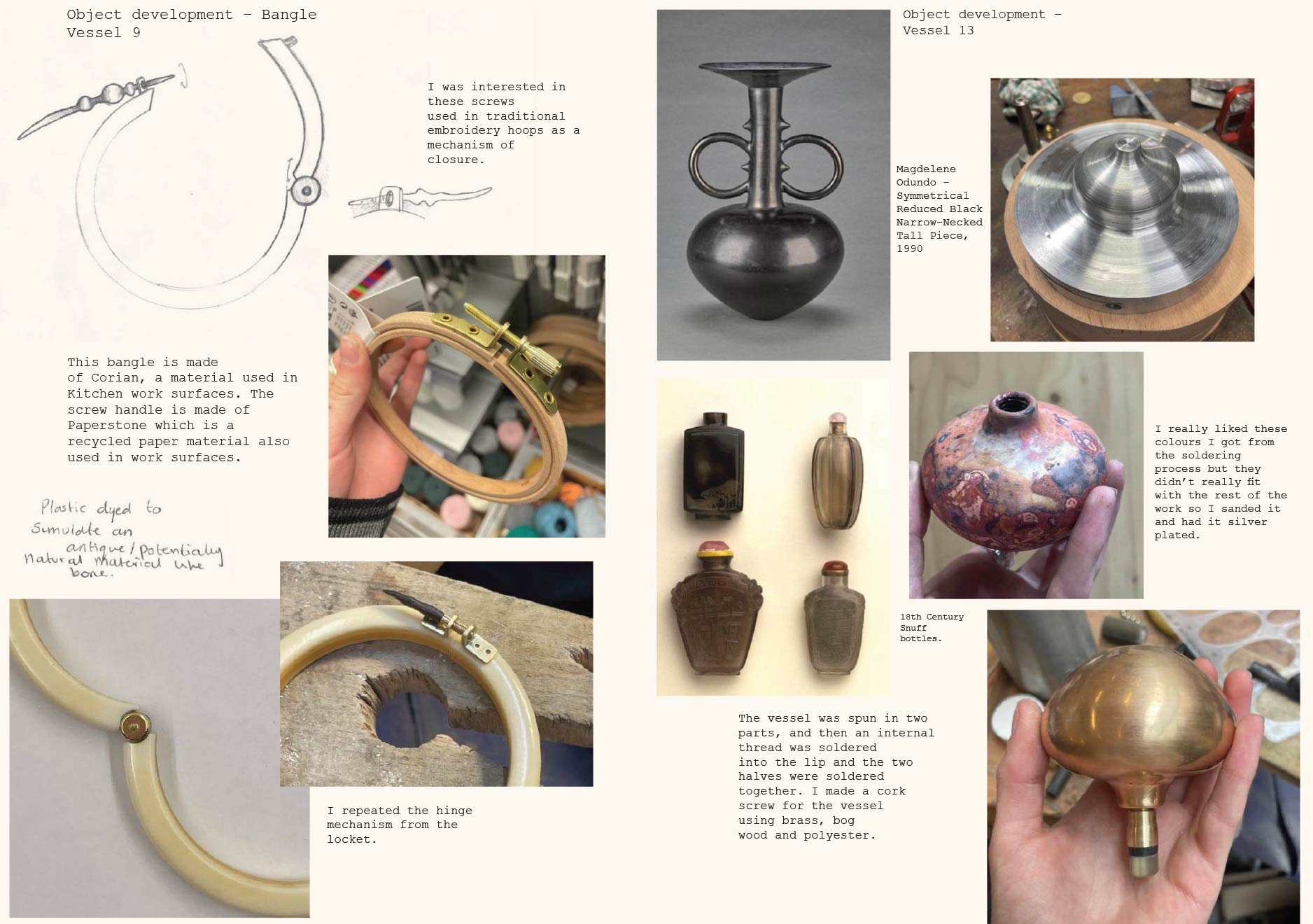
I’m really into a Snuff bottle; the V&A collection has lots of glass ones from the 17th century that are really beautiful. Glass is definitely a material I would be interested in working with in the future.
Have you thought of your inspiration for your next collection?
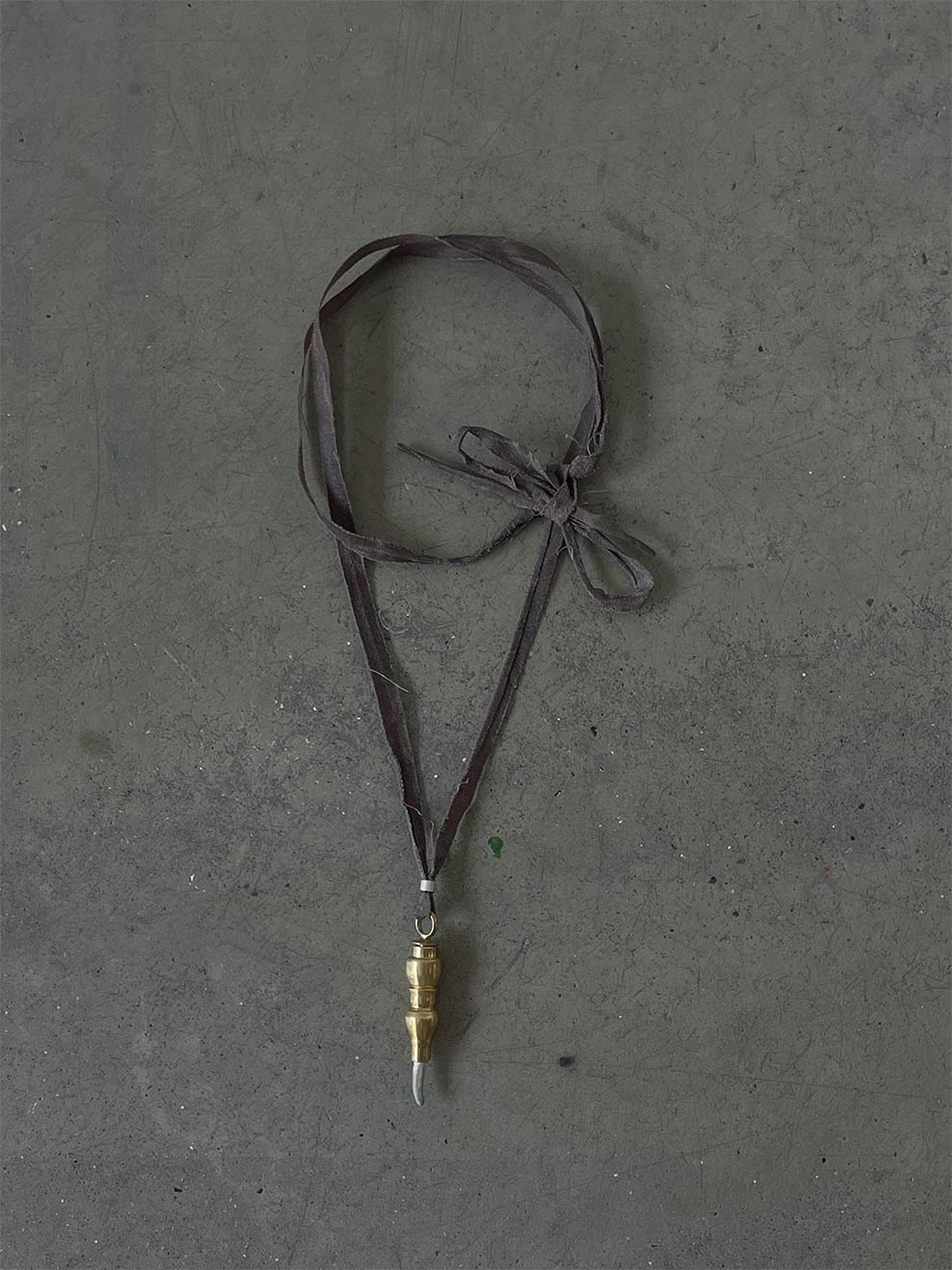
I think it’s going to be more about expanding and refining the work I’ve already started, as it feels like something I could see myself working on for a long time. There is definitely going to be a sort of balancing act here. I want to create some pieces that are more wearable and potentially more commercial than the work I’ve made so far. As wellas pushing the conceptual work further, exploring larger scales and new materials. I think that both of these avenues often complement each other so well, it’s important to me that I don’t lose either side.
Where can people find you?
You can find updates about my work @___winona