Yeeun Jang
What’s your name and where are you from/based?
Yeeun Jang. Born in Seoul and based in Seoul. I travel anywhere in the world where my work is needed.
Can you describe your practice in a few words?
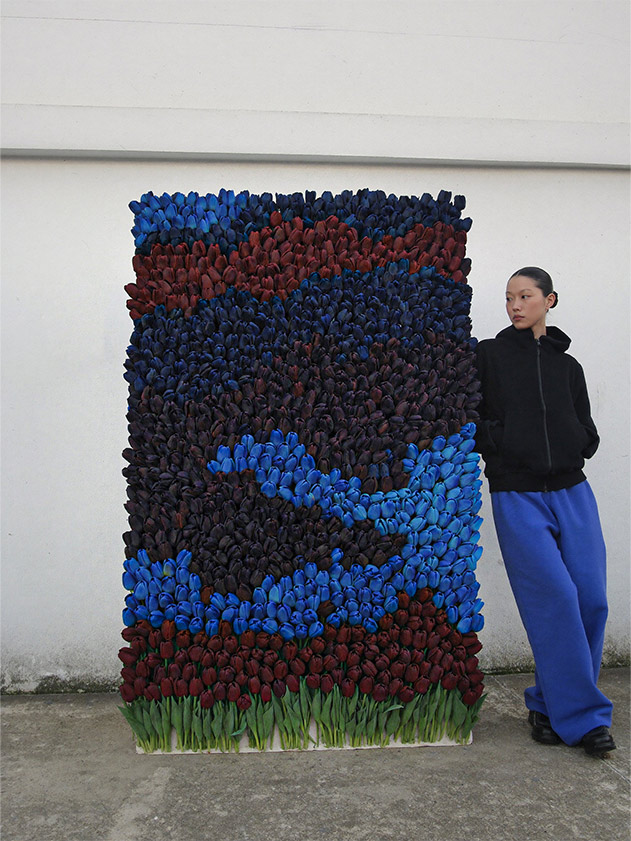
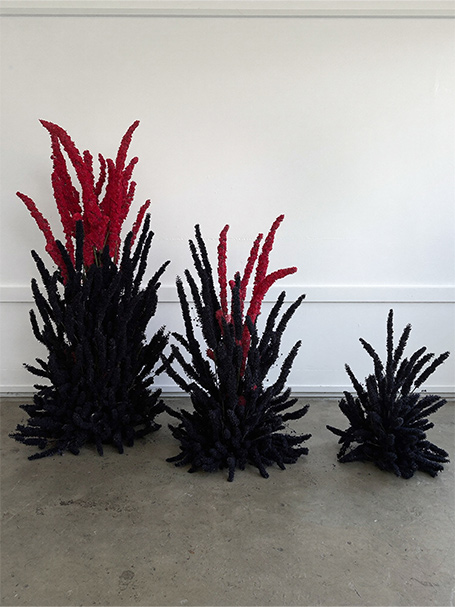
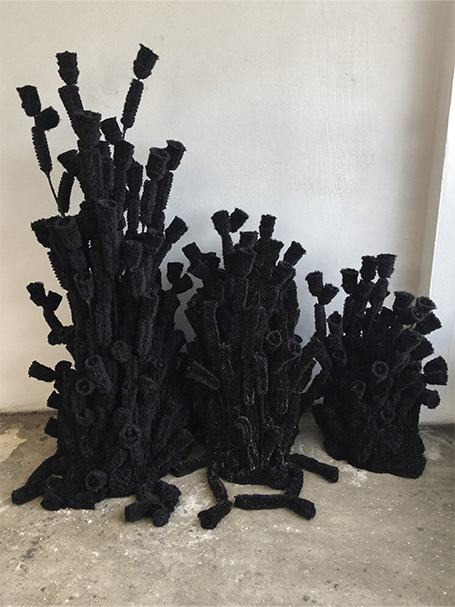
Floral Visual Work with Structural Forms
How did you begin creating?
I grew up under a graphic designer father. Therefore, from a young age, I naturally grew up encountering many things related to visual arts, and because of this, my interest in the field of art grew. I experienced various fields such as VMD, graphic design, and illustration, but unlike my father, I realized eight years ago that I feel a sense of accomplishment in creating three-dimensional things directly by hand.
When did flowers enter your practice?
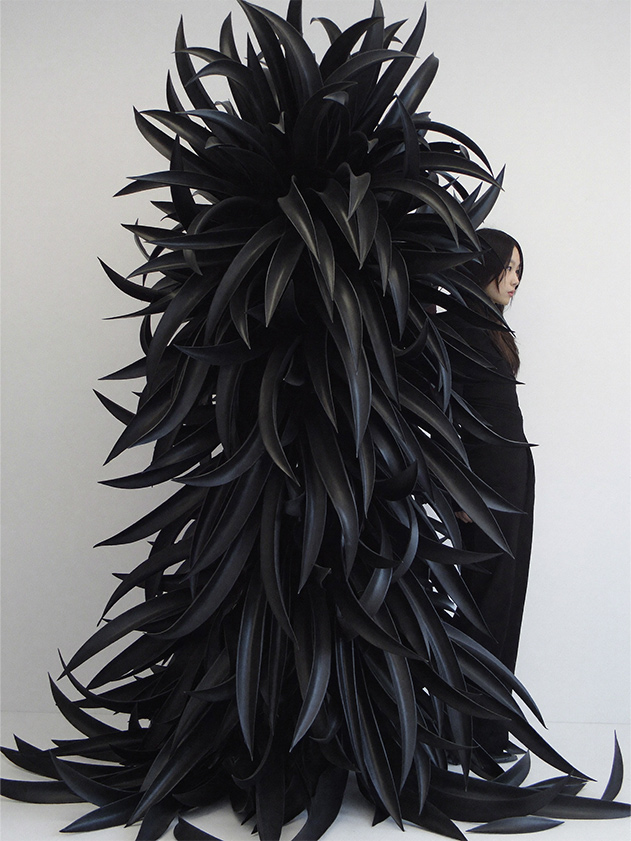
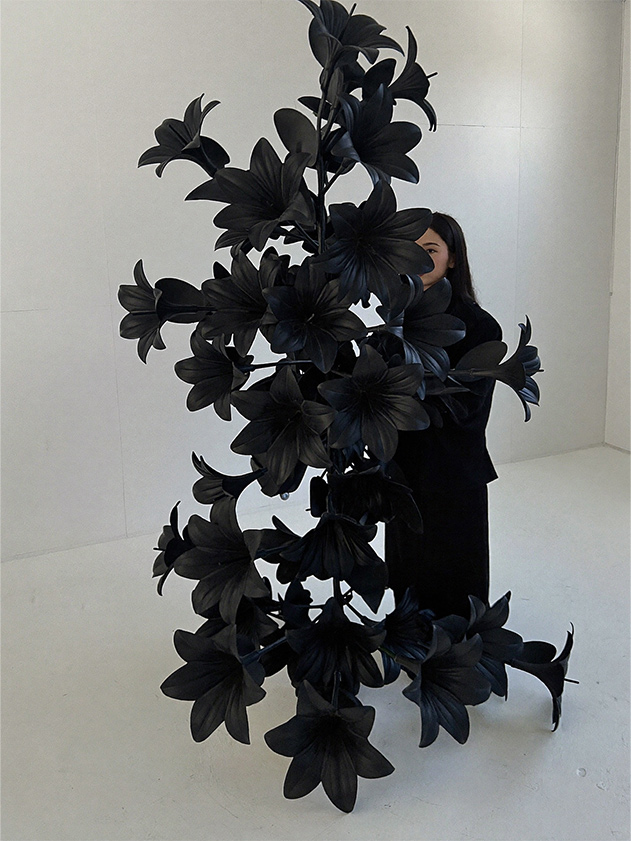
About eight years ago, I discovered a reference for a large-scale installation made of flowers. I realized that being a florist was not simply a job of making bouquets, and I immediately ran to the flower market, bought several bundles of flowers, and started working on my own. I have never formally learned flowers from anyone. YouTube is my teacher.
Your sculptures are incredibly unique and sculpturesque, what inspired you to work in this way?
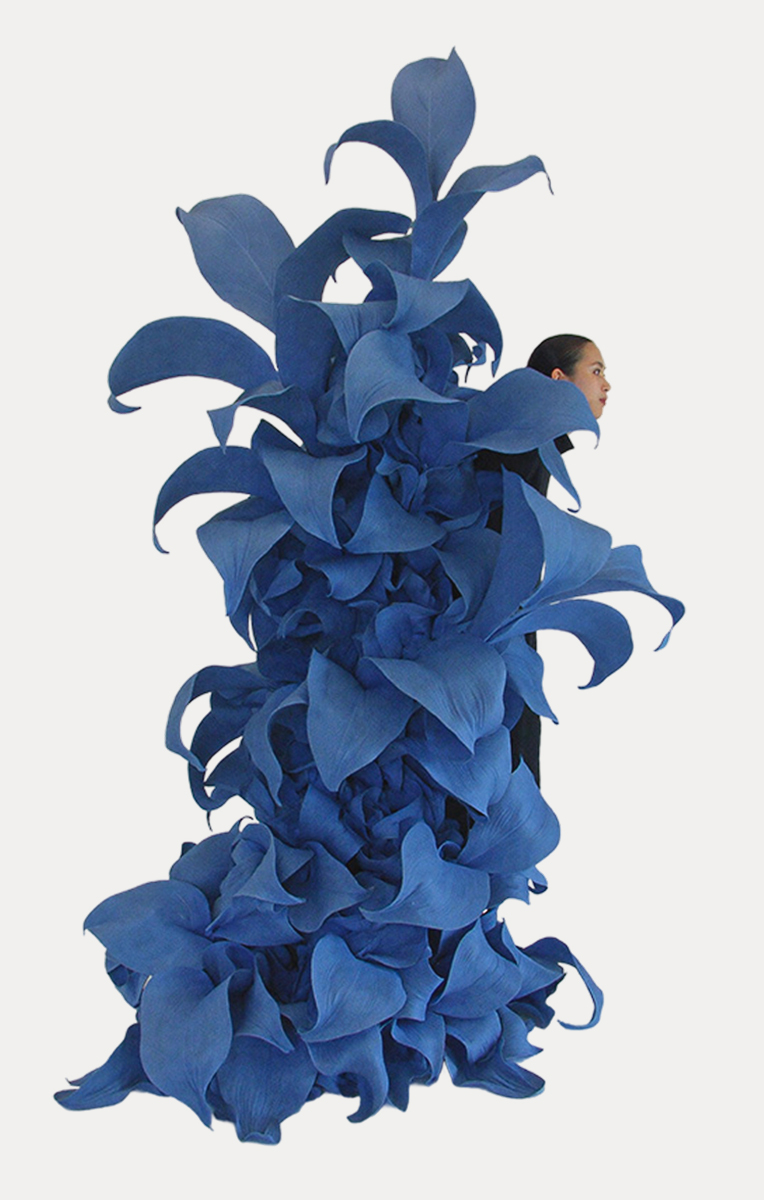
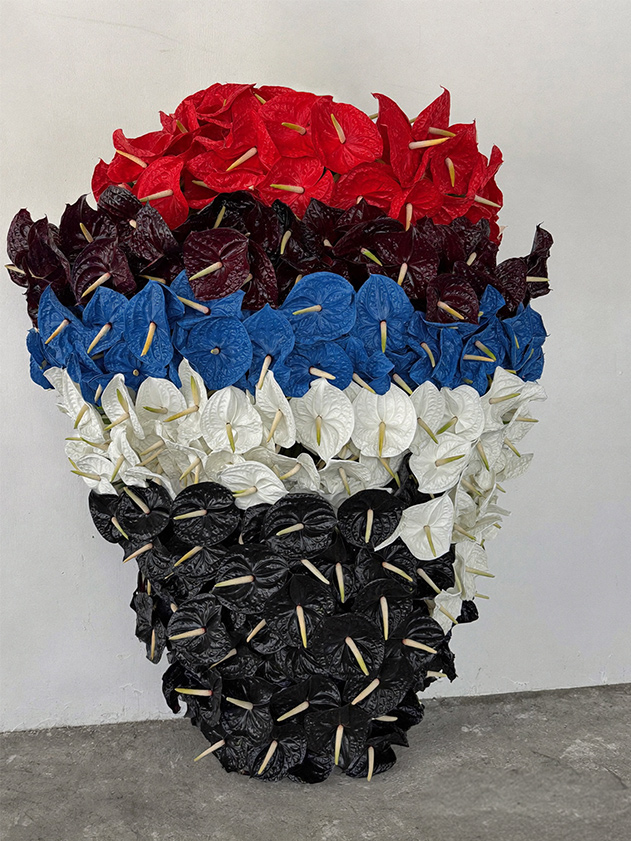
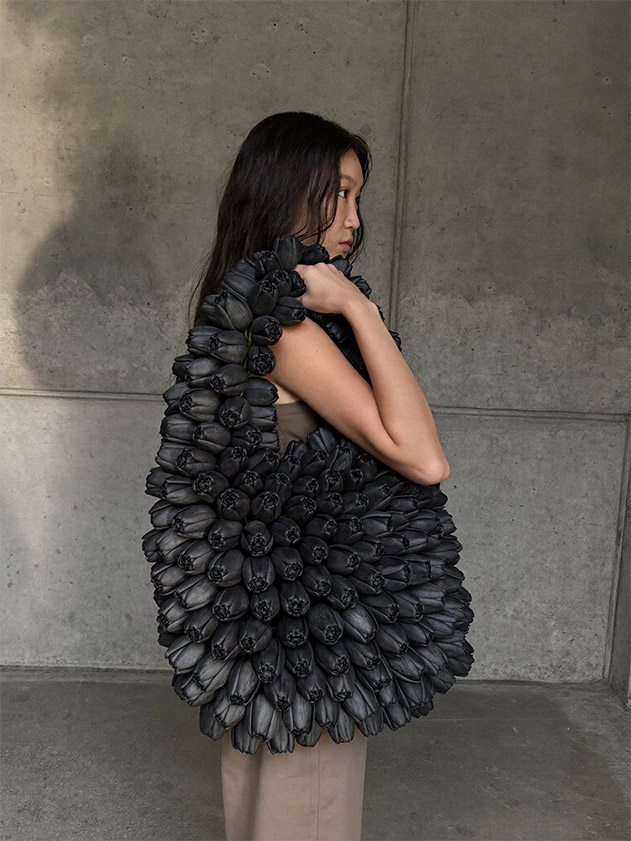
My father always taught me to “think differently from others.” When I was young, I heard this so much that I was sick of it, but thinking about it now, I realized that my father’s words are a very important core. There are many great florists who simply arrange flowers abundantly. I thought there was no competitiveness in doing the same works as them, and I thought it was not a way to express myself. I spent a very long time alone researching how I could brand myself with flowers. I love architecture, installation art, and avant-garde fashion. I love the physical power that architecture has and the craftsmanship that installation art has, and I love the experimental spirit that avant-garde fashion has. And I want my sculptures made of flowers to be art pieces on the same level as them. I want my sculptures to be seen as a piece of art placed in a gallery someday. In the future, I want to make works with much larger and more complex structures and rules than now.
How do you see the temporary nature of flowers?
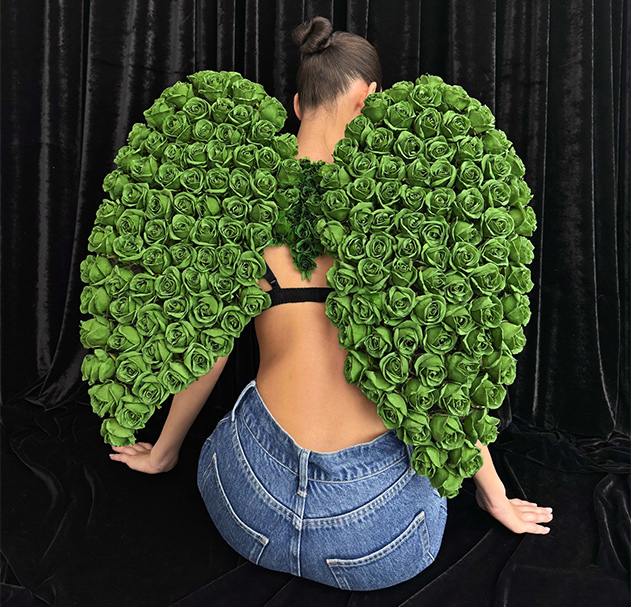
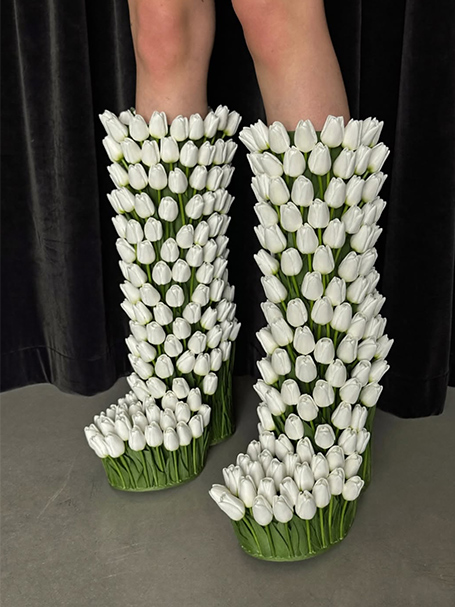
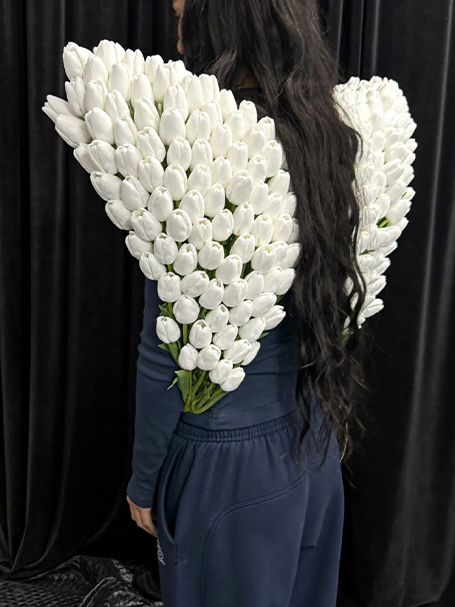
I use both fresh and artificial flowers. They each possess opposing strengths and weaknesses, which I find immensely intriguing. People often simply categorize fresh flowers as “real flowers, high quality” and artificial flowers as “fake flowers, low quality.” However, I do not classify them into positive and negative elements. This is because I can create interesting works by utilizing the unique characteristics of each.
Fresh flowers are temporary in nature, yet they possess details that artificial ones simply cannot mimic. They are inherently beautiful in any form. However, when working with fresh flowers, the task must be completed within a few hours or a single day. This is because as moisture escapes, the volume decreases to half of what was initially planned. One must be extremely fast.
Artificial flowers offer durability and longevity; they can be maintained for days or even years. They also possess a rigid structure that fresh flowers simply do not have. In fact, the complex structures I desire can be better
realized through artificial flowers. There are also many interestingly shaped artificial varieties available. This is why I use artificial flowers more frequently.
What role does risk play when working with fragile or unpredictable materials?
In my work, the most important thing is not “what kind of flowers to use,” but “how to build the structure, that is, the framework.” This accounts for 90% of the work, and the flowers are merely the surface. If the framework is not completed solidly, the shape cannot be properly maintained. It is true that flowers, especially fresh ones, are fragile or unpredictable materials. To complete a complex structure while taking this risk into account, a solid framework is absolutely necessary. I have researched by building as many frameworks as possible, directly cutting, breaking, bending, and dismantling both fresh and artificial flowers. Since flowers are already beautiful even without being decorated, there is nothing more for me to touch. The details are not finished by the flowers, but by the manual labor of creating the framework and fixing it.
What do you hope to express?
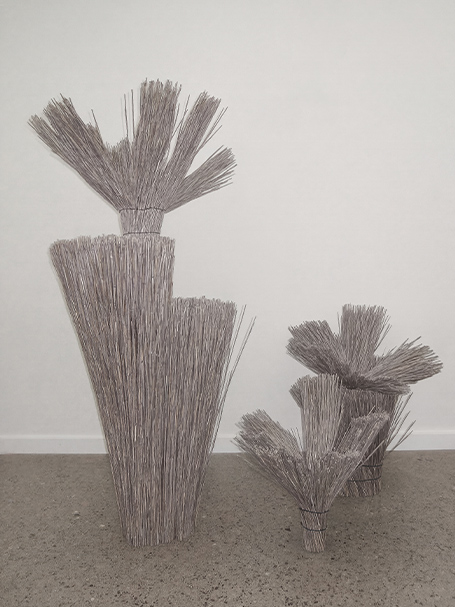
I want to express that simply using abundant volume, pretty color combinations, and unique flowers is not the only correct answer to expressing the beauty of flowers. I look forward to the day when the complex and structural forms I have practiced countless times will truly shine. I hope that my method will be established as a distinct field within the floral industry.
Outside of your practice, what fuels your creativity?
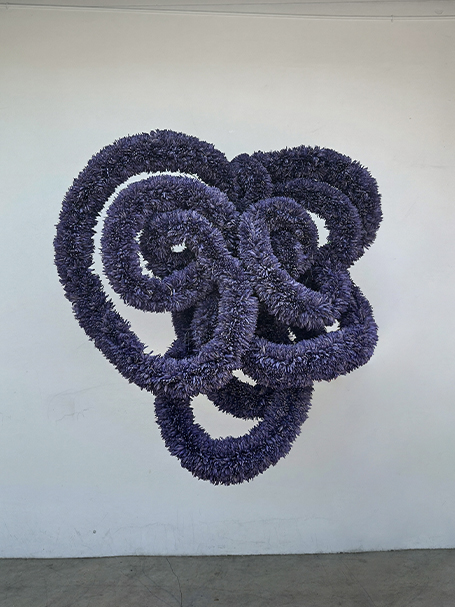
Installation art, architecture, dancers, music, avant-garde fashion, all visual materials, great artists, and my most beloved Mother Nature.
Do you find that there are specific objects you surround yourself with that you
probably couldn’t live without?
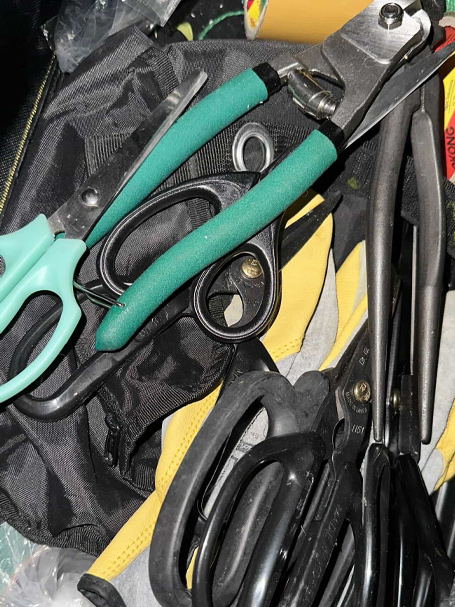
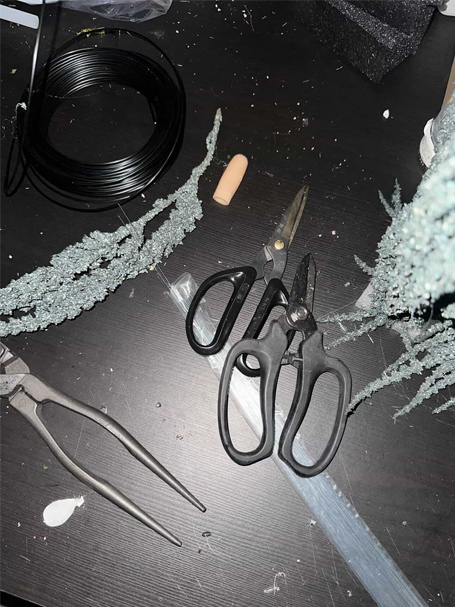
Scissors (there are dozens of scissors everywhere within my living radius— at home, in the car, in the studio, and even in the bathroom).
Other than flowers, are there other mediums you’d like to explore sculpting with?
I have once exhibited a fabric installation art made of mold at the Saatchi Gallery in London. I am open to creating sculptural works with natural elements other than flowers.
Where can people find you?
I have just begun to reveal on Instagram the works I have been creating alone for several years. Until then, I did not disclose them or tell anyone because I needed to have certainty in myself. Therefore, I do not know whether people will be able to discover me somewhere in the near future or not. However, thankfully, it seems that quite a few people have started to look upon me favorably. I will go anywhere in the world if it is a place where I can do interesting work. My goal is to make myself a field of flower art. I will definitely establish my flower studios domestically and abroad.