Yiji Jeong
What’s your name and where are you based?
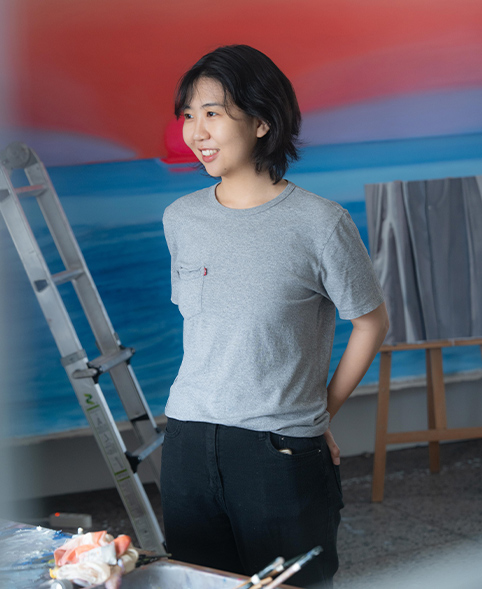
Hi, my name is Yiji Jeong, and I’m a painter based in Seoul, South Korea.
Can you describe your practice in a few words?
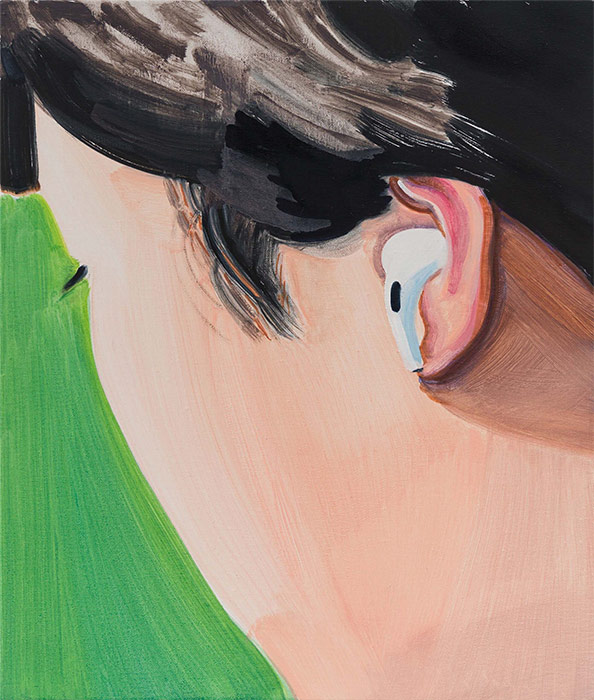
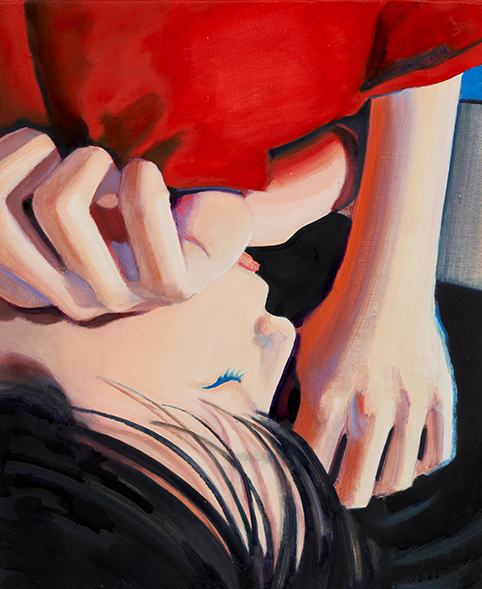
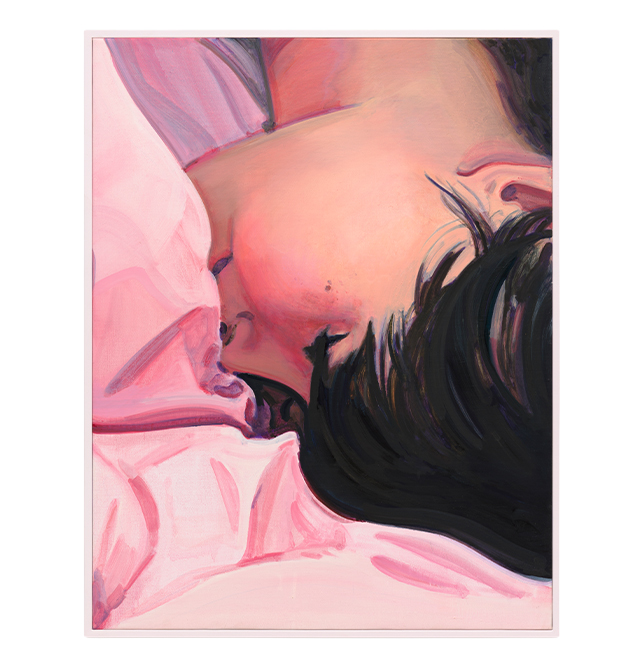
My work revolves around ‘attachment’. Through painting, I explore love, familiarity, longing, persistence, and beauty. I’m interested in portraying contemporary life at the point where painterly gestures, familiar emotions, and today’s visual culture intersect.
How did your curiosity for painting begin?
I’ve loved drawing for as long as I can remember—probably since before kindergarten. I loved that I could draw my favourite characters or my family whenever I wanted with just a few simple lines.
My fascination with painting began more seriously when I visited an exhibition of American Impressionists in my early teens. Many of the works carried a strong sense of everyday life—a kind of quiet realism. That was when I first encountered Mary Cassatt and Charles Courtney Curran.
One painting, which I believe was by Mary Cassatt though I can no longer remember its title, has stayed with me ever since. It depicted a girl around my age with pigtails, sitting at a desk studying. I was struck by how such an ordinary moment could hang on the walls of a museum. Even more surprising was the feeling that, simply by looking at the painting, I could feel connected to the girl who had lived about a century earlier—someone from a different place, a different culture, whose face and name I would never know. She somehow felt like a friend.
Standing in front of that still, silent painting, I experienced something similar to what I felt while watching animation—a sense of movement, narrative, and even music. I was amazed that brushstrokes alone could evoke such layered emotions. At that moment, becoming a painter seemed like one of the most wonderful things imaginable.
For various reasons, I drifted away from oil painting for several years. It wasn’t until my third year of university, when I took my first oil painting class, that I finally had the chance to work with oils. Even now, nearly ten years later, I remember that day vividly. I became so absorbed in painting that I didn’t leave my seat until the work was finished. When I finally stood up, my face was flushed and burning, as though I had just finished swimming at full speed. I didn’t yet know what I wanted to paint or why, but I knew I wanted to spend my life painting.
Your paintings focus on the people close to you. When did you realise that your own daily life and the people in it would become the subject of your work?
It’s difficult to point to a single moment.
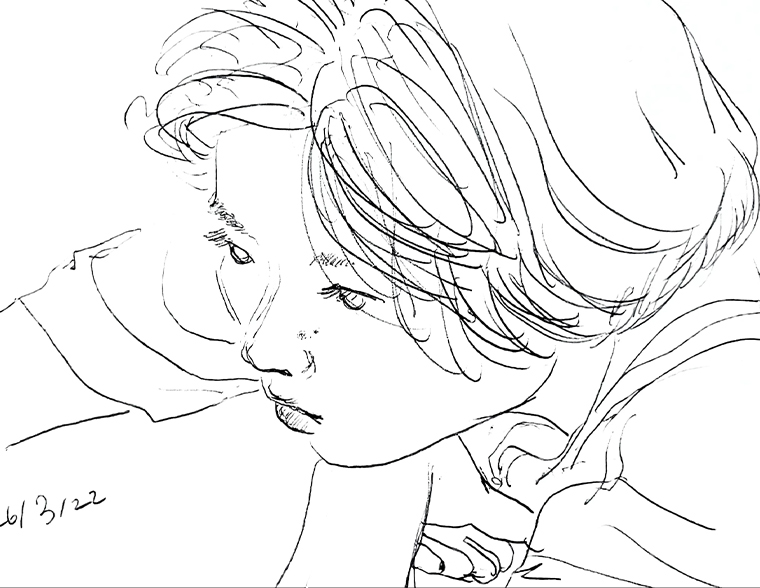
One possibility goes back to high school, when I received a small, thick sketchbook as a gift. From then on, I constantly drew the people and objects around me from observation. I wanted to improve my drawing by sketching things that moved me or that I simply enjoyed looking at, so naturally my attention stayed close to my own surroundings. Over time, those drawings on paper gradually became paintings on canvas.
Another possibility is that I often felt a certain loneliness in museums and galleries. Whenever I encountered artworks that were technically accomplished but somehow lacked a human presence, I found myself asking what mattered most. I eventually realised that what moved me most was work that stayed close to life itself—to those quiet moments that are so beautiful and precious they can bring both laughter and tears.
You name attachment as a central facet to your practice. Can you tell us about what attachment means to you and how your work explores it?
To be honest, I only arrived at the word ‘attachment’ fairly recently. Before that, I described my work using words like intimacy, private relationships, connection, identification, fleeting moments I wanted to hold onto, or the familiar qualities of everyday life.
I’ve never been the kind of artist who decides on a concept first and then makes paintings to illustrate it. Instead, I tend to follow intuition and impulse, making the work first and only later trying to understand what it reveals about my desires and methods. So this question is surprisingly difficult to answer.
If I had to describe attachment, I would say that it feels warm and slightly damp. The things that bring us the greatest happiness are also the things whose loss would hurt us most. Attachment contains those two opposing emotions at once.
I also don’t think attachment forms because something is objectively extraordinary or unique. Rather, it grows through chance, subjectivity, long periods of closeness, and reasons that often resist explanation. Its object may be a person, a place, an object, a particular period of life, or even life itself. At its core, attachment is the desire to keep something close for as long as possible.
In my paintings, attachment sometimes appears as an atmosphere that quietly permeates the image. At other times, it is reflected in the way light, fluid brushstrokes interlock across the surface, or in the persistent attention I give to scale and proportion.
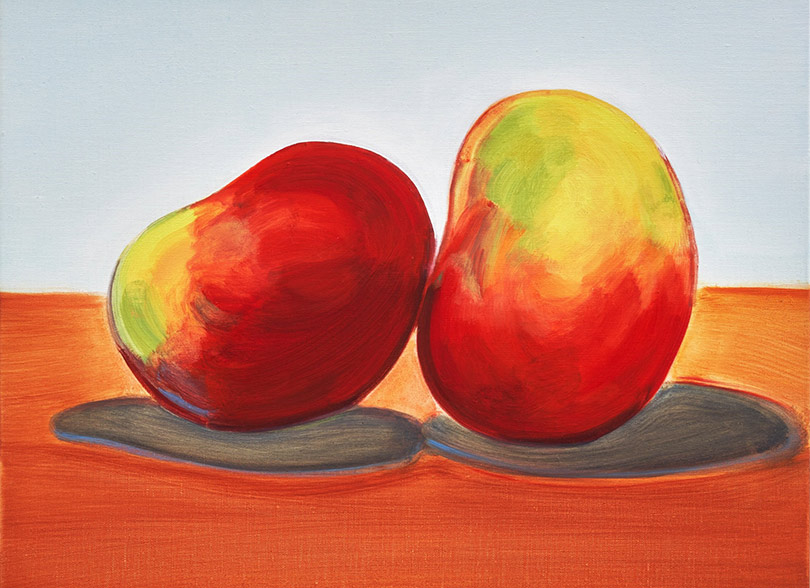
Your style seems almost cinematic or comic, what kinds of references do you think inspired your style and how do you adapt these to your paintings?
I think I’ve been deeply influenced by Sunjeong Manhwa(girls’ coming-of-age comics) and romance films. Growing up, the stories I loved usually followed an ordinary schoolgirl as she navigated love or friendship and gradually came of age. Their plots were often similar, yet each possessed something uniquely its own. Every time I revisited them, they moved me in different ways. In that sense, they reminded me of life itself.
Rather than consciously studying visual references and applying them to my paintings, I think I’ve simply absorbed the language of those works over time. Watching the same films and reading the same comics again and again taught me countless ways of expressing subtle emotions, and I believe those visual rhythms have naturally found their way into my paintings.
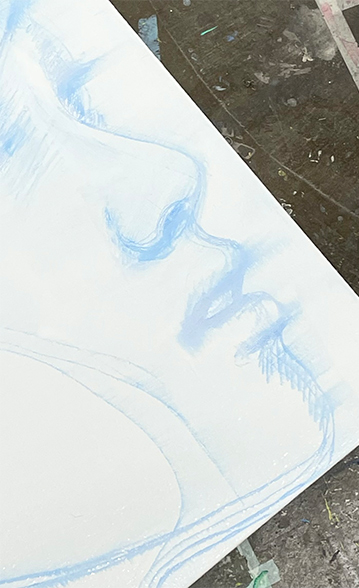
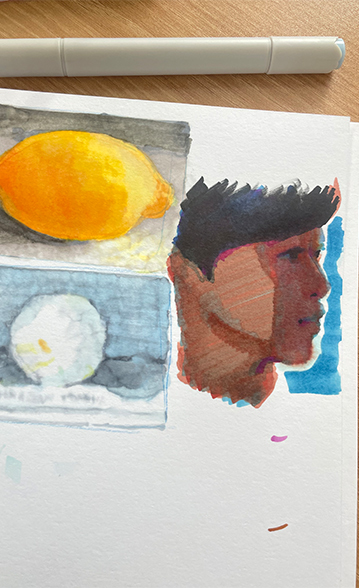
That said, there are moments when the process becomes more deliberate. If I come across a scene that I find particularly beautiful, I’ll sometimes make a study of it directly, or experiment with its composition while taking photographs for future paintings.
If I had to name one work in particular, it would be Nanae Haruno’s comic 『Papa Told Me』. Its restrained, delicate drawing style and quietly understated sense of staging have stayed with me for years and have deeply influenced both my sensibility and the way I paint.
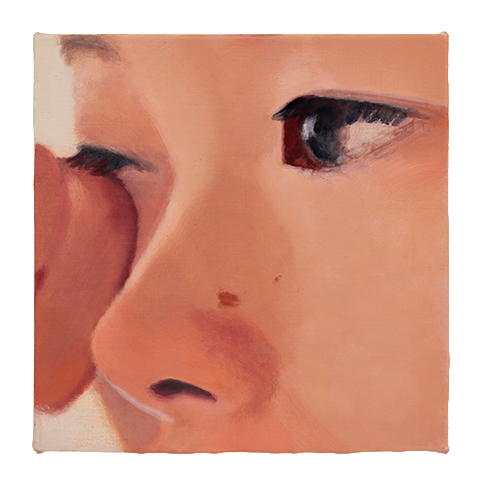
Do the people in your paintings recognise themselves the way you’ve seen them? Has anyone ever been surprised by their own portrait?
Only a handful of people appear in my paintings, and because I paint them repeatedly, they always recognise themselves. Most of them seem to enjoy becoming part of my work.
There was only one exception. Someone I barely knew reacted negatively to her portrait. Looking back, I realised that my emotional distance from that person had found its way into the painting. It became hurtful for both of us.
If my paintings have any value, I hope it is that they remind the people within them that they are seen with affection and attention—whether they are experiencing loneliness and pain or moments of carefree happiness. These days, I only paint people I genuinely care about.
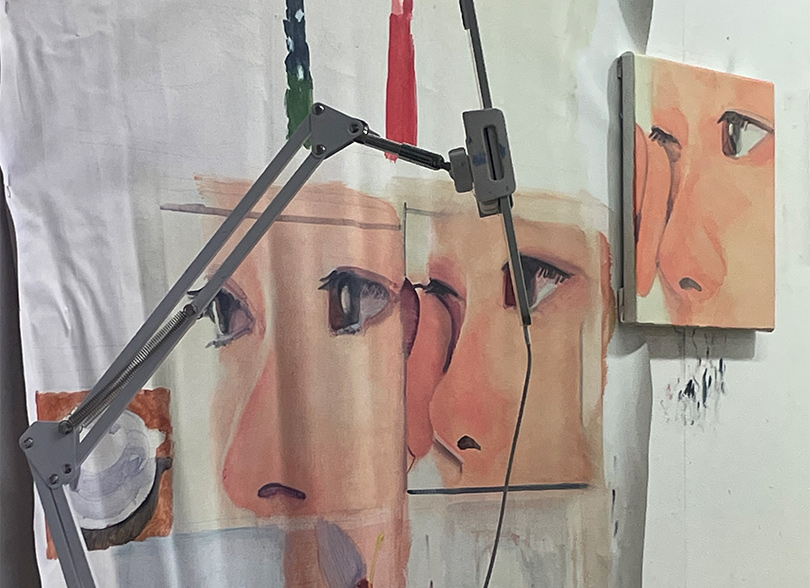
Many of your paintings zoom in on a single detail rather than showing the whole scene. What draws you to focusing on a close up?
When we move physically closer to something, our vision becomes distorted. But with a zoom lens, we can observe a subject both accurately and intimately at the same time. Every close-up in my paintings is made in that way. I think this dual sense of distance is also connected to what we’ll discuss in the next question—the idea of feeling nostalgic for the present.
It also reflects something about my own temperament. I have a simple, almost obsessive desire to exclude everything from the picture except what I truly want to see and paint.
In cinema, the close-up directs our attention toward a particular subject, capturing the smallest shifts in emotion and allowing us to experience a scene almost through the eyes of the film director—or the actor. I feel that close-ups function in much the same way in my paintings.
I’ve also always loved the stories surrounding the silent film actress Lillian Gish, who is so often associated with the expressive possibilities of the cinematic close-up.
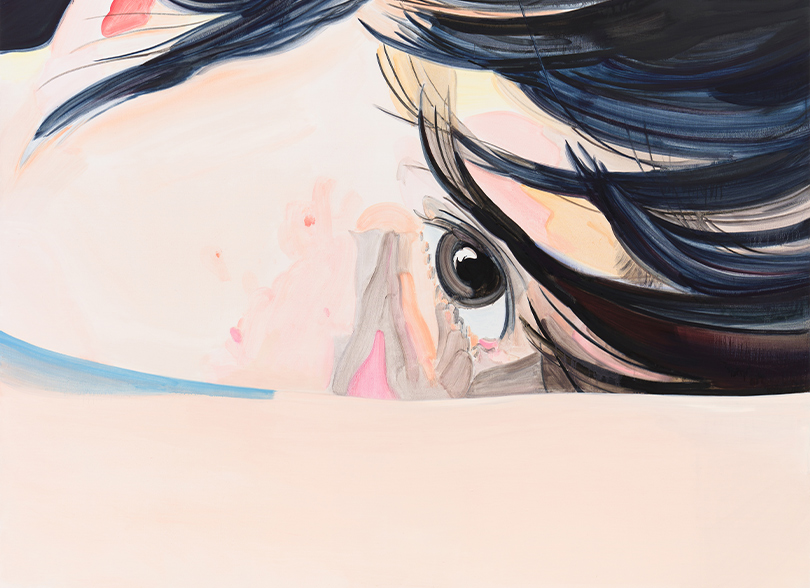
My Salad Days took its title from Shakespeare when Cleopatra dismissed her younger self being “green in judgment. Reflecting on your green days as your younger self in this series, you weren’t looking back at your salad days; you were painting them as they happened. What does it mean to feel nostalgia for the present?
I think it’s simply part of who I am. I’ve been this way for as long as I can remember.
One of my earliest memories comes from kindergarten. My family was driving home after a trip at dusk, and my younger brother had fallen asleep across my lap. We didn’t usually get along very well, but at that moment he looked impossibly soft and beautiful. Then it suddenly occurred to me that this lovely little child would one day become one of those stiff, hairy old men I found so dreadful as a child. The thought made me unbearably sad. I didn’t know what to do except try to preserve that moment in my memory forever.
I have countless memories like that.
Since becoming a painter, though, I’ve found it much easier to embrace life. Painting allows me to release the immense attachment I feel toward the world instead of carrying it all inside myself.
At the moment, I’m painting the tenderness I feel toward youth while I’m still living it. I imagine that, one day, I’ll feel the same tenderness toward middle age—and, if I’m lucky enough, toward old age as well.
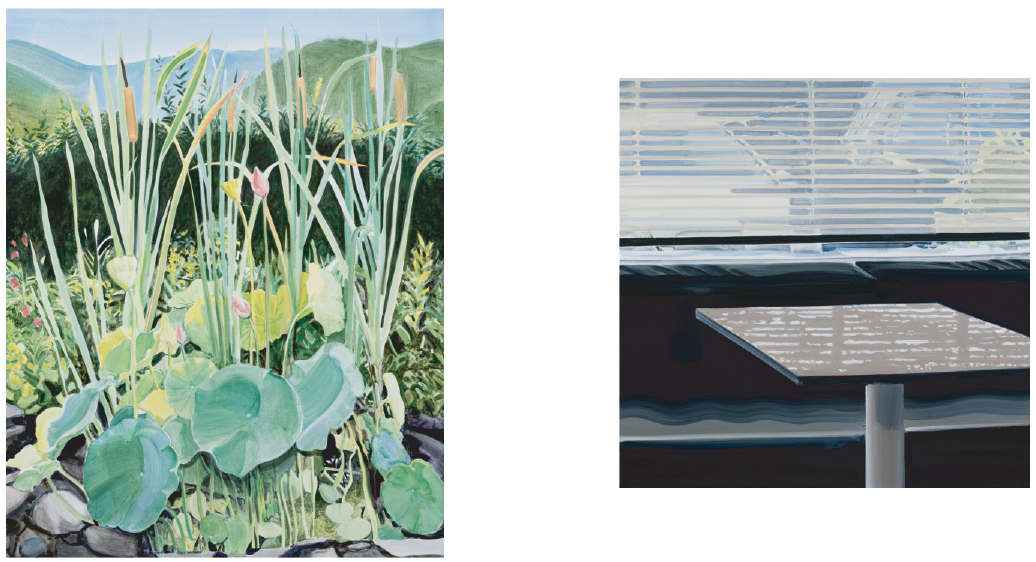
Since My Salad Days, you have returned with two solo exhibitions, Too Sunny and Shelves. What changed in the work since then?
After 《My Salad Days》, I went through a long period of uncertainty.
At the time, I thought my paintings could become a truthful documentary of my life. But I eventually realised that painting could never contain every part of living—especially its most dramatic or decisive moments. There was a growing gap between the way I described my work and what the paintings themselves were actually doing.
So I decided to stop drawing conclusions about my practice too quickly. Instead, I simply painted whatever scenes I genuinely wanted to paint. At the same time, I began experimenting with the physical aspects of painting—its surfaces, brushwork, layering, and materials—in search of a way of working that felt truly natural in my hands.
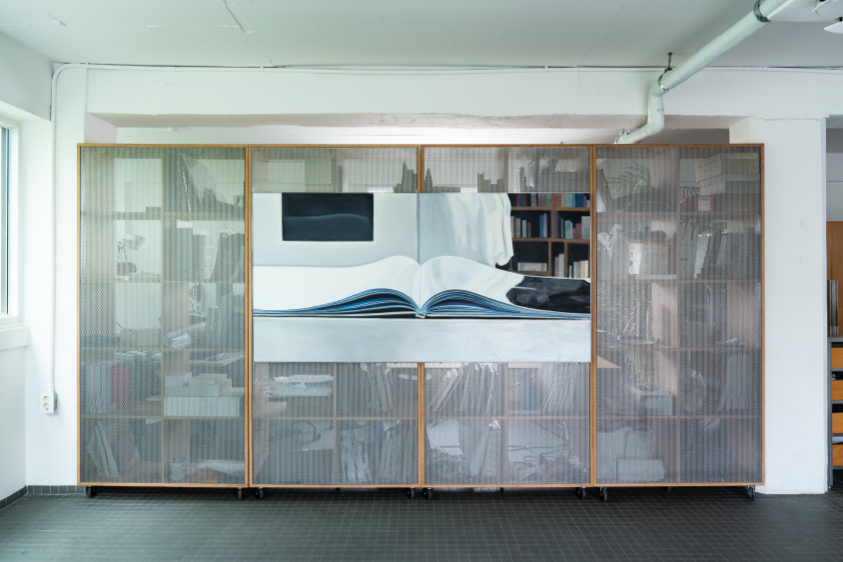
After 《Shelves》, which faithfully recreated the bookstore where I once worked and found so much inspiration, and 《Too Sunny》, which focused on the everyday moments illuminated by the sun, I realised that every painting I’d ever made shared something in common. They were all made out of deep affection for something that had completely occupied my heart at the time.
Going forward, I’d like to continue painting from snapshots, while also returning to some of the films and television dramas that have long inspired me—perhaps by painting scenes from them directly, or by making oil paintings from life.
Outside of painting, what fuels your creativity?
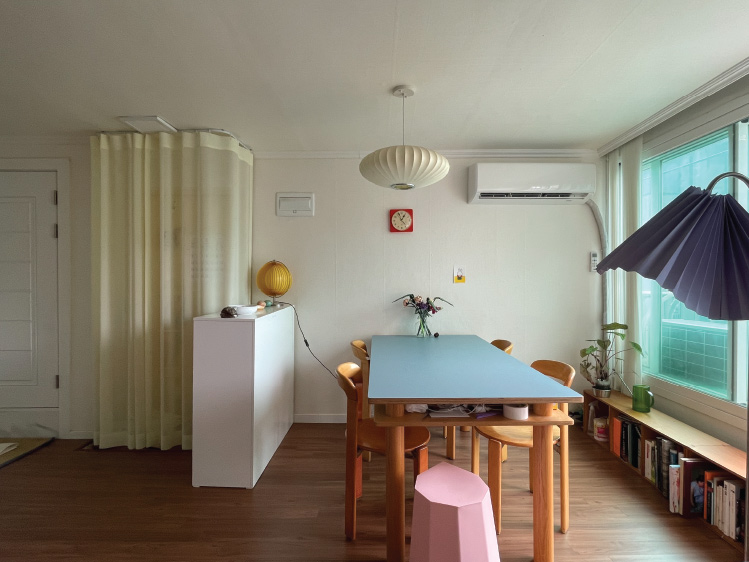
Interior decorating.
I love taking my time choosing beautiful objects and rearranging them as my life changes. There’s something deeply satisfying about shaping my living space around my own needs and sensibilities.
Learning what kinds of arrangements and combinations make me feel calm has, in a broader sense, influenced the way I compose my paintings as well.
Where can people find you?
I always share news about upcoming exhibitions on Instagram, where I also archive many of my paintings.
I’d love to build a website in the near future.
My studio is in Seoul. It’s a little modest, but it’s easy to get to. I’m always happy to have thoughtful conversations or explore interesting collaborations, so if you ever find yourself in Korea, you’re very welcome to stop by.
Later this year, I’ll be participating in a two-person exhibition at A-Lounge Gallery and a group exhibition at Mo By Can.