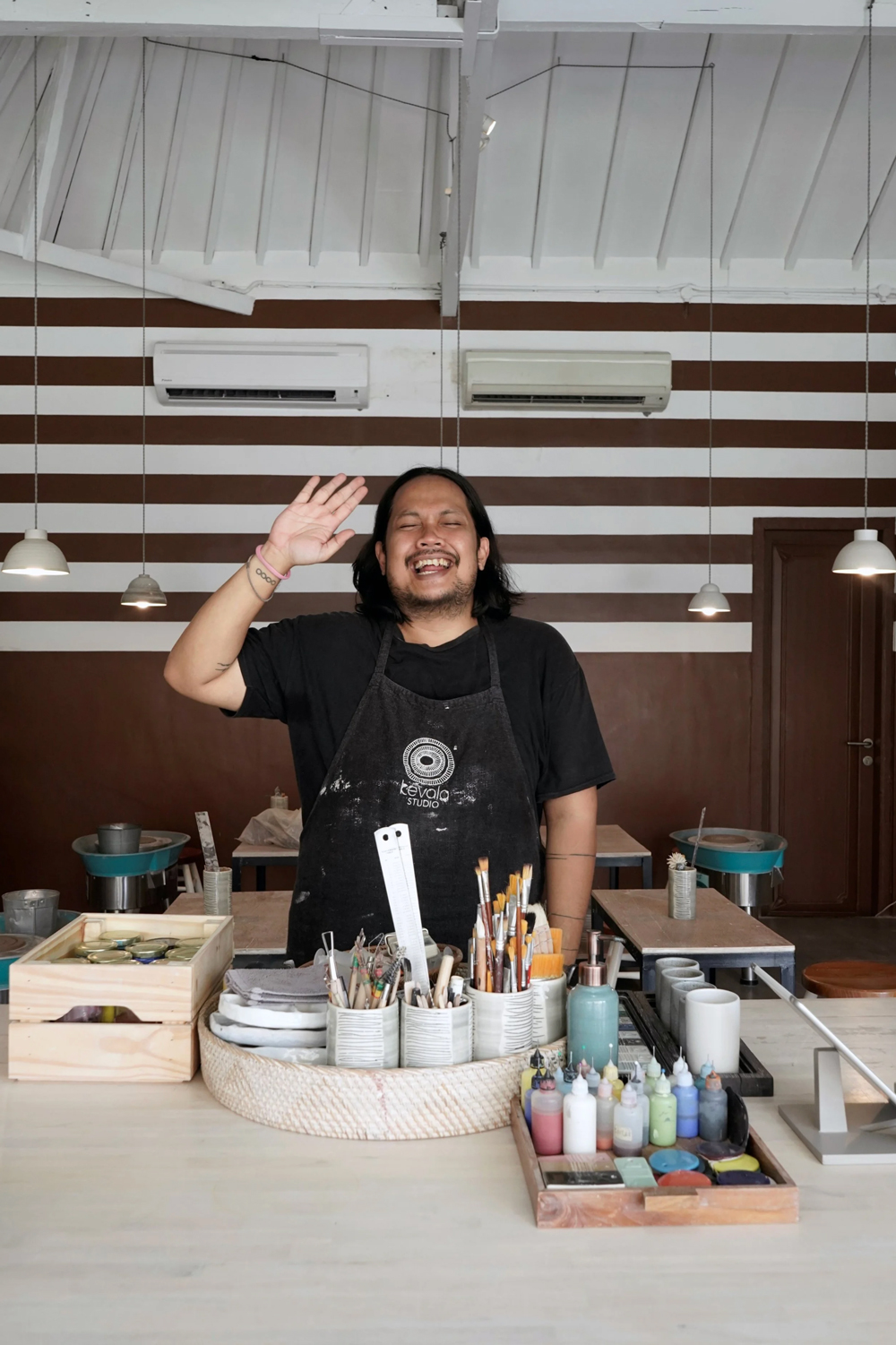
Yugie Kartaatmaja
What’s your name and where do you call home right now?
My name is Yugie Kartaatmaja, I’m currently living in Bali for work but will be moving to Jakarta in July.
How would you describe your work in a few words? Has it always been this way?
My work is about creating a connection—between myself and the audience, between the audience and the work, or even between two strangers who may not know the artwork at all. It’s meant to be a space, physical or digital, where a social experience happens, triggered by the people who choose to engage with it. Their participation is what brings the work to life—without it, I don’t see the piece as complete.
It wasn’t always like this. In the beginning, like most artists, my work was more personal—just about me expressing myself. Now, it’s more about asking how my work can create an impact or spark something in others.
How did your path with clay begin, and when did education/mentorship enter the picture?
It started back in college—I chose ceramics mostly because not many people did. I wanted to learn a skill that felt a bit more rare, something not everyone had. In 2016, I got a freelance job as a drawing teacher at a commercial learning center. Eventually, they expanded into pottery, and I ended up managing that part. That’s where I really discovered my love for teaching, especially teaching pottery.
How does your role as an educator influence your studio practice, and vice versa?
Being an educator really keeps me connected to the basics of making and reminds me why I started working with clay in the first place. Teaching forces me to slow down, explain my process, and look at things from different perspectives, which often leads me to new ideas or ways of working in my own studio. At the same time, my studio practice helps me stay grounded as a maker. It gives me real experiences—failures, experiments, small discoveries—that I can share with my students. Both roles feed into each other, and together they keep me learning, growing, and staying curious.
What kinds of ideas, stories, or questions are you exploring through your work right now?
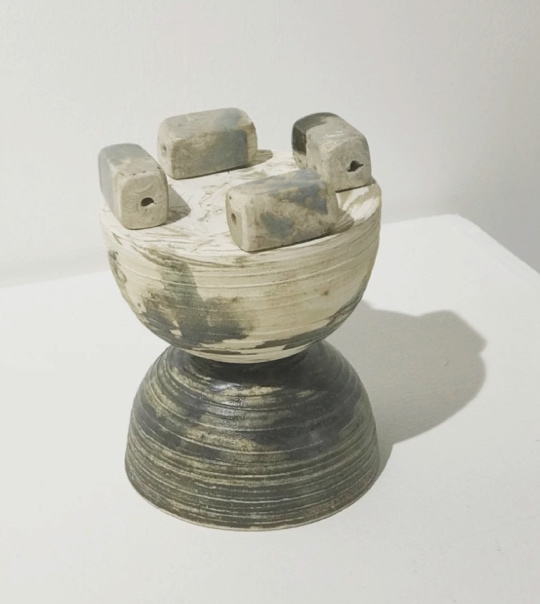
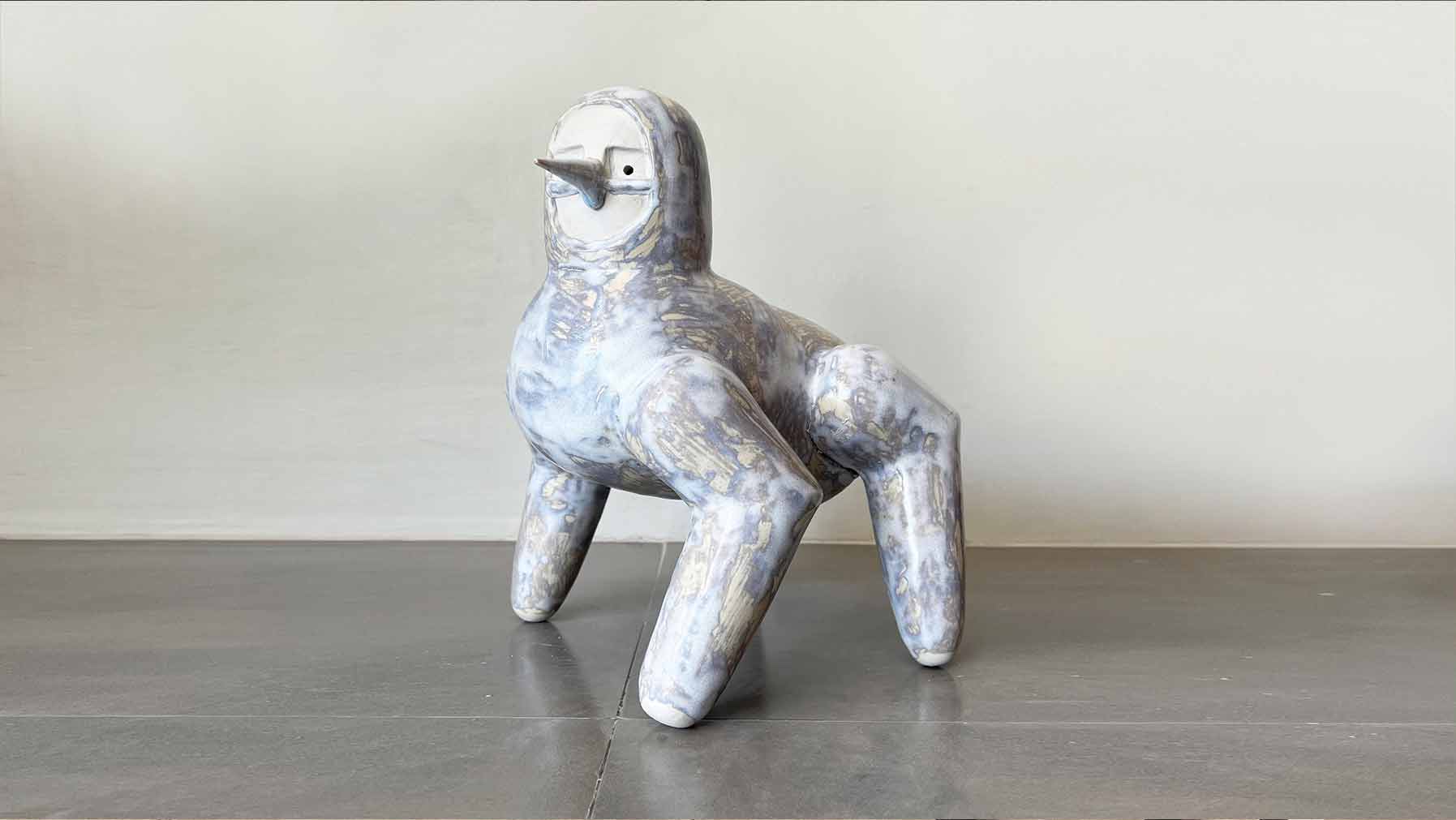
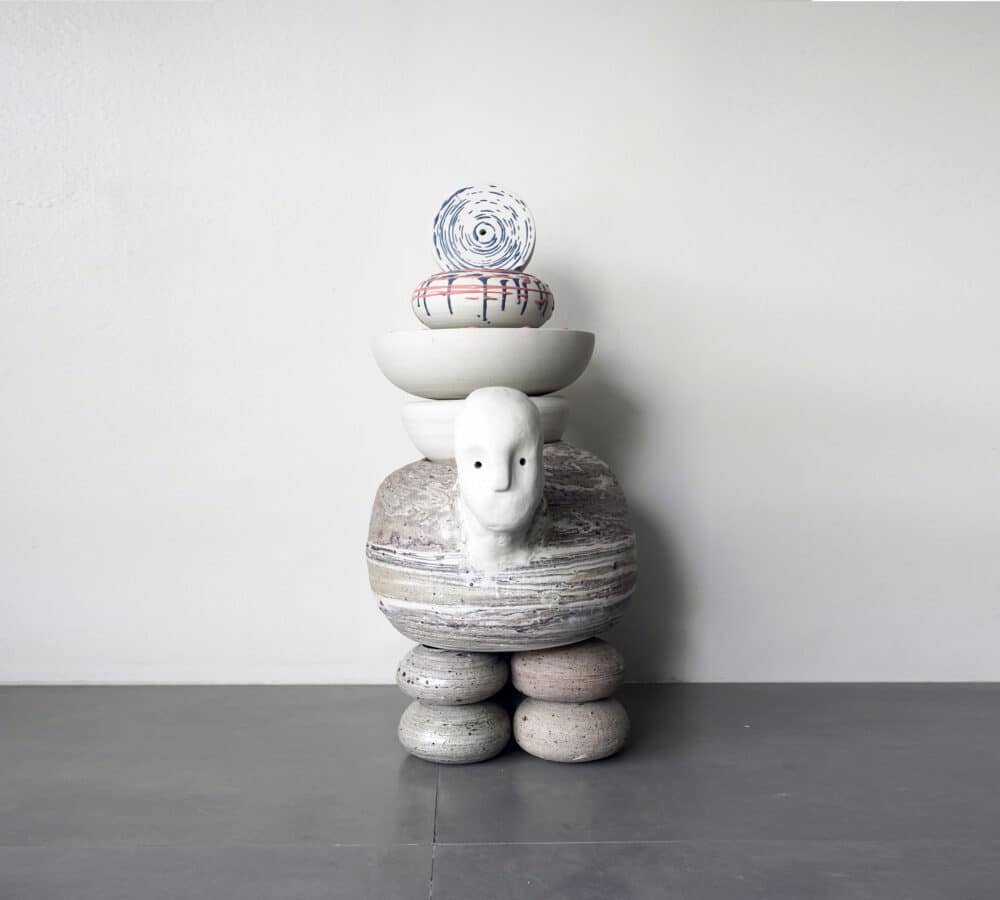
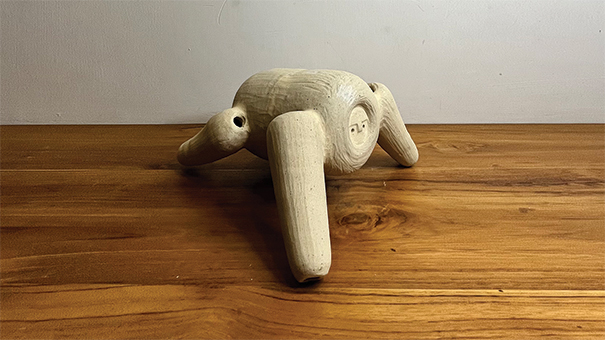
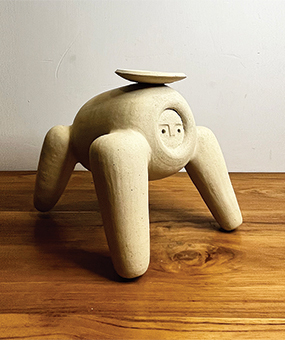
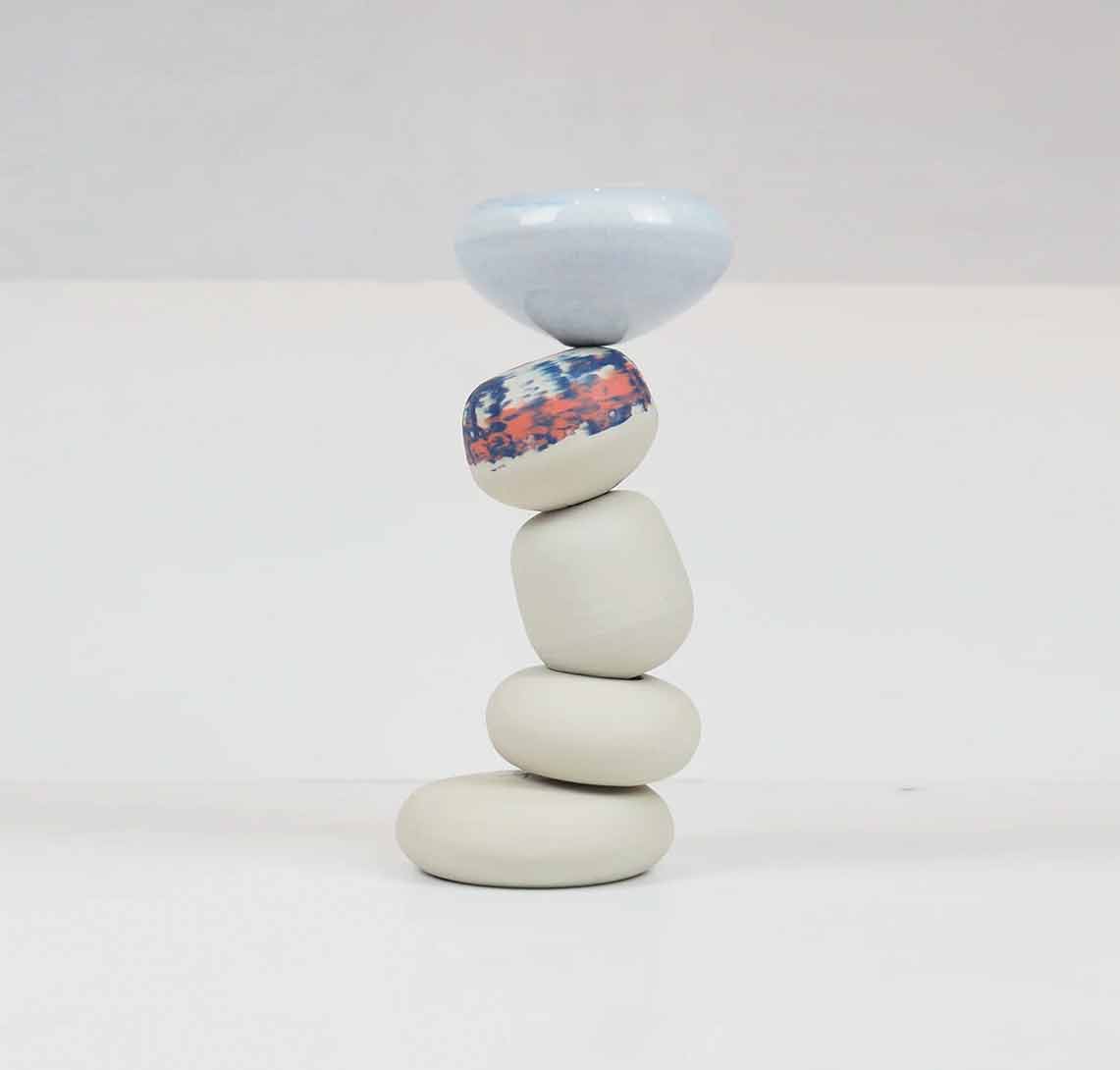
I’m still trying to figure out how my work Cawan Berbisik can create a direct impact on the audience. But honestly, with everything happening in my life right now, I’ve been more focused on reconnecting with myself. I feel a bit lost—lost as a person. That’s what led me to create the Anima series, as a way to search for a deeper understanding of my soul through animal and imaginative characters. Lately, it feels like an ongoing existential crisis—constantly questioning the meaning behind what I’m doing. That’s where Mundane Normality comes in, a reminder to slow down, be grateful, and not take the little things for granted. I guess I need to really get to know myself first before I can expect my work to help anyone else.
What are some unexpected things you’ve learned from your students or collaborators?
With my students, I try to understand the meaning behind each creation before I explain it and let them make their own. Through that process, I find myself connecting to perspectives I probably wouldn’t discover on my own. It’s the same when I work with collaborators—there’s something exciting about trying to be on the same wavelength with someone else, creating not just for myself but for and with others. It adds a whole new layer to the work that I really enjoy.
Are there any textures, shapes, or symbols you return to often in your pieces?
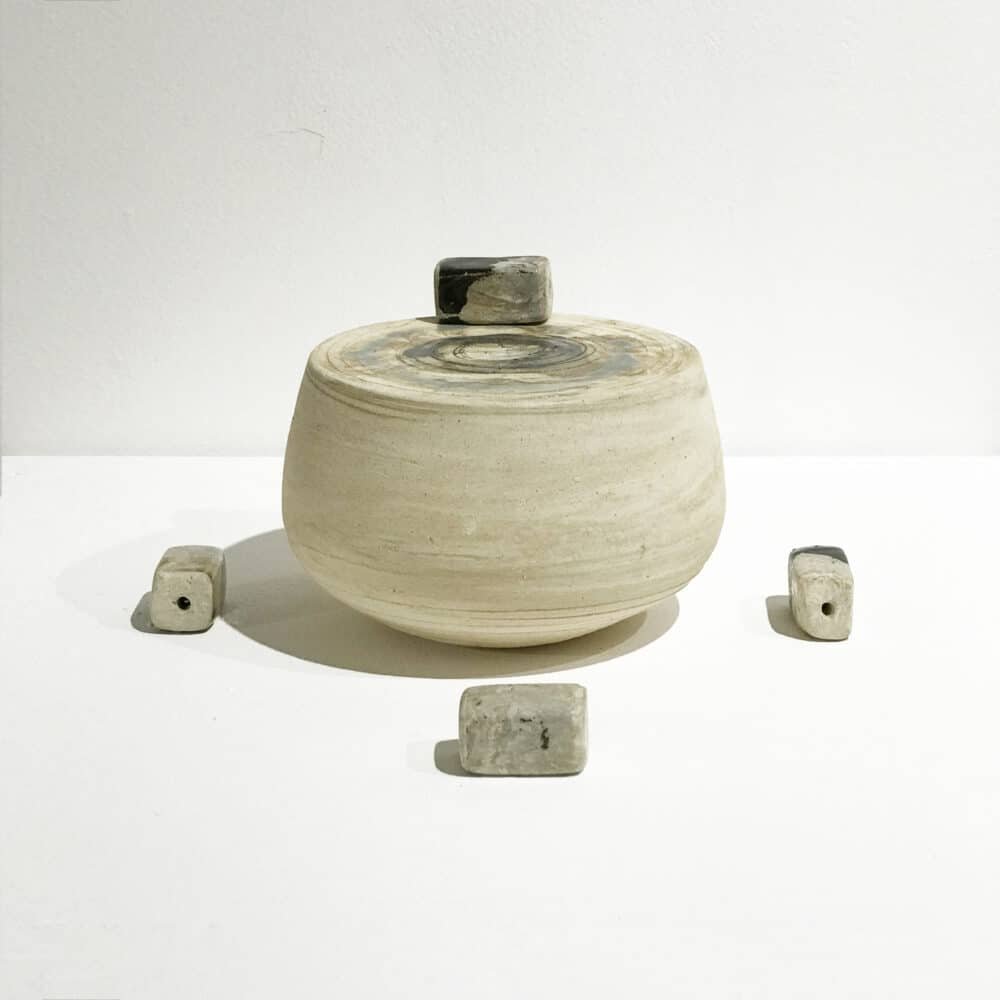
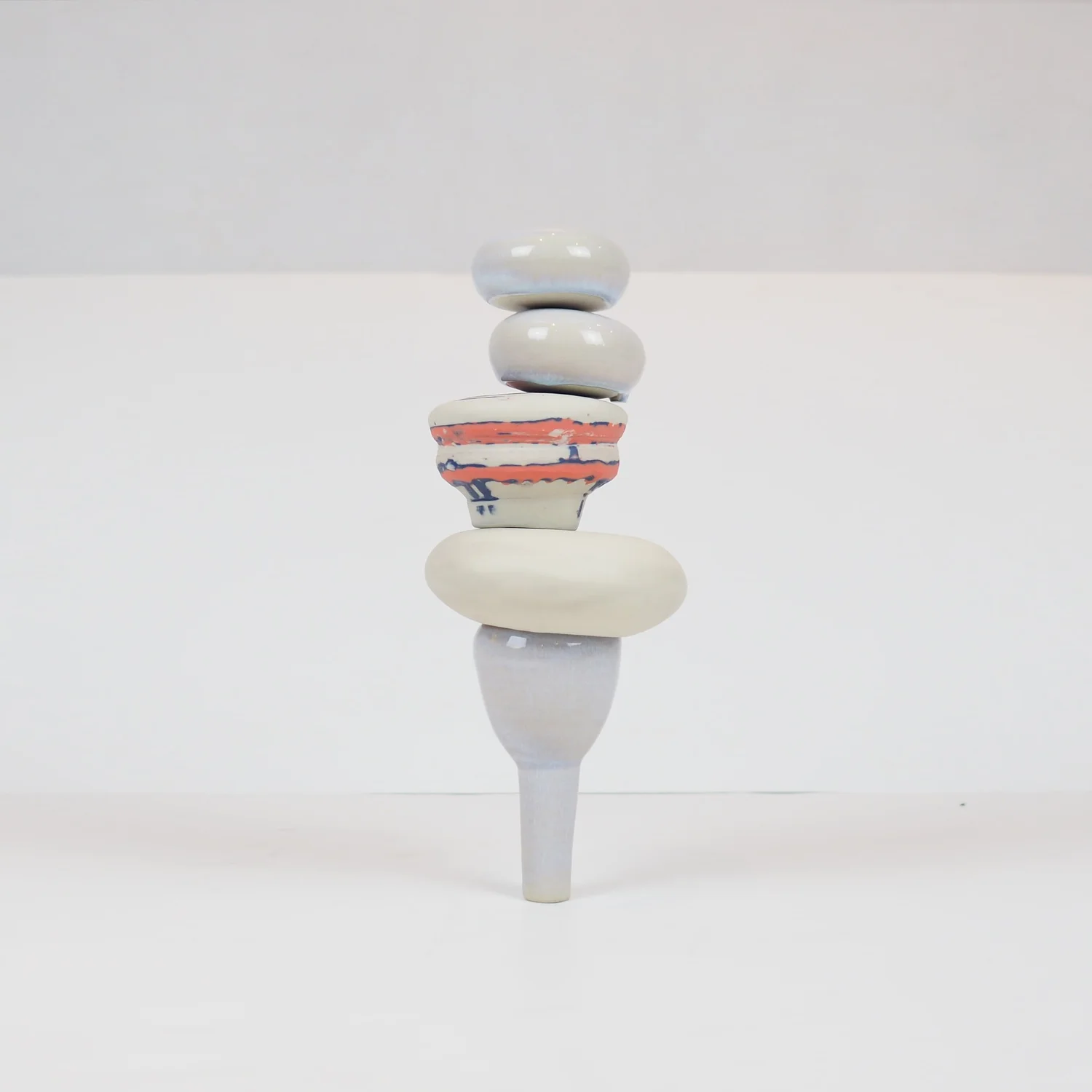
I don’t really stick to specific textures, shapes, or symbols, but visually, my work is often inspired by the natural color of clay itself—it has this warmth and honesty that I really like. I’m also influenced by visuals from the likes of Neil Gaiman’s and Jean-Michel Basquiat’s work, especially the rawness and expressive energy they bring. And honestly, sometimes my students—especially the kids—inspire me the most. The way they see their own creations, so unfiltered and free, often reminds me to loosen up and see things from a different perspective.
Can you share a piece that holds a memory, lesson, or turning point in your journey?
The first Cawan Berbisik project was exhibited twice in 2019. Honestly, I wasn’t confident at first that the work would have the kind of impact I hoped for. And when the pandemic hit, I started to doubt it even more—I felt like maybe this project just wouldn’t work the way I imagined. But in April 2020, I received an email from someone who had participated in the project. She shared that she and her brother reconnected and managed to resolve their communication issues. Her last words in the email stayed with me: “The presence of Cawan Berbisik opened a deep conversation between us. Thank you for echoing the essential matters through this. God bless you and the works you have created”. That moment really kept me going. It reminded me that this is what art should do—help people, even in the smallest way, and make life a little better. I believe that’s the role of an artist in society.
What are you trying to offer people—whether they hold your work in their hands or learn from you?
What I’m really trying to offer is a space—whether through my work or when I’m teaching—for people to connect with themselves and with others. I want my work to be more than just something they see or hold; I hope it becomes a tool or a moment that helps them reflect, feel, or even start a conversation they’ve been avoiding. For me, it’s about creating experiences that remind people of their own emotions, thoughts, and connections—something we often forget in our daily routines. This is what I am also doing for myself, in hope that we (myself, my audience and other people) can help each other.
Do you have any personal rituals or habits that help you stay grounded or inspired outside of your practice?
In my journey with Cawan Berbisik, I’ve had the chance to talk to people who are dealing with mental health issues. Those conversations have really helped me reflect and understand myself better. It made me see a deeper meaning in what I’m doing and reminded me why I started this work in the first place. Hearing their stories keeps me grounded and inspires me to continue creating something that might connect with others on that level.
Who or what has deeply influenced your practice—formally or informally?
Cawan Berbisik was deeply influenced by my mother. She used to hide things from me, especially about her health, because she didn’t want me to worry. 6 years ago, she had a stroke that left her unable to speak clearly—only whispers and fragments of thoughts I could barely catch. She passed away last year, in September 2024. The hardest part is that, because of her condition, she never really knew about my work. But in a way, Cawan Berbisik became my way of processing that—everything I couldn’t say to her and everything she couldn’t say to me. She was selfless, always helping others.
Where can people see your work, connect with you, or learn from you?
my website at www.yugiekartaatmaja.com anything you want to know about me is there.