Ayomide Tejuoso
What’s your name and where are you from/based?
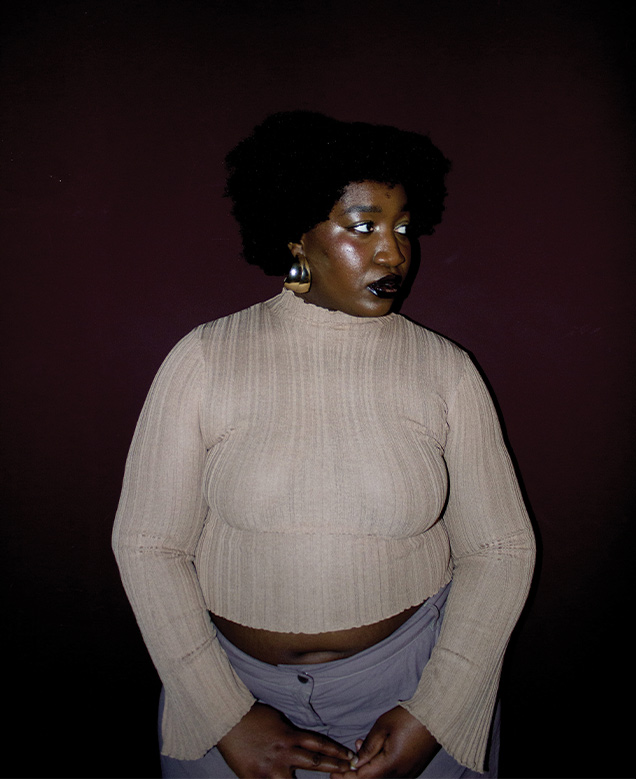
My name is Ayomide Tejuoso, and I am a Nigerian British artist living in London. I grew up in Lagos, Nigeria, until I was 16, and I did my A Levels in Johannesburg at the African Leadership Academy. I went back to Nigeria at 18 for a gap year because I failed my A Levels, and subsequently did not get a scholarship offer from American universities. In Lagos, I was deeply depressed and discovered Purple Palace and her French art school escapades (all for the fab fee of 600 pounds per year). Inspired, I moved to France in December 2020 to attend a French National Arts University preparatory year, which started my Europe journey. I studied art in France for two years and then moved to Geneva in October 2022 to study at La Head. I now live in London, and work as a full-time artist.
Can you describe your practice in a few words?
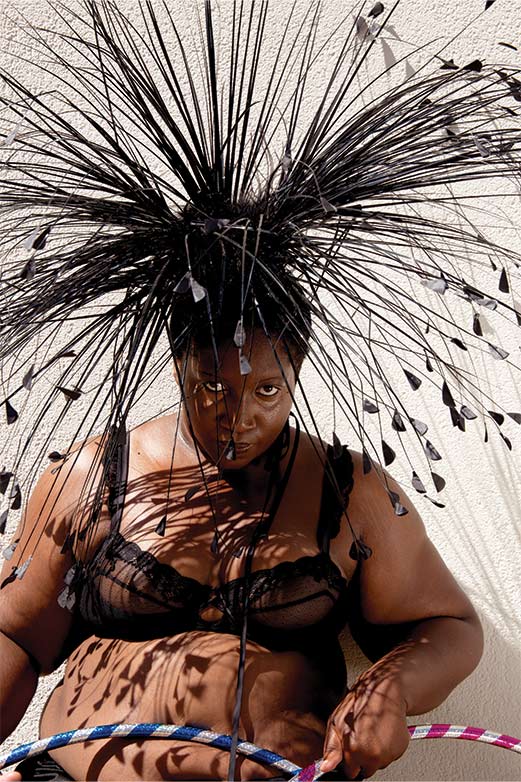
I am a Black entity, a woman spirit thrashing for more. I am consumed by Black image, thus I make Black image. My practice is the will of the universe, the act of giving name through research-based frameworks. I work across photography, film, installation, performance, and text, to make imaginations for myself, clients I love, and things that will pay me well.
How did your curiosity for creating begin?
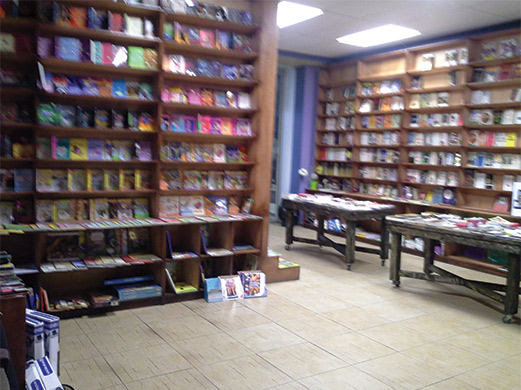
I come from an academic and creative background. My grandparents are medical doctors and professors, my late grandfather was an architect. My grandmother founded one of the most pivotal bookstores in Lagos, Glendora Bookstore. My mother, Dele Tejuoso, was an artist in the 90s and then became an edutech founder, Wifi Combat Academy. She trained me in the entire Adobe Suite when I was 10 years old and got me my first photography internship with Kelechi Amadi at age 13, and my first camera. I grew up with working in Glendora Bookstore with my father, Toyin Tejuoso. He bought me large collections of British classics, Archie comics, everything I ever wanted to learn since I was 5 years old. I grew up in Glendora Bookstore in International and Local airport selling books, doing inventories, and in the Falomo location at the attic looking at others buy books. My uncle and aunt, founders of Jazzhole Lagos: I grew up visiting their home in and sitting in their garden, hanging out in their jazz store. This is my heritage, there was no other path. My path for creation was founded by my cultural background in Lagos, Nigeria, and groomed by my parents and the access they provided me. My parents and their book collection in Lagos, my home in Lagos built by my late grandfather, is what has shaped me as a person. I could go on and on about this, but I was birthed into this.
You work under the name Plantation, where does the name come from, and what does it mean to you?
I gave myself that name at the age of 13, and I vividly remember in school in Lagos in the ICT room, telling myself to note it down on paper, that I will forget my reason for giving myself that name. And I did forget. But Plantation has become my second skin, the name to my Instagram account since I was 15. It’s been 10 years of this given name, and it has its subliminal and violent implications. There is nothing beyond the fact that restless and depressed 13-year-old Ayomide was looking for a name as a capsule. I was so angry and mentally distraught for years, since I was 7, and Plantation is this heavy appellation. An appellation I ordained to myself as a young kid.
Your time is split between London, Geneva and Lagos, and you’re studying at HEAD Geneva. Each city finds its way into your work, London is the backdrop for Praxis Modulus, Geneva is where much of your practice has grown, and Lagos is at the center of it. How do these places shape what you make?
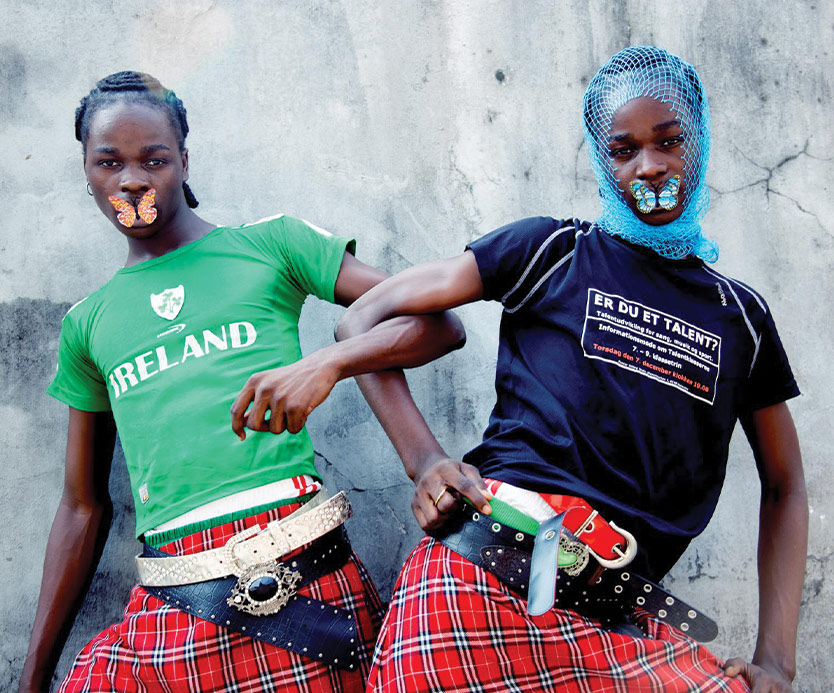
Cities make an image. An image is fashion, casting, light, and location, and that can contort depending on the city you find yourself in. Lagos and West Africa have shapes, colours, textures and people that you cannot replicate anywhere else. In London you would have to bend the city to fit a West African narrative, or make a set to replicate the memory of home. France and Geneva were very hard for me, it was difficult to create or make a team. I was casting myself, styling and pulling looks myself, and it taught me the art of making images through desperation. Making art without resources. The skills I learnt through this make it quite natural for me to create in Lagos, and to mold London and its textures to my will. I think as I grow within my practice, the city is not the foundation, but the research and skill level is the anchor. The more skills you have, the deeper the context and narrative, the more the production can be profound.
Blue Dust, Yellow Doom came out of your return to Lagos in 2022. You describe it as a return to your mother’s arms, and say that under the “yellow, blue-dusted skies” you found peace, away from the anti-Blackness you’d met in Western institutions. What was it like coming back after time in Europe?
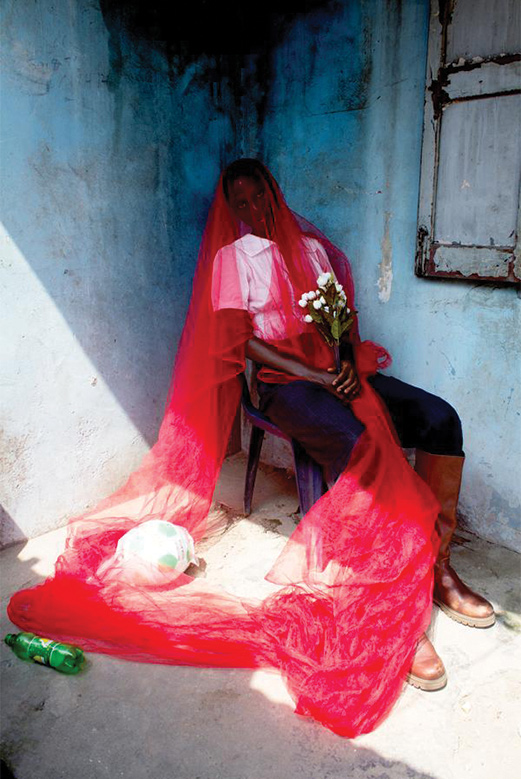
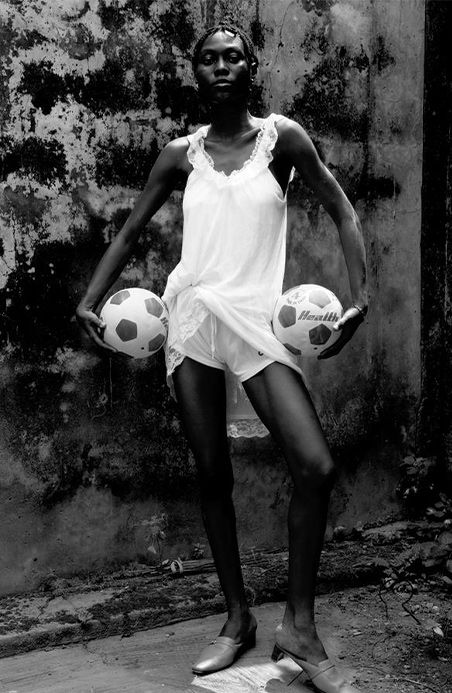
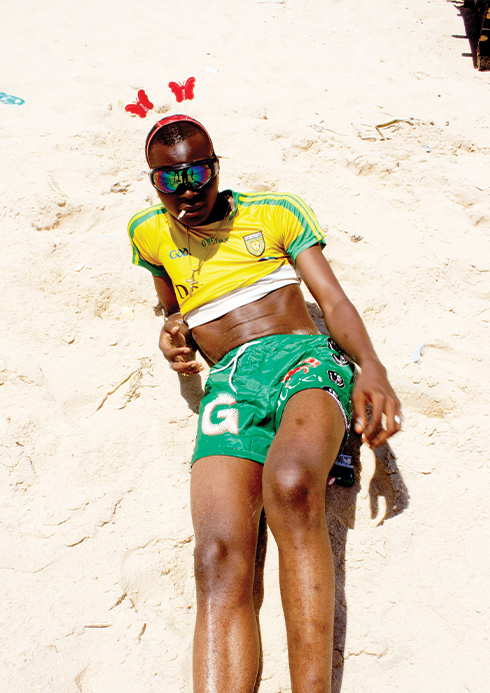
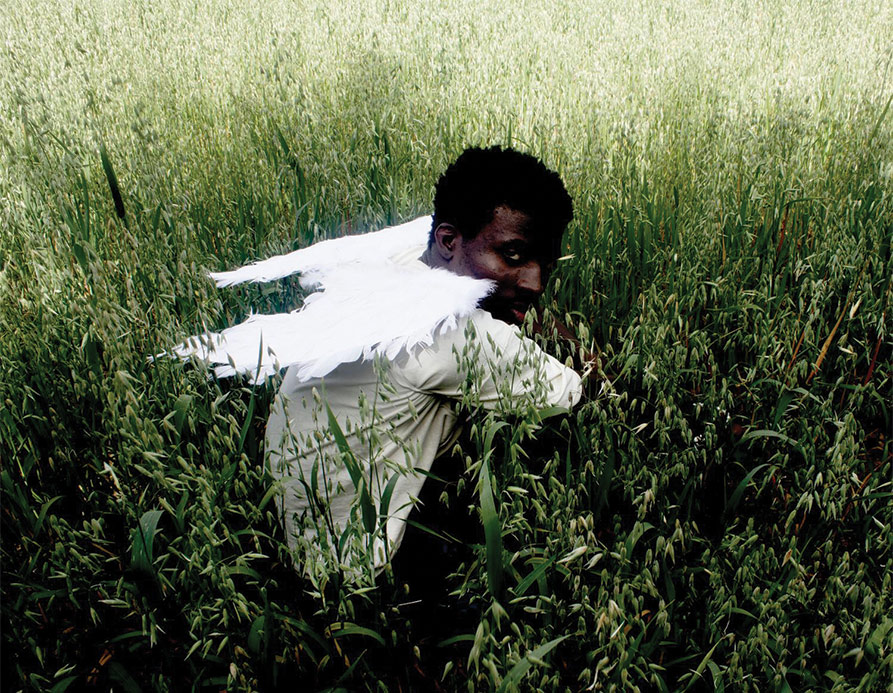
After spending almost 2 years in France, I left my room in Nantes, ran to Paris, and then jumped into Oxford. I was in a deep depressive episode; I had no sense of self and could not breathe. My parents were worried, so they got me a ticket back to Lagos, and I slowly regained my soul. Spending 4 months in Lagos gave me an opportunity to be a girl again, guided by my parents’ words and my siblings’ warmth. I began to shoot again with ease: going to the beach to take stills of horses, putting Black boys in wings and gold and asking them to scream. Creating in France had been so hard because I was not in Paris and I did not know how to make an image as well as I do now. Lagos in 2022 was my chance to make a masterful Black image. I was commissioned by Home School Magazine to create a story, and with 2000 dollars I told a powerful story. My dream story. The story is called “Yellow Doom”; “Blue Dust” comprises the independent images I took on my own in Lagos. Blue Dust, Yellow Doom are in dialogue with each other, offering notes on emotional refuge, Black image, praxis, Lagos, visual resistance, angst, and hope.
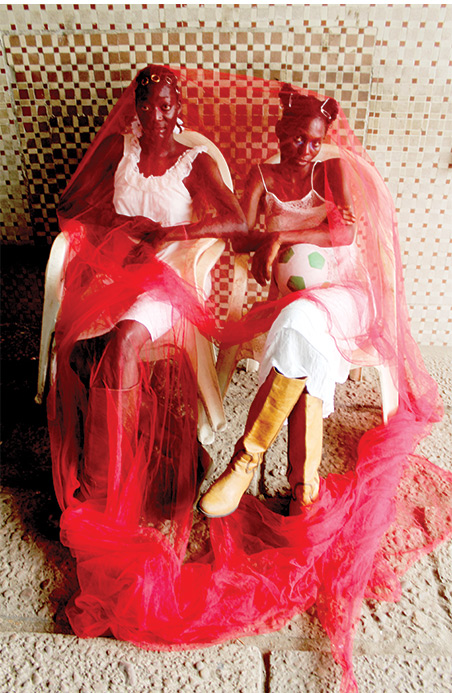
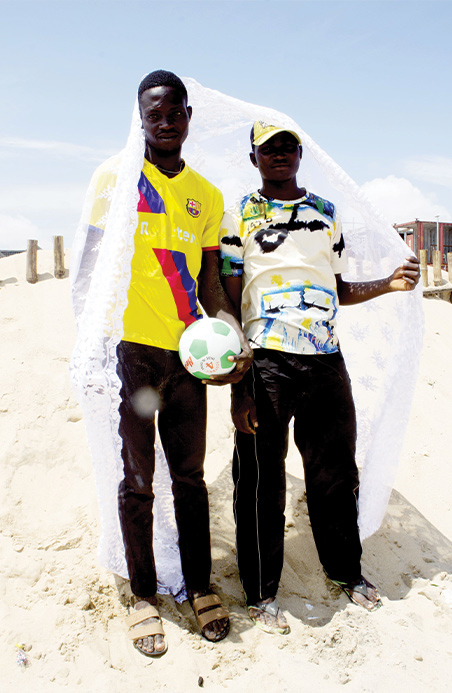
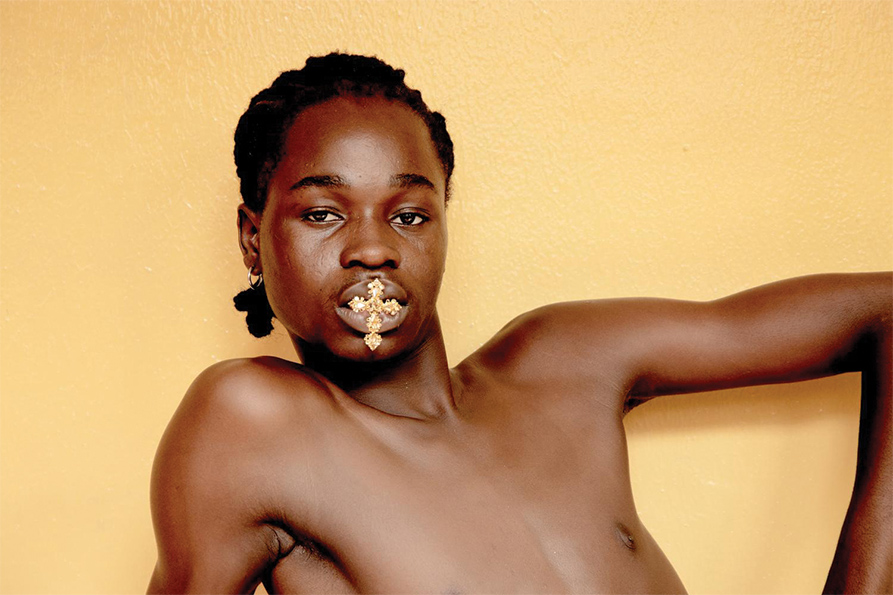
Praxis Modulus is a three-year project, running 2025 to 2028. You describe it as a Black mythology in contemporary decadence: Black boys dusted in blue, Black girls with swollen braids, golden crucifixes dipped in red. Where did this world begin for you?
The first moment was when I was 17 in Lagos, and my dad’s friend accompanied me to the railway tracks where I took images of Lagos street men. On a man’s shirt was on one man’s shirt, so I called that image “Pacific Blues.” Thinking back at it, when I was 16, 17, 18, I was making the most raw images. When I was 16, my dad’s cousin accompanied me to this cow city in the outskirts of Lagos, where they were slaughtering animals, and it was so raw, and wild. I had a cast of 3 models, and I painted them black. We went from the cow city to abandoned railway tracks in Yaba; the images were so raw! I was 17! To return to that image, “Pacific Blues,” it set the foundation for the colour blue and for this search for a Black mythology through grief. I just took a moment to meditate on my older work, and I have been meditating on the same imaginations since I was 16, trying to map the Black spirit through body, loss, grief, and desire.
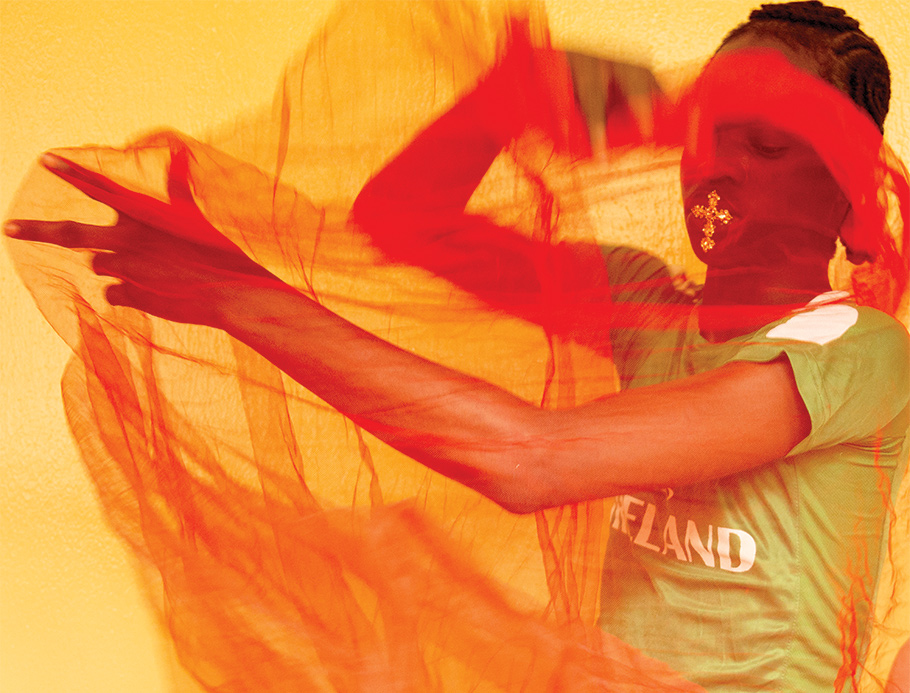
Blue appears in almost every image, installation and performance you make. People are “dusted in blue”, and in Praxis Modulus you link it to death, sacredness and the in between in Yoruba belief. How did blue become so central to your work?
Blue began again with “Pacific Blues,” then it appeared in my subsequent works in France. The word blue acted as an anchor. It related to Yemoja, but also affirmed my notes on desperation and loss. For me I am relating IFA philosophical and divination frameworks to the colour blue; for me, blue is grief, but in Yoruba ontologies, blue is related to Yemoja, to spirit and the divine. And in IFA, negative and positive are one, so I am fascinated by this dialogue of my superimposed grief and the preimposed divine. What is that dialogue, and how do you make an image that carries this memory?
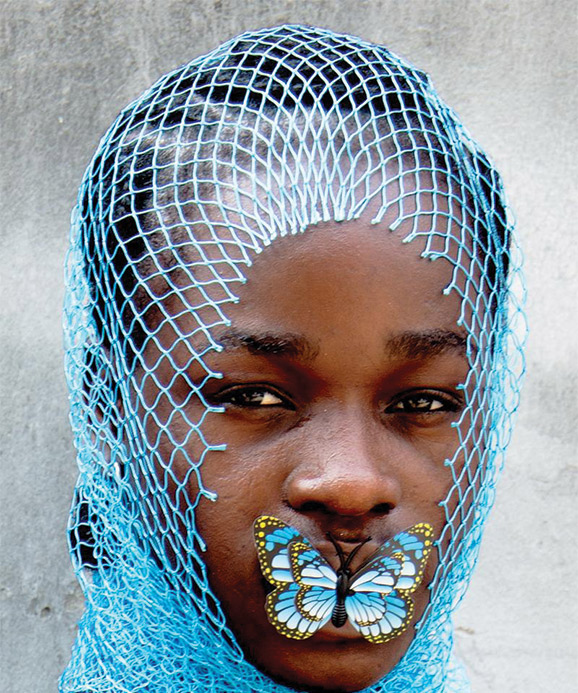
You’ve said the iPhone and social media aren’t documentation in this project, they’re “a second skin of the work,” and you describe the cast roaming and consuming London, “a swarming of fantasy through its streets.” Why London, and what does a phone and social media let you do?
I have been making TikTok videos since I was 19 in France, archiving my art school experience and my journey as an artist. I built a small following there, but have spent the last few years posting less and telling more creative journals and video narratives on Instagram. I found that people don’t like to hear people talk for so long or be filled with depth; my video essays are really beautiful, but too present and still, and I am not as consistent. But when doing my first shoot for Praxis Modulus in London in May this year, I took my iPhone and began to film my model as they performed in East London. And the videos went viral, then I shot my self-portraits in July and subsequently they became viral. It follows a similar rising motif in West Africa and India, or ThatCoolGirl and Rachel Ojuromi, of people zooming with fashion in these cities and marginalised spaces. But instead my cast live in my photographic images, and find themselves in these iPhone stills. They don’t walk per se, but just swarm locations, look closely, make a gaze. They colour London with a Black narrative, you find them in unexpected alcoves, just like in my photographic images, and they make London bloom. I don’t have the textures of Lagos, but I have the histories superimposed on my cast with fashion, texture, and poses, and they live and evolve in the city. The iPhone and camcorder is a second skin to the image, the accessible point that brings you into the universe. And then my video essays recontextualise them. It’s like layer upon layer, to the final destination of the research and methodological implications of the wider body of work. The foundation is research, text, essays; the multiplication is image, film, installation, and performance; the accessible point are these iPhone skins, capturings of Black phenomena telling London YES INDEED WE ARE HERE!
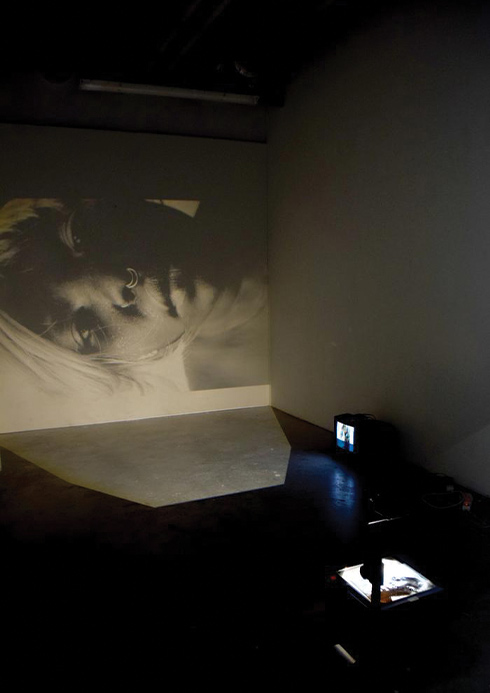
You describe writing as “linguistic revolution,” “the bearing of arms and the throwing of stones,” and you also say “I write to remember, and create to understand.” What does writing give your practice?
It gives it an anchor. My younger brother, Tobi Tejuoso, is my key reference. As well as my little sister, Semilore Tejuoso, both are researchers. And that is my anchor. Research is my anchor, and text is the translation. My brother is a film director, we make music videos together, we live together, we write together. He inspires me to be a better researcher, for he is truly prolific. He is beyond a genius. My little sister, who is 17 and in community college, is already an architecture researcher and painter. She makes really incredible video essays on design and architecture in Nigeria and beyond. My family and our research and linguistic ambitions is what truly shapes me. They are my anchors.
You’re also developing 00IDEATION, a research lab and studio building “visual mythologies” through ideation and conceptual art. What is it for, and what made you want to build it alongside your own practice?
My brother, Tobi Tejuoso, is the art director, and I am the founder. 00IDEATION makes worlds for clients, employing contemporary art research-based frameworks. It is my creative studio for creating full worlds and projects for music and commercial clients. I love to make commercial things, in truth, and this studio gives me a research-based foundation for commercial productions. And I get to do it with my brother’s creative wisdom and rigour! I really enjoy making commercial projects and expanding my skills as a visual director and world builder. I make worlds for my own contemporary practice, to learn how to make worlds for clients—social- social first worlds that also stretch across experiential design. 00IDEATION takes tools from conceptual art and thinking and makes them commercial. Outside of that, my brother and I operate as a duo, making music videos and film commercials for clients. Commercially, through my photography practice, my studio 00IDEATION, and as a duo with my brother, I have created visuals (music videos, campaigns, or images) for the following: Azsa, Onalaja, Celeste, Annhastasia Enuke, Amy Gadiaga, Wu-Lu and Poison Anna, Parijita and Luzai. We are making much more towards the end of the year and next year. I want to be more skilled and masterful in creative strategy, campaign and product development. I truly enjoy living in other people’s universes and making powerful projects that affirm their thoughts and goals.
living in other people’s universes and making powerful projects that affirm their thoughts and goals.
Is anything currently inspiring you?
Music videos and Chinese dramas. Arthur Jafa, and Sophie Oluwole.
Where can people find you?
Upcoming Show: OSCAM x Buro Stedelijk: Living Room Session: Returning Otherwise 19 November – 19 November
Website: https://ayomidetejuoso.com/
Instagram: https://www.instagram.com/plantationofficial/
TikTok: https://www.tiktok.com/@bitterplantains