Locki Humphrey
What’s your name and where are you from/based?
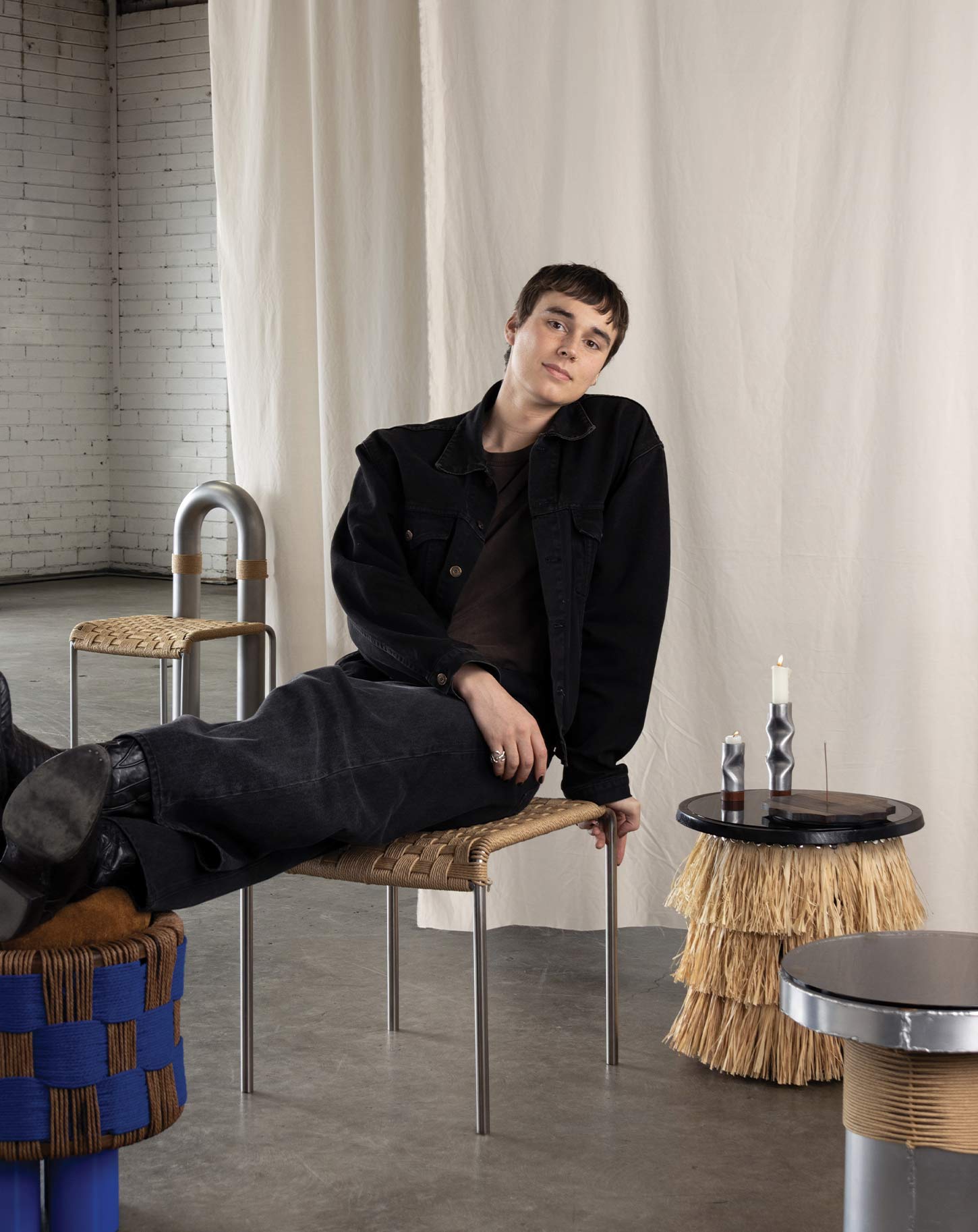
I’m Locki Humphrey, an Australian furniture and object designer based in Melbourne. I founded Locki Studio in 2024, and my studio is currently in Brunswick East.
Can you describe your practice in a few words?
Playful, tactile and considered. My practice sits somewhere between contemporary furniture, craft and material experimentation, with a strong focus on sustainability and Australian manufacturing.
How did your curiosity for creating begin?
I’ve always been curious about how things are made, but I didn’t initially think of that as something that would become a career. I came into design through making rather than formal study, and I think that curiosity has remained at the centre of my practice. I’m particularly interested in materials and processes, and I tend to start with something that catches my attention and follow it to see where it leads. A lot of my work has grown out of that willingness to experiment without necessarily knowing what the finished object will be.
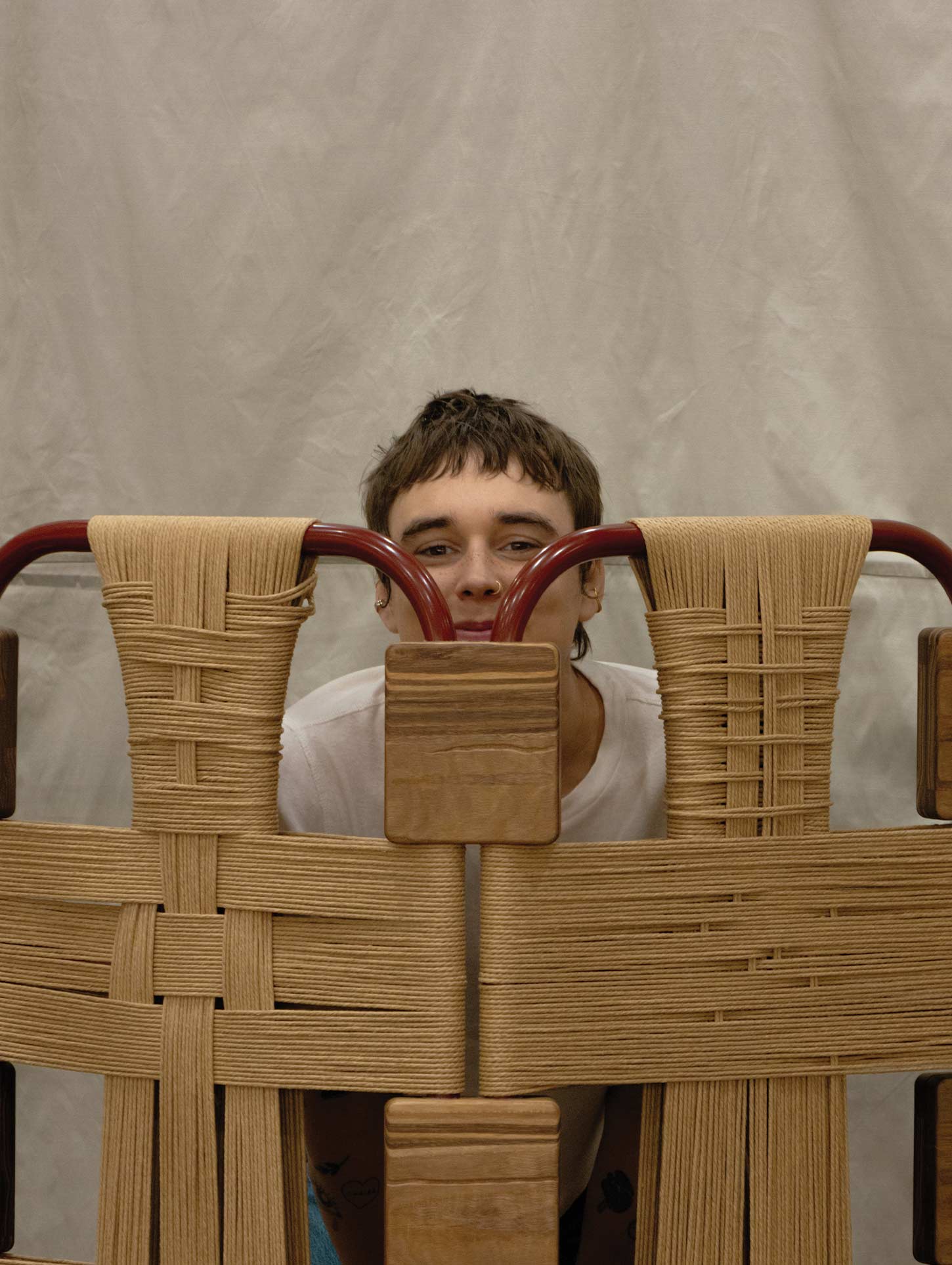
You began your career as an upholsterer in a workshop in Sydney, making bespoke furniture for brands, architects and interior designers. What did those years teach you?
Working in a workshop taught me a huge amount about how furniture actually comes together. I learnt to understand materials through handling them, and tearing them down, and I developed a real appreciation for the skill and knowledge involved in manufacturing. It also taught me that a good idea still needs to work in the real world. You can draw something that looks fantastic, but there are always questions around construction, durability, materials and how something will actually be made. That practical understanding has had a huge influence on how I design now.
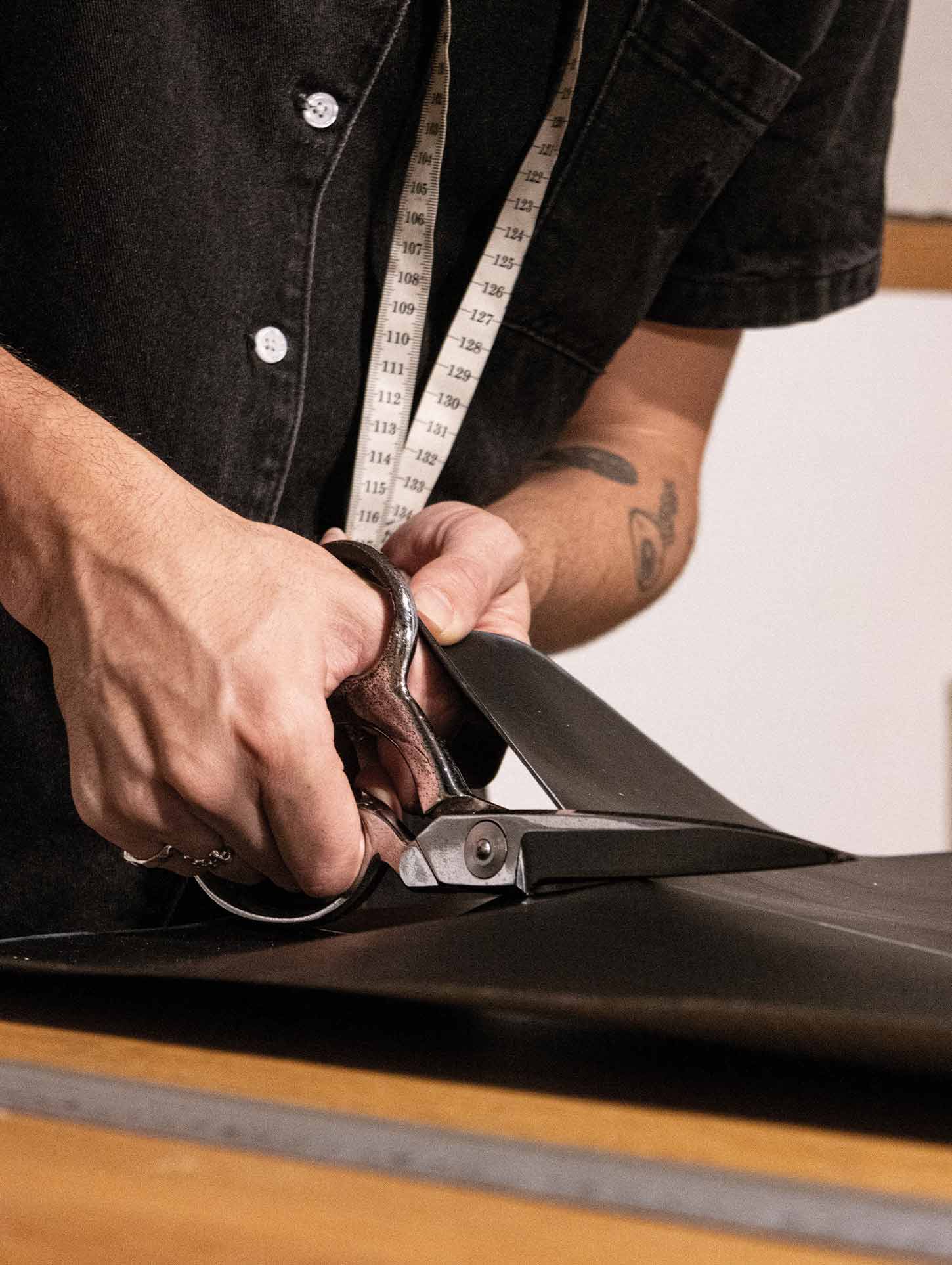
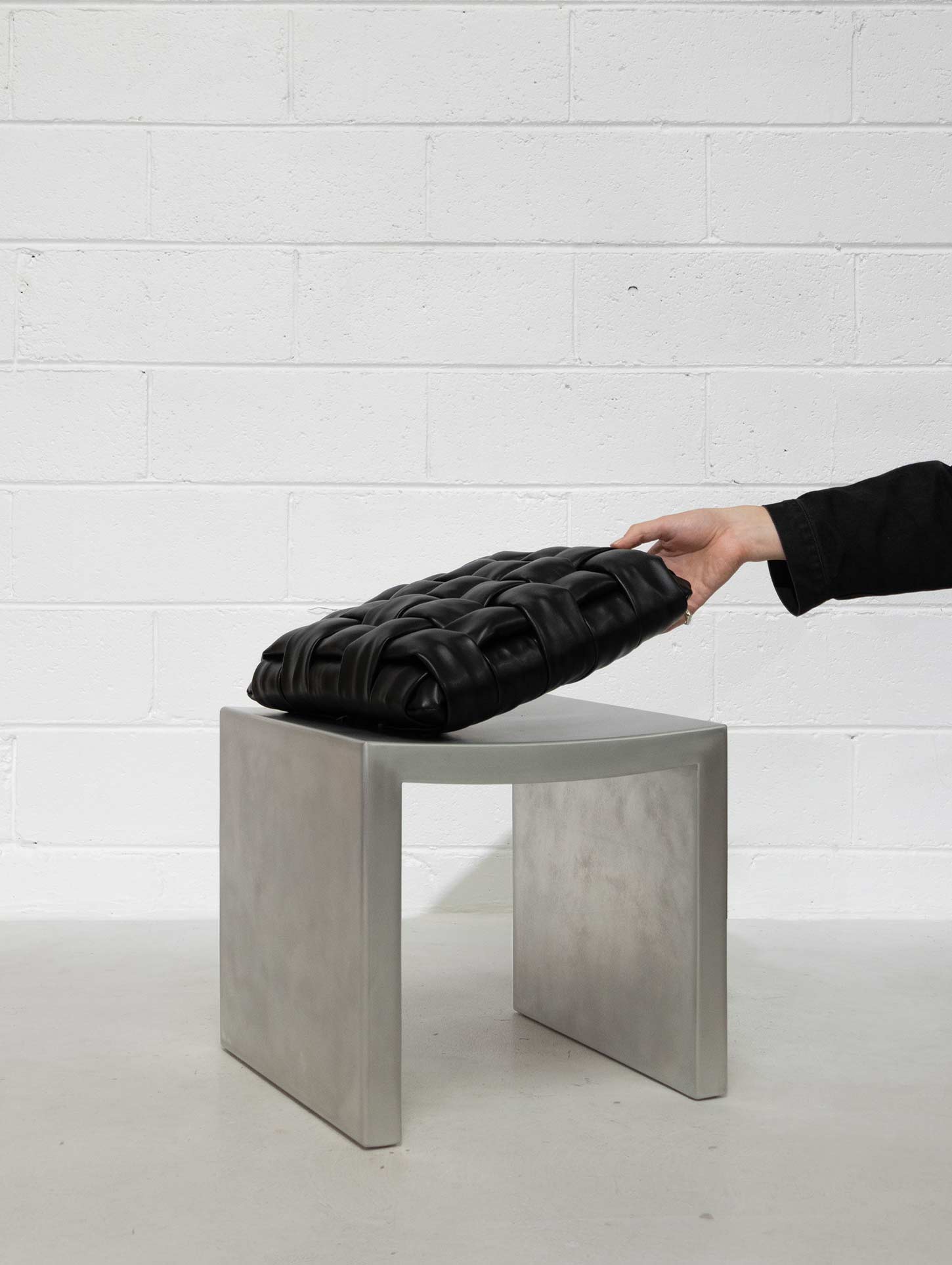
Every piece you make follows three principles: Australian production, biodegradable or fully recyclable materials, and construction that can be taken apart. Where did these rules come from? Is there one you find hard to keep?
They came from wanting sustainability to be part of the design process rather than something added as a footnote. I think designers have a responsibility to consider where materials come from, how an object is manufactured, and what happens to it at the end of its life.
Australian production is probably the most difficult principle to maintain because there are some materials and manufacturing processes that simply aren’t available here, or are significantly more difficult or expensive. I think that challenge is worthwhile though, and I try my best to stick to it. Working locally gives me much more visibility over how things aremade and allows me to develop much closer relationships with the people manufacturing my work, which ultimately keeps skills in the country. It isn’t always possible, where there are non-biodegradeable materials which are necessary for safety, or overseas manufacturing for specific materials not made here, but generally I do my best to redesign products until I can hit all three restrictions.
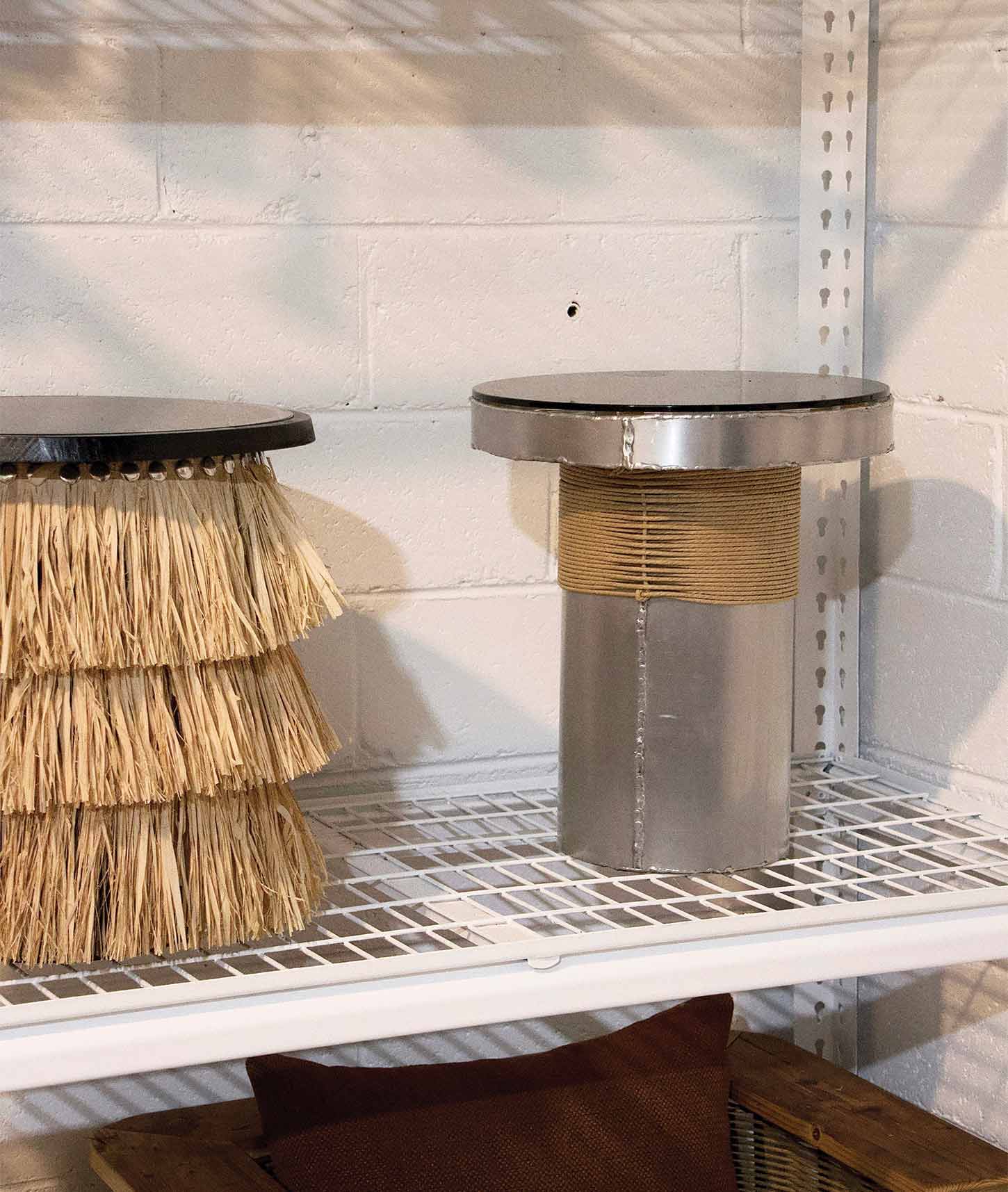
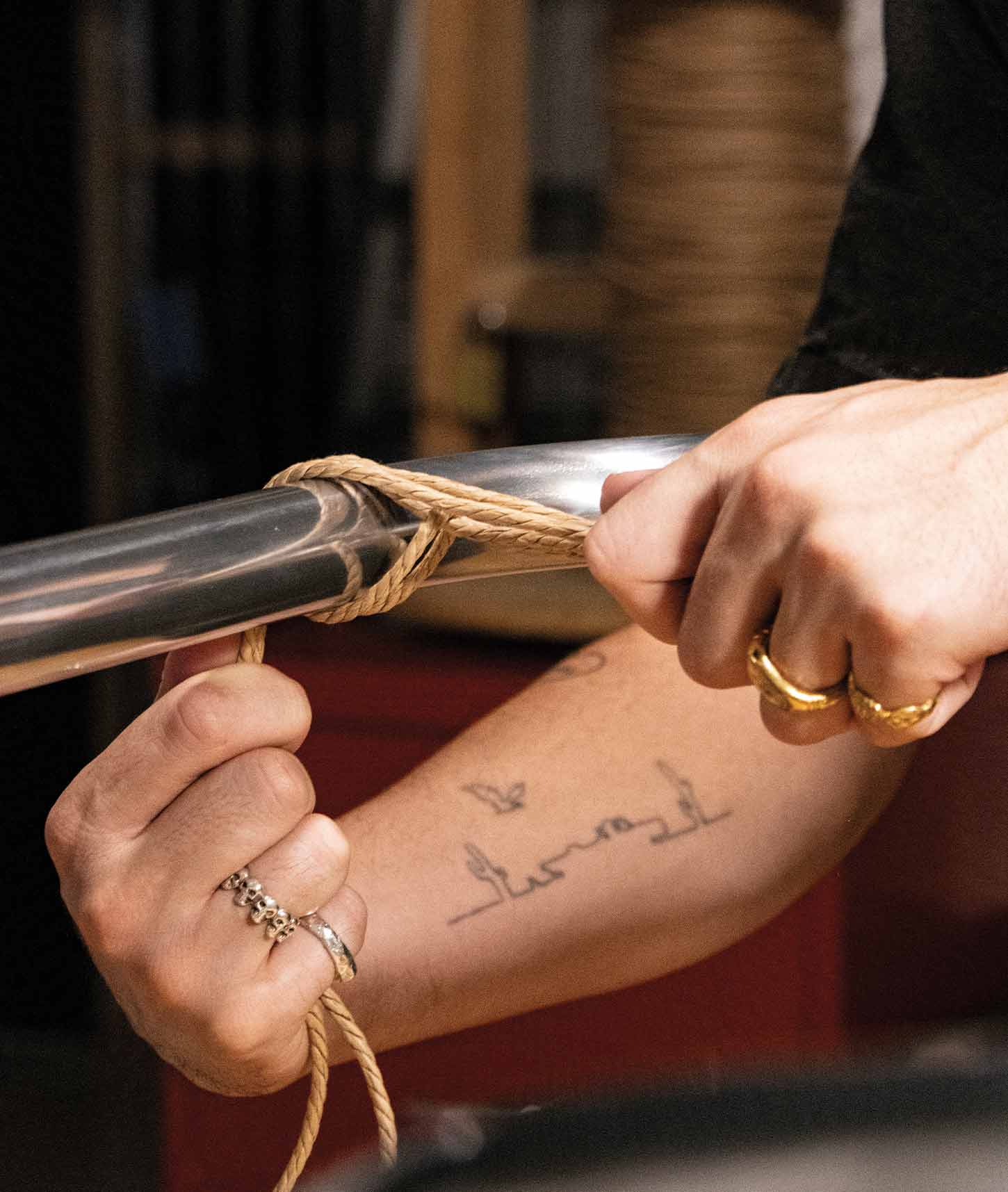
Instead of conventional materials, you use alternatives like cactus leather and natural latex. How do you source these materials, and what do they require of you as a designer?
I do a lot of material research, trying my best to stay open to new technologies, especially when I notice there’s an accepted flaw in current standards. For example, it was in specifically looking for a better alternative to petroleum foams that I landed on sap latex. Once I find something interesting, there’s usually a lot of experimentation involved because alternative materials rarely behave exactly like the materials they’re intended to replace. That can be challenging, but it’s also one of the things I enjoy most. You have to understand the material on its own terms rather than trying to force it to behave like something familiar. Those limitations can lead to more interesting design outcomes.
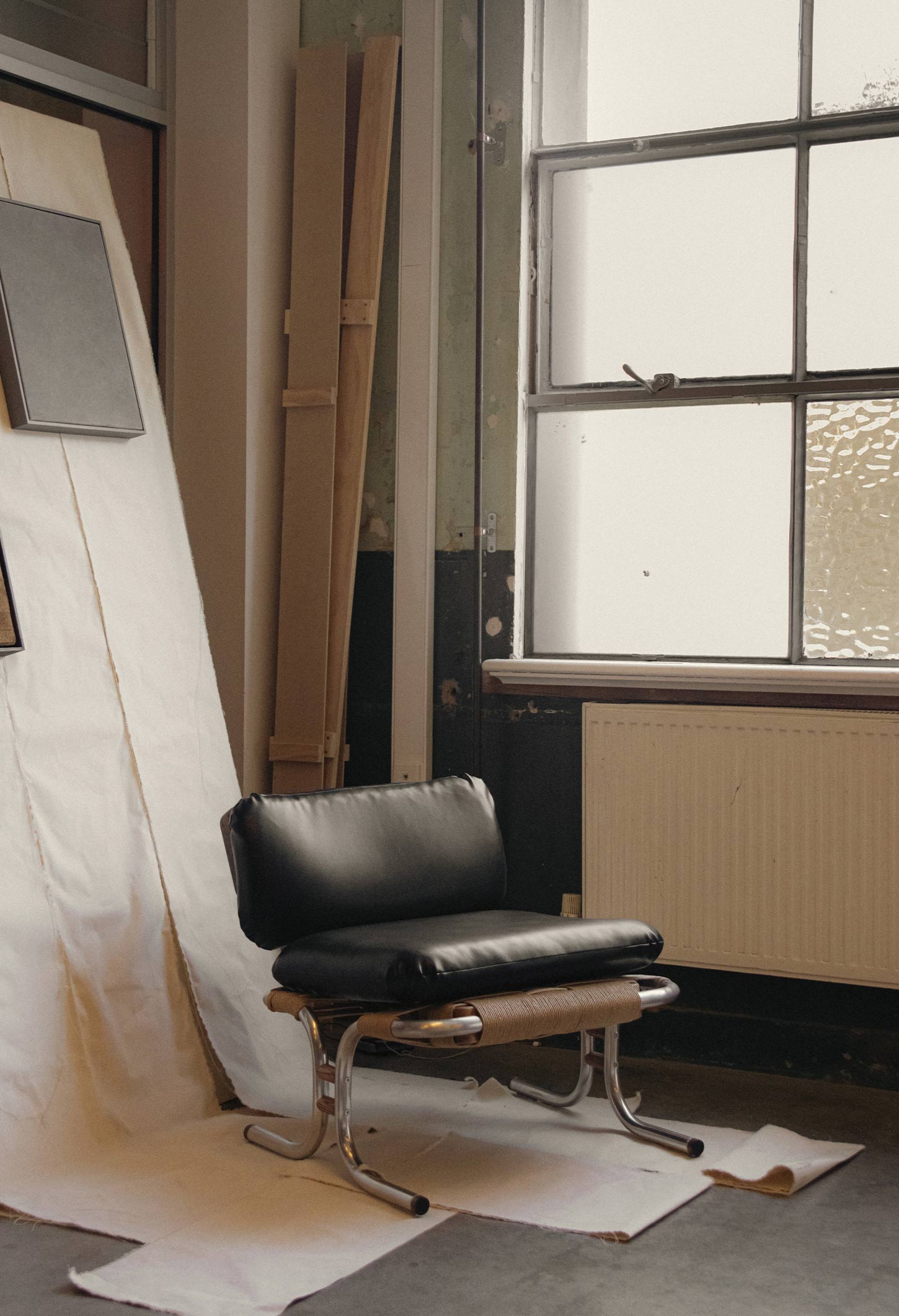
Your Bound Chair is described as “viewing design through the lens of the entire product lifecycle, from birth to inevitable death.
” What does it mean to you to design for an object’s lifecycle?
Every object has a life beyond the moment it leaves the studio, or even beyond the original owner. We tend to think about the beginning of an object’s life (what materials we use, how it’s made and how it looks) but not necessarily what happens to it decades later. I’d love to think people will own and cherish my work for eternity, but that’s probably a bit naive, so it’s worth thinking about what happens after they’re done with it. For me, designing for the lifecycle means considering whether something can be repaired, dismantled and separated into its component materials. I want the objects I make, and the components that make them up, to have the possibility of another life rather than assuming their final destination is landfill.
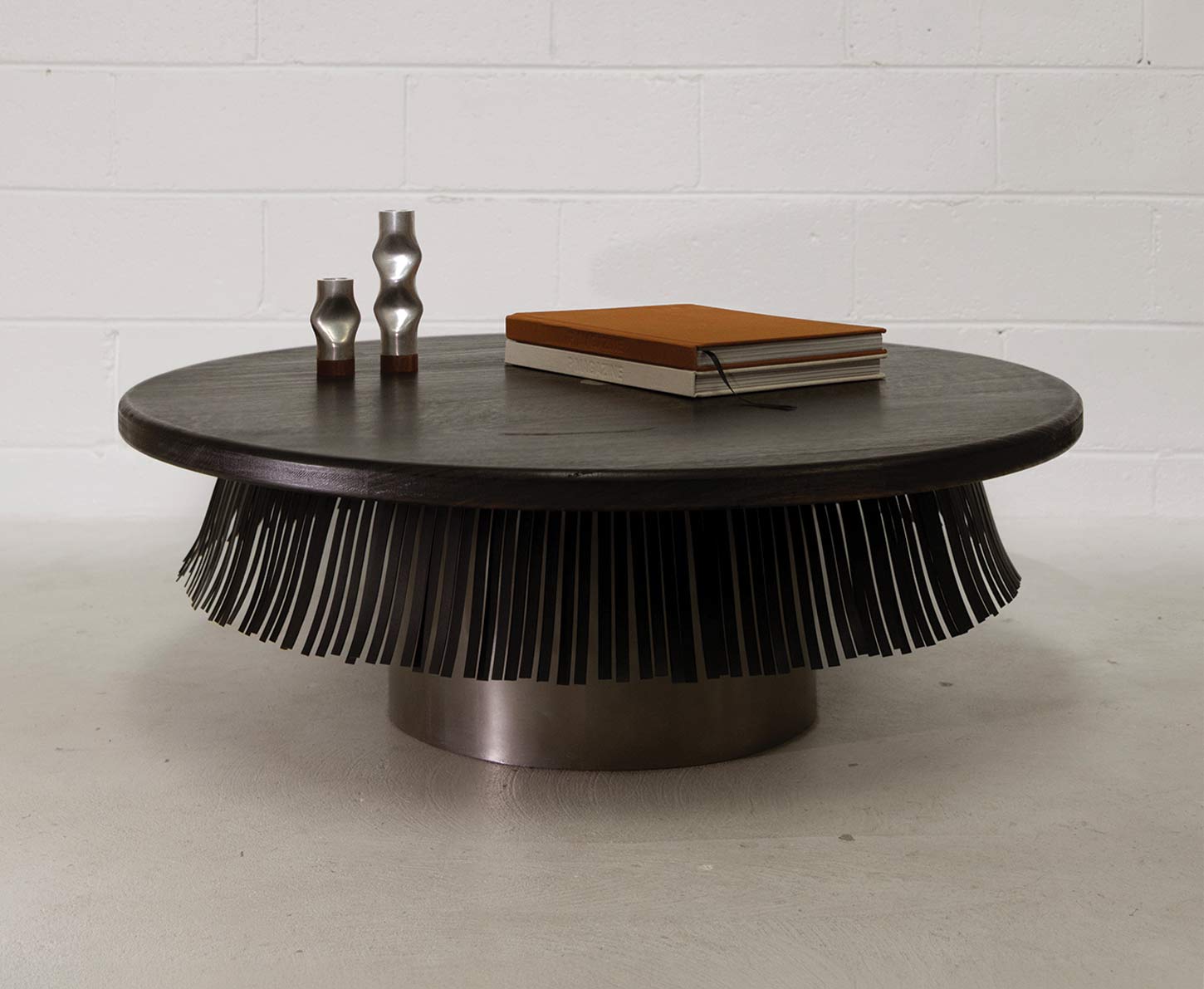
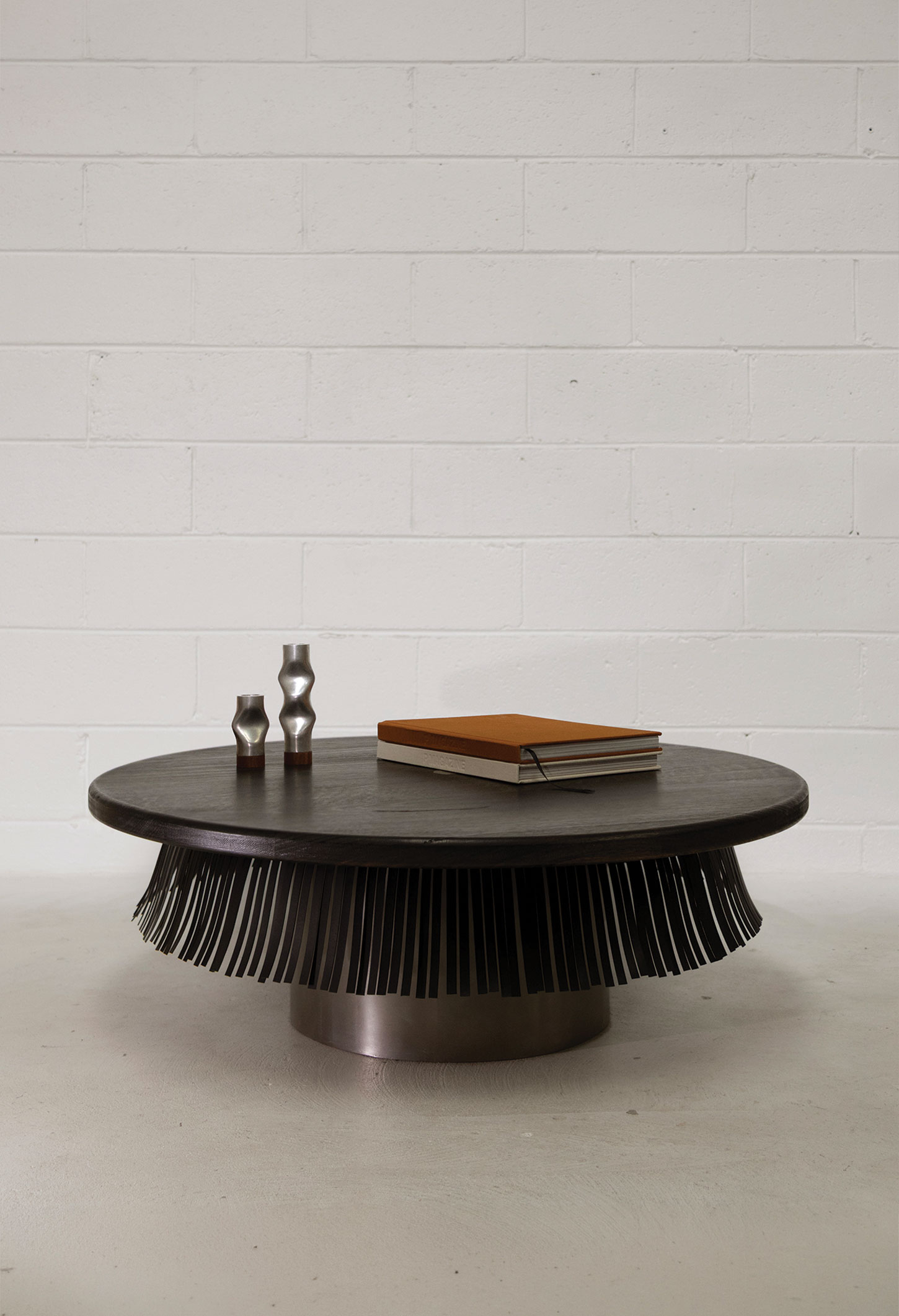
The Orville coffee table explores sustainability alongside queer culture, with 192 hand-tacked cactus leather strips referencing the camp aesthetics of country music. How does your identity find its way into your objects?
I don’t necessarily set out to make work about identity, but it naturally finds its way into what I’m interested in. The Orville is a good example because the reference to queer culture came through the the use of leather and the visual language of fringe, rather than being something I had to consciously add afterwards. It’s more like a subtle intergration of my own personal influences into my work, rather than a consious addition or branding. In general I’m drawn to things that have a sense of humour, camp or playfulness, and I think those qualities are an important part of my design language. I think furniture, and art ingerneral, should be fun. These references allow the work to engage with more serious ideas around culture without taking itself too seriously or being necessarily a ‘statement piece’.
Is there a piece that feels especially personal?
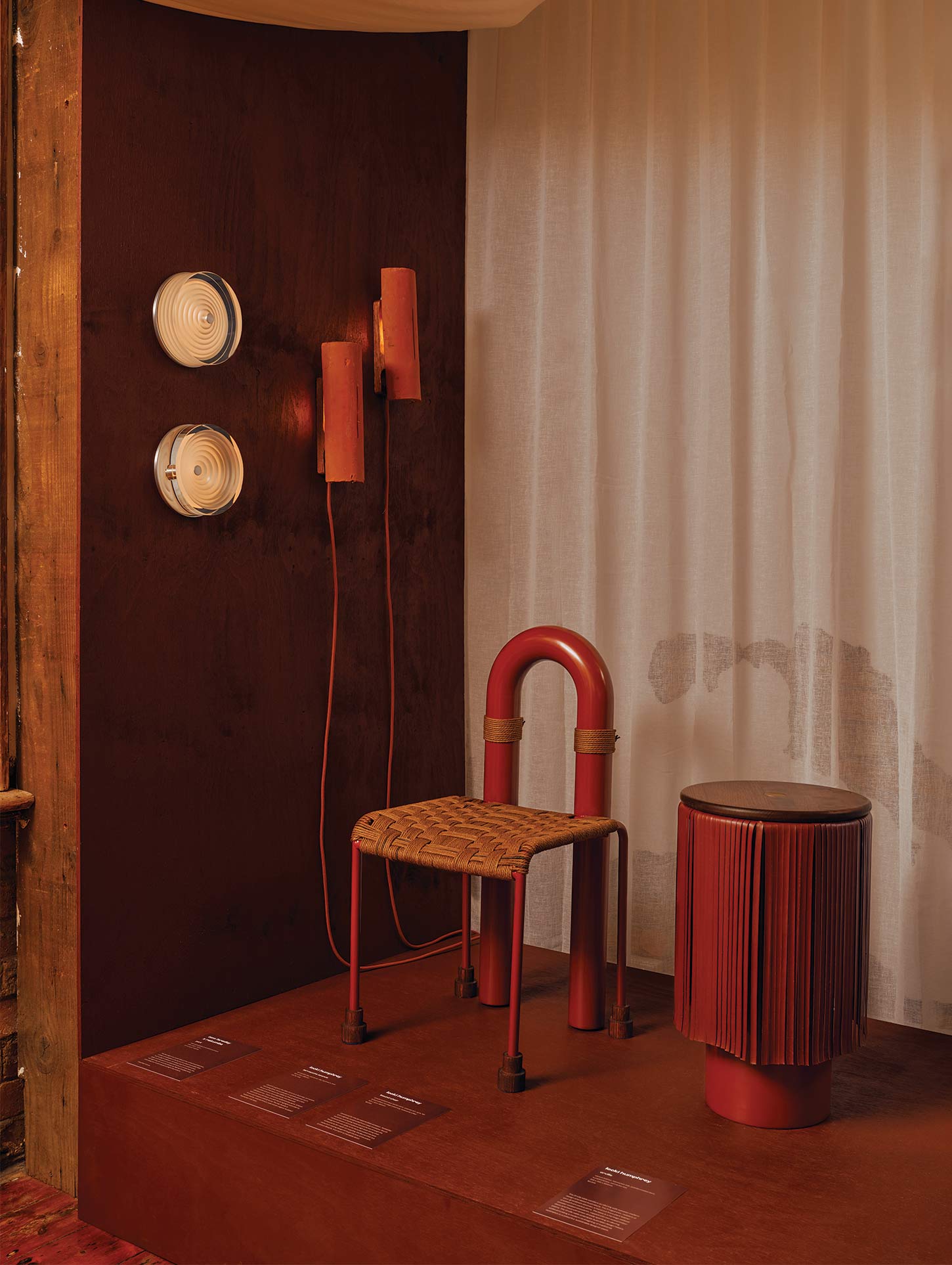
The Bound collection will always hold a special place in my heart. The Bound Chair resonated with people so strongly, and that response is really what encouraged me to pursue furniture design more seriously. It brings together many of the things that continue to guide my practice: simple sustainable materials, traditional craft techniques and an element of playfulness. It was also an important moment where I started to understand what my own design language could be, so it still feels like a very clear expression of what I’m trying to achieve. This has now extended to 3 different woven Bound designs, plus a collaborative realease with New Volumes made from terracotta.
Is there a place, in Melbourne or anywhere else, that you go back to for inspiration or rest?
When I’m feeling a bit stuck or in need of inspiration, I tend to just hit the streets. I love walking around a city, any city, and I think I feed off the energy of being somewhere busy. I’m more of a wanderer than someone who seeks out specific places; I find that just being in motion, taking things in and letting my mind wander is often when ideas start to come together. For me, inspiration is less about arriving somewhere than what happens in between.
What’s inspiring you right now, in or outside of design?
I’m really interested in traditional craft and weaving at the moment, particularly the ways that these techniques can be combined with contemporary materials and manufacturing techniques. Outside of design I’m always looking at pop culture, especially art and fashion, which I find useful because they’re often less concerned with whether something is considered “good design”, and more so on the emotion of a work. I find this can introduce completely different ideas around colour, texture, identity and visual language.
Where can people find you?
You can find my work at www.locki.au and on my Instagram (@locki.humphrey), where I share new work and what’s happening in the studio. I’m exhibiting at Reverie as a part of Fremantle Design Week in mid-October, and I’m currently developing my second solo exhibition and continuing to work on collaborations with manufacturers and design brands.