Prakrit Agarwal
What’s your name and where are you based?
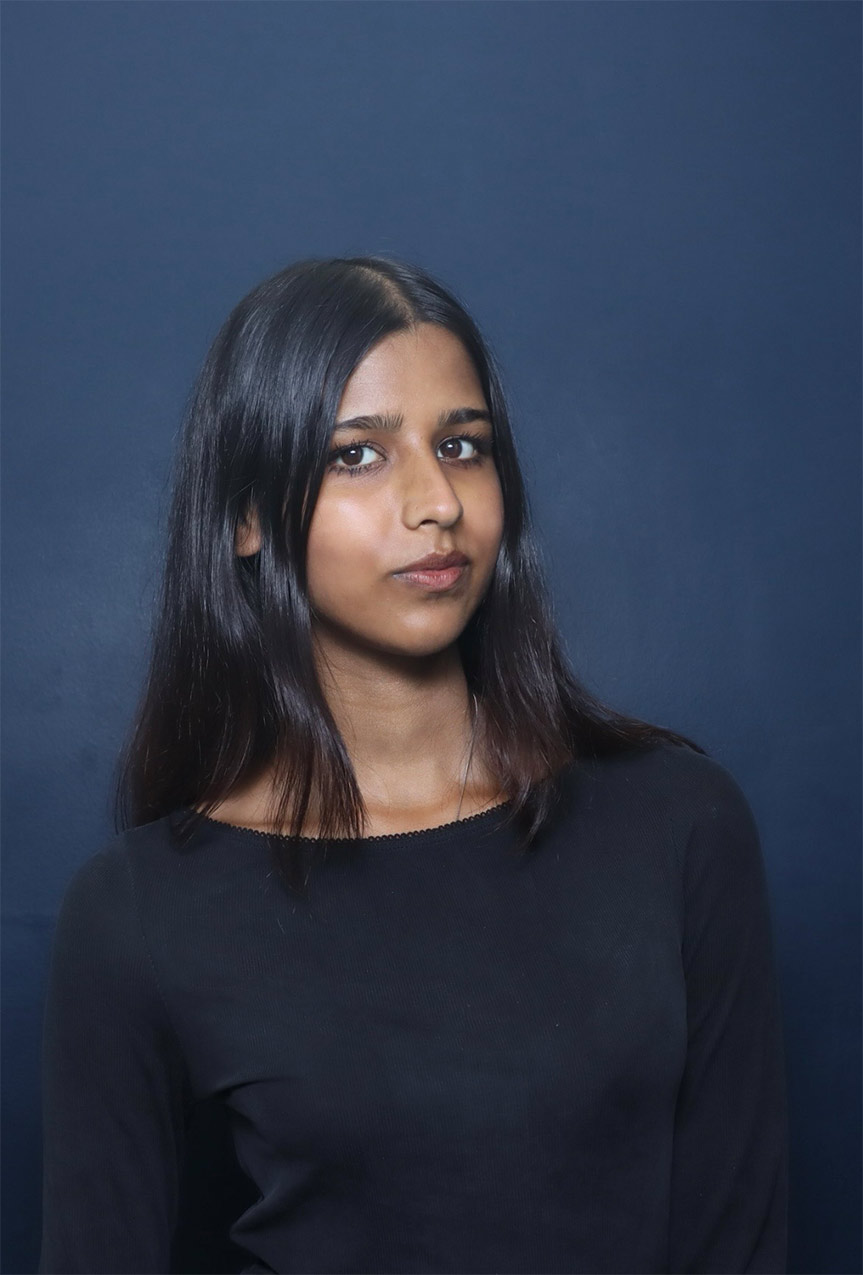
My name is Prakarti Agarwal and I am based in London, UK.
Can you describe your practice in a few words?
I’m interested in combining things that feel familiar but slightly different, almost like tucking little fragments of memory into the clothing. I like the idea that these references can become part of the garment quite naturally, rather than feeling like they’ve been placed on top of it.
When did you first get into fashion and start making clothes?
I started getting into fashion when I studied Fine Art for one of my A levels. Through that, I became interested in how I could use fabric as another medium to explore conceptual ideas. I liked that working with fabric felt more tactile and challenging in an interesting way, but also that it could become something wearable. I think I was drawn to the fact that the ideas could exist on the body, rather than just as something you look at.
Do you remember the first time you thought a garment could mean something, rather than just look a certain way?
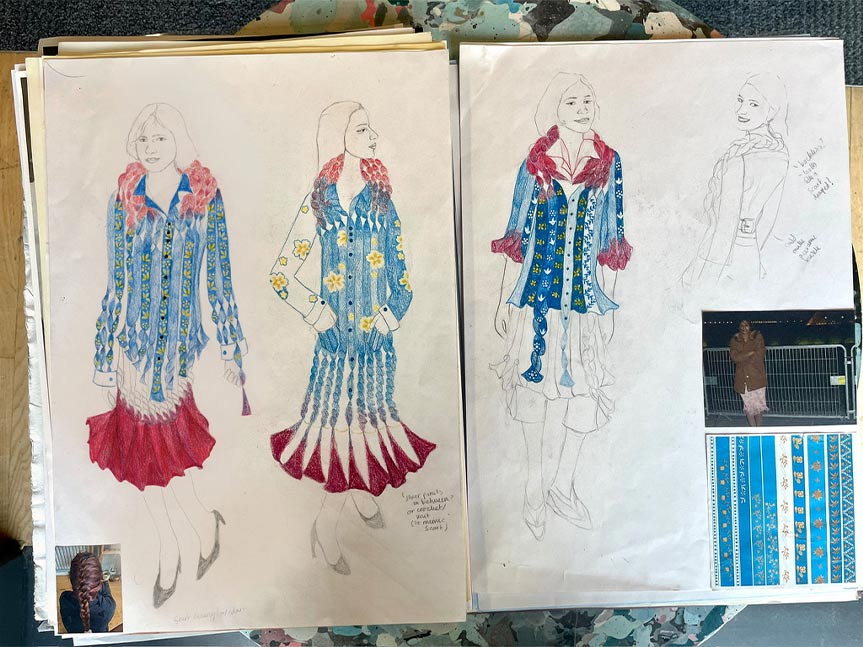
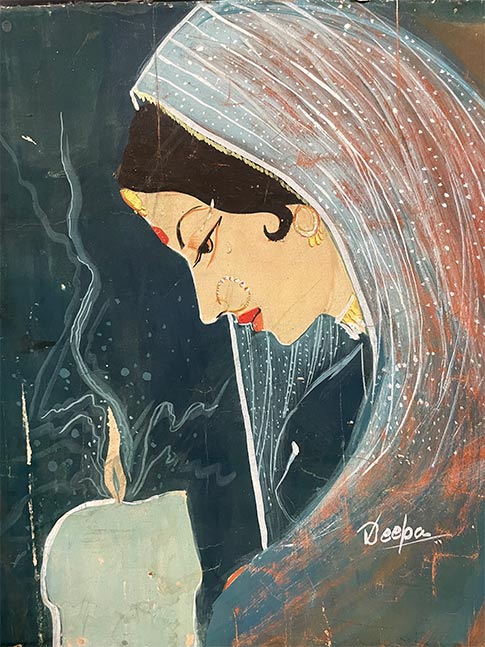
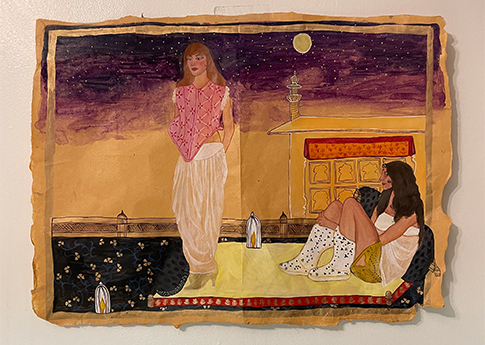
Yes! In my first year of uni, for our second project, I chose to look at a beautiful painting my mum had made when she was my age as my starting point. I’d always loved the colours and the painting itself, but I’d never really asked her much about the meaning behind it. When she told me it was based on a folklore story, I thought it could be really interesting to try and retranslate that into a garment.
I played around a lot with collage and experimented through draping, using things like cardboard to build and shape the silhouette, until I eventually found a form I really loved. The project was based on a myth about two lovers, where their relationship is represented through the idea of a moth being drawn to a candle. I translated this into the garments through the shape of the top, which was inspired by a lamp, and a sheer version of Indian nightwear for the trousers, as the story took place at night.
It was a project I was really happy with because it eventually came full circle. I painted the final garments in a similar style to my mum’s original painting, bringing the starting point back into the final outcome.
You’ve said you want to make clothes that speak to your British and Indian identity. Do they come through in different places?
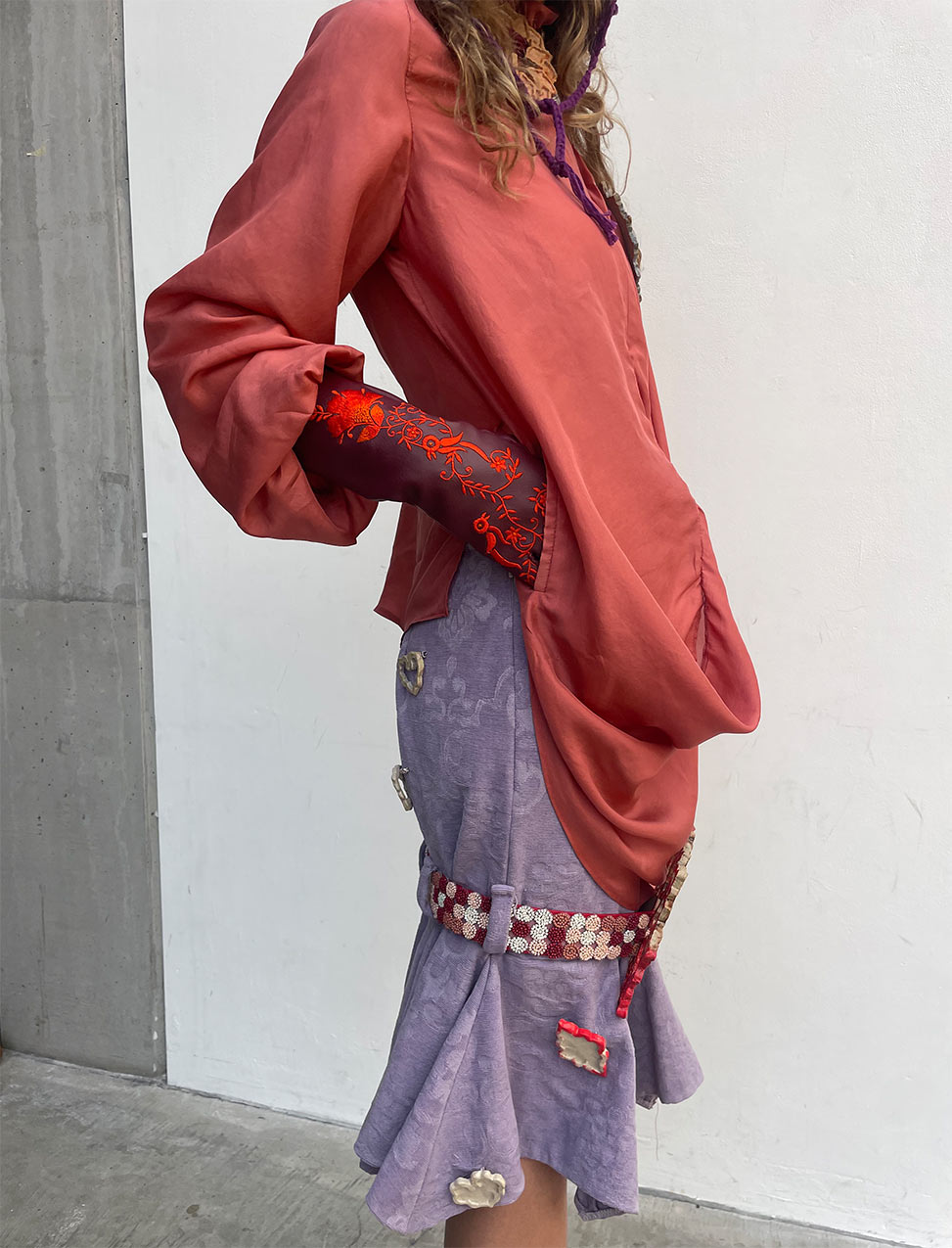
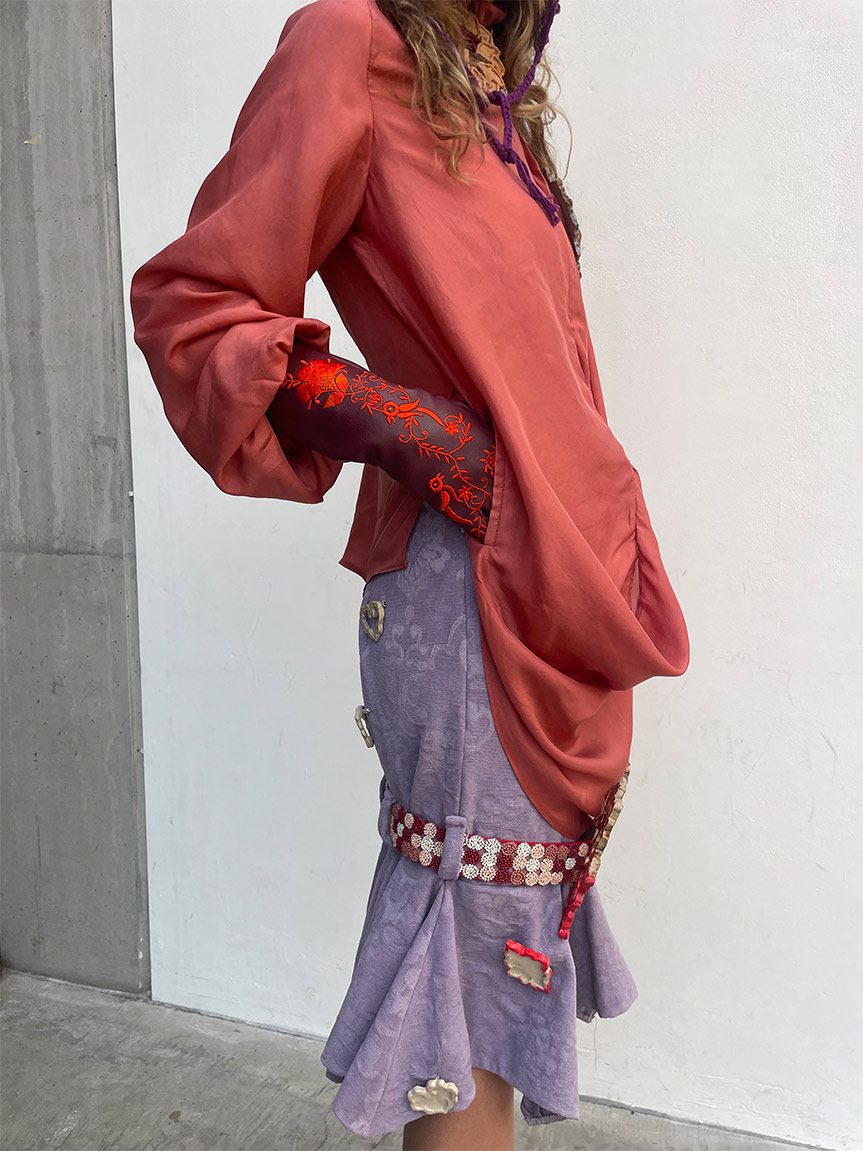
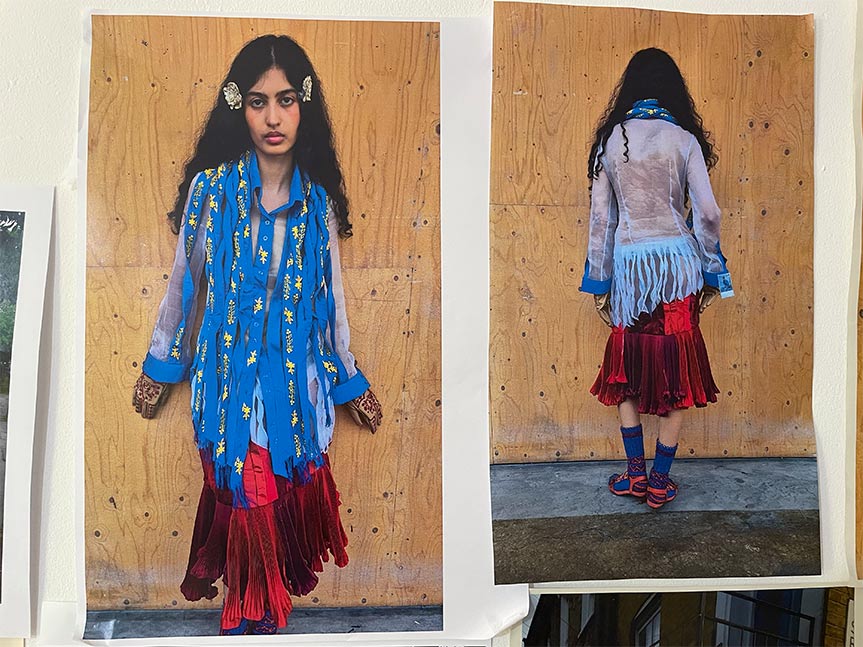
I think it’s less about keeping different references separate and more about letting them naturally become part of the way I design. A lot of the cuts in my garments feel quite Western, and are often based on my own clothes or things I would naturally want to wear, but then I like to distort or alter them in some way. I think that process of changing something familiar into something slightly unexpected feels more representative of me.
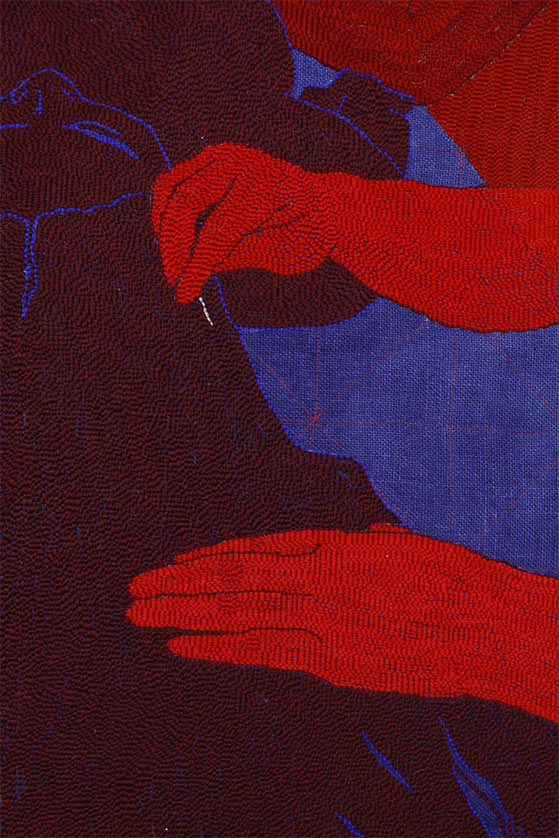
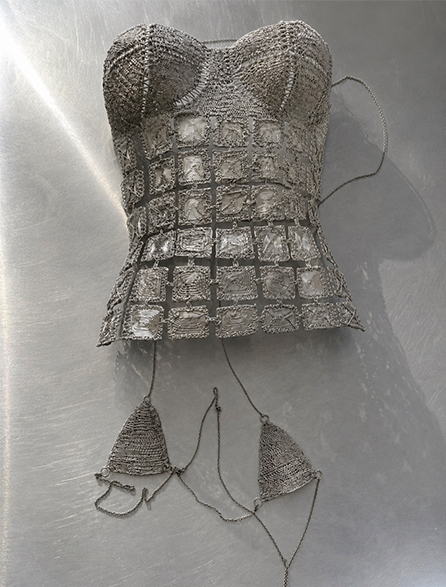
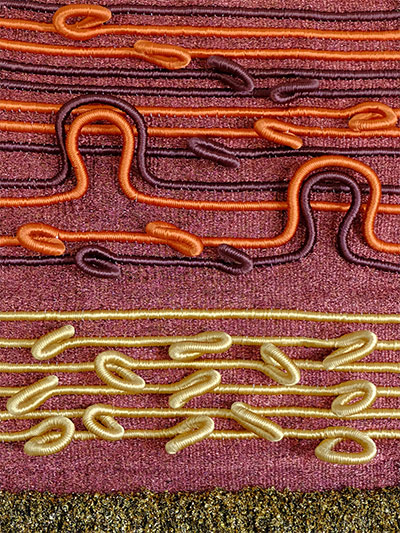
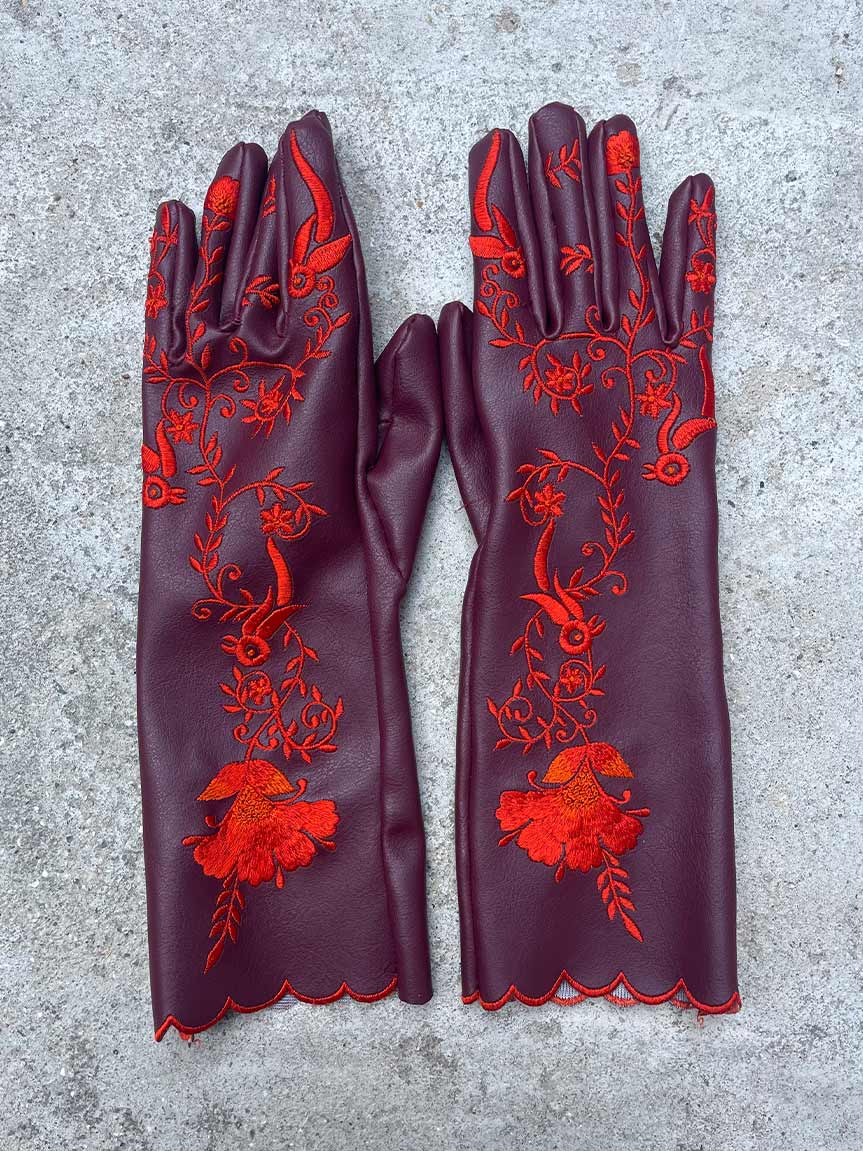
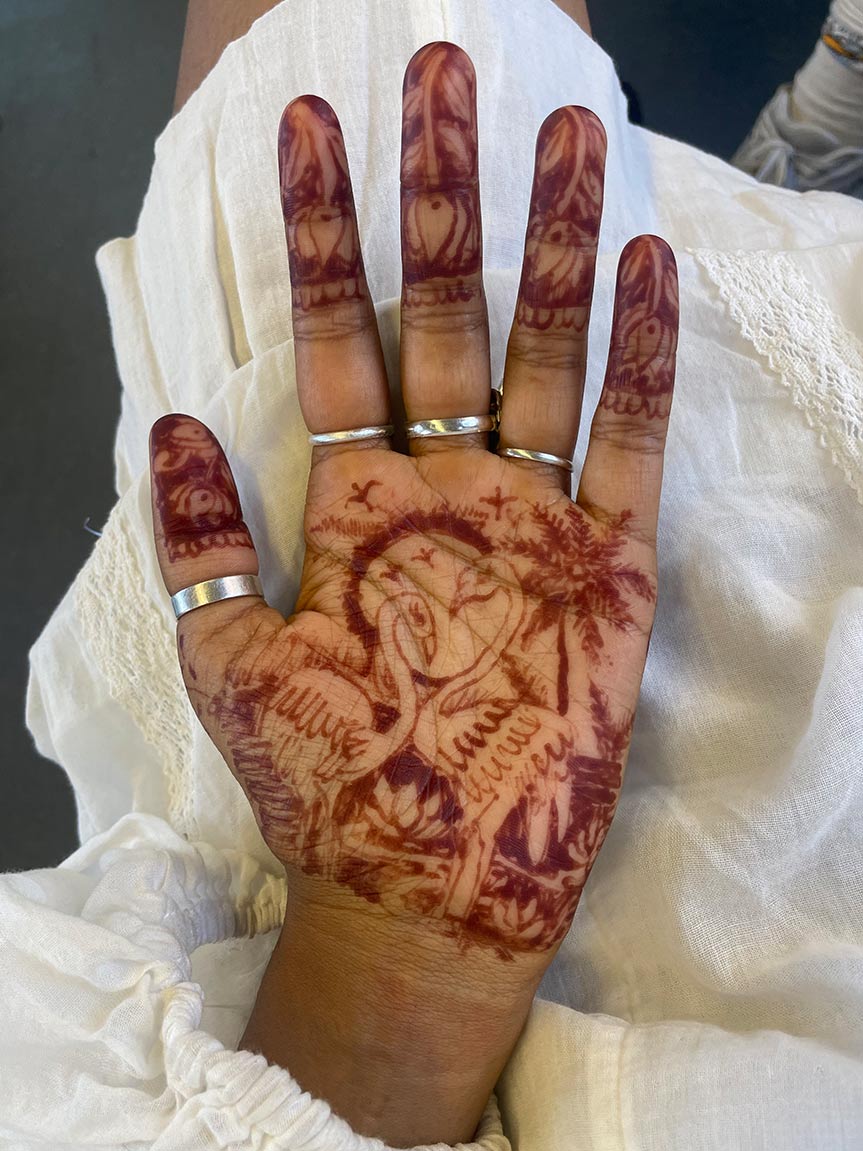
I also really enjoy working across different media and learning new techniques. In my final collection, I didn’t want to limit myself to one way of making or representing an idea. Some ideas came through ceramics, others through embroidery, laser cutting, fabric manipulation or different ways of constructing the garment. I like being able to experiment and see what happens when I approach an idea through a completely different material or technique, rather than deciding beforehand what something should be made from.
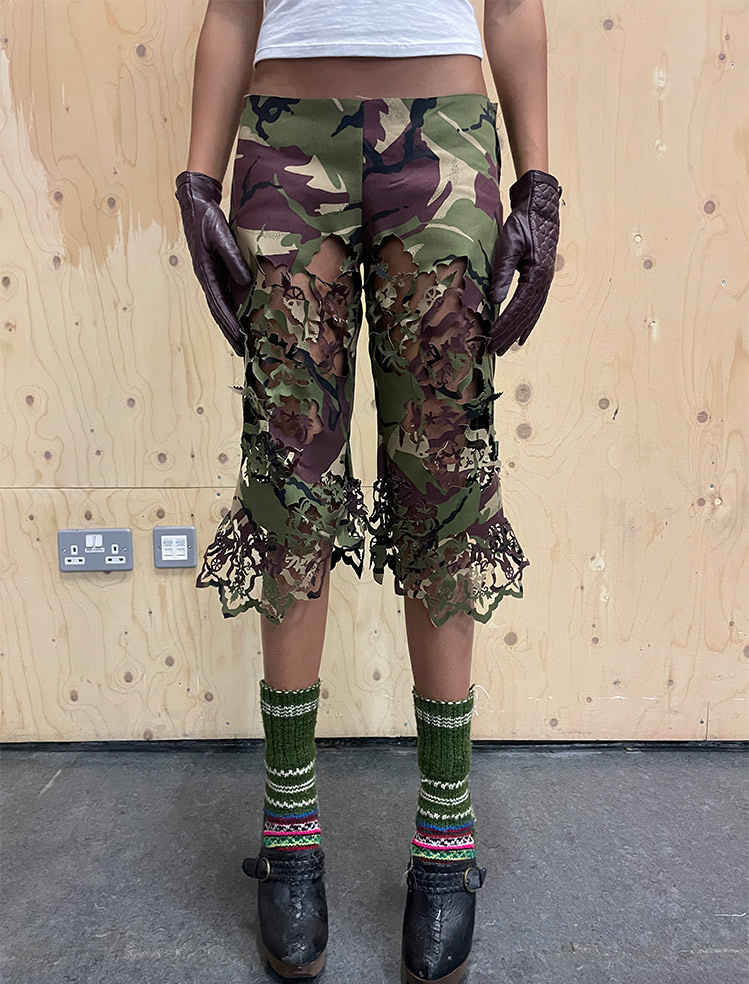
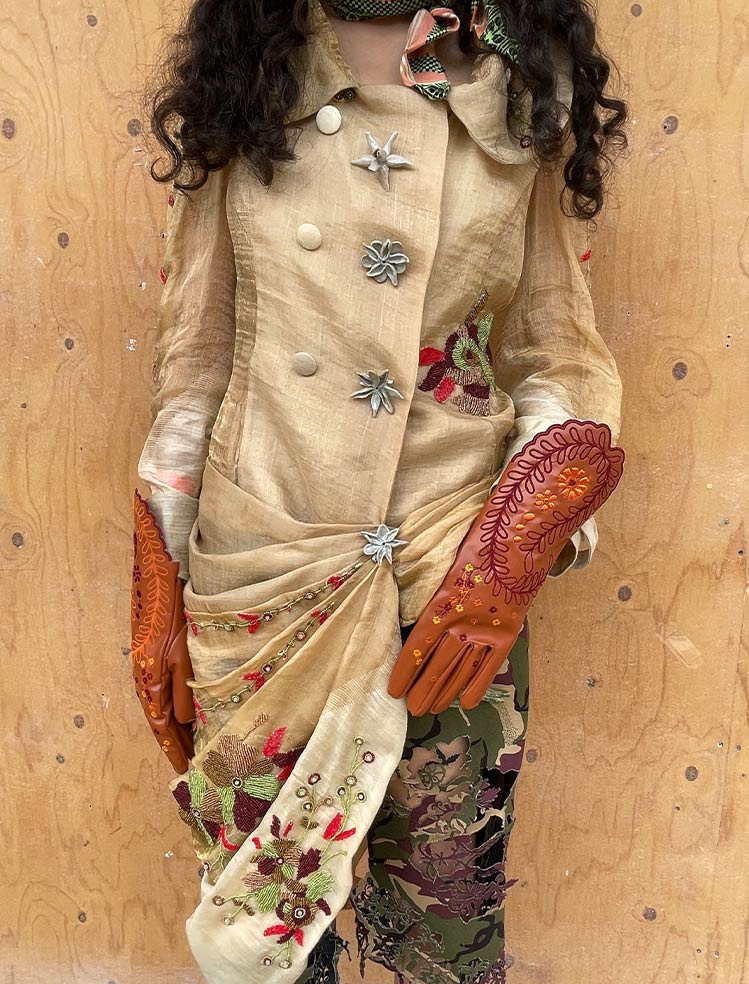
This collection began with noticing how everyday things in India became strangely beautiful to you. What are some of those things?
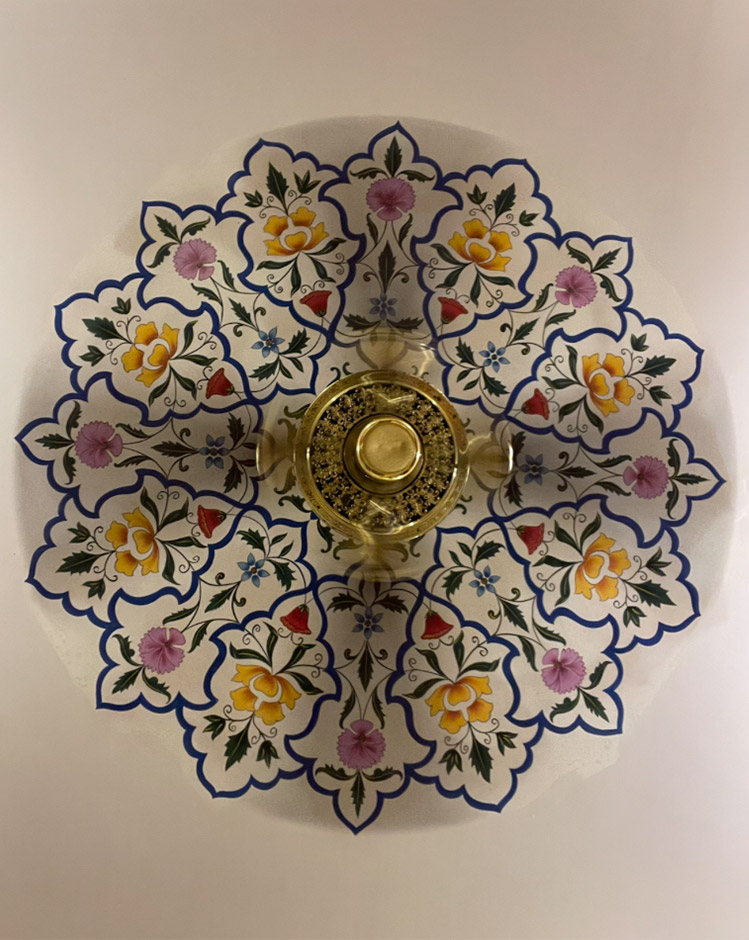
One of the significant references was a beautifully painted ceiling fan I came across in a random hotel room in India. It was something that could have easily been missed, but it really stayed with me. It made me start noticing how much beauty there is in these really ordinary, everyday things.
After that, I began to notice it everywhere. I found it really beautiful how, in so many places, there’s this tendency to decorate even the simplest things that don’t necessarily need to be decorated. I remember looking at auto-rickshaws, which are everywhere, and noticing how the seats would be painted with birds or scenery, while the rest would be covered in stickers, posters and little details.
It made me think about how I could take that idea of finding beauty in the ordinary and bring it into clothing. Rather than creating something that directly referenced these things, I wanted to start with more familiar, everyday garments and see how I could twist them through these more delicate and unexpected references.
You want South Asia to come through as an undercurrent rather than an obvious reference. Why does this version feel truer to you?
I think it feels truer to me because, although I hold Indian heritage and grew up in a household that was very rooted in the culture, I also grew up entirely in England and have been influenced by both sides through my social and cultural life. I wouldn’t necessarily say I’m more one than the other, and I think that naturally comes through in the way I dress, the things I’m drawn to and the way I see things.
Because of that, I’m more interested in letting South Asian references come through in a subtle and instinctive way, rather than making them the main focus. I like the idea that they can sit within a garment alongside all the other things that have influenced me, almost as little details that you might notice over time.
I think that feels much more honest to my own experience. I’m not trying to recreate something I’ve experienced from afar, but to take the things I’ve personally connected with and let them naturally become part of how I design. Sometimes they might be immediately recognisable, and sometimes they might not be – which I quite like!
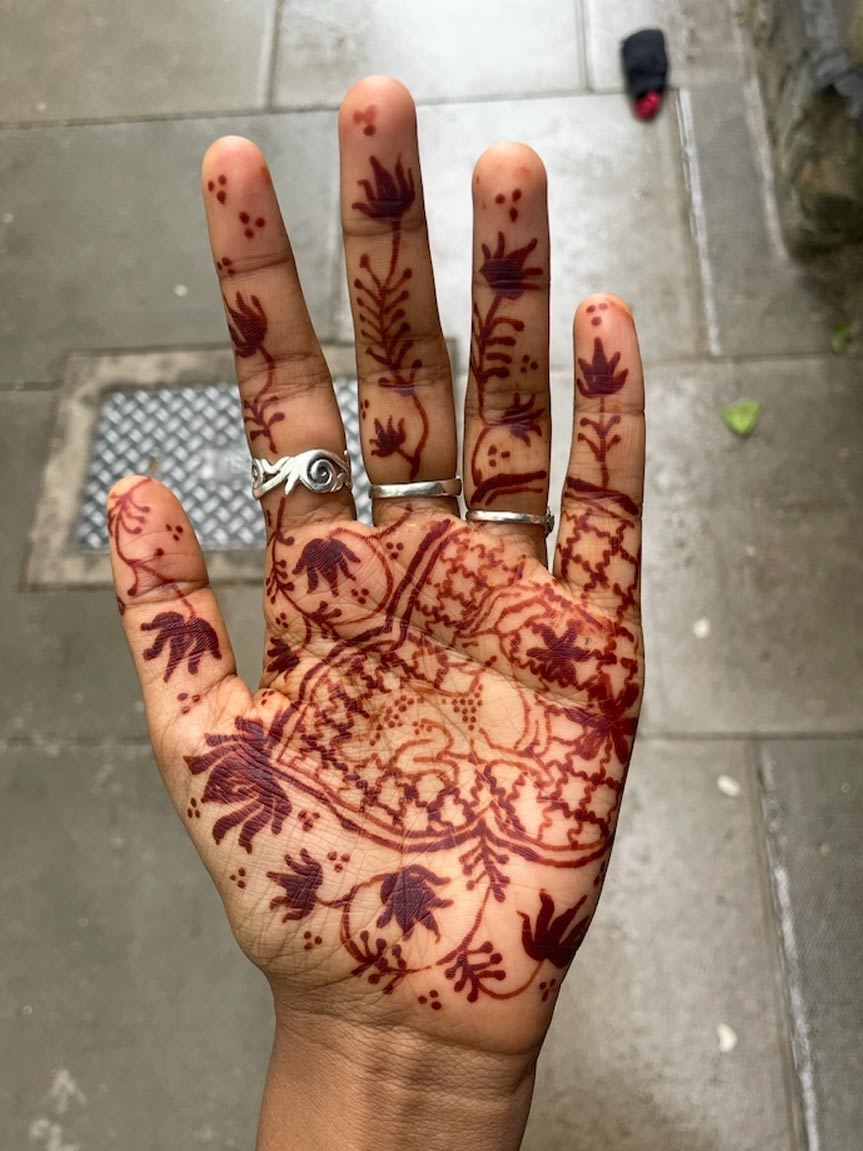
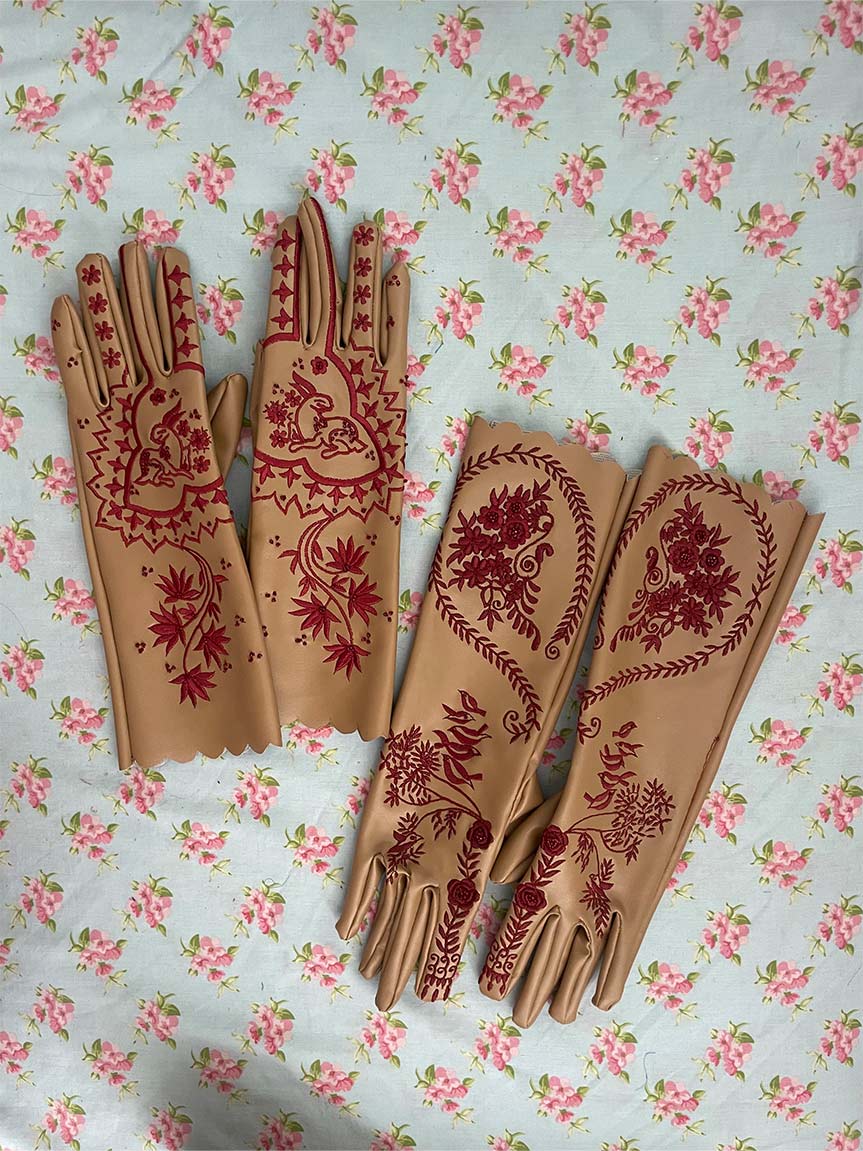
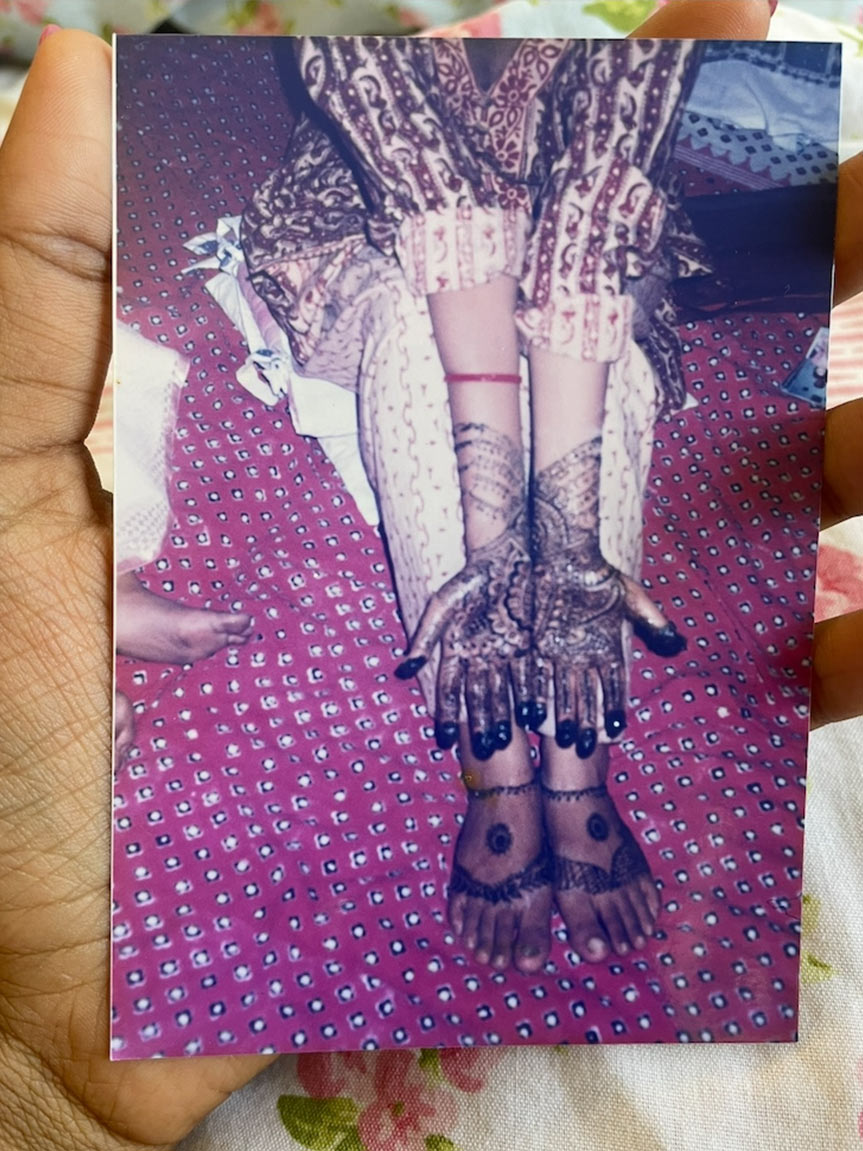
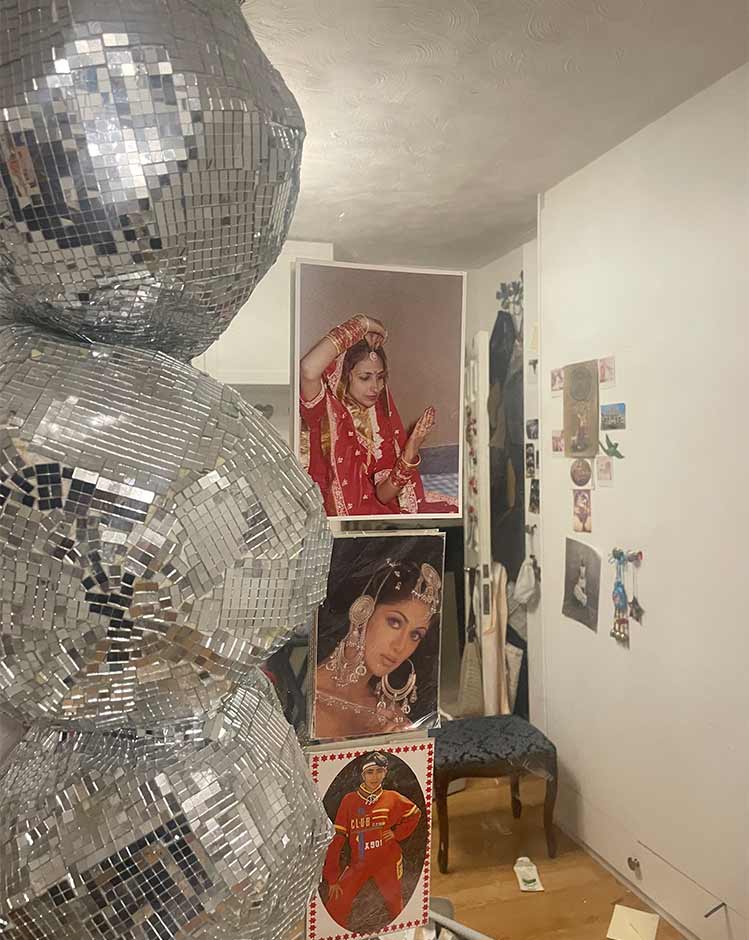
A big part of the collection comes from your mum’s film photographs, taken when she was roughly the age you are now. What are you trying to explore through this reference?
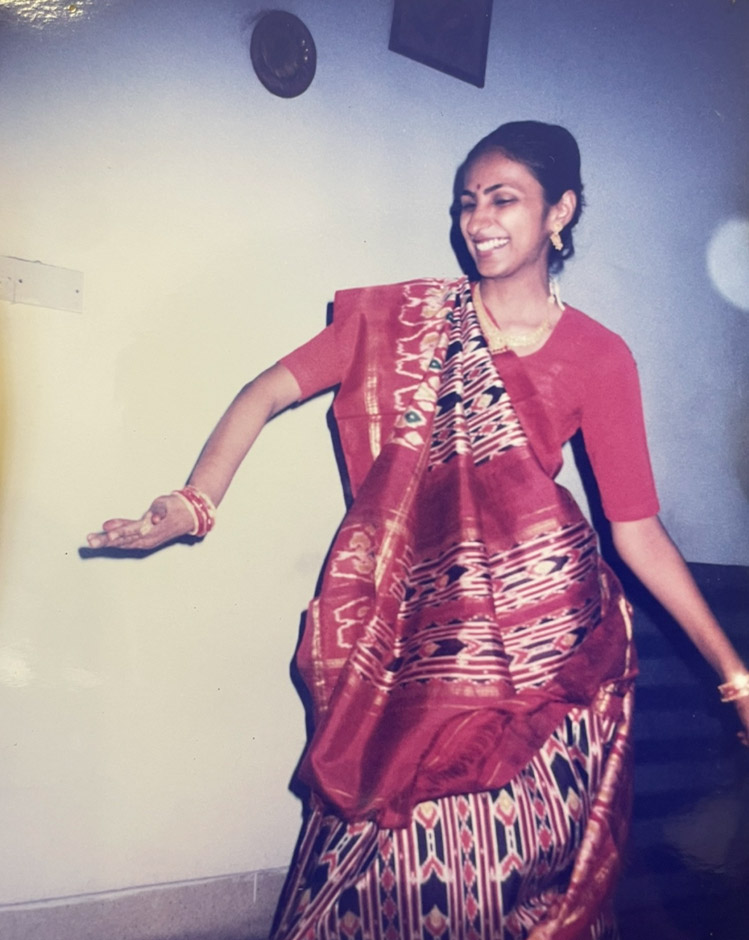
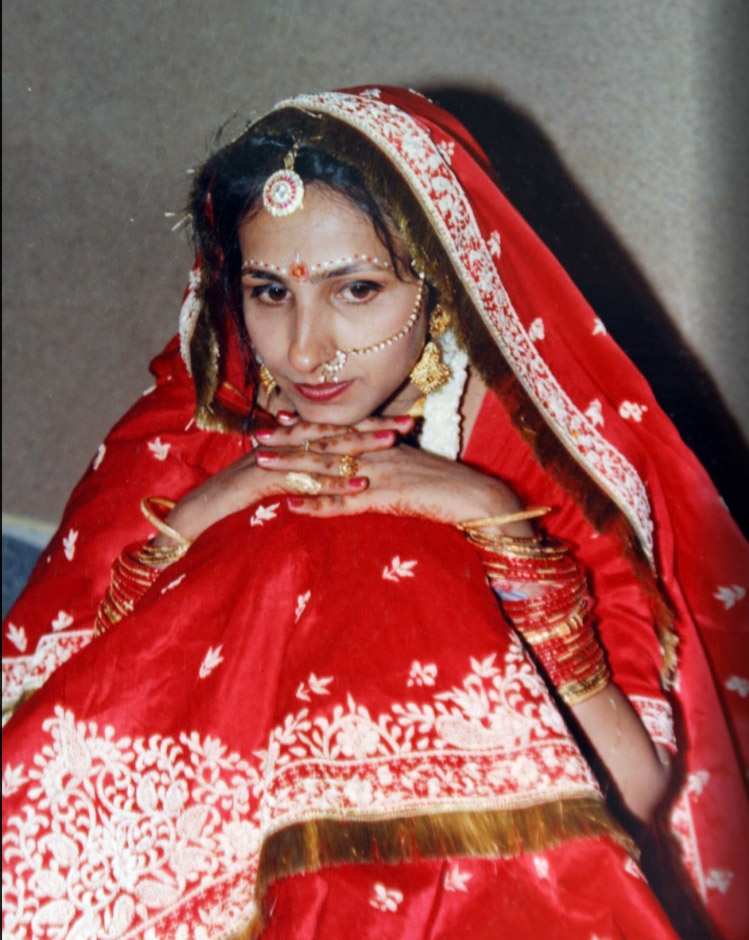
They carry a sense of femininity that feels very free, carefree and effortless, which is something I wanted to capture in the person I imagine wearing my clothes. I was drawn to the way my mum seemed to move through that period of her life with a kind of freedom and spontaneity.
I also love that they were captured on film. There’s something about the photographs feeling so spontaneous and unplanned, because taking photos on film was just part of everyday life then. They feel very organic and full of life to me, and that was an energy I wanted to bring into the clothes. I actually photographed a lot of the final collection on film too, as a way of carrying that feeling through into how the collection was presented.
You move between ceramics, beading, fabric manipulation and accessories in one outfit. How did materials like ceramics find their way into the work?
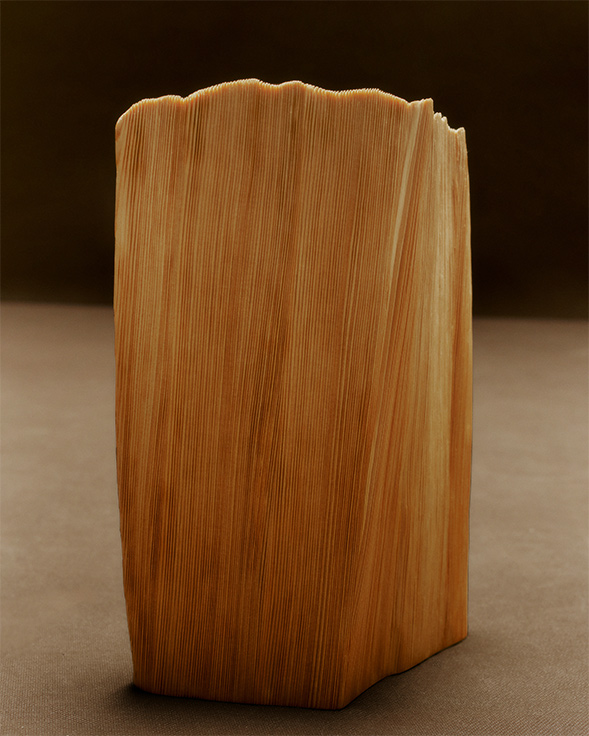
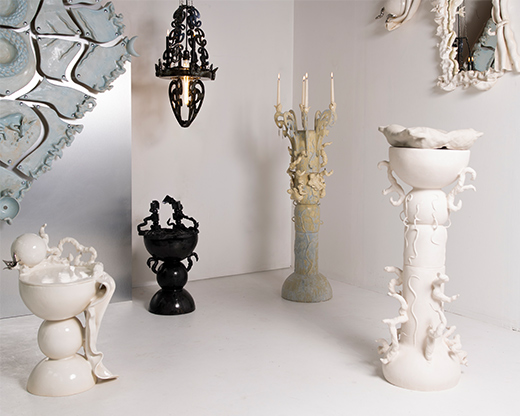
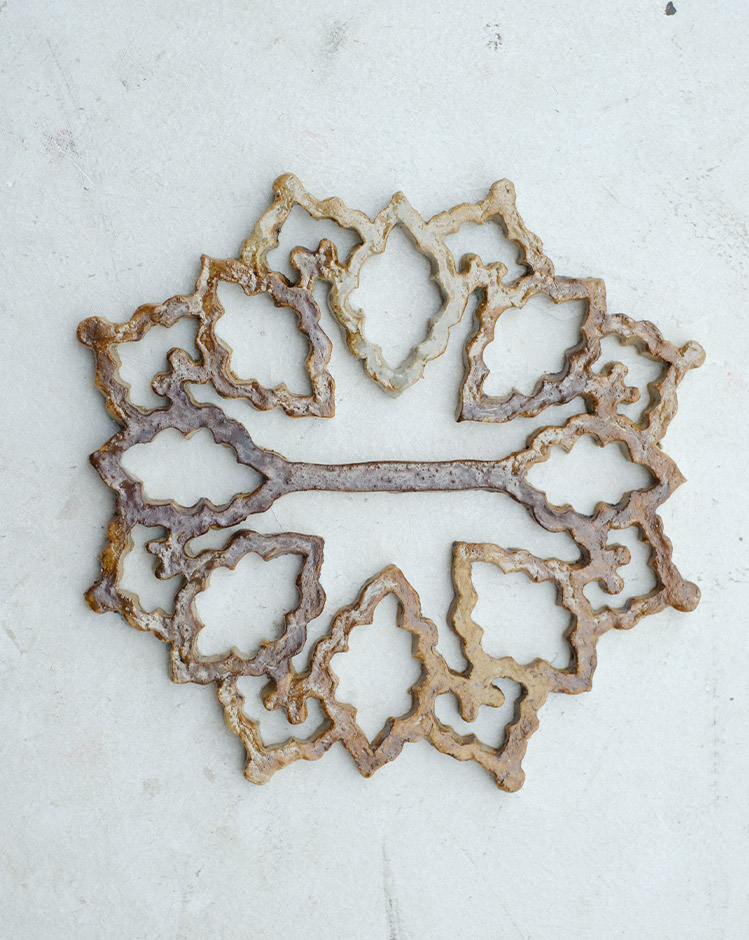
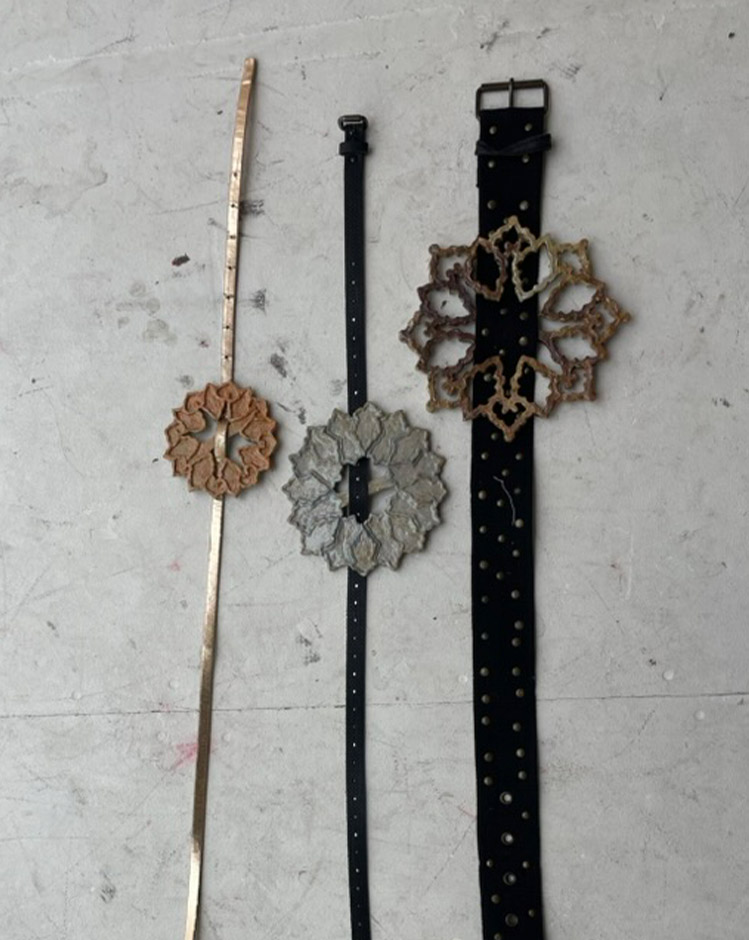
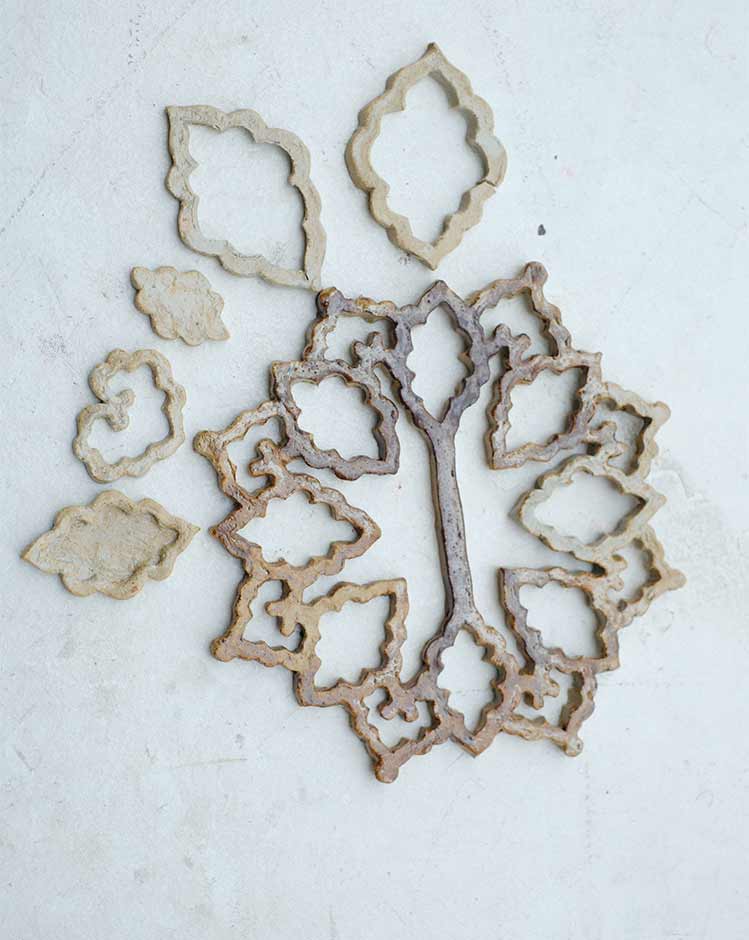
I had never touched ceramics before this collection, which was quite funny! The idea actually came from those beautiful painted ceiling fans. I knew that I wanted to translate them into a garment somehow, and I had also been really into belts at that time, so I started thinking about how the shape could become a belt buckle.
Initially, if I’d had the money and expertise, I probably would have made it in metal, but as I didn’t, I thought I’d try sculpting it from clay and making it as a ceramic buckle. Afterwards, I actually preferred the ceramic because it brought in this architectural quality that felt quite fitting to the original reference. It also made the idea of carrying a fragment with you feel much more literal.
I liked that it brought together two things that felt quite different — something architectural and decorative with something as everyday as a belt — and that contrast made it feel more interesting to me. It also came from simply experimenting with what I had, which is something I really enjoy about designing.
Is anything currently inspiring you?
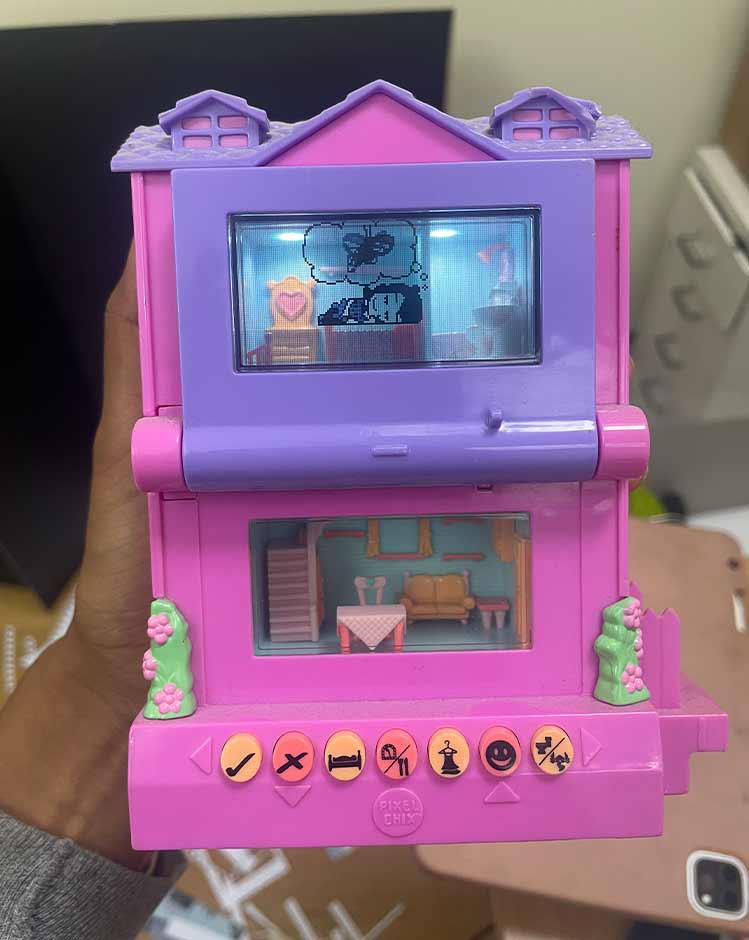
Currently I’m actually really inspired by my bedroom at home! I’ve been doing a bit of decluttering and reorganising, and I’ve come across so many random old things that I’d completely forgotten about — old diaries, photos, drawings, jewellery, clothes and even old toys. I found my old Pixel Chix, which is so cute haha, and I’ve been really enjoying looking at it again. There’s something about these slightly strange little objects from when I was younger that I find really inspiring now — they’re quite playful and nostalgic, but also have such a specific visual language and character to them.
I think I really like finding these random little things and seeing what they make me think about. Even something quite funny or completely unrelated can give me a new idea or a starting point for something. I guess that’s how I tend to find inspiration generally — I don’t necessarily go looking for it, but I like collecting little things that catch my attention and seeing where they might take me.
Where can people find you?
My Instagram is @prakarti_a! Email is prakarti@hotmail.co.uk
I’m still working on a website but hopefully it will be up soon!