MARINA PENG
What’s your name and where are you based?
My name is Marina Peng, and I’m based in St. Louis, Missouri.
Can you describe your practice in a few words?
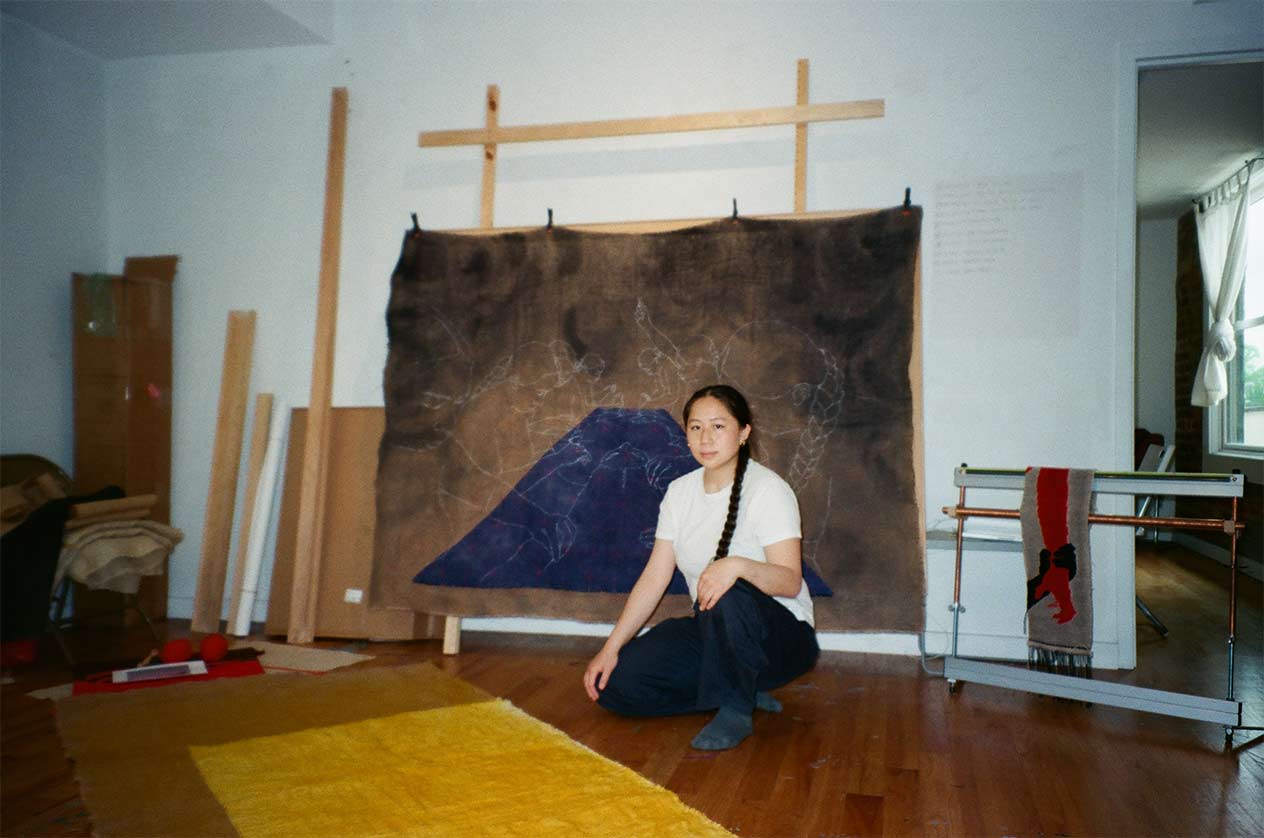
I make textile drawings and tapestries that explore how patterns form across generations.
How did you begin thinking creatively? And when did you start weaving and punch needle embroidering?
I had a very imaginative internal world when I was a kid because I had a lot of alone time. I was obsessed with collecting materials and making unexpected things with them. That obsession naturally shifted towards art making.
My practice has had a few eras, including drawing, installation, and sculpture, before I landed where I am now. Although I did a lot of fiber crafts like sewing and knitting as a kid, it wasn’t until 2020 that I began experimenting with weaving and punch needle in my art practice.
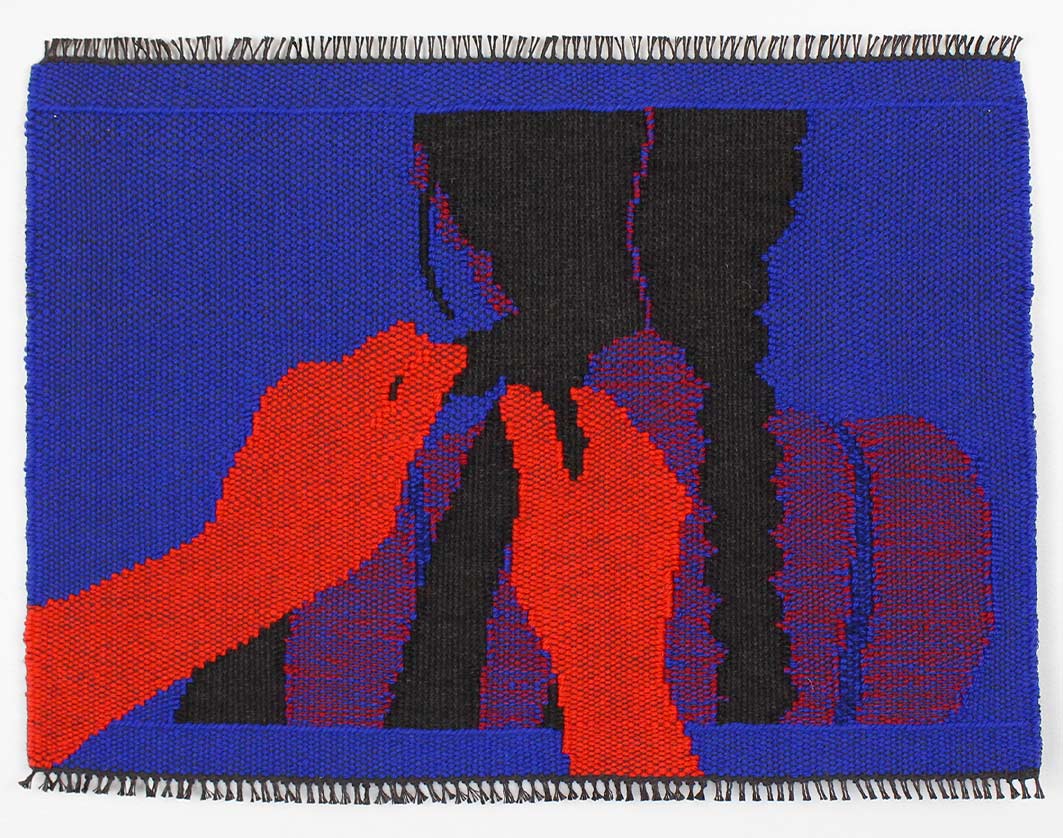
You describe your work as exploring the cultural dissonance of being second-generation American in the Midwest, tracing three generations from your grandparents in China to your parents’ immigration to the South to your own childhood. What do you try to explore within this?
Up until my parents’ immigration to the United States, my ancestry was rooted in China. As every child of immigrants knows, you somehow have to balance your home life/culture with a very different one outside the home. All the while, your extended family in your parents’ home country/ies continue on with their lives and the distance continues to grow. Trying to honor all of your cultural values at the same time is impossible. In my work, I’m grappling with these feelings.
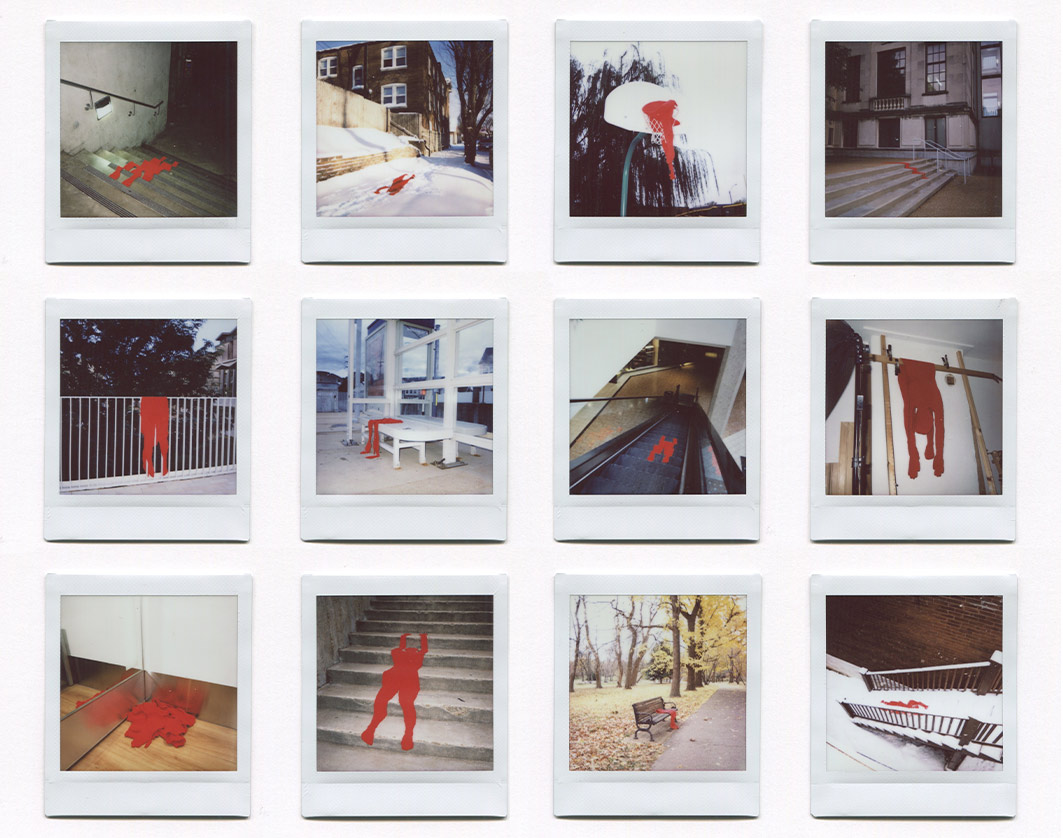
Your figures are almost always red. Where did that come from?
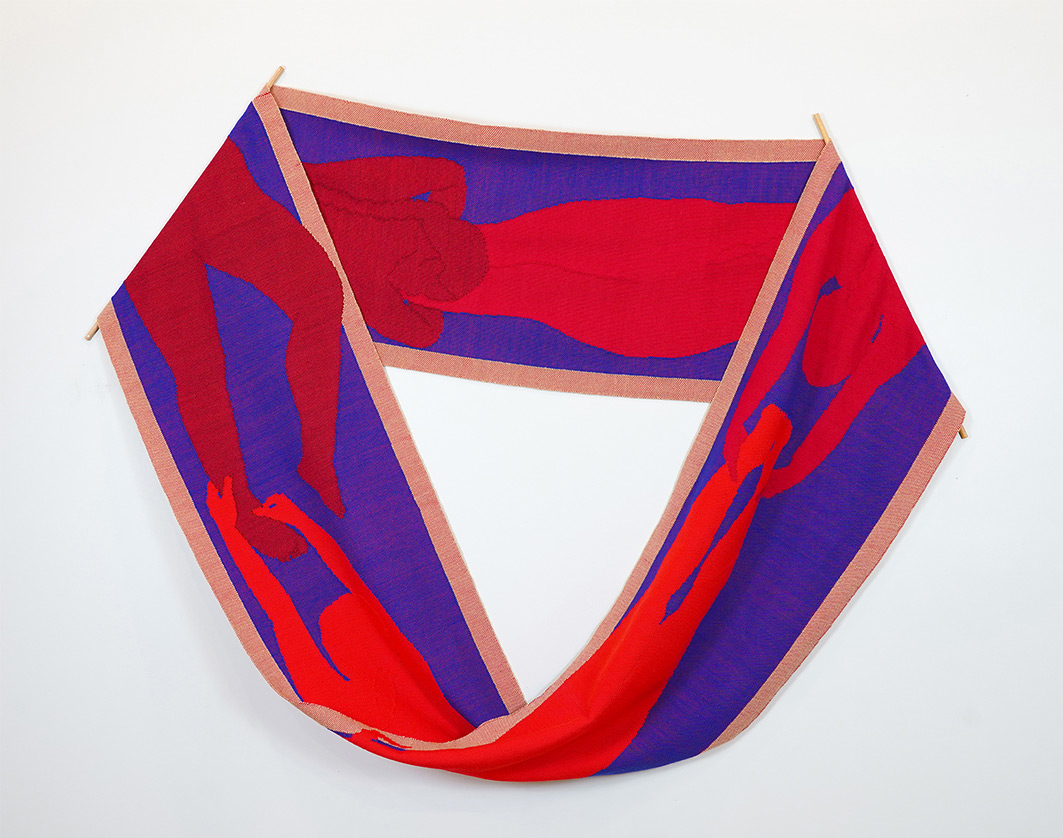
They’re almost always red because I’m trying to make experiences that are invisible as conspicuous as possible. Instead of hiding or disappearing into their settings, I want the figures to command your attention. Red also has such strong connotations. In my family’s culture, red symbolizes life, joy, and prosperity. But in other contexts, red signals violence or warns of danger.
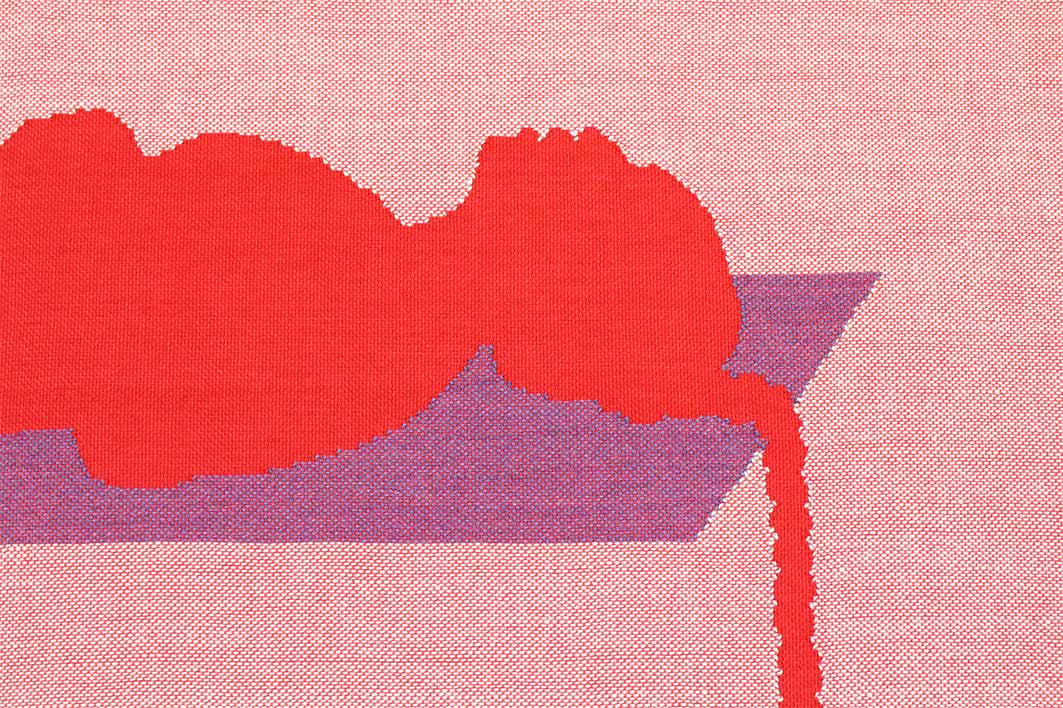
Symbols such as hands and hair return repeatedly across your work, sometimes multiplied, reading as more than figures. What do they convey for you?
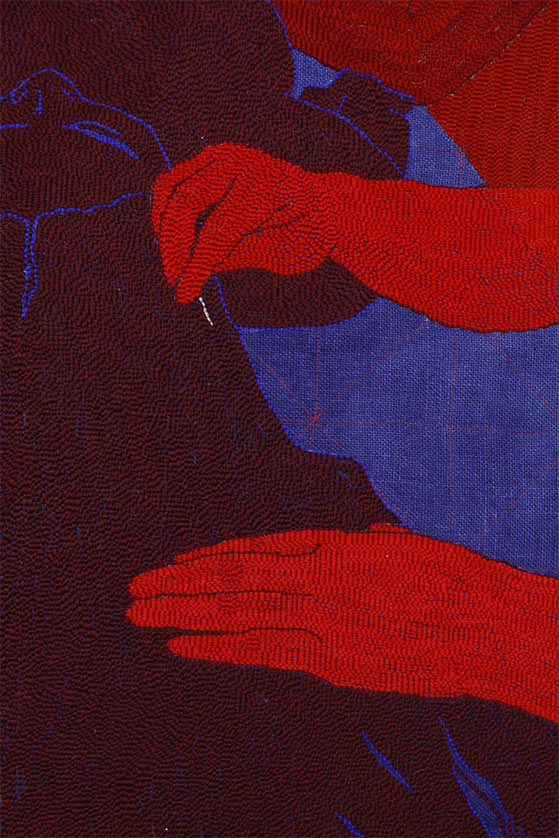
For me, the hands often represent an unseen societal force. Especially when they are disembodied or multiplied in the work. They also represent both physical and emotional labor.
Hair is so core to our personal identities, and I use it to help identify myself in the work. But I also think about how hair is manipulated, sectioned off, tied together, cut, pulled, etc., much like our identities.
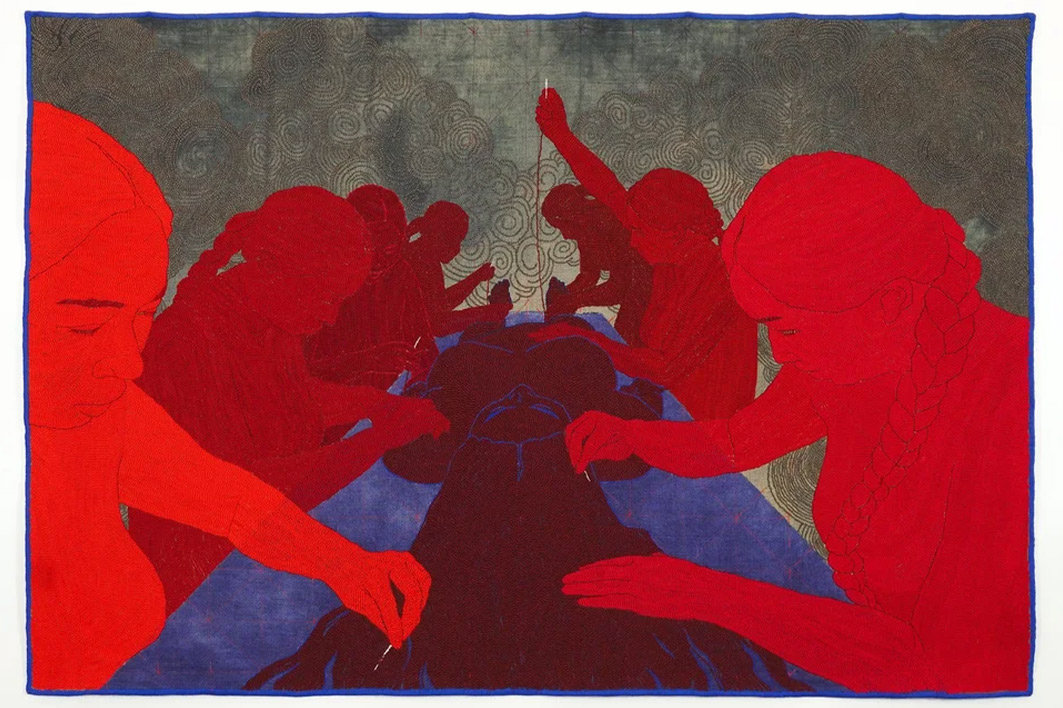
Is there a specific piece that felt especially personal for you to create?
Absolutely. The Line was my first time adding my own facial features into a work. Making my likeness at this scale felt more vulnerable than in previous works where I used my silhouette only. There are also some nods to my cultural heritage, such as the calligraphy grid sewn with red thread into the background, that make the work feel especially personal.
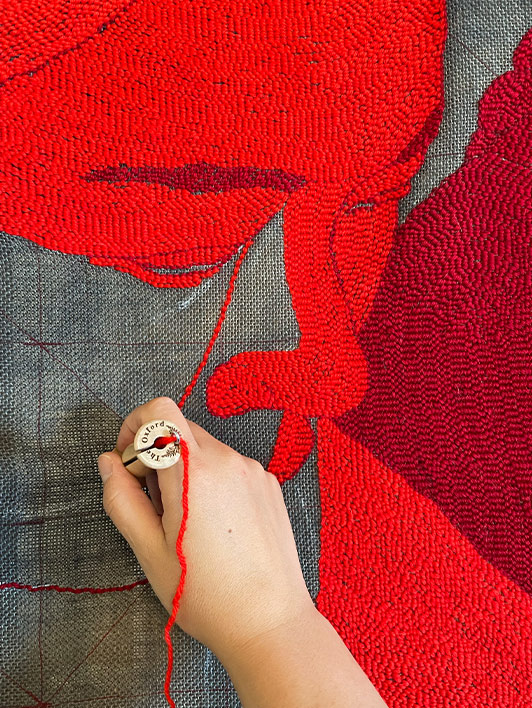
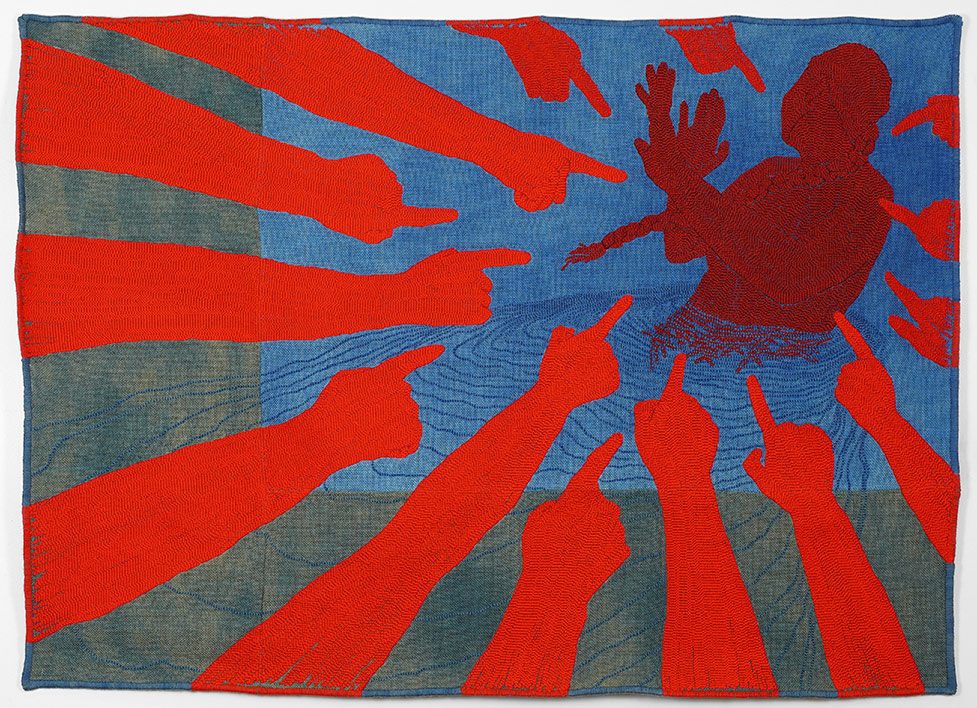
Across the work there’s almost always a figure surrounded, reached for, pulled at, or set apart, the one in the water in Downstream, the one being worked on in The Line…. are they a recurring subject?
There’s not necessarily a recurring character throughout the work—I think of all the figures as being different parts of me. Even the hands are my own hands. A lot of the work deals with inner turmoil. I try to explore this by personally occupying all of the different roles within each work.
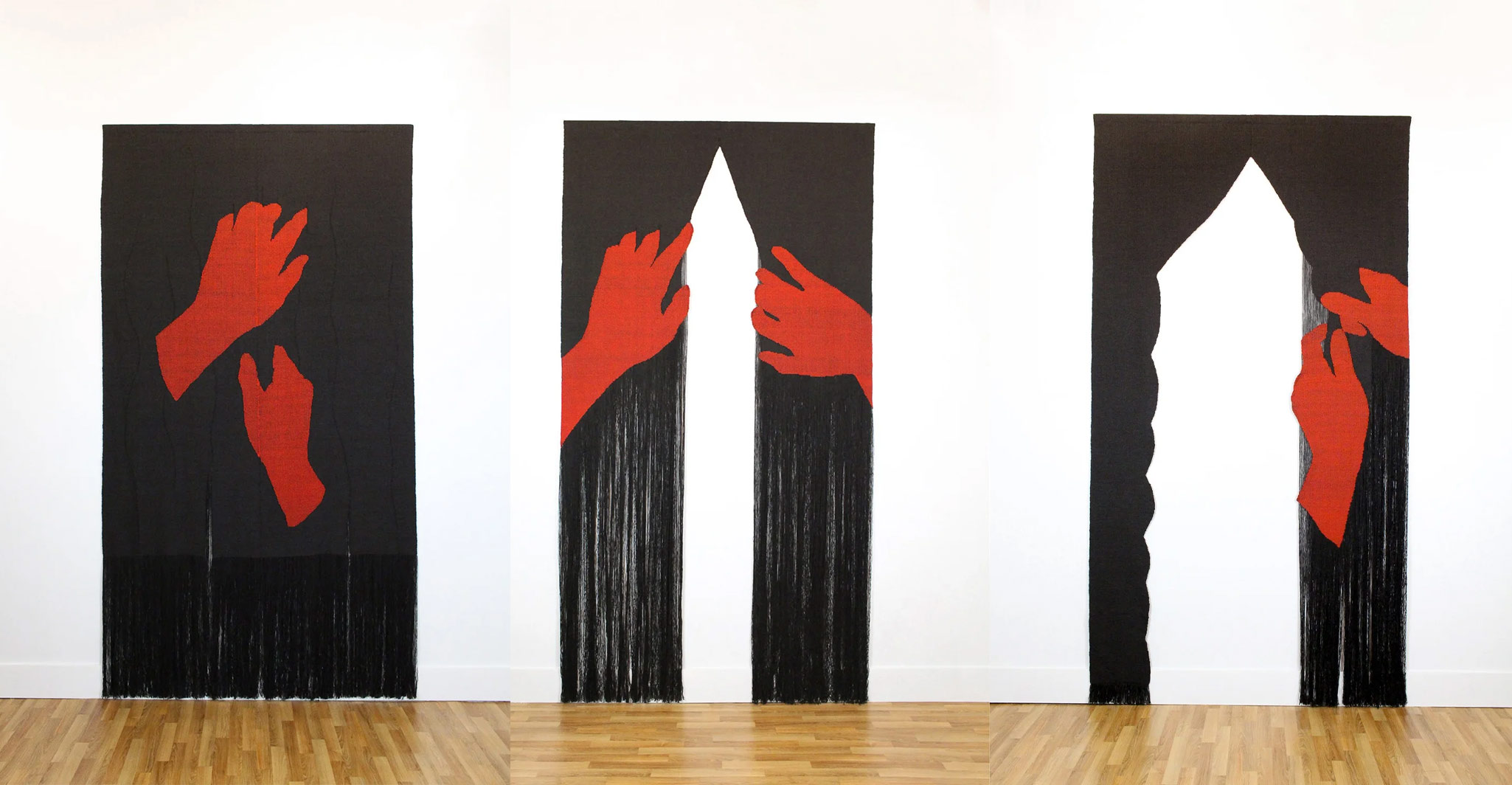
In Hellstrip and waxing, waning, wanting the threads run off the bottom edge, so the piece flows beyond the end. And try as i might is seventeen feet wide and barely a foot tall. What are you doing with the edges and the scale?
Because weaving is so rectilinear, I like to challenge myself to break out of this box. Sometimes that means creating an edge that follows the curve of a shape or leaving sections of warp unwoven.
When it comes to scale, you are often limited by your loom’s width, but the length of the work can be incredibly long. With those parameters in mind, I like to create images with life-size or larger-than-life figures, but cropped in ways that allow viewers to focus their attention on important actions and details.
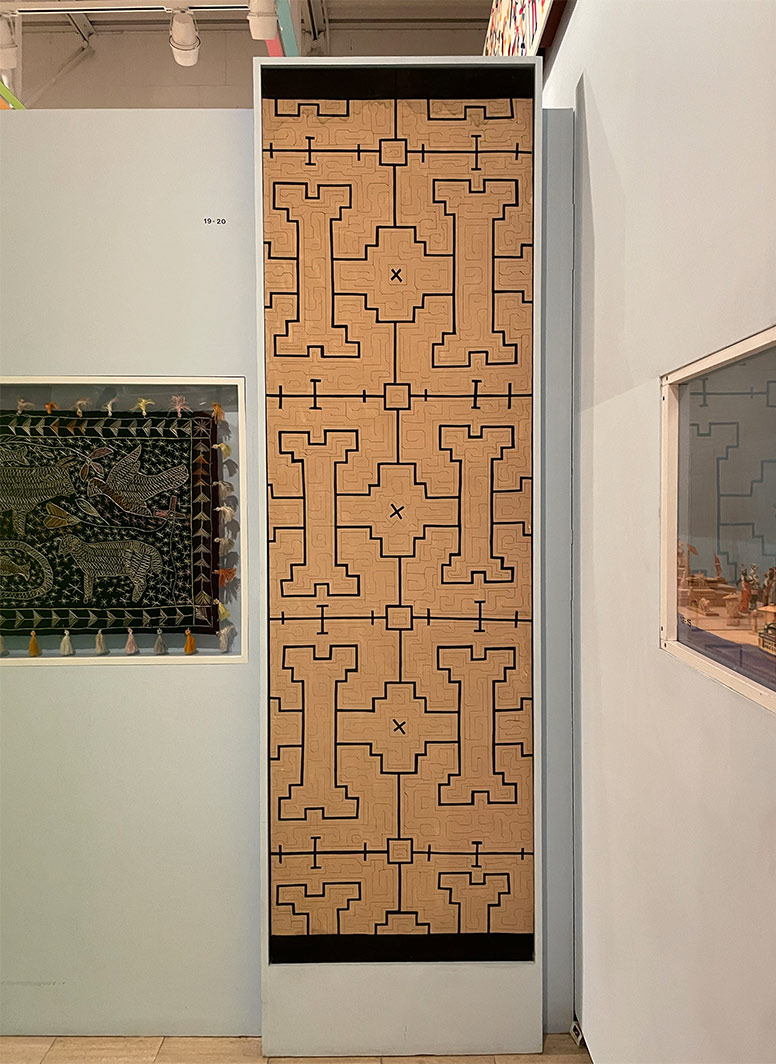
Is anything currently inspiring you?
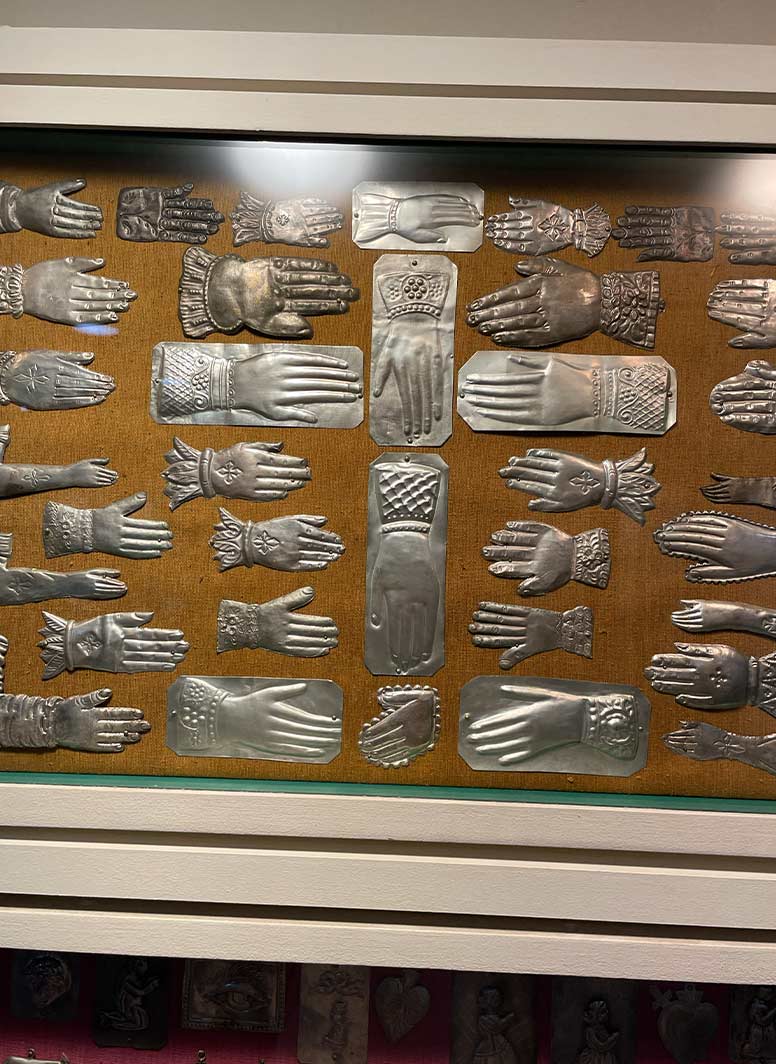
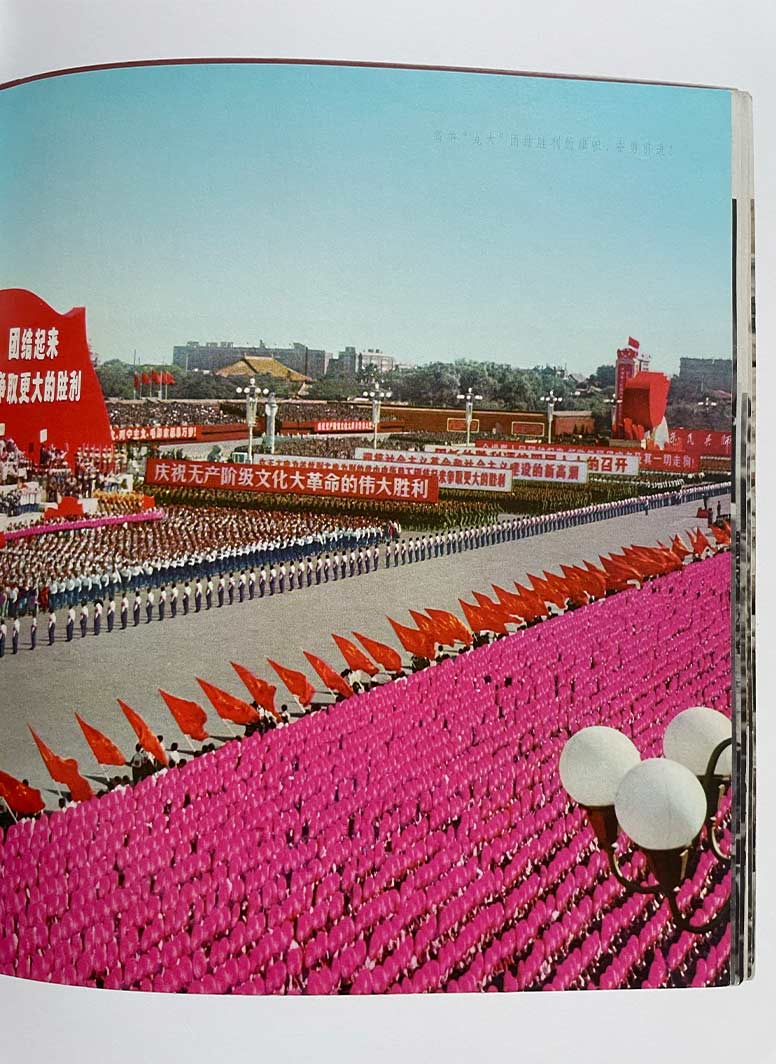
Earlier this summer I visited the Museum of International Folk Art in Santa Fe, New Mexico for the first time and it was truly one of my favorite museums I’ve ever been to. Their collection is incredible. I wish I could have stayed for longer and that I had taken more pictures. I’ve also been inspired lately by vintage propaganda photos and posters and have started researching both for my practice.
Where can people find you?
My website marinapeng.com and on Instagram @marina.peng. You can also see several of my works in person at an upcoming exhibition at the Wassaic Project in New York from Dec 2026 through Mar 2027.