Didi NG Wing Yin
What’s your name and where are you based?
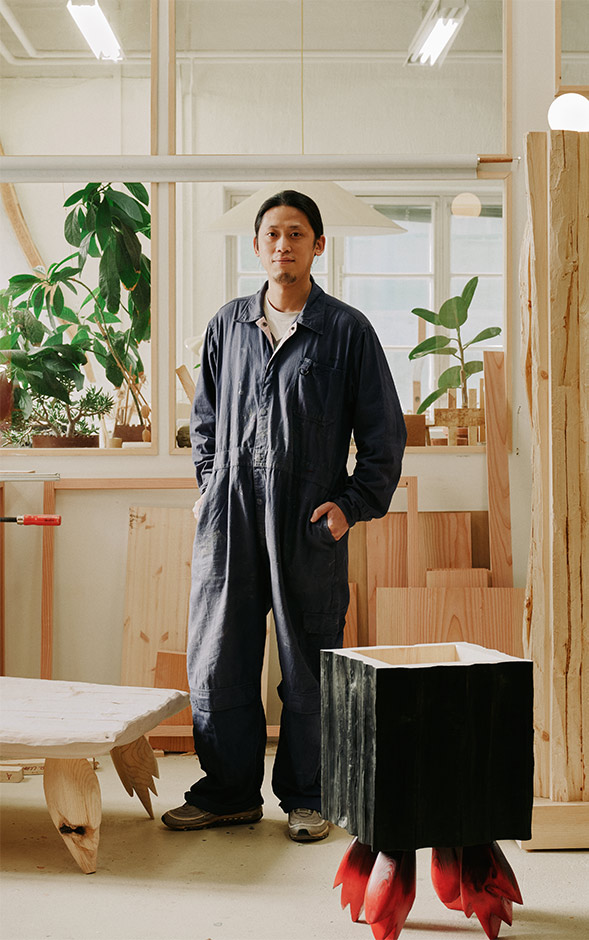
My artist name is Didi NG Wing Yin. I based in Helsinki, Finland.
Can you describe your practice in a few words?
Material-led practitioner. I love to think about wood, work with wood, and live with wood.
How did you become interested in designing?
The real passion started with my first engagement with furniture design back in my BA studies in 2011. Even tho it was a very fundamental project, furniture has held a very important position in my heart. It is hard to explain why, but there it is.
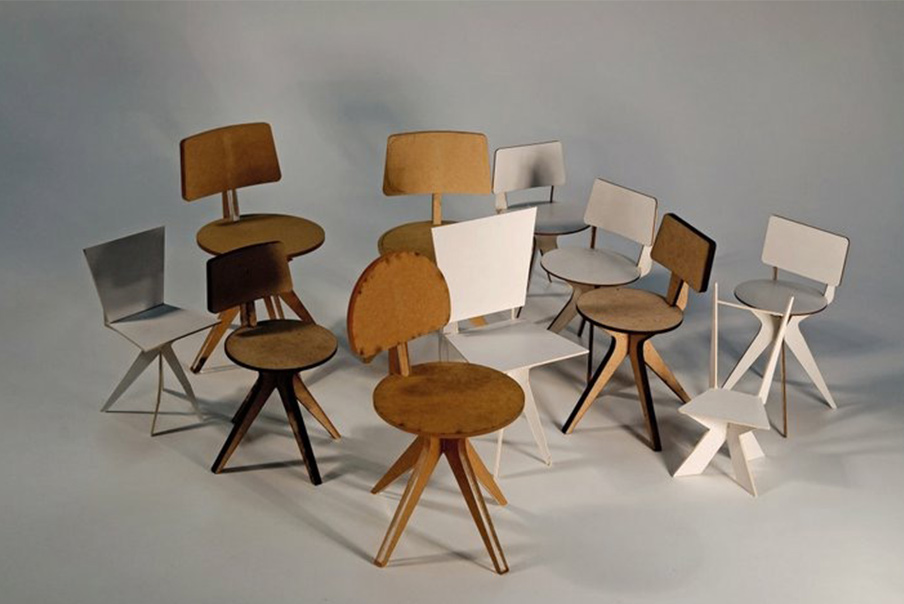
You did your BA in Industrial and Product Design at Hong Kong Polytechnic, then your MA in Interior Architecture at Aalto in Finland, and you’ve stayed since. How have those two places shaped the way you work?
Growing up in Hong Kong, I was trained to be practical and reasonably rational, often leading me to make (too) quick decisions. However, after living in Finland for years, my perspective on my surroundings has changed. I’ve learned to broaden my vision and take a calmer approach to life. The contrast between the attitudes toward living in Hong Kong and Finland has provided me with more options and greater flexibility. These two experiences have helped me understand myself better and provided clearer logic behind my work.
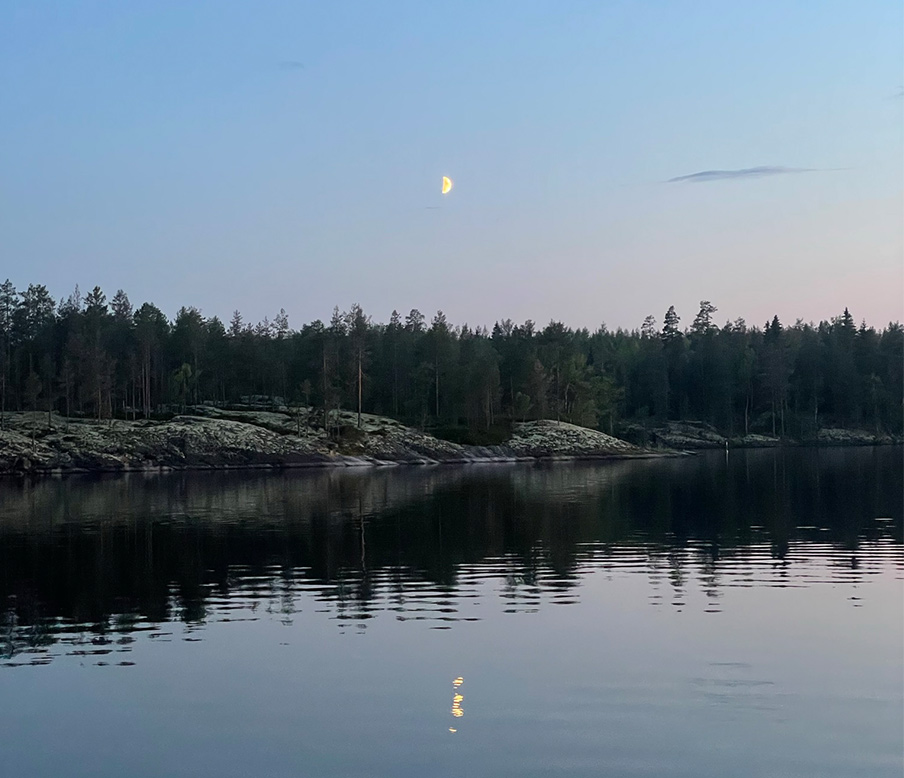
You shifted from interior and product design to sculpture and craft during the pandemic. What happened in that period?
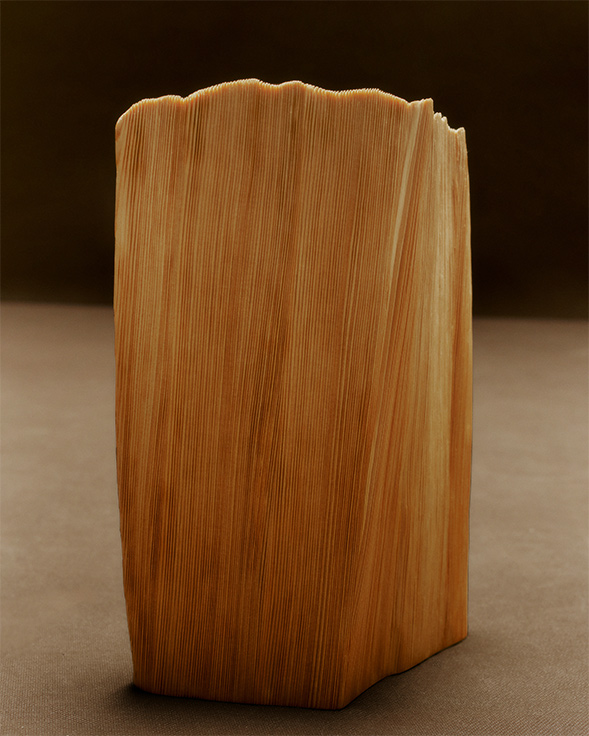
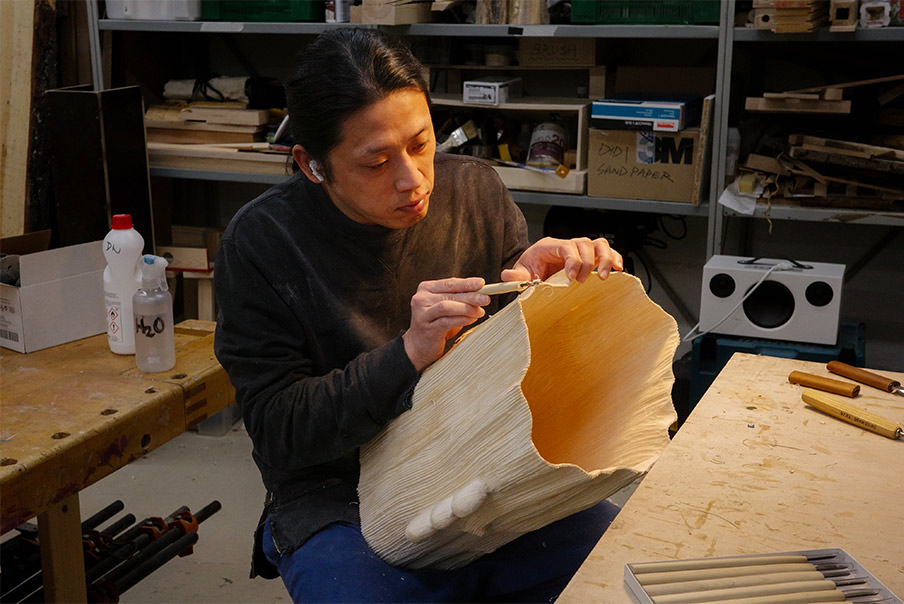
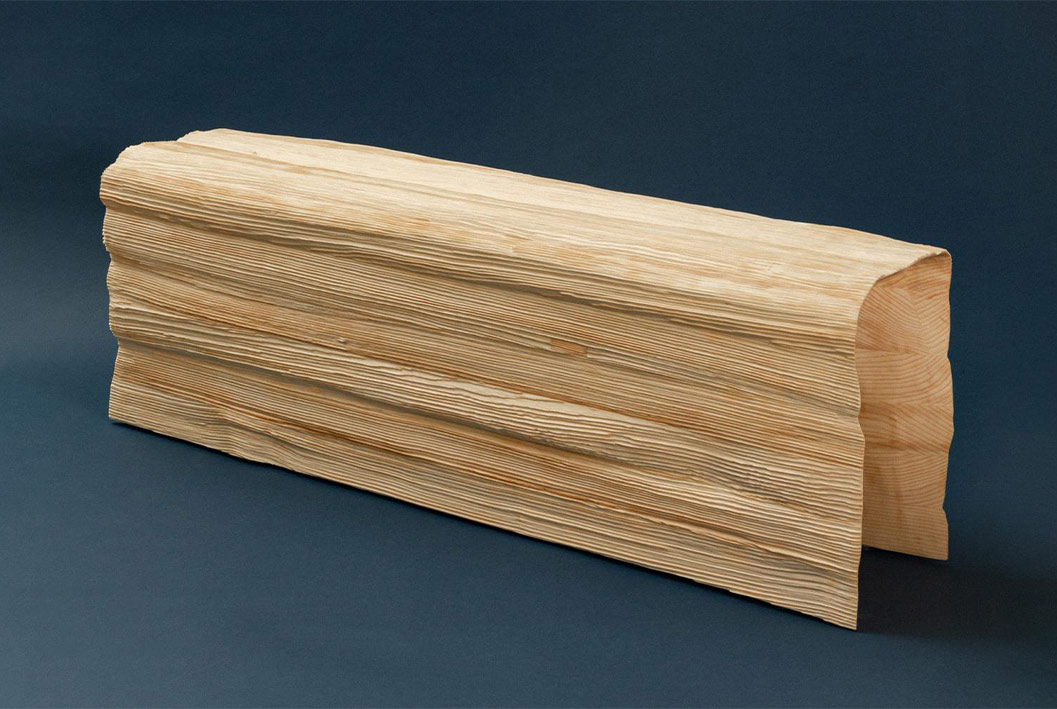
Right before the Pandemic, I made my first sculpture. It was a piece of planks that was chiselled with feather texture. There wasn’t a strong intention to create, but the results have touched my heart. I wanted to make more of these. The pandemic gave me plenty of room to practice it. I was never a craft person before. I practised my making skills intensively during that time, and making also changed my way of thinking and creating.
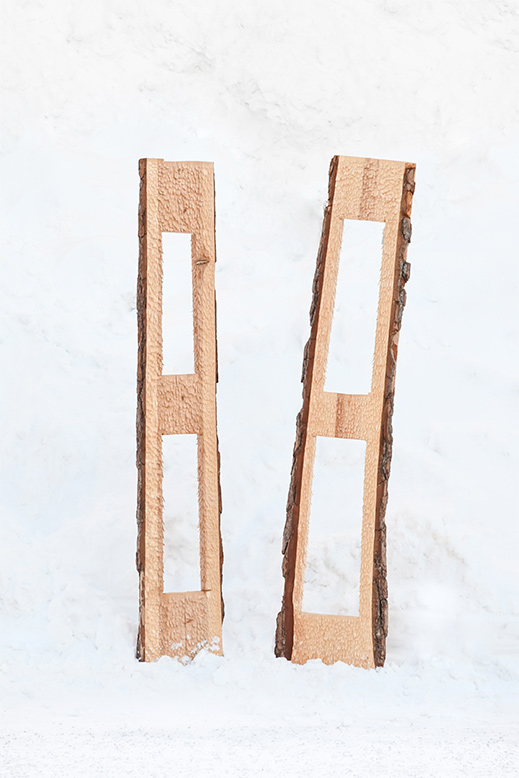
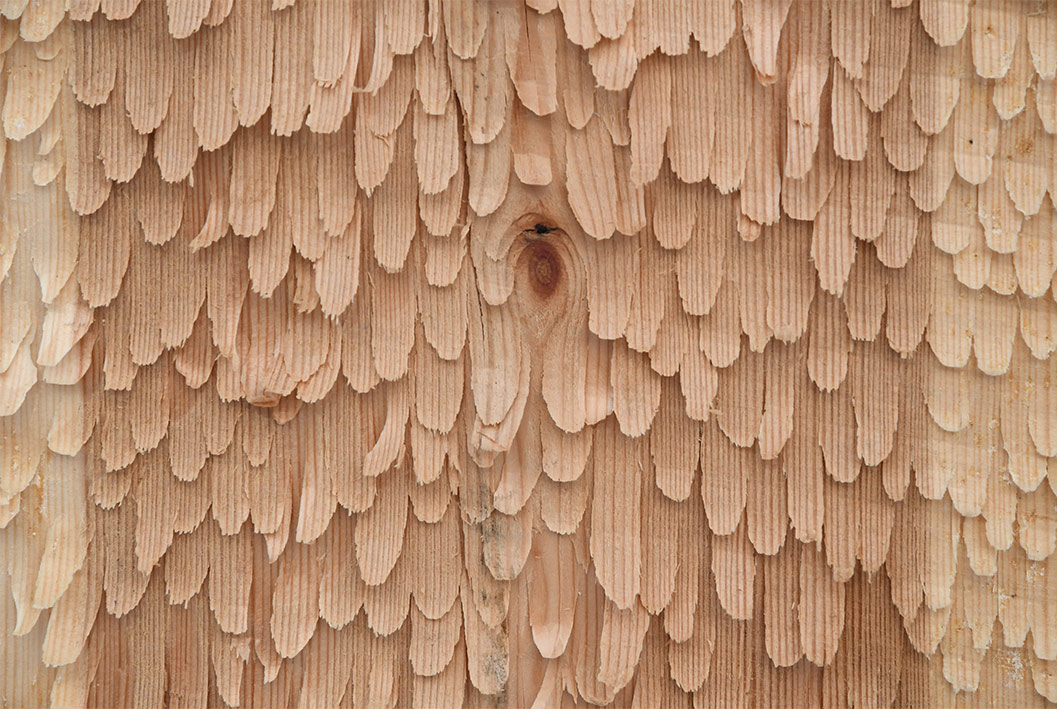
Your Pleats series carves folds into solid timber rather than steaming or bending it. How did the series begin?
I was inspired by firewood making at the cottages in Finland. You know we never need to make a fire from wood in Hong Kong. I think it was a miracle that splitting a piece of wood with just an axe can create distinct results. Then I started to study and split many different kinds of wood. And test to present the beauty of the natural fibre that we cannot imitate.
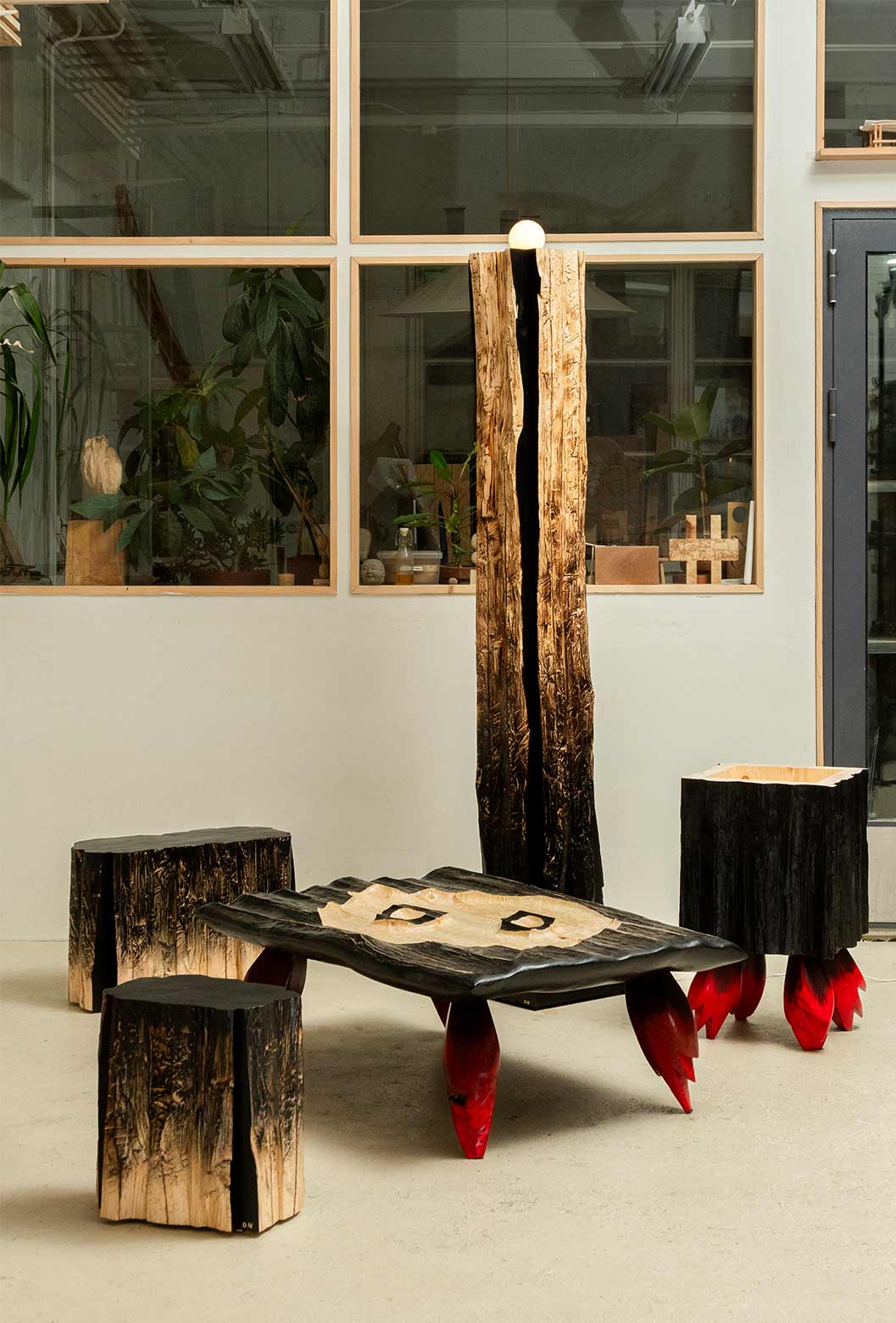
Your material for the In between wood and fire collection is 10×10 construction lumber, the cheap stuff furniture makers avoid because it cracks and deforms. You turned these supposed flaws into the work’s defining feature. What inspired this idea?
I like basic material. Wood is the primary resource here. But when it comes to furniture, makers tend to use hardwood because it is more durable, better value, and easier to work with. I tend to think in a different way; I try not to focus on the instrumental value, but instead focus on seeing the uniqueness of the most common material. I always think that the value of anything in this world should not be valued for very instrumental reasons. Somehow, looking at wood is like us humans; we have different personalities, but each is equally important.
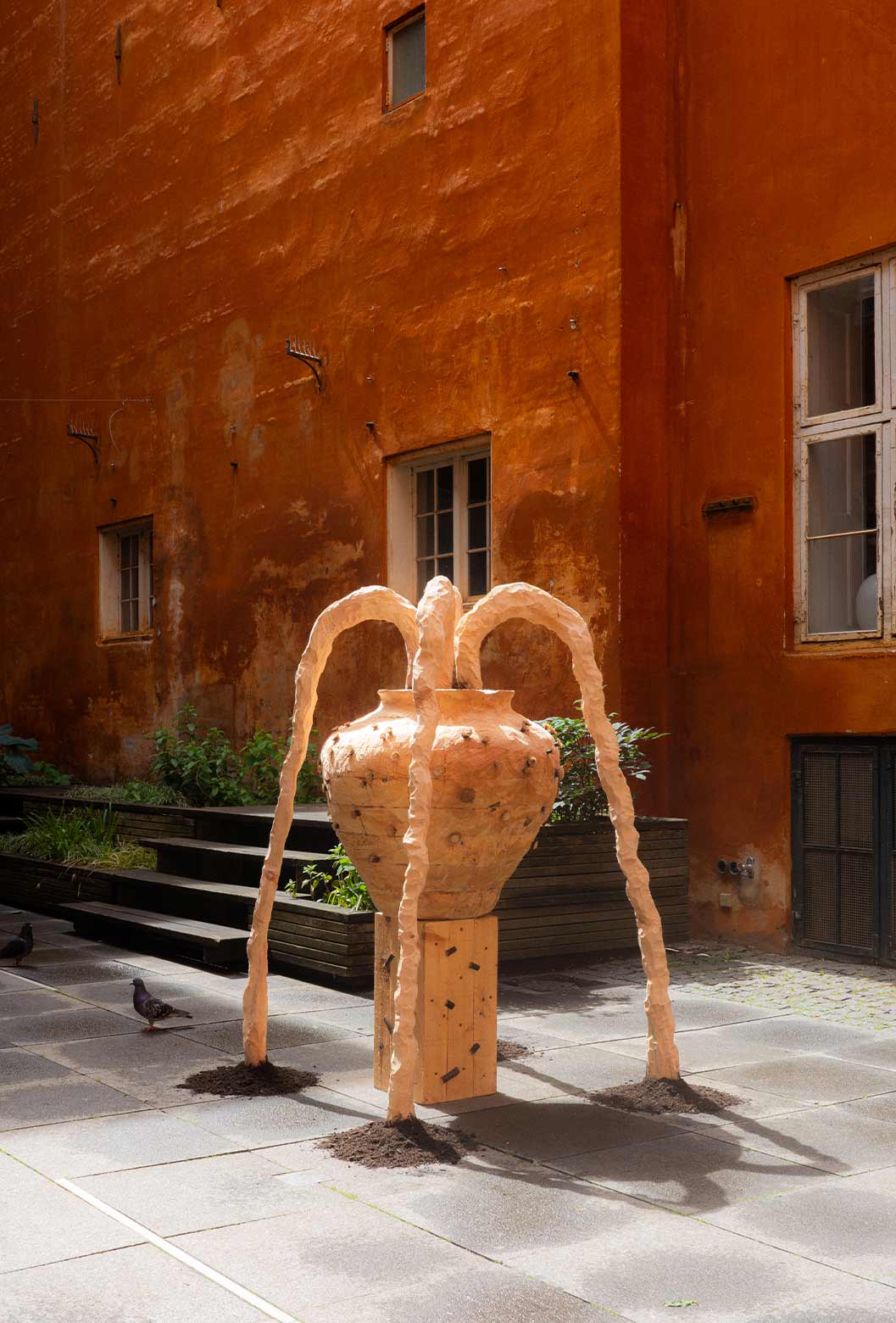
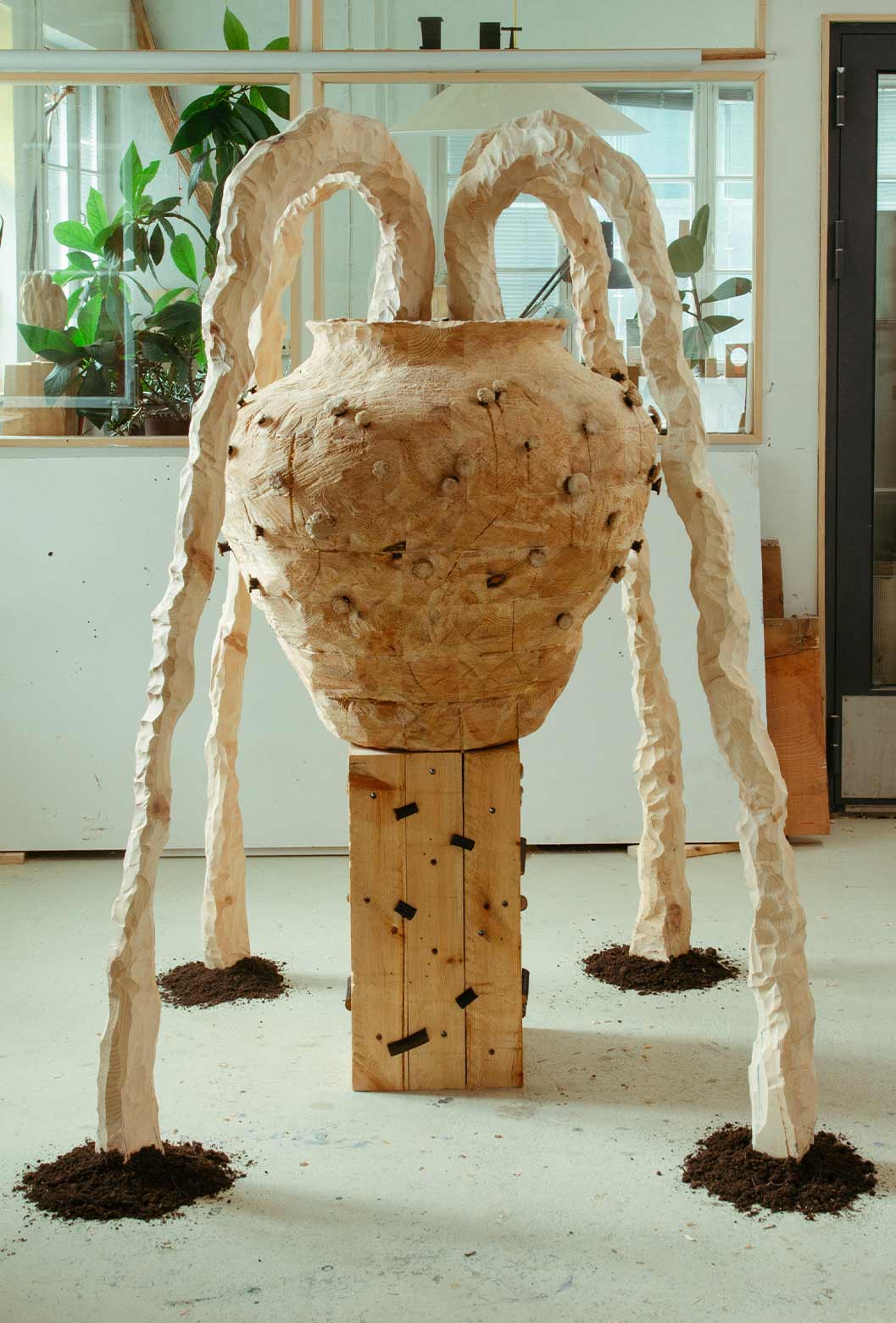
Wood Fountain was made for a courtyard at 3daysofdesign in Copenhagen as a fountain built entirely from wood, with no water in it. You’ve said the piece starts from a simple question, if the source of movement and sound disappears, what’s left? How did you answer this for yourself?
I see water in a fountain generate flow and vitality. When water is missing, the fountain is still a fountain. We can still see and hear it in our minds even tho a fountain is dry. I present the flow with wood and soil instead. The 4 wooden sticks may look like a plant growing out from the centre pot, or in reverse. They may look like water flowing down from high, but at the same time also present how trees were grown up against gravity.
Naturalness is at the center of your practice; can you tell us what you mean by this?
I understand naturalness as an attitude towards life being spontaneous. But in making, this attitude listens to material agency. It follows a material’s structure, resistance and variation to influence the formation of a work rather than imposing a strict outcome. This creates a productive tension between human intervention and material agency. This attitude somehow goes against how I learnt to design but fits my personality well. The idea comes from hands-on practice: to craft, you have to respect and listen to the material. The material is your company, and you negotiate with it. The more I work this way, the more it shapes my attitude.
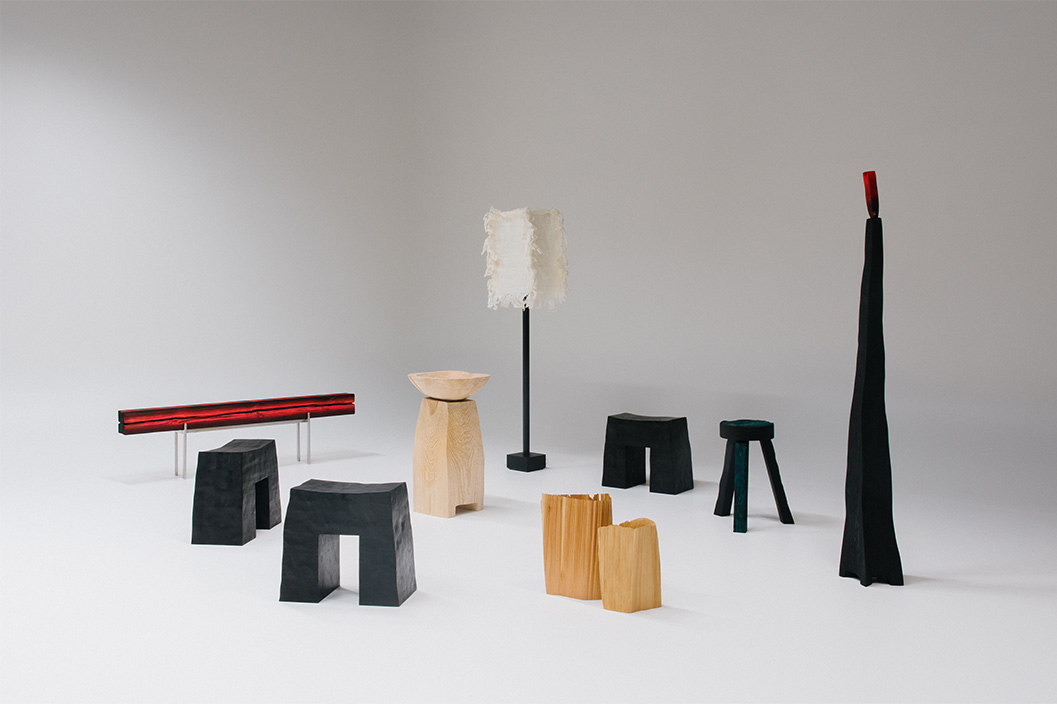
In that same text you describe design drifting from necessity to ornament, and collectable design valuing objects for rarity and aesthetic excess. Where do feel your work sits in this world of design?
This is a hard question. Of course, my work was made with concerns about visual aesthetics and uniqueness. But more importantly, my work expresses materiality. Somehow, this is beyond its typology. A sculpture, a piece of furniture or an object is working as a vessel for me to express my personal vision of seeing the world. I don’t mind if it sits anywhere when there is a spot. Anyhow, I am very grateful that I can freely make what I want in this design era.
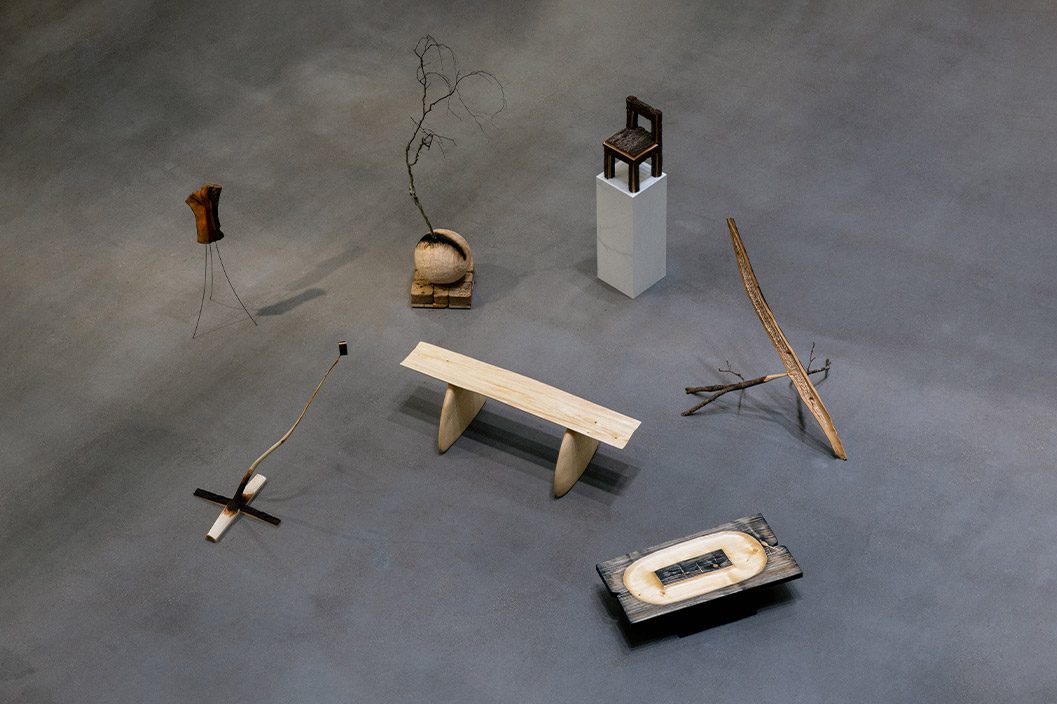
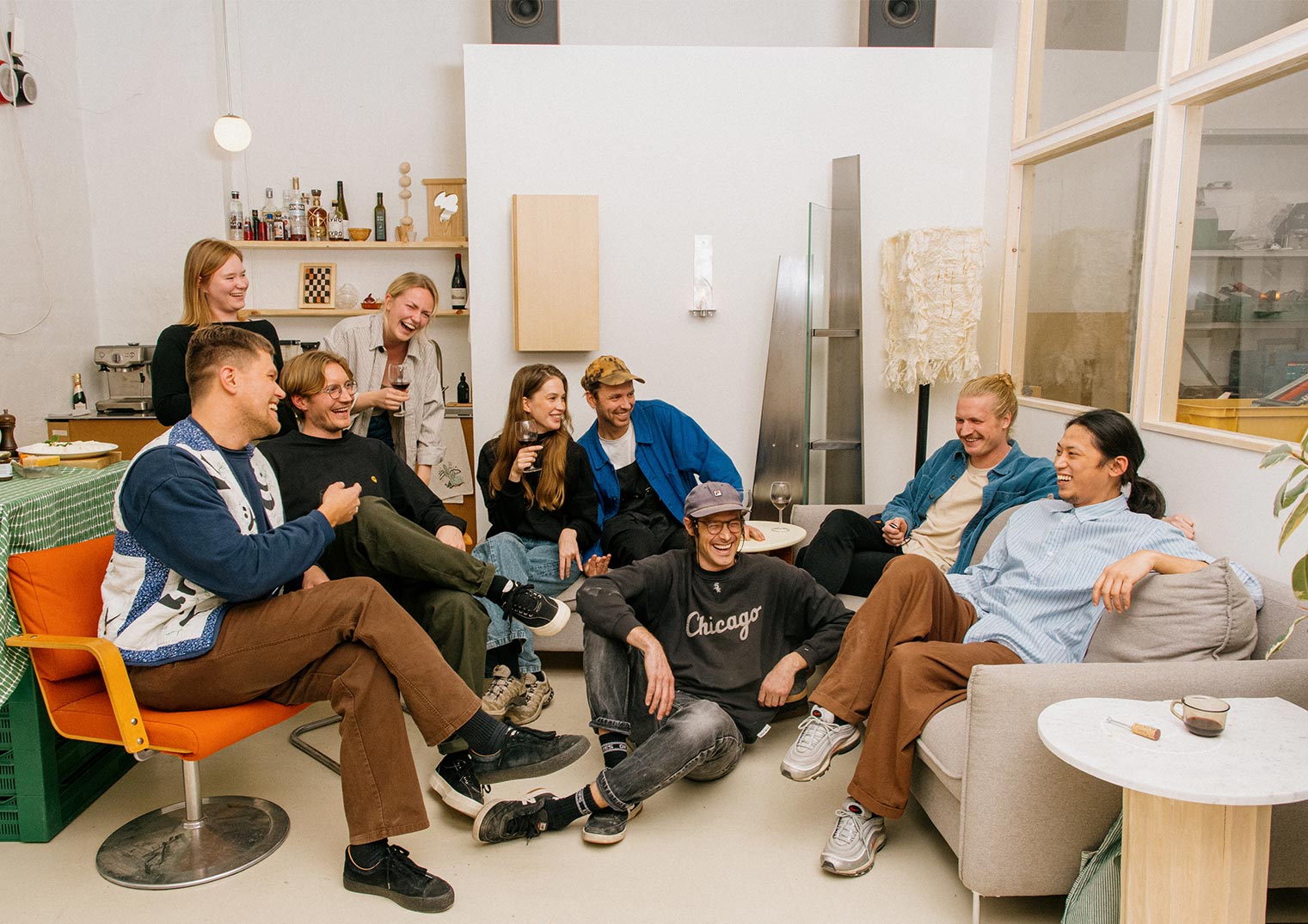
In 2024 you co-founded Minestrone Workshop, a cooperative, alongside your own studio. Can you tell us a bit more about Minestrone Workshop?
Minestrone Workshop is a co-working space focused on contemporary woodworking. The workshop is known for its experimental, material-driven approach and its culture of hands-on craftsmanship. We are a team of ten designers in total, all of whom graduated from Aalto University. After graduation, we faced the same challenge of not having a place to work, especially in woodworking. It is always wiser to share. Our areas of focus are different; some of us specialise in interior design, others in furniture design, and some are more focused on art.
Is anything currently inspiring you?
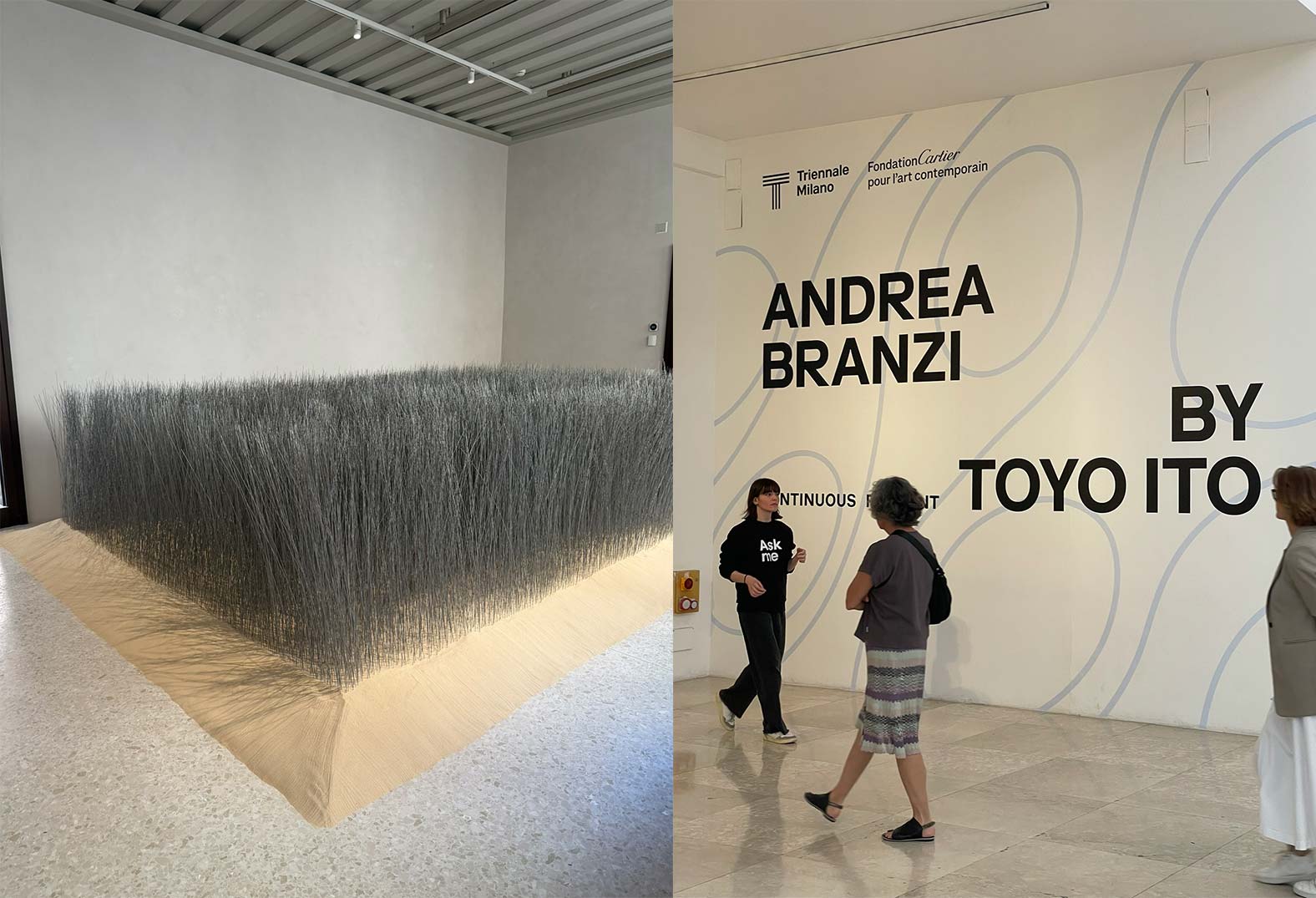
I was in Venice a few weeks ago and went to see the exhibition of Lee Ufan at SMAC. I was so drawn to his installation Iron Field. I like works that are simple and philosophical. Another very inspiring exhibition was Andrea Branzi at Triennale. He is one of my favourite design heroes. I love his radical approach to design.
Where can people find you?
The easiest way is Instagram. Or if you pass by Helsinki, you are most welcome. I am exhibiting at AsiaNow with Spazio Nobile Gallery in Paris soon, in October. After I will be exhibiting at Detour in Hong Kong in mid-November. Another exhibition at otherthings by THE SHOPHOUSE in Hong Kong in March 2027
Email: didi@dd-ng.com
Web: https://dd-ng.com/
IG: https://www.instagram.com/dd_ng/